Search
Items tagged with: SocialCommentary
For The Planet (11 Photos)
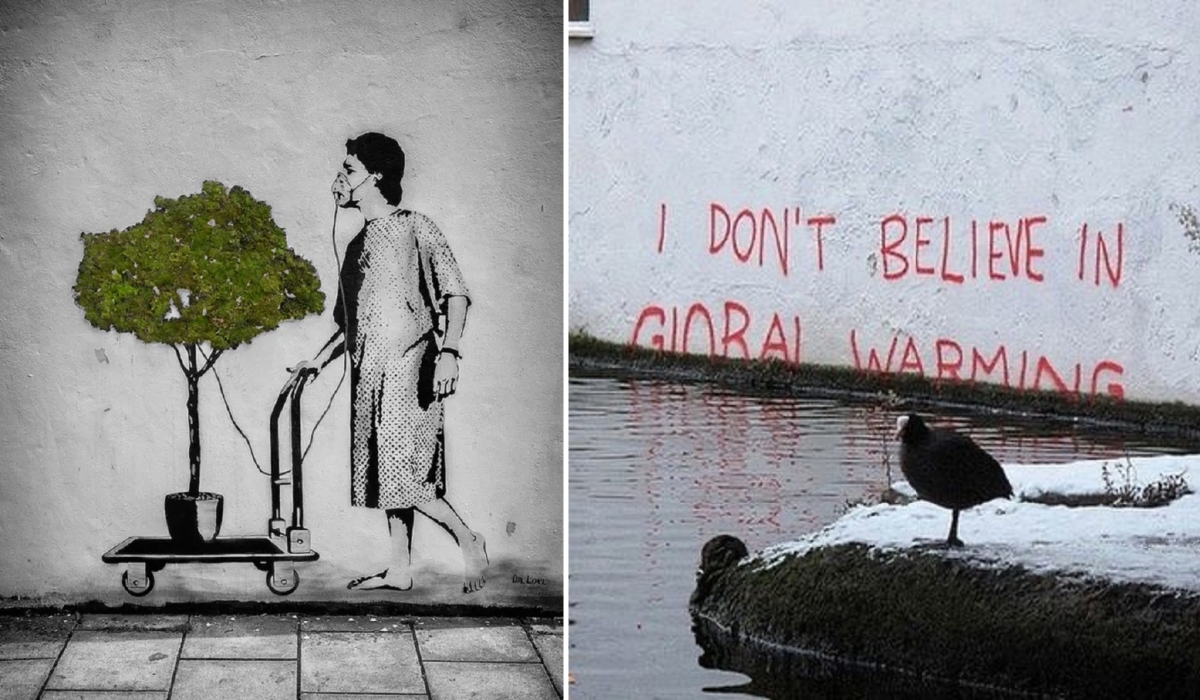
Content warning: Explore seven extraordinary street art pieces that merge creativity and activism, spotlighting pressing environmental issues like climate change and sustainability. These masterpieces demonstrate the power of public art to inspire action for our planet.
The Nature of Street Art: A Canvas for Environmental Messages
Street art has always been a powerful medium for expressing social and political views, transforming cityscapes into vibrant canvases and sometimes provoking images. Among the myriad themes street artists choose to explore, environmental awareness has emerged as a prevalent topic. This post will take you on a virtual tour of seven famous street art pieces across the globe that echo the call for environmental protection and sustainability.
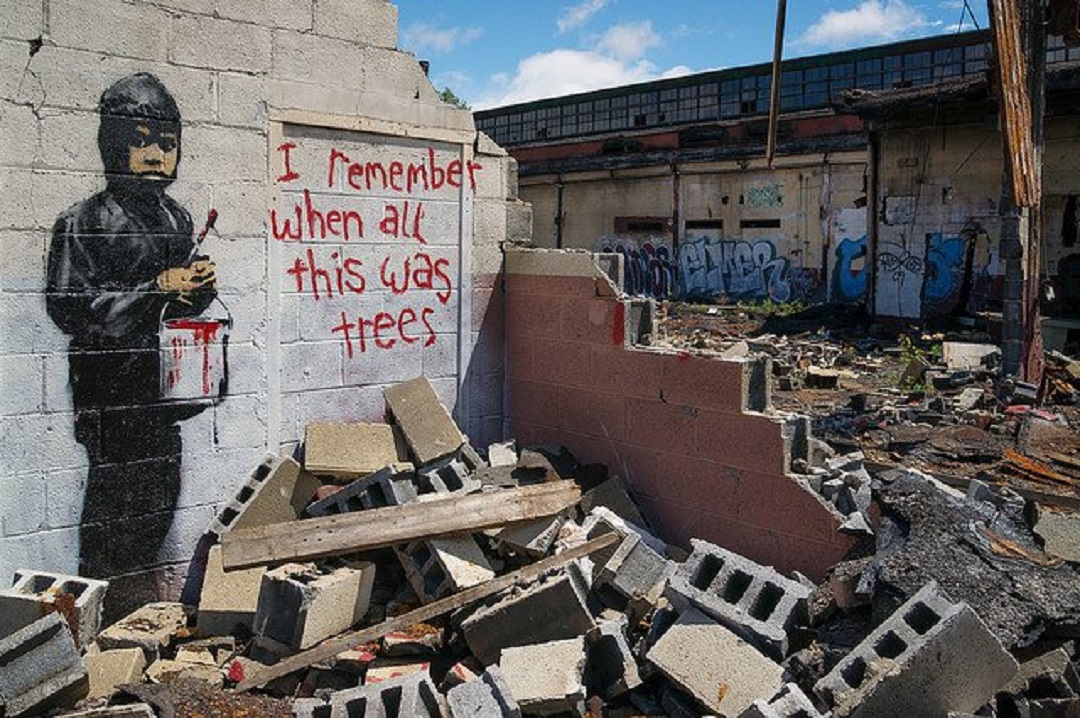
1. Banksy’s ‘I Remember When All This Was Trees’ – Detroit, USA
Arguably one of the most famous street artists in the world, Banksy is known for his distinctive stenciling technique and biting social commentary.
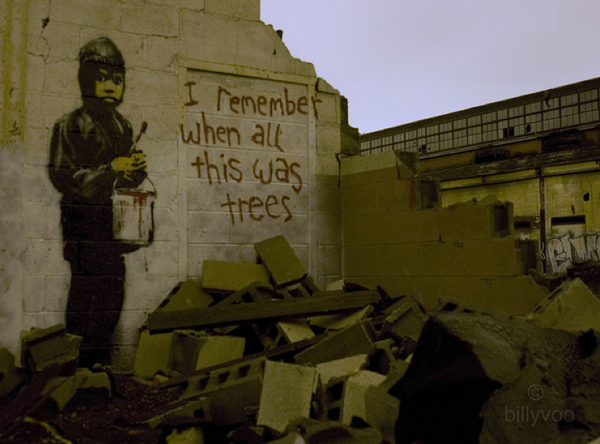
This piece, found in an abandoned Detroit factory, depicts a small child holding a can of red paint, behind him, the words, “I remember when all this was trees.” The powerful message speaks volumes about urban decay and the loss of natural habitats.
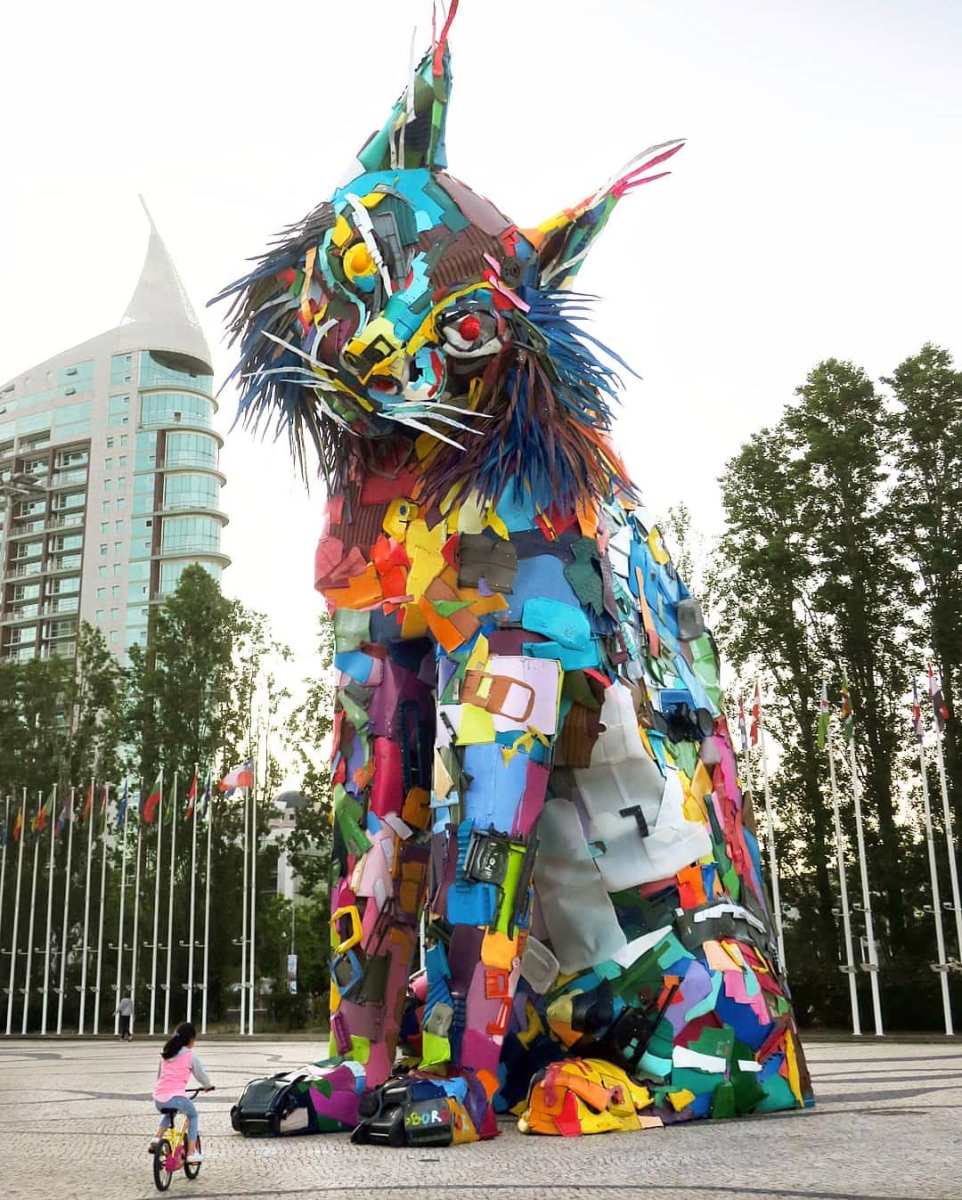
2. Bordalo II’s Trash Animals – Lisbon, Portugal
Bordalo II creates striking 3D art pieces using discarded materials, highlighting the issue of waste production and its impact on the planet. His ‘Trash Animals’ series, found throughout Lisbon, reimagines urban waste as vibrant, larger-than-life animal sculptures, showing the beauty of wildlife in a sharp contrast and the ugliness of our throwaway culture.
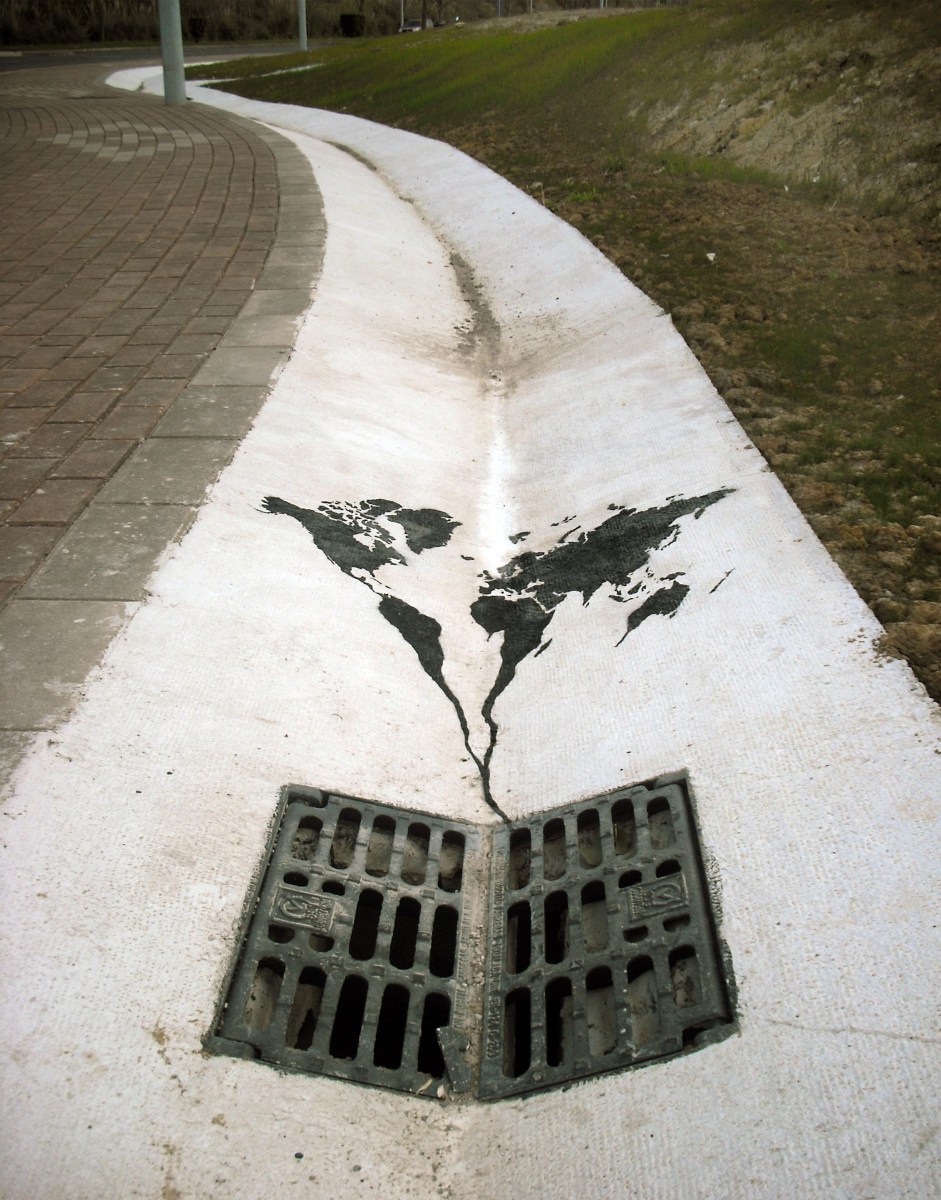
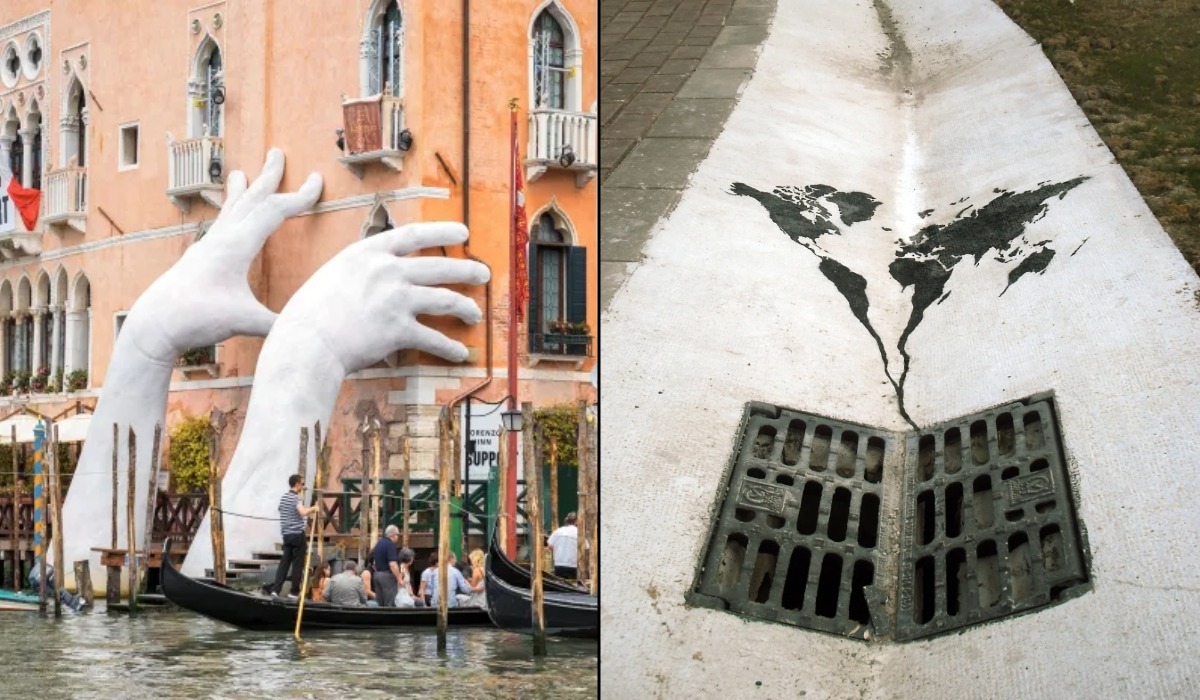
3. Pejac´s ‘The world going down the drain’ – In Santander, Spain
Spanish artist Pejac‘s street art in Santander, Spain, depicts a the world going down in to the sewer, a potent statement about our dependency on fossil fuels and its consequences for the environment. The simple but effective imagery forces us to confront our relationship with energy consumption.
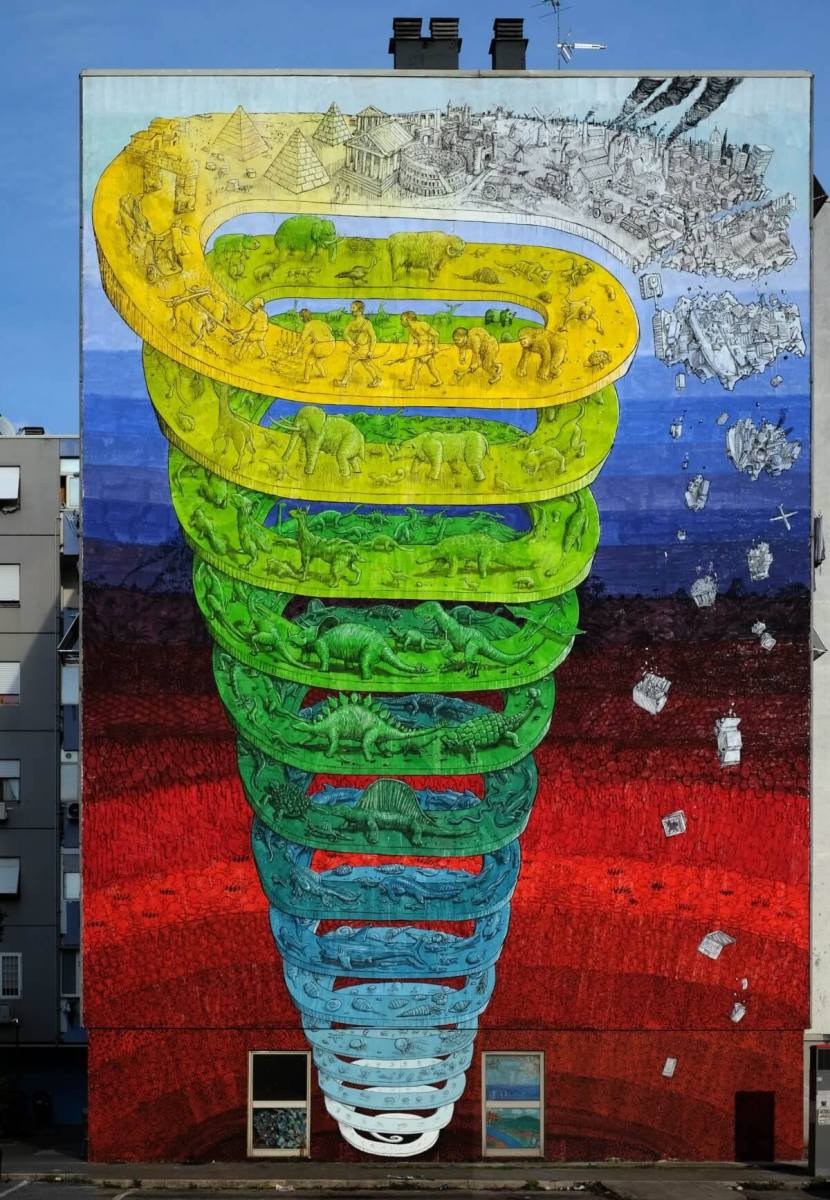
4. Blu’s ‘SPIRALE’ – At Casa Dei Pazzi in Rome, Italy
This expansive mural by the Italian artist Blu depicts our colorful world tru history being consumed by greed and waste. Filled with provoking symbolism, it’s a critique of consumerist society and the environmental degradation that accompanies it.
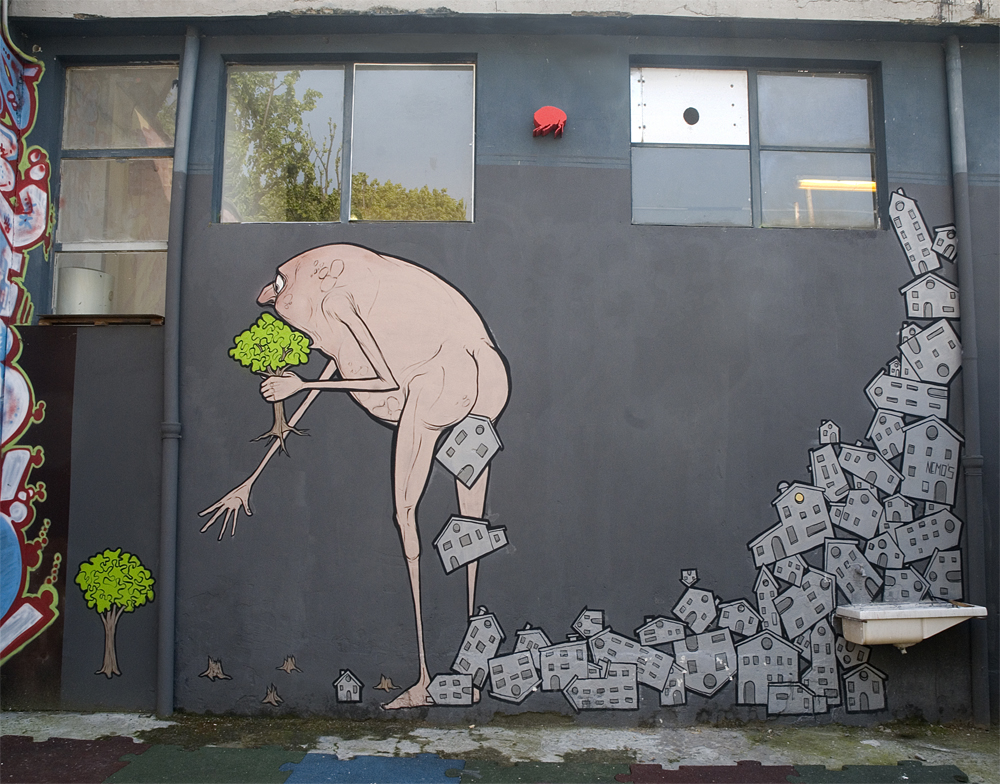
5. Nemos’s ‘Cagacemento’ – In Milano, Italy
NemO’s: I lived in Milan in Italy for a while and because I come from a small city surrounded by countryside this big city seemed like a desert of cement to me, the skyline was barely visible! Every huge metropolis seems like a stain of oil that looks still but is slowly expanding and gulping everything down! I felt the necessity to show and tell the story of the expanding city that feeds on nature and expels cement waste!
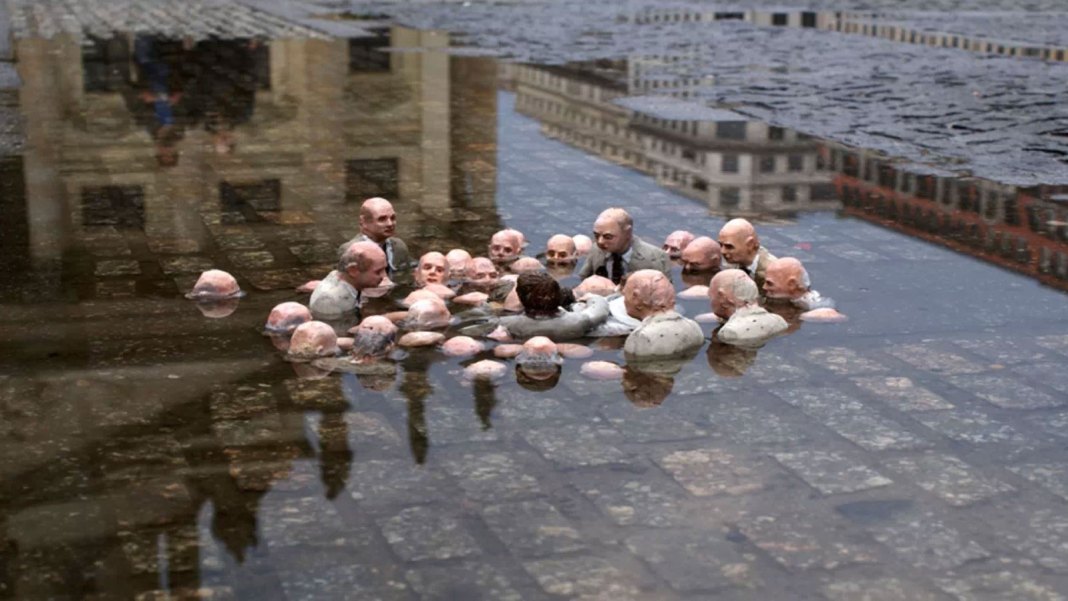
6. Isaac Cordal’s ‘Follow the leaders’ – Berlin. Germany
This installation, popularly known as “Politicians discussing global warming”, by Isaac Cordal, a Spanish artist known for his miniature sculptures, shows small figures in business suits partially submerged in water, indifferent to their impending doom. It’s a biting commentary on the inaction regarding climate change.
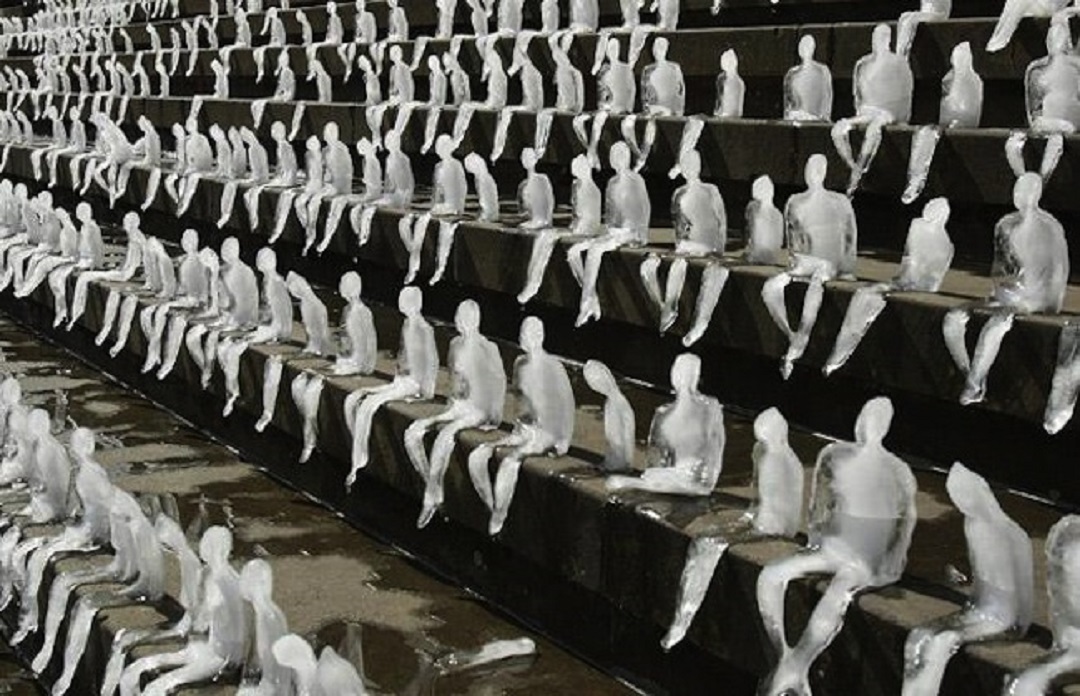
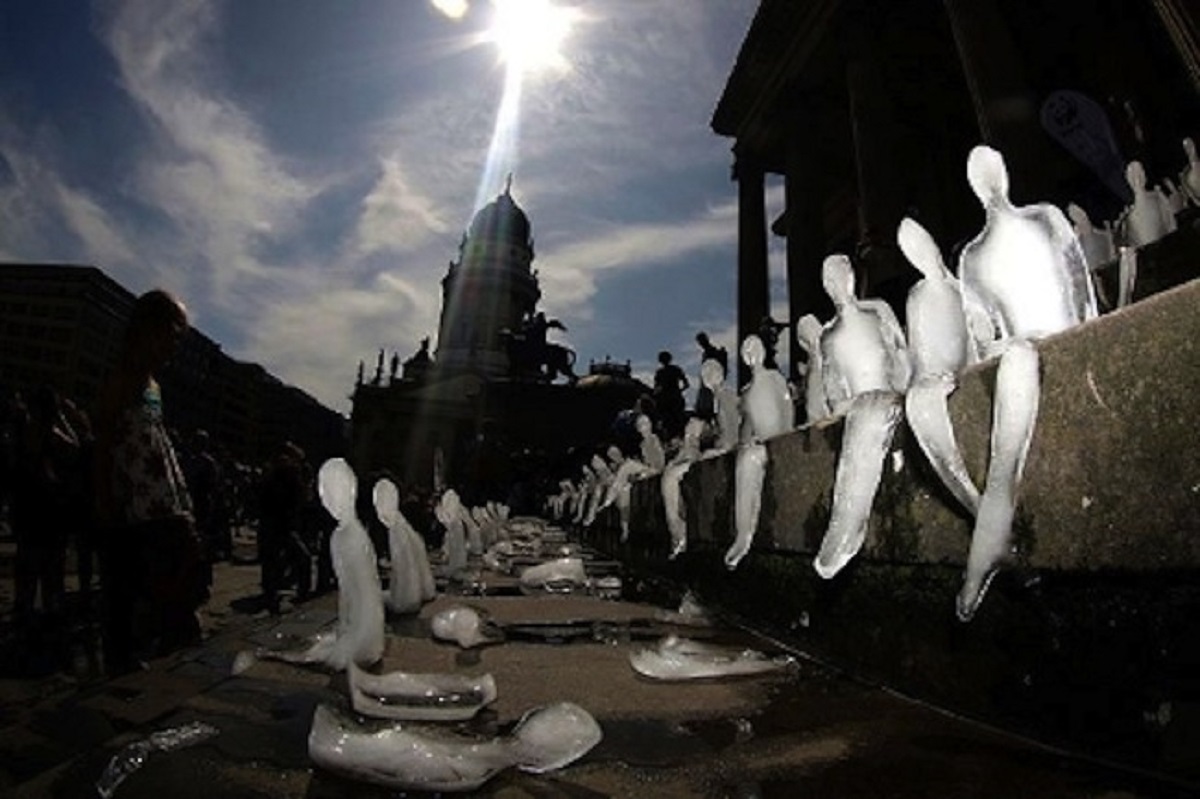
7. Nele Azevedo placed 1,000 melting ice sculptures in Berlin to show the effects of climate change
More photos and about the artwork: Tiny ice figurines draw attention to big problem
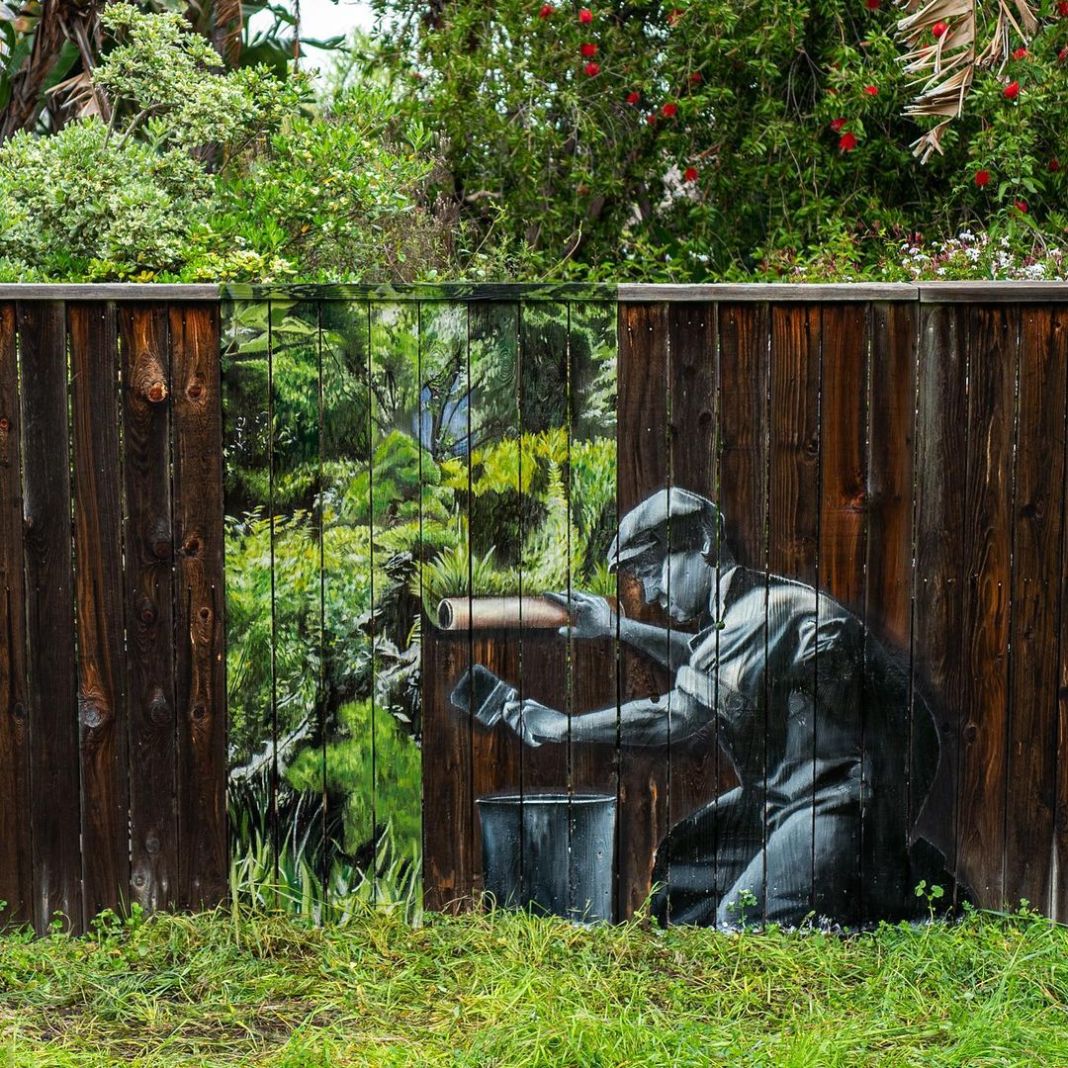
8. Make Earth Green Again – By HIJACK.
More: Street Art by HIJACK – A Collection (42 photos)
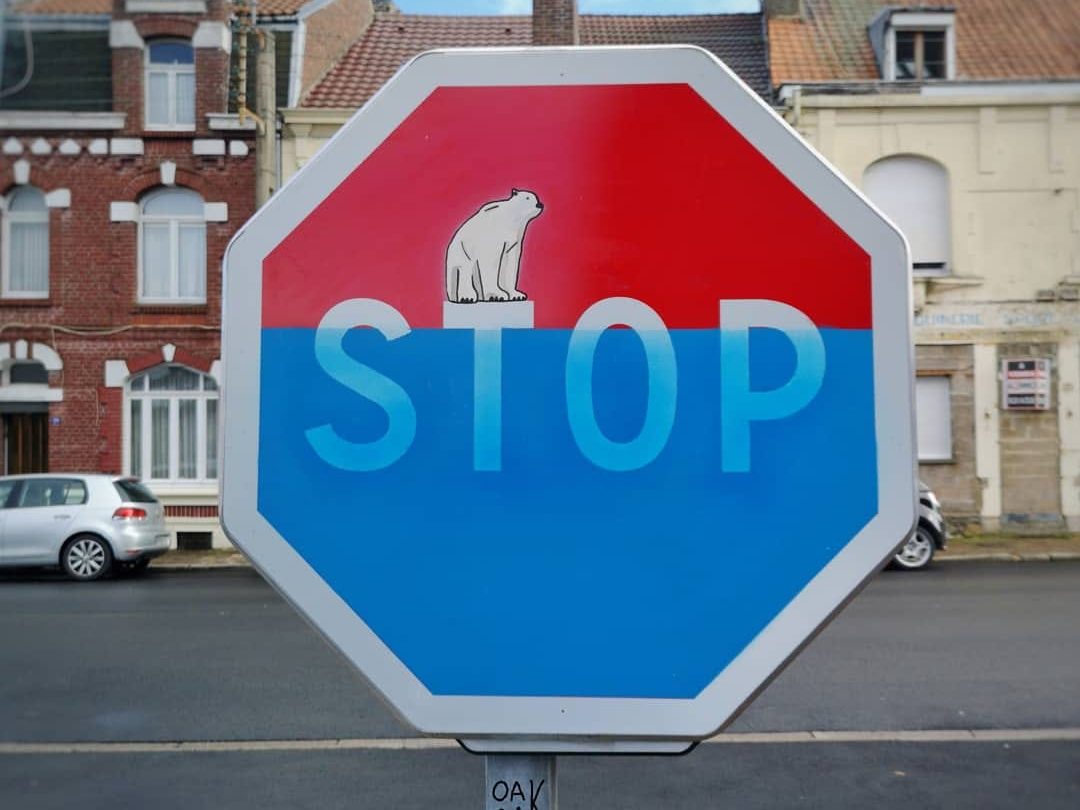
9. Oakoak uses a stop sign to highlight climate change with a polar bear stranded on melting ice.
More: Oakoak’s Genius Street Art! (10 Photos)
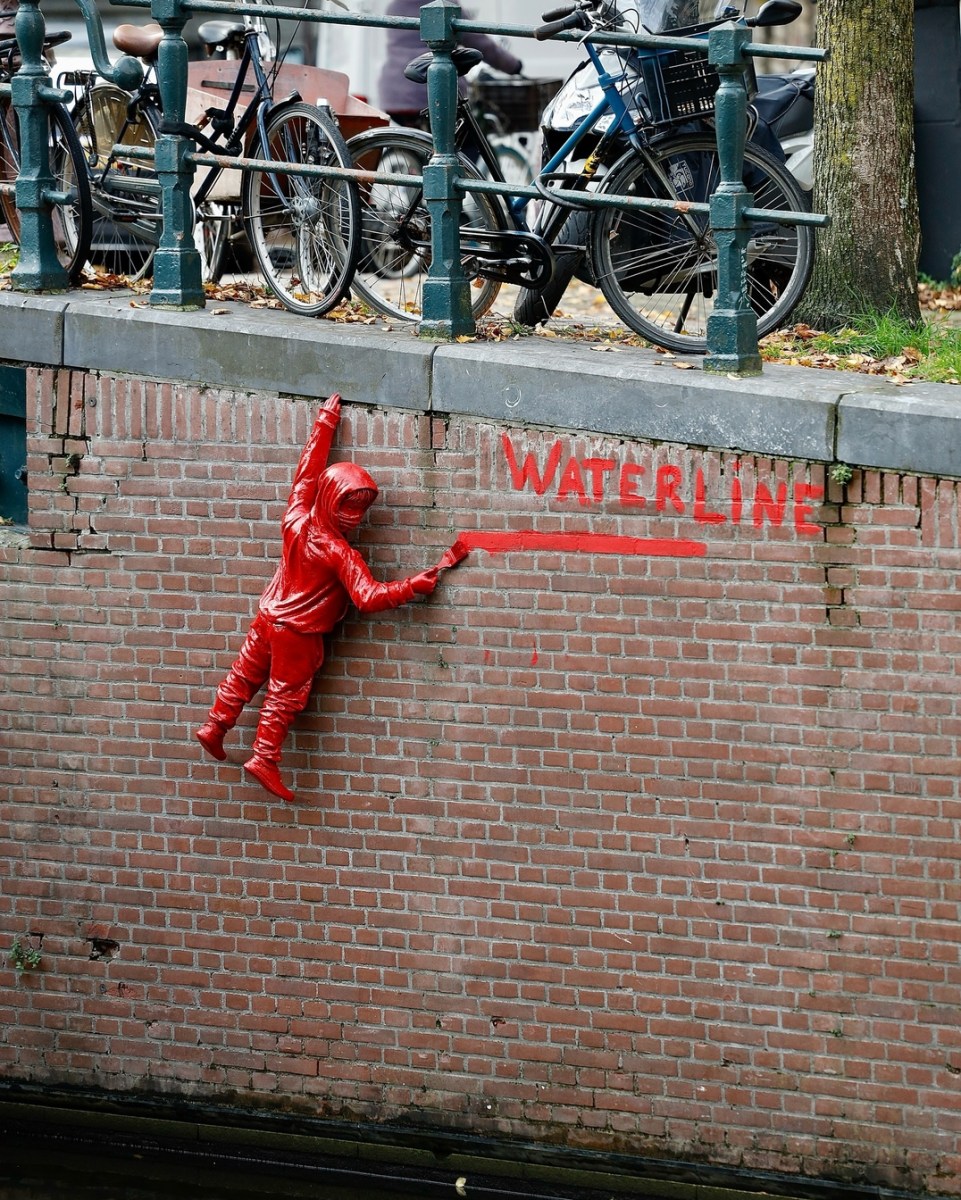
10. Waterline on Climate Change by James Colomina in Amsterdam, Netherlands
Follow James Colomina on Instagram!
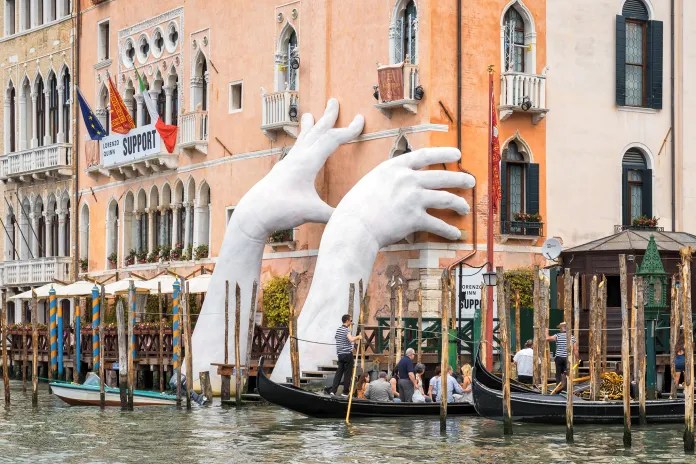
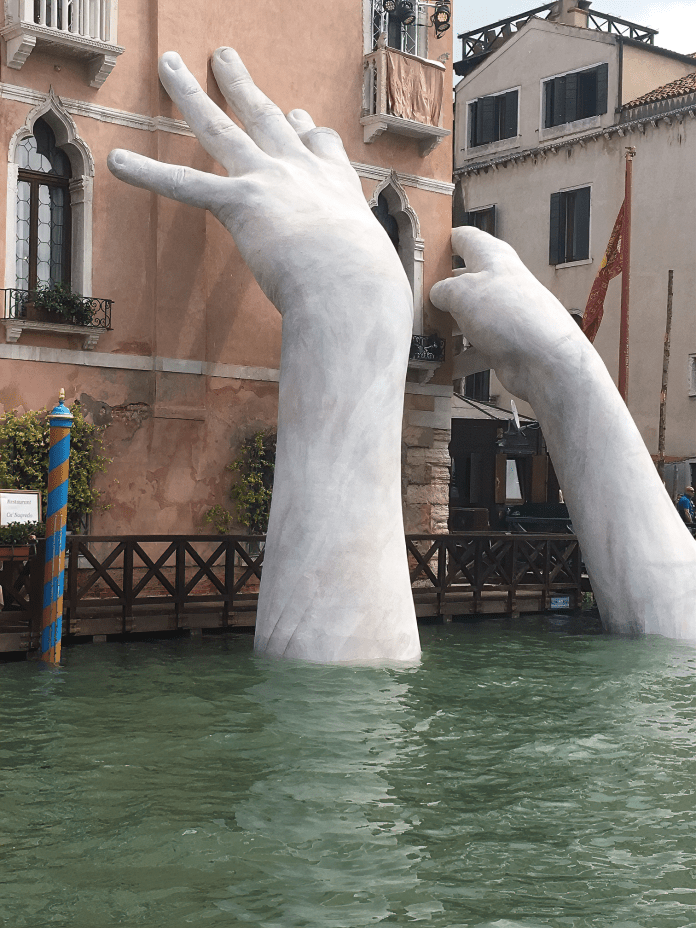
11. Support — By Lorenzo Quinn in Venice, Italy
Two massive white hands rise from the Grand Canal, appearing to hold up the walls of the Ca’ Sagredo Hotel in Venice. Created by Italian sculptor Lorenzo Quinn, the artwork is both dramatic and symbolic—a call to address climate change before it’s too late.
About and more photos: Support – Message About Climate Change
More: Climate Change Addressed Through Street Art (16 Powerful Images)
Which one is your favorite?

Banksy? Who Is The Visionary of Street Art? (25 Photos)
I. Unmasking the Enigma: A Deep Dive into Banksy’s Street Art Revolution
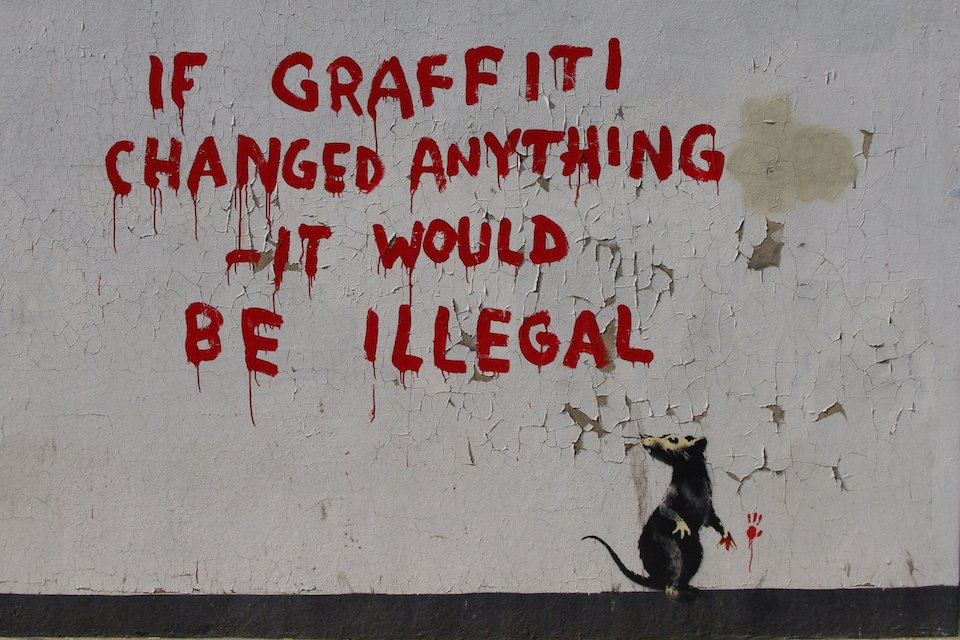
In the dynamic world of street art, few names are as resonant or as enigmatic as Banksy. A spectral figure whose identity remains shrouded in mystery, Banksy is a paradox of fame and anonymity, a revolutionary whose works have transformed public spaces and challenged societal norms. His art, often laced with potent political commentary and sharp satire (see 14 Great Banksy Street Art Photos and Quotes!), has left indelible marks on urban landscapes worldwide. Yet, the man behind the spray can remains elusive, his identity a secret closely guarded, adding an irresistible aura of intrigue to his body of work.This paradox is part of what makes Banksy not just a street artist, but a phenomenon. His work captures the zeitgeist, reflecting the turbulence, the dissent, and the hope of our times. His stencils—be they on the walls of London, the remnants of the West Bank barrier, or the ruins of Hurricane Katrina—have a way of speaking truth to power that has resonated with millions around the globe.
More: Banksy’s Hidden Identity Revealed?
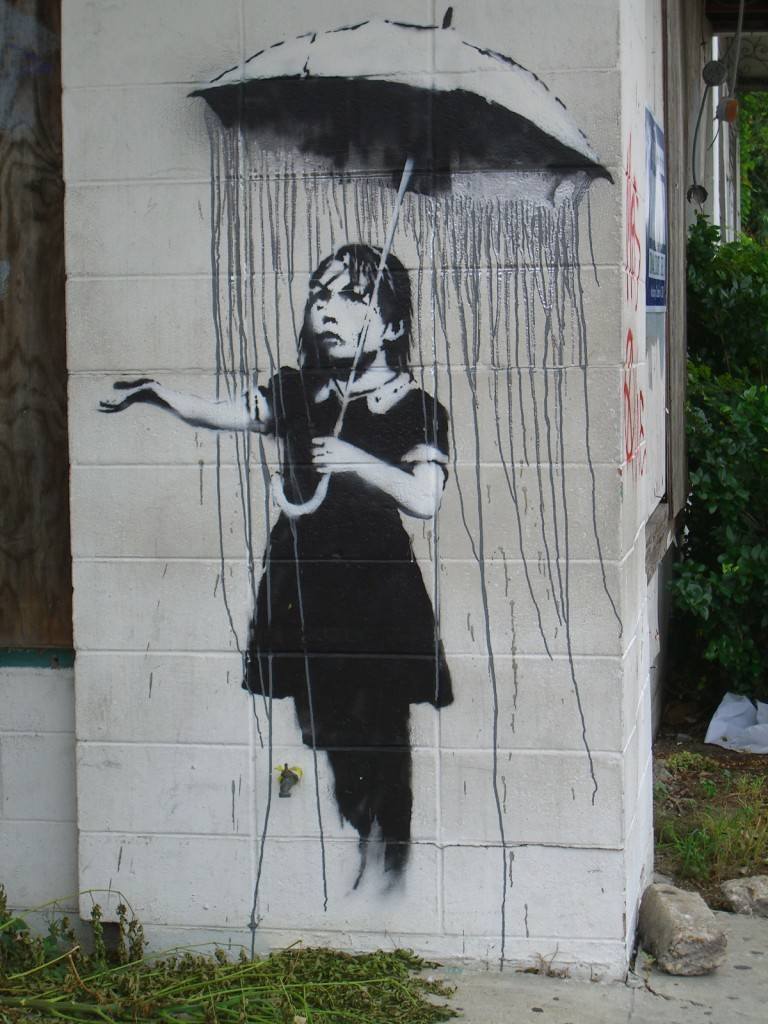
Banksy visited New Orleans, three years after the devastation of Hurricane Katrina, in August 2008
For more than three decades, Banksy has been pushing boundaries, challenging conventions, and redefining the very concept of public art. Through his stencils, he has brought the subversive ethos of the underground to the surface, making it impossible for us to ignore the social and political injustices of our world. His works are more than just provocative images; they are a call to action, a demand for change.
In this exploration, we will journey through the chaotic, captivating world of Banksy’s artistry. From his early days in Bristol’s graffiti scene to his headline-making stunts in the global art market, we’ll take a closer look at how Banksy’s work has evolved and why it continues to captivate and challenge us. Through the lens of 24 select artworks, we hope to gain a deeper understanding of the visionary artist who has forever transformed the landscape of street art.
So, who is Banksy? Let’s uncover the story behind the spray can. Let’s delve into the revolution sparked by this enigma. Through his art, let’s explore the world according to Banksy.
II. A Stencil Revolution: The Genesis of Banksy’s Distinctive Style
Banksy’s journey into the world of street art began on the streets of Bristol, England, a city known for its vibrant graffiti culture. As a teenager in the 1980s, he was part of a graffiti crew called the DryBreadZ Crew (DBZ). His early work, like much of the graffiti of the time, was freehand. However, an encounter with the law sparked a transformative shift in Banksy’s approach to street art.Legend has it that a young Banksy was hiding from the police under a garbage truck when he noticed stenciled serial numbers on the truck. The stencil technique piqued his interest, offering a faster, more efficient way to paint, allowing him to dodge law enforcement while still leaving his mark. This chance discovery would not only define his artistic style but would also revolutionize the street art scene.
Banksy in towns on the east coast of England (7 artworks)
Stenciling allowed Banksy to create intricate and detailed pieces with precision and speed. His works were more controlled, more refined, and more complex than the freehand graffiti that dominated the streets. This technique also lent his art a distinct aesthetic — one that was cleaner, sharper, and more visually striking. He could create multi-layered artworks, combining stencils with other media and incorporating pre-existing elements in the urban landscape into his installations.
In the early 2000s, Banksy moved from Bristol to London. His stenciled works started appearing on walls, bridges, and streets across the city, turning the urban landscape into an open-air gallery of his art. Each piece was a visual protest, a political statement, a satirical commentary. They challenged authority, poked fun at societal norms, and provoked public discourse, making Banksy a controversial figure in the art world.
Yet, it was precisely this controversy, coupled with his distinctive style and incisive commentary, that catapulted Banksy to international recognition. By turning to stencils, Banksy had not only found his artistic voice, but he had also found a way to make the streets echo with that voice. In doing so, he sparked a stencil revolution that would forever alter the course of street art.
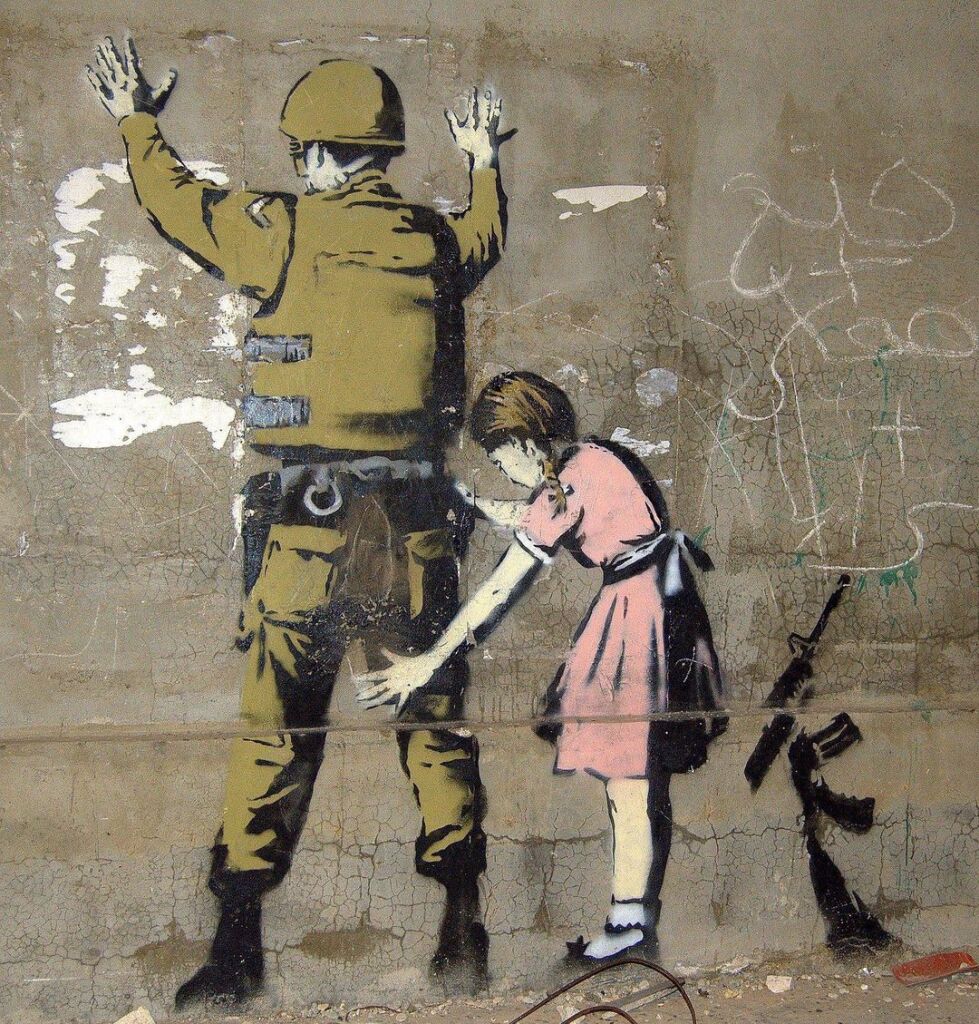
Young girl frisking a soldier by Banksy in Bethlehem
III. Crafting Satire and Shadows: The Unmistakable Artistic Approach of Banksy
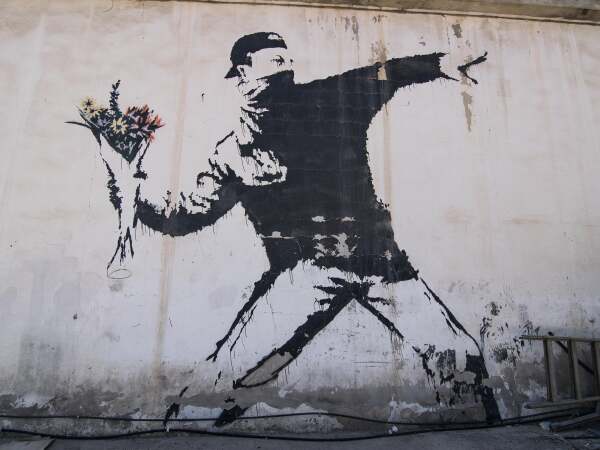
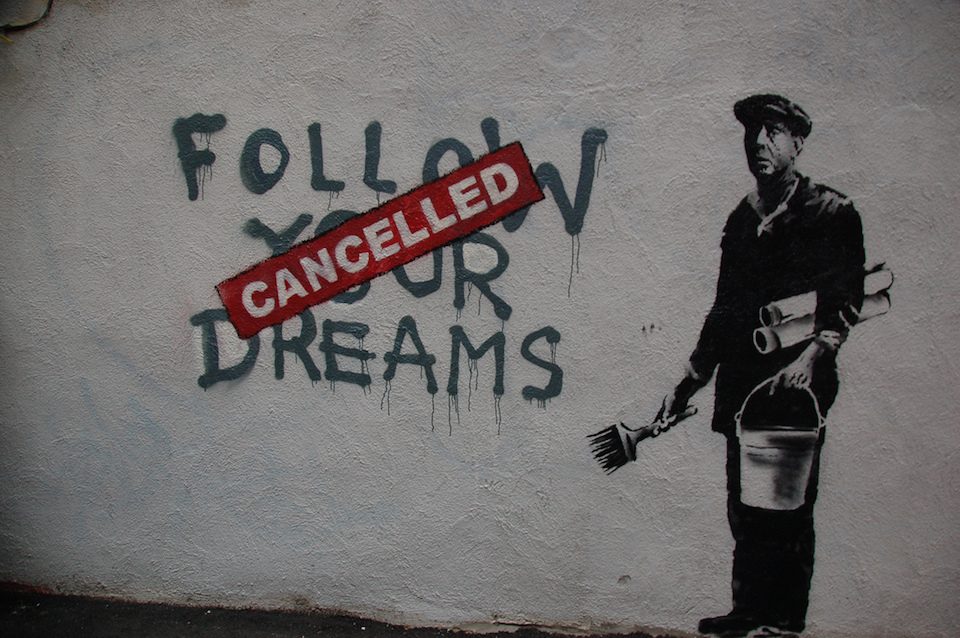
Banksy’s artistic approach, while grounded in the use of stencils, is far from one-dimensional. The street artist has developed a style that is as layered and nuanced as the messages he conveys. Delving into Banksy’s work reveals a masterful blend of satire, subversion, and sociopolitical commentary, all wrapped in a distinctive visual package that has become his trademark.Perhaps the most defining aspect of Banksy’s approach is his biting satire. With a keen eye for irony, Banksy often juxtaposes contrasting images and ideas to comment on societal issues. His works are full of dark humor and sharp wit, turning everyday scenes into powerful satirical statements. Whether it’s a rioter throwing a bouquet of flowers instead of a molotov cocktail or a young girl frisking a soldier, Banksy’s art challenges viewers to reassess their preconceived notions and question the status quo.
The Flower Thrower, Flower Bomber, Rage, or Love is in the Air is a 2003 stencil mural in Beit Sahour in the West Bank
Equally important to Banksy’s approach is his use of subversion. He consistently undermines authority and disrupts conventional narratives, pushing against the boundaries of what is deemed acceptable or normal. This can be seen in his unauthorized installations in museums, his self-destructing artwork at an auction, or his dystopian theme park, Dismaland. Each act is a bold statement against institutional power and the commercialization of art.
On the visual front, Banksy’s art is marked by a striking use of black and white, with occasional pops of color. This minimalist color palette underscores the starkness of his messages and adds to the visual impact of his works. He also employs a careful play of light and shadow, giving depth and realism to his stenciled figures. Even when working on a flat surface, Banksy’s figures appear three-dimensional, as if they could step out of the wall and into the real world.
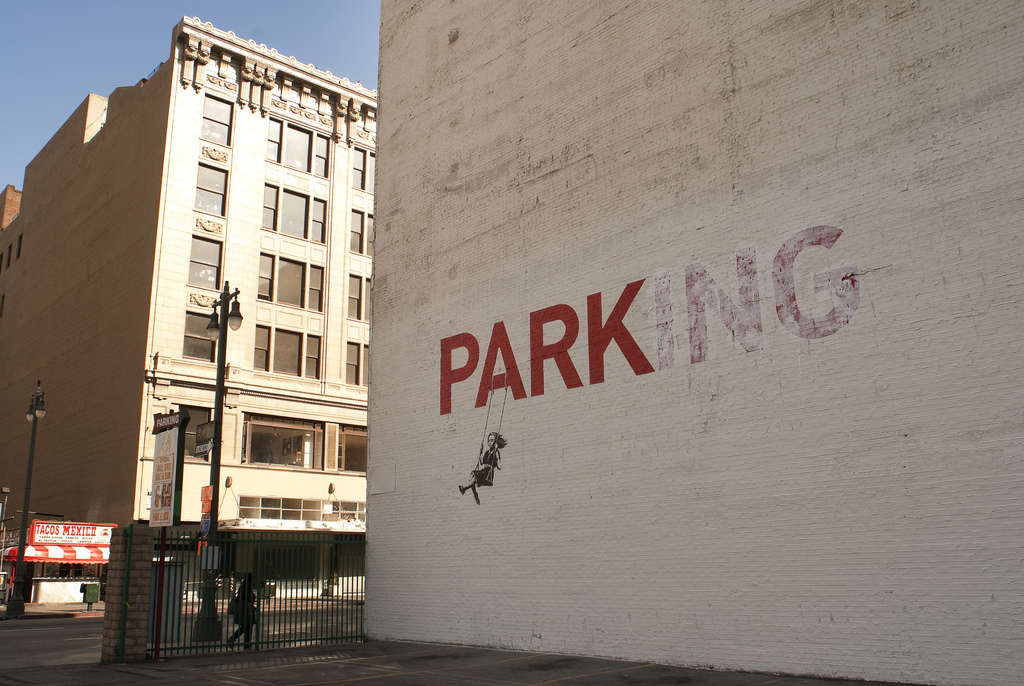
Moreover, Banksy often integrates elements of the urban environment into his artworks, transforming mundane objects and surfaces into significant components of his pieces. This creative use of the environment amplifies his art’s site-specific nature, making each piece a unique commentary on its context.
In essence, Banksy’s artistic approach is a dynamic interplay of style and substance. It merges form with content, aesthetics with message, and art with activism. Each piece is not just an artwork but a dialogue – a thought-provoking, boundary-pushing, and often uncomfortable dialogue that compels us to engage with the world in new and critical ways.
IV. From Shadows to Spotlight: The Unstoppable Global Impact of Banksy
Banksy’s rise to prominence is a testament to the power of street art as a medium for societal commentary. What began as stencilled tags in the back-alleys of Bristol has now gained international renown, resonating with audiences across the globe. His works are not merely confined to city walls, they have permeated popular culture, influenced political discourse, and even transformed the way we perceive and value art.One of the most significant aspects of Banksy’s global impact is how his art has bridged the gap between the street and the gallery. Banksy has successfully brought street art out of its perceived illegitimacy, forcing the art world to reconsider its boundaries and definitions. His works have sold for record-breaking prices at renowned auction houses such as Sotheby’s and Bonhams, showing that street art is more than capable of holding its own in the fine art market.
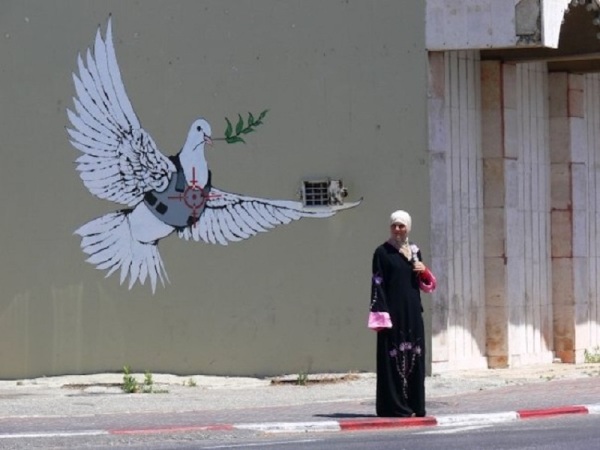
Banksy’s influence extends beyond the world of art, reaching into the realm of politics. His murals often tackle pressing issues like war, surveillance, consumerism, and inequality. His iconic pieces on the West Bank Barrier, for example, drew international attention to the Israeli-Palestinian conflict, showcasing the power of art as a tool for political activism.
Moreover, Banksy’s works have become viral sensations, spreading rapidly across the internet and reaching millions of viewers. The digital age has allowed Banksy’s art to transcend geographical boundaries, amplifying its impact to an unprecedented level. Each new Banksy piece triggers a flurry of online discussions, debates, and interpretations, showing how art can engage and connect people in the virtual space.
Banksy’s global impact is also evident in the way his art has inspired a new generation of artists. His audacious style, combined with his success in challenging the status quo, has paved the way for aspiring street artists worldwide. The “Banksy Effect” is a testament to his influence, proving that art can thrive outside traditional institutions and that artists can maintain their anonymity and independence while reaching a wide audience.
Perhaps most importantly, Banksy’s global impact lies in the conversations his art starts. His works provoke thought and spark dialogue, encouraging viewers to question their surroundings and critically engage with societal issues. Whether it’s a mural on a wall, a painting in an auction house, or an image shared on social media, Banksy’s art continues to challenge, disrupt, and inspire, solidifying his position as one of the most influential figures in contemporary art.
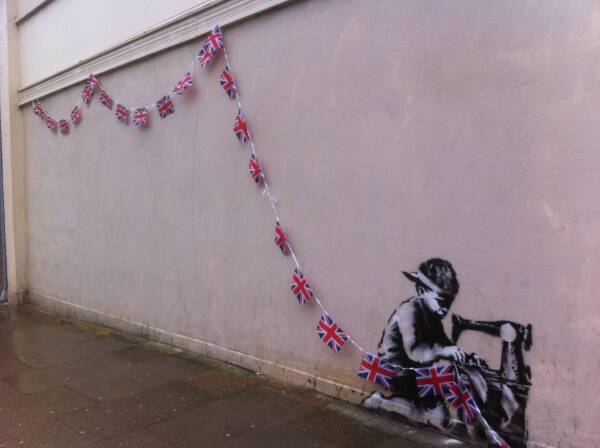
Banksy did this 2012 (London) to celebrate the Queen’s diamond jubilee
V. Beyond the Wall: Banksy’s Multifaceted Artistic Portfolio
Banksy’s artistic portfolio, despite being shrouded in mystery and anonymity, is one that never ceases to evolve, surprise and provoke. Stretching beyond the confines of the traditional graffiti scene, Banksy has become a modern-day renaissance artist, demonstrating a remarkable ability to experiment with different mediums and platforms while consistently delivering his signature blend of satire, subversion, and social commentary.In 2010, Banksy ventured into the world of filmmaking with “Exit Through the Gift Shop,” a documentary that explores the relationship between commercial and street art. The film, which received an Academy Award nomination for Best Documentary, showcases Banksy’s knack for storytelling and his ability to critique the art world from within its own apparatus.
Inside Banksy’s Dismaland
Inside Banksy’s Dismaland
In 2015, Banksy took on an entirely new project: Dismaland, a dark, dystopian parody of Disneyland. This ‘bemusement park’ showcased ten new works from Banksy alongside pieces from 58 other artists. It was more than just an art exhibit; it was an immersive, interactive experience that critiqued the corporatization of leisure and the passive consumption of entertainment.
In recent years, Banksy has also shown an increasing interest in traditional painting, as seen in his ‘Mediterranean Sea View’ series. This set of oil paintings, auctioned to raise funds for a hospital in Bethlehem, combined classical techniques with Banksy’s trademark twist – in this case, life jackets washed up on shore, symbolizing the European migrant crisis. Such works demonstrate Banksy’s versatility and his willingness to adapt his craft to convey urgent messages.
Banksy’s ‘Game Changer’ painting raises $23 million for UK health charities
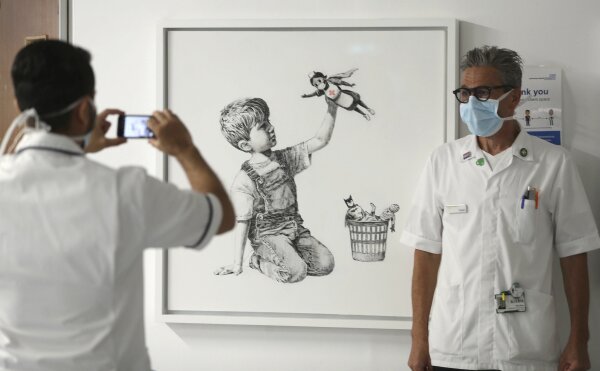
Banksy’s more recent work during the COVID-19 pandemic, such as ‘Game Changer,’ displayed in Southampton General Hospital, is a testament to his timely engagement with current events. This piece, which pays tribute to healthcare workers, again shows Banksy’s ability to adapt to new contexts and media, while staying true to his roots in street art.
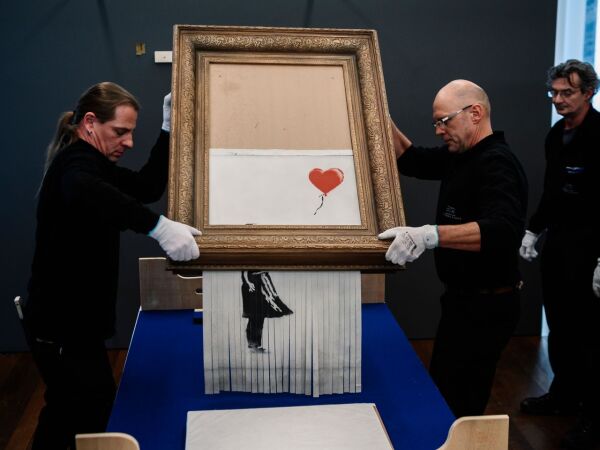
Whether it’s stencils on city walls, films, immersive installations, traditional paintings, or even the occasional piece of performance art (as seen in the shredding of ‘Girl with Balloon’), Banksy’s expanding portfolio reflects his boundless creativity, adaptability, and commitment to pushing the boundaries of what art can be and do. His work stands as a testament to the fact that art is not just about aesthetics, but can also be a vehicle for social change, critique, and dialogue.
VI. Shattering Expectations: Banksy’s Iconic Artistic Moments
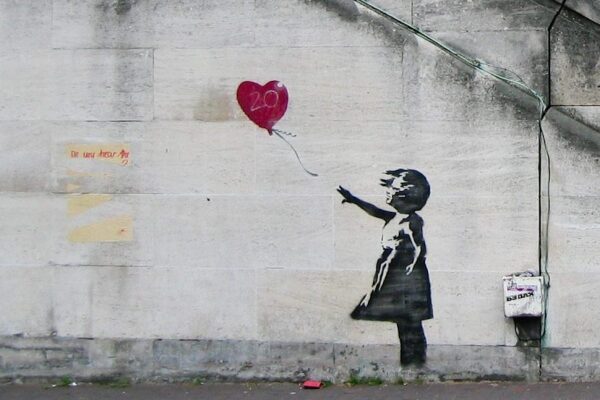
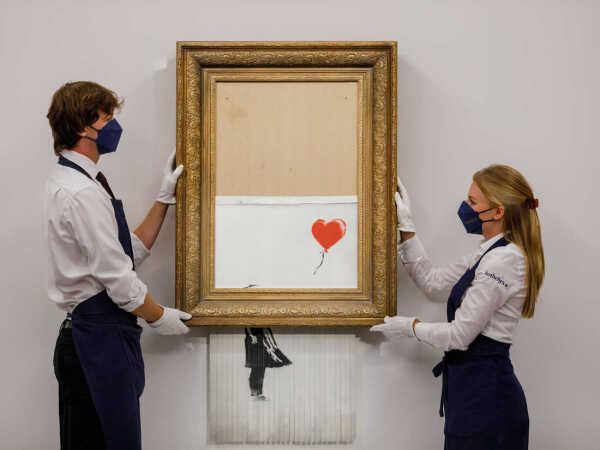
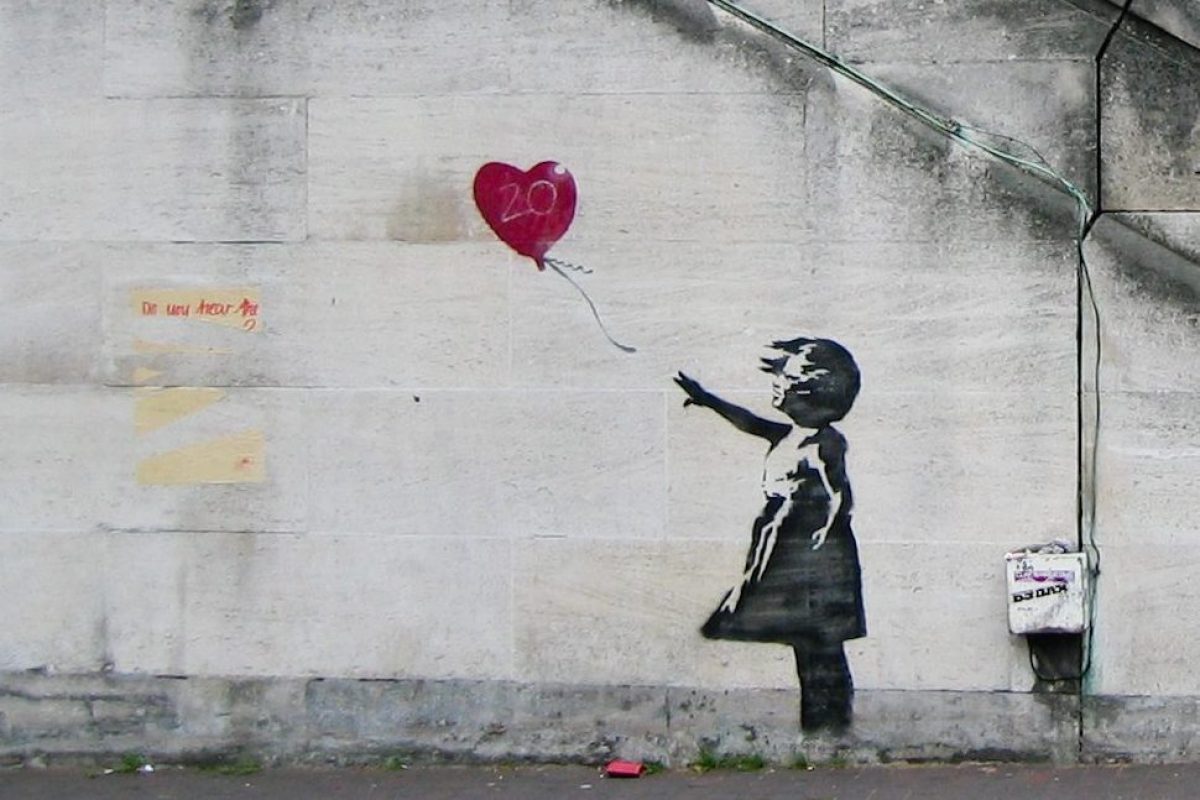
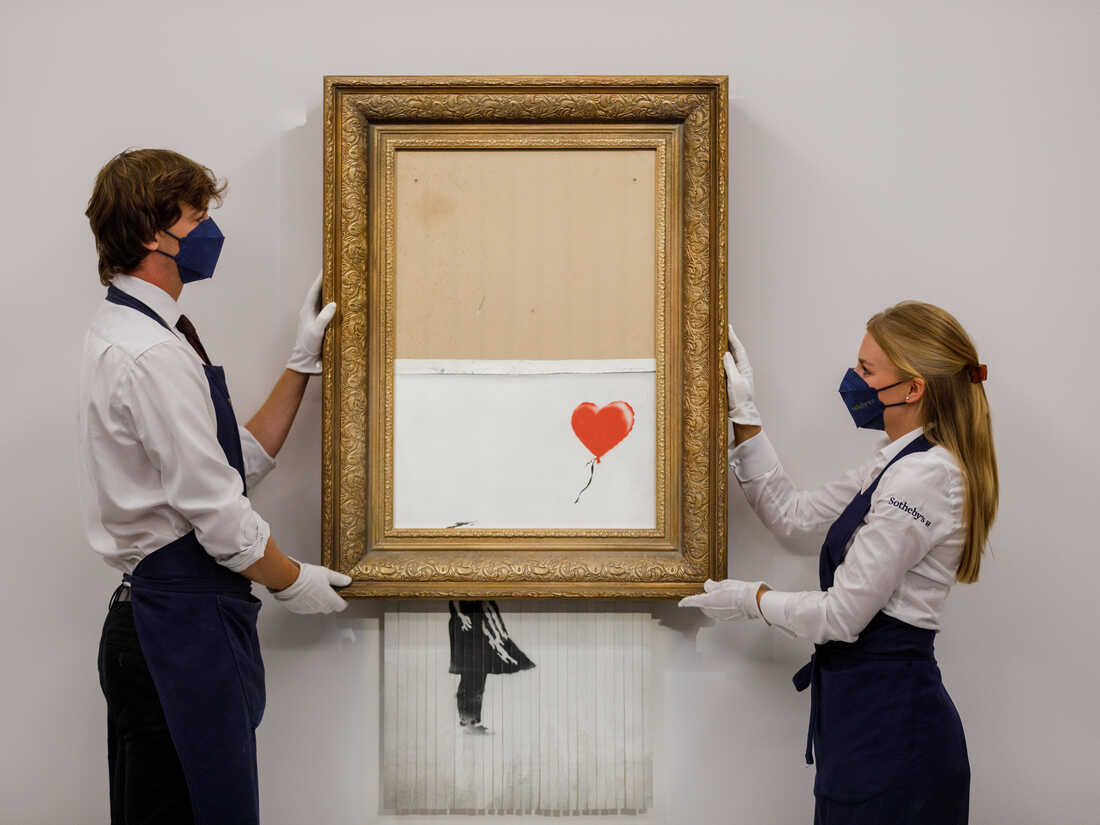
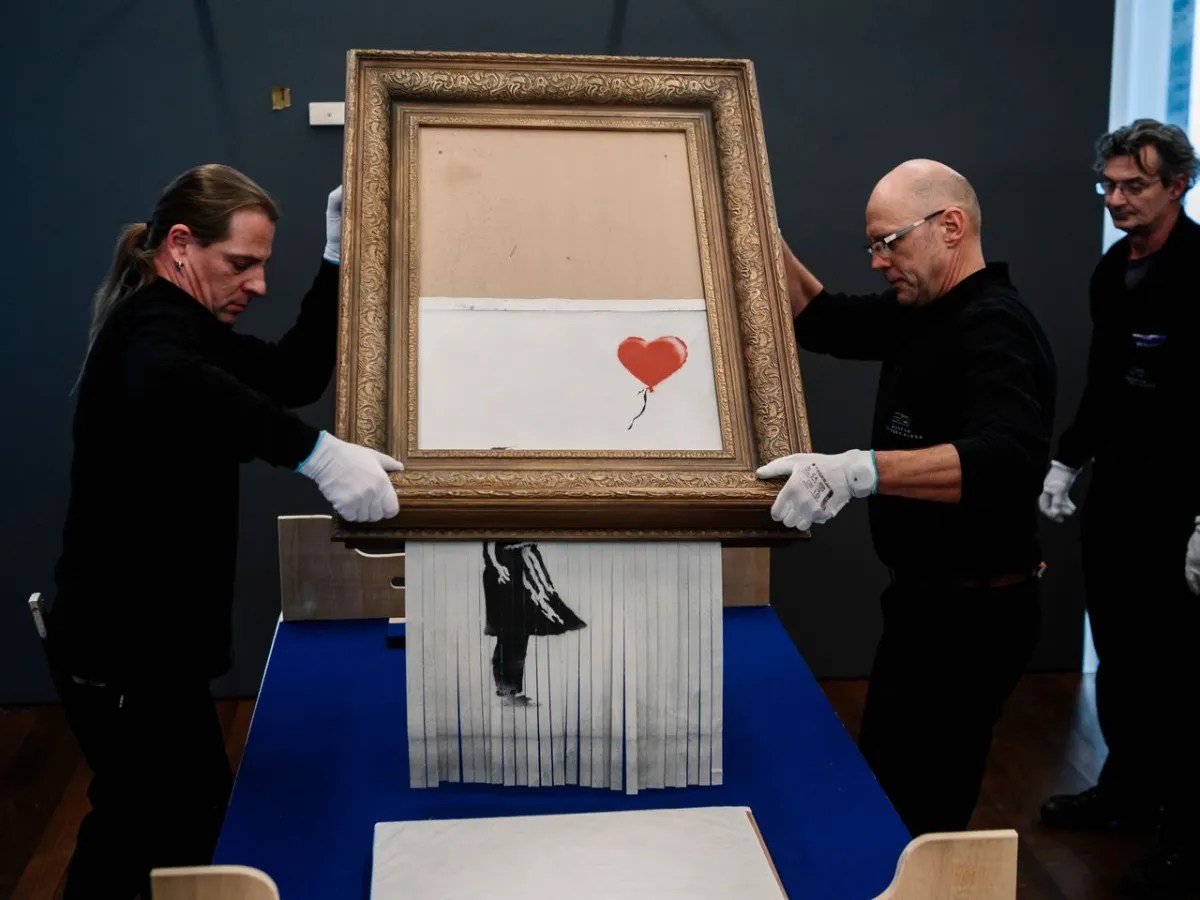
When it comes to creating unforgettable artistic moments, Banksy is second to none. The anonymous artist has a track record of staging high-profile stunts that not only challenge conventional norms of the art world but also provoke public dialogue and reflection on broader societal issues.Perhaps the most iconic of all is Banksy’s 2018 Sotheby’s auction stunt, in which his artwork ‘Girl with Balloon’ self-destructed immediately after being sold for £1.04 million. Hidden within the ornate frame was a remotely activated shredder that left the artwork hanging in tatters. This audacious act was not just a prank; it was a commentary on the commodification of art and the market’s ability to dictate the value of artworks. The shredded artwork was later renamed ‘Love is in the Bin,’ and in a twist of irony, it became even more valuable after the stunt.
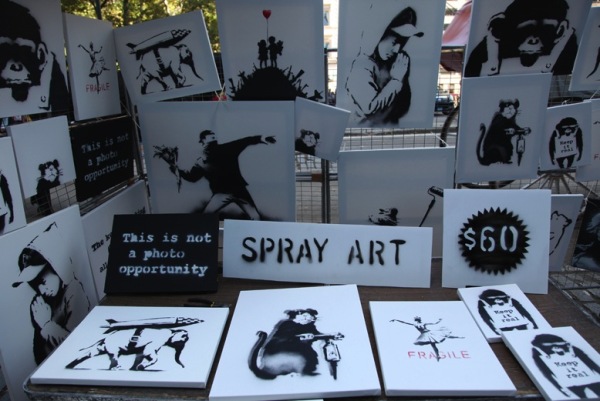
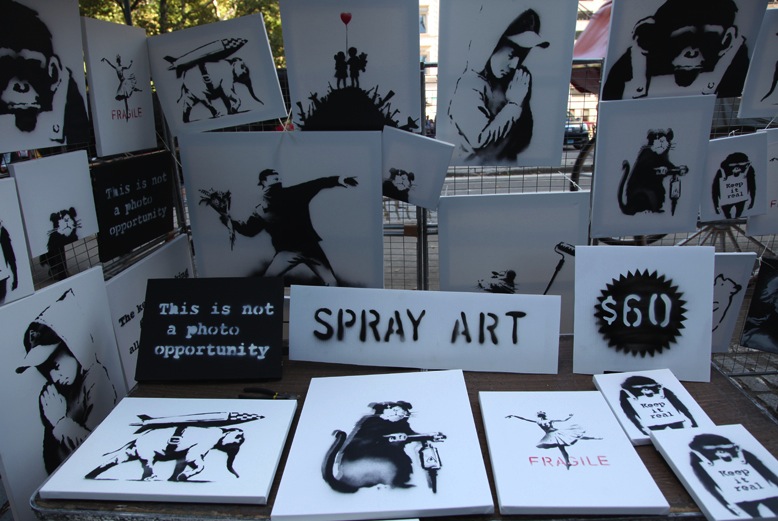
Another moment that captured global attention was Banksy’s 2013 New York residency, ‘Better Out Than In.’ For 31 days, Banksy unveiled a new work each day across the city. On one of these days, he set up a stall selling signed original Banksy canvases for just $60. The unsuspecting buyers had no idea of the true value of the artworks they were purchasing, challenging the notion of art’s value being tied to the artist’s name.
And again: In 2015, Banksy shook the art world again with the opening of Dismaland, a dark, dystopian parody of Disneyland. This temporary art project in the seaside resort town of Weston-super-Mare in England featured a fairy castle in ruin, a boat pond full of asylum seekers, and two juggernauts performing ballet, among other installations. It was a stark critique of consumer culture, inequality, and the failings of capitalism.
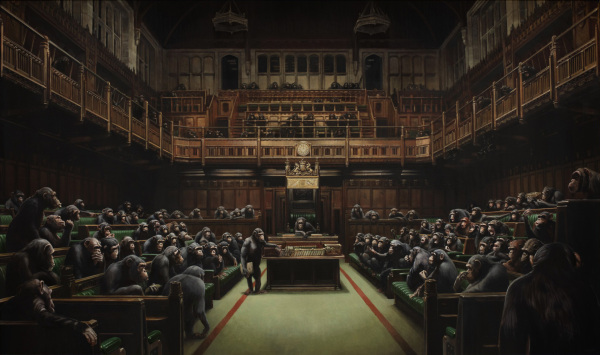
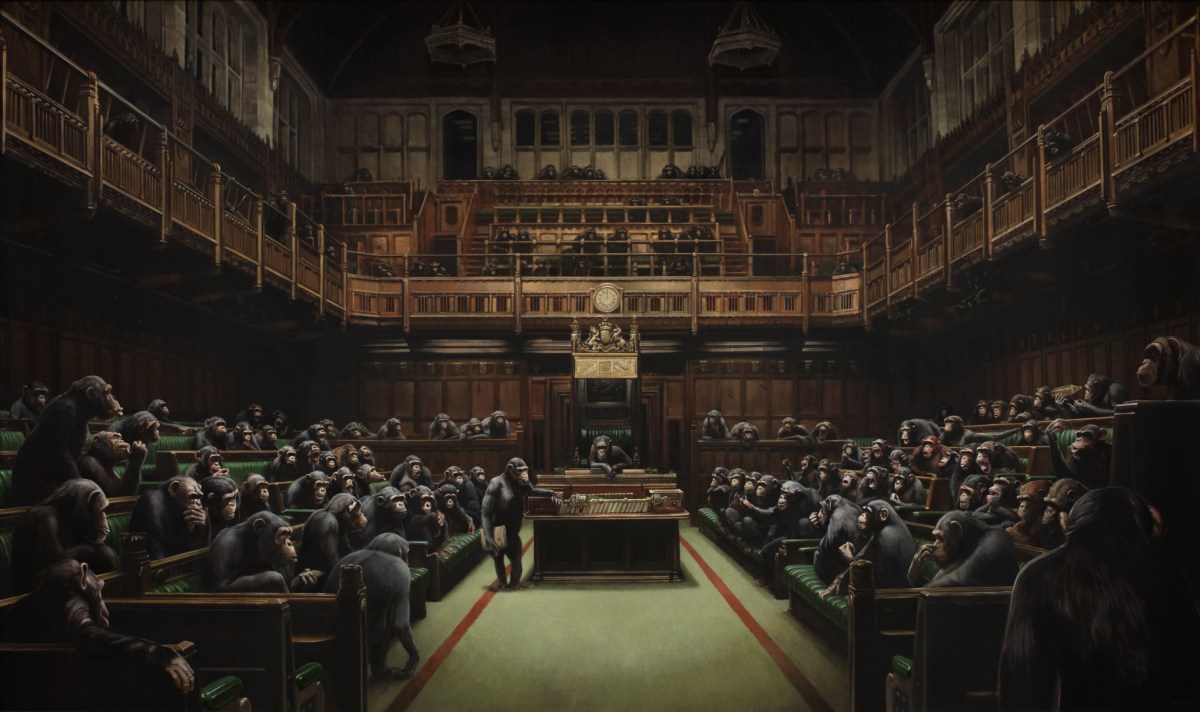
Banksy’s ‘Devolved Parliament,’ a satirical painting depicting the UK House of Commons filled with chimpanzees, is another example of his timely and pointed commentary. The artwork, which was created in 2009 and exhibited just before the original Brexit date in March 2019, sold for a record-breaking £9.9 million at Sotheby’s in October 2019.
And as mentioned before who can forget Banksy’s response to the COVID-19 pandemic? His ‘Game Changer’ artwork, depicting a young boy playing with a nurse doll, was a tribute to healthcare workers on the front lines of the crisis. It was later sold at auction for £16.8 million, with all proceeds going to the NHS.
Through these iconic moments, Banksy continues to use his art to subvert expectations, provoke thought, and challenge the status quo, leaving an indelible mark on the world of contemporary art.
VII. Enduring Impressions: The “Banksy Effect”
The “Banksy Effect” is a term coined to describe the remarkable influence that Banksy has had on the art world and beyond. It refers not just to his transformation of street art into a globally recognized and highly coveted form of expression, but also to the way his work has reshaped public discourse around key societal issues.Banksy’s provocative approach to art has undoubtedly pushed the boundaries of what is considered acceptable or valuable in the art world. By using public spaces as his canvas, Banksy has democratized access to art, making it available to everyone, not just those who frequent art galleries or auction houses. This has led to a broader acceptance and recognition of street art as a legitimate form of artistic expression, with cities around the world now boasting thriving street art scenes.
Beyond the art scene, Banksy’s satirical, often politically charged works have also had a profound impact on public consciousness. His art has served as a powerful commentary on issues such as war, capitalism, consumerism, and inequality, sparking public dialogue and forcing viewers to confront uncomfortable realities. By leveraging the power of art for social commentary, Banksy has inspired a new generation of artists to use their work as a tool for social and political activism.
Moreover, Banksy’s commitment to anonymity has further fueled his appeal and added a layer of intrigue to his work. Despite his global fame, Banksy has managed to maintain his anonymity, a feat that has only added to his mystique and led to widespread speculation about his identity. This anonymity has also allowed Banksy to remain a subversive figure, unbound by the expectations or constraints typically placed on renowned artists.
The “Banksy Effect” encompasses the far-reaching influence of Banksy’s art on both the art world and society at large. His innovative approach to art, combined with his incisive social commentary, has left an enduring legacy that continues to inspire and provoke. Whether it’s through a simple graffiti piece on a city wall or a high-profile stunt at an auction house, Banksy’s impact is indelible, echoing throughout contemporary culture and continuing to challenge our perceptions of art and its role in society.
VIII. Unmasking the Enigma: Decoding Banksy’s Enduring Allure
As we delve into the intriguing world of Banksy, we come to realize that his enigmatic persona, revolutionary approach to art, and the courage to challenge societal norms are not just the hallmarks of his unique artistry, but also the underlying factors of his enduring appeal.Banksy’s anonymity has allowed him to create art that is pure and unaffected by the bias of celebrity. It keeps the focus on the art and the message it conveys rather than the artist. This could well be one of the reasons why his art, despite its simplicity, resonates on a universal scale. The unknown identity of the artist also adds an element of intrigue and mystery, making each new artwork a topic of global conversation.
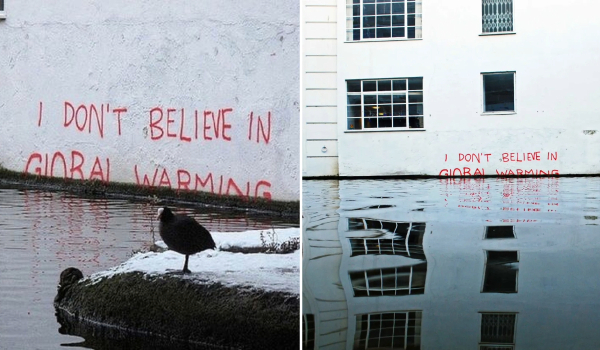
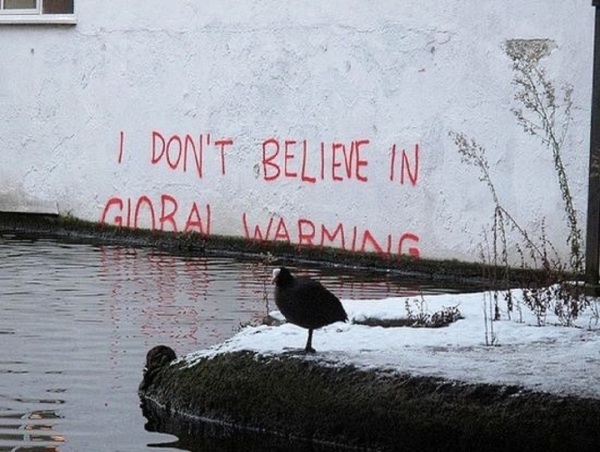
I don’t believe in global warming (Banksy, 4 photos)
Banksy’s approach to art, characterized by its accessibility and daring themes, has redefined the relationship between art and the public. His belief that art should be available to everyone has brought art out of the exclusive confines of galleries and into the streets, making it part of people’s everyday lives. This democratization of art has not only elevated the status of street art but has also changed the way we perceive and interact with art.Moreover, Banksy’s unwavering commitment to highlighting societal issues through his art has given him the ability to influence public discourse like few artists can. His provoking imagery and poignant commentary on pressing issues such as war, inequality, and consumerism have started important conversations, challenging us to question the status quo and contemplate our role within these systems.
Banksy’s knack for spectacle, such as the infamous shredding incident at Sotheby’s, has further amplified his influence by merging performance and visual art, creating unforgettable moments that transcend the confines of the art world. These audacious acts have not only propelled Banksy into the global spotlight but have also pushed the boundaries of what is possible in art.
In the end, Banksy is not just an artist; he is a phenomenon, a catalyst for change, and a symbol of resistance against conventional norms. His disruptive yet compelling artistry continues to captivate the world, and his influence, the “Banksy Effect,” continues to ripple through the realms of art and culture. His legacy is one that invites us to challenge our perspectives, to question our surroundings, and most importantly, to realize the power of art as a tool for change. As we continue to anticipate Banksy’s next move, one thing is clear: the world is his canvas, and we are all eager spectators.
Now click here to read some of Banksy’s best quotes: 14 Great Banksy Street Art Photos and Quotes!
And that’s a wrap on our deep dive into the world of Banksy!
Remember, street art is a global canvas, and each of us has a role to play in appreciating and preserving it. So, the next time you come across a Banksy—or any piece of street art—pause, take it in, and let it evoke thoughts and emotions. And if you’ve enjoyed this post, don’t hesitate to share it with your fellow street art enthusiasts and join our group: Your Street Art Utopia.Until next time, keep discovering, keep questioning, and keep appreciating the world of street art.
More by Banksy?: 18 Iconic Banksy Artworks (Indoors!)
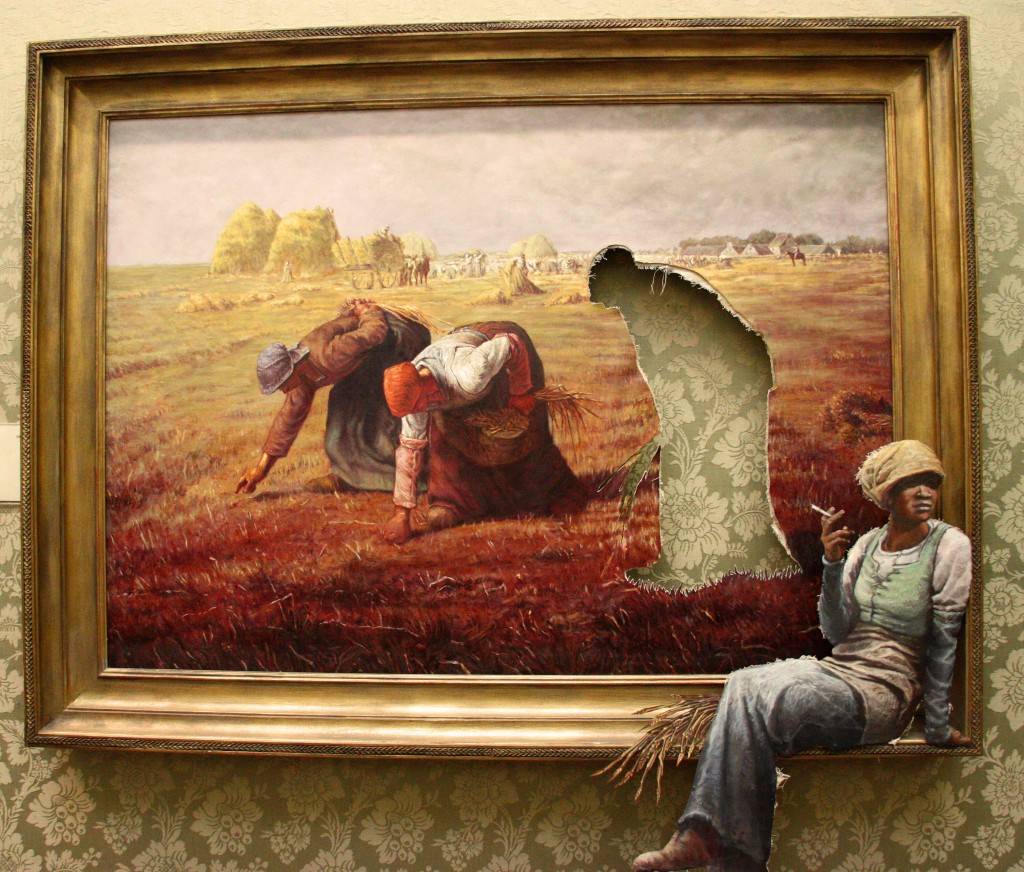
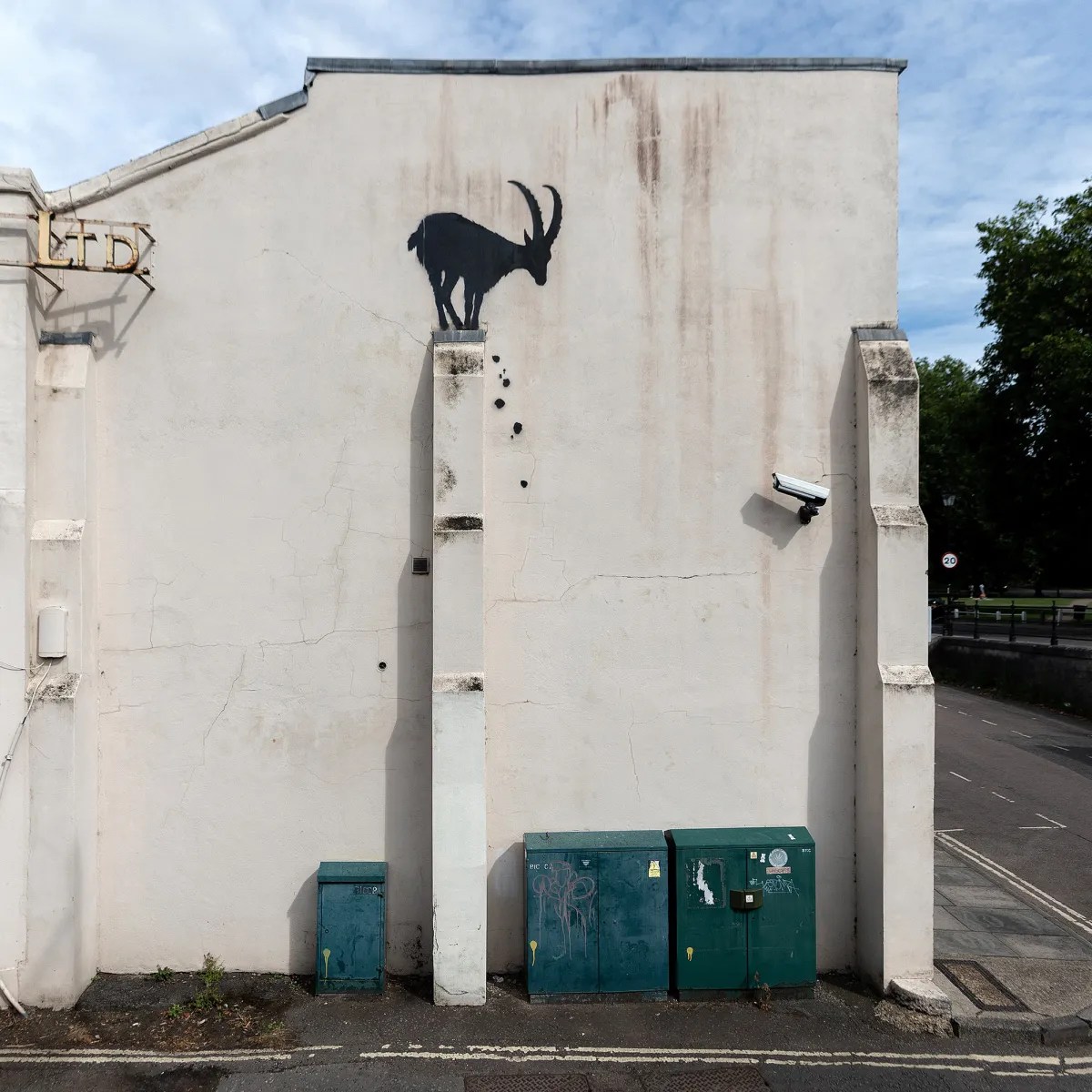
The Goat?
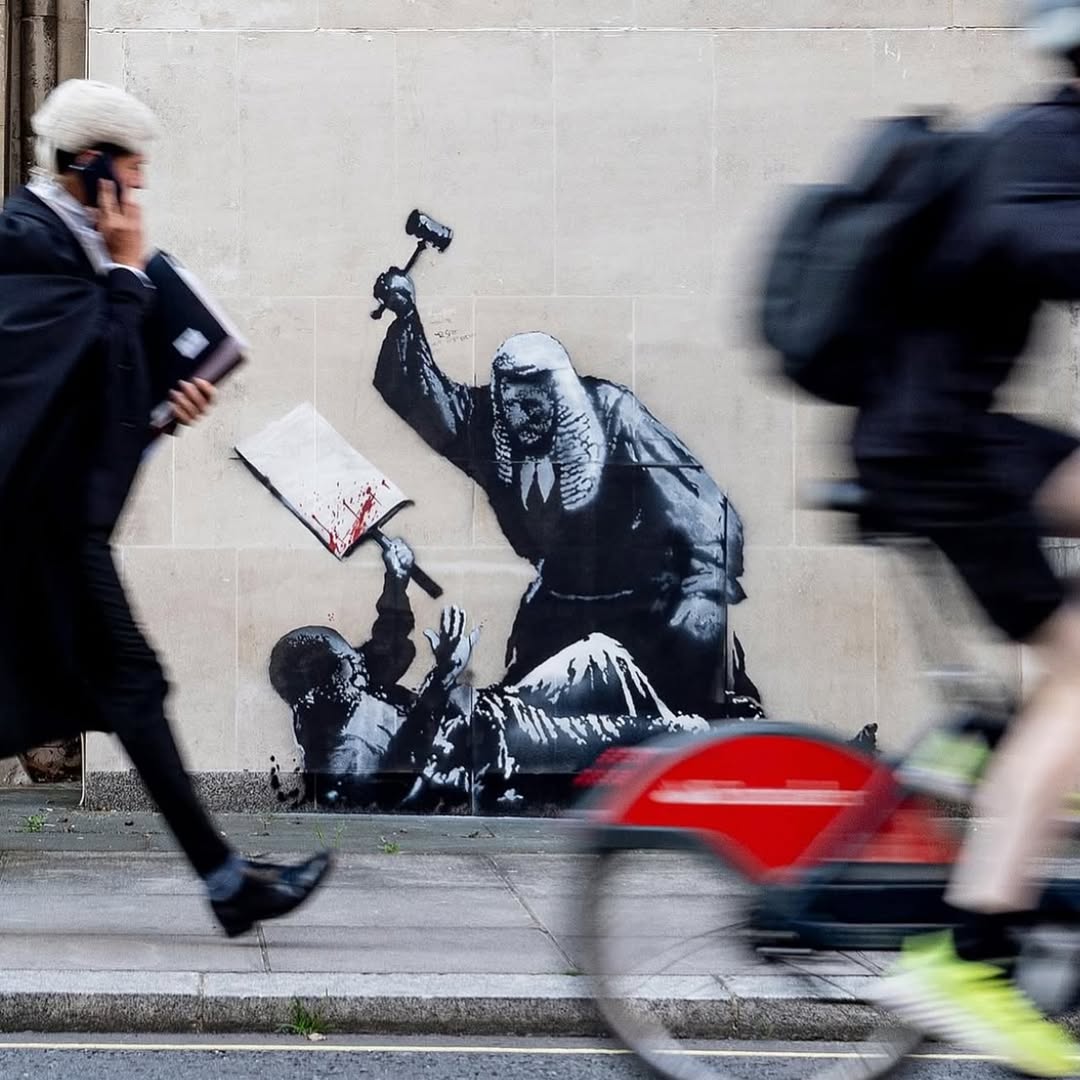
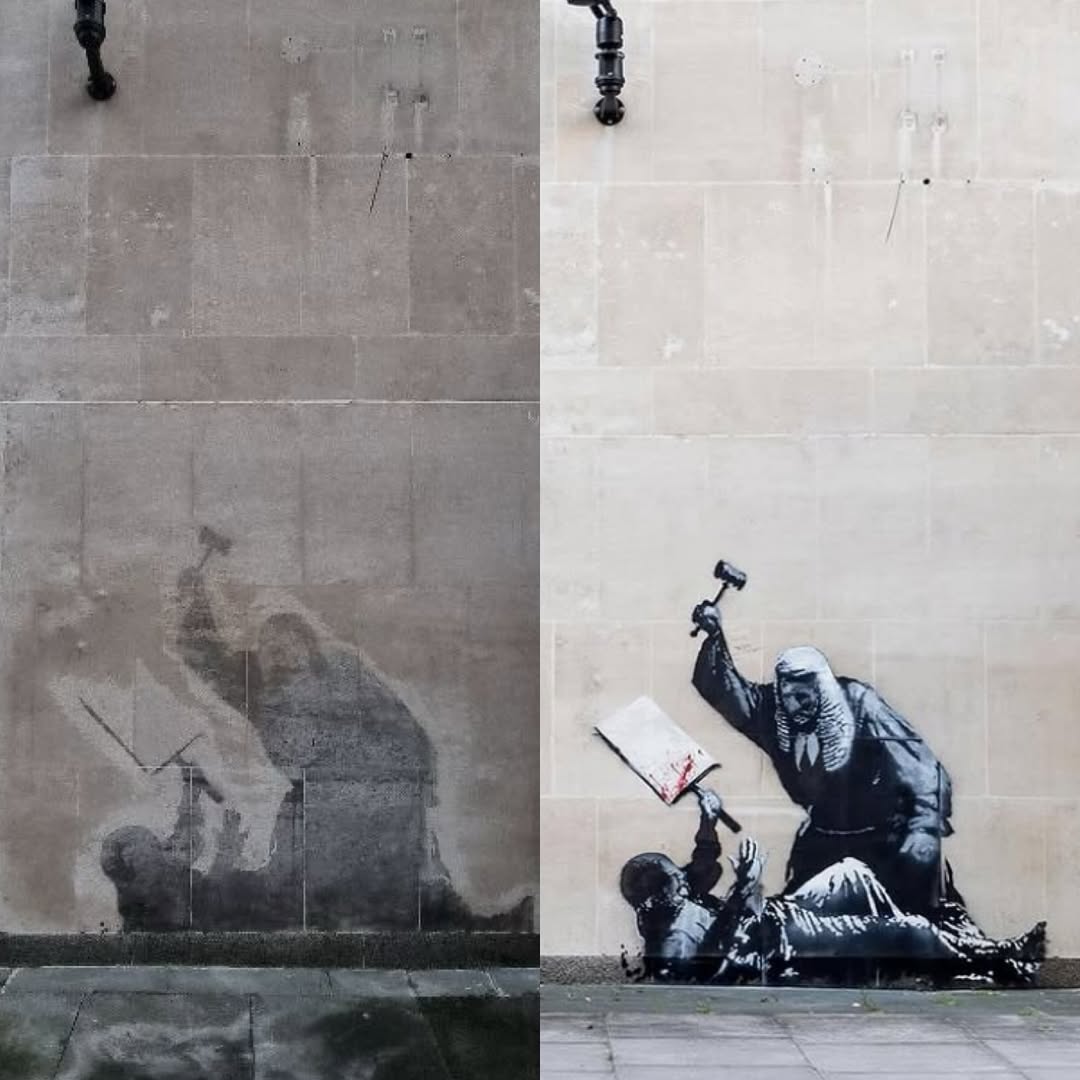
Banksy at Royal Courts of Justice in London.
More here!More!: Indoor Art By Banksy! (18 Photos)
Which one is your favorite?

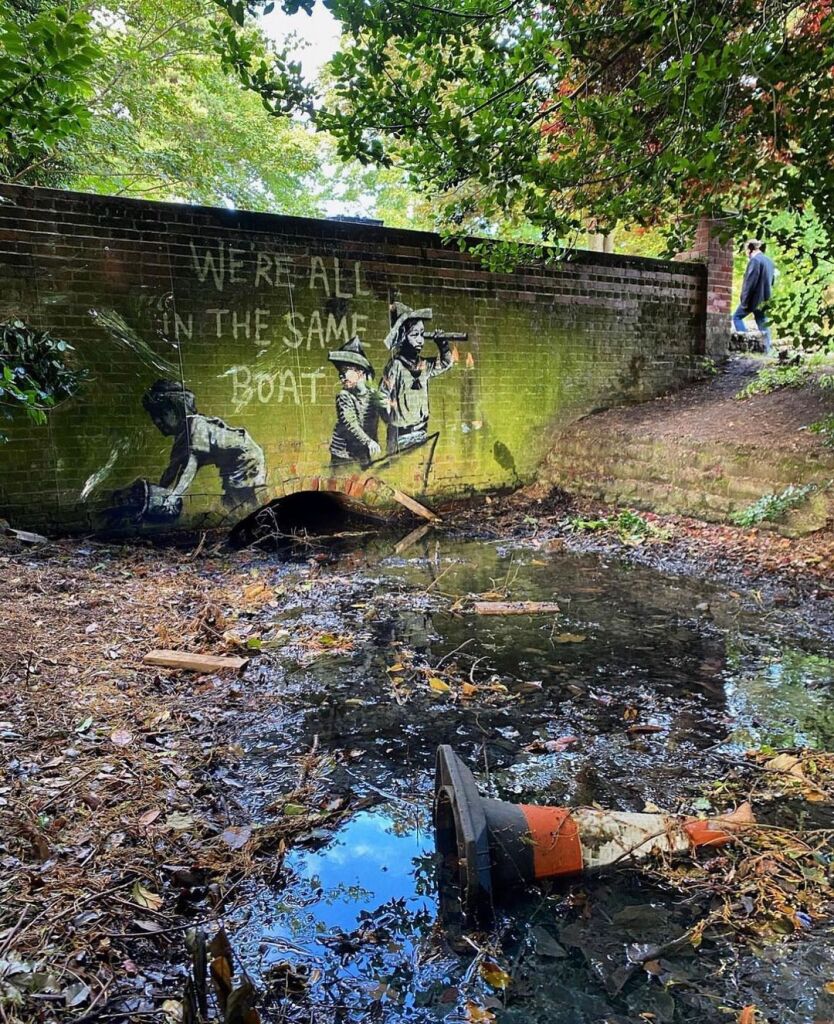





The Crime Kings 2025: Dollar Trump
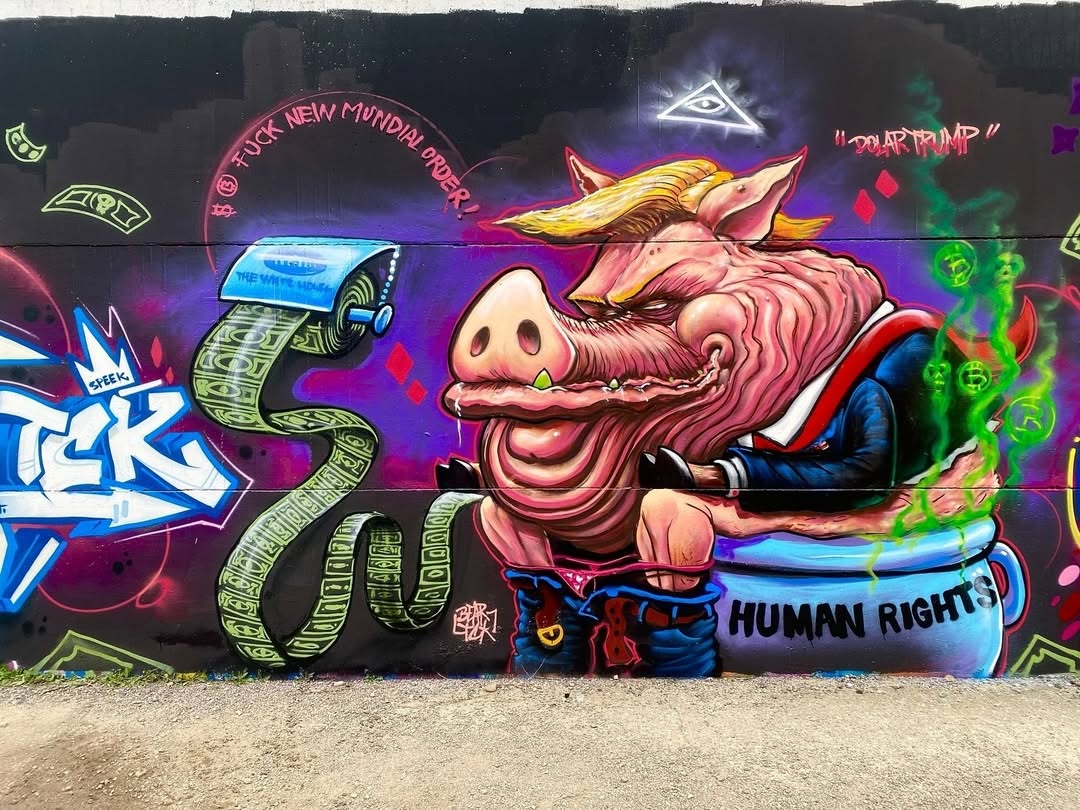
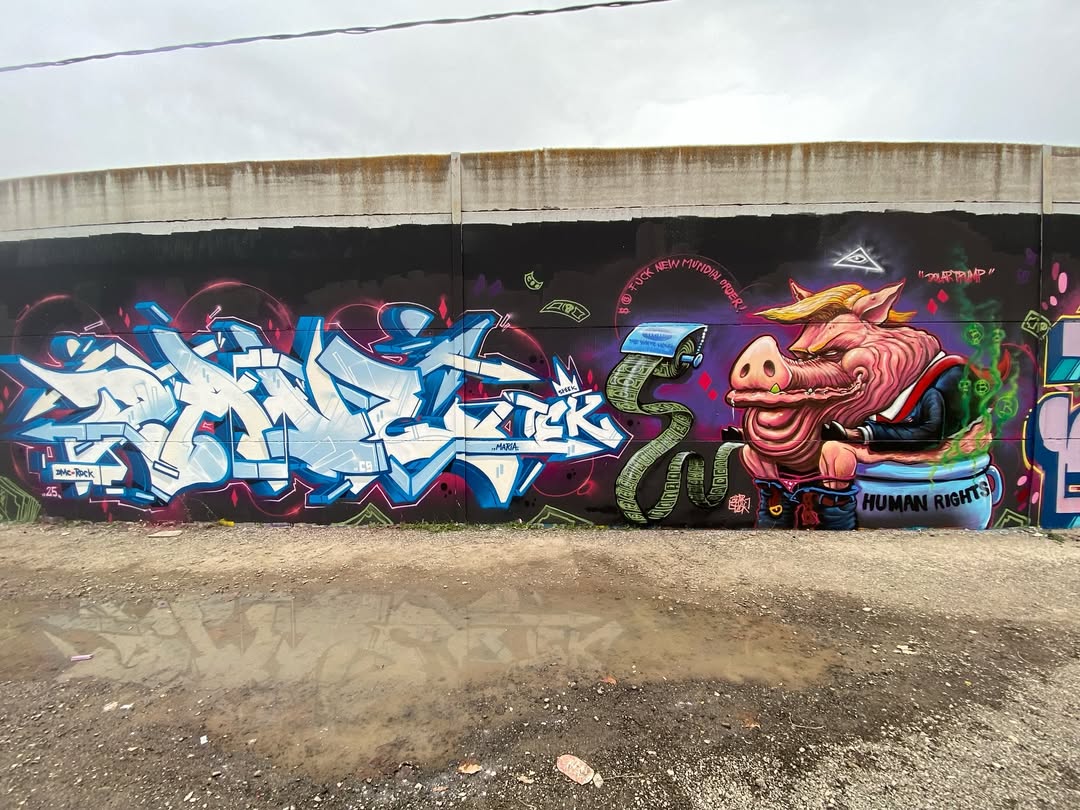
Content warning: A new mural by Spanish graffiti artist Bear Tck has appeared in Madrid, titled “The Crime Kings 2025”. The artwork depicts a caricatured figure resembling Donald Trump with exaggerated features, sitting on a toilet labeled Human Rights. The mural contains
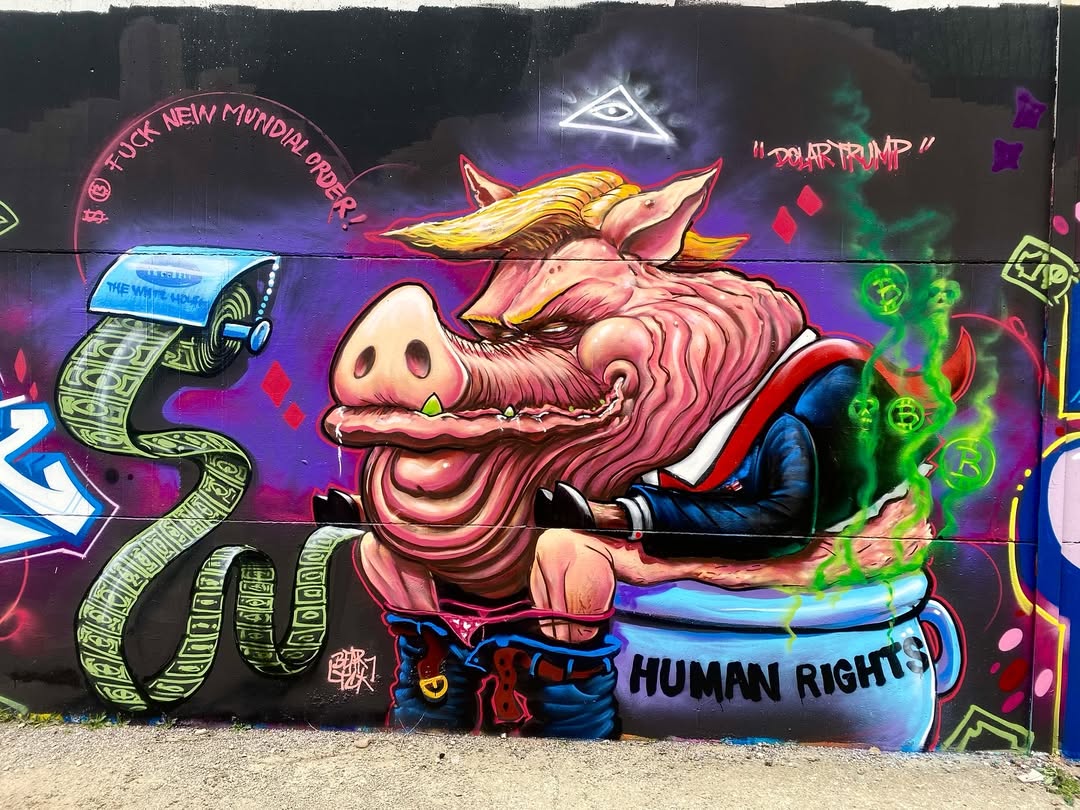
A new mural by Spanish graffiti artist Bear Tck has appeared in Madrid, titled “The Crime Kings 2025”. The artwork depicts a caricatured figure resembling Donald Trump with exaggerated features, sitting on a toilet labeled Human Rights.
The mural contains several symbolic elements:
- A roll of toilet paper with dollar bills, referencing money and power.
- A glowing eye above the figure, often associated with control and influence.
- Green fumes rising from the toilet with Bitcoin symbols, possibly commenting on cryptocurrency and financial power.
Above the figure, the words “F* New Mundial Order”** are written in red. The mural is painted in a combination of graffiti lettering and detailed artwork, creating a striking visual statement.
‘The Crime Kings 2025’ was recently painted in Madrid by Bear Tck. Follow him on Instagram here!
More: Speak Truth to Power?: 32 Photos Of Real Talk Graffiti
Do you agree?
Speak Truth to Power?: 32 Photos Of Real Talk Graffiti
1.
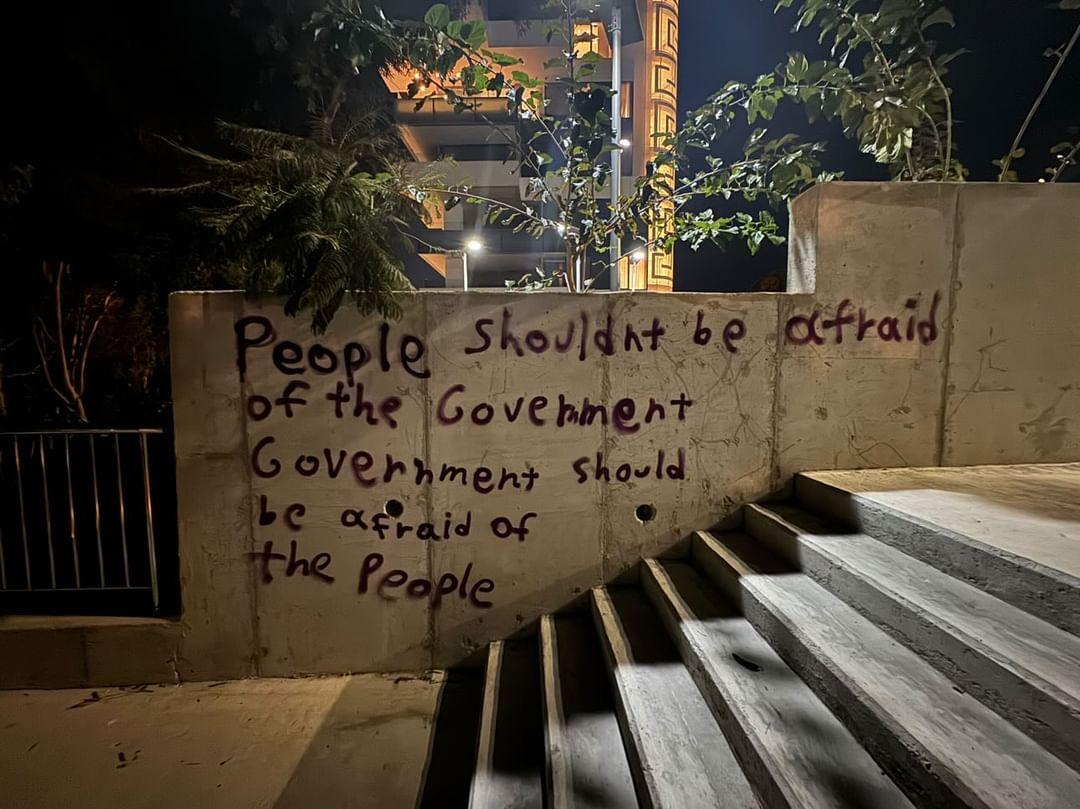
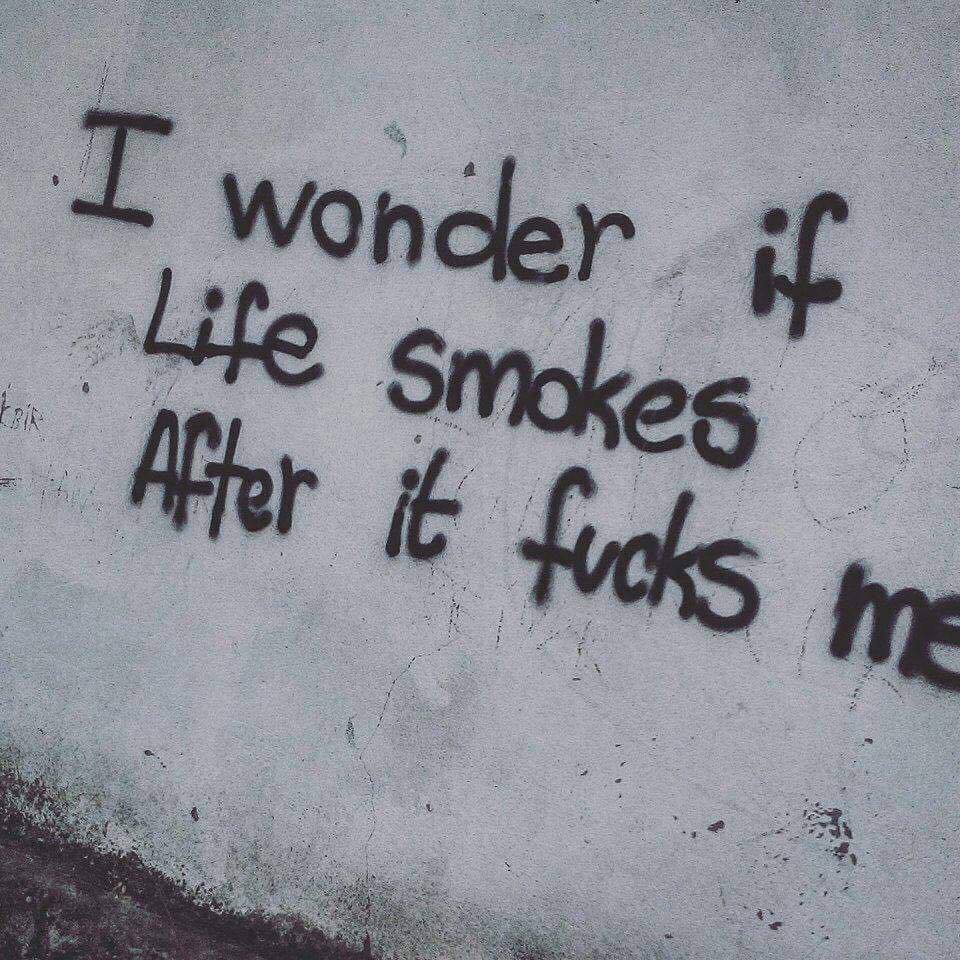
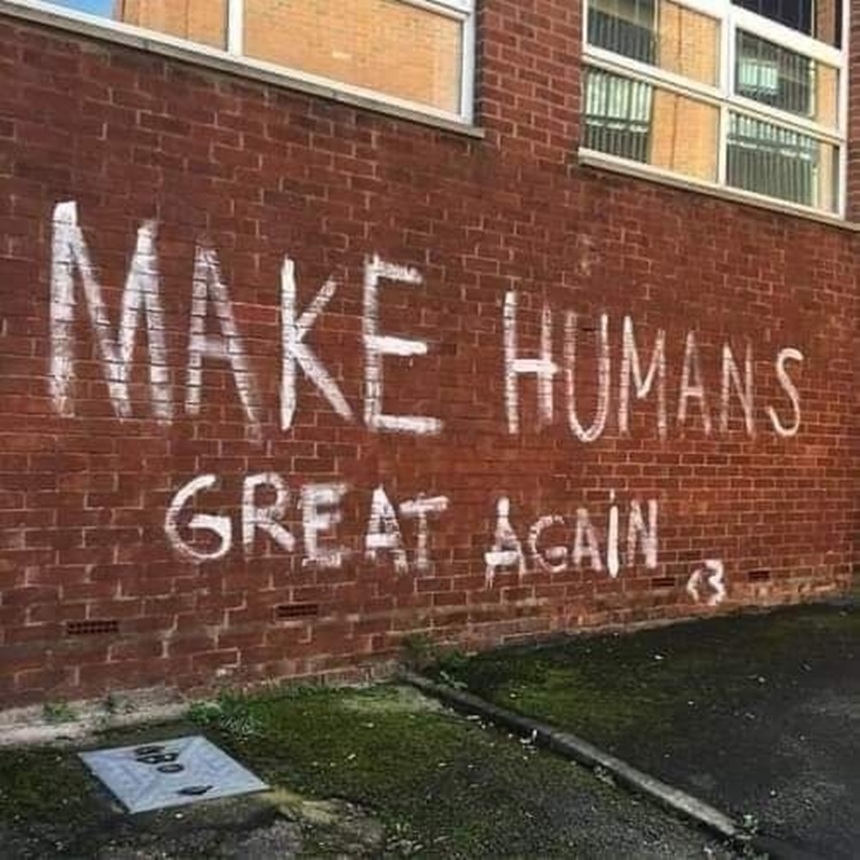
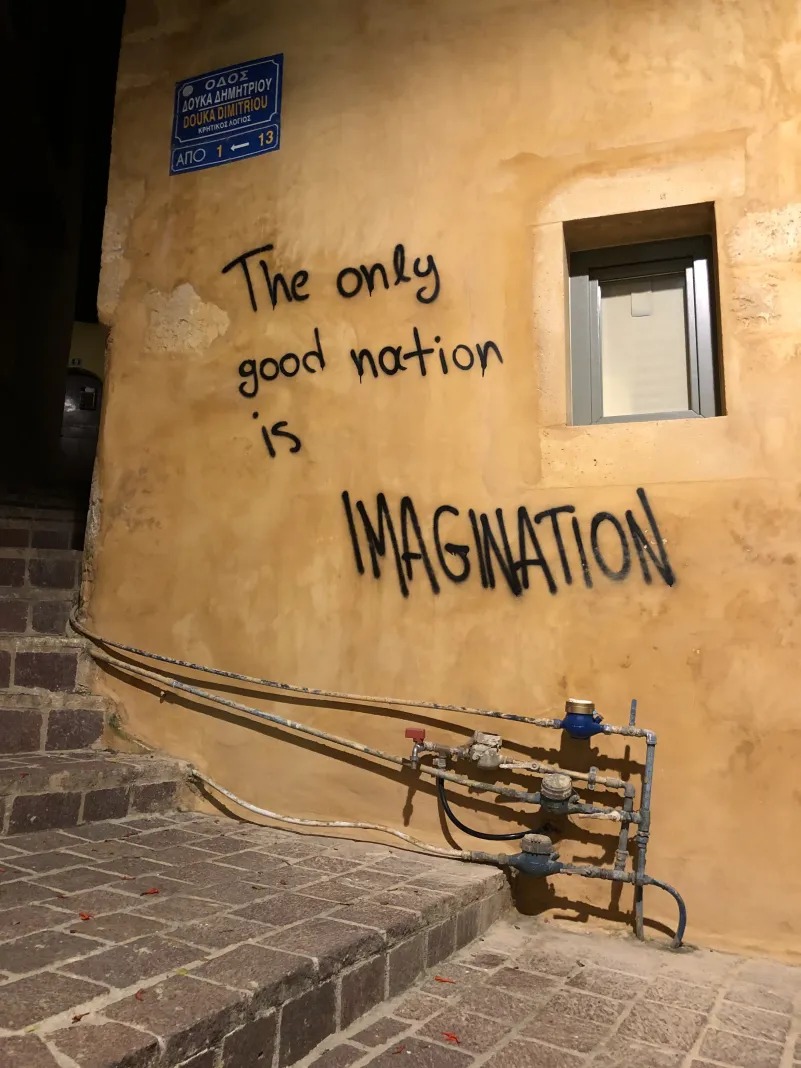
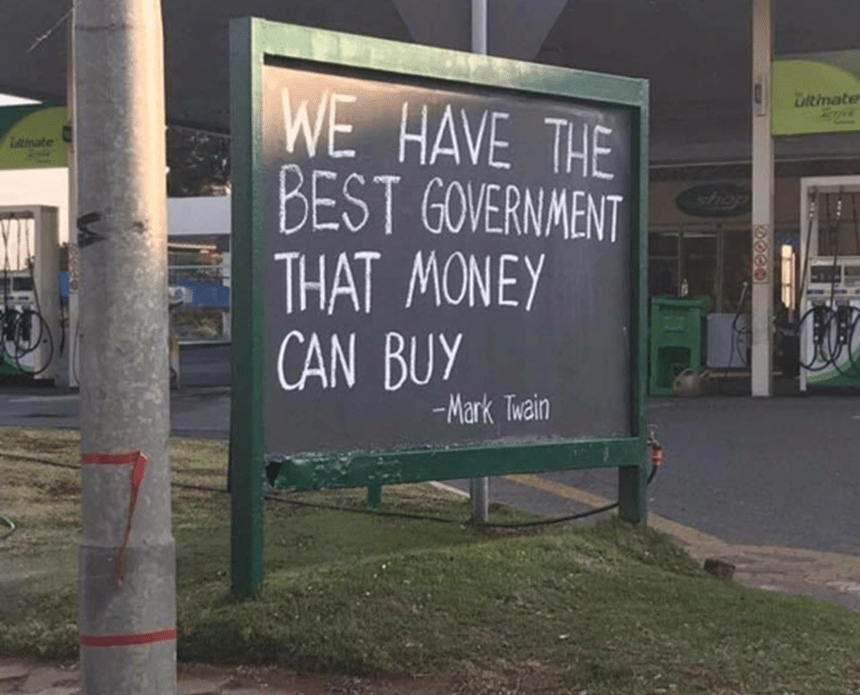
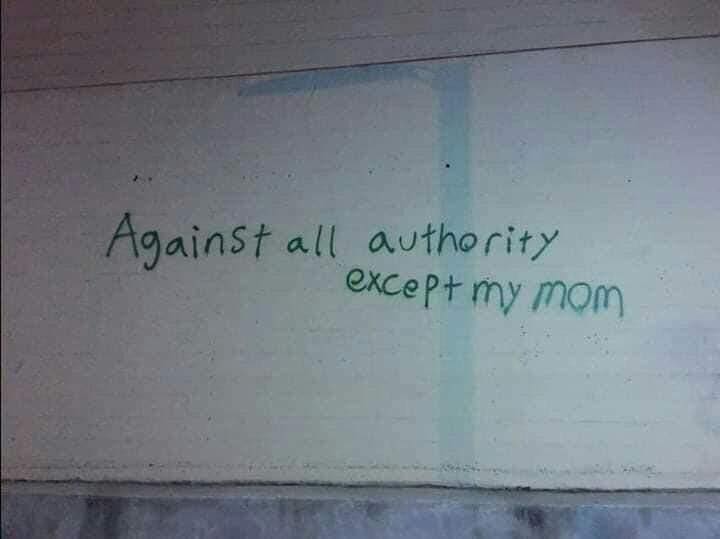
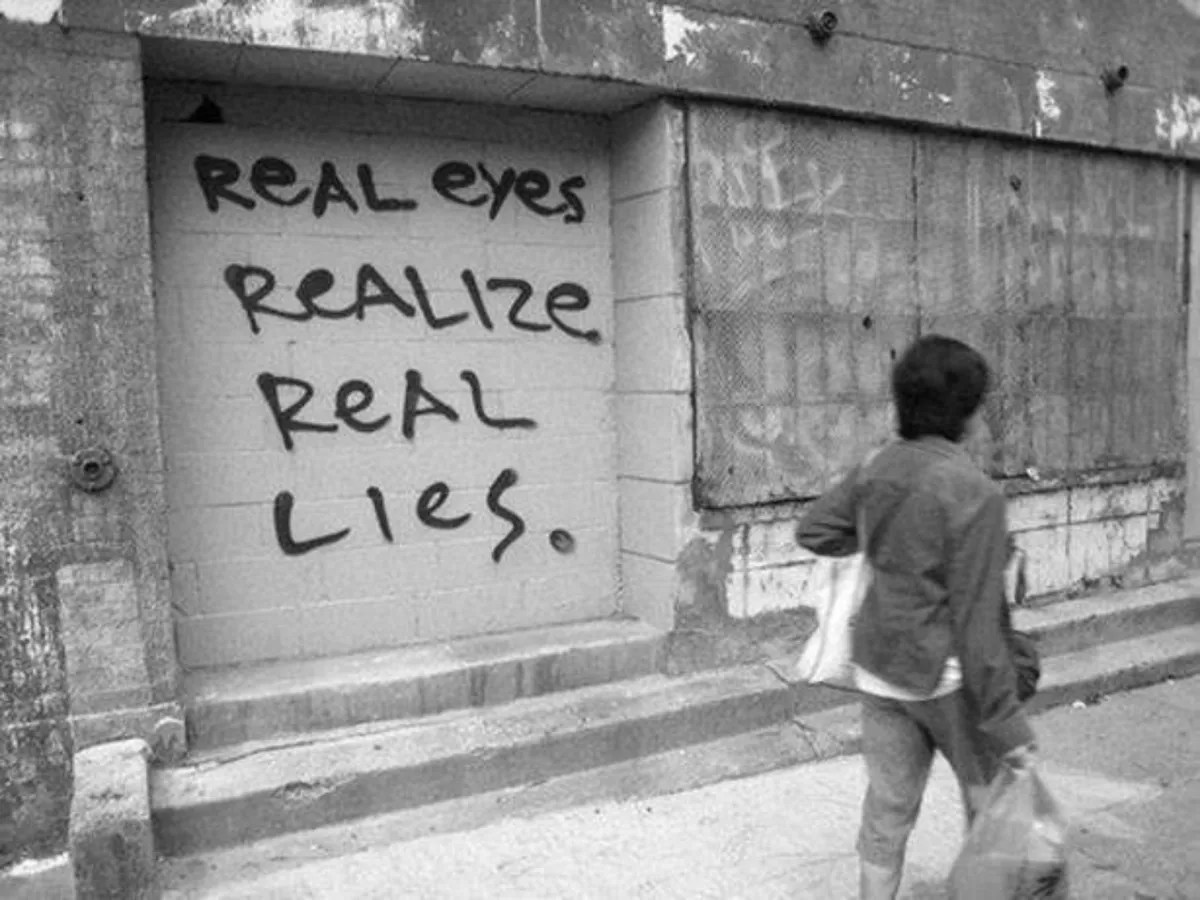
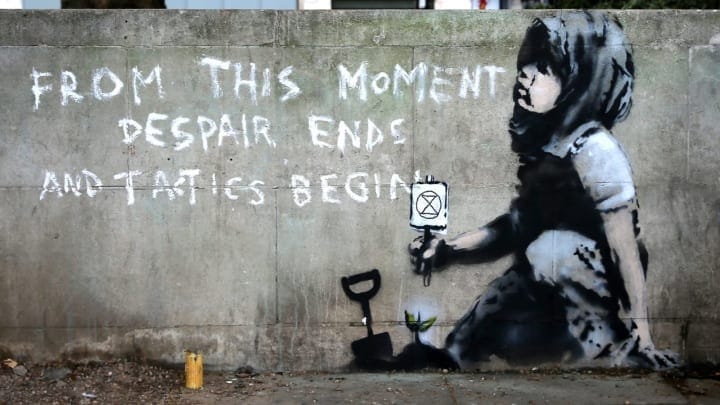
Graffiti has long been a voice for the voiceless, a way for people to reclaim space and share unfiltered truths with the world.
In this collection, we dive into the raw and impactful world of “Real Talk Graffiti” – art that doesn’t hold back. These pieces go beyond aesthetics, delivering sharp commentary on society, politics, and the human experience.More: Banksy on Capitalism: Challenging Inequality and Consumerism Through Art (11 Artworks)
2.
3.
4.
5.
6.
7.
8.
9.
10.
11.
12.
13.
14.
15.
16.
17.
18.
19.
20.
21.
22.
23.
24.
25.
26.
27.
28.
29.
30.
31.
32.
More: 42 Photos of Inspiring Street Art by HIJACK
Which one is your favorite?
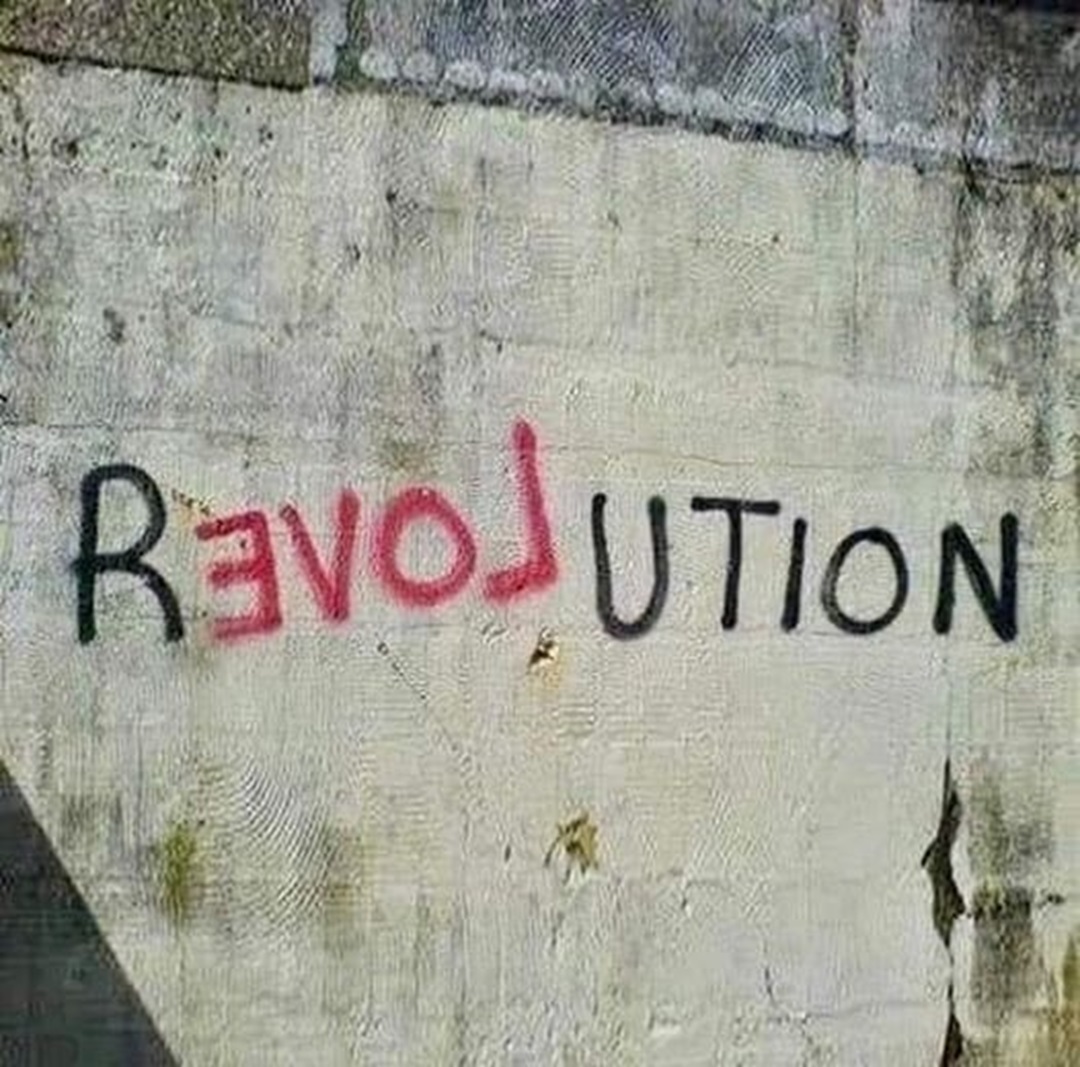
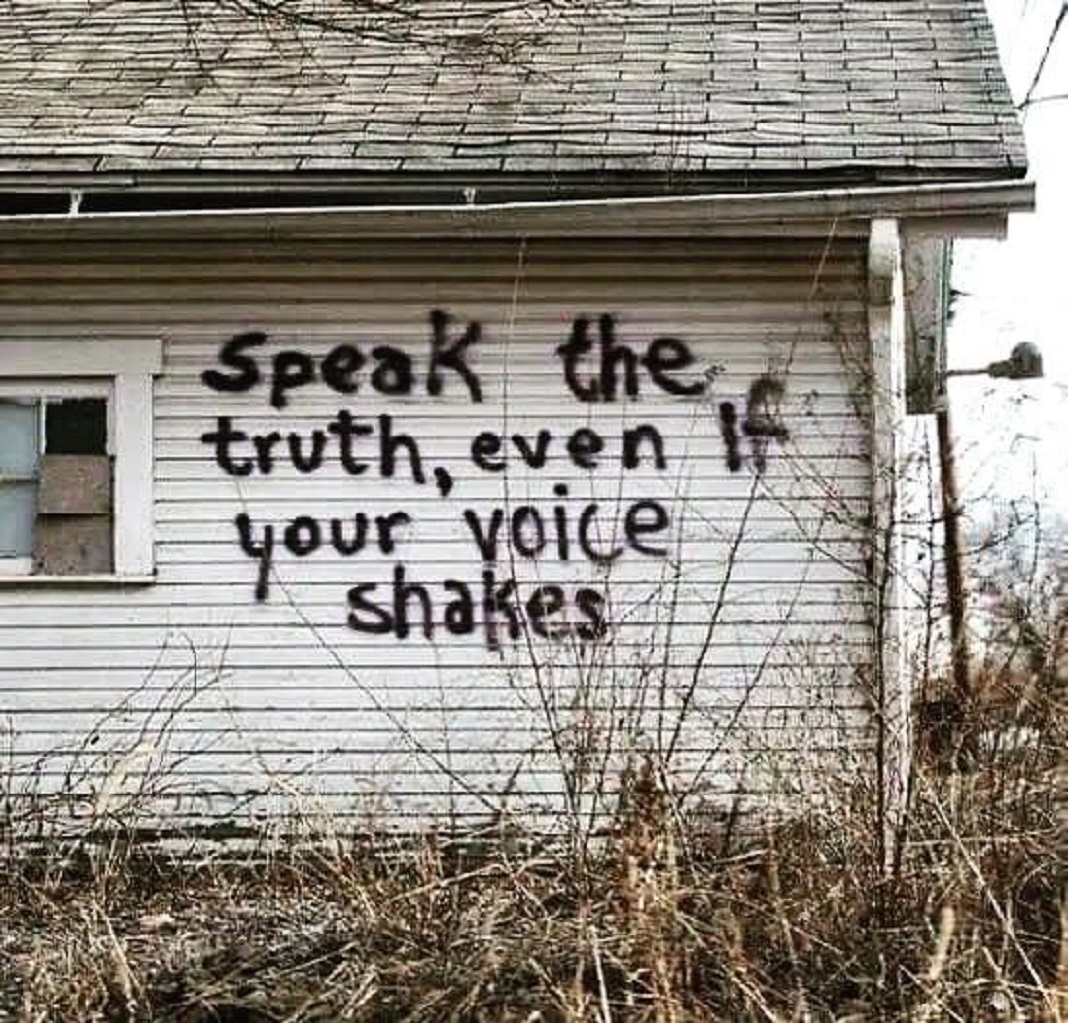
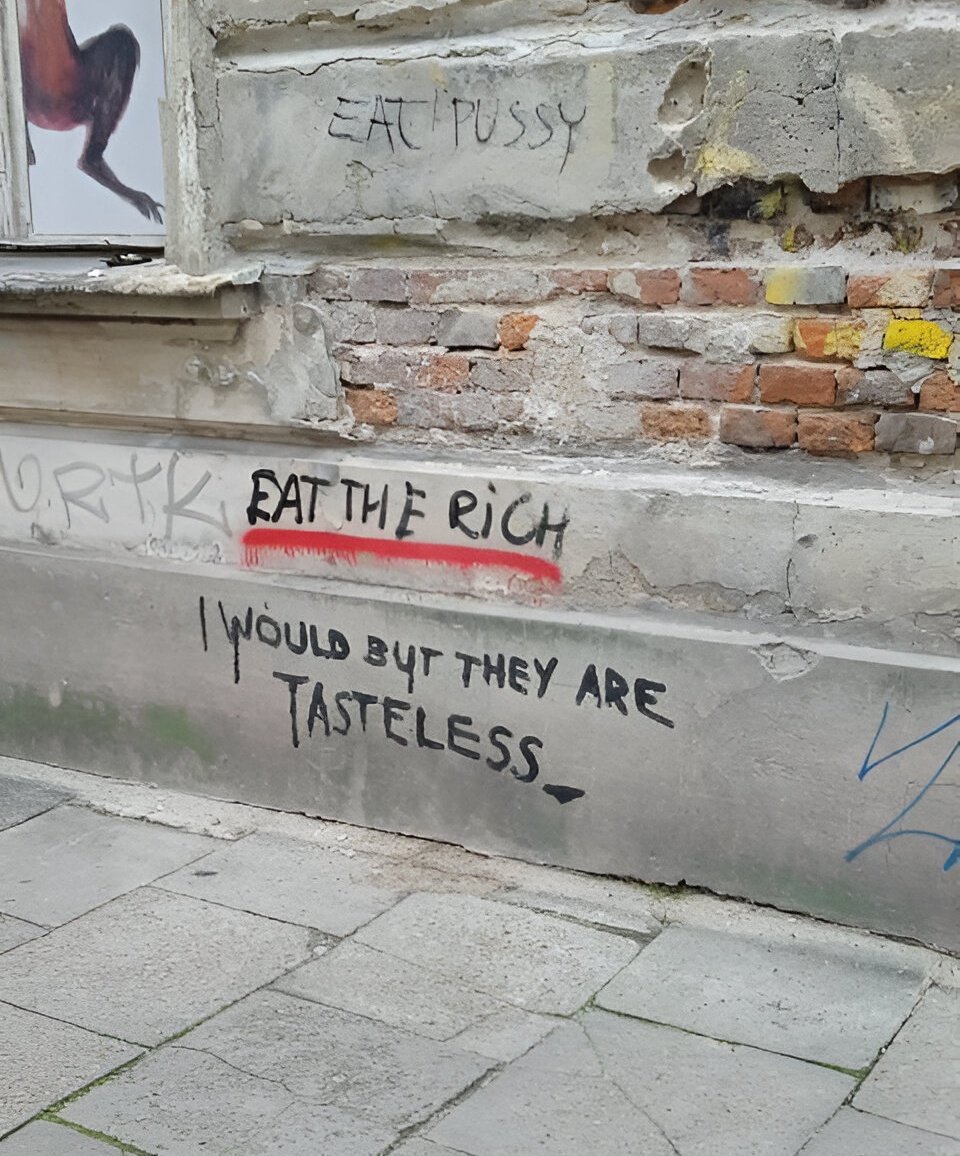
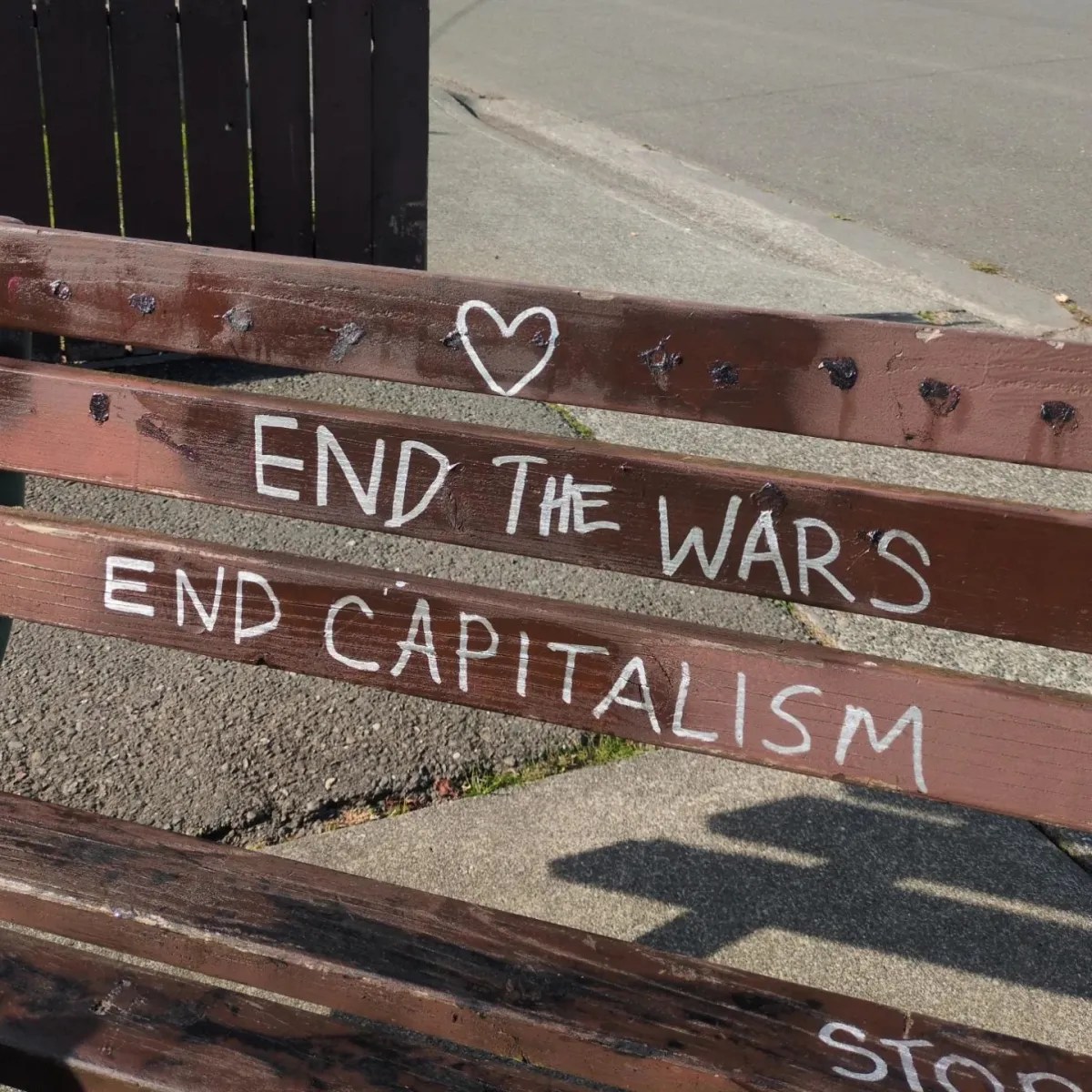
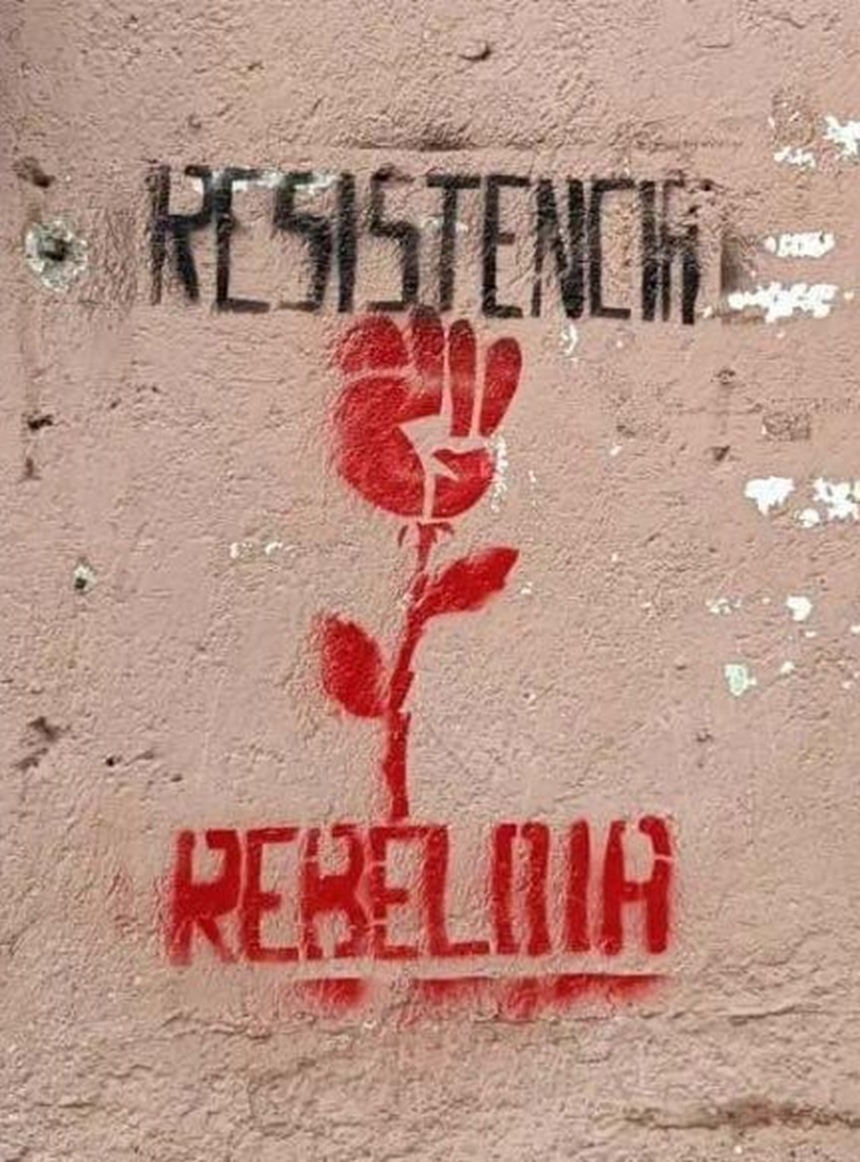
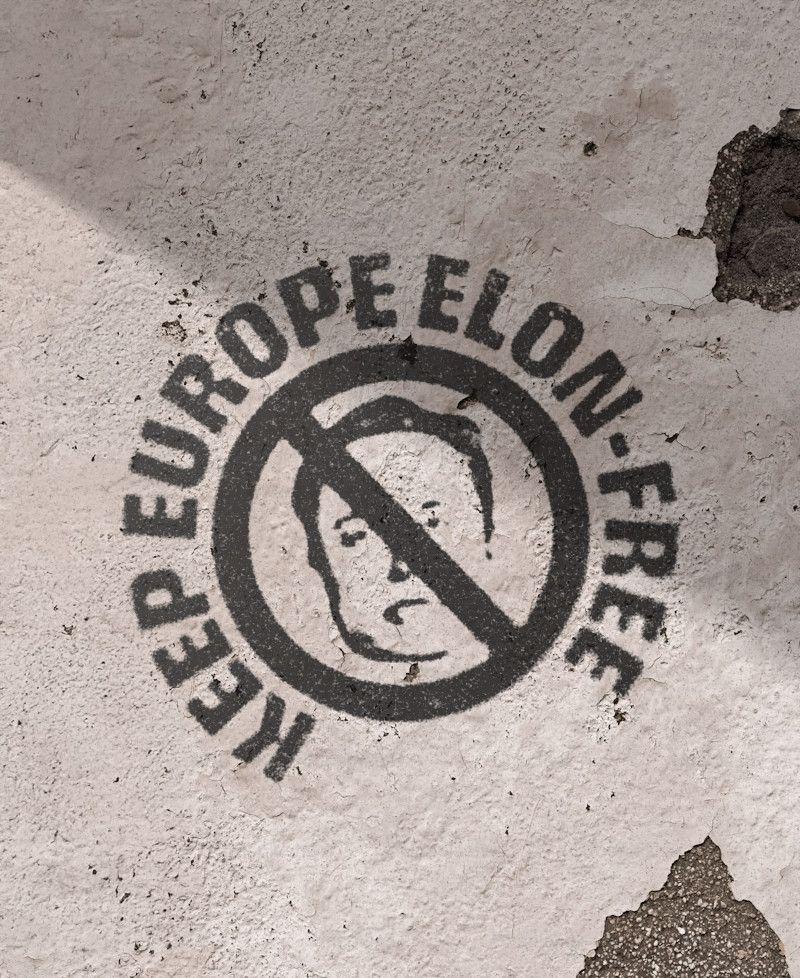
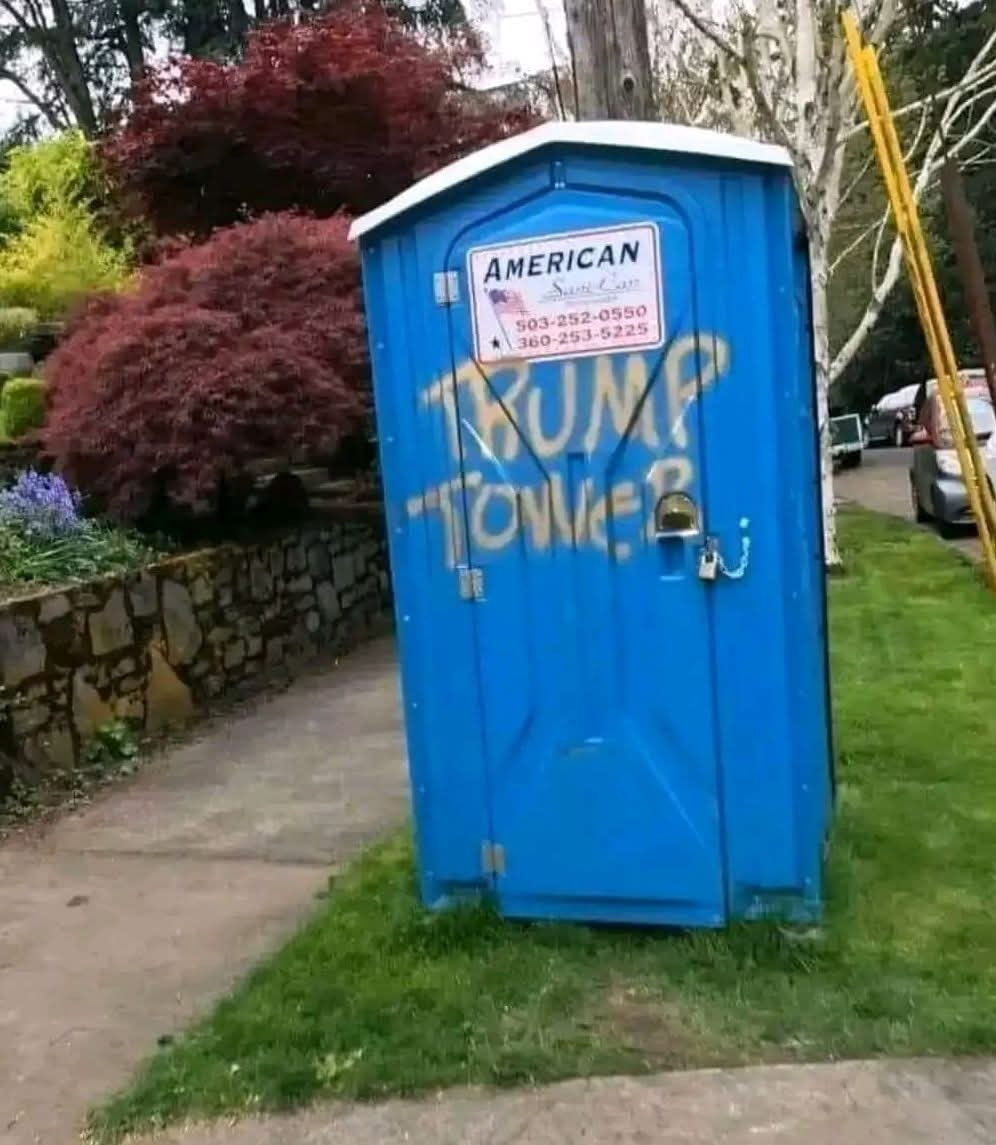
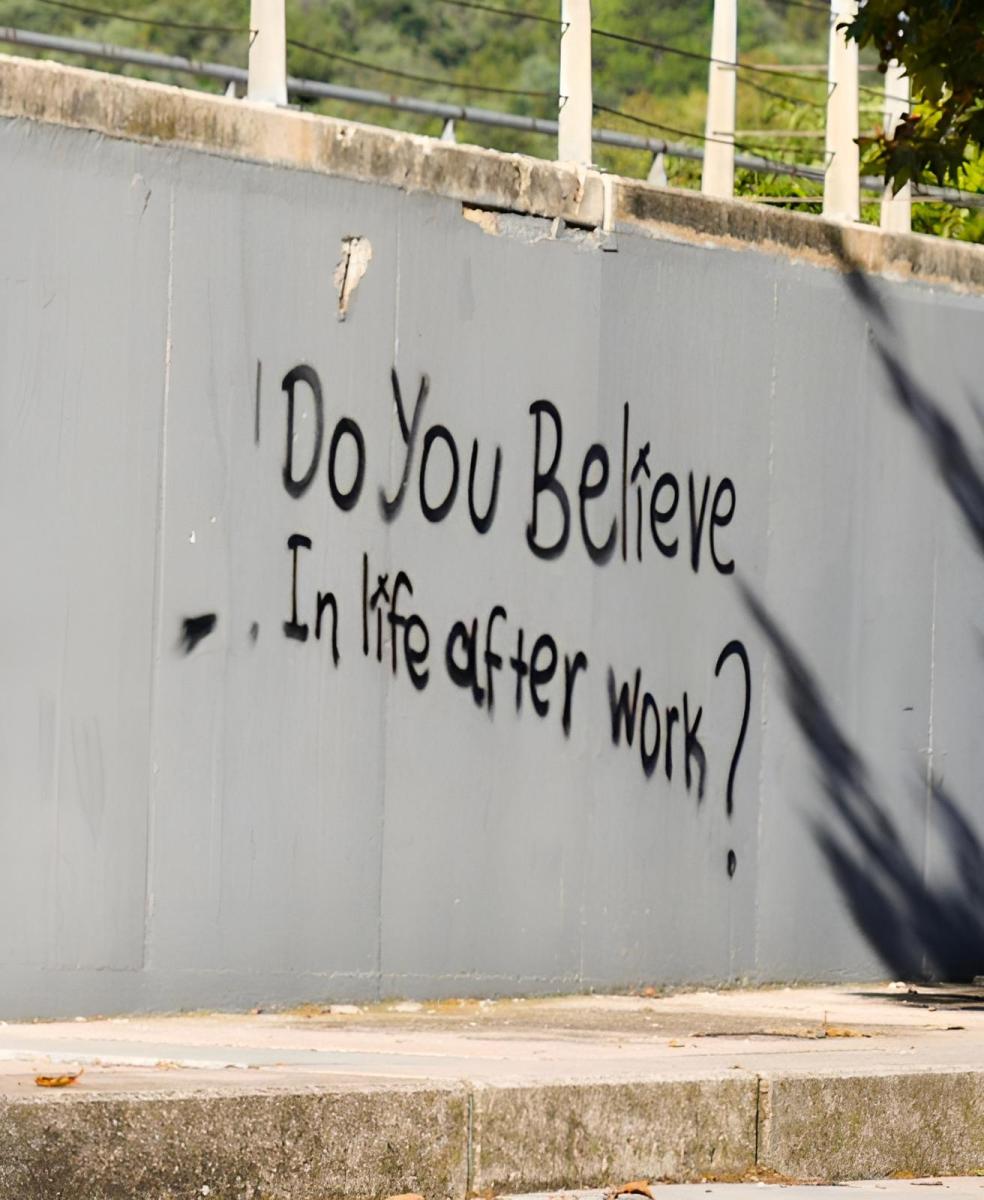
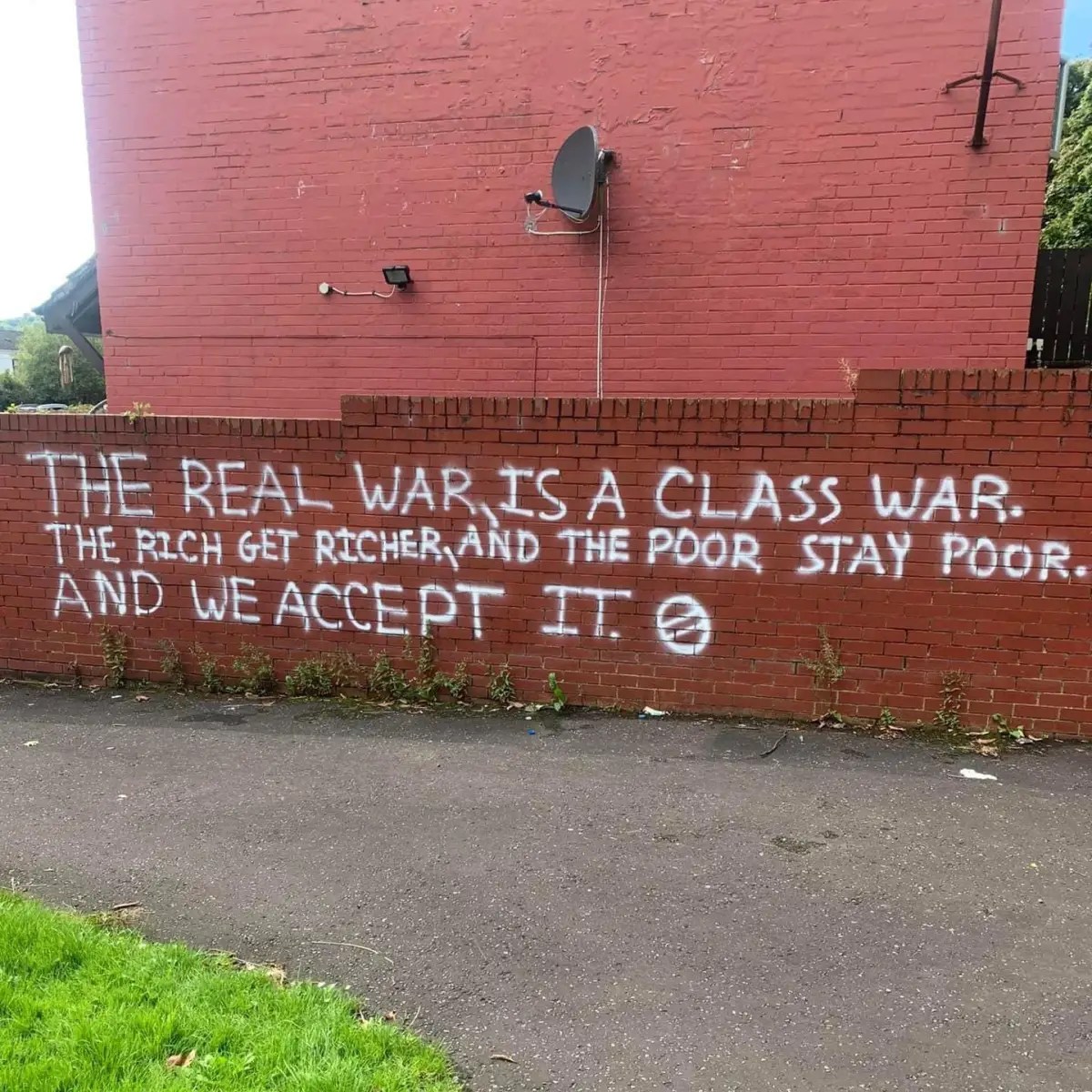
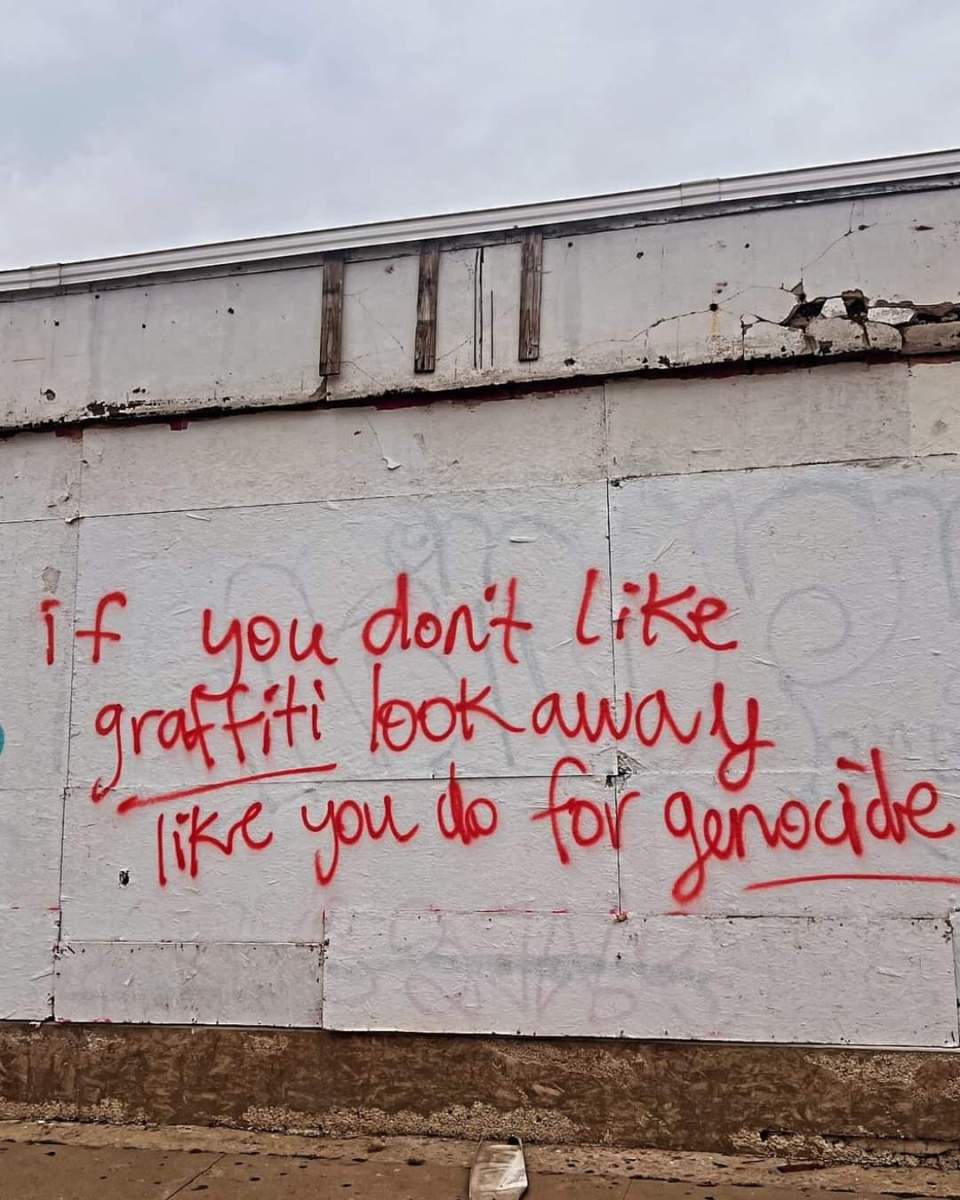
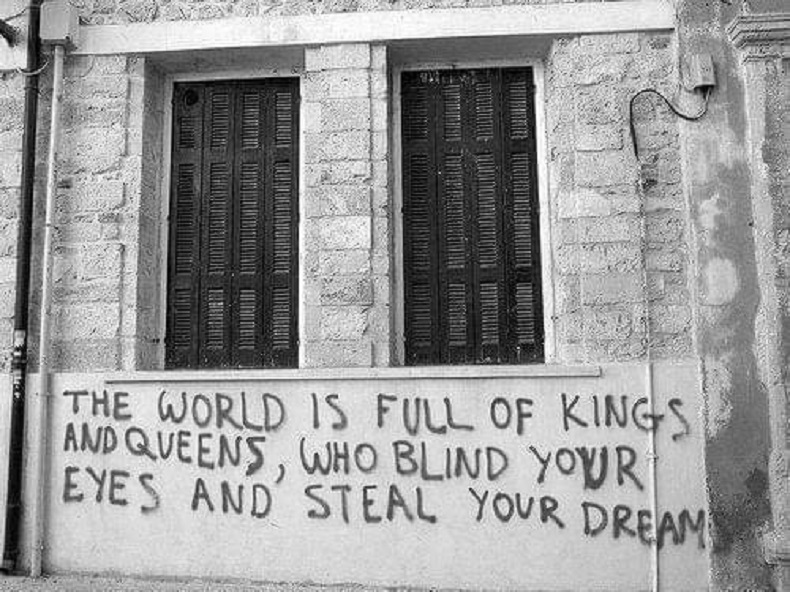
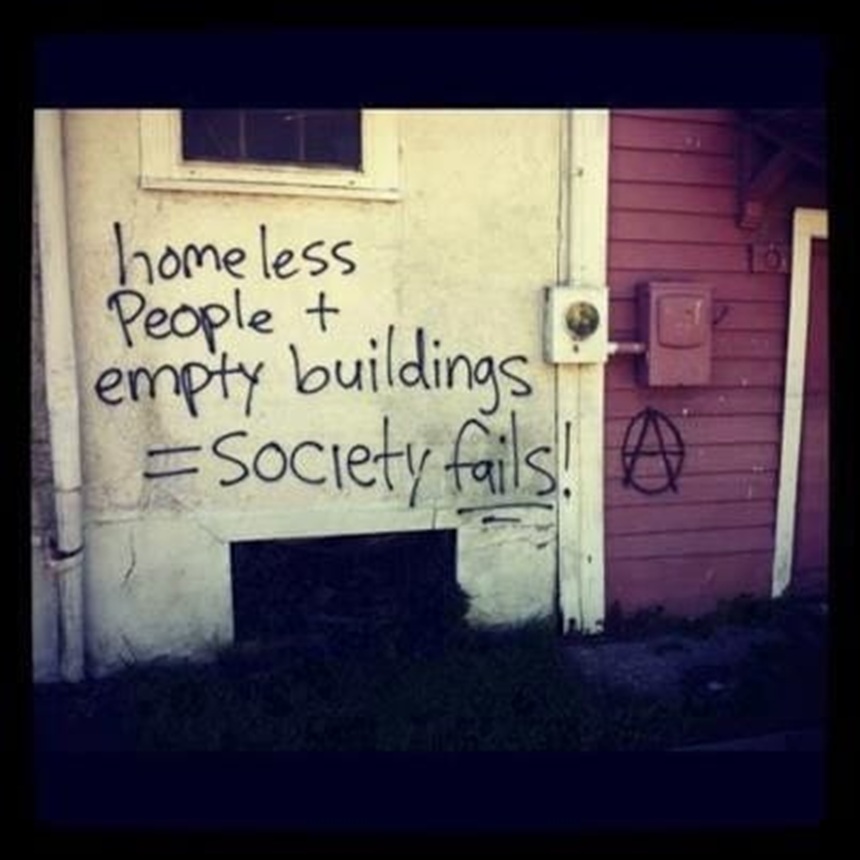
Bringing the Neighborhood to the Center: A Mural by Veracidade Celebrates Resilience and Joy (4 photos)
Content warning: Street Artist Veracidade brings vibrant colors and bold imagery to the streets of São Paulo By Veracidade in São Paulo, Brazil for Museu da Cidade de São Paulo. Veracidade is a street artist and muralist whose work brings vibrant colors and bold imagery t
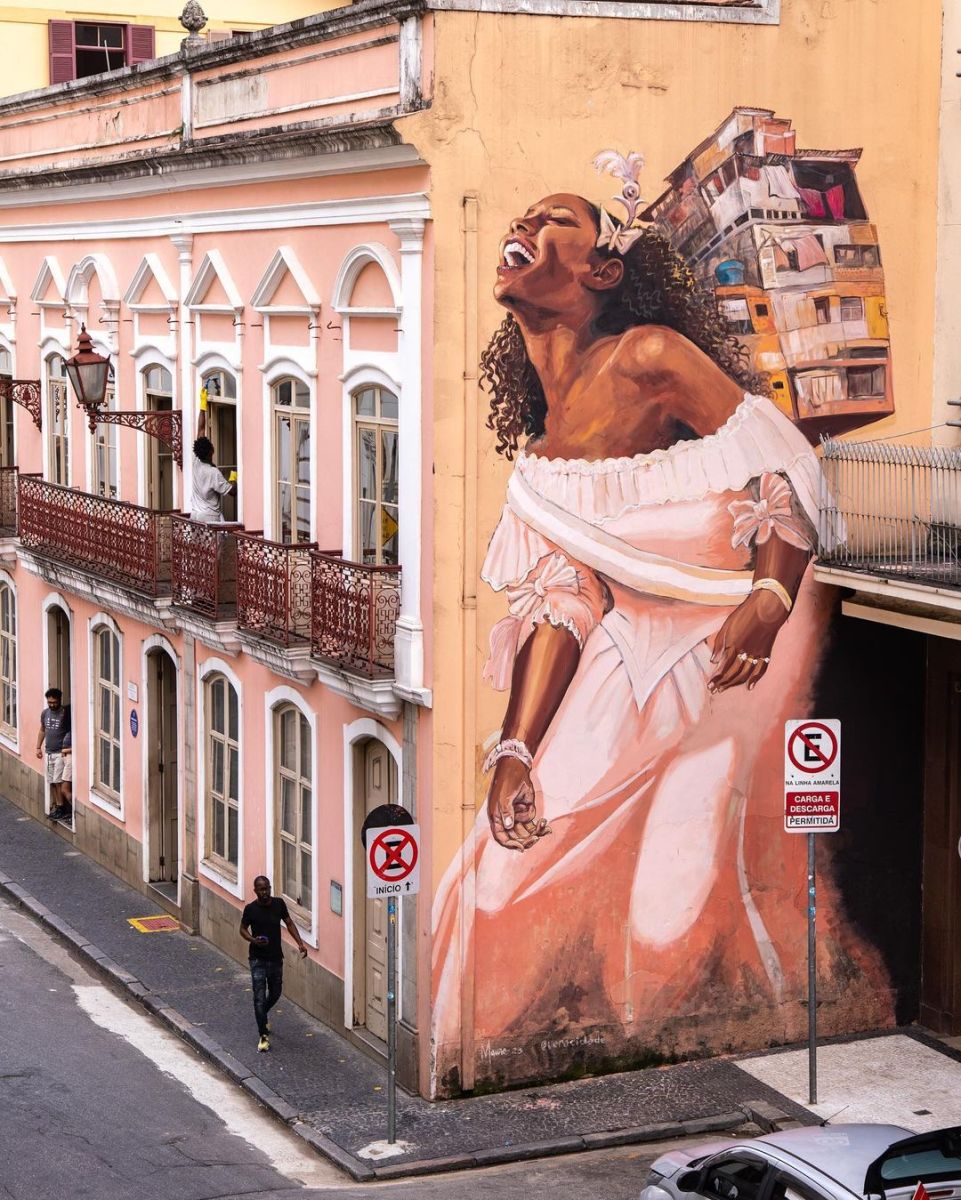
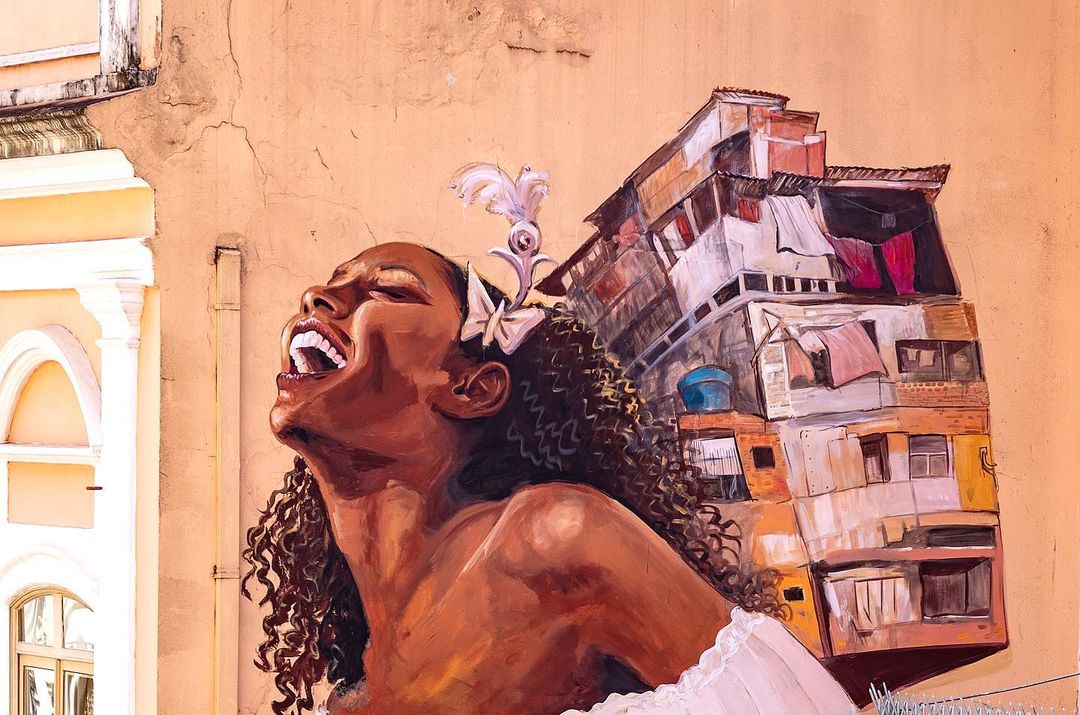
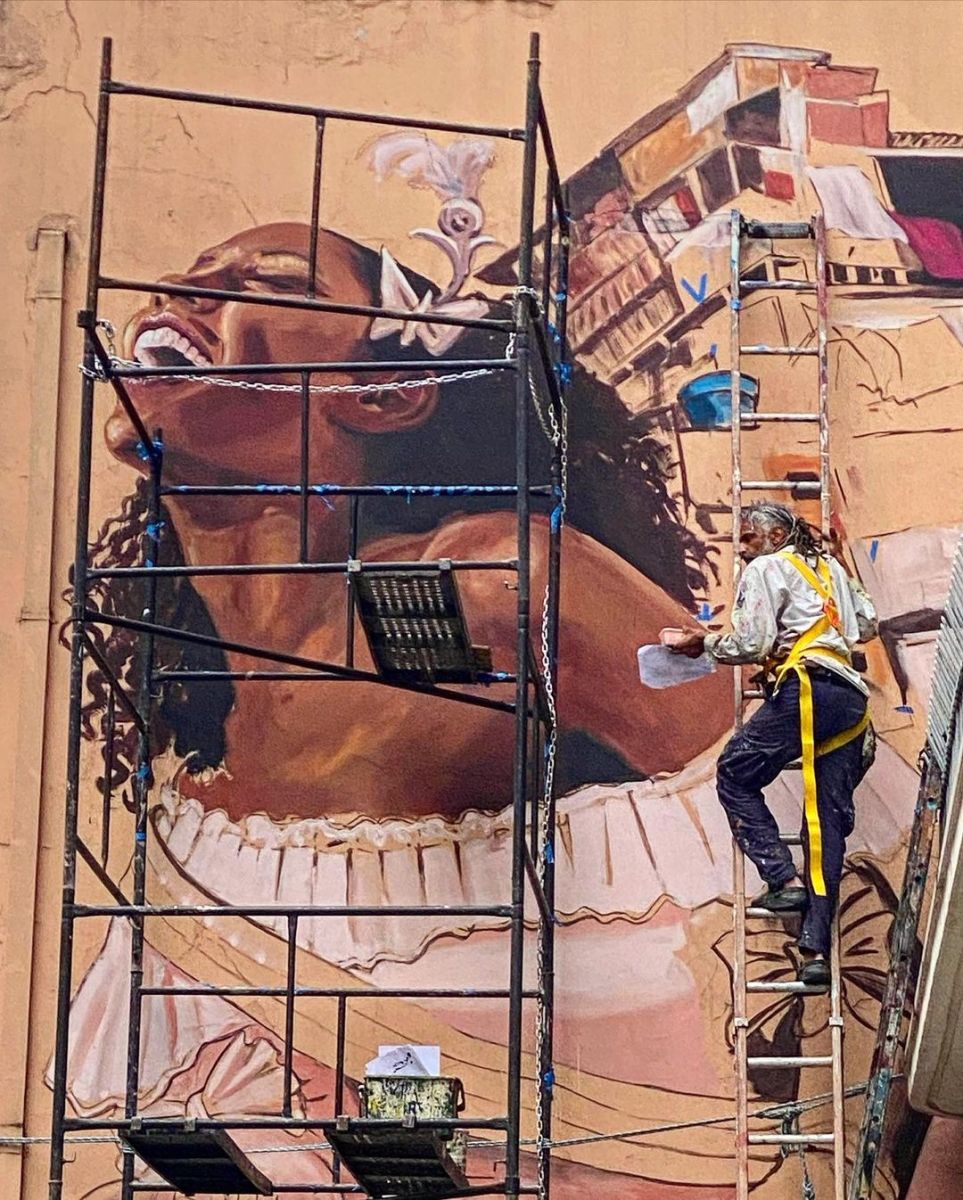
Street Artist Veracidade brings vibrant colors and bold imagery to the streets of São Paulo
By Veracidade in São Paulo, Brazil for Museu da Cidade de São Paulo.
Veracidade is a street artist and muralist whose work brings vibrant colors and bold imagery to the streets of São Paulo. One of his latest works, located at the Solar da Marquesa de Santos, is a stunning hand-painted mural that celebrates resilience and joy through the reinterpretation of the Marquesa on the back of a black woman.
The mural is part of the exhibition “Intersections of black, indigenous and peripheral people in the city of São Paulo” at the Museu da Cidade de São Paulo, that opened on the anniversary of São Paulo.
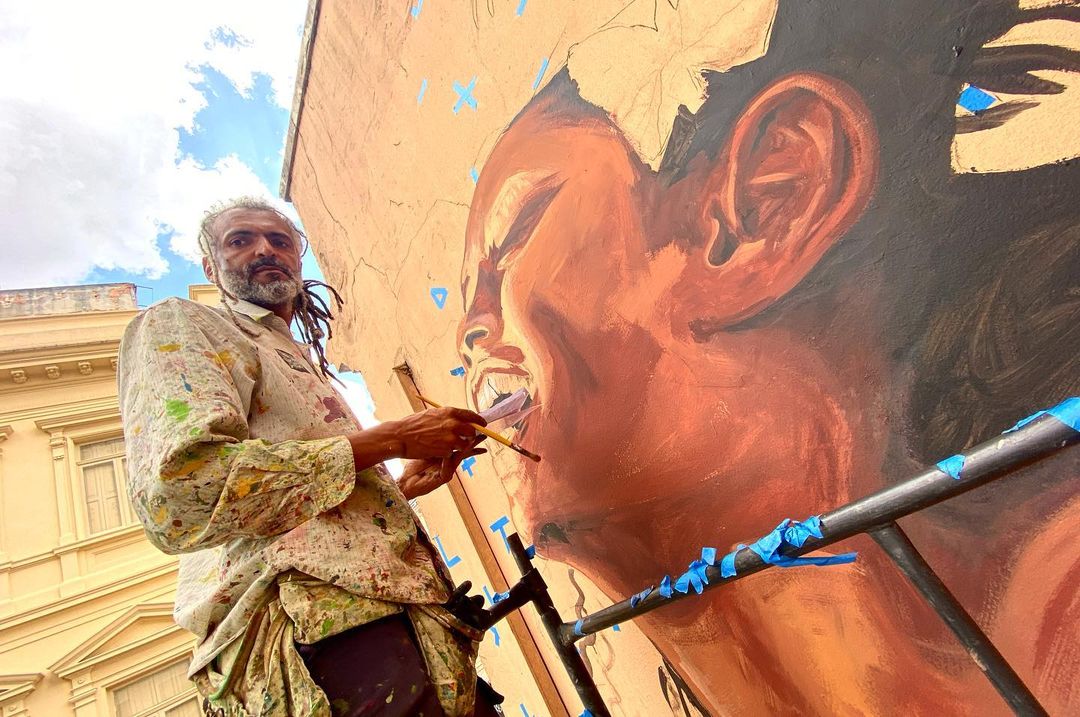
This mural by Veracidade is a powerful and emotive representation of the strength, beauty, and resilience of black, indigenous, and peripheral communities in São Paulo. The mural not only adds to the aesthetic of the city but also serves as a reminder of the importance of representation and inclusivity in public spaces. The work of street artists like Veracidade, who use public spaces to share stories and perspectives often marginalized, is crucial in creating a more equitable and just society.
The use of vibrant colors and bold imagery in this mural is a characteristic of Veracidade’s work, that creates a striking visual impact that captures the attention of passersby. The mural also serves as a reminder of the power of art to tell stories and spark conversations about important social and cultural issues.
Comments:
Banksy’s in London: Unmasking the Zoo of Modern Society (9 Photos)
Content warning: Banksy, the provocative yet loved street artist, has once again taken to the streets of London to make a powerful statement. His latest series of nine artworks, scattered across the city, explores the theme of captivity and control, drawing parallels betw
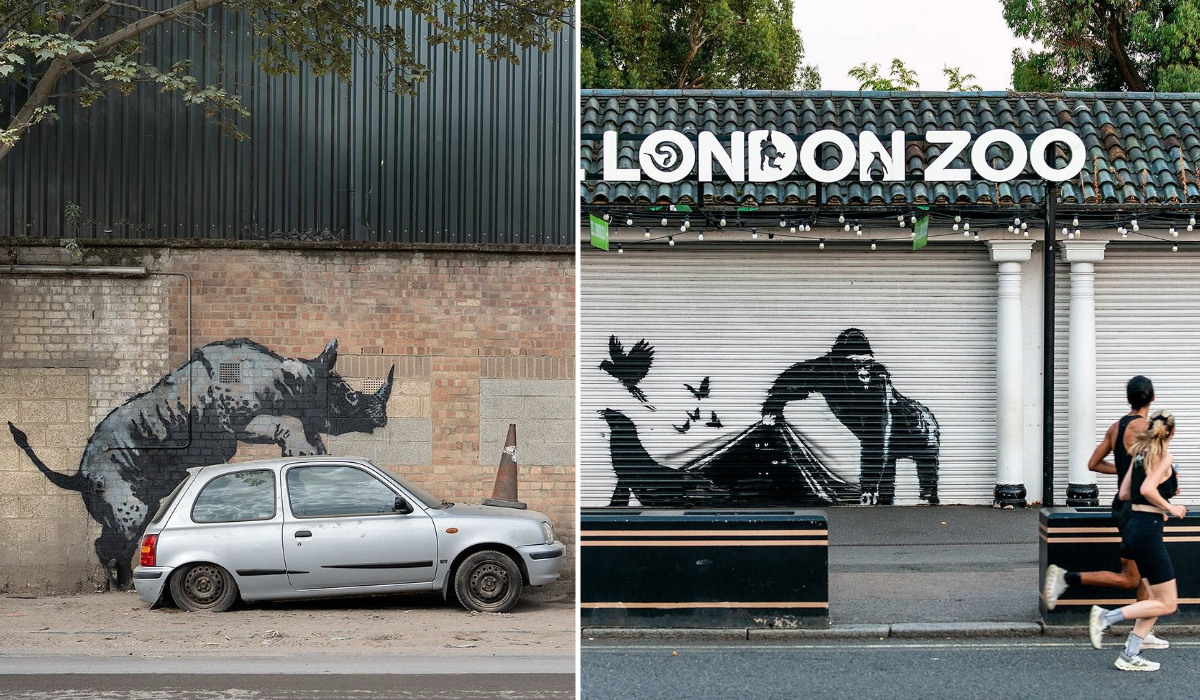
Banksy, the provocative yet loved street artist, has once again taken to the streets of London to make a powerful statement.
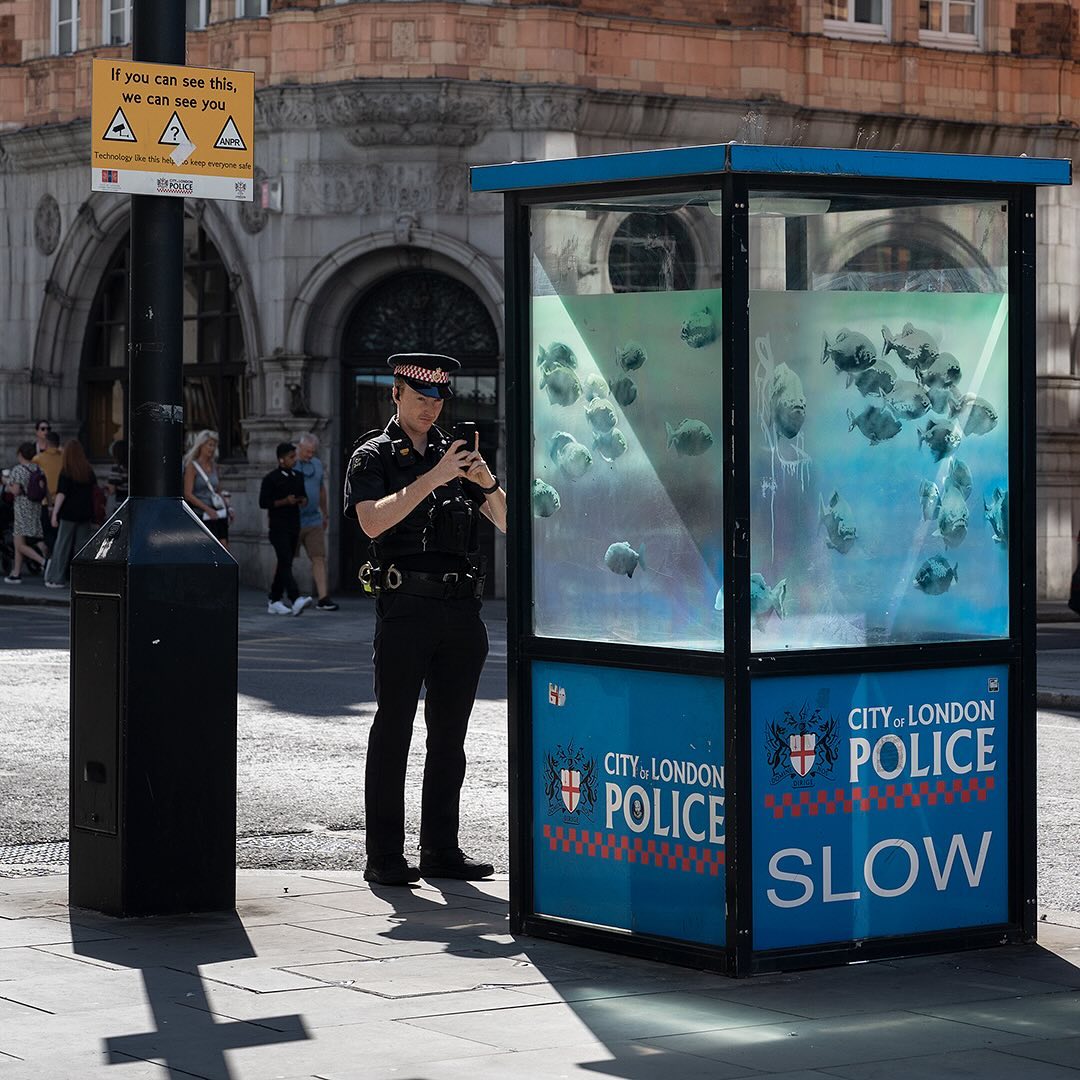
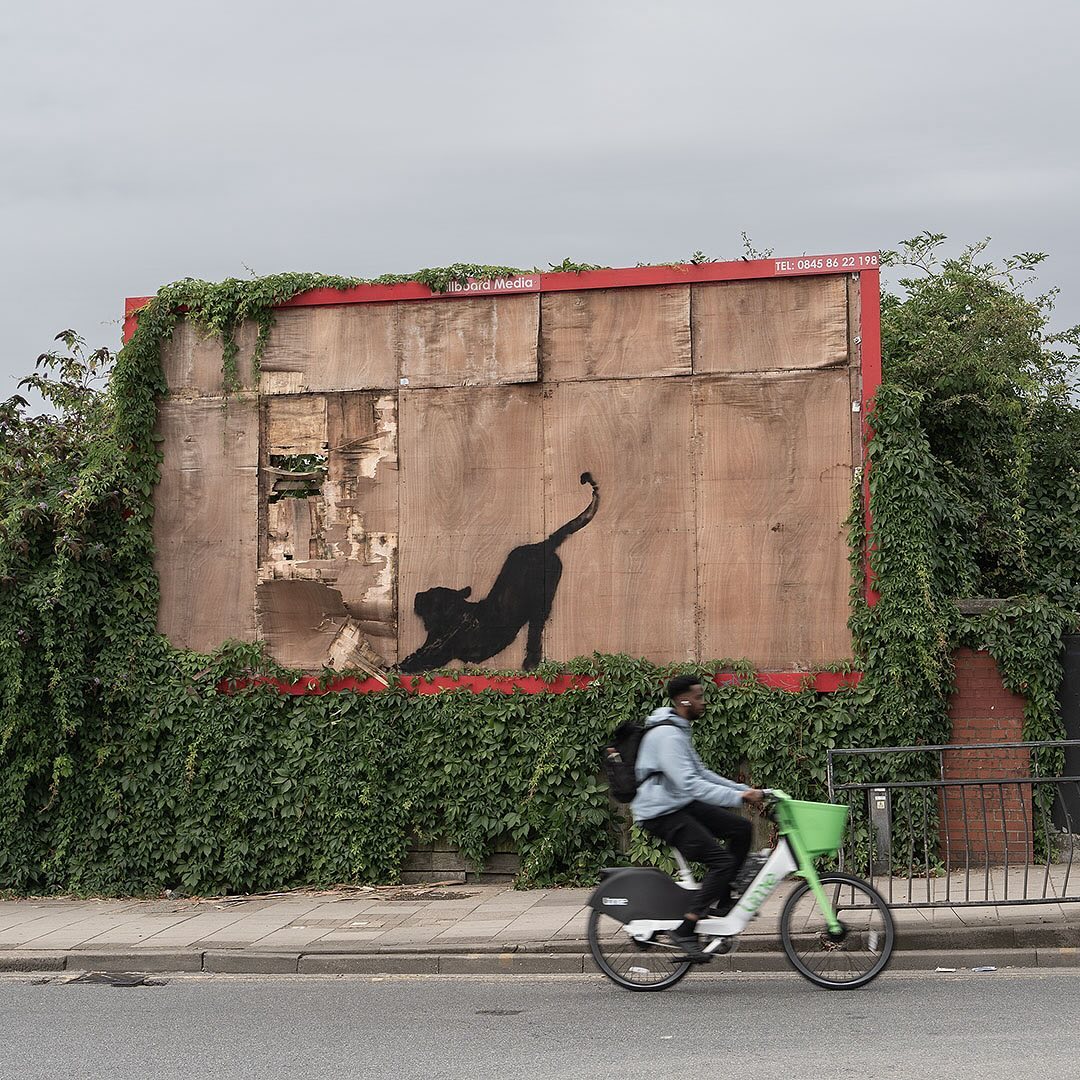
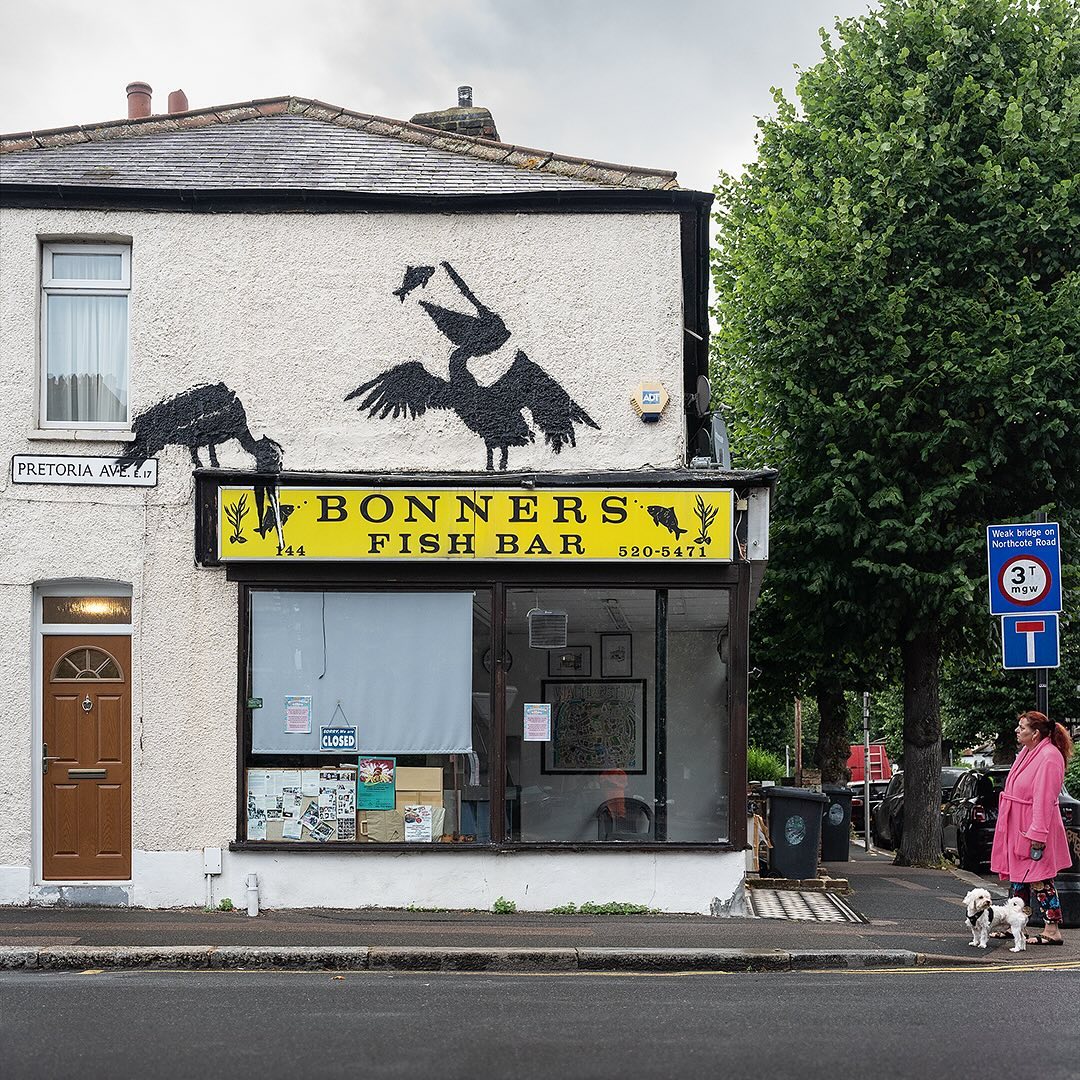
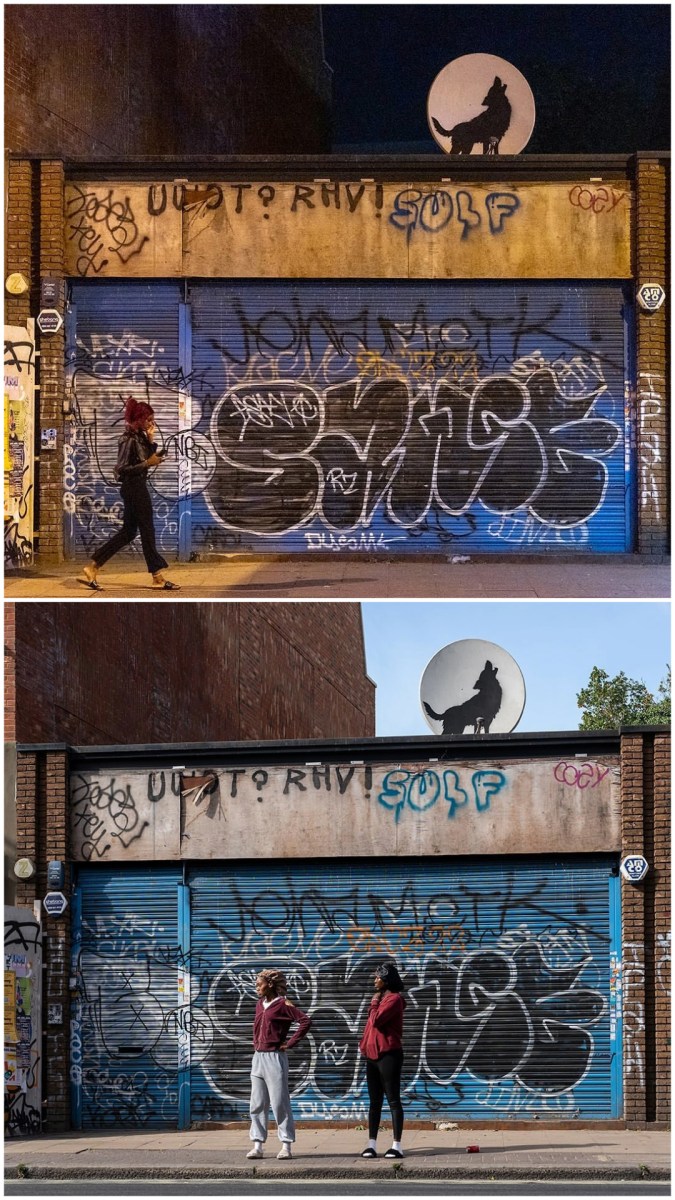
His latest series of nine artworks, scattered across the city, explores the theme of captivity and control, drawing parallels between zoo animals and the human condition. Each piece, meticulously crafted and strategically placed, challenges the viewers to question the boundaries between freedom and confinement in our society.
More: 24 artworks by Banksy: Who Is The Visionary of Street Art
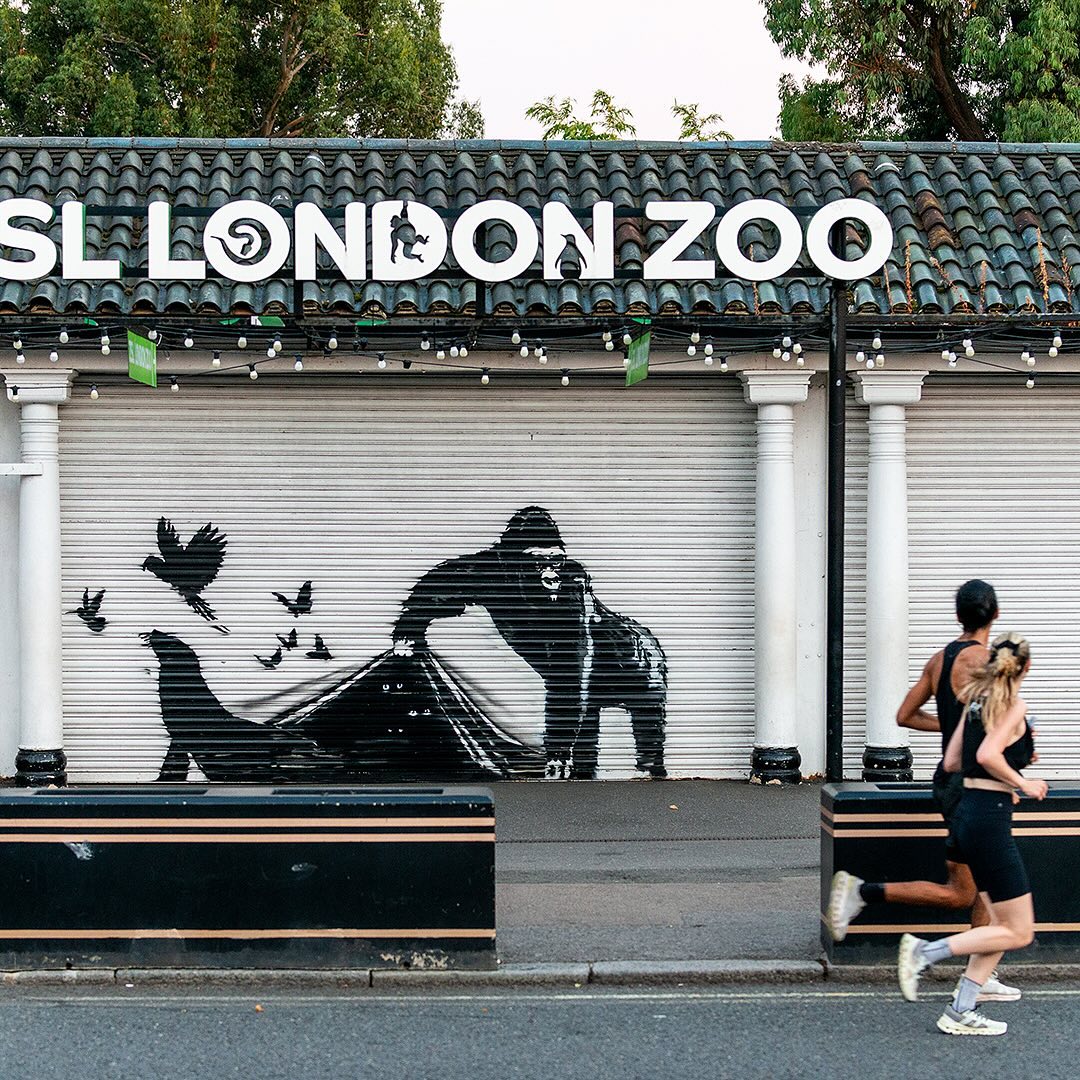
Gorilla Unleashing Freedom at the London Zoo:
A powerful mural of a gorilla tearing open a curtain, seemingly liberating the other animals from the confines of the London Zoo. This artwork symbolizes the breaking down of barriers and the fight for freedom, highlighting the oppressive structures that limit not just animals, but humanity as well.
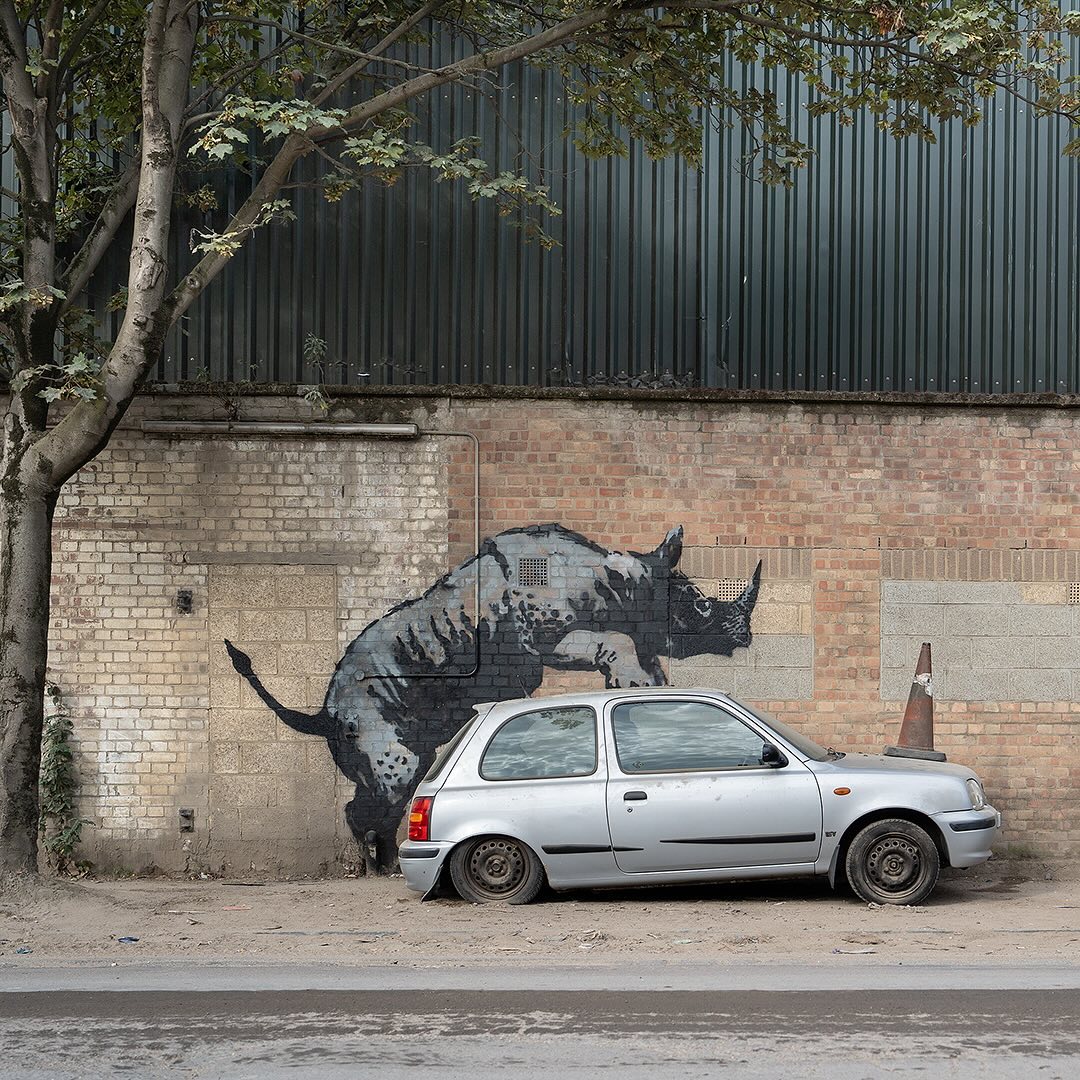
Rhino on the Loose:
The unstoppable force of nature reclaiming its space in a world dominated by human control?
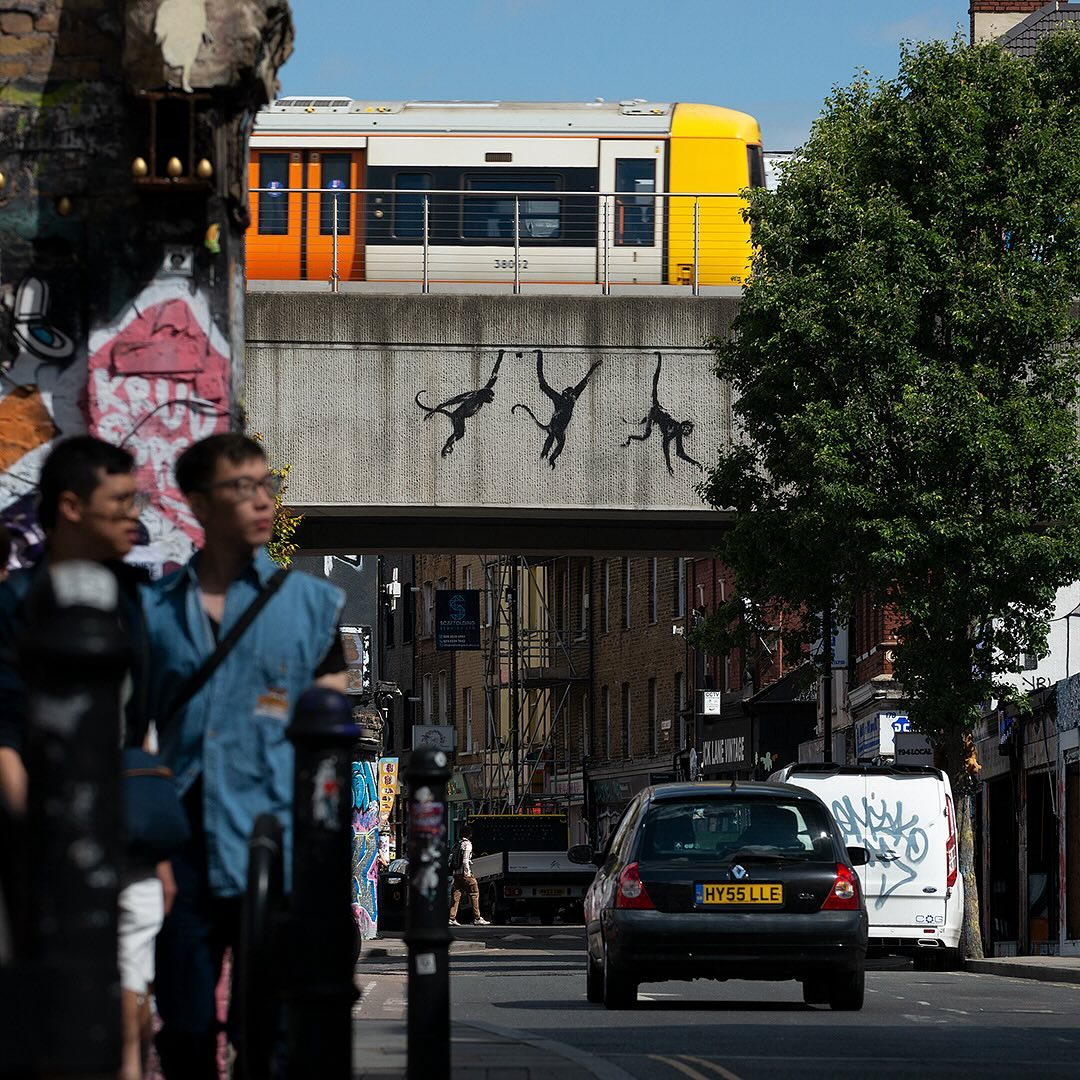
Monkeys Swinging on the Train Tracks:
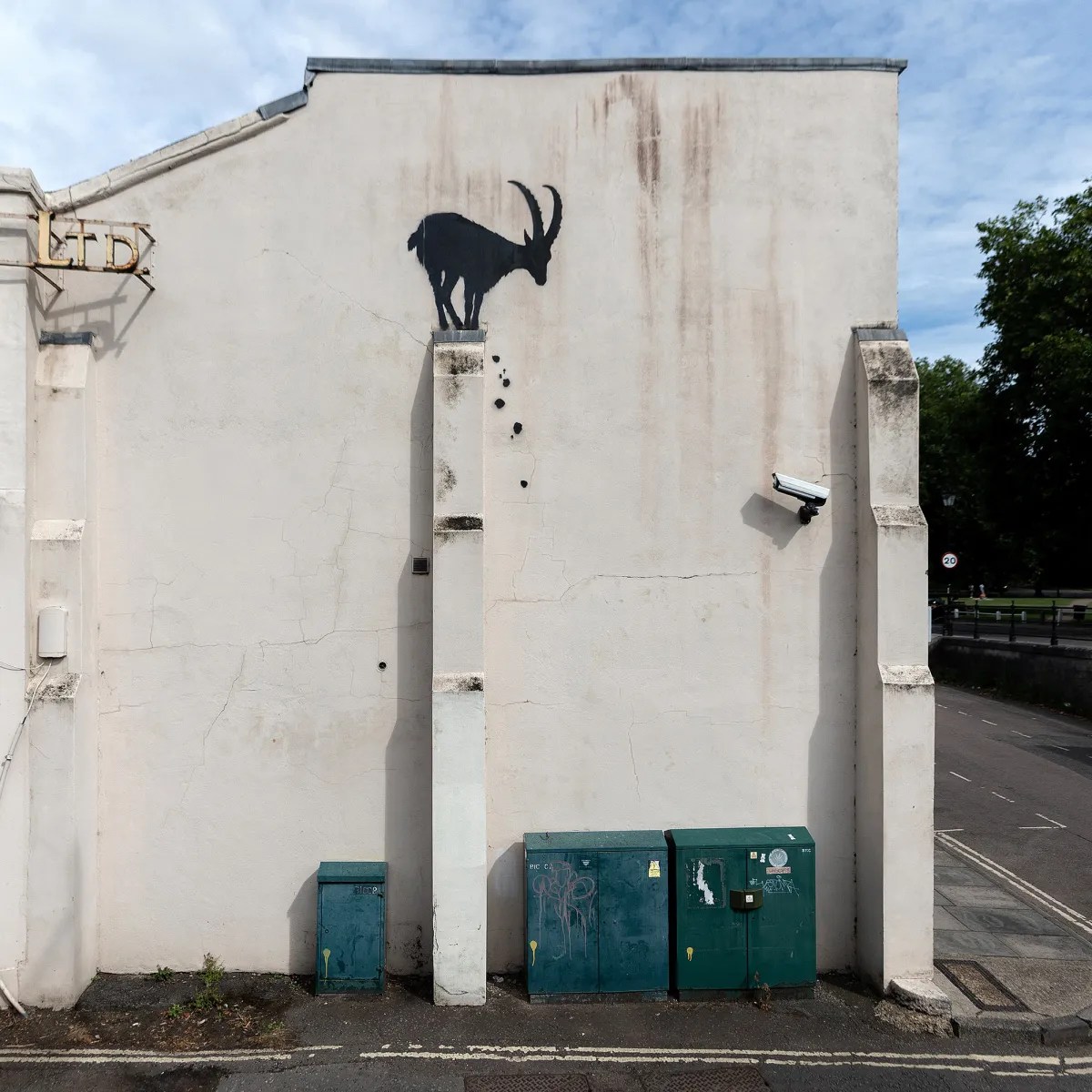
Goat on a Ledge:
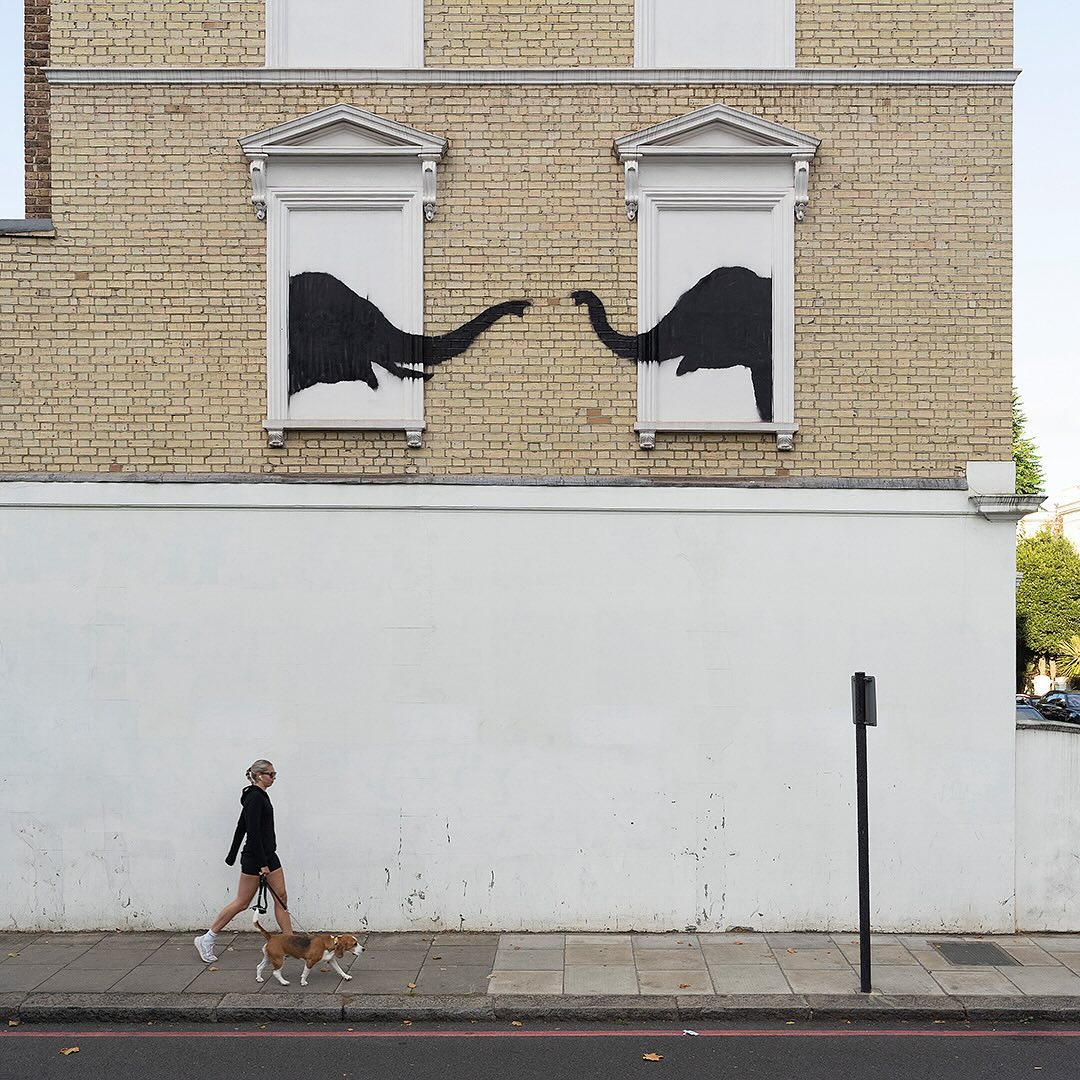
Elephants Peeking from Windows:
Piranha Police Box:

Panther Emerging from a Billboard:
Birds on a Fish Bar:
Wolf on a Satellite Dish:
What do you think about this street art by Banksy? Which one is your favorite?
Banksy? Who Is The Visionary of Street Art? (25 Photos)
I. Unmasking the Enigma: A Deep Dive into Banksy’s Street Art Revolution
In the dynamic world of street art, few names are as resonant or as enigmatic as Banksy. A spectral figure whose identity remains shrouded in mystery, Banksy is a paradox of fame and anonymity, a revolutionary whose works have transformed public spaces and challenged societal norms. His art, often laced with potent political commentary and sharp satire (see 14 Great Banksy Street Art Photos and Quotes!), has left indelible marks on urban landscapes worldwide. Yet, the man behind the spray can remains elusive, his identity a secret closely guarded, adding an irresistible aura of intrigue to his body of work.This paradox is part of what makes Banksy not just a street artist, but a phenomenon. His work captures the zeitgeist, reflecting the turbulence, the dissent, and the hope of our times. His stencils—be they on the walls of London, the remnants of the West Bank barrier, or the ruins of Hurricane Katrina—have a way of speaking truth to power that has resonated with millions around the globe.
More: Banksy’s Hidden Identity Revealed?
For more than three decades, Banksy has been pushing boundaries, challenging conventions, and redefining the very concept of public art. Through his stencils, he has brought the subversive ethos of the underground to the surface, making it impossible for us to ignore the social and political injustices of our world. His works are more than just provocative images; they are a call to action, a demand for change.
In this exploration, we will journey through the chaotic, captivating world of Banksy’s artistry. From his early days in Bristol’s graffiti scene to his headline-making stunts in the global art market, we’ll take a closer look at how Banksy’s work has evolved and why it continues to captivate and challenge us. Through the lens of 24 select artworks, we hope to gain a deeper understanding of the visionary artist who has forever transformed the landscape of street art.
So, who is Banksy? Let’s uncover the story behind the spray can. Let’s delve into the revolution sparked by this enigma. Through his art, let’s explore the world according to Banksy.
II. A Stencil Revolution: The Genesis of Banksy’s Distinctive Style
Banksy’s journey into the world of street art began on the streets of Bristol, England, a city known for its vibrant graffiti culture. As a teenager in the 1980s, he was part of a graffiti crew called the DryBreadZ Crew (DBZ). His early work, like much of the graffiti of the time, was freehand. However, an encounter with the law sparked a transformative shift in Banksy’s approach to street art.Legend has it that a young Banksy was hiding from the police under a garbage truck when he noticed stenciled serial numbers on the truck. The stencil technique piqued his interest, offering a faster, more efficient way to paint, allowing him to dodge law enforcement while still leaving his mark. This chance discovery would not only define his artistic style but would also revolutionize the street art scene.
Stenciling allowed Banksy to create intricate and detailed pieces with precision and speed. His works were more controlled, more refined, and more complex than the freehand graffiti that dominated the streets. This technique also lent his art a distinct aesthetic — one that was cleaner, sharper, and more visually striking. He could create multi-layered artworks, combining stencils with other media and incorporating pre-existing elements in the urban landscape into his installations.
In the early 2000s, Banksy moved from Bristol to London. His stenciled works started appearing on walls, bridges, and streets across the city, turning the urban landscape into an open-air gallery of his art. Each piece was a visual protest, a political statement, a satirical commentary. They challenged authority, poked fun at societal norms, and provoked public discourse, making Banksy a controversial figure in the art world.
Yet, it was precisely this controversy, coupled with his distinctive style and incisive commentary, that catapulted Banksy to international recognition. By turning to stencils, Banksy had not only found his artistic voice, but he had also found a way to make the streets echo with that voice. In doing so, he sparked a stencil revolution that would forever alter the course of street art.
III. Crafting Satire and Shadows: The Unmistakable Artistic Approach of Banksy
Banksy’s artistic approach, while grounded in the use of stencils, is far from one-dimensional. The street artist has developed a style that is as layered and nuanced as the messages he conveys. Delving into Banksy’s work reveals a masterful blend of satire, subversion, and sociopolitical commentary, all wrapped in a distinctive visual package that has become his trademark.Perhaps the most defining aspect of Banksy’s approach is his biting satire. With a keen eye for irony, Banksy often juxtaposes contrasting images and ideas to comment on societal issues. His works are full of dark humor and sharp wit, turning everyday scenes into powerful satirical statements. Whether it’s a rioter throwing a bouquet of flowers instead of a molotov cocktail or a young girl frisking a soldier, Banksy’s art challenges viewers to reassess their preconceived notions and question the status quo.
Equally important to Banksy’s approach is his use of subversion. He consistently undermines authority and disrupts conventional narratives, pushing against the boundaries of what is deemed acceptable or normal. This can be seen in his unauthorized installations in museums, his self-destructing artwork at an auction, or his dystopian theme park, Dismaland. Each act is a bold statement against institutional power and the commercialization of art.
On the visual front, Banksy’s art is marked by a striking use of black and white, with occasional pops of color. This minimalist color palette underscores the starkness of his messages and adds to the visual impact of his works. He also employs a careful play of light and shadow, giving depth and realism to his stenciled figures. Even when working on a flat surface, Banksy’s figures appear three-dimensional, as if they could step out of the wall and into the real world.
Moreover, Banksy often integrates elements of the urban environment into his artworks, transforming mundane objects and surfaces into significant components of his pieces. This creative use of the environment amplifies his art’s site-specific nature, making each piece a unique commentary on its context.
In essence, Banksy’s artistic approach is a dynamic interplay of style and substance. It merges form with content, aesthetics with message, and art with activism. Each piece is not just an artwork but a dialogue – a thought-provoking, boundary-pushing, and often uncomfortable dialogue that compels us to engage with the world in new and critical ways.
IV. From Shadows to Spotlight: The Unstoppable Global Impact of Banksy
Banksy’s rise to prominence is a testament to the power of street art as a medium for societal commentary. What began as stencilled tags in the back-alleys of Bristol has now gained international renown, resonating with audiences across the globe. His works are not merely confined to city walls, they have permeated popular culture, influenced political discourse, and even transformed the way we perceive and value art.One of the most significant aspects of Banksy’s global impact is how his art has bridged the gap between the street and the gallery. Banksy has successfully brought street art out of its perceived illegitimacy, forcing the art world to reconsider its boundaries and definitions. His works have sold for record-breaking prices at renowned auction houses such as Sotheby’s and Bonhams, showing that street art is more than capable of holding its own in the fine art market.
Banksy’s influence extends beyond the world of art, reaching into the realm of politics. His murals often tackle pressing issues like war, surveillance, consumerism, and inequality. His iconic pieces on the West Bank Barrier, for example, drew international attention to the Israeli-Palestinian conflict, showcasing the power of art as a tool for political activism.
Moreover, Banksy’s works have become viral sensations, spreading rapidly across the internet and reaching millions of viewers. The digital age has allowed Banksy’s art to transcend geographical boundaries, amplifying its impact to an unprecedented level. Each new Banksy piece triggers a flurry of online discussions, debates, and interpretations, showing how art can engage and connect people in the virtual space.
Banksy’s global impact is also evident in the way his art has inspired a new generation of artists. His audacious style, combined with his success in challenging the status quo, has paved the way for aspiring street artists worldwide. The “Banksy Effect” is a testament to his influence, proving that art can thrive outside traditional institutions and that artists can maintain their anonymity and independence while reaching a wide audience.
Perhaps most importantly, Banksy’s global impact lies in the conversations his art starts. His works provoke thought and spark dialogue, encouraging viewers to question their surroundings and critically engage with societal issues. Whether it’s a mural on a wall, a painting in an auction house, or an image shared on social media, Banksy’s art continues to challenge, disrupt, and inspire, solidifying his position as one of the most influential figures in contemporary art.
V. Beyond the Wall: Banksy’s Multifaceted Artistic Portfolio
Banksy’s artistic portfolio, despite being shrouded in mystery and anonymity, is one that never ceases to evolve, surprise and provoke. Stretching beyond the confines of the traditional graffiti scene, Banksy has become a modern-day renaissance artist, demonstrating a remarkable ability to experiment with different mediums and platforms while consistently delivering his signature blend of satire, subversion, and social commentary.In 2010, Banksy ventured into the world of filmmaking with “Exit Through the Gift Shop,” a documentary that explores the relationship between commercial and street art. The film, which received an Academy Award nomination for Best Documentary, showcases Banksy’s knack for storytelling and his ability to critique the art world from within its own apparatus.
In 2015, Banksy took on an entirely new project: Dismaland, a dark, dystopian parody of Disneyland. This ‘bemusement park’ showcased ten new works from Banksy alongside pieces from 58 other artists. It was more than just an art exhibit; it was an immersive, interactive experience that critiqued the corporatization of leisure and the passive consumption of entertainment.
In recent years, Banksy has also shown an increasing interest in traditional painting, as seen in his ‘Mediterranean Sea View’ series. This set of oil paintings, auctioned to raise funds for a hospital in Bethlehem, combined classical techniques with Banksy’s trademark twist – in this case, life jackets washed up on shore, symbolizing the European migrant crisis. Such works demonstrate Banksy’s versatility and his willingness to adapt his craft to convey urgent messages.
Banksy’s more recent work during the COVID-19 pandemic, such as ‘Game Changer,’ displayed in Southampton General Hospital, is a testament to his timely engagement with current events. This piece, which pays tribute to healthcare workers, again shows Banksy’s ability to adapt to new contexts and media, while staying true to his roots in street art.
Whether it’s stencils on city walls, films, immersive installations, traditional paintings, or even the occasional piece of performance art (as seen in the shredding of ‘Girl with Balloon’), Banksy’s expanding portfolio reflects his boundless creativity, adaptability, and commitment to pushing the boundaries of what art can be and do. His work stands as a testament to the fact that art is not just about aesthetics, but can also be a vehicle for social change, critique, and dialogue.
VI. Shattering Expectations: Banksy’s Iconic Artistic Moments
When it comes to creating unforgettable artistic moments, Banksy is second to none. The anonymous artist has a track record of staging high-profile stunts that not only challenge conventional norms of the art world but also provoke public dialogue and reflection on broader societal issues.Perhaps the most iconic of all is Banksy’s 2018 Sotheby’s auction stunt, in which his artwork ‘Girl with Balloon’ self-destructed immediately after being sold for £1.04 million. Hidden within the ornate frame was a remotely activated shredder that left the artwork hanging in tatters. This audacious act was not just a prank; it was a commentary on the commodification of art and the market’s ability to dictate the value of artworks. The shredded artwork was later renamed ‘Love is in the Bin,’ and in a twist of irony, it became even more valuable after the stunt.
Another moment that captured global attention was Banksy’s 2013 New York residency, ‘Better Out Than In.’ For 31 days, Banksy unveiled a new work each day across the city. On one of these days, he set up a stall selling signed original Banksy canvases for just $60. The unsuspecting buyers had no idea of the true value of the artworks they were purchasing, challenging the notion of art’s value being tied to the artist’s name.
And again: In 2015, Banksy shook the art world again with the opening of Dismaland, a dark, dystopian parody of Disneyland. This temporary art project in the seaside resort town of Weston-super-Mare in England featured a fairy castle in ruin, a boat pond full of asylum seekers, and two juggernauts performing ballet, among other installations. It was a stark critique of consumer culture, inequality, and the failings of capitalism.
Banksy’s ‘Devolved Parliament,’ a satirical painting depicting the UK House of Commons filled with chimpanzees, is another example of his timely and pointed commentary. The artwork, which was created in 2009 and exhibited just before the original Brexit date in March 2019, sold for a record-breaking £9.9 million at Sotheby’s in October 2019.
And as mentioned before who can forget Banksy’s response to the COVID-19 pandemic? His ‘Game Changer’ artwork, depicting a young boy playing with a nurse doll, was a tribute to healthcare workers on the front lines of the crisis. It was later sold at auction for £16.8 million, with all proceeds going to the NHS.
Through these iconic moments, Banksy continues to use his art to subvert expectations, provoke thought, and challenge the status quo, leaving an indelible mark on the world of contemporary art.
VII. Enduring Impressions: The “Banksy Effect”
The “Banksy Effect” is a term coined to describe the remarkable influence that Banksy has had on the art world and beyond. It refers not just to his transformation of street art into a globally recognized and highly coveted form of expression, but also to the way his work has reshaped public discourse around key societal issues.Banksy’s provocative approach to art has undoubtedly pushed the boundaries of what is considered acceptable or valuable in the art world. By using public spaces as his canvas, Banksy has democratized access to art, making it available to everyone, not just those who frequent art galleries or auction houses. This has led to a broader acceptance and recognition of street art as a legitimate form of artistic expression, with cities around the world now boasting thriving street art scenes.
Beyond the art scene, Banksy’s satirical, often politically charged works have also had a profound impact on public consciousness. His art has served as a powerful commentary on issues such as war, capitalism, consumerism, and inequality, sparking public dialogue and forcing viewers to confront uncomfortable realities. By leveraging the power of art for social commentary, Banksy has inspired a new generation of artists to use their work as a tool for social and political activism.
Moreover, Banksy’s commitment to anonymity has further fueled his appeal and added a layer of intrigue to his work. Despite his global fame, Banksy has managed to maintain his anonymity, a feat that has only added to his mystique and led to widespread speculation about his identity. This anonymity has also allowed Banksy to remain a subversive figure, unbound by the expectations or constraints typically placed on renowned artists.
The “Banksy Effect” encompasses the far-reaching influence of Banksy’s art on both the art world and society at large. His innovative approach to art, combined with his incisive social commentary, has left an enduring legacy that continues to inspire and provoke. Whether it’s through a simple graffiti piece on a city wall or a high-profile stunt at an auction house, Banksy’s impact is indelible, echoing throughout contemporary culture and continuing to challenge our perceptions of art and its role in society.
VIII. Unmasking the Enigma: Decoding Banksy’s Enduring Allure
As we delve into the intriguing world of Banksy, we come to realize that his enigmatic persona, revolutionary approach to art, and the courage to challenge societal norms are not just the hallmarks of his unique artistry, but also the underlying factors of his enduring appeal.Banksy’s anonymity has allowed him to create art that is pure and unaffected by the bias of celebrity. It keeps the focus on the art and the message it conveys rather than the artist. This could well be one of the reasons why his art, despite its simplicity, resonates on a universal scale. The unknown identity of the artist also adds an element of intrigue and mystery, making each new artwork a topic of global conversation.
Banksy’s approach to art, characterized by its accessibility and daring themes, has redefined the relationship between art and the public. His belief that art should be available to everyone has brought art out of the exclusive confines of galleries and into the streets, making it part of people’s everyday lives. This democratization of art has not only elevated the status of street art but has also changed the way we perceive and interact with art.Moreover, Banksy’s unwavering commitment to highlighting societal issues through his art has given him the ability to influence public discourse like few artists can. His provoking imagery and poignant commentary on pressing issues such as war, inequality, and consumerism have started important conversations, challenging us to question the status quo and contemplate our role within these systems.
Banksy’s knack for spectacle, such as the infamous shredding incident at Sotheby’s, has further amplified his influence by merging performance and visual art, creating unforgettable moments that transcend the confines of the art world. These audacious acts have not only propelled Banksy into the global spotlight but have also pushed the boundaries of what is possible in art.
In the end, Banksy is not just an artist; he is a phenomenon, a catalyst for change, and a symbol of resistance against conventional norms. His disruptive yet compelling artistry continues to captivate the world, and his influence, the “Banksy Effect,” continues to ripple through the realms of art and culture. His legacy is one that invites us to challenge our perspectives, to question our surroundings, and most importantly, to realize the power of art as a tool for change. As we continue to anticipate Banksy’s next move, one thing is clear: the world is his canvas, and we are all eager spectators.
Now click here to read some of Banksy’s best quotes: 14 Great Banksy Street Art Photos and Quotes!
And that’s a wrap on our deep dive into the world of Banksy!
Remember, street art is a global canvas, and each of us has a role to play in appreciating and preserving it. So, the next time you come across a Banksy—or any piece of street art—pause, take it in, and let it evoke thoughts and emotions. And if you’ve enjoyed this post, don’t hesitate to share it with your fellow street art enthusiasts and join our group: Your Street Art Utopia.Until next time, keep discovering, keep questioning, and keep appreciating the world of street art.
More by Banksy?: 18 Iconic Banksy Artworks (Indoors!)
The Goat?
Banksy at Royal Courts of Justice in London.
More here!More!: Indoor Art By Banksy! (18 Photos)
Which one is your favorite?
ItSkeletal’s Skeleton Street Art Will Make You Laugh—Then Think
Content warning: ItSkeletal turns plastic skeletons into street art with sharp humor and social jabs. The setups are quick, clever, and hard to ignore. No fluff. No over-explaining. Just skeletons making sharp, funny, and sometimes brutal statements. Follow ItSkeletal on
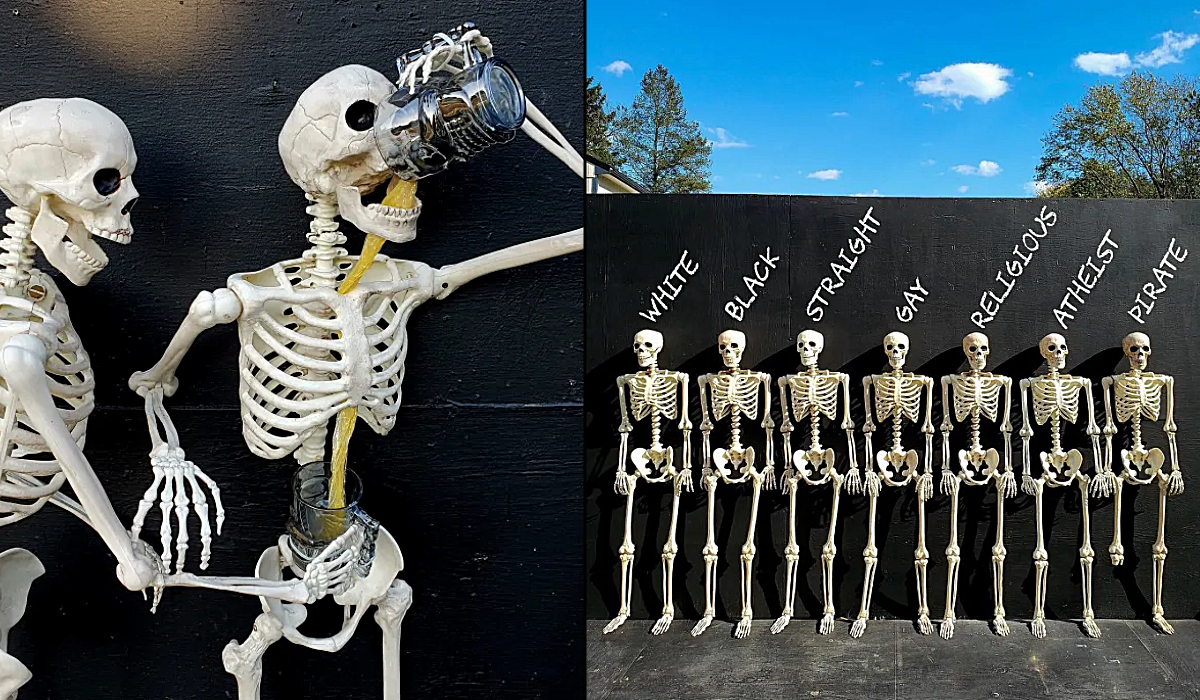
ItSkeletal turns plastic skeletons into street art with sharp humor and social jabs. The setups are quick, clever, and hard to ignore.
No fluff. No over-explaining. Just skeletons making sharp, funny, and sometimes brutal statements.
Follow ItSkeletal on Facebook!
1.
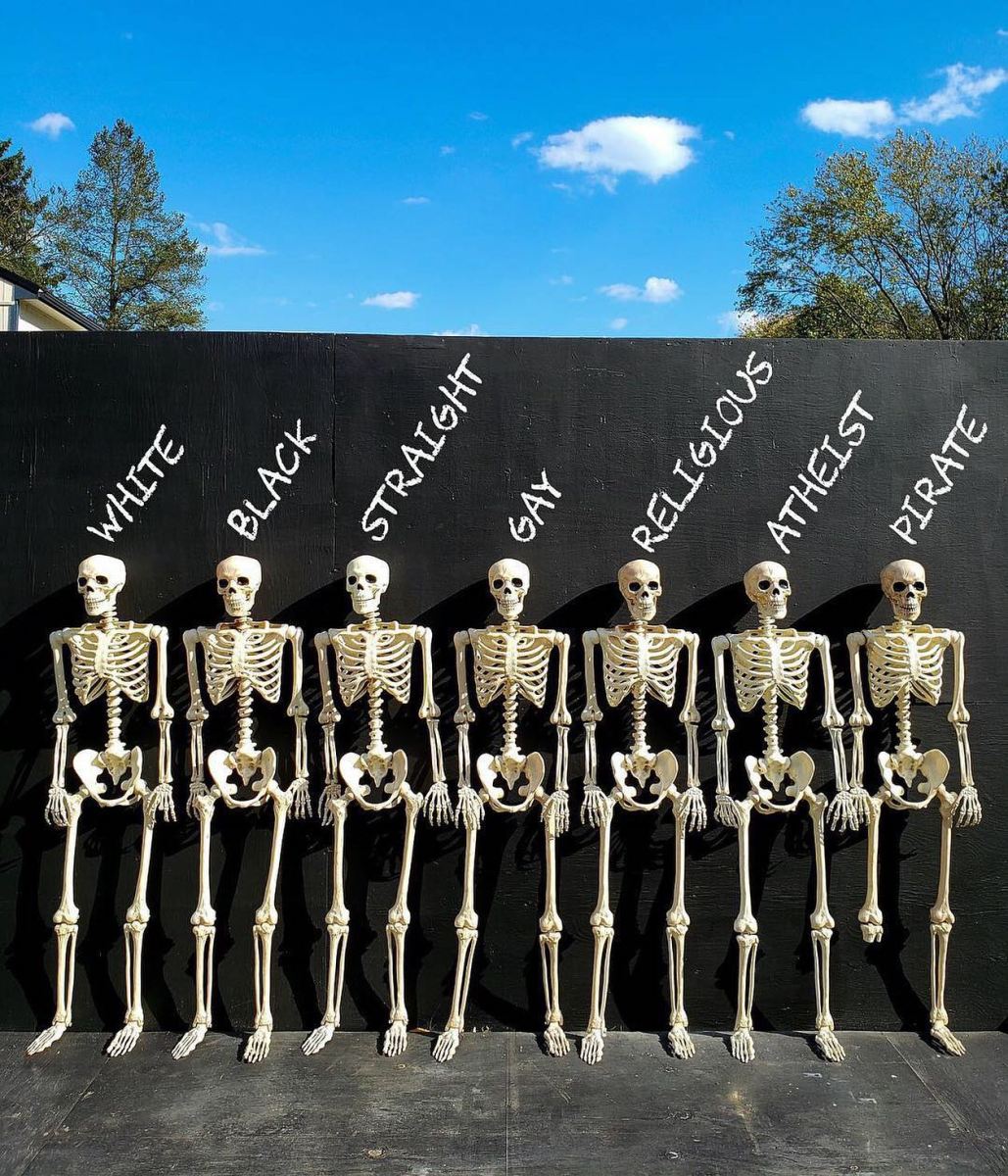
A line of skeletons labeled with different identities—race, religion, and more—yet all the same beneath it all. Except for the pirate, who stands with one leg, proving even skeletons have some character. The point? We’re all just bones.
2.

Two skeletons sit together, beers in hand, but the liquid spills right through their ribcages—drinking without a stomach has its challenges. A darkly funny nod to International Beer Day.
3.

One skeleton holds another’s spine—literally. Dark humor at its best.
4.
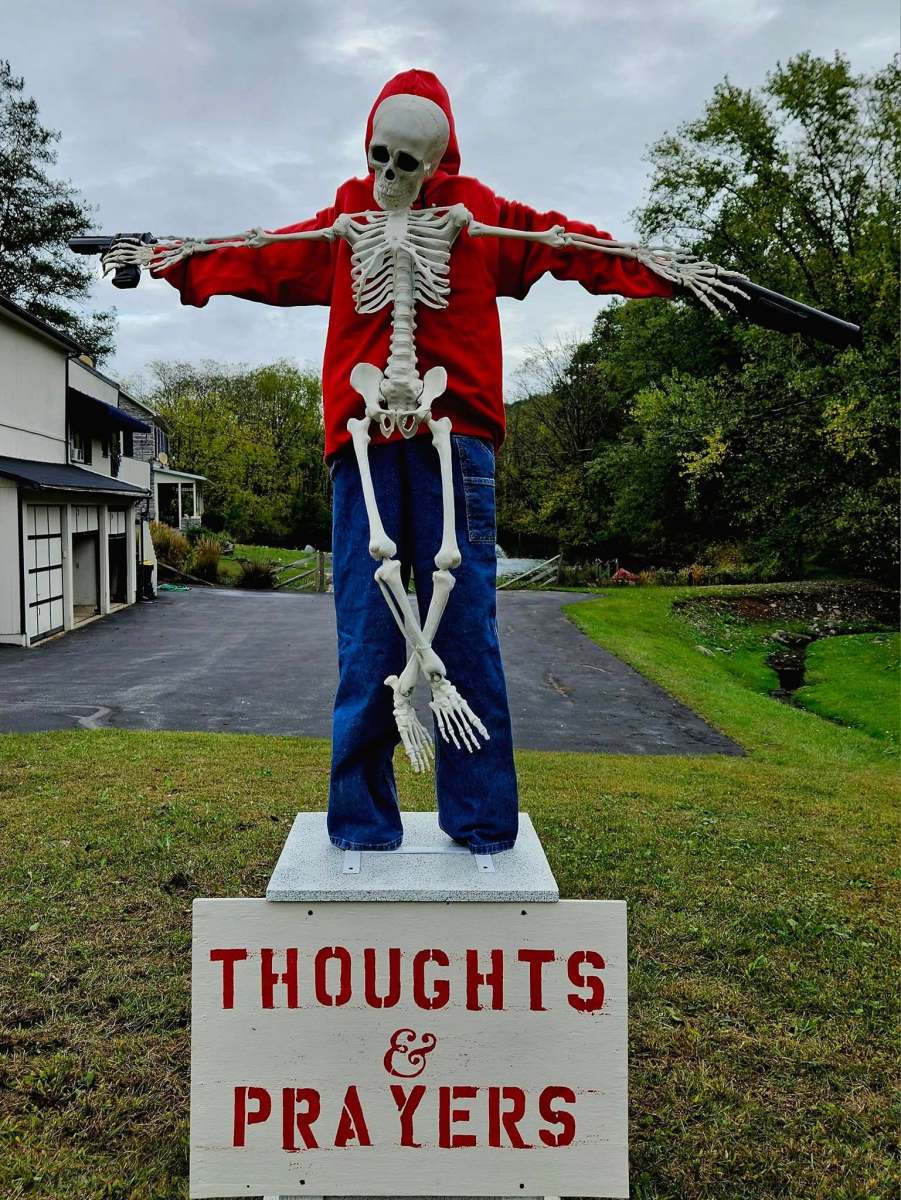
A skeleton in a hoodie, arms raised, stands above a sign reading “Thoughts & Prayers”—calling out empty words after tragedy. A blunt take on empty responses to gun violence.
5.

A literal take on being ‘hung out to dry’—left exposed, abandoned, or just waiting to be noticed.
More skeletons!:
6.
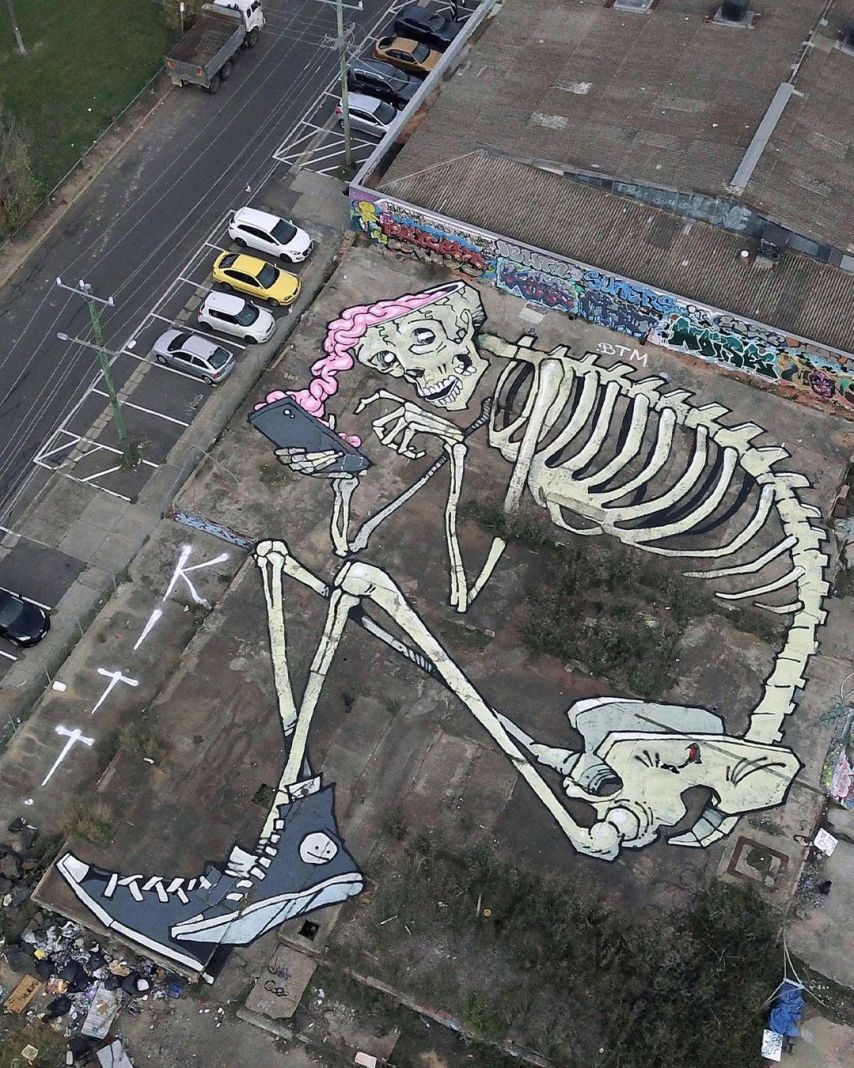
By Kitt Benett in Melbourne, Australia.
More photos here!
7.
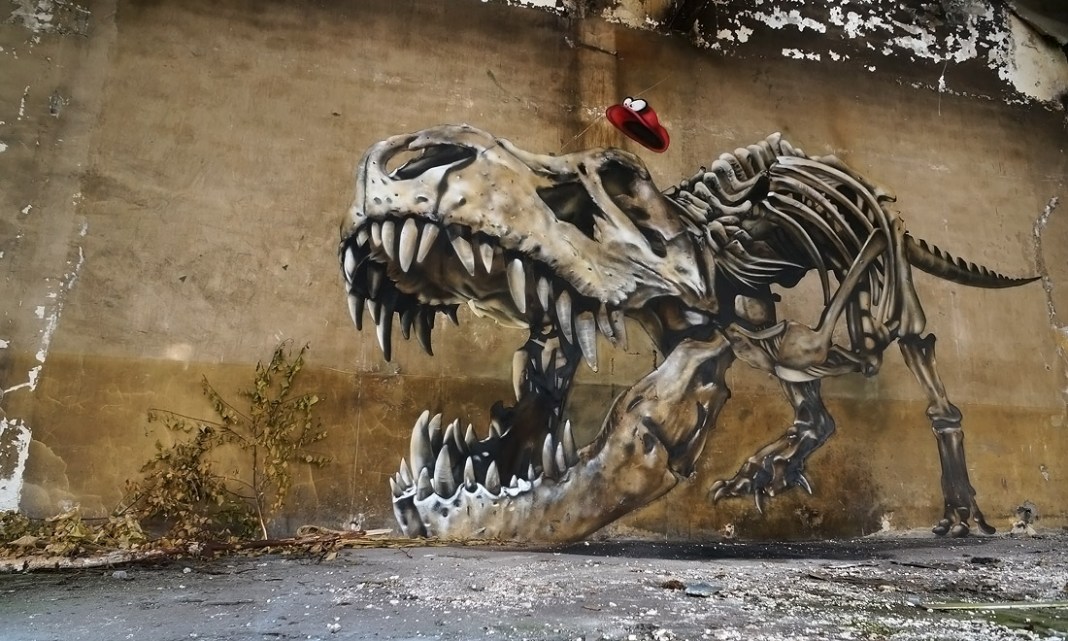
By SCAF – In Lorraine, France.
More by SCAF!: 26 Paintings: 3D Post-Graffiti By SCAF
8.

By Patricio Tormento in Santiago, Chile.
9.
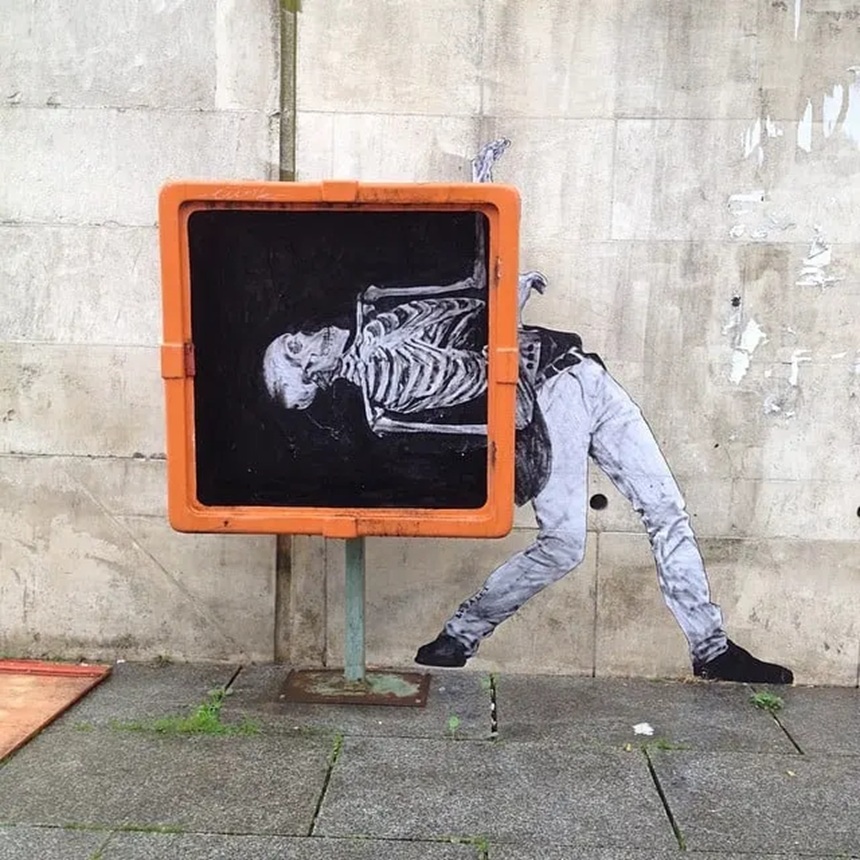
“Transparence” by Levalet in Paris, France.
10.
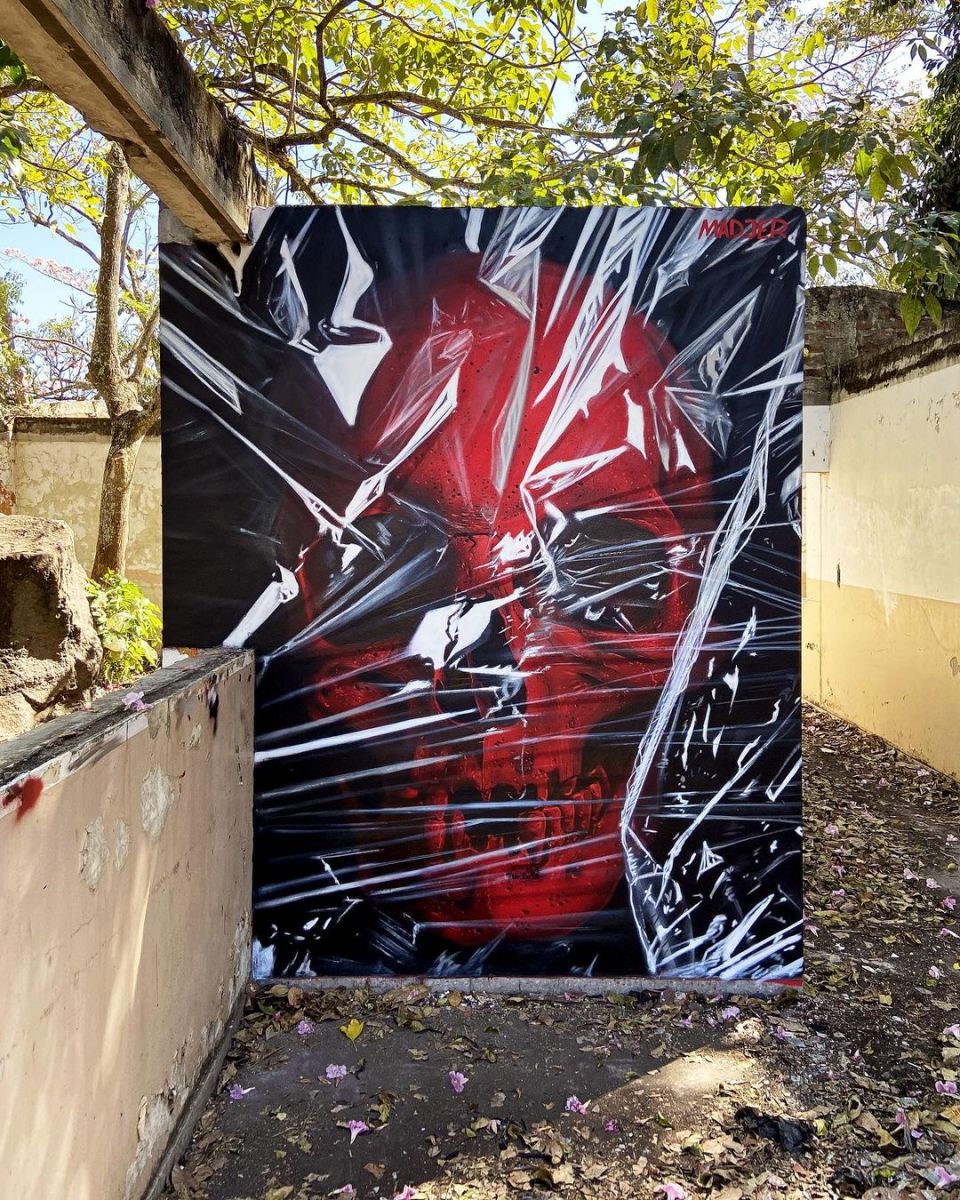
By Madjer Linares in San Vicente , El Salvador.
11.
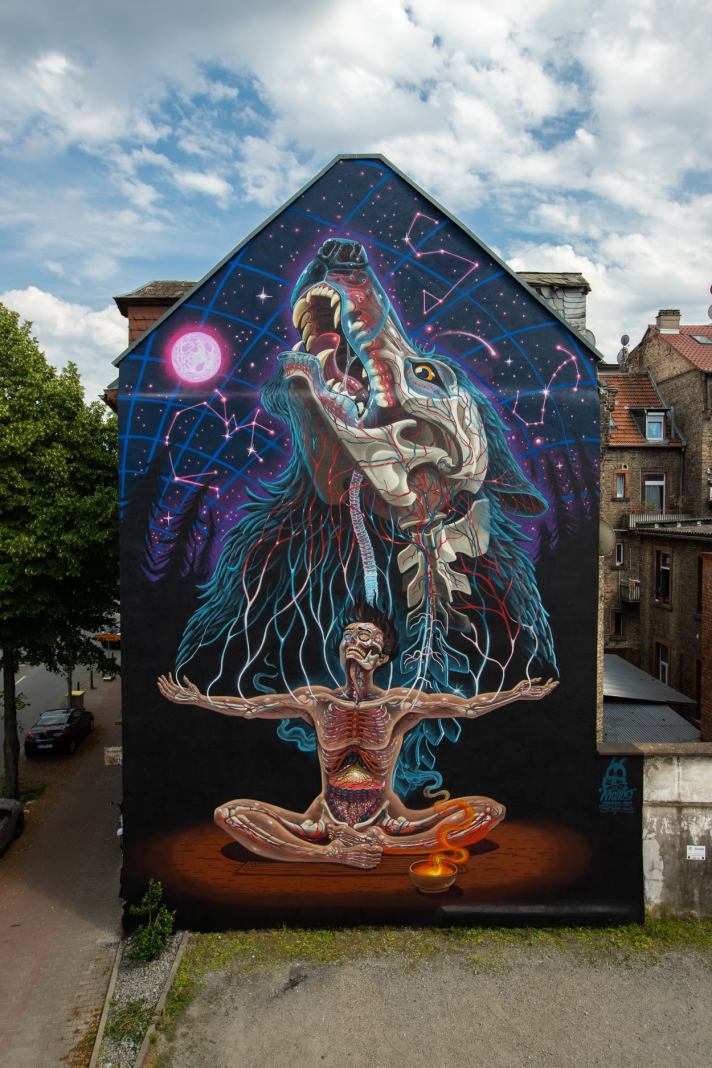
“Primal Truth” by NYCHOS in Mannheim, Germany.
More photos: “Primal Truth” by NYCHOS (8 photos)
12.
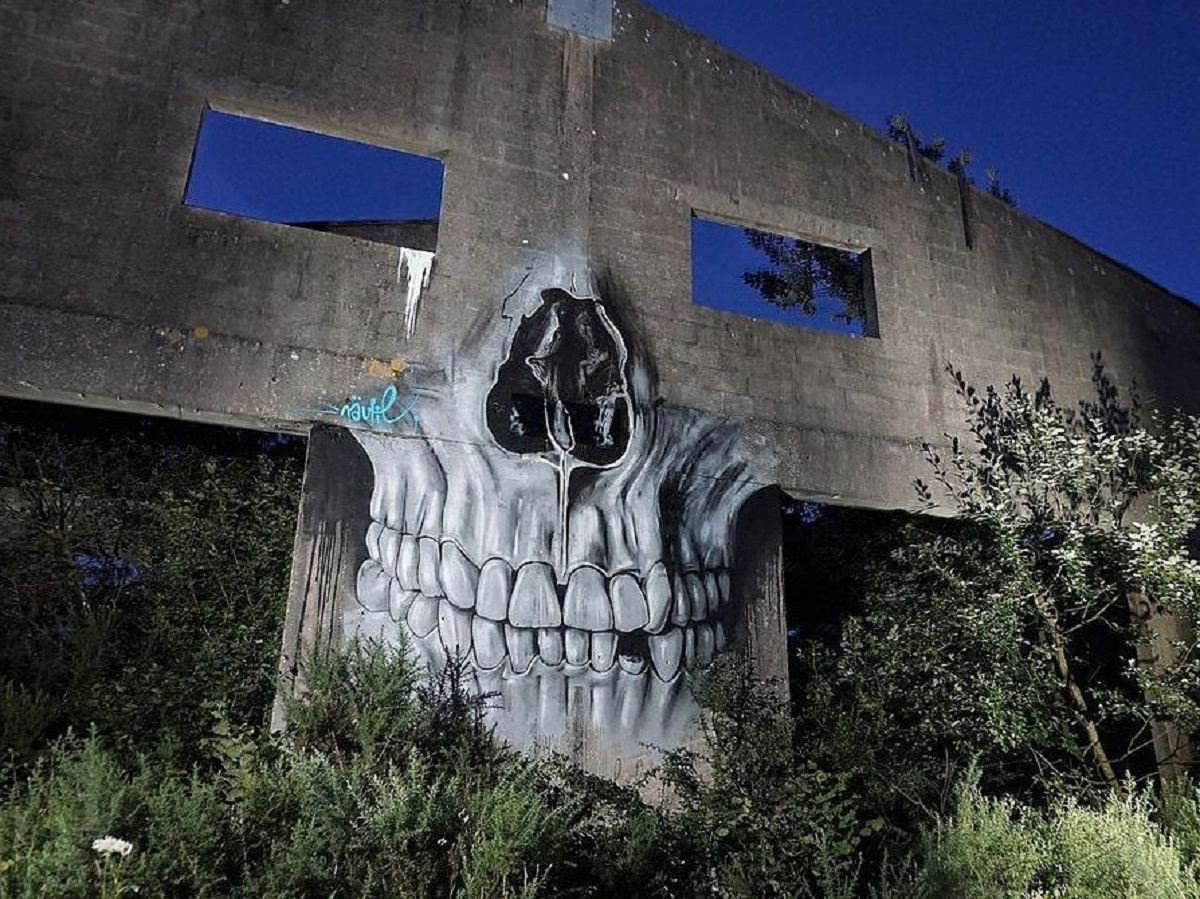
By näutil in Cotentin, Peninsula, France.
13.
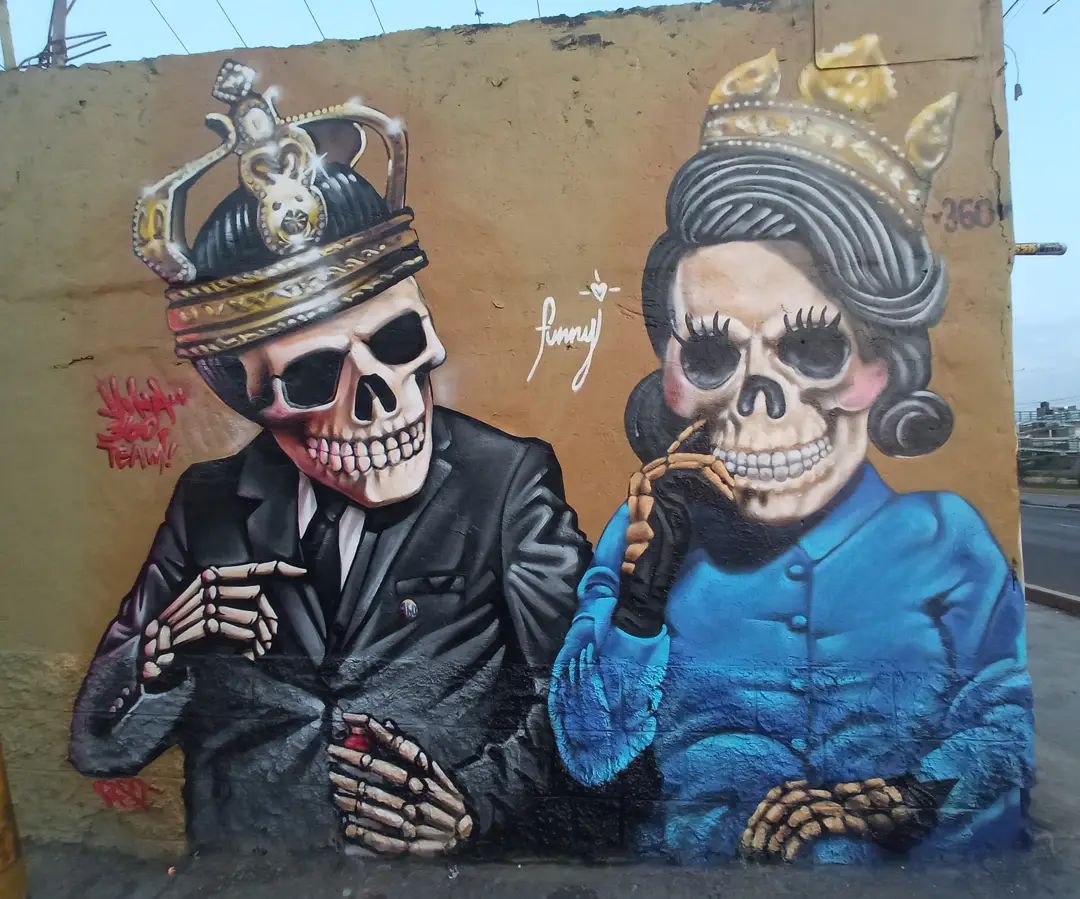
King ♠️♥️ Queen Graffiti in Mexico. By Yukarte and Funny graff in Mexico City.
14.
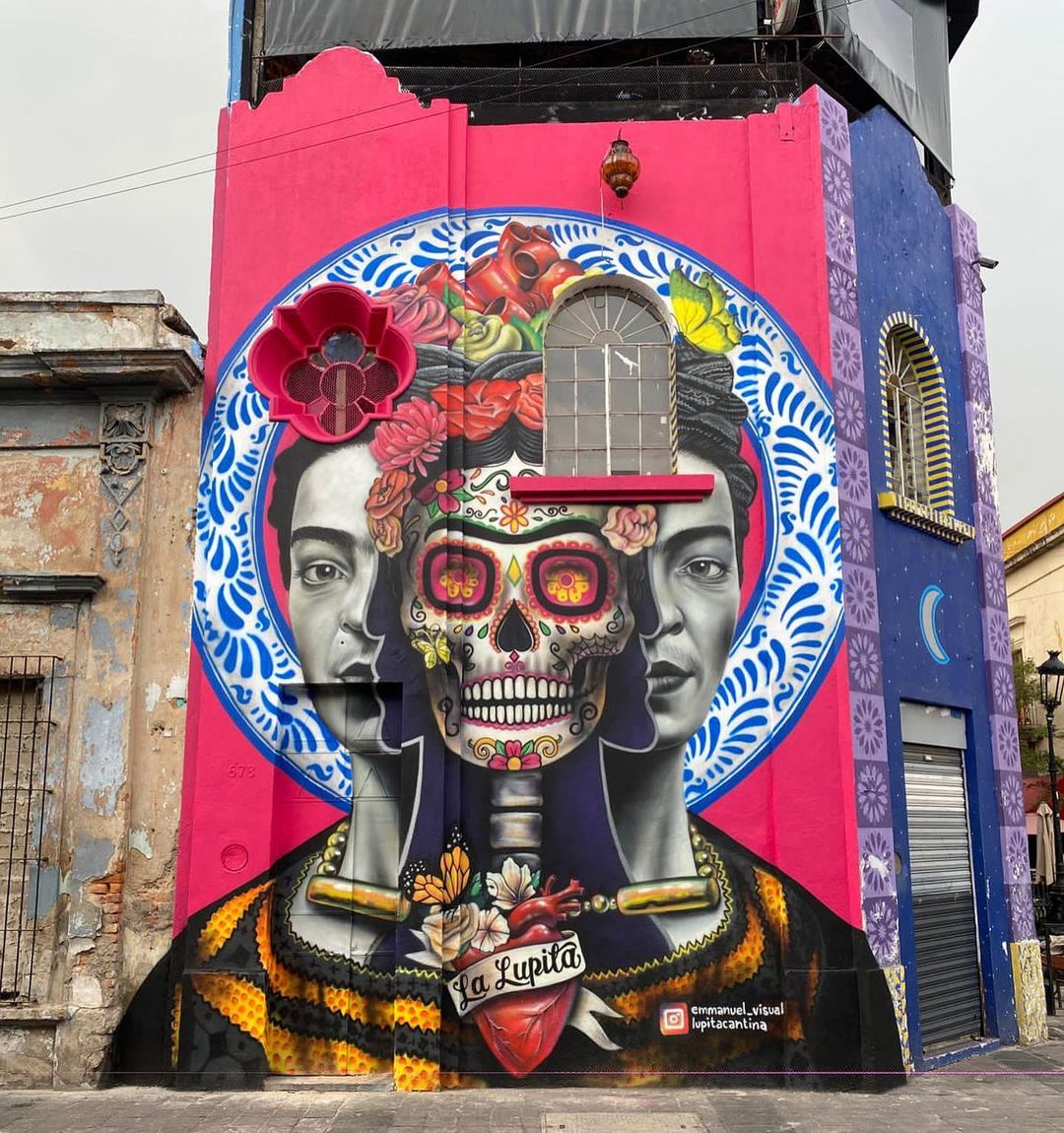
“Frida Kahlo’s Enduring Spirit”:” – Mural of Frida Kahlo by Emmanuel Cuevas Visual at La Lupita Cantinain in Guadalajara, Mexico.
15.
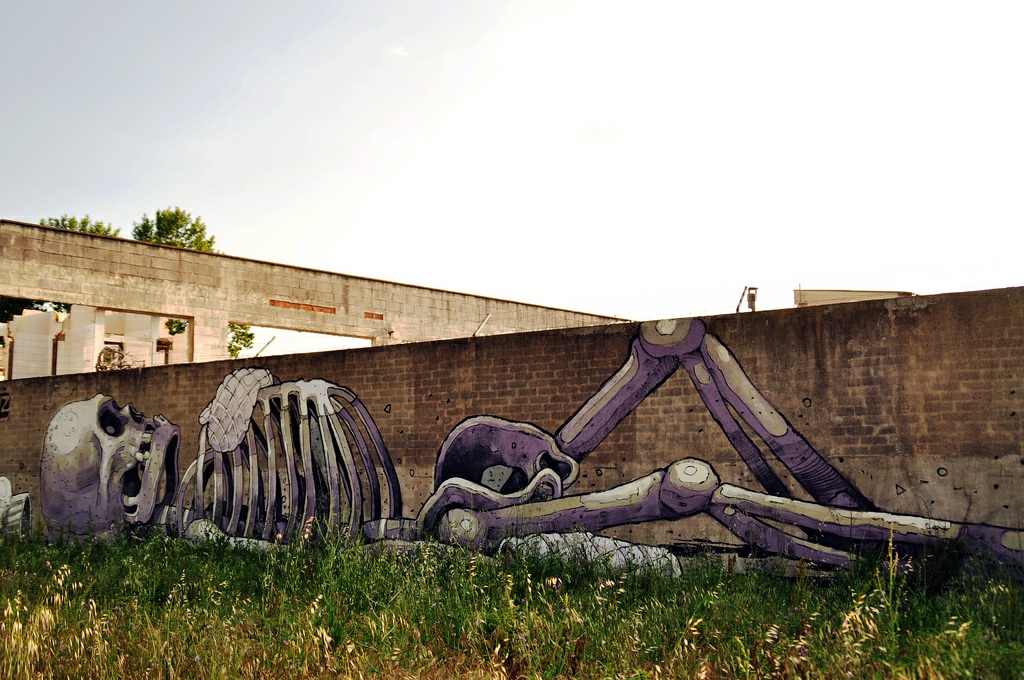
By Aryz.
16.
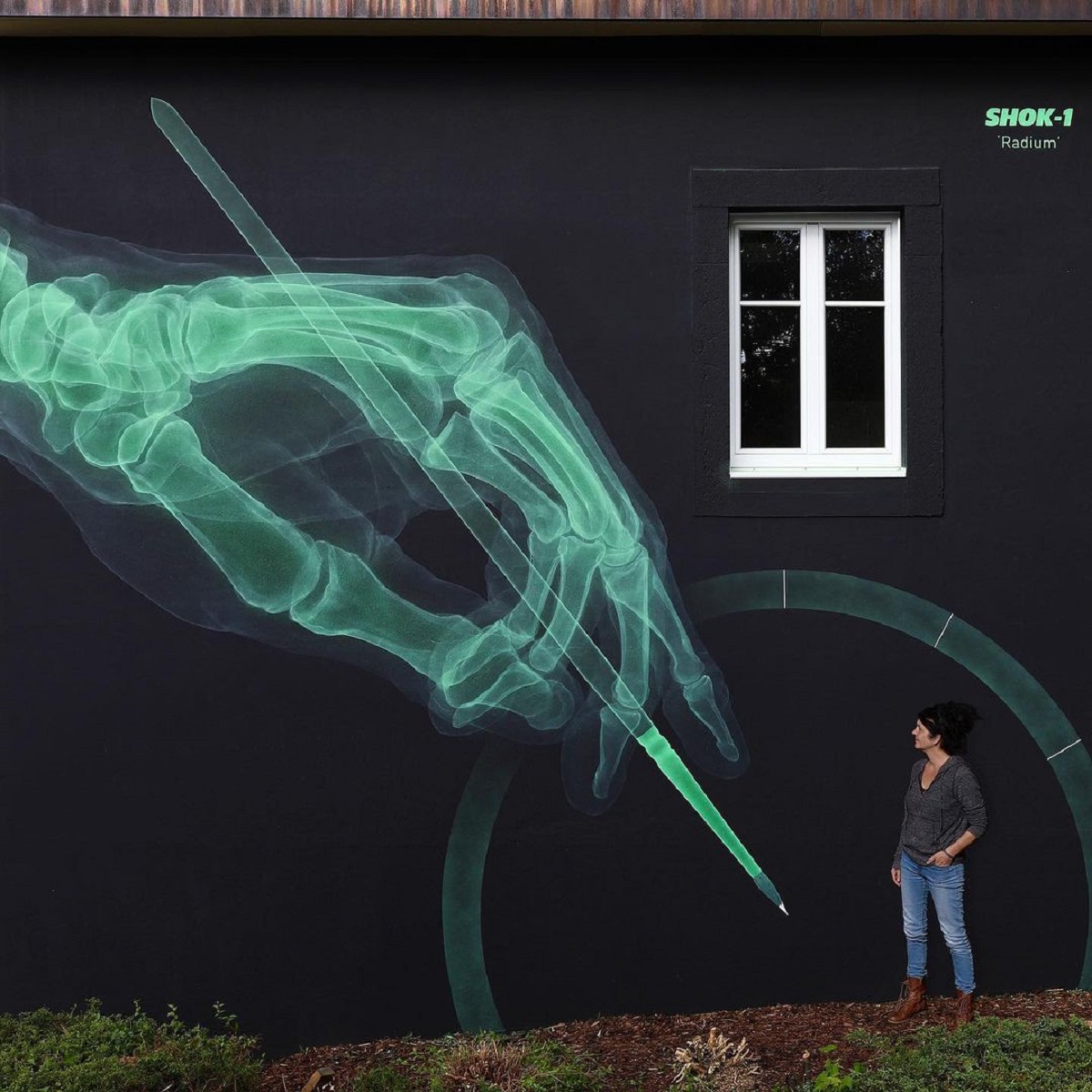
Mural on the tragic story of the Radium Girls, who suffered horribly with radiation poisoning from painting watch faces back in the 20s.
More photos and history here!
17.
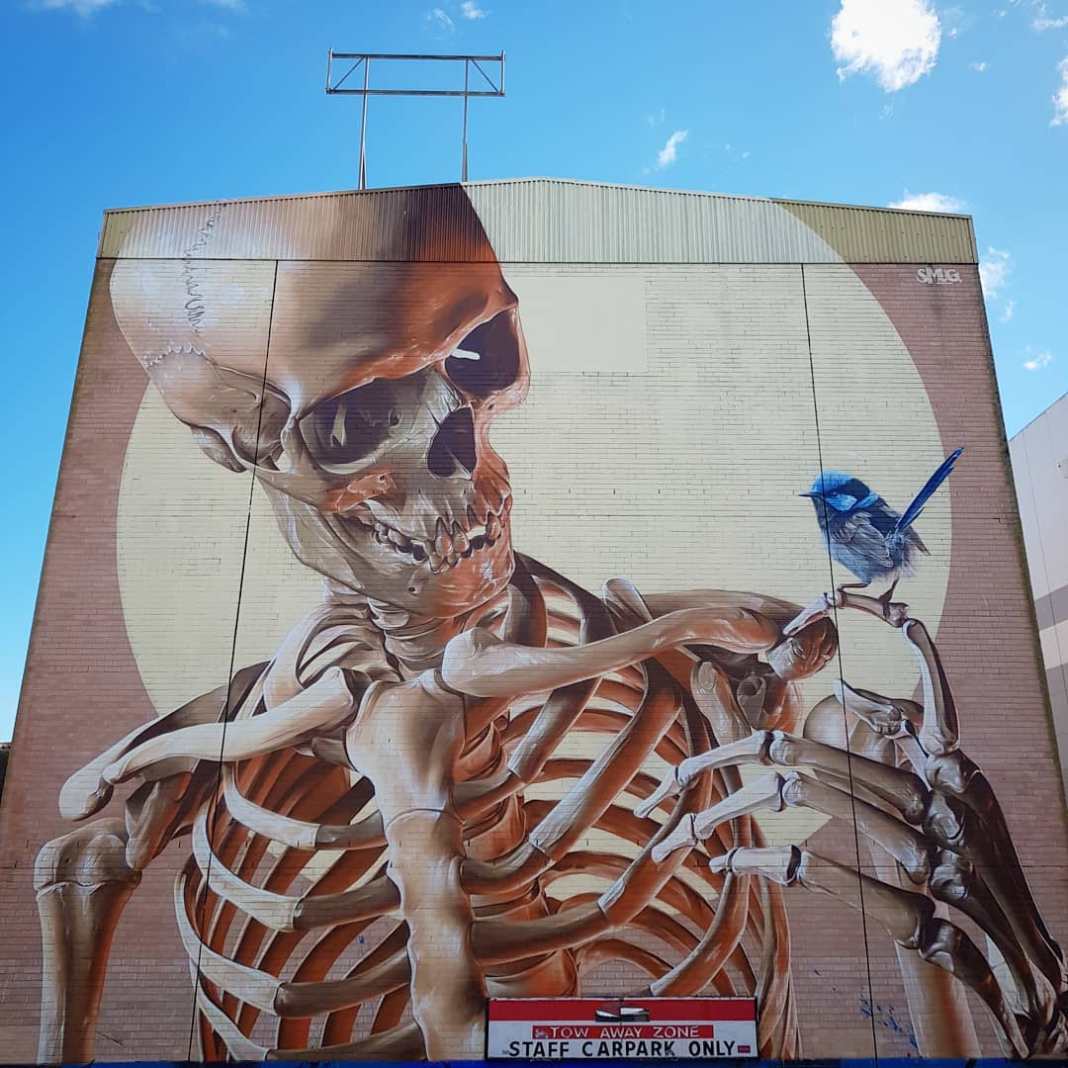
By SMUG in Frankston, Victoria, Australia.
More by SMUG!: 24 Murals By SMUG!
18.

Serpent of the Ocean by Huang Yong Ping in Saint-Brevin-les-Pins, France.
More photos here!
Which is your favorite?
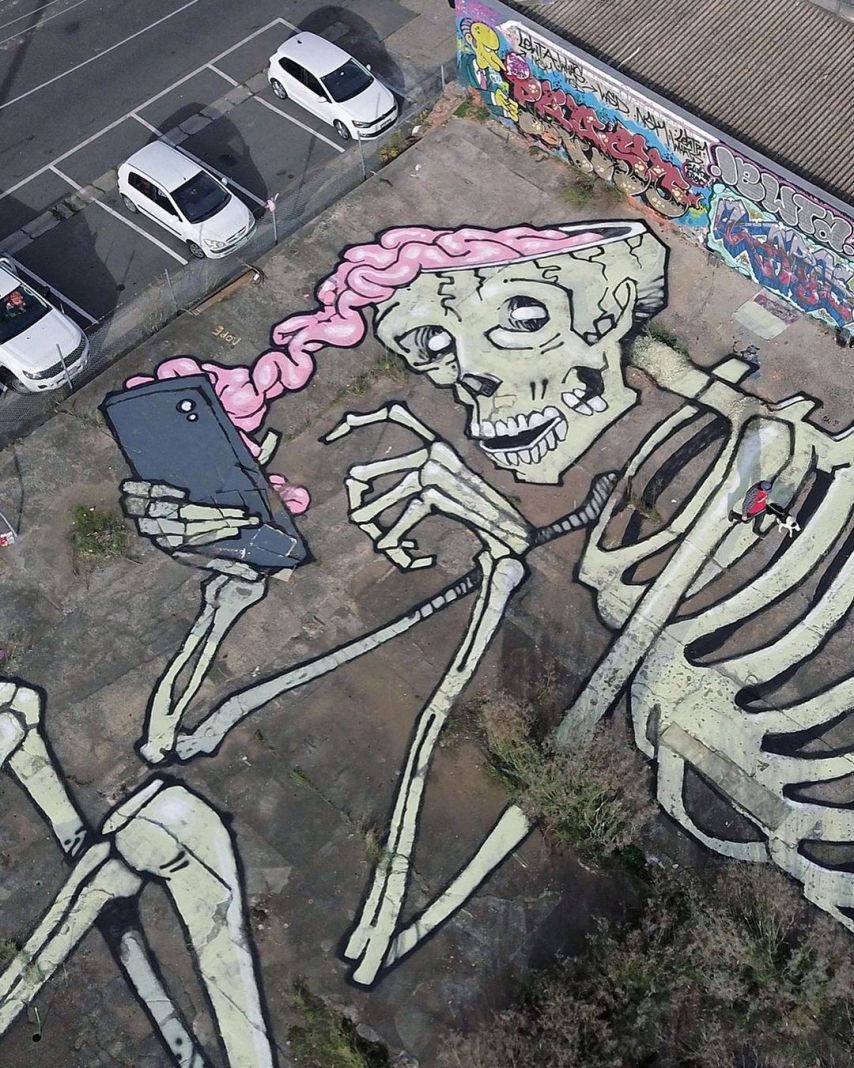
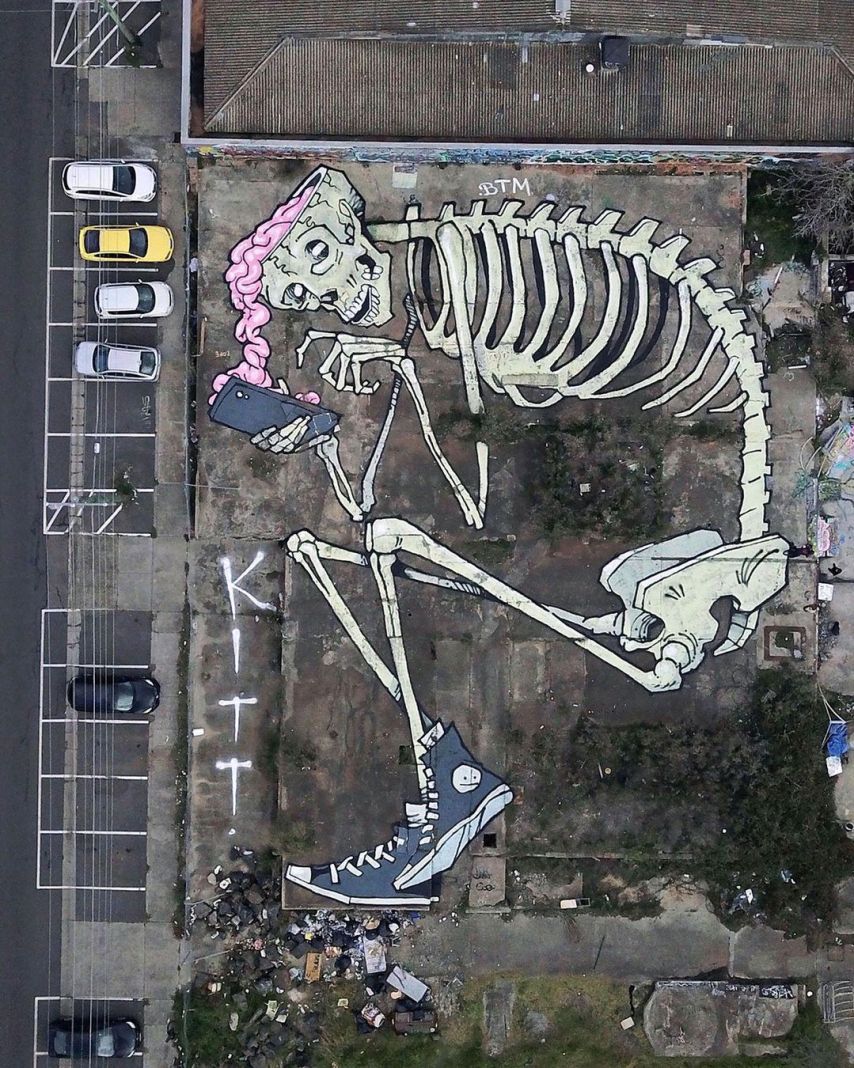
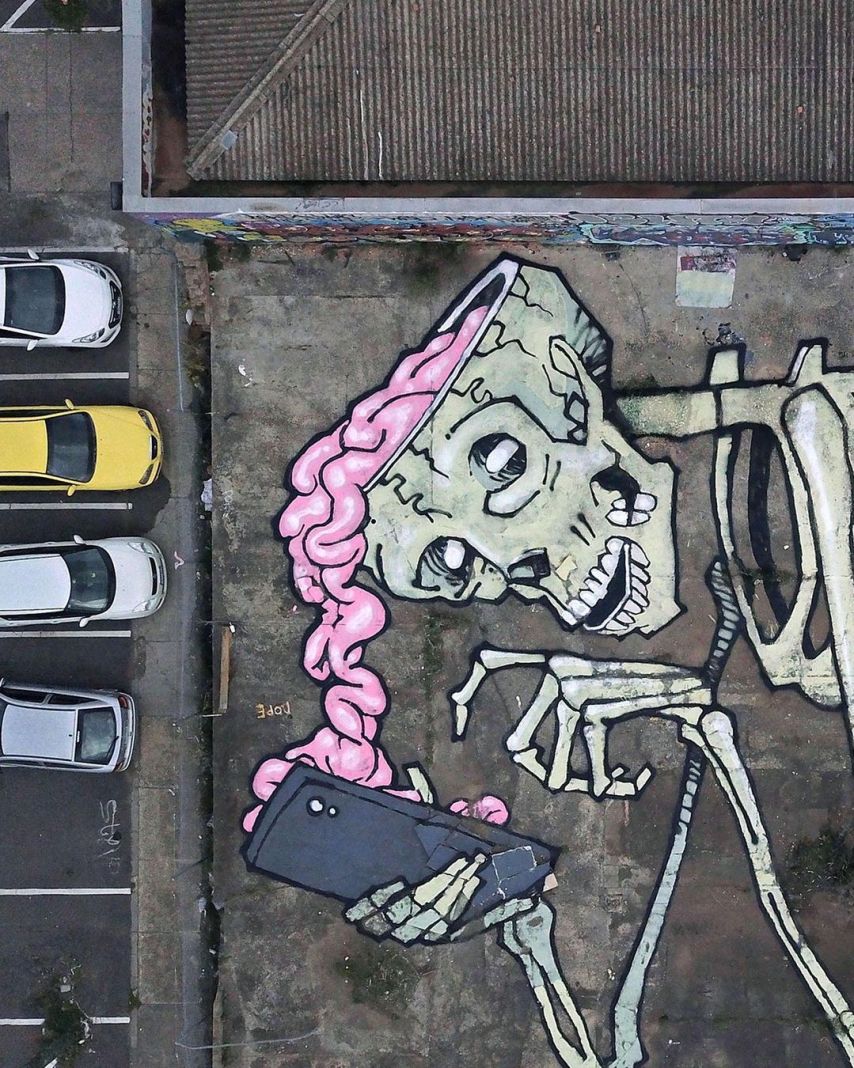
Huge Skeleton Mural by KITT in Melbourne, Australia (5 Photos)
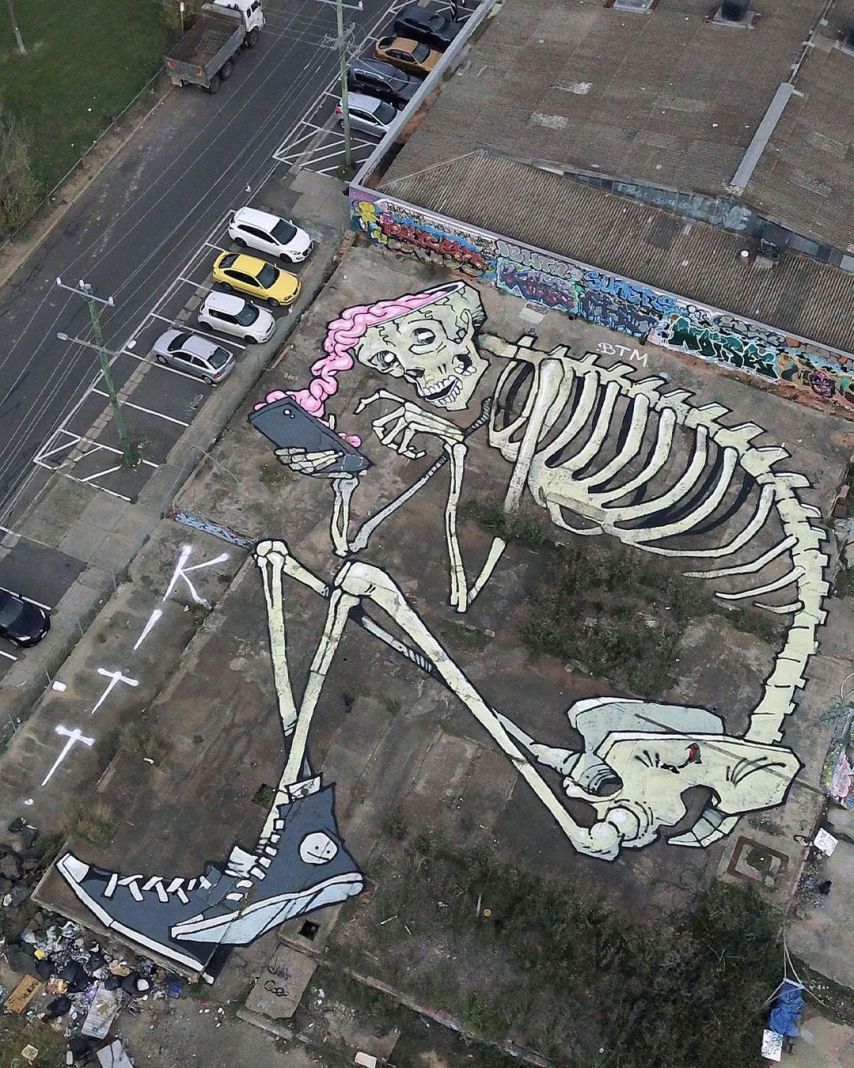
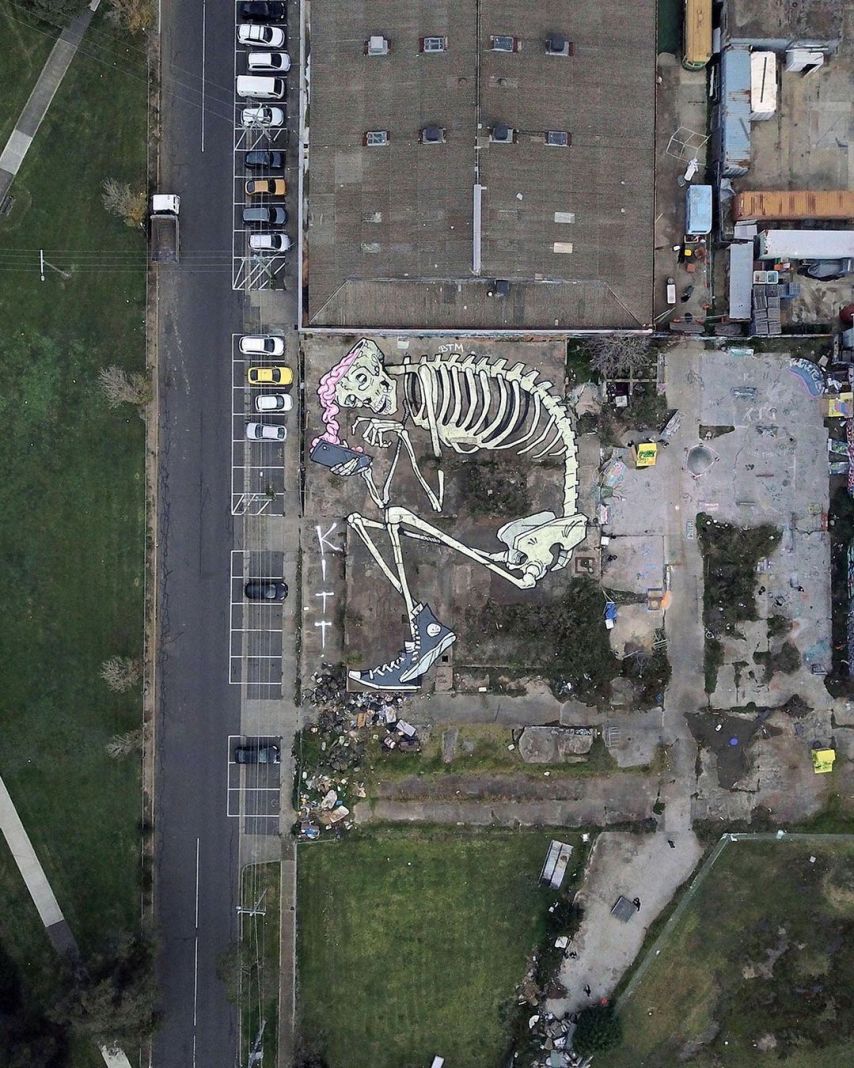
By Kitt Bennett in Melbourne, Australia
Comments:
Speak Truth to Power?: 32 Photos Of Real Talk Graffiti
Content warning: 1. Graffiti has long been a voice for the voiceless, a way for people to reclaim space and share unfiltered truths with the world. In this collection, we dive into the raw and impactful world of "Real Talk Graffiti" – art that doesn't hold back. These pie
1.
Graffiti has long been a voice for the voiceless, a way for people to reclaim space and share unfiltered truths with the world.
In this collection, we dive into the raw and impactful world of “Real Talk Graffiti” – art that doesn’t hold back. These pieces go beyond aesthetics, delivering sharp commentary on society, politics, and the human experience.
More: Banksy on Capitalism: Challenging Inequality and Consumerism Through Art (11 Artworks)
2.
3.
4.
5.
6.
7.
8.
9.
10.
11.
12.
13.
14.
15.
16.
17.
18.
19.
20.
21.
22.
23.
24.
25.
26.
27.
28.
29.
30.
31.
32.
More: 42 Photos of Inspiring Street Art by HIJACK
Which one is your favorite?
Banksy on Capitalism: Challenging Inequality and Consumerism Through Art (11 Artworks)
Banksy: Art Against Capitalism and Consumerism
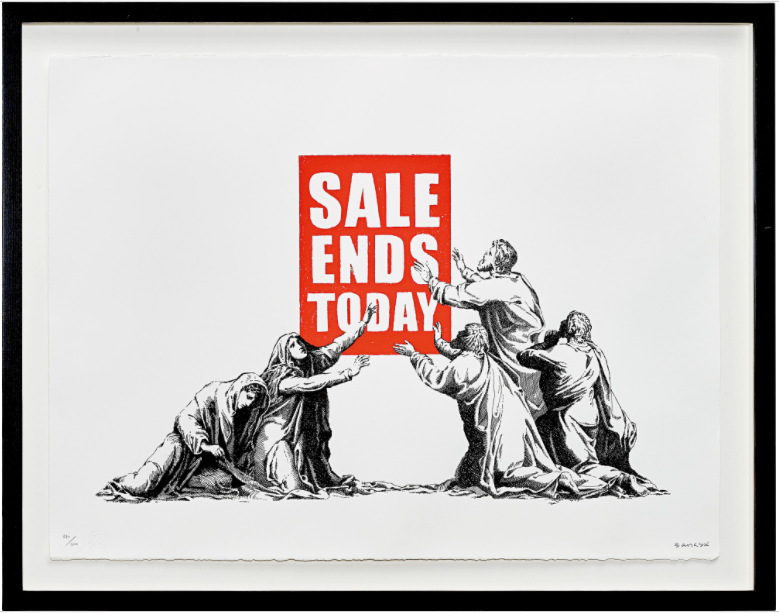
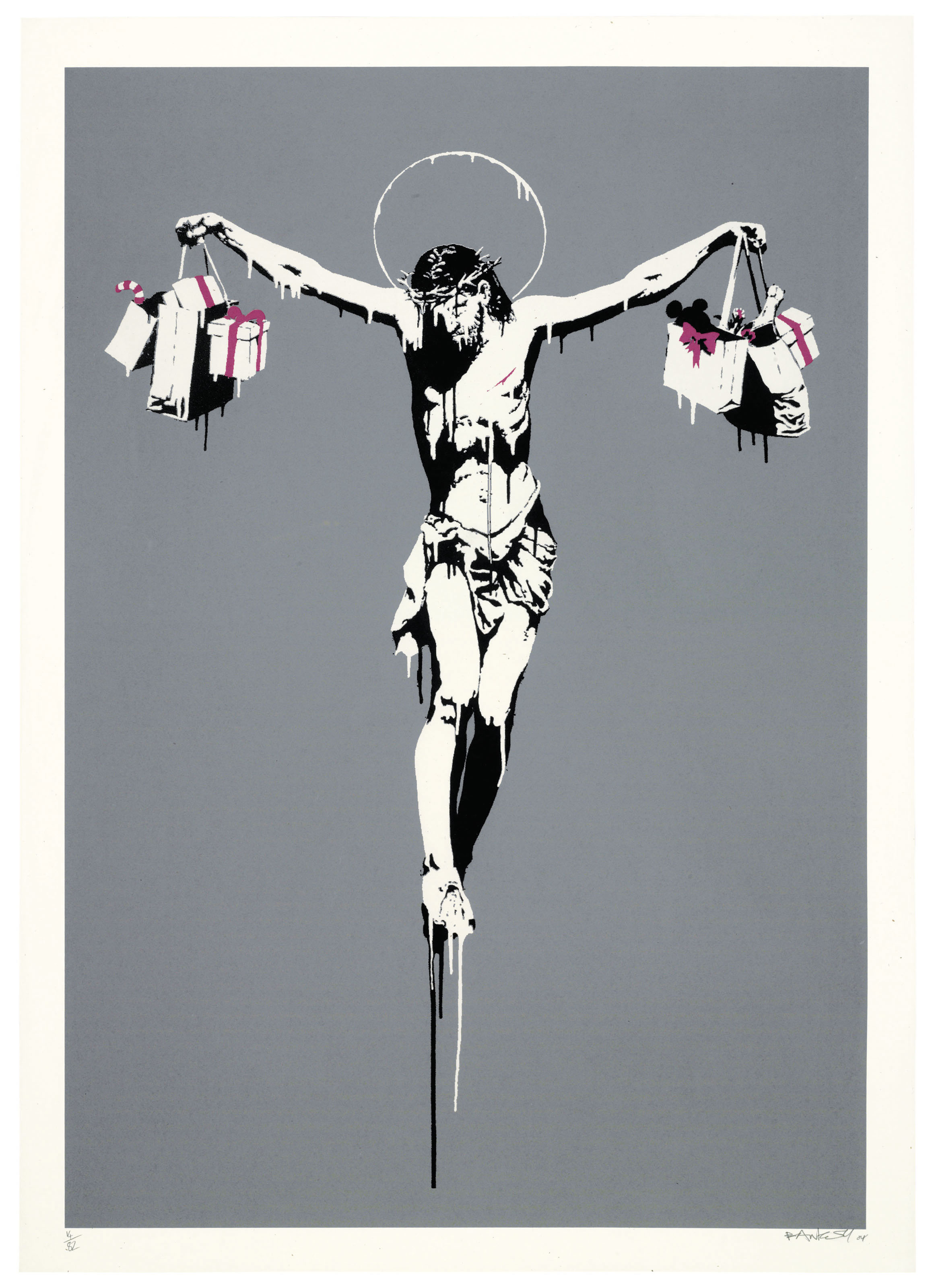
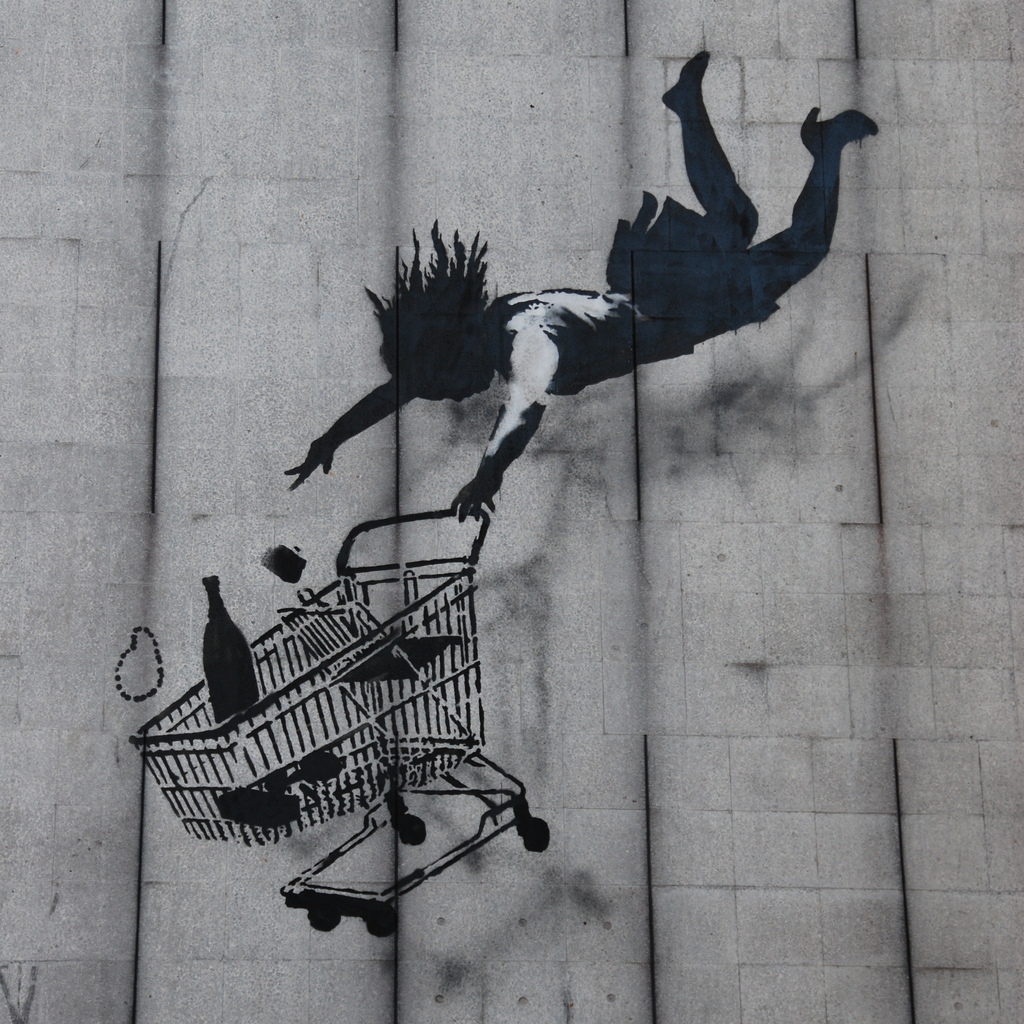
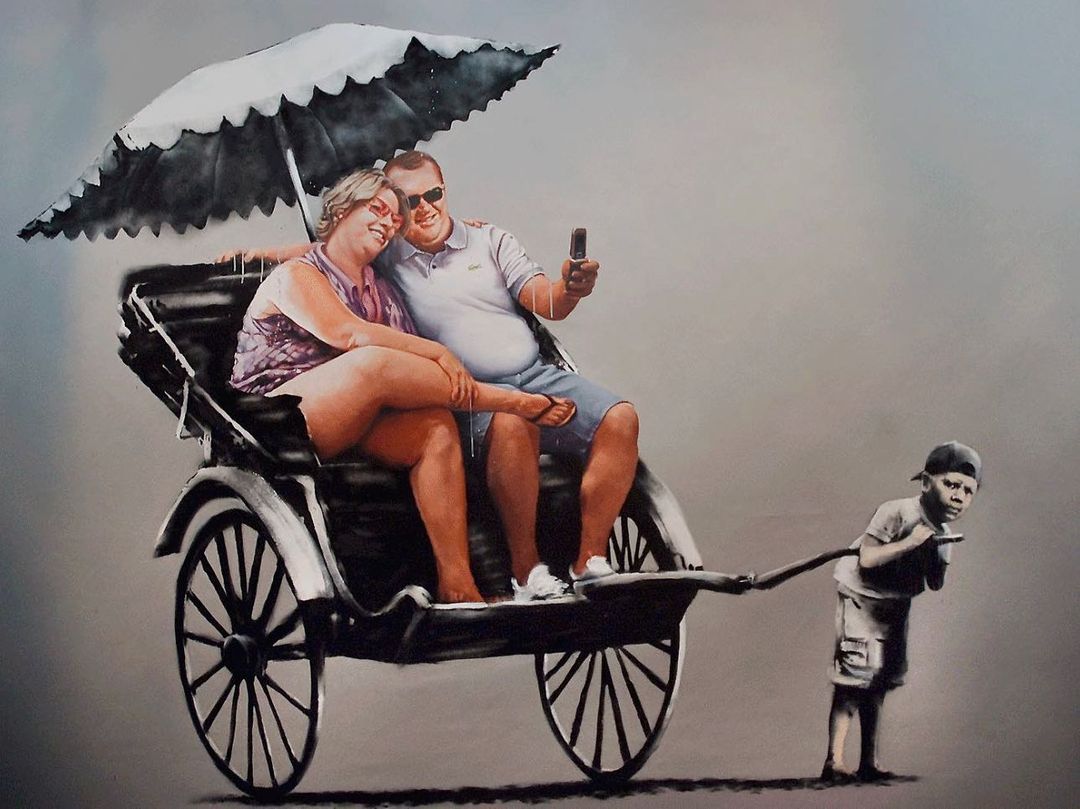
Through his provocative and inspiring works, Banksy exposes the darker sides of capitalism and consumerism. Pieces like Fat Tourist and Rickshaw, Shop Until You Drop, and Sale Ends Today reveal how privilege, exploitation, and materialism shape modern society. By blending wit and stark imagery, Banksy challenges us to question the values driving Western culture.More: 24 artworks by Banksy: Who Is The Visionary of Street Art
1
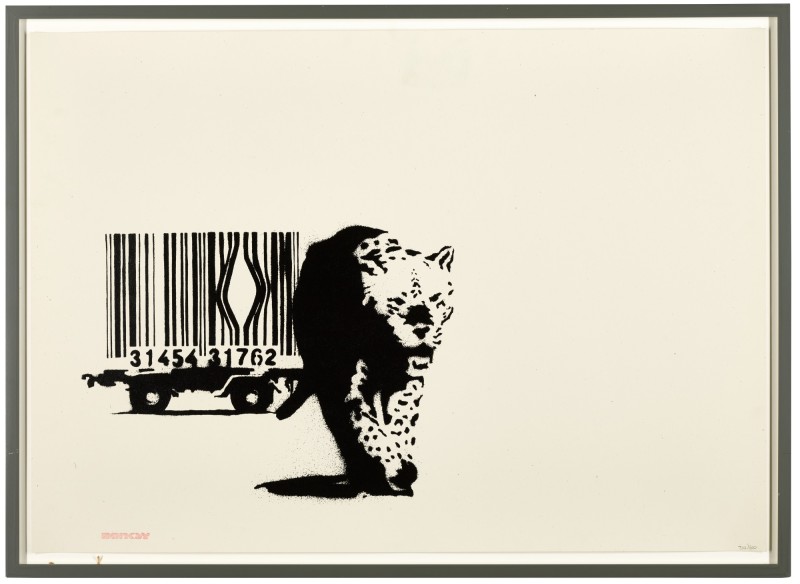
Banksy’s Barcode Leopard shows a leopard walking away from a barcode cage, symbolizing the commodification of nature under capitalism.
2
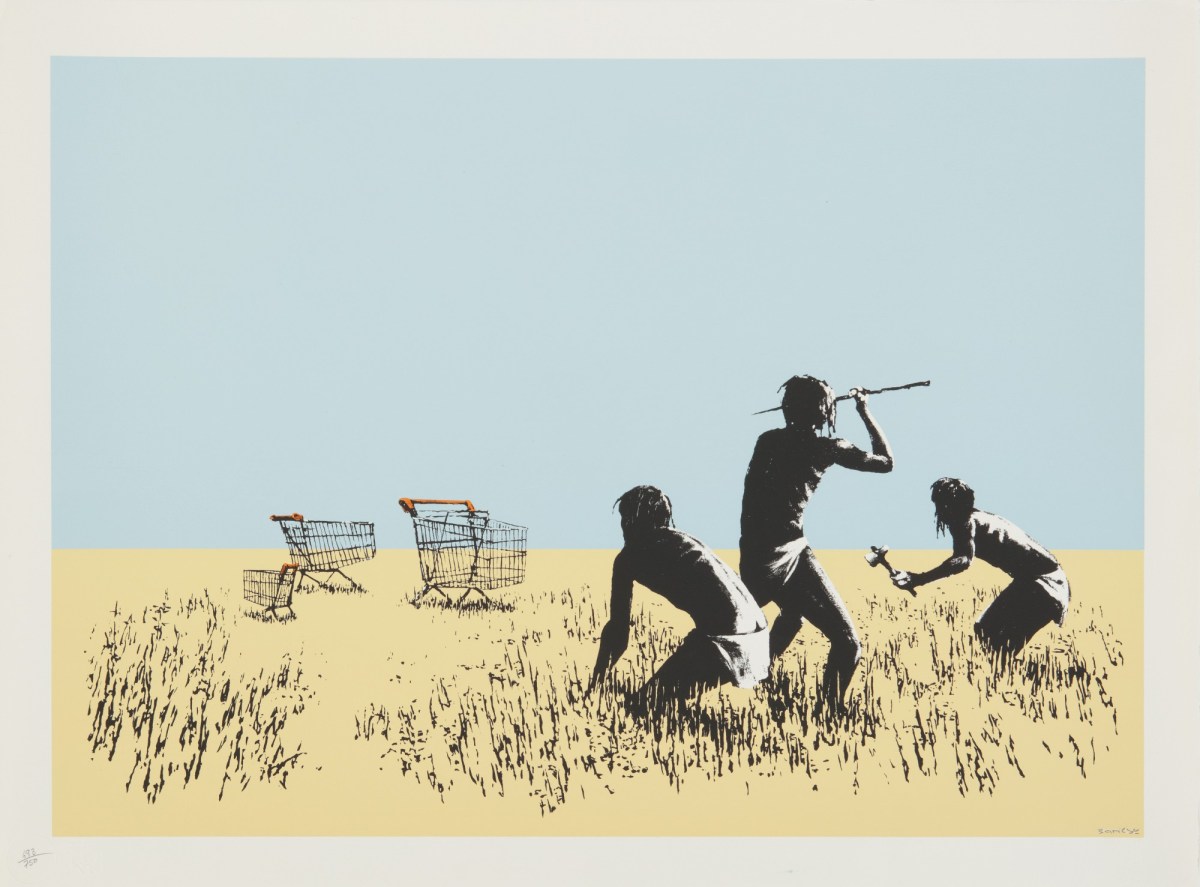
Banksy’s Trolley Hunters highlights the absurdity of consumer culture, showing hunters targeting shopping carts in a savanna-like setting.
More: Street Art Legend Banksy Reveals His Name in a Rare BBC Interview
3
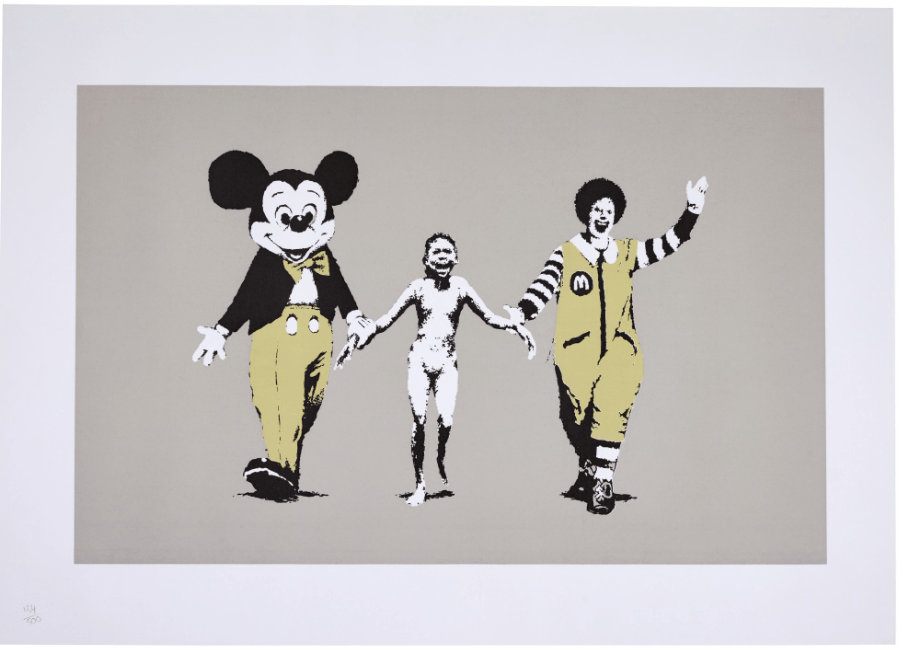
Banksy’s Napalm pairs Mickey Mouse and Ronald McDonald with a distressed child from the Vietnam War, critiquing corporate exploitation and the detachment of consumer culture from human suffering.
In Banksy’s repurposing of Nick Ut’s iconic Vietnam War photograph he make a statement against large corporations and their involvement in warfare. This piece not only critiques the military-industrial complex but also warns of the destructive nature of capitalist imperialism.Through these artworks, Banksy challenges viewers to reflect on the impact of capitalism on society, culture, and individual lives. His art transcends mere visual expression, becoming a catalyst for critical thought and discussion about the current state of our world.
More: 14 Great Banksy Street Art Photos and Quotes!
4
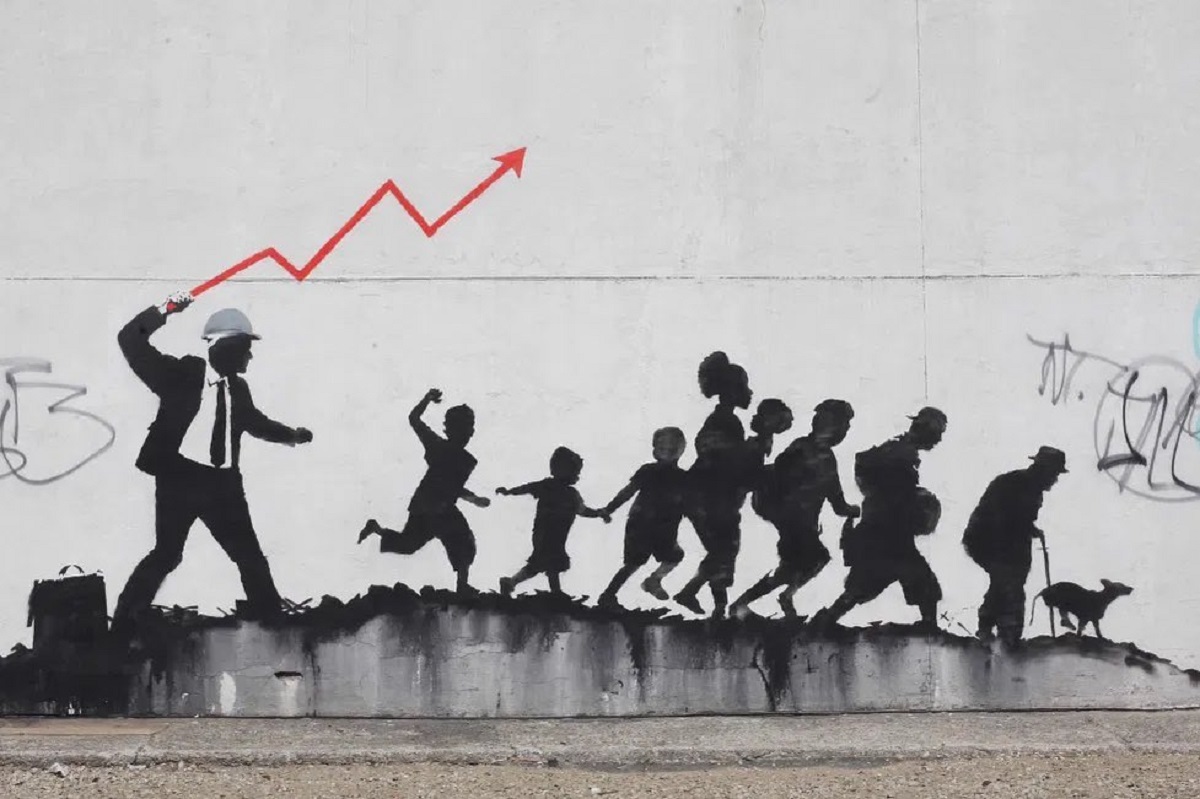
Banksy’s mural uses a red graph line as a whip, held by a businessman driving people forward. It’s a commentary on how economic growth often comes at the expense of human suffering and exploitation.
5
Banksy’s Sale Ends Today shows figures worshipping a “SALE ENDS TODAY” sign, highlighting how consumerism has replaced spirituality and values in modern society.
6
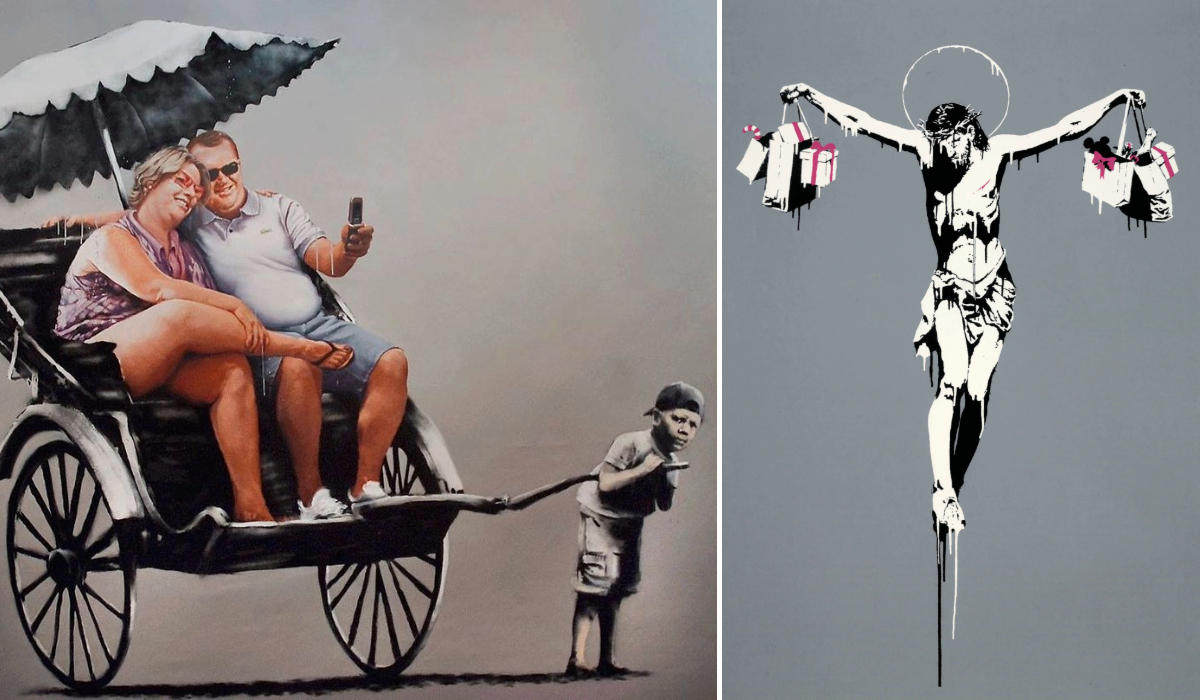
Banksy’s artwork Christ with Shopping Bags portrays a crucified figure of Christ holding shopping bags filled with Christmas-themed items like candy canes and gifts. The image critiques the commercialization of religious holidays and the materialism that overshadows their original meaning.
7
Banksy’s artwork Shop Until You Drop features a stencil of a woman falling headfirst through the air, clinging to a shopping cart filled with groceries. The piece critiques consumerism, portraying the dangerous obsession with material goods.
8
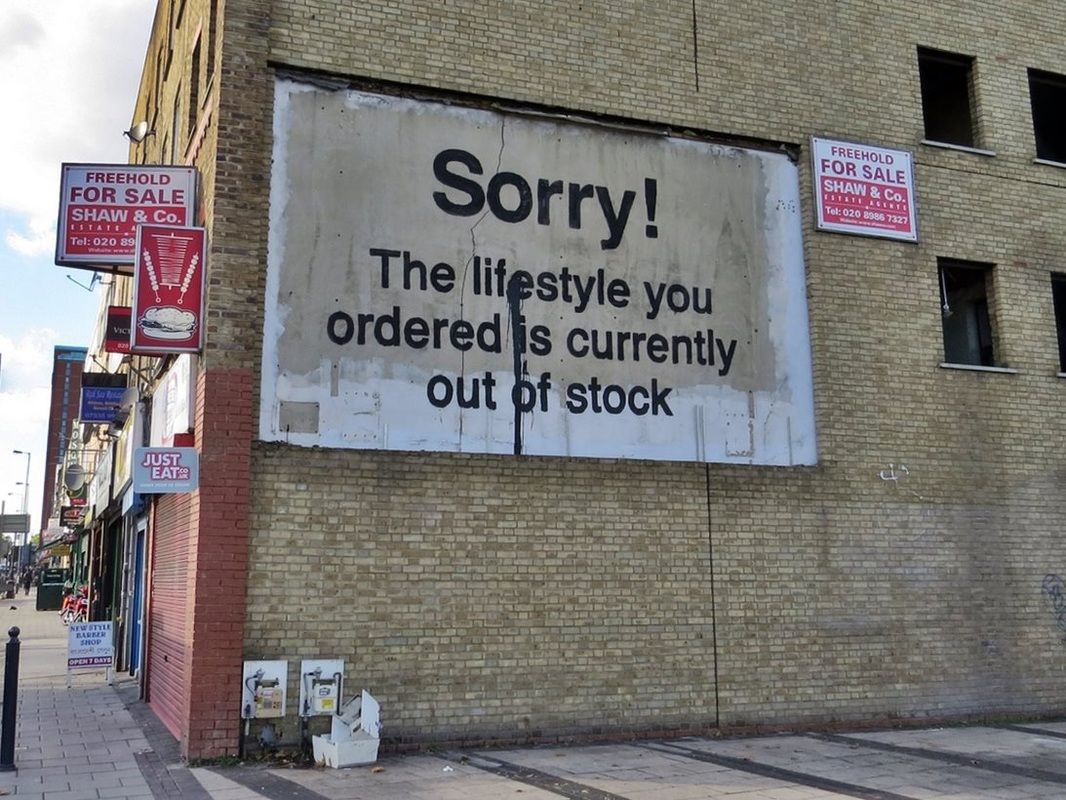
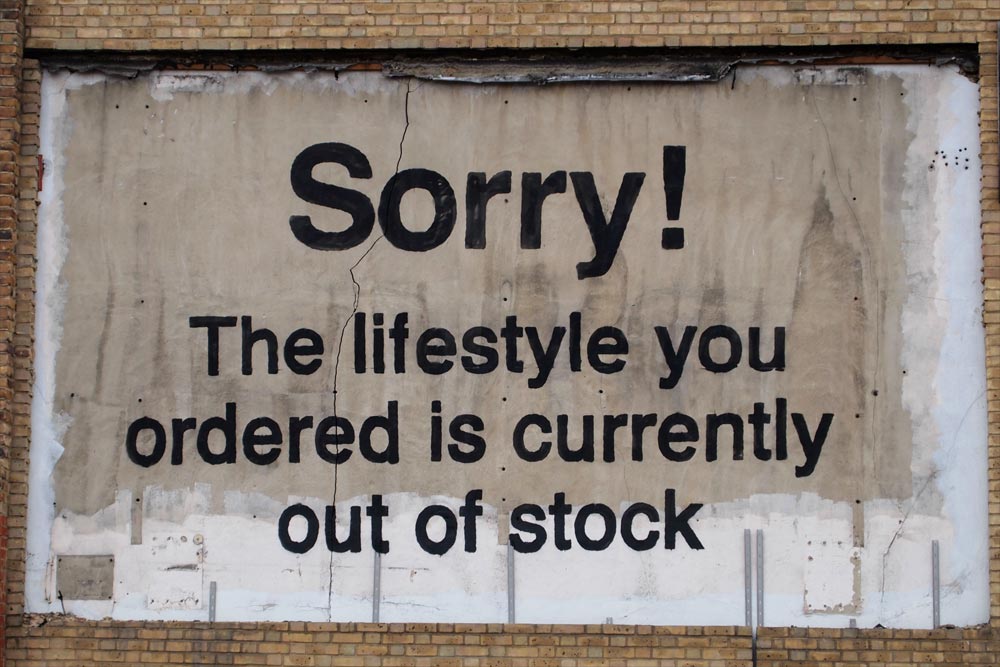
Banksy’s Sorry! The Lifestyle You Ordered mocks consumer culture, with a billboard declaring the unavailability of the promised lifestyle. It’s a critique of modern materialism and unfulfilled expectations.
9
Banksy’s Show Me the Monet reinterprets Monet’s iconic garden, adding shopping carts and a traffic cone to critique consumerism and environmental disregard in modern society.
10
Banksy’s Fat Tourist and Rickshaw from the Banksy vs. Bristol Museum exhibition in 2009 highlights social inequality, depicting a couple enjoying luxury at the expense of a struggling child pulling their rickshaw.
11
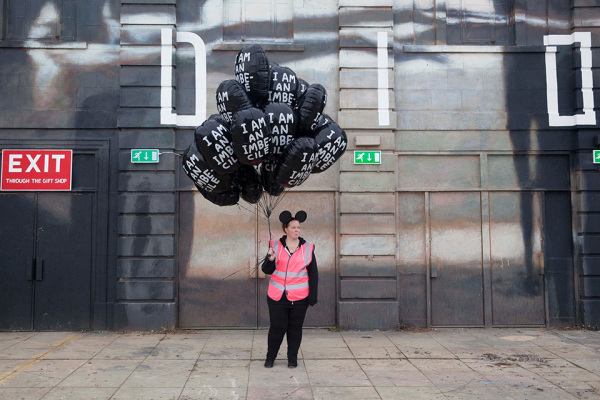
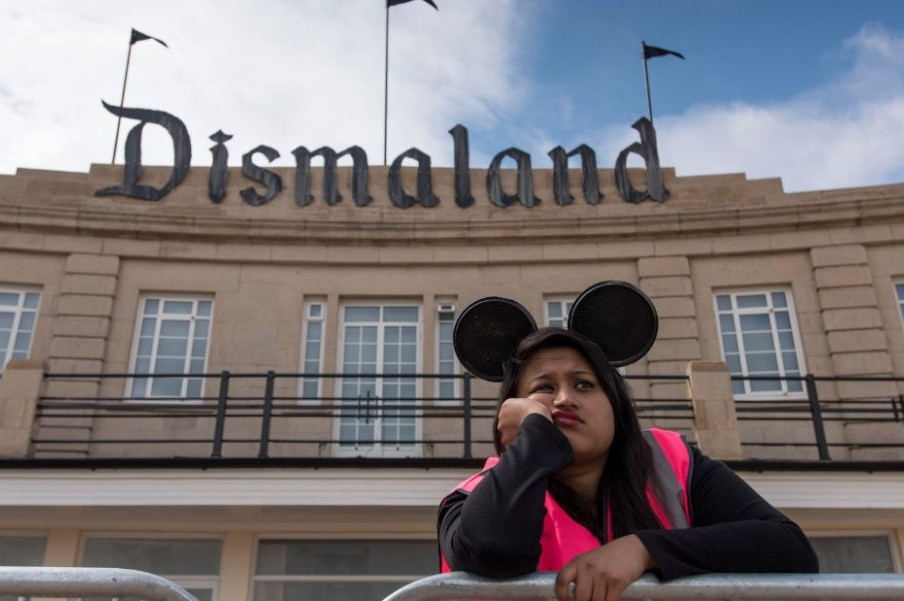
This image captures the essence of Banksy’s Dismaland (2015), a dark parody of theme parks, where a staff member with Mickey Mouse ears and a bored expression underscores the critique of consumerism and artificial joy.
More photos from Dismaland: Inside Banksy´s Dismaland
What do you think about this art by Banksy? Do you have a favorite?

Banksy’s Iconic Street Art: 100 Stunning Photos
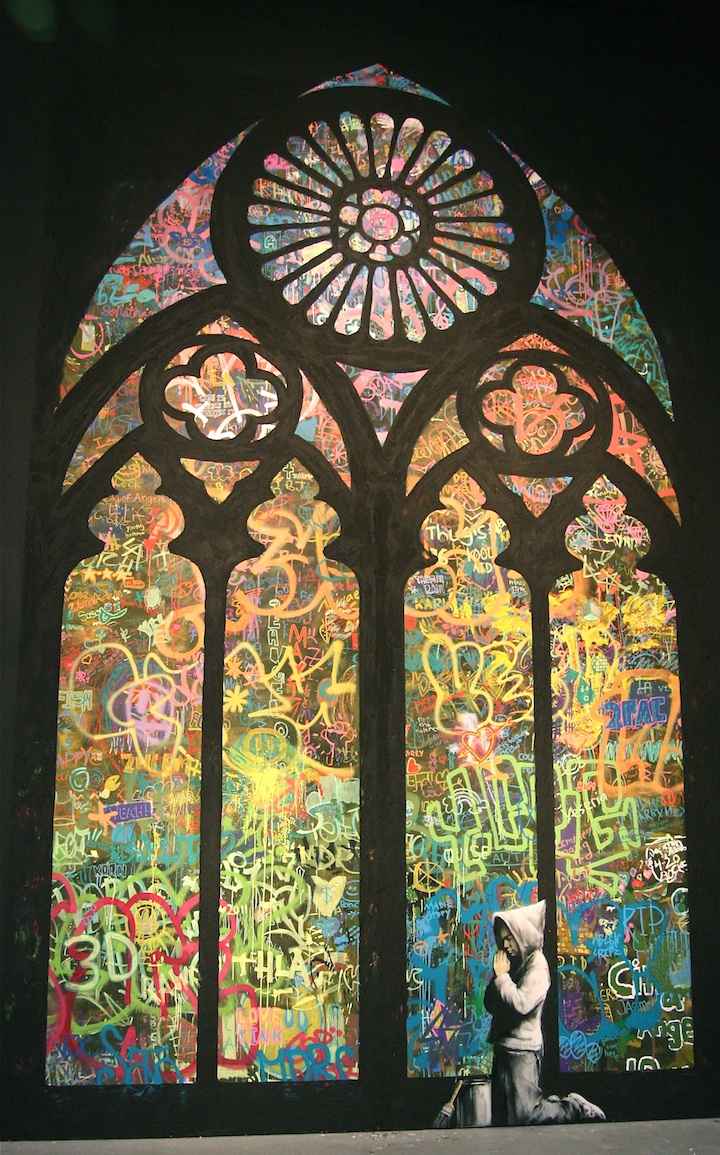
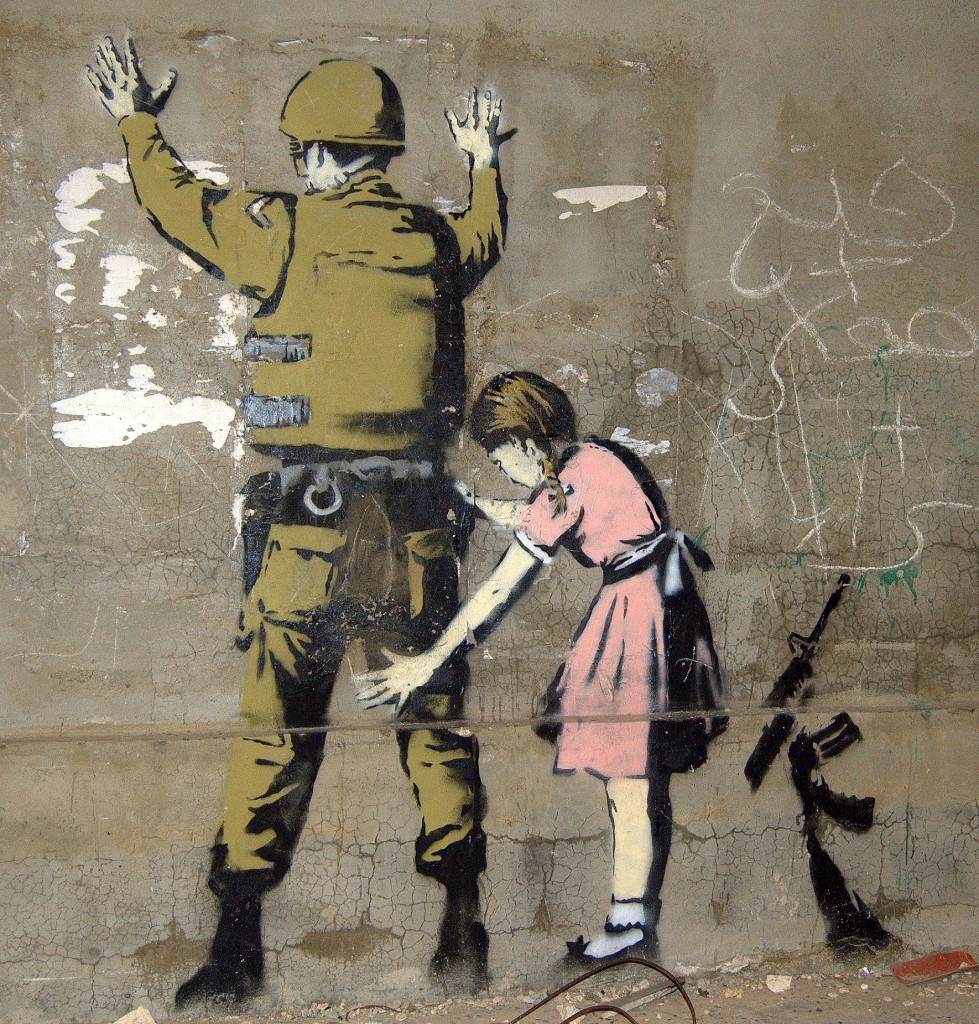
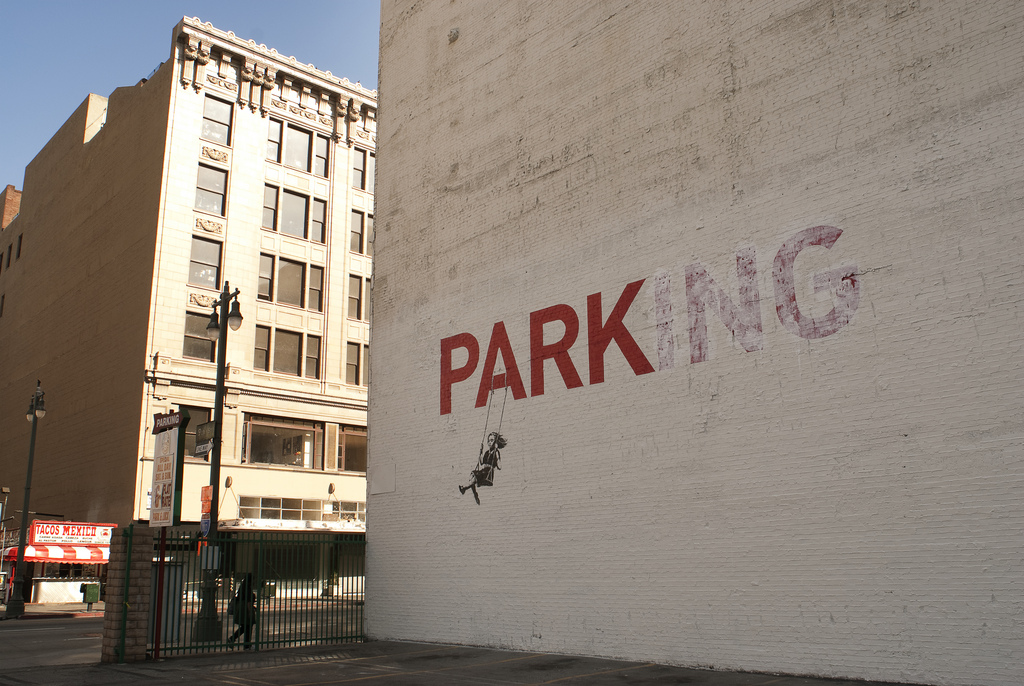
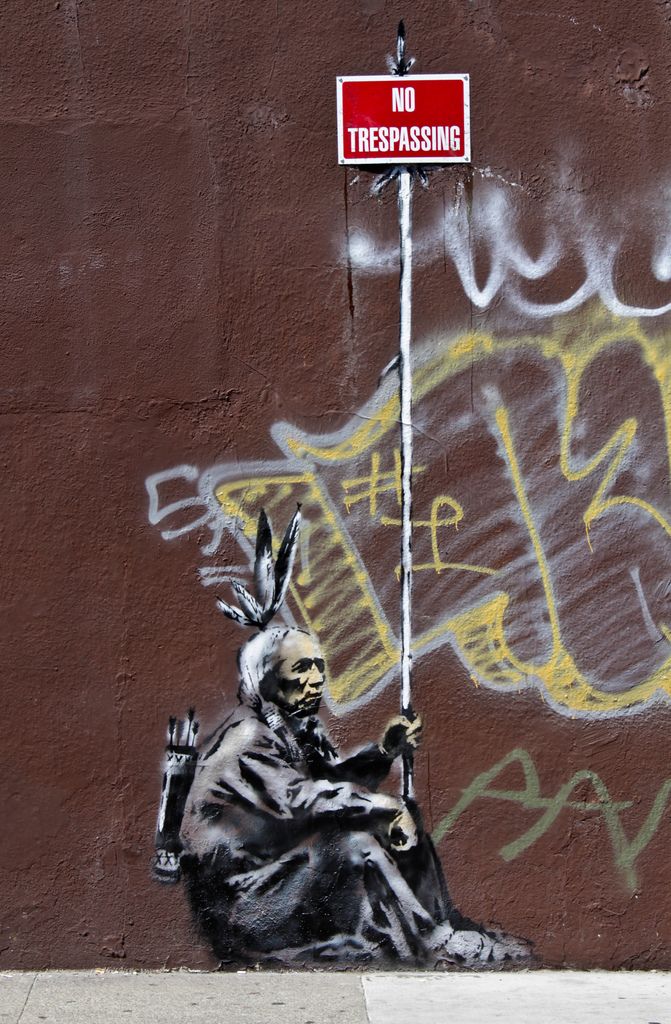
Content warning: Banksy is a pseudonymous England-based street artist, political activist, and film director. His satirical street art and subversive epigrams combine dark humor with graffiti executed in a distinctive stenciling technique.
Street Artist Banksy
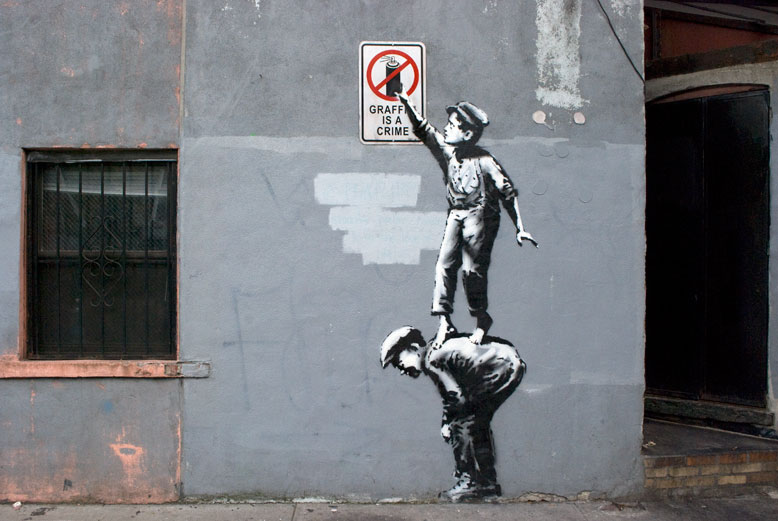
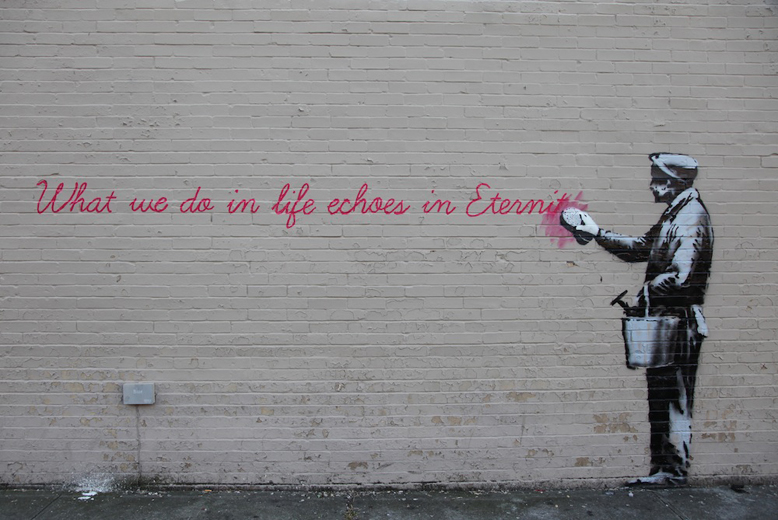
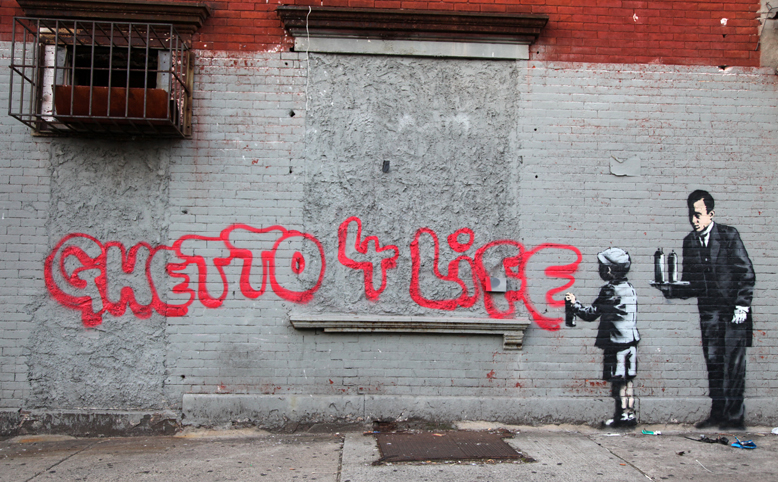
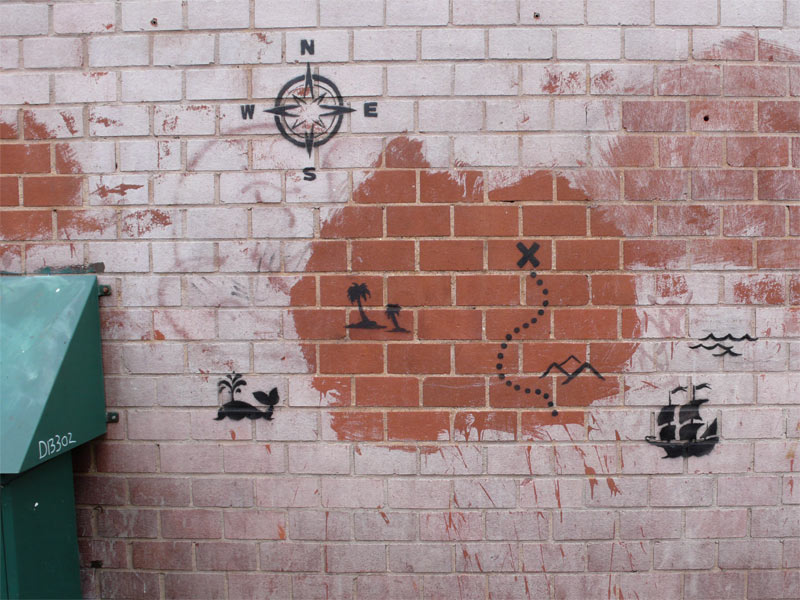
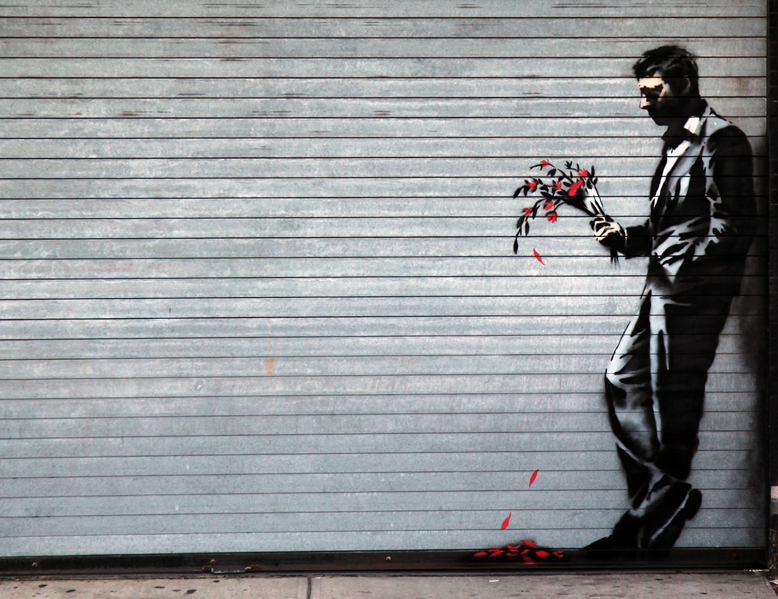
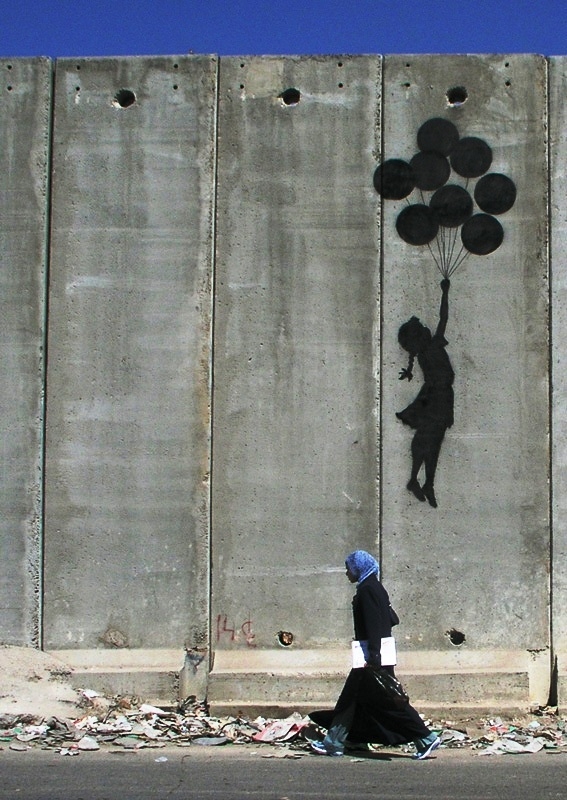
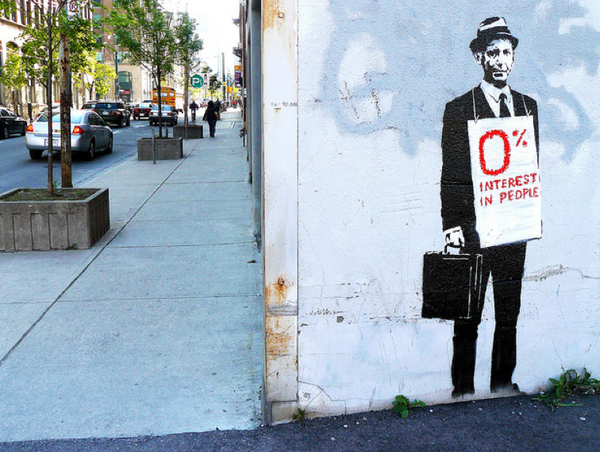
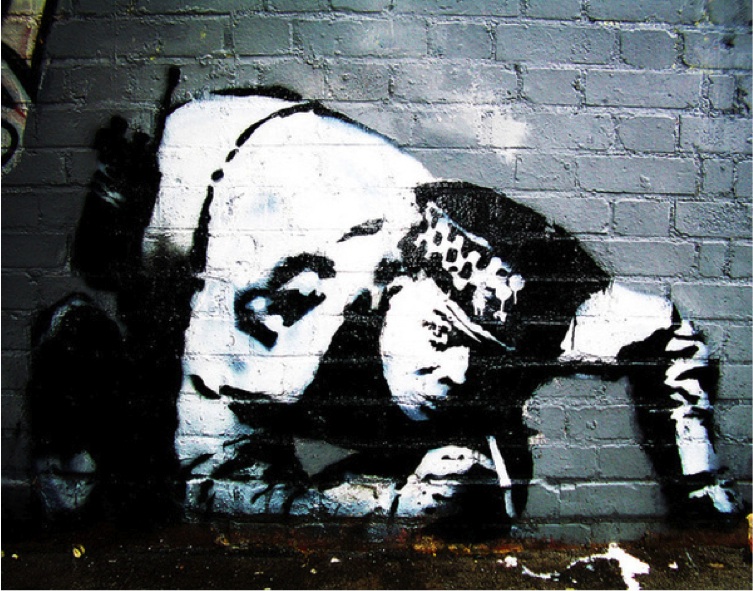
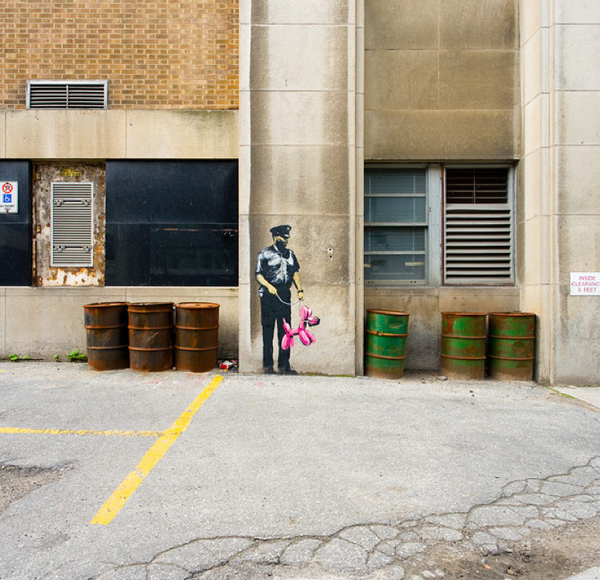
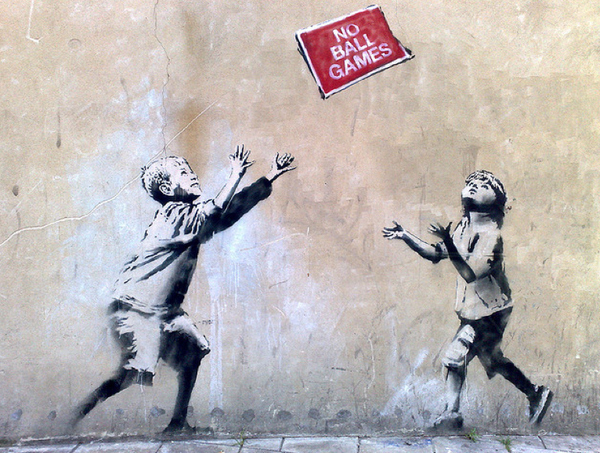
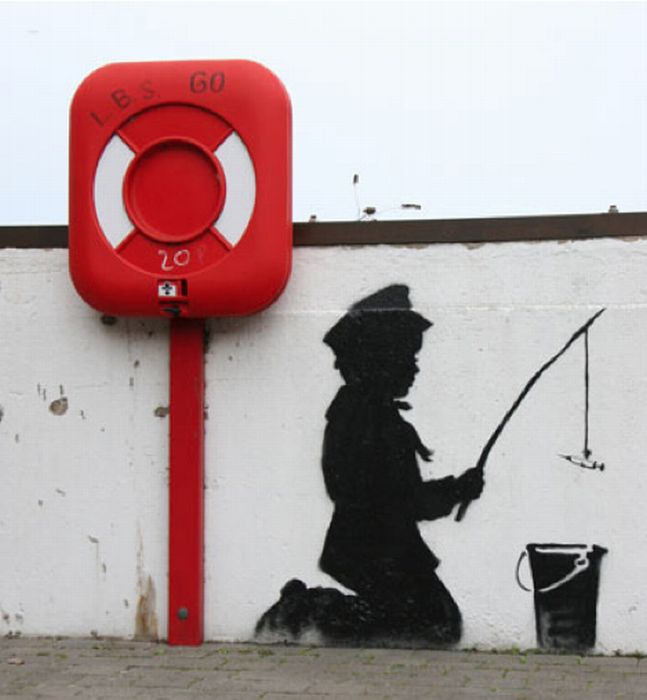
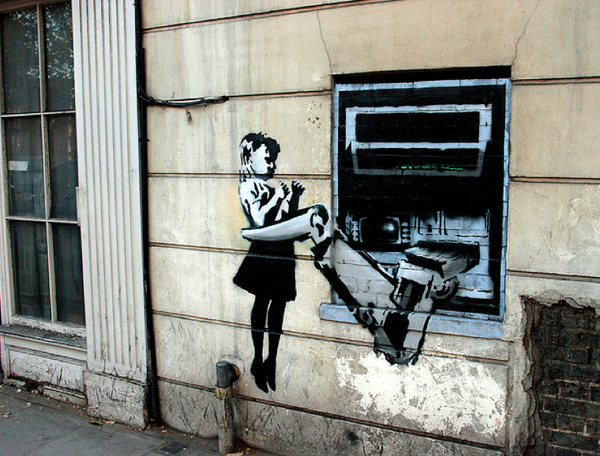
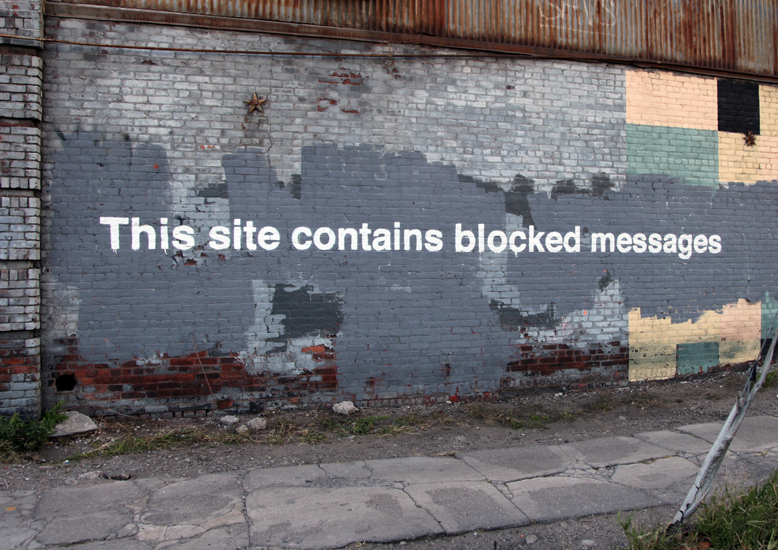
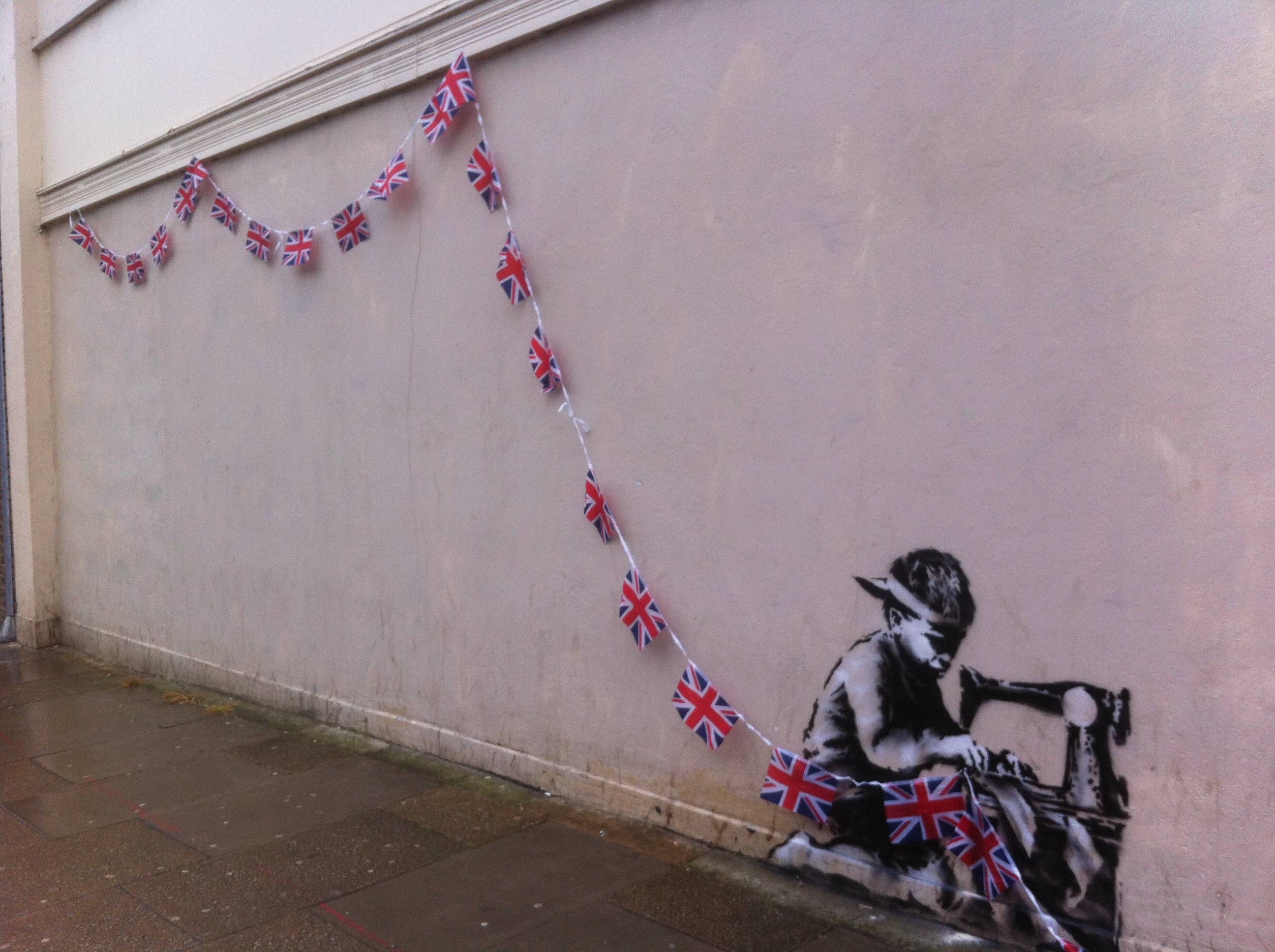
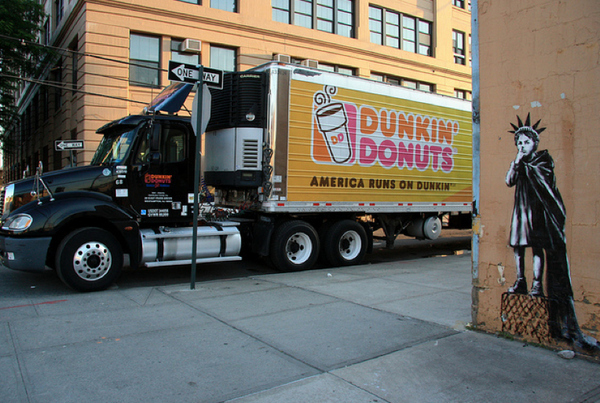
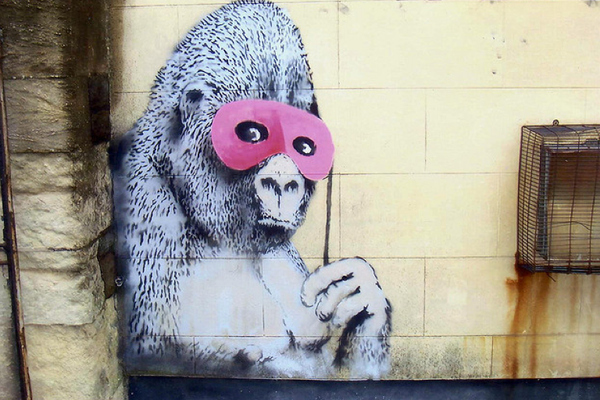
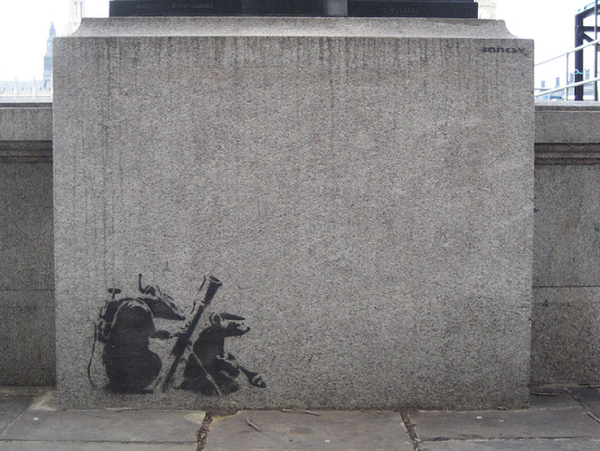
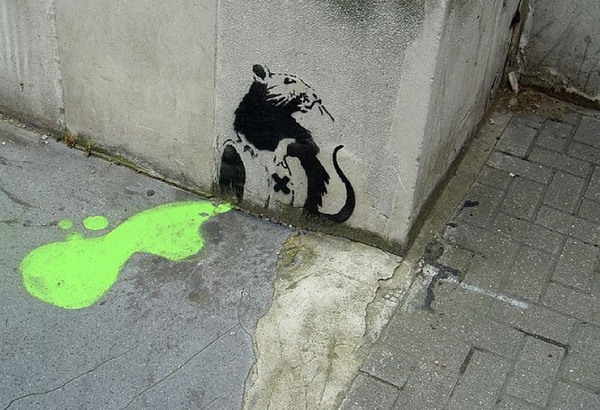
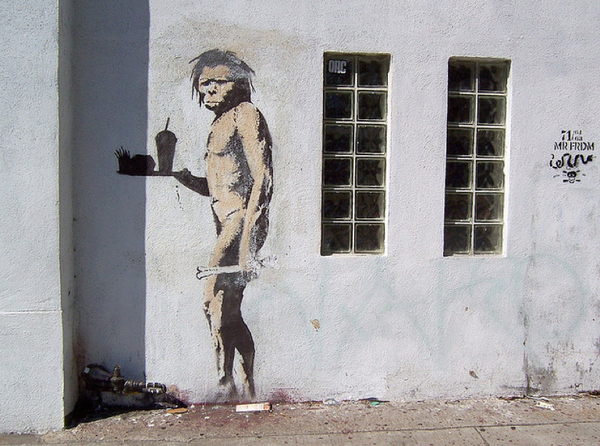
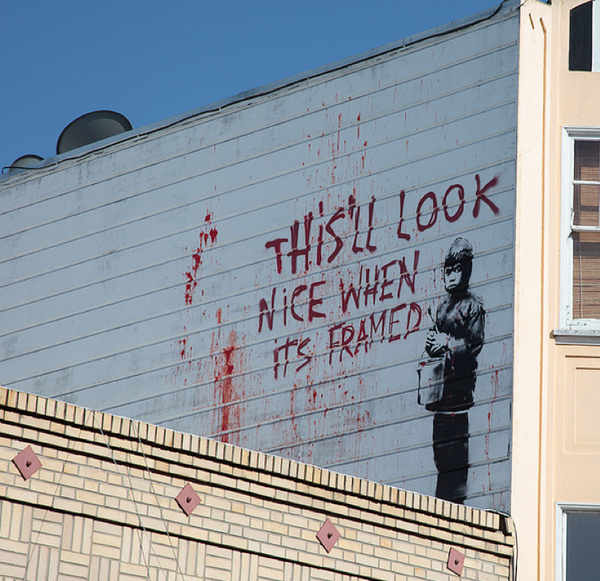
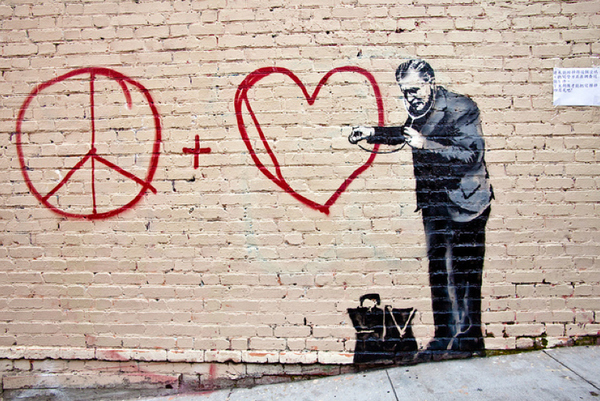
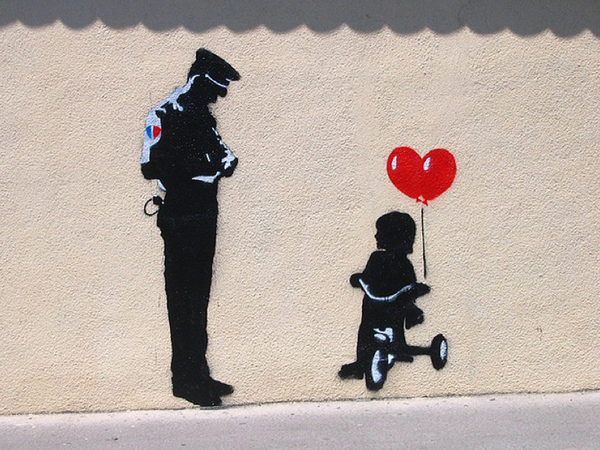
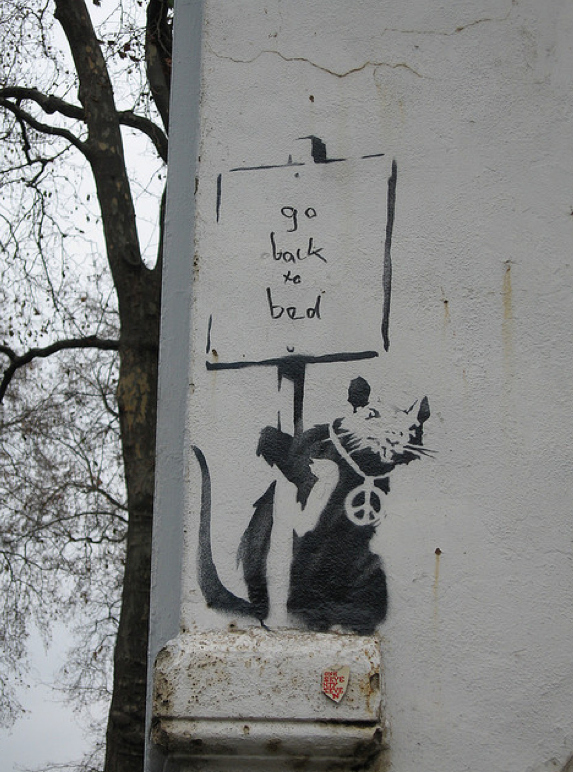
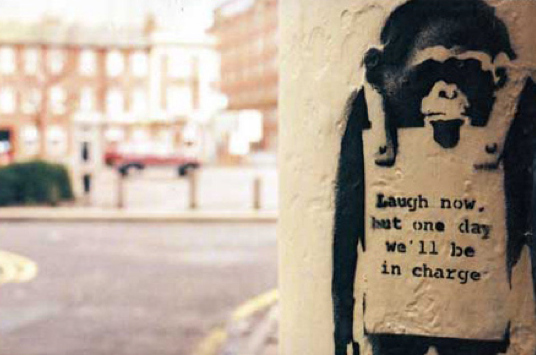
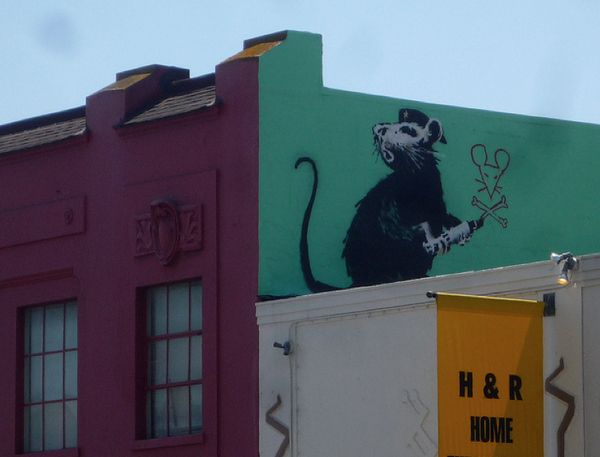
Banksy is a pseudonymous England-based street artist, political activist, and film director. His satirical street art and subversive epigrams combine dark humor with graffiti executed in a distinctive stenciling technique. His works of political and social commentary have been featured on streets, walls, and bridges of cities throughout the world. Banksy’s identity remains unknown, but it is believed that he was born in Bristol, England in the mid-1970s. The artist’s work is widely recognized and has been widely sold, with record auction prices for his artworks.
More: 24 artworks by Banksy: Who Is The Visionary of Street Art
Who are Banksy?
Banksy is a pseudonymous artist, therefore, it is not known for certain how he began his career. However, it is believed that he started out as a graffiti artist in Bristol, England in the early 1990s. Bristol is known for its vibrant street art scene, and it is thought that Banksy was heavily influenced by this during his formative years as an artist.
It is said that Banksy began using stencils in his graffiti in the late 1990s, which allowed him to create more intricate and detailed images than he could with traditional spray-painting techniques. This is when his works started to gain recognition and fame.
Banksy’s early work often featured simple, bold designs with a strong political or social message. As his career progressed, he began to incorporate more complex imagery and humor into his art.
In the early 2000s, Banksy began to gain international recognition for his street art and his works began to appear in cities around the world.
Banksy has also been involved in other forms of art, including sculpture, painting, and film-making. He has also curated exhibitions and organized projects that aim to challenge the traditional art world.
In summary, Banksy’s career as an artist began in Bristol, England in the early 1990s as a graffiti artist, he later began using stencils in his graffiti and his works started to gain recognition and fame, he gained international recognition in the early 2000s and has been involved in other forms of art and curatorial projects.
More: Street Art Legend Banksy Reveals His Name in a Rare BBC Interview
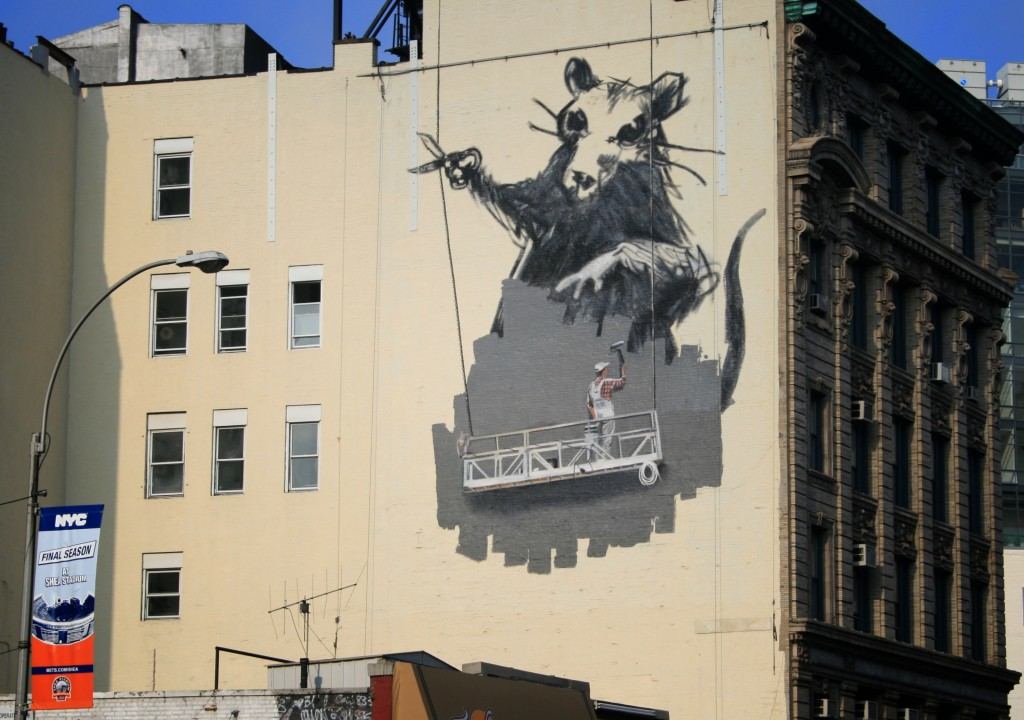
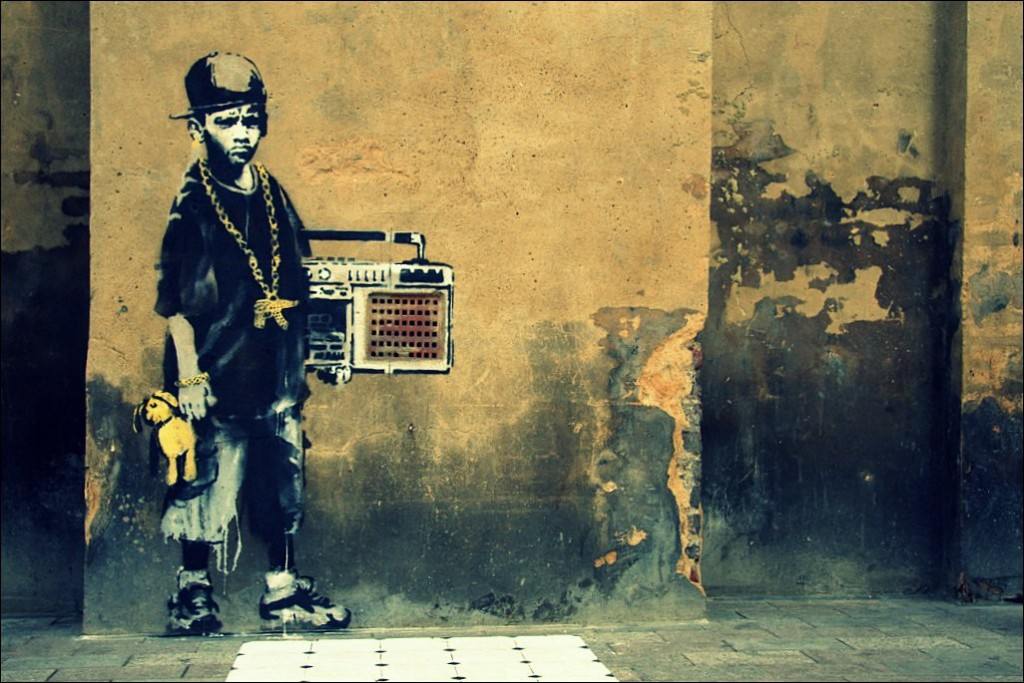
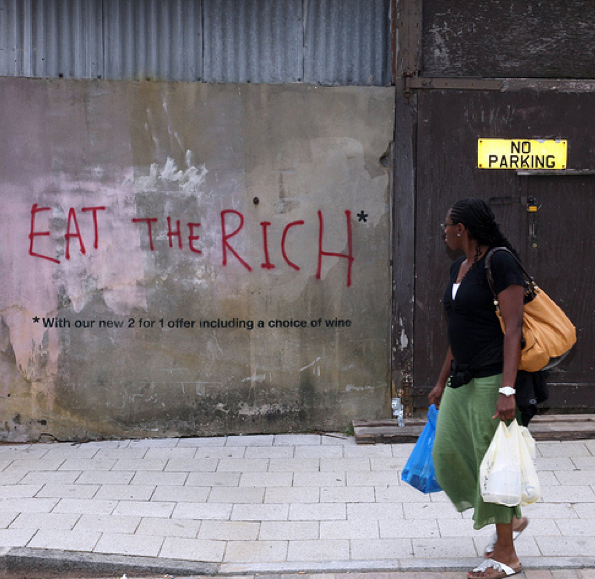
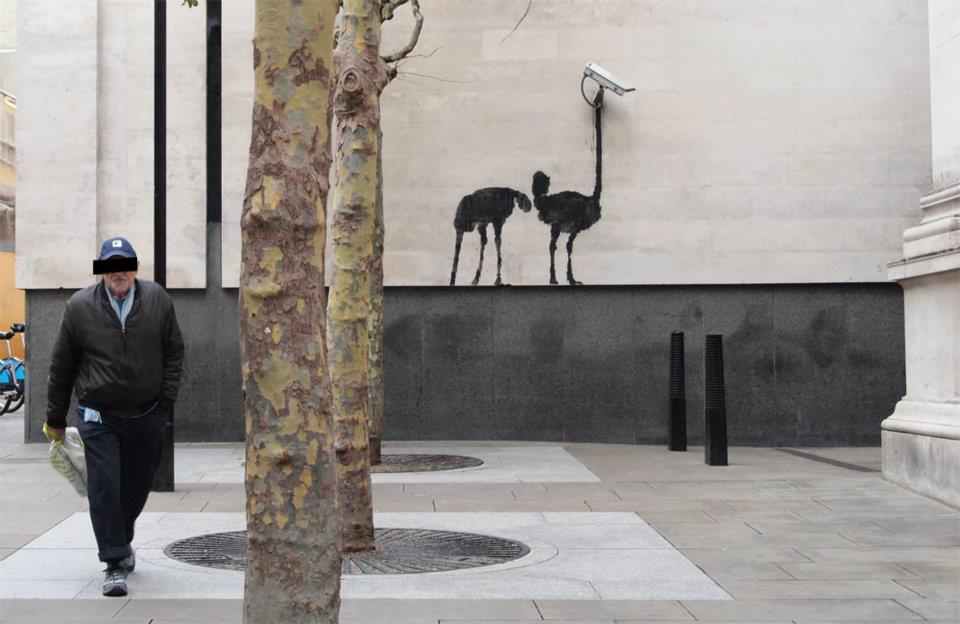
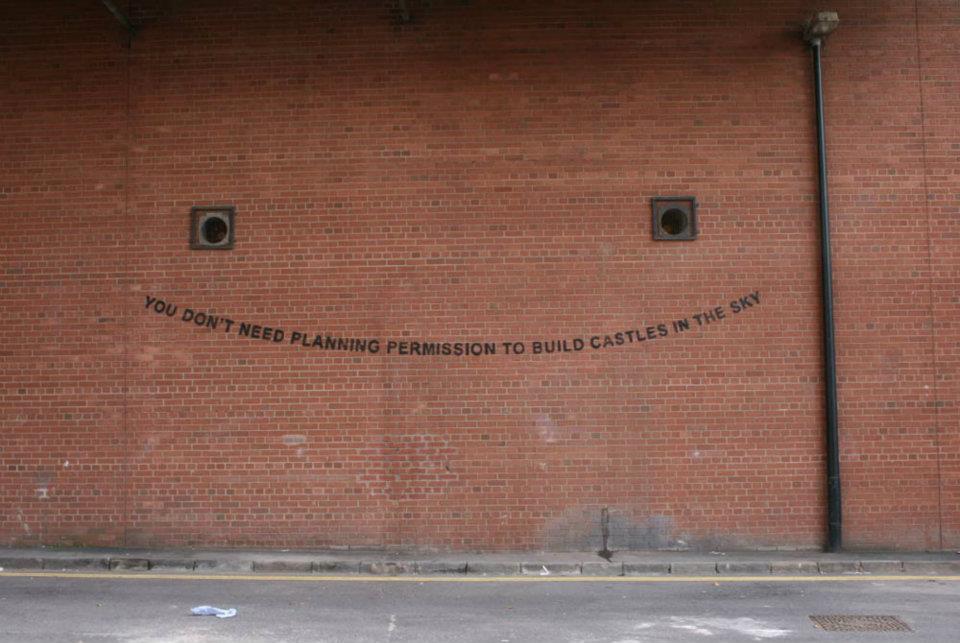
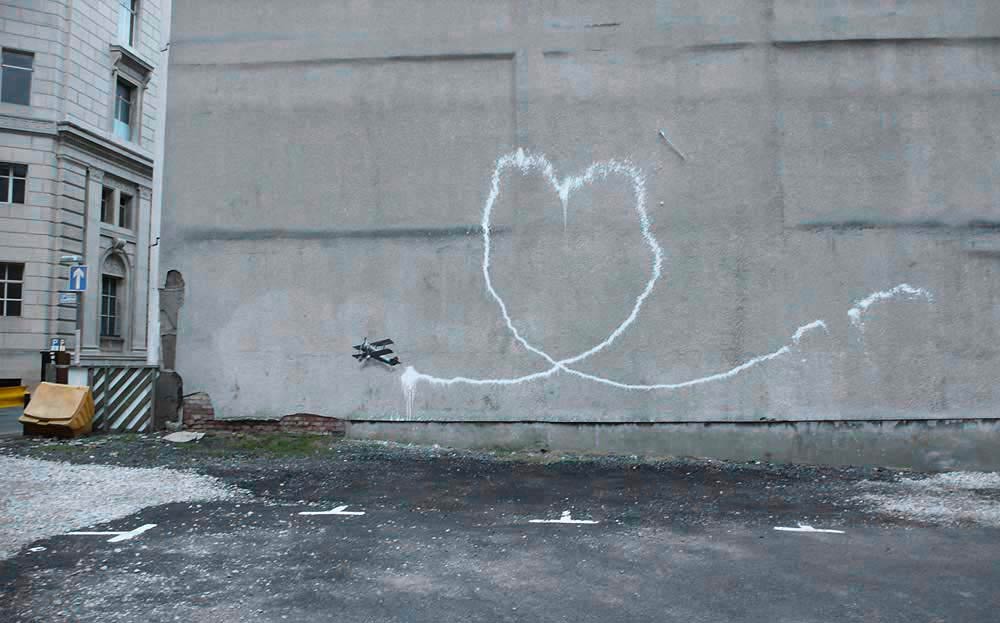
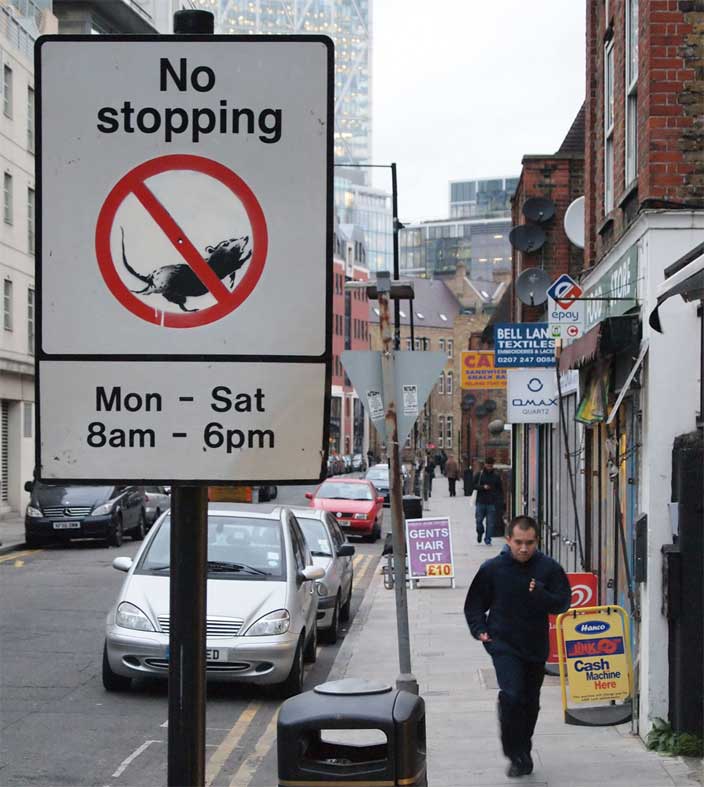
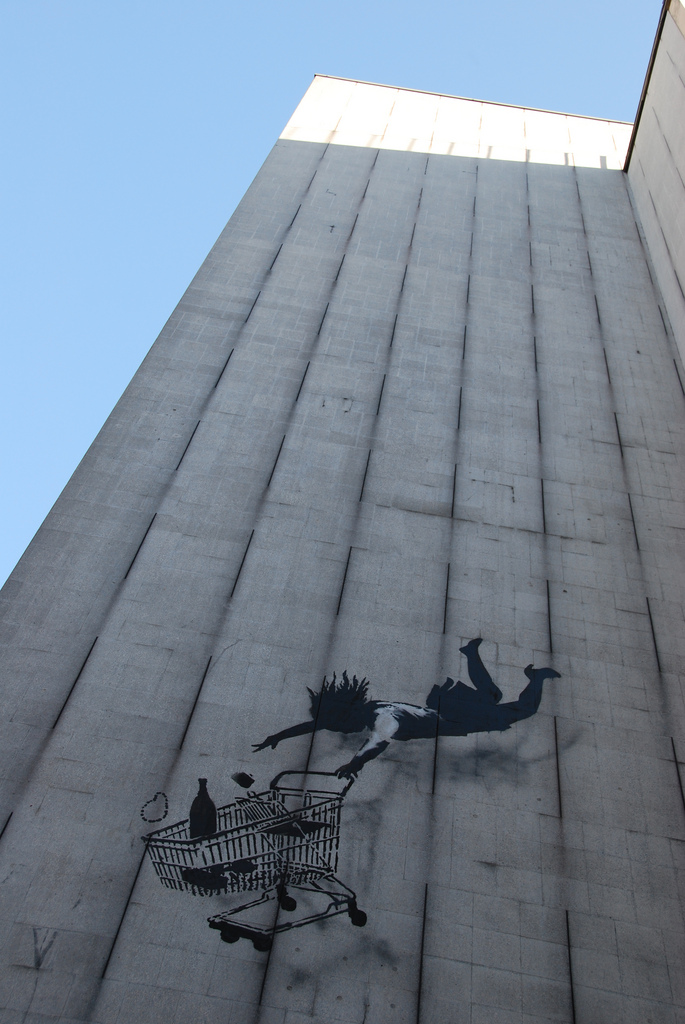
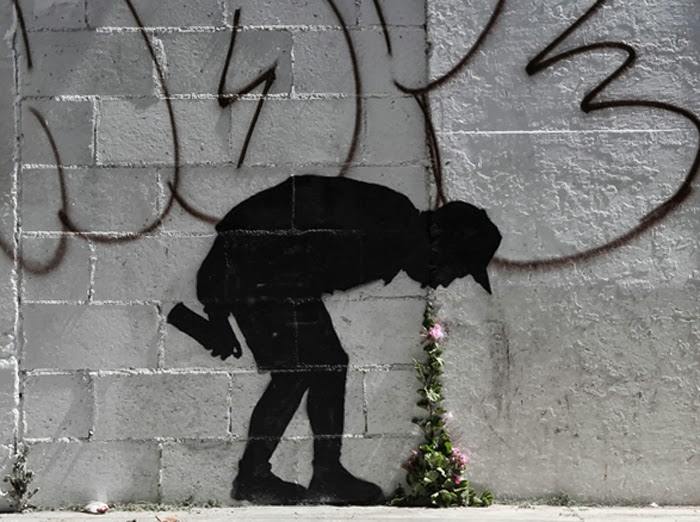
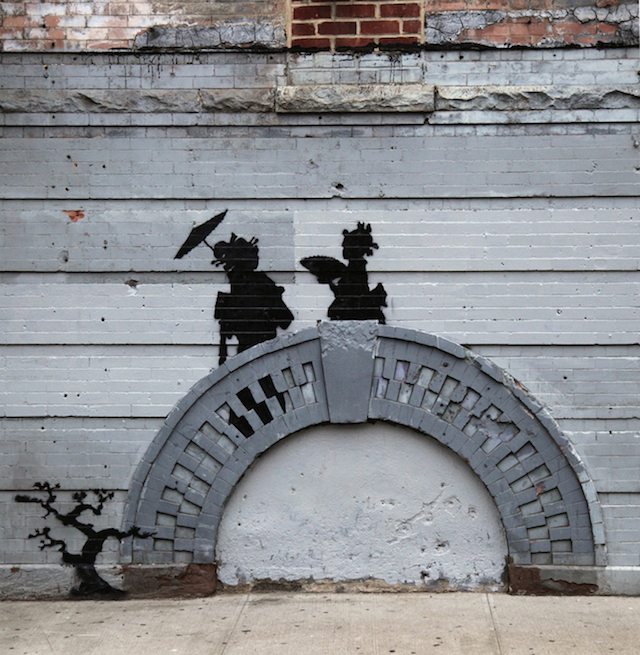
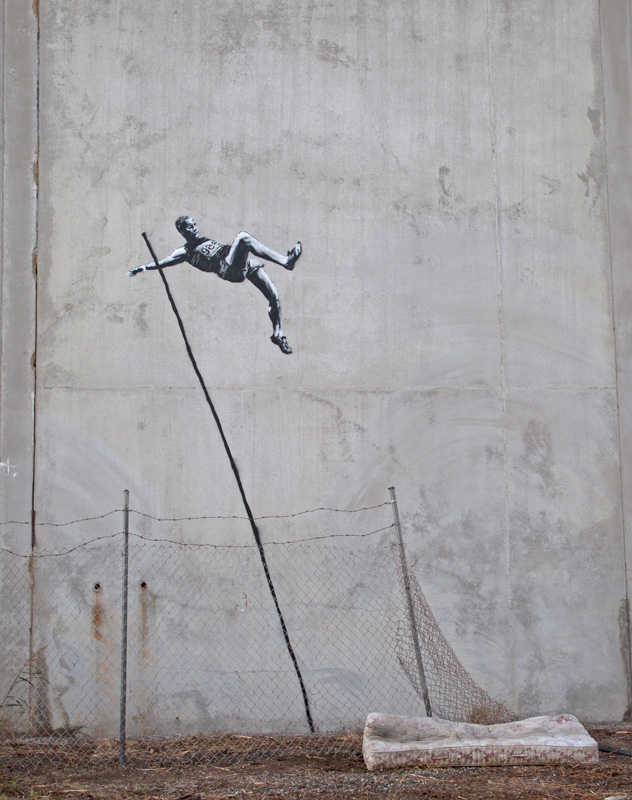
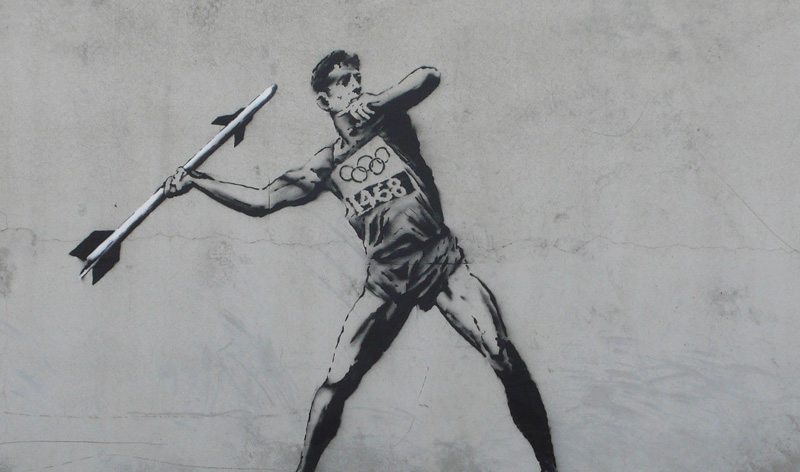
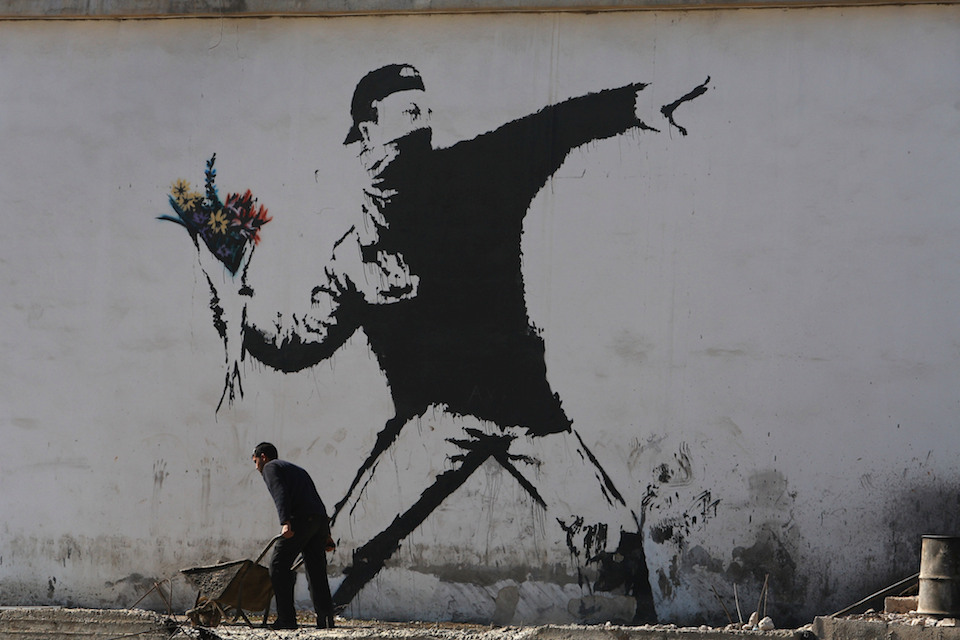
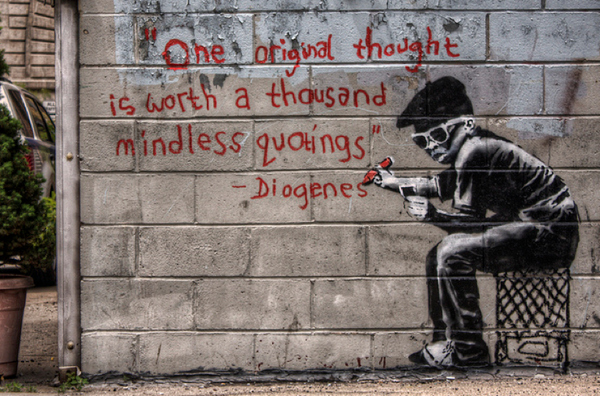
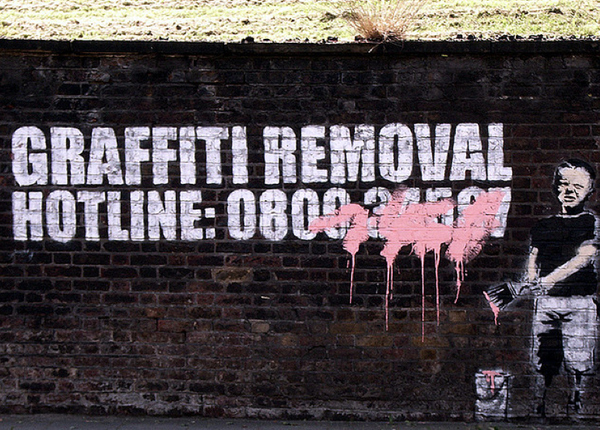
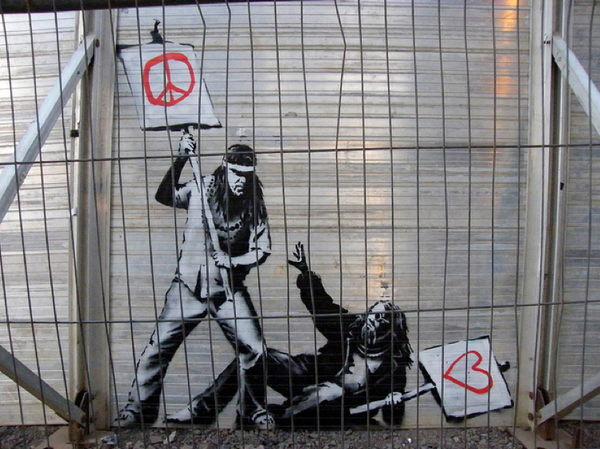
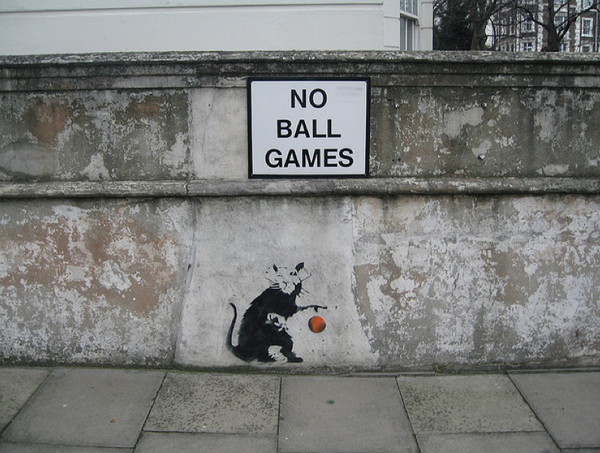
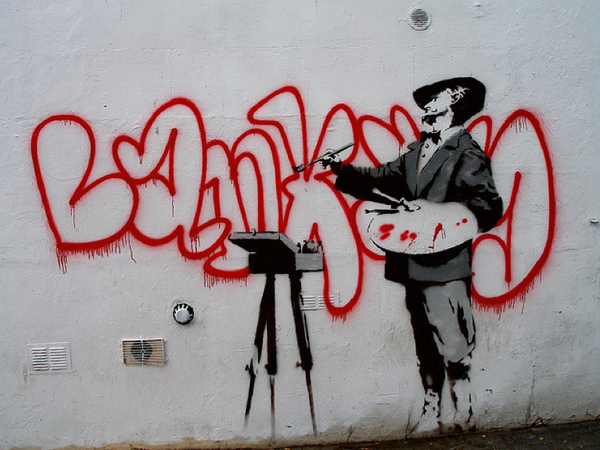
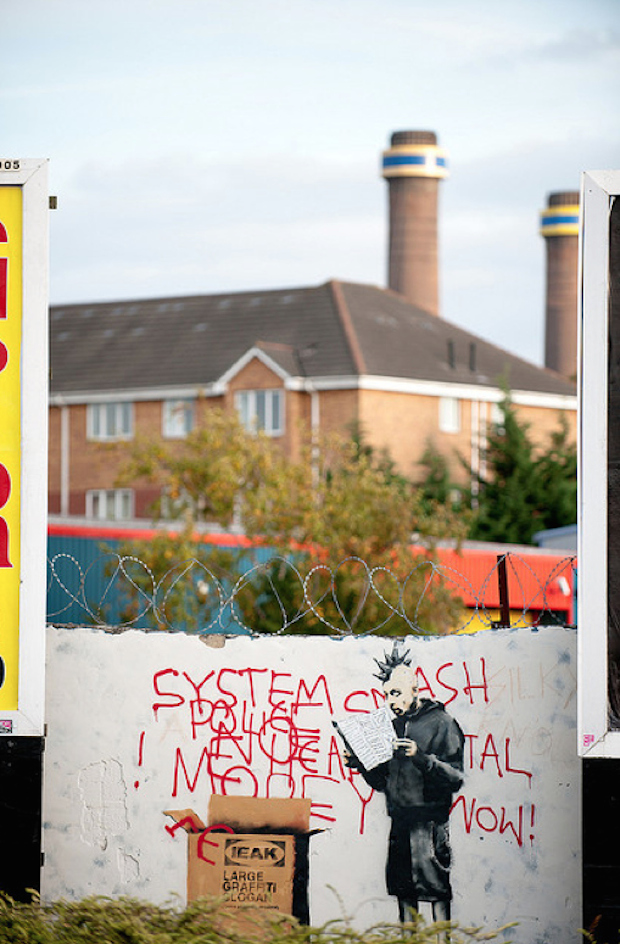
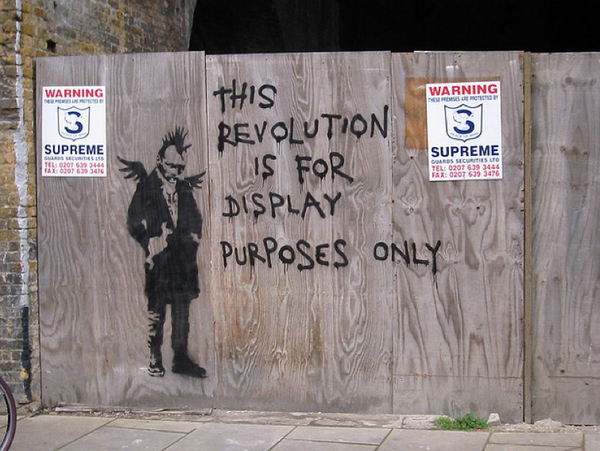
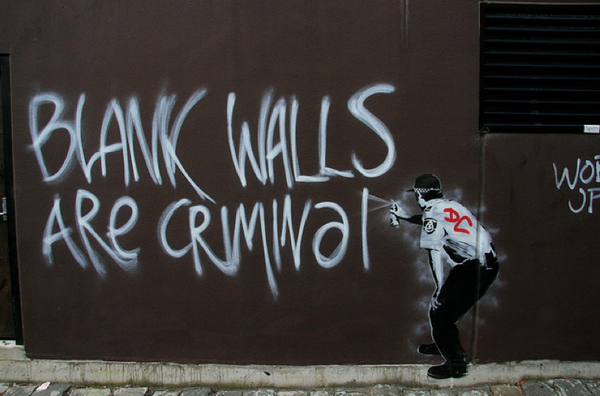
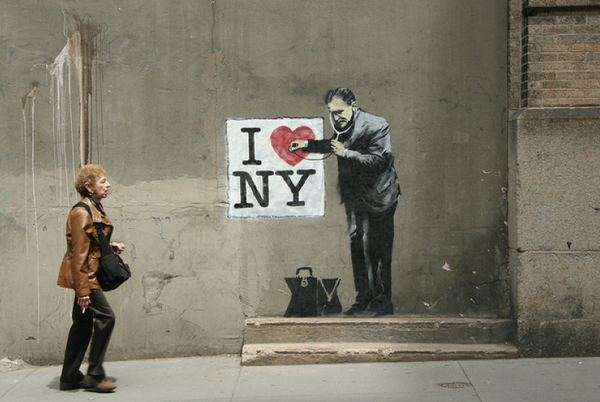
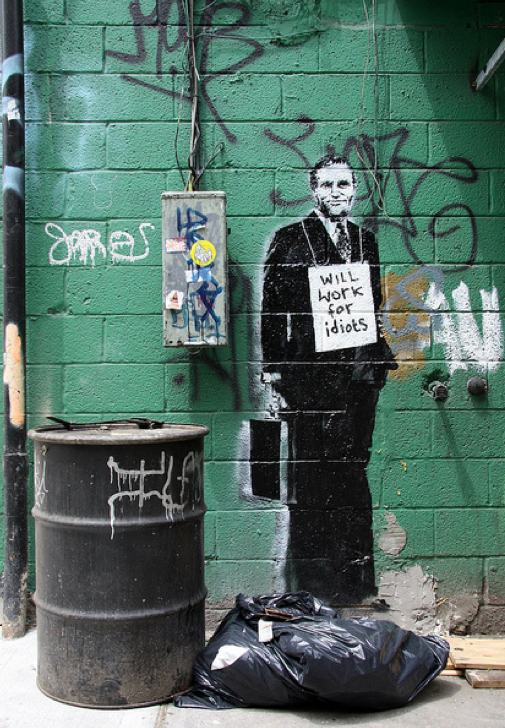
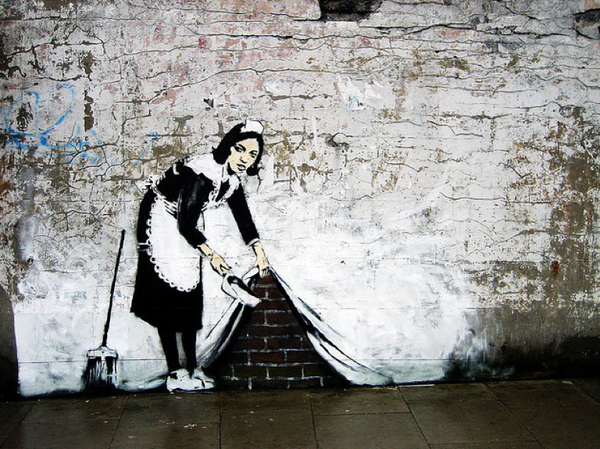
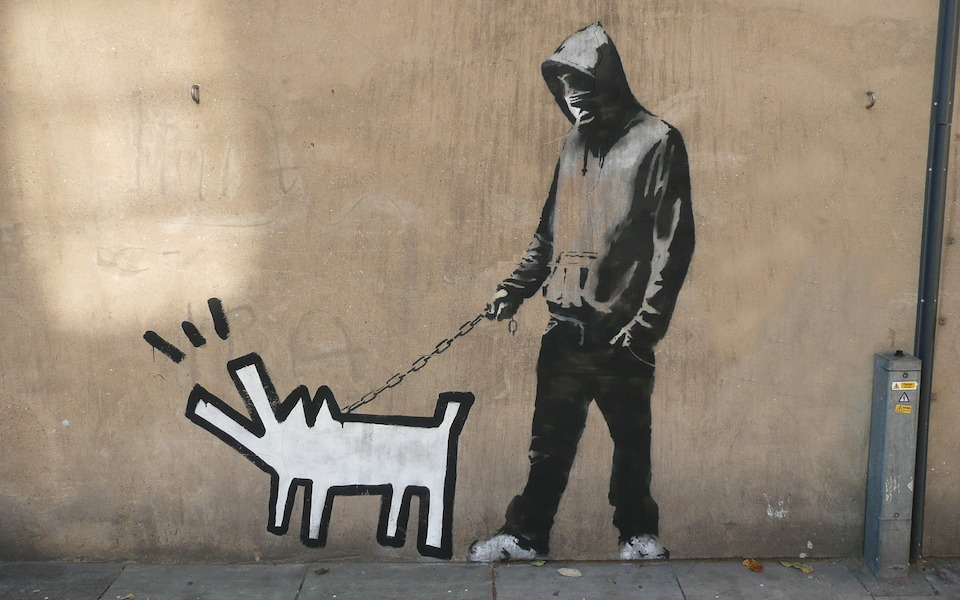
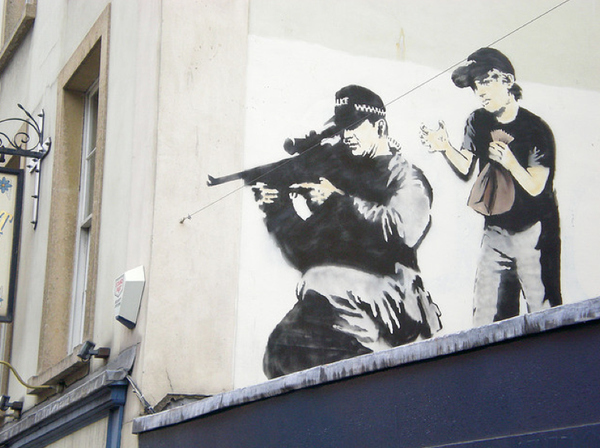
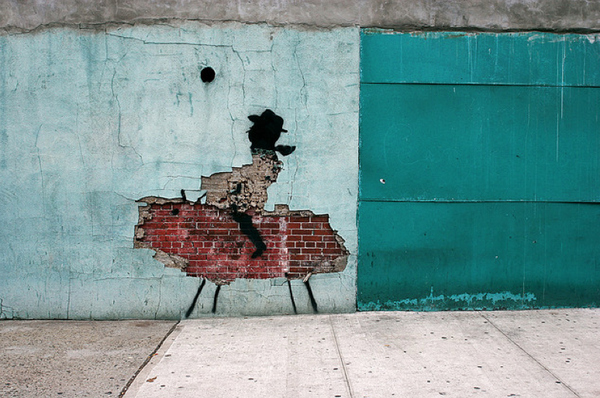
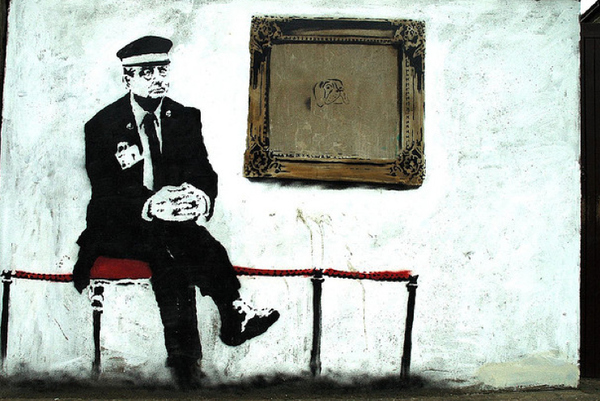
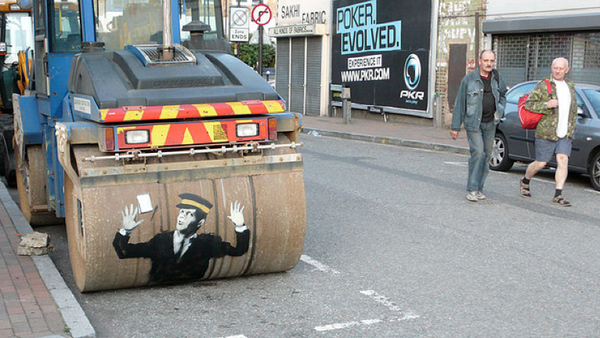
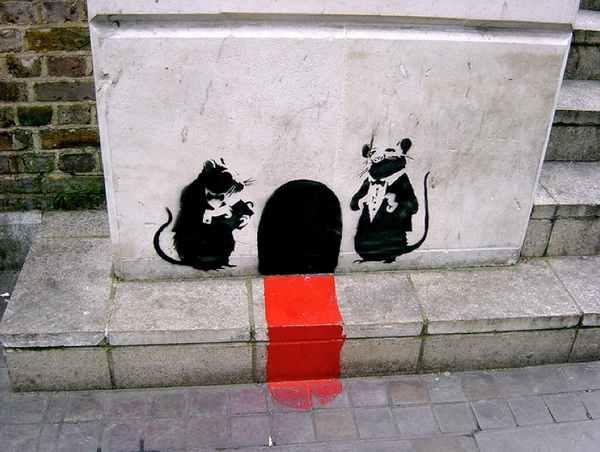
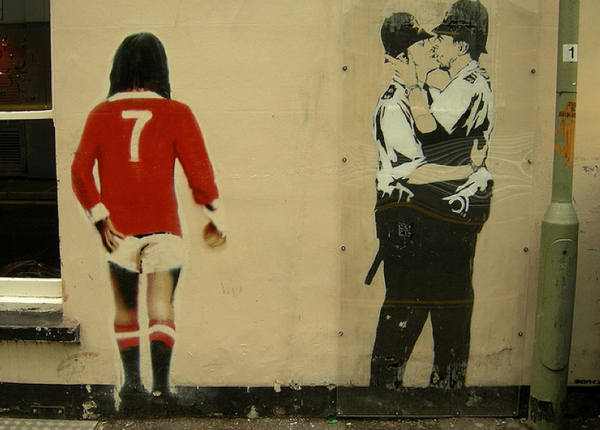
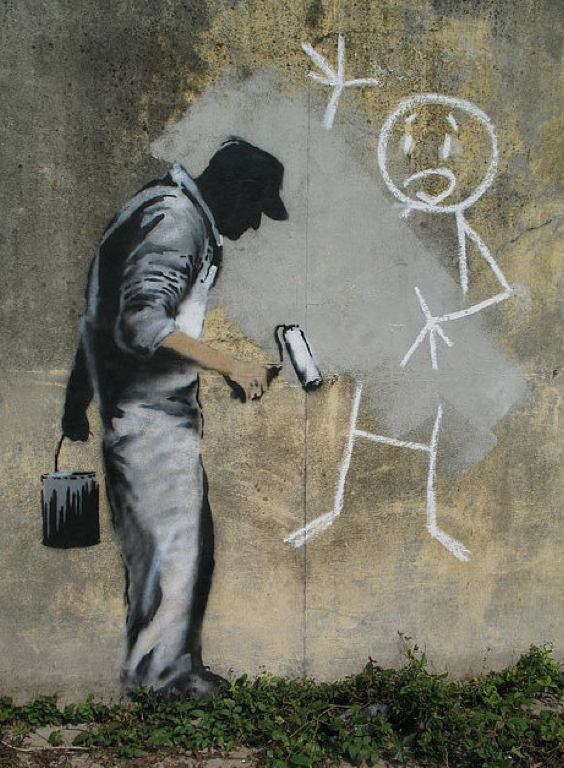
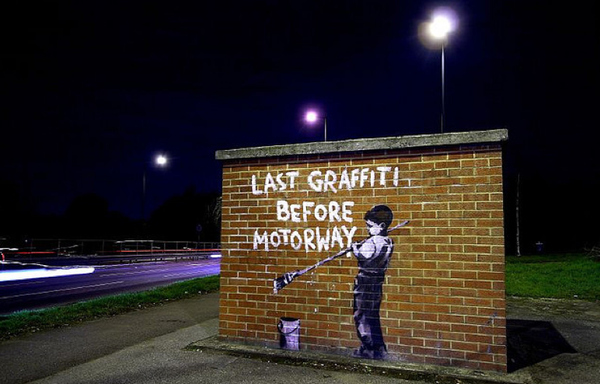
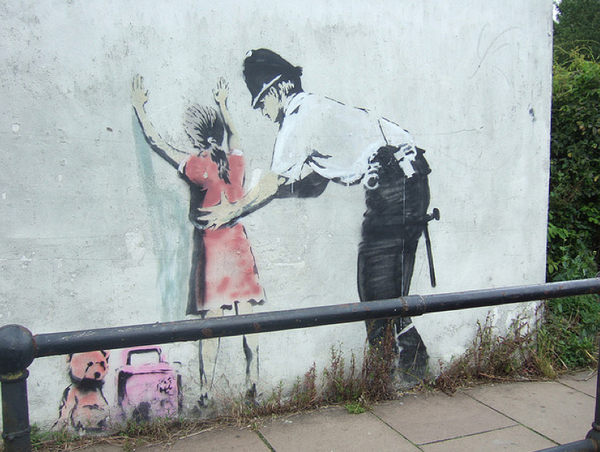
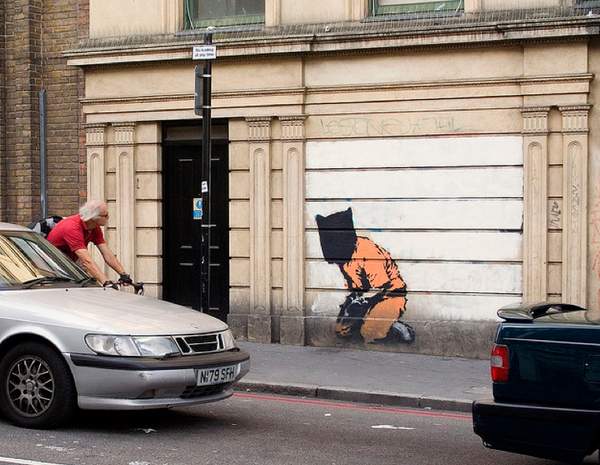
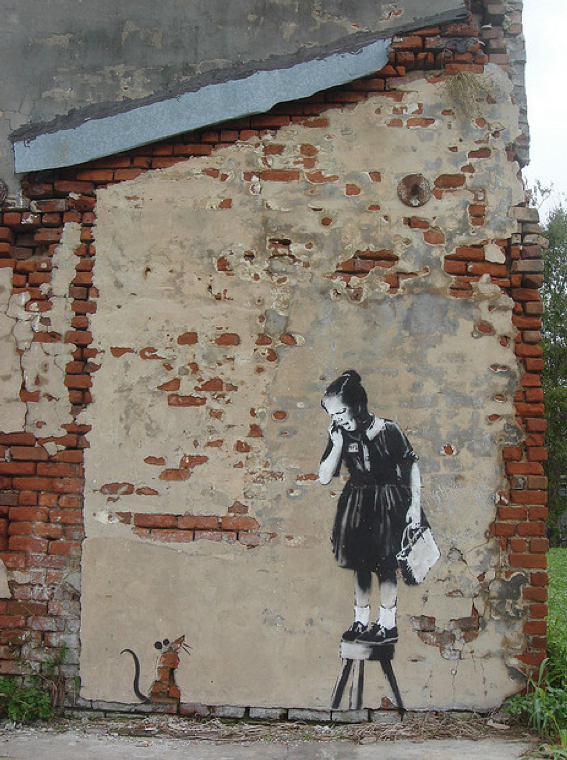
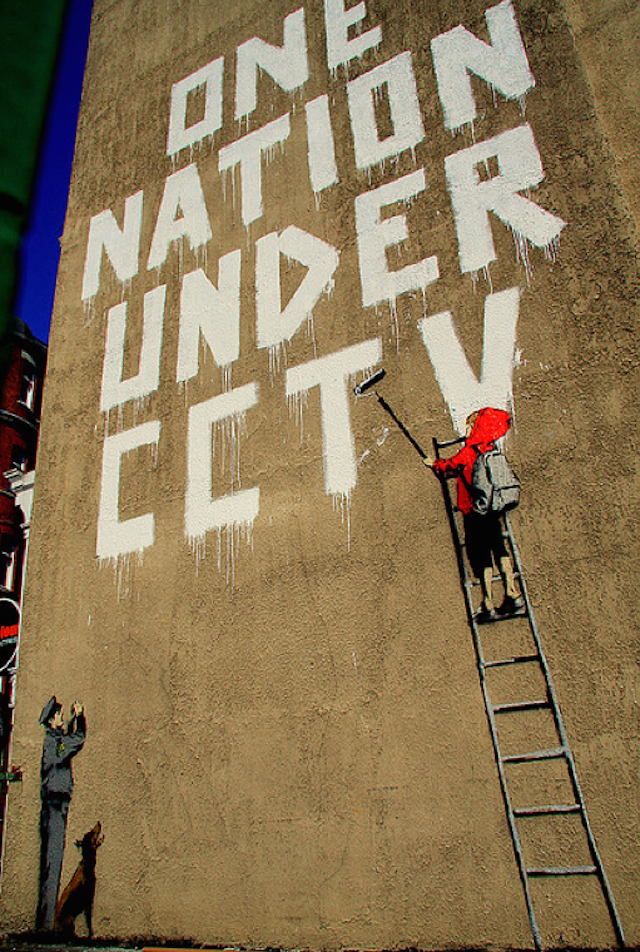
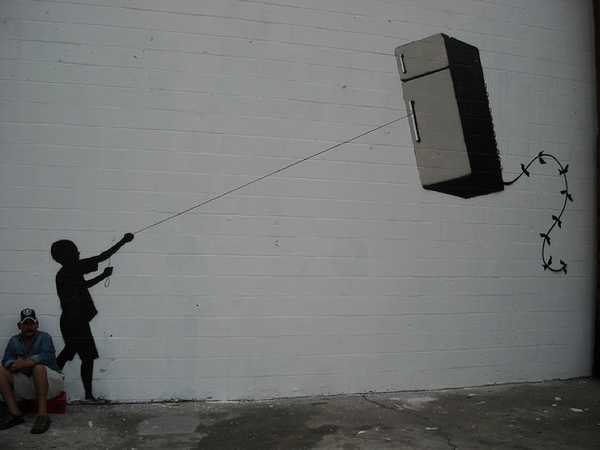
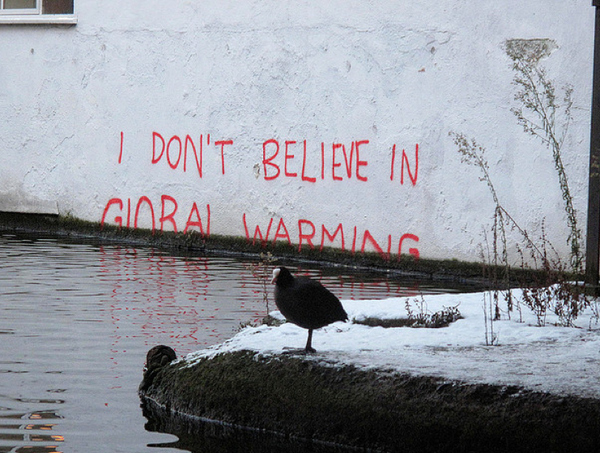
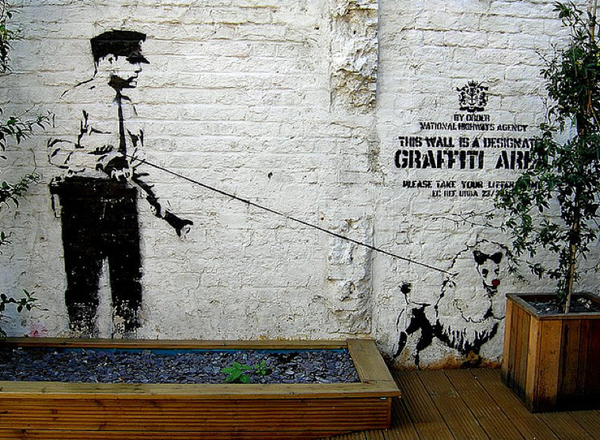
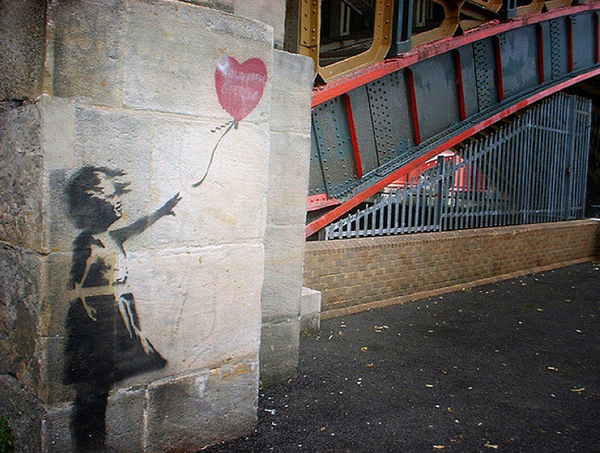
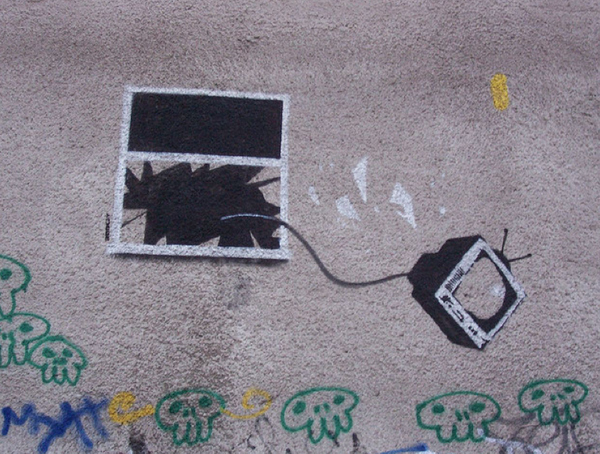
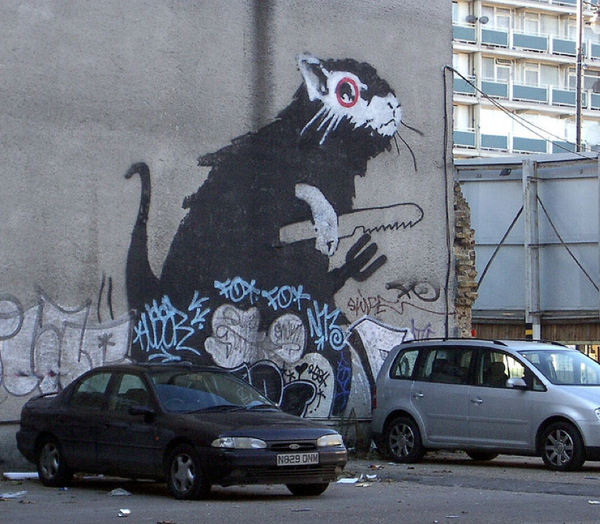
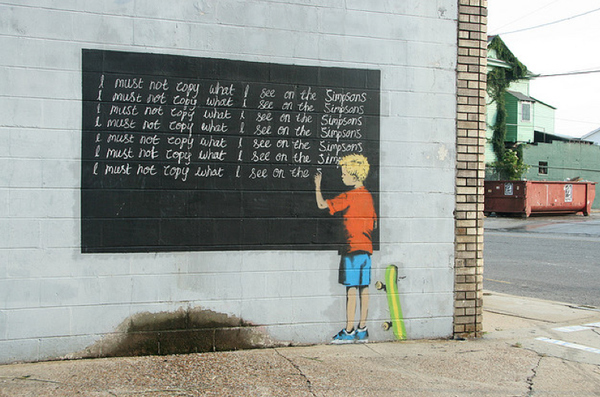
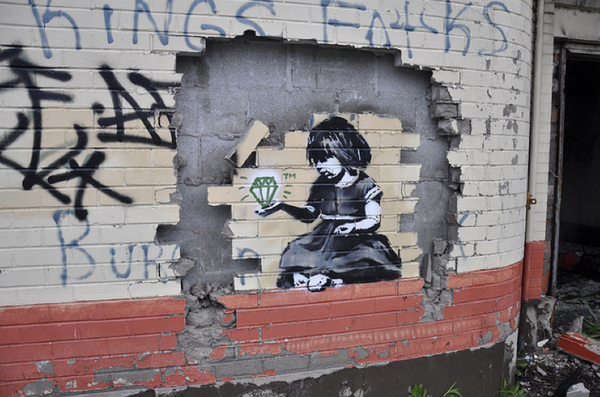
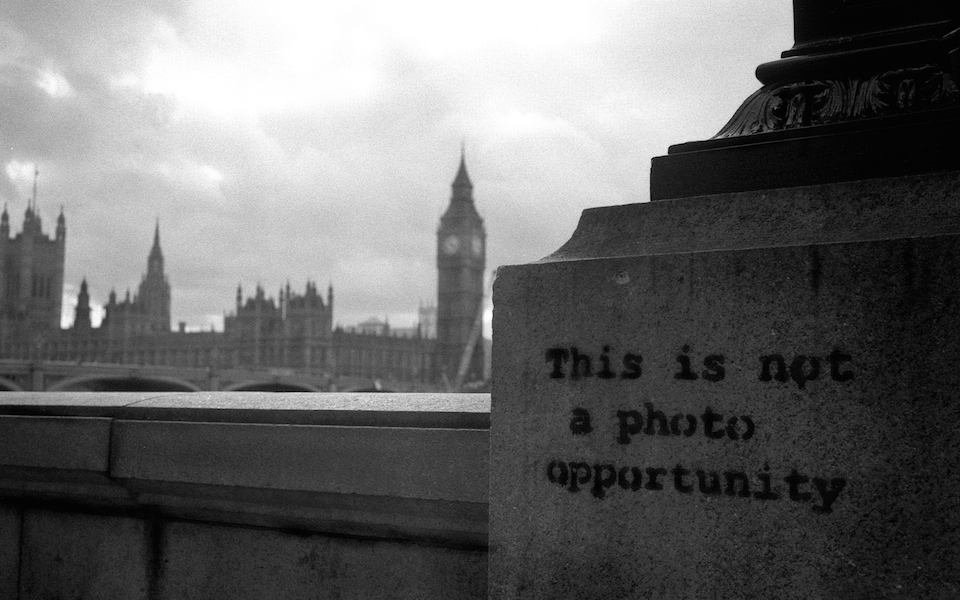
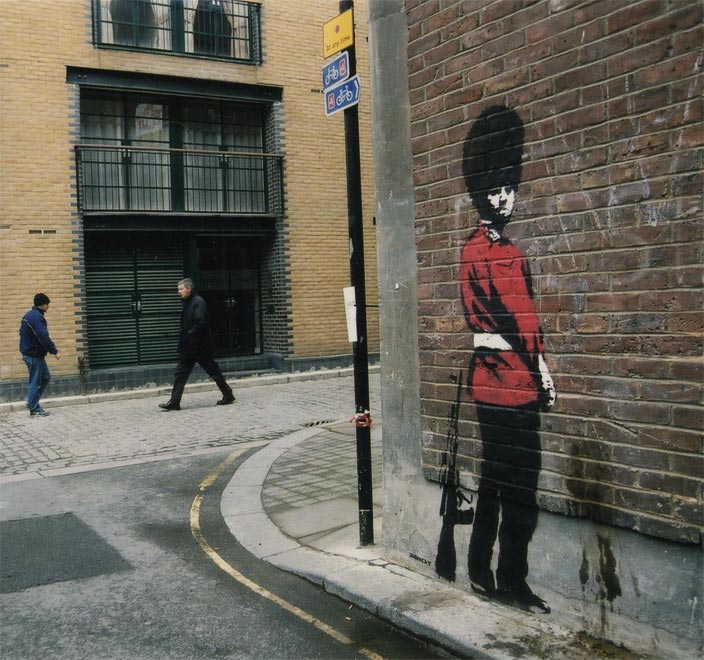
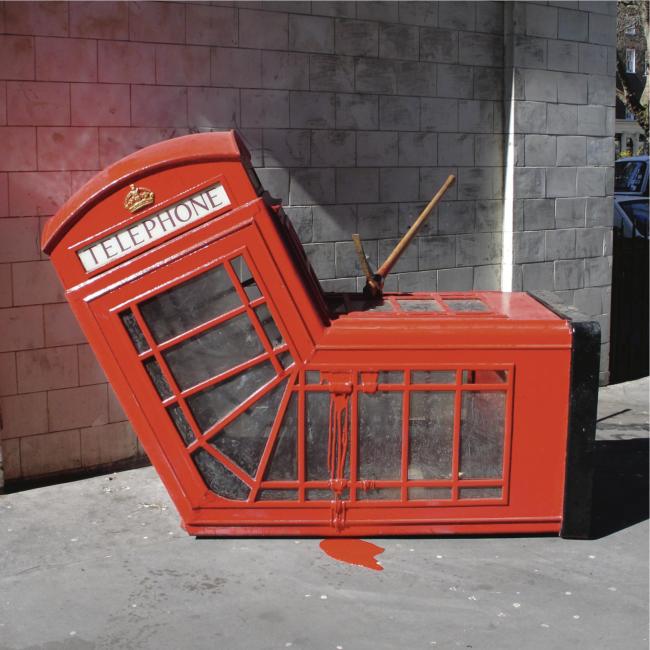
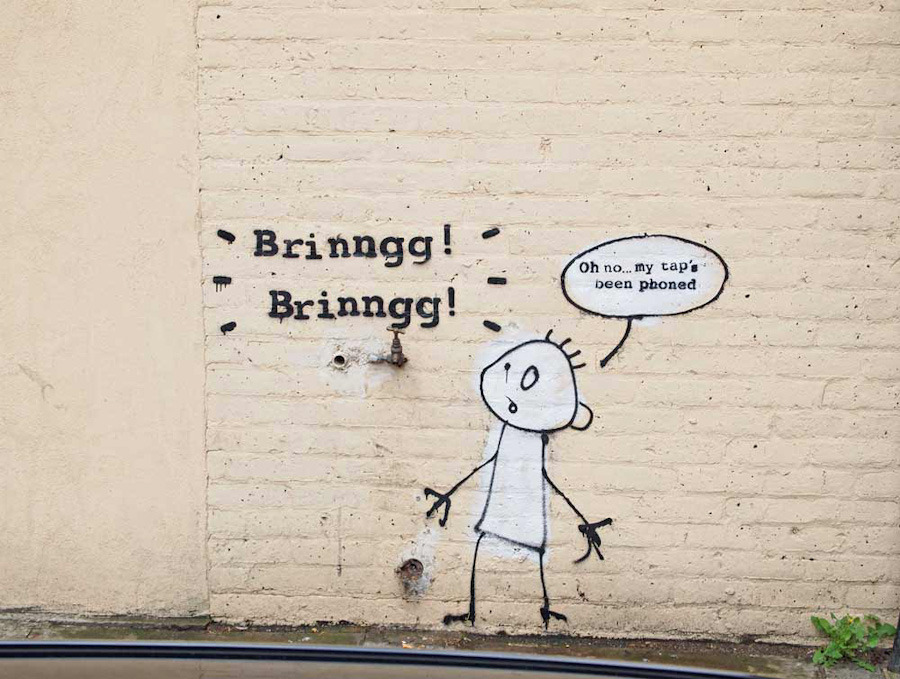
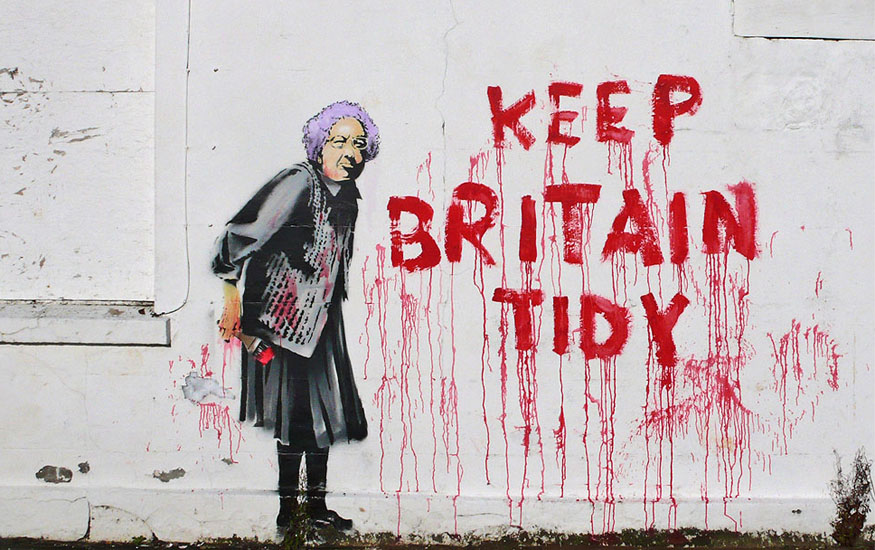
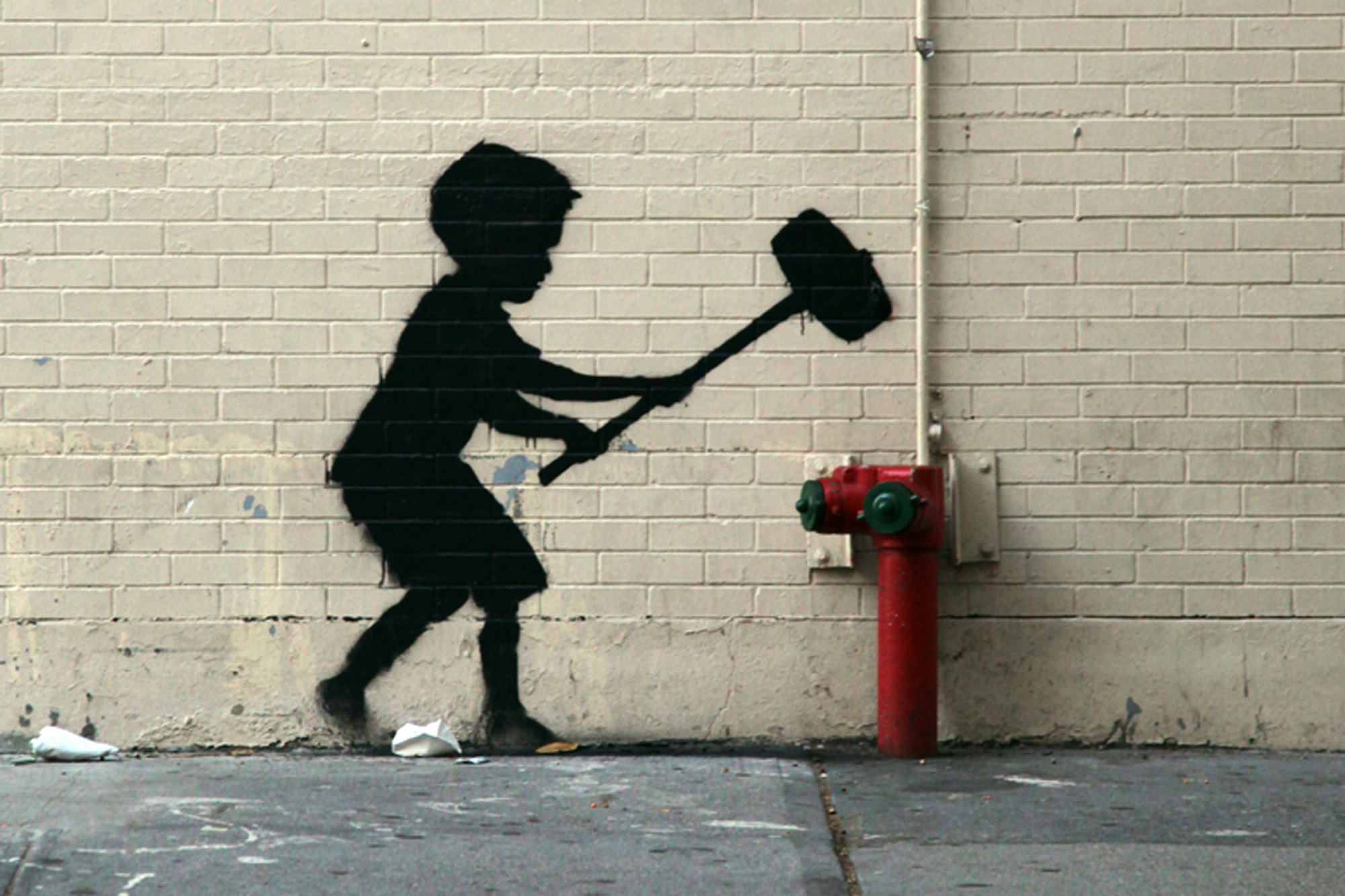
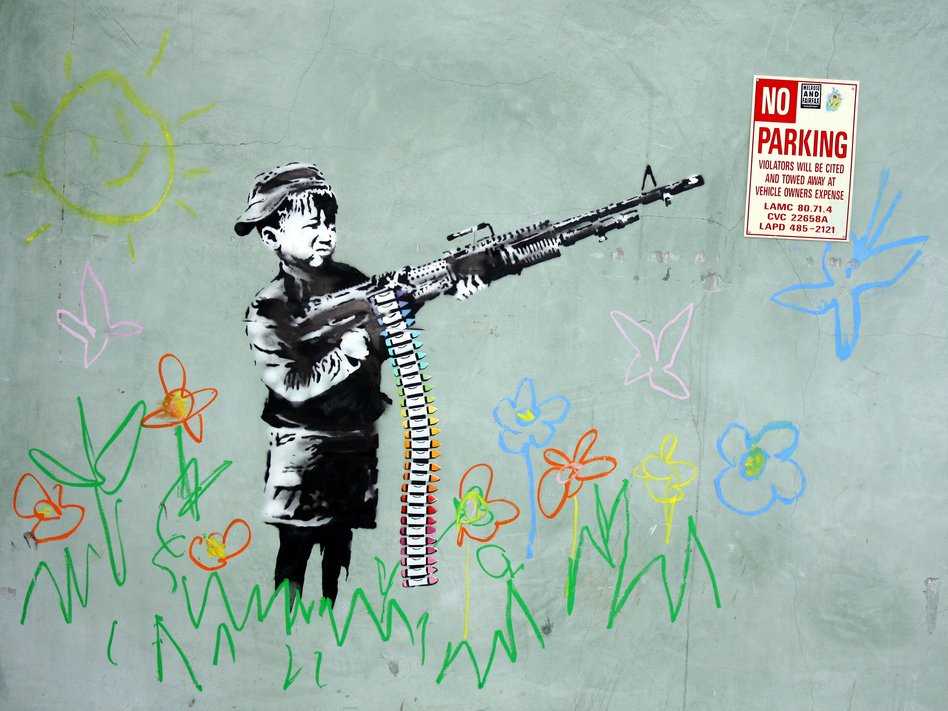
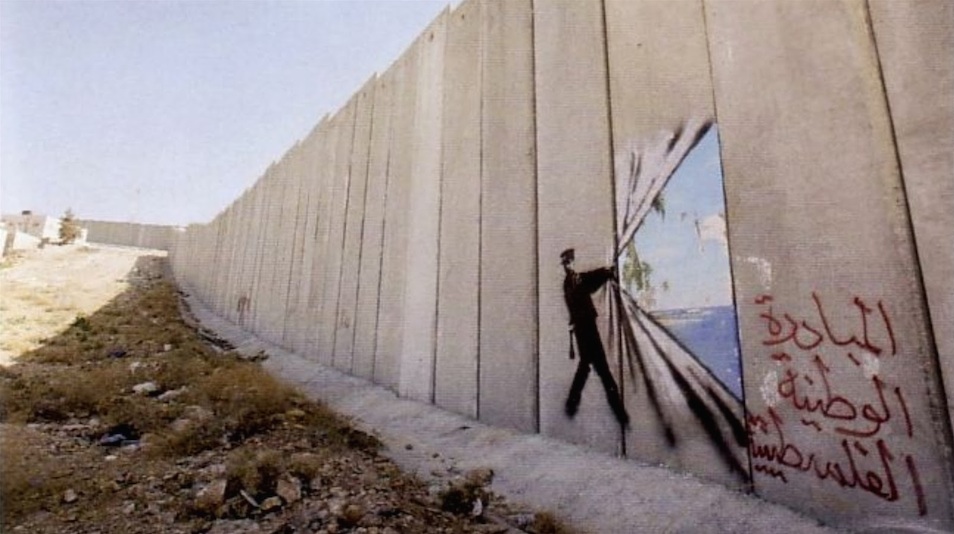
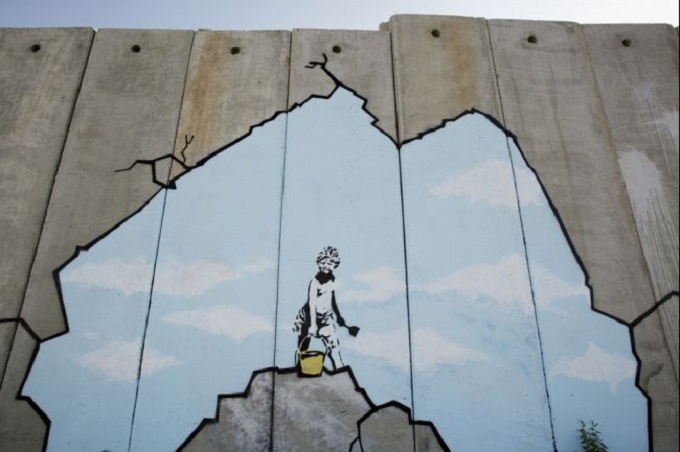
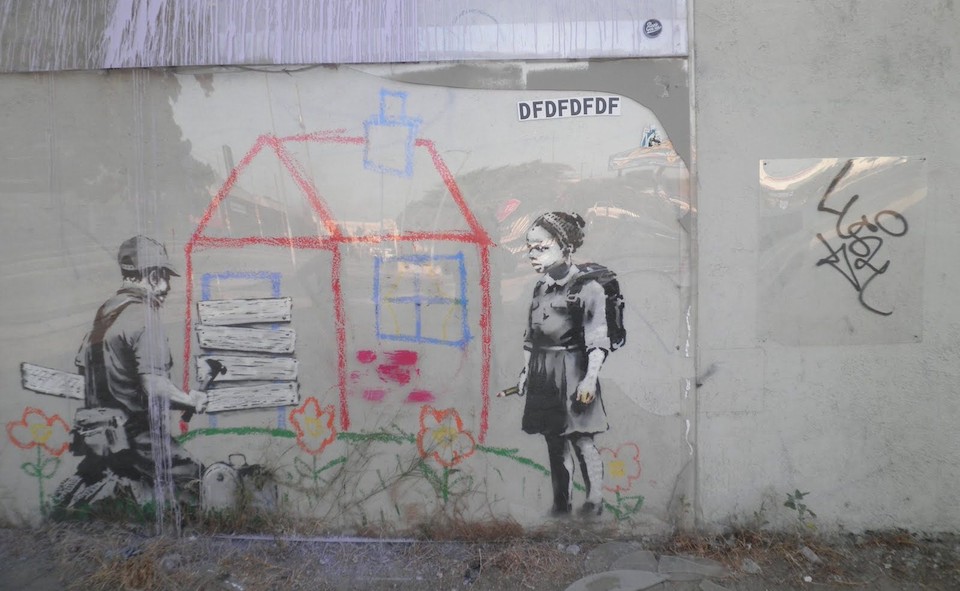
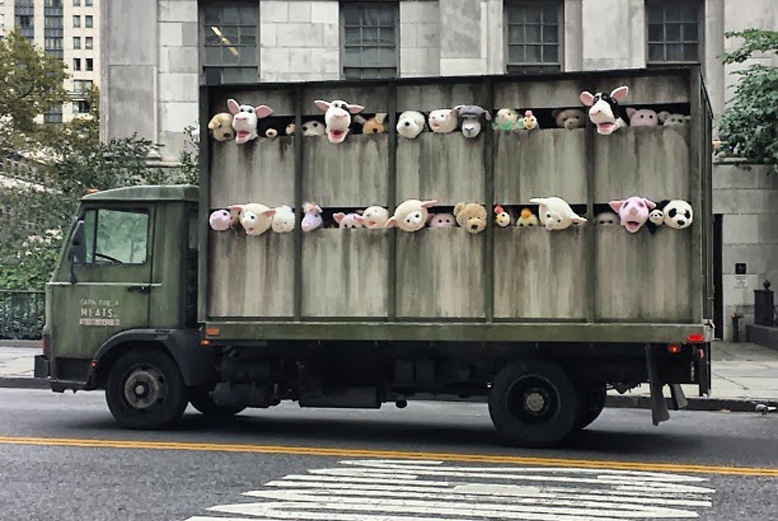
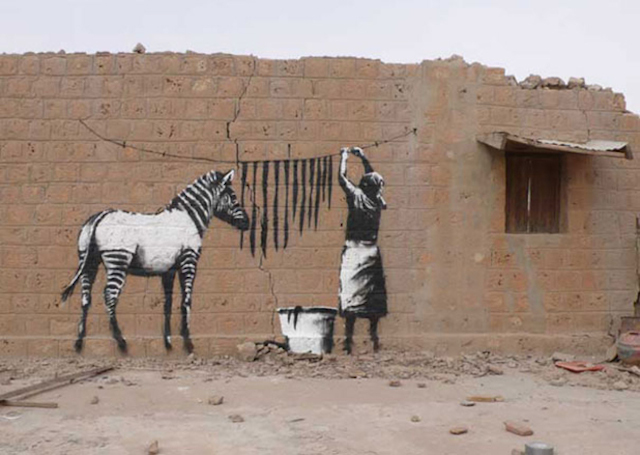
More: 24 artworks by Banksy: Who Is The Visionary of Street Art?
Which Banksy piece is your favorite?
Share your thoughts in the comments below and join our Facebook group The Banksy Way!
Banksy? Who Is The Visionary of Street Art? (25 Photos)
I. Unmasking the Enigma: A Deep Dive into Banksy’s Street Art Revolution
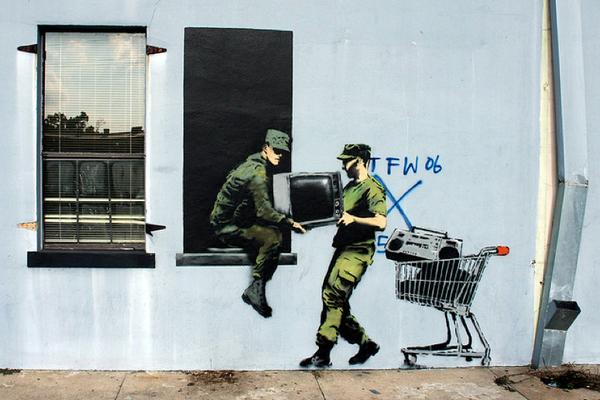
In the dynamic world of street art, few names are as resonant or as enigmatic as Banksy. A spectral figure whose identity remains shrouded in mystery, Banksy is a paradox of fame and anonymity, a revolutionary whose works have transformed public spaces and challenged societal norms. His art, often laced with potent political commentary and sharp satire (see 14 Great Banksy Street Art Photos and Quotes!), has left indelible marks on urban landscapes worldwide. Yet, the man behind the spray can remains elusive, his identity a secret closely guarded, adding an irresistible aura of intrigue to his body of work.This paradox is part of what makes Banksy not just a street artist, but a phenomenon. His work captures the zeitgeist, reflecting the turbulence, the dissent, and the hope of our times. His stencils—be they on the walls of London, the remnants of the West Bank barrier, or the ruins of Hurricane Katrina—have a way of speaking truth to power that has resonated with millions around the globe.
More: Banksy’s Hidden Identity Revealed?
For more than three decades, Banksy has been pushing boundaries, challenging conventions, and redefining the very concept of public art. Through his stencils, he has brought the subversive ethos of the underground to the surface, making it impossible for us to ignore the social and political injustices of our world. His works are more than just provocative images; they are a call to action, a demand for change.
In this exploration, we will journey through the chaotic, captivating world of Banksy’s artistry. From his early days in Bristol’s graffiti scene to his headline-making stunts in the global art market, we’ll take a closer look at how Banksy’s work has evolved and why it continues to captivate and challenge us. Through the lens of 24 select artworks, we hope to gain a deeper understanding of the visionary artist who has forever transformed the landscape of street art.
So, who is Banksy? Let’s uncover the story behind the spray can. Let’s delve into the revolution sparked by this enigma. Through his art, let’s explore the world according to Banksy.
II. A Stencil Revolution: The Genesis of Banksy’s Distinctive Style
Banksy’s journey into the world of street art began on the streets of Bristol, England, a city known for its vibrant graffiti culture. As a teenager in the 1980s, he was part of a graffiti crew called the DryBreadZ Crew (DBZ). His early work, like much of the graffiti of the time, was freehand. However, an encounter with the law sparked a transformative shift in Banksy’s approach to street art.Legend has it that a young Banksy was hiding from the police under a garbage truck when he noticed stenciled serial numbers on the truck. The stencil technique piqued his interest, offering a faster, more efficient way to paint, allowing him to dodge law enforcement while still leaving his mark. This chance discovery would not only define his artistic style but would also revolutionize the street art scene.
Stenciling allowed Banksy to create intricate and detailed pieces with precision and speed. His works were more controlled, more refined, and more complex than the freehand graffiti that dominated the streets. This technique also lent his art a distinct aesthetic — one that was cleaner, sharper, and more visually striking. He could create multi-layered artworks, combining stencils with other media and incorporating pre-existing elements in the urban landscape into his installations.
In the early 2000s, Banksy moved from Bristol to London. His stenciled works started appearing on walls, bridges, and streets across the city, turning the urban landscape into an open-air gallery of his art. Each piece was a visual protest, a political statement, a satirical commentary. They challenged authority, poked fun at societal norms, and provoked public discourse, making Banksy a controversial figure in the art world.
Yet, it was precisely this controversy, coupled with his distinctive style and incisive commentary, that catapulted Banksy to international recognition. By turning to stencils, Banksy had not only found his artistic voice, but he had also found a way to make the streets echo with that voice. In doing so, he sparked a stencil revolution that would forever alter the course of street art.
III. Crafting Satire and Shadows: The Unmistakable Artistic Approach of Banksy
Banksy’s artistic approach, while grounded in the use of stencils, is far from one-dimensional. The street artist has developed a style that is as layered and nuanced as the messages he conveys. Delving into Banksy’s work reveals a masterful blend of satire, subversion, and sociopolitical commentary, all wrapped in a distinctive visual package that has become his trademark.Perhaps the most defining aspect of Banksy’s approach is his biting satire. With a keen eye for irony, Banksy often juxtaposes contrasting images and ideas to comment on societal issues. His works are full of dark humor and sharp wit, turning everyday scenes into powerful satirical statements. Whether it’s a rioter throwing a bouquet of flowers instead of a molotov cocktail or a young girl frisking a soldier, Banksy’s art challenges viewers to reassess their preconceived notions and question the status quo.
Equally important to Banksy’s approach is his use of subversion. He consistently undermines authority and disrupts conventional narratives, pushing against the boundaries of what is deemed acceptable or normal. This can be seen in his unauthorized installations in museums, his self-destructing artwork at an auction, or his dystopian theme park, Dismaland. Each act is a bold statement against institutional power and the commercialization of art.
On the visual front, Banksy’s art is marked by a striking use of black and white, with occasional pops of color. This minimalist color palette underscores the starkness of his messages and adds to the visual impact of his works. He also employs a careful play of light and shadow, giving depth and realism to his stenciled figures. Even when working on a flat surface, Banksy’s figures appear three-dimensional, as if they could step out of the wall and into the real world.
Moreover, Banksy often integrates elements of the urban environment into his artworks, transforming mundane objects and surfaces into significant components of his pieces. This creative use of the environment amplifies his art’s site-specific nature, making each piece a unique commentary on its context.
In essence, Banksy’s artistic approach is a dynamic interplay of style and substance. It merges form with content, aesthetics with message, and art with activism. Each piece is not just an artwork but a dialogue – a thought-provoking, boundary-pushing, and often uncomfortable dialogue that compels us to engage with the world in new and critical ways.
IV. From Shadows to Spotlight: The Unstoppable Global Impact of Banksy
Banksy’s rise to prominence is a testament to the power of street art as a medium for societal commentary. What began as stencilled tags in the back-alleys of Bristol has now gained international renown, resonating with audiences across the globe. His works are not merely confined to city walls, they have permeated popular culture, influenced political discourse, and even transformed the way we perceive and value art.One of the most significant aspects of Banksy’s global impact is how his art has bridged the gap between the street and the gallery. Banksy has successfully brought street art out of its perceived illegitimacy, forcing the art world to reconsider its boundaries and definitions. His works have sold for record-breaking prices at renowned auction houses such as Sotheby’s and Bonhams, showing that street art is more than capable of holding its own in the fine art market.
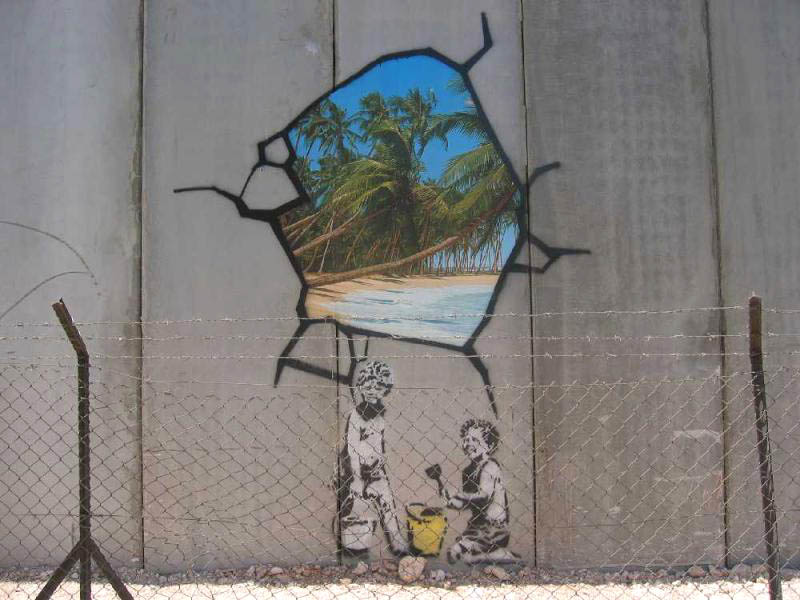
Banksy’s influence extends beyond the world of art, reaching into the realm of politics. His murals often tackle pressing issues like war, surveillance, consumerism, and inequality. His iconic pieces on the West Bank Barrier, for example, drew international attention to the Israeli-Palestinian conflict, showcasing the power of art as a tool for political activism.
Moreover, Banksy’s works have become viral sensations, spreading rapidly across the internet and reaching millions of viewers. The digital age has allowed Banksy’s art to transcend geographical boundaries, amplifying its impact to an unprecedented level. Each new Banksy piece triggers a flurry of online discussions, debates, and interpretations, showing how art can engage and connect people in the virtual space.
Banksy’s global impact is also evident in the way his art has inspired a new generation of artists. His audacious style, combined with his success in challenging the status quo, has paved the way for aspiring street artists worldwide. The “Banksy Effect” is a testament to his influence, proving that art can thrive outside traditional institutions and that artists can maintain their anonymity and independence while reaching a wide audience.
Perhaps most importantly, Banksy’s global impact lies in the conversations his art starts. His works provoke thought and spark dialogue, encouraging viewers to question their surroundings and critically engage with societal issues. Whether it’s a mural on a wall, a painting in an auction house, or an image shared on social media, Banksy’s art continues to challenge, disrupt, and inspire, solidifying his position as one of the most influential figures in contemporary art.
V. Beyond the Wall: Banksy’s Multifaceted Artistic Portfolio
Banksy’s artistic portfolio, despite being shrouded in mystery and anonymity, is one that never ceases to evolve, surprise and provoke. Stretching beyond the confines of the traditional graffiti scene, Banksy has become a modern-day renaissance artist, demonstrating a remarkable ability to experiment with different mediums and platforms while consistently delivering his signature blend of satire, subversion, and social commentary.In 2010, Banksy ventured into the world of filmmaking with “Exit Through the Gift Shop,” a documentary that explores the relationship between commercial and street art. The film, which received an Academy Award nomination for Best Documentary, showcases Banksy’s knack for storytelling and his ability to critique the art world from within its own apparatus.
In 2015, Banksy took on an entirely new project: Dismaland, a dark, dystopian parody of Disneyland. This ‘bemusement park’ showcased ten new works from Banksy alongside pieces from 58 other artists. It was more than just an art exhibit; it was an immersive, interactive experience that critiqued the corporatization of leisure and the passive consumption of entertainment.
In recent years, Banksy has also shown an increasing interest in traditional painting, as seen in his ‘Mediterranean Sea View’ series. This set of oil paintings, auctioned to raise funds for a hospital in Bethlehem, combined classical techniques with Banksy’s trademark twist – in this case, life jackets washed up on shore, symbolizing the European migrant crisis. Such works demonstrate Banksy’s versatility and his willingness to adapt his craft to convey urgent messages.
Banksy’s more recent work during the COVID-19 pandemic, such as ‘Game Changer,’ displayed in Southampton General Hospital, is a testament to his timely engagement with current events. This piece, which pays tribute to healthcare workers, again shows Banksy’s ability to adapt to new contexts and media, while staying true to his roots in street art.
Whether it’s stencils on city walls, films, immersive installations, traditional paintings, or even the occasional piece of performance art (as seen in the shredding of ‘Girl with Balloon’), Banksy’s expanding portfolio reflects his boundless creativity, adaptability, and commitment to pushing the boundaries of what art can be and do. His work stands as a testament to the fact that art is not just about aesthetics, but can also be a vehicle for social change, critique, and dialogue.
VI. Shattering Expectations: Banksy’s Iconic Artistic Moments
When it comes to creating unforgettable artistic moments, Banksy is second to none. The anonymous artist has a track record of staging high-profile stunts that not only challenge conventional norms of the art world but also provoke public dialogue and reflection on broader societal issues.Perhaps the most iconic of all is Banksy’s 2018 Sotheby’s auction stunt, in which his artwork ‘Girl with Balloon’ self-destructed immediately after being sold for £1.04 million. Hidden within the ornate frame was a remotely activated shredder that left the artwork hanging in tatters. This audacious act was not just a prank; it was a commentary on the commodification of art and the market’s ability to dictate the value of artworks. The shredded artwork was later renamed ‘Love is in the Bin,’ and in a twist of irony, it became even more valuable after the stunt.
Another moment that captured global attention was Banksy’s 2013 New York residency, ‘Better Out Than In.’ For 31 days, Banksy unveiled a new work each day across the city. On one of these days, he set up a stall selling signed original Banksy canvases for just $60. The unsuspecting buyers had no idea of the true value of the artworks they were purchasing, challenging the notion of art’s value being tied to the artist’s name.
And again: In 2015, Banksy shook the art world again with the opening of Dismaland, a dark, dystopian parody of Disneyland. This temporary art project in the seaside resort town of Weston-super-Mare in England featured a fairy castle in ruin, a boat pond full of asylum seekers, and two juggernauts performing ballet, among other installations. It was a stark critique of consumer culture, inequality, and the failings of capitalism.
Banksy’s ‘Devolved Parliament,’ a satirical painting depicting the UK House of Commons filled with chimpanzees, is another example of his timely and pointed commentary. The artwork, which was created in 2009 and exhibited just before the original Brexit date in March 2019, sold for a record-breaking £9.9 million at Sotheby’s in October 2019.
And as mentioned before who can forget Banksy’s response to the COVID-19 pandemic? His ‘Game Changer’ artwork, depicting a young boy playing with a nurse doll, was a tribute to healthcare workers on the front lines of the crisis. It was later sold at auction for £16.8 million, with all proceeds going to the NHS.
Through these iconic moments, Banksy continues to use his art to subvert expectations, provoke thought, and challenge the status quo, leaving an indelible mark on the world of contemporary art.
VII. Enduring Impressions: The “Banksy Effect”
The “Banksy Effect” is a term coined to describe the remarkable influence that Banksy has had on the art world and beyond. It refers not just to his transformation of street art into a globally recognized and highly coveted form of expression, but also to the way his work has reshaped public discourse around key societal issues.Banksy’s provocative approach to art has undoubtedly pushed the boundaries of what is considered acceptable or valuable in the art world. By using public spaces as his canvas, Banksy has democratized access to art, making it available to everyone, not just those who frequent art galleries or auction houses. This has led to a broader acceptance and recognition of street art as a legitimate form of artistic expression, with cities around the world now boasting thriving street art scenes.
Beyond the art scene, Banksy’s satirical, often politically charged works have also had a profound impact on public consciousness. His art has served as a powerful commentary on issues such as war, capitalism, consumerism, and inequality, sparking public dialogue and forcing viewers to confront uncomfortable realities. By leveraging the power of art for social commentary, Banksy has inspired a new generation of artists to use their work as a tool for social and political activism.
Moreover, Banksy’s commitment to anonymity has further fueled his appeal and added a layer of intrigue to his work. Despite his global fame, Banksy has managed to maintain his anonymity, a feat that has only added to his mystique and led to widespread speculation about his identity. This anonymity has also allowed Banksy to remain a subversive figure, unbound by the expectations or constraints typically placed on renowned artists.
The “Banksy Effect” encompasses the far-reaching influence of Banksy’s art on both the art world and society at large. His innovative approach to art, combined with his incisive social commentary, has left an enduring legacy that continues to inspire and provoke. Whether it’s through a simple graffiti piece on a city wall or a high-profile stunt at an auction house, Banksy’s impact is indelible, echoing throughout contemporary culture and continuing to challenge our perceptions of art and its role in society.
VIII. Unmasking the Enigma: Decoding Banksy’s Enduring Allure
As we delve into the intriguing world of Banksy, we come to realize that his enigmatic persona, revolutionary approach to art, and the courage to challenge societal norms are not just the hallmarks of his unique artistry, but also the underlying factors of his enduring appeal.Banksy’s anonymity has allowed him to create art that is pure and unaffected by the bias of celebrity. It keeps the focus on the art and the message it conveys rather than the artist. This could well be one of the reasons why his art, despite its simplicity, resonates on a universal scale. The unknown identity of the artist also adds an element of intrigue and mystery, making each new artwork a topic of global conversation.
Banksy’s approach to art, characterized by its accessibility and daring themes, has redefined the relationship between art and the public. His belief that art should be available to everyone has brought art out of the exclusive confines of galleries and into the streets, making it part of people’s everyday lives. This democratization of art has not only elevated the status of street art but has also changed the way we perceive and interact with art.Moreover, Banksy’s unwavering commitment to highlighting societal issues through his art has given him the ability to influence public discourse like few artists can. His provoking imagery and poignant commentary on pressing issues such as war, inequality, and consumerism have started important conversations, challenging us to question the status quo and contemplate our role within these systems.
Banksy’s knack for spectacle, such as the infamous shredding incident at Sotheby’s, has further amplified his influence by merging performance and visual art, creating unforgettable moments that transcend the confines of the art world. These audacious acts have not only propelled Banksy into the global spotlight but have also pushed the boundaries of what is possible in art.
In the end, Banksy is not just an artist; he is a phenomenon, a catalyst for change, and a symbol of resistance against conventional norms. His disruptive yet compelling artistry continues to captivate the world, and his influence, the “Banksy Effect,” continues to ripple through the realms of art and culture. His legacy is one that invites us to challenge our perspectives, to question our surroundings, and most importantly, to realize the power of art as a tool for change. As we continue to anticipate Banksy’s next move, one thing is clear: the world is his canvas, and we are all eager spectators.
Now click here to read some of Banksy’s best quotes: 14 Great Banksy Street Art Photos and Quotes!
And that’s a wrap on our deep dive into the world of Banksy!
Remember, street art is a global canvas, and each of us has a role to play in appreciating and preserving it. So, the next time you come across a Banksy—or any piece of street art—pause, take it in, and let it evoke thoughts and emotions. And if you’ve enjoyed this post, don’t hesitate to share it with your fellow street art enthusiasts and join our group: Your Street Art Utopia.Until next time, keep discovering, keep questioning, and keep appreciating the world of street art.
More by Banksy?: 18 Iconic Banksy Artworks (Indoors!)
The Goat?
Banksy at Royal Courts of Justice in London.
More here!More!: Indoor Art By Banksy! (18 Photos)
Which one is your favorite?
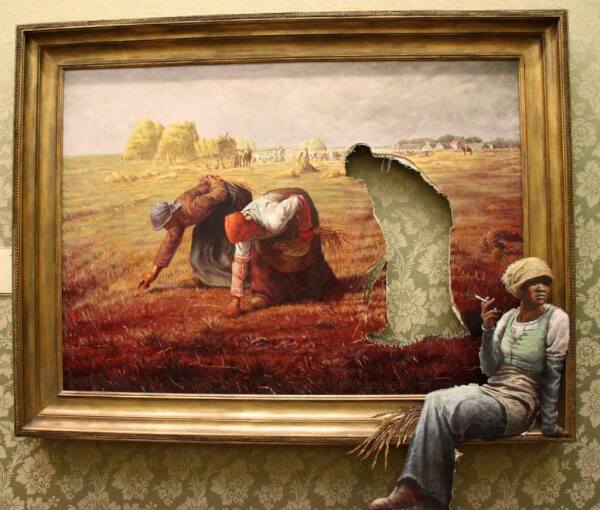
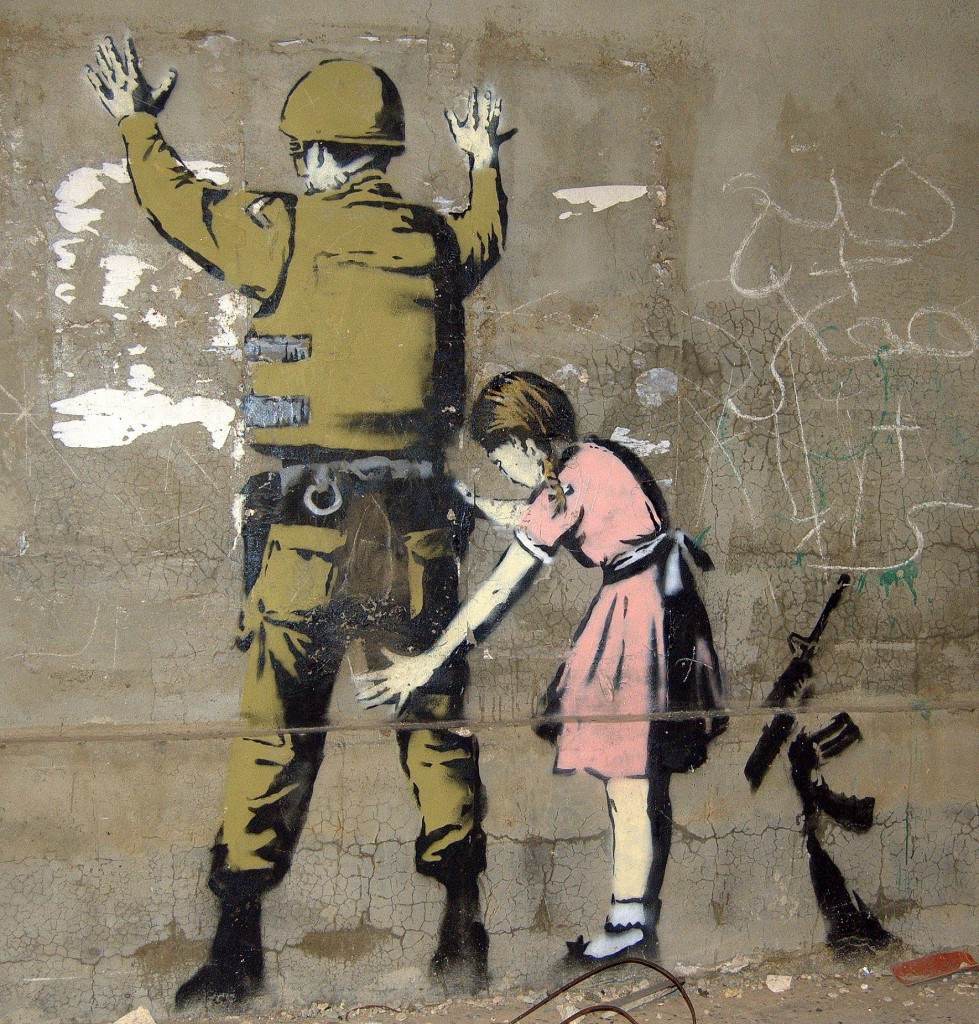
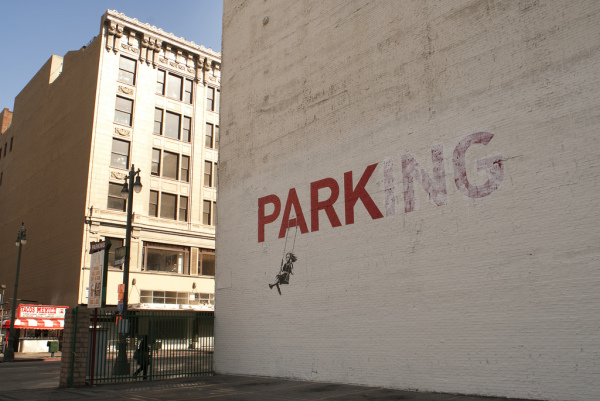
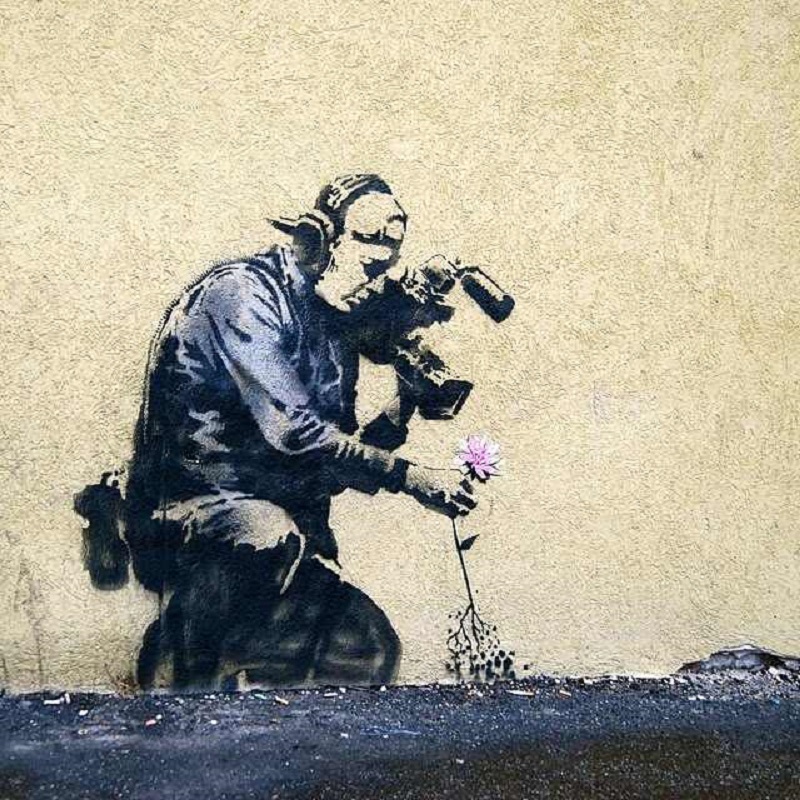
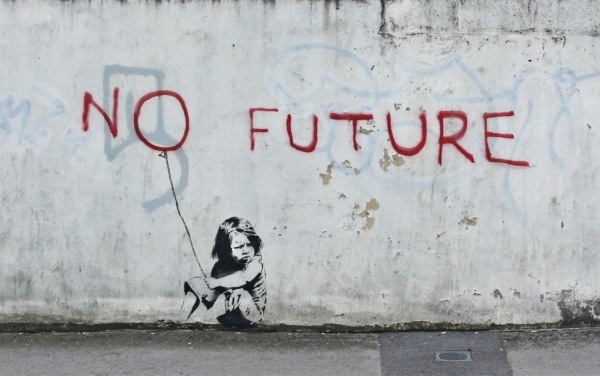
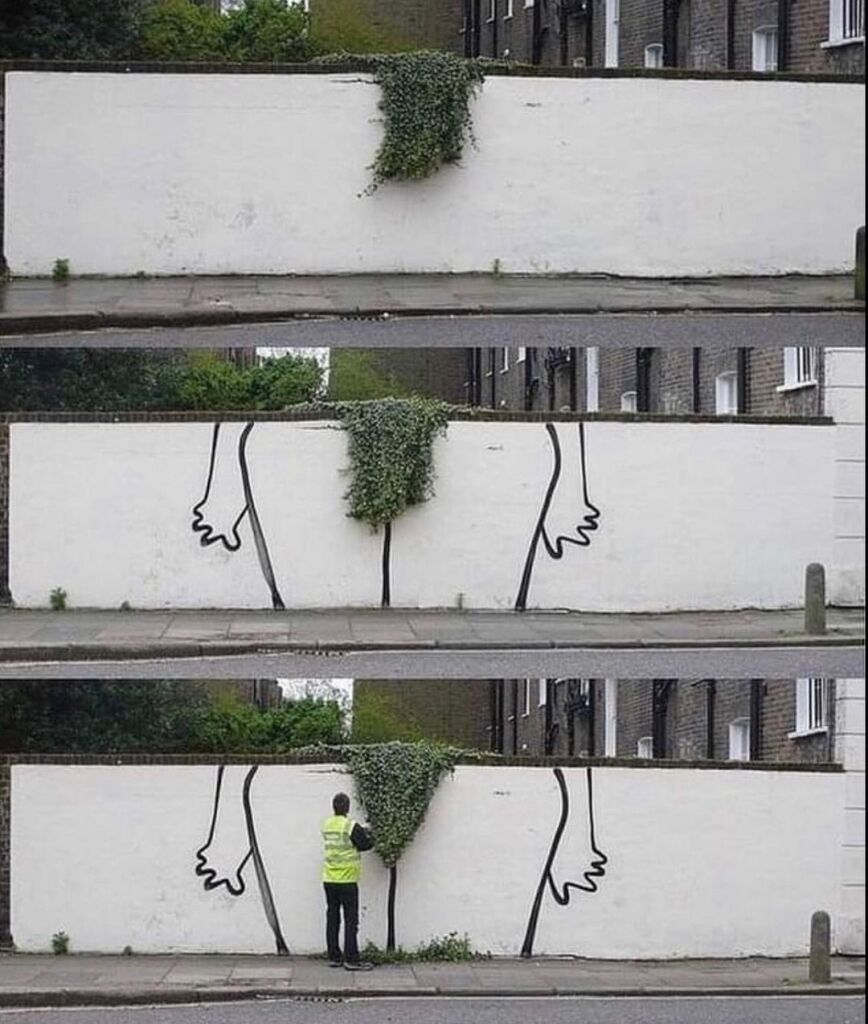
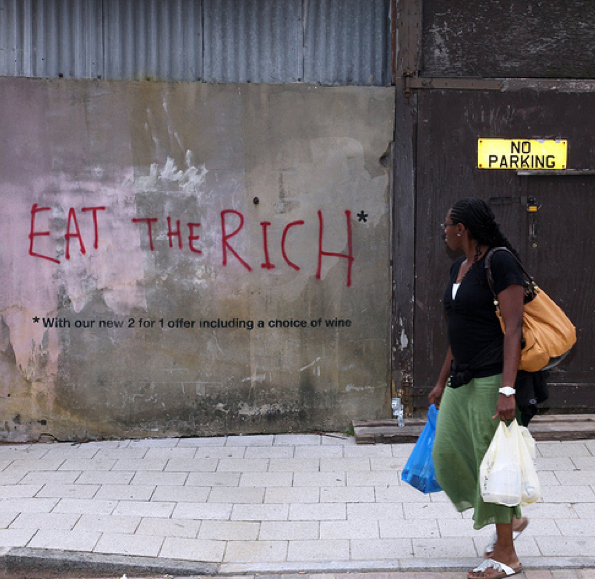
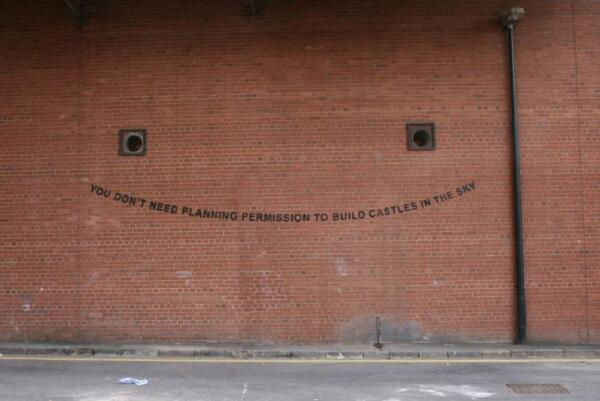
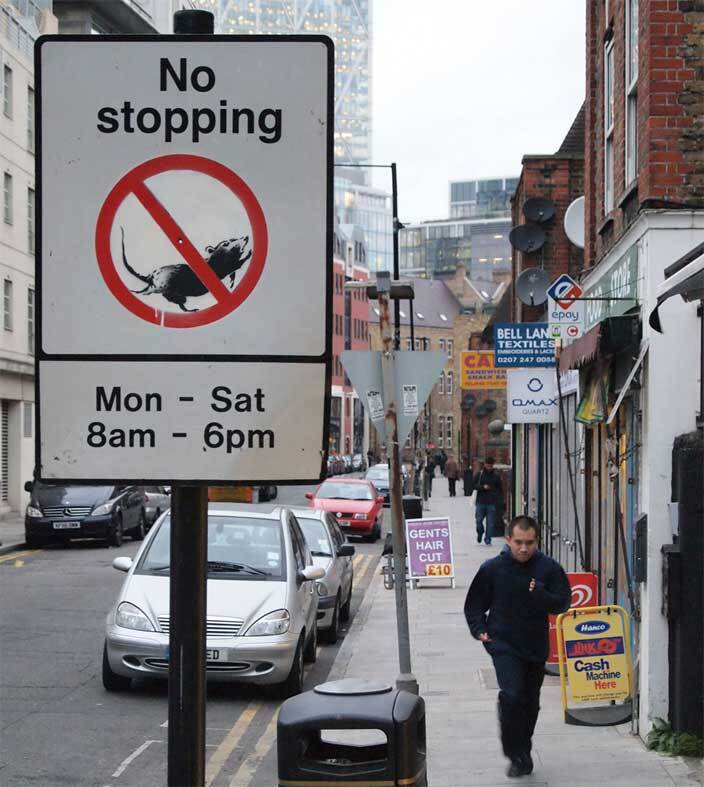
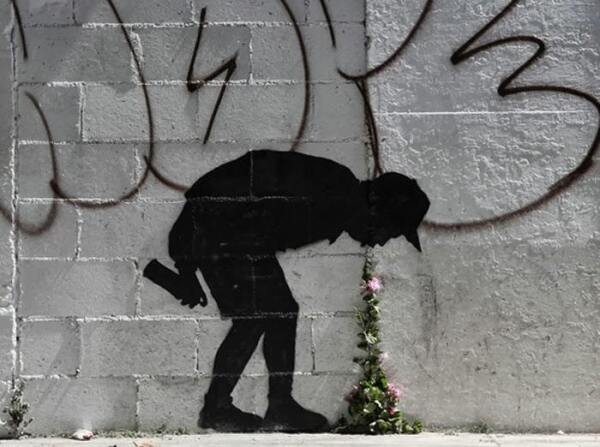
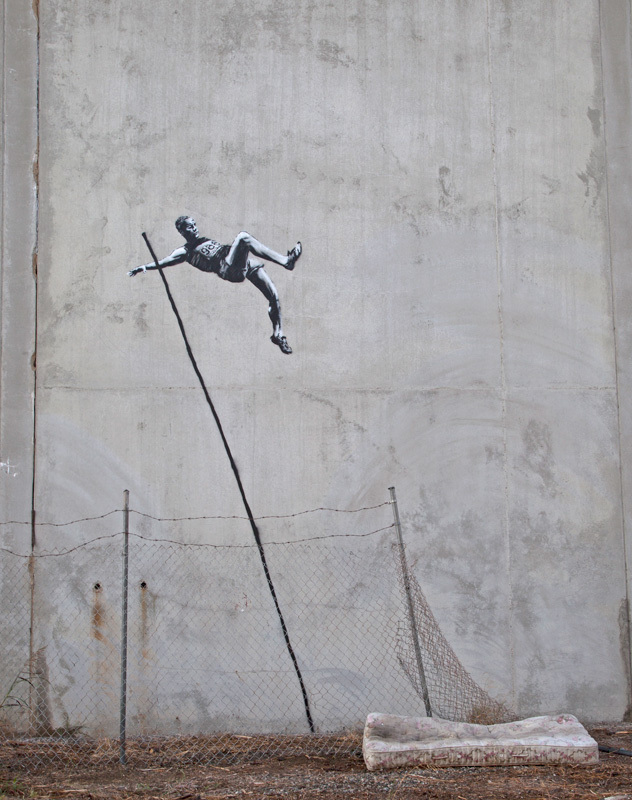
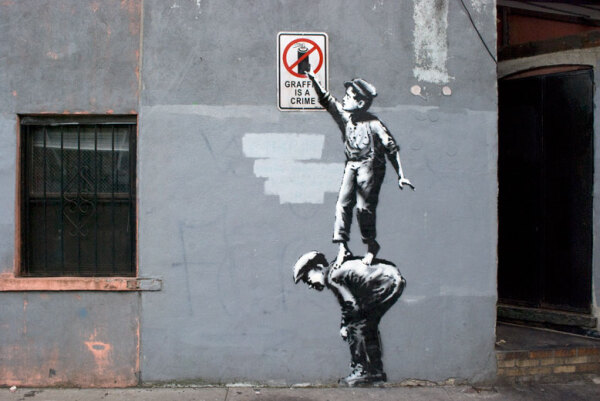
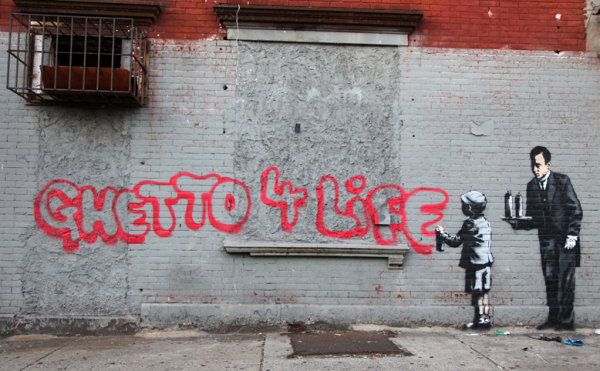
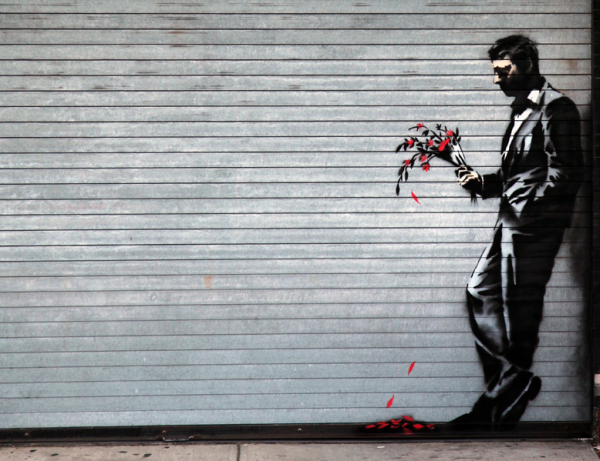
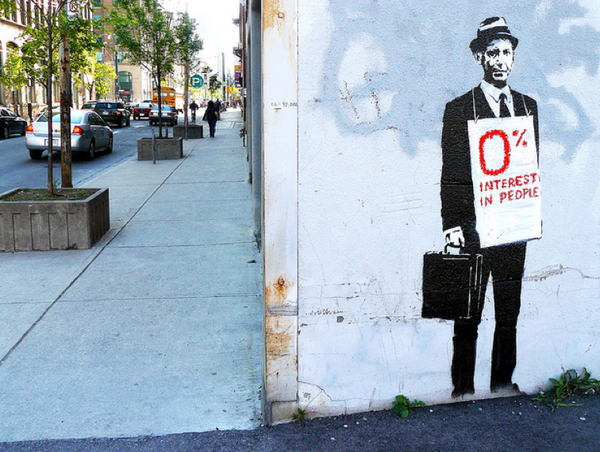
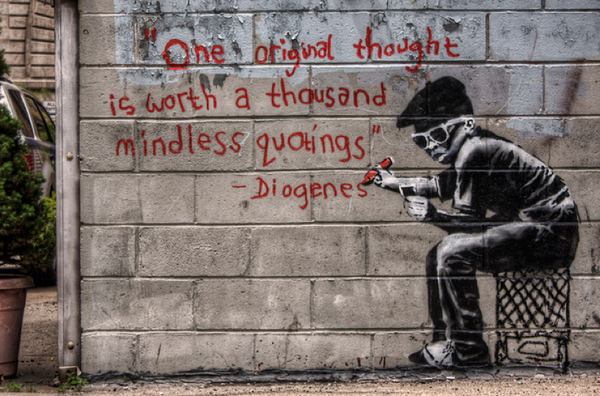
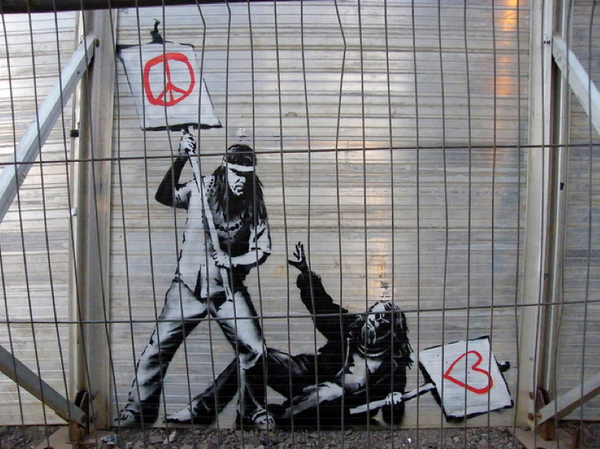
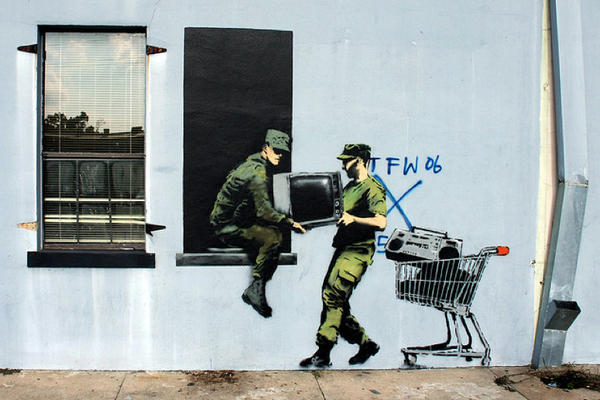
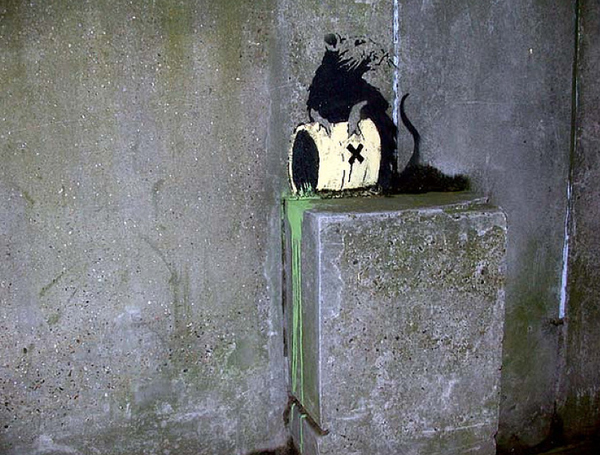
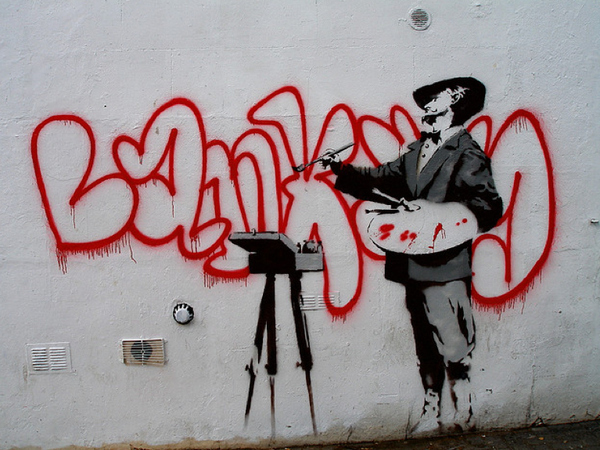
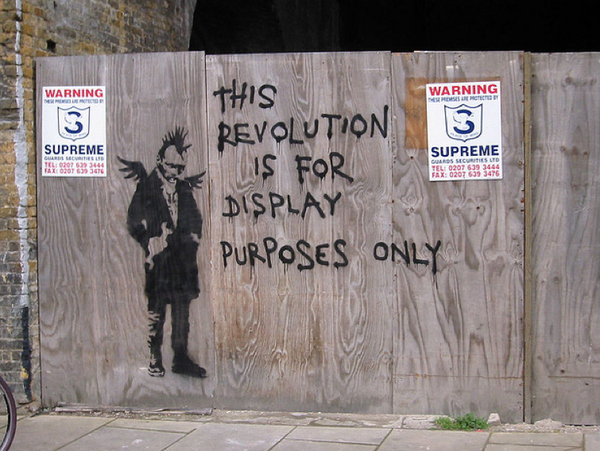
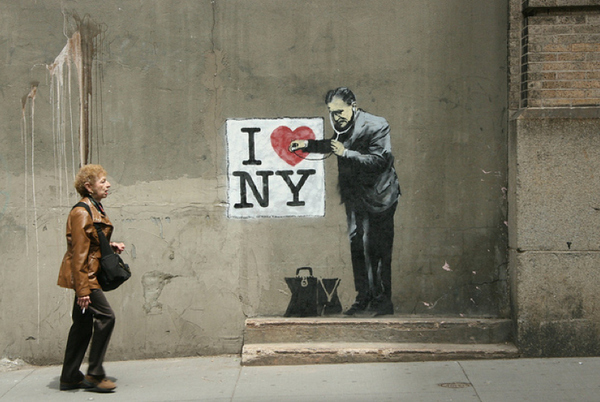
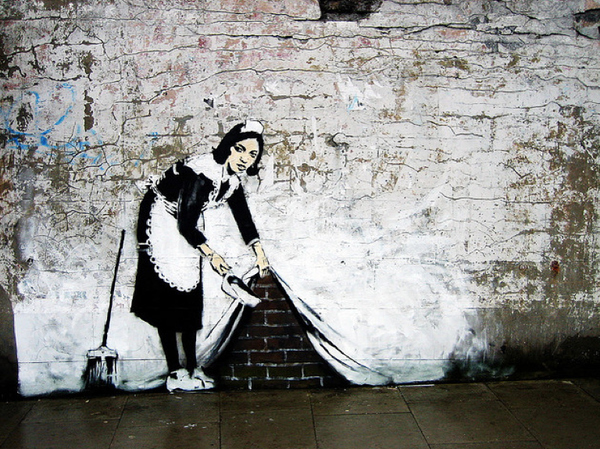
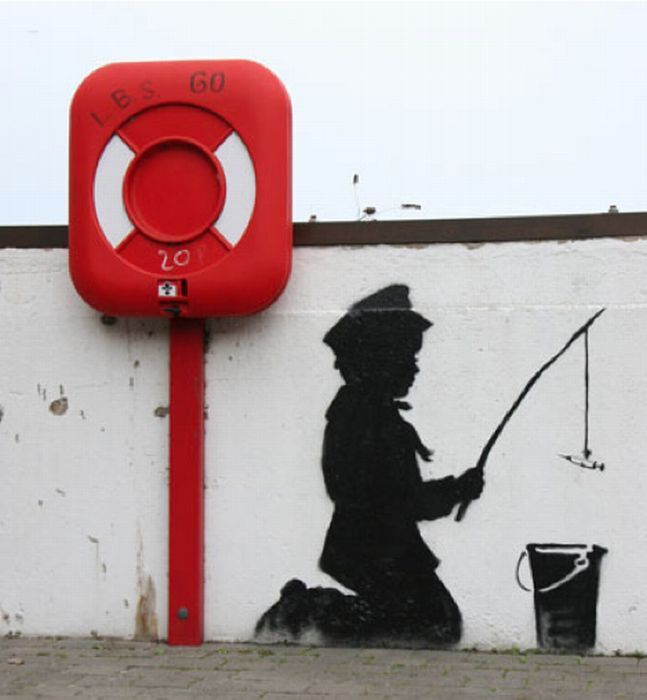
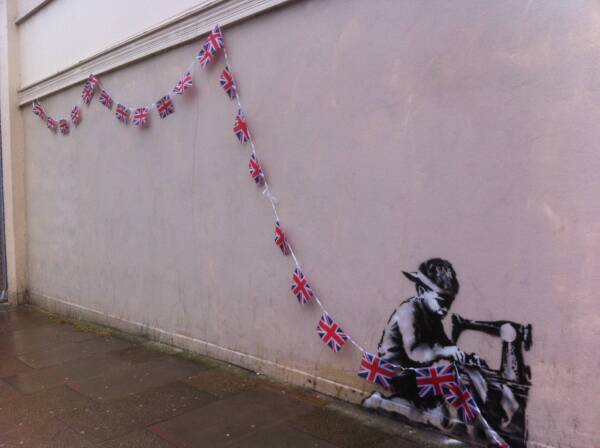
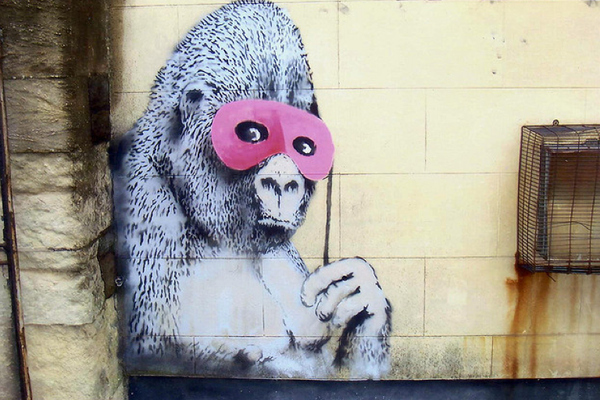
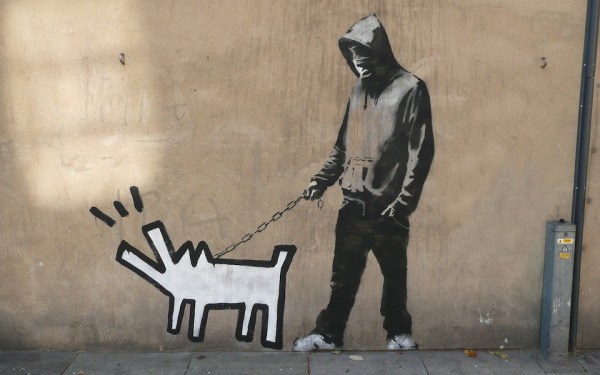
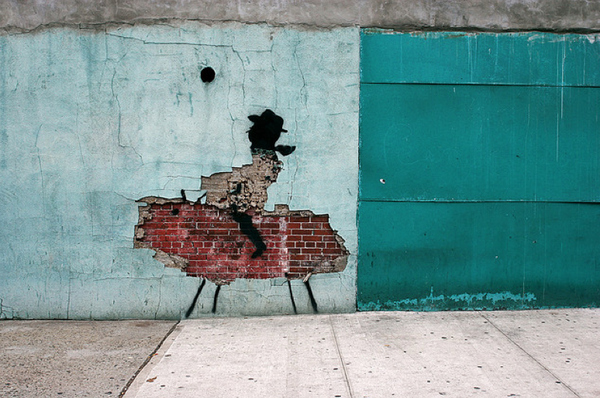
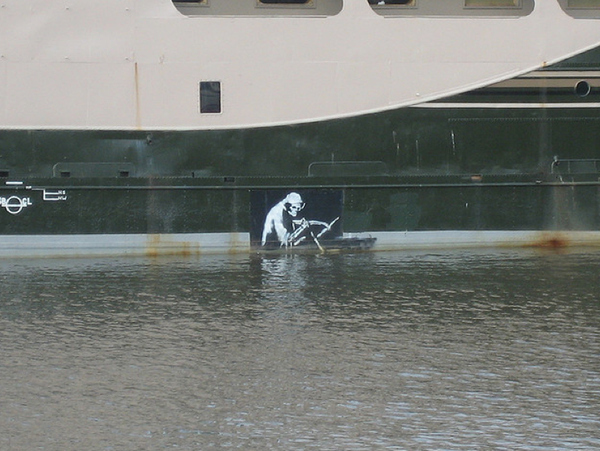
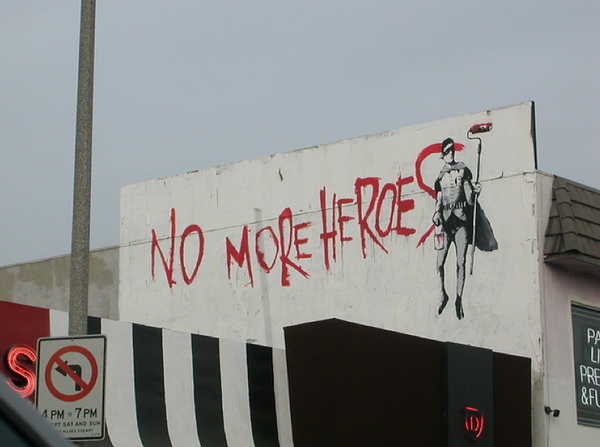
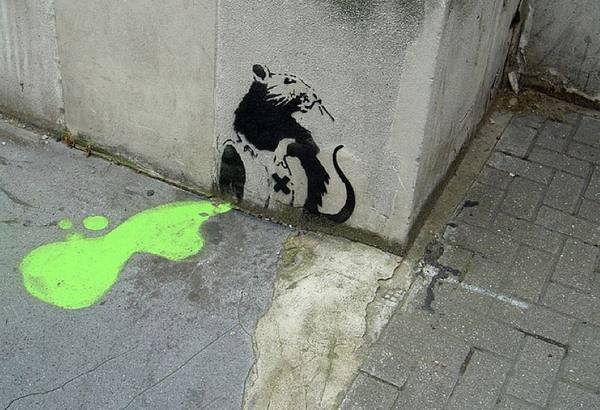
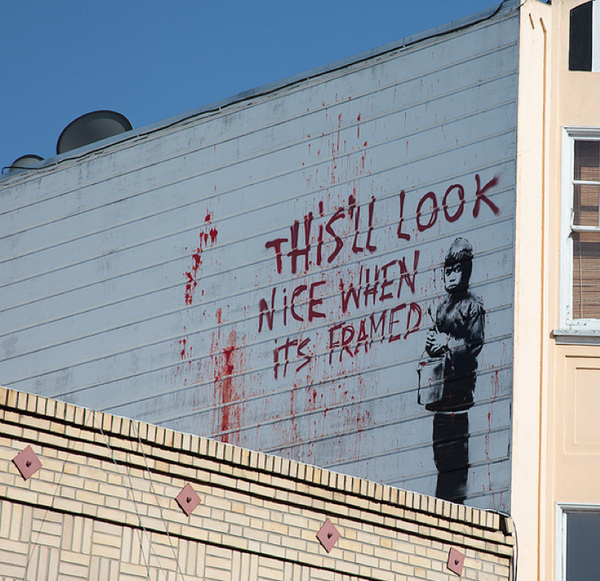
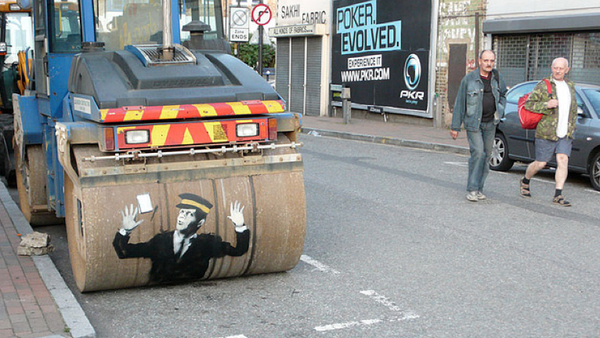
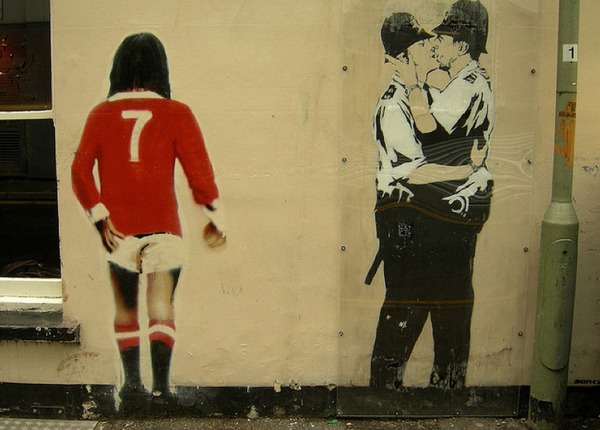
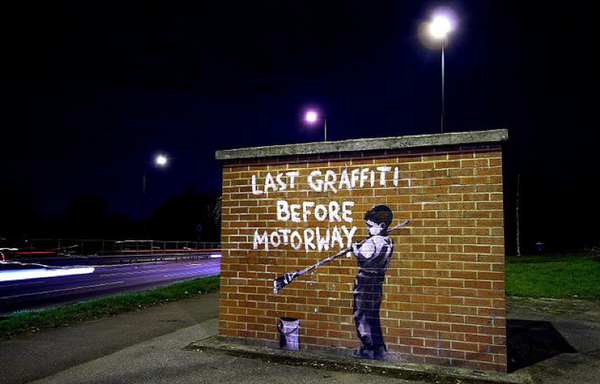
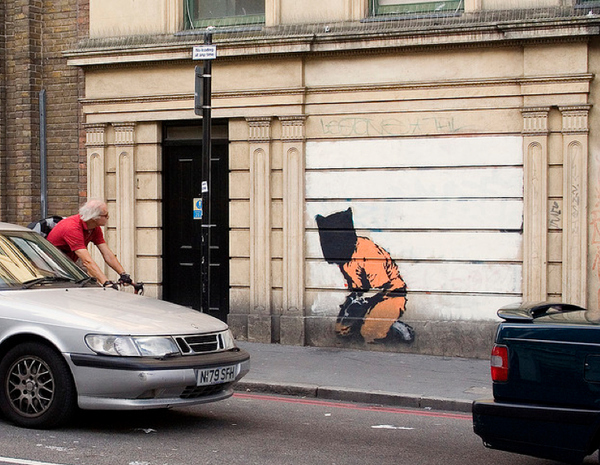
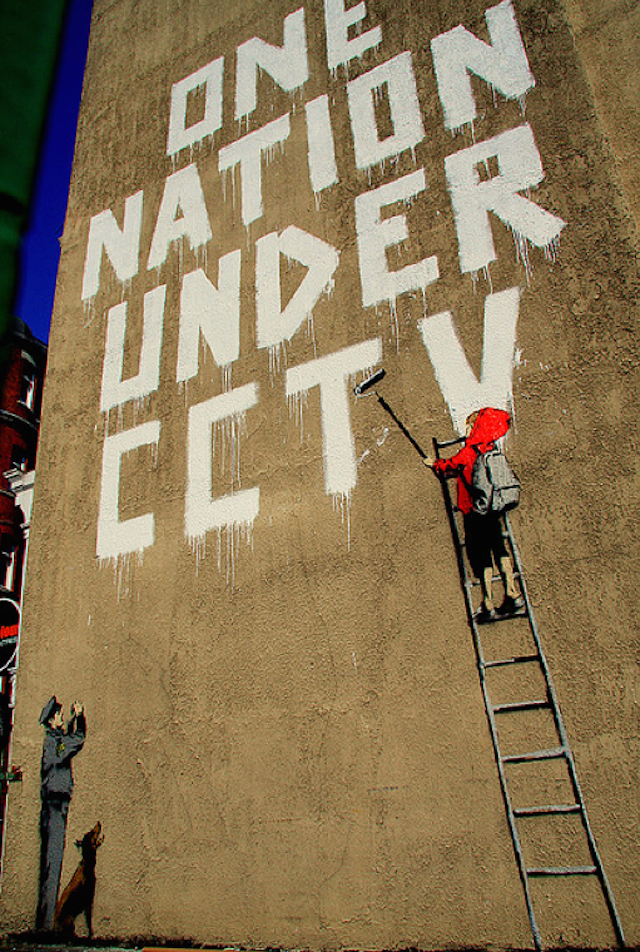
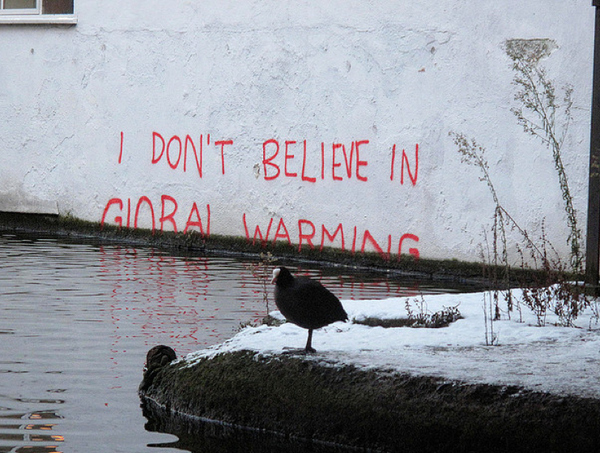
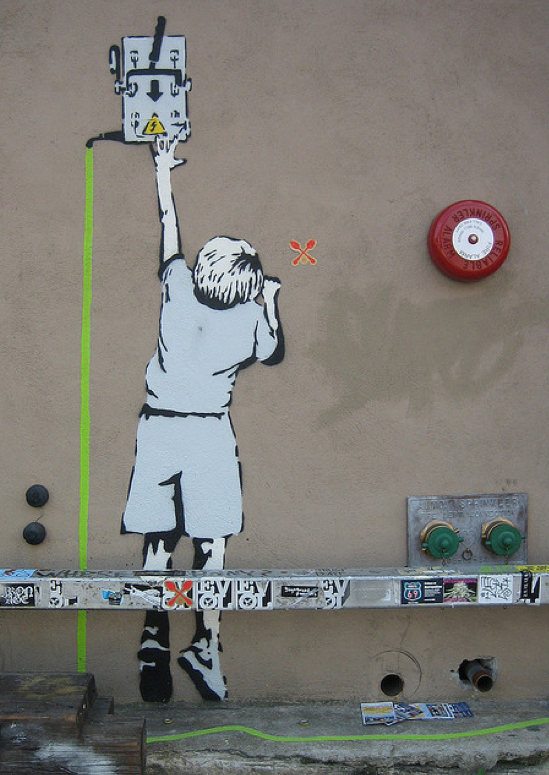
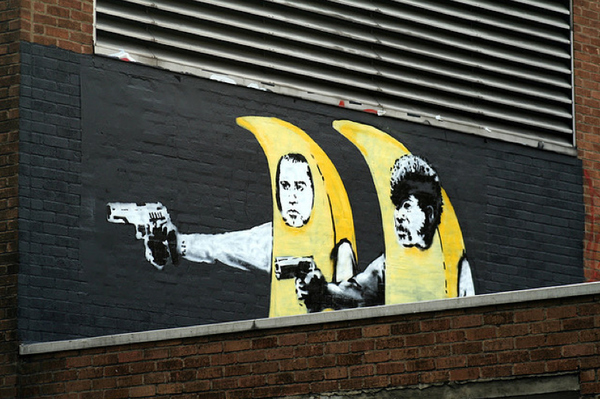
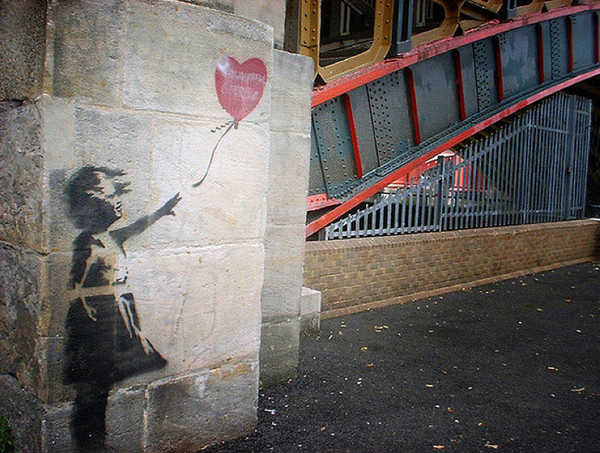
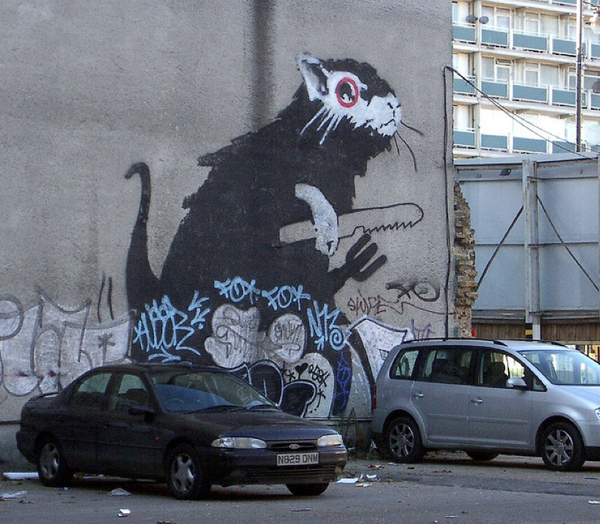
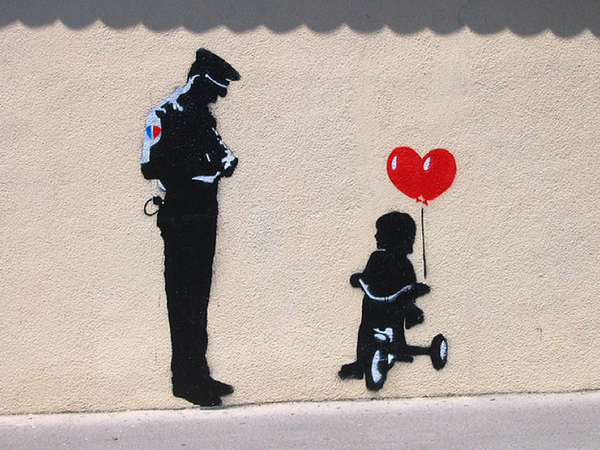
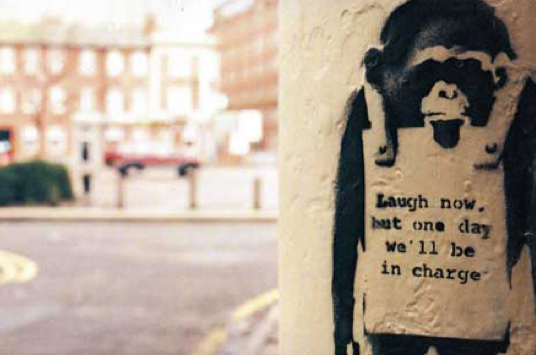
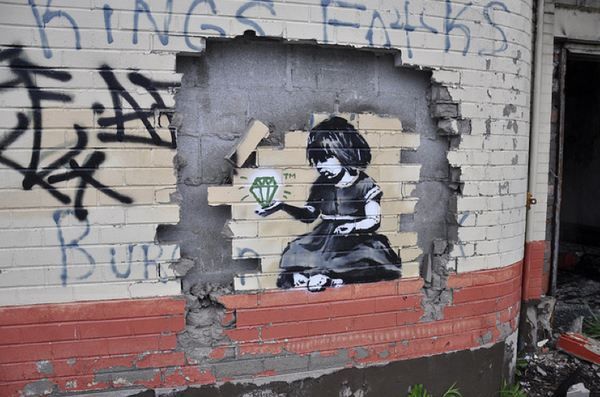
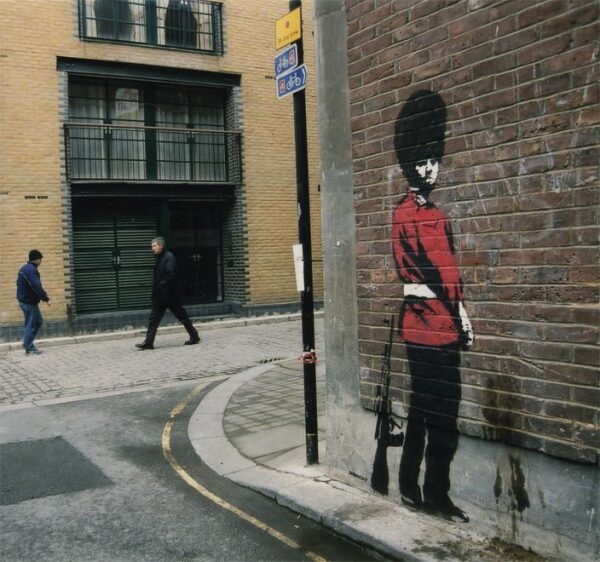
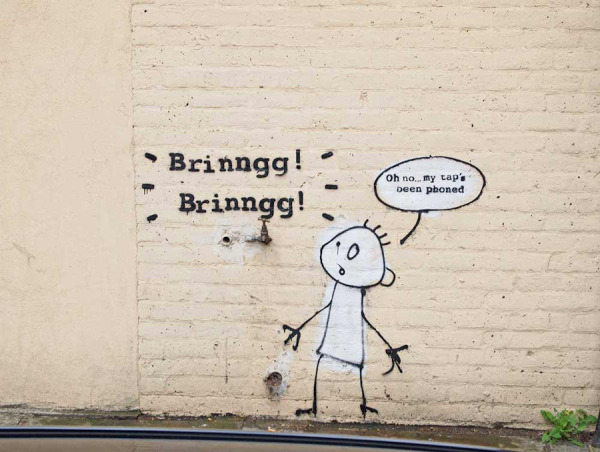
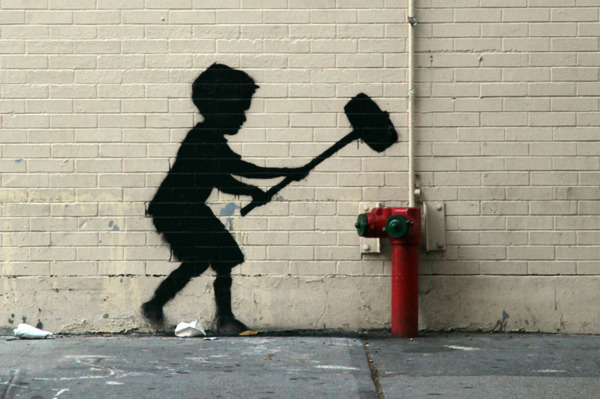
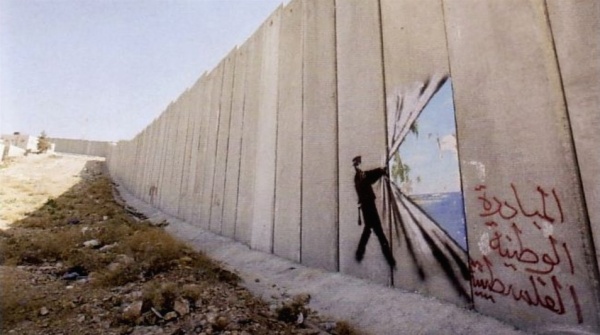
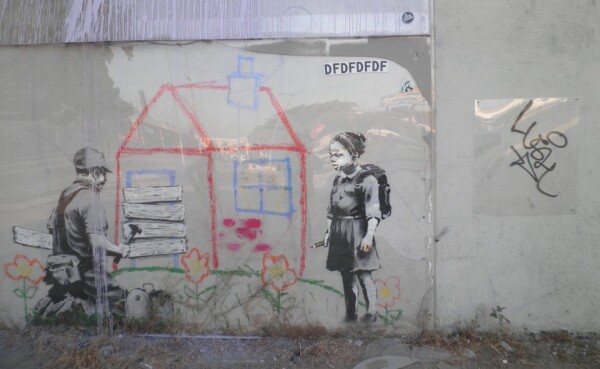
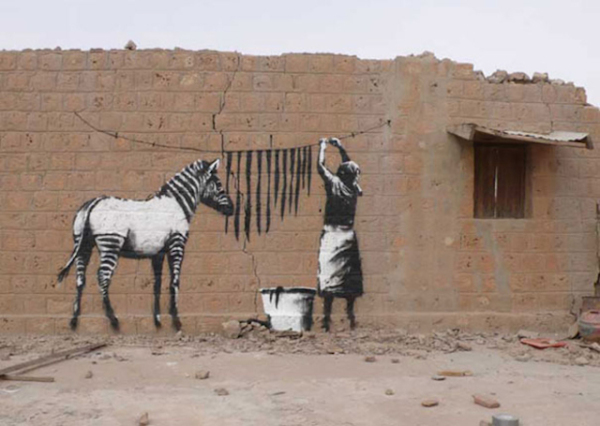
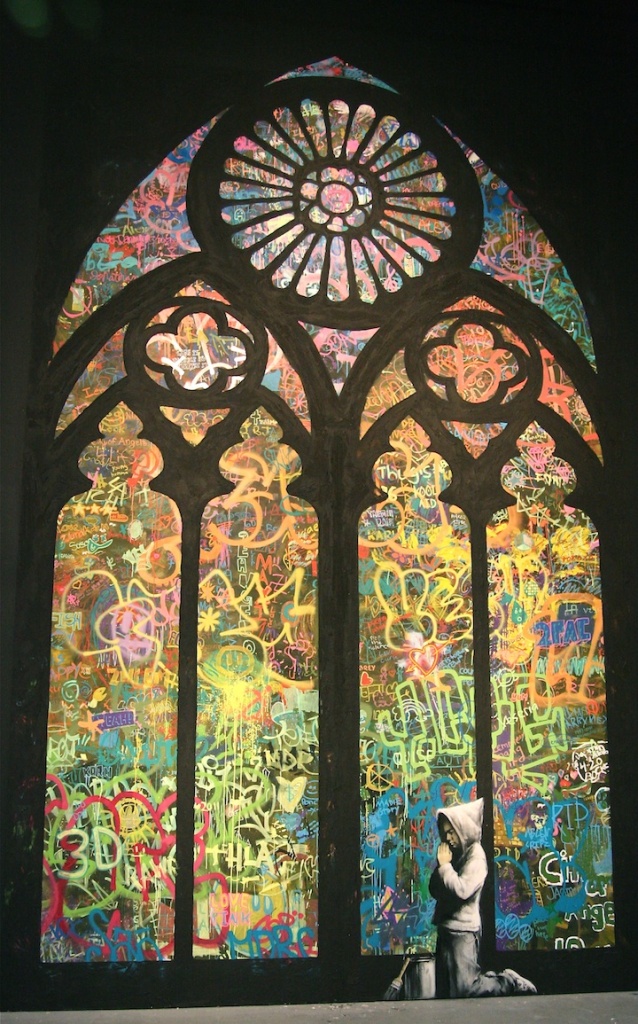
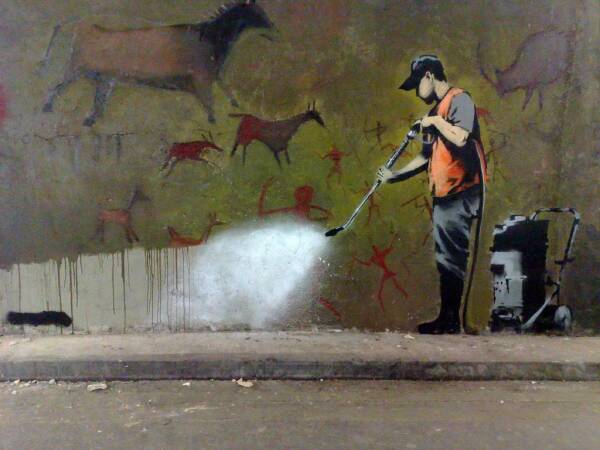
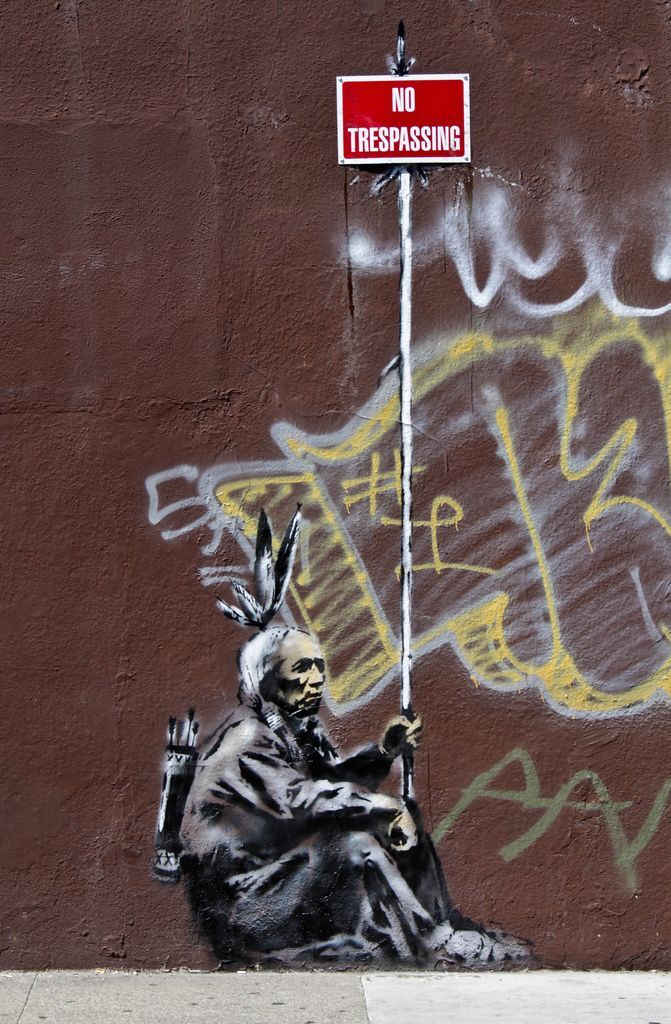
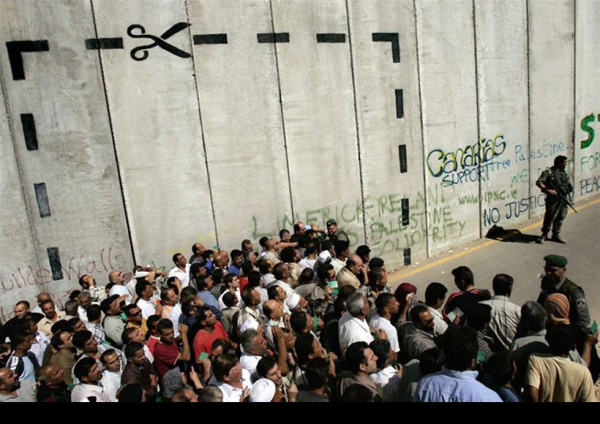
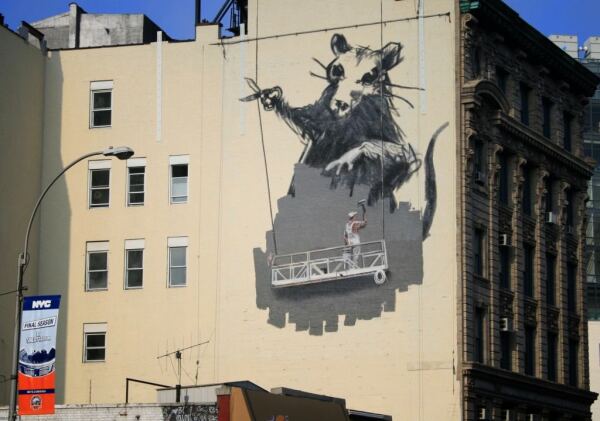
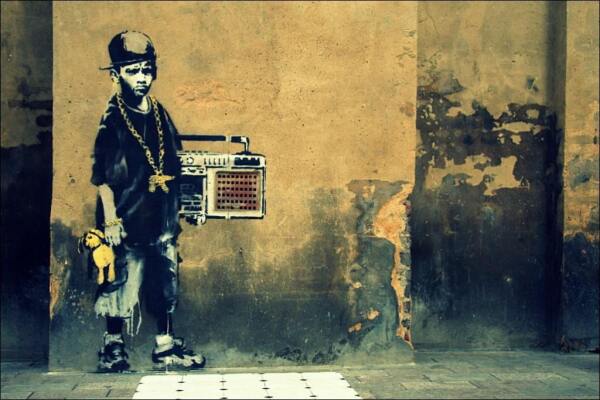
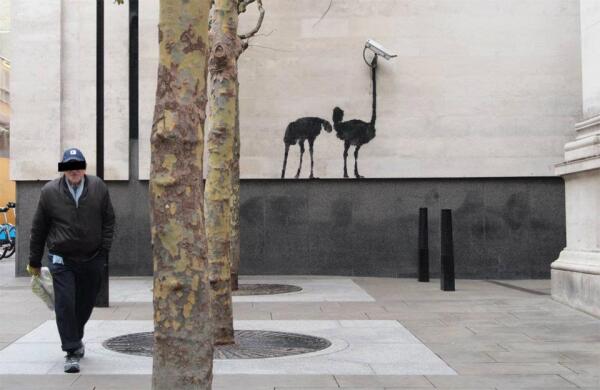
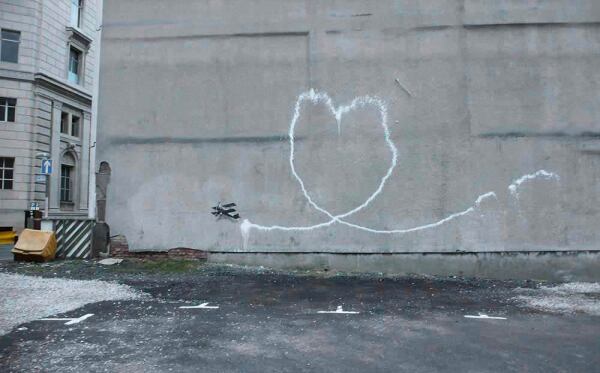
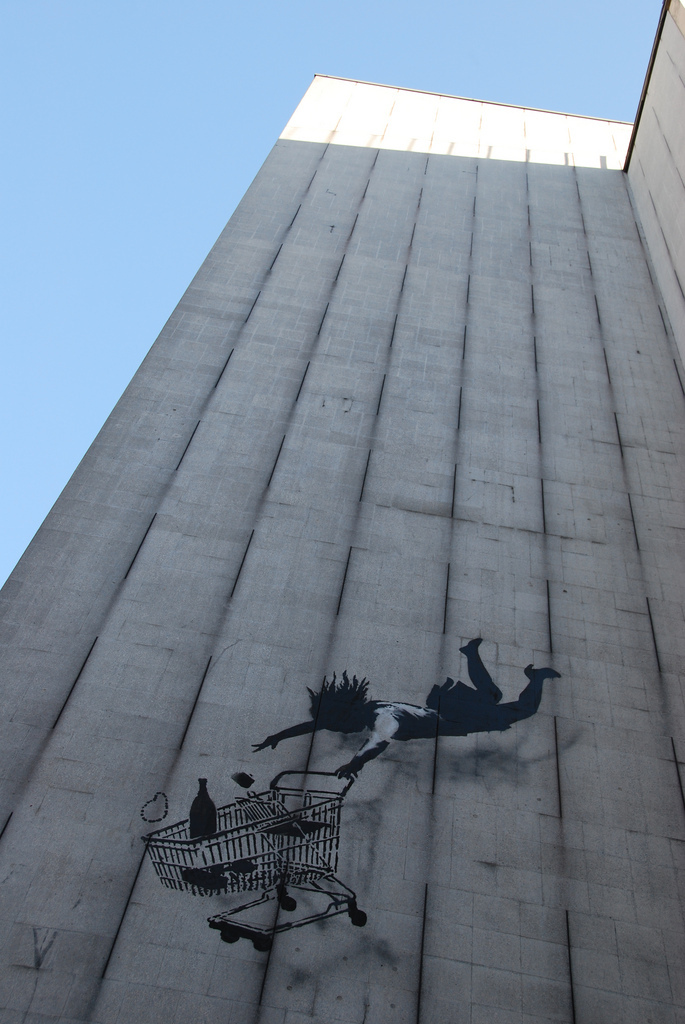
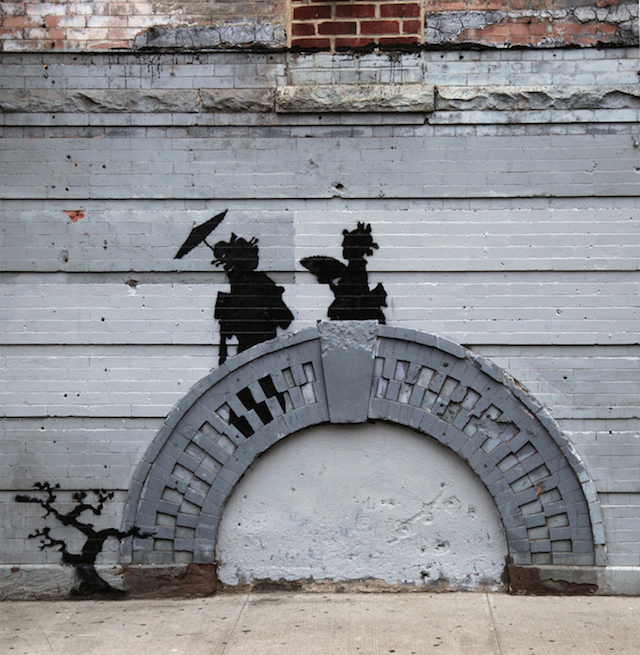
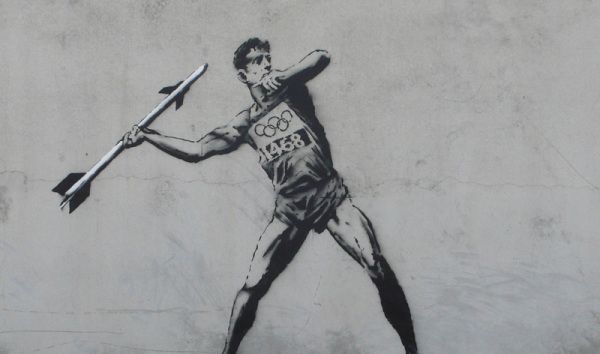
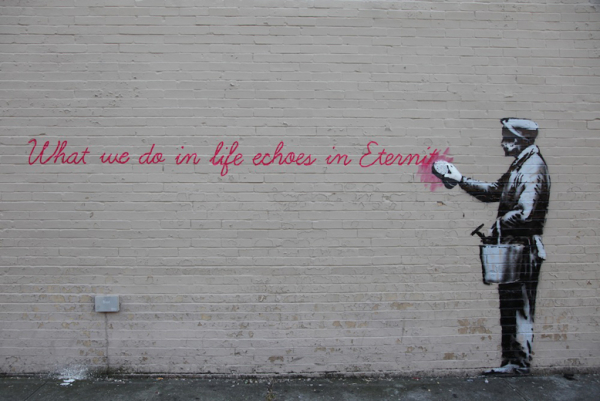
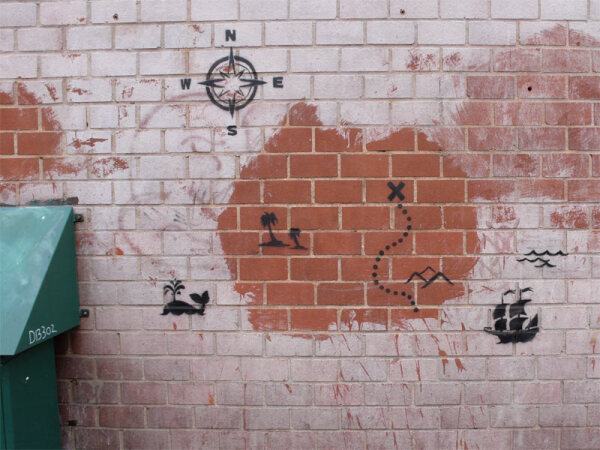
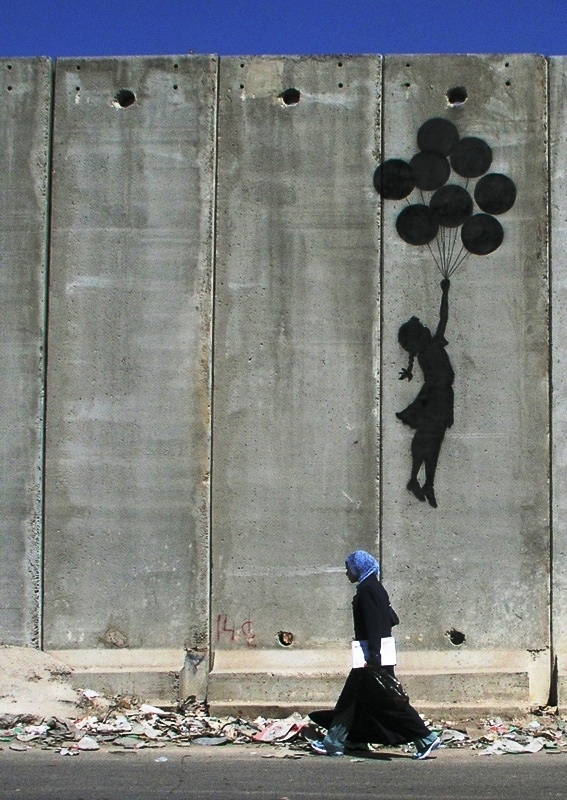
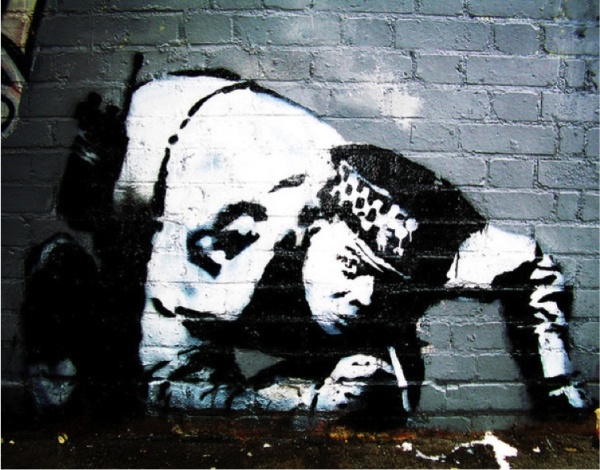
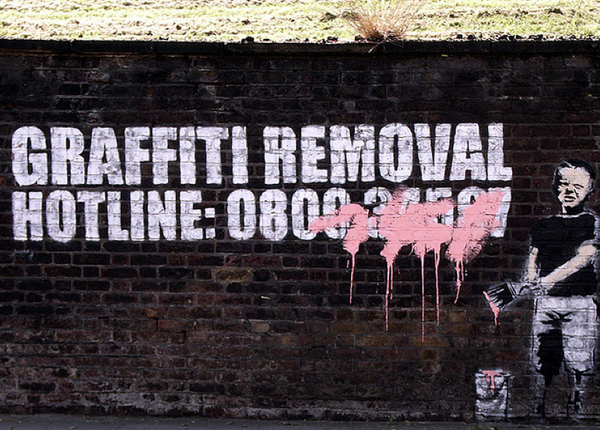
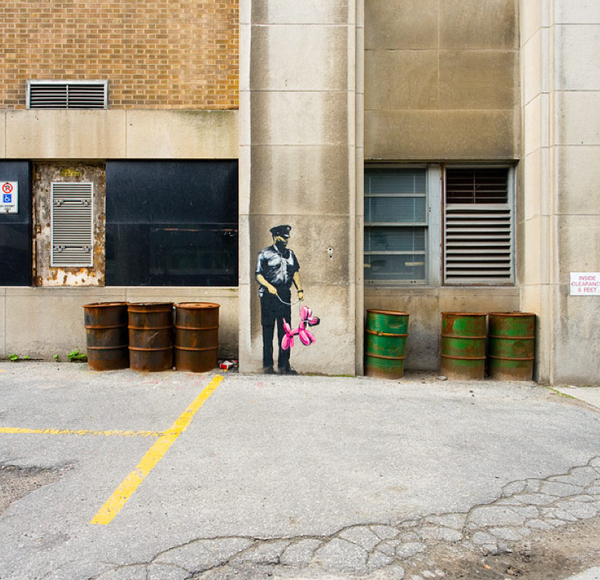
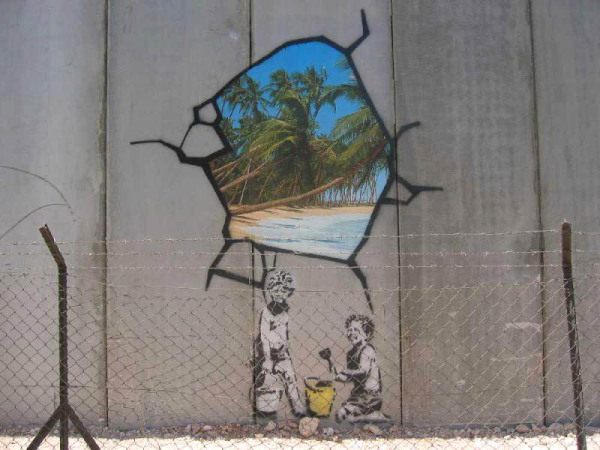
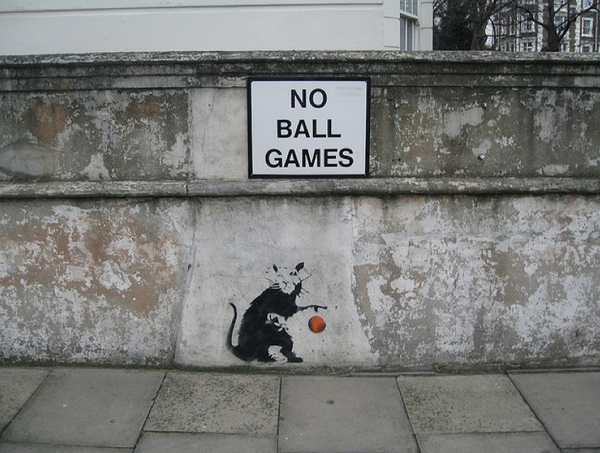
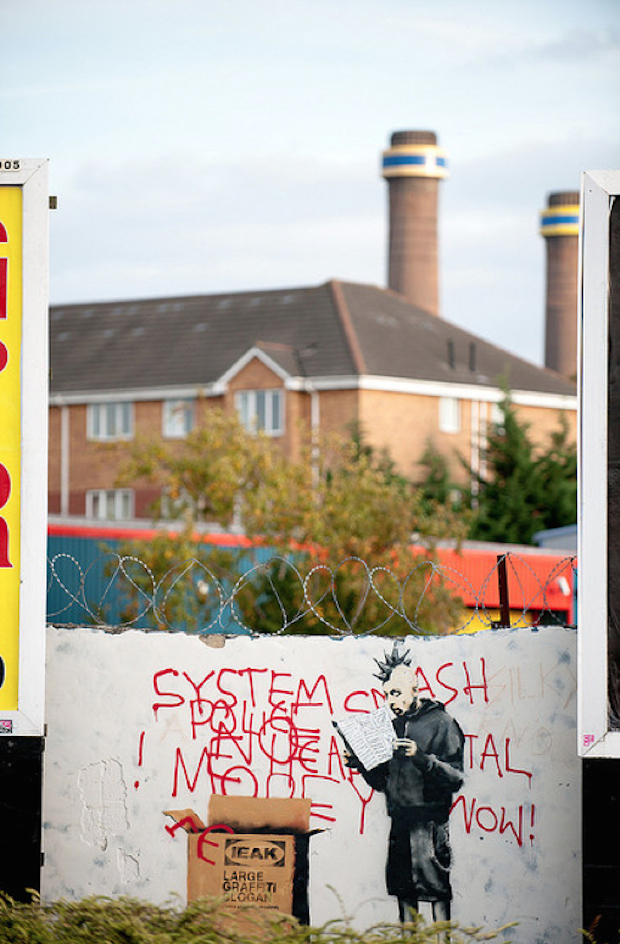
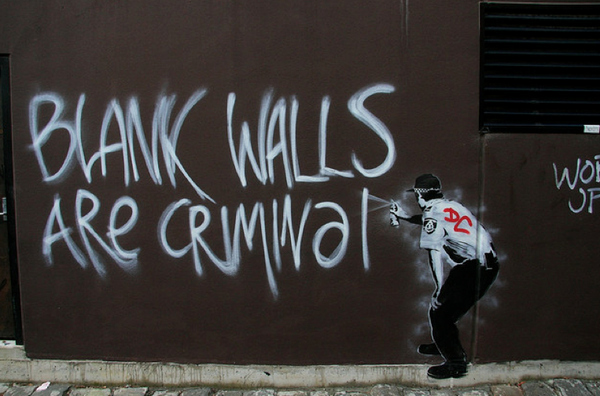
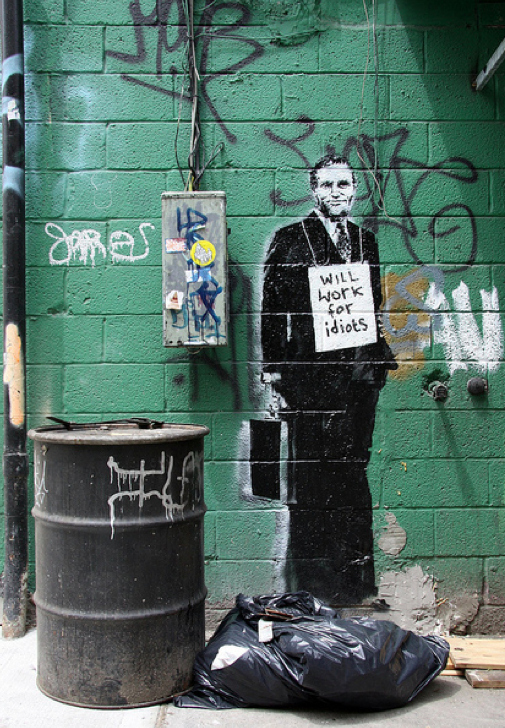
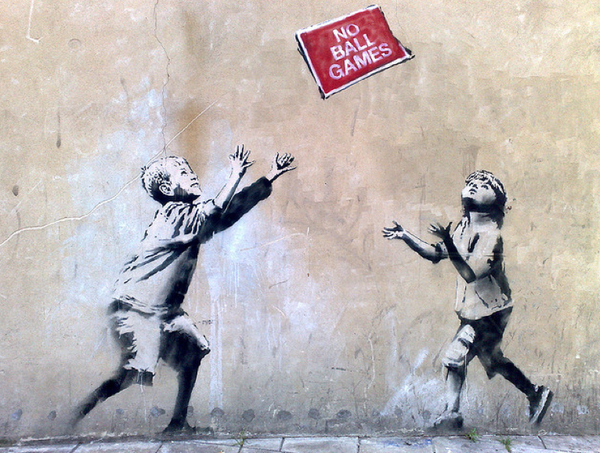
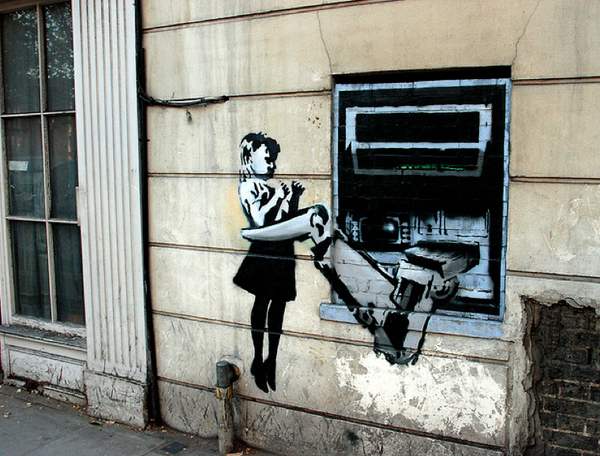
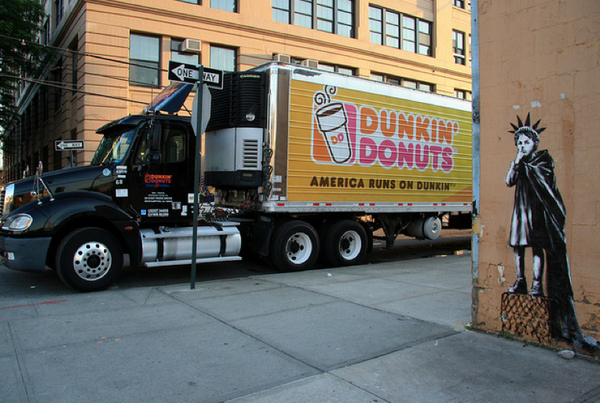
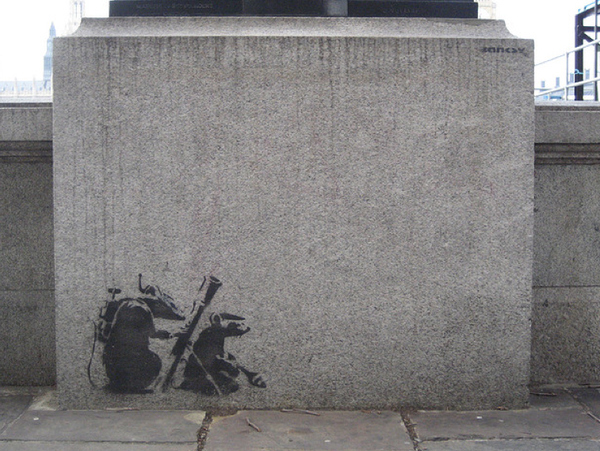
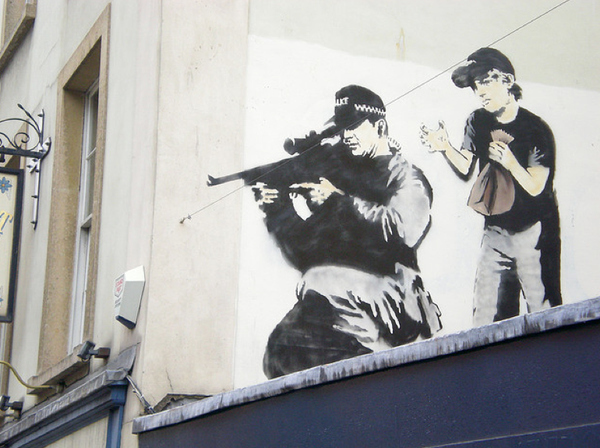
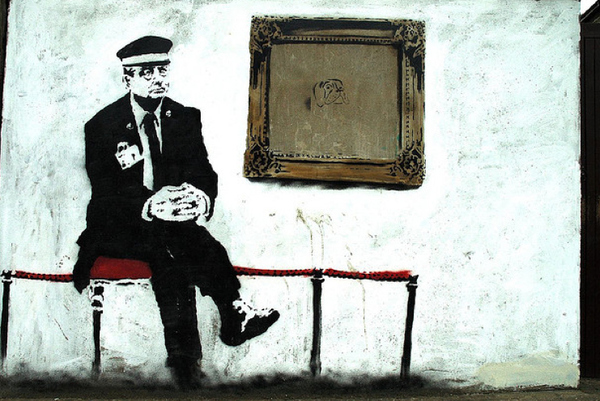
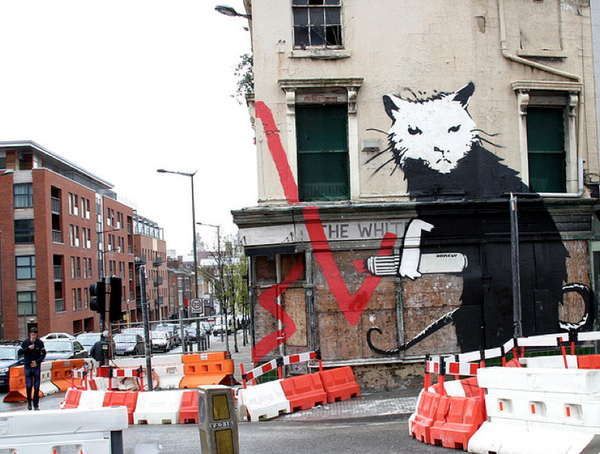
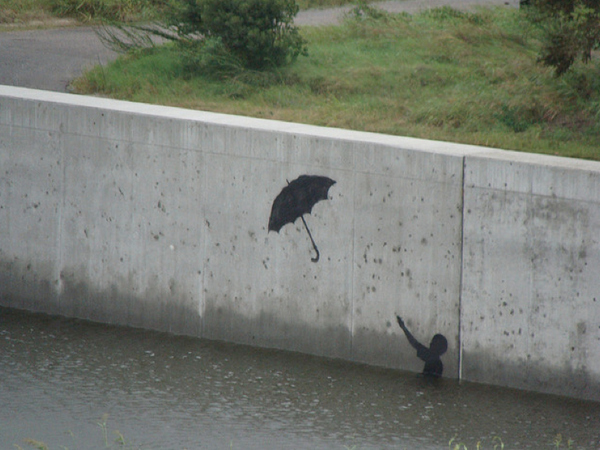
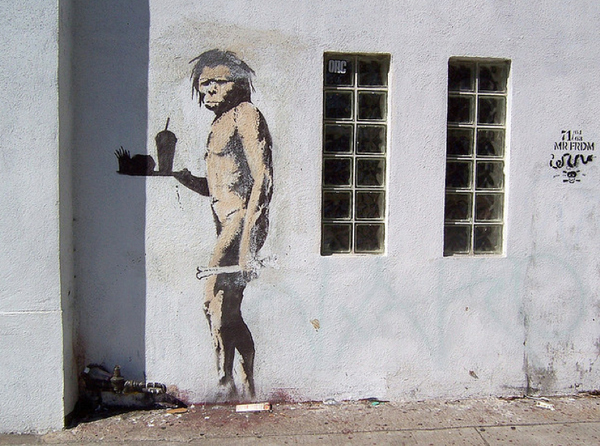
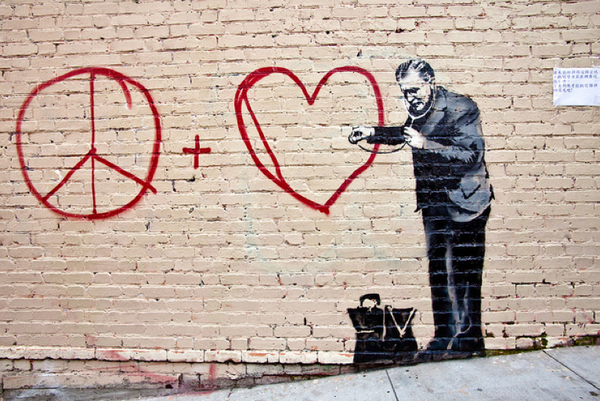
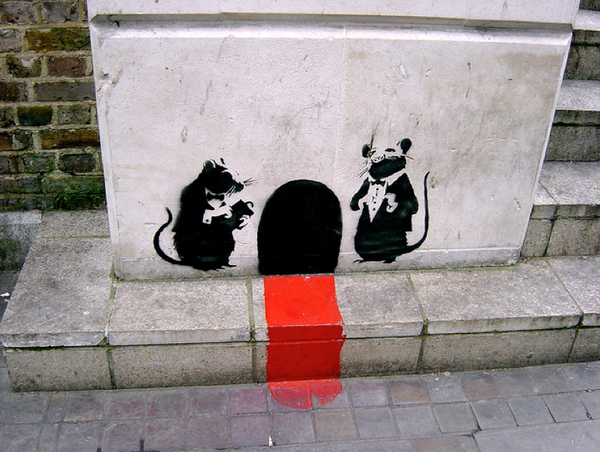
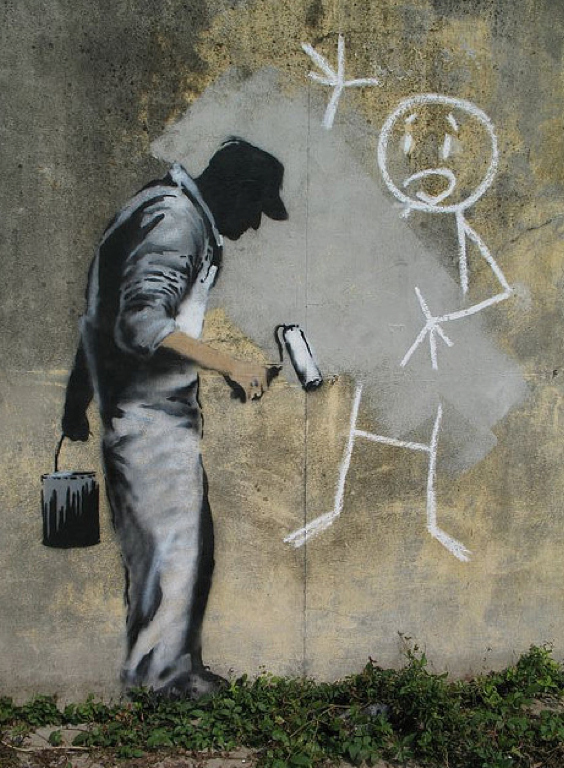
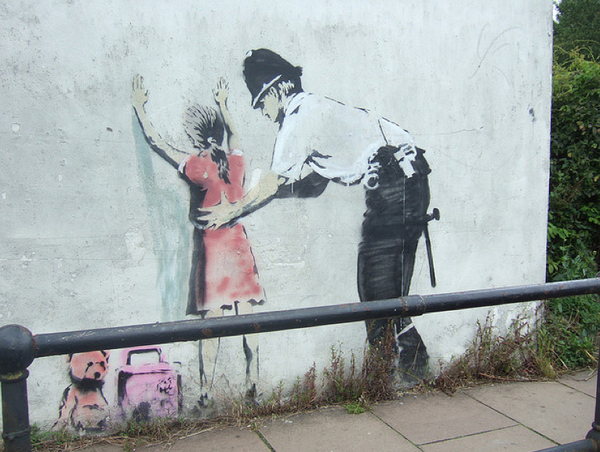
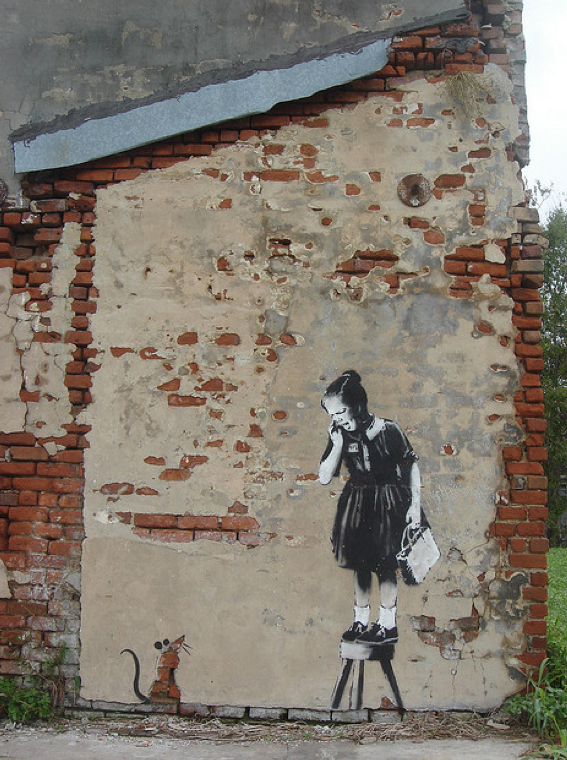
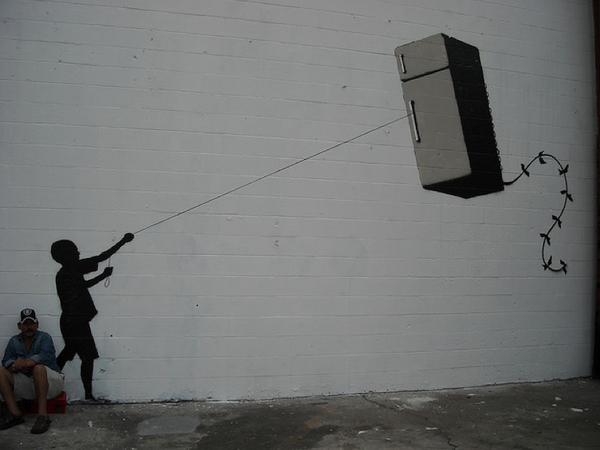
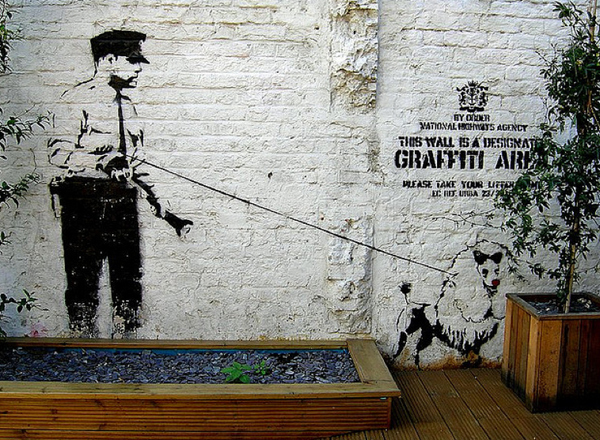
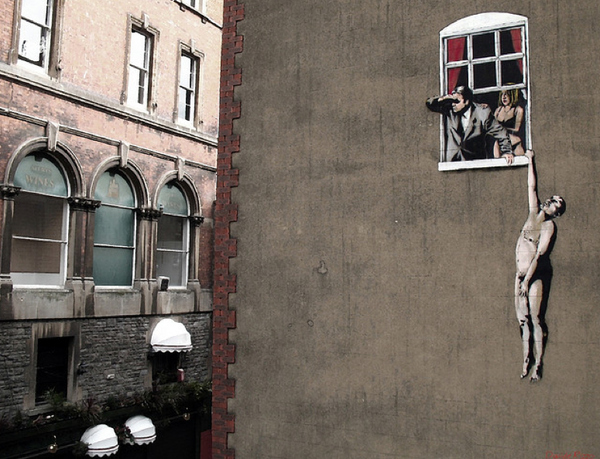
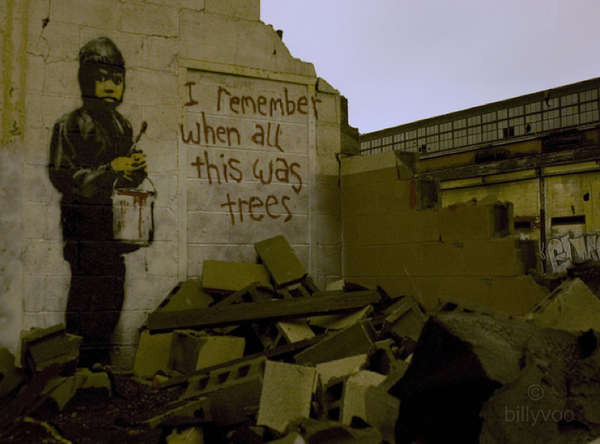
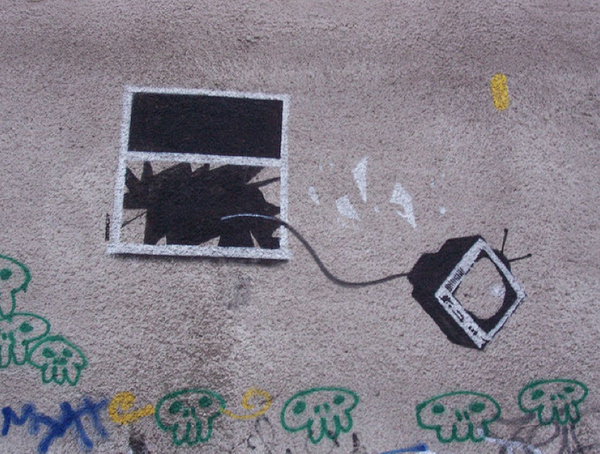
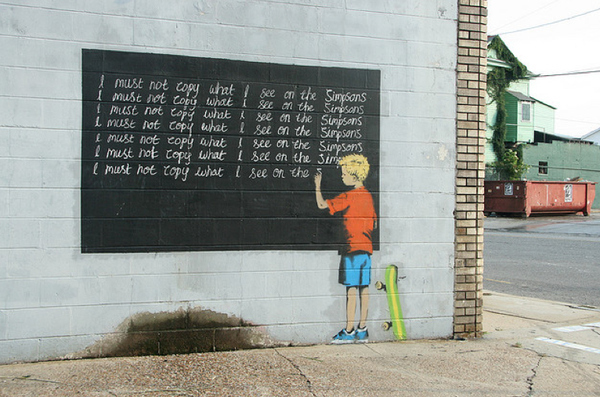
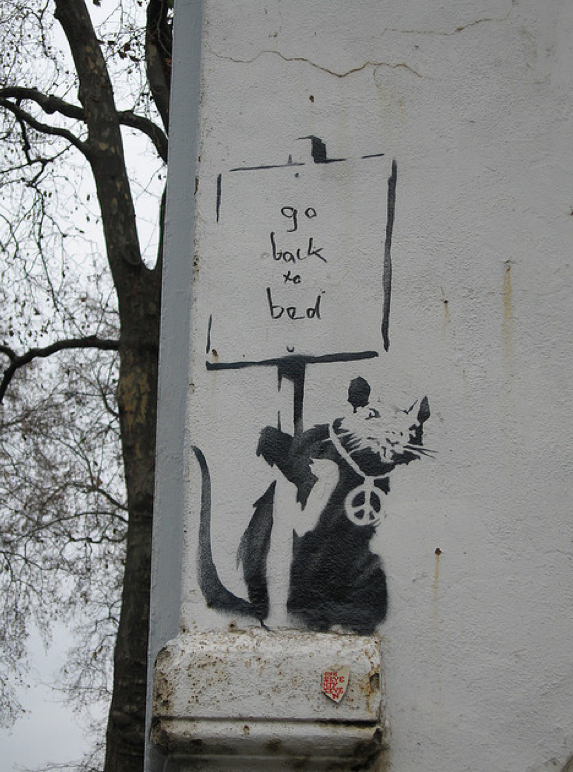
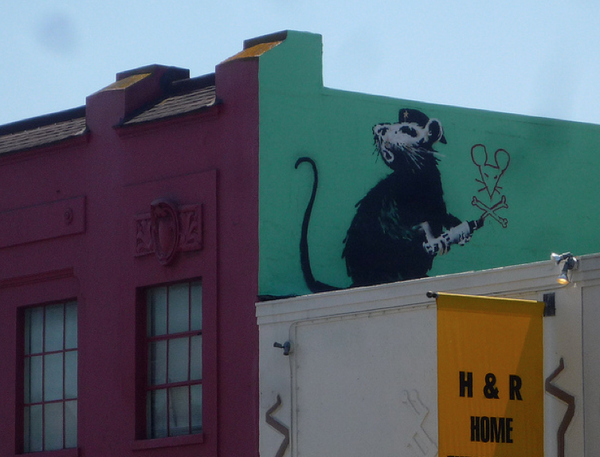
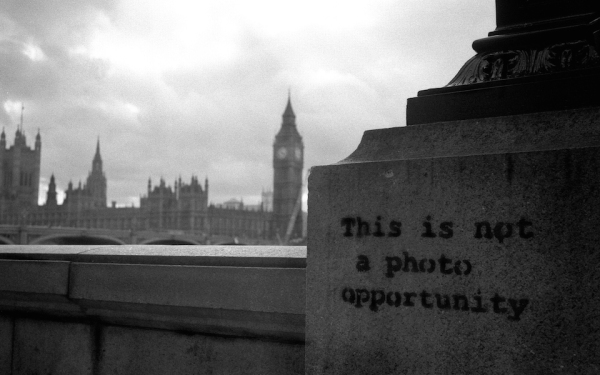
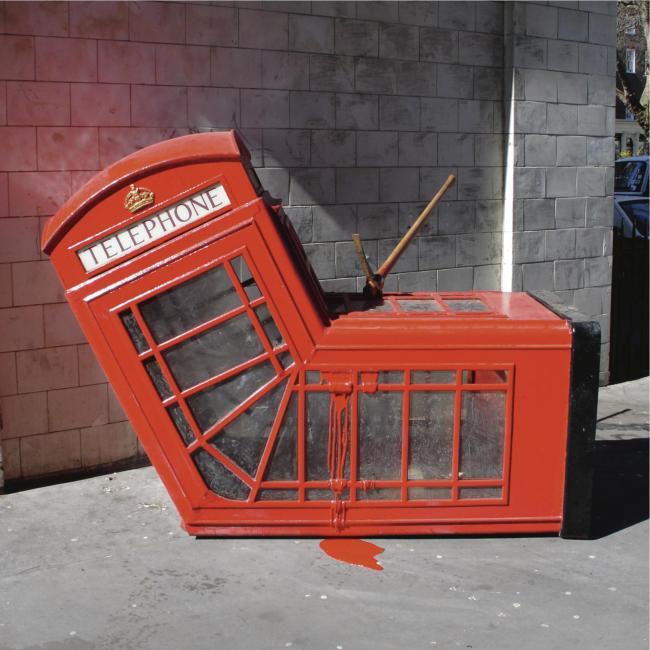
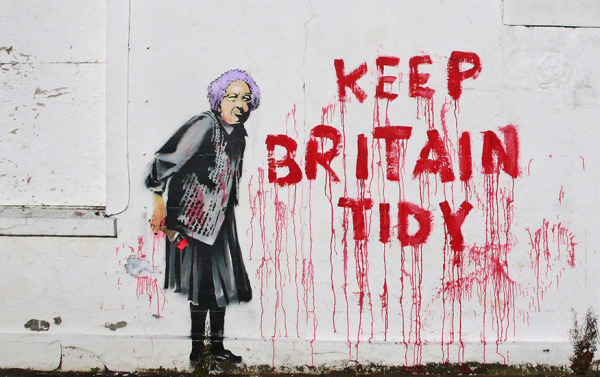
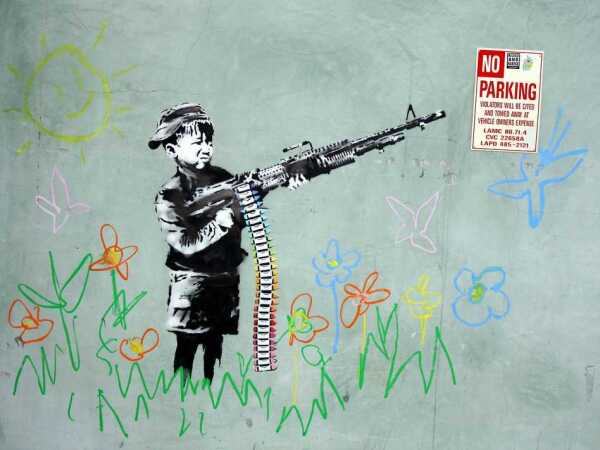
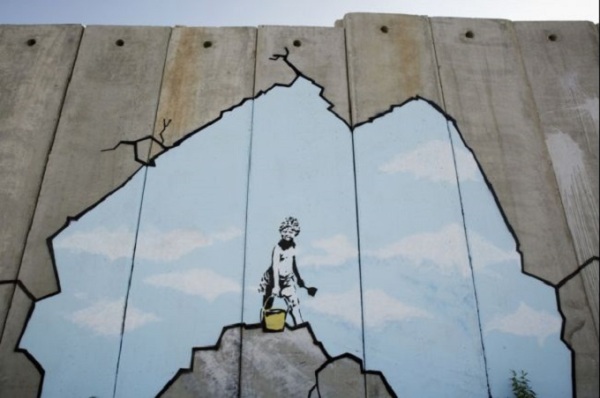
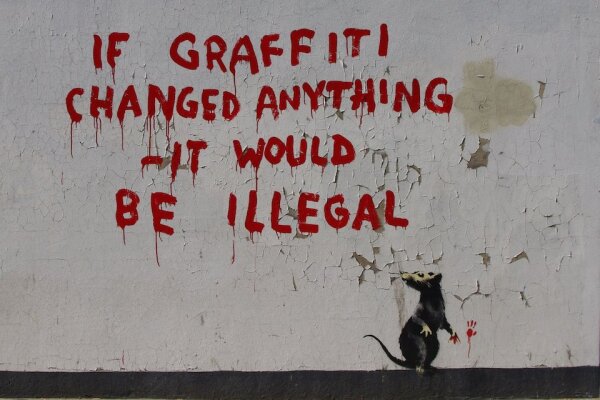
Banksy
For all enquiries, complaints, threats and hate mail visit pestcontroloffice.com. Banksy is not on Facebook, Twitter or represented by any other gallery or institution.www.banksy.co.uk
Unmasking Banksy? The Lost Interview
Content warning: https://www.youtube.com/watch?v=iMKVBcV61NI TV interview with Banksy For decades, Banksy has captivated the world with provocative street art that is both enigmatic and insightful. A BBC Radio 4 special titled "The Banksy Story" unveiled a rare audio inte
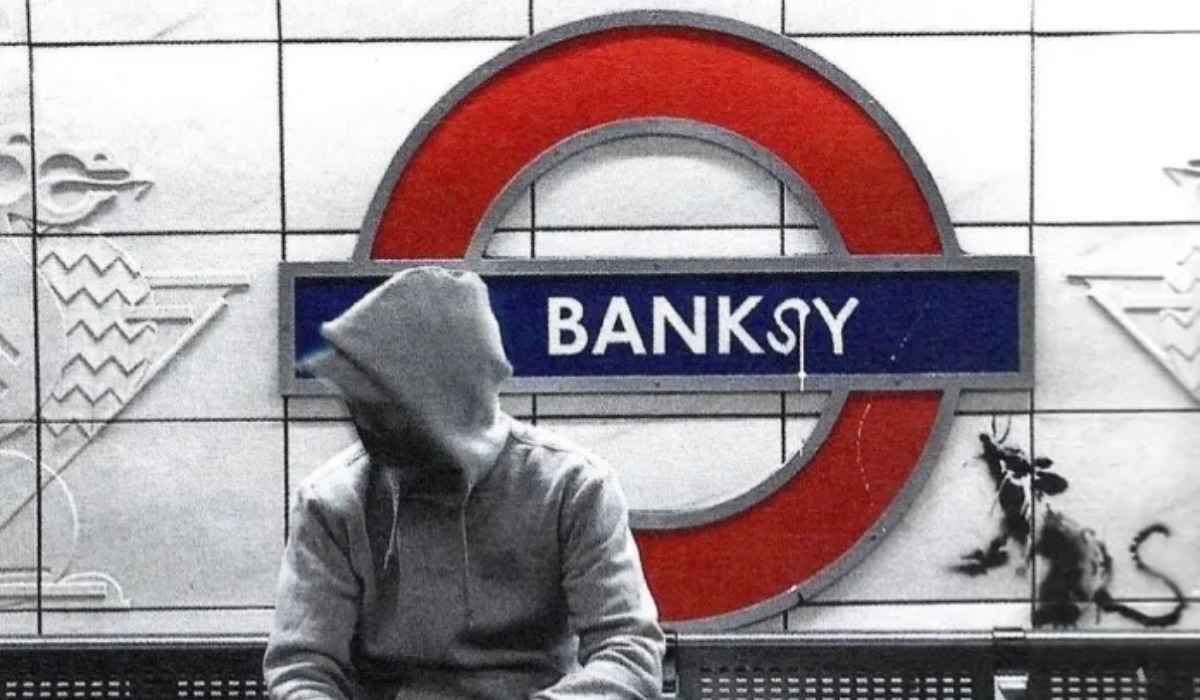
https://www.youtube.com/watch?v=iMKVBcV61NI
For decades, Banksy has captivated the world with provocative street art that is both enigmatic and insightful.
A BBC Radio 4 special titled “The Banksy Story” unveiled a rare audio interview with the artist, originally recorded in 2003. In this enlightening conversation, Banksy may have hinted at his true identity with a simple, yet intriguing answer – “Robbie.”
This interview delves deep into Banksy’s early exhibition, “Turf War” which became notable for its audacious display of graffitied police vehicles and a uniquely defaced portrait of Winston Churchill. Through his candid discussion, Banksy reflects on the philosophies that shape his art, emphasizing its transitory nature and his indifferent stance towards the commercial art market.
For a deeper exploration of Banksy’s rare interview and his impact on the art world, go here.
Artworks from the exhibition “Turf War”:

Bird and Grenade
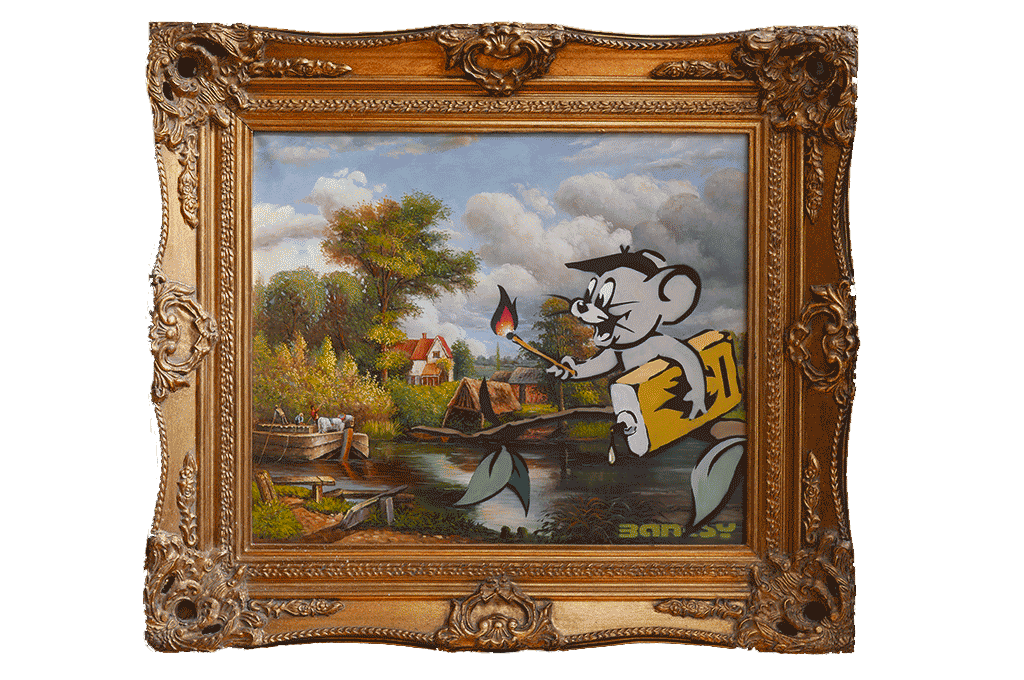
Crude Oil Jerry
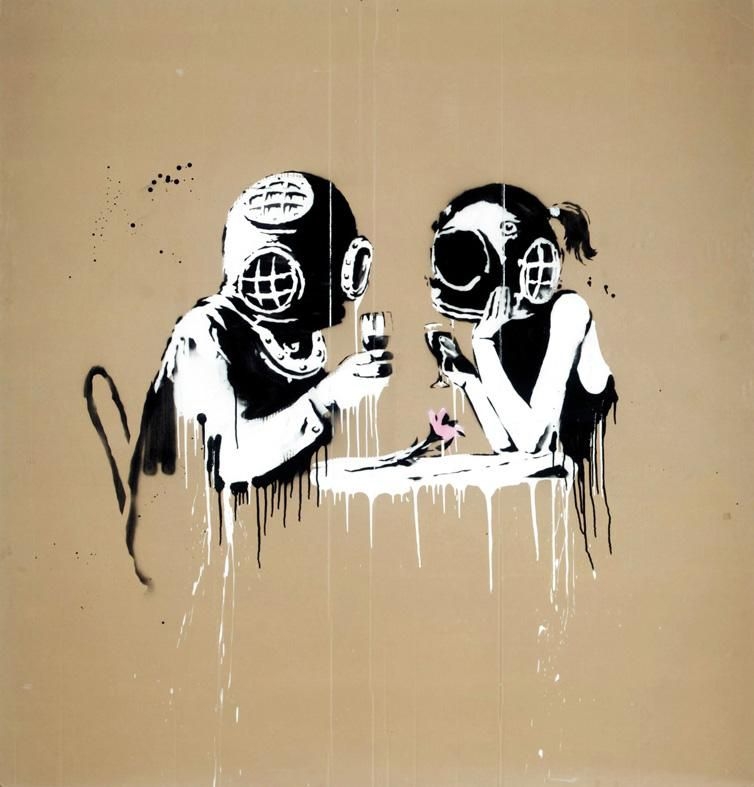
Drip Dinner
More: 24 artworks by Banksy: Who Is The Visionary of Street Art
Do you think Banksy’s identity should remain a mystery, or would knowing the artist behind the work change your view on his art?
Banksy Reveals His Name In A Rare BBC Interview (17 Photos)
An Insight Into the World of Street Art: Banksy’s artworks continue to attract attention worldwide, particularly following recent revelations about his identity. In this extraordinary BBC interview, Banksy shares rare insights about his art and personal life. Could this finally reveal the mystery of his identity?
Watch the full interview: BANKSY – The lost interview🔗 Follow Banksy on Instagram
A Glimpse into Banksy’s Artistic World
The interview delves into Banksy’s “Turf War” exhibition, a hallmark of his anti-establishment themes. This 2003 London show was a spectacle of defiance, showcasing graffitied police vehicles and live animals adorned with distinctive police patterns, not to mention the famous Winston Churchill portrait with a twist.
The Name Revelation
In a candid moment, the interviewer, Nigel Wrench, inquires about using Banksy’s real name. The response? “Robbie.” While this opens up possibilities (could he be Robert Del Naja of Massive Attack, or perhaps Robin Gunningham?), it’s a rare peek behind the curtain of the elusive artist.
Banksy on Graffiti and Art
Banksy’s views on graffiti are clear: it’s vandalism if it’s illegal, but that’s part of its charm. He sees the city as a playground for expression, where painting and repainting are part of an ongoing dialogue. His approach to art? Quick and impactful, much like the fleeting nature of street art itself.
Banksy’s Take on the Art Establishment
Banksy remains detached from the traditional art world, expressing disinterest in the ‘Brit Art’ movement and a pointed avoidance of selling to figures like Charles Saatchi. His focus is on art that resonates with the public, rather than seeking approval from the elite.
Banksy’s Art in the Market
Despite his disconnection from the art market, Banksy’s canvases are highly sought after, fetching high prices. His reaction? A mix of surprise and indifference, hinting at a disconnection between the artist’s intentions and the commercial value of his work.More Banksy: 14 Great Banksy Street Art Photos and Quotes!
Some classics by Banksy:
Kissing Coppers, Brighton, UK
A stencil artwork of two British policemen passionately kissing.
We’re All In The Same Boat, Lowestoft, UK
Children depicted on a wall appearing to sail a makeshift boat.
Zebra Stripes, Timbuktu, Mali
A striking piece showing a woman washing the stripes off a zebra.
Follow Your Dreams – Cancelled, Boston, USA
A worker painting over the words “Follow Your Dreams” with a red “Cancelled” stamp.
Flower Thrower, Bethlehem, Palestine
A masked man throwing a bouquet instead of a weapon.
The Claw, Norfolk, UK
An installation showing a giant arcade claw poised above a bench, humorously portraying vulnerability and chance in everyday life.
Devolved Parliament, London, UK
A satirical painting depicting the UK House of Commons populated by chimpanzees, offering sharp commentary on political chaos and human behavior.
Gas Mask Boy, London, UK
Stencil artwork depicting a child wearing a gas mask, with the mask’s visor reflecting a colorful field of flowers.
Armored Peace Dove, Bethlehem, Palestine
Stencil artwork of a peace dove wearing a bulletproof vest with crosshairs aimed at its chest, carrying an olive branch.
Tourist and Rickshaw, Bristol, UK
From Banksy vs. Bristol Museum exhibition at Bristol Museum, Bristol, 2009.More Banksy: 24 artworks by Banksy: Who Is The Visionary of Street Art
What do you think about Banksy’s hints in this interview? Share your thoughts in the comments below!
This post was updated on July 22, 2025.
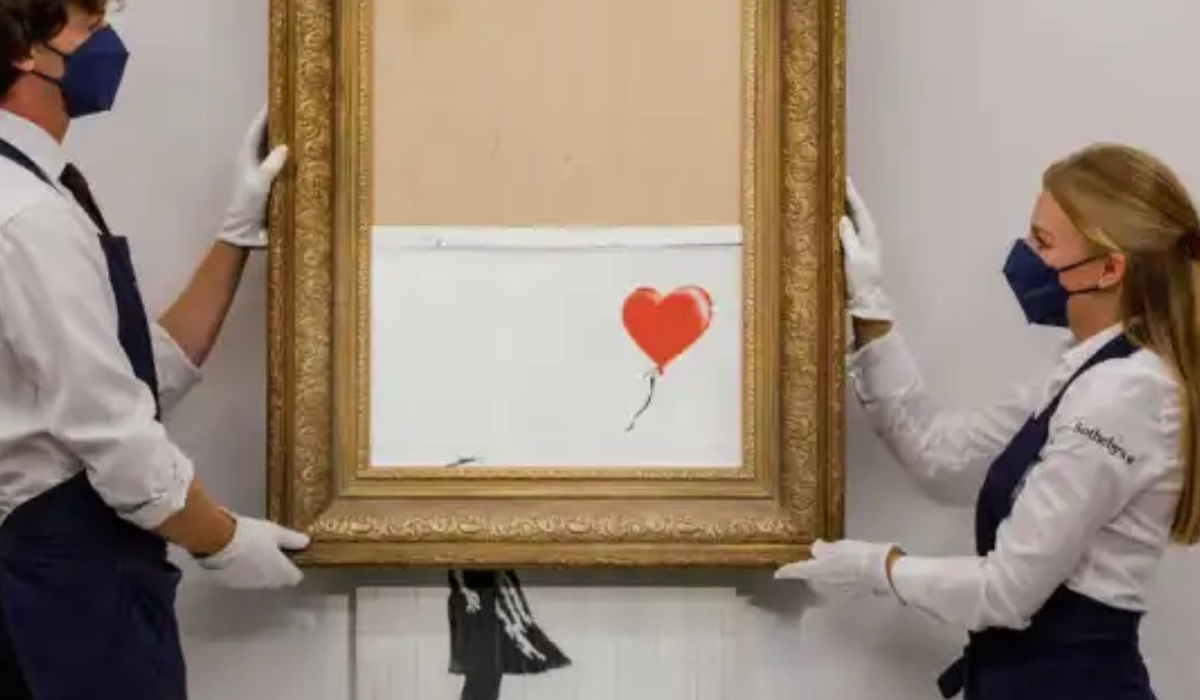
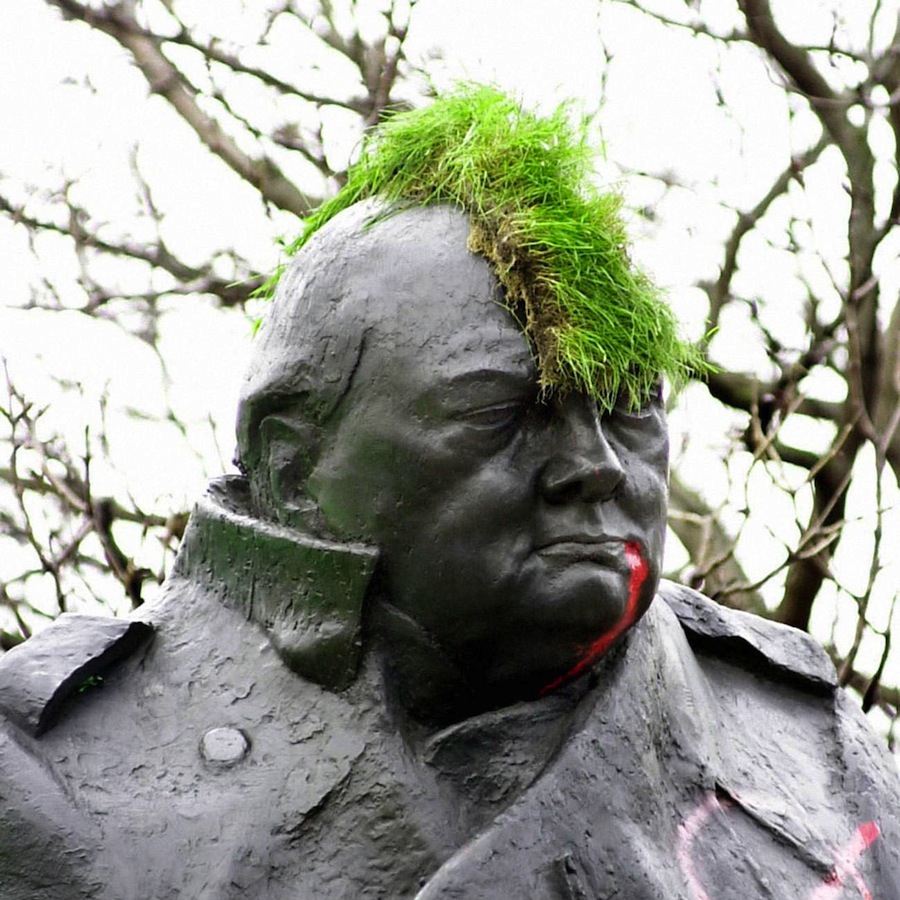
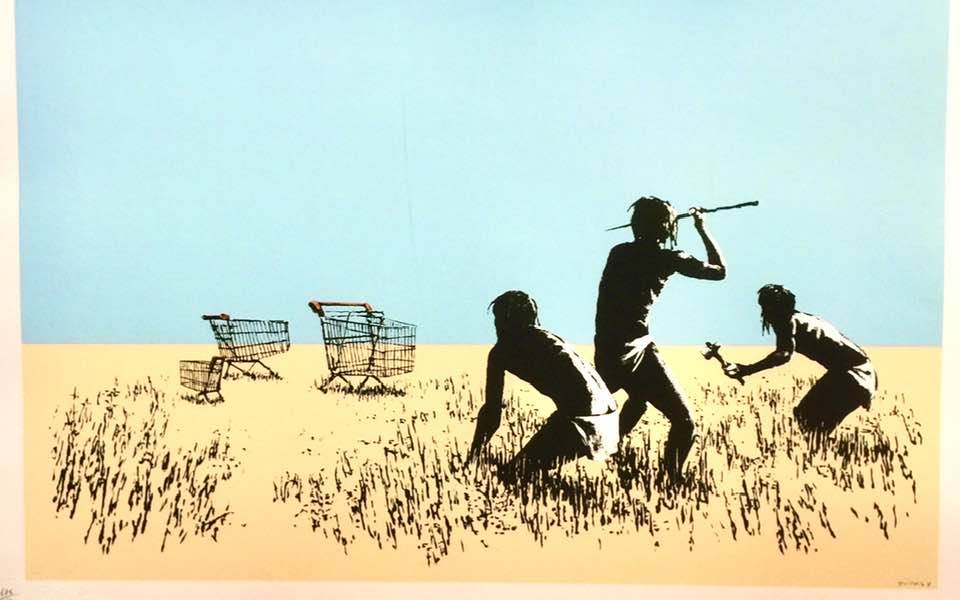
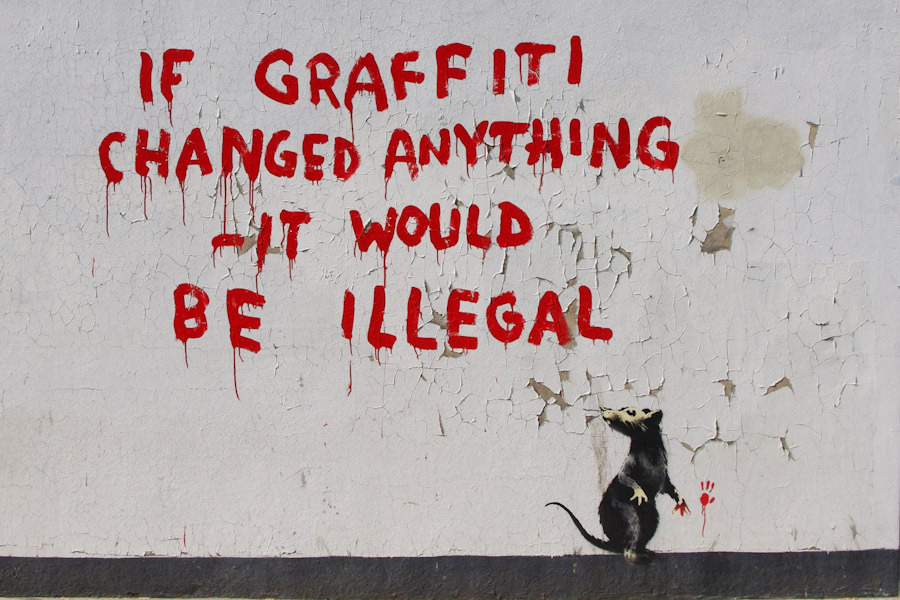
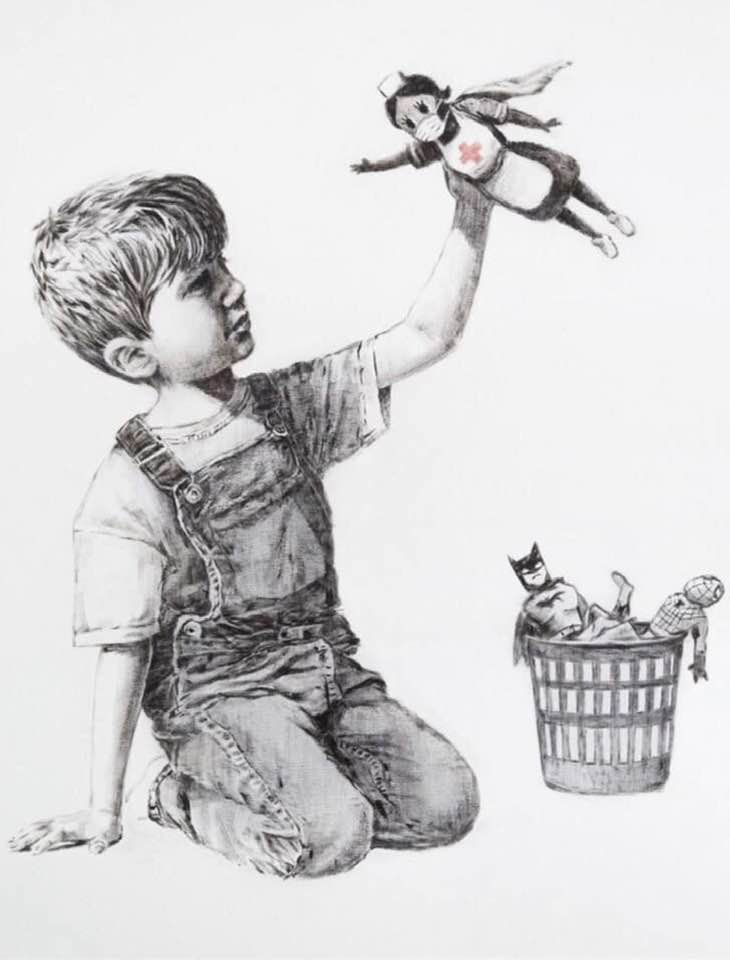
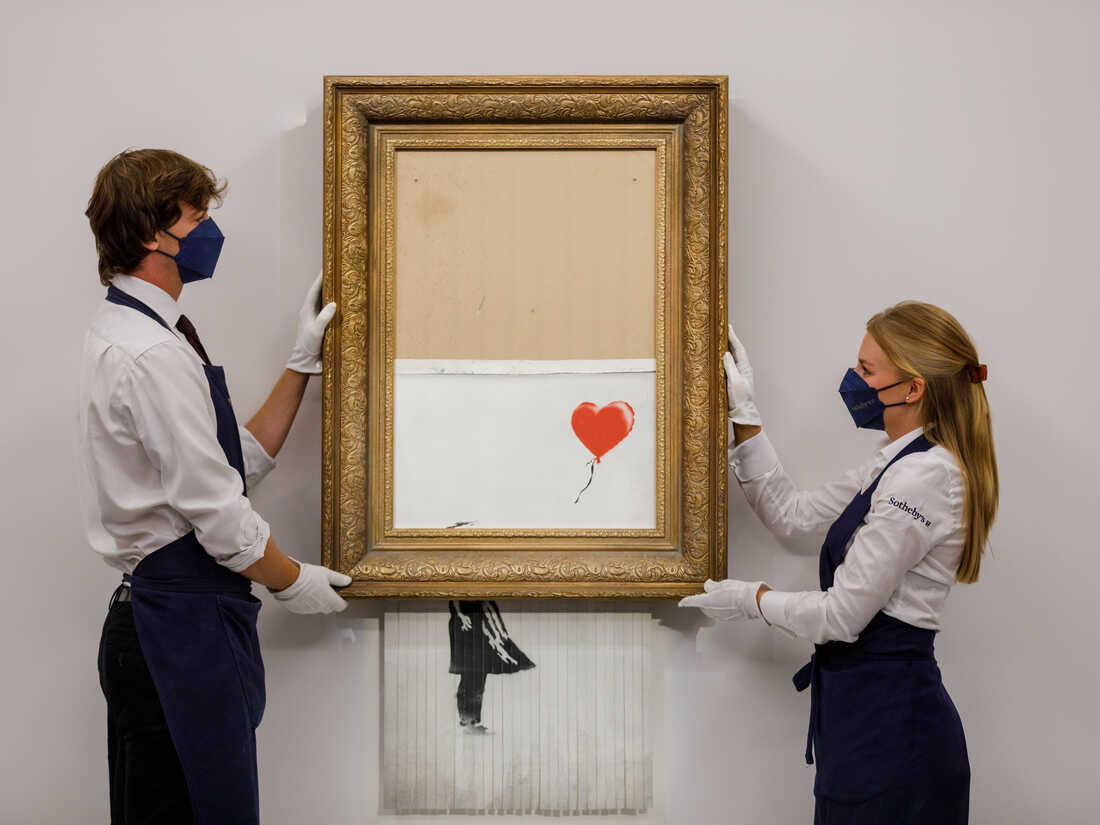
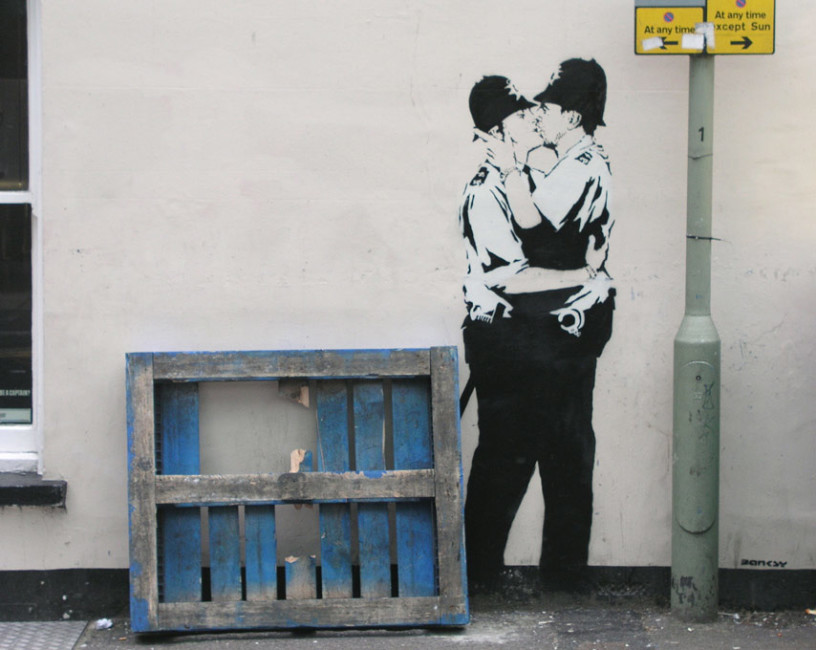
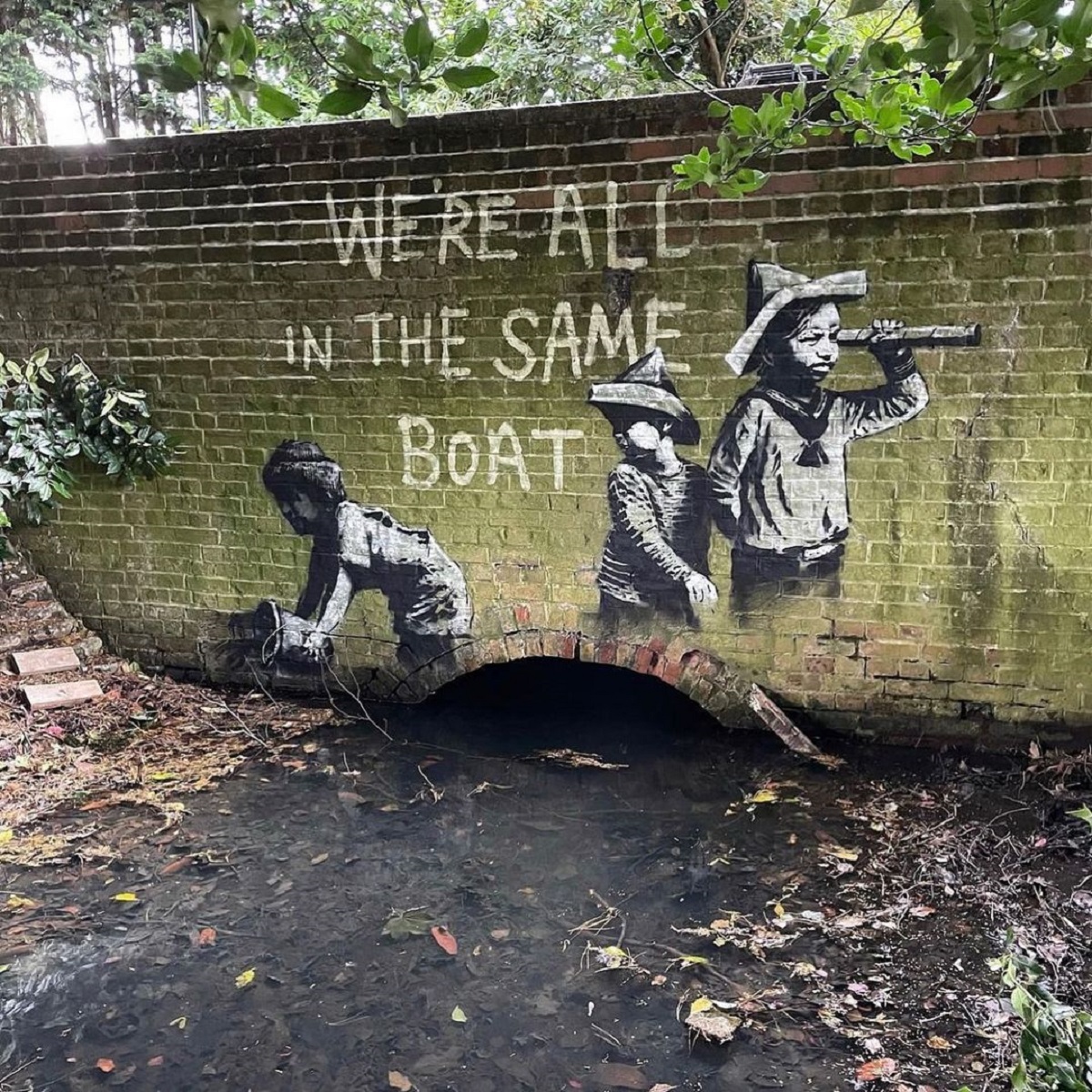
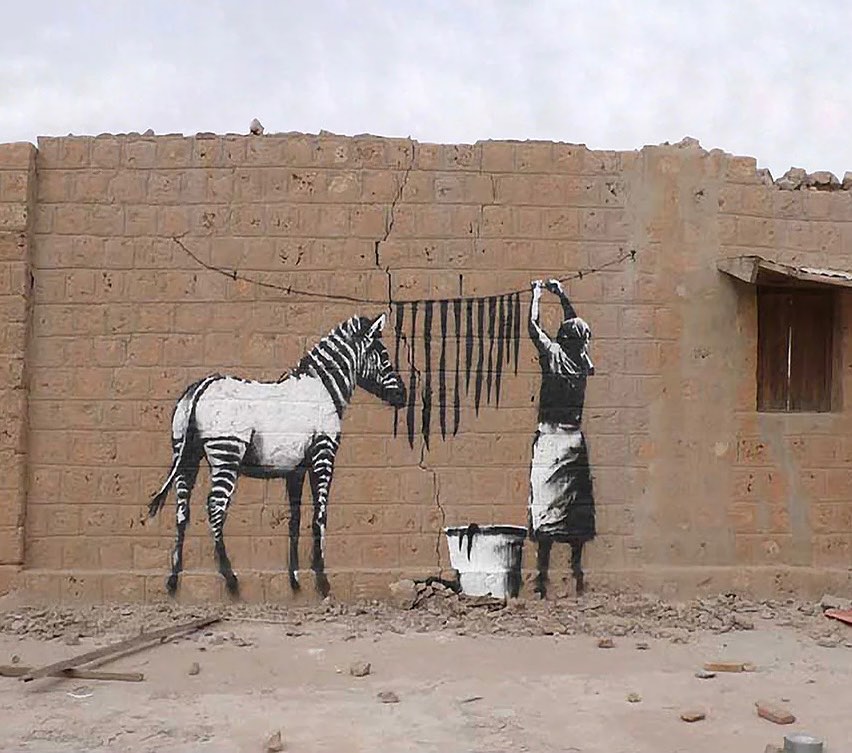
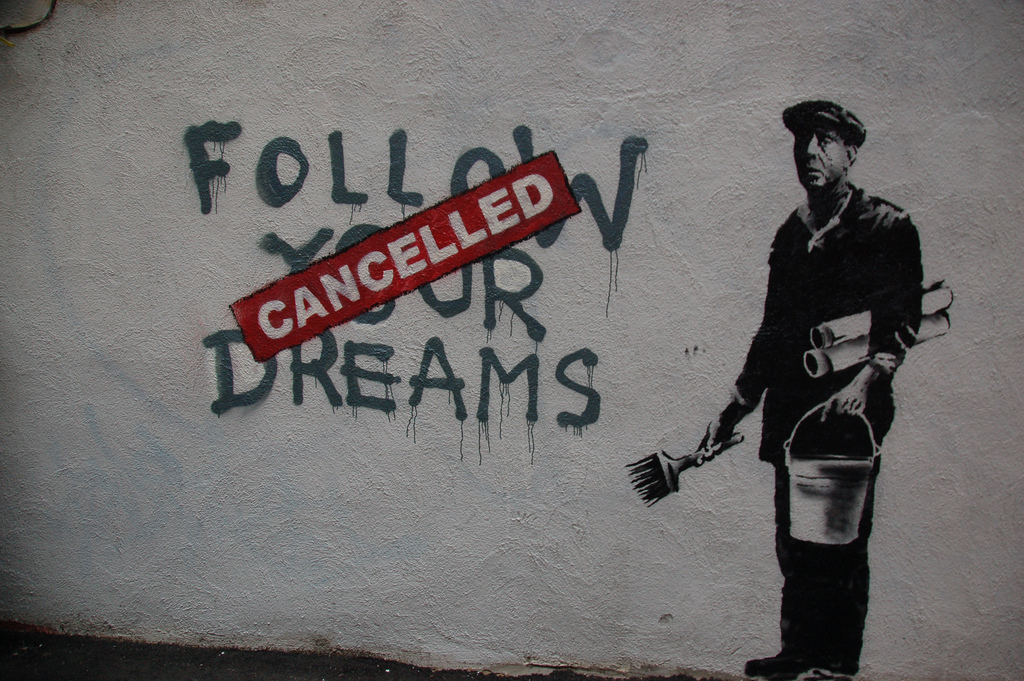
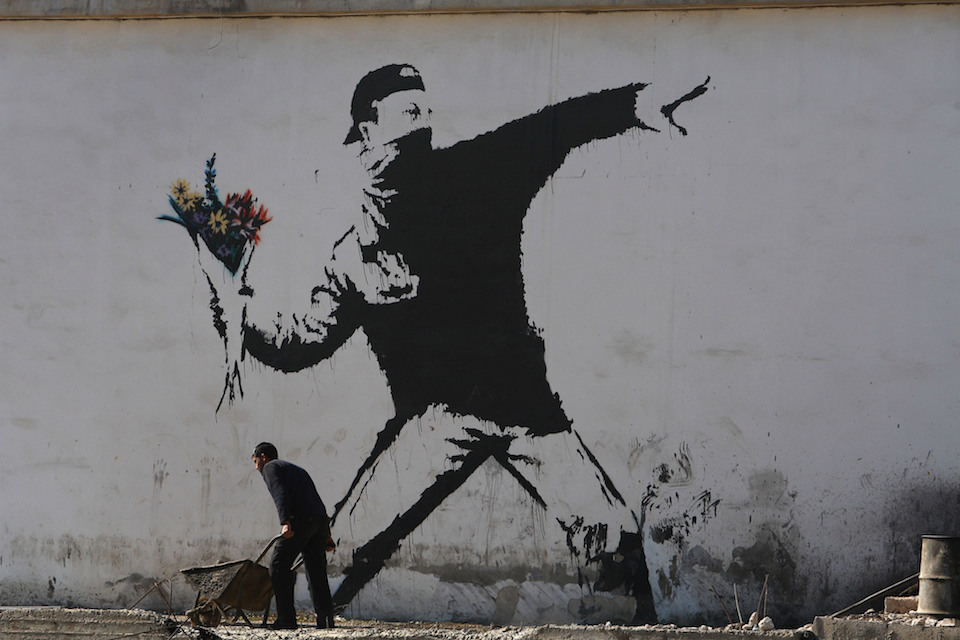
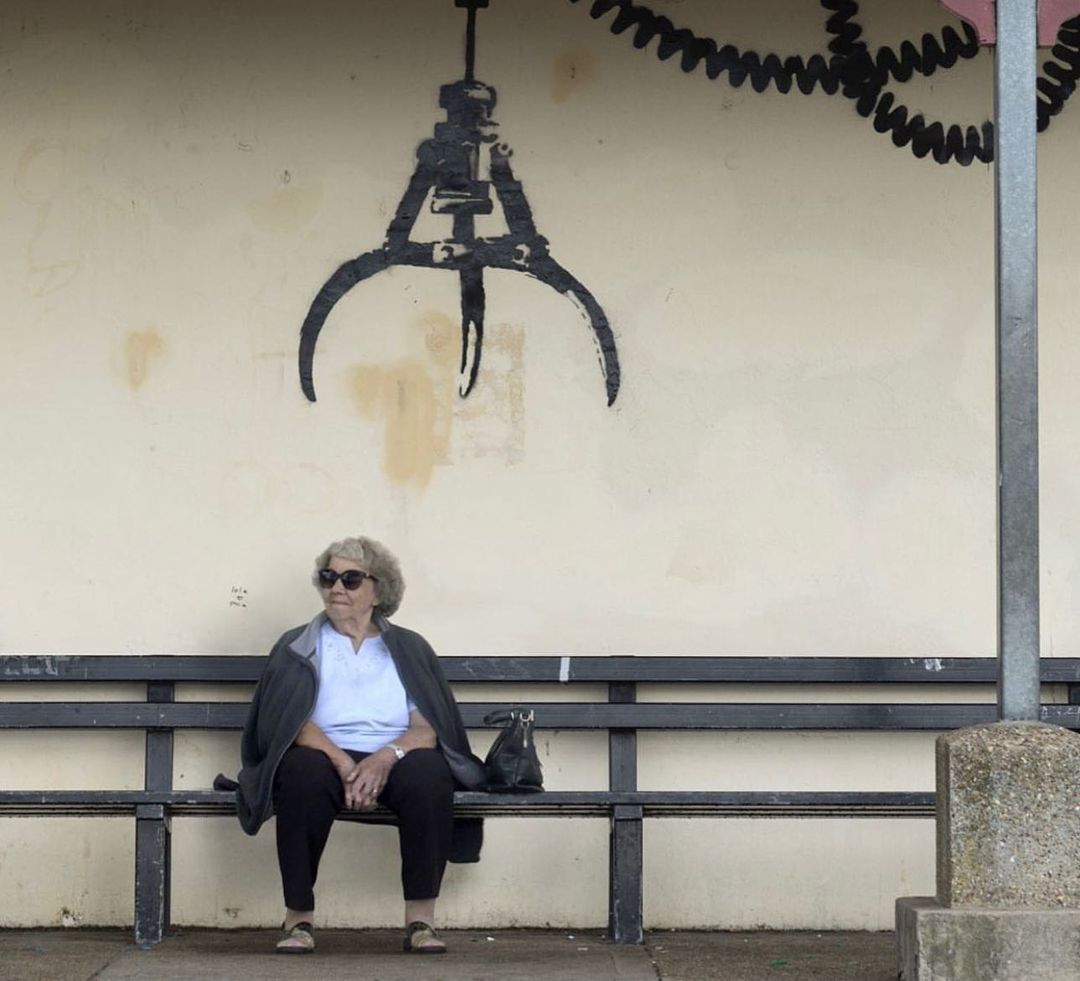
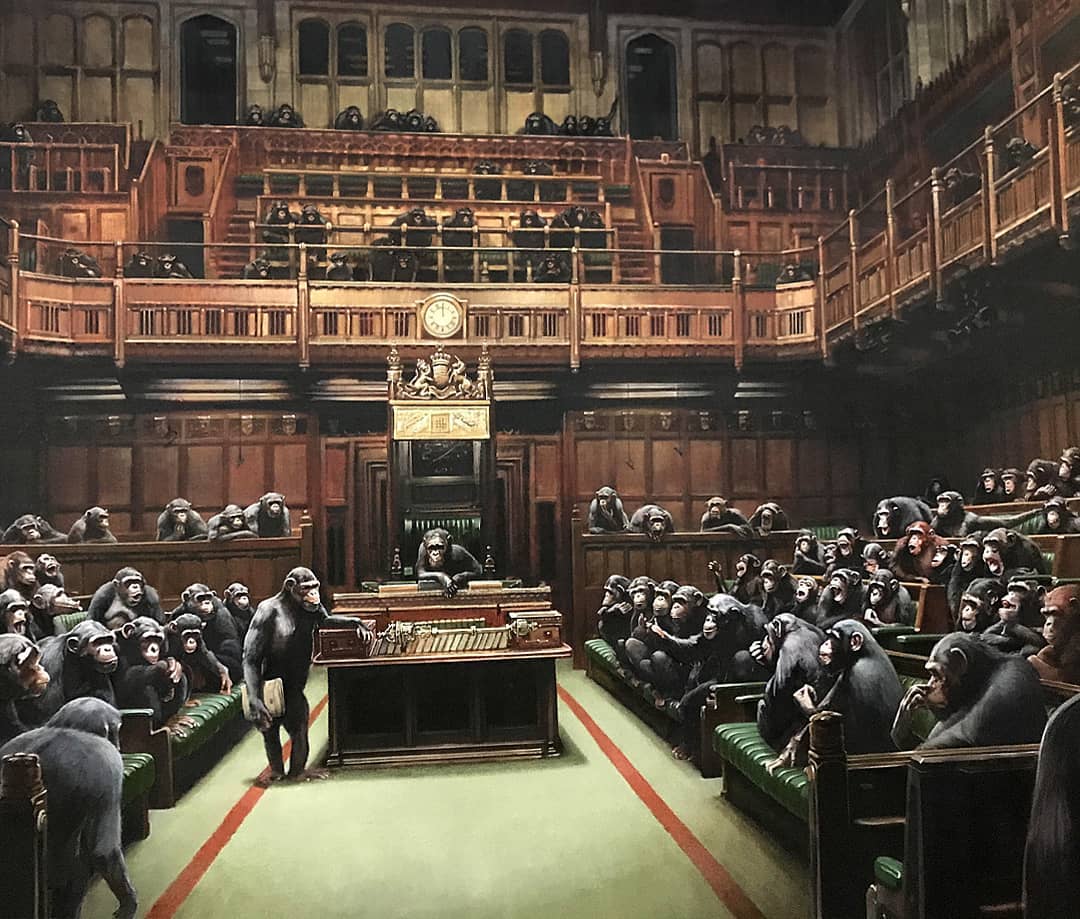
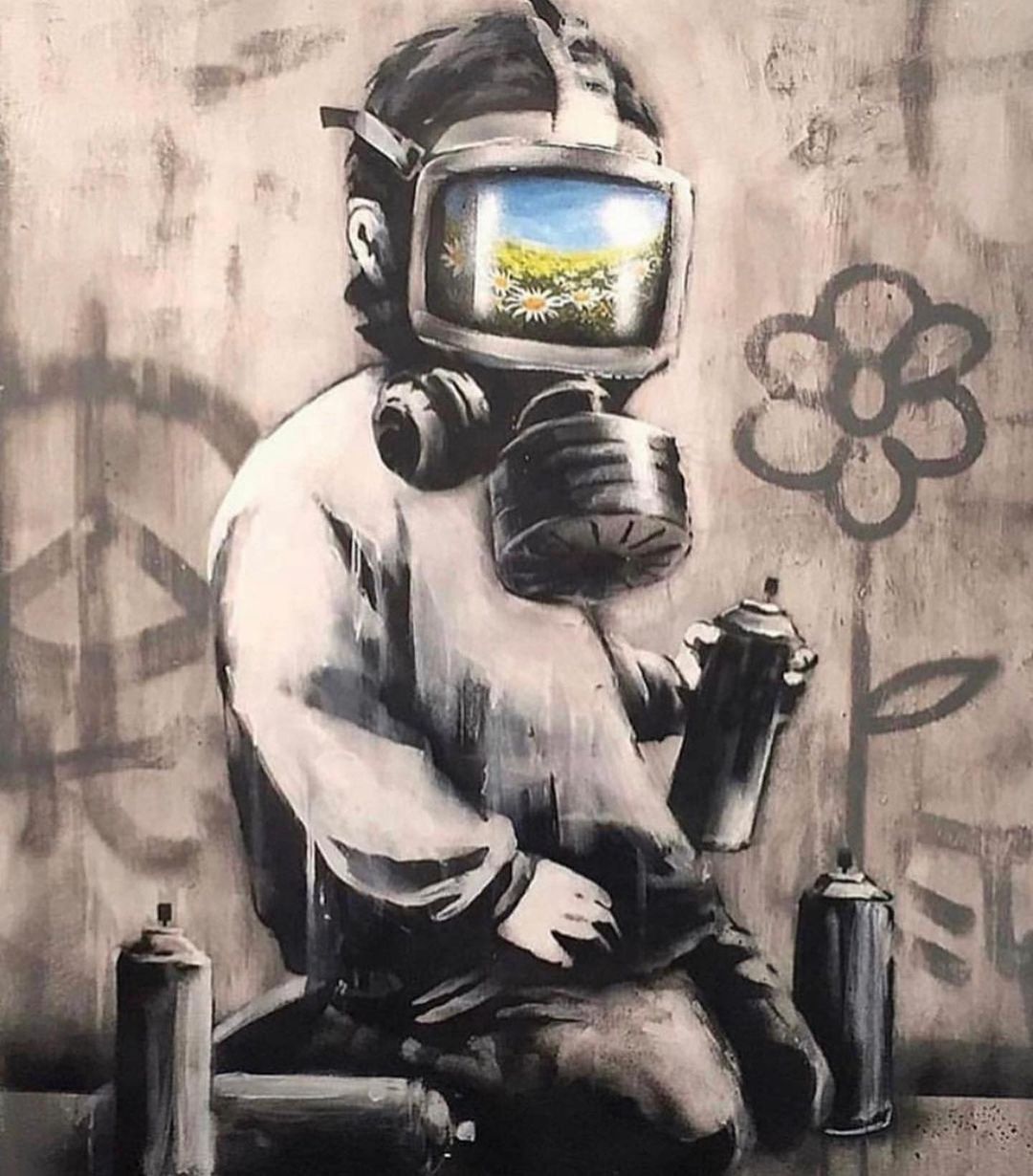
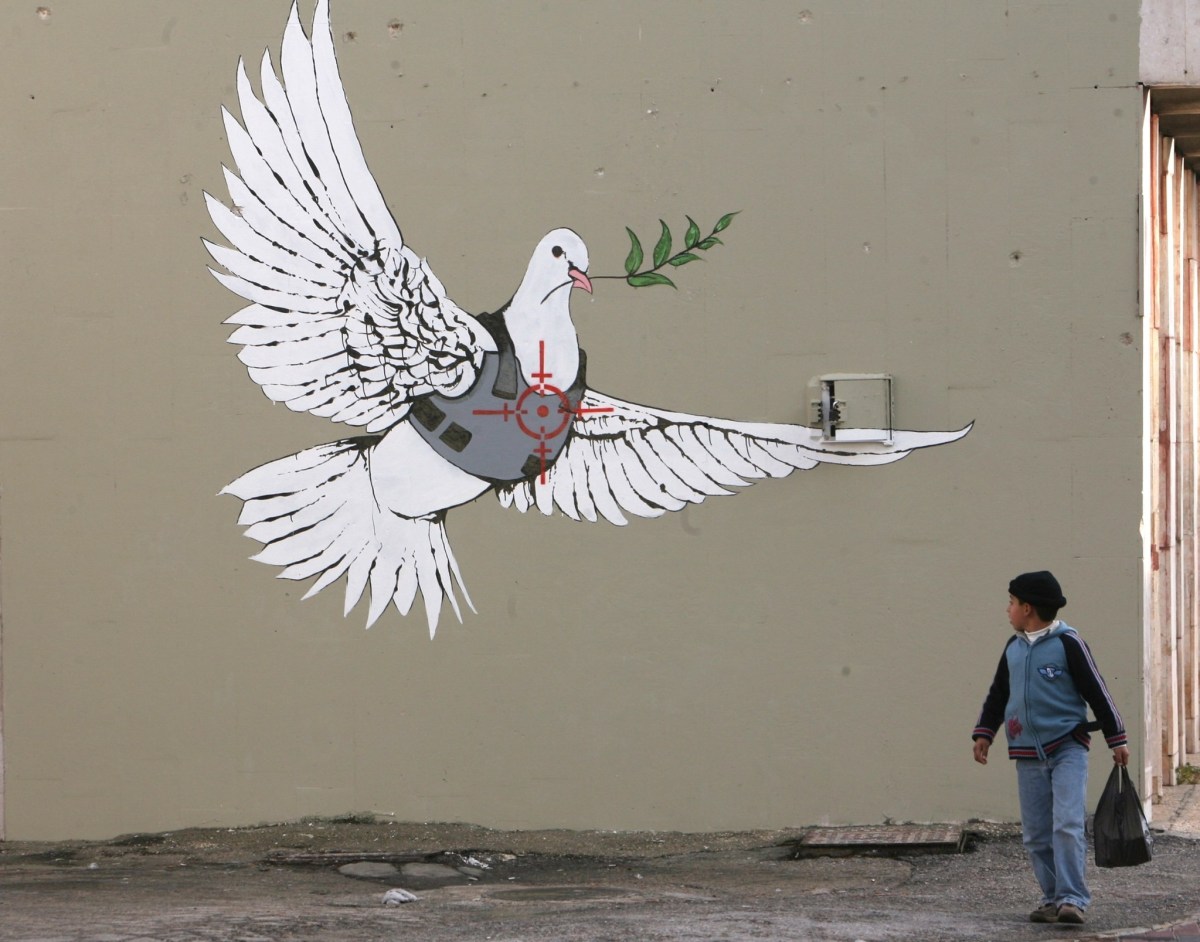
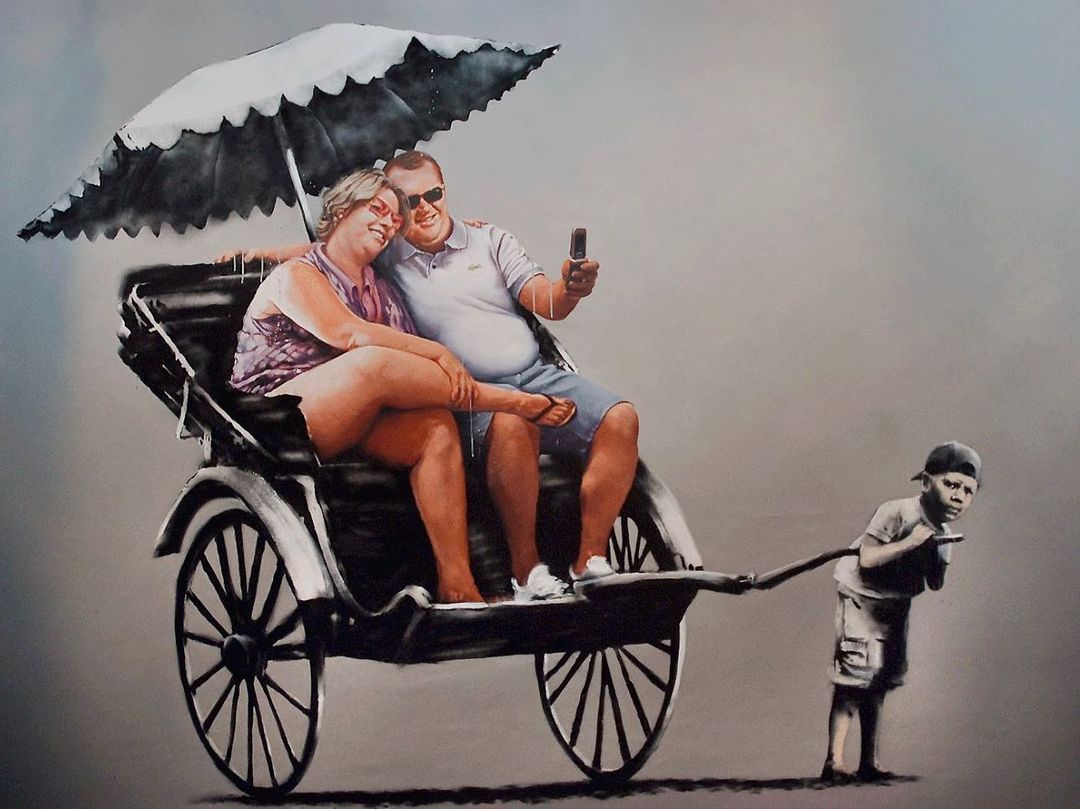
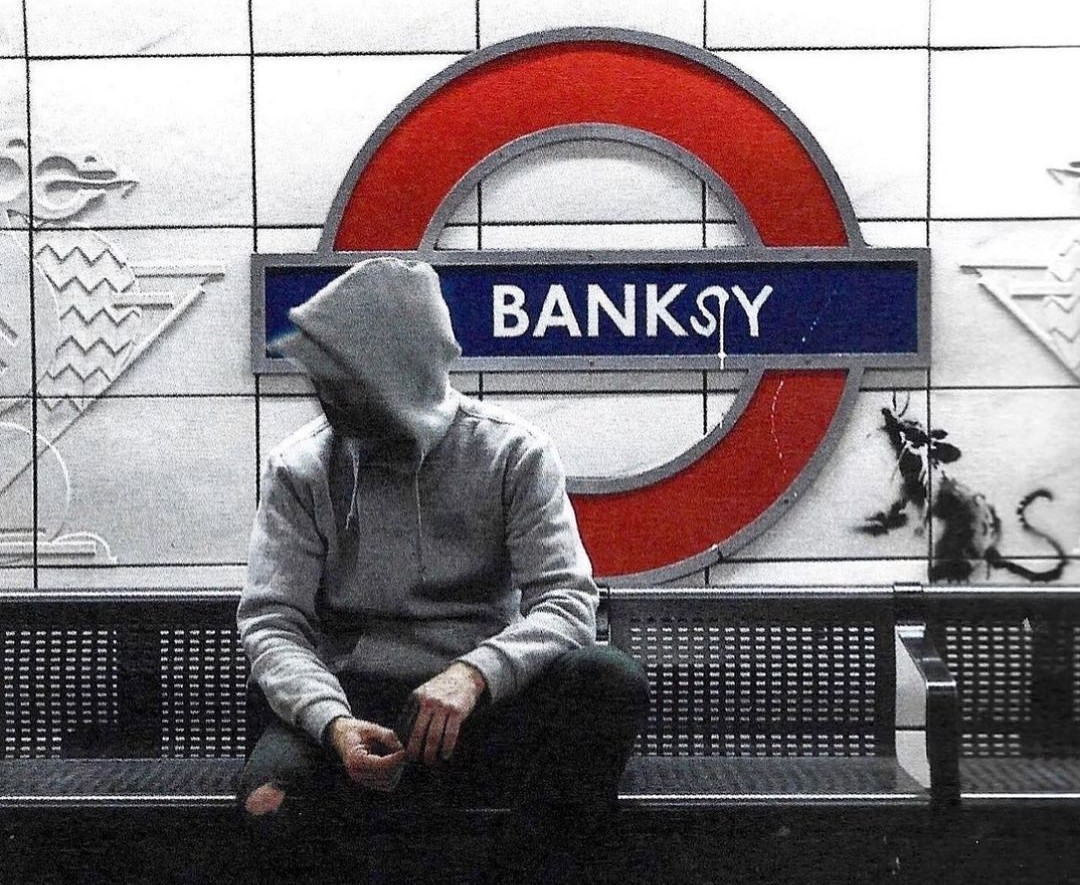
BANKSY - The lost interview
Rob had heard about - and discovered - this lost ITV News interview with mysterious graffiti artist Banksy. It was filmed at Turf War exhibition in London. I...YouTube
Banksy? Who Is The Visionary of Street Art? (25 Photos)
Content warning: I. Unmasking the Enigma: A Deep Dive into Banksy’s Street Art Revolution In the dynamic world of street art, few names are as resonant or as enigmatic as Banksy. A spectral figure whose identity remains shrouded in mystery, Banksy is a paradox of fame and
I. Unmasking the Enigma: A Deep Dive into Banksy’s Street Art Revolution
In the dynamic world of street art, few names are as resonant or as enigmatic as Banksy. A spectral figure whose identity remains shrouded in mystery, Banksy is a paradox of fame and anonymity, a revolutionary whose works have transformed public spaces and challenged societal norms. His art, often laced with potent political commentary and sharp satire (see 14 Great Banksy Street Art Photos and Quotes!), has left indelible marks on urban landscapes worldwide. Yet, the man behind the spray can remains elusive, his identity a secret closely guarded, adding an irresistible aura of intrigue to his body of work.
This paradox is part of what makes Banksy not just a street artist, but a phenomenon. His work captures the zeitgeist, reflecting the turbulence, the dissent, and the hope of our times. His stencils—be they on the walls of London, the remnants of the West Bank barrier, or the ruins of Hurricane Katrina—have a way of speaking truth to power that has resonated with millions around the globe.
More: Banksy’s Hidden Identity Revealed?
For more than three decades, Banksy has been pushing boundaries, challenging conventions, and redefining the very concept of public art. Through his stencils, he has brought the subversive ethos of the underground to the surface, making it impossible for us to ignore the social and political injustices of our world. His works are more than just provocative images; they are a call to action, a demand for change.
In this exploration, we will journey through the chaotic, captivating world of Banksy’s artistry. From his early days in Bristol’s graffiti scene to his headline-making stunts in the global art market, we’ll take a closer look at how Banksy’s work has evolved and why it continues to captivate and challenge us. Through the lens of 24 select artworks, we hope to gain a deeper understanding of the visionary artist who has forever transformed the landscape of street art.
So, who is Banksy? Let’s uncover the story behind the spray can. Let’s delve into the revolution sparked by this enigma. Through his art, let’s explore the world according to Banksy.
II. A Stencil Revolution: The Genesis of Banksy’s Distinctive Style
Banksy’s journey into the world of street art began on the streets of Bristol, England, a city known for its vibrant graffiti culture. As a teenager in the 1980s, he was part of a graffiti crew called the DryBreadZ Crew (DBZ). His early work, like much of the graffiti of the time, was freehand. However, an encounter with the law sparked a transformative shift in Banksy’s approach to street art.
Legend has it that a young Banksy was hiding from the police under a garbage truck when he noticed stenciled serial numbers on the truck. The stencil technique piqued his interest, offering a faster, more efficient way to paint, allowing him to dodge law enforcement while still leaving his mark. This chance discovery would not only define his artistic style but would also revolutionize the street art scene.
Stenciling allowed Banksy to create intricate and detailed pieces with precision and speed. His works were more controlled, more refined, and more complex than the freehand graffiti that dominated the streets. This technique also lent his art a distinct aesthetic — one that was cleaner, sharper, and more visually striking. He could create multi-layered artworks, combining stencils with other media and incorporating pre-existing elements in the urban landscape into his installations.
In the early 2000s, Banksy moved from Bristol to London. His stenciled works started appearing on walls, bridges, and streets across the city, turning the urban landscape into an open-air gallery of his art. Each piece was a visual protest, a political statement, a satirical commentary. They challenged authority, poked fun at societal norms, and provoked public discourse, making Banksy a controversial figure in the art world.
Yet, it was precisely this controversy, coupled with his distinctive style and incisive commentary, that catapulted Banksy to international recognition. By turning to stencils, Banksy had not only found his artistic voice, but he had also found a way to make the streets echo with that voice. In doing so, he sparked a stencil revolution that would forever alter the course of street art.
III. Crafting Satire and Shadows: The Unmistakable Artistic Approach of Banksy
Banksy’s artistic approach, while grounded in the use of stencils, is far from one-dimensional. The street artist has developed a style that is as layered and nuanced as the messages he conveys. Delving into Banksy’s work reveals a masterful blend of satire, subversion, and sociopolitical commentary, all wrapped in a distinctive visual package that has become his trademark.
Perhaps the most defining aspect of Banksy’s approach is his biting satire. With a keen eye for irony, Banksy often juxtaposes contrasting images and ideas to comment on societal issues. His works are full of dark humor and sharp wit, turning everyday scenes into powerful satirical statements. Whether it’s a rioter throwing a bouquet of flowers instead of a molotov cocktail or a young girl frisking a soldier, Banksy’s art challenges viewers to reassess their preconceived notions and question the status quo.
Equally important to Banksy’s approach is his use of subversion. He consistently undermines authority and disrupts conventional narratives, pushing against the boundaries of what is deemed acceptable or normal. This can be seen in his unauthorized installations in museums, his self-destructing artwork at an auction, or his dystopian theme park, Dismaland. Each act is a bold statement against institutional power and the commercialization of art.
On the visual front, Banksy’s art is marked by a striking use of black and white, with occasional pops of color. This minimalist color palette underscores the starkness of his messages and adds to the visual impact of his works. He also employs a careful play of light and shadow, giving depth and realism to his stenciled figures. Even when working on a flat surface, Banksy’s figures appear three-dimensional, as if they could step out of the wall and into the real world.
Moreover, Banksy often integrates elements of the urban environment into his artworks, transforming mundane objects and surfaces into significant components of his pieces. This creative use of the environment amplifies his art’s site-specific nature, making each piece a unique commentary on its context.
In essence, Banksy’s artistic approach is a dynamic interplay of style and substance. It merges form with content, aesthetics with message, and art with activism. Each piece is not just an artwork but a dialogue – a thought-provoking, boundary-pushing, and often uncomfortable dialogue that compels us to engage with the world in new and critical ways.
IV. From Shadows to Spotlight: The Unstoppable Global Impact of Banksy
Banksy’s rise to prominence is a testament to the power of street art as a medium for societal commentary. What began as stencilled tags in the back-alleys of Bristol has now gained international renown, resonating with audiences across the globe. His works are not merely confined to city walls, they have permeated popular culture, influenced political discourse, and even transformed the way we perceive and value art.
One of the most significant aspects of Banksy’s global impact is how his art has bridged the gap between the street and the gallery. Banksy has successfully brought street art out of its perceived illegitimacy, forcing the art world to reconsider its boundaries and definitions. His works have sold for record-breaking prices at renowned auction houses such as Sotheby’s and Bonhams, showing that street art is more than capable of holding its own in the fine art market.
Banksy’s influence extends beyond the world of art, reaching into the realm of politics. His murals often tackle pressing issues like war, surveillance, consumerism, and inequality. His iconic pieces on the West Bank Barrier, for example, drew international attention to the Israeli-Palestinian conflict, showcasing the power of art as a tool for political activism.
Moreover, Banksy’s works have become viral sensations, spreading rapidly across the internet and reaching millions of viewers. The digital age has allowed Banksy’s art to transcend geographical boundaries, amplifying its impact to an unprecedented level. Each new Banksy piece triggers a flurry of online discussions, debates, and interpretations, showing how art can engage and connect people in the virtual space.
Banksy’s global impact is also evident in the way his art has inspired a new generation of artists. His audacious style, combined with his success in challenging the status quo, has paved the way for aspiring street artists worldwide. The “Banksy Effect” is a testament to his influence, proving that art can thrive outside traditional institutions and that artists can maintain their anonymity and independence while reaching a wide audience.
Perhaps most importantly, Banksy’s global impact lies in the conversations his art starts. His works provoke thought and spark dialogue, encouraging viewers to question their surroundings and critically engage with societal issues. Whether it’s a mural on a wall, a painting in an auction house, or an image shared on social media, Banksy’s art continues to challenge, disrupt, and inspire, solidifying his position as one of the most influential figures in contemporary art.
V. Beyond the Wall: Banksy’s Multifaceted Artistic Portfolio
Banksy’s artistic portfolio, despite being shrouded in mystery and anonymity, is one that never ceases to evolve, surprise and provoke. Stretching beyond the confines of the traditional graffiti scene, Banksy has become a modern-day renaissance artist, demonstrating a remarkable ability to experiment with different mediums and platforms while consistently delivering his signature blend of satire, subversion, and social commentary.
In 2010, Banksy ventured into the world of filmmaking with “Exit Through the Gift Shop,” a documentary that explores the relationship between commercial and street art. The film, which received an Academy Award nomination for Best Documentary, showcases Banksy’s knack for storytelling and his ability to critique the art world from within its own apparatus.
In 2015, Banksy took on an entirely new project: Dismaland, a dark, dystopian parody of Disneyland. This ‘bemusement park’ showcased ten new works from Banksy alongside pieces from 58 other artists. It was more than just an art exhibit; it was an immersive, interactive experience that critiqued the corporatization of leisure and the passive consumption of entertainment.
In recent years, Banksy has also shown an increasing interest in traditional painting, as seen in his ‘Mediterranean Sea View’ series. This set of oil paintings, auctioned to raise funds for a hospital in Bethlehem, combined classical techniques with Banksy’s trademark twist – in this case, life jackets washed up on shore, symbolizing the European migrant crisis. Such works demonstrate Banksy’s versatility and his willingness to adapt his craft to convey urgent messages.
Banksy’s more recent work during the COVID-19 pandemic, such as ‘Game Changer,’ displayed in Southampton General Hospital, is a testament to his timely engagement with current events. This piece, which pays tribute to healthcare workers, again shows Banksy’s ability to adapt to new contexts and media, while staying true to his roots in street art.
Whether it’s stencils on city walls, films, immersive installations, traditional paintings, or even the occasional piece of performance art (as seen in the shredding of ‘Girl with Balloon’), Banksy’s expanding portfolio reflects his boundless creativity, adaptability, and commitment to pushing the boundaries of what art can be and do. His work stands as a testament to the fact that art is not just about aesthetics, but can also be a vehicle for social change, critique, and dialogue.
VI. Shattering Expectations: Banksy’s Iconic Artistic Moments
When it comes to creating unforgettable artistic moments, Banksy is second to none. The anonymous artist has a track record of staging high-profile stunts that not only challenge conventional norms of the art world but also provoke public dialogue and reflection on broader societal issues.
Perhaps the most iconic of all is Banksy’s 2018 Sotheby’s auction stunt, in which his artwork ‘Girl with Balloon’ self-destructed immediately after being sold for £1.04 million. Hidden within the ornate frame was a remotely activated shredder that left the artwork hanging in tatters. This audacious act was not just a prank; it was a commentary on the commodification of art and the market’s ability to dictate the value of artworks. The shredded artwork was later renamed ‘Love is in the Bin,’ and in a twist of irony, it became even more valuable after the stunt.
Another moment that captured global attention was Banksy’s 2013 New York residency, ‘Better Out Than In.’ For 31 days, Banksy unveiled a new work each day across the city. On one of these days, he set up a stall selling signed original Banksy canvases for just $60. The unsuspecting buyers had no idea of the true value of the artworks they were purchasing, challenging the notion of art’s value being tied to the artist’s name.
And again: In 2015, Banksy shook the art world again with the opening of Dismaland, a dark, dystopian parody of Disneyland. This temporary art project in the seaside resort town of Weston-super-Mare in England featured a fairy castle in ruin, a boat pond full of asylum seekers, and two juggernauts performing ballet, among other installations. It was a stark critique of consumer culture, inequality, and the failings of capitalism.
Banksy’s ‘Devolved Parliament,’ a satirical painting depicting the UK House of Commons filled with chimpanzees, is another example of his timely and pointed commentary. The artwork, which was created in 2009 and exhibited just before the original Brexit date in March 2019, sold for a record-breaking £9.9 million at Sotheby’s in October 2019.
And as mentioned before who can forget Banksy’s response to the COVID-19 pandemic? His ‘Game Changer’ artwork, depicting a young boy playing with a nurse doll, was a tribute to healthcare workers on the front lines of the crisis. It was later sold at auction for £16.8 million, with all proceeds going to the NHS.
Through these iconic moments, Banksy continues to use his art to subvert expectations, provoke thought, and challenge the status quo, leaving an indelible mark on the world of contemporary art.
VII. Enduring Impressions: The “Banksy Effect”
The “Banksy Effect” is a term coined to describe the remarkable influence that Banksy has had on the art world and beyond. It refers not just to his transformation of street art into a globally recognized and highly coveted form of expression, but also to the way his work has reshaped public discourse around key societal issues.
Banksy’s provocative approach to art has undoubtedly pushed the boundaries of what is considered acceptable or valuable in the art world. By using public spaces as his canvas, Banksy has democratized access to art, making it available to everyone, not just those who frequent art galleries or auction houses. This has led to a broader acceptance and recognition of street art as a legitimate form of artistic expression, with cities around the world now boasting thriving street art scenes.
Beyond the art scene, Banksy’s satirical, often politically charged works have also had a profound impact on public consciousness. His art has served as a powerful commentary on issues such as war, capitalism, consumerism, and inequality, sparking public dialogue and forcing viewers to confront uncomfortable realities. By leveraging the power of art for social commentary, Banksy has inspired a new generation of artists to use their work as a tool for social and political activism.
Moreover, Banksy’s commitment to anonymity has further fueled his appeal and added a layer of intrigue to his work. Despite his global fame, Banksy has managed to maintain his anonymity, a feat that has only added to his mystique and led to widespread speculation about his identity. This anonymity has also allowed Banksy to remain a subversive figure, unbound by the expectations or constraints typically placed on renowned artists.
The “Banksy Effect” encompasses the far-reaching influence of Banksy’s art on both the art world and society at large. His innovative approach to art, combined with his incisive social commentary, has left an enduring legacy that continues to inspire and provoke. Whether it’s through a simple graffiti piece on a city wall or a high-profile stunt at an auction house, Banksy’s impact is indelible, echoing throughout contemporary culture and continuing to challenge our perceptions of art and its role in society.
VIII. Unmasking the Enigma: Decoding Banksy’s Enduring Allure
As we delve into the intriguing world of Banksy, we come to realize that his enigmatic persona, revolutionary approach to art, and the courage to challenge societal norms are not just the hallmarks of his unique artistry, but also the underlying factors of his enduring appeal.
Banksy’s anonymity has allowed him to create art that is pure and unaffected by the bias of celebrity. It keeps the focus on the art and the message it conveys rather than the artist. This could well be one of the reasons why his art, despite its simplicity, resonates on a universal scale. The unknown identity of the artist also adds an element of intrigue and mystery, making each new artwork a topic of global conversation.
Banksy’s approach to art, characterized by its accessibility and daring themes, has redefined the relationship between art and the public. His belief that art should be available to everyone has brought art out of the exclusive confines of galleries and into the streets, making it part of people’s everyday lives. This democratization of art has not only elevated the status of street art but has also changed the way we perceive and interact with art.
Moreover, Banksy’s unwavering commitment to highlighting societal issues through his art has given him the ability to influence public discourse like few artists can. His provoking imagery and poignant commentary on pressing issues such as war, inequality, and consumerism have started important conversations, challenging us to question the status quo and contemplate our role within these systems.
Banksy’s knack for spectacle, such as the infamous shredding incident at Sotheby’s, has further amplified his influence by merging performance and visual art, creating unforgettable moments that transcend the confines of the art world. These audacious acts have not only propelled Banksy into the global spotlight but have also pushed the boundaries of what is possible in art.
In the end, Banksy is not just an artist; he is a phenomenon, a catalyst for change, and a symbol of resistance against conventional norms. His disruptive yet compelling artistry continues to captivate the world, and his influence, the “Banksy Effect,” continues to ripple through the realms of art and culture. His legacy is one that invites us to challenge our perspectives, to question our surroundings, and most importantly, to realize the power of art as a tool for change. As we continue to anticipate Banksy’s next move, one thing is clear: the world is his canvas, and we are all eager spectators.
Now click here to read some of Banksy’s best quotes: 14 Great Banksy Street Art Photos and Quotes!
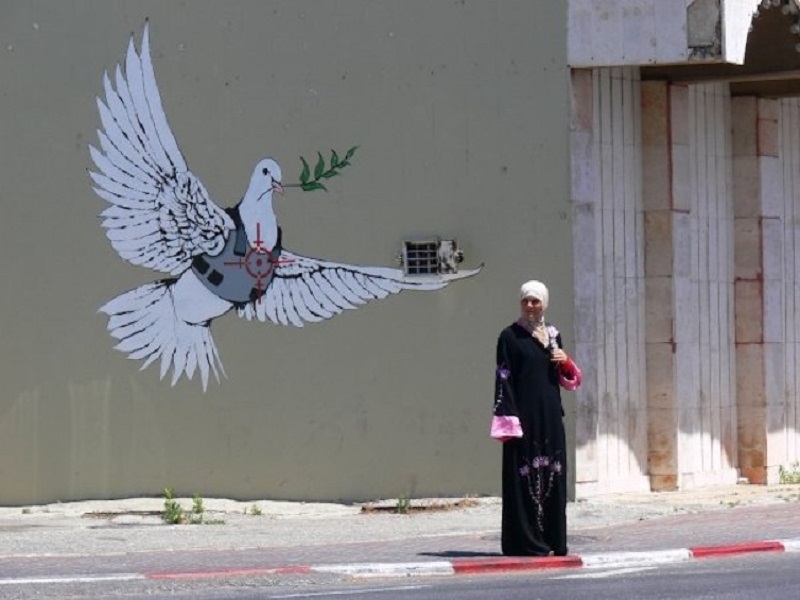
And that’s a wrap on our deep dive into the world of Banksy!
Remember, street art is a global canvas, and each of us has a role to play in appreciating and preserving it. So, the next time you come across a Banksy—or any piece of street art—pause, take it in, and let it evoke thoughts and emotions. And if you’ve enjoyed this post, don’t hesitate to share it with your fellow street art enthusiasts and join our group: Your Street Art Utopia.
Until next time, keep discovering, keep questioning, and keep appreciating the world of street art.
More by Banksy?: 18 Iconic Banksy Artworks (Indoors!)
The Goat?
Banksy at Royal Courts of Justice in London.
More here!
More!: Indoor Art By Banksy! (18 Photos)
Which one is your favorite?
16 Street Art And Quotes By Banksy!
Few street artists have captured the world’s imagination like Banksy.
His signature stencil art and razor-sharp social commentary turn urban walls into powerful statements. Mysterious yet unmistakable, Banksy’s work challenges authority, sparks debate, and refuses to be ignored.In this post, we’ve gathered 16 of his most striking street art photos—each paired with a memorable Banksy quote. Dive into the world of the elusive artist whose work continues to disrupt, inspire, and redefine the streets.
More by Banksy: 24 artworks by Banksy: Who Is The Visionary of Street Art
1.
There are four basic human needs; food, sleep, sex and revenge. – Banksy
2.
Nothing in the world is more common than unsuccessful people with talent, leave the house before you find something worth staying in for. – Banksy
3.
Think outside the box, collapse the box, and take a fucking sharp knife to it. – Banksy
4.
You’re mind is working at its best when you’re being paranoid.
You explore every avenue and possibility of your situation
at high speed with total clarity. – Banksy5.
Some people become cops because they want to make the world a better place. Some people become vandals because they want to make the world a better looking place. – Banksy
6.
People who get up early in the morning cause war, death and famine. – Banksy
7.
I need someone to protect me from all the measures they take in order to protect me. – Banksy
8.
My main problem with cops is that they do what they’re told. They say ‘Sorry mate, I’m just doing my job’ all the fucking time. – Banksy
10.
Become good at cheating and you never need to become good at anything else. – Banksy
11..
If you want to say something and have people listen then you have to
wear a mask. If you want to be honest then you have to live a lie. – Banksy12.
Graffiti is one of the few tools you have if you have almost nothing.
And even if you don’t come up with a picture to cure world poverty you can make someone smile while they’re having a piss. – Banksy13.
A wall is a very big weapon. It’s one of the nastiest things you can hit someone with. – Banksy
14.
A lot of mothers will do anything for their children, except let them be themselves. – Banksy
15.
The greatest crimes in the world are not committed by people breaking the rules but by people following the rules. It’s people who follow orders that drop bombs and massacre villages. – Banksy
16.
More by Banksy: Street Art Legend Banksy Reveals His Name in a Rare BBC Interview
What do you think of Banksy’s street art? Which one is your favorite?
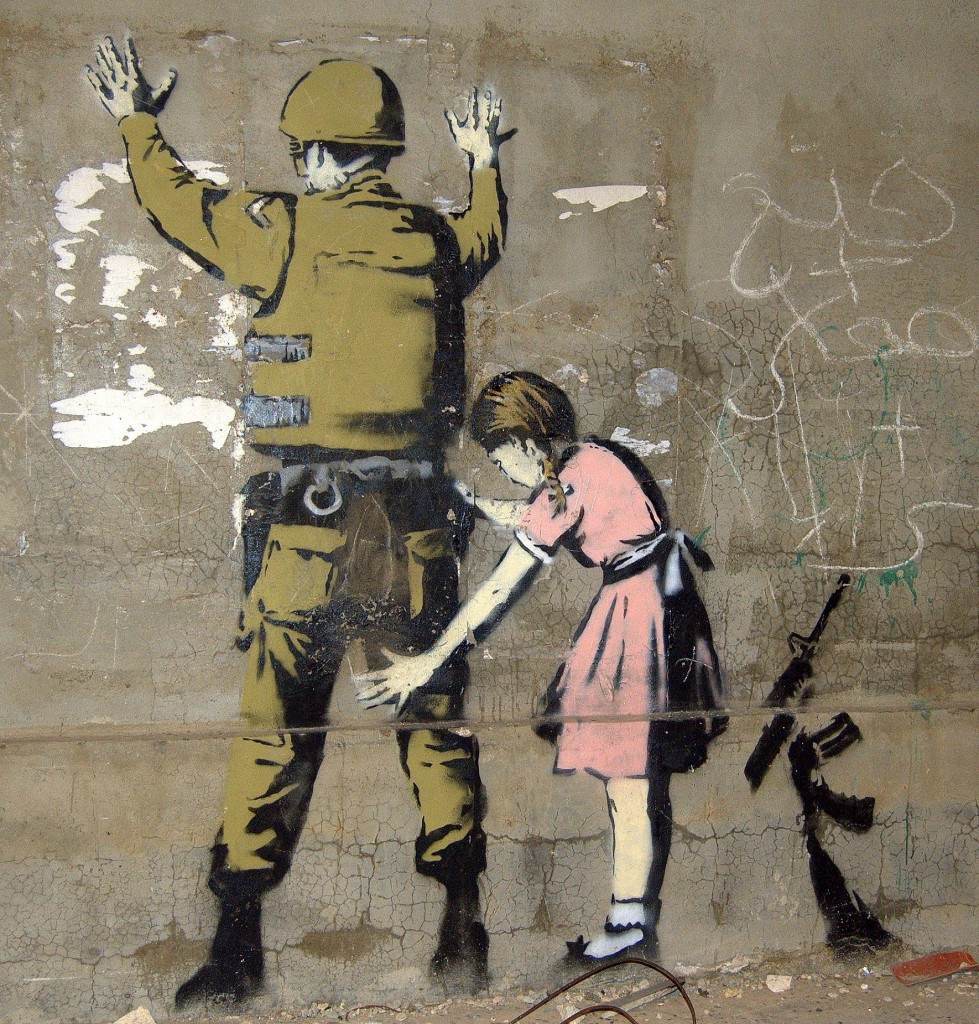
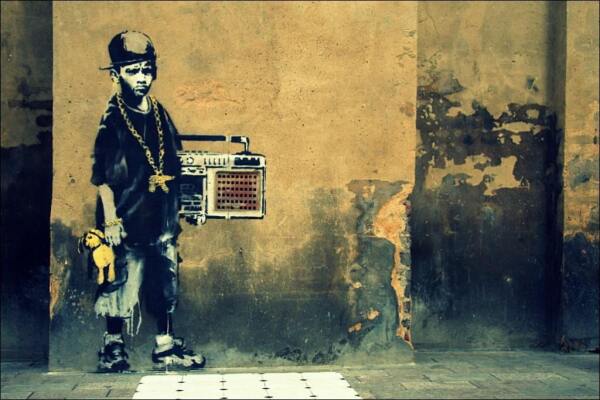
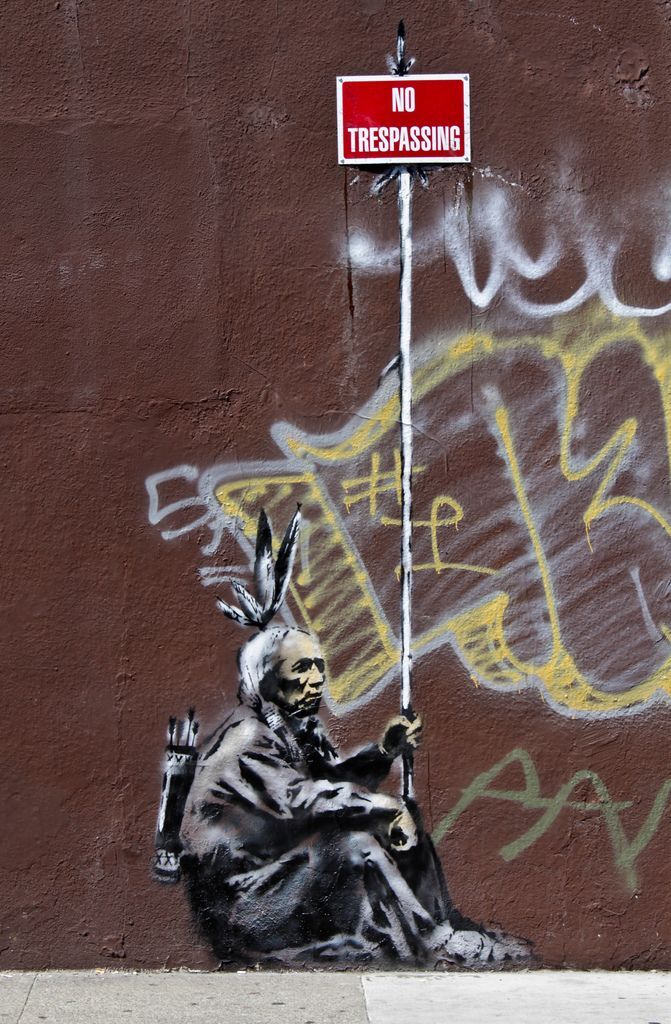
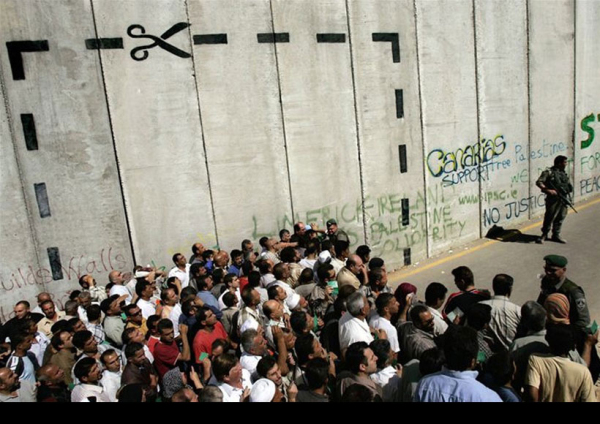
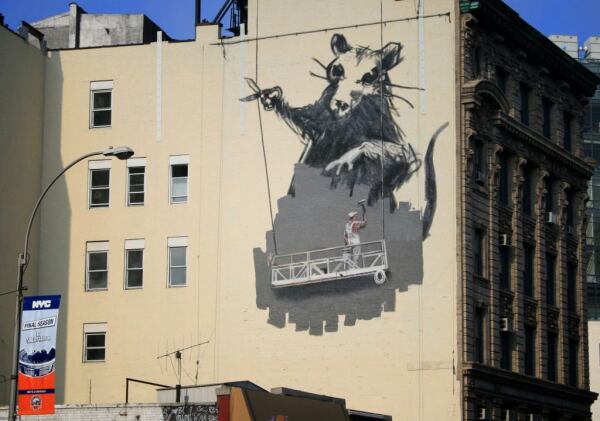
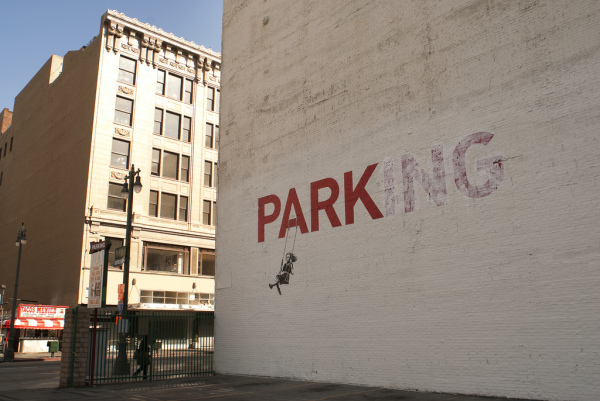
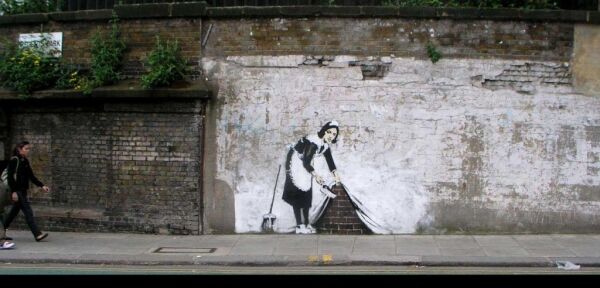
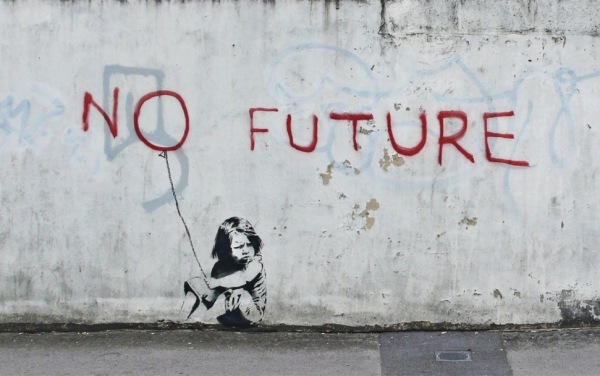
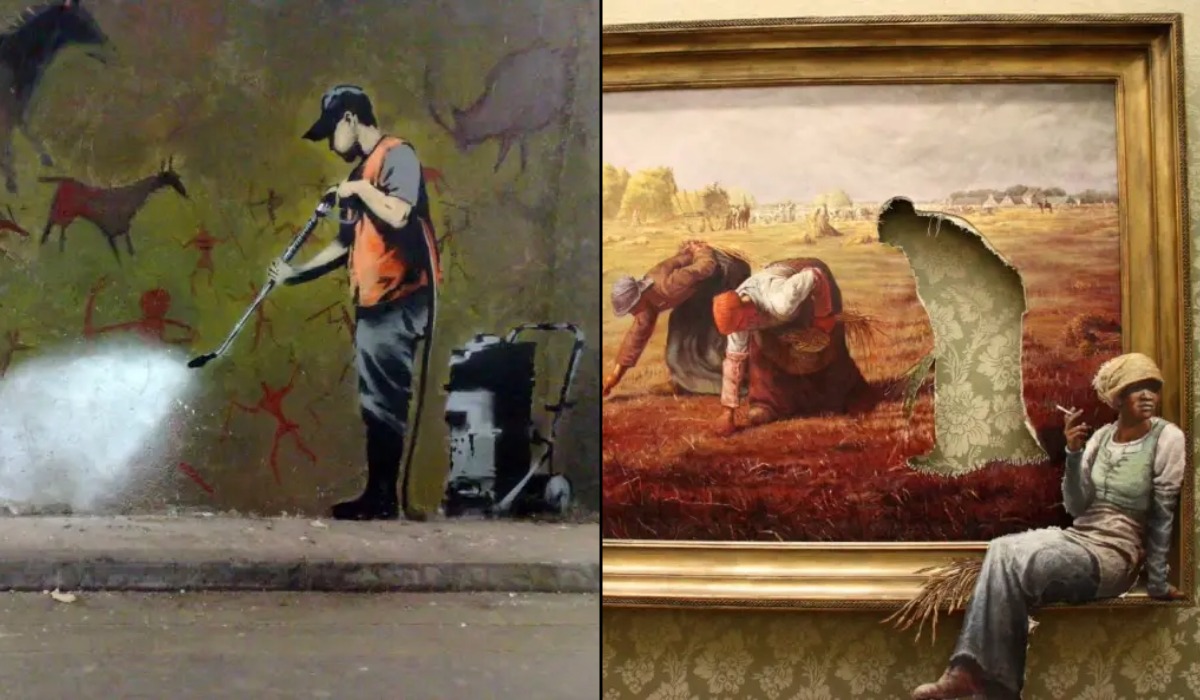
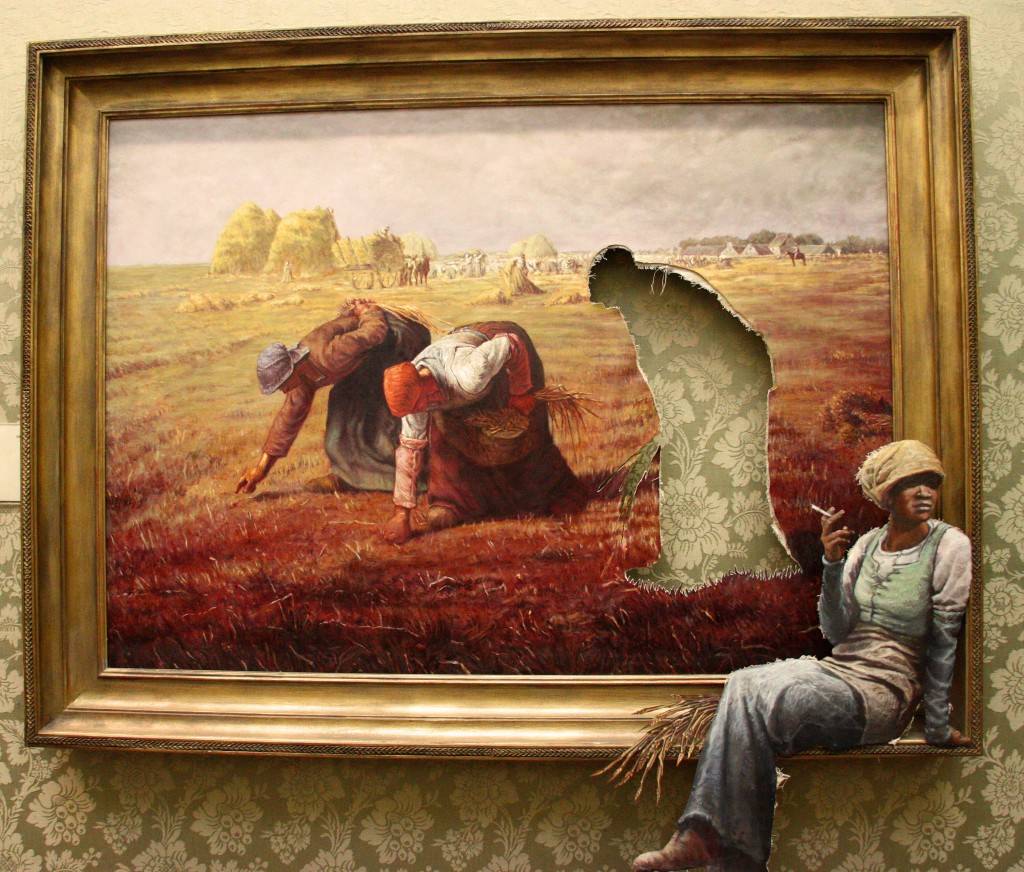
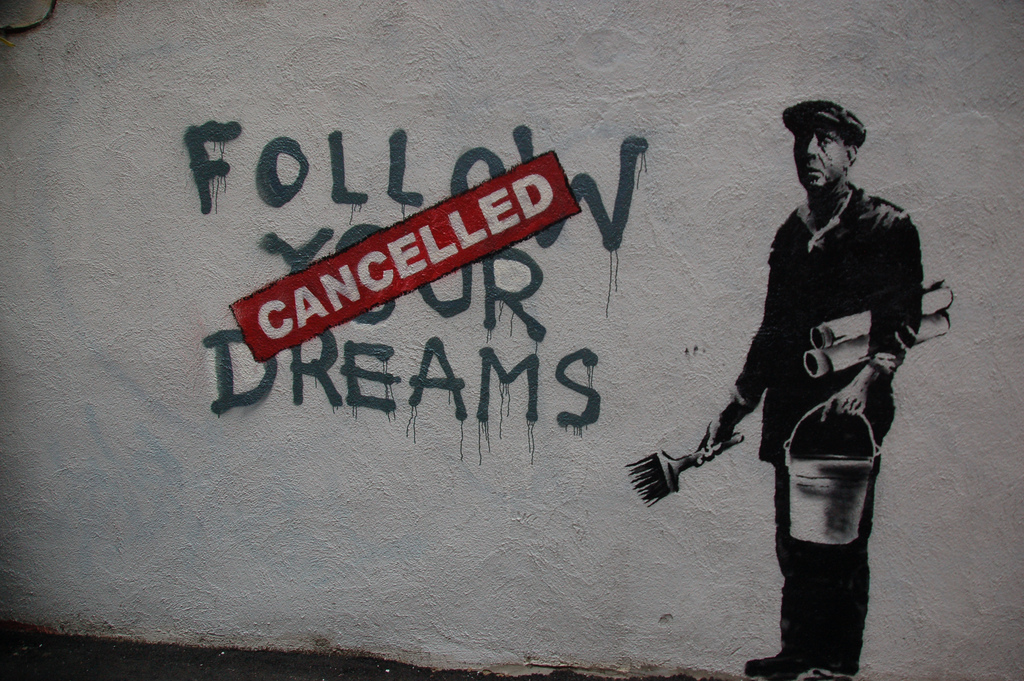
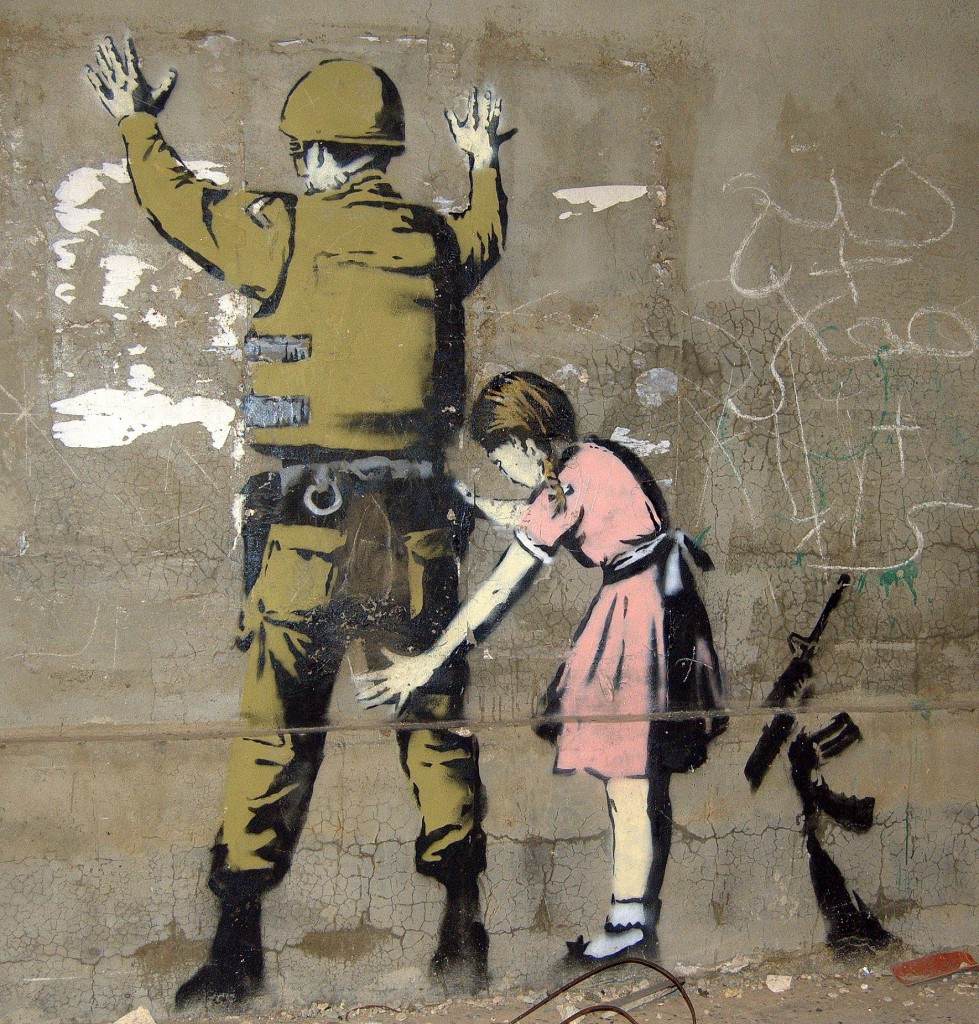
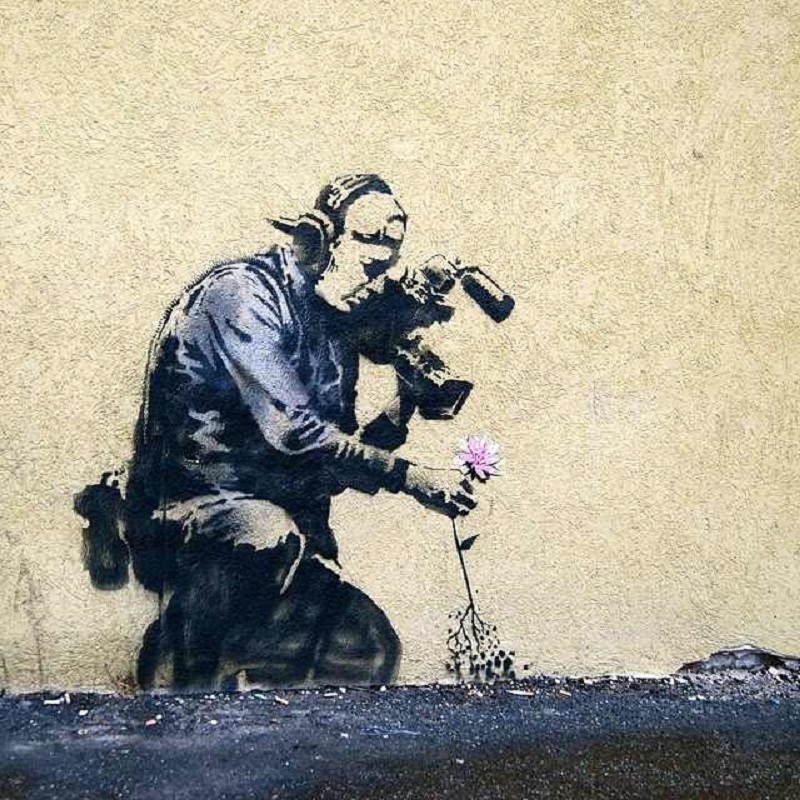
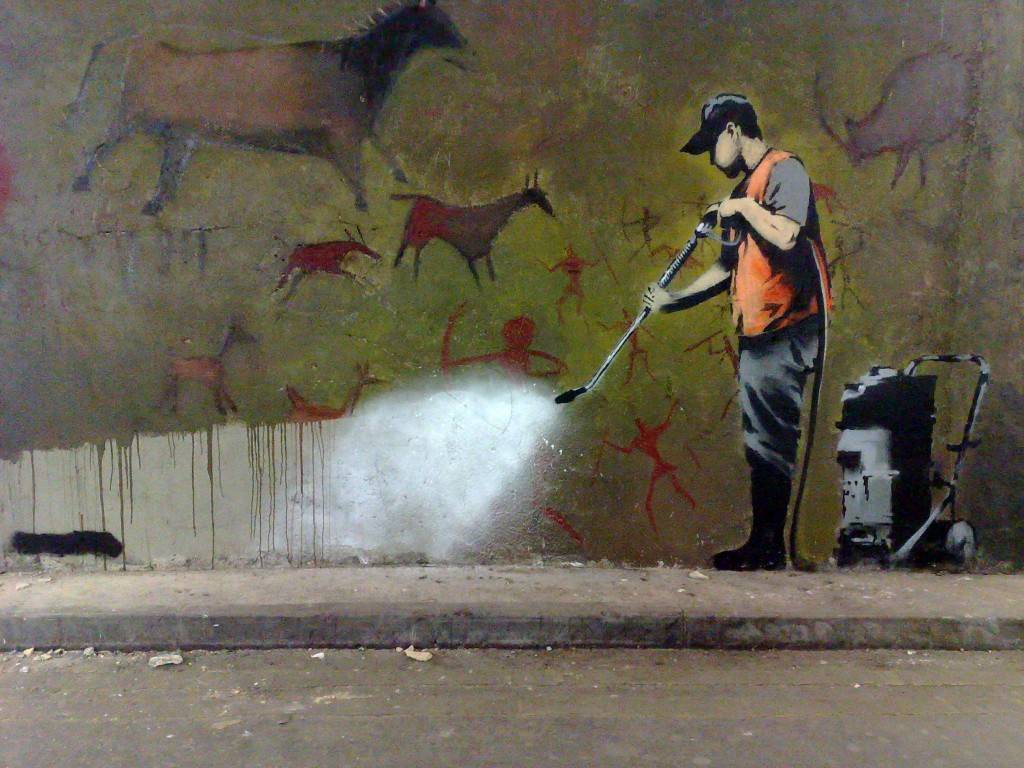
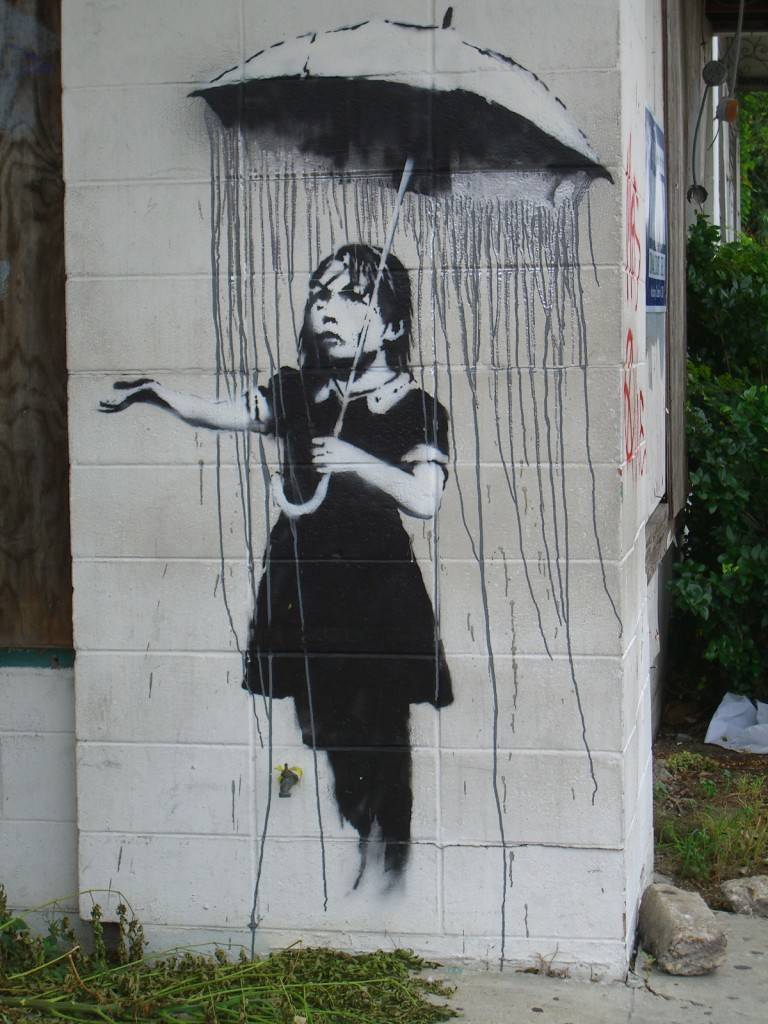
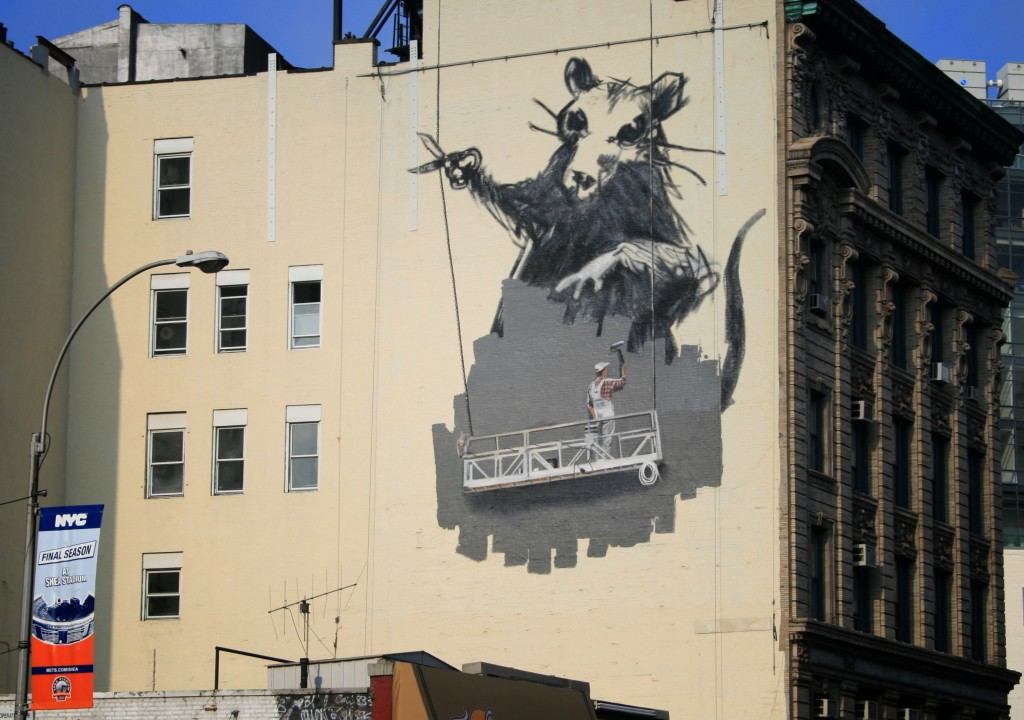
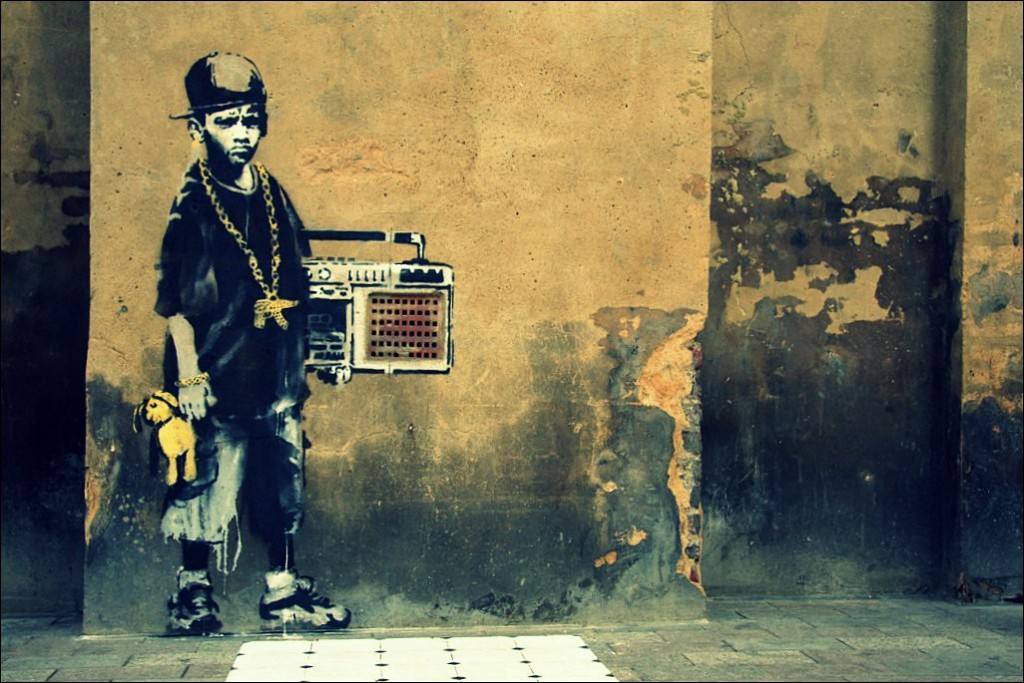
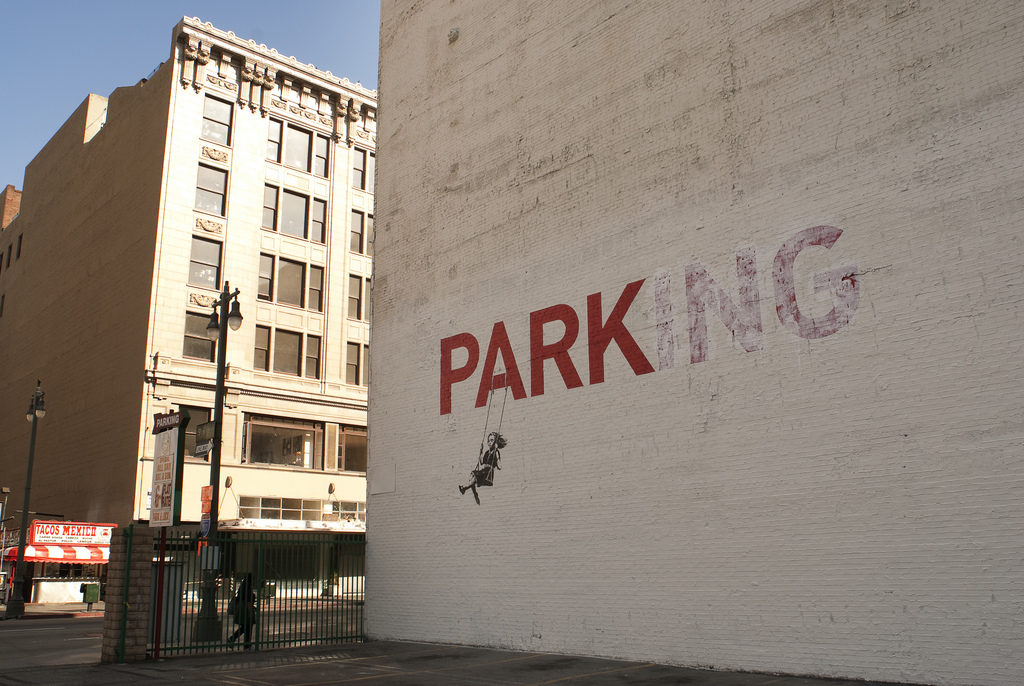
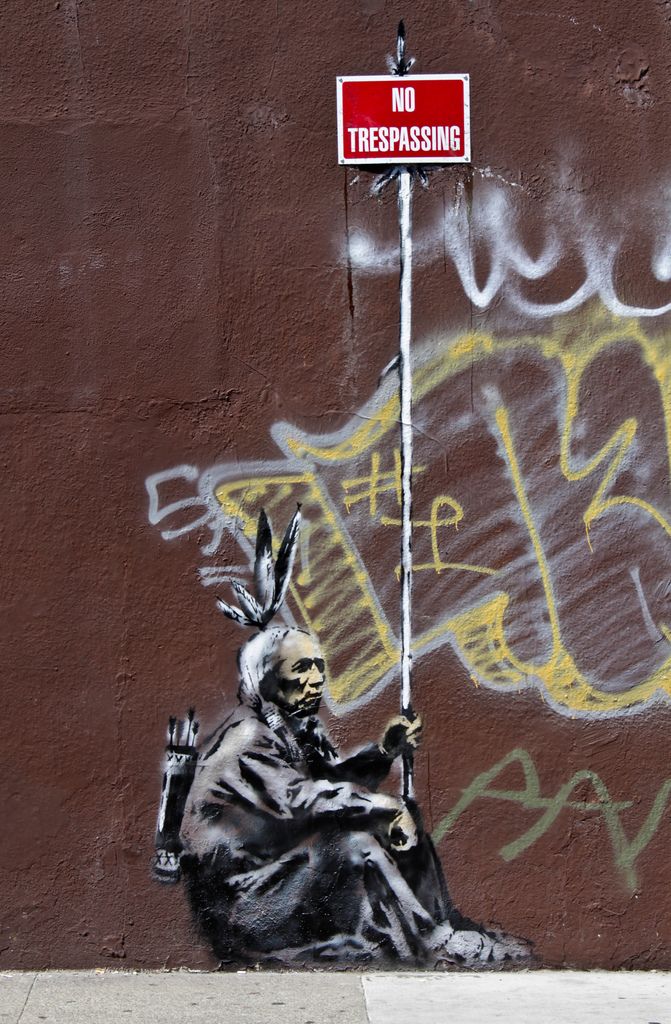
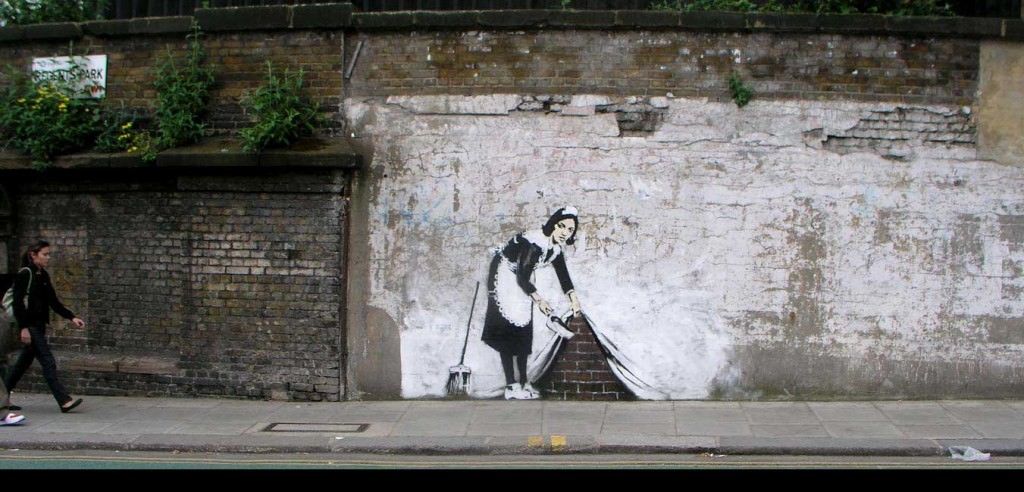
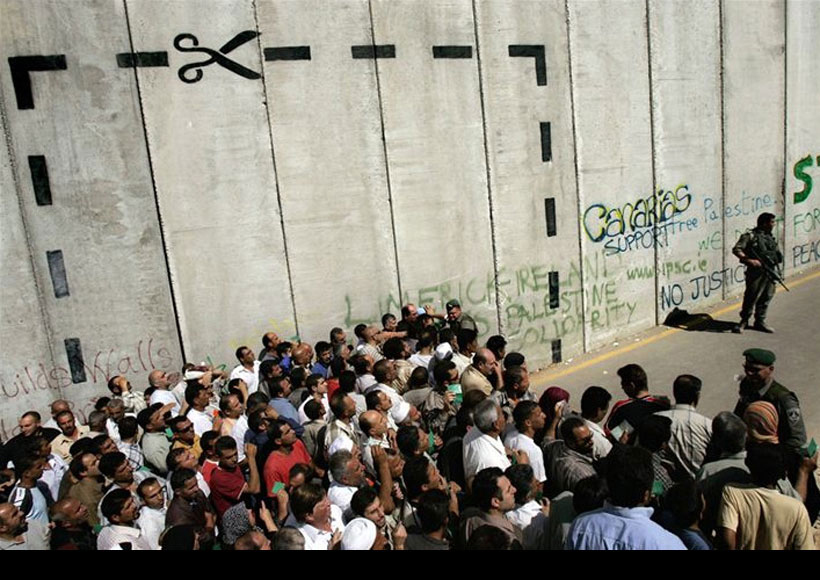
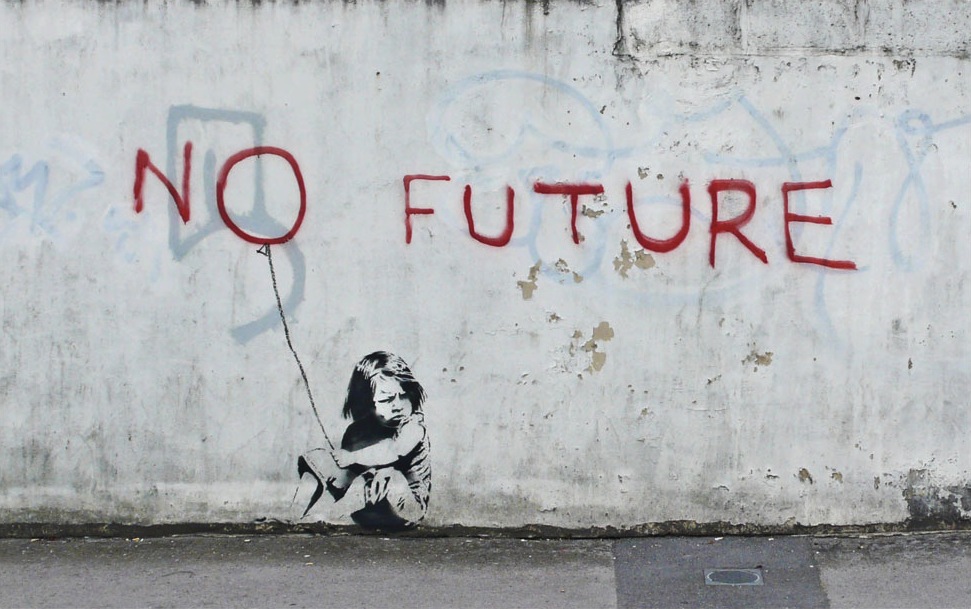
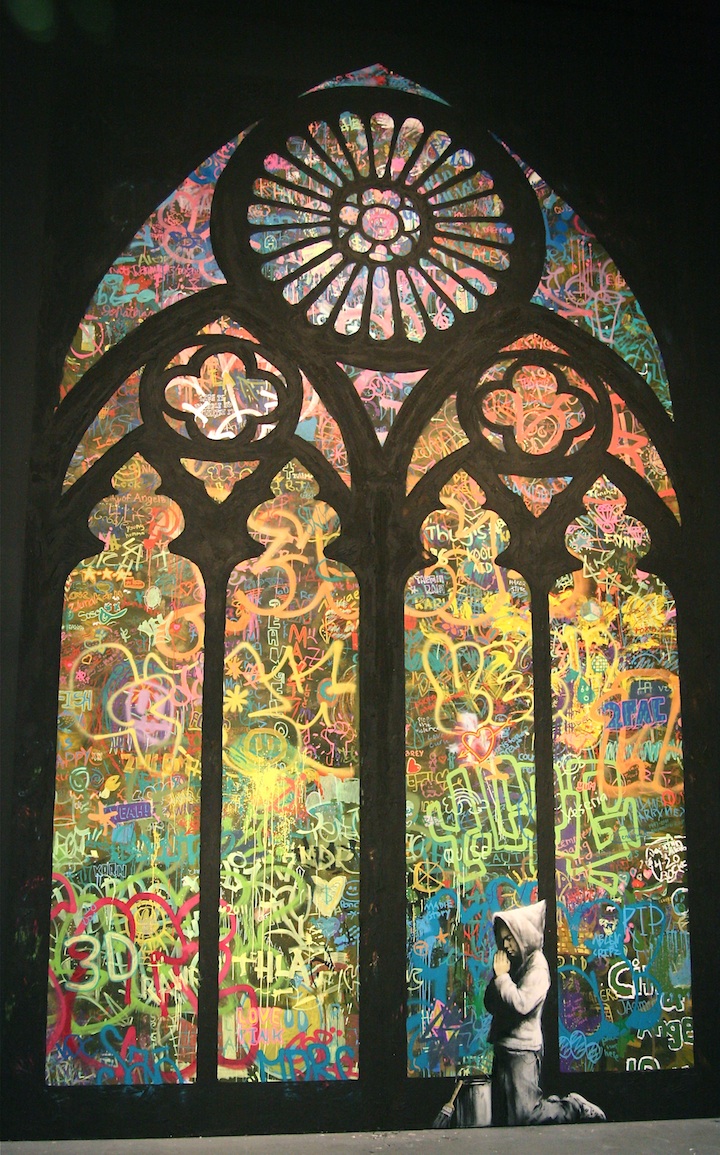
Banksy’s Gaza Murals Are More Relevant Than Ever
Content warning: In the rubble-strewn streets of Gaza, an unexpected figure emerges - a playful kitten adorned with a sassy red bow. Banksy's kitten, with its wild fur and wide-eyed curiosity, feels like a tongue-in-cheek nod to resilience amidst chaos. It's as if the kit
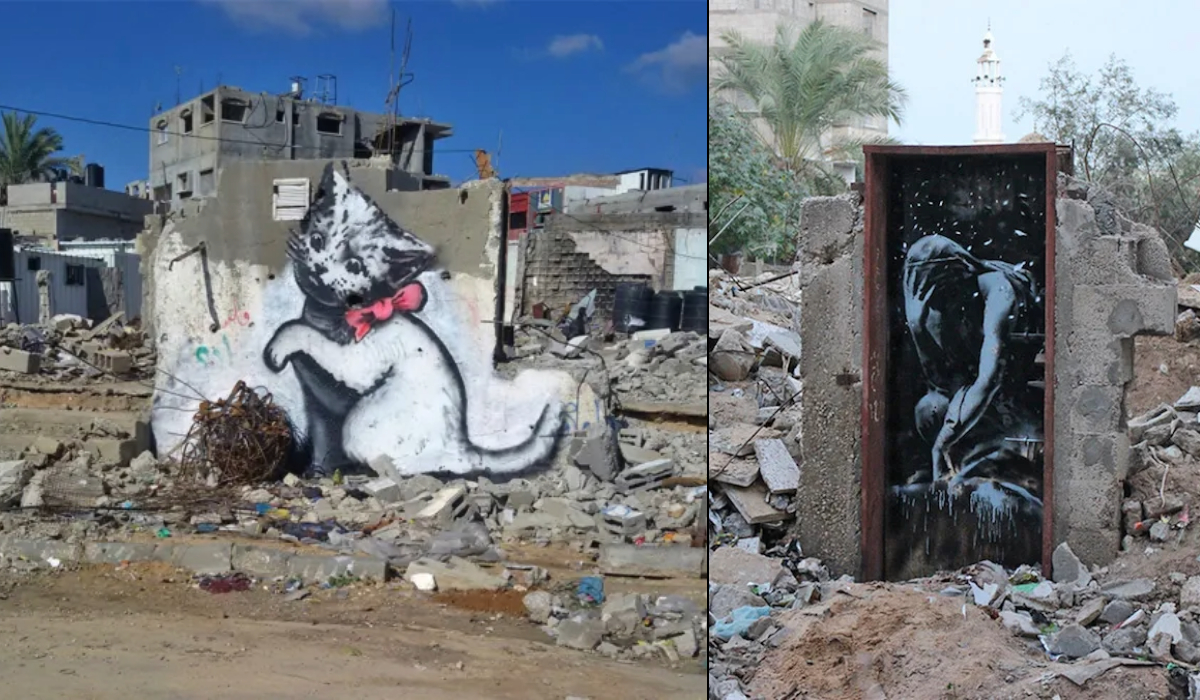
In the rubble-strewn streets of Gaza, an unexpected figure emerges – a playful kitten adorned with a sassy red bow.
Banksy‘s kitten, with its wild fur and wide-eyed curiosity, feels like a tongue-in-cheek nod to resilience amidst chaos. It’s as if the kitten is saying, “I’ve got nine lives, and not even this rubble can phase me!” Yet, the ruins around tell a deeper, sadder tale of a city bearing the scars of conflict.
In just one image, Banksy manages to capture Gaza’s heartbreaking reality and sprinkle it with a dash of hope and humor. It’s a bittersweet blend of artistry, offering a momentary escape while urging us not to forget.

Banksy: A local man came up and said ‘Please – what does this mean?’ I explained I wanted to highlight the destruction in Gaza by posting photos on my website – but on the internet people only look at pictures of kittens.
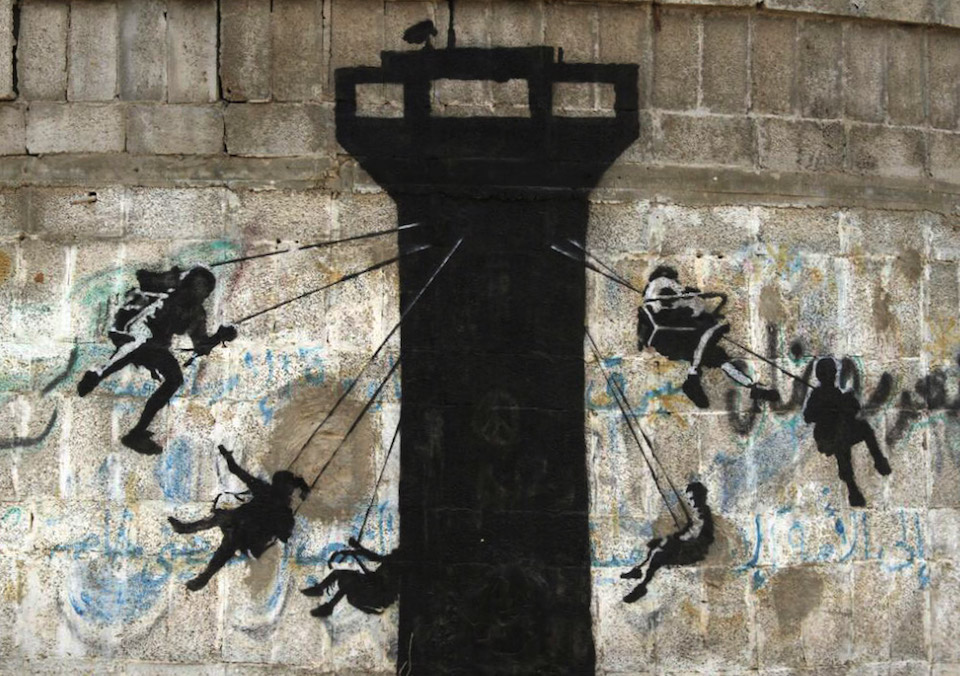
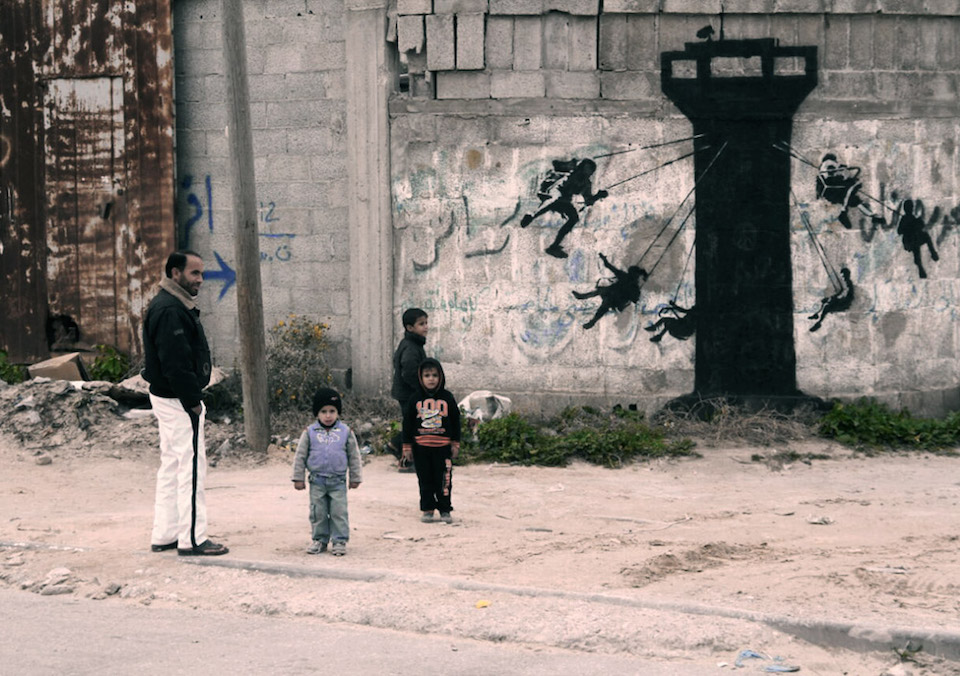
Banksy: Gaza is often described as ‘the world’s largest open air prison’ because no-one is allowed to enter or leave. But that seems a bit unfair to prisons – they don’t have their electricity and drinking water cut off randomly almost every day.
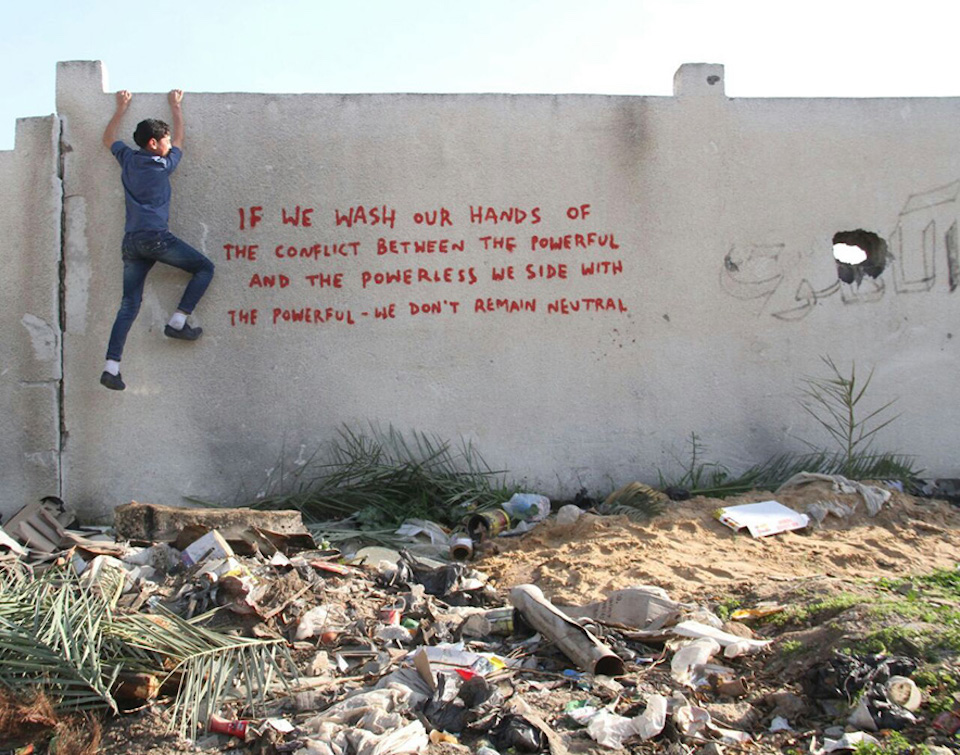
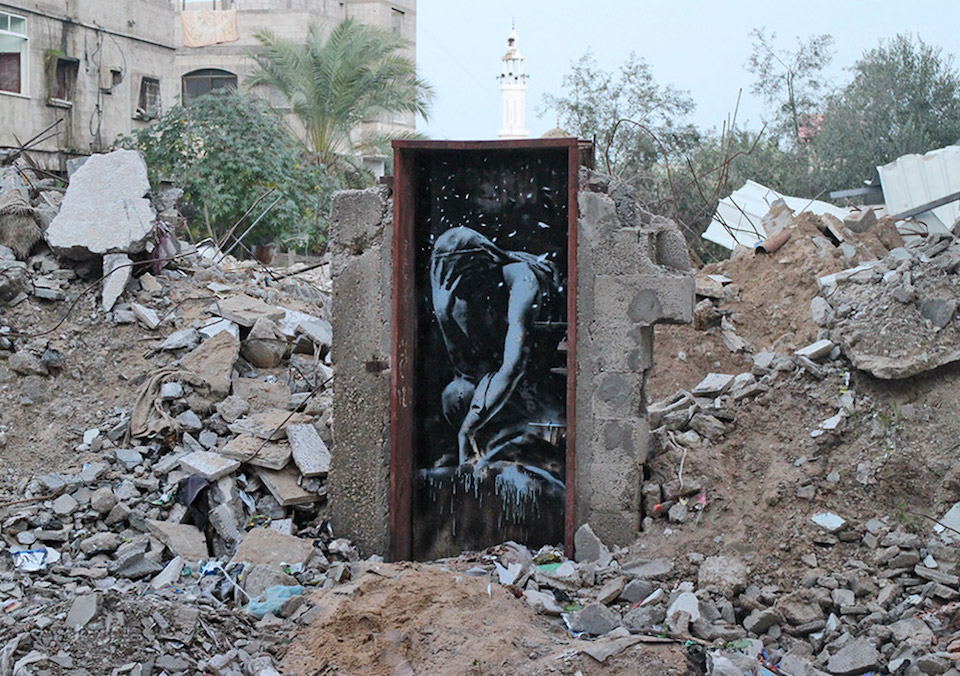
https://www.youtube.com/watch?v=3e2dShY8jIo
More by Banksy: 24 artworks by Banksy: Who Is The Visionary of Street Art
What do you think about this street art by Banksy in Gaza?:
Banksy? Who Is The Visionary of Street Art? (25 Photos)
I. Unmasking the Enigma: A Deep Dive into Banksy’s Street Art Revolution
In the dynamic world of street art, few names are as resonant or as enigmatic as Banksy. A spectral figure whose identity remains shrouded in mystery, Banksy is a paradox of fame and anonymity, a revolutionary whose works have transformed public spaces and challenged societal norms. His art, often laced with potent political commentary and sharp satire (see 14 Great Banksy Street Art Photos and Quotes!), has left indelible marks on urban landscapes worldwide. Yet, the man behind the spray can remains elusive, his identity a secret closely guarded, adding an irresistible aura of intrigue to his body of work.This paradox is part of what makes Banksy not just a street artist, but a phenomenon. His work captures the zeitgeist, reflecting the turbulence, the dissent, and the hope of our times. His stencils—be they on the walls of London, the remnants of the West Bank barrier, or the ruins of Hurricane Katrina—have a way of speaking truth to power that has resonated with millions around the globe.
More: Banksy’s Hidden Identity Revealed?
For more than three decades, Banksy has been pushing boundaries, challenging conventions, and redefining the very concept of public art. Through his stencils, he has brought the subversive ethos of the underground to the surface, making it impossible for us to ignore the social and political injustices of our world. His works are more than just provocative images; they are a call to action, a demand for change.
In this exploration, we will journey through the chaotic, captivating world of Banksy’s artistry. From his early days in Bristol’s graffiti scene to his headline-making stunts in the global art market, we’ll take a closer look at how Banksy’s work has evolved and why it continues to captivate and challenge us. Through the lens of 24 select artworks, we hope to gain a deeper understanding of the visionary artist who has forever transformed the landscape of street art.
So, who is Banksy? Let’s uncover the story behind the spray can. Let’s delve into the revolution sparked by this enigma. Through his art, let’s explore the world according to Banksy.
II. A Stencil Revolution: The Genesis of Banksy’s Distinctive Style
Banksy’s journey into the world of street art began on the streets of Bristol, England, a city known for its vibrant graffiti culture. As a teenager in the 1980s, he was part of a graffiti crew called the DryBreadZ Crew (DBZ). His early work, like much of the graffiti of the time, was freehand. However, an encounter with the law sparked a transformative shift in Banksy’s approach to street art.Legend has it that a young Banksy was hiding from the police under a garbage truck when he noticed stenciled serial numbers on the truck. The stencil technique piqued his interest, offering a faster, more efficient way to paint, allowing him to dodge law enforcement while still leaving his mark. This chance discovery would not only define his artistic style but would also revolutionize the street art scene.
Stenciling allowed Banksy to create intricate and detailed pieces with precision and speed. His works were more controlled, more refined, and more complex than the freehand graffiti that dominated the streets. This technique also lent his art a distinct aesthetic — one that was cleaner, sharper, and more visually striking. He could create multi-layered artworks, combining stencils with other media and incorporating pre-existing elements in the urban landscape into his installations.
In the early 2000s, Banksy moved from Bristol to London. His stenciled works started appearing on walls, bridges, and streets across the city, turning the urban landscape into an open-air gallery of his art. Each piece was a visual protest, a political statement, a satirical commentary. They challenged authority, poked fun at societal norms, and provoked public discourse, making Banksy a controversial figure in the art world.
Yet, it was precisely this controversy, coupled with his distinctive style and incisive commentary, that catapulted Banksy to international recognition. By turning to stencils, Banksy had not only found his artistic voice, but he had also found a way to make the streets echo with that voice. In doing so, he sparked a stencil revolution that would forever alter the course of street art.
III. Crafting Satire and Shadows: The Unmistakable Artistic Approach of Banksy
Banksy’s artistic approach, while grounded in the use of stencils, is far from one-dimensional. The street artist has developed a style that is as layered and nuanced as the messages he conveys. Delving into Banksy’s work reveals a masterful blend of satire, subversion, and sociopolitical commentary, all wrapped in a distinctive visual package that has become his trademark.Perhaps the most defining aspect of Banksy’s approach is his biting satire. With a keen eye for irony, Banksy often juxtaposes contrasting images and ideas to comment on societal issues. His works are full of dark humor and sharp wit, turning everyday scenes into powerful satirical statements. Whether it’s a rioter throwing a bouquet of flowers instead of a molotov cocktail or a young girl frisking a soldier, Banksy’s art challenges viewers to reassess their preconceived notions and question the status quo.
Equally important to Banksy’s approach is his use of subversion. He consistently undermines authority and disrupts conventional narratives, pushing against the boundaries of what is deemed acceptable or normal. This can be seen in his unauthorized installations in museums, his self-destructing artwork at an auction, or his dystopian theme park, Dismaland. Each act is a bold statement against institutional power and the commercialization of art.
On the visual front, Banksy’s art is marked by a striking use of black and white, with occasional pops of color. This minimalist color palette underscores the starkness of his messages and adds to the visual impact of his works. He also employs a careful play of light and shadow, giving depth and realism to his stenciled figures. Even when working on a flat surface, Banksy’s figures appear three-dimensional, as if they could step out of the wall and into the real world.
Moreover, Banksy often integrates elements of the urban environment into his artworks, transforming mundane objects and surfaces into significant components of his pieces. This creative use of the environment amplifies his art’s site-specific nature, making each piece a unique commentary on its context.
In essence, Banksy’s artistic approach is a dynamic interplay of style and substance. It merges form with content, aesthetics with message, and art with activism. Each piece is not just an artwork but a dialogue – a thought-provoking, boundary-pushing, and often uncomfortable dialogue that compels us to engage with the world in new and critical ways.
IV. From Shadows to Spotlight: The Unstoppable Global Impact of Banksy
Banksy’s rise to prominence is a testament to the power of street art as a medium for societal commentary. What began as stencilled tags in the back-alleys of Bristol has now gained international renown, resonating with audiences across the globe. His works are not merely confined to city walls, they have permeated popular culture, influenced political discourse, and even transformed the way we perceive and value art.One of the most significant aspects of Banksy’s global impact is how his art has bridged the gap between the street and the gallery. Banksy has successfully brought street art out of its perceived illegitimacy, forcing the art world to reconsider its boundaries and definitions. His works have sold for record-breaking prices at renowned auction houses such as Sotheby’s and Bonhams, showing that street art is more than capable of holding its own in the fine art market.
Banksy’s influence extends beyond the world of art, reaching into the realm of politics. His murals often tackle pressing issues like war, surveillance, consumerism, and inequality. His iconic pieces on the West Bank Barrier, for example, drew international attention to the Israeli-Palestinian conflict, showcasing the power of art as a tool for political activism.
Moreover, Banksy’s works have become viral sensations, spreading rapidly across the internet and reaching millions of viewers. The digital age has allowed Banksy’s art to transcend geographical boundaries, amplifying its impact to an unprecedented level. Each new Banksy piece triggers a flurry of online discussions, debates, and interpretations, showing how art can engage and connect people in the virtual space.
Banksy’s global impact is also evident in the way his art has inspired a new generation of artists. His audacious style, combined with his success in challenging the status quo, has paved the way for aspiring street artists worldwide. The “Banksy Effect” is a testament to his influence, proving that art can thrive outside traditional institutions and that artists can maintain their anonymity and independence while reaching a wide audience.
Perhaps most importantly, Banksy’s global impact lies in the conversations his art starts. His works provoke thought and spark dialogue, encouraging viewers to question their surroundings and critically engage with societal issues. Whether it’s a mural on a wall, a painting in an auction house, or an image shared on social media, Banksy’s art continues to challenge, disrupt, and inspire, solidifying his position as one of the most influential figures in contemporary art.
V. Beyond the Wall: Banksy’s Multifaceted Artistic Portfolio
Banksy’s artistic portfolio, despite being shrouded in mystery and anonymity, is one that never ceases to evolve, surprise and provoke. Stretching beyond the confines of the traditional graffiti scene, Banksy has become a modern-day renaissance artist, demonstrating a remarkable ability to experiment with different mediums and platforms while consistently delivering his signature blend of satire, subversion, and social commentary.In 2010, Banksy ventured into the world of filmmaking with “Exit Through the Gift Shop,” a documentary that explores the relationship between commercial and street art. The film, which received an Academy Award nomination for Best Documentary, showcases Banksy’s knack for storytelling and his ability to critique the art world from within its own apparatus.
In 2015, Banksy took on an entirely new project: Dismaland, a dark, dystopian parody of Disneyland. This ‘bemusement park’ showcased ten new works from Banksy alongside pieces from 58 other artists. It was more than just an art exhibit; it was an immersive, interactive experience that critiqued the corporatization of leisure and the passive consumption of entertainment.
In recent years, Banksy has also shown an increasing interest in traditional painting, as seen in his ‘Mediterranean Sea View’ series. This set of oil paintings, auctioned to raise funds for a hospital in Bethlehem, combined classical techniques with Banksy’s trademark twist – in this case, life jackets washed up on shore, symbolizing the European migrant crisis. Such works demonstrate Banksy’s versatility and his willingness to adapt his craft to convey urgent messages.
Banksy’s more recent work during the COVID-19 pandemic, such as ‘Game Changer,’ displayed in Southampton General Hospital, is a testament to his timely engagement with current events. This piece, which pays tribute to healthcare workers, again shows Banksy’s ability to adapt to new contexts and media, while staying true to his roots in street art.
Whether it’s stencils on city walls, films, immersive installations, traditional paintings, or even the occasional piece of performance art (as seen in the shredding of ‘Girl with Balloon’), Banksy’s expanding portfolio reflects his boundless creativity, adaptability, and commitment to pushing the boundaries of what art can be and do. His work stands as a testament to the fact that art is not just about aesthetics, but can also be a vehicle for social change, critique, and dialogue.
VI. Shattering Expectations: Banksy’s Iconic Artistic Moments
When it comes to creating unforgettable artistic moments, Banksy is second to none. The anonymous artist has a track record of staging high-profile stunts that not only challenge conventional norms of the art world but also provoke public dialogue and reflection on broader societal issues.Perhaps the most iconic of all is Banksy’s 2018 Sotheby’s auction stunt, in which his artwork ‘Girl with Balloon’ self-destructed immediately after being sold for £1.04 million. Hidden within the ornate frame was a remotely activated shredder that left the artwork hanging in tatters. This audacious act was not just a prank; it was a commentary on the commodification of art and the market’s ability to dictate the value of artworks. The shredded artwork was later renamed ‘Love is in the Bin,’ and in a twist of irony, it became even more valuable after the stunt.
Another moment that captured global attention was Banksy’s 2013 New York residency, ‘Better Out Than In.’ For 31 days, Banksy unveiled a new work each day across the city. On one of these days, he set up a stall selling signed original Banksy canvases for just $60. The unsuspecting buyers had no idea of the true value of the artworks they were purchasing, challenging the notion of art’s value being tied to the artist’s name.
And again: In 2015, Banksy shook the art world again with the opening of Dismaland, a dark, dystopian parody of Disneyland. This temporary art project in the seaside resort town of Weston-super-Mare in England featured a fairy castle in ruin, a boat pond full of asylum seekers, and two juggernauts performing ballet, among other installations. It was a stark critique of consumer culture, inequality, and the failings of capitalism.
Banksy’s ‘Devolved Parliament,’ a satirical painting depicting the UK House of Commons filled with chimpanzees, is another example of his timely and pointed commentary. The artwork, which was created in 2009 and exhibited just before the original Brexit date in March 2019, sold for a record-breaking £9.9 million at Sotheby’s in October 2019.
And as mentioned before who can forget Banksy’s response to the COVID-19 pandemic? His ‘Game Changer’ artwork, depicting a young boy playing with a nurse doll, was a tribute to healthcare workers on the front lines of the crisis. It was later sold at auction for £16.8 million, with all proceeds going to the NHS.
Through these iconic moments, Banksy continues to use his art to subvert expectations, provoke thought, and challenge the status quo, leaving an indelible mark on the world of contemporary art.
VII. Enduring Impressions: The “Banksy Effect”
The “Banksy Effect” is a term coined to describe the remarkable influence that Banksy has had on the art world and beyond. It refers not just to his transformation of street art into a globally recognized and highly coveted form of expression, but also to the way his work has reshaped public discourse around key societal issues.Banksy’s provocative approach to art has undoubtedly pushed the boundaries of what is considered acceptable or valuable in the art world. By using public spaces as his canvas, Banksy has democratized access to art, making it available to everyone, not just those who frequent art galleries or auction houses. This has led to a broader acceptance and recognition of street art as a legitimate form of artistic expression, with cities around the world now boasting thriving street art scenes.
Beyond the art scene, Banksy’s satirical, often politically charged works have also had a profound impact on public consciousness. His art has served as a powerful commentary on issues such as war, capitalism, consumerism, and inequality, sparking public dialogue and forcing viewers to confront uncomfortable realities. By leveraging the power of art for social commentary, Banksy has inspired a new generation of artists to use their work as a tool for social and political activism.
Moreover, Banksy’s commitment to anonymity has further fueled his appeal and added a layer of intrigue to his work. Despite his global fame, Banksy has managed to maintain his anonymity, a feat that has only added to his mystique and led to widespread speculation about his identity. This anonymity has also allowed Banksy to remain a subversive figure, unbound by the expectations or constraints typically placed on renowned artists.
The “Banksy Effect” encompasses the far-reaching influence of Banksy’s art on both the art world and society at large. His innovative approach to art, combined with his incisive social commentary, has left an enduring legacy that continues to inspire and provoke. Whether it’s through a simple graffiti piece on a city wall or a high-profile stunt at an auction house, Banksy’s impact is indelible, echoing throughout contemporary culture and continuing to challenge our perceptions of art and its role in society.
VIII. Unmasking the Enigma: Decoding Banksy’s Enduring Allure
As we delve into the intriguing world of Banksy, we come to realize that his enigmatic persona, revolutionary approach to art, and the courage to challenge societal norms are not just the hallmarks of his unique artistry, but also the underlying factors of his enduring appeal.Banksy’s anonymity has allowed him to create art that is pure and unaffected by the bias of celebrity. It keeps the focus on the art and the message it conveys rather than the artist. This could well be one of the reasons why his art, despite its simplicity, resonates on a universal scale. The unknown identity of the artist also adds an element of intrigue and mystery, making each new artwork a topic of global conversation.
Banksy’s approach to art, characterized by its accessibility and daring themes, has redefined the relationship between art and the public. His belief that art should be available to everyone has brought art out of the exclusive confines of galleries and into the streets, making it part of people’s everyday lives. This democratization of art has not only elevated the status of street art but has also changed the way we perceive and interact with art.Moreover, Banksy’s unwavering commitment to highlighting societal issues through his art has given him the ability to influence public discourse like few artists can. His provoking imagery and poignant commentary on pressing issues such as war, inequality, and consumerism have started important conversations, challenging us to question the status quo and contemplate our role within these systems.
Banksy’s knack for spectacle, such as the infamous shredding incident at Sotheby’s, has further amplified his influence by merging performance and visual art, creating unforgettable moments that transcend the confines of the art world. These audacious acts have not only propelled Banksy into the global spotlight but have also pushed the boundaries of what is possible in art.
In the end, Banksy is not just an artist; he is a phenomenon, a catalyst for change, and a symbol of resistance against conventional norms. His disruptive yet compelling artistry continues to captivate the world, and his influence, the “Banksy Effect,” continues to ripple through the realms of art and culture. His legacy is one that invites us to challenge our perspectives, to question our surroundings, and most importantly, to realize the power of art as a tool for change. As we continue to anticipate Banksy’s next move, one thing is clear: the world is his canvas, and we are all eager spectators.
Now click here to read some of Banksy’s best quotes: 14 Great Banksy Street Art Photos and Quotes!
And that’s a wrap on our deep dive into the world of Banksy!
Remember, street art is a global canvas, and each of us has a role to play in appreciating and preserving it. So, the next time you come across a Banksy—or any piece of street art—pause, take it in, and let it evoke thoughts and emotions. And if you’ve enjoyed this post, don’t hesitate to share it with your fellow street art enthusiasts and join our group: Your Street Art Utopia.Until next time, keep discovering, keep questioning, and keep appreciating the world of street art.
More by Banksy?: 18 Iconic Banksy Artworks (Indoors!)
The Goat?
Banksy at Royal Courts of Justice in London.
More here!More!: Indoor Art By Banksy! (18 Photos)
Which one is your favorite?

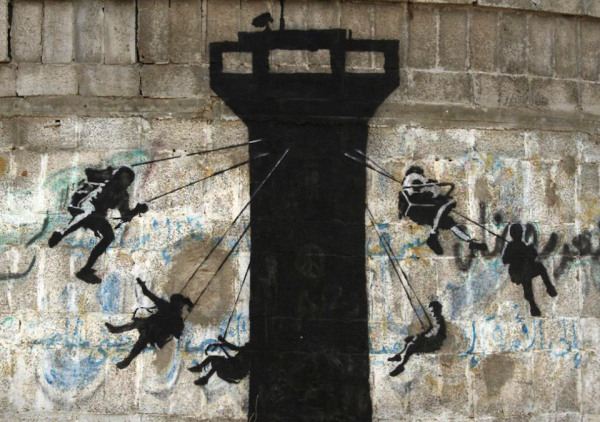
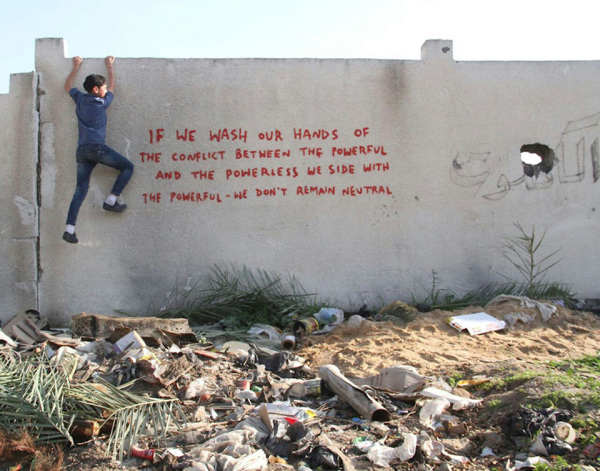

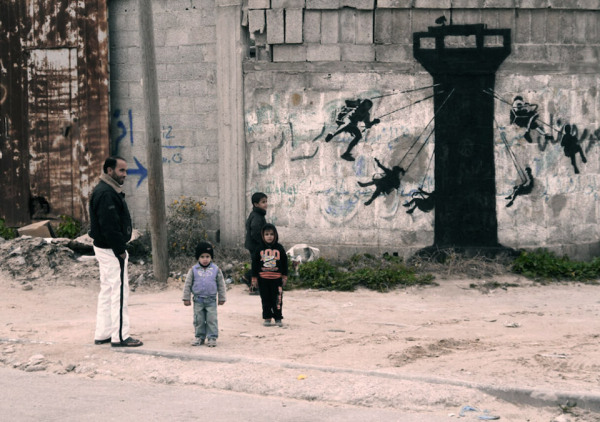
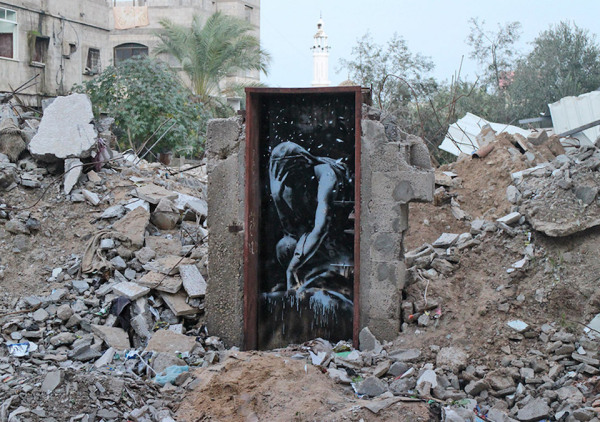
“I Don’t Believe in Global Warming” by Banksy
Content warning: Banksy's iconic 'I Don’t Believe in Global Warming' artwork in Camden, London, delivers a bold climate message as its red graffiti text submerges under water, symbolizing rising sea levels and the urgent need for action.
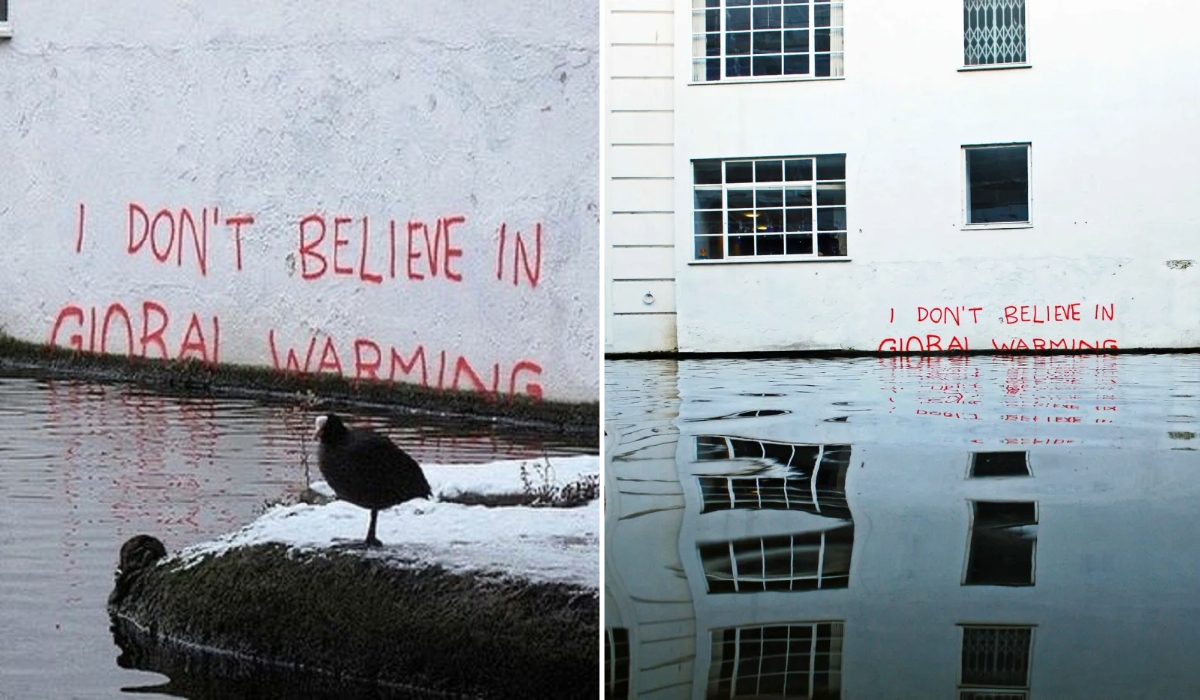
“I Don’t Believe in Global Warming” first appeared on Regent’s Canal in London in 2009.
This visual metaphor is both striking and powerful, suggesting that denying climate change does nothing to halt its effects, which are visibly rising around us.
The timing of this piece was no coincidence. It emerged shortly after the Copenhagen UN Climate Summit, a meeting that many deemed unsuccessful in producing concrete solutions to global warming. By placing his message in such a context, Banksy underscored the world’s inadequate response to climate change.
More: Climate Change Addressed Through Street Art (16 Powerful Images)
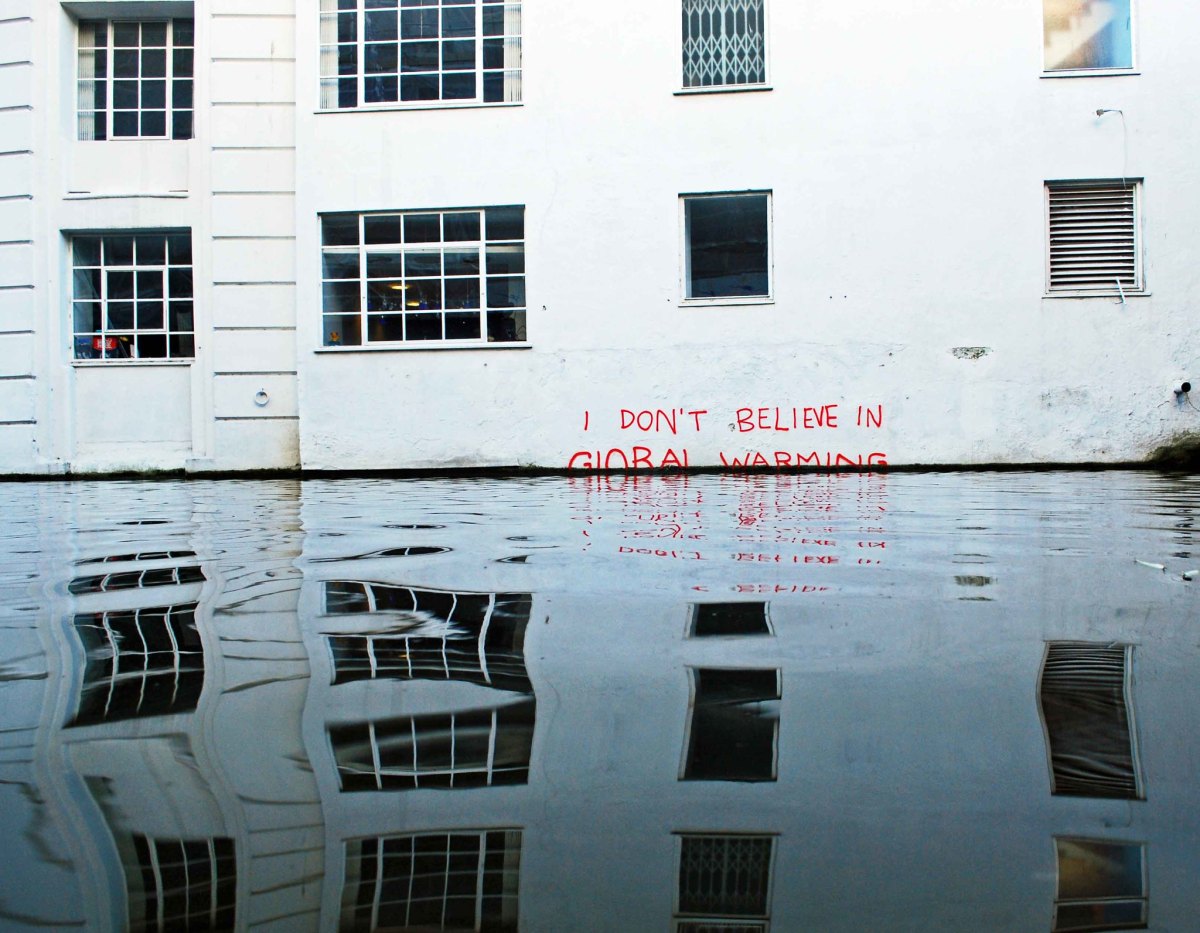
Fast forward to 2024, and Banksy’s message is as relevant as ever.
The artwork has become a symbol frequently referenced during climate action events and discussions. During London Climate Action Week 2023, the piece was prominently highlighted to emphasize the ongoing struggle against climate change denial and the urgent need for collective action.
In 2024, the impacts of climate change are more visible and frequent. From severe weather events to rising sea levels, the urgency to act against global warming has never been more pronounced.
Banksy’s artwork embodies the sentiment of disbelief and denial that unfortunately still circulates in some parts of society. Yet, it also inspires hope, pushing the narrative that awareness and action can and must rise above the tide of denial.
More by Banksy: 24 artworks by Banksy: Who Is The Visionary of Street Art
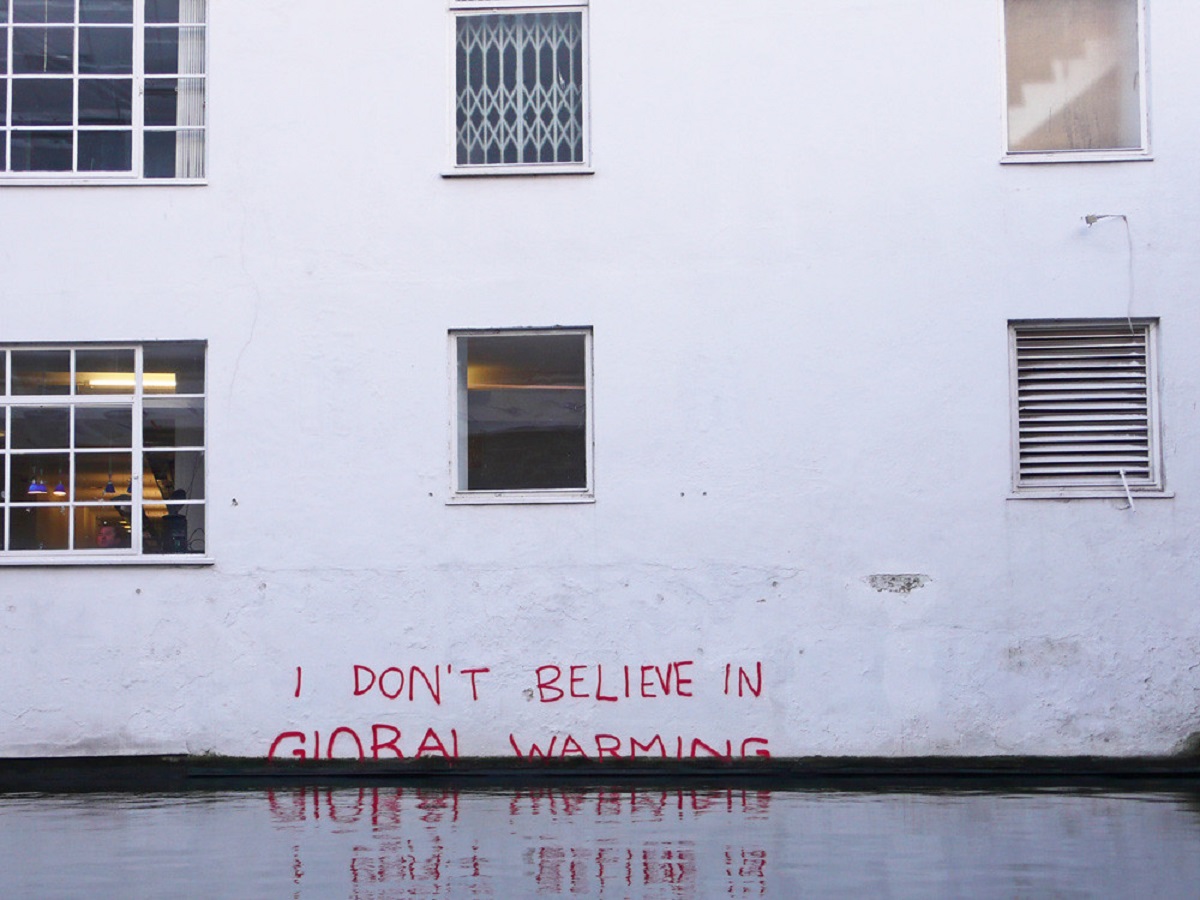
More by Banksy: Street Art Legend Banksy Reveals His Name in a Rare BBC Interview
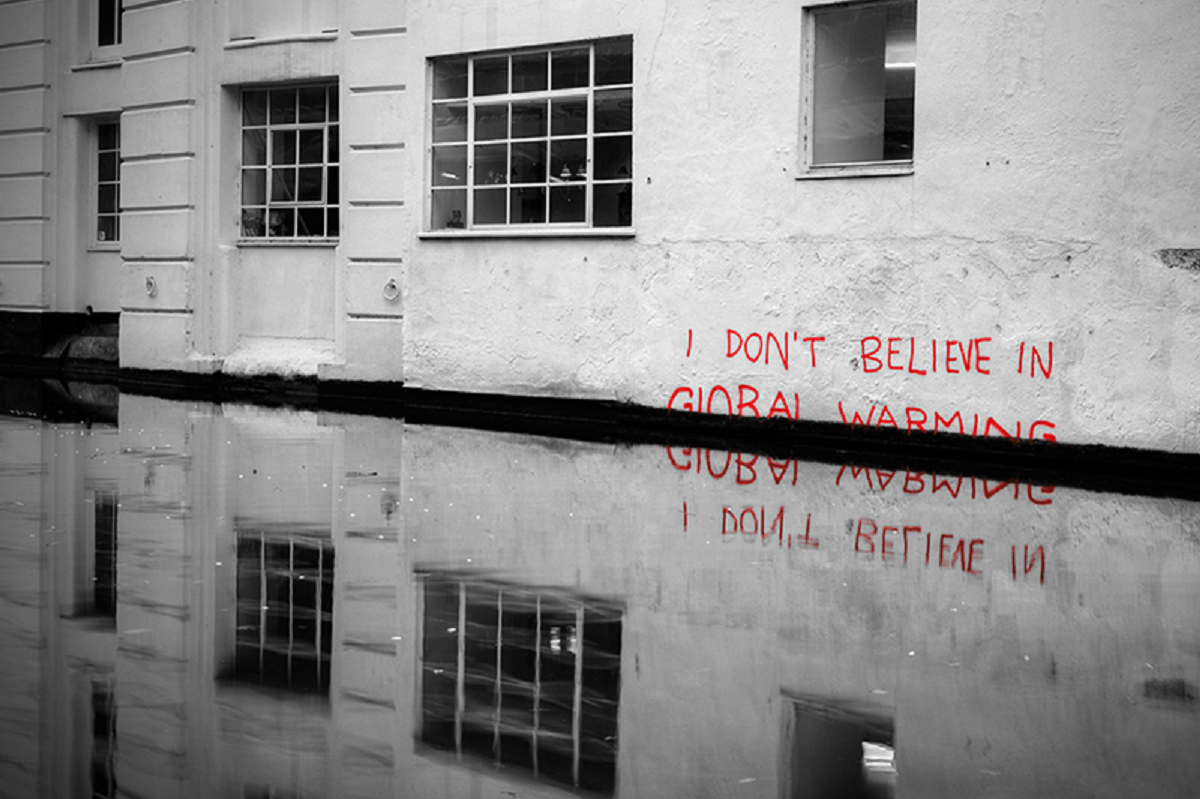
More: Politicians Discussing Climate Change (Street Art by Isaac Cordal)
What do you think about this artwork by Banksy?
Climate Change Addressed Through Street Art (16 Powerful Images)
Climate change is one of the most pressing issues facing our planet, and artists are using graffiti and street art as a powerful means to address this global crisis.
In today’s blog post, we’ll explore 16 awe-inspiring images that not only capture the urgency of climate change but also inspire us to take action in our daily lives.1. Melting Ice: A Visual Reminder of Our Fragile Ecosystem
One powerful image that often appears in climate change-themed street art is the depiction of melting ice caps and glaciers. These striking visuals serve as a stark reminder of the rapid and devastating impact of global warming on our planet’s delicate ecosystems.Melting ice installations can make warming feel immediate — here’s one example:
By Oakoak
Climate Change: Tiny ice figurines draw attention to big problem
2. Endangered Species: The Fight to Preserve Biodiversity
Many artists use their talent to draw attention to the plight of endangered species, highlighting the importance of conservation efforts to protect Earth’s biodiversity. These emotive images remind us of the consequences of inaction and encourage us to support wildlife preservation.By Louis Masai at Shoreditch Station in London, UK
“The Wrong Amazon Is Burning” on the Amazon Tower in Berlin
3. Deforestation: The Disappearing Lungs of Our Planet
Street art that tackles deforestation brings attention to the alarming rate at which we are losing Earth’s precious forests – our planet’s lungs. These powerful images drive home the importance of preserving our natural resources and the urgent need for reforestation efforts.By Dr Love at Upfest – In Bristol, England
Martín Ron: The causes? Many: Extreme climate change, drought, deforestation, reduction of wetlands and a lot of disinterest in asking ourselves questions. The consequences? Too many. This mural is part of a new series of murals in which I am working where the protagonist is the reflection. And how opportune to get involved to invite you to reflect on what happens when a river runs out of water.
4. Flooding: When Water Reaches the Streets
As seas rise and storms push water further inland, flooding is becoming a brutal reality for coastal cities. This kind of work makes the threat feel physical — not theoretical — and reminds us what’s at stake when the water keeps climbing.Support – By Italian sculptor Lorenzo Quinn in Venice, Italy.
5. Rising Sea Levels: The Threat of Disappearing Coastlines
Rising sea levels pose a significant threat to coastal communities worldwide. Street art depicting submerged cities and landscapes can evoke a strong emotional response, emphasizing the need for immediate climate action to protect our planet’s future.By Banksy: I don’t believe in global warming
6. Pollution: The Toxic Reality of Our Modern World
Graffiti and street art can serve as a powerful reminder of the consequences of unchecked pollution, from smog-filled skies to plastic-choked oceans. These images can inspire us to make sustainable choices and reduce our individual carbon footprints.By HIJACK
CONDITIONAL LOVE – By SaRX 404 on Climate Change
7. Renewable Energy: The Path to a Cleaner Future
Many artists choose to showcase renewable energy solutions in their work, promoting a cleaner, greener future. By depicting solar panels and wind turbines, these images encourage us to support and invest in alternative energy sources.Clean Energy – By TABBY
Shell / oil satire (“Shel-hell”)
8. Sustainability: A Lifestyle Shift
Street art can inspire us to adopt more sustainable lifestyles by highlighting the benefits of eco-friendly practices, such as recycling, composting, and reducing waste. These images can motivate us to make simple, everyday changes to lessen our impact on the environment.By Leon Keer: Nice 3D effect and interesting motifs on the cups if you look closer. Green – oil rigs and a polluted beach. Pink – a stranded broken abandoned boat. Brown – a dead moose. Blue – a far from equal meeting between settlers and Indians.
9. Climate Activism: The Power of Collective Action
Many artists use their work to celebrate and support climate activism, featuring images of protesters and powerful messages calling for change. These visuals remind us that our collective voices can make a difference in the fight against climate change.Politicians Discussing Climate Change by Isaac Cordal
10. Hope: A Brighter Future Awaits
Lastly, climate change-themed street art often conveys a message of hope, depicting a brighter, greener future if we take action now. These uplifting images serve as a reminder that it’s not too late to make a positive impact on our planet’s health.By Herr Nilsson (Spring Beast 2022)
These 16 powerful images of graffiti and street art addressing climate change remind us of the urgency to act and inspire us to make a difference in our daily lives.
Whether it’s supporting renewable energy, reducing waste, or advocating for policy changes, each one of us has the power to contribute to the fight against climate change. Let these compelling visuals serve as a call to action, motivating us to protect our planet for generations to come.