Search
Items tagged with: BordaloII
For The Planet (11 Photos)
Content warning: Explore seven extraordinary street art pieces that merge creativity and activism, spotlighting pressing environmental issues like climate change and sustainability. These masterpieces demonstrate the power of public art to inspire action for our planet.
The Nature of Street Art: A Canvas for Environmental Messages
Street art has always been a powerful medium for expressing social and political views, transforming cityscapes into vibrant canvases and sometimes provoking images. Among the myriad themes street artists choose to explore, environmental awareness has emerged as a prevalent topic. This post will take you on a virtual tour of seven famous street art pieces across the globe that echo the call for environmental protection and sustainability.
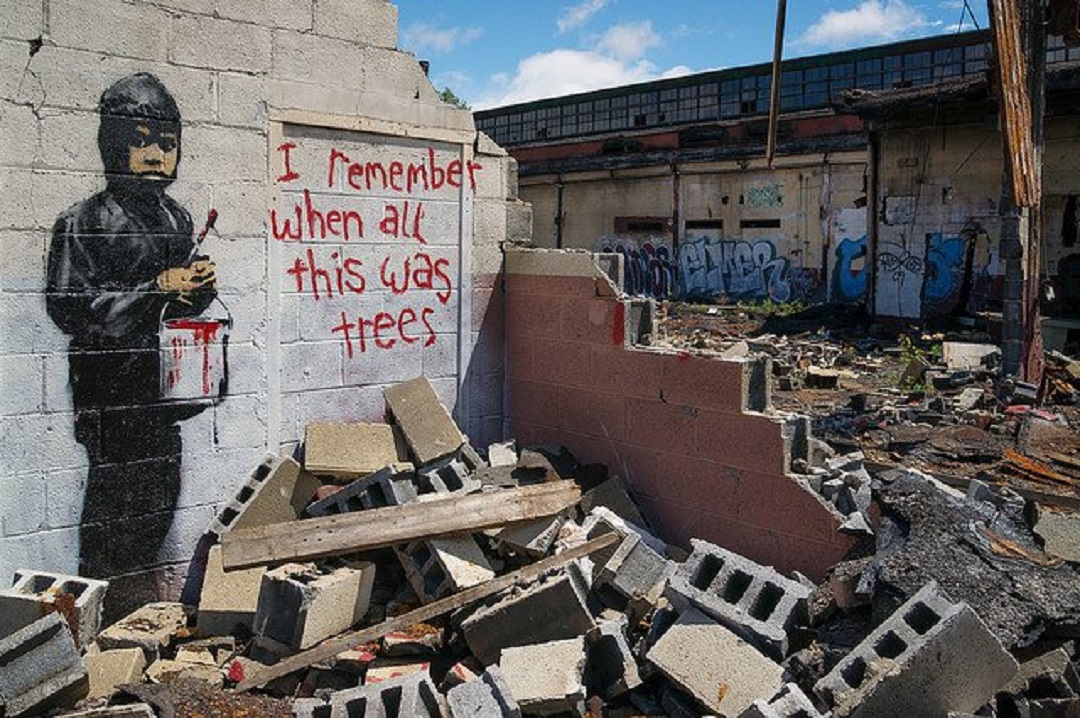
1. Banksy’s ‘I Remember When All This Was Trees’ – Detroit, USA
Arguably one of the most famous street artists in the world, Banksy is known for his distinctive stenciling technique and biting social commentary.
This piece, found in an abandoned Detroit factory, depicts a small child holding a can of red paint, behind him, the words, “I remember when all this was trees.” The powerful message speaks volumes about urban decay and the loss of natural habitats.
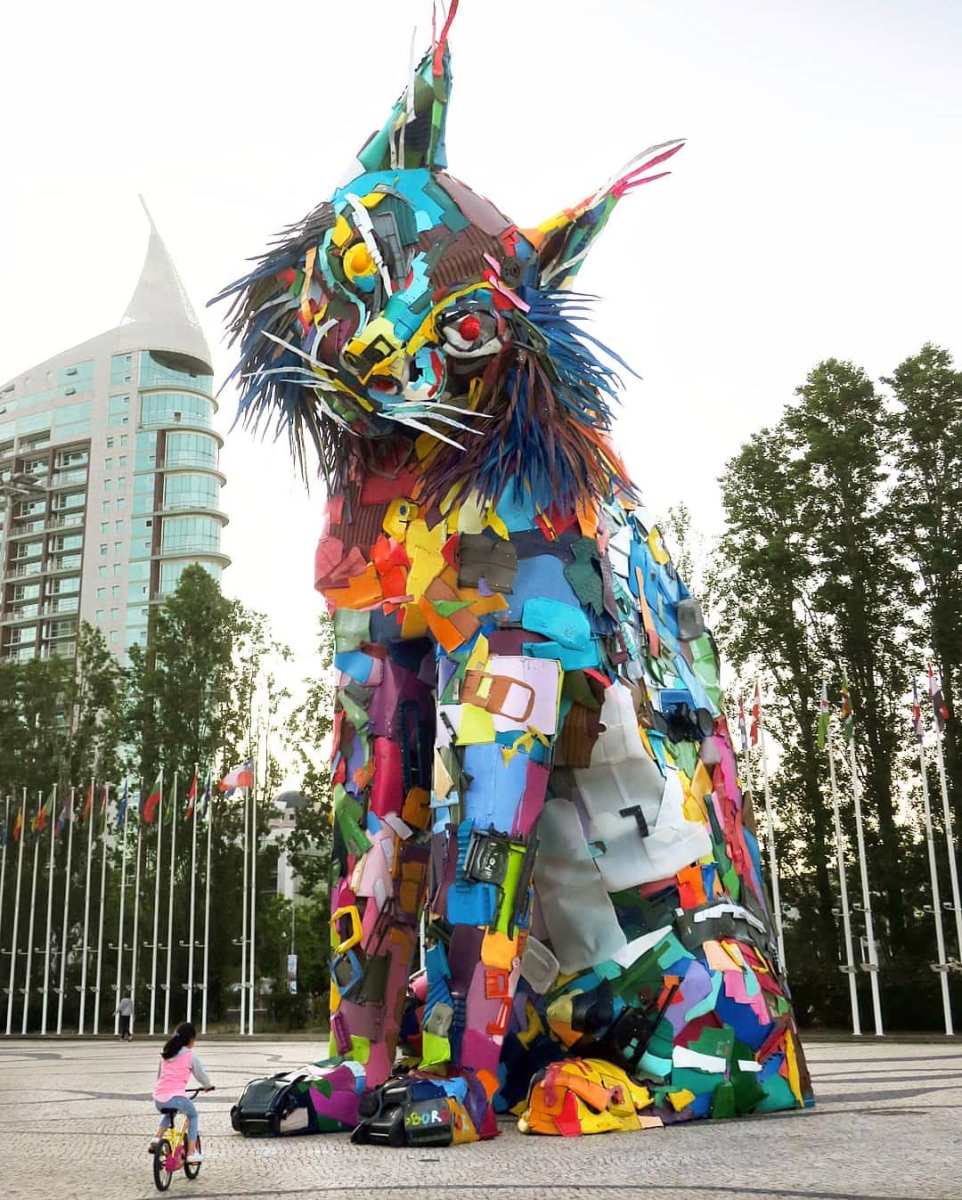
2. Bordalo II’s Trash Animals – Lisbon, Portugal
Bordalo II creates striking 3D art pieces using discarded materials, highlighting the issue of waste production and its impact on the planet. His ‘Trash Animals’ series, found throughout Lisbon, reimagines urban waste as vibrant, larger-than-life animal sculptures, showing the beauty of wildlife in a sharp contrast and the ugliness of our throwaway culture.
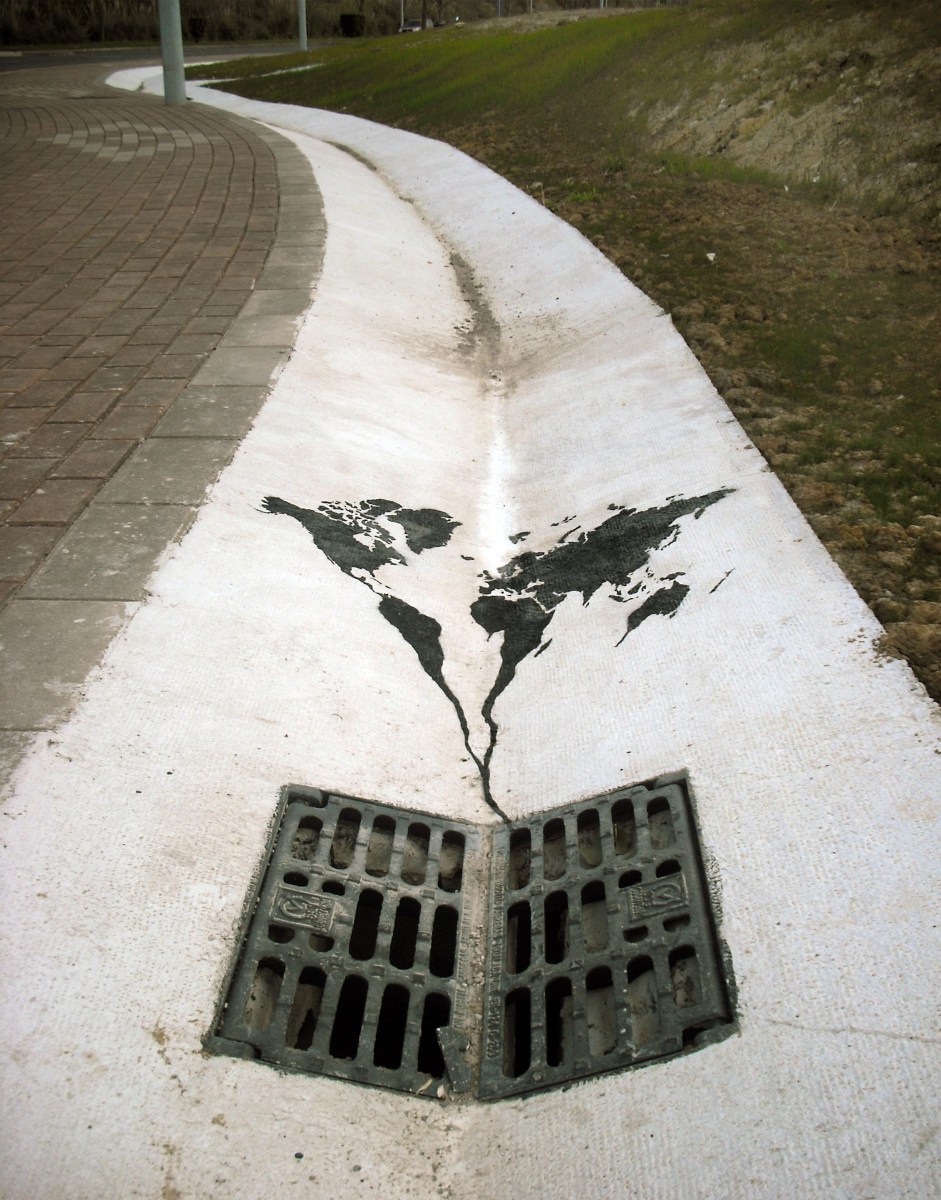
3. Pejac´s ‘The world going down the drain’ – In Santander, Spain
Spanish artist Pejac‘s street art in Santander, Spain, depicts a the world going down in to the sewer, a potent statement about our dependency on fossil fuels and its consequences for the environment. The simple but effective imagery forces us to confront our relationship with energy consumption.
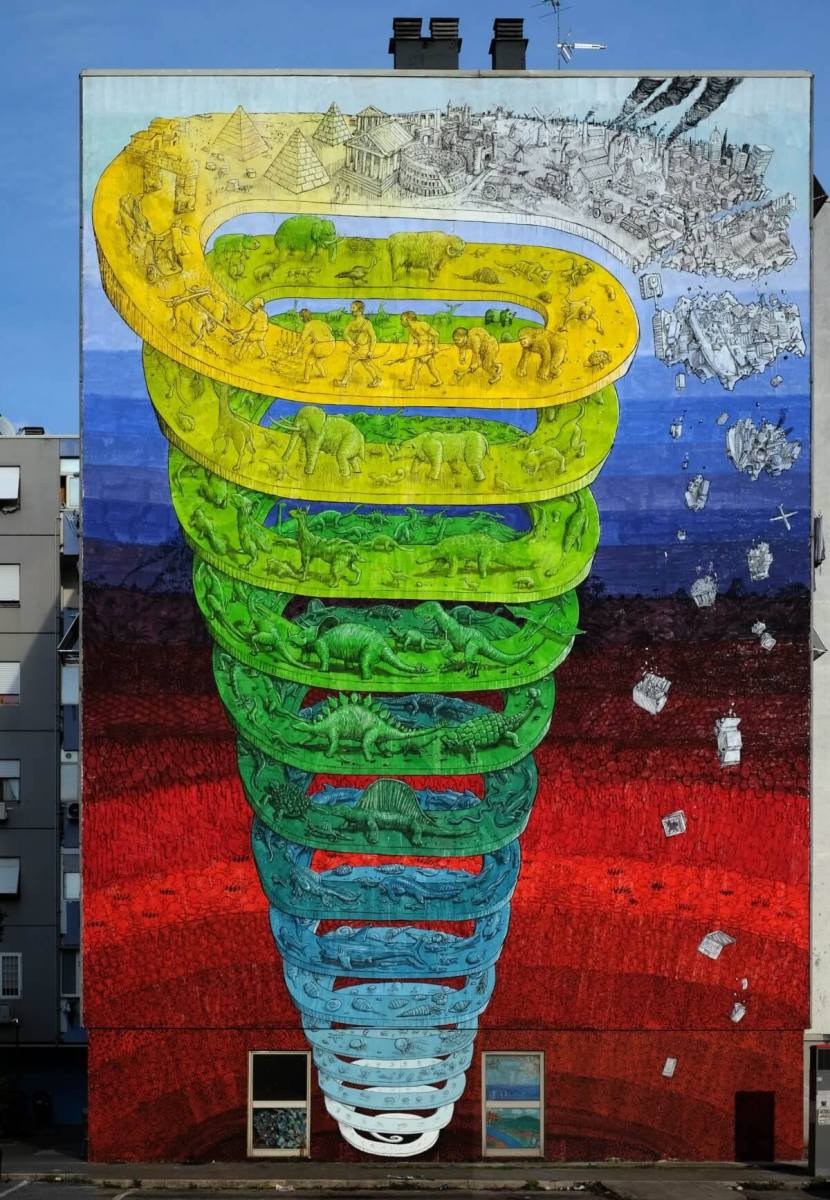
4. Blu’s ‘SPIRALE’ – At Casa Dei Pazzi in Rome, Italy
This expansive mural by the Italian artist Blu depicts our colorful world tru history being consumed by greed and waste. Filled with provoking symbolism, it’s a critique of consumerist society and the environmental degradation that accompanies it.
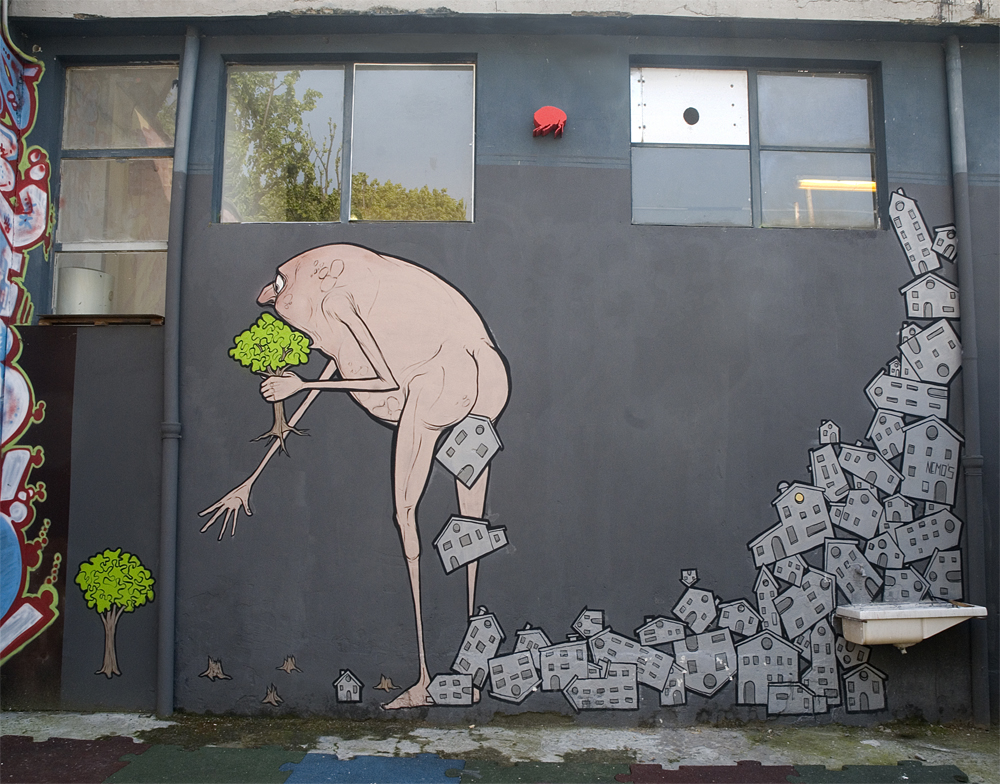
5. Nemos’s ‘Cagacemento’ – In Milano, Italy
NemO’s: I lived in Milan in Italy for a while and because I come from a small city surrounded by countryside this big city seemed like a desert of cement to me, the skyline was barely visible! Every huge metropolis seems like a stain of oil that looks still but is slowly expanding and gulping everything down! I felt the necessity to show and tell the story of the expanding city that feeds on nature and expels cement waste!
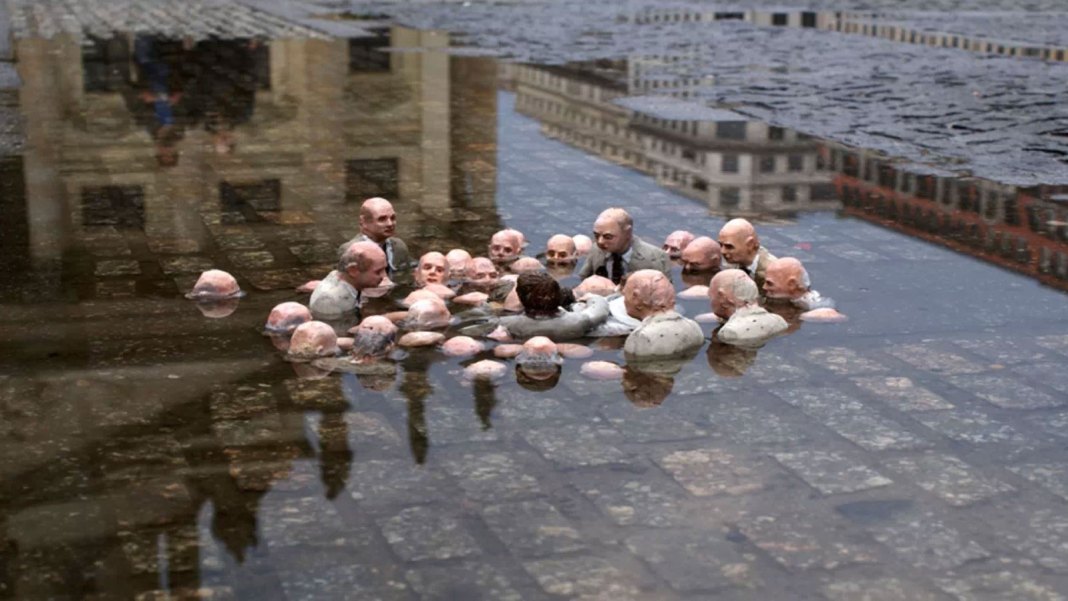
6. Isaac Cordal’s ‘Follow the leaders’ – Berlin. Germany
This installation, popularly known as “Politicians discussing global warming”, by Isaac Cordal, a Spanish artist known for his miniature sculptures, shows small figures in business suits partially submerged in water, indifferent to their impending doom. It’s a biting commentary on the inaction regarding climate change.
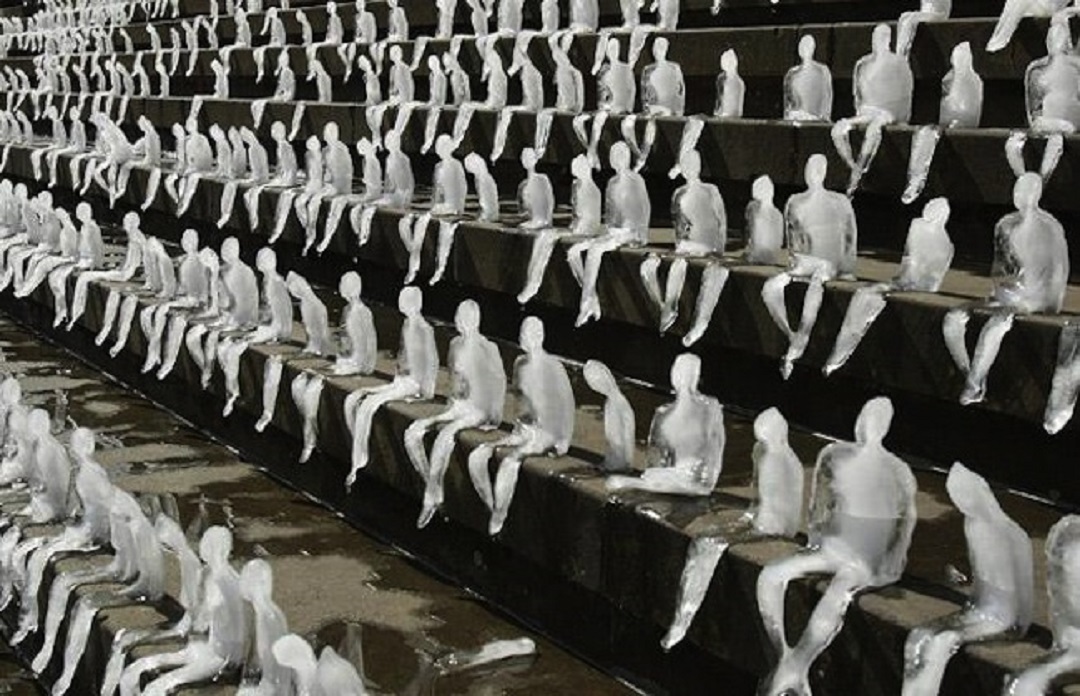
7. Nele Azevedo placed 1,000 melting ice sculptures in Berlin to show the effects of climate change
More photos and about the artwork: Tiny ice figurines draw attention to big problem
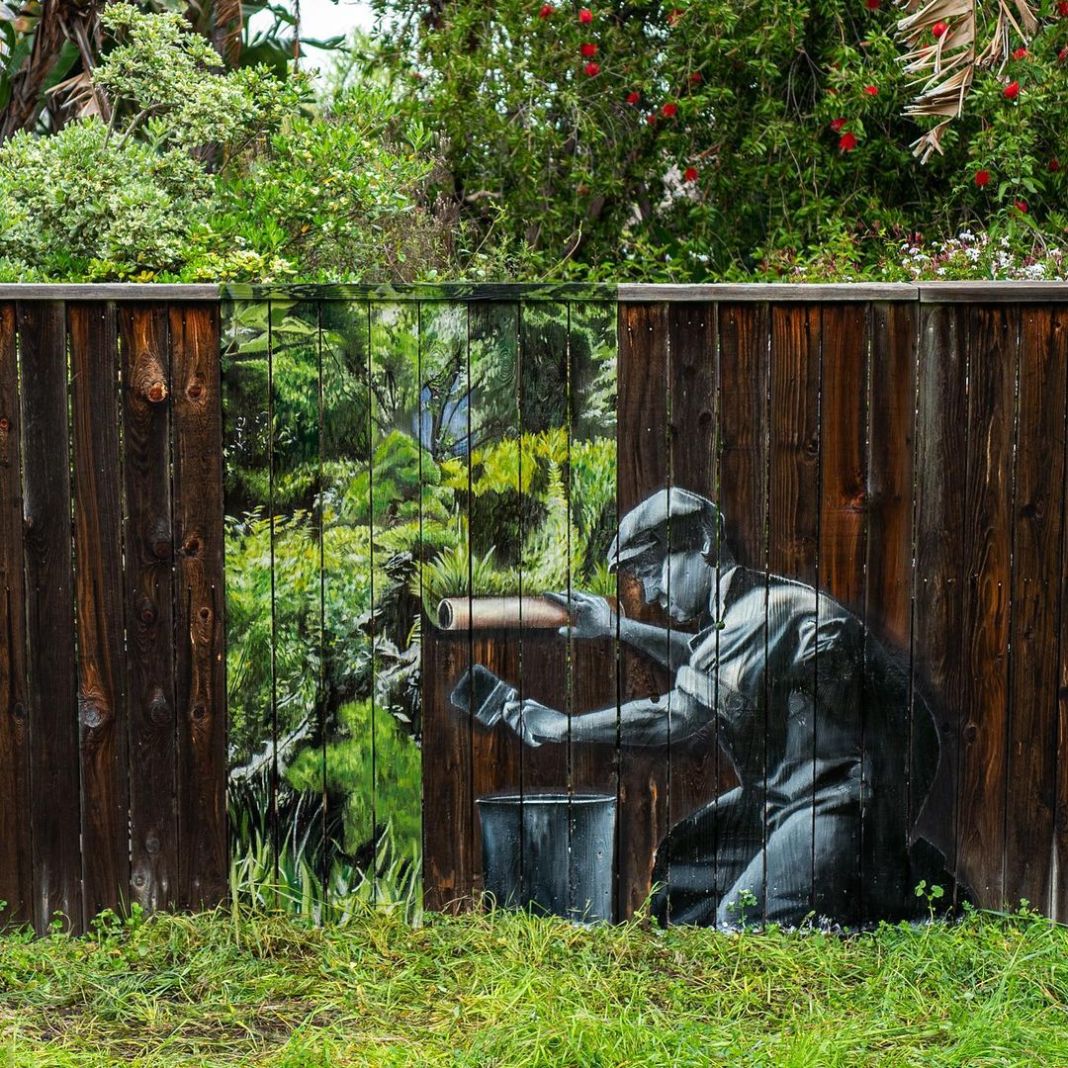
8. Make Earth Green Again – By HIJACK.
More: Street Art by HIJACK – A Collection (42 photos)
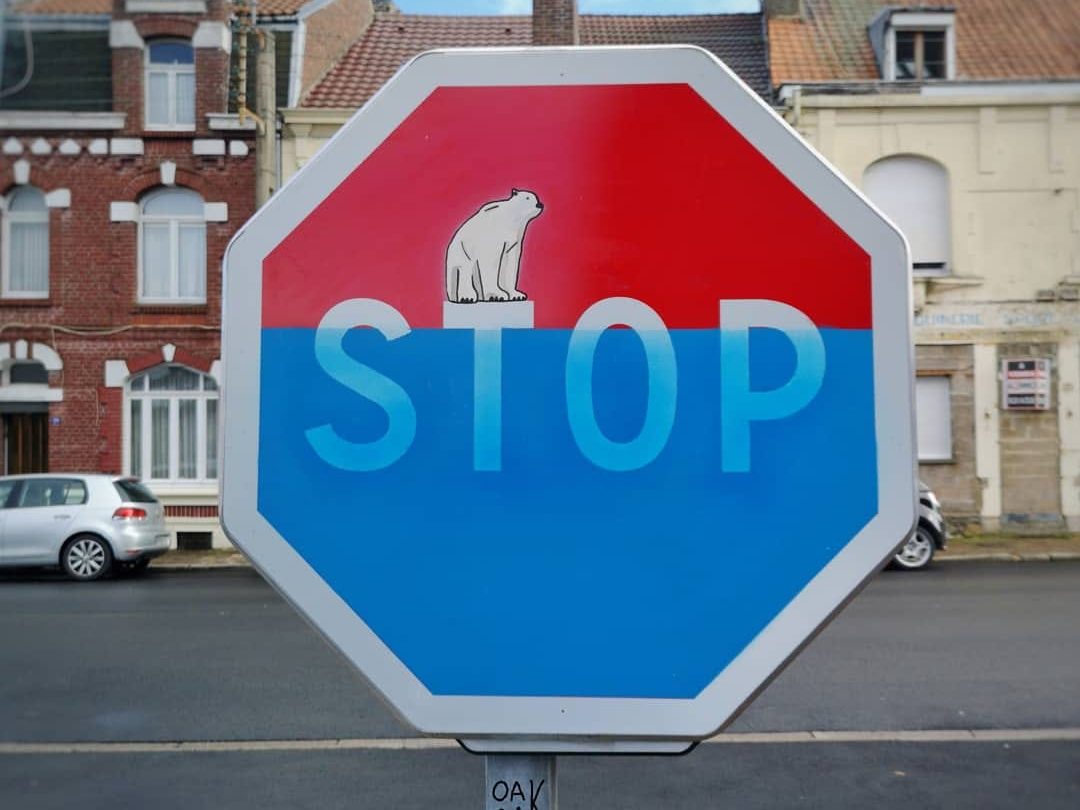
9. Oakoak uses a stop sign to highlight climate change with a polar bear stranded on melting ice.
More: Oakoak’s Genius Street Art! (10 Photos)
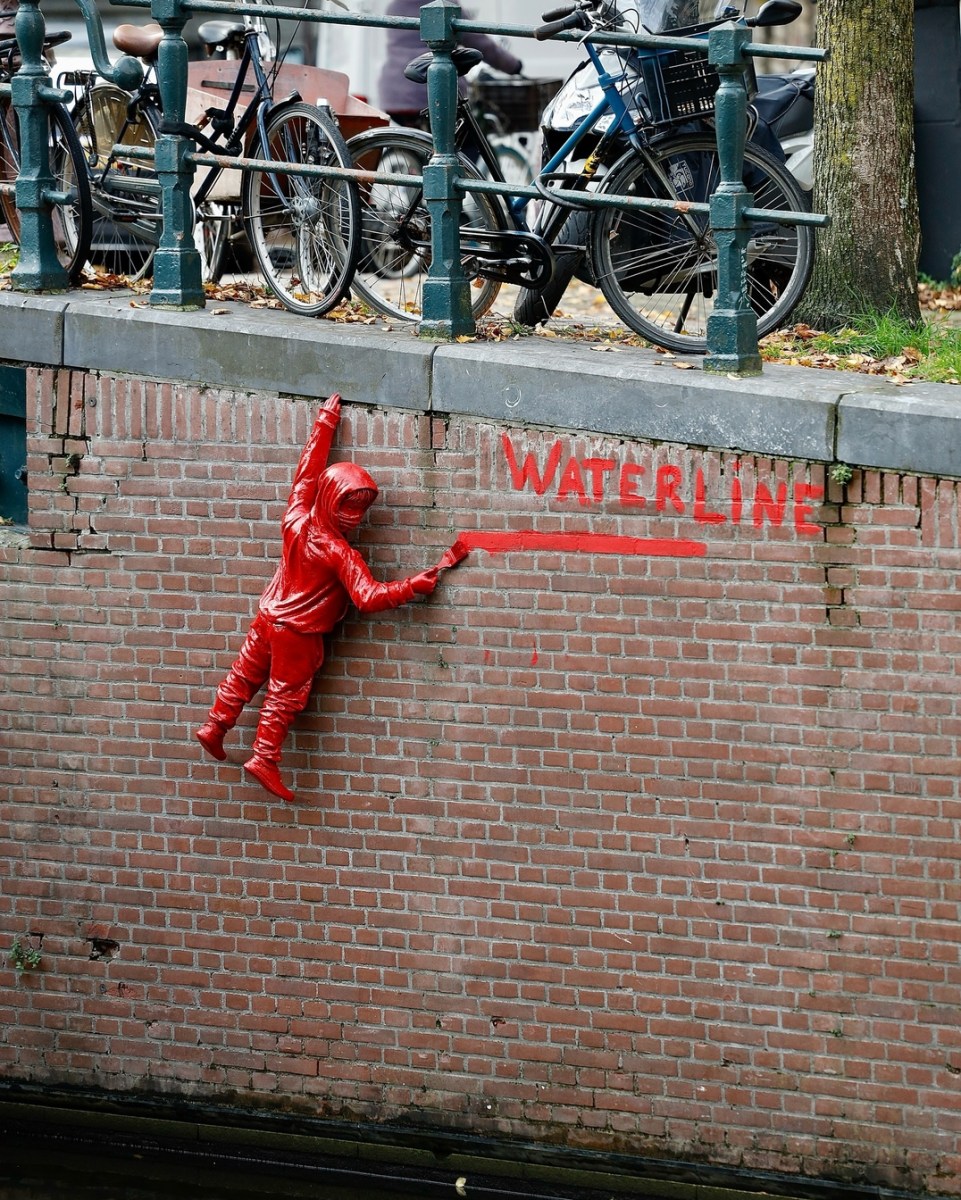
10. Waterline on Climate Change by James Colomina in Amsterdam, Netherlands
Follow James Colomina on Instagram!
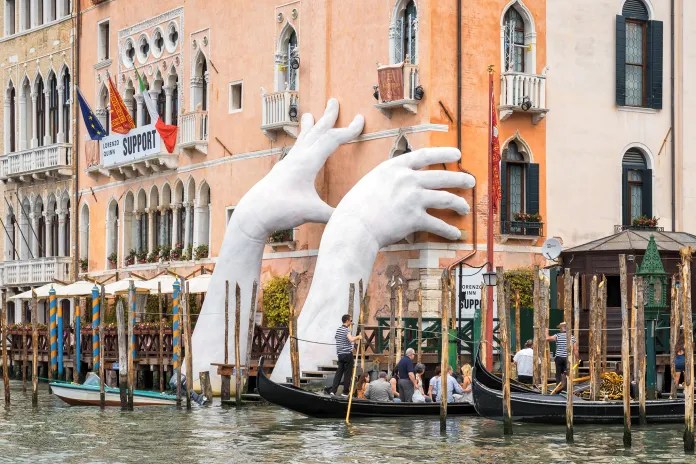
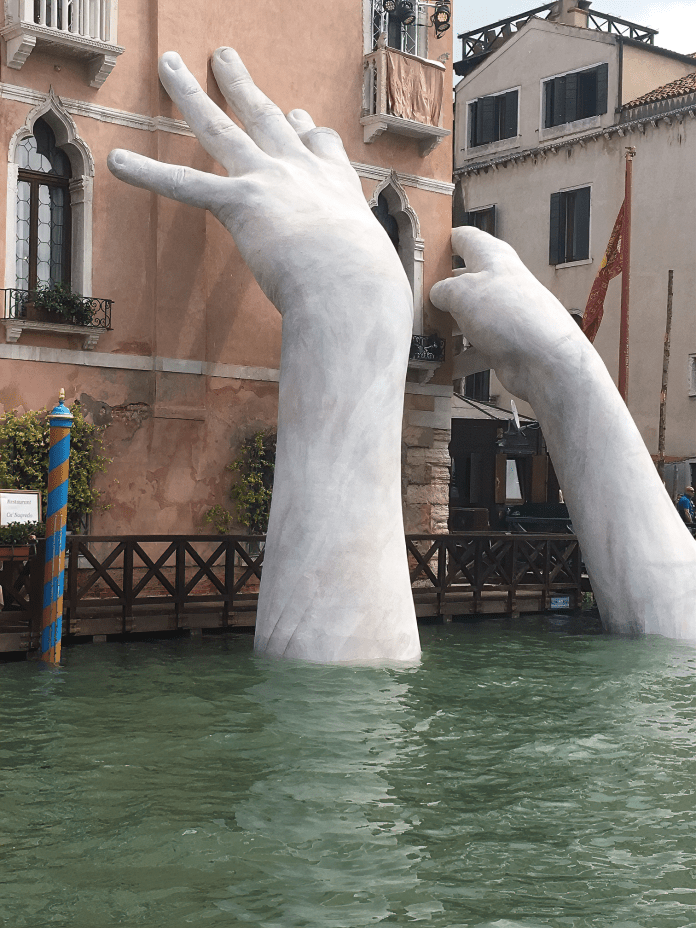
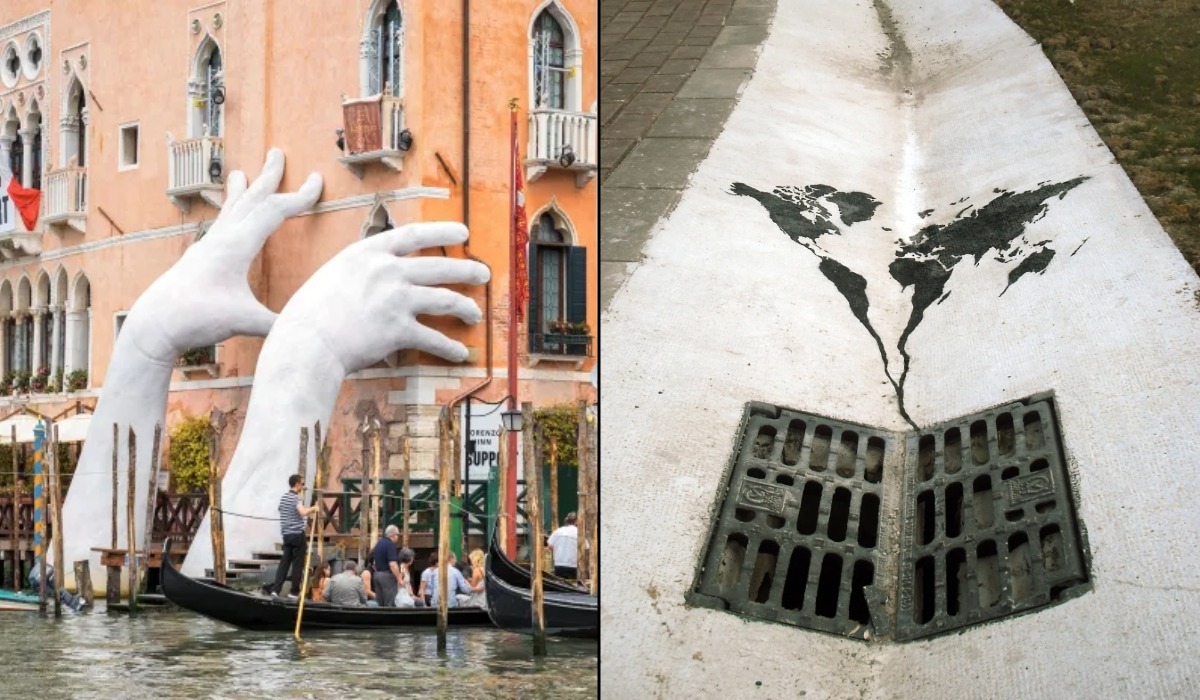
11. Support — By Lorenzo Quinn in Venice, Italy
Two massive white hands rise from the Grand Canal, appearing to hold up the walls of the Ca’ Sagredo Hotel in Venice. Created by Italian sculptor Lorenzo Quinn, the artwork is both dramatic and symbolic—a call to address climate change before it’s too late.
About and more photos: Support – Message About Climate Change
More: Climate Change Addressed Through Street Art (16 Powerful Images)
Which one is your favorite?

Banksy? Who Is The Visionary of Street Art? (25 Photos)
I. Unmasking the Enigma: A Deep Dive into Banksy’s Street Art Revolution
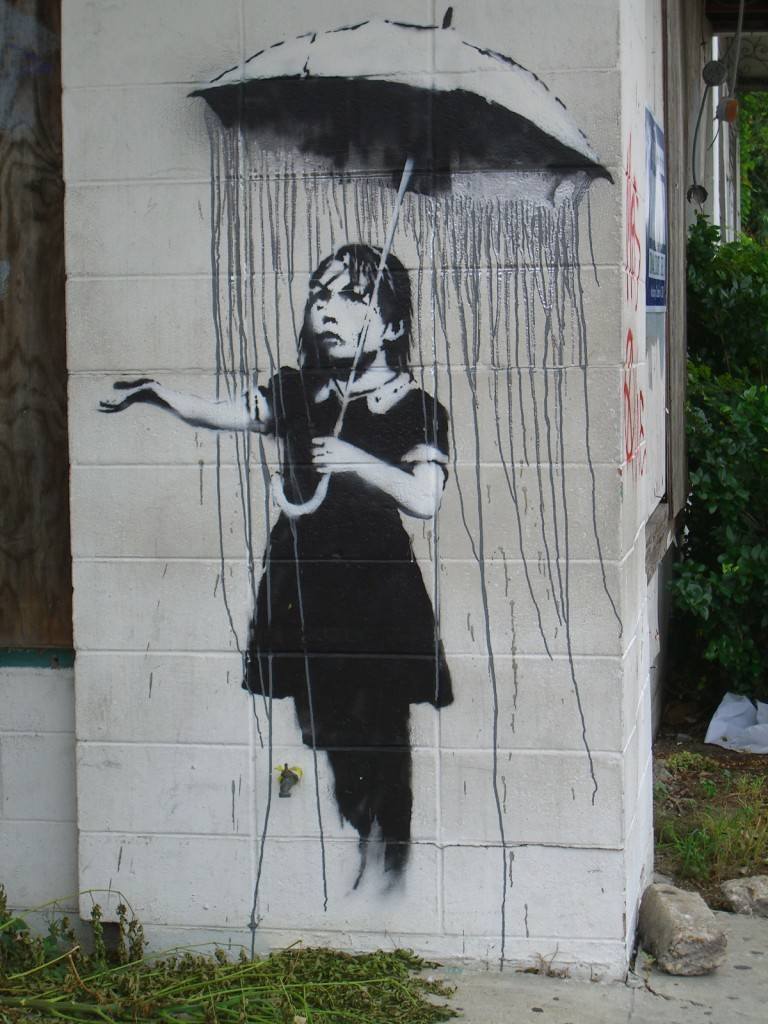
In the dynamic world of street art, few names are as resonant or as enigmatic as Banksy. A spectral figure whose identity remains shrouded in mystery, Banksy is a paradox of fame and anonymity, a revolutionary whose works have transformed public spaces and challenged societal norms. His art, often laced with potent political commentary and sharp satire (see 14 Great Banksy Street Art Photos and Quotes!), has left indelible marks on urban landscapes worldwide. Yet, the man behind the spray can remains elusive, his identity a secret closely guarded, adding an irresistible aura of intrigue to his body of work.This paradox is part of what makes Banksy not just a street artist, but a phenomenon. His work captures the zeitgeist, reflecting the turbulence, the dissent, and the hope of our times. His stencils—be they on the walls of London, the remnants of the West Bank barrier, or the ruins of Hurricane Katrina—have a way of speaking truth to power that has resonated with millions around the globe.
More: Banksy’s Hidden Identity Revealed?
Banksy visited New Orleans, three years after the devastation of Hurricane Katrina, in August 2008
For more than three decades, Banksy has been pushing boundaries, challenging conventions, and redefining the very concept of public art. Through his stencils, he has brought the subversive ethos of the underground to the surface, making it impossible for us to ignore the social and political injustices of our world. His works are more than just provocative images; they are a call to action, a demand for change.
In this exploration, we will journey through the chaotic, captivating world of Banksy’s artistry. From his early days in Bristol’s graffiti scene to his headline-making stunts in the global art market, we’ll take a closer look at how Banksy’s work has evolved and why it continues to captivate and challenge us. Through the lens of 24 select artworks, we hope to gain a deeper understanding of the visionary artist who has forever transformed the landscape of street art.
So, who is Banksy? Let’s uncover the story behind the spray can. Let’s delve into the revolution sparked by this enigma. Through his art, let’s explore the world according to Banksy.
II. A Stencil Revolution: The Genesis of Banksy’s Distinctive Style
Banksy’s journey into the world of street art began on the streets of Bristol, England, a city known for its vibrant graffiti culture. As a teenager in the 1980s, he was part of a graffiti crew called the DryBreadZ Crew (DBZ). His early work, like much of the graffiti of the time, was freehand. However, an encounter with the law sparked a transformative shift in Banksy’s approach to street art.Legend has it that a young Banksy was hiding from the police under a garbage truck when he noticed stenciled serial numbers on the truck. The stencil technique piqued his interest, offering a faster, more efficient way to paint, allowing him to dodge law enforcement while still leaving his mark. This chance discovery would not only define his artistic style but would also revolutionize the street art scene.
Banksy in towns on the east coast of England (7 artworks)
Stenciling allowed Banksy to create intricate and detailed pieces with precision and speed. His works were more controlled, more refined, and more complex than the freehand graffiti that dominated the streets. This technique also lent his art a distinct aesthetic — one that was cleaner, sharper, and more visually striking. He could create multi-layered artworks, combining stencils with other media and incorporating pre-existing elements in the urban landscape into his installations.
In the early 2000s, Banksy moved from Bristol to London. His stenciled works started appearing on walls, bridges, and streets across the city, turning the urban landscape into an open-air gallery of his art. Each piece was a visual protest, a political statement, a satirical commentary. They challenged authority, poked fun at societal norms, and provoked public discourse, making Banksy a controversial figure in the art world.
Yet, it was precisely this controversy, coupled with his distinctive style and incisive commentary, that catapulted Banksy to international recognition. By turning to stencils, Banksy had not only found his artistic voice, but he had also found a way to make the streets echo with that voice. In doing so, he sparked a stencil revolution that would forever alter the course of street art.
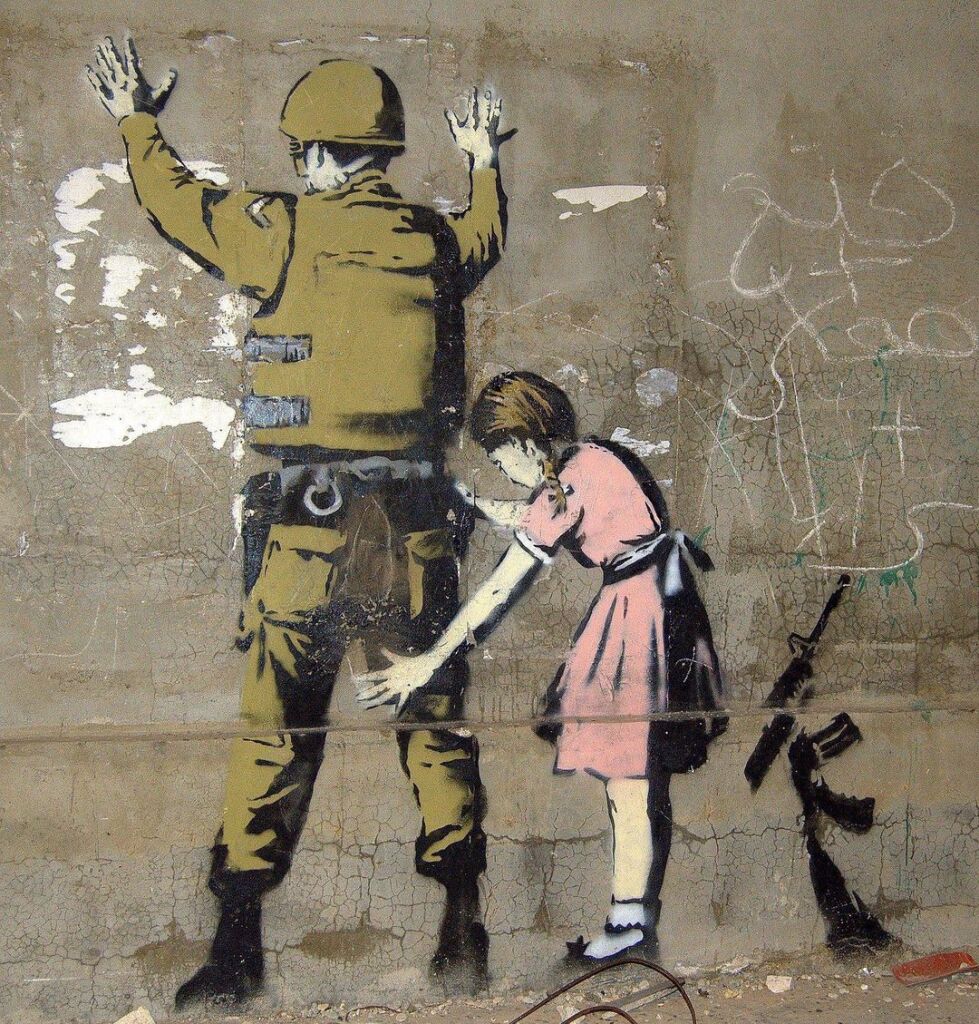
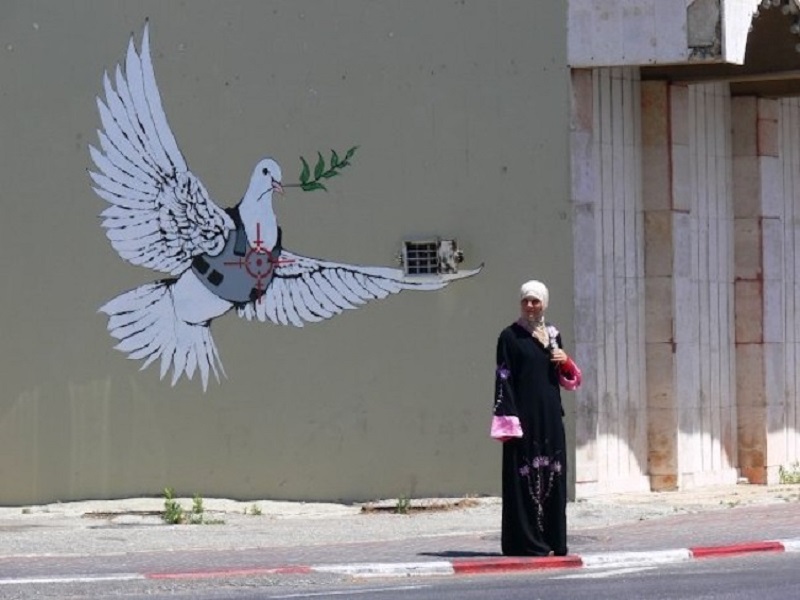
Young girl frisking a soldier by Banksy in Bethlehem
III. Crafting Satire and Shadows: The Unmistakable Artistic Approach of Banksy
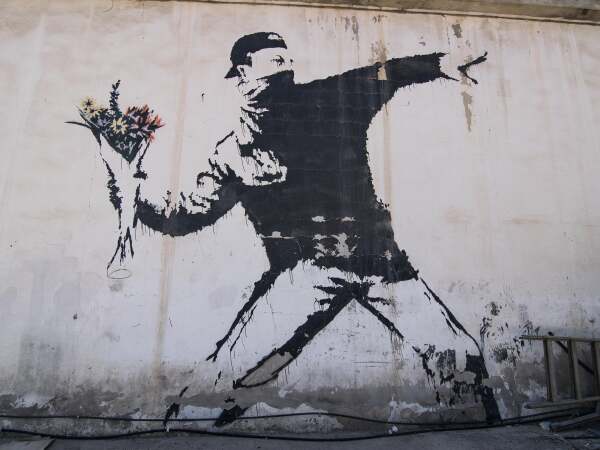
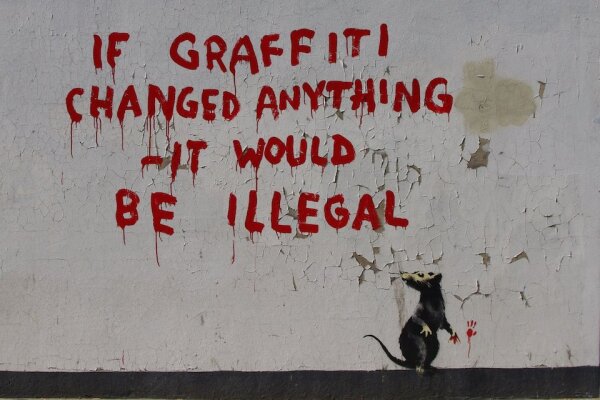
Banksy’s artistic approach, while grounded in the use of stencils, is far from one-dimensional. The street artist has developed a style that is as layered and nuanced as the messages he conveys. Delving into Banksy’s work reveals a masterful blend of satire, subversion, and sociopolitical commentary, all wrapped in a distinctive visual package that has become his trademark.Perhaps the most defining aspect of Banksy’s approach is his biting satire. With a keen eye for irony, Banksy often juxtaposes contrasting images and ideas to comment on societal issues. His works are full of dark humor and sharp wit, turning everyday scenes into powerful satirical statements. Whether it’s a rioter throwing a bouquet of flowers instead of a molotov cocktail or a young girl frisking a soldier, Banksy’s art challenges viewers to reassess their preconceived notions and question the status quo.
The Flower Thrower, Flower Bomber, Rage, or Love is in the Air is a 2003 stencil mural in Beit Sahour in the West Bank
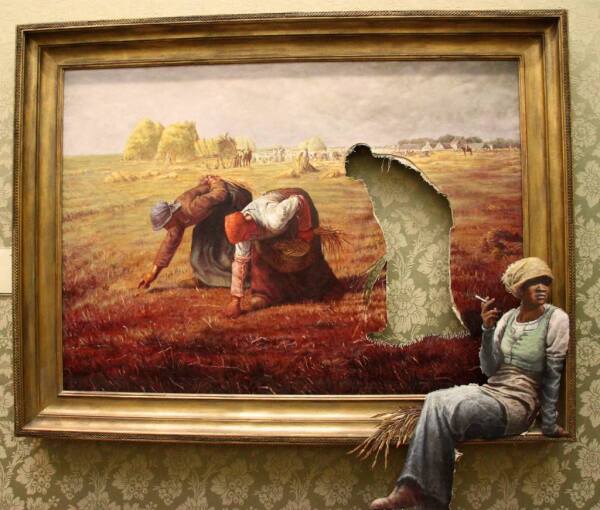
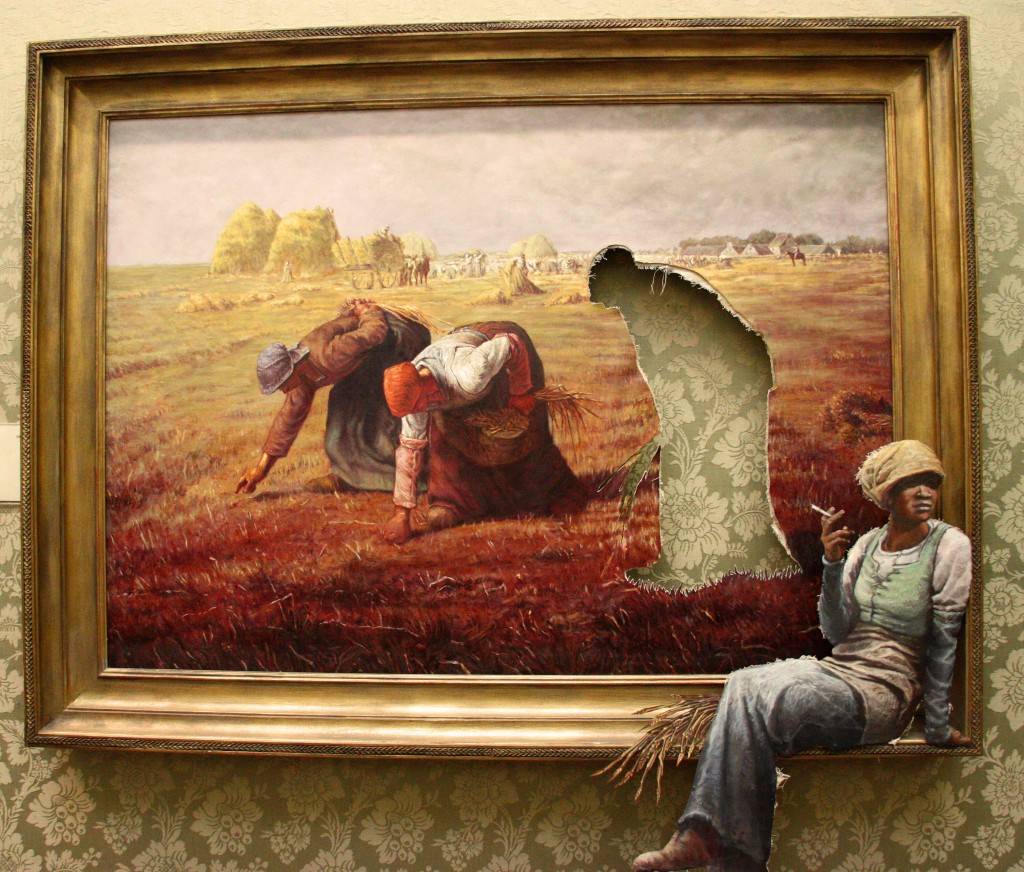
Equally important to Banksy’s approach is his use of subversion. He consistently undermines authority and disrupts conventional narratives, pushing against the boundaries of what is deemed acceptable or normal. This can be seen in his unauthorized installations in museums, his self-destructing artwork at an auction, or his dystopian theme park, Dismaland. Each act is a bold statement against institutional power and the commercialization of art.
On the visual front, Banksy’s art is marked by a striking use of black and white, with occasional pops of color. This minimalist color palette underscores the starkness of his messages and adds to the visual impact of his works. He also employs a careful play of light and shadow, giving depth and realism to his stenciled figures. Even when working on a flat surface, Banksy’s figures appear three-dimensional, as if they could step out of the wall and into the real world.
Moreover, Banksy often integrates elements of the urban environment into his artworks, transforming mundane objects and surfaces into significant components of his pieces. This creative use of the environment amplifies his art’s site-specific nature, making each piece a unique commentary on its context.
In essence, Banksy’s artistic approach is a dynamic interplay of style and substance. It merges form with content, aesthetics with message, and art with activism. Each piece is not just an artwork but a dialogue – a thought-provoking, boundary-pushing, and often uncomfortable dialogue that compels us to engage with the world in new and critical ways.
IV. From Shadows to Spotlight: The Unstoppable Global Impact of Banksy
Banksy’s rise to prominence is a testament to the power of street art as a medium for societal commentary. What began as stencilled tags in the back-alleys of Bristol has now gained international renown, resonating with audiences across the globe. His works are not merely confined to city walls, they have permeated popular culture, influenced political discourse, and even transformed the way we perceive and value art.One of the most significant aspects of Banksy’s global impact is how his art has bridged the gap between the street and the gallery. Banksy has successfully brought street art out of its perceived illegitimacy, forcing the art world to reconsider its boundaries and definitions. His works have sold for record-breaking prices at renowned auction houses such as Sotheby’s and Bonhams, showing that street art is more than capable of holding its own in the fine art market.
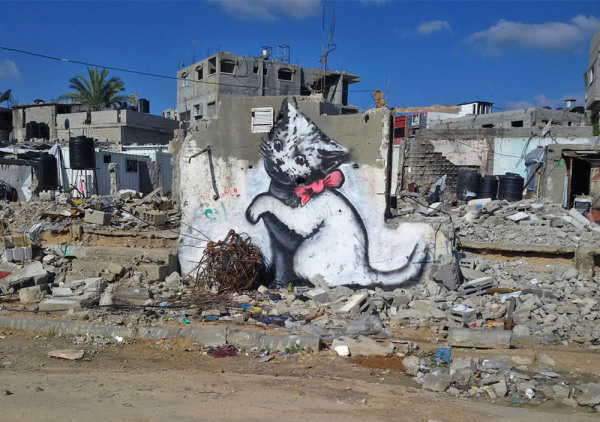
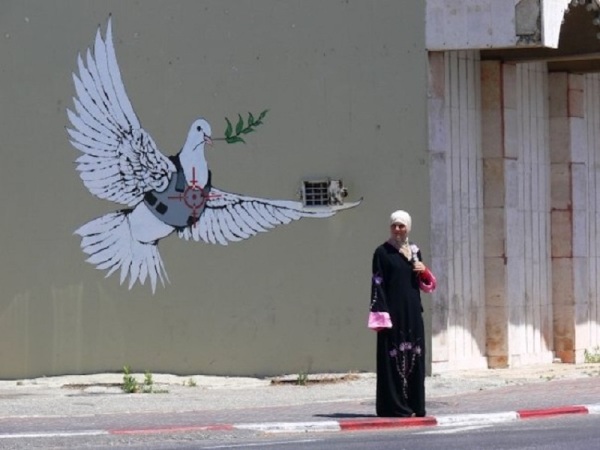
Banksy’s influence extends beyond the world of art, reaching into the realm of politics. His murals often tackle pressing issues like war, surveillance, consumerism, and inequality. His iconic pieces on the West Bank Barrier, for example, drew international attention to the Israeli-Palestinian conflict, showcasing the power of art as a tool for political activism.
Moreover, Banksy’s works have become viral sensations, spreading rapidly across the internet and reaching millions of viewers. The digital age has allowed Banksy’s art to transcend geographical boundaries, amplifying its impact to an unprecedented level. Each new Banksy piece triggers a flurry of online discussions, debates, and interpretations, showing how art can engage and connect people in the virtual space.
Banksy’s global impact is also evident in the way his art has inspired a new generation of artists. His audacious style, combined with his success in challenging the status quo, has paved the way for aspiring street artists worldwide. The “Banksy Effect” is a testament to his influence, proving that art can thrive outside traditional institutions and that artists can maintain their anonymity and independence while reaching a wide audience.
Perhaps most importantly, Banksy’s global impact lies in the conversations his art starts. His works provoke thought and spark dialogue, encouraging viewers to question their surroundings and critically engage with societal issues. Whether it’s a mural on a wall, a painting in an auction house, or an image shared on social media, Banksy’s art continues to challenge, disrupt, and inspire, solidifying his position as one of the most influential figures in contemporary art.
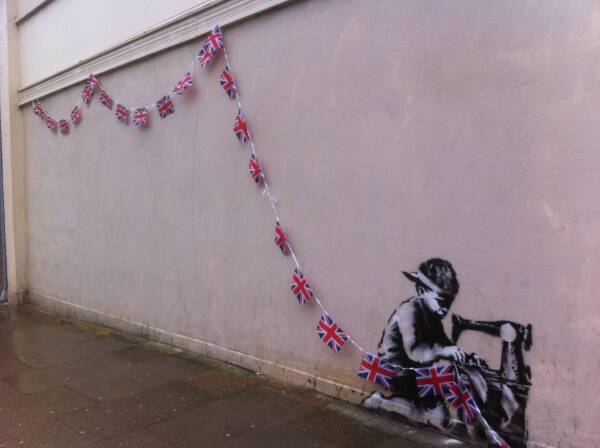
Banksy did this 2012 (London) to celebrate the Queen’s diamond jubilee
V. Beyond the Wall: Banksy’s Multifaceted Artistic Portfolio
Banksy’s artistic portfolio, despite being shrouded in mystery and anonymity, is one that never ceases to evolve, surprise and provoke. Stretching beyond the confines of the traditional graffiti scene, Banksy has become a modern-day renaissance artist, demonstrating a remarkable ability to experiment with different mediums and platforms while consistently delivering his signature blend of satire, subversion, and social commentary.In 2010, Banksy ventured into the world of filmmaking with “Exit Through the Gift Shop,” a documentary that explores the relationship between commercial and street art. The film, which received an Academy Award nomination for Best Documentary, showcases Banksy’s knack for storytelling and his ability to critique the art world from within its own apparatus.
Inside Banksy’s Dismaland
Inside Banksy’s Dismaland
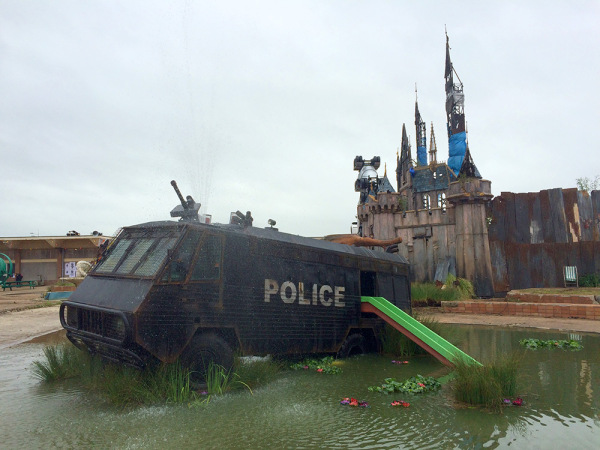
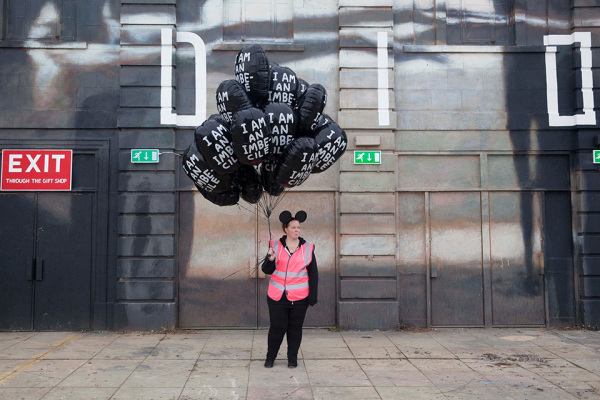
In 2015, Banksy took on an entirely new project: Dismaland, a dark, dystopian parody of Disneyland. This ‘bemusement park’ showcased ten new works from Banksy alongside pieces from 58 other artists. It was more than just an art exhibit; it was an immersive, interactive experience that critiqued the corporatization of leisure and the passive consumption of entertainment.
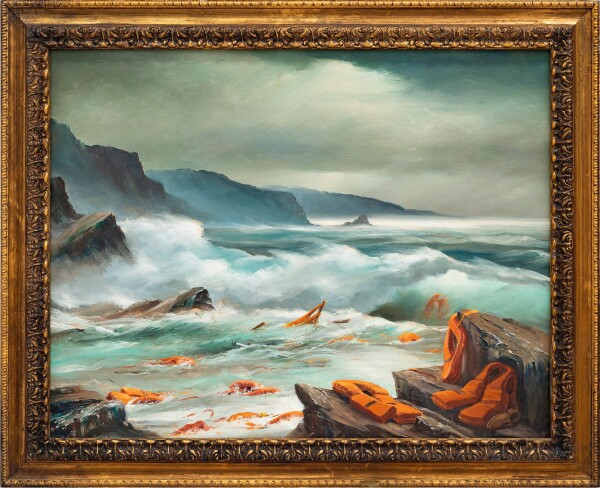
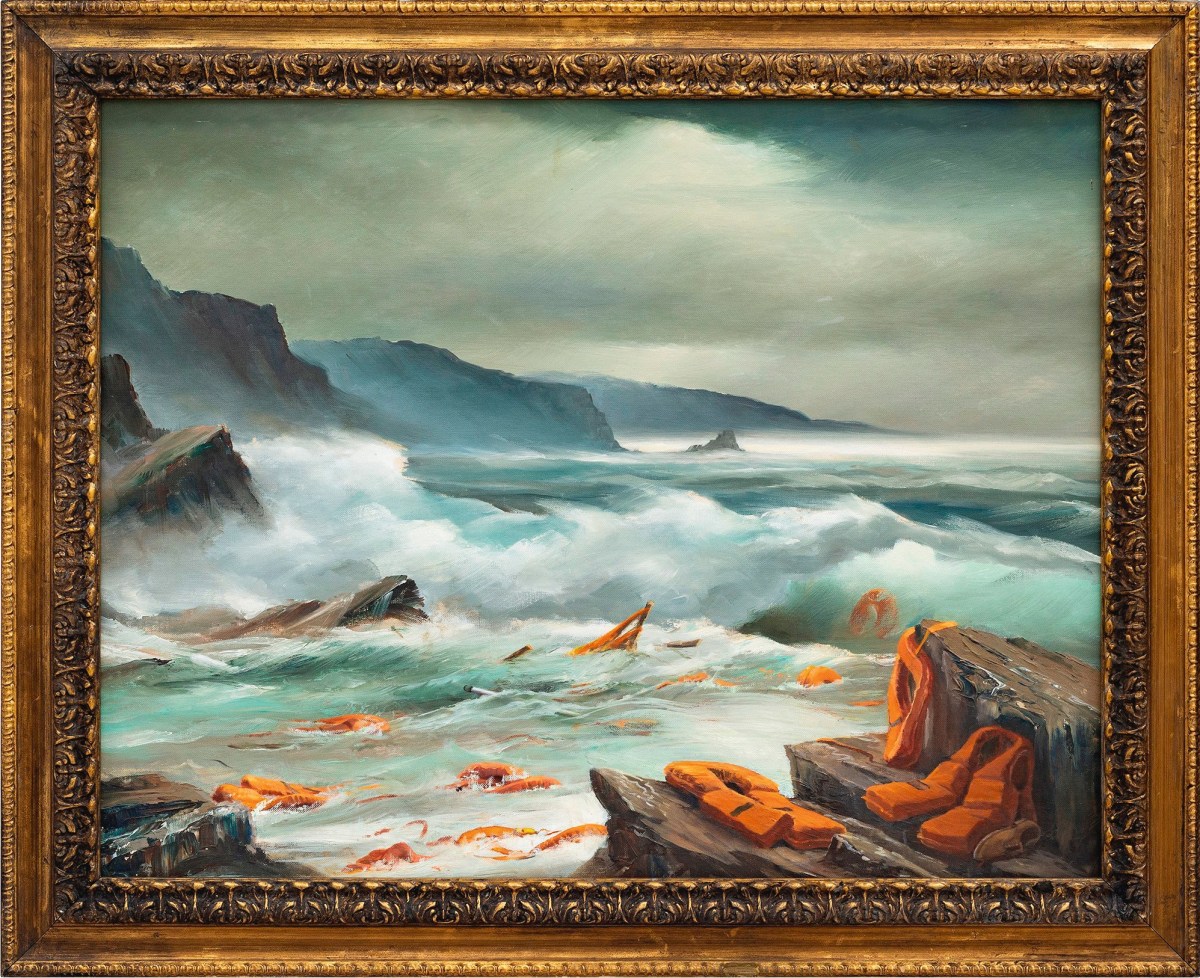
In recent years, Banksy has also shown an increasing interest in traditional painting, as seen in his ‘Mediterranean Sea View’ series. This set of oil paintings, auctioned to raise funds for a hospital in Bethlehem, combined classical techniques with Banksy’s trademark twist – in this case, life jackets washed up on shore, symbolizing the European migrant crisis. Such works demonstrate Banksy’s versatility and his willingness to adapt his craft to convey urgent messages.
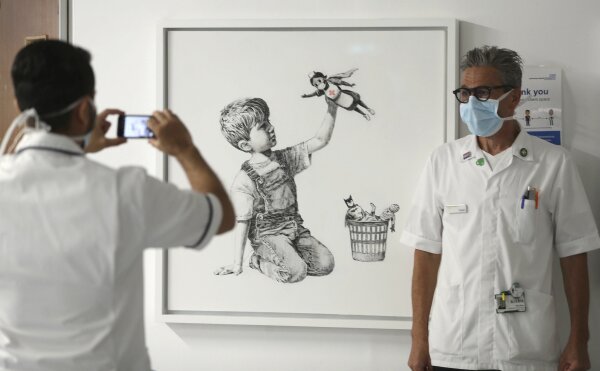
Banksy’s ‘Game Changer’ painting raises $23 million for UK health charities
Banksy’s more recent work during the COVID-19 pandemic, such as ‘Game Changer,’ displayed in Southampton General Hospital, is a testament to his timely engagement with current events. This piece, which pays tribute to healthcare workers, again shows Banksy’s ability to adapt to new contexts and media, while staying true to his roots in street art.
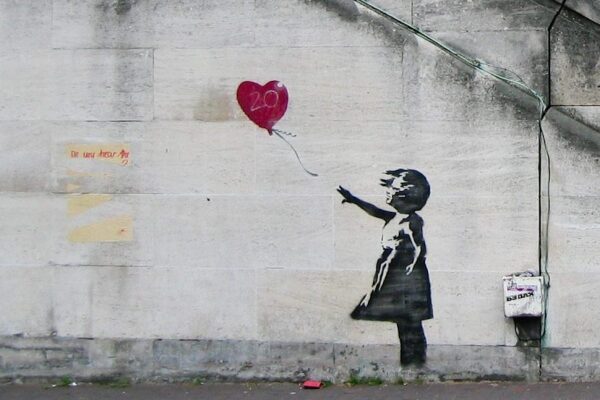
Whether it’s stencils on city walls, films, immersive installations, traditional paintings, or even the occasional piece of performance art (as seen in the shredding of ‘Girl with Balloon’), Banksy’s expanding portfolio reflects his boundless creativity, adaptability, and commitment to pushing the boundaries of what art can be and do. His work stands as a testament to the fact that art is not just about aesthetics, but can also be a vehicle for social change, critique, and dialogue.
VI. Shattering Expectations: Banksy’s Iconic Artistic Moments
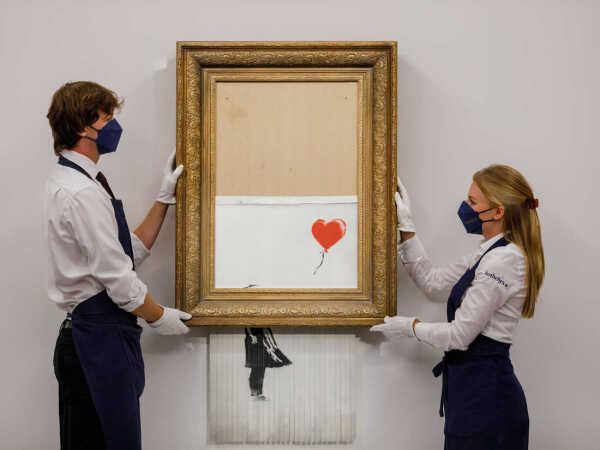
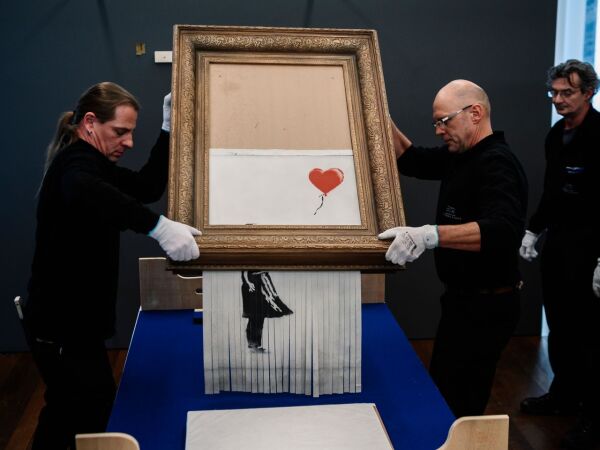
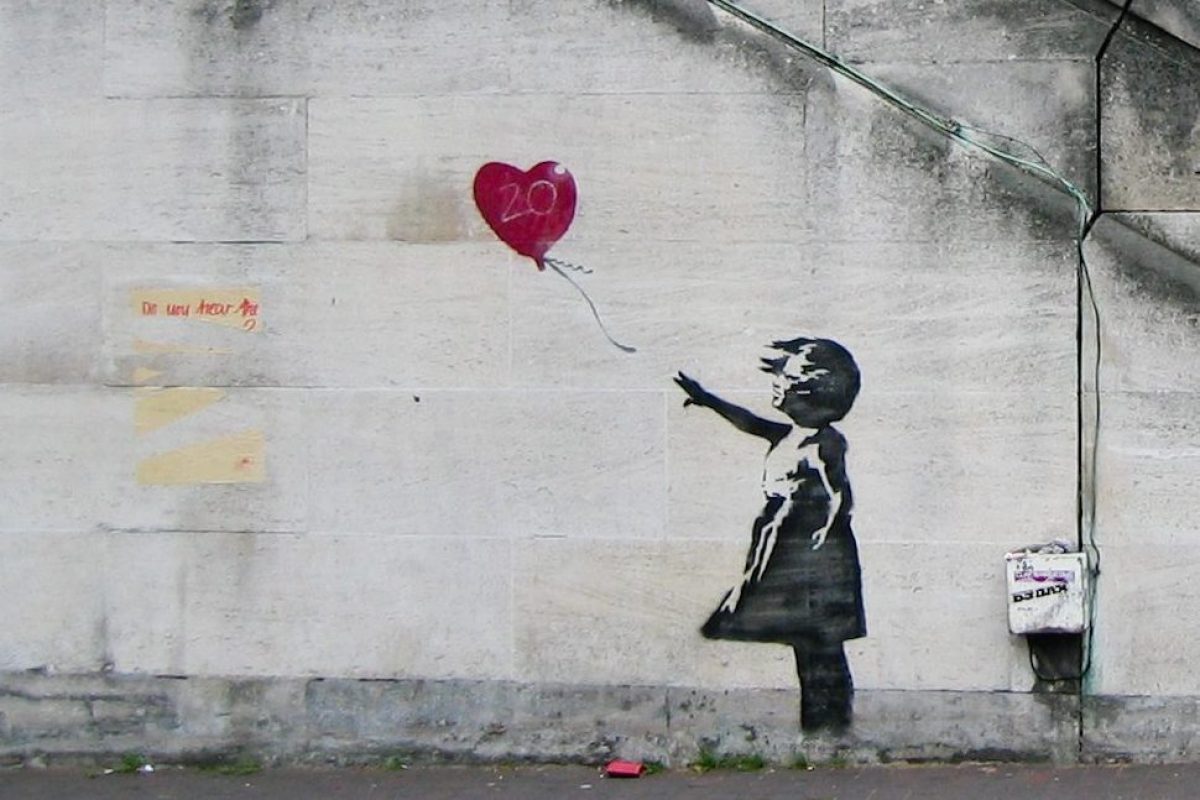
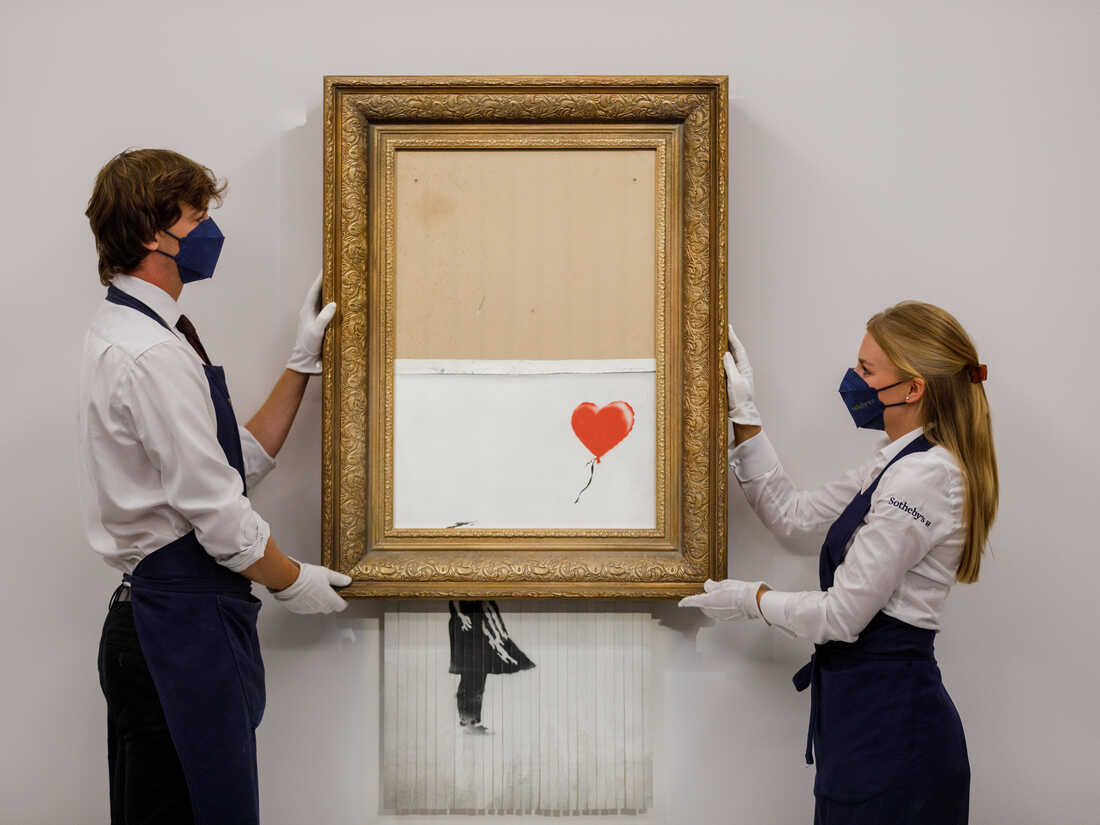
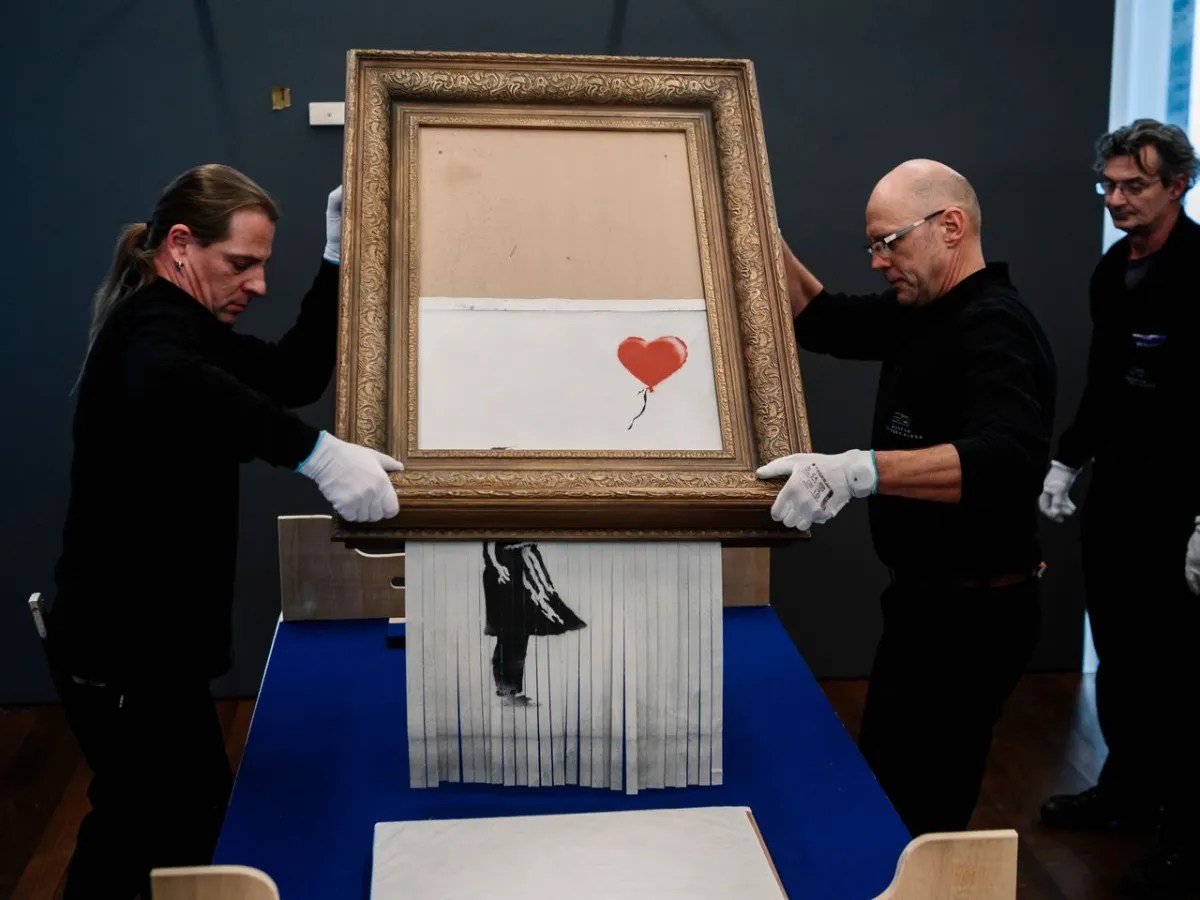
When it comes to creating unforgettable artistic moments, Banksy is second to none. The anonymous artist has a track record of staging high-profile stunts that not only challenge conventional norms of the art world but also provoke public dialogue and reflection on broader societal issues.Perhaps the most iconic of all is Banksy’s 2018 Sotheby’s auction stunt, in which his artwork ‘Girl with Balloon’ self-destructed immediately after being sold for £1.04 million. Hidden within the ornate frame was a remotely activated shredder that left the artwork hanging in tatters. This audacious act was not just a prank; it was a commentary on the commodification of art and the market’s ability to dictate the value of artworks. The shredded artwork was later renamed ‘Love is in the Bin,’ and in a twist of irony, it became even more valuable after the stunt.
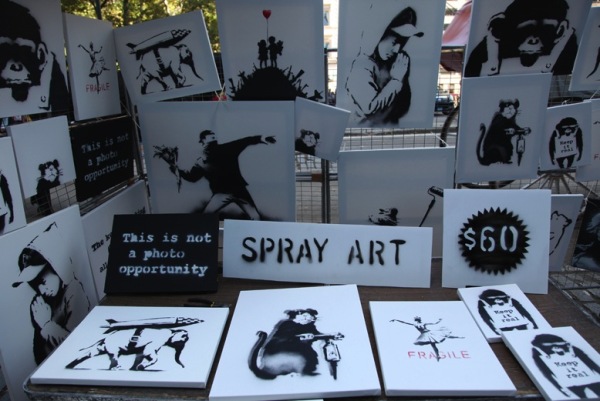
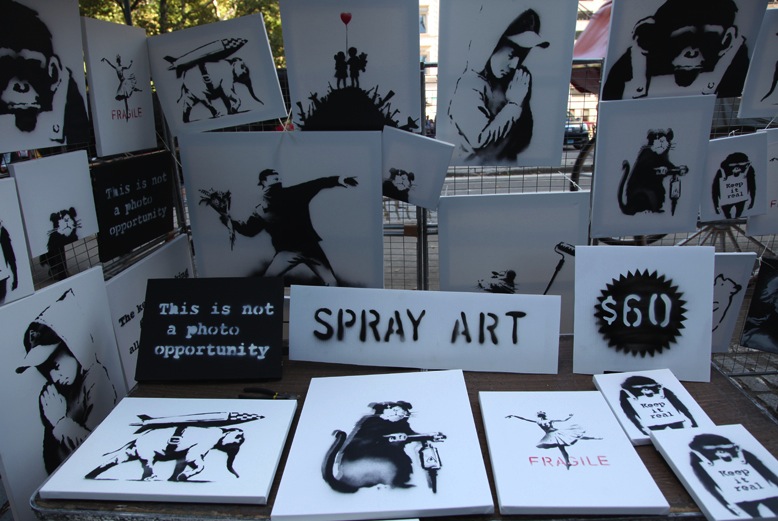
Another moment that captured global attention was Banksy’s 2013 New York residency, ‘Better Out Than In.’ For 31 days, Banksy unveiled a new work each day across the city. On one of these days, he set up a stall selling signed original Banksy canvases for just $60. The unsuspecting buyers had no idea of the true value of the artworks they were purchasing, challenging the notion of art’s value being tied to the artist’s name.
And again: In 2015, Banksy shook the art world again with the opening of Dismaland, a dark, dystopian parody of Disneyland. This temporary art project in the seaside resort town of Weston-super-Mare in England featured a fairy castle in ruin, a boat pond full of asylum seekers, and two juggernauts performing ballet, among other installations. It was a stark critique of consumer culture, inequality, and the failings of capitalism.
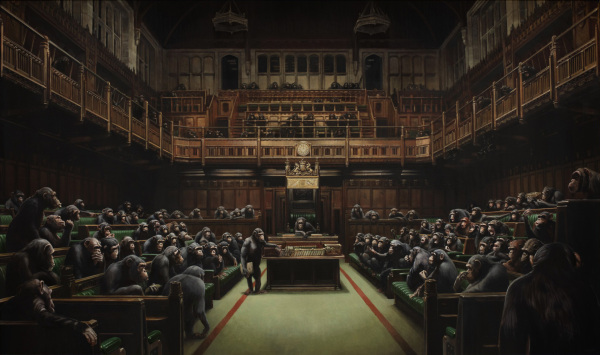
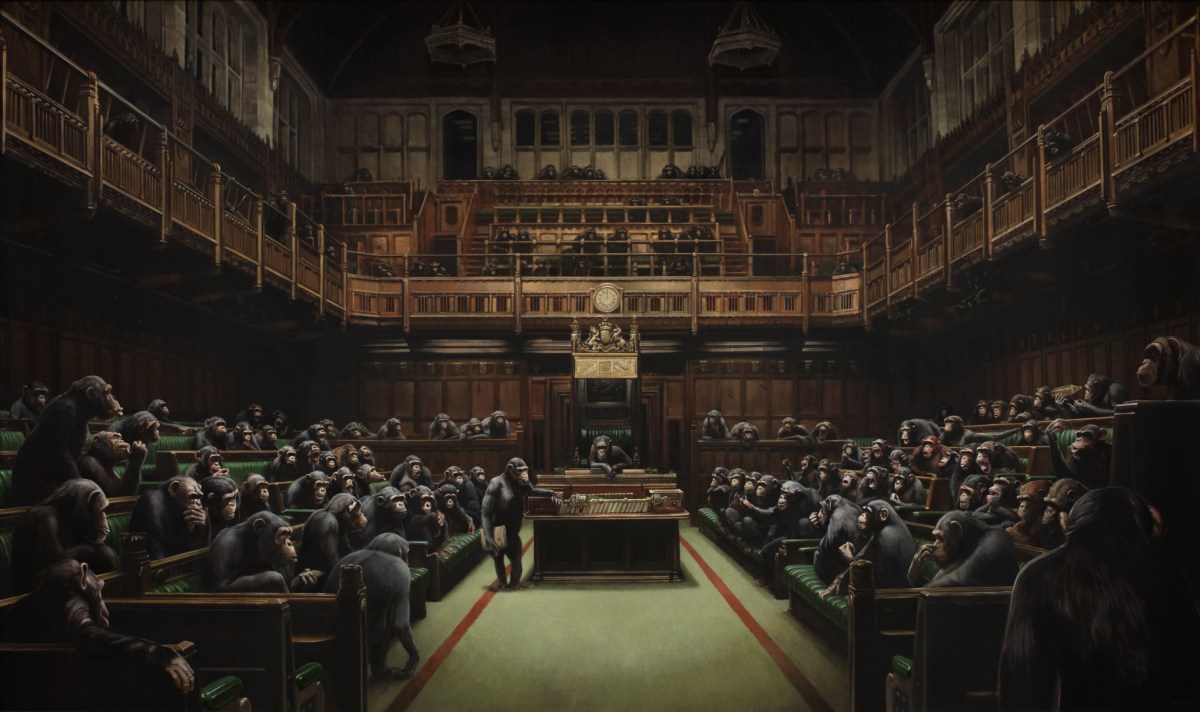
Banksy’s ‘Devolved Parliament,’ a satirical painting depicting the UK House of Commons filled with chimpanzees, is another example of his timely and pointed commentary. The artwork, which was created in 2009 and exhibited just before the original Brexit date in March 2019, sold for a record-breaking £9.9 million at Sotheby’s in October 2019.
And as mentioned before who can forget Banksy’s response to the COVID-19 pandemic? His ‘Game Changer’ artwork, depicting a young boy playing with a nurse doll, was a tribute to healthcare workers on the front lines of the crisis. It was later sold at auction for £16.8 million, with all proceeds going to the NHS.
Through these iconic moments, Banksy continues to use his art to subvert expectations, provoke thought, and challenge the status quo, leaving an indelible mark on the world of contemporary art.
VII. Enduring Impressions: The “Banksy Effect”
The “Banksy Effect” is a term coined to describe the remarkable influence that Banksy has had on the art world and beyond. It refers not just to his transformation of street art into a globally recognized and highly coveted form of expression, but also to the way his work has reshaped public discourse around key societal issues.Banksy’s provocative approach to art has undoubtedly pushed the boundaries of what is considered acceptable or valuable in the art world. By using public spaces as his canvas, Banksy has democratized access to art, making it available to everyone, not just those who frequent art galleries or auction houses. This has led to a broader acceptance and recognition of street art as a legitimate form of artistic expression, with cities around the world now boasting thriving street art scenes.
Beyond the art scene, Banksy’s satirical, often politically charged works have also had a profound impact on public consciousness. His art has served as a powerful commentary on issues such as war, capitalism, consumerism, and inequality, sparking public dialogue and forcing viewers to confront uncomfortable realities. By leveraging the power of art for social commentary, Banksy has inspired a new generation of artists to use their work as a tool for social and political activism.
Moreover, Banksy’s commitment to anonymity has further fueled his appeal and added a layer of intrigue to his work. Despite his global fame, Banksy has managed to maintain his anonymity, a feat that has only added to his mystique and led to widespread speculation about his identity. This anonymity has also allowed Banksy to remain a subversive figure, unbound by the expectations or constraints typically placed on renowned artists.
The “Banksy Effect” encompasses the far-reaching influence of Banksy’s art on both the art world and society at large. His innovative approach to art, combined with his incisive social commentary, has left an enduring legacy that continues to inspire and provoke. Whether it’s through a simple graffiti piece on a city wall or a high-profile stunt at an auction house, Banksy’s impact is indelible, echoing throughout contemporary culture and continuing to challenge our perceptions of art and its role in society.
VIII. Unmasking the Enigma: Decoding Banksy’s Enduring Allure
As we delve into the intriguing world of Banksy, we come to realize that his enigmatic persona, revolutionary approach to art, and the courage to challenge societal norms are not just the hallmarks of his unique artistry, but also the underlying factors of his enduring appeal.Banksy’s anonymity has allowed him to create art that is pure and unaffected by the bias of celebrity. It keeps the focus on the art and the message it conveys rather than the artist. This could well be one of the reasons why his art, despite its simplicity, resonates on a universal scale. The unknown identity of the artist also adds an element of intrigue and mystery, making each new artwork a topic of global conversation.
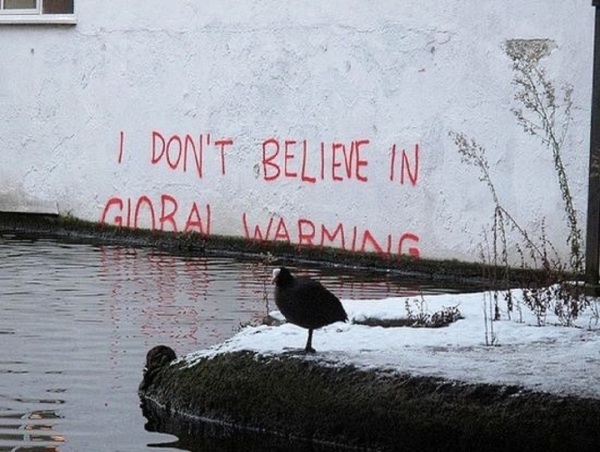
I don’t believe in global warming (Banksy, 4 photos)
Banksy’s approach to art, characterized by its accessibility and daring themes, has redefined the relationship between art and the public. His belief that art should be available to everyone has brought art out of the exclusive confines of galleries and into the streets, making it part of people’s everyday lives. This democratization of art has not only elevated the status of street art but has also changed the way we perceive and interact with art.Moreover, Banksy’s unwavering commitment to highlighting societal issues through his art has given him the ability to influence public discourse like few artists can. His provoking imagery and poignant commentary on pressing issues such as war, inequality, and consumerism have started important conversations, challenging us to question the status quo and contemplate our role within these systems.
Banksy’s knack for spectacle, such as the infamous shredding incident at Sotheby’s, has further amplified his influence by merging performance and visual art, creating unforgettable moments that transcend the confines of the art world. These audacious acts have not only propelled Banksy into the global spotlight but have also pushed the boundaries of what is possible in art.
In the end, Banksy is not just an artist; he is a phenomenon, a catalyst for change, and a symbol of resistance against conventional norms. His disruptive yet compelling artistry continues to captivate the world, and his influence, the “Banksy Effect,” continues to ripple through the realms of art and culture. His legacy is one that invites us to challenge our perspectives, to question our surroundings, and most importantly, to realize the power of art as a tool for change. As we continue to anticipate Banksy’s next move, one thing is clear: the world is his canvas, and we are all eager spectators.
Now click here to read some of Banksy’s best quotes: 14 Great Banksy Street Art Photos and Quotes!
And that’s a wrap on our deep dive into the world of Banksy!
Remember, street art is a global canvas, and each of us has a role to play in appreciating and preserving it. So, the next time you come across a Banksy—or any piece of street art—pause, take it in, and let it evoke thoughts and emotions. And if you’ve enjoyed this post, don’t hesitate to share it with your fellow street art enthusiasts and join our group: Your Street Art Utopia.Until next time, keep discovering, keep questioning, and keep appreciating the world of street art.
More by Banksy?: 18 Iconic Banksy Artworks (Indoors!)
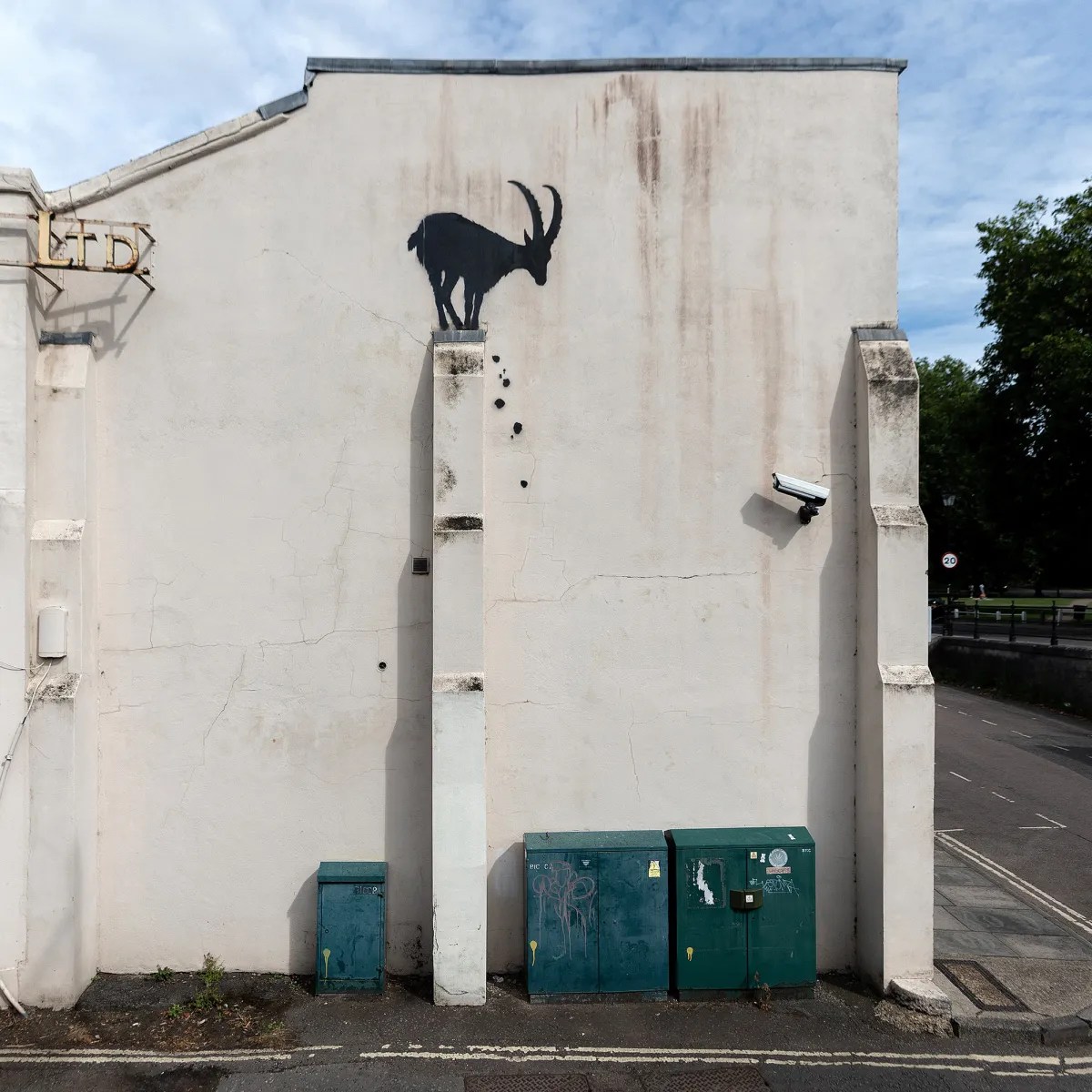
The Goat?
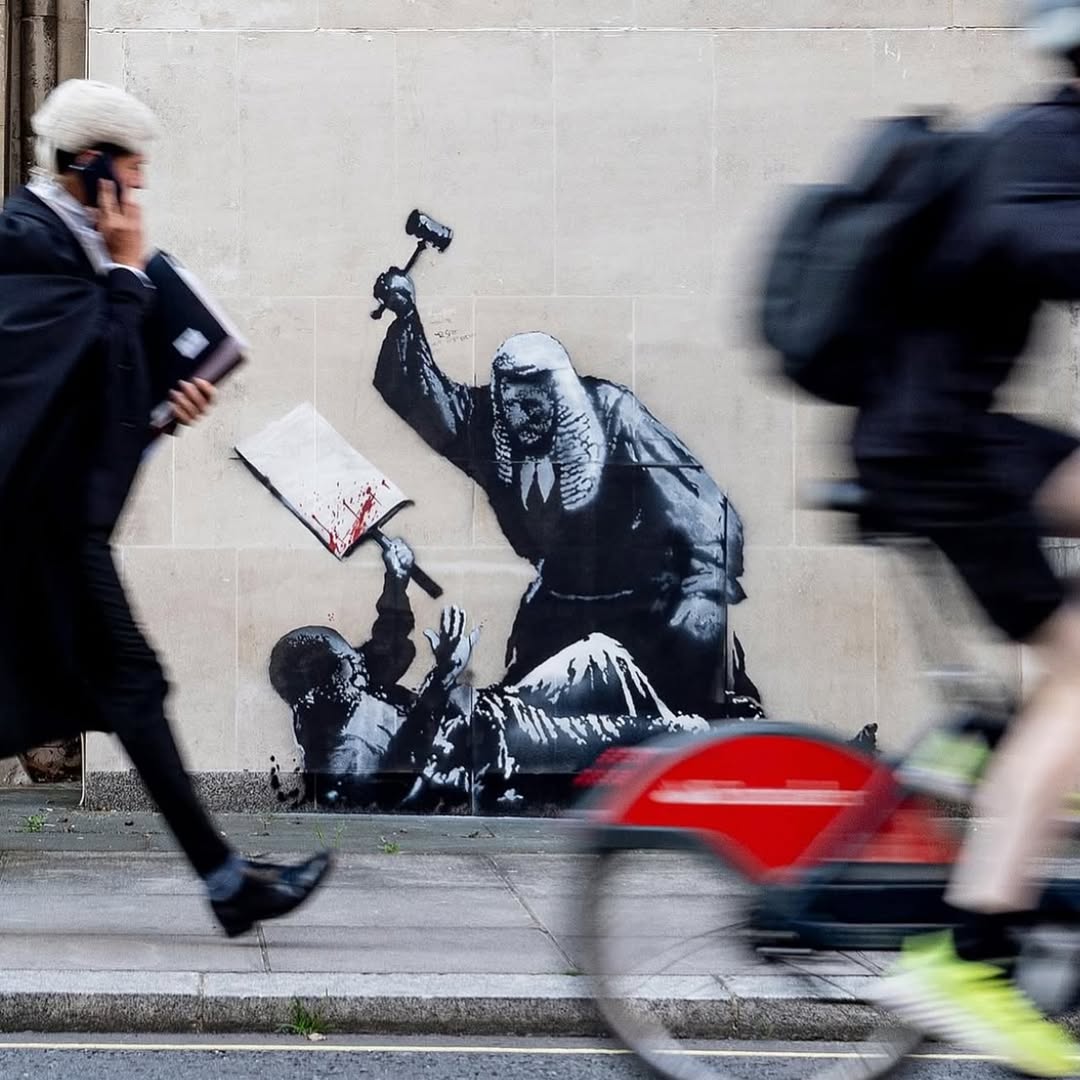
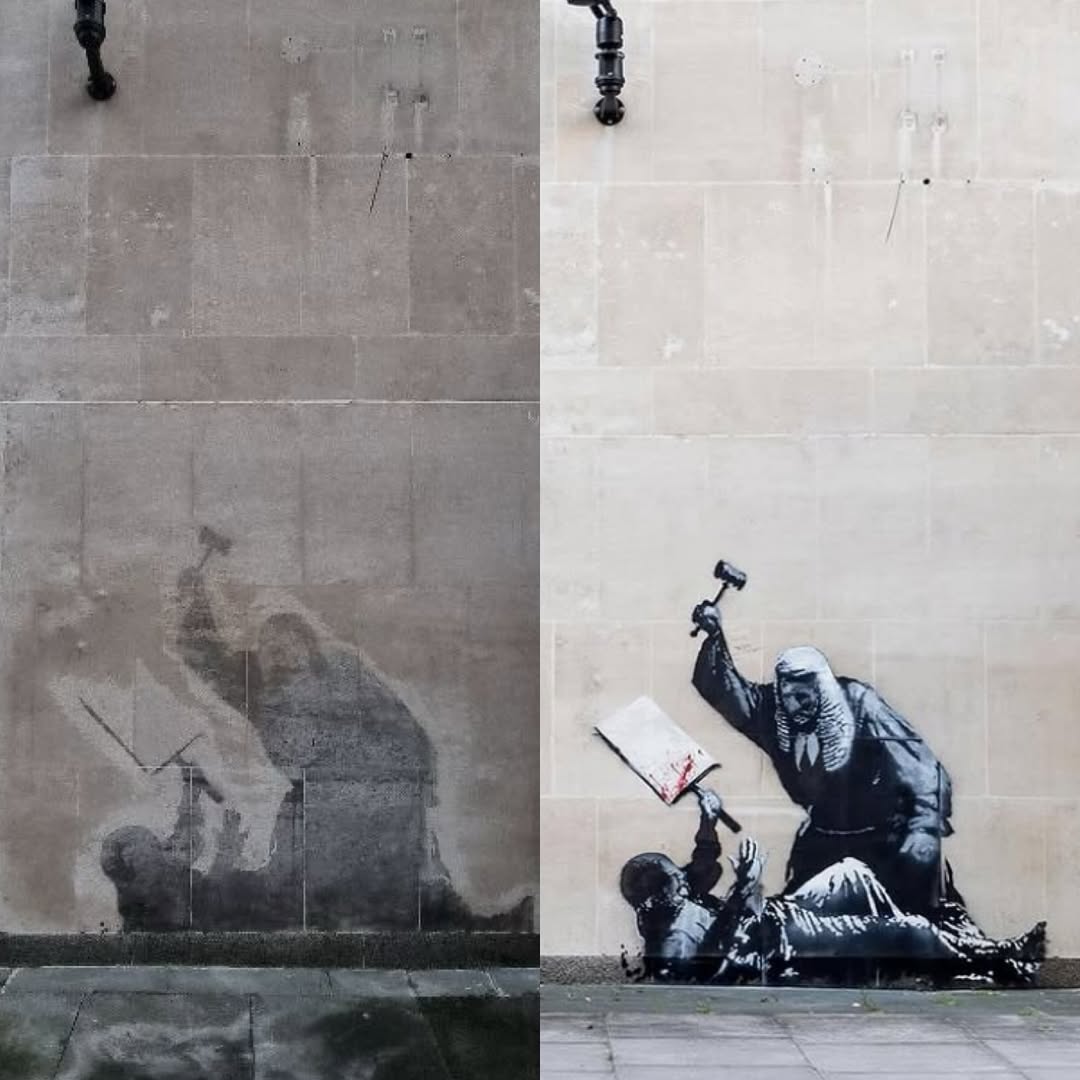
Banksy at Royal Courts of Justice in London.
More here!More!: Indoor Art By Banksy! (18 Photos)
Which one is your favorite?

Junk Metal Sculptures (8 Photos)
Content warning: Which one is your favorite?
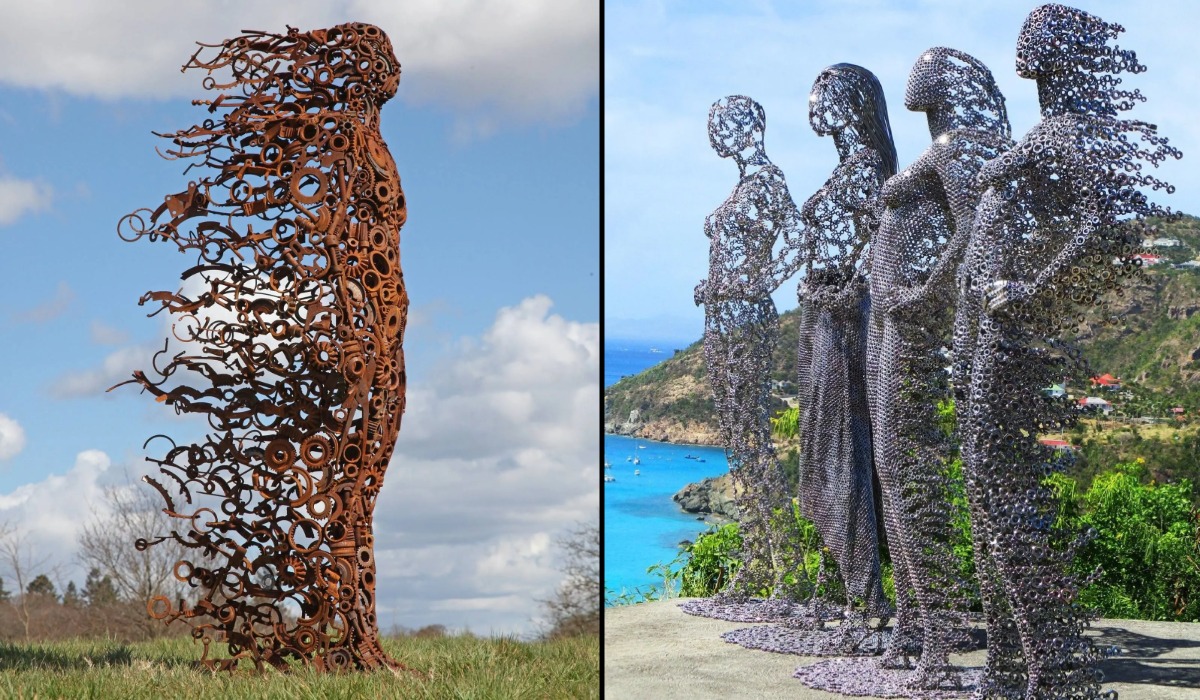
8 junk metal sculptures where scrap becomes bodies, animals, music, and memorials.
Each work keeps the material visible: bolts, chains, gears, tire tread, screws, nuts, and blades still read as metal, even after they become something new. That tension is what makes the sculptures so satisfying to look at.
💡 Nerd Fact: Scrap metal is not just “waste” in steel culture. The World Steel Association notes that steel’s magnetic properties make it easy to recover from waste streams, and that recycled steel maintains the inherent properties of the original material. In other words, a broken gear, tool, or machine part can carry both a past life and a future one.
More: Playing with statues (25 photos)
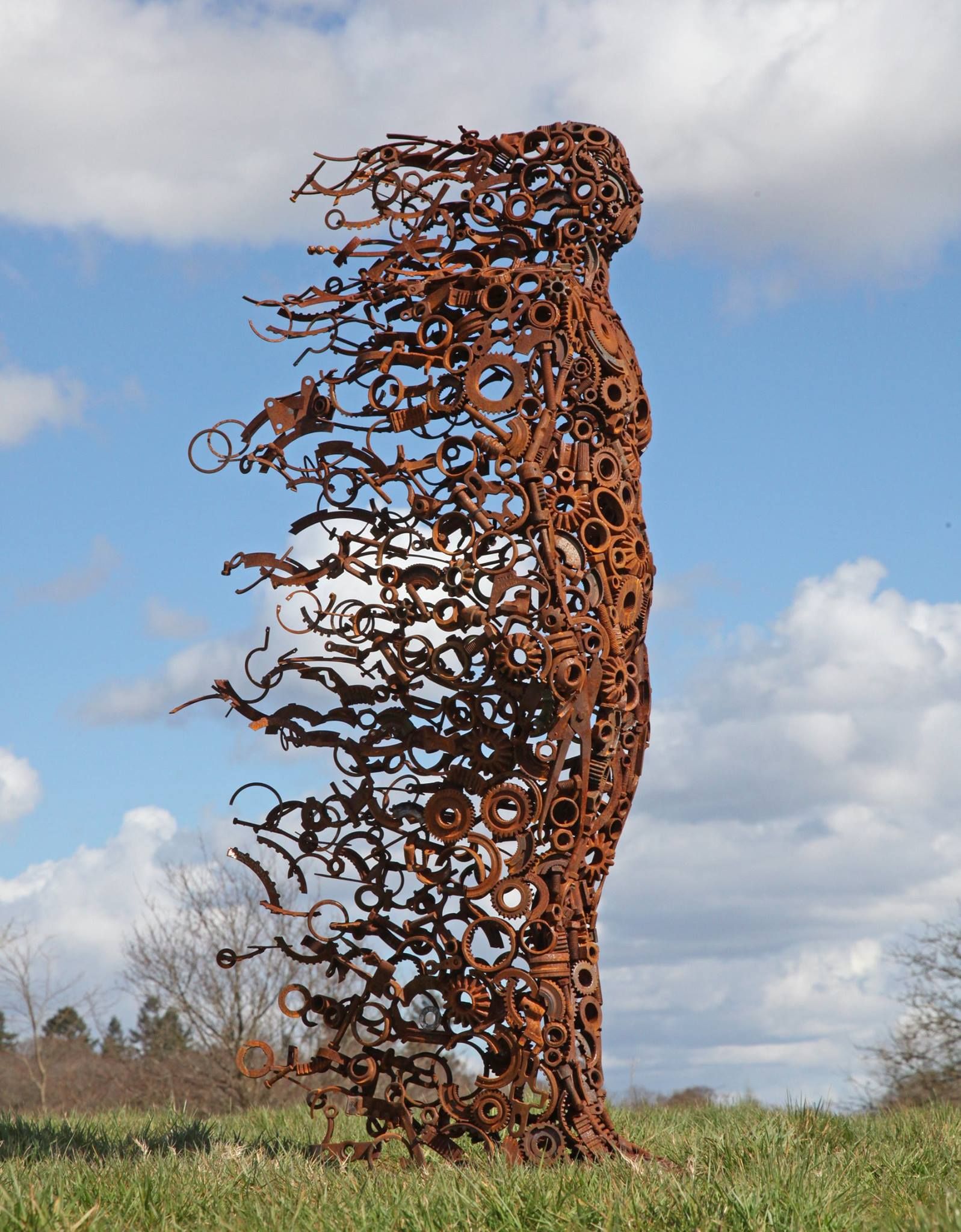
💨 “You Blew Me Away 8” — By Penny Hardy in the UK 🇬🇧
This figure looks as if a gust has pulled pieces out of the body and left them suspended in the air. Penny Hardy’s official Blown Away series page frames the works as a response to strong emotions, the body, and external forces; a listing for You Blew Me Away 8 identifies it as a limited-edition mild-steel sculpture made from found scrap metal. Bolts, rods, and rusted fragments stay visible, giving the sculpture both damage and energy. It feels fragile and stubborn at the same time.
💡 Nerd Fact: Hardy’s path to sculpture includes a precise visual background: her official biography lists a BA Hons in Scientific Illustration and freelance illustration work for the Royal Botanic Gardens, Kew. That training helps explain why the loose, windblown form still feels carefully observed.
More: You Blew Me Away 8 by sculptor Penny Hardy
🔗 Follow Penny Hardy on Instagram
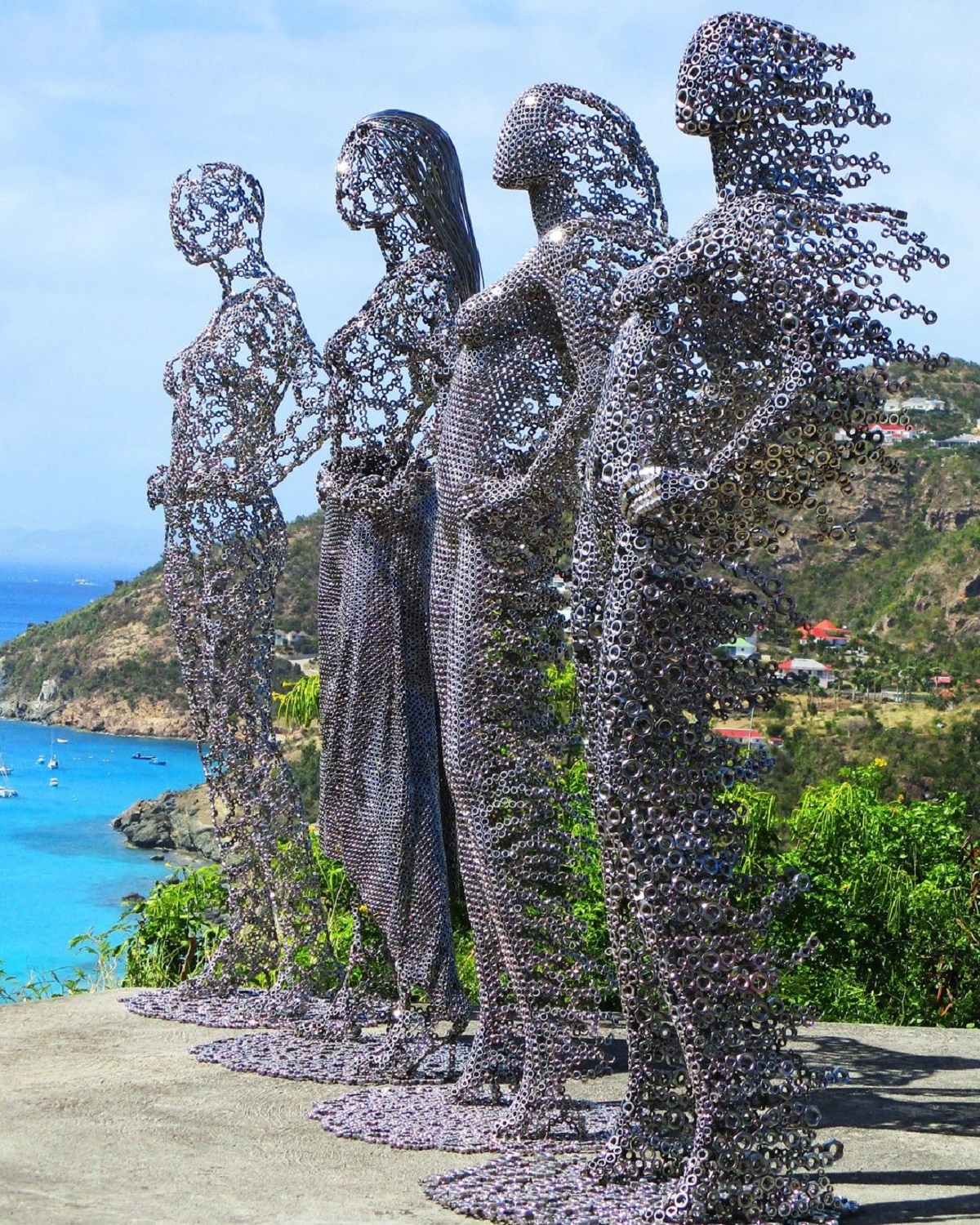
🌊 Stainless-Steel Silhouettes — By Jean Martin in Saint Barthélemy 🇧🇱
From a distance, the figures read as four calm human bodies at the edge of the sea. Up close, they resolve into a lacework of stainless-steel nuts, each one welded into a surface that is both solid and full of gaps. An Artists of St Barth profile describes Martin’s use of stainless-steel nuts as building blocks, while his own site groups related open figures under Steel Lace and Evolutive sculptures. The ocean and sky show through bodies that seem to be forming, dissolving, or both.
💡 Material Fact: Martin did not begin with nuts as a novelty effect. An Artists of St Barth profile says his artistic journey in Saint-Barthélemy began in a stainless-steel workshop making elements for contemporary villas, before he shifted from welder to sculptor. It also says he treats nuts almost like “atoms” — small repeatable units that can build any form.
More: Powerful statues made of stainless steel nuts by Jean Martin in Saint Barth
🔗 Follow Jean Martin on Instagram
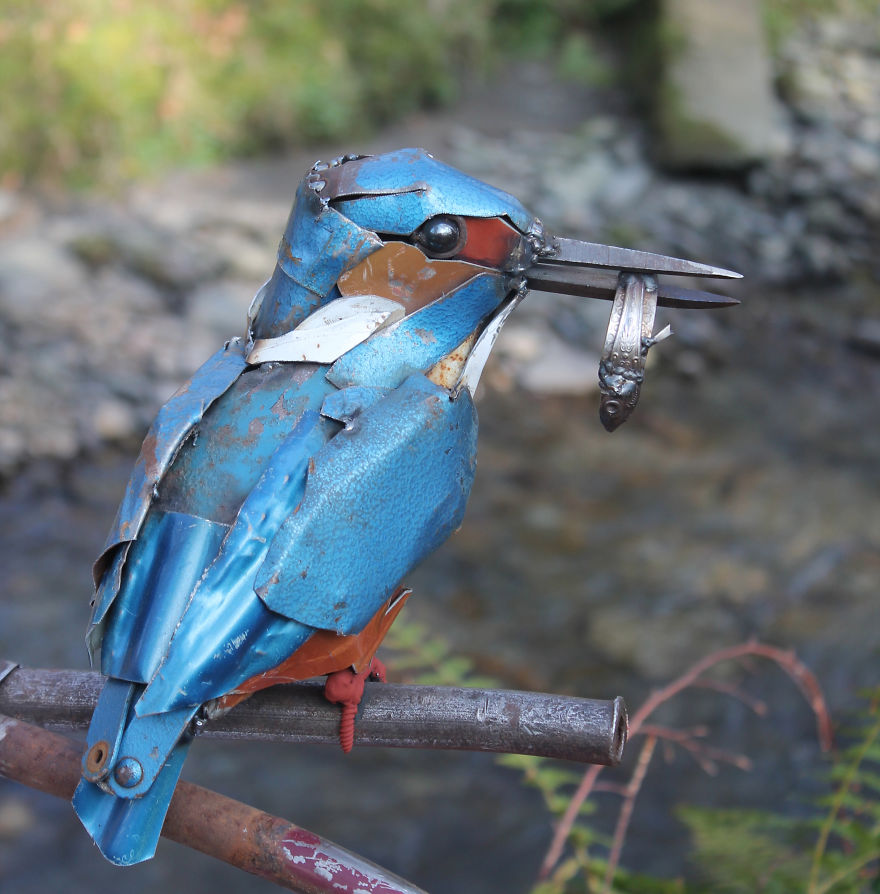
🐦 Kingfisher with Catch — By J.K. Brown in the UK 🇬🇧
J.K. Brown’s own site presents him as an artist and sculptor, and in his artist-submitted feature, this piece appears simply as Kingfisher. Blue metal panels become the bird’s back; rusted pieces and screws build the wings and breast; a tiny silver fish completes the moment. The pose is so specific that it feels like the second after a successful dive.
💡 Wildlife Fact: Brown’s animal sculptures are tied to local ecology as well as scrap. In his artist-submitted text, he says he lives in rural West Wales, where native wildlife inspires him, and that some fragments he uses are fly-tipped or washed up on beaches. The kingfisher subject fits that idea because the real bird depends on healthy waterways; the RSPB notes that UK kingfishers are vulnerable to hard winters and habitat degradation through pollution or poor watercourse management.
More: ‘Kingfisher’ by J.K. Brown
🔗 Follow J.K. Brown on Instagram
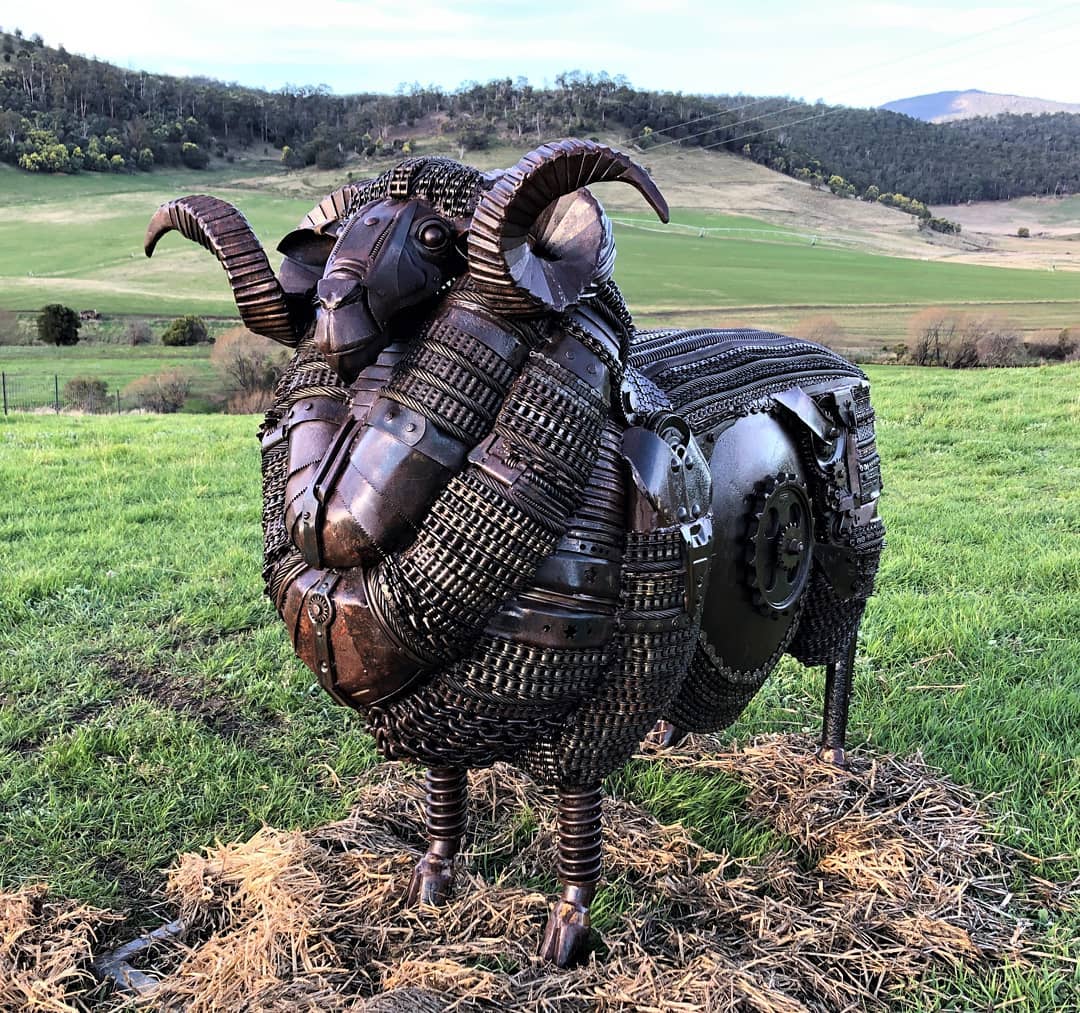
🐏 Merino Ram — By Matt Sloane in Tasmania, Australia 🇦🇺
Matt Sloane’s official site presents bespoke sculptures made from recycled steel, and the linked Instagram post calls this work his big Merino Ram. It feels rooted in the Tasmanian landscape around it. The heavy head, curled horns, and thick body are built from parts that once belonged to machines, but the layering makes them read as fleece. Tire tread and gear shapes do not hide inside the form — they become the woolly weight of the animal.
💡 Wool Fact: “Merino” carries a huge Australian backstory. The National Museum of Australia records that the first merino sheep landed in Australia in 1797, and that wool had become Australia’s major export by the late 19th century. So this ram is more than an animal form; it points at a whole rural economy.
More: Merino Ram sculpture by Matt Sloane in Tasmania, Australia
🔗 Follow Matt Sloane on Instagram
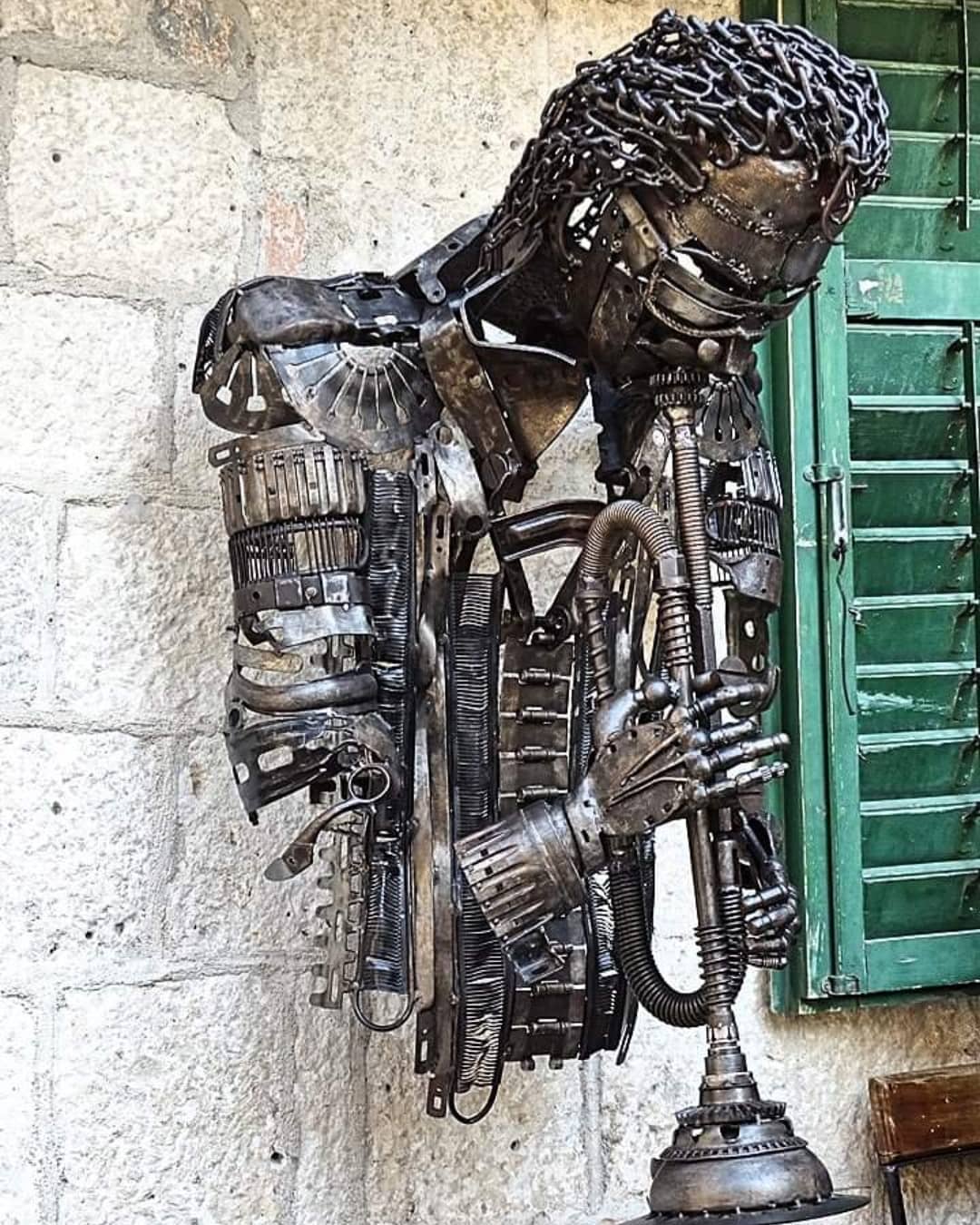
🎺 Miles Davis — By Vlado Kostov in Kotor, Montenegro 🇲🇪
Mounted against old stone, this metal portrait feels like it is playing directly out of the wall. The wider practice fits Vlado Kostov’s documented scrap-metal sculpture work: Balkan Insight profiled his junkyard art as carrying an environmental message. Chains, tubes, gears, and vent-like pieces create the jacket, arms, trumpet, and sound. The recycled metal gives the jazz figure a fitting rhythm: every part looks improvised, but the silhouette is instantly readable.
💡 Jazz Fact: Miles Davis is a fitting subject for a sculpture made from reused parts because his music kept being rebuilt too. His official site describes Kind of Blue as a 1959 album associated with modal jazz and improvisation over reduced harmony — fewer parts creating a bigger atmosphere.
More: Great portrait of Miles Davis! Sculpture by Vlado Kostov in Kotor Old Town
🔗 Follow Vlado Kostov on Instagram
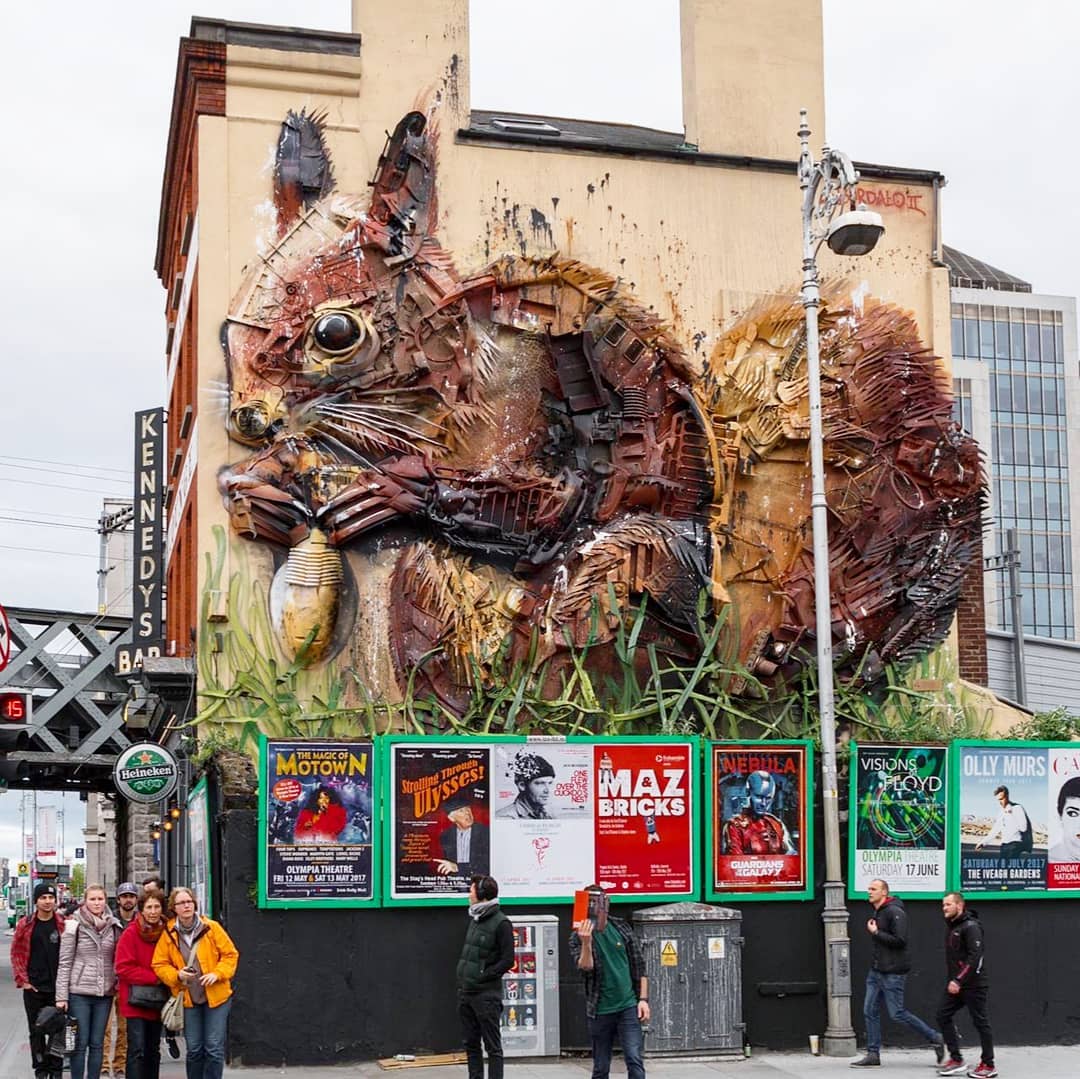
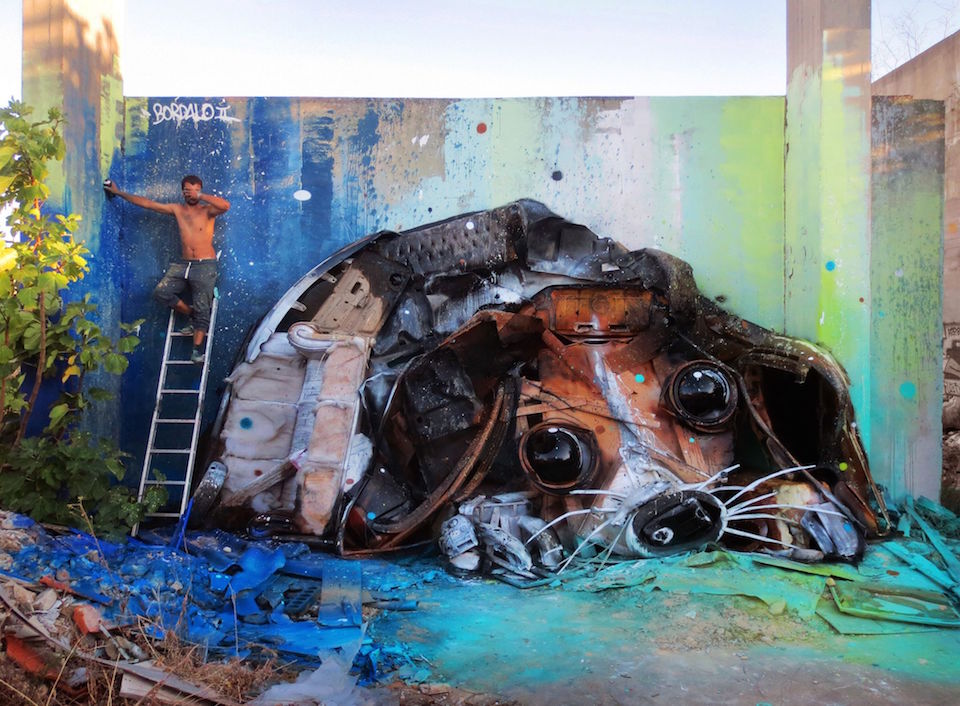
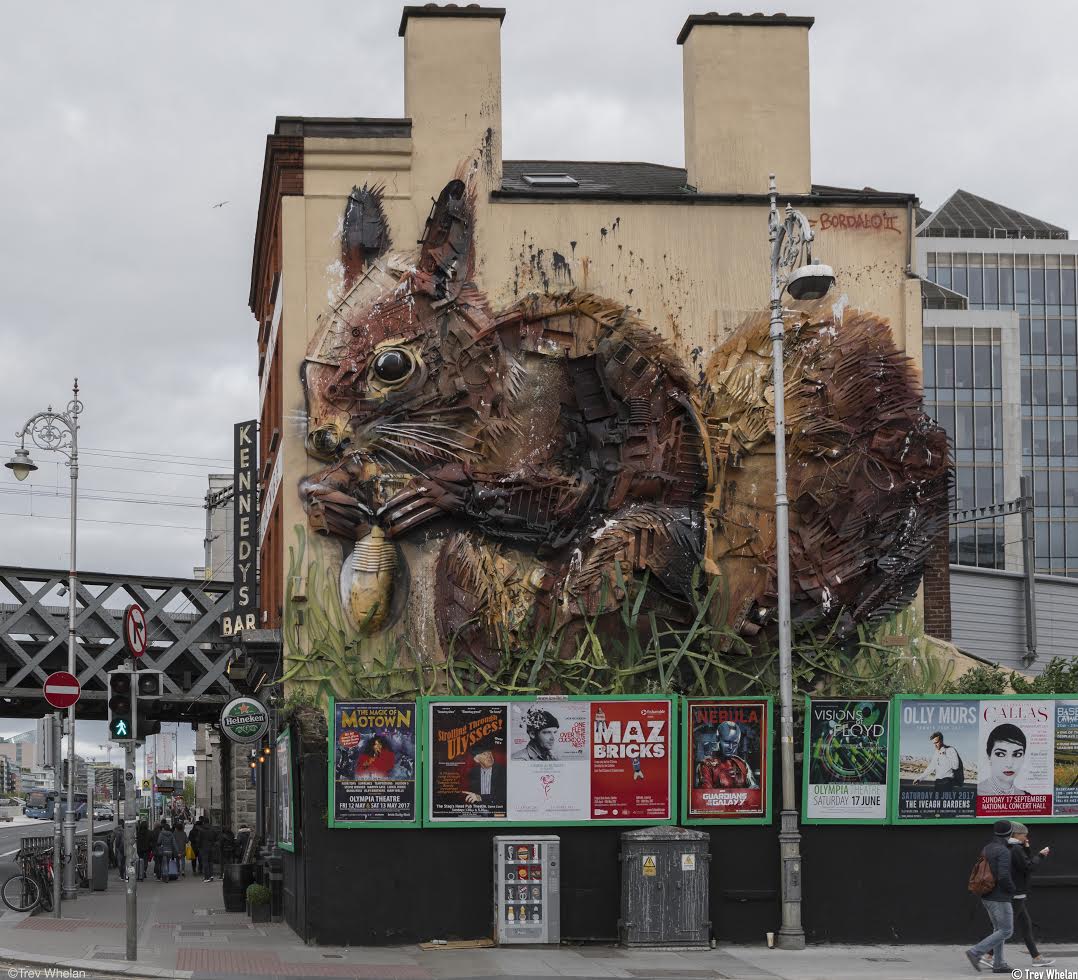
🐿️ Red Squirrel — By Bordalo II in Dublin, Ireland 🇮🇪
Bordalo II’s official Big Trash Animals portfolio lists this work as Red Squirrel, Dublin, Ireland, 2017, in the Neutral sub-series, where waste is camouflaged until it almost reads as a living animal. A later Cassandra Voices article records that the Tara Street installation was removed in 2019, so these photographs now carry an extra layer: they document a real piece of Dublin street art that no longer exists on the wall.
💡 Trash Animal Fact: Bordalo II is unusually transparent about the scale of reuse: his official site lists 178 tons of reused materials since 2012. That number makes the squirrel feel less like a one-off mural and more like one specimen in a long-running archive of urban waste.
More: 22 photos – A Collection of Street Art by Bordalo II
🔗 Follow Bordalo II on Instagram
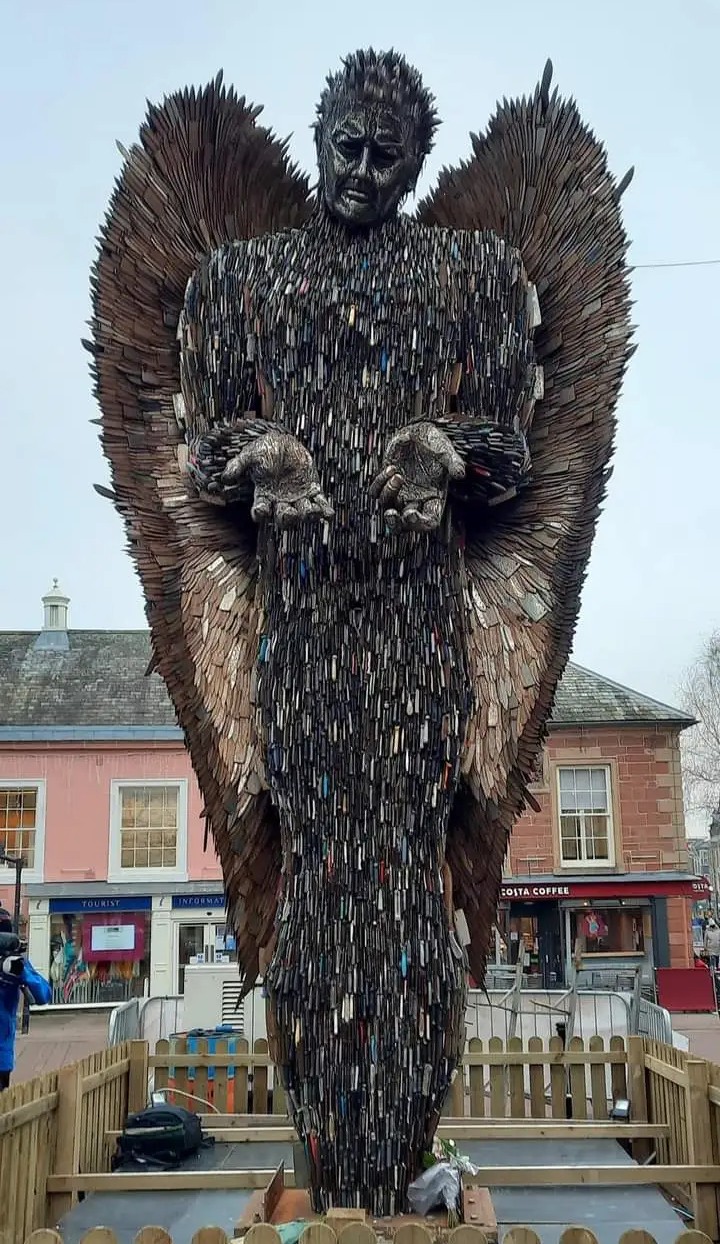
🕊️ The Knife Angel — By Alfie Bradley in the UK 🇬🇧
Alfie Bradley’s official page describes The Knife Angel as a 27ft national monument against violence and aggression, made with more than 100,000 surrendered and collected knives. The British Ironwork Centre’s build notes explain that blades were blunted and sterilized before being welded into the form, with some wing blades engraved by families affected by knife violence. Its scale matters, but so does the close-up detail: thousands of blades become feathers, folds, and armor, turning objects associated with harm into a memorial for grief, warning, and change.
💡 Memorial Fact: The project began before the angel form existed. The British Ironwork Centre says it created more than 200 secure knife banks for police forces, and later recycled around a quarter of a million blades in the wider process. The sculpture is therefore not just an artwork made from weapons; it is the visible face of a much larger anti-violence campaign.
More: Made of 100,000 knives removed from UK streets (3 photos and video)
🔗 Follow Alfie Bradley on Instagram
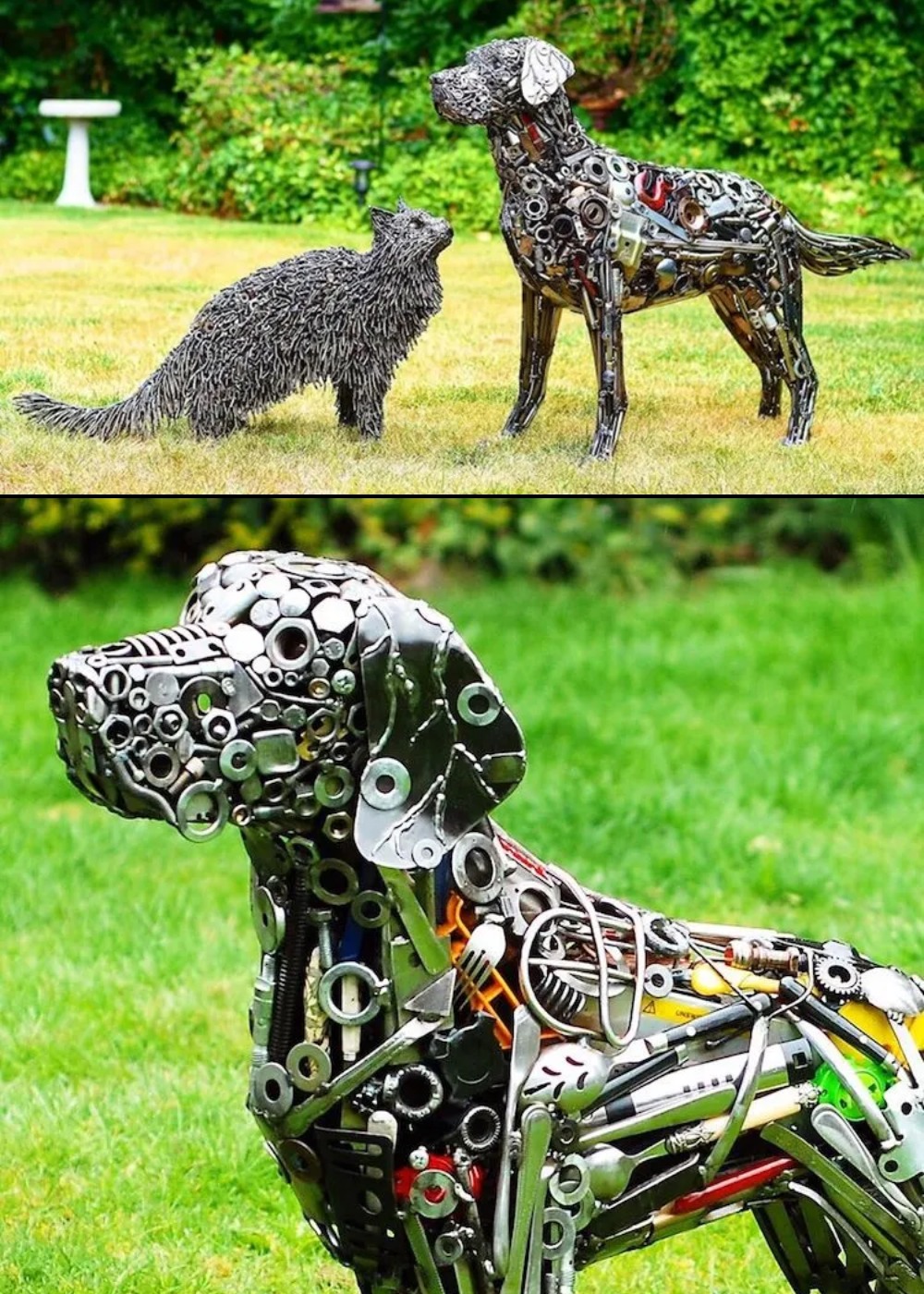
🐶🐱 Dog and Cat Duo — By Brian Mock in the USA 🇺🇸
Brian Mock’s own dog portfolio and animal portfolio show the range of pet and wildlife subjects he builds from reclaimed parts. This pairing is quieter than the monument-sized pieces above, but the close looking is rewarding. The dog’s body is packed with screws, sockets, forks, and gears; the cat is lighter and more wiry, with rods shaping the pose. Their expressions come from posture rather than soft material, which is exactly what makes the duo charming: hard scrap turns into companionship.
💡 Maker Fact: Mock’s official about page says he grew up drawing, then spent much of adulthood painting and wood carving before recycled-metal sculpture ignited his passion in the late 1990s. That mixed background matters: the pets are welded, but the personality comes from an artist who had already trained his eye in softer media.
More: Brian Mock — Recycled Metal Art
🔗 Follow Brian Mock on Instagram
Which one is your favorite?
Fun With Statues (26 photos)
The best statues do not just stand there! Give them one passerby, one camera, and a perfectly timed idea. Suddenly, a quiet monument turns into a brilliant joke, a fun duet, or a tiny piece of street theater.
That is exactly what makes these photos so incredibly good! They are way more than just funny camera angles. They show the absolute magic that happens when public art meets real life. A simple bronze figure becomes a hilarious scene partner. An old memorial gets a brand new personality. The local city square turns into a fun, improvised stage. These playful interactions prove a wonderful point. The most memorable public art is not always the sculpture itself. Sometimes, it is the magical split second when somebody jumps in to complete it!More: Funny Signs (10 Photos)
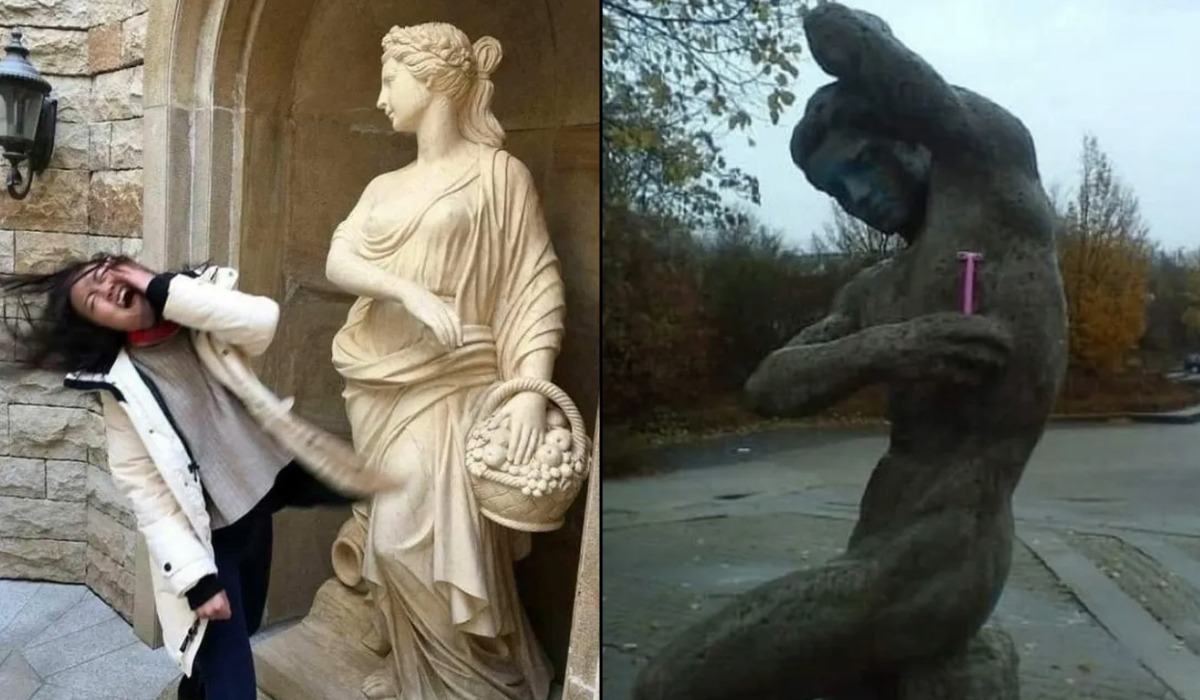
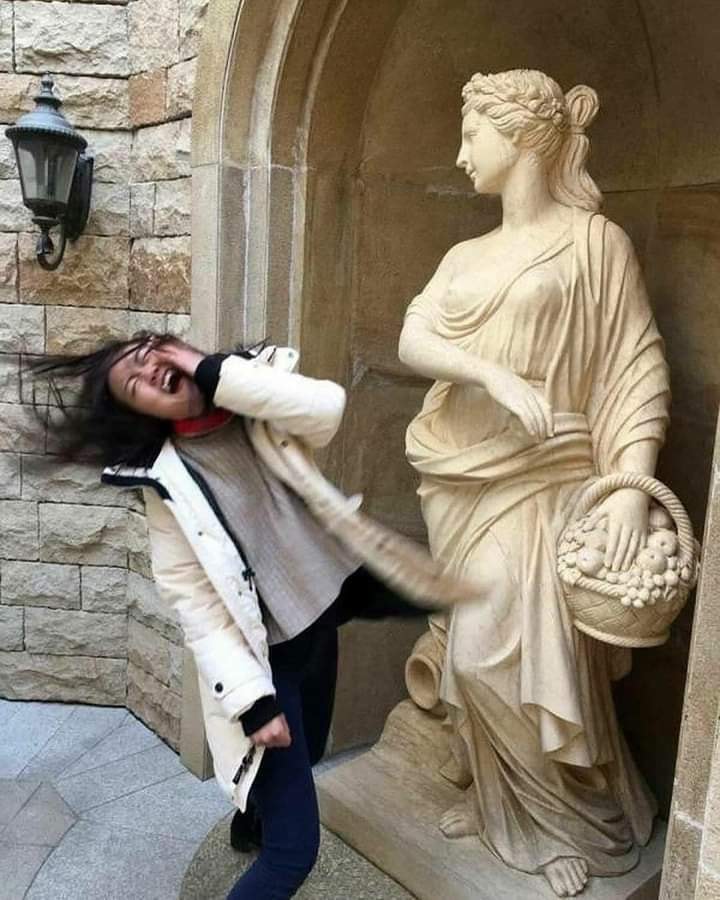
🤭 The Ultimate “How Dare You” Moment
Classical beauty meets a modern-day slap! The timing here is absolutely perfect. The statue’s recoiling expression makes this a total masterpiece of clever perspective.
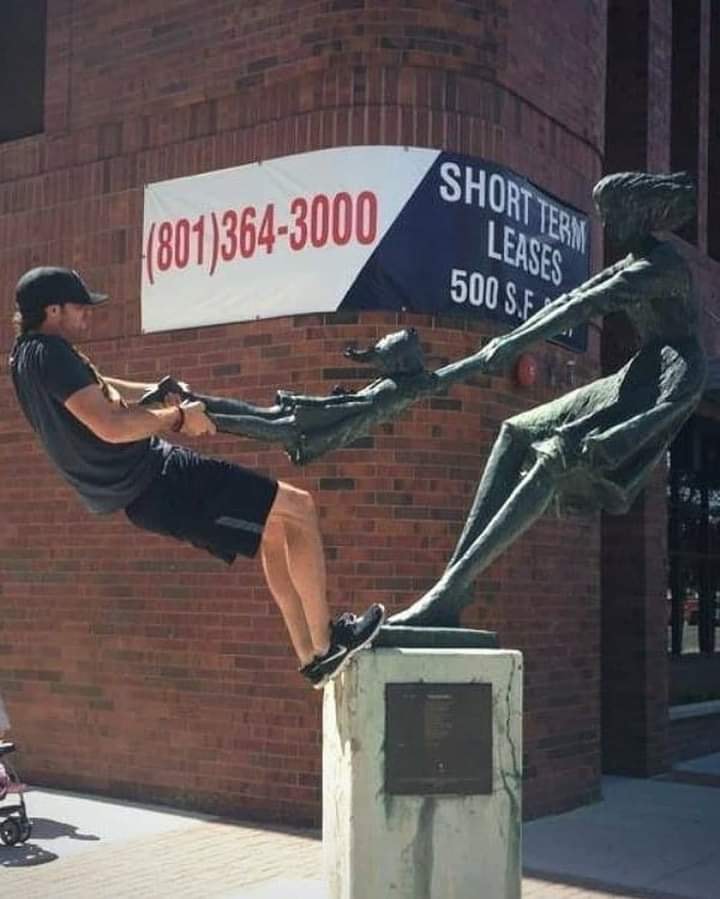
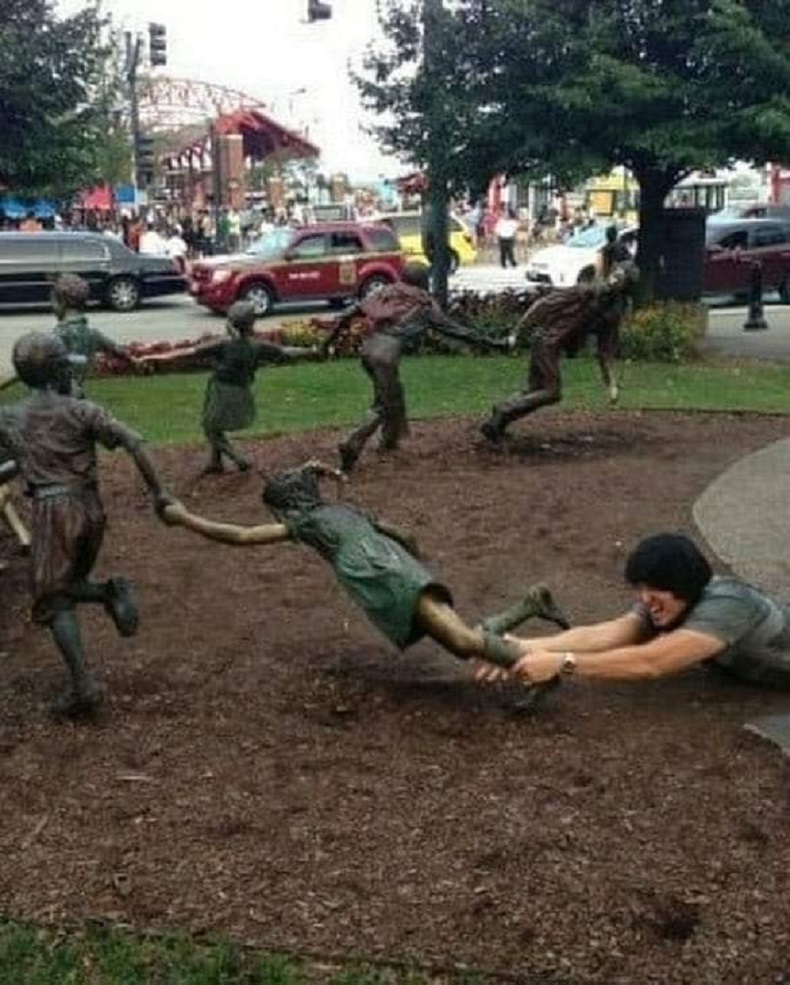
🧗♂️ The Infinite Tug-of-War — By Dennis Smith in Salt Lake City, USA 🇺🇸
The Counterpoint sculpture in Salt Lake City proves to be a very tough opponent. This exaggerated game of tug-of-war is interactive street art at its very best!💡 Nerd Fact: The funny part is that Dennis Smith did not sculpt a struggle at all. The Smithsonian record for Counterpoint describes two family groups at play. It features a father with a child on his shoulders and a mother swinging her daughter around. This photo hilariously hijacks a sculpture that was originally about joyful family motion instead of conflict.
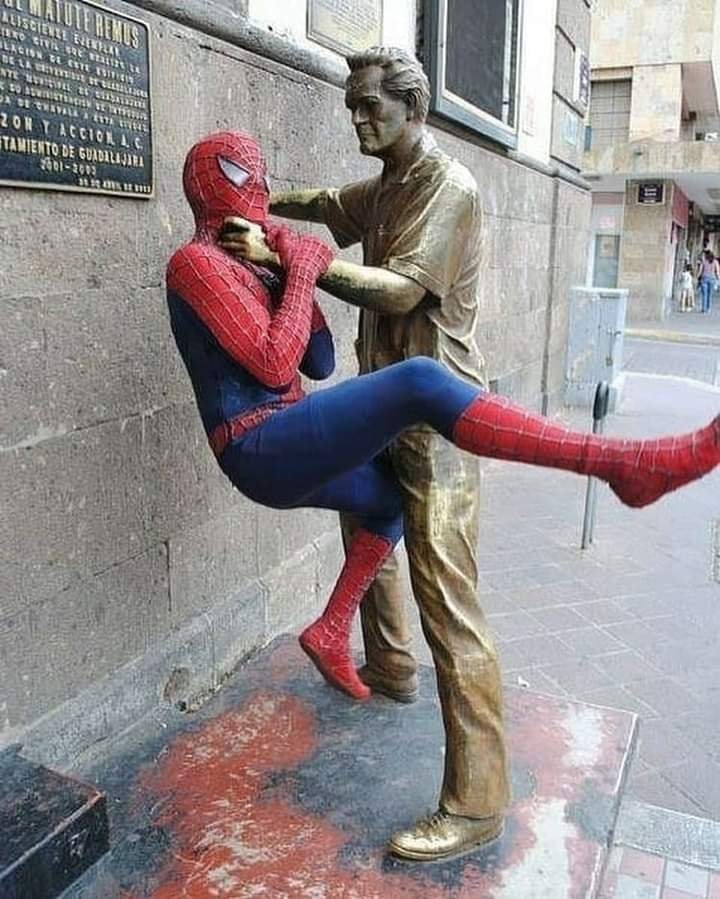
🕷️ When Spidey Met His Match — By Carlos Terrés in Guadalajara, Mexico 🇲🇽
A true superhero showdown in Guadalajara! Even Spider-Man has to respect the local legends. Jorge Matute Remus looks less like a statue here and more like the city’s patron saint of impossible problem-solving.💡 Nerd Fact: Guadalajara’s official tourism page says Matute Remus supervised the massive move and slight rotation of the Teléfonos de México building without interrupting service back in 1950. Even better, art historian Irma Gabriela Juárez Becerra notes that Carlos Terrés had already sculpted a Matute Remus for the former telephone-company site in 2002. This means the engineering legend ended up being retold in bronze more than once.
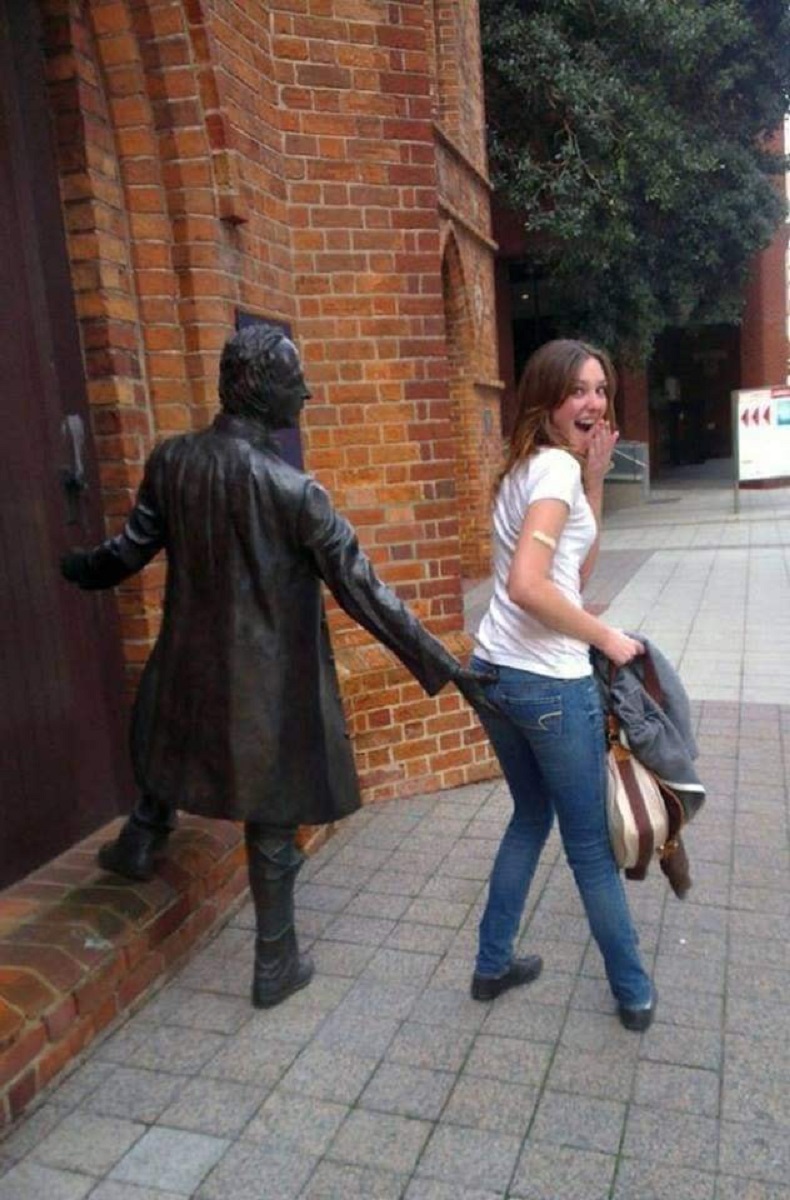
🫣 Caught Bronze-Handed
Sometimes statues can be a bit too hands-on! Her shocked reaction is absolutely priceless. It is the perfect match for this bronze figure’s unexpected move.
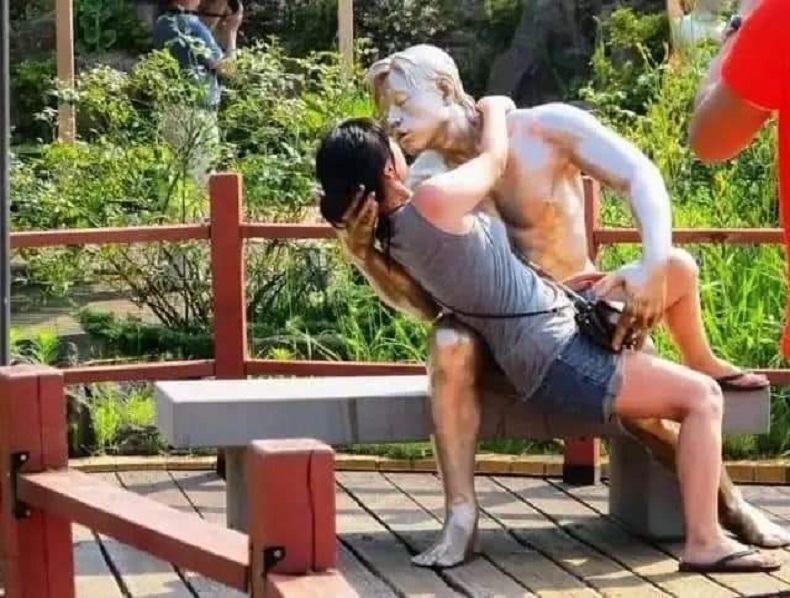
💋 Love is in the Air — In Jeju, South Korea 🇰🇷
Jeju Loveland was practically built for this kind of cheeky photo. A quick kiss turns the park’s already mischievous energy into a perfect little piece of performance art!💡 Nerd Fact: Jeju Loveland is a full sculpture park and not just a one-off joke. The Korea Tourism Organization says 20 artists took part in creating it. Most of them were talented Hongik University graduates. Visit Jeju points out that it is one of the few tourist attractions on the island that you can enjoy at night.
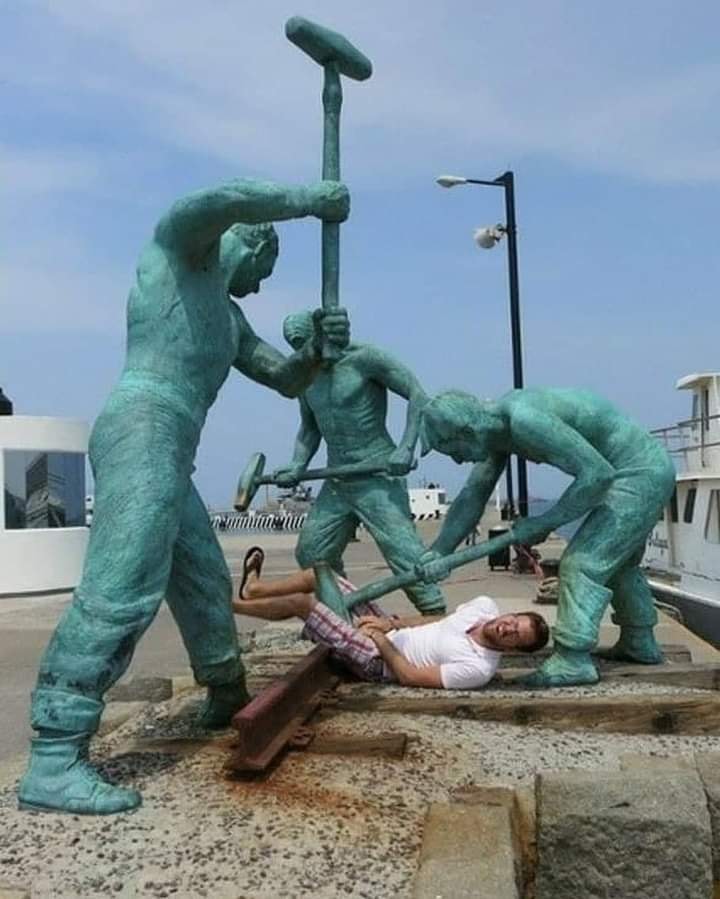
🔨 Hammer Time!
This brave soul decided to take a quick nap right on the tracks. Meanwhile, these bronze workers are swinging their heavy hammers hard. Talk about living dangerously!
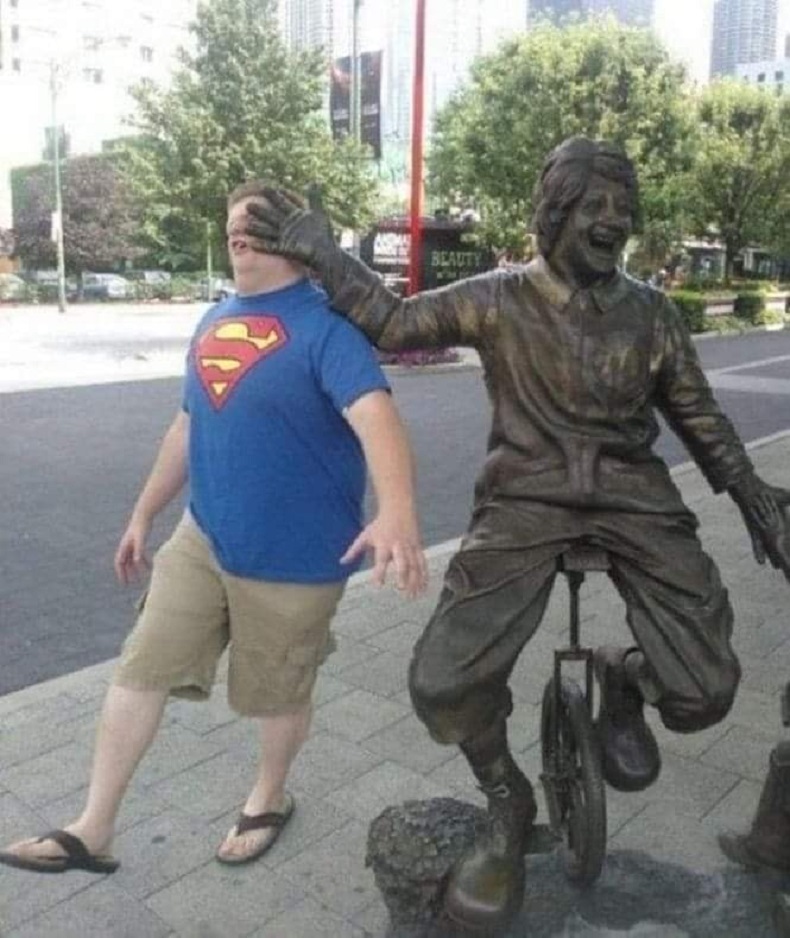
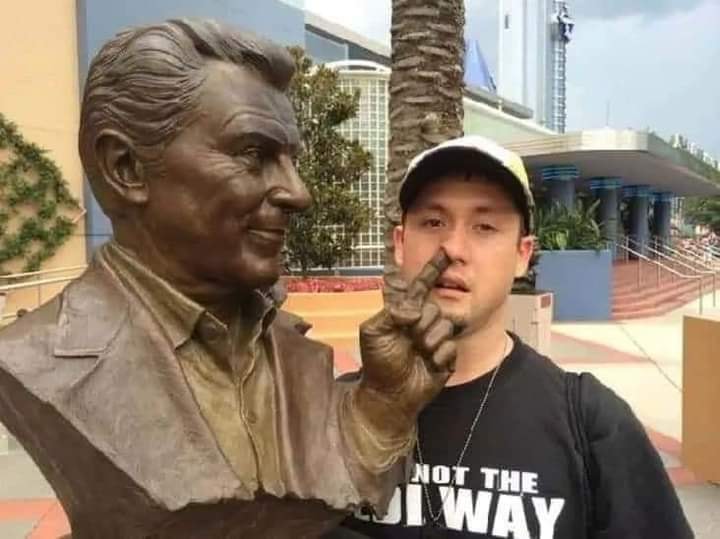
🥊 Talk to the Hand
This unicycling statue has zero tolerance for pedestrians getting in its way. That is a very solid boop right on the nose!
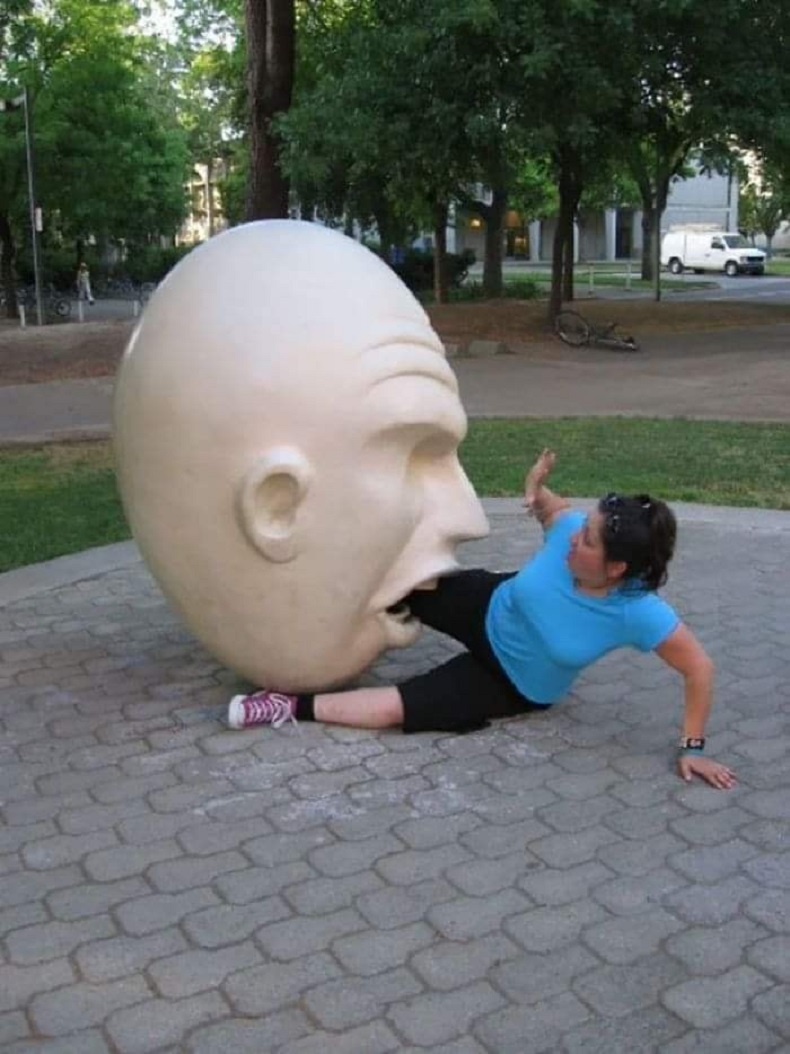
👁️ A Close Encounter with Yin & Yang — By Robert Arneson in Davis, USA 🇺🇸
Sometimes the art looks right back at you! This giant face in Davis provides the perfect backdrop for a totally surreal and funny moment.💡 Nerd Fact: Arneson was not just making quirky campus mascots. UC Davis notes that he helped push ceramics far beyond traditional pottery. The official Eggheads page says Yin & Yang was installed in 1992 and was conceived as being “about conversation.” That makes this accidental face-off weirdly faithful to the sculpture’s whole core idea!
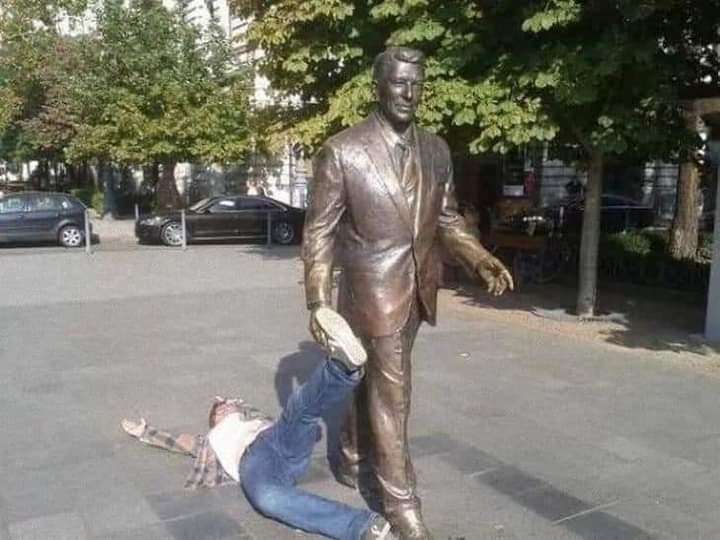
🏃♂️ Tripping at Liberty Square — By István Máté in Budapest, Hungary 🇭🇺
Politics can be super tricky to navigate! This playful visitor in Budapest shows us exactly what it looks like to literally fall for Ronald Reagan.💡 Nerd Fact: Liberty Square makes this statue extra loaded with meaning. In the official inauguration speech, Hungary framed the 2011 monument as a tribute to Reagan’s role in ending communism in the region. An Associated Press report noted that it was installed near both the U.S. Embassy and the Soviet war memorial. This setup is basically Cold War symbolism compressed into one single square!
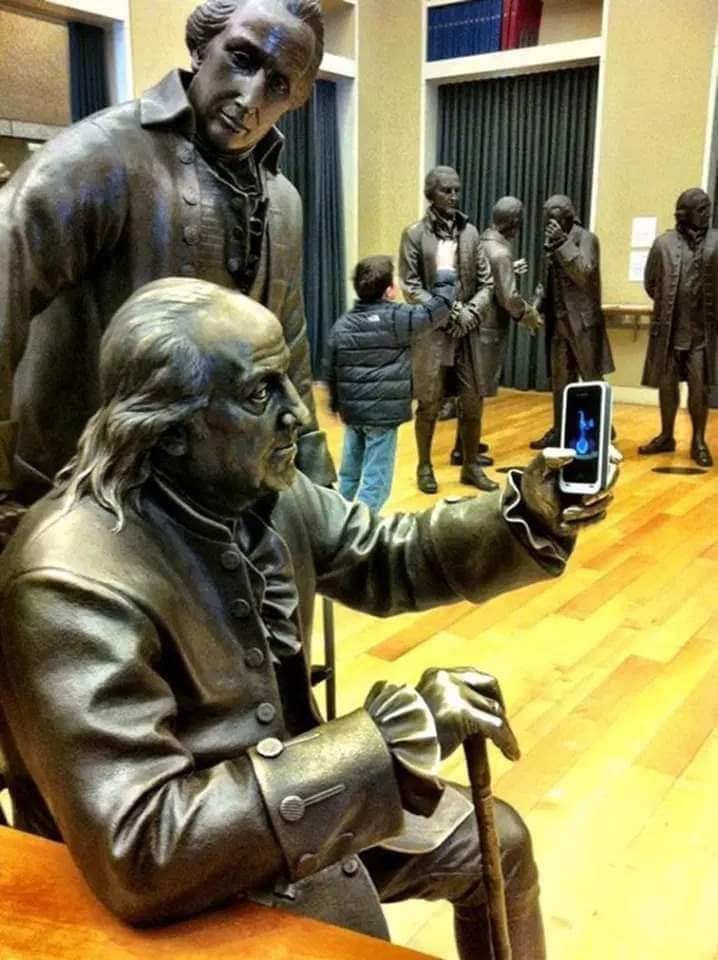
📱 Founding Fathers, Now Accepting Selfies — By Studio EIS in Philadelphia, USA 🇺🇸
History gets a really fun digital update in Philadelphia! Suddenly, two bronze founders look less like distant historical figures and more like two guys trying to get everyone into the perfect frame.💡 Nerd Fact: These are not just random museum doubles. The Constitution Center’s FAQ says Signers’ Hall contains 42 life-size bronze figures created by Studio EIS. About 50 talented artists worked on them. Here is the best trivia twist. Thomas Jefferson and John Adams are not in the room at all. Both were serving abroad in Europe during the Constitutional Convention.
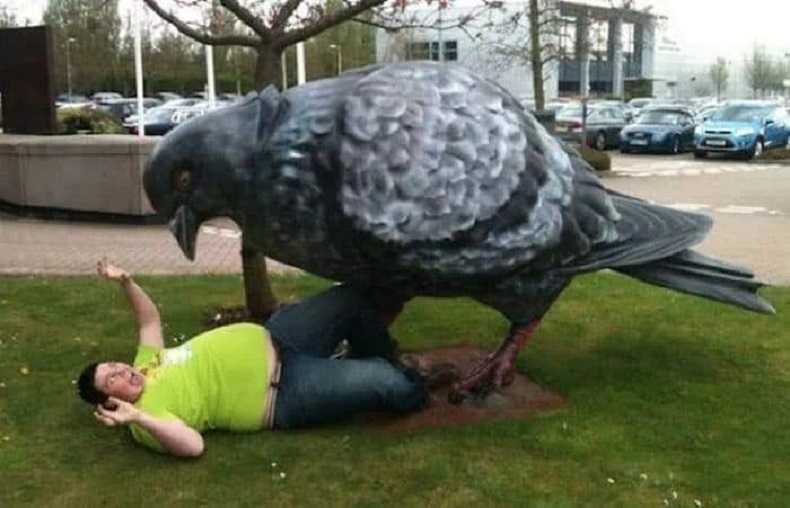
🕊️ The Pigeon’s Revenge — In Bracknell, UK 🇬🇧
Check out this beautifully surreal scene from Bracknell! If you have ever nervously fed a pigeon in the park, this giant sculpture might just be your worst nightmare come to life.
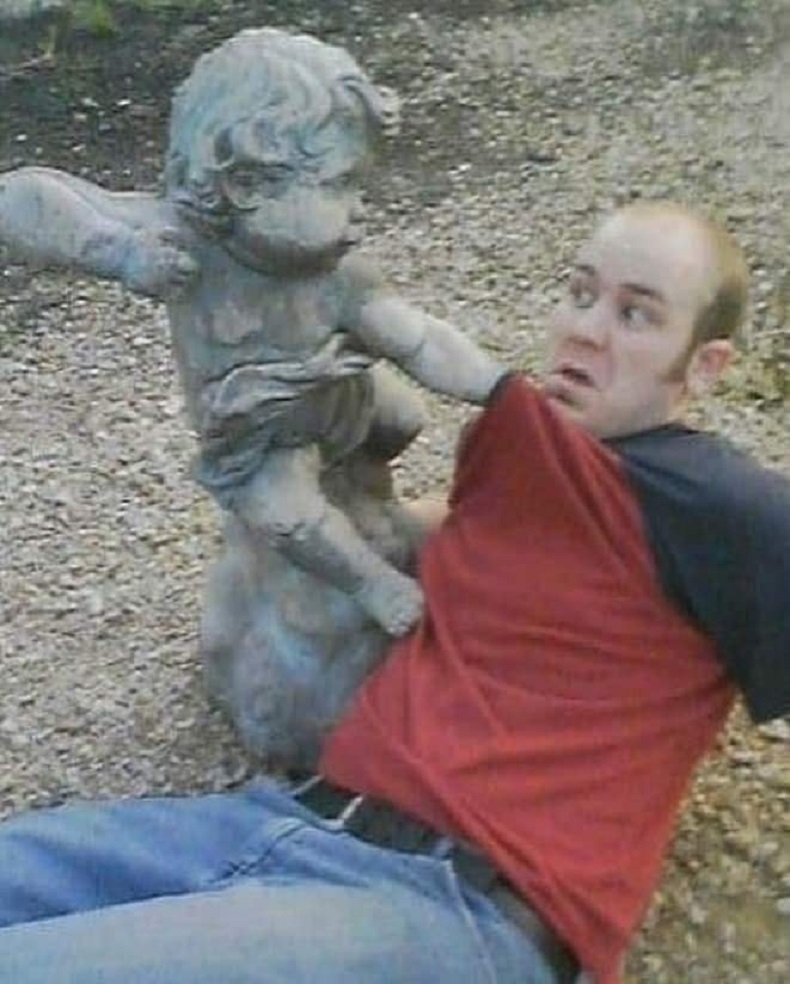
👼 Angelic Aggression
Do not let those cute little wings fool you! This feisty cherub is practicing its best wrestling moves on a very surprised museum guest.
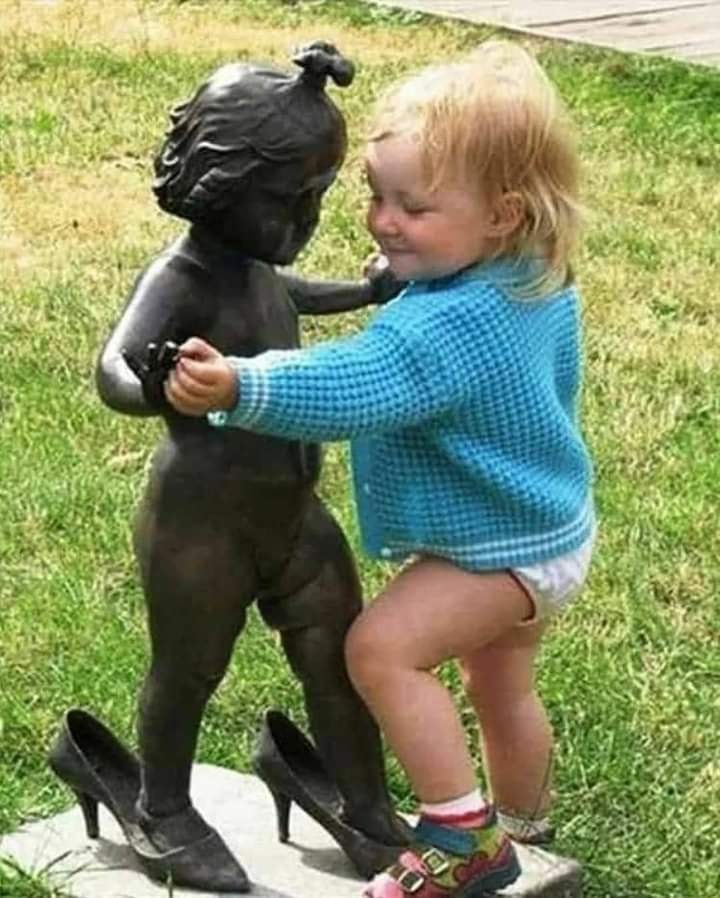
🤝 A New Best Friend
Art truly speaks to people of all ages! This charming interaction perfectly captures the pure imagination of a child meeting a cool new bronze buddy.
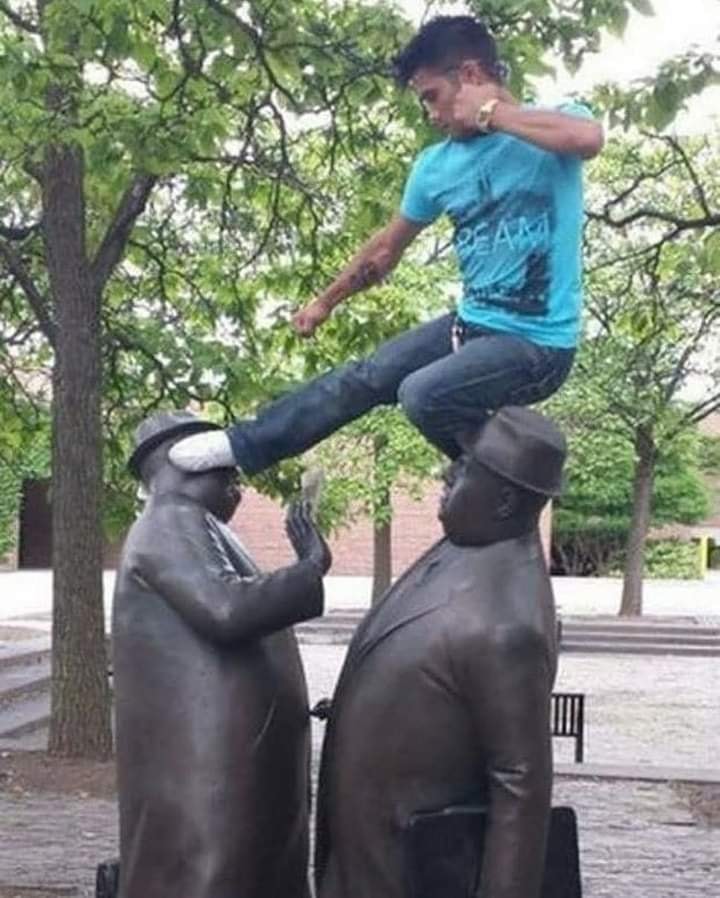
🥋 Breaking the Fourth Wall — By William Hodd McElcheran in Calgary, Canada 🇨🇦
Why just quietly look at the conversation when you can literally jump right in? This perfectly timed kick adds some serious action movie vibes to the local street art scene!💡 Nerd Fact: This is one of Calgary’s most photobomb-friendly sculptures because that was basically the whole point! The Calgary Public Art Guide says Conversation belongs to McElcheran’s Businessman Series. These life-size figures are placed right on the ground instead of being raised up on pedestals like classical heroes. Avenue Calgary notes that the piece was unveiled in 1981. Locals have been happily jumping into the argument ever since!
💃 Ring Around the Rosie… for Adults
Nostalgia is a super powerful thing! Joining the circle makes this public sculpture feel exactly like an active, joyful playground all over again.
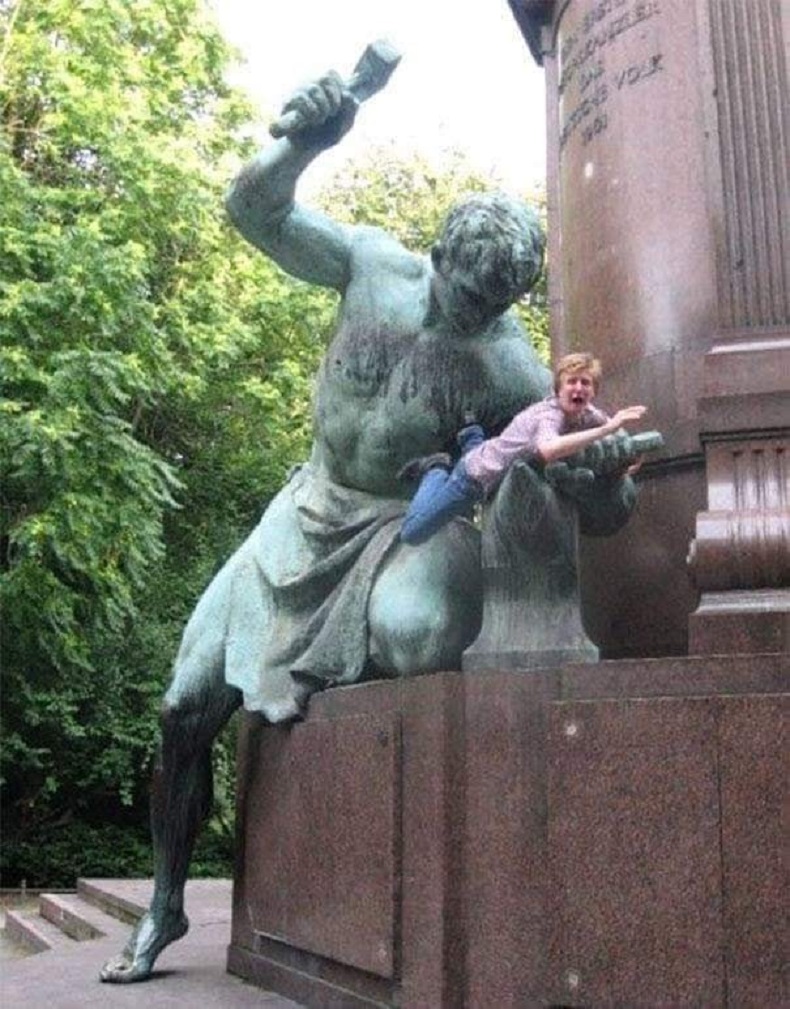
👷♂️ The Carpenter’s Wrath
Watch your head! This muscular bronze figure looks more than ready to put that huge hammer to work. This brave visitor is standing right in the dangerous splash zone.
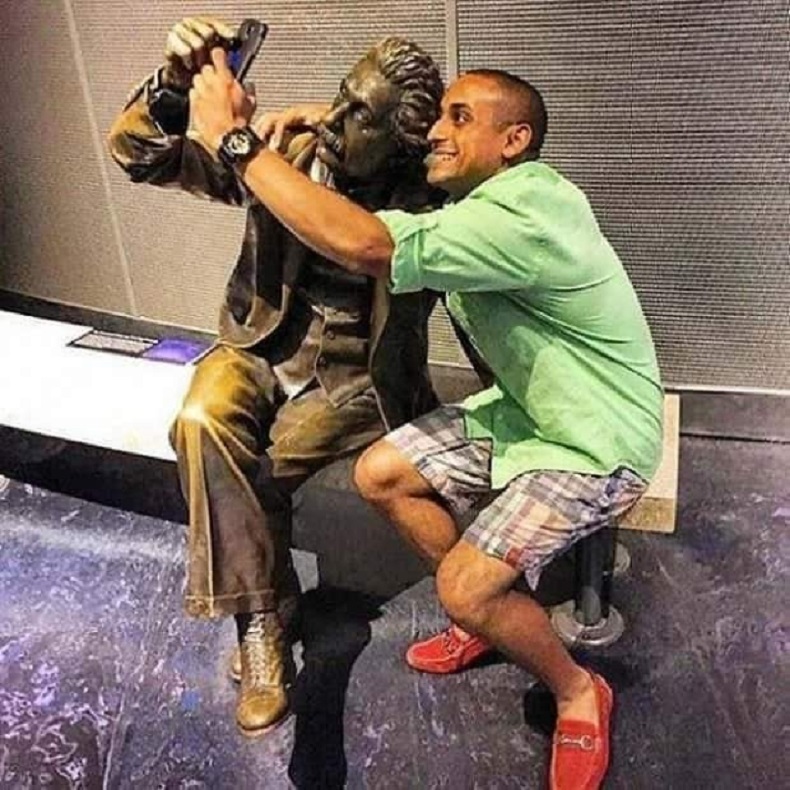
📸 Einstein’s Modern Theory of Selfies
Energy equals modern camera squared! Albert Einstein looks surprisingly comfortable with a flashy smartphone right in his face.
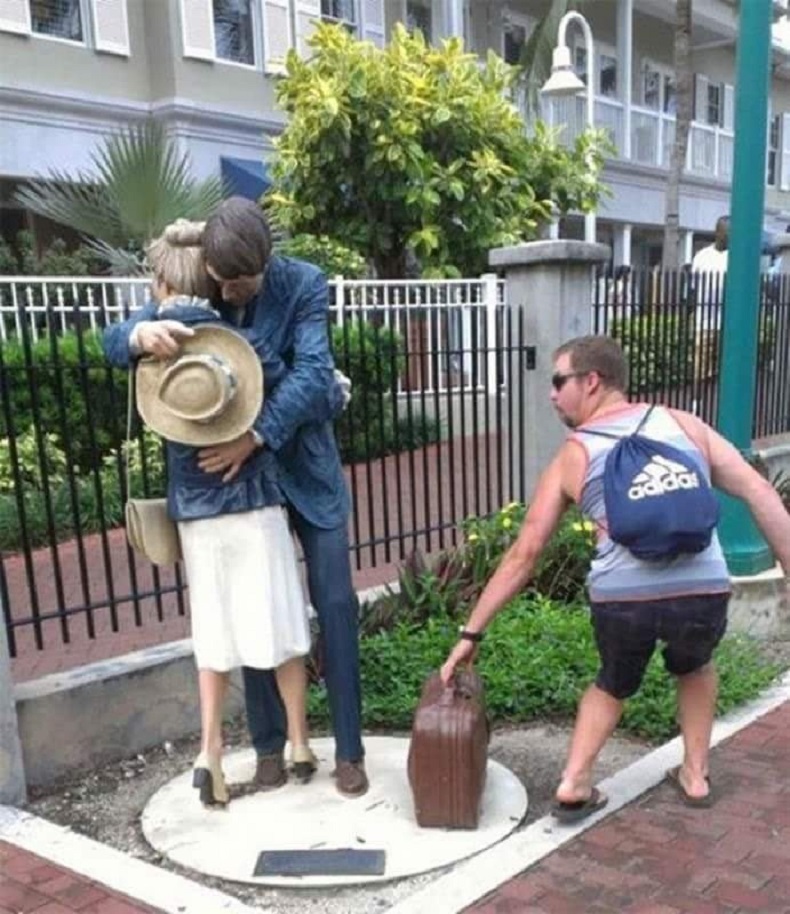
🧳 The Sidewalk Thief
This beautiful bronze couple is saying their deeply romantic goodbyes. Meanwhile, a super helpful passerby decided to take care of that heavy suitcase for them!
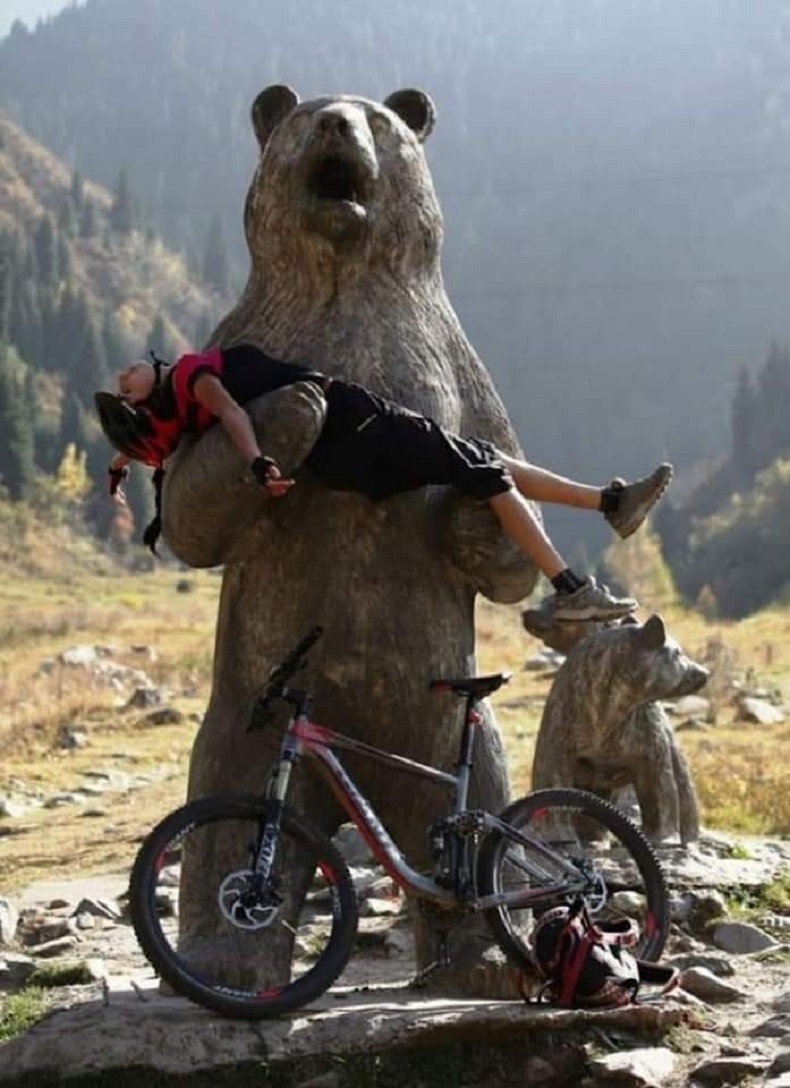
🐻 A Bear Hug to Remember
A tough mountain bike trip just took a whimsical turn! This very tired rider found a cool bear statue completely willing to offer some much-needed physical support.
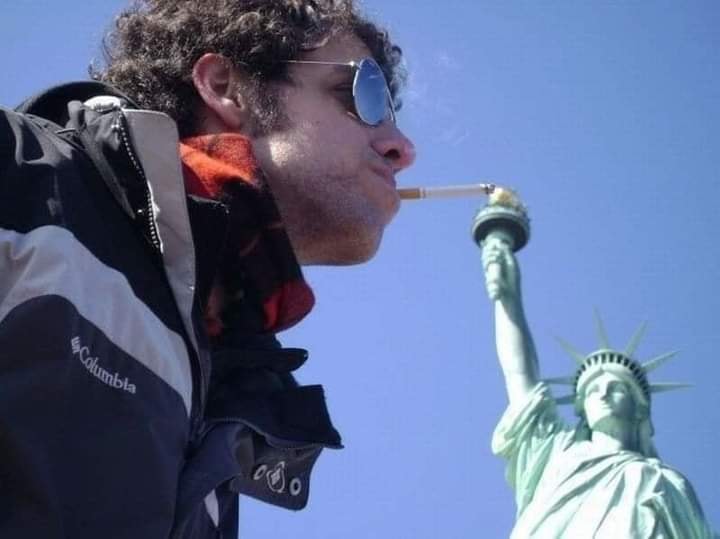
🗽 Lady Liberty’s Smoke Break — By Frédéric Auguste Bartholdi in New York, USA 🇺🇸
Lighting up with the absolute best torch in the business! Brilliant forced perspective easily turns this famous national landmark into a very willing accomplice.💡 Nerd Fact: Bartholdi designed the beautiful icon, but the hidden genius engineer is Gustave Eiffel. The National Park Service says Eiffel created the massive 92-foot internal pylon and flexible support system. Its official statue facts page notes that Lady Liberty can safely sway up to 3 inches in the heavy wind. The golden torch can actually move as much as 6 inches!
👆 Boop!
Who says bronze is totally cold and unfeeling? This incredibly playful statue seems to find its visitor quite amusing. Or maybe it is just playing a fun game of got-your-nose!
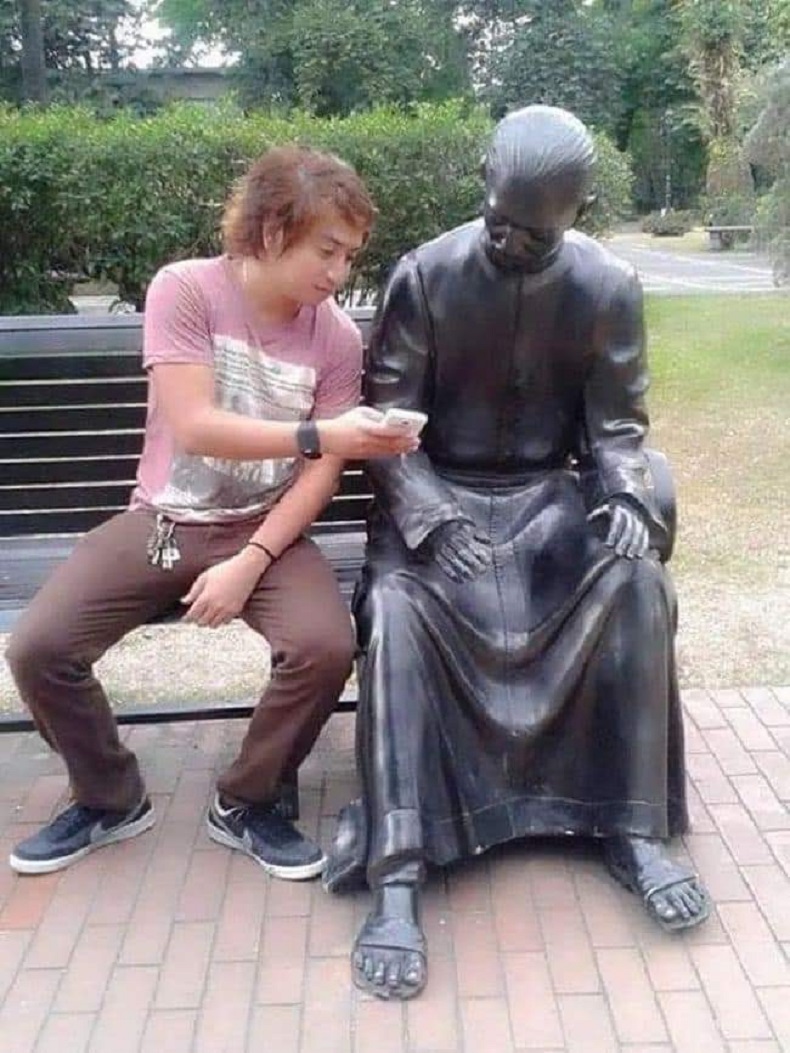
📰 Checking the Latest News
See? This is exactly what everyone is talking about online today! Sharing a bright screen with a life-sized bronze figure perfectly bridges the gap between different eras.
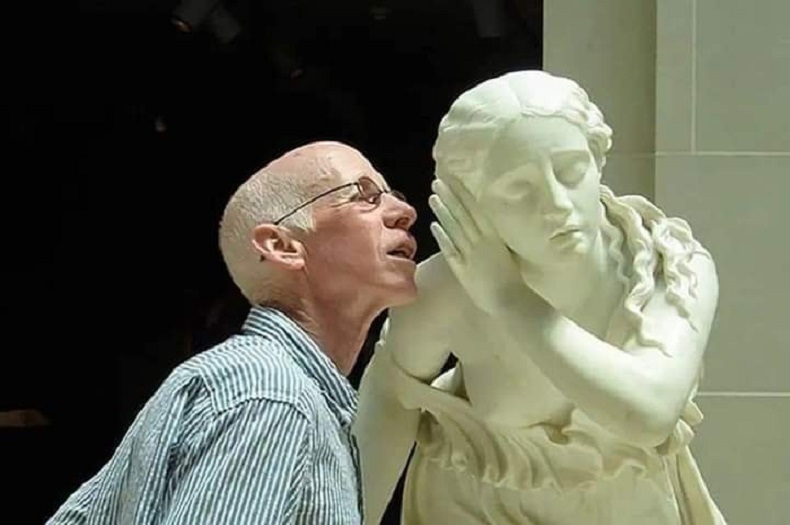
🤫 Whispered Secrets
Some juicy stories are meant only for the ears of marble! This wonderfully intimate moment turns a static museum sculpture into a very patient and quiet listener.
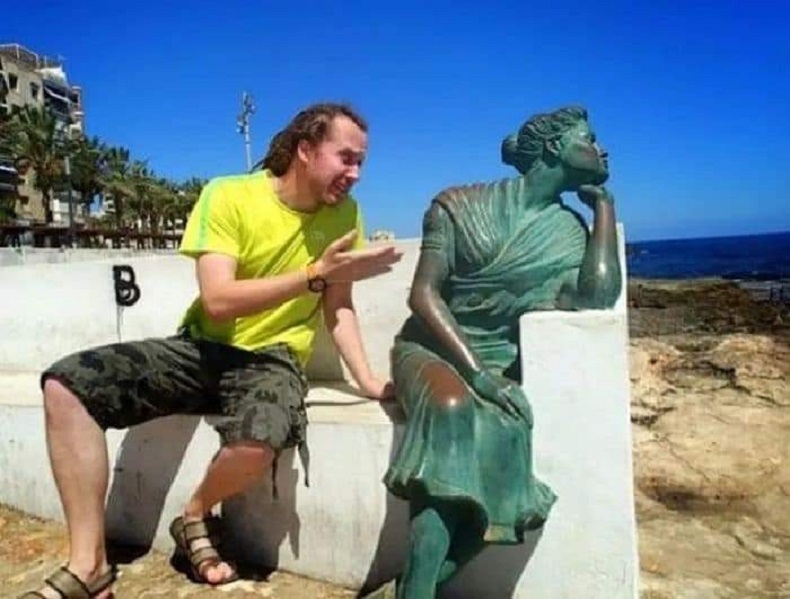
🌊 Sharing “La Bella Lola” — By Carmen Fraile in Torrevieja, Spain 🇪🇸
Welcome to beautiful Torrevieja, Spain! Sitting casually beside La Bella Lola turns this seaside monument into a lovely shared pause. Suddenly, the sculpture feels less like a landmark and more like someone still scanning the open horizon.💡 Nerd Fact: Torrevieja’s official tourism page describes La Bella Lola as a tribute to Torrevejense women who lovingly watched their seafaring loved ones depart. That is exactly why the beautiful sculpture reads as longing rather than just simple seaside decoration. The city’s English tourism page also notes an interesting detail. A copy of Carmen Fraile’s work was kindly donated to Oviedo in 2009.
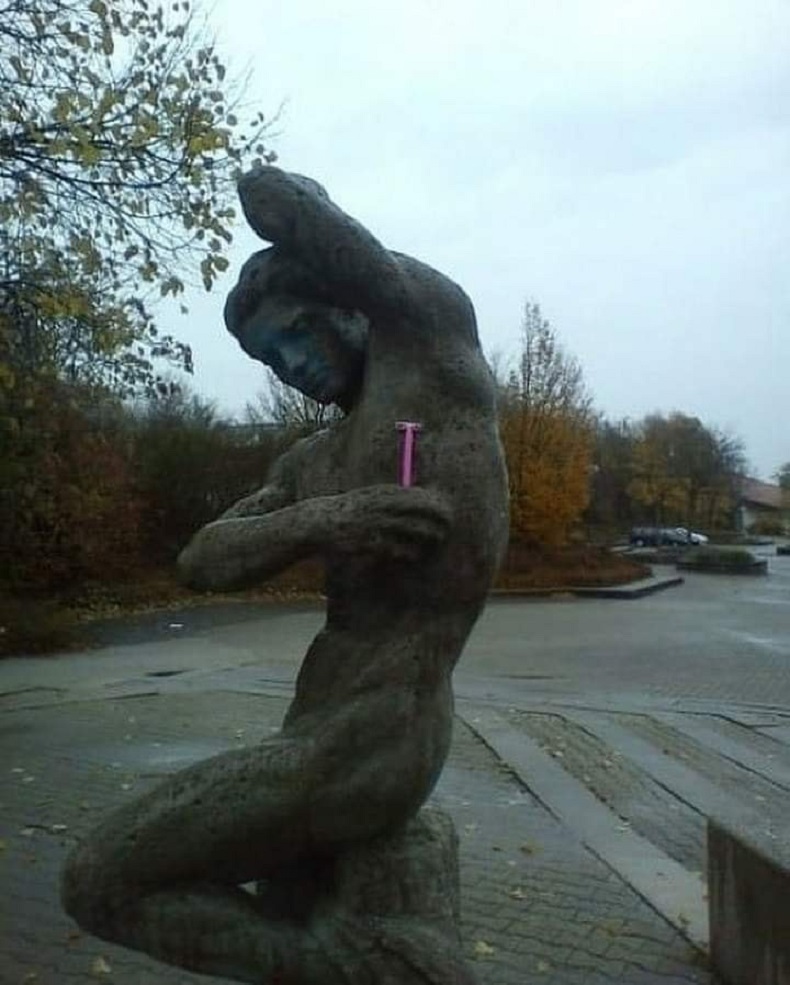
🪒 Statues Need Grooming Too
A simple pink razor completely turns a timeless classical pose into a super relatable morning routine! It is the exact kind of subtle street art intervention that instantly stops people right in their tracks.
🎭 The Final Pose
This is the absolute perfect grand finale! This hilarious interaction proves once again that public street art is here for absolutely everyone to explore and enjoy.Which one is your favorite?
Work of Art: Conversation by William Hodd McElcheran
One of the most recognizable pieces of art in Calgary, these two bronze businessmen talking shop on Stephen Avenue continue to be objects of curiosity after four decades.avenuecalgary (Avenue Calgary)
Junkyard Art Holds Message for the Planet | Balkan Insight
Vlado Kostov’s sculptures, all made from scrap metal, are not just interesting artworks; they tell of the need to save planet Earth.Nemanja Cabric (BIRN)
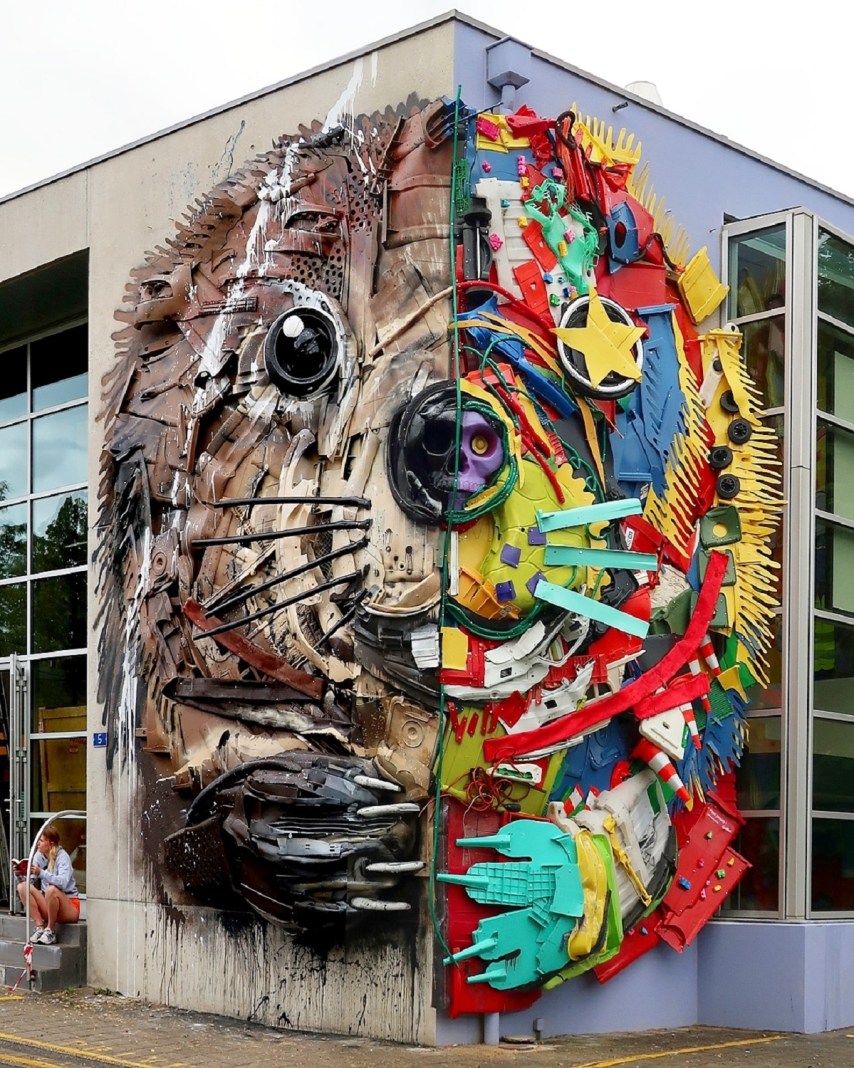
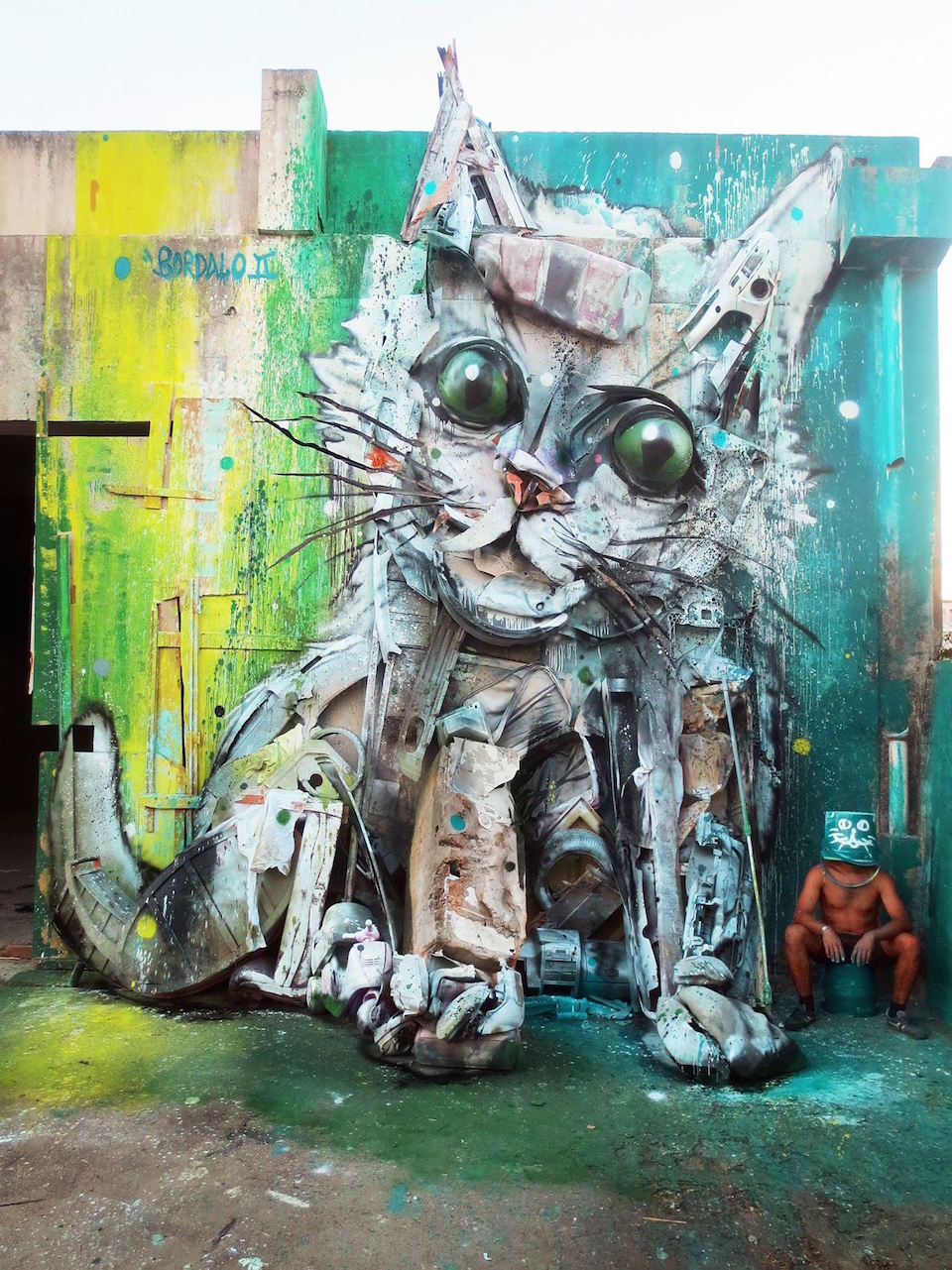
Half Baby Beaver – By Trash Artist BORDALO II in Switzerland
Content warning: Trash Artist BORDALO II By BORDALO II in Bernex, Geneve, Switzerland. More by BORDALO II on Street Art Utopia: 22 photos – A Collection of Street Art by Bordalo II ABOUT BORDALO II: Artur Bordalo (Lisbon, 1987) uses the artist name Bordalo II, which he ch
Trash Artist BORDALO II
By BORDALO II in Bernex, Geneve, Switzerland.
More by BORDALO II on Street Art Utopia: 22 photos – A Collection of Street Art by Bordalo II
ABOUT BORDALO II: Artur Bordalo (Lisbon, 1987) uses the artist name Bordalo II, which he chose as a tribute to his grandfather, the painter Real Bordalo, in order to promote a continuity and reinvention of his artistic legacy.
His youth took place between the hours spent in the studio of his grandfather Real Bordalo, who had an incessant passion for watercolors and oils and portrayed landscapes and typical scenes of the city, and the adventures around illegal graffiti in the underworld of the city of Lisbon.
He attended the Painting course at the Faculty of Fine Arts in Lisbon for eight years, without ever having completed it, but says that these years allowed him to discover sculpture, ceramics, and to experiment with a variety of materials that have distanced him from painting, which had taken him there in the first place.
The public space would become the chosen stage for his explorations of color and scale and the platform where he gradually transformed his habits and channeled his experiences in the construction and development of his artistic work, which is currently focused on questioning the materialistic and greedy society of which he is (also) part.
The excessive production and consumption of stuff, which results in the continuous production of “garbage” and consequently in the destruction of the Planet, are the central themes of his production. This “garbage” assumes itself as the unusual and unique raw material that Bordalo uses in the construction of small and large scale pieces that he has spread around the world and that, above all, intend to be the vehicle of a universal manifesto.
22 photos – A Collection of Street Art by Bordalo II
—
This is a collection of Street Art by Bordalo II.
ABOUT: Artur Bordalo (Lisbon, 1987) uses the artist name Bordalo II, which he chose as a tribute to his grandfather, the painter Real Bordalo, in order to promote a continuity and reinvention of his artistic legacy.
His youth took place between the hours spent in the studio of his grandfather Real Bordalo, who had an incessant passion for watercolors and oils and portrayed landscapes and typical scenes of the city, and the adventures around illegal graffiti in the underworld of the city of Lisbon.
He attended the Painting course at the Faculty of Fine Arts in Lisbon for eight years, without ever having completed it, but says that these years allowed him to discover sculpture, ceramics, and to experiment with a variety of materials that have distanced him from painting, which had taken him there in the first place.
The public space would become the chosen stage for his explorations of color and scale and the platform where he gradually transformed his habits and channeled his experiences in the construction and development of his artistic work, which is currently focused on questioning the materialistic and greedy society of which he is (also) part.
The excessive production and consumption of stuff, which results in the continuous production of “garbage” and consequently in the destruction of the Planet, are the central themes of his production. This “garbage” assumes itself as the unusual and unique raw material that Bordalo uses in the construction of small and large scale pieces that he has spread around the world and that, above all, intend to be the vehicle of a universal manifesto.
—
On Facebook.
On Facebook.
On Facebook.
On Facebook.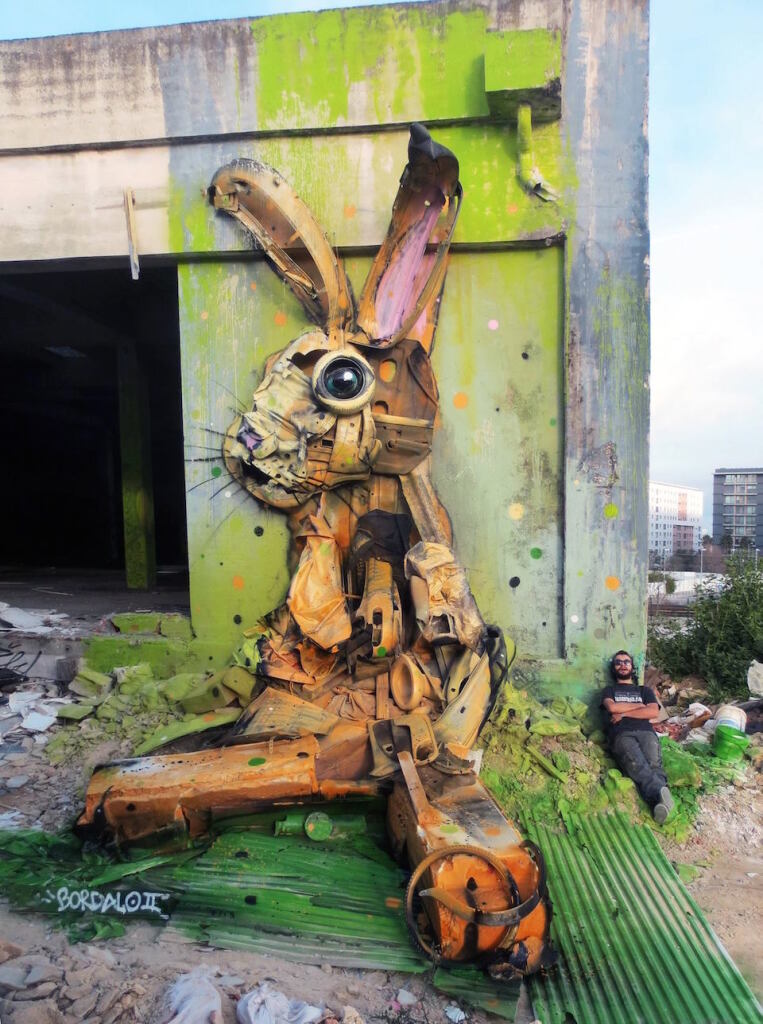
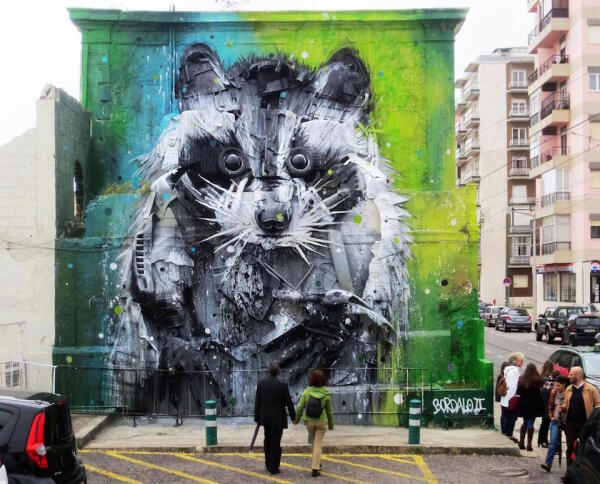
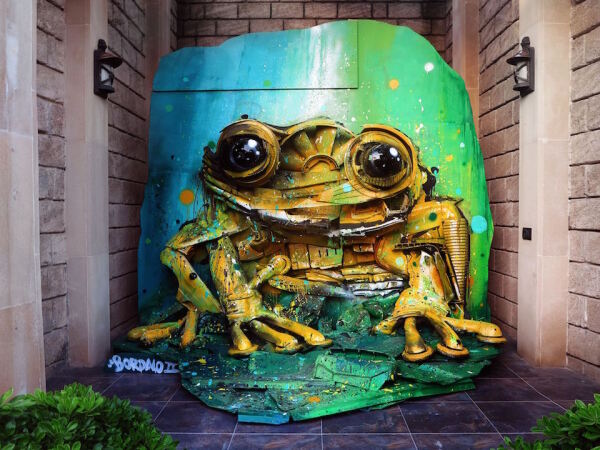
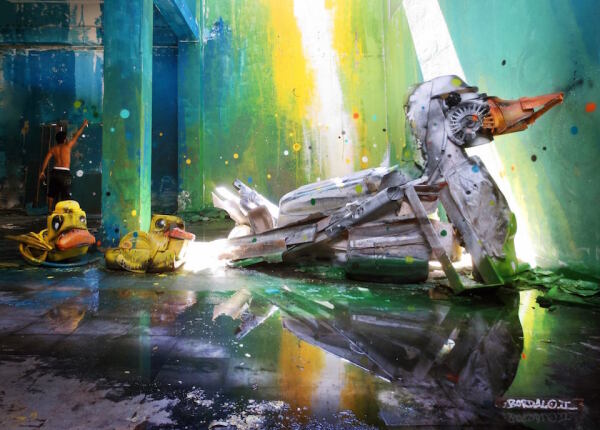
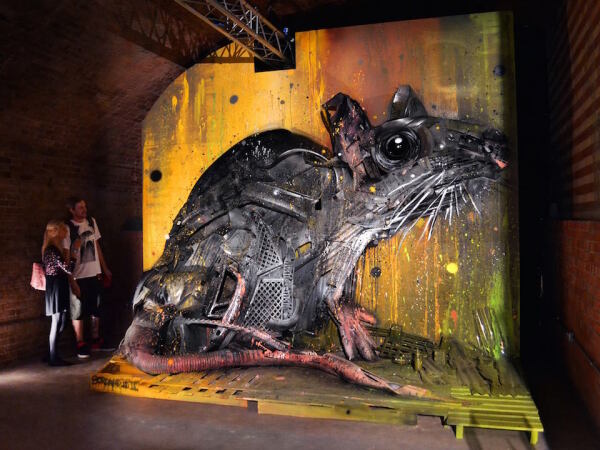
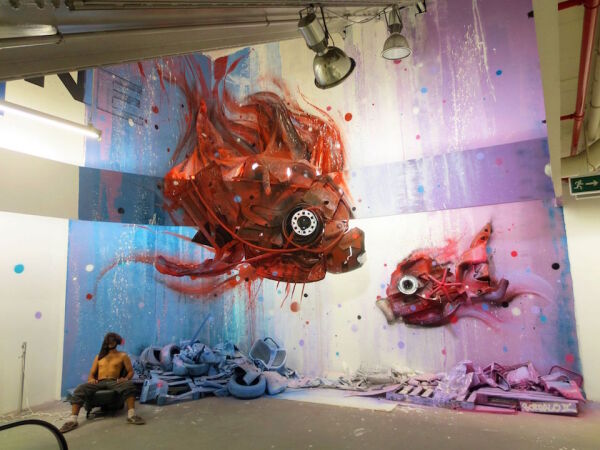
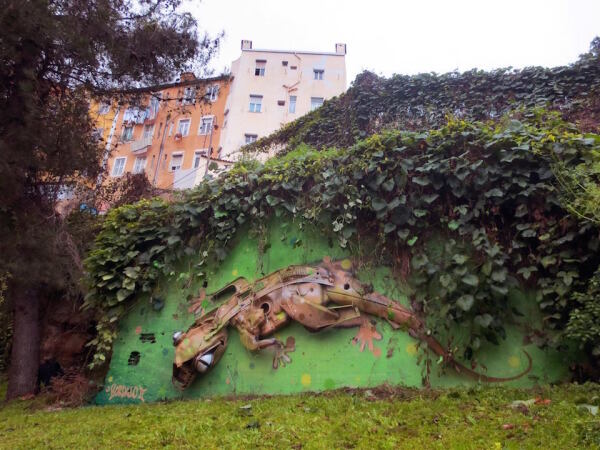
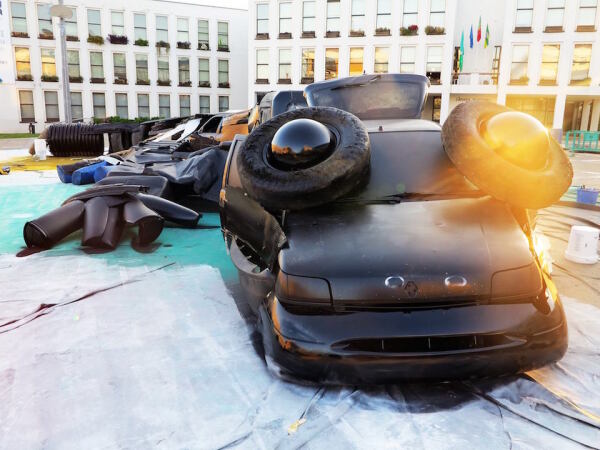
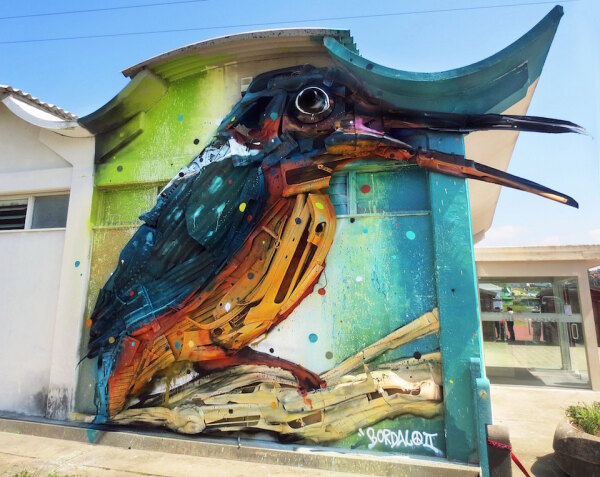
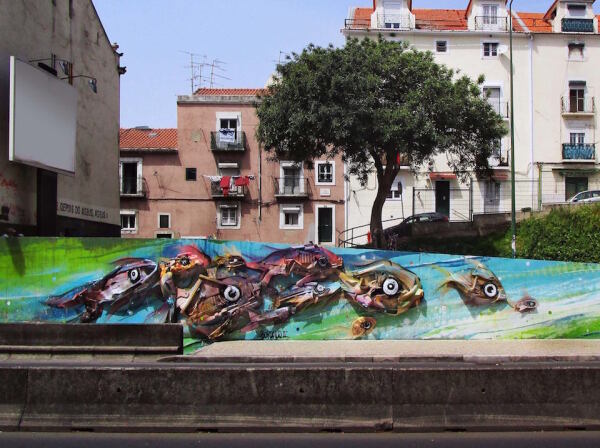
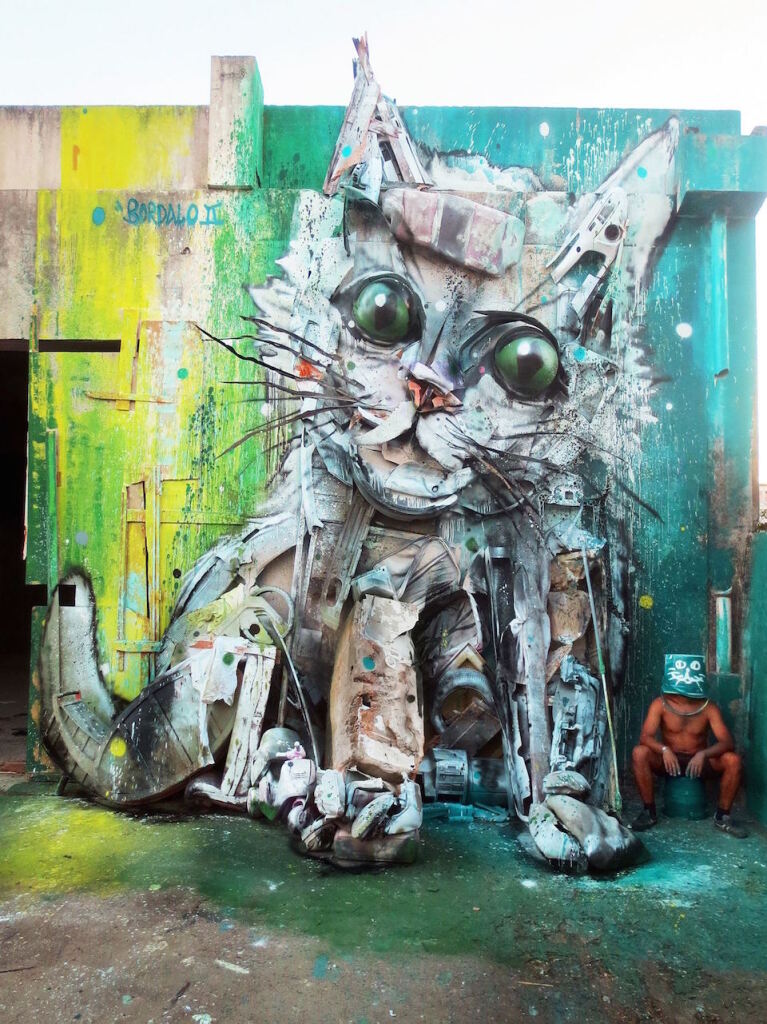
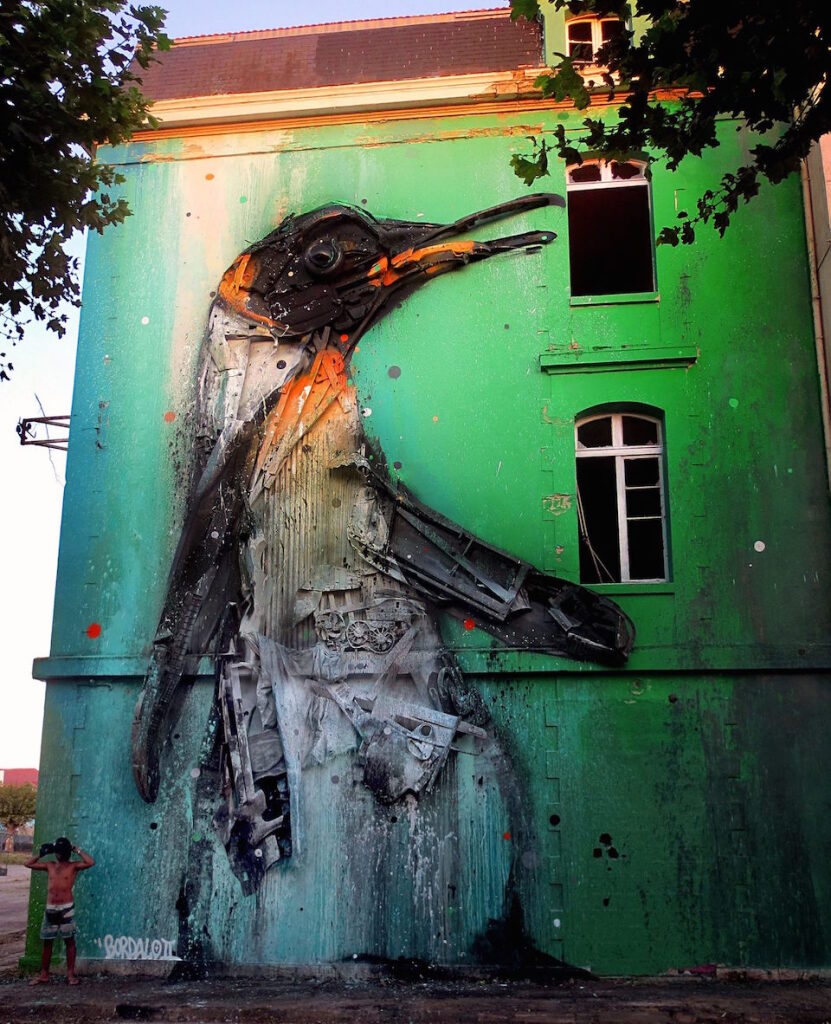
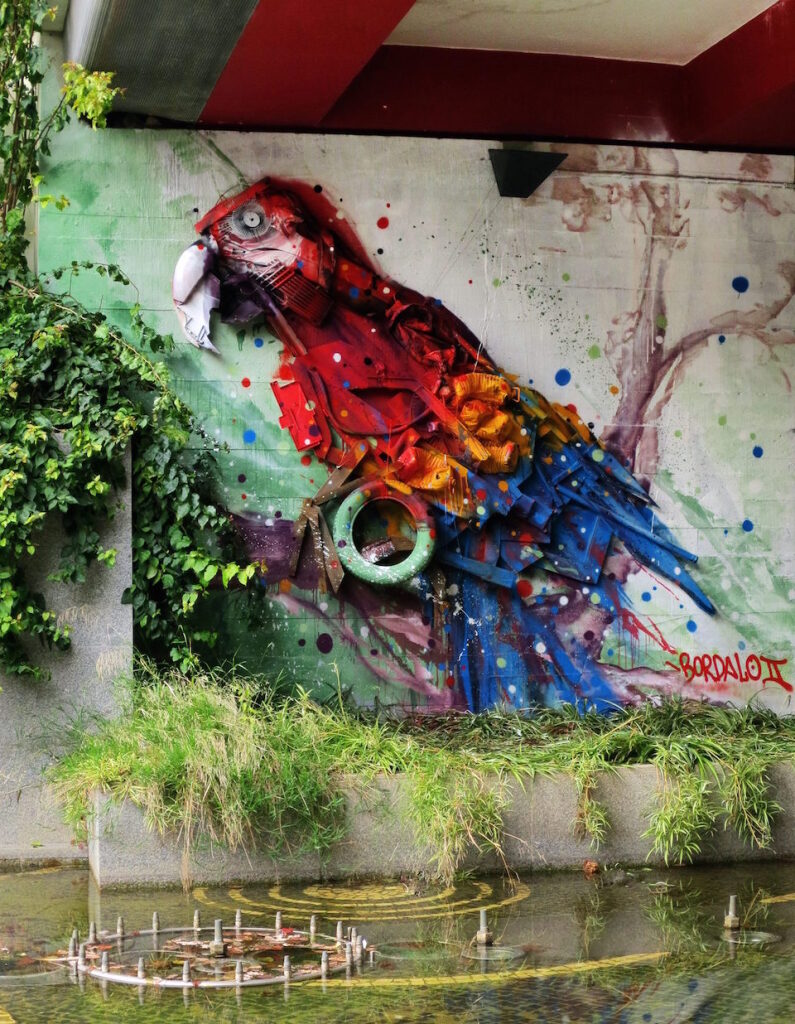
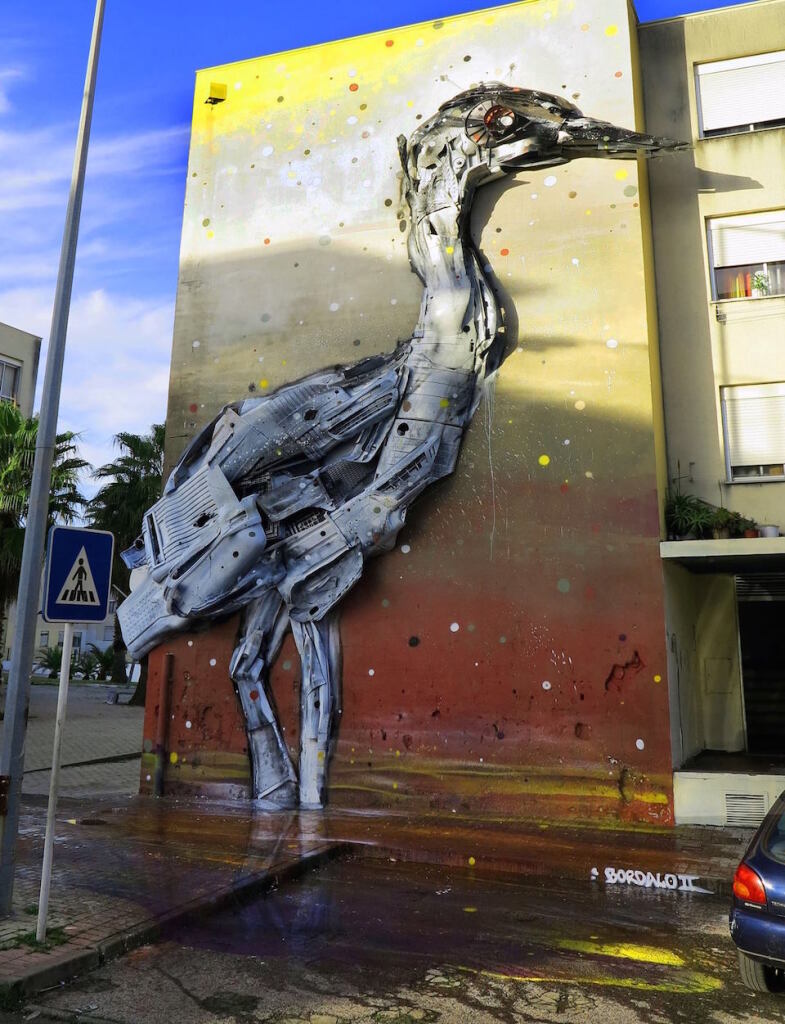
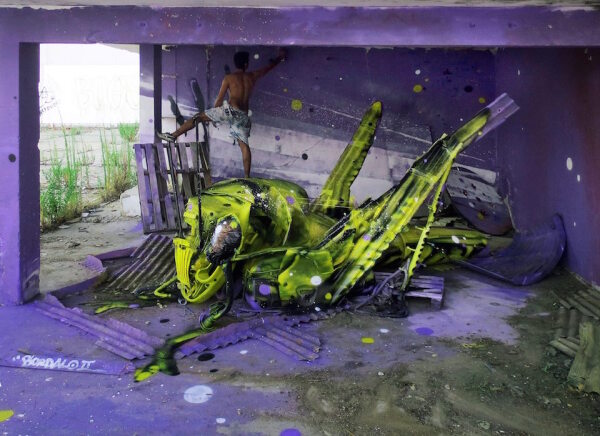
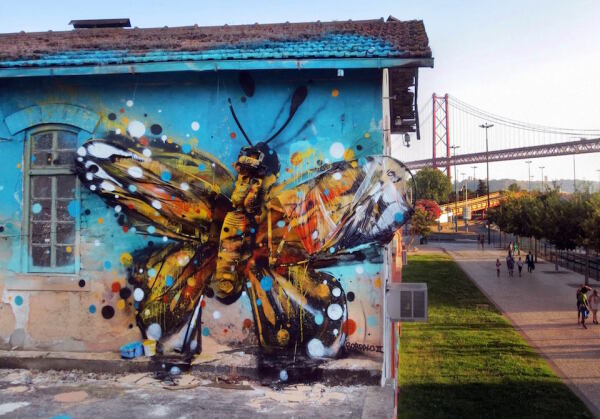
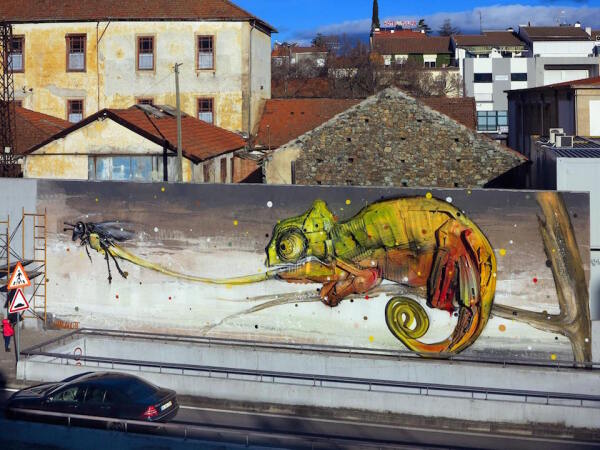
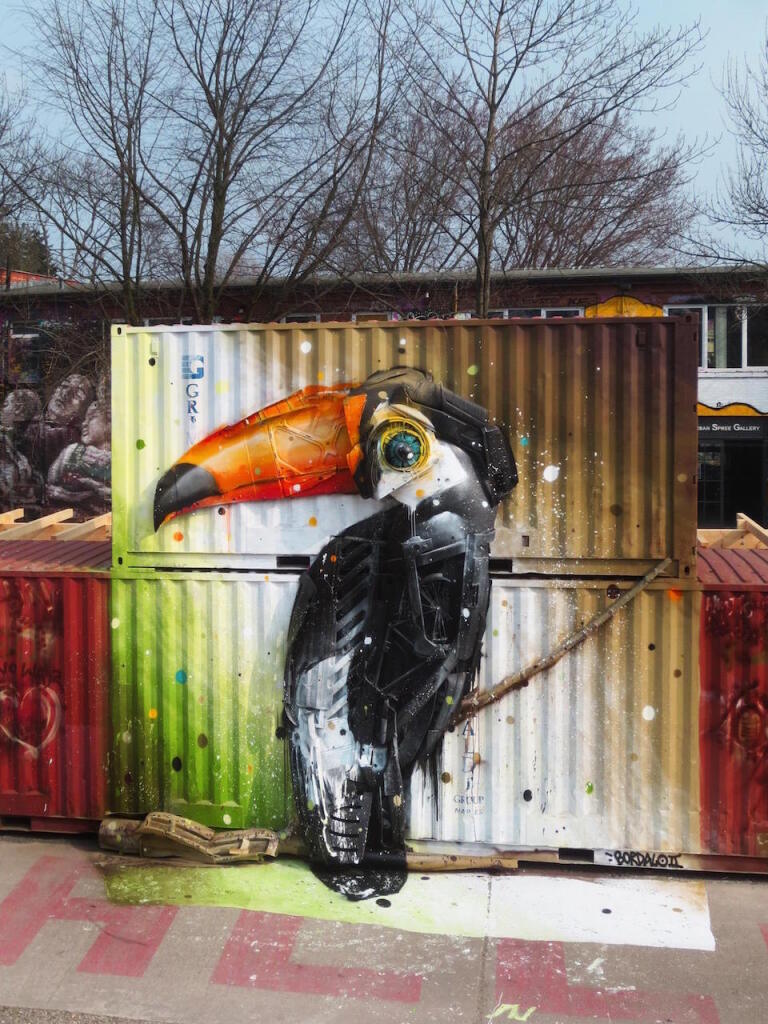
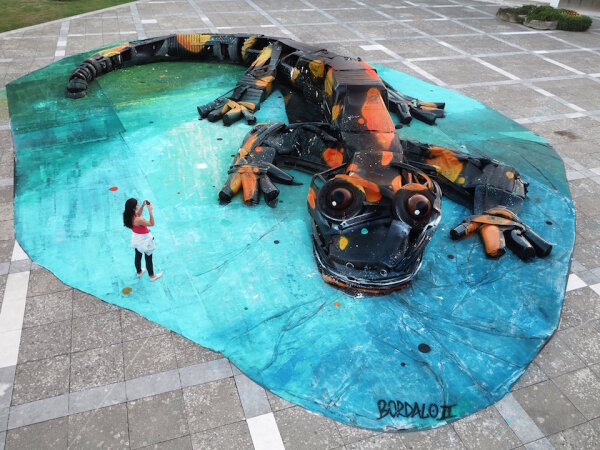
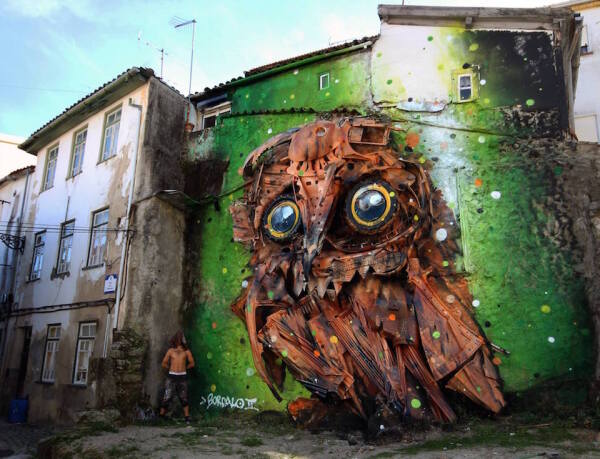
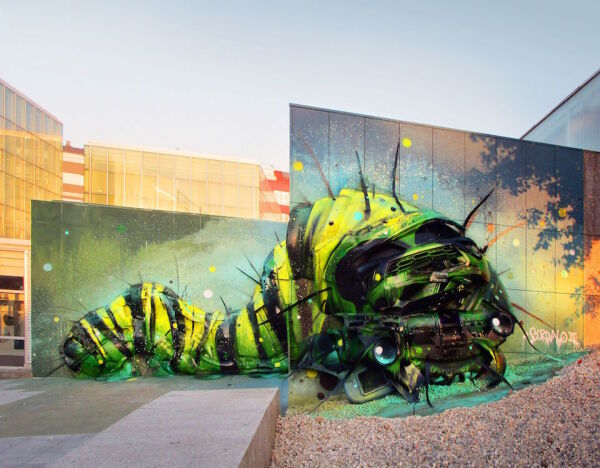
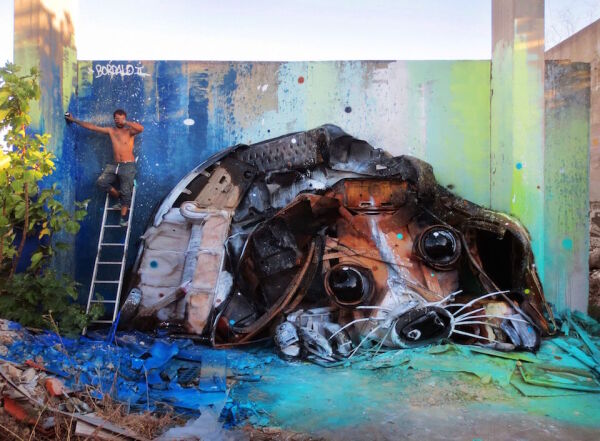
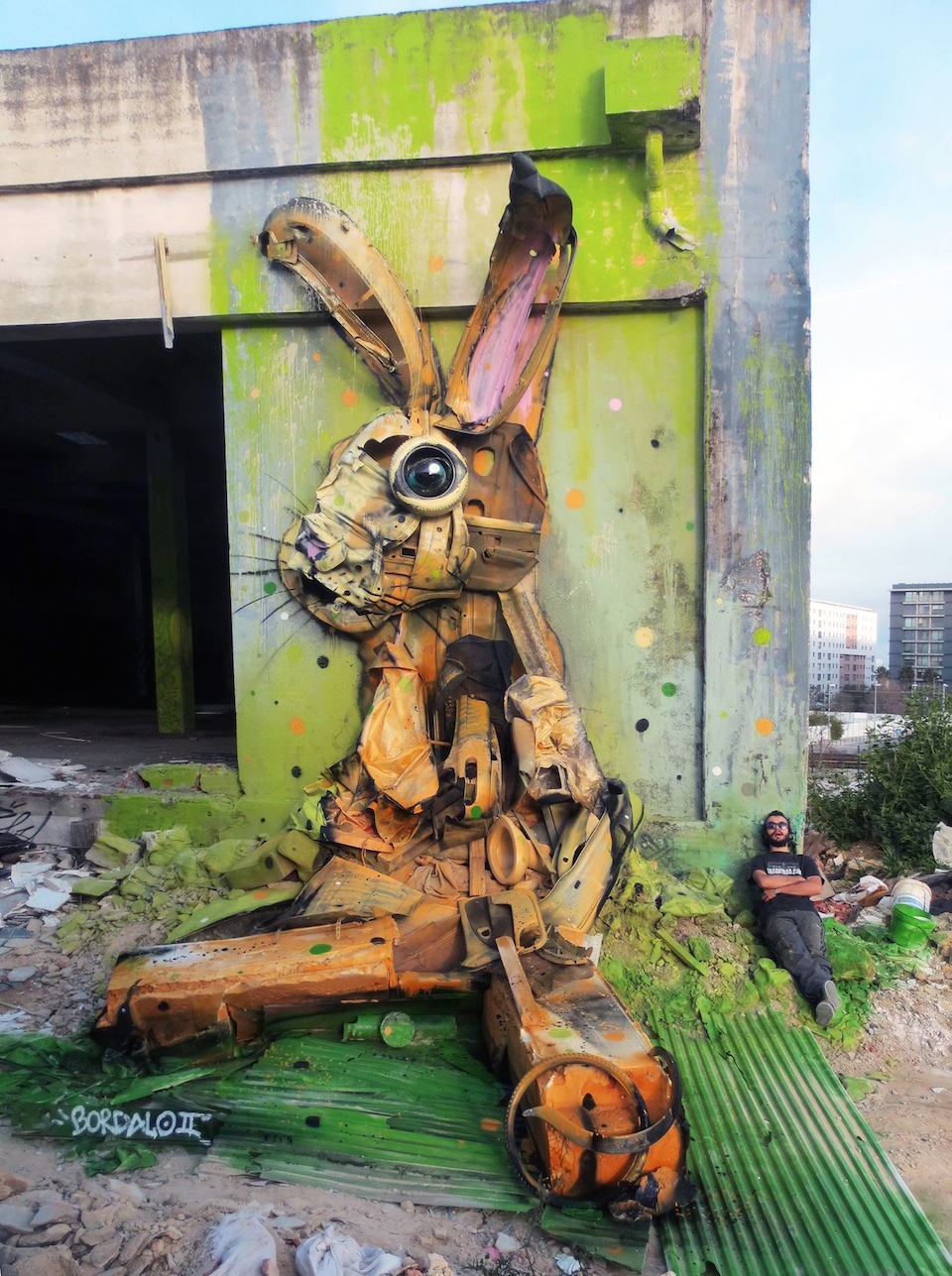
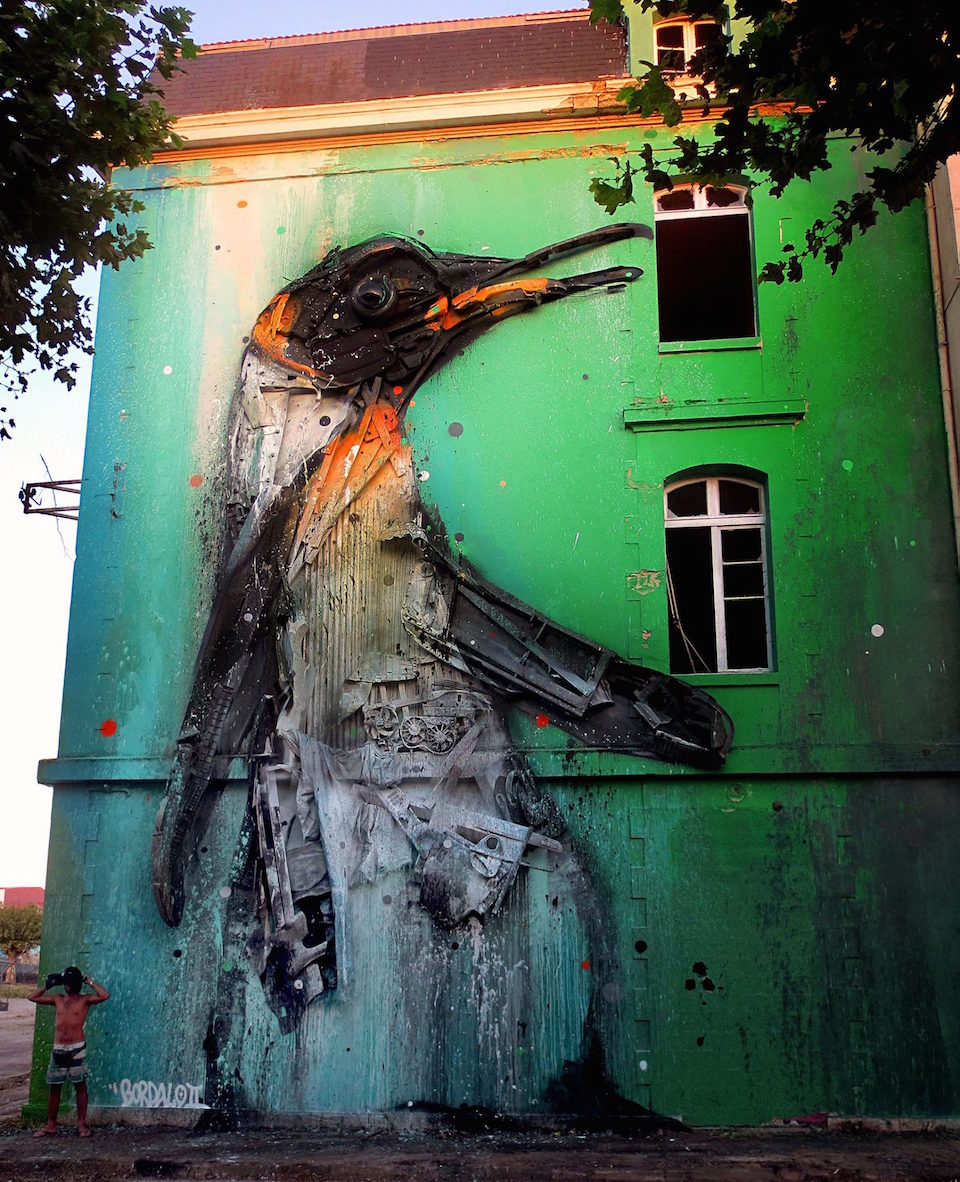
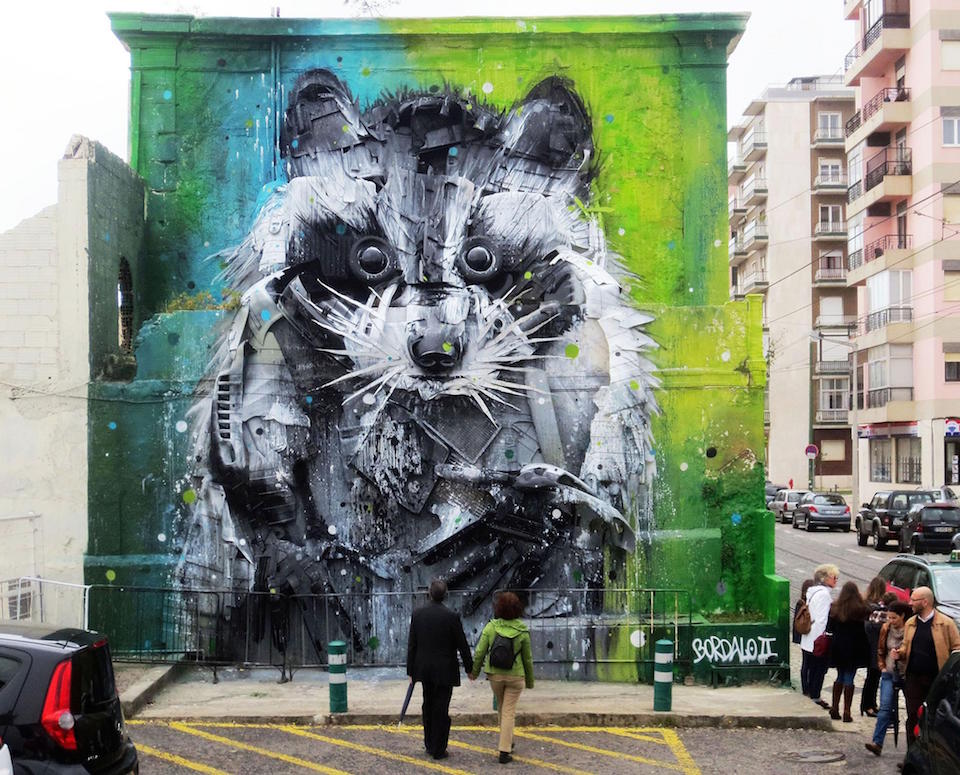
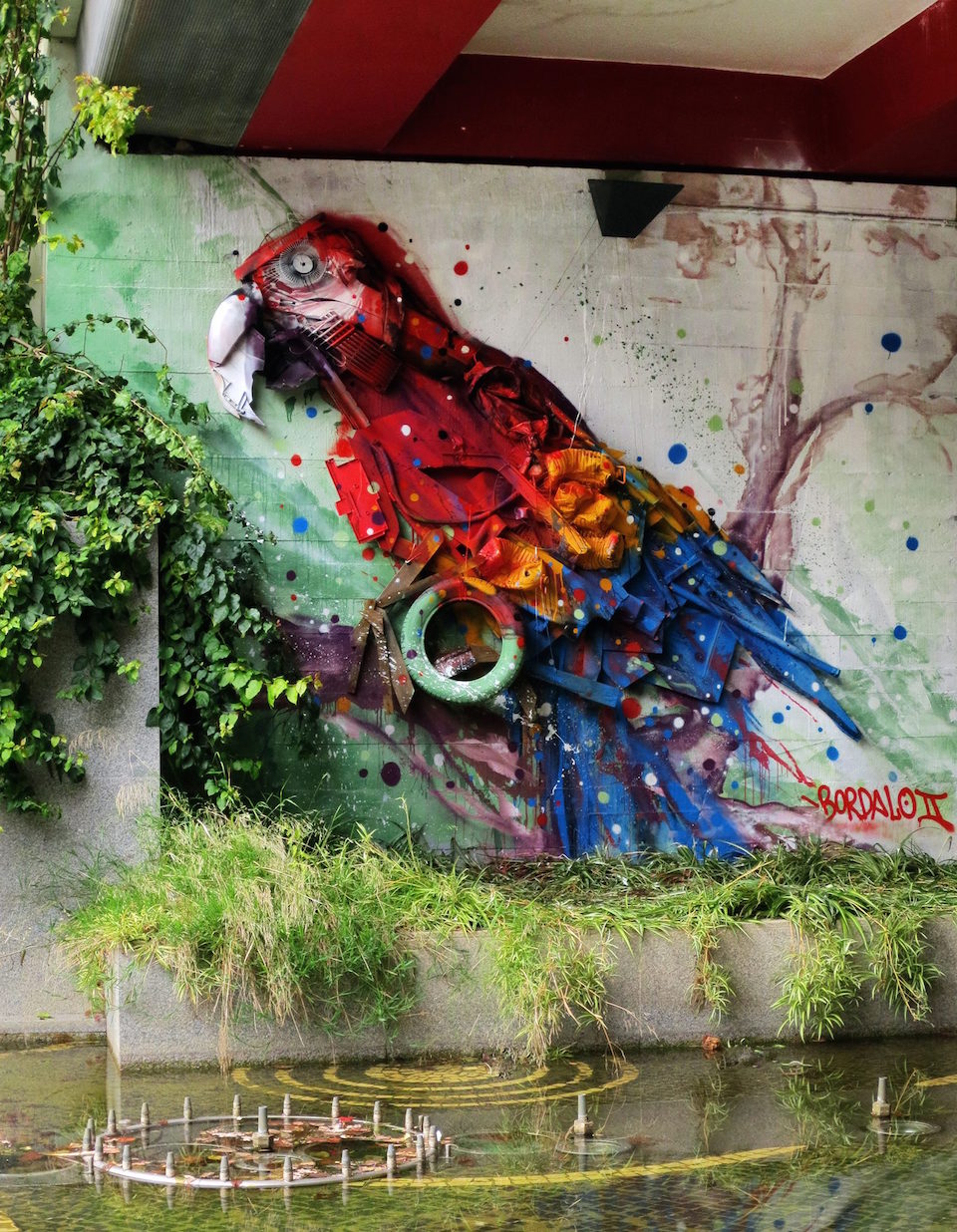
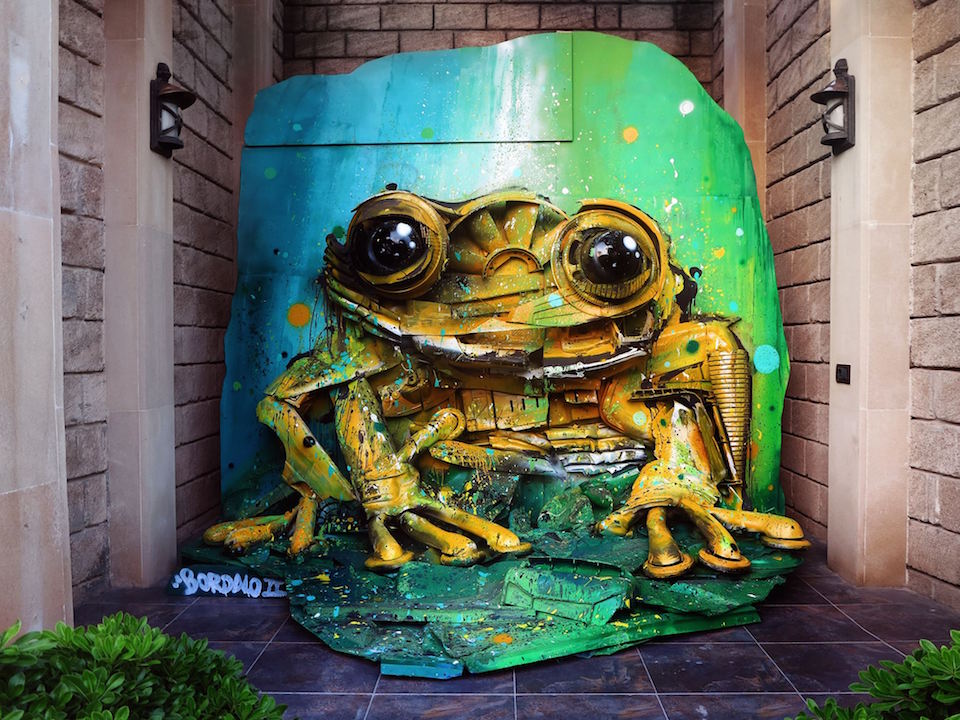
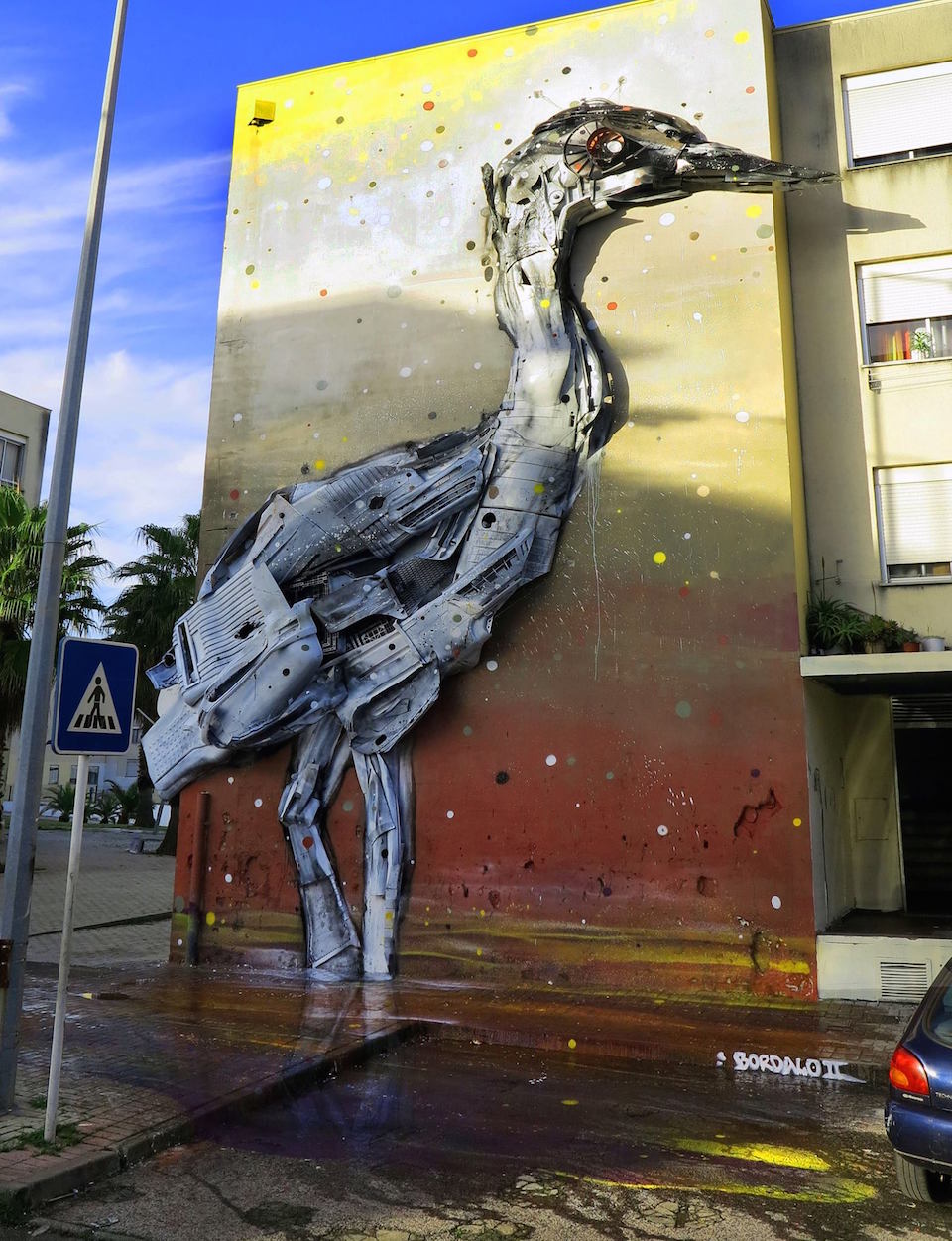
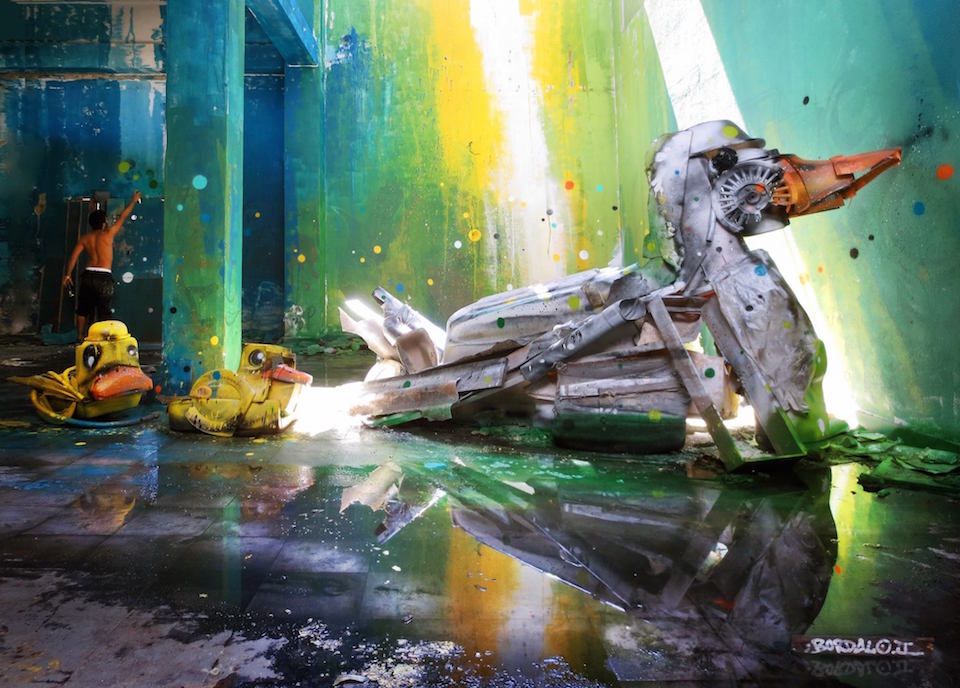
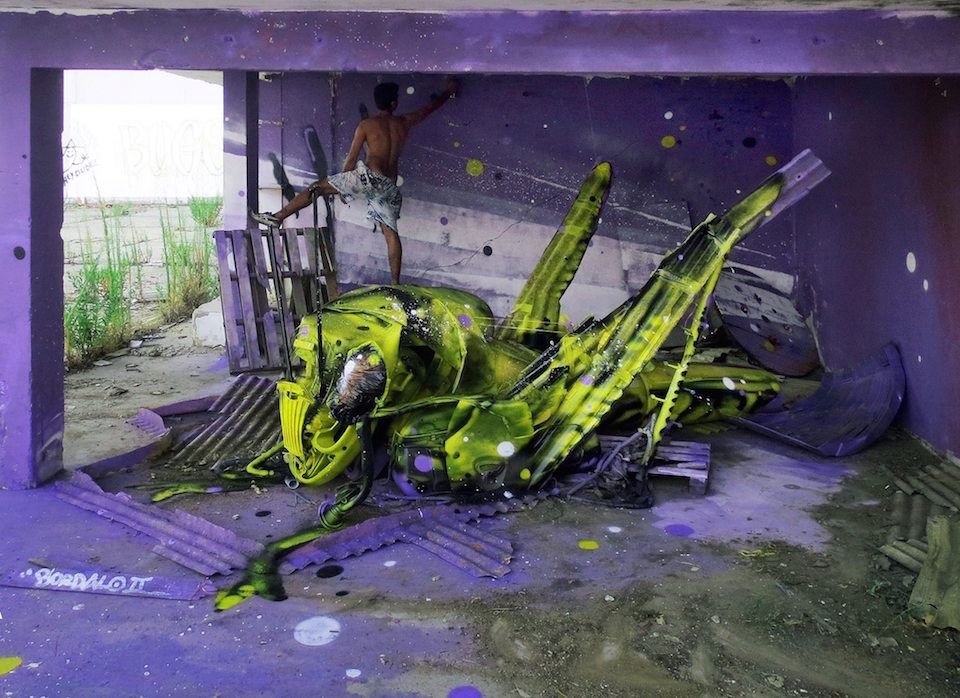
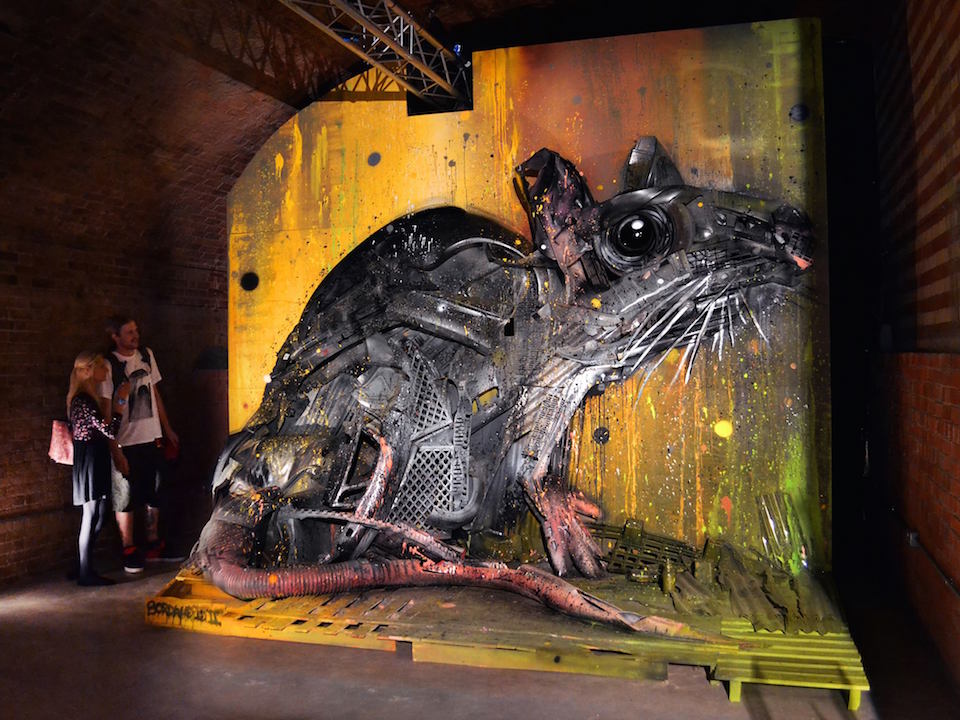
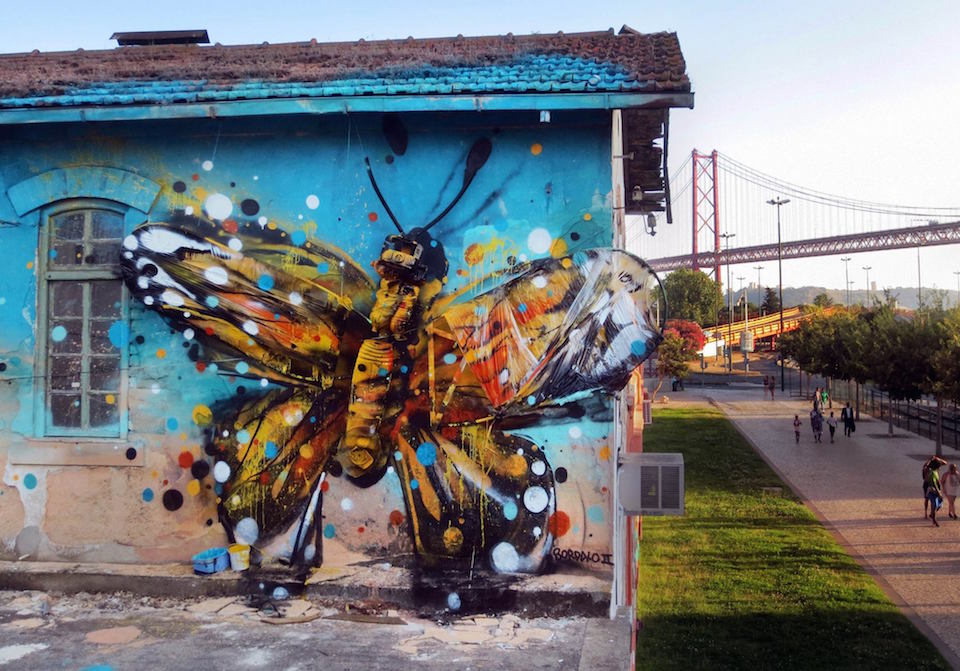
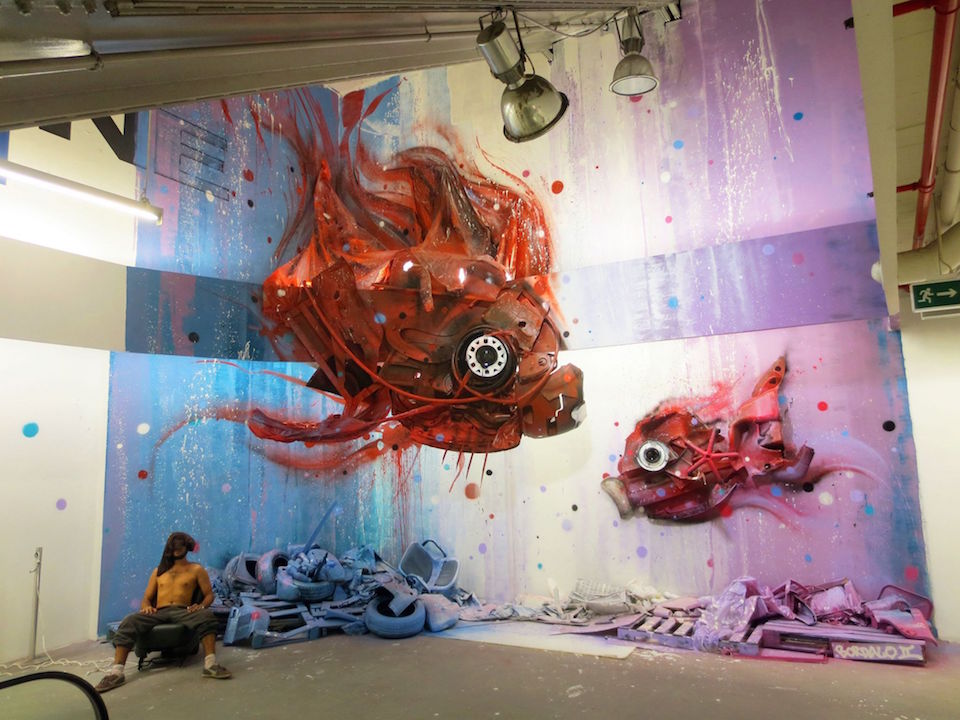
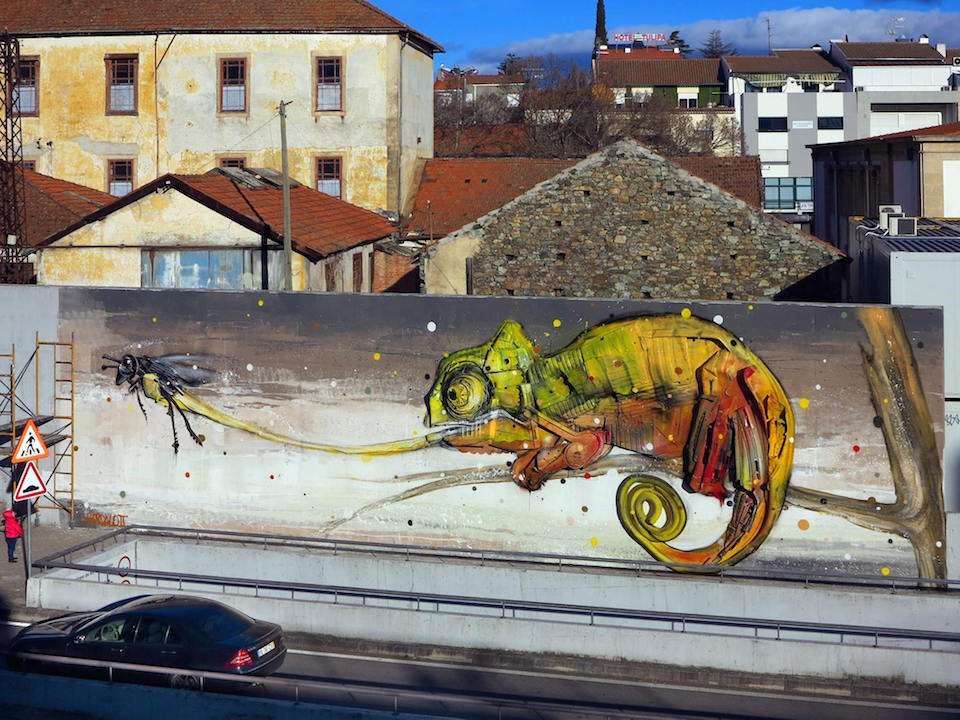
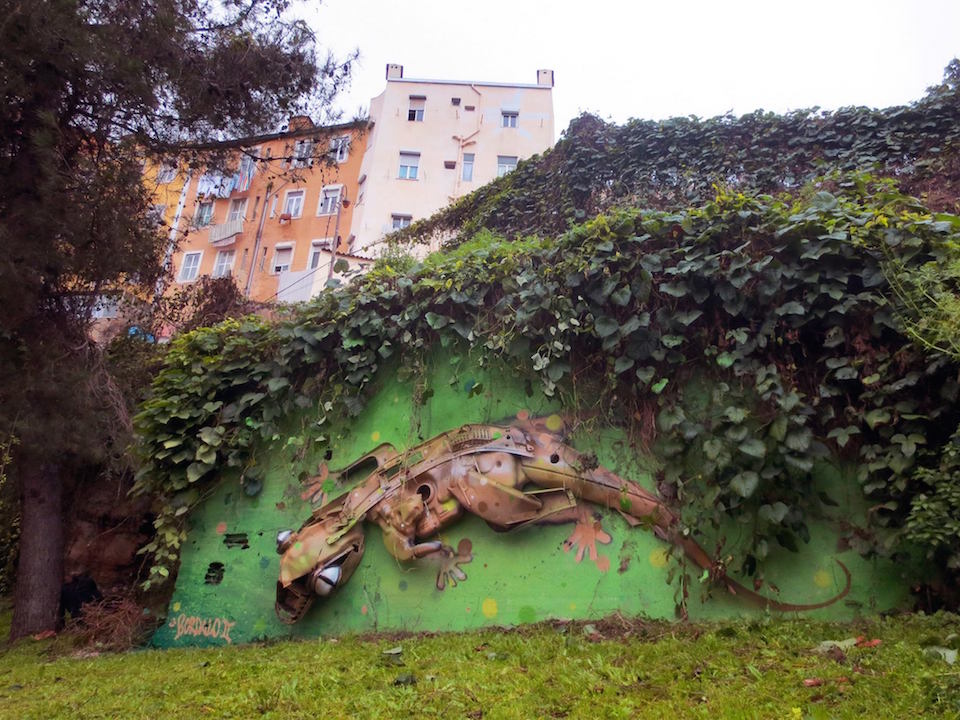
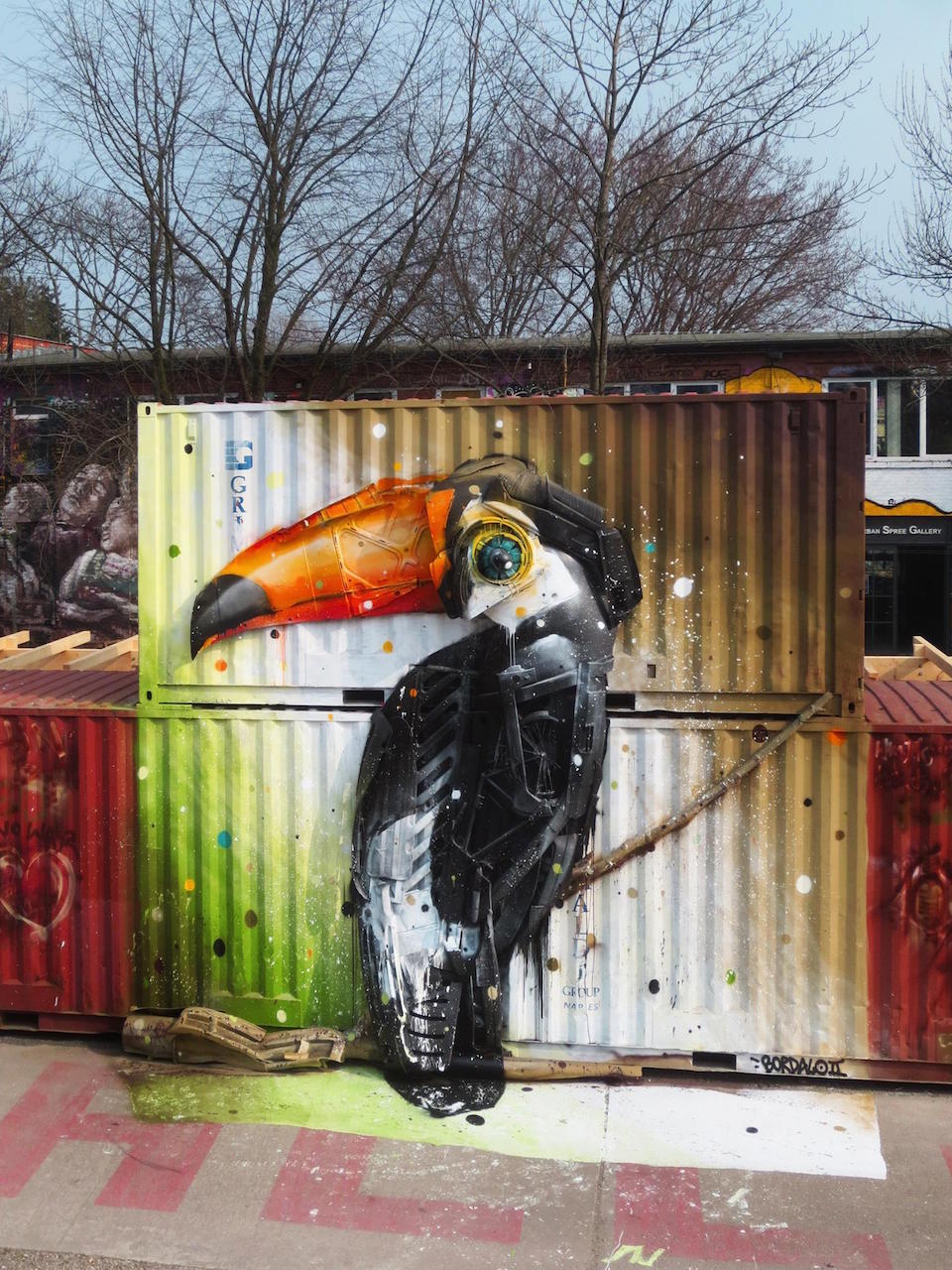
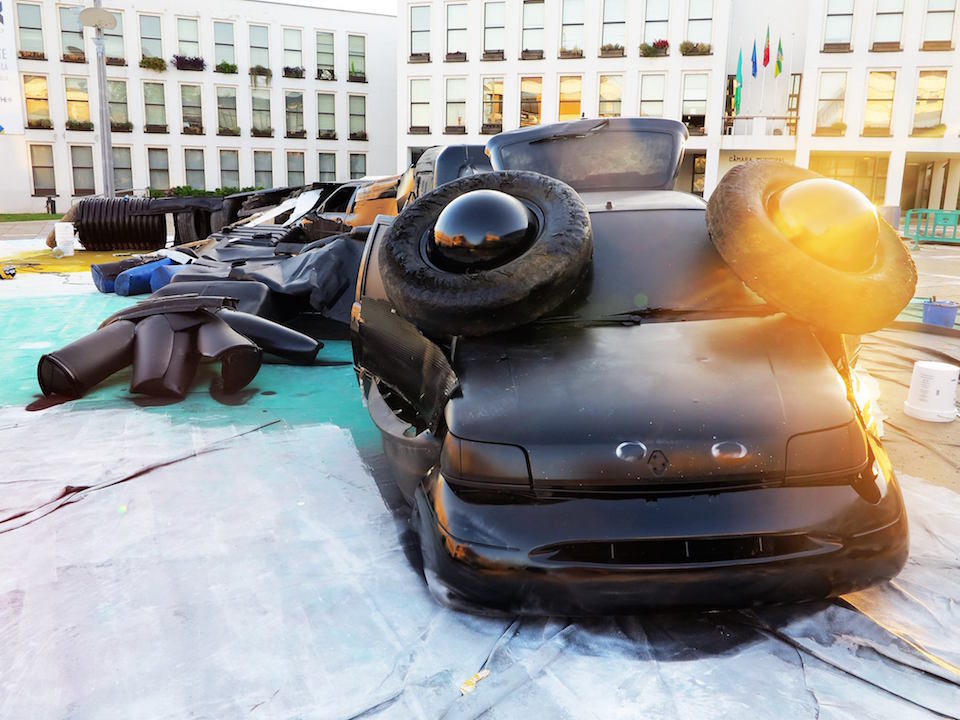
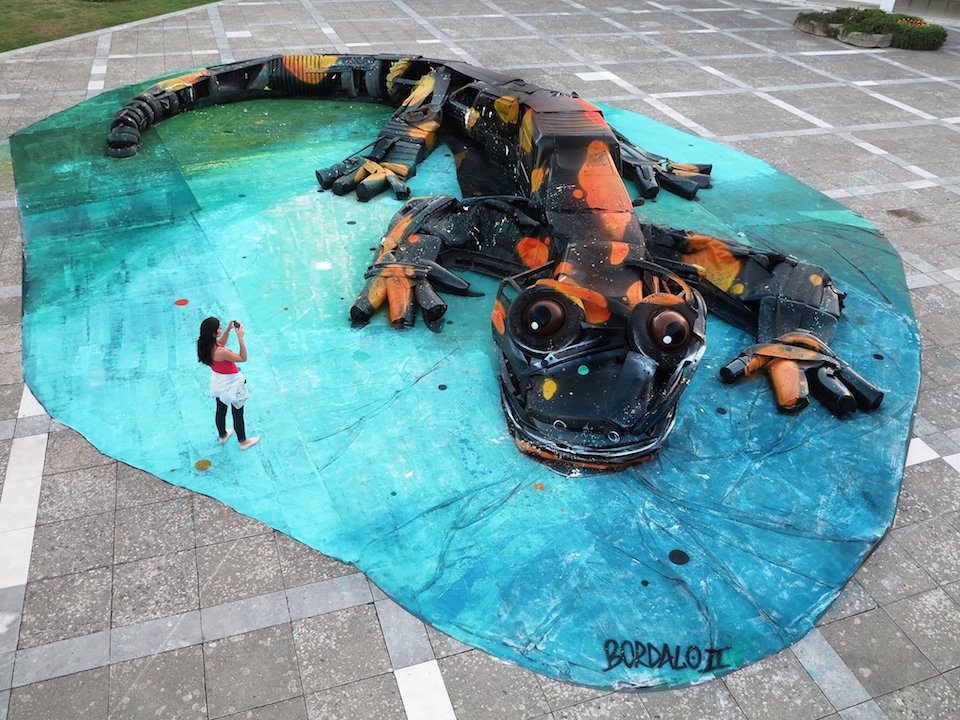
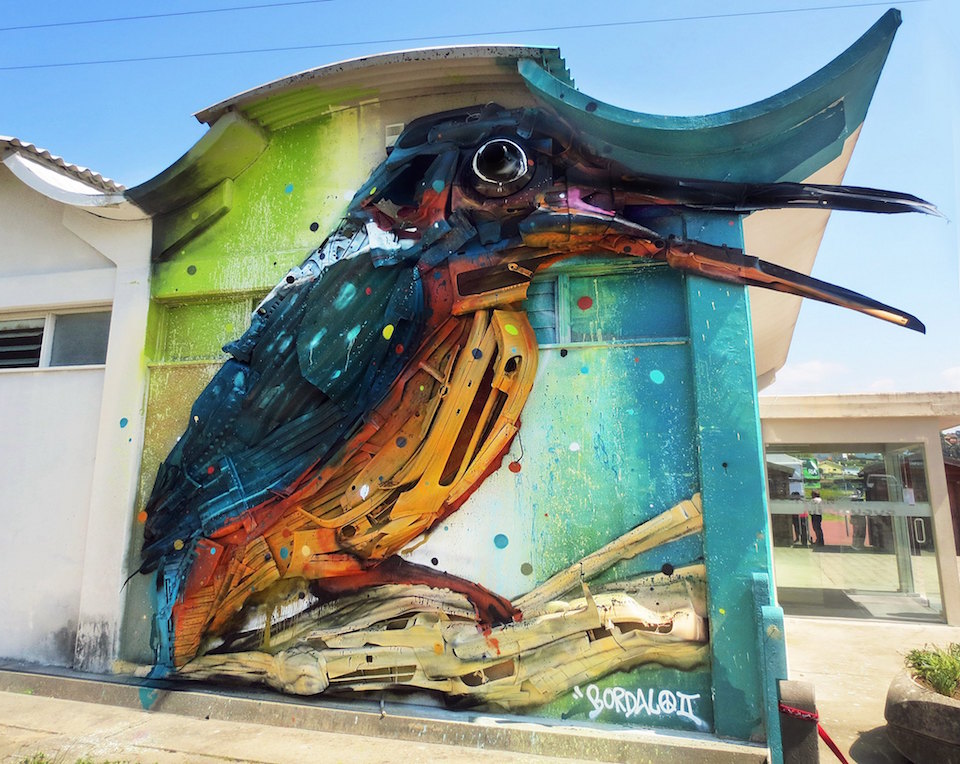
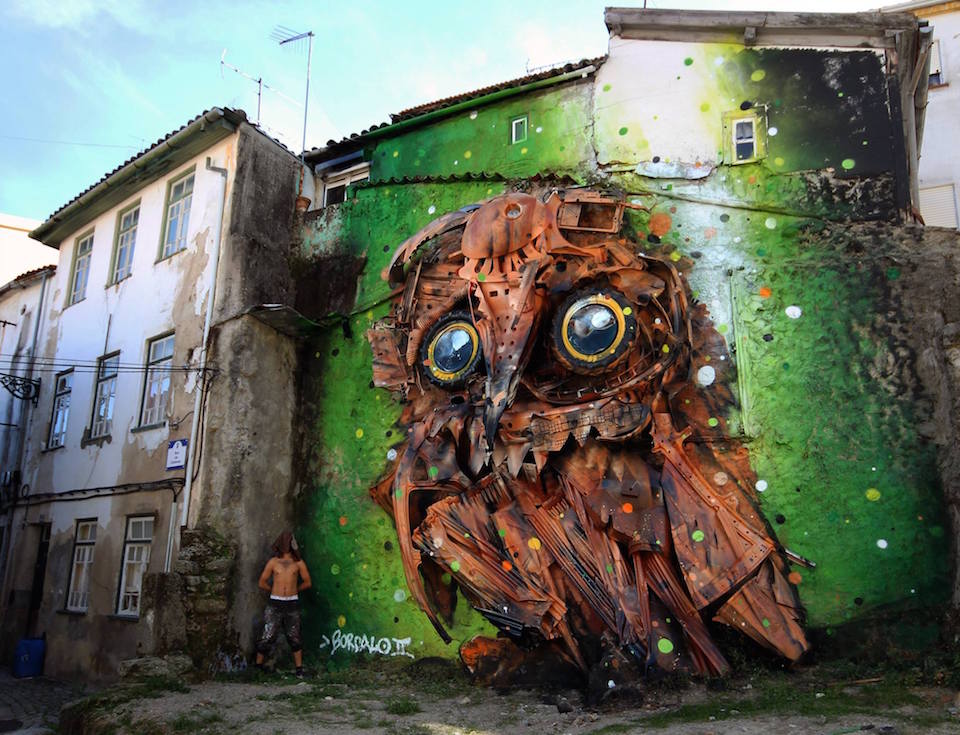
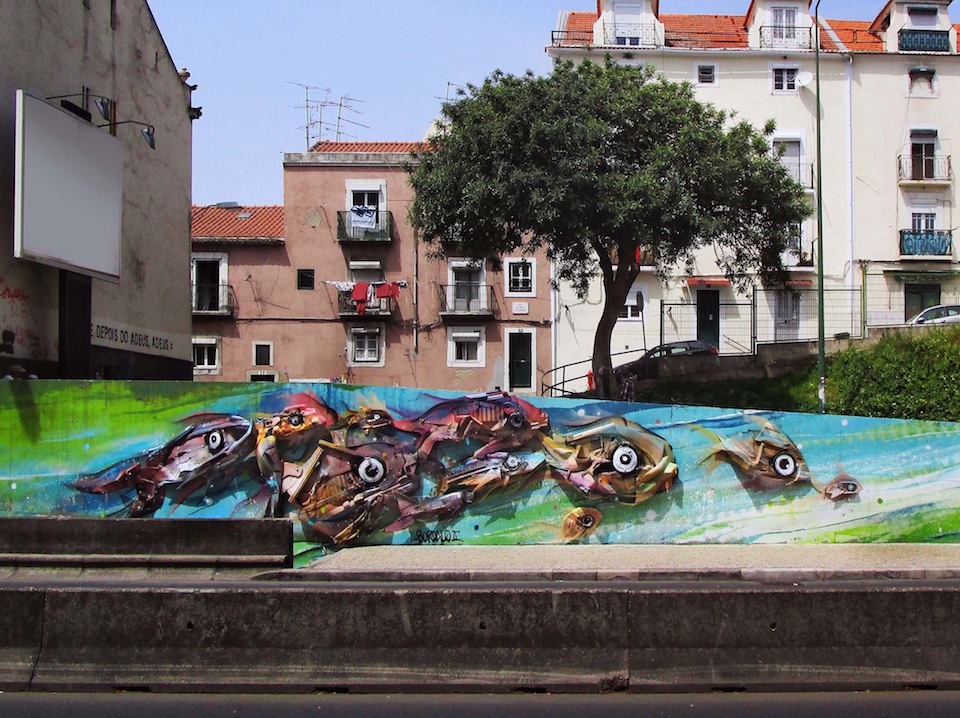
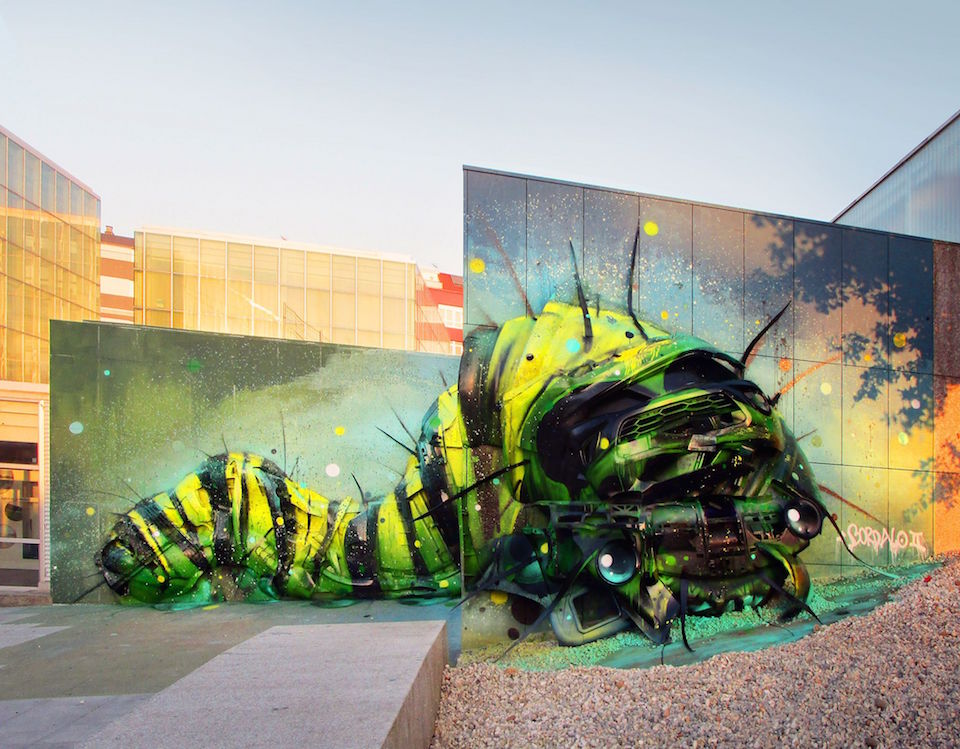


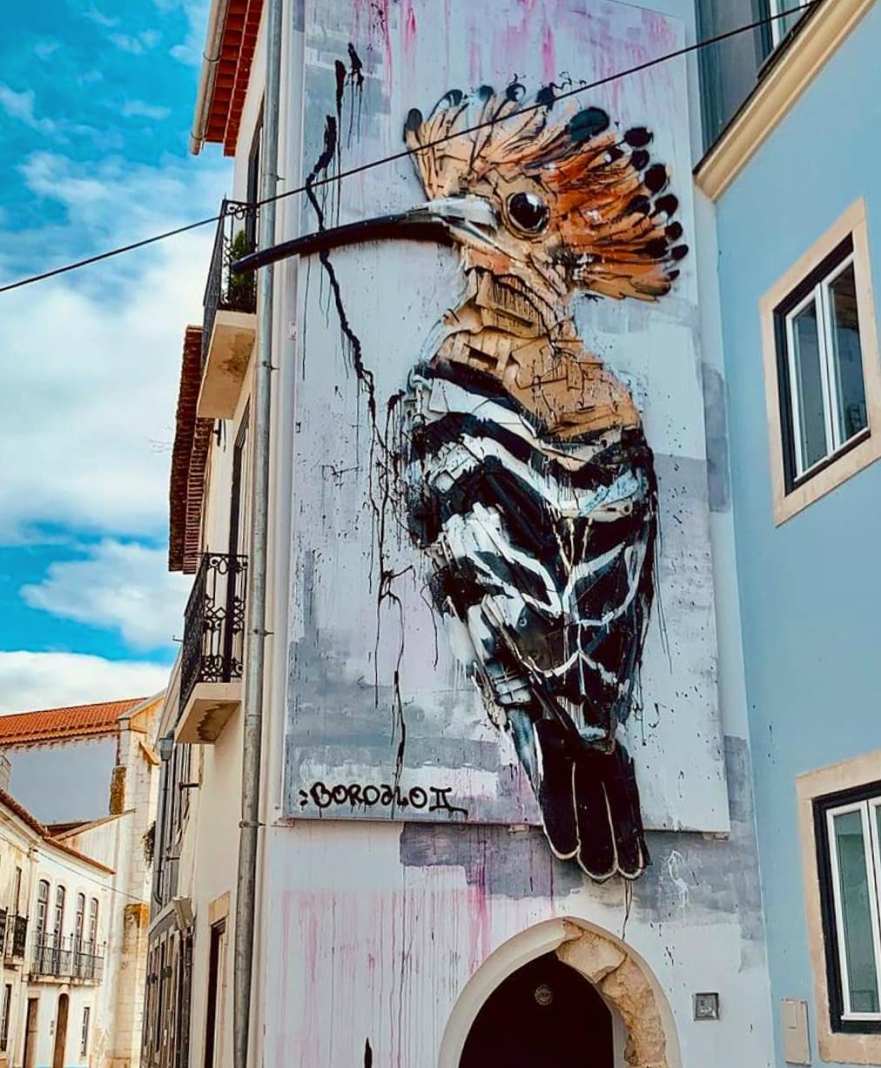
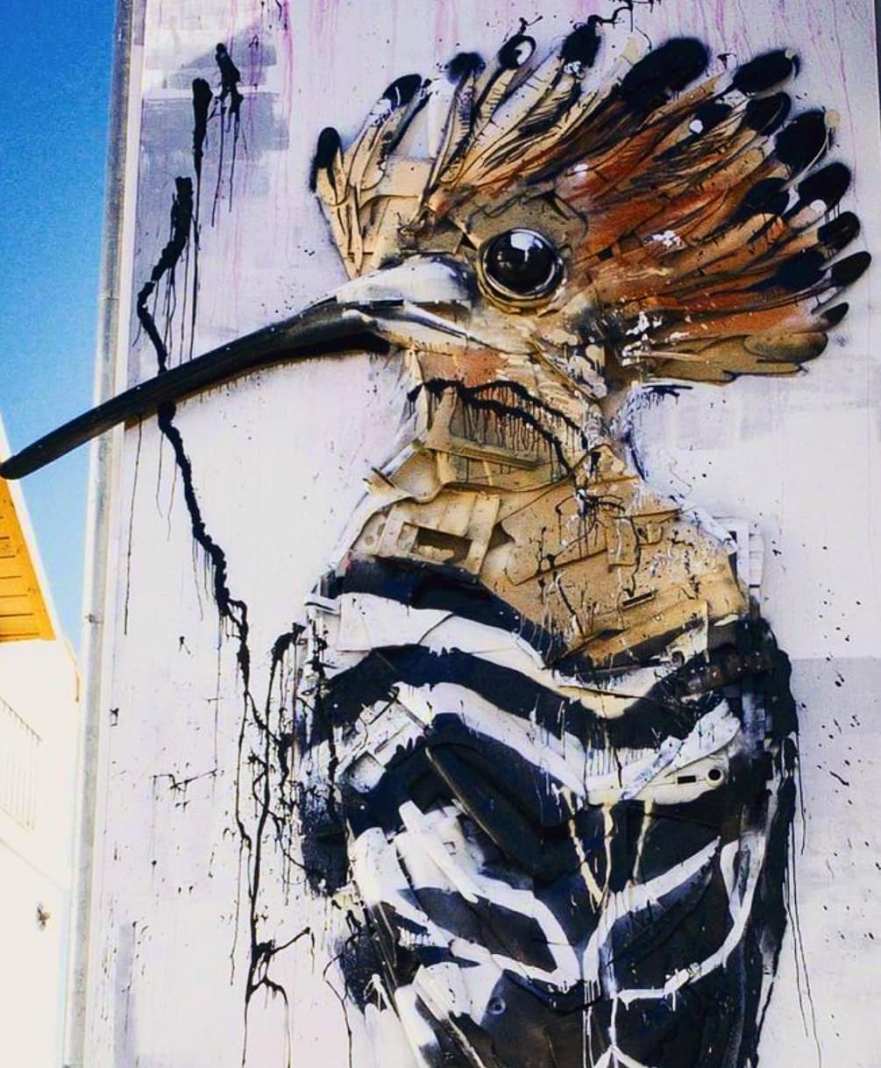
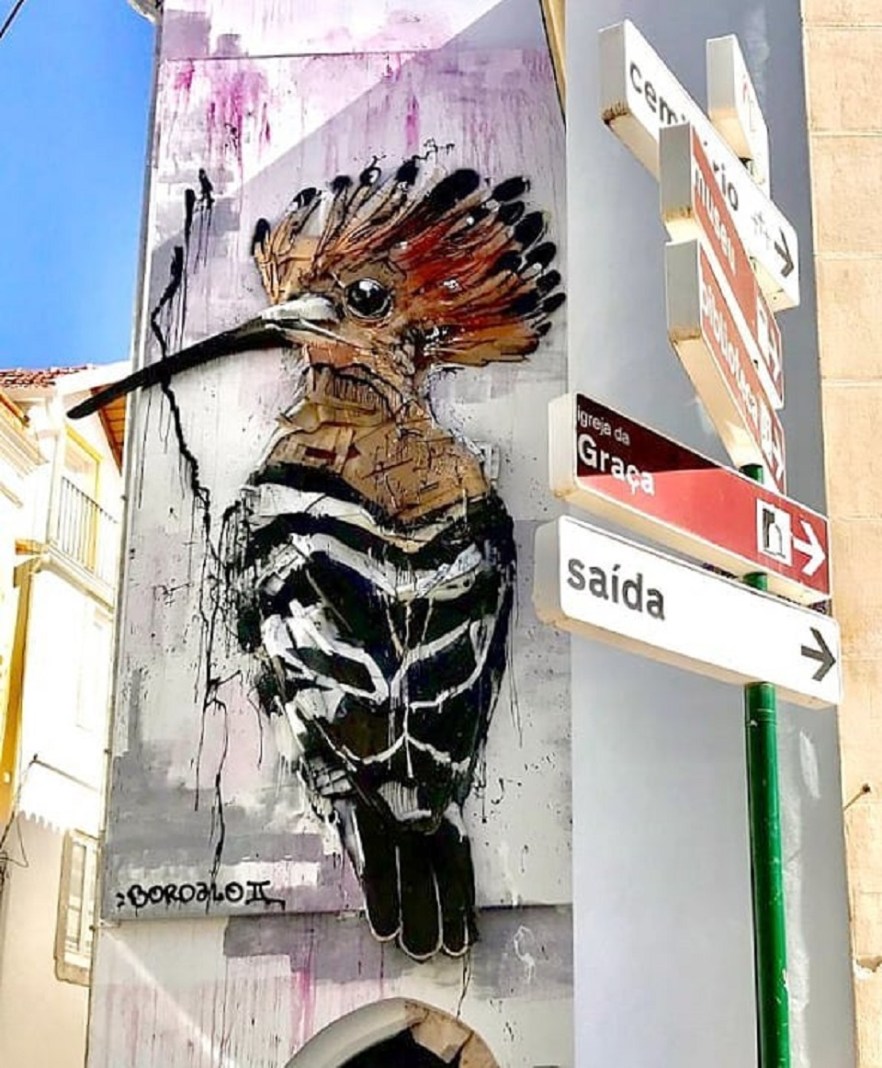
Poupa – Trash Art by BORDALO II in Santarém, Portugal
Content warning: Street Artist BORDALO II By BORDALO II in Santarém, Portugal. Comments: https://www.facebook.com/utopiastreetart/posts/pfbid02XTfFXSz2tR9Az23oQsi1mKF2oW8tgdyQydTDCDWHsx6KZiH1wXzCtnpdyCMtYZHWl
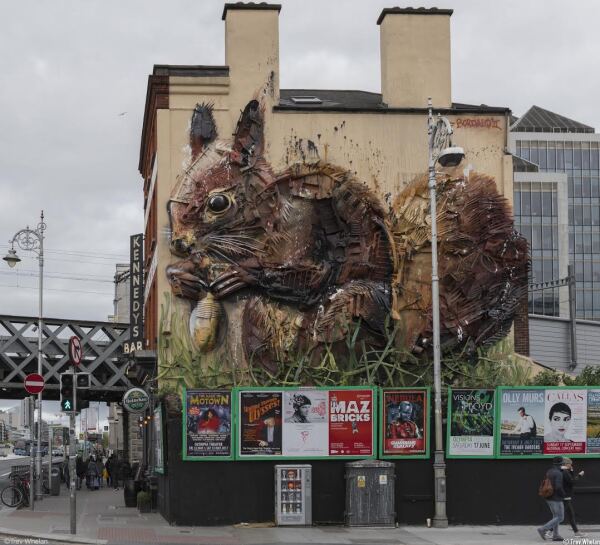
The Dublin Red Squirrel – By Bordalo II in Ireland
Content warning: […]
9 Sculptures With True Creativity
Content warning: Get ready to see the world in a whole new way! These amazing sculptures turn boring streets into a playground for the imagination. From buildings that unzip to canoes that climb walls, these artists are definitely thinking outside the box. It is time to e
Get ready to see the world in a whole new way! These amazing sculptures turn boring streets into a playground for the imagination. From buildings that unzip to canoes that climb walls, these artists are definitely thinking outside the box. It is time to explore some of the coolest public art from Japan to Italy!
More: Sculptures You (probably) Didn’t Know Existed (30 Photos)
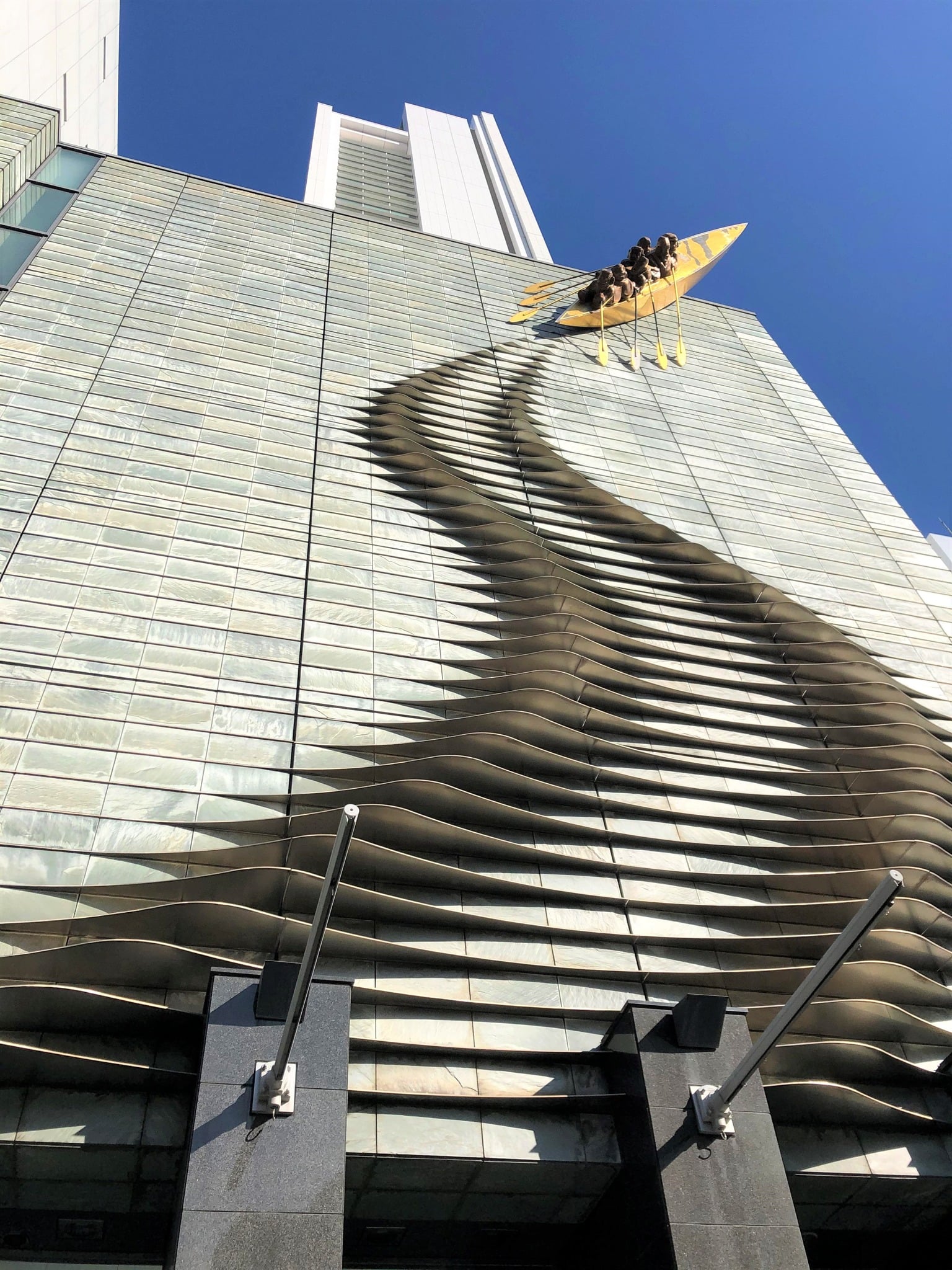
🛶 1. Canoe Climbing Skyscraper — In Osaka, Japan
Who needs a river when you have a skyscraper? This yellow canoe is busy scaling a high-rise building in Osaka. The wall even has ripples that look like water. It seems like these rowers took a very wrong turn and just decided to go with it!
More photos: Sculpture of a canoe climbing a high-rise building in Osaka, Japan
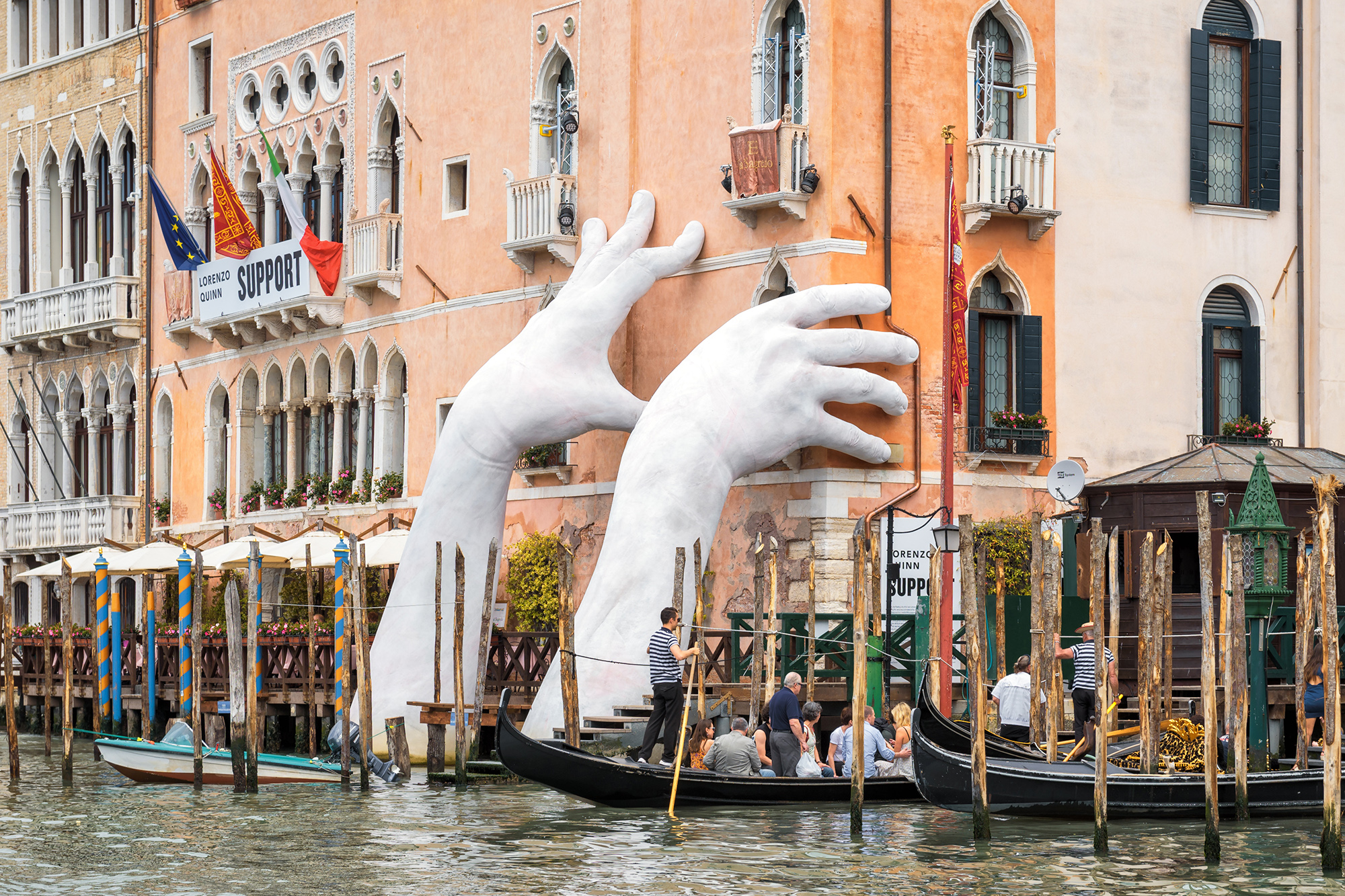
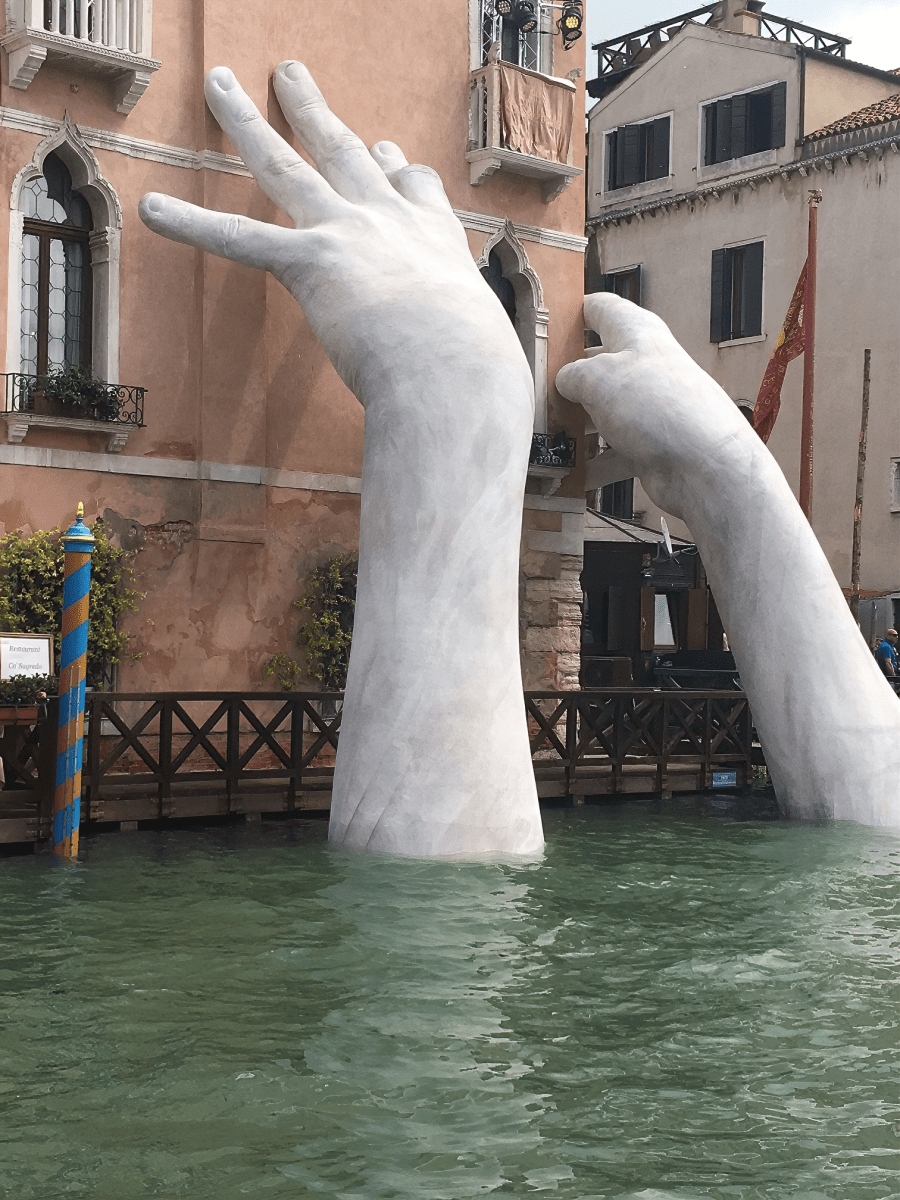
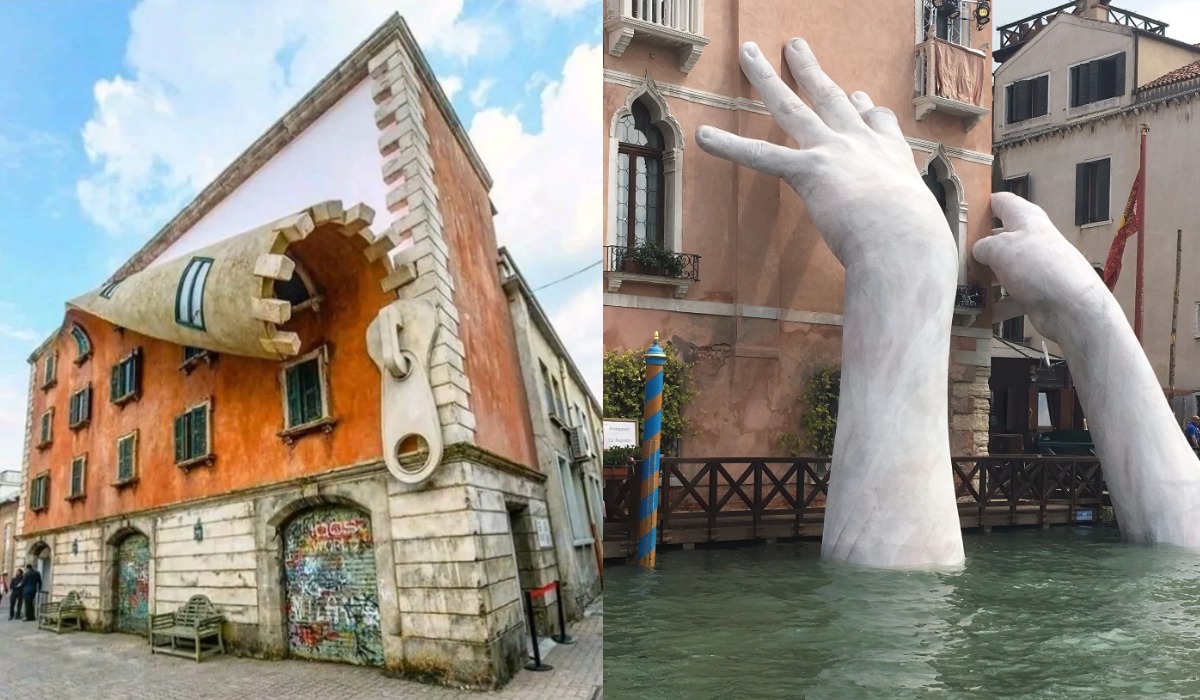
👐 2. Support — By Lorenzo Quinn in Venice, Italy
Venice is getting a little extra help from these giant hands. They rise right out of the Grand Canal to hold up the Ca’ Sagredo Hotel. We need to take care of our planet!
About and more photos: Support
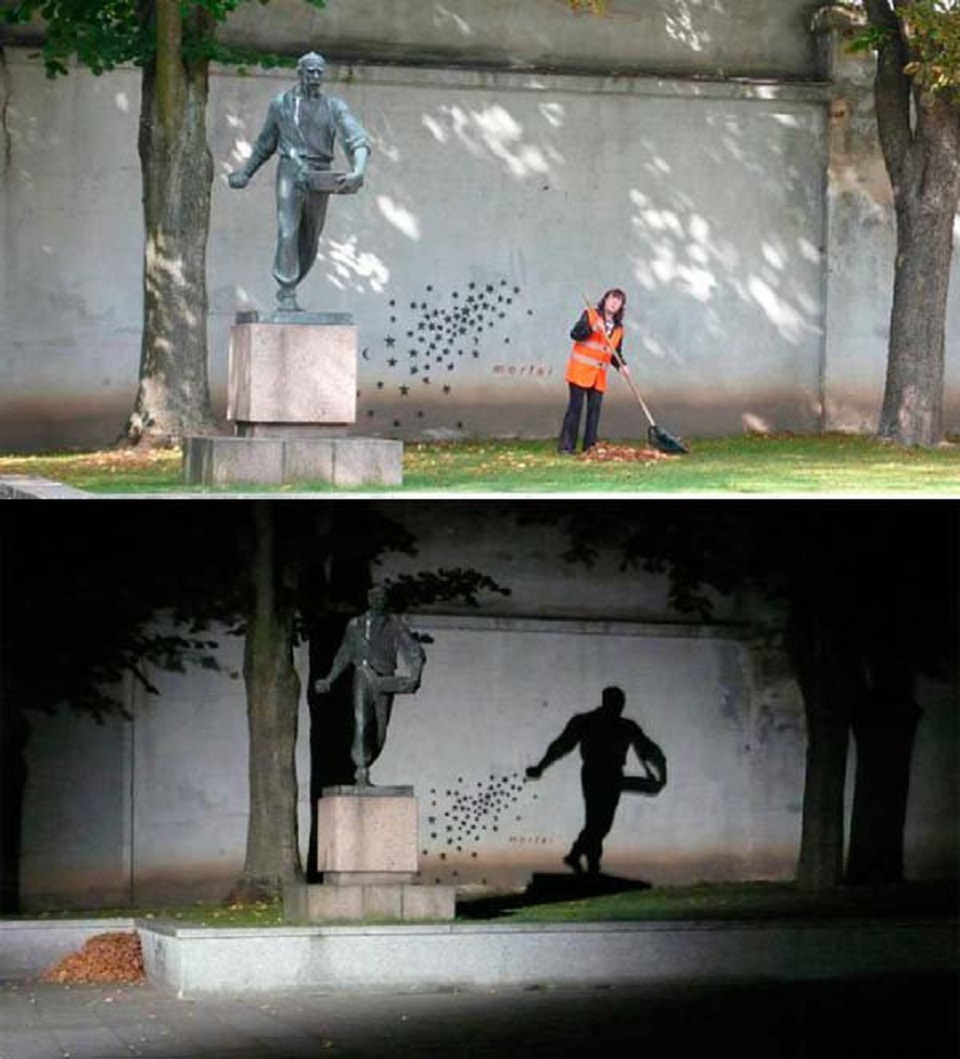
✨ 3. The Seeder — By Morfai in Kaunas, Lithuania
This statue has a magical secret that only comes out at night. During the day, he looks like a normal farmer. But when the lights turn on, his shadow starts scattering stars across the wall. It is like he is planting a whole new galaxy in the middle of the city.
About and more photos: ‘The Seeder’ Marks Lithuania’s First Legal Street Art Masterpiece
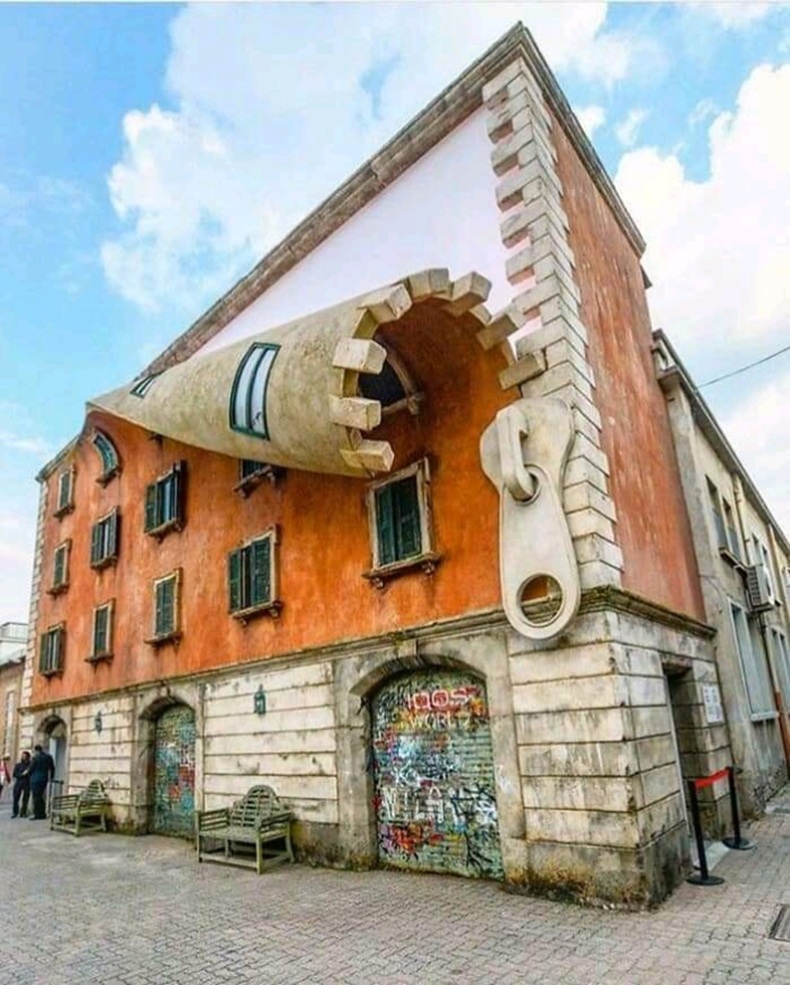
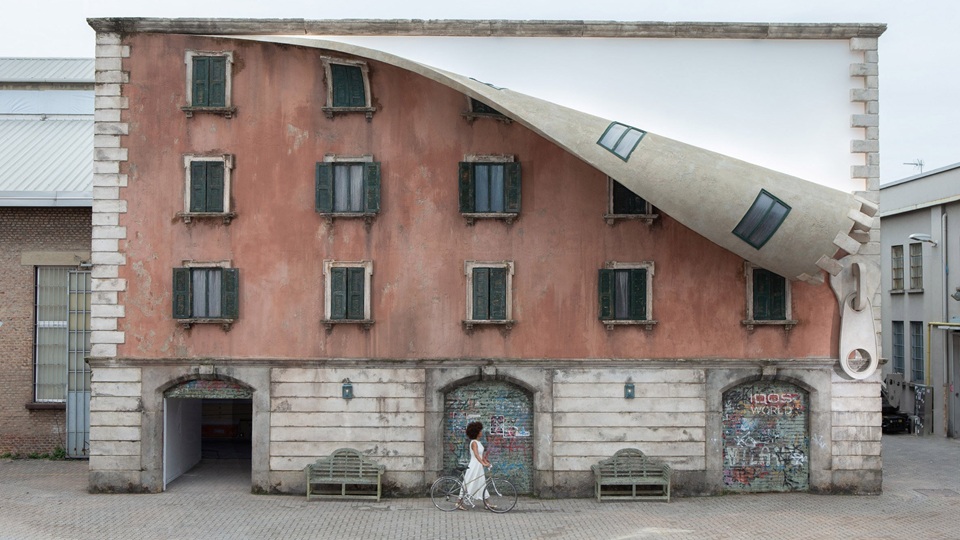
🤐 4. Unzipped Building — By Alex Chinneck in Milan, Italy
Have you ever seen a building that needs a tailor? Artist Alex Chinneck made this wall look like it is being unzipped. It is peeling back to show the world what is underneath. It definitely makes you wonder if there is a giant laundry tag hidden somewhere inside.
🔗 Follow Alex Chinneck on Instagram
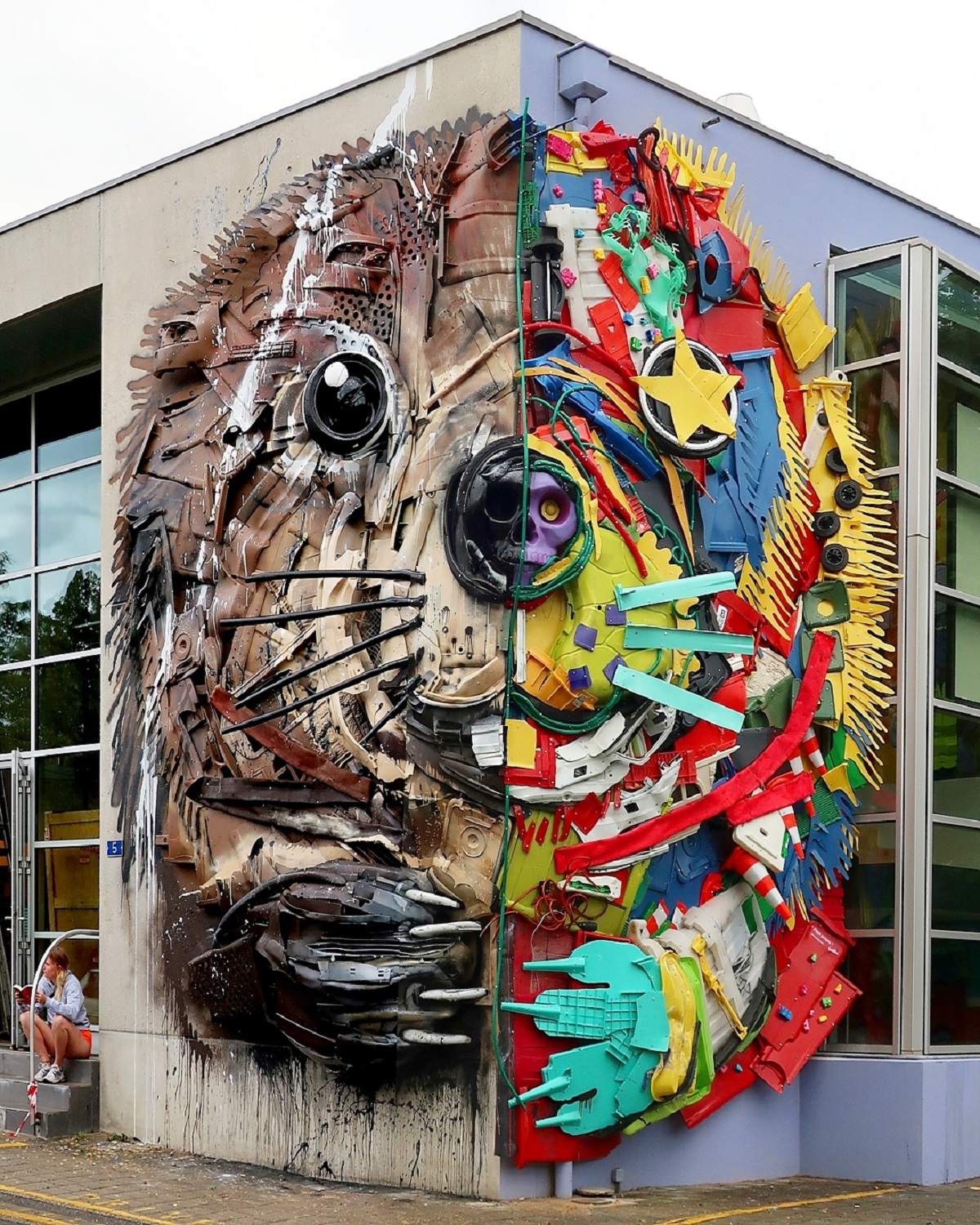
🦫 5. Beaver — By Bordalo II in Bernex, Geneva, Switzerland
This beaver is literally made of junk! Bordalo II used old plastic and scrap metal to build this cute little guy. Very creative way to recycle!
Bordalo II: 22 photos – A Collection of Street Art by Bordalo II
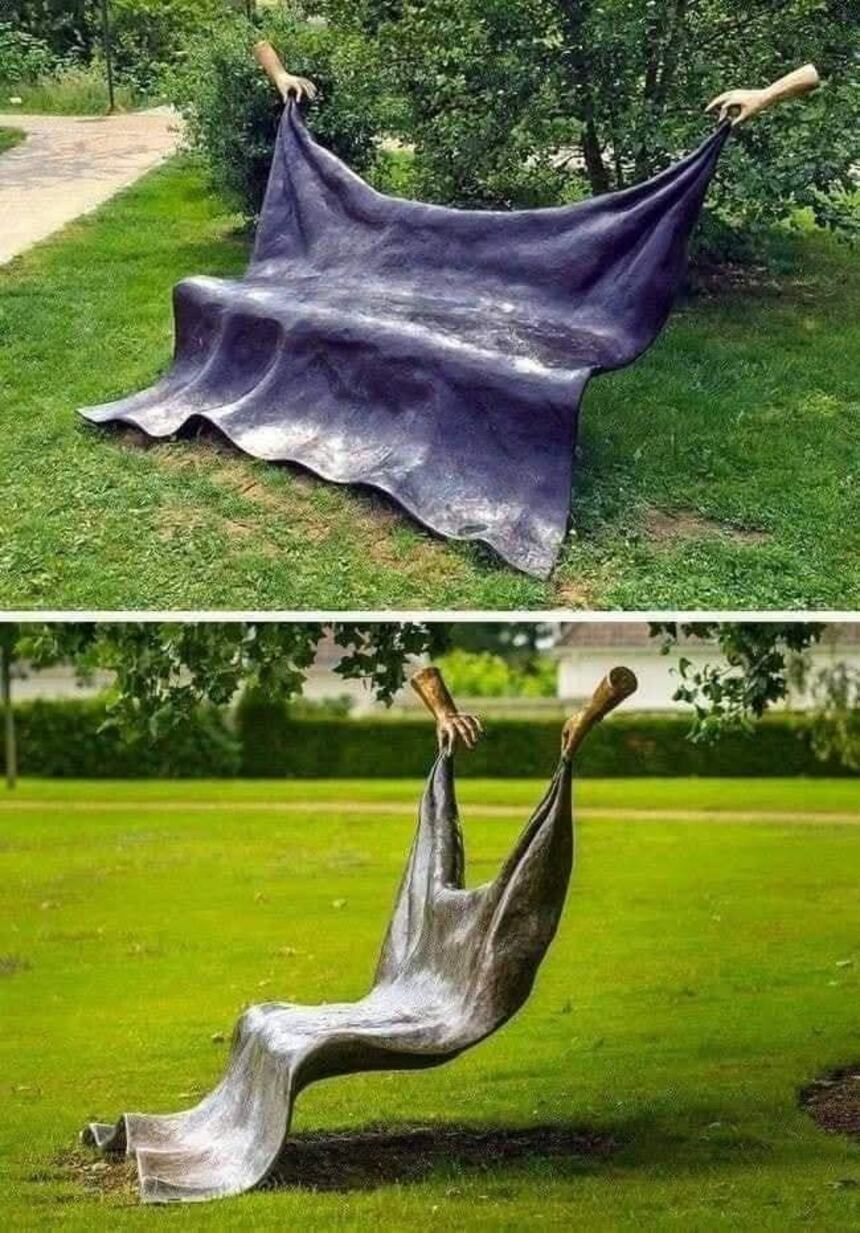
🛋️ 6. Bench Blanket & Hammock
This sculpture make metal look as soft as a cozy blanket. Giant bronze arms hold up this piece of “cloth” that you can actually sit or lay on. Perfect for anyone who wants to take a nap on a piece of art.
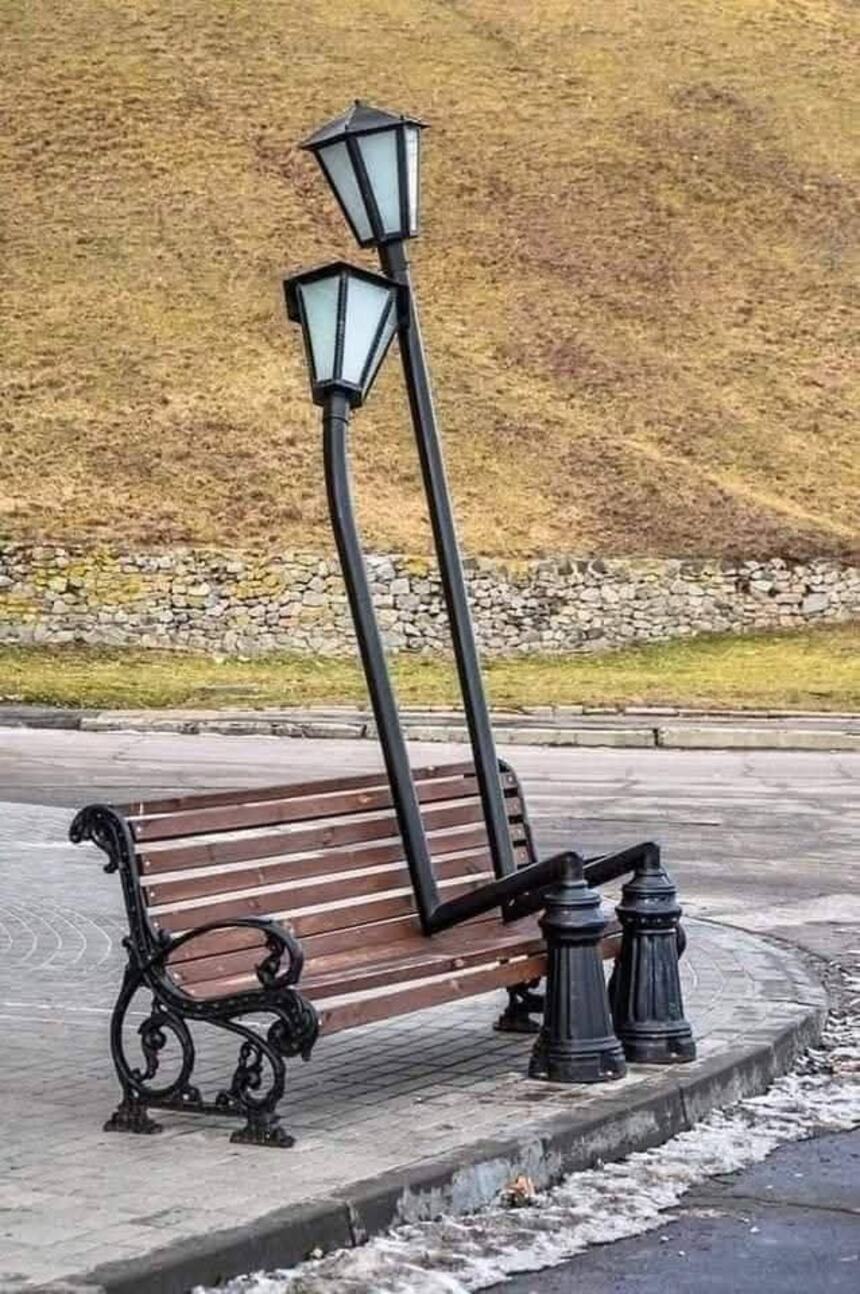
💡 7. Lamp Lovers
Even street lights need a hug sometimes. These two lamps have turned into a couple sitting on a park bench. They look so cozy and happy together. It just goes to show that everything is a bit brighter when you have a friend by your side.
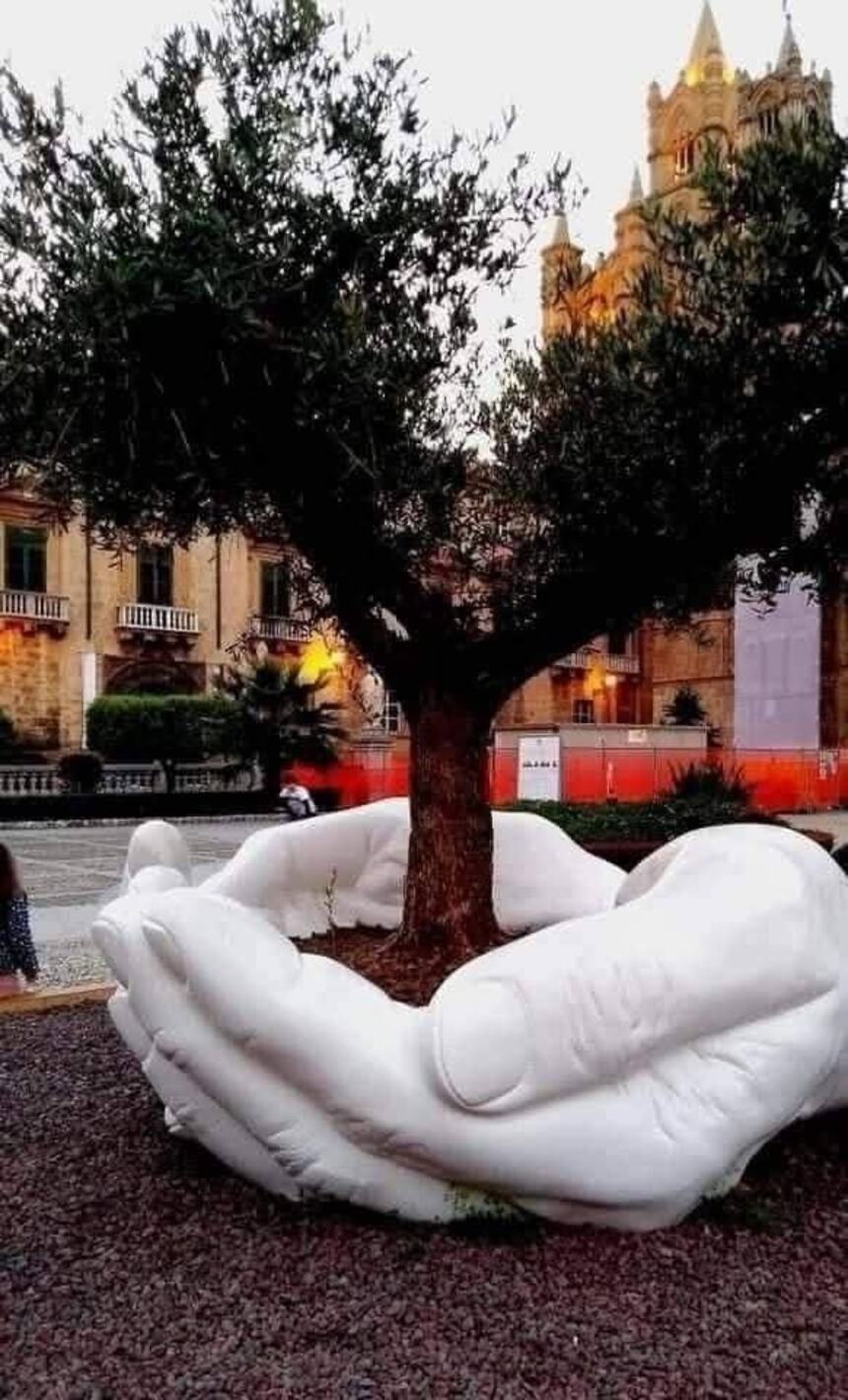
🌳 8. Tree Embrace
Nature and art are coming together for a big squeeze. These white hands are cradling the bottom of a tree in the middle of a square. It is a very sweet way to show how much we love our green spaces.
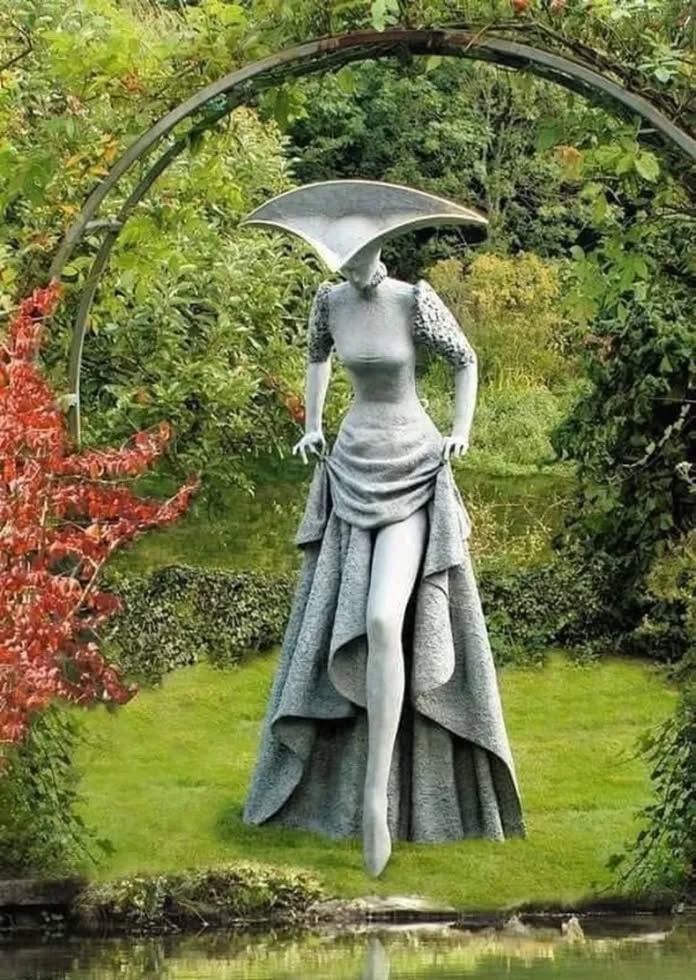
👠 9. The Glass Slipper — By Philip Jackson in the UK
This sculpture looks like it stepped right out of a fairy tale. The tall figure has a very fancy hat and a beautiful flowing dress. It looks amazing standing right in the middle of a garden. More!: 10 Haunting Sculptures by Philip Jackson
🔗 Follow Philip Jackson on Instagram
Art like this makes life a lot more fun. These pieces really do change the way we feel about our cities!
More: Sculptures With Unique Creativity (24 Photos)
Which one is your favorite?
Sculptures You (probably) Didn’t Know Existed (30 Photos)
I love stumbling upon art that feels like a hidden gem—those incredible sculptures that stop you in your tracks and make you wonder, “How did I not know this existed?”
From massive figures seemingly rising from the earth to intricate works that play with gravity, these sculptures redefine what’s possible. Join me on a journey through 30 of the most amazing sculptures around the world, each with its own story and artistry that you probably didn’t know was out there. More: Sculptures With True Creativity (12 Photos)
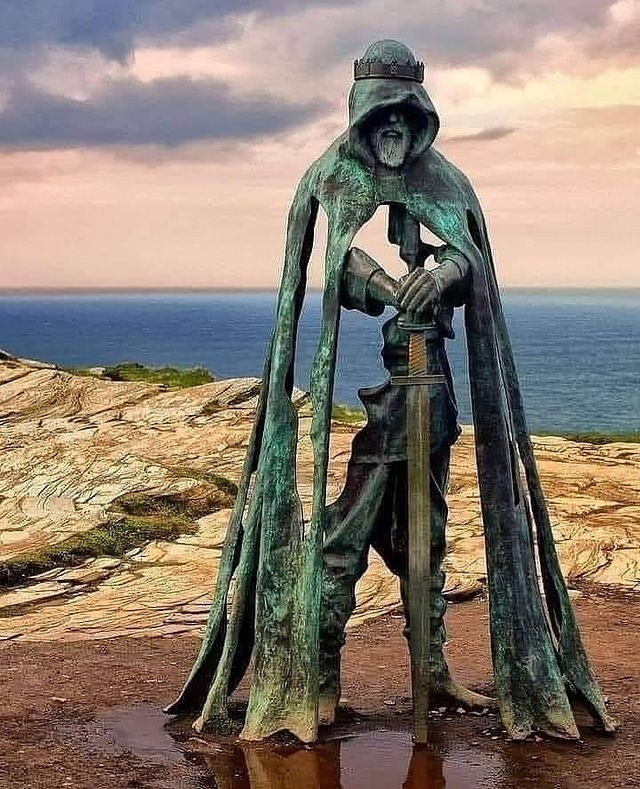
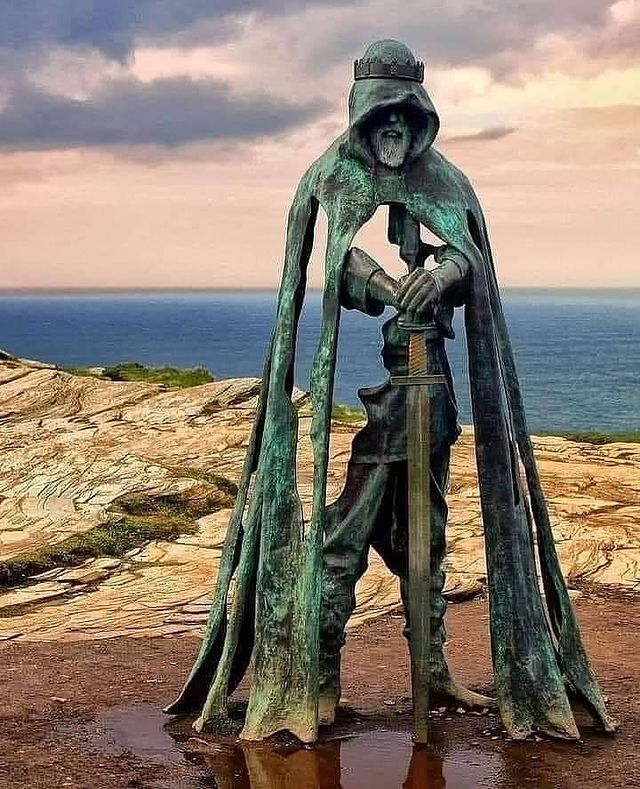
1. The Statue of King Arthur, located in Tintagel, England, is a striking bronze sculpture by artist Rubin Eynon.
Erected in 2016, this statue stands on the cliffs of Tintagel Castle, a site steeped in Arthurian legend. The sculpture, named “Gallos” (meaning “power” in Cornish), depicts a cloaked and crowned King Arthur holding his sword, with his body appearing to merge with the landscape. This artwork symbolizes the enduring power and mystery of the Arthurian legends that are deeply rooted in the area. More like this: 9 Amazing sculptures by Bruno Catalano: Fragmented travelers
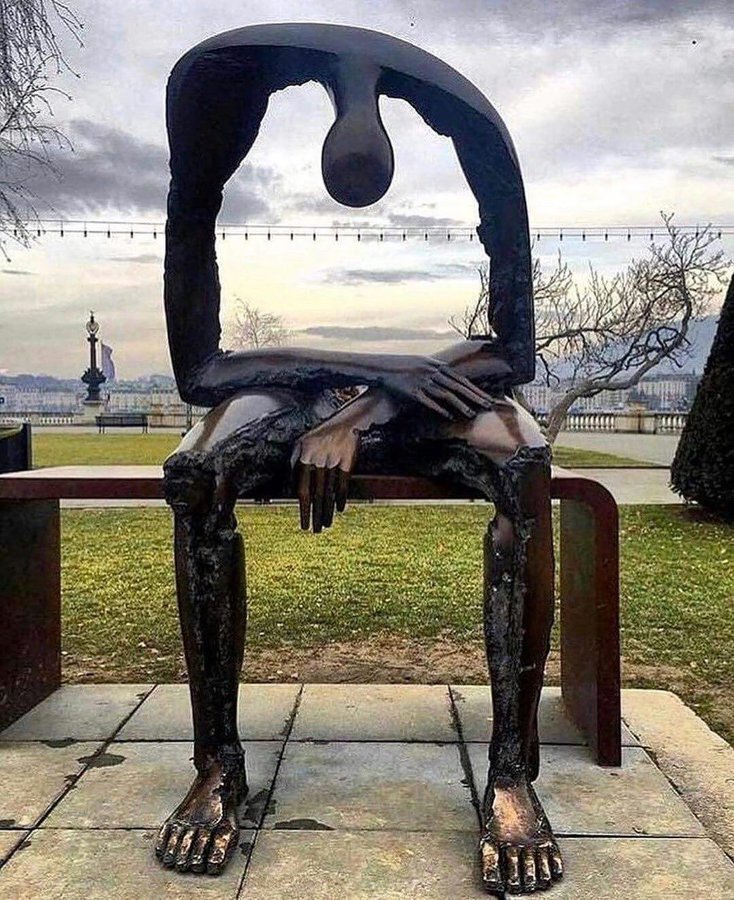
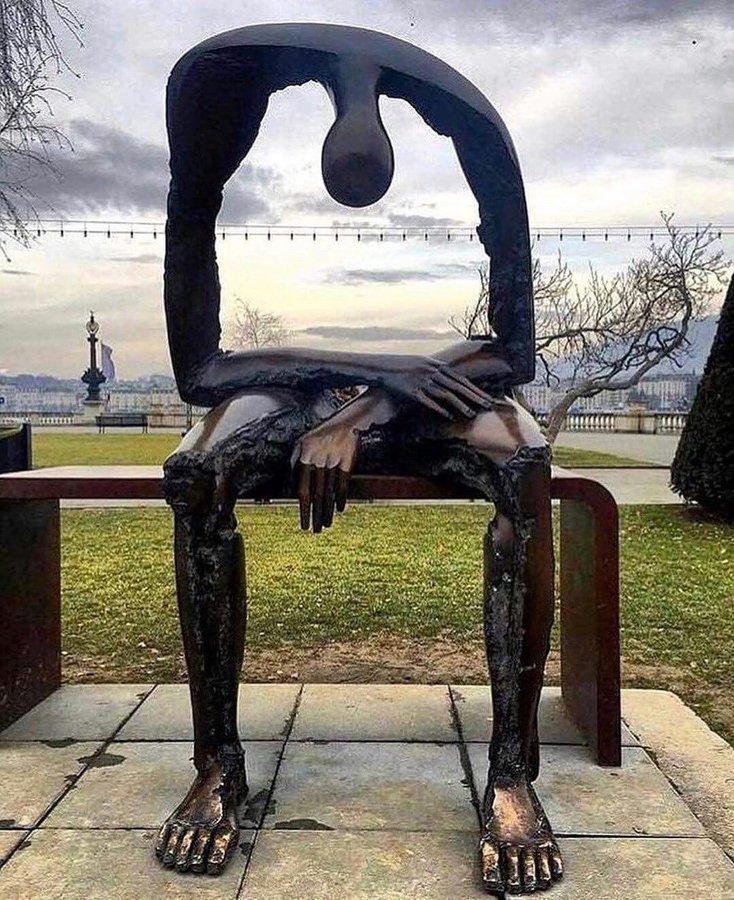
2. Albert György’s sculpture, Melancholy, captures the emptiness left by grief.
As John Maddox eloquently states, “We may look as if we carry on with our lives as before… but this emptiness is how we all feel… all the time.”
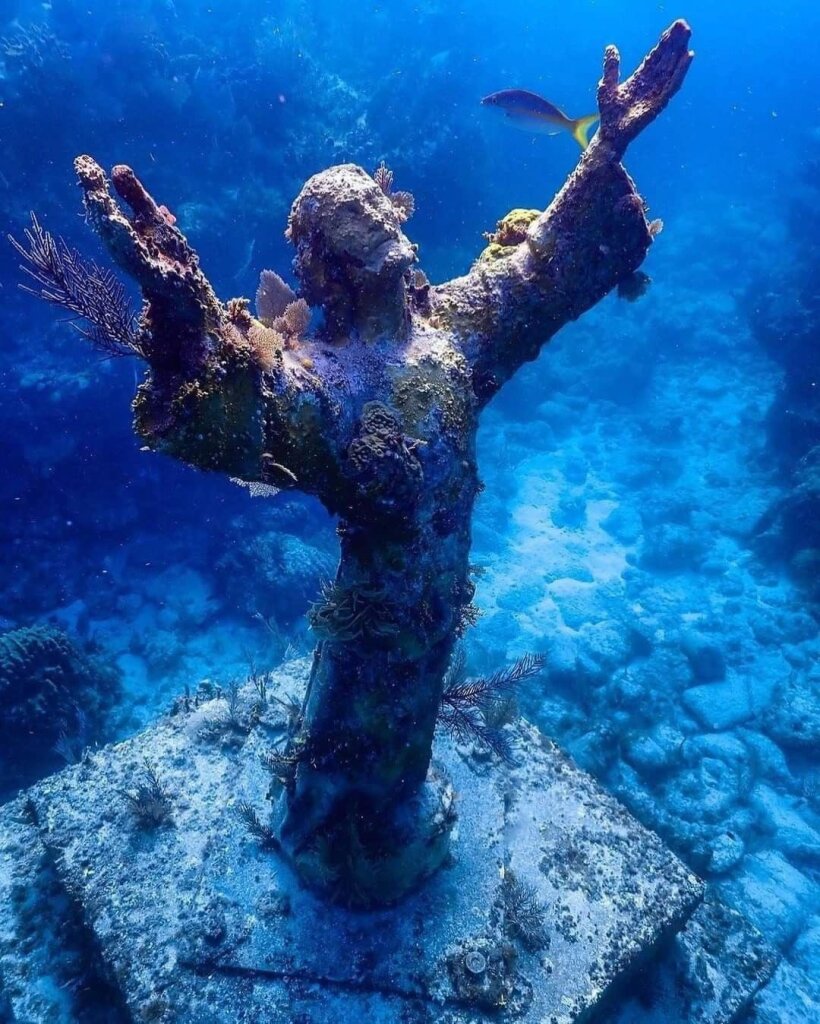
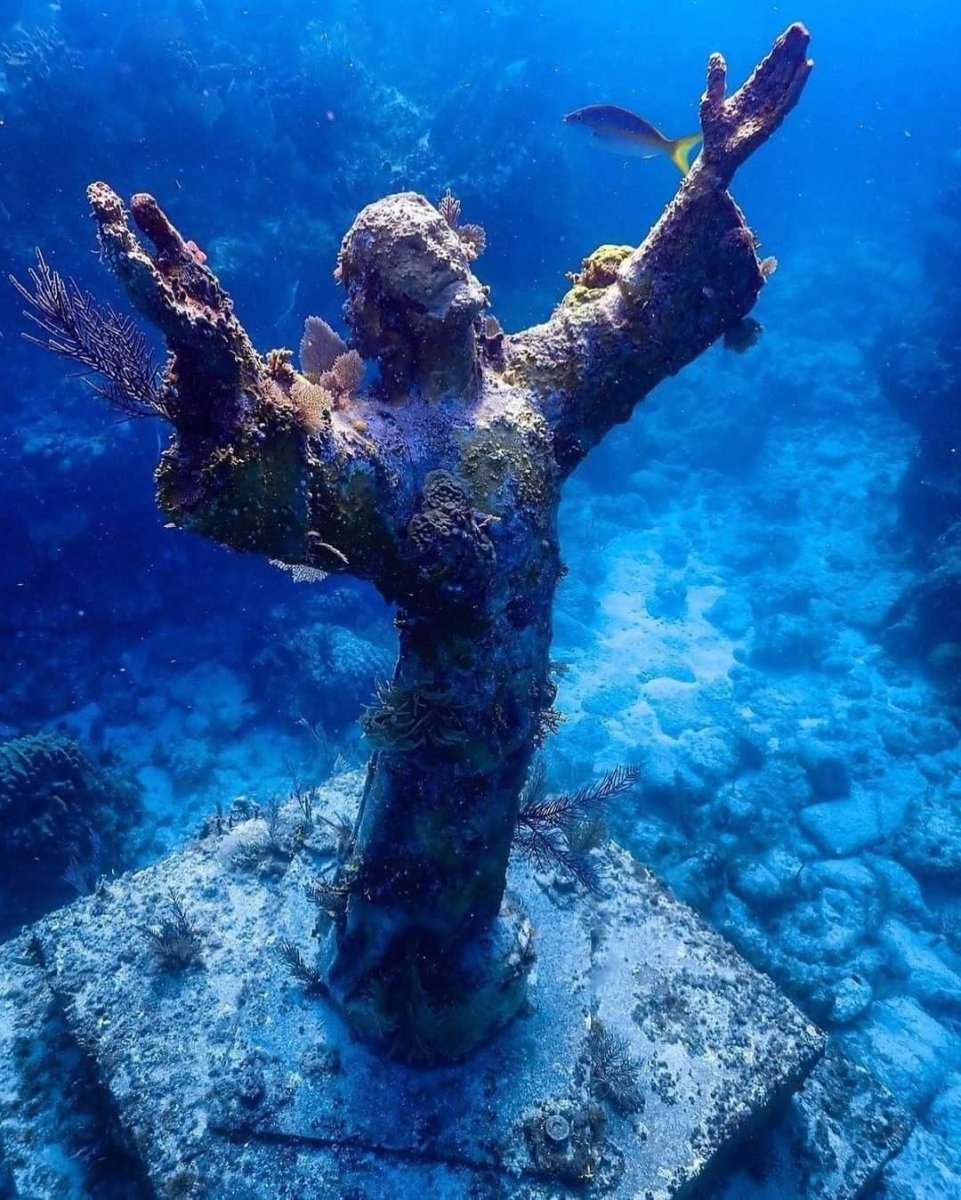
3. Christ of the Abyss is an extraordinary bronze statue created by Guido Galletti in 1954.
This unique piece rests on the seabed of the Mediterranean Sea, nestled between Camogli and Portofino on the Italian Riviera. Submerged beneath the azure waters, it continues to captivate divers and visitors with its serene and mystical presence.
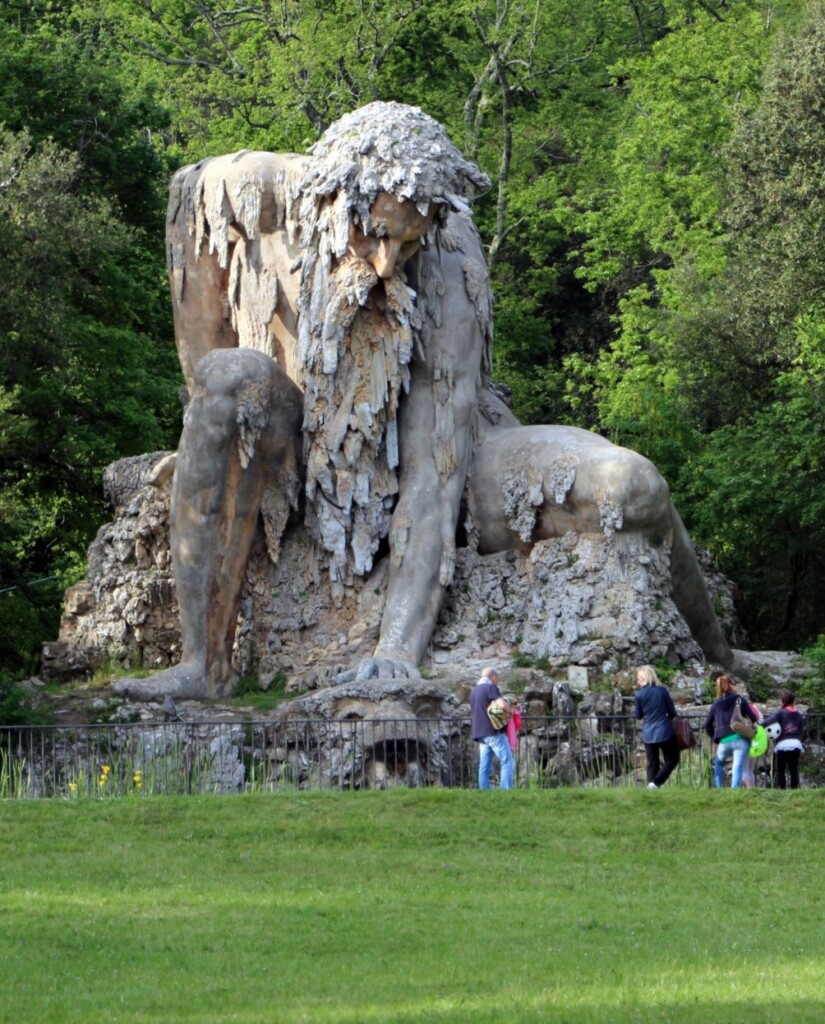
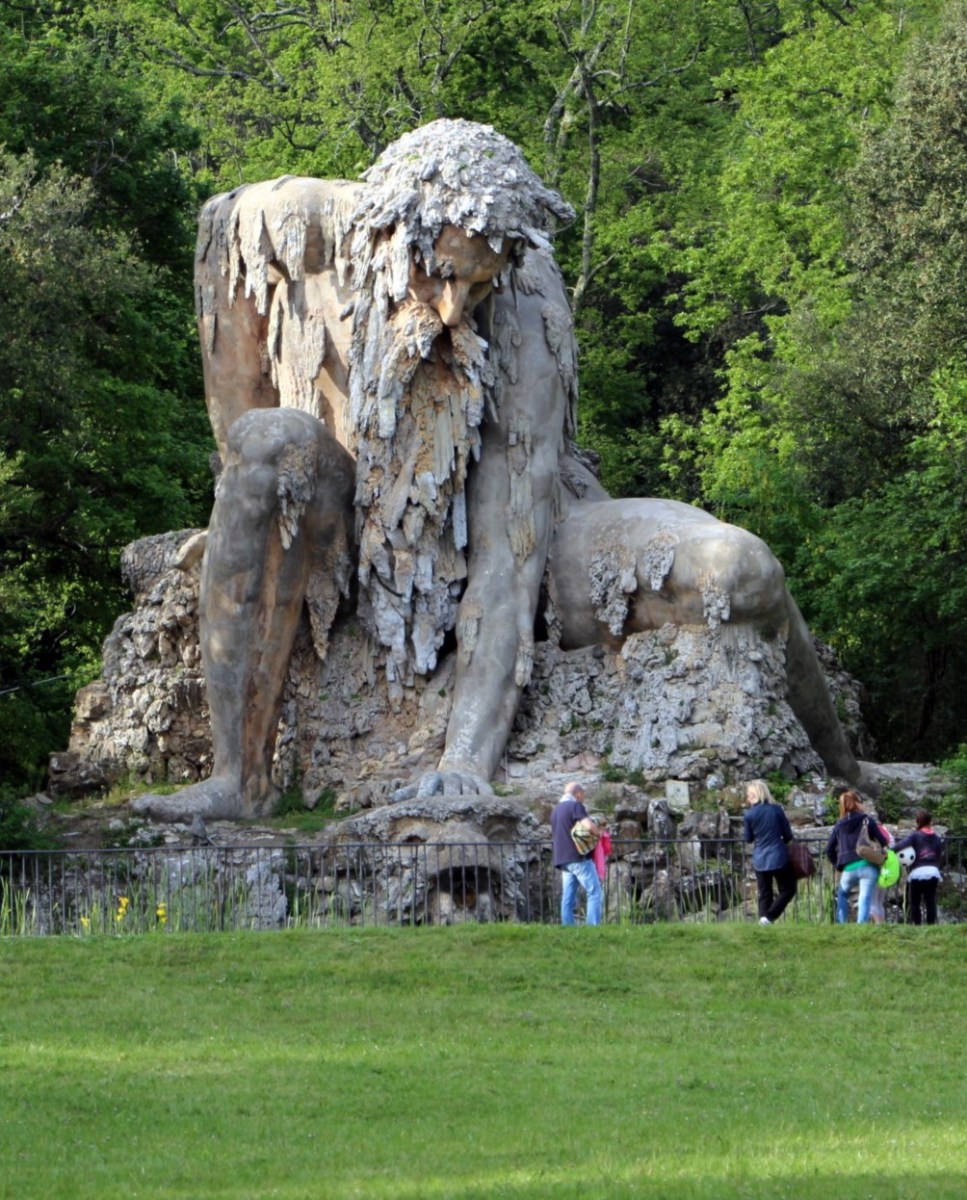
4. This colossal sculpture was created nearly 450 years ago by Flemish sculptor Giambologna as a symbol of Italy’s Apennine mountains. Standing at nearly 14 meters (45 ft) tall, it was commissioned by Francesco de Medici, the Grand Duke of Tuscany, in 1579.
Positioned above a pond, the statue features a chamber in its head where Francesco would sit and fish at night. When a fire was lit inside, the Colossus’s eyes glowed red, and smoke billowed from its nostrils, creating a striking visual effect. More: Discover the Apennine Colossus – A Remarkable 1580 Sculpture Hidden within Italy’s Apennine Mountains
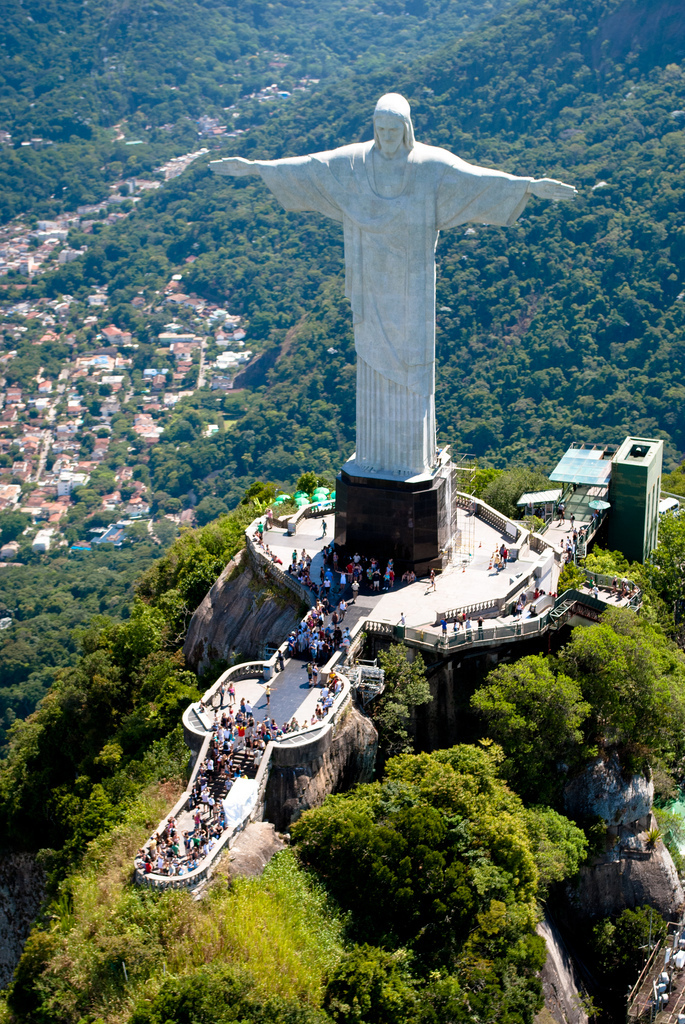
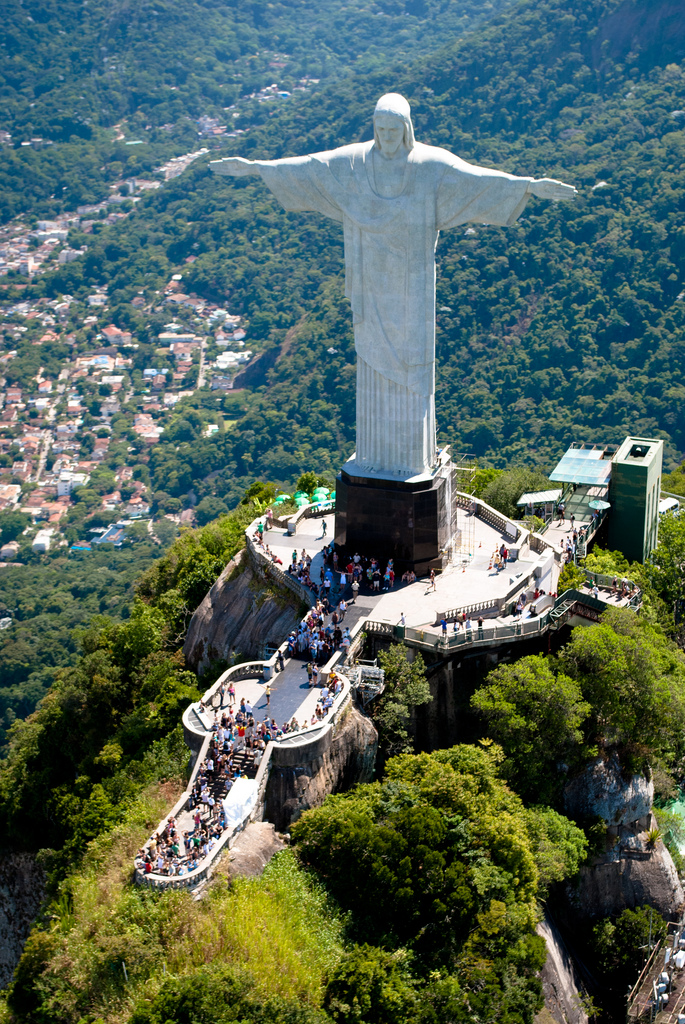
5. The Christ the Redeemer statue, standing atop Corcovado Mountain in Rio de Janeiro, Brazil, is one of the world’s most recognizable landmarks.
This 30-meter (98 ft) tall statue, with arms stretching 28 meters (92 ft) wide, overlooks the city, symbolizing peace and welcoming all with open arms. Completed in 1931 and designed by French sculptor Paul Landowski and Brazilian engineer Heitor da Silva Costa, it has become a symbol of Christianity around the globe and an enduring image of Brazil. More: Christ the Redeemer: An Icon of Faith and Artistry
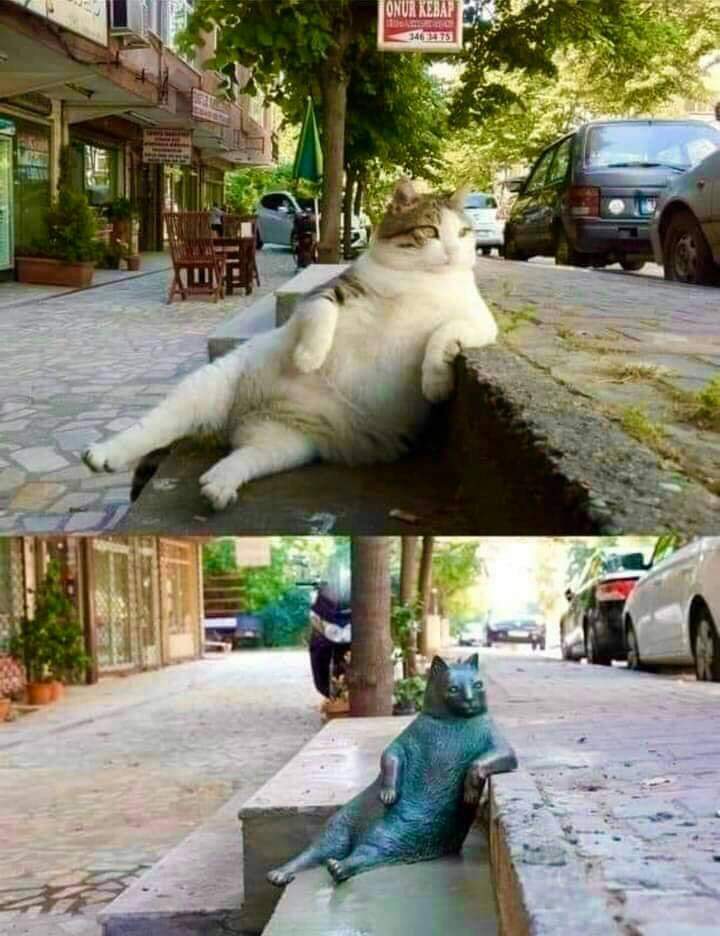
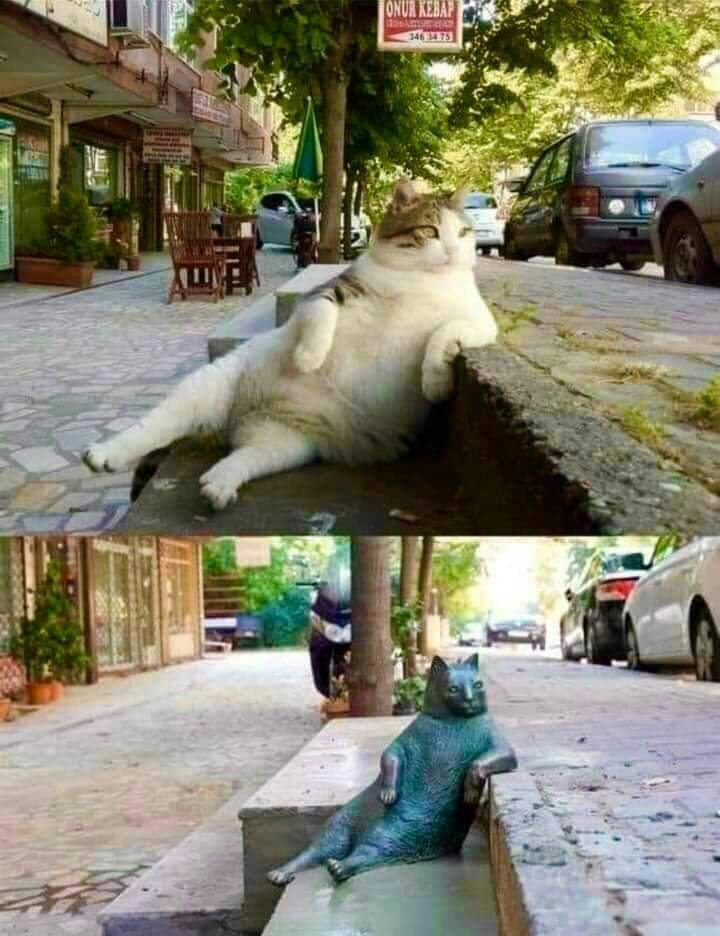
6. Not the most amazing statue, but definitely an amazing story. In Istanbul, Turkey, they made a statue to honor the famous stray cat (Tombili) that used to sit in this position and watch the passers by.
One month after its installation the sculpture went missing. A comment from Turkey MP Tuncay Özkan: “They stole the Tombili statue. They are enemies of everything beautiful. All they know is hate, tears and war”. The statue was safely returned a short time later. More photos here.
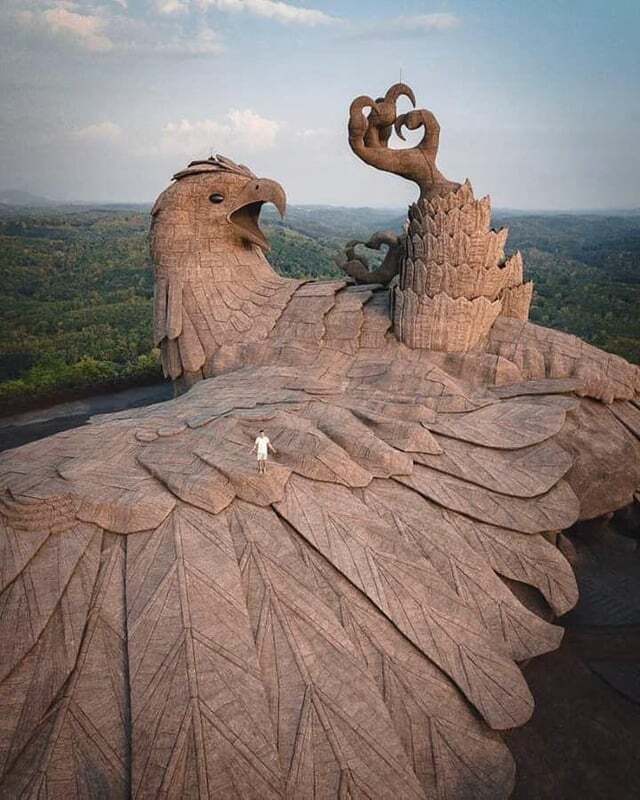
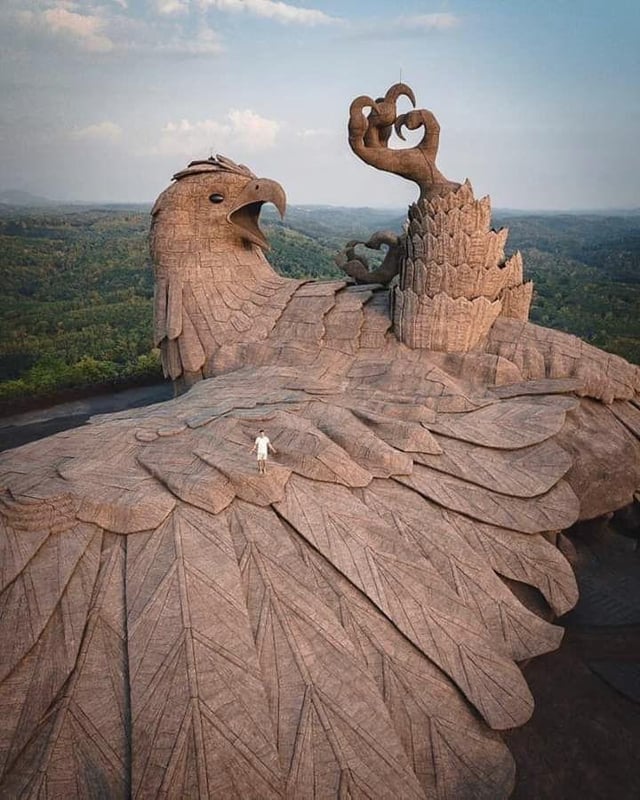
7. This eagle sculpture is the world’s largest bird statue, created by Indian artist Rajiv Anchal.
Located at Jatayu Earth’s Center in Kerala, India, the sculpture took a decade to complete. Spanning 200 feet in length, 150 feet in width, and 70 feet in height, this colossal work of art depicts the mythical eagle Jatayu from the Indian epic, Ramayana.
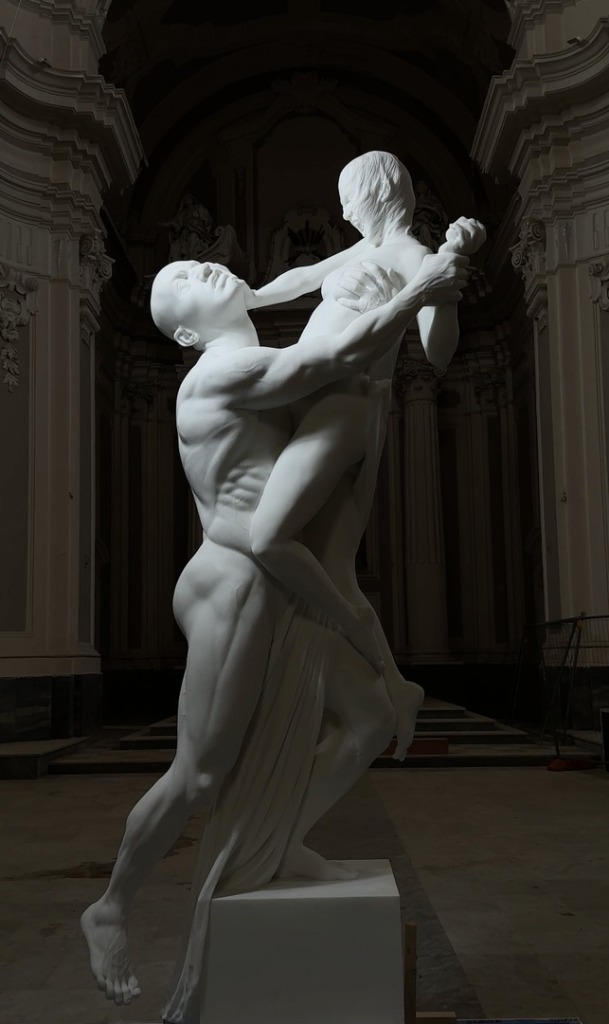
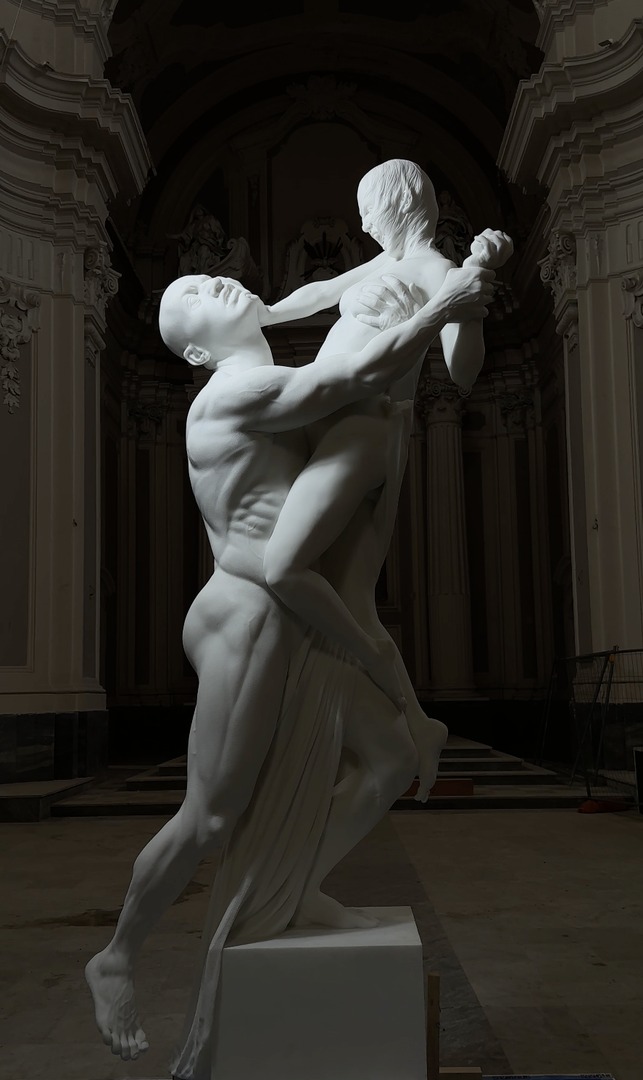
8. This stunning marble sculpture, Ajax and Cassandra, was crafted in 2022 by renowned Italian contemporary artist Jago.
The piece beautifully captures the dramatic moment between the Greek hero Ajax and the Trojan priestess Cassandra.
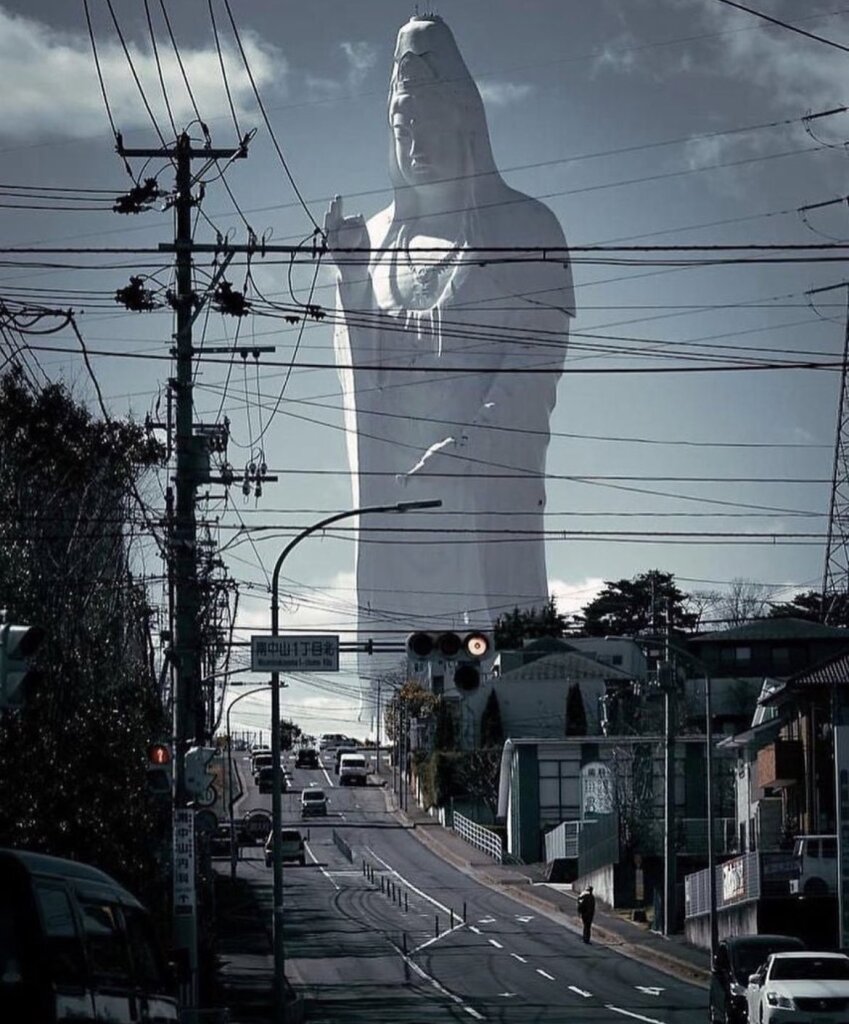
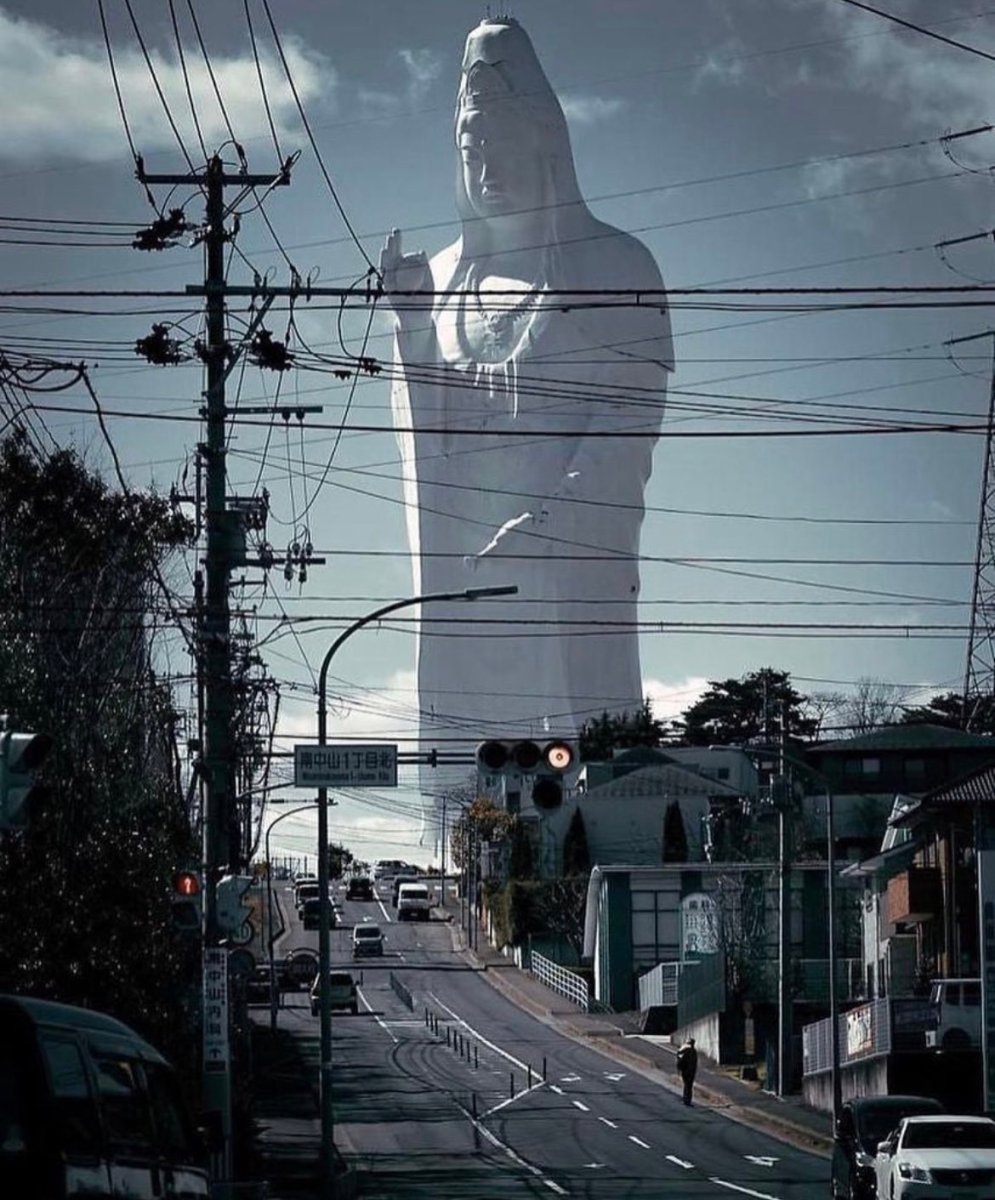
9. Sendai Daikannon in Japan, the eighth-tallest statue in the world at 100 meters (330 ft).
Its serene, watchful presence overlooks the quiet urban landscape, creating a striking contrast between its massive spiritual form and the everyday city life below.
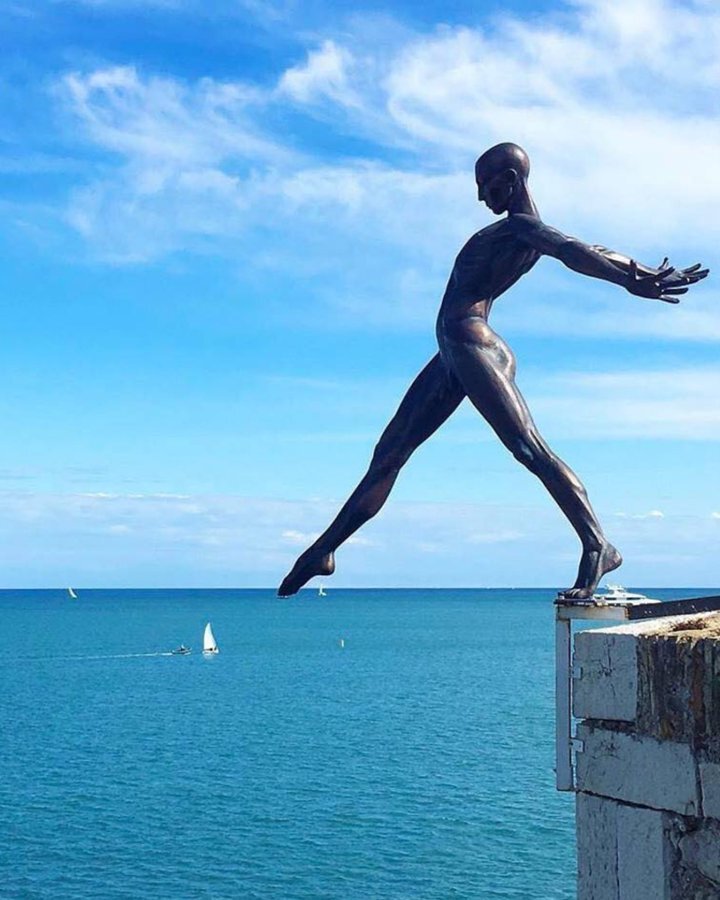
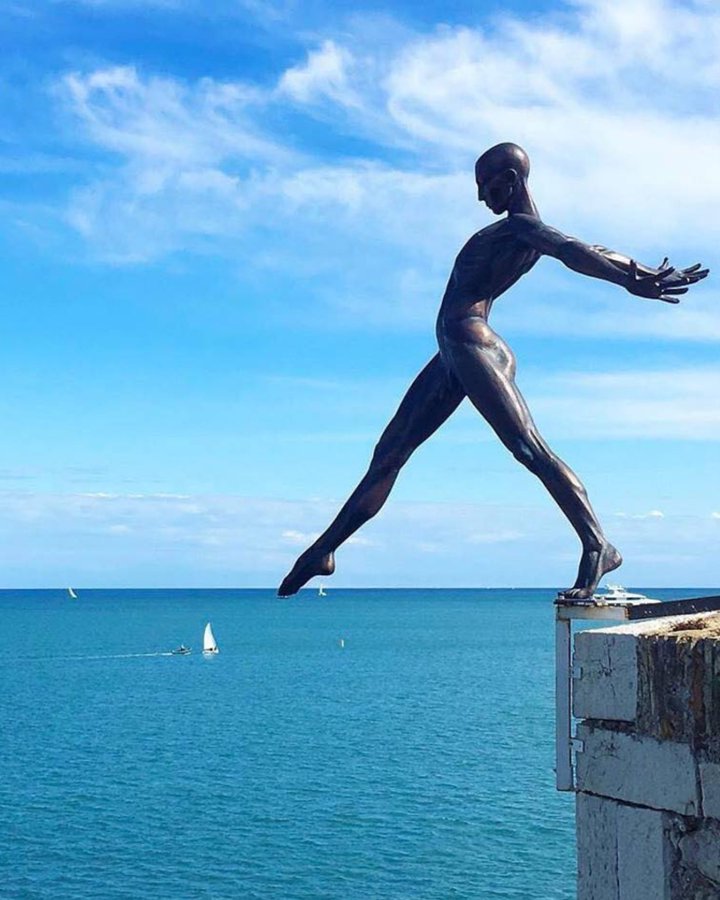
10. The great challenge by Nicolas Lavarenne. Antibes, French Riviera.
This striking bronze sculpture depicts a dynamic, elongated figure balancing on the edge of a cliff, arms outstretched as if preparing to leap into the vast blue sea below.
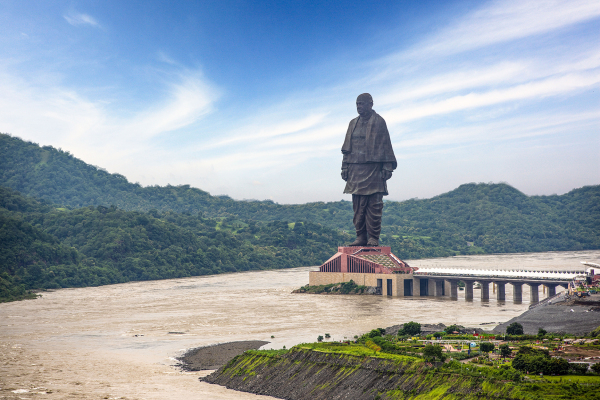
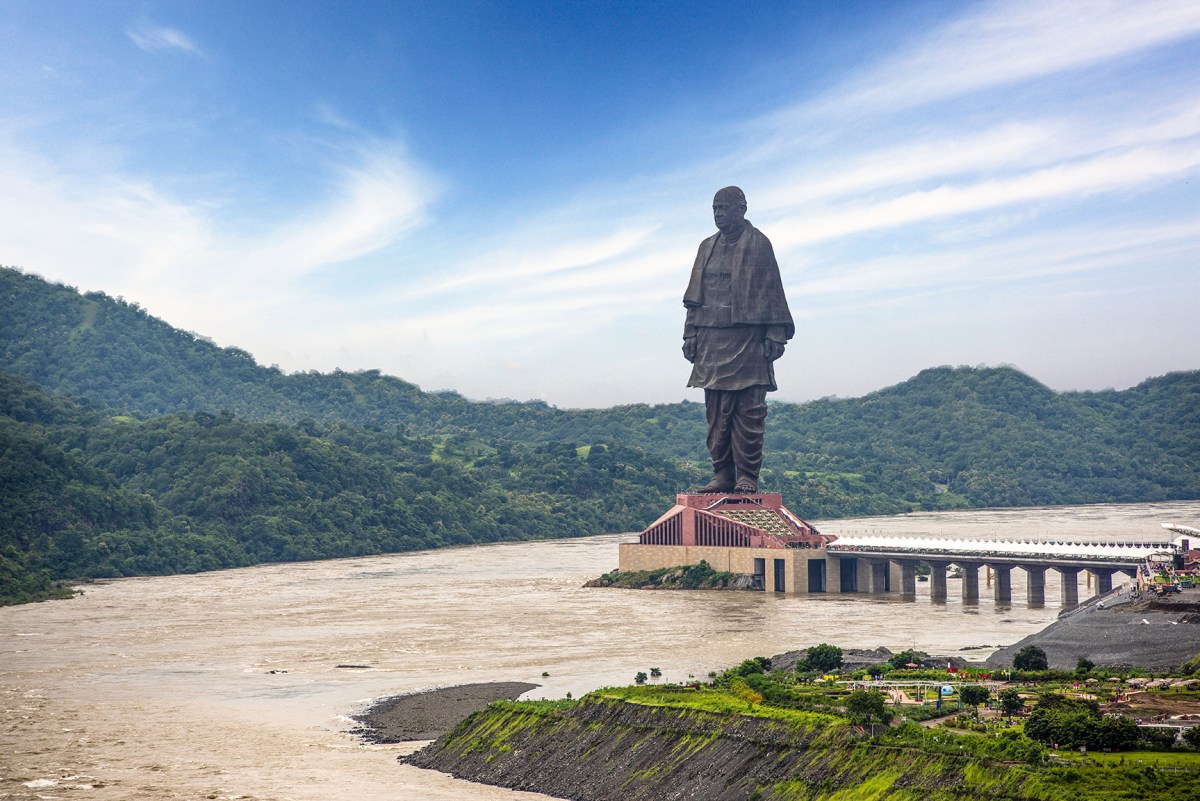
11. This is how the Statue of Unity in India looks like. It’s the tallest statue in the world: standing at 182 meters (597 ft) tall, it’s nearly three times the height of the Statue of Liberty.
This monumental statue of Sardar Vallabhbhai Patel, a key leader in India’s independence, stands on a massive platform with an observation deck, emphasizing its grandeur and scale.
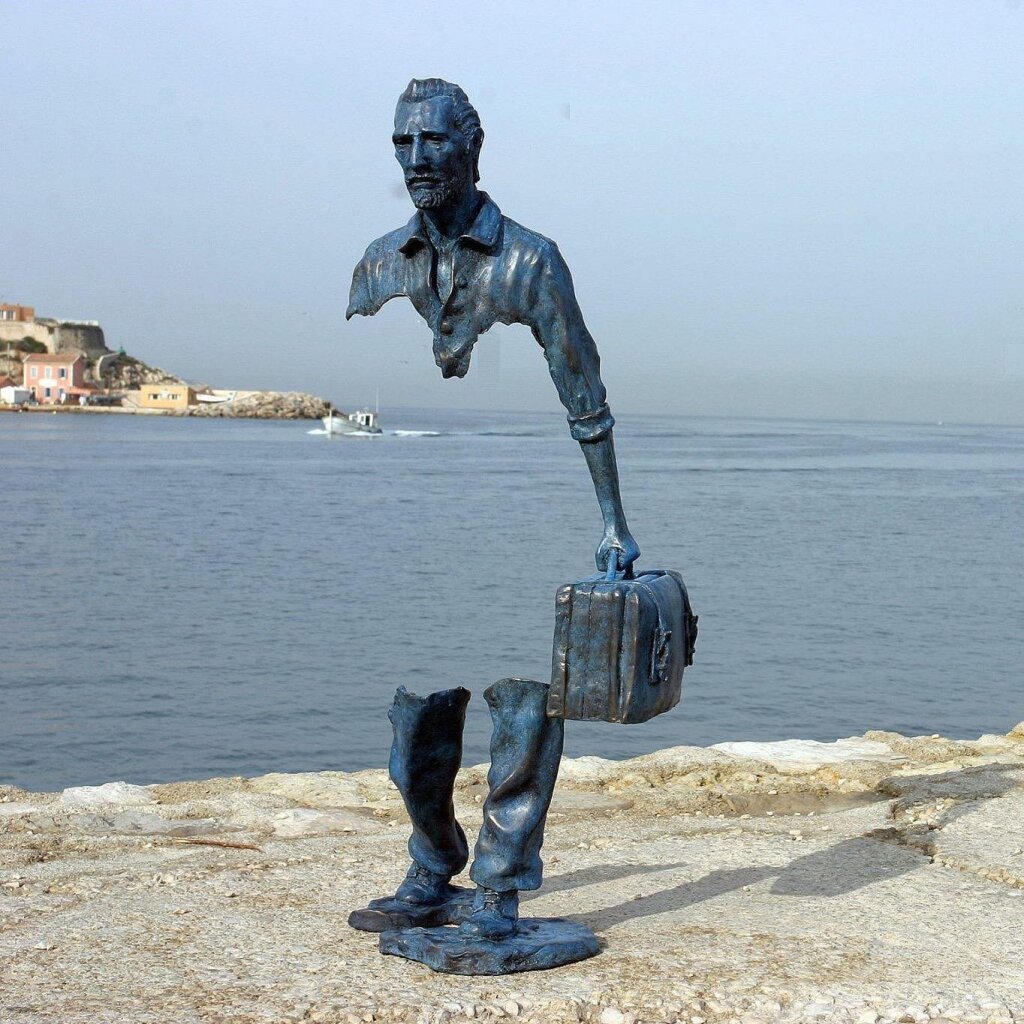
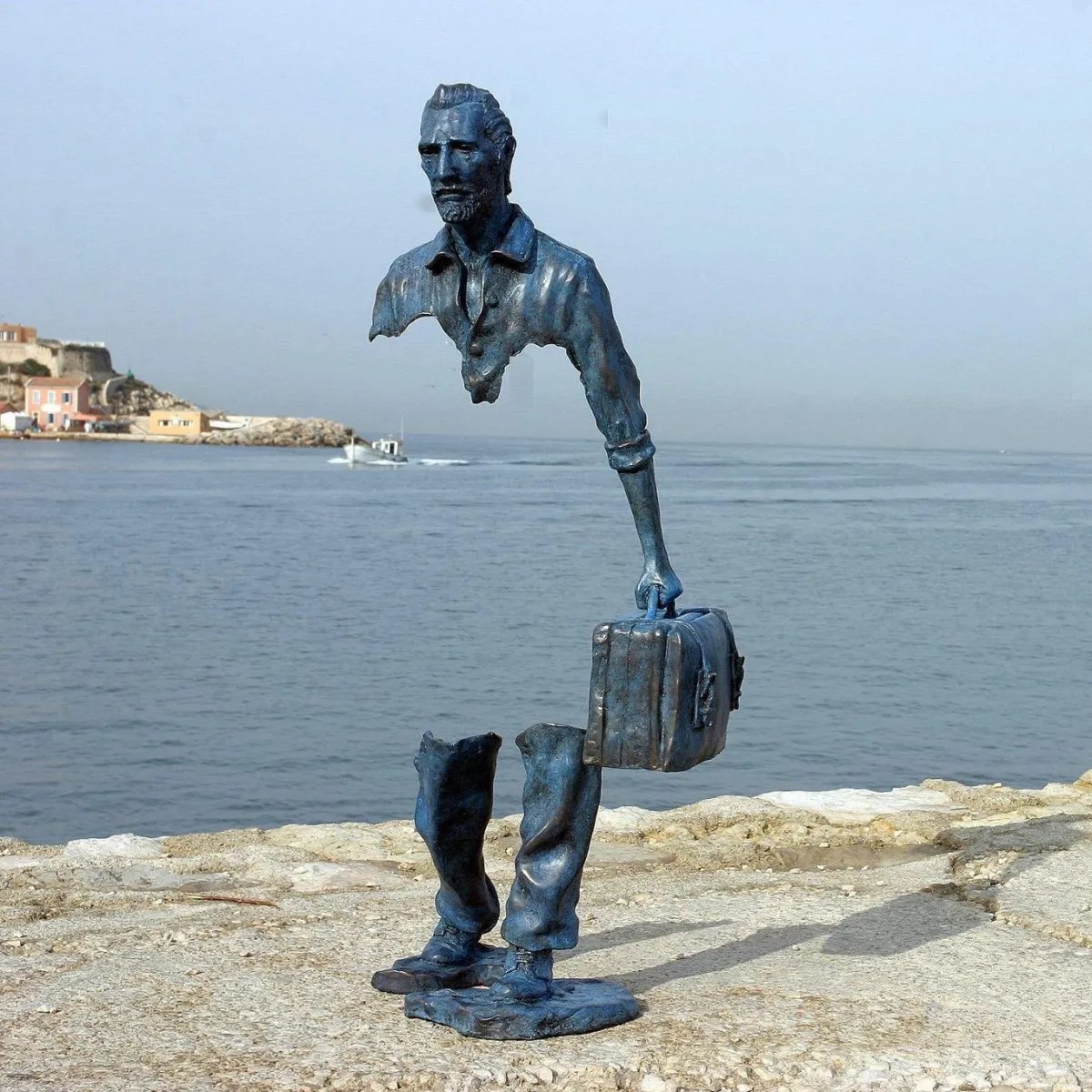
12. This sculpture by Bruno Catalano
Portrays the profound emptiness experienced by migrants as they depart from their homeland—leaving their loved ones and their community behind—in pursuit of a better life: More: 9 Fragmented travelers – Amazing sculptures by Bruno Catalano
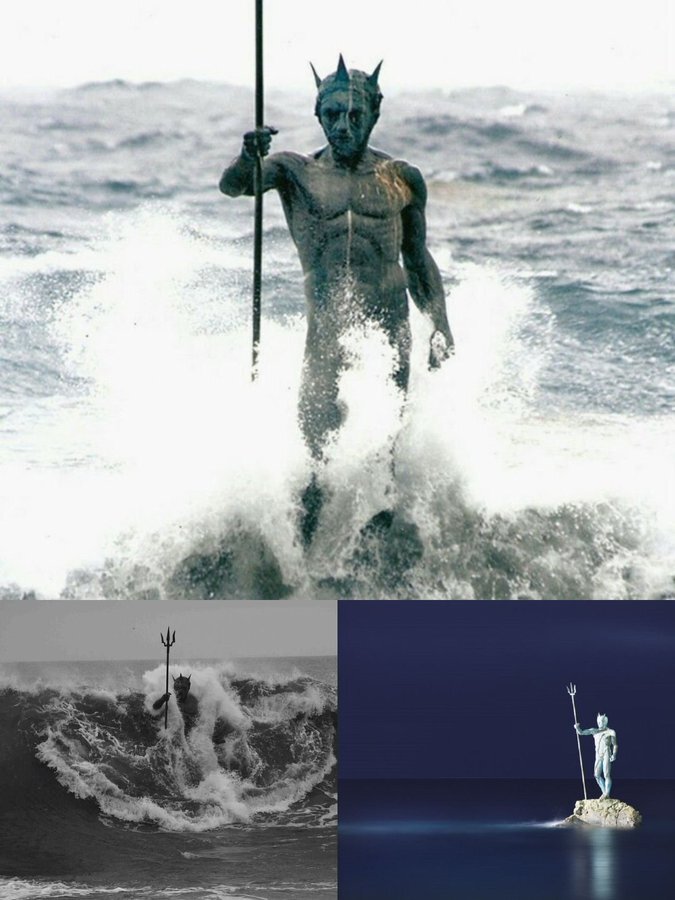
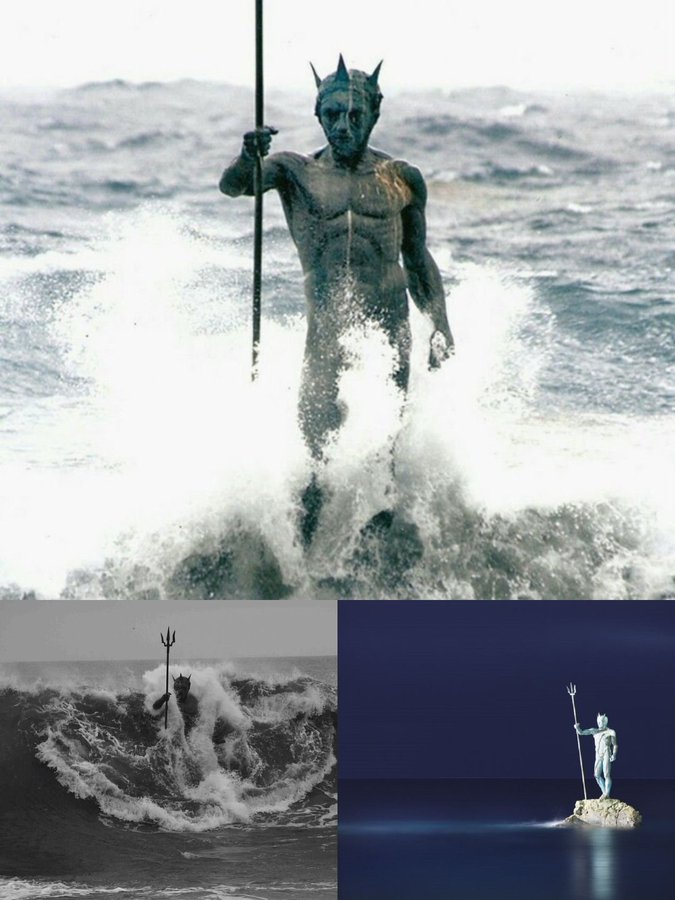
13. The incredible statue of Neptune (Poseidon) in Gran Canaria, Spain
Statue of Neptune (Poseidon) in Gran Canaria, Spain, standing powerfully against the waves with a trident in hand. This impressive sculpture captures the mythical god of the sea in a commanding pose, evoking themes of strength and the majesty of the ocean. More: The incredible ocean statue of Neptune (Poseidon) in Gran Canaria, Spain
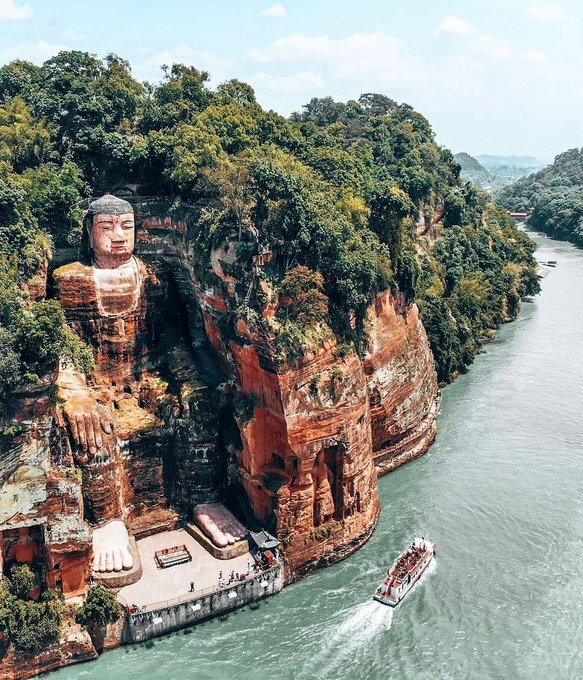
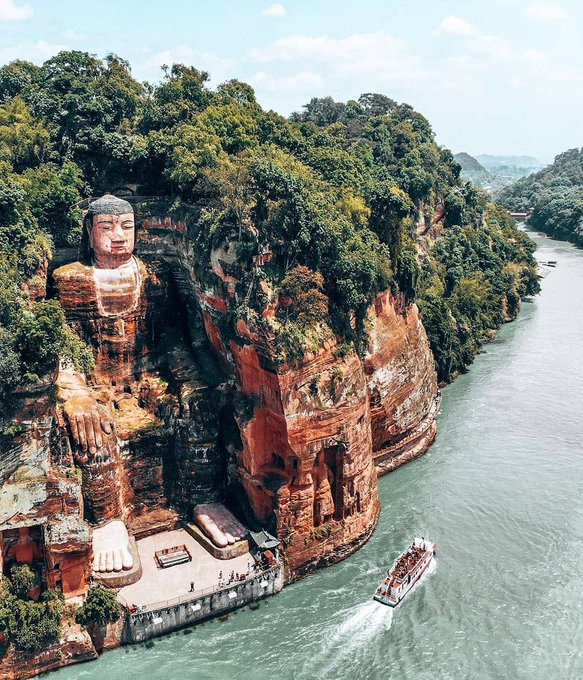
14. Leshan Giant Buddha in China (800 AD) At 71 meters (233 ft) tall, this is the tallest pre-modern statue on Earth.
The Leshan Giant Buddha is carved into the cliffside in Leshan, Sichuan, China, overlooking the convergence of three rivers.
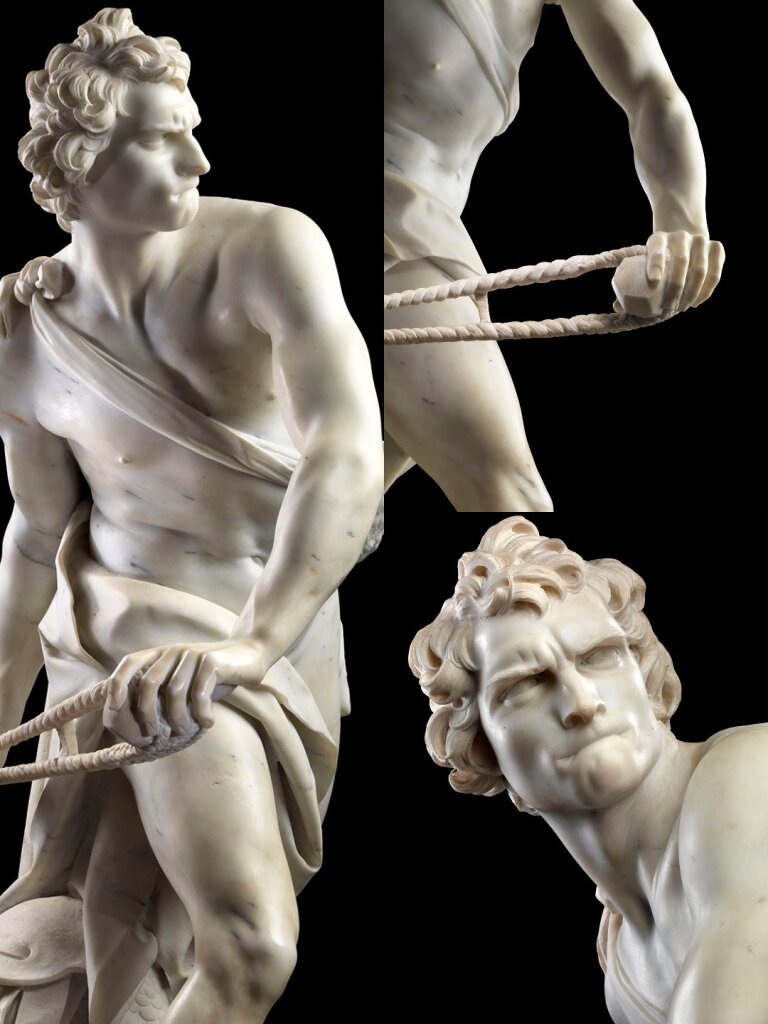
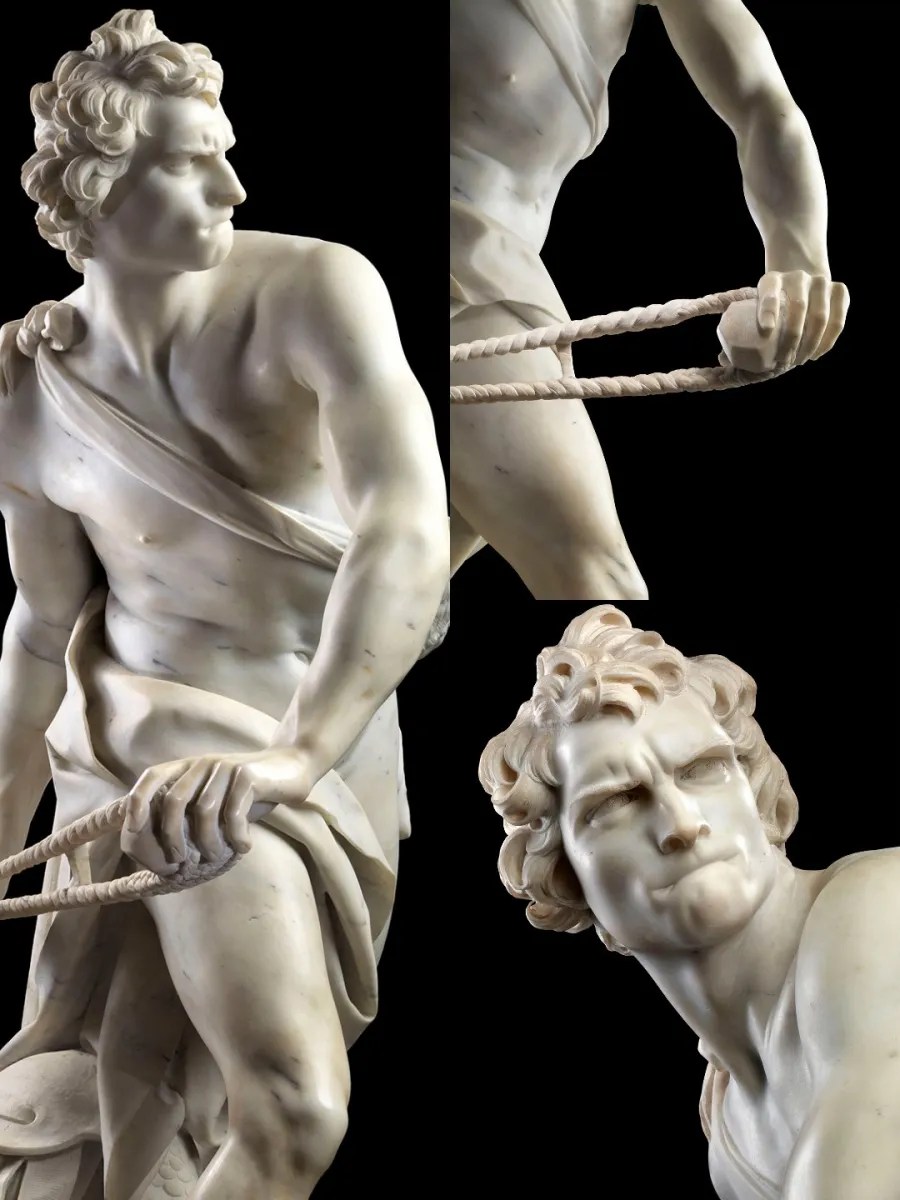
15. Close-up views of Gian Lorenzo Bernini’s marble statue of David, housed in the Galleria Borghese in Rome, Italy.
The dynamic sculpture captures the biblical hero mid-action, winding up to sling a stone. Bernini’s David is depicted with intense focus, furrowed brows, and clenched lips, conveying determination. The statue’s muscular arms and detailed hands grip the twisted ropes of the sling, showcasing Bernini’s skill in portraying tension and movement in marble. This statue contrasts Michelangelo’s famous David by capturing the hero in the midst of battle rather than in a calm, contemplative stance.
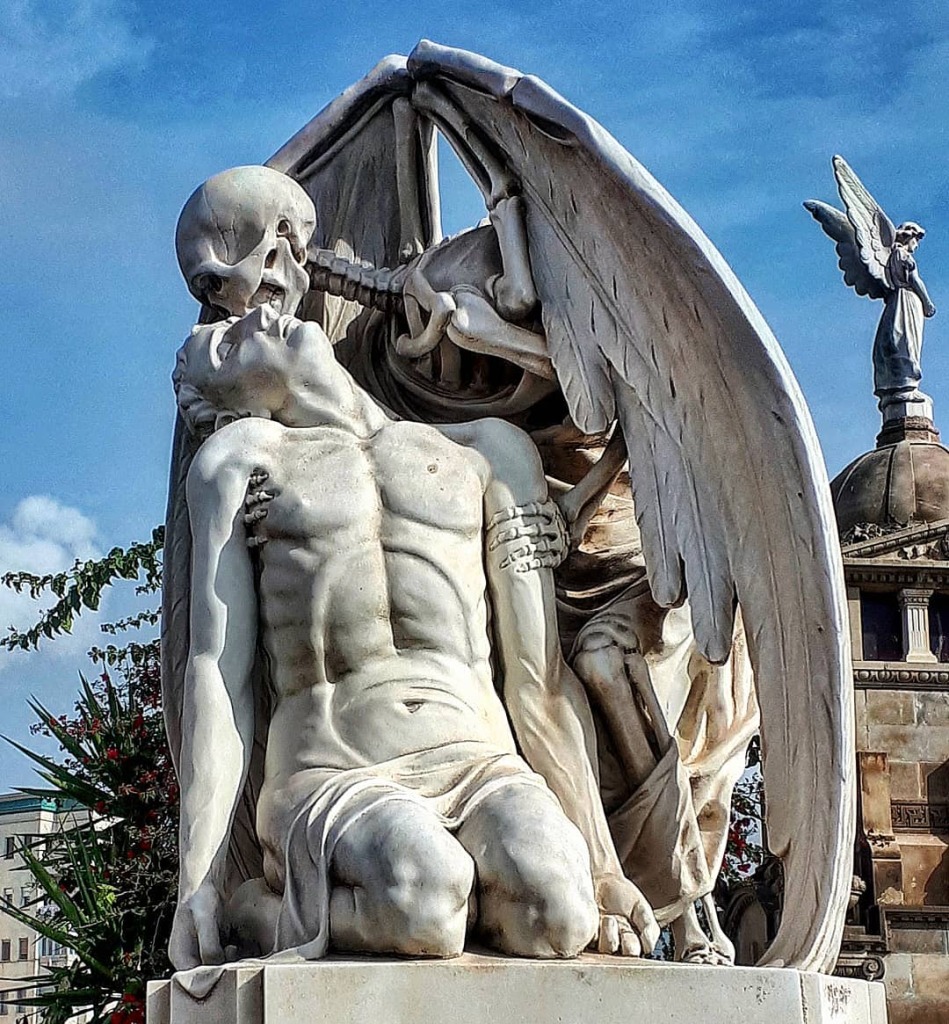
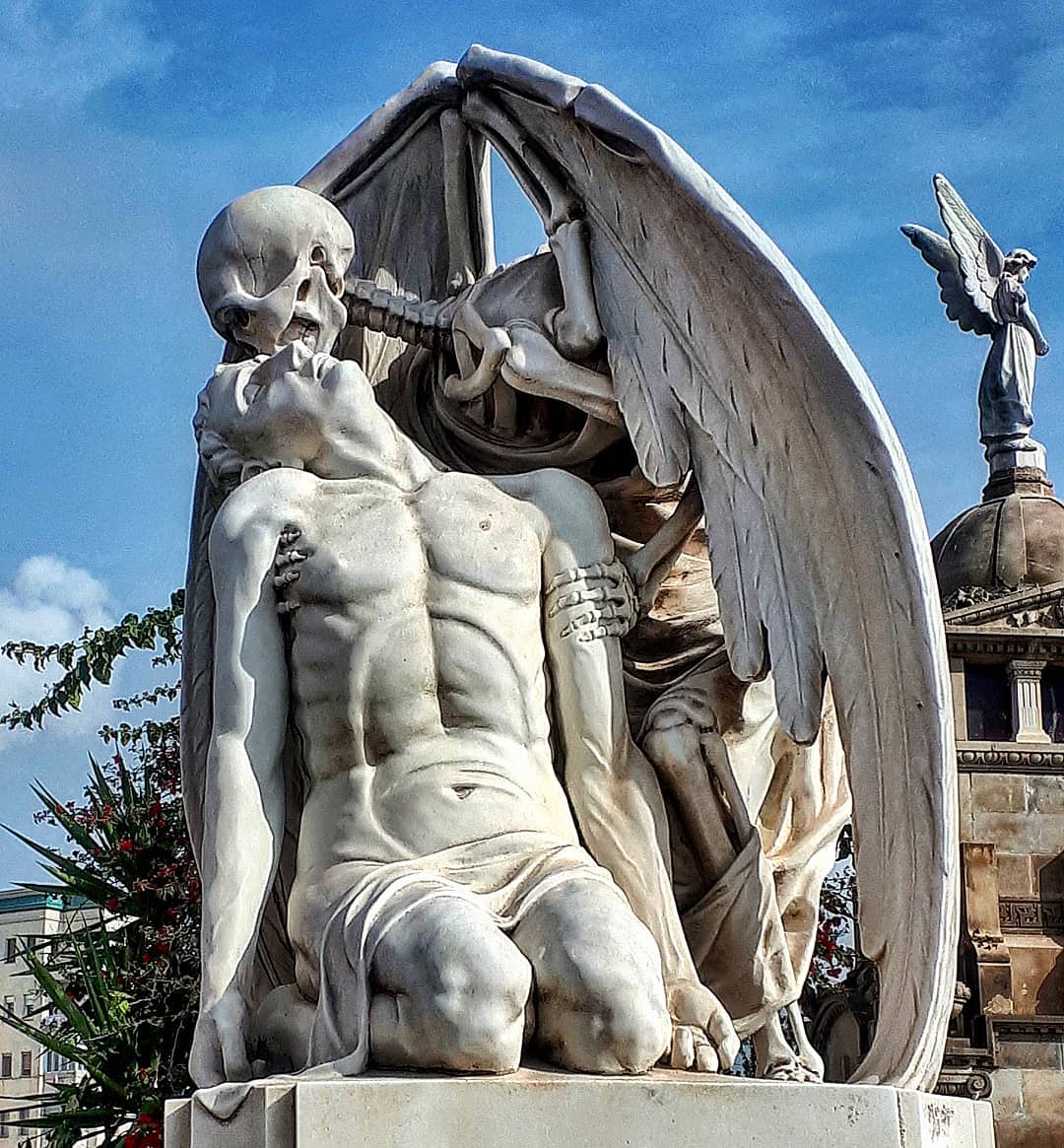
16. The Kiss of Death is a marble sculpture made in 1930 and found in Poblenou Cemetery, Barcelona.
This emotionally intense sculpture is renowned for its depiction of the delicate boundary between life and death, symbolized by Death’s kiss.
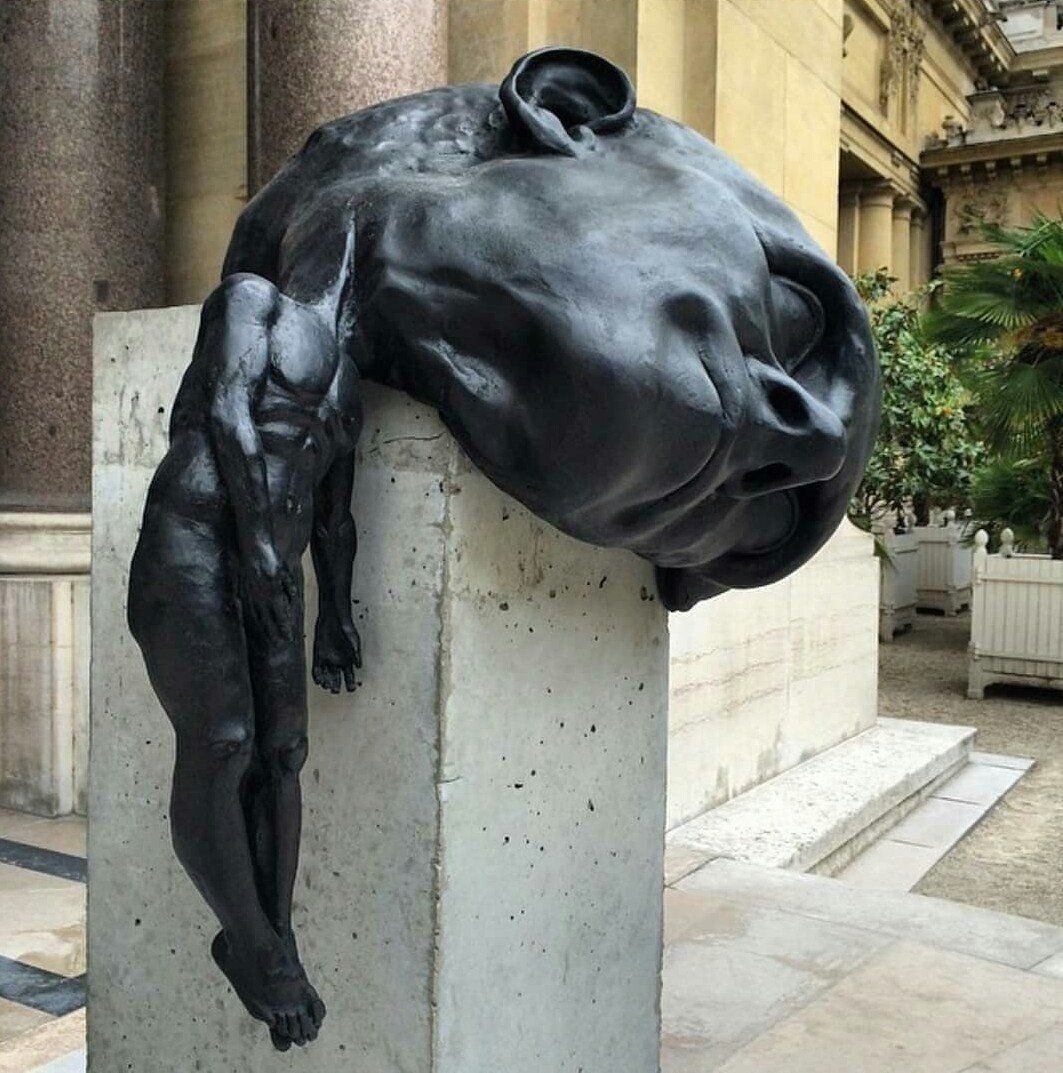
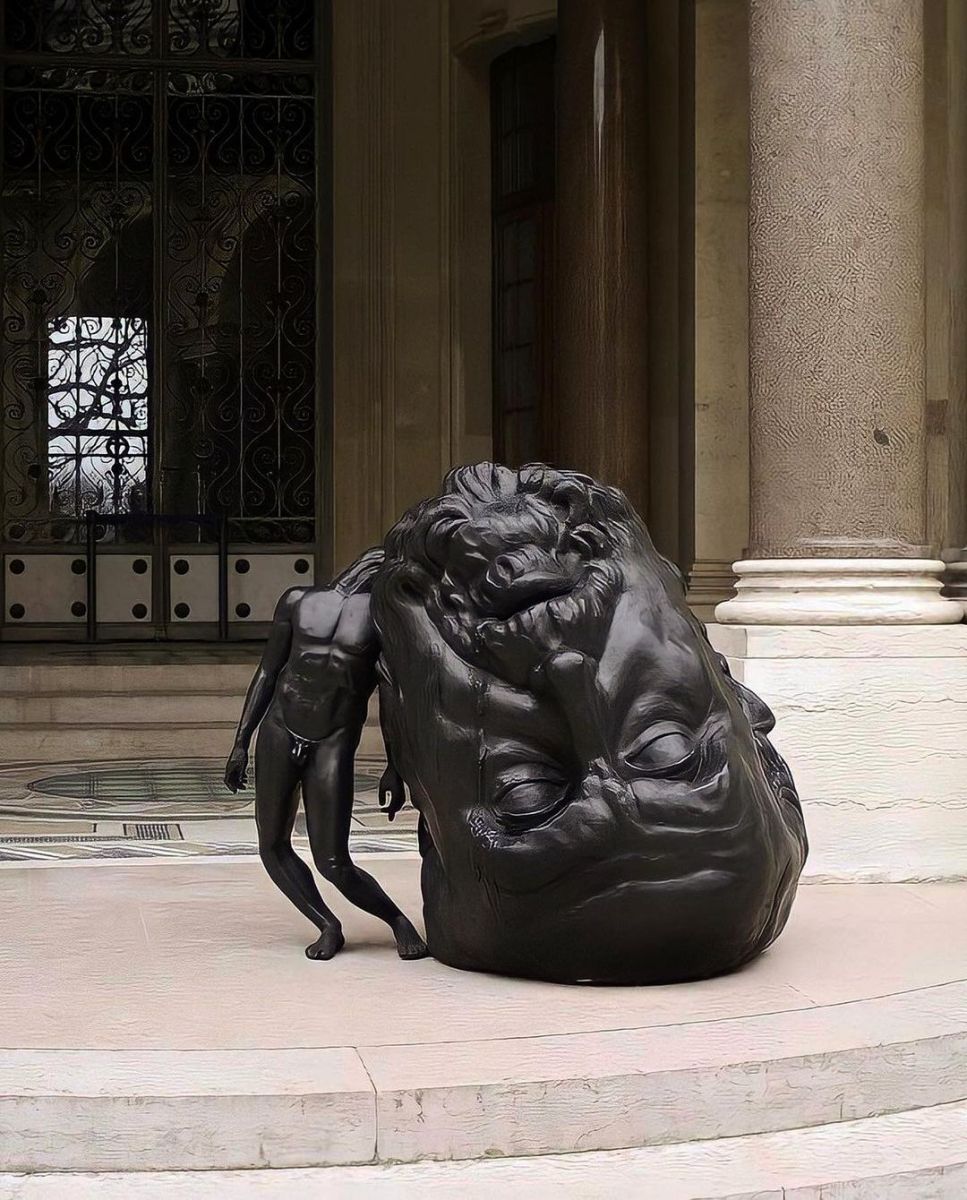
17. The Weight of Thought, bronze sculptures by Thomas Lerooy.
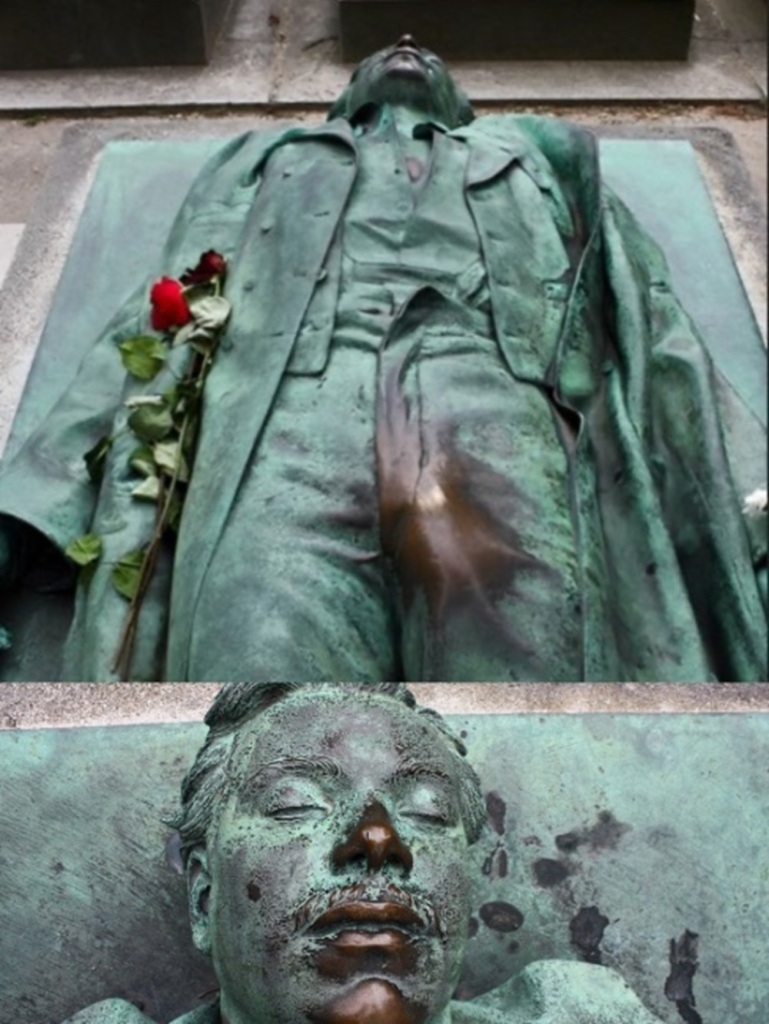
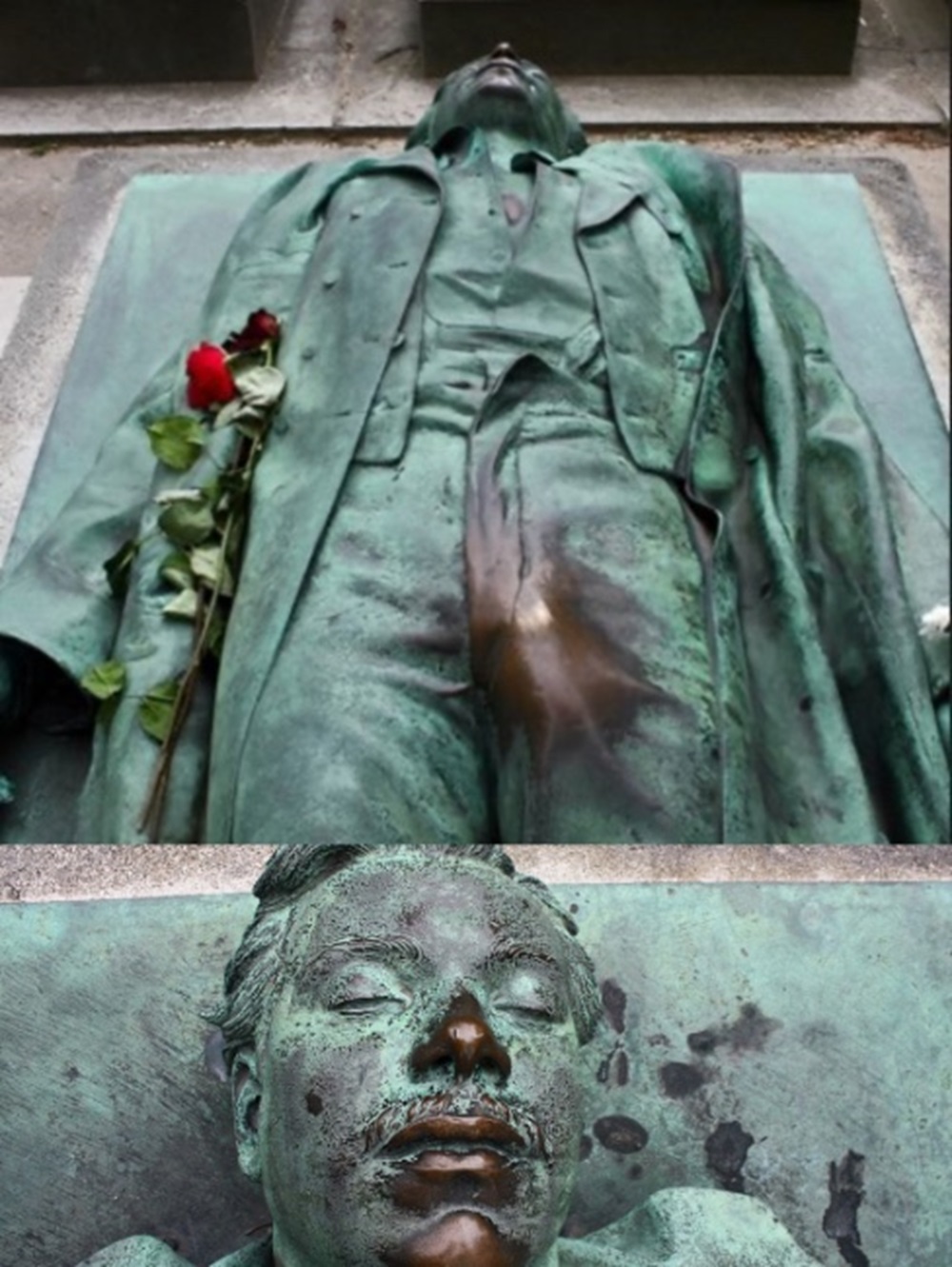
18. Victor Noir’s grave in Père-Lachaise cemetery, created by Patrick Magaud in 1984, has gained fame not for Noir’s journalistic work but for the legend surrounding his death and burial site.
Noir was a journalist shot dead, and his grave features a full-sized bronze statue of him lying down, as if recently shot. Over time, the statue became a fertility symbol. Legend has it that kissing the statue on the lips, leaving a flower in Victor’s hat, and rubbing the genital area enhances fertility, improves one’s sex life, or helps find a husband within a year. This has led to the lips and trousers’ bulge on the statue becoming noticeably shiny from repeated contact. In 2004, a fence was erected around the grave to prevent this practice, but public protest led to its removal. Victor Noir’s grave remains one of the most visited and talked-about monuments in Père-Lachaise.
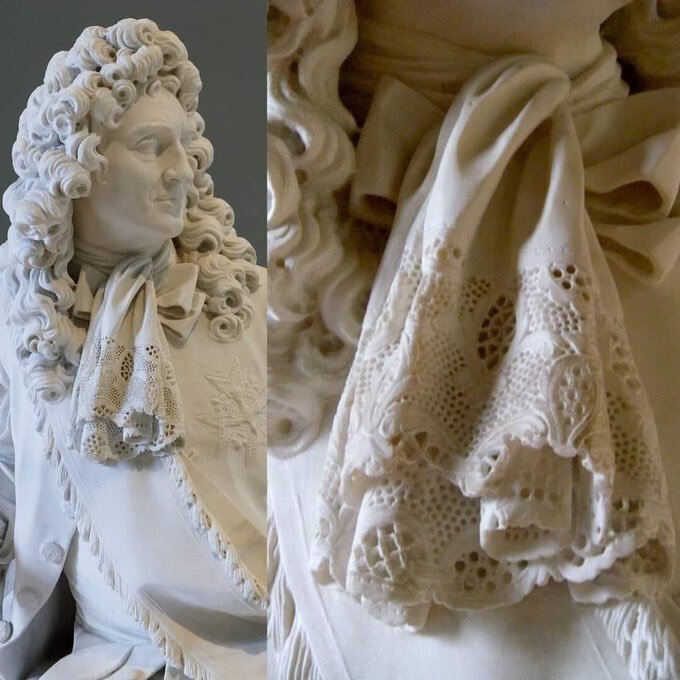
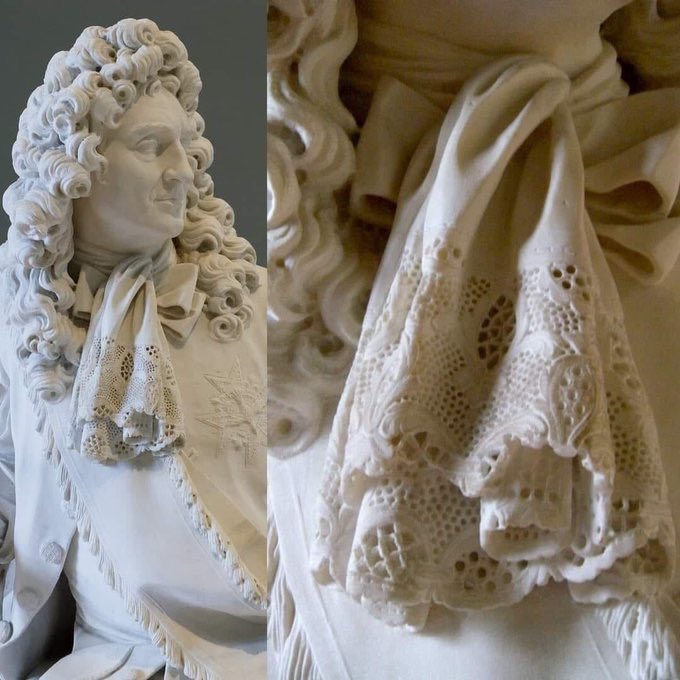
19. The amazing handkerchief detail in this marble statue made by French sculptor Louis Philippe Mouchy in 1781.
Featuring a highly realistic handkerchief carved to appear as delicate lace, draped around the neck of the figure. The sculpture captures the fine details of the lacework, folds, and textures, showcasing Mouchy’s skill in replicating soft fabrics in hard marble, a testament to his mastery of the medium. The statue also displays the figure’s elaborate curls and formal attire, highlighting the elegance and refinement typical of 18th-century French sculpture.
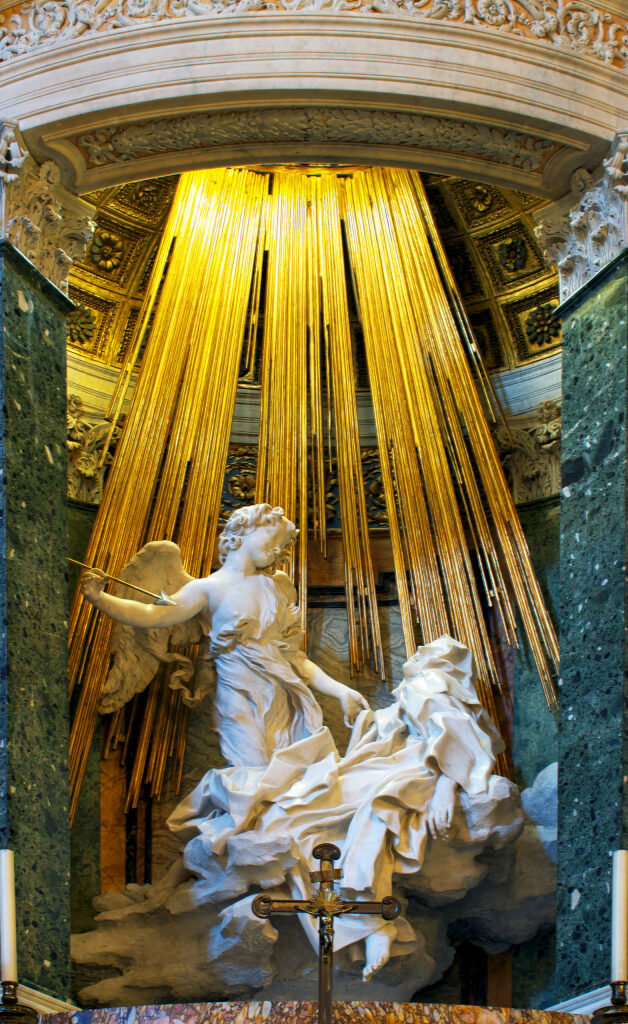
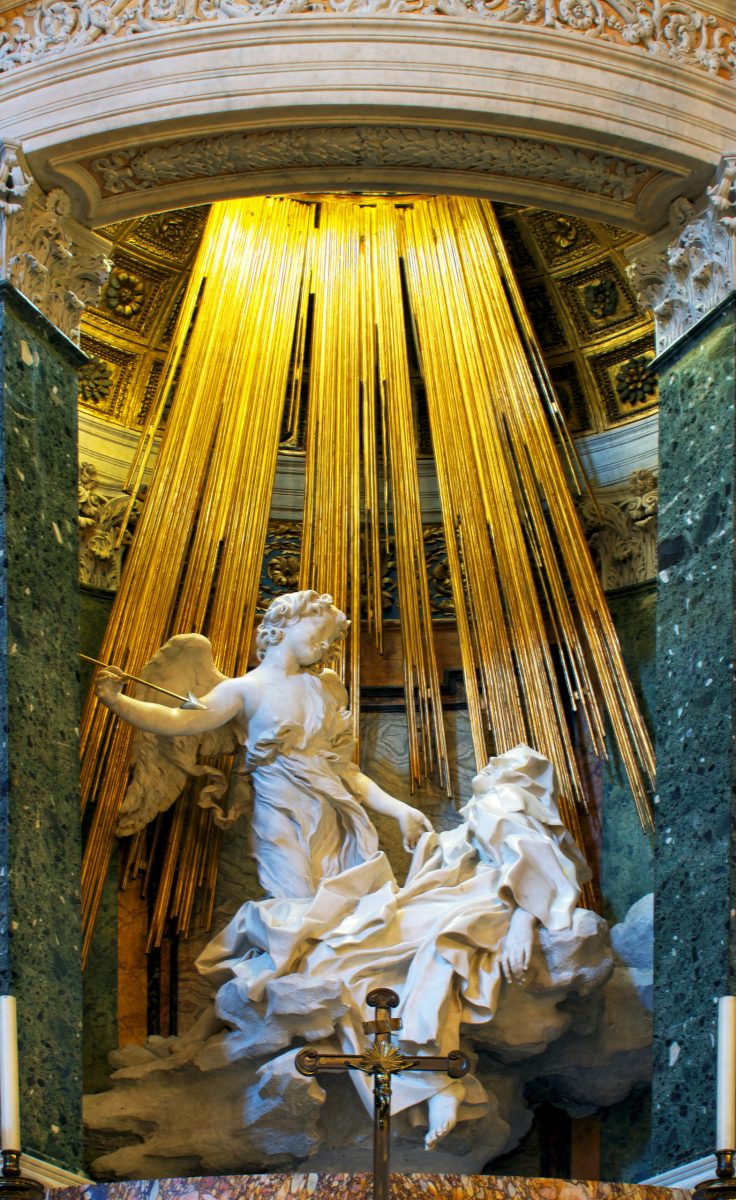
20. The Ecstasy of Saint Teresa, a renowned Baroque sculpture by Gian Lorenzo Bernini, located in the Cornaro Chapel of Santa Maria della Vittoria in Rome.
This intricate marble sculpture depicts Saint Teresa of Ávila in a moment of religious ecstasy, her face expressing both pain and bliss as an angel holds a golden spear poised above her. Radiant golden rays crafted from gilded bronze descend from above, symbolizing divine light and adding dramatic intensity to the scene.
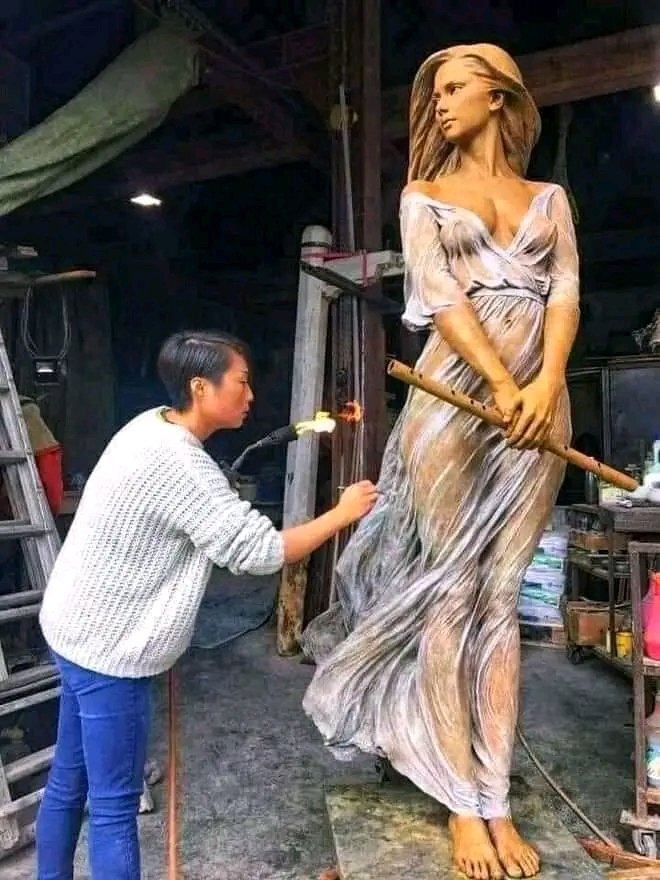
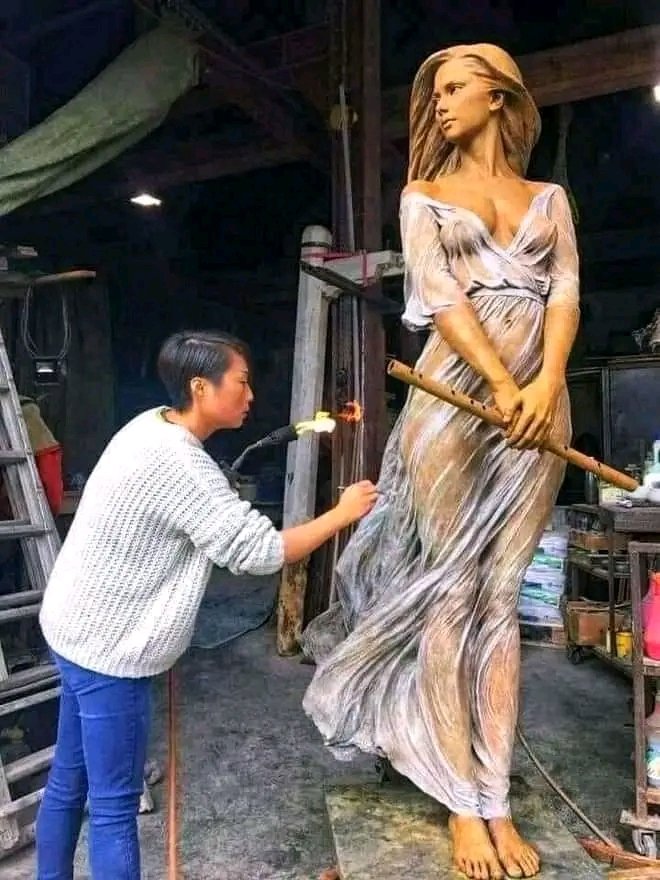
21. Luo Li Rong is a contemporary artist renowned for crafting hyper-realistic clay and bronze sculptures.
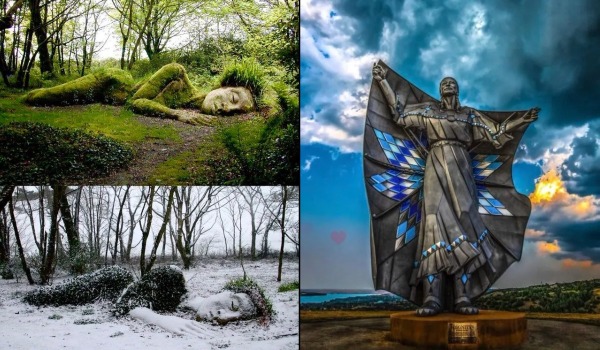
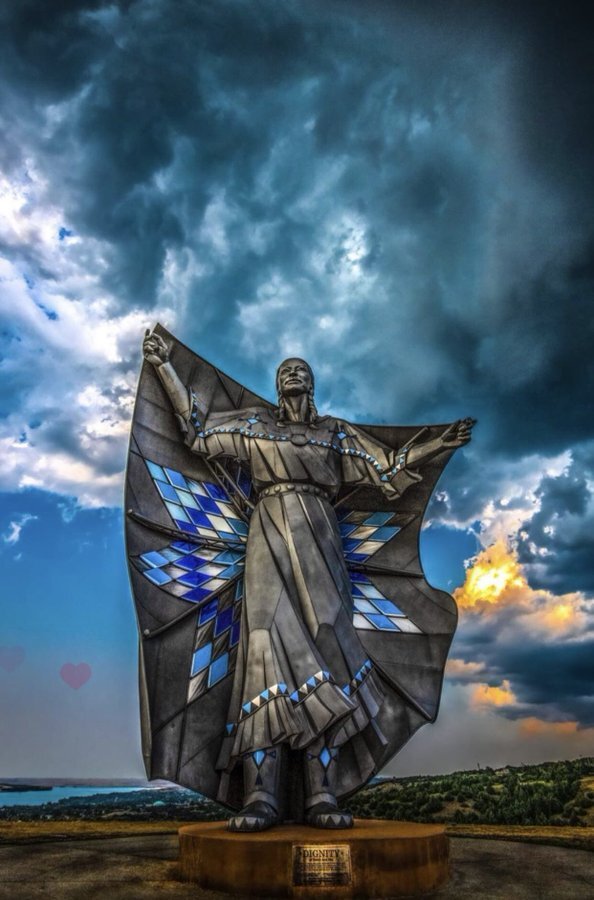
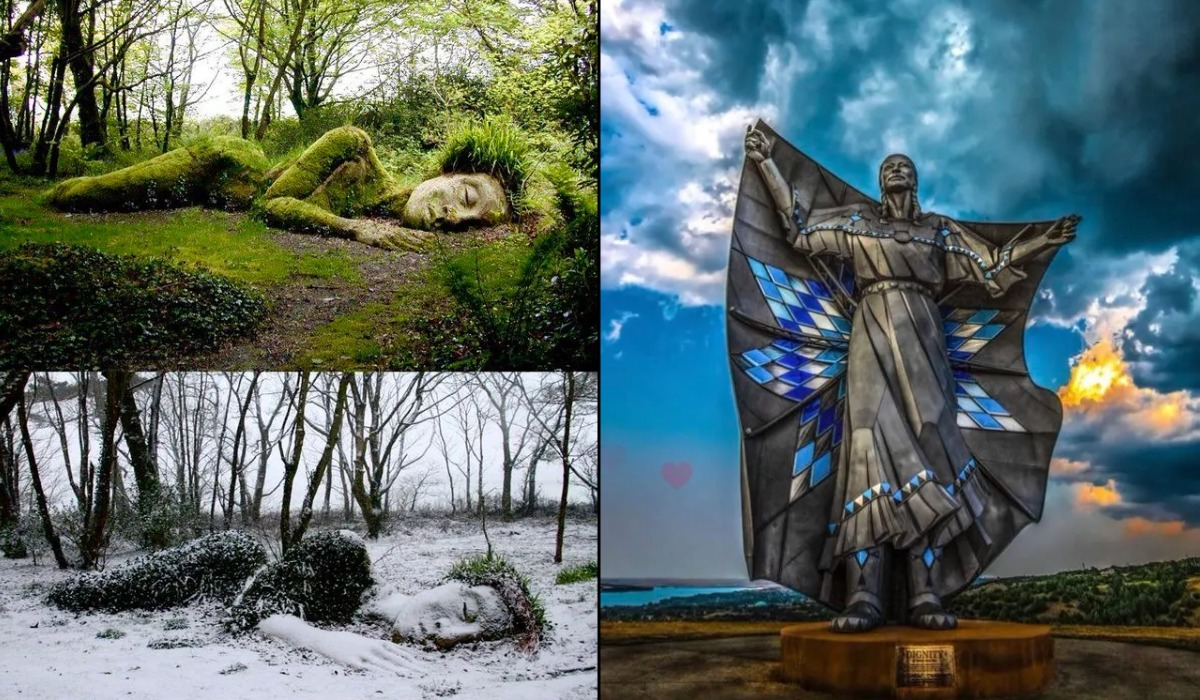
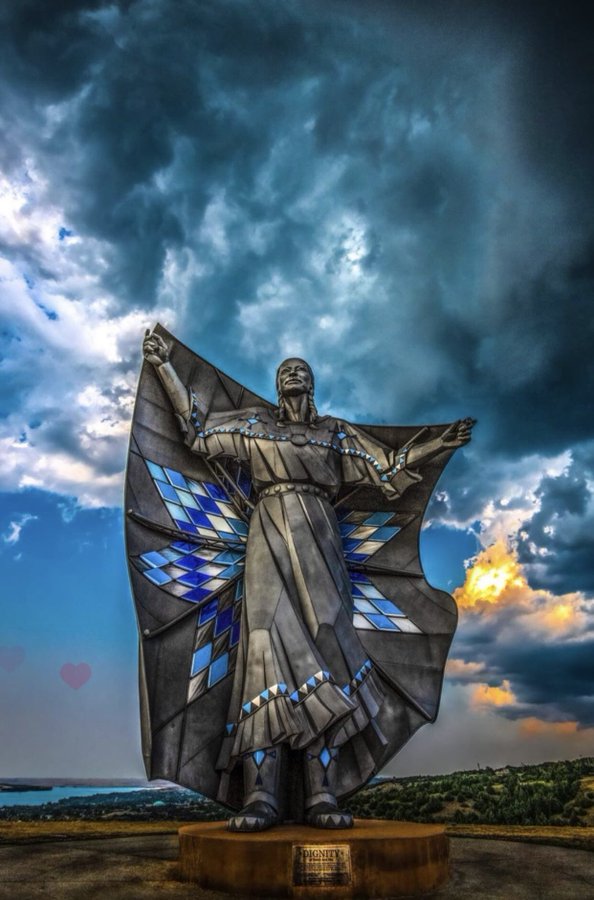
22. The Dignity statue in South Dakota, a stunning 50-foot-tall sculpture of a Native American woman draped in a star quilt.
The statue features a blend of metal and vibrant blue diamond shapes that catch the light, symbolizing the cultural heritage and spirit of the Lakota and Dakota people. The woman’s expression is serene, with her arms outstretched as if embracing the landscape around her.
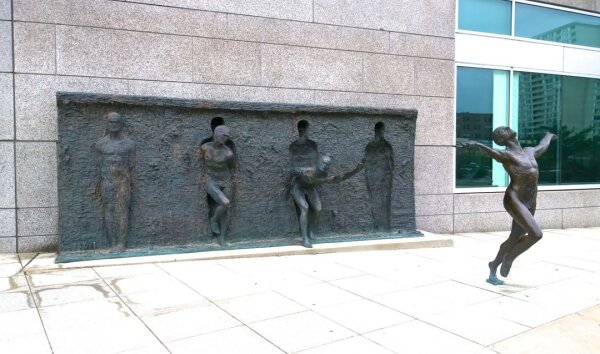
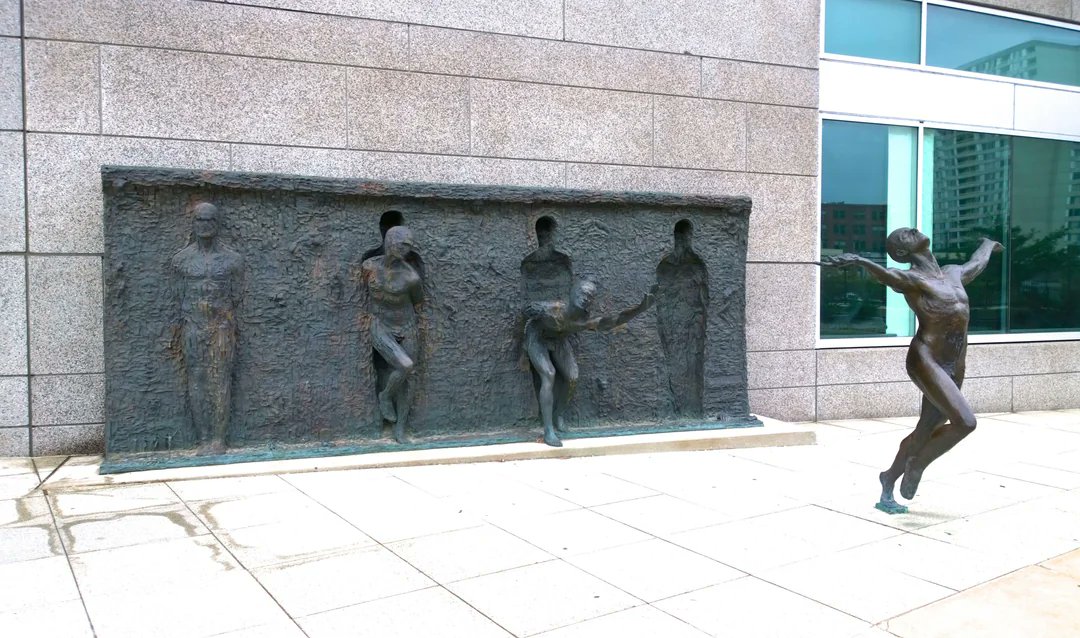
24. Freedom Sculpture, Philadelphia
“I wanted to create a sculpture almost anyone, regardless of their background, could look at and instantly recognize that it is about the idea of struggling to break free. This sculpture is about the struggle for achievement of freedom through the creative process” — Zenos Frudakis:
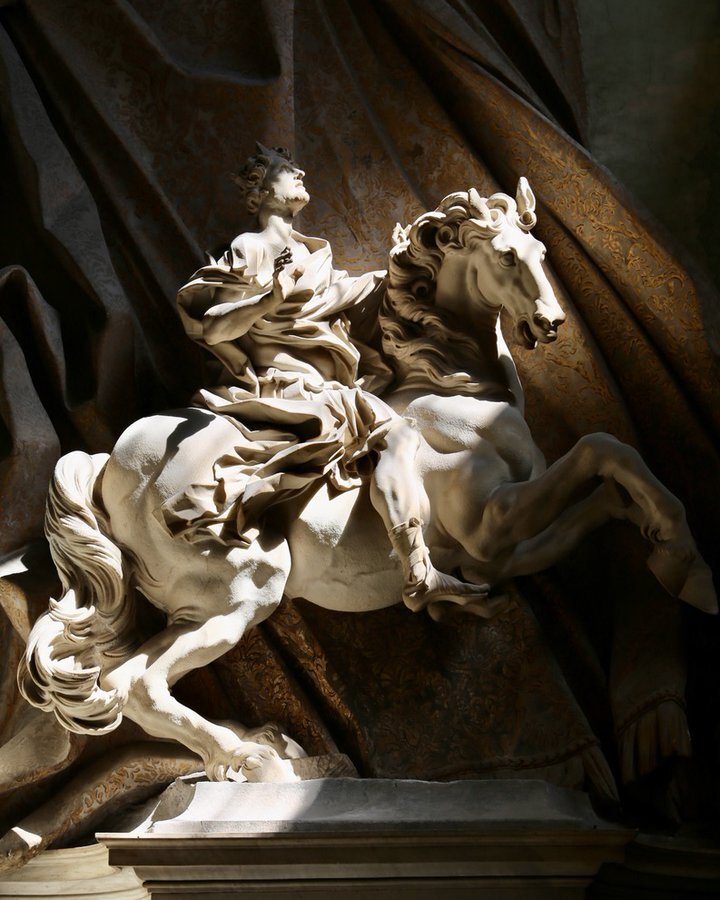
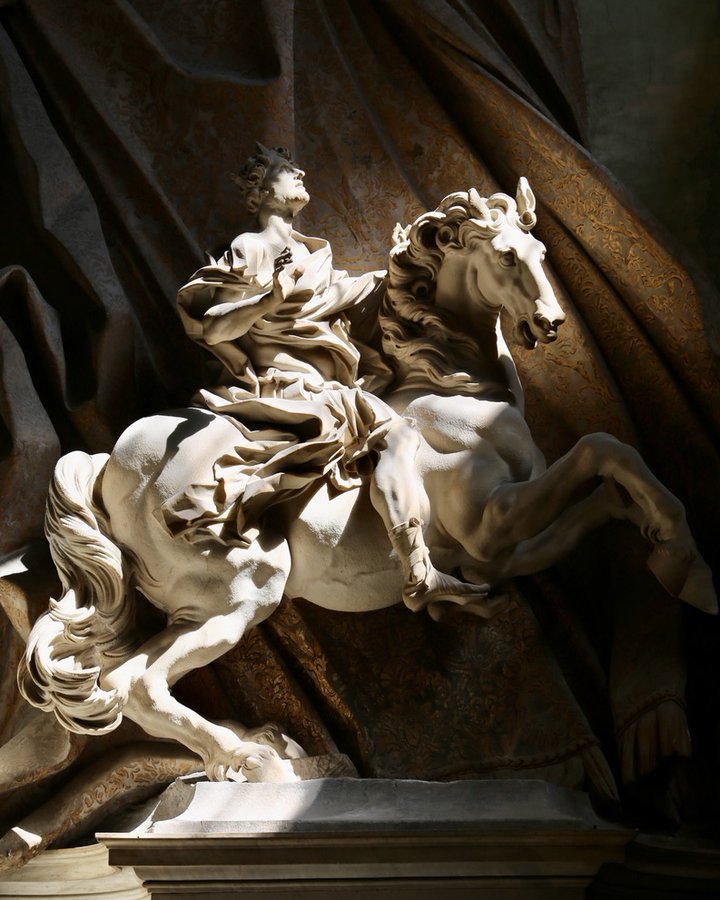
25. The vision of Constantine by Bernini is arguably one of the most underrated sculpture in art history.
Gian Lorenzo revolutionized the art form by infusing unprecedented movement into stone.
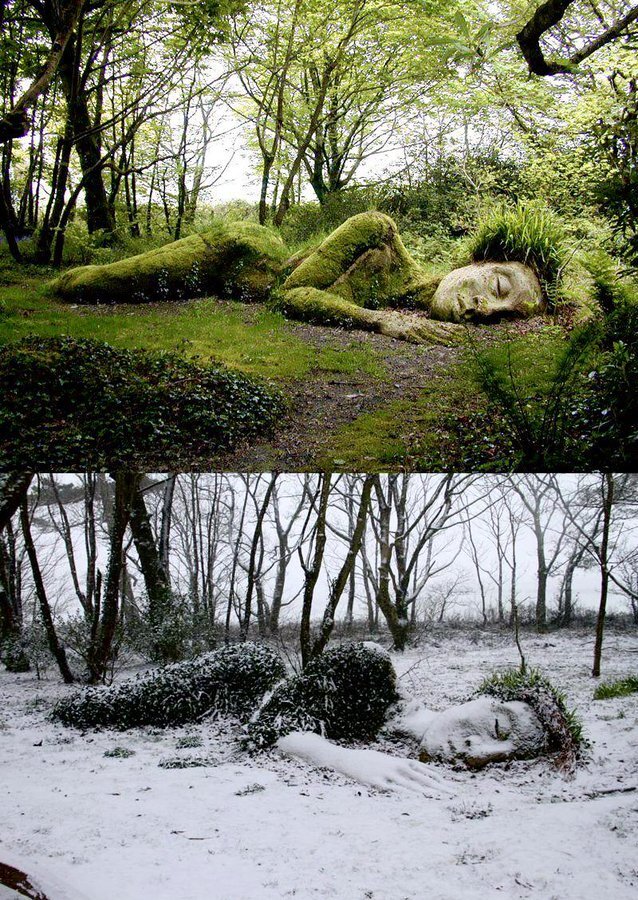
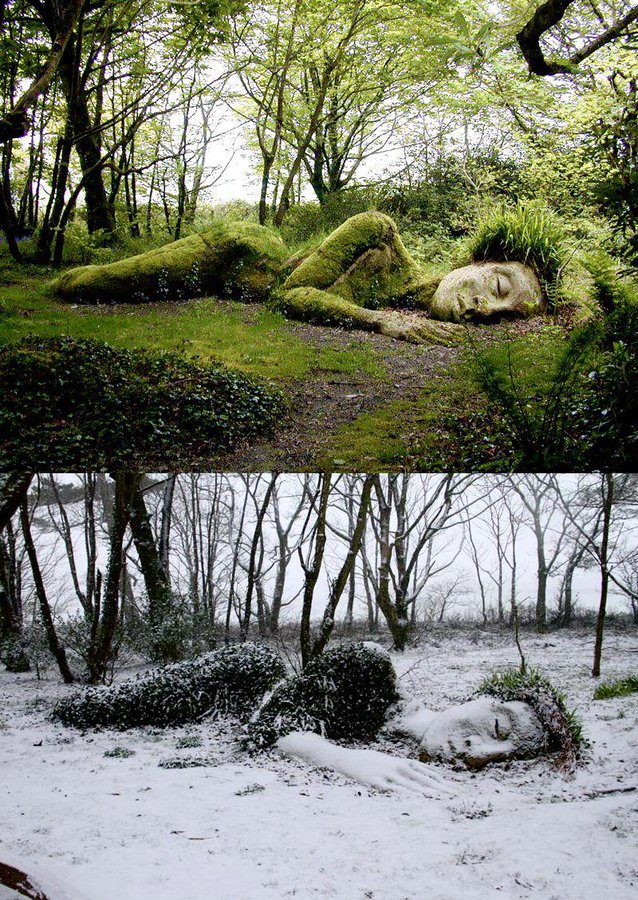
26. The Mud Maid by Sue Hill, located in the Lost Garden of Heligan, Cornwall, UK.
Depending on the time of the year, the mud maid’s hair and clothes change when the seasonal plants and moss grow over the sculpture. More: Mud Maid – Living sculpture by Sue and Pete Hill (5 photos and video).
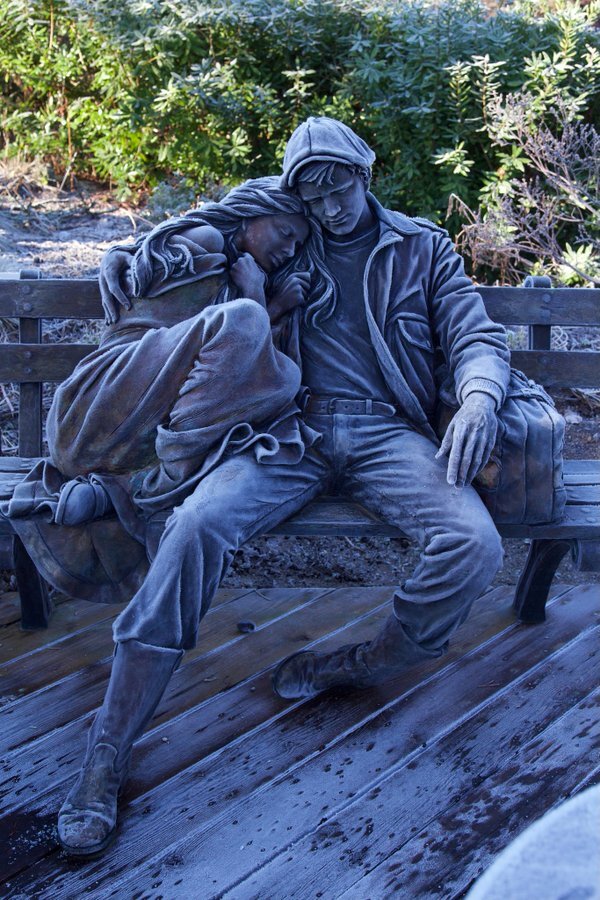
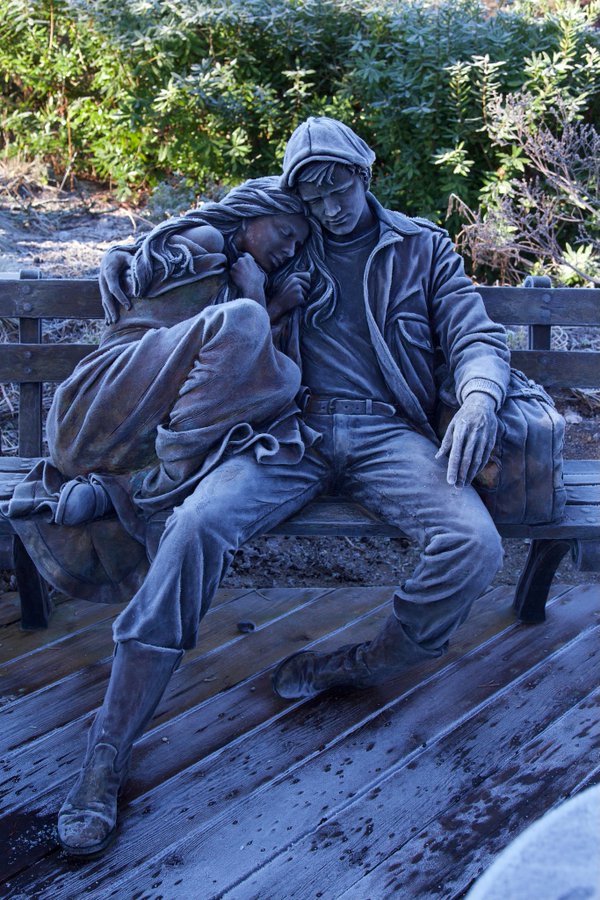
27. Departure, a stunning bronze sculpture by artist George Lundeen, highlighted by the frost.
The sculpture is subtly highlighted by a layer of frost, enhancing the scene with a sense of cold and quiet intimacy, as if capturing a moment of departure or waiting.
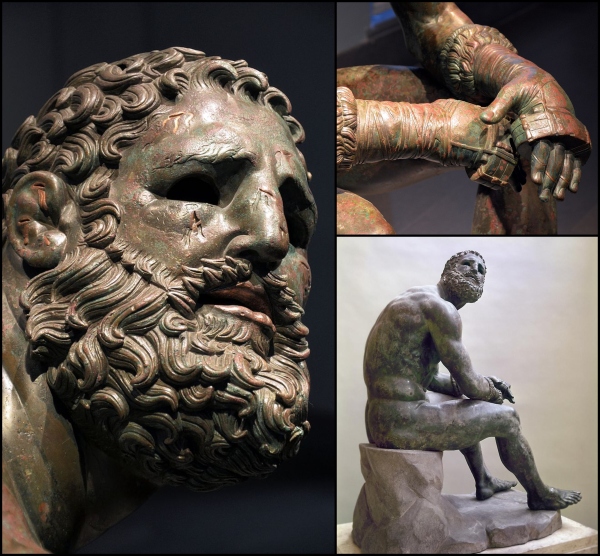
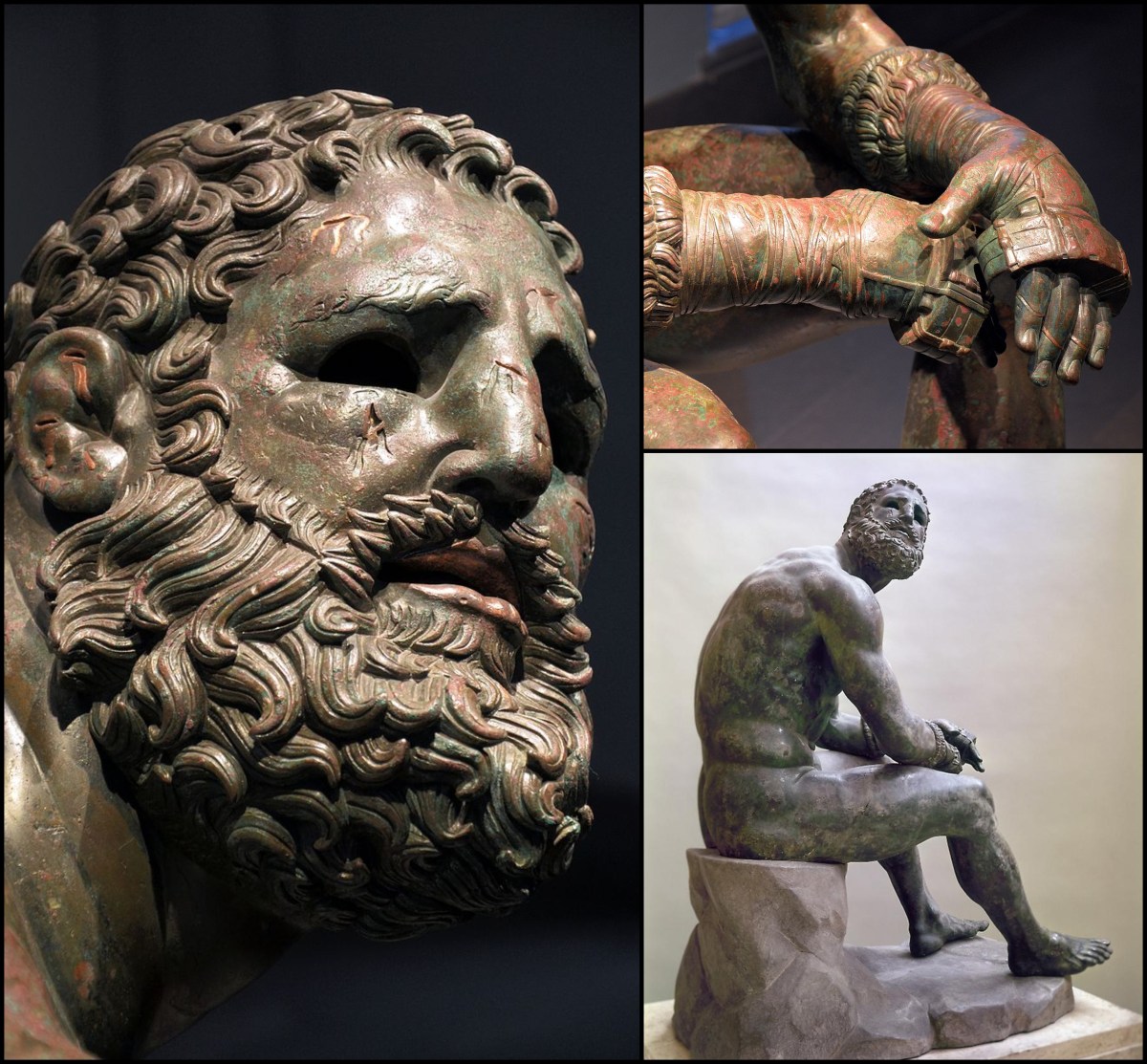
28. The Resting Boxer, crafted more than 2,000 years ago, is one of the most realistic sculptures ever made and one of the finest examples of bronze sculptures to have survived from the ancient world.
It was excavated in Rome in 1885. Its incredible features, such as its pose, gaze, broken nose, cauliflower ears, scarred face, and bruised eyes, have been enchanting the world ever since.
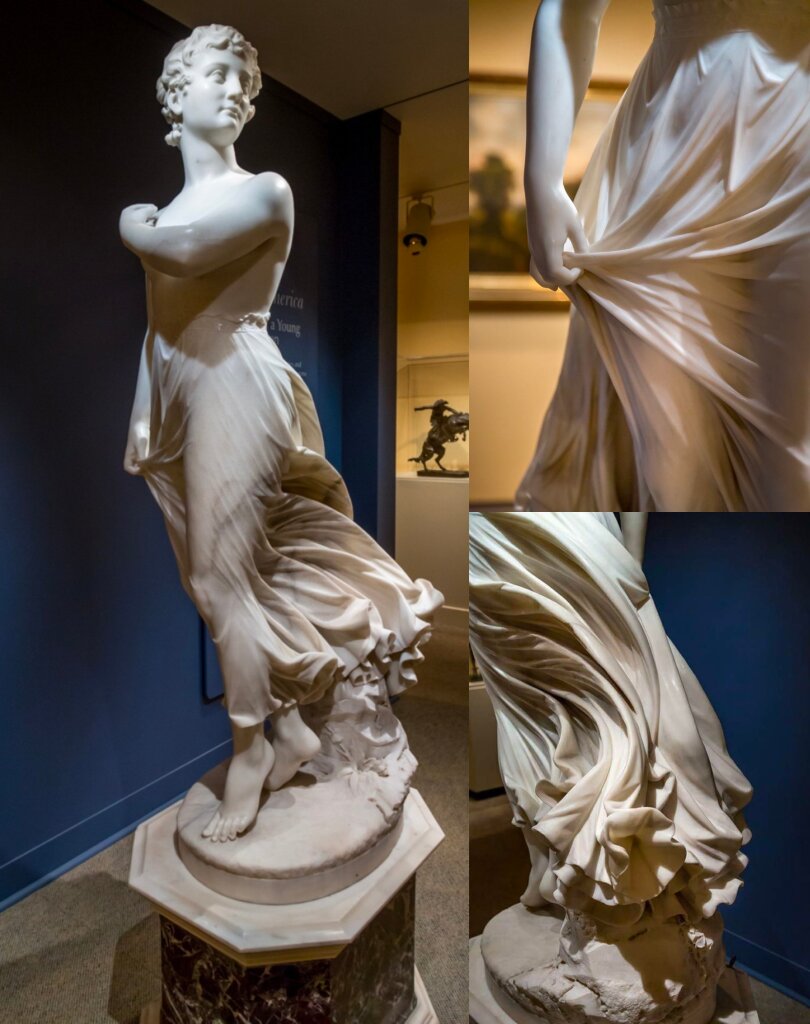
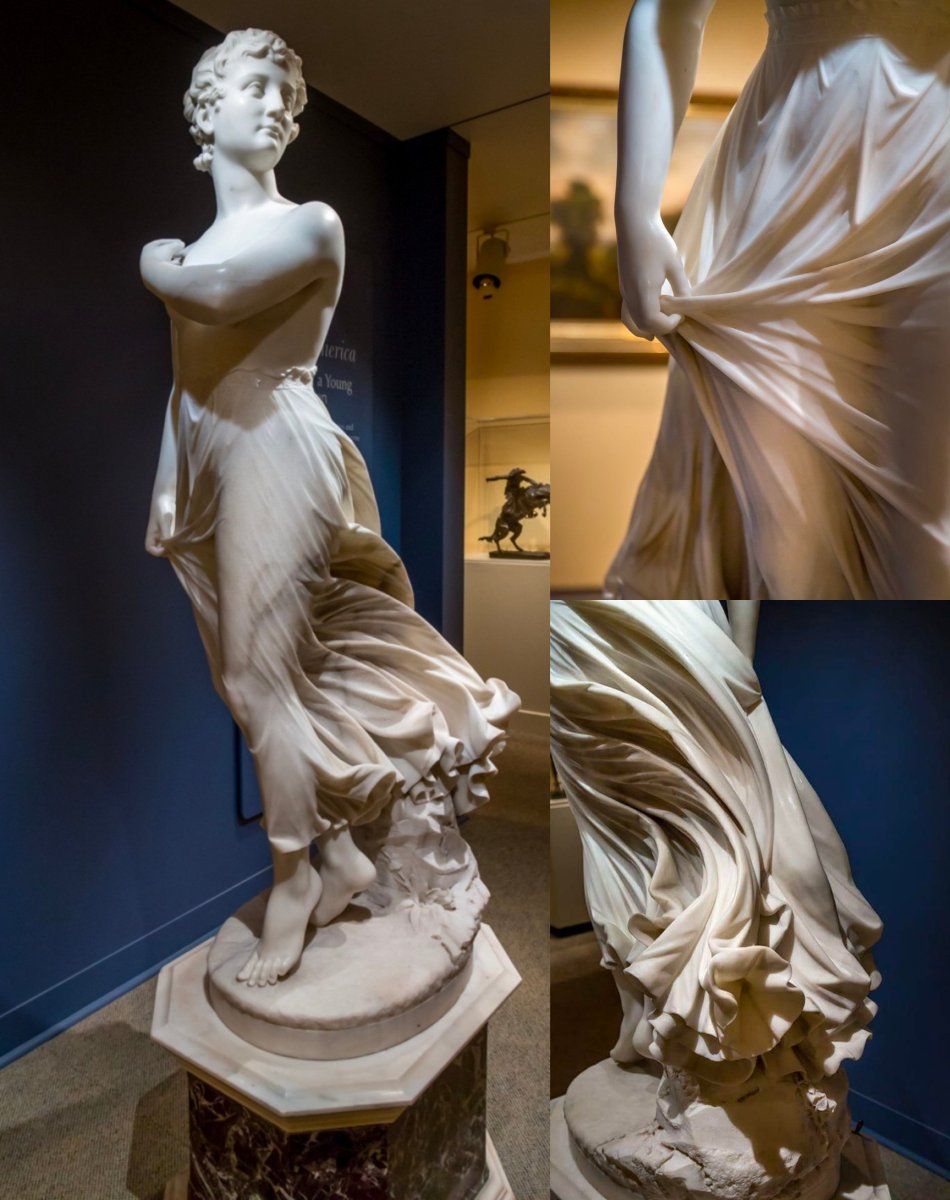
30. The mesmerizing details of The West Wind, a surreal marble sculpture by American artist Thomas Ridgeway Gould.
Gould’s masterpiece likely drew inspiration from Percy Shelley’s “Ode to the West Wind,” in which the west wind serves as an allegory for the cyclical nature of change and revolution:
More: Sculptures That Blend With Nature (10 Photos)
Which sculpture is your favorite?
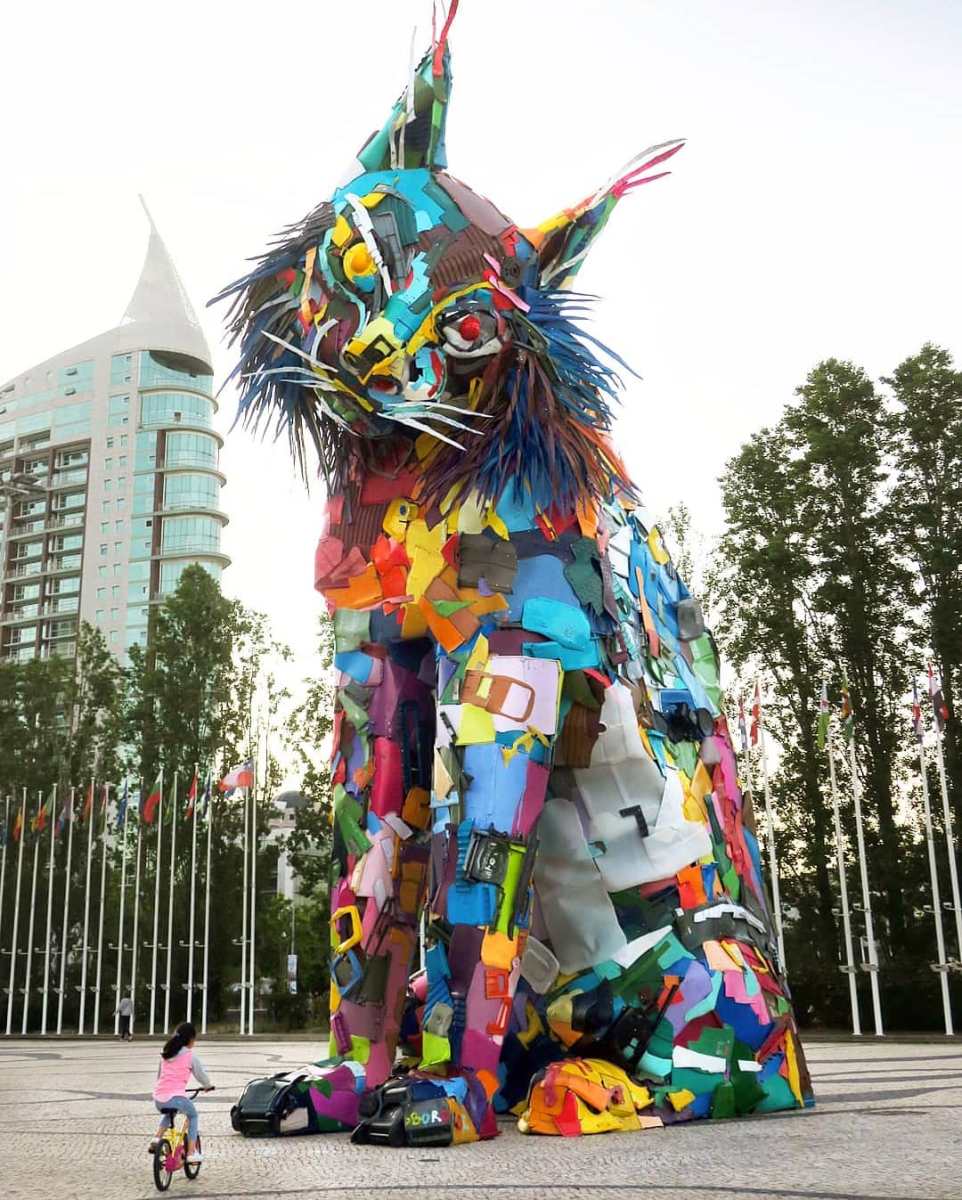
Statue Of Biggest Cat In The World? – By BORDALO II in Lisboa, Portugal (6 photos)
Content warning: Iberian Lynx Cat by BORDALO II. Made of plastic waste in Lisboa, Portugal. With attention to detail, BORDALO II creates inspiring and imaginative pieces made of waste, “Trash Animals”, that beautify public spaces and raise awareness about the impact of hu
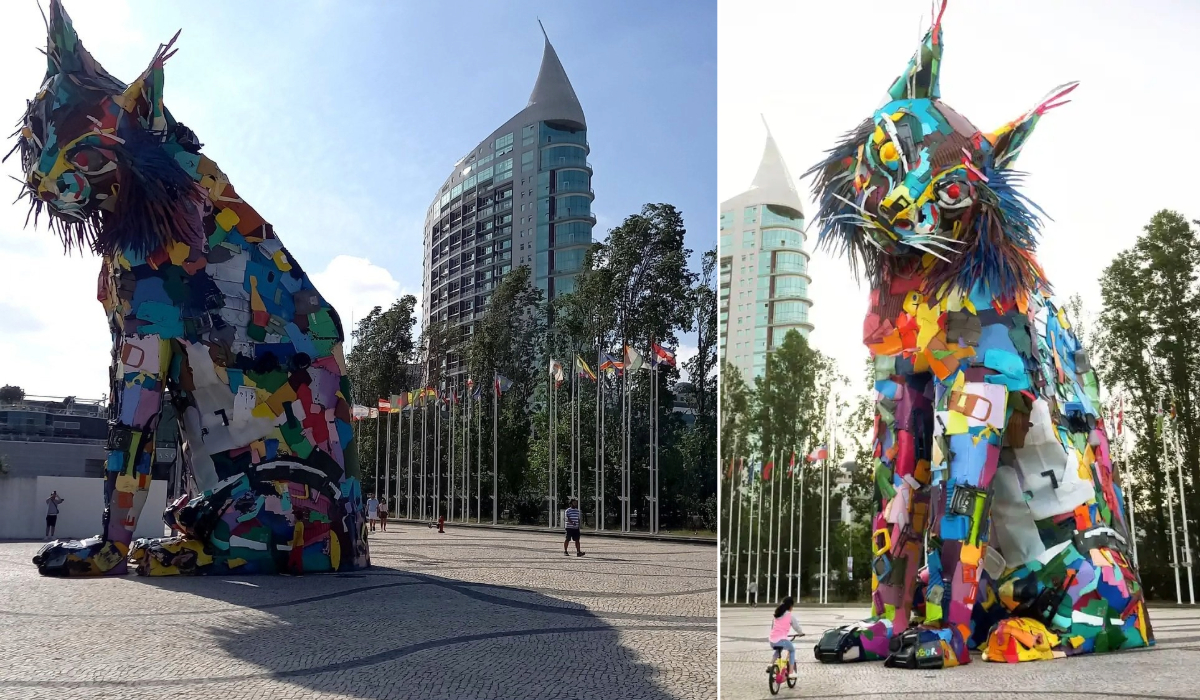
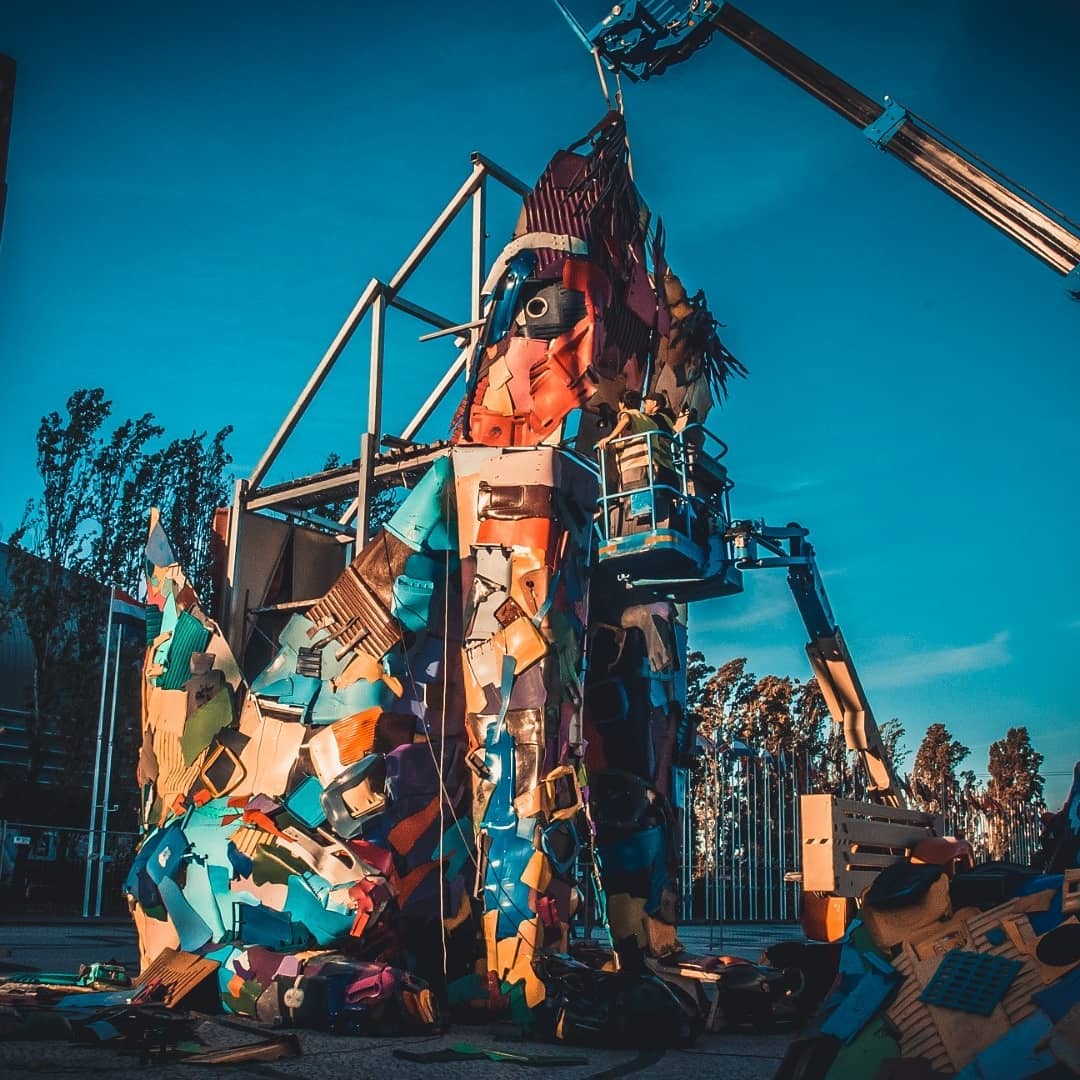
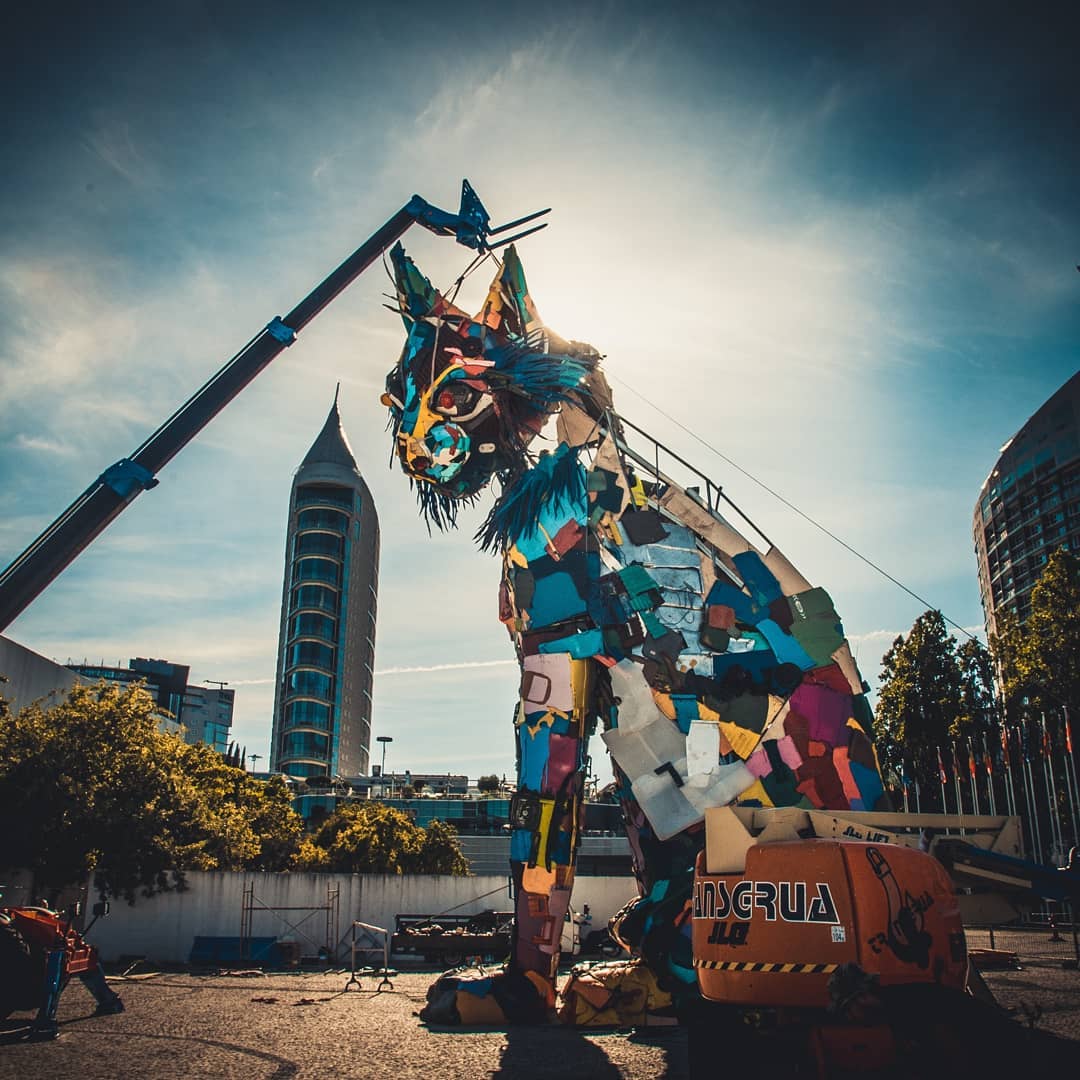
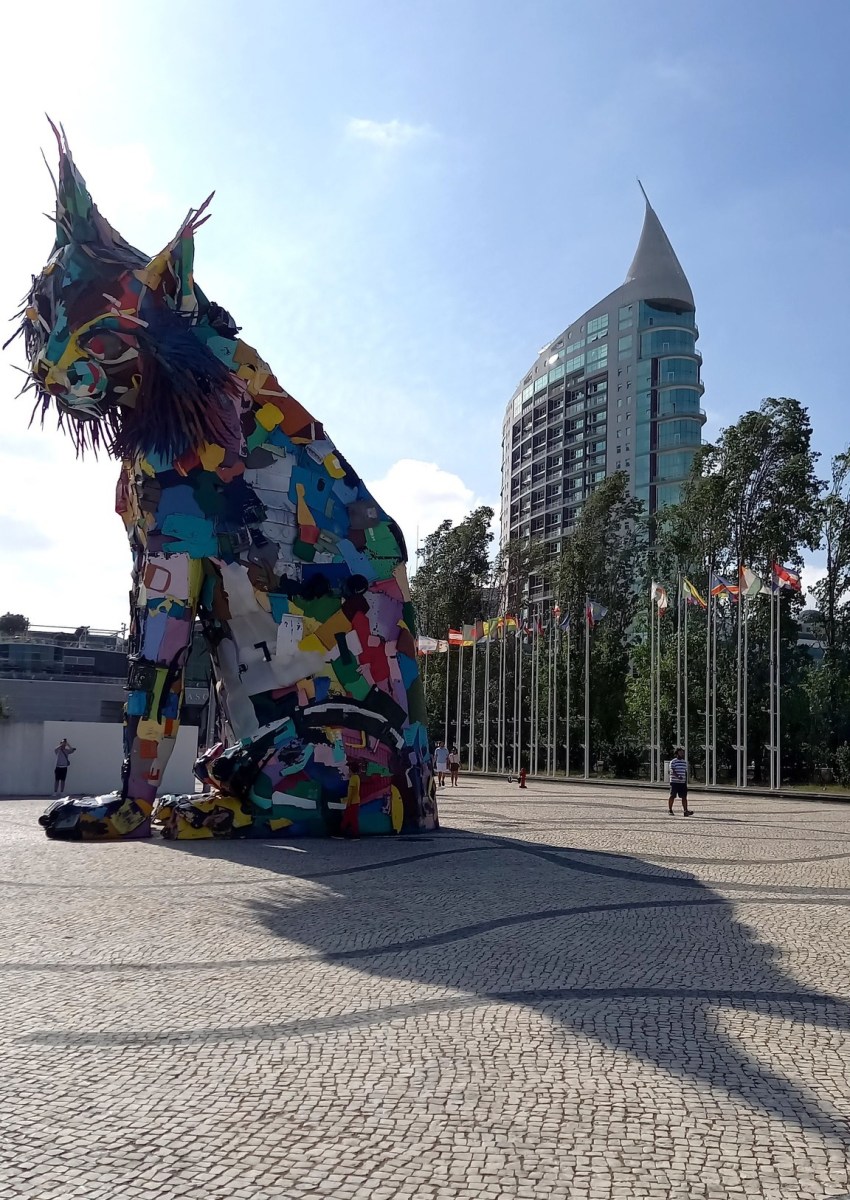
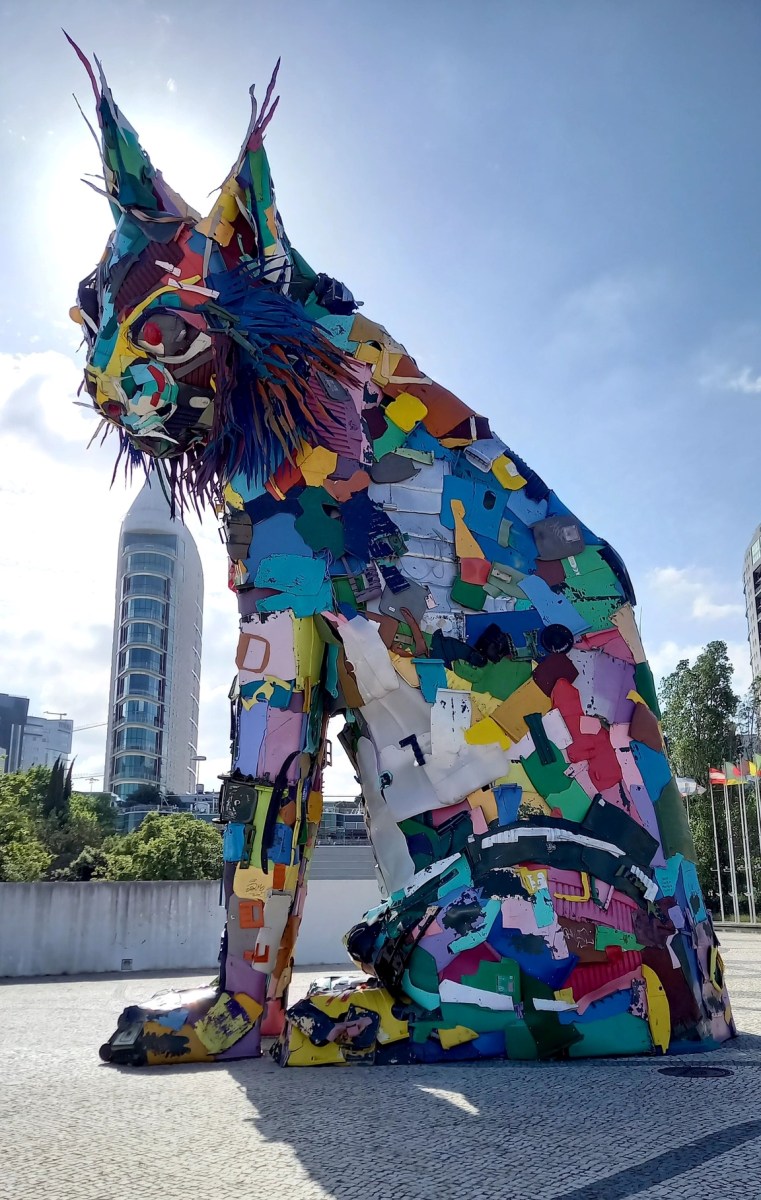
Iberian Lynx Cat by BORDALO II. Made of plastic waste in Lisboa, Portugal.
With attention to detail, BORDALO II creates inspiring and imaginative pieces made of waste, “Trash Animals”, that beautify public spaces and raise awareness about the impact of human activity on nature. His art merges creativity with a powerful ecological message, making him a standout figure in the street art world.
Like what you see? Follow BORDALO II here!
Do you like cats? More here!: 43 Purrfect Street Art Pieces: A Tribute to Our Cats
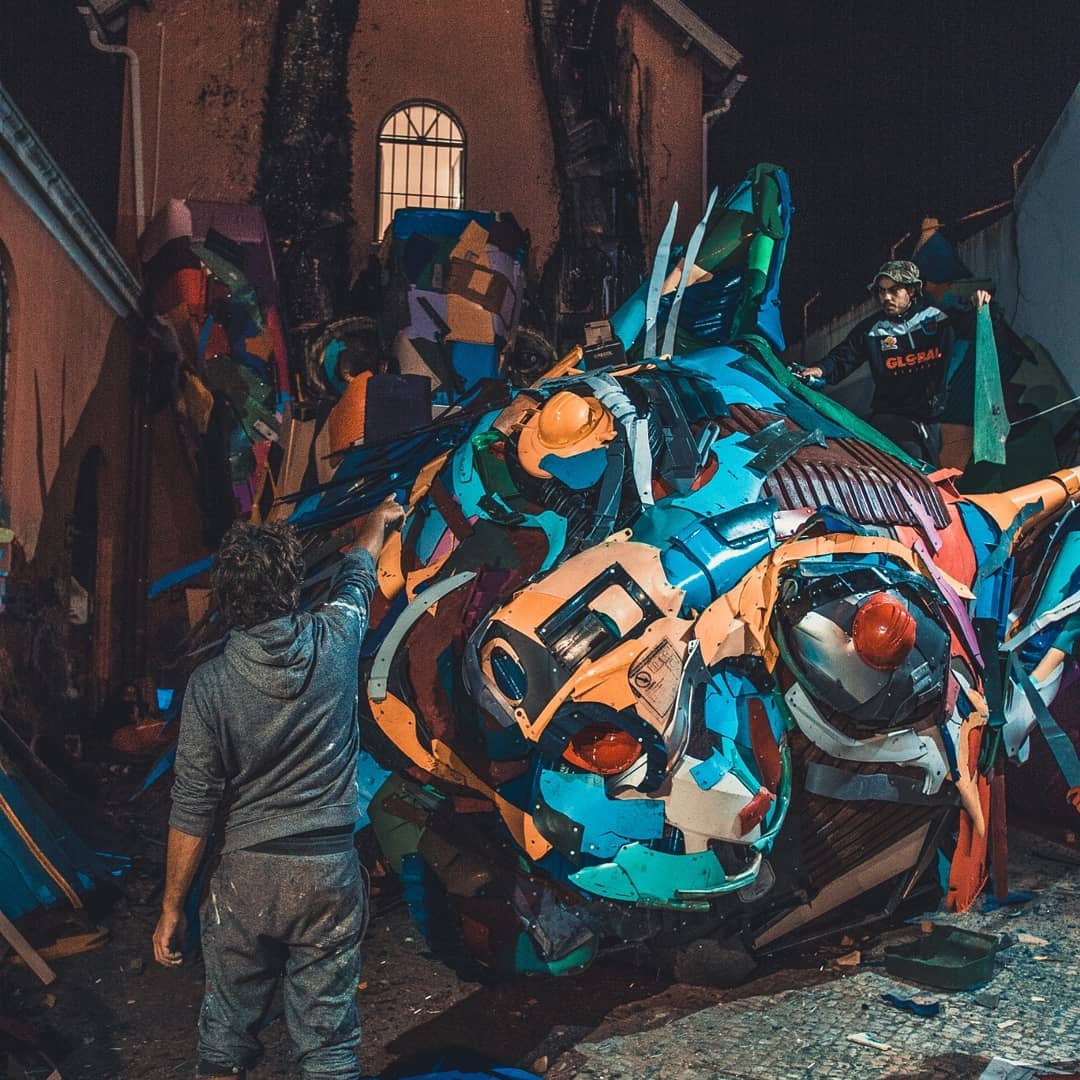
More from recent years by BORDALO II:
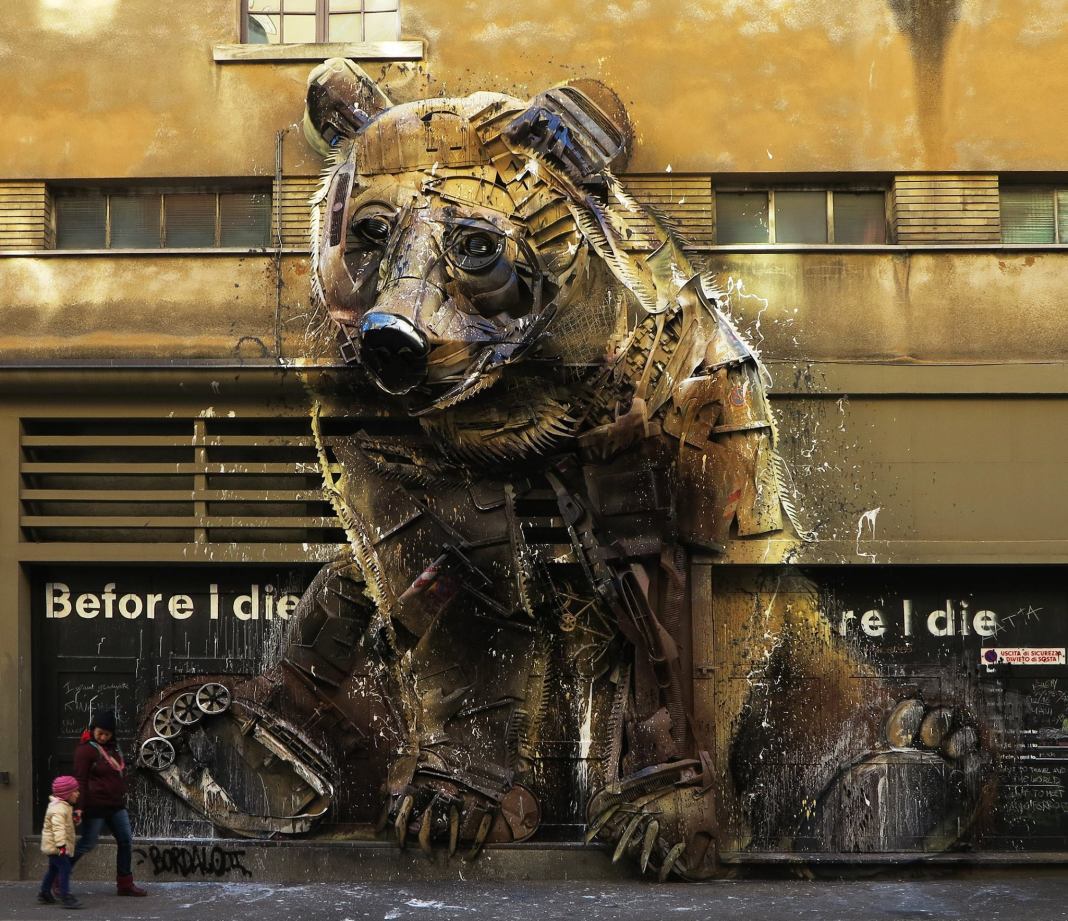
“Bear” in Turin, Italy.
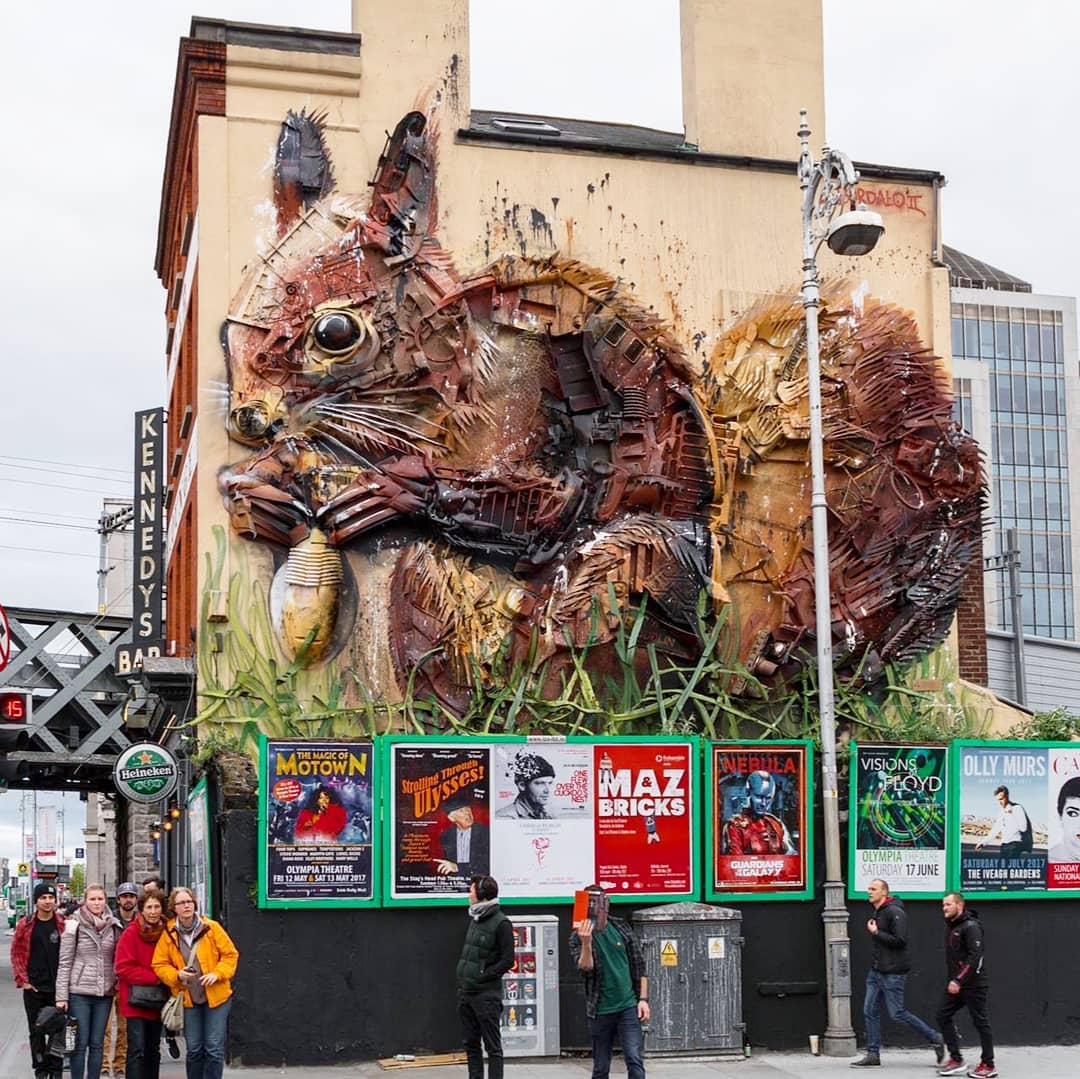
“The Dublin Red Squirrel” in Dublin, Ireland.
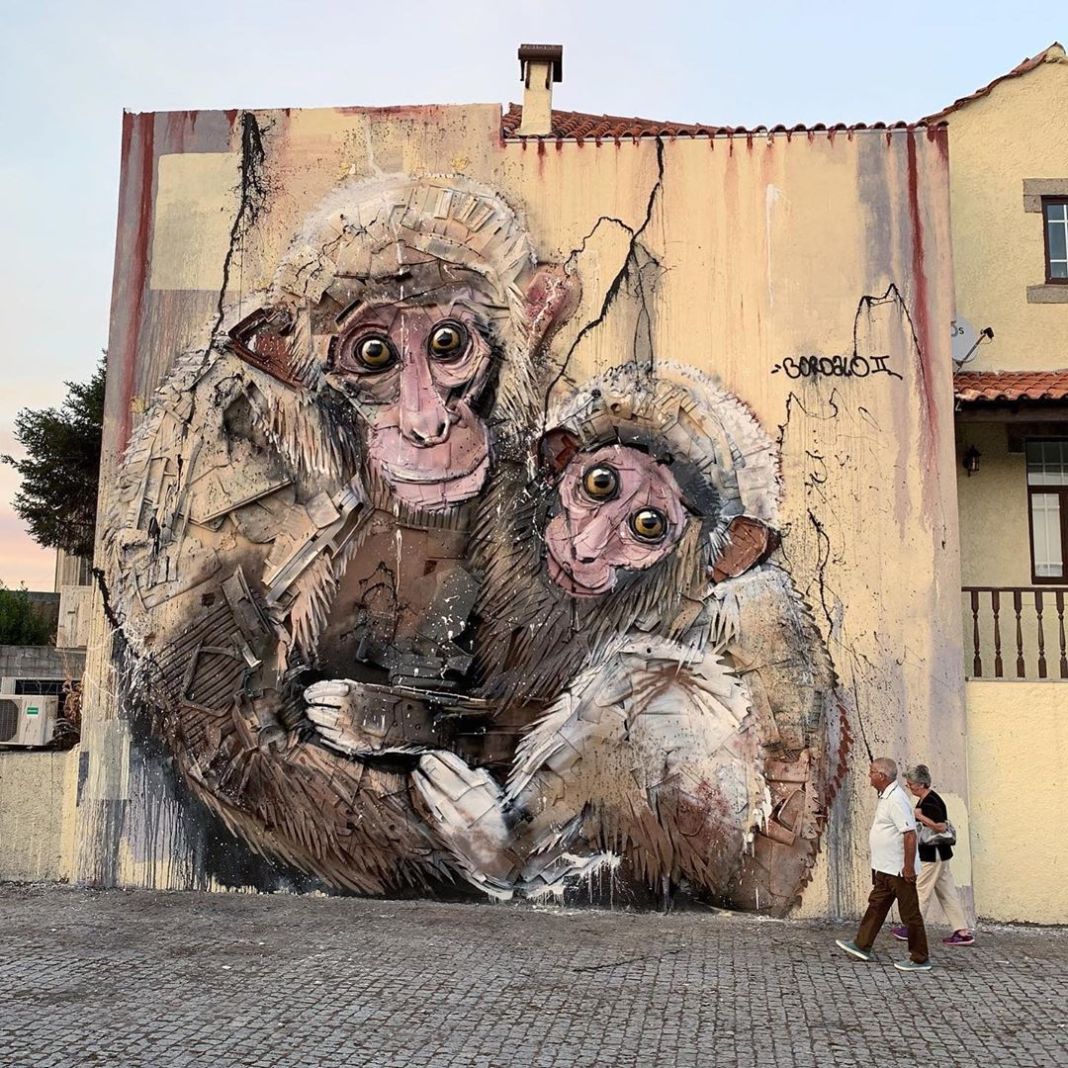
“Barbary Baby and Mom Monkey” in Viseu, Portugal.
Need more?: 22 photos – A Collection of Street Art by Bordalo II
This is a collection from 2015 of some of BORDALO II most beloved trash art sculptures.
Do you like trash art?
45 Cats – Purrrrrfect Street Art Pieces
Cats have a special talent for taking over cities. Street artists clearly love them just as much as we do!
This collection shows how many forms cat art can take in public spaces. We have gathered giant lifelike murals, glowing paste-ups, sculptures, stained glass, graffiti stickers, painted rocks, and snowy little interventions.Some of these cats hide in boxes. Others stretch across entire buildings. A few only need simple graffiti lines to steal the scene. Scroll through our ultimate cat list and move from huge 3D street art pieces to tiny, unforgettable street moments.
More: Beautiful Animal Statues (8 Photos)
📦 Cardboard Box Cat — By Nego in Torrellas, Zaragoza, Spain 🇪🇸
Nego turns an ordinary building corner into a giant cardboard box. The cat peeks out as if the whole house has become a toy. It is funny, smart, and perfectly scaled to make the street feel more playful.💡 Nerd Fact: This joke lands even harder because it taps into real cat behavior. Utrecht University notes that cats with access to simple hiding boxes adapt faster to stressful environments, so the cardboard box is not just a joke. It is also the kind of hiding place cats actually use to feel safer.
More: House turned into a giant cardboard box with a cat
🔗 Follow Nego
🐈 Gatet Gegant — By Oriol Arumí in Torrefarrera, Catalonia, Spain 🇪🇸
Oriol Arumí turns a quiet building into a giant local favorite. The official Torrefarrera Street Art Festival guide lists the 2020 mural as Gatet gegant on Carrer Serra Llarga, and the illusion really does make the whole block feel like the kitten’s living room.More: The Giant Kitten
🔗 Follow Oriol Arumí on Instagram
🔴 The Red Cat — By LeHo Artwork in Taipei, Taiwan 🇹🇼
This glowing cat was presented in LeHo Artwork’s post about the mural as part of the 幻獸 series for Taipei’s lantern festival, which helps explain why the cat feels warm, luminous, and slightly unreal. The 3D illusion makes it seem as if the red body is radiating straight out from the wall.More: The Red Cat Mural: A Street Art Piece by LeHo Artwork in Taipei
🔗 Follow LeHo Artwork
🗽 Tombili — By Seval Şahin in Kadıköy, Istanbul, Turkey 🇹🇷
Not every great cat piece needs to be painted on a wall. According to Kadıköy Municipality, sculptor Seval Şahin made the statue voluntarily, and it was installed at the spot in Ziverbey where Tombili became famous for this relaxed pose. It turns a beloved neighborhood stray into a permanent piece of urban memory.💡 Nerd Fact: Tombili’s monument became its own mini civic saga. Kadıköy Municipality says it only happened after a 17,000-signature campaign, and Hürriyet Daily News later reported that the statue was stolen and returned days later after public outrage.
More: They made a statue to honor a stray cat that used to sit in this position and watch the passers-by
🐾 Squishee the Alleycat — By SWIFTMANTIS in Papaioea, New Zealand 🇳🇿
This is not just a realistic cat portrait. On the artist’s official mural page, SWIFTMANTIS explains that Squishee was a real local alley cat living under their old brick studio in Palmy before eventually earning a home with them. Painted for Street Prints: Papaioea 2020, the mural carries that real affection as much as the technical skill.💡 Nerd Fact: Squishee’s story kept growing after the mural was finished. On the artist’s own print page, SWIFTMANTIS says later editions became a memorial print with Squishee’s real paw print, and 10% of sales go to Manawatu Alley Cats Trust.
More: Street (cat) Art by SWIFTMANTIS in Papaioea, New Zealand (4 photos)
🔗 Follow SWIFTMANTIS on Instagram
😾 The Dream of Separation — By DALeast in Paris, France 🇫🇷
DALeast’s official site lists the 2019 Paris work as The Dream of Separation, and that title fits the image beautifully. His signature tangle of metallic lines makes the two cats feel as if they are colliding, splintering, and vibrating all at once.More: Street Art by DALeast – In Paris, France
🔗 Follow DALeast
😺 Cat! — By Näutil in Réthoville, Manche, France 🇫🇷
Näutil keeps things loose, playful, and full of character here. The graffiti cat feels wonderfully expressive without needing much realism. That is why it pops so nicely against the wall.More: Cat! – Street art by Näutil in Réthoville, France (9 photos)
🔗 Follow Näutil
😸 Pelle Svanslös and Maja Gräddnos — By Charlie Granberg in Uppsala, Sweden 🇸🇪
Charlie Granberg gives Pelle Svanslös and Maja Gräddnos a bright and friendly presence, but the mural is bigger and more site-specific than it first looks. Destination Uppsala highlights it as a 15-meter mural of Peter-No-Tail and Molly Cream-Nose in Påvel Snickares Gränd, which makes it feel completely at home in the city that gave the character life.💡 Nerd Fact: Pelle’s stories carry more history than the phrase “beloved children’s cat” might suggest. The official Pelle Svanslös site says the character began on Uppsala radio in 1937, and the books quietly folded in wartime Sweden through blackout rules, ration cards, and even a Danish cat nickname that plays on Quisling.
More: Pelle Svanslös mural by Charlie Granberg in Uppsala, Sweden
🔗 Follow Charlie Granberg on Instagram
📷 Photo by Strangefruit Street Art
❄️ Summer and Winter — By Braga Last One in Les Pennes-Mirabeau, Bouches-du-Rhône, France 🇫🇷
Braga Last One makes this fluffy cat feel like it belongs to two seasons at once. The 3D illusion, fur texture, and split atmosphere give the mural a surreal edge without losing its soft touch.More: Summer and Winter by Braga Last One in southern France (6 photos and video)
🔗 Follow Braga Last One on Instagram
♻️ Iberian Lynx — By BORDALO II in Lisbon, Portugal 🇵🇹
BORDALO II does not just depict a lynx. He builds it out of the waste we leave behind. That makes this street art animal both beautiful and unsettling, and it makes the environmental message hard to miss.💡 Nerd Fact: This animal choice hits even harder now. Reuters reported that the Iberian lynx was moved from Endangered to Vulnerable in 2024, while BORDALO II’s own Big Trash Animals statement says the whole series is built on the contradiction of using waste to depict creatures whose habitats are damaged by waste.
More: 6 pics: Lynx Cat – Made of plastic waste by BORDALO II in Lisboa, Portugal
🔗 Follow BORDALO II on Instagram
🪜 Valparaíso Cat Stairs — By Unknown Artist in Valparaíso, Chile 🇨🇱
This is one of those pieces where the whole street becomes the canvas. Turning the stairs into a giant cat face is simple and bold. It is exactly the kind of public street art that makes a city feel playful.More: Street Art in Valparaíso, Chile
😼 Cat — By Stamatis Laskos in Naousa, Imathia, Greece 🇬🇷
Stamatis Laskos gives this cat a stretched and fascinating shape. It feels somewhere between a graffiti creature and a sleepy house cat. It is quirky, lean, and full of personality.More: Cat by Stamatis Laskos in Naousa, Imathia, Greece
🔗 Follow Stamatis Laskos on Instagram
🐯 The Cat — By Dan Leo at Waterford Walls, Waterford, Ireland 🇮🇪
Dan Leo’s mural feels sharp, graphic, and almost totemic. Waterford Walls listed it simply as “The cat” and placed it on Park Road opposite People’s Park, which suits the piece perfectly. The bold shapes and color blocks give it a clean punch that reads from far away.More: Cat Mural by Dan Leo (+ 4 more animals)
🔗 Follow Dan Leo
😻 Meow Meow — By Tianooo The Cat in Hamburg, Germany 🇩🇪
Tianooo’s small cat paste-ups have a way of completely stealing the wall around them. This little Hamburg piece is sweet and full of emotion. It is the kind of tiny street art that makes a city corner feel warmer.More: Meow meow (5 photos)
🔗 Follow Tianooo The Cat on Instagram
📦 Cat In A Box — By Vladi in Hong Kong 🇭🇰
This is a very simple idea, but Vladi lands it perfectly. The 3D box illusion and the cat’s relaxed expression sell the joke. Together, they make the mural feel light, funny, and instantly shareable.More: Cat In A Box – By Vladi in Hong Kong
🔗 Follow Vladi on Instagram
🌈 Cat Mural — By Uriginal in Barcelona, Spain 🇪🇸
Uriginal goes full graphic here. Strong geometry and bright colors carry the piece. The result is crisp, cheerful, and ready to energize the wall around it.More: A feast for the eyes with the enchanting cat mural by artist Uriginal in Barcelona (4 photos)
🔗 Follow Uriginal on Instagram
💤 Sleeping Painted Cat — By Jack Lack in Grenoble, France 🇫🇷
There is something wonderful about a giant mural that chooses calm over drama. Jack Lack makes this sleeping cat feel soft and peaceful. It is a perfect match for the quiet side of the building.More: Sleeping Painted Cat by Jack Lack in Grenoble, France
🔗 Follow Jack Lack on Instagram
🐈⬛ Black Cat — By 3MK in Ptolemaida, Greece 🇬🇷
3MK gives this black cat intense energy. The green eyes carry most of the tension. Once they catch your gaze, the whole wall suddenly feels alive.More: Black Cat mural by 3MK in Ptolemaida, Greece
🔗 Follow 3MK on Instagram
⭐ Cute Star Cat — By Sagie in Jönköping, Sweden 🇸🇪
Sagie leans into softness here, and it works beautifully. In the artist’s post about the mural, he notes that one ear was actually made of wood and glued onto the wall, giving the dreamy cat a subtle sculptural twist. That handmade detail makes the whole piece feel even more like a giant bedtime story.More: Cute Star Cat by Sagie in Jönköping, Sweden
🔗 Follow Sagie on Instagram
🐭 Cat Waiting for Mouse — By LIZ ART BERLIN in Berlin, Germany 🇩🇪
This street art piece is all about brilliant placement. LIZ ART BERLIN uses the real mouse hole as part of the artwork. It turns a simple paste-up into a perfect little joke between the wall and the street.More: Cat waiting for mouse – 11 Paste Ups by LIZ ART BERLIN
🔗 Follow LIZ ART BERLIN on Instagram
🌿 Rustle in Feilding — By SWIFTMANTIS in Feilding, New Zealand 🇳🇿
SWIFTMANTIS uses a highly detailed style here, but the story behind the mural is just as memorable. On the official project page, the artist explains that Rustle traveled from London to Feilding mid-pandemic to be reunited with his mum Sophie after six months apart. The painted leaves make that real cat feel like it is quietly spying on the city from its own green hideout.🔗 Follow SWIFTMANTIS on Instagram
🫒 Olive — By SWIFTMANTIS in Christchurch, New Zealand 🇳🇿
This mural lands because it is deeply personal. On the official mural page, SWIFTMANTIS describes Olive as a Christchurch city stray painted for Flare Street Art Festival to help her find a home, and the note now happily adds that she has since been adopted. That turns the wall into more than a portrait. It becomes a public act of care.🔗 Follow SWIFTMANTIS on Instagram
💖 Neon Cat — By David Speed in London, England 🇬🇧
David Speed makes this cat feel like it was painted with pure electricity. The fluorescent pink glow pushes the piece right to the edge. It is a perfect mix of neon sign, bold graffiti, and pop spectacle.More: Cat in London by Neon Artist David Speed
🔗 Follow David Speed on Instagram
❤️ Cat Lover — By Wek / Spray Lover in Lisbon, Portugal 🇵🇹
This piece keeps things tender and beautifully direct. Spray Lover focuses purely on the cat’s softness and presence. The street art mural feels affectionate without needing any extra visual tricks.More: Cat Lover by Spray Lover in Lisbon, Portugal (4 photos)
🔗 Follow Spray Lover on Instagram
🏙️ Giant Cat Mural — By LexusOne in Nizhny Novgorod, Russia 🇷🇺
LexusOne works on a huge scale here. The size gives the cat a calm, guardian-like presence. It feels like the entire building has been turned into a lookout point for one enormous neighborhood cat.More: Cat mural by LexusOne in Nizhny Novgorod, Russia
🔗 Follow LexusOne
💕 We Will Meet Again… — By Unknown Artist in Unknown Location 🌍
This one is simple, text-based, and still surprisingly effective. It works because the graffiti line is funny and tender. It is just dramatic enough to sound like something only true cat people would understand.More: We will meet again in another life when we are both cats
🪟 Stained Glass Cat — By Kateryna Shelyhina in Unknown Location 🌍
This is not a standard graffiti mural, but it absolutely belongs here. The stretched cat silhouette and stained-glass treatment are elegant. They give it a graceful sense of movement that feels both handmade and magical.More: The natural movement of this cat sculpture is amazing
🔗 Follow Sea Stained Glass
🚐 All Cats Are Beautiful — By Pro Boy Nick in Unknown Location 🌍
The charm here is how temporary the art is. Pro Boy Nick turns a dirty van window into a surprisingly elegant cat portrait. It proves that even street grime can become a pretty great canvas.💡 Nerd Fact: This sits inside a broader street-art lineage sometimes called reverse graffiti. In a Guardian piece on Paul “Moose” Curtis, the method is described as making an image by removing grime instead of adding paint, which means the drawing is literally made out of the clean parts.
More: All Cats Are Beautiful (Dirty Van Art)
🔗 Follow Pro Boy Nick on Instagram
✊ Cats Against Racism — By Unknown Artist in Adelaide, Australia 🇦🇺
This is exactly the kind of small intervention that can completely change the tone of a place. Covering hateful propaganda with a cat sticker is funny and sharp. It is a perfect example of street art doing something immediate and human.More: There was some racist rubbish here but I covered it up with this picture of a cat
🐈 Cat — By JPS in Unknown Location 🌍
JPS has a gift for making stencils feel quietly cinematic. This street art cat is perfectly placed and well observed. It feels less like a painted image and more like a real animal that just decided to sit there.More: Cat – Street Art by JPS
🔗 Follow JPS
😴 Sleeping Kitten 2 — By WA in Lima, Peru 🇵🇪
This mural is all about pure softness and restraint. WA presented this anamorphic Lima intervention as Gatito durmiendo, and that slight perspective trick helps the sleeping kitten feel even softer. The painting turns a simple pose into something deeply peaceful.More: Sleeping kitten 2 by WA in Lima, Peru
🔗 Follow WA on Instagram
🐾 Big Ginger Kitten — By Mr Meana in London, England 🇬🇧
Mr Meana gives this kitten just enough perspective and attitude to make it pop. It feels like it is climbing right out of the wall. This 3D street art is playful, oversized, and hard not to smile at.More: Big ginger kitten escaping from the side of the building
🔗 Follow Mr Meana
🎀 1312 Hello Kitty — By Unknown Artist in Unknown Location 🌍
This piece works because it takes something instantly cute and flips it into something confrontational. The clash between the familiar Hello Kitty face and the sharper message gives the graffiti its punch.More: 1312 Hello Kitty
🔗 Possible attribution: Sugar Bombing on Instagram
https://www.youtube.com/watch?v=bHBH-nUJGx8
👀 Cat Watching the Dog — By Street Artist N.M in Flensburg, Germany 🇩🇪
The fun here is in the delayed reveal. At first, it looks like an ordinary dog moment. Then you realize the cat on the wall is actually painted. That makes the whole piece feel like a tiny live-action street prank.More: Street Artist N.M in Flensburg, Germany
🔗 Follow Street Artist N.M on Instagram
😺 Happy Cats — By K. Skretutsky in Kyiv, Ukraine 🇺🇦
This is more playful public sculpture than traditional wall art. But it absolutely belongs in our street art cat collection. The big smile and colorful mosaic surface make it feel like a piece of the city designed purely for joy.More: Happy Cats! – In Kyiv, Ukraine
🎨 #Caturday Stencil — By Unknown Artist in Unknown Location 🌍
Sometimes all a wall needs is one neat black-and-white cat shape. This stencil is quick, minimal, and very charming. It easily proves that street art does not need massive scale to leave a big mark.More: Unknown artist and location
⛄ Snow Cats Climbing Trees — By Unknown Artist in Unknown Location 🌍
This is exactly the kind of temporary street intervention that feels small and brilliant at the same time. Turning clumps of snow into climbing cats makes winter itself feel like part of the artwork.More: Snow Cats climbing trees
💡 Cat Lights — By Unknown Artist in Zelenogradsk, Russia 🇷🇺
These cat lights are not a typical graffiti mural, but they show how deeply feline culture is built into Zelenogradsk’s public space. The official Visit Kaliningrad guide describes Kurortny Avenue as a street full of cat-themed urban details, including cat traffic lights, murals, and even a Cat Museum. It is public art, local identity, and pure charm all rolled into one small detail.💡 Nerd Fact: Zelenogradsk did not stop at cute cat details. The official Visit Kaliningrad guide says the town’s cat museum helped set the feline theme for the whole place, and its event calendar even lists “Zelenogradsk Cat’s Birthday” on March 1.
More: Cat lights in Zelenogradsk, Russia
🐈 Katzenstele — By Siegfried Neuenhausen in Braunschweig, Germany 🇩🇪
This monument has a very different energy from the murals in this post. The Städtisches Museum Braunschweig identifies it by its official title, Katzenstele, and notes that the large sculpture has been part of Braunschweig’s cityscape since 1981. It feels solemn and affectionate at the same time.💡 Nerd Fact: This monument is so woven into Braunschweig that the city still plans around it. In a 2023 document, Braunschweig described the Katzenstele as a popular photo motif and a special attraction for children, which is why officials approved work on a new pedestal to keep bins and bikes from crowding it.
More: This is in Germany. It was made to honor all homeless cats! (3 pics)
🔗 Follow Siegfried Neuenhausen
⬛ Black Shadow — By Unknown Artist in Unknown Location 🌍
This piece proves how little it can take to bring a wall to life. A simple black cat silhouette tucked into a niche feels just right. It almost looks like the building was simply waiting for it.
🐈 Cat Meets Cat Graffiti — By Unknown Artist in Unknown Location 🌍
This is half artwork and half perfect timing. The real cat passing the line-drawn graffiti cat is magical. It turns an already nice street piece into one of those rare moments that feels almost too good to be accidental.
🪨 Painted Cat Rocks — By Unknown Artist in Unknown Location 🌍
These painted rocks are tiny, and that is a huge part of their appeal. They feel like little gifts left in a public space. They are the kind of small cat street art that can brighten your day out of nowhere.More: #caturstones on #caturday
🐾 The Cat Trace — By Unknown Artist in Unknown Location 🌍
This one is charming because it turns walking into a discovery. A simple trail of paw prints is enough to make the sidewalk feel playful. It looks as if a cat just wandered through and left a little story behind.More: The Cat Trace (Caturday #69)
💨 Smoke Cat on the Wall — By 0331C in Unknown Location 🌍
This is one of the strangest cat pieces in the set, and that is exactly why it works. Using soot and smoke to make a cat silhouette is clever. It gives the wall a ghostly, almost disappearing presence.More: Street Art by 0331C – A Collection
🔗 Follow 0331C on Flickr
🐱 Banksy’s Gaza Kitten — By Banksy in Gaza, Palestine 🇵🇸
This piece hits hard because the kitten is playful while the setting is anything but. ABC News reported that the mural was painted on the remains of a home in Beit Hanoun destroyed during the 2014 war in Gaza. That contrast makes the image impossible to take casually.💡 Nerd Fact: The kitten was never meant to function as a standalone mural. Reuters noted that Banksy folded it into a satirical mini-video about Gaza and said he used a kitten because people online click on cats when they would otherwise scroll past destruction.
More: 6 Photos of Street Art by Banksy in Gaza, Palestine: “People only look at pictures of kittens”
🔗 Follow Banksy
Which one is your favorite?
New Murals by Banksy Spotted in Gaza Strip
The street artist is well-known for his political paintings.KATE BUBACZ (ABC News)
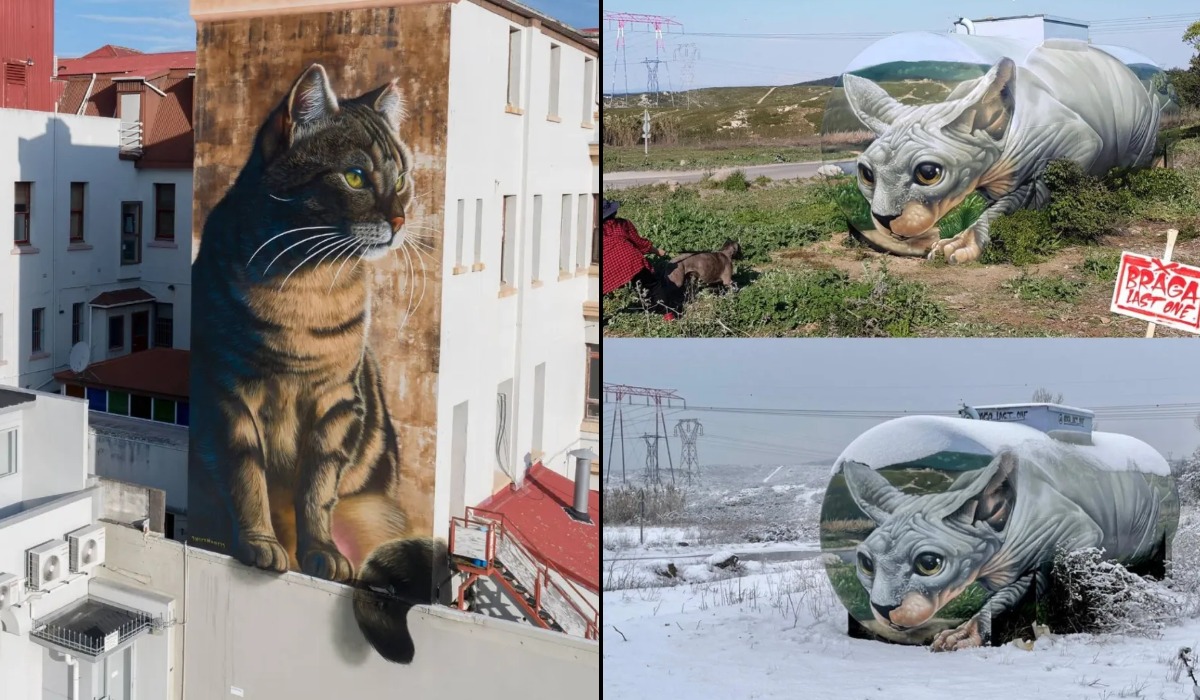
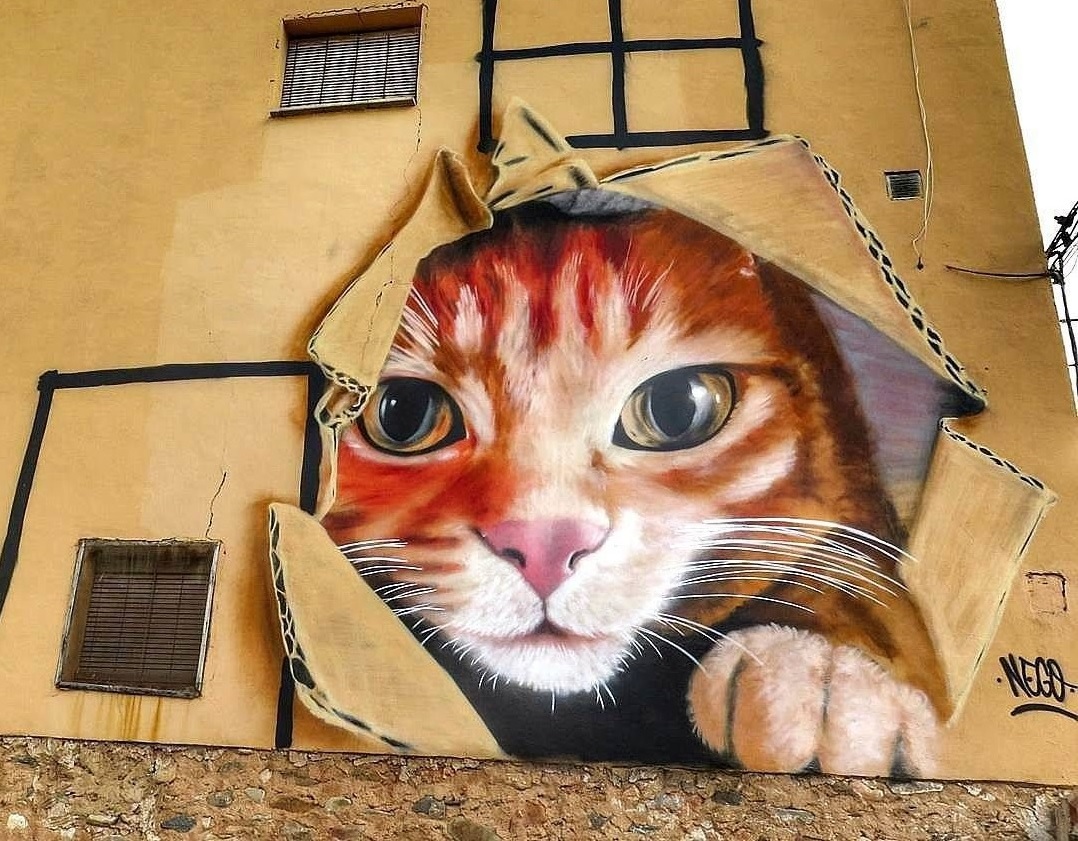
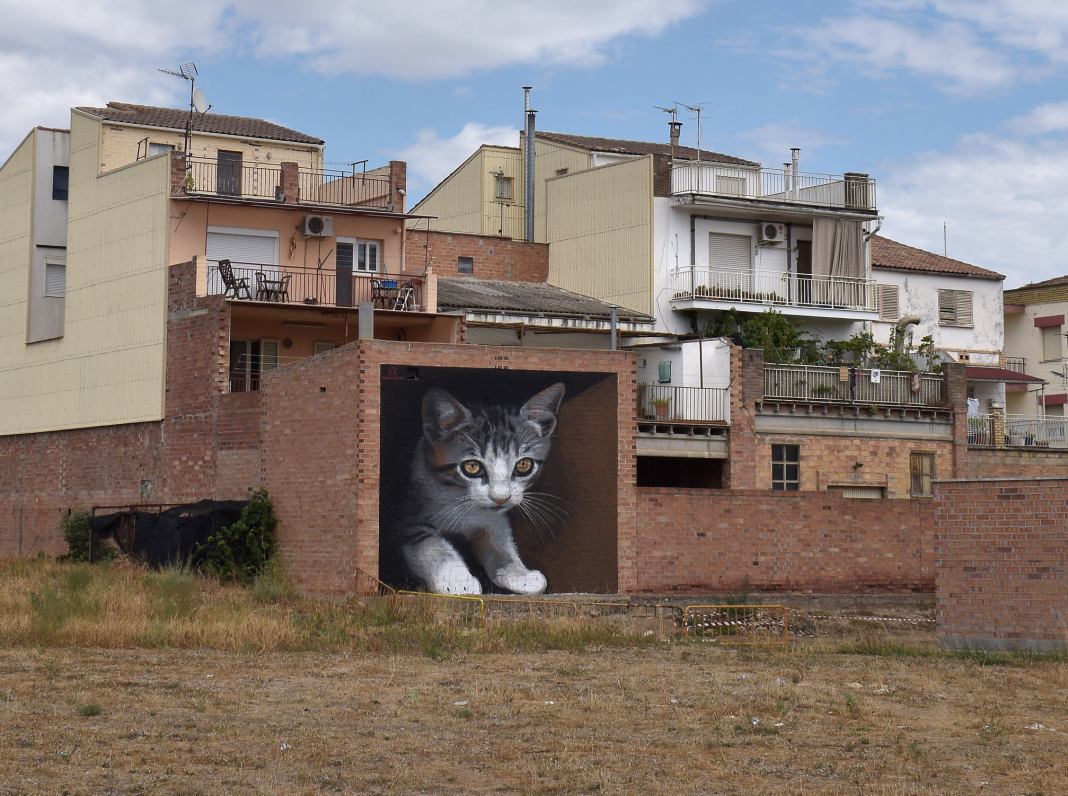
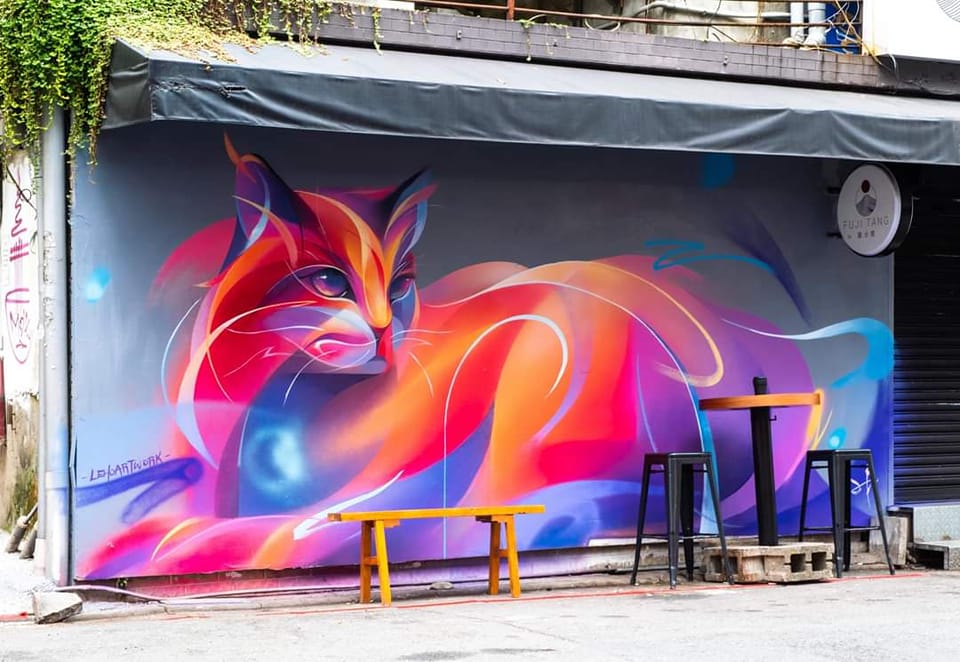
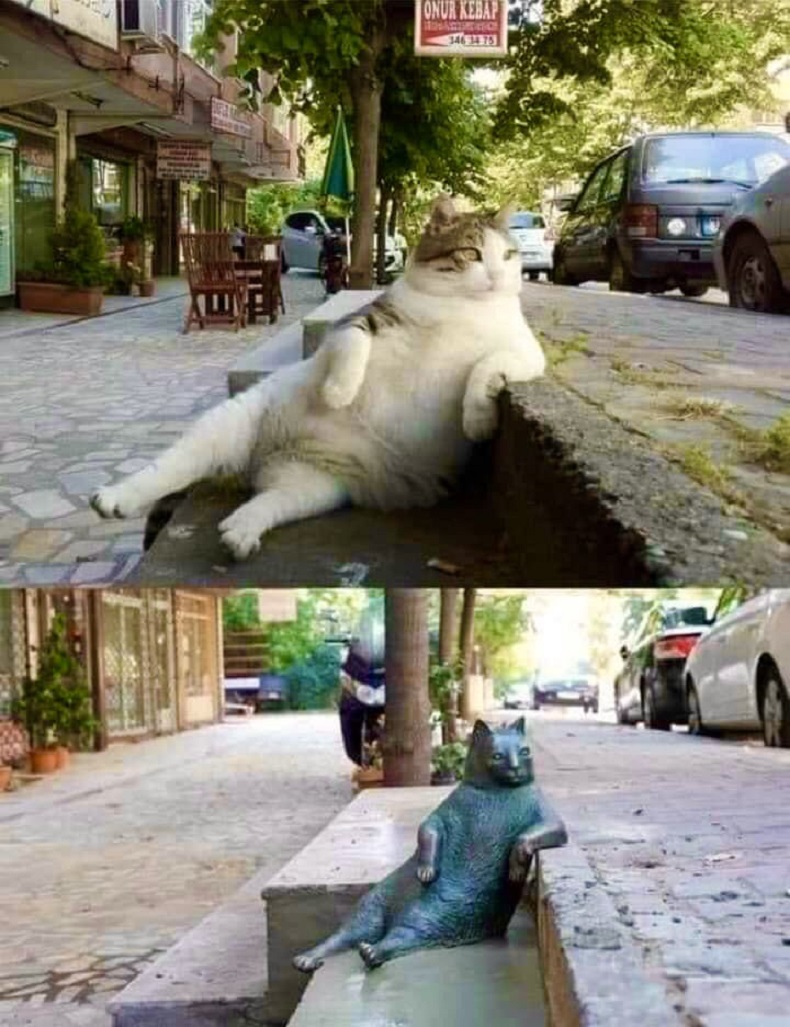
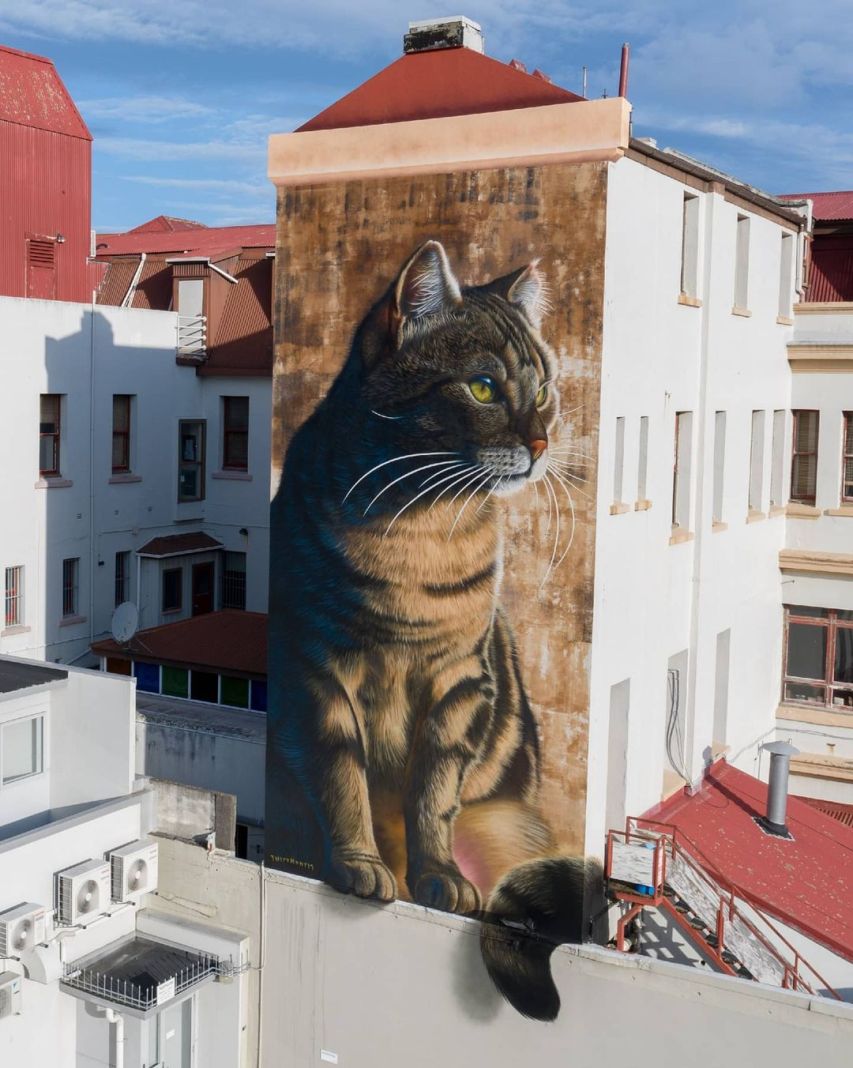
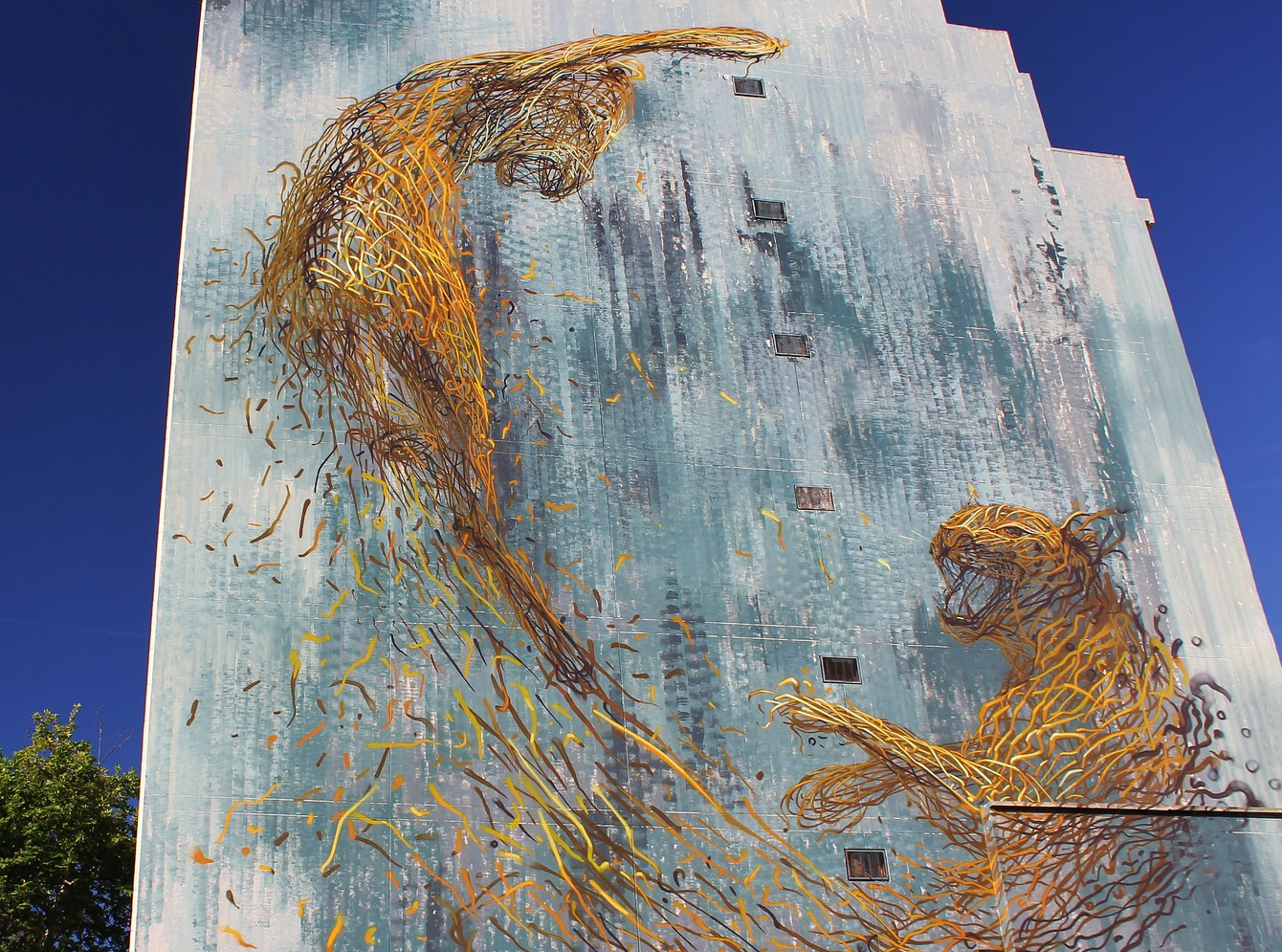
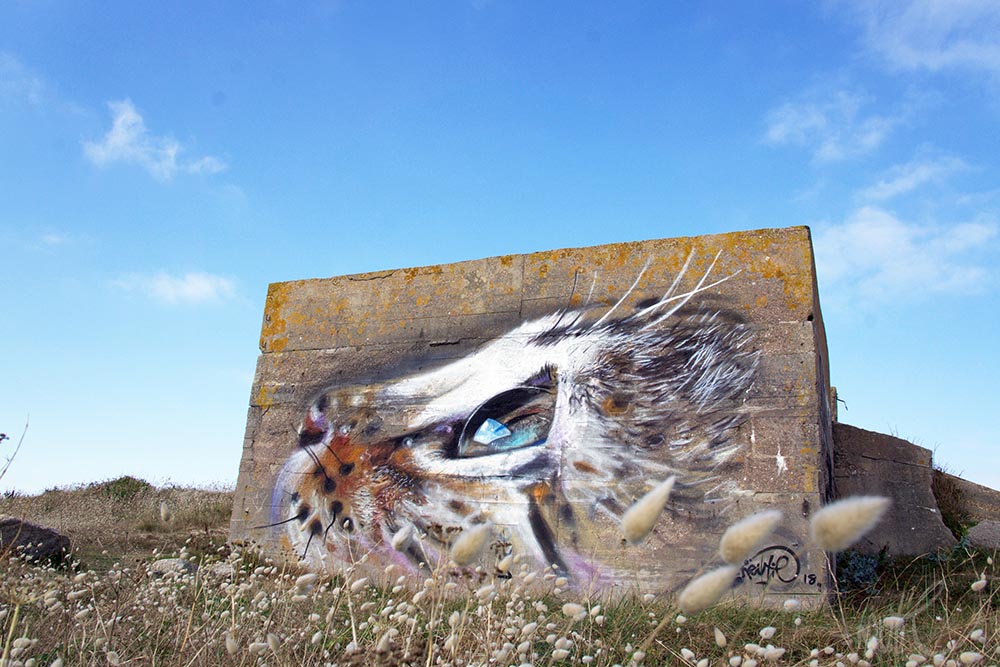
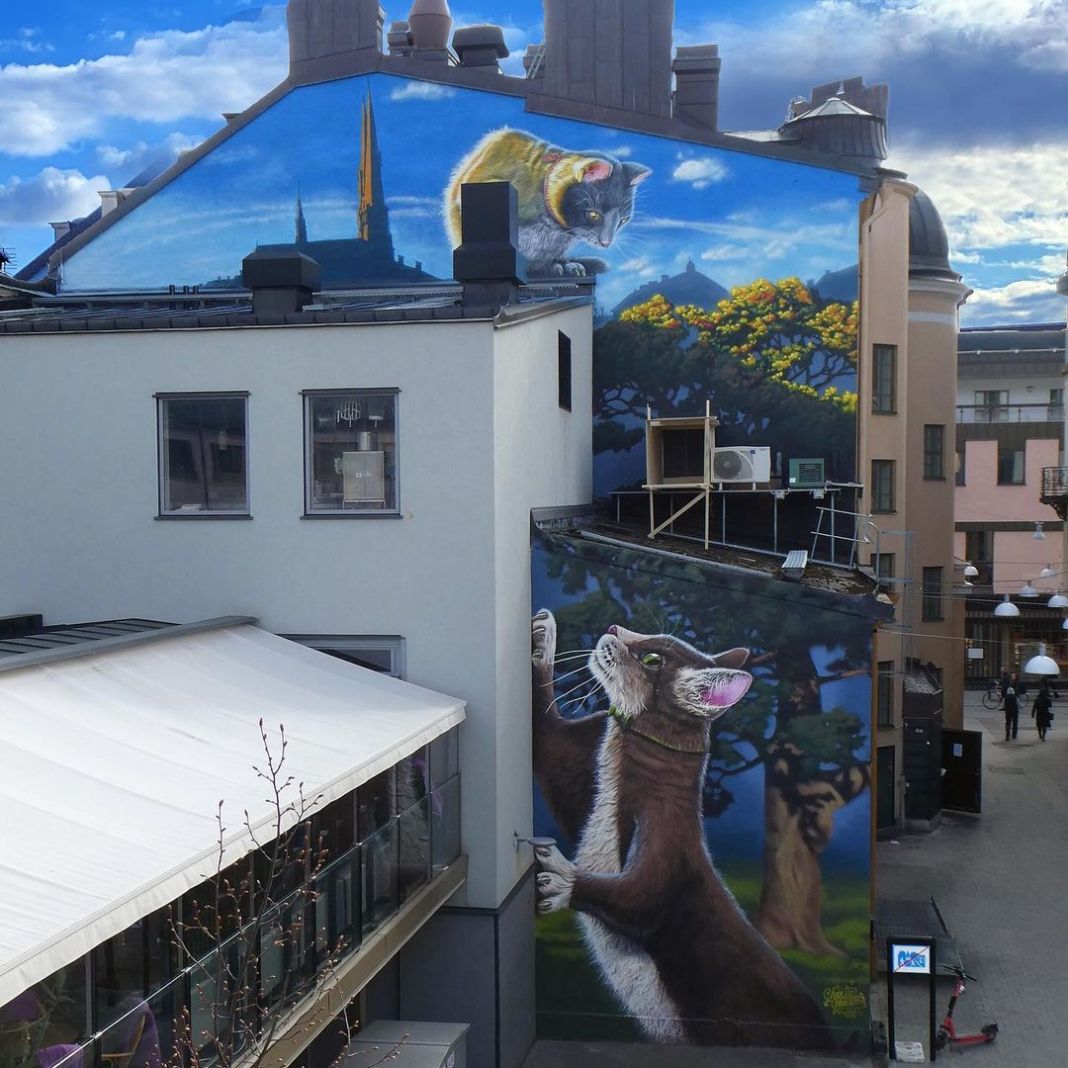
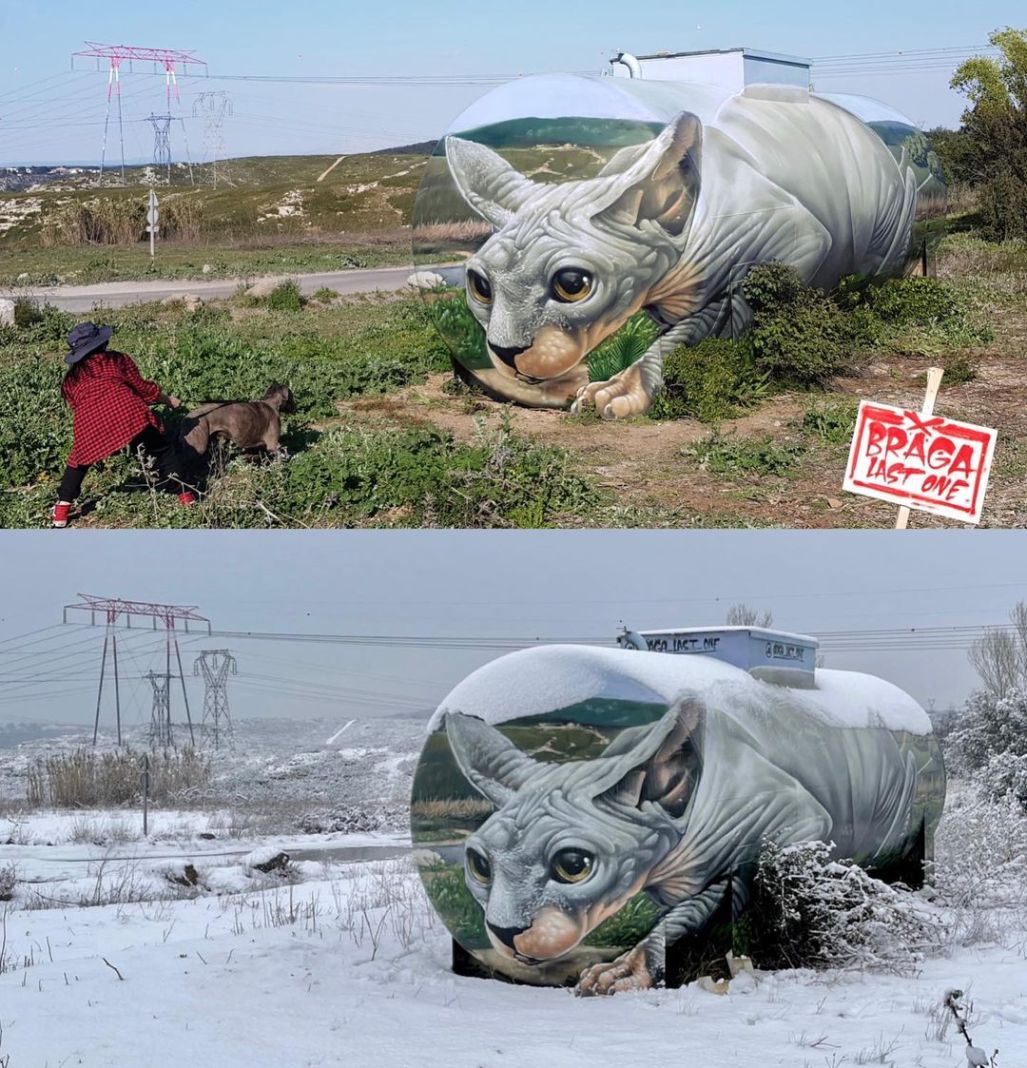
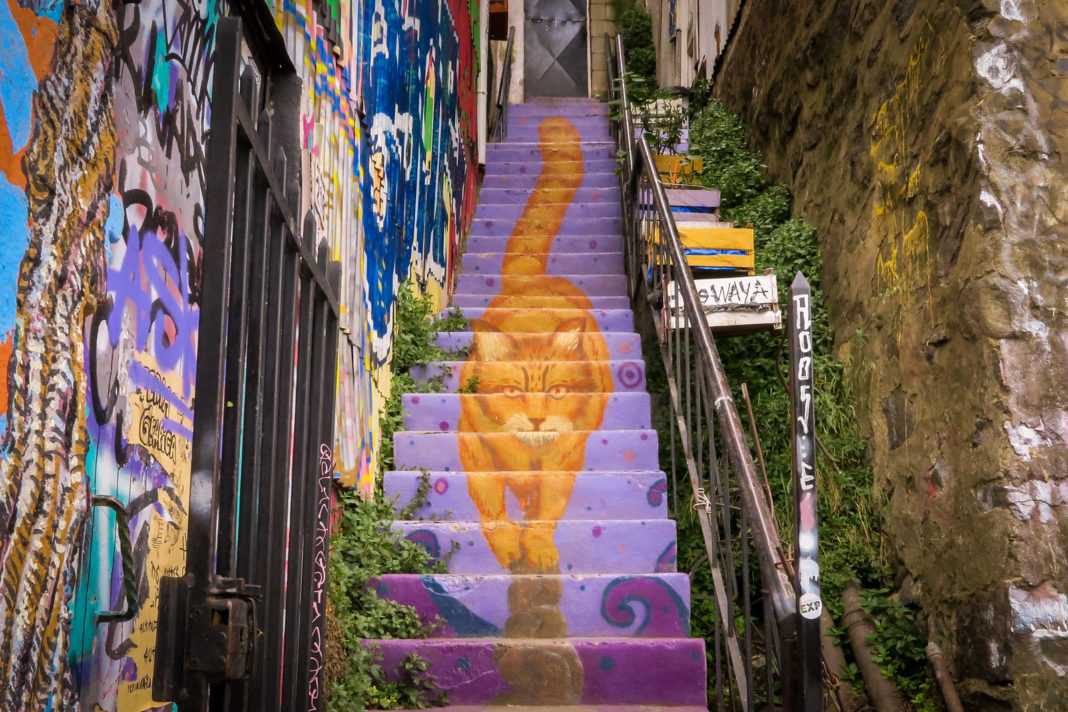
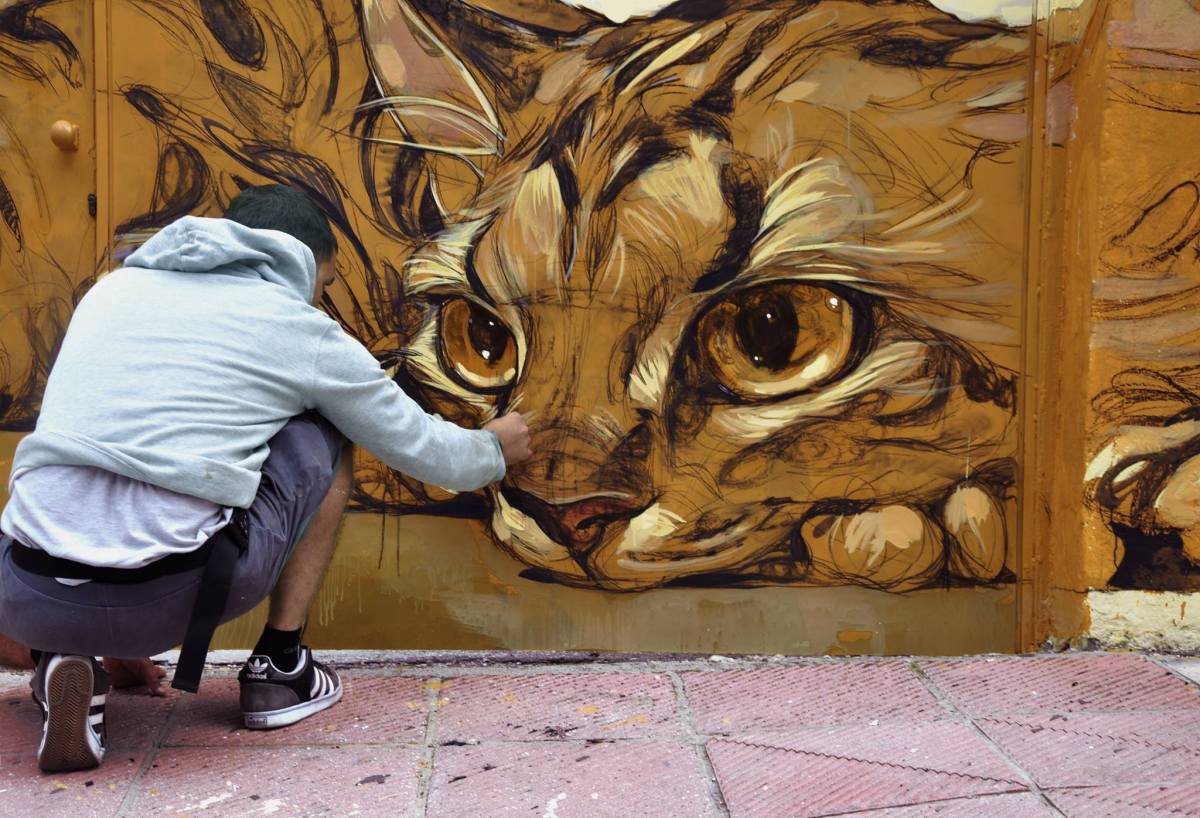
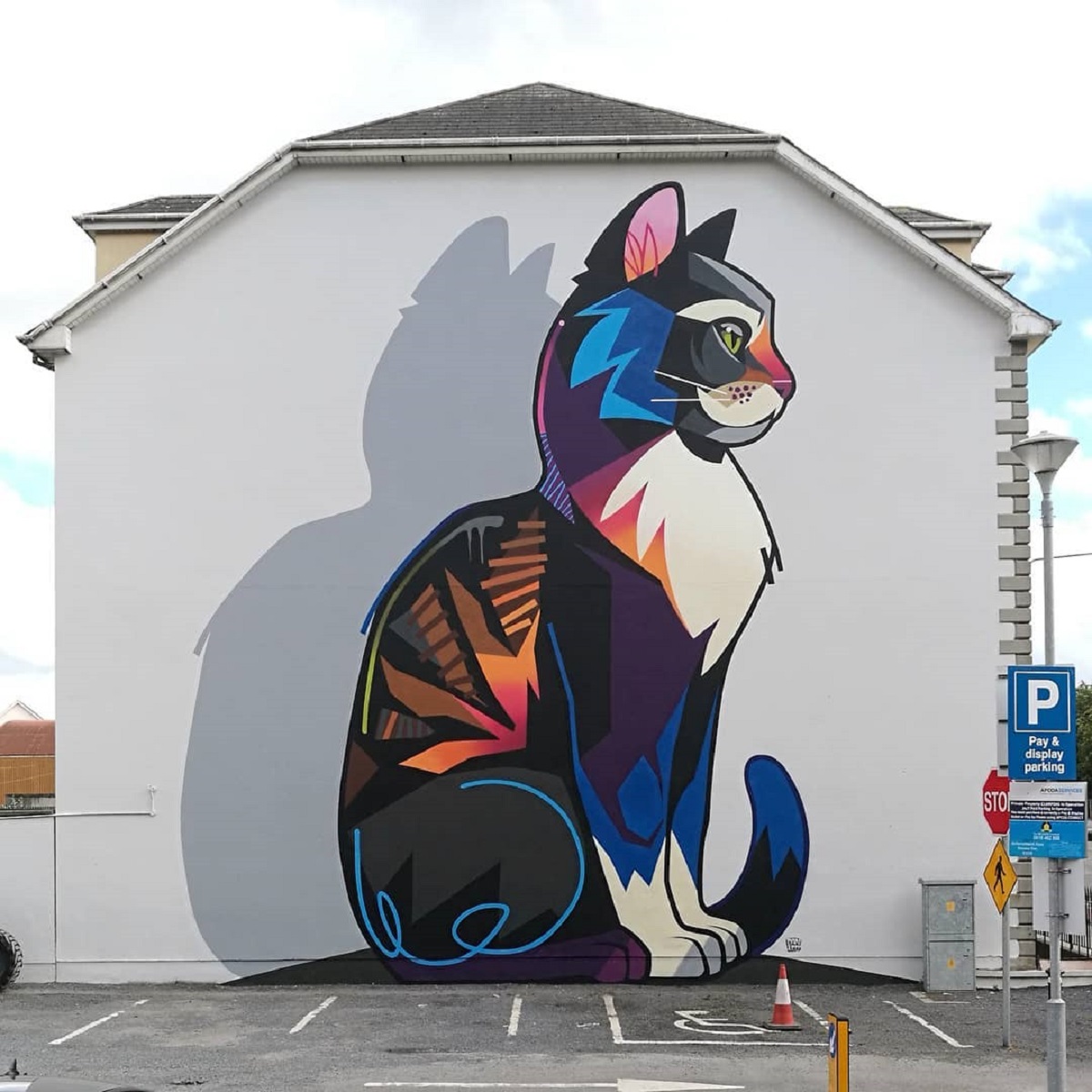
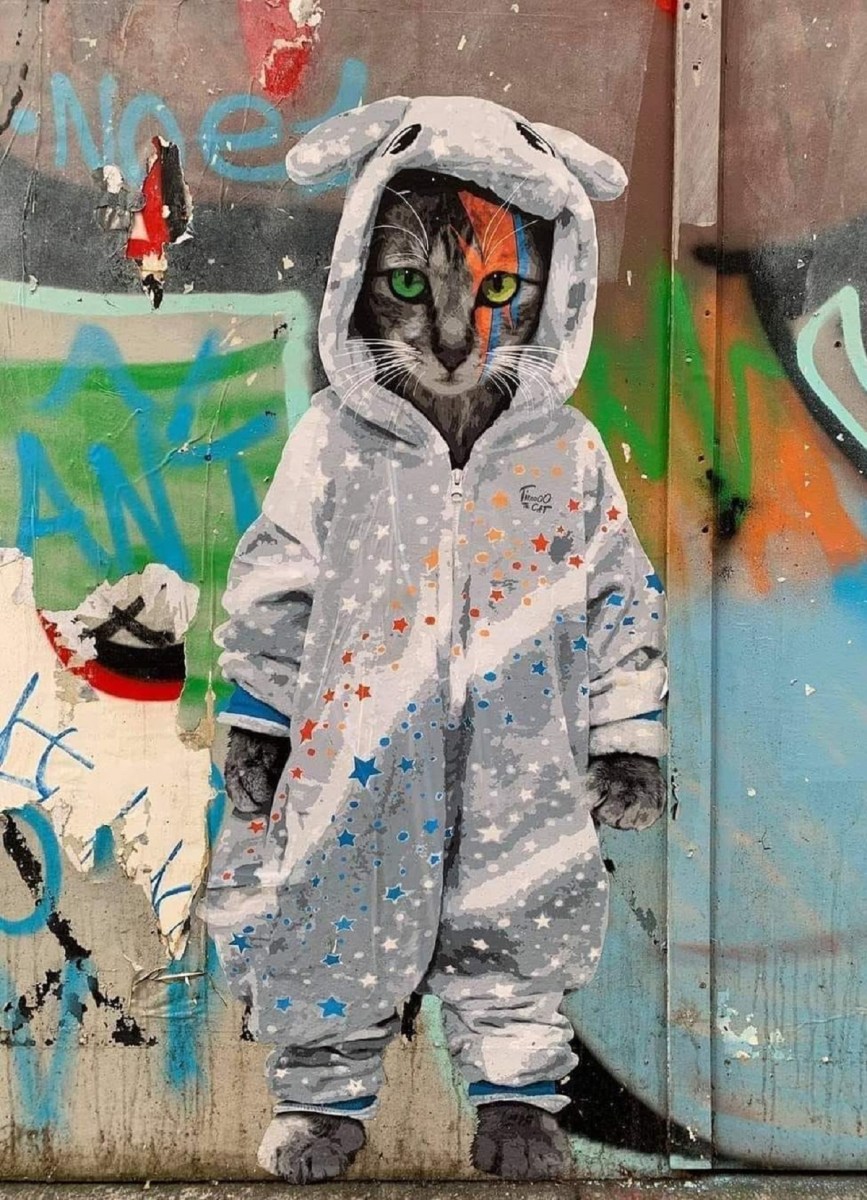
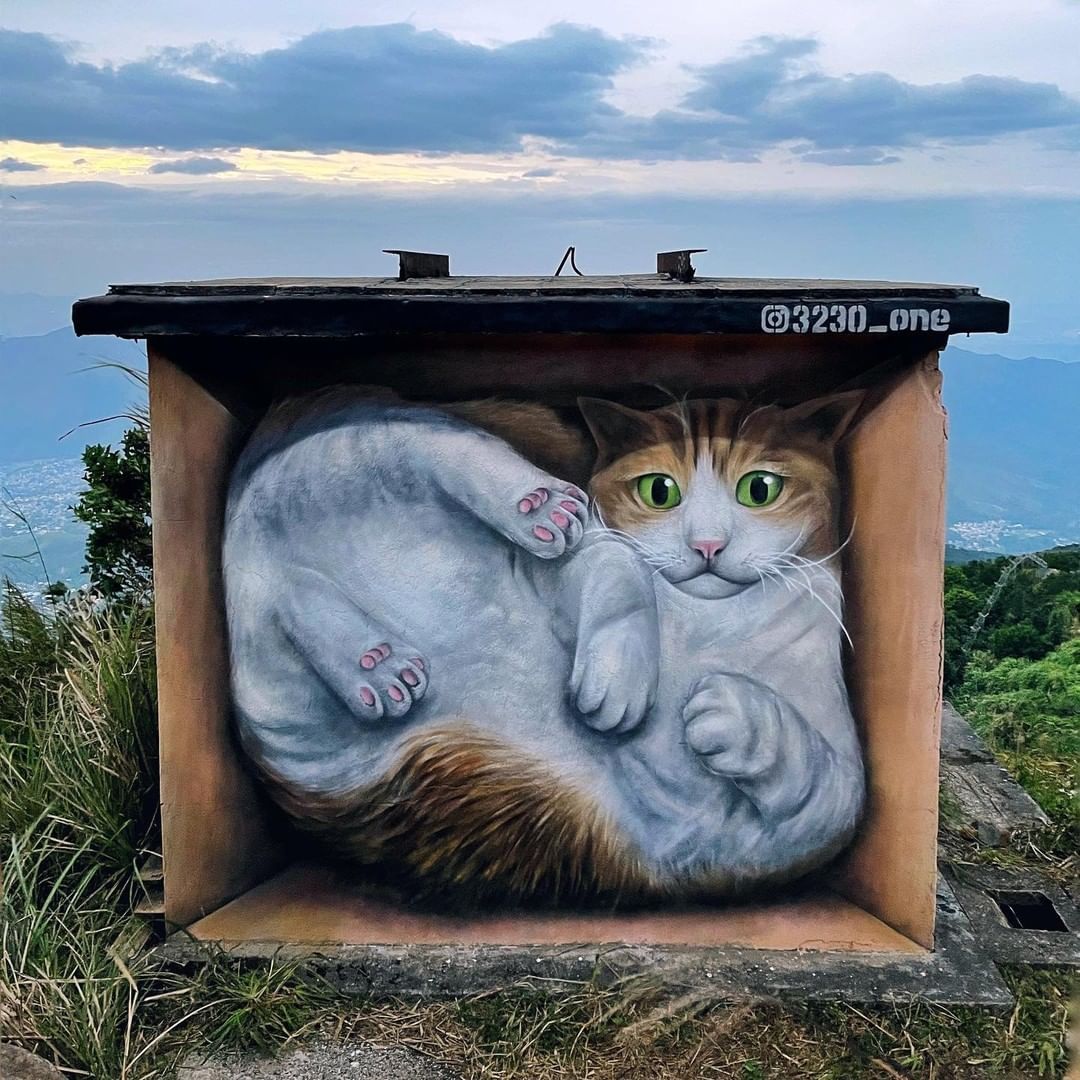
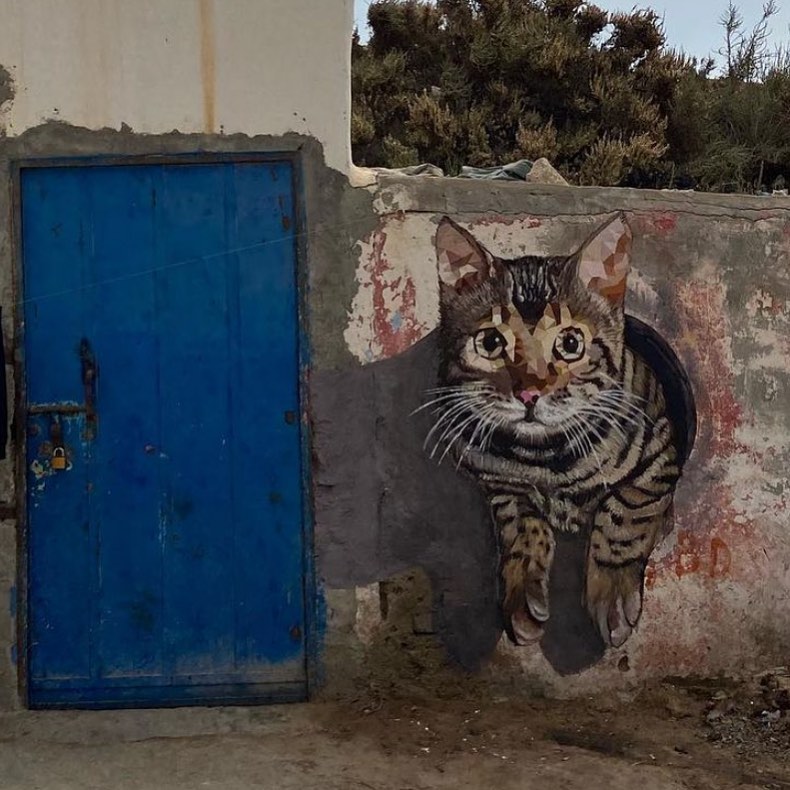
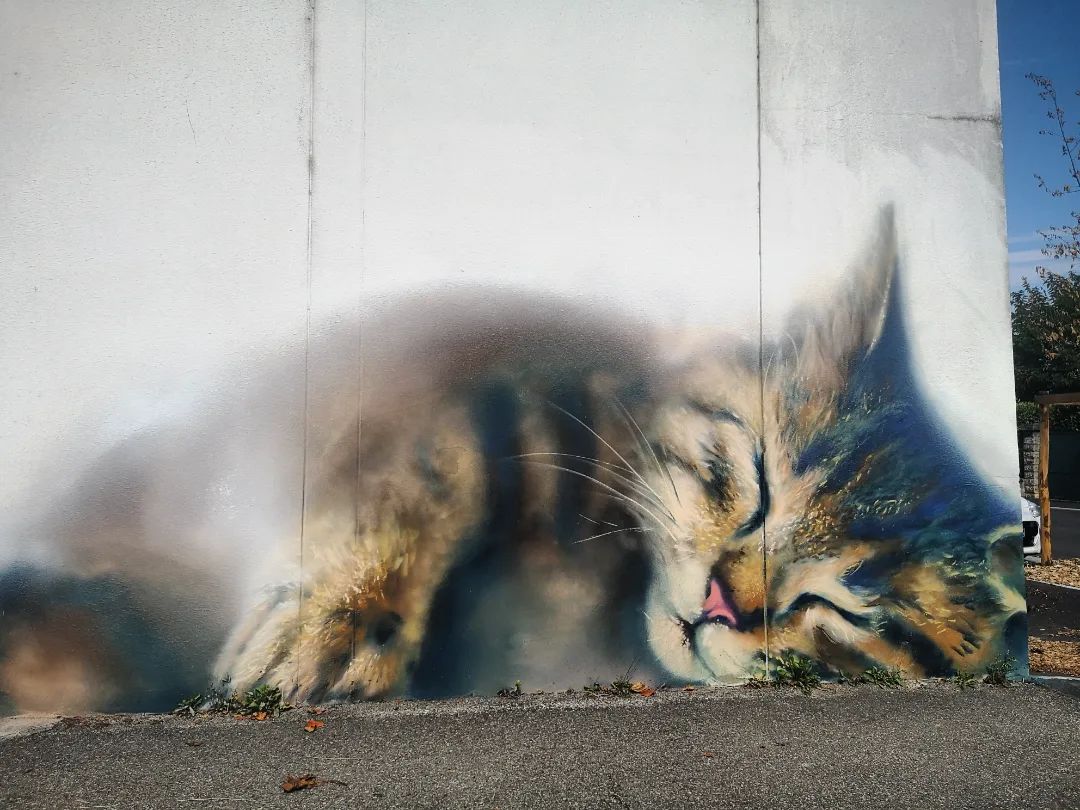
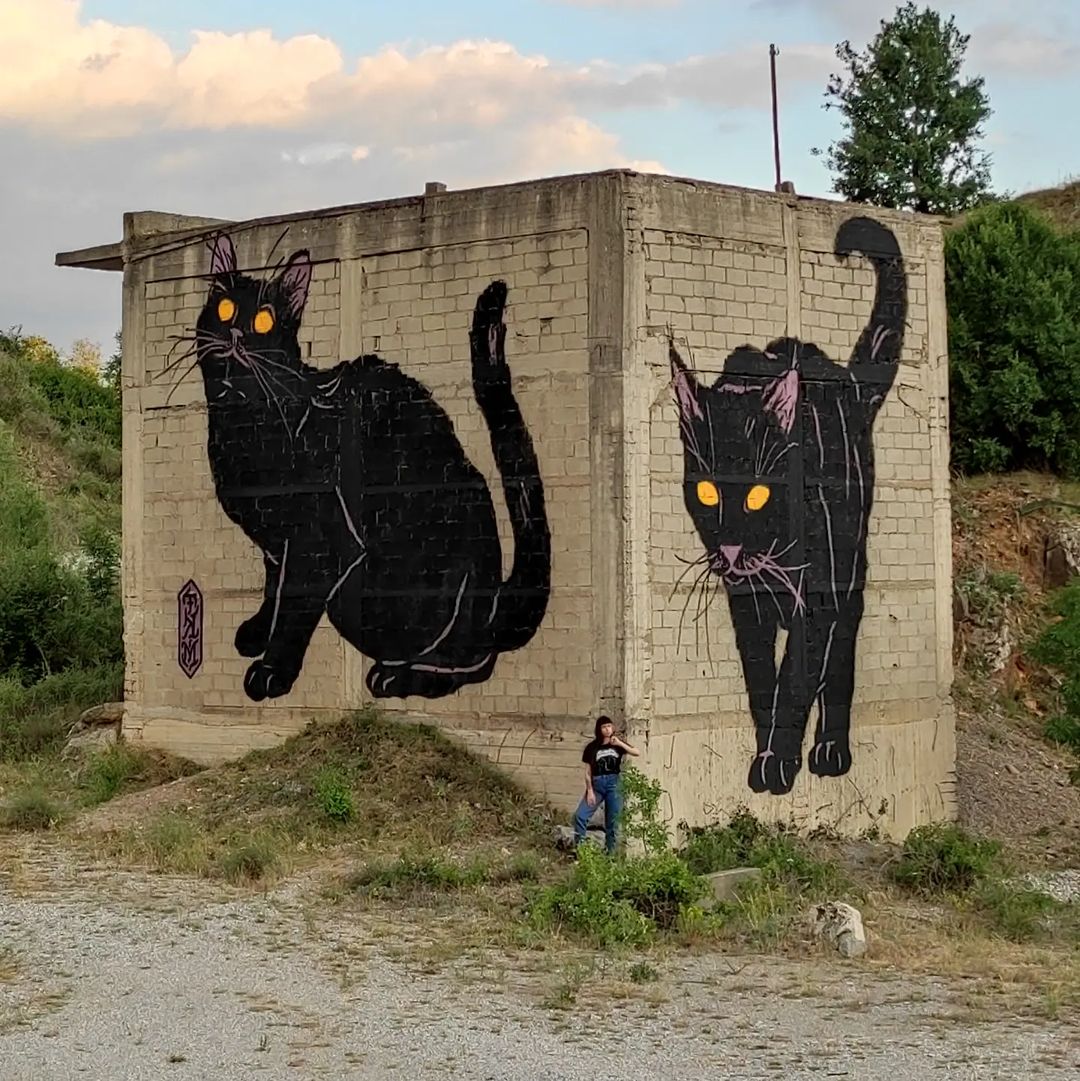
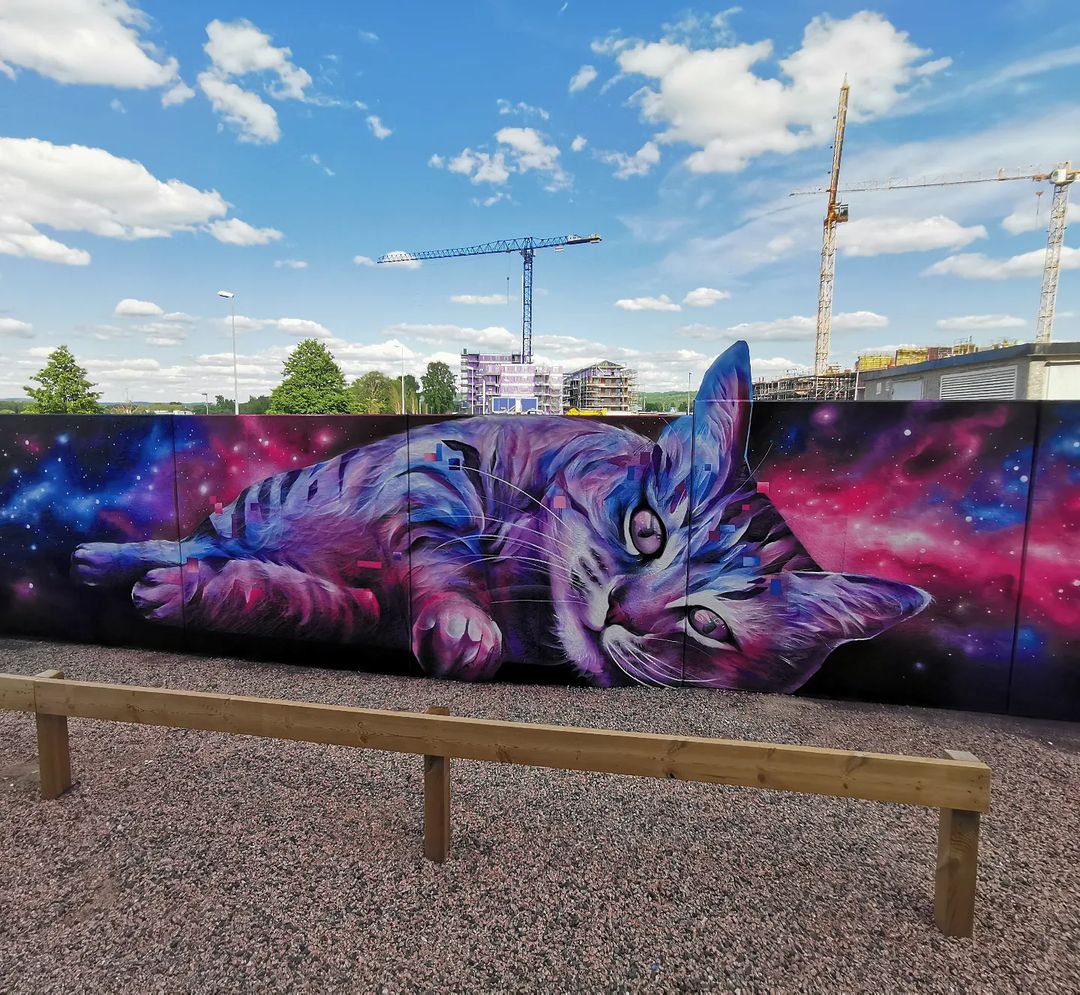
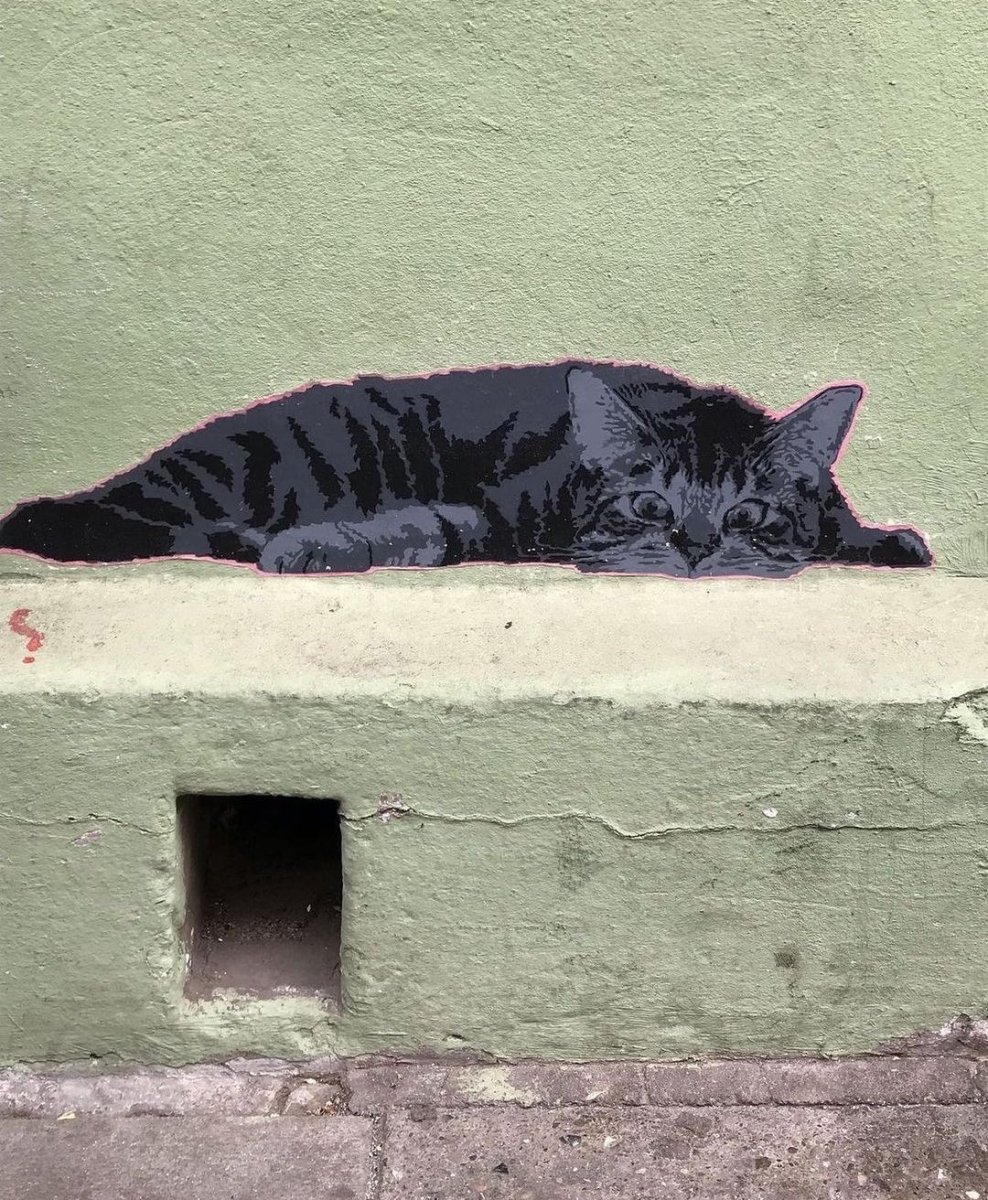
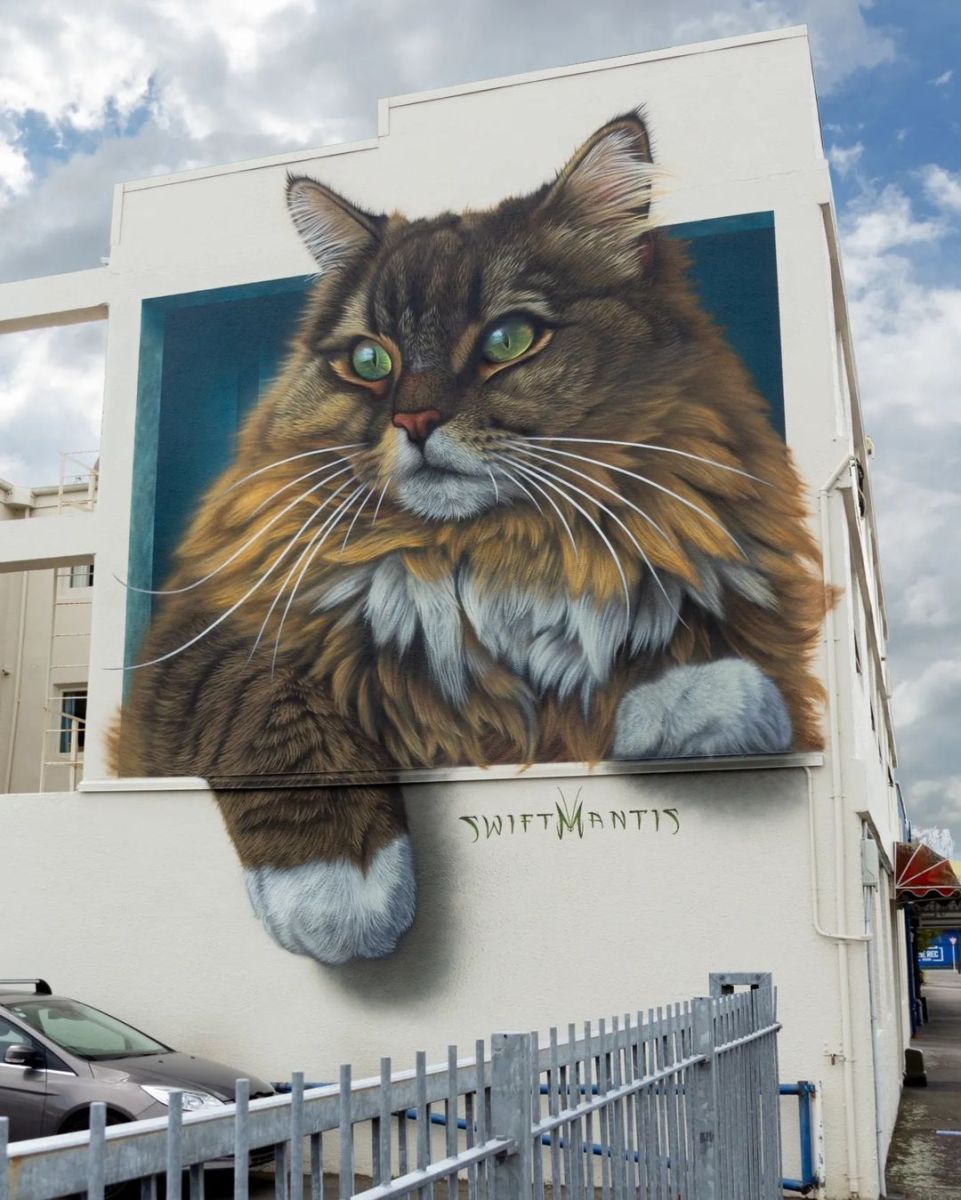
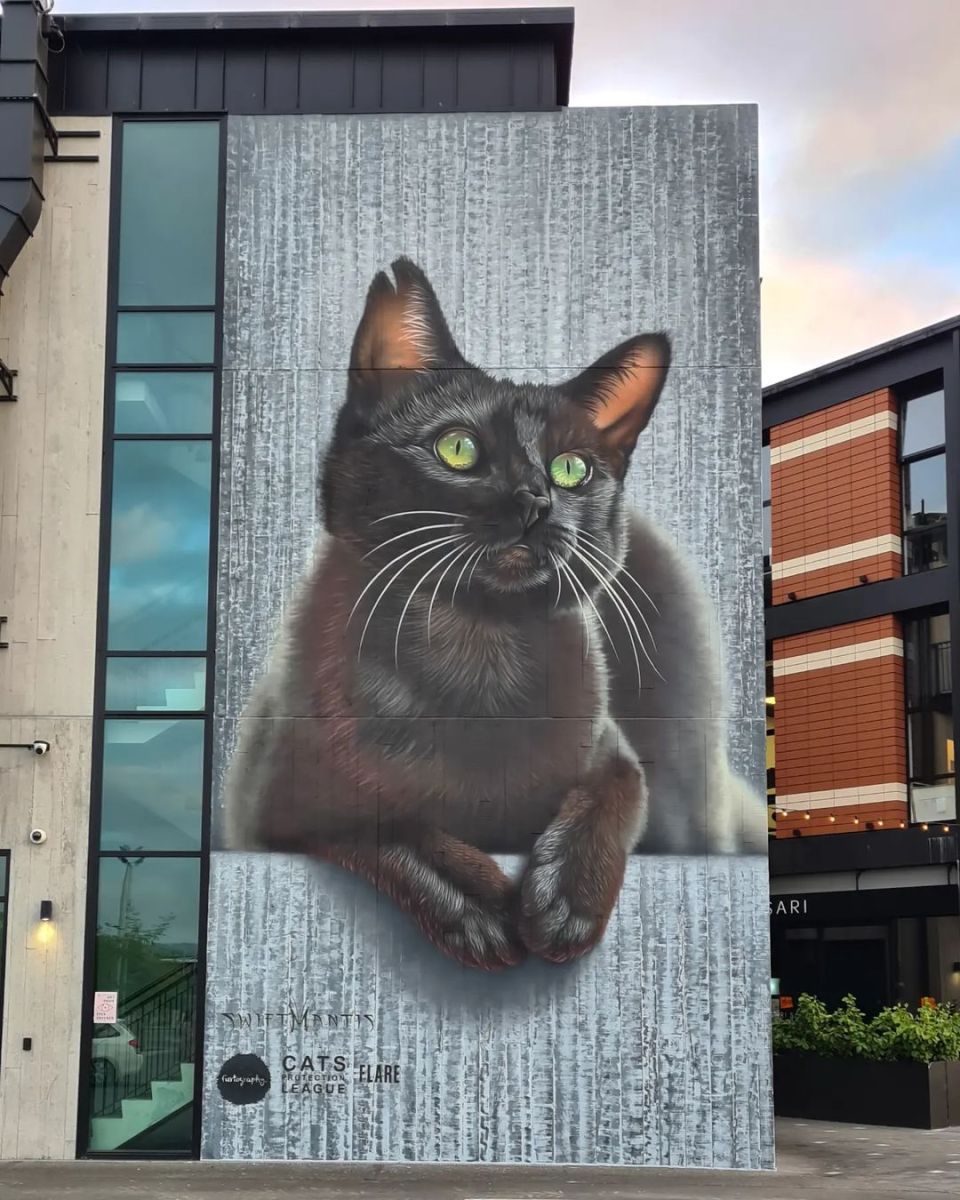
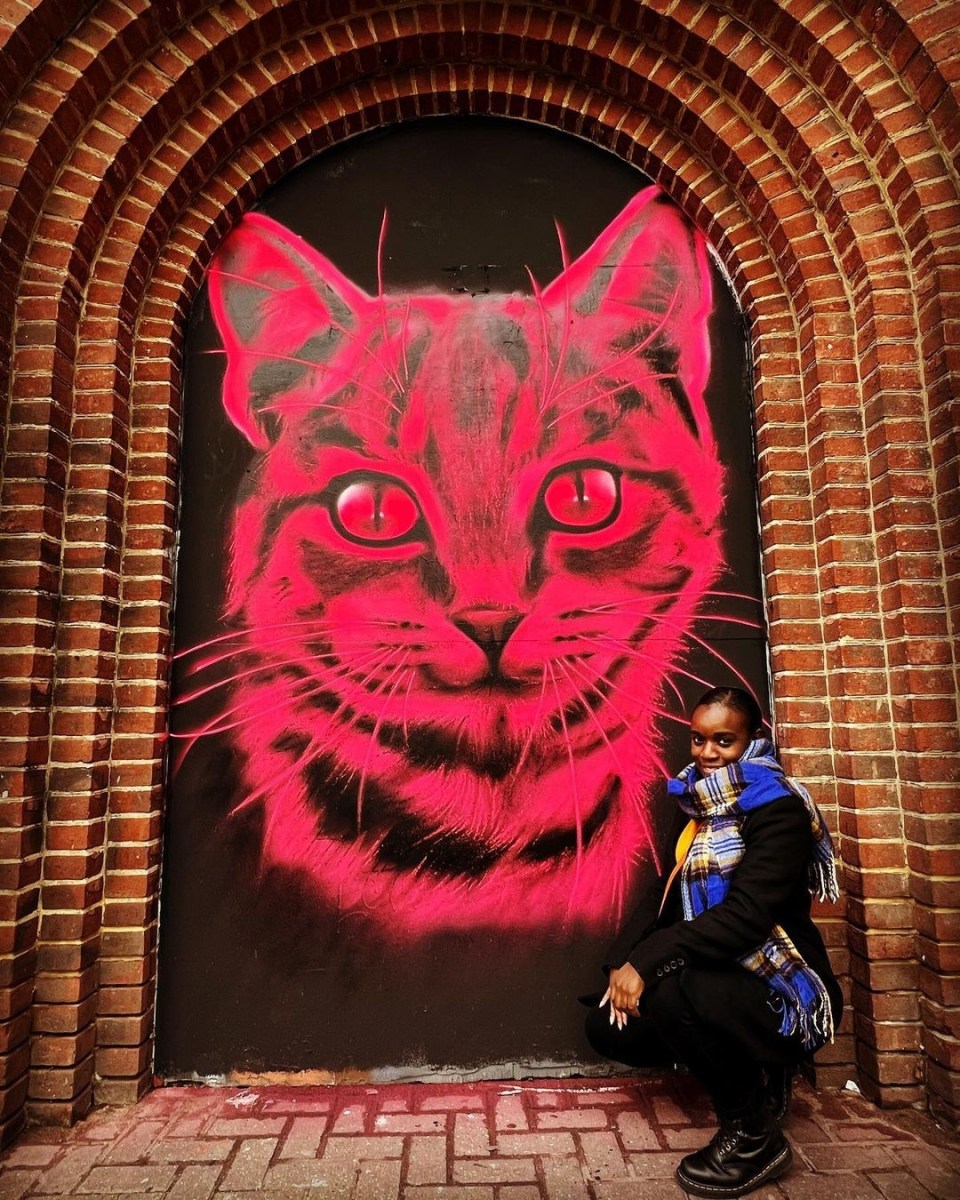
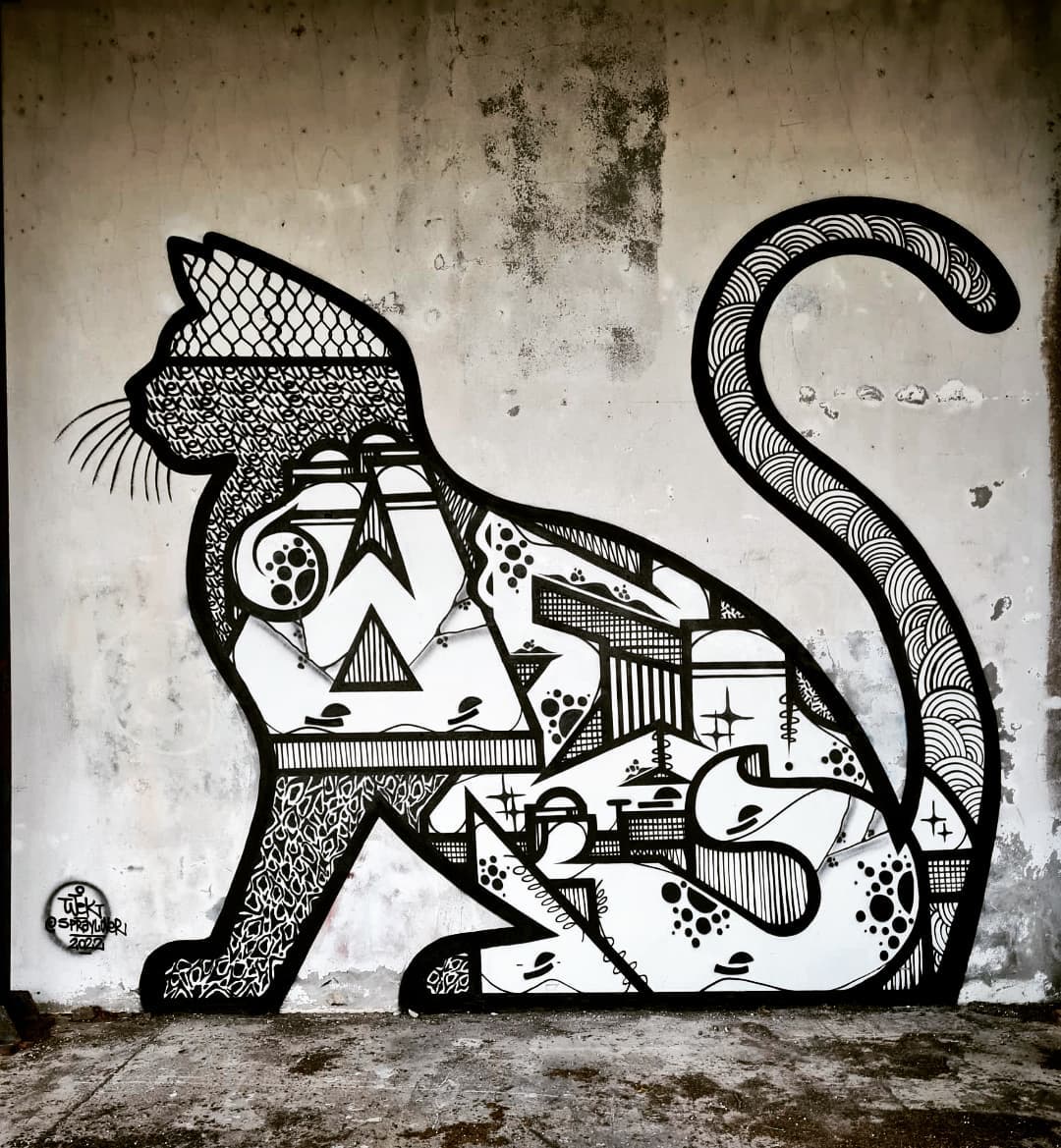
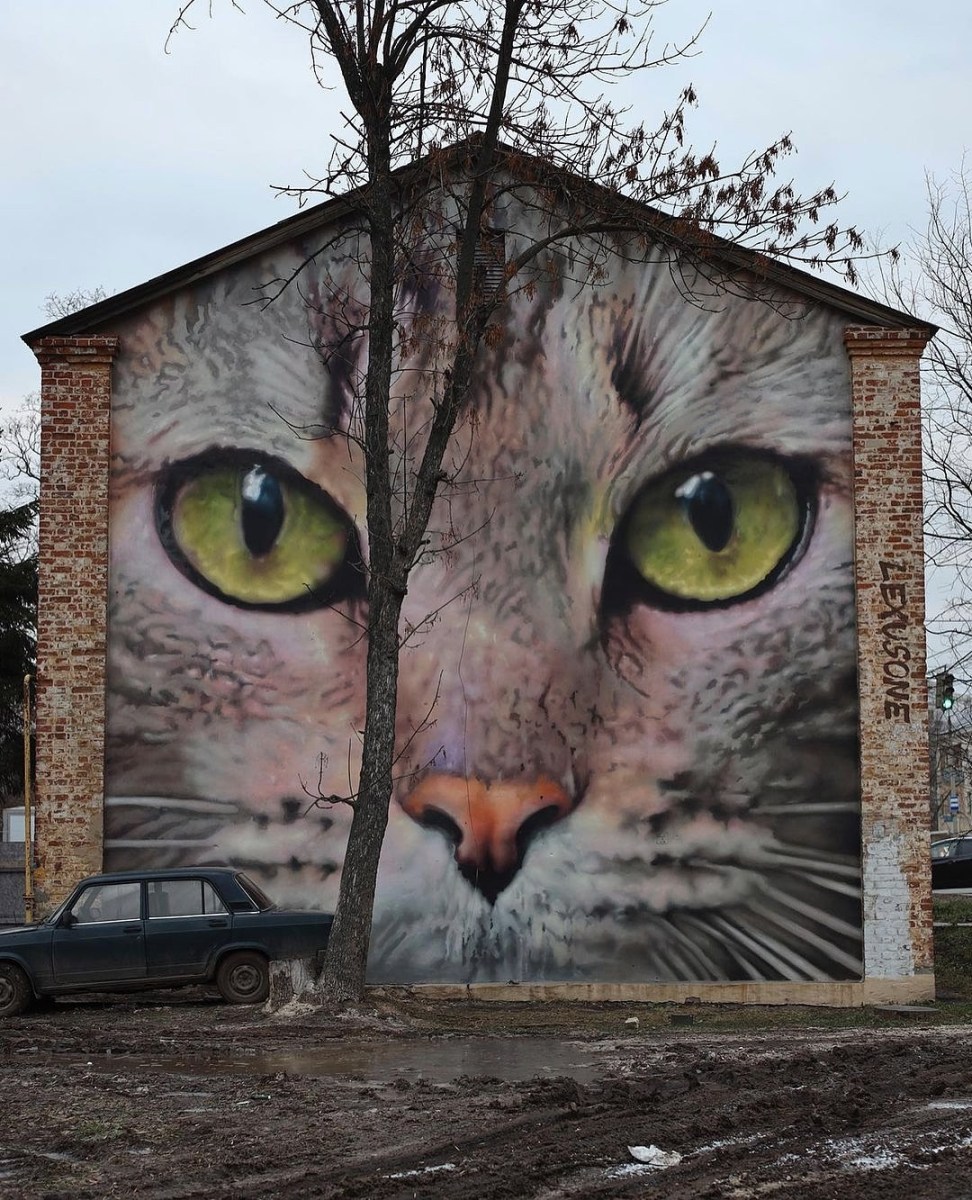
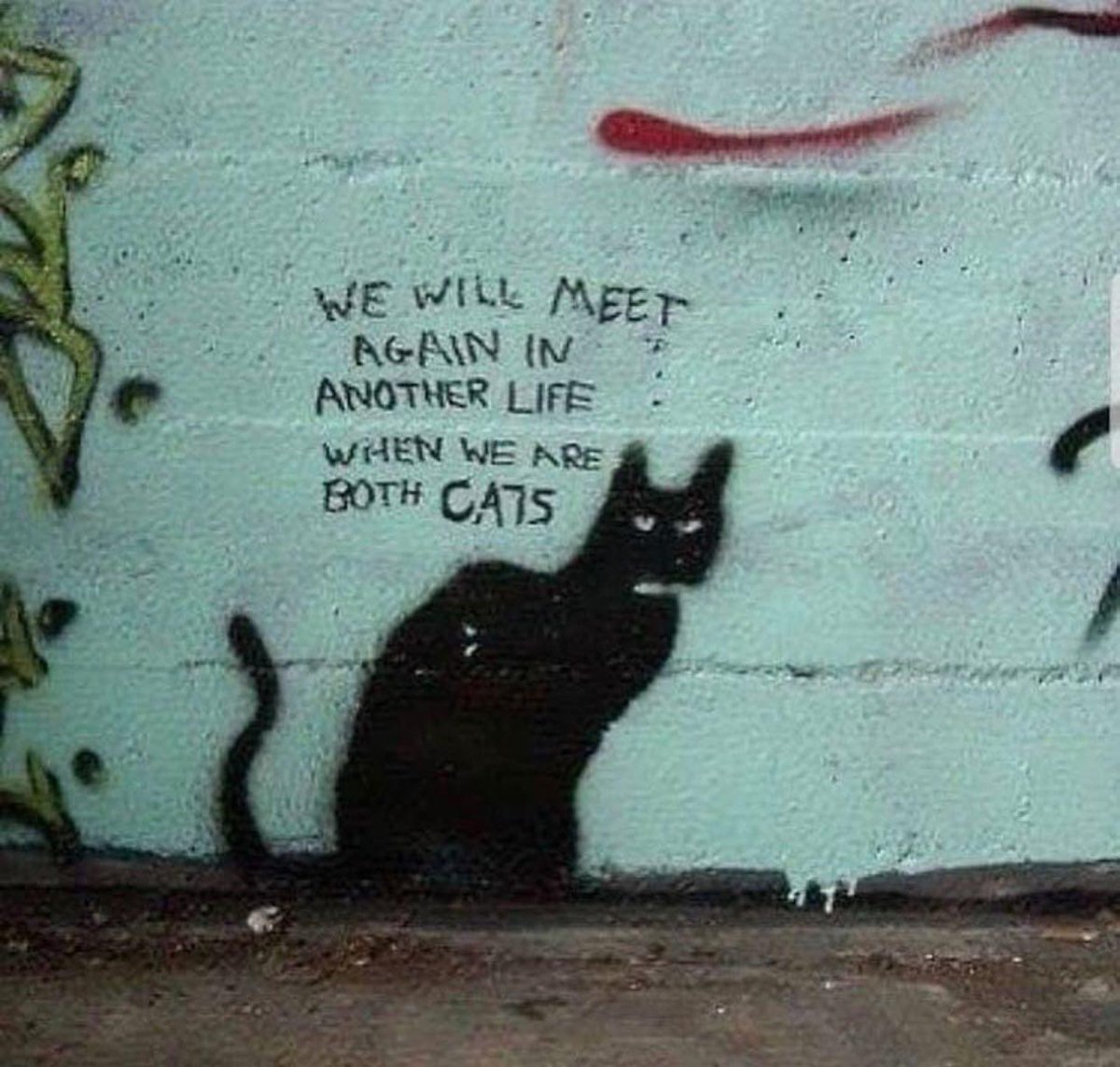
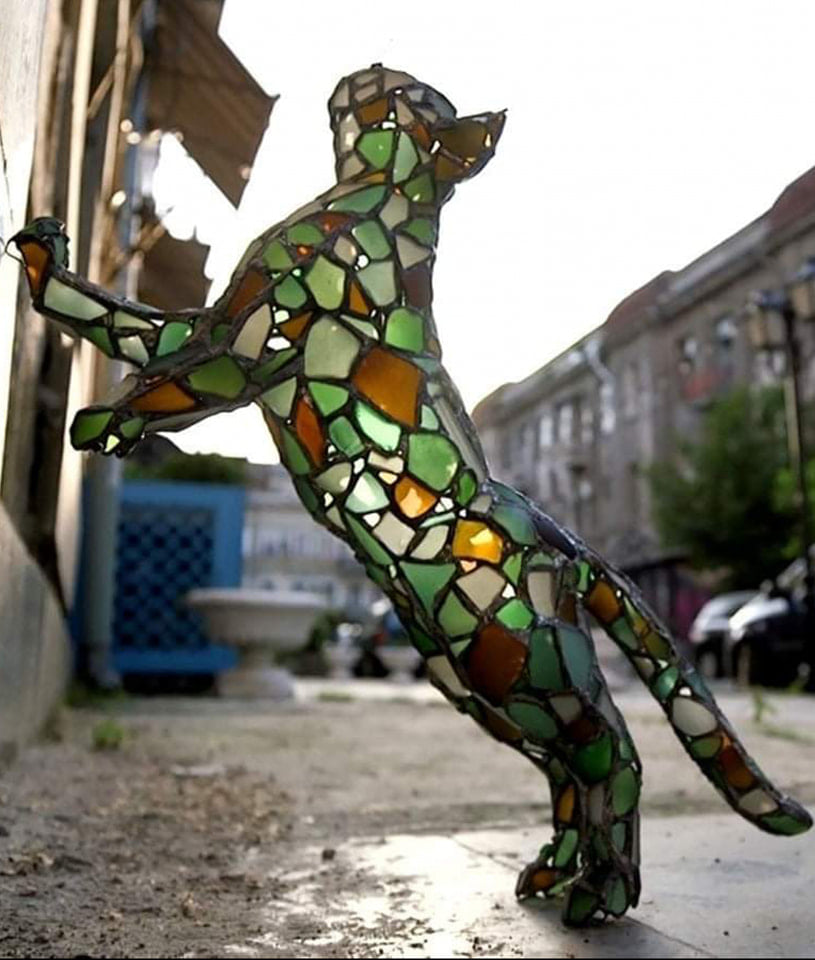
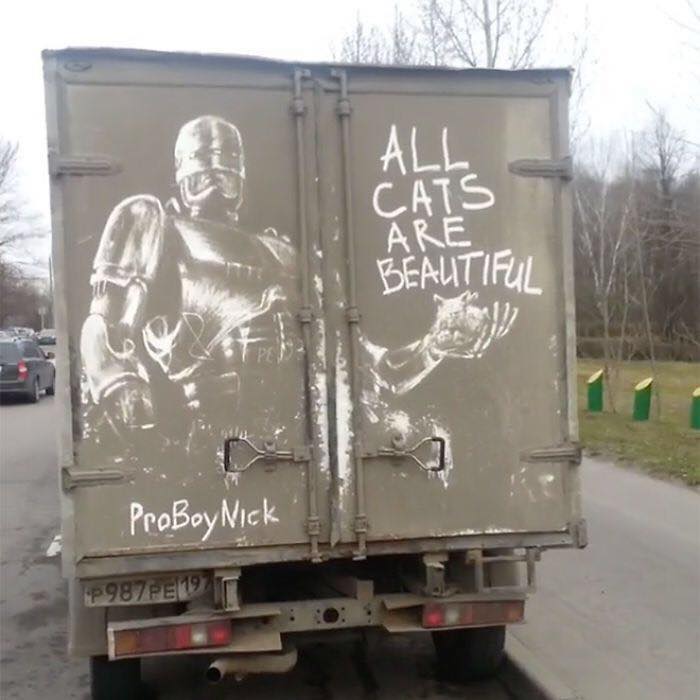
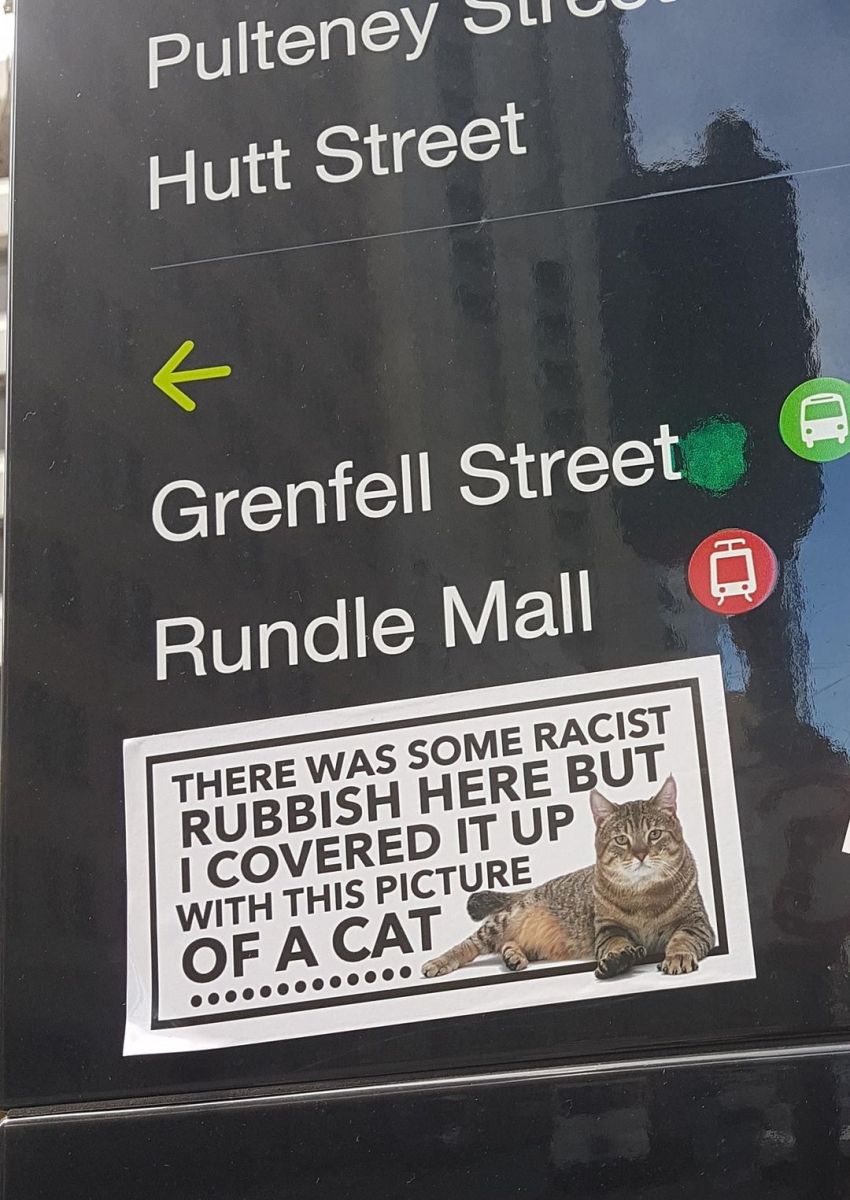
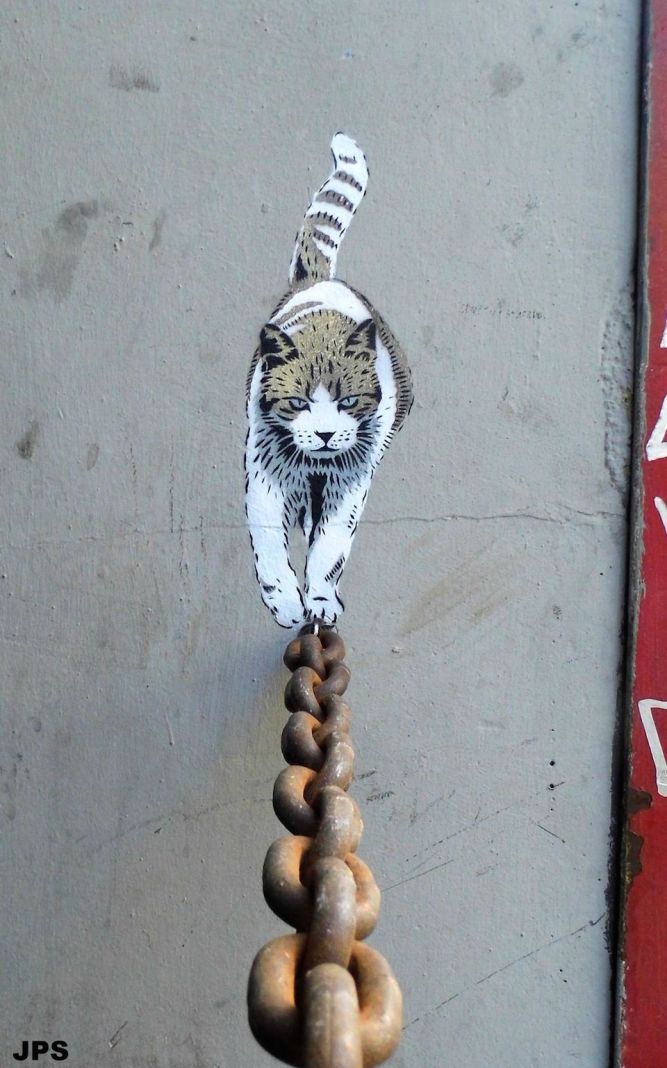
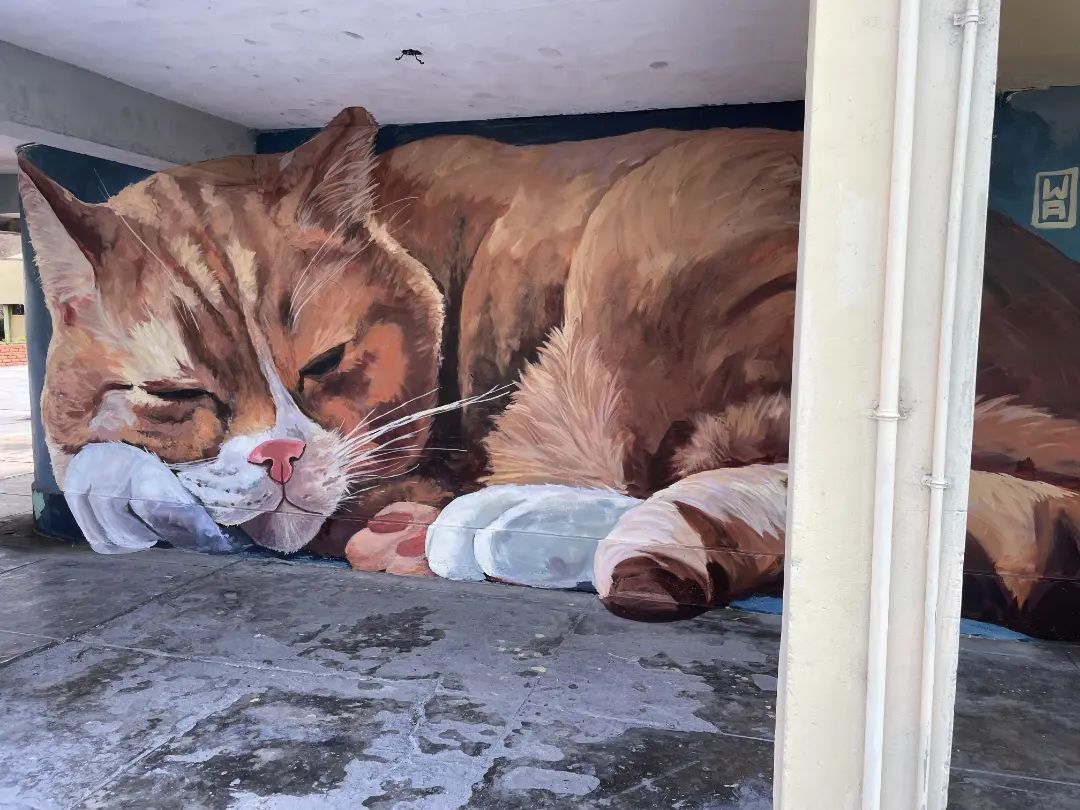
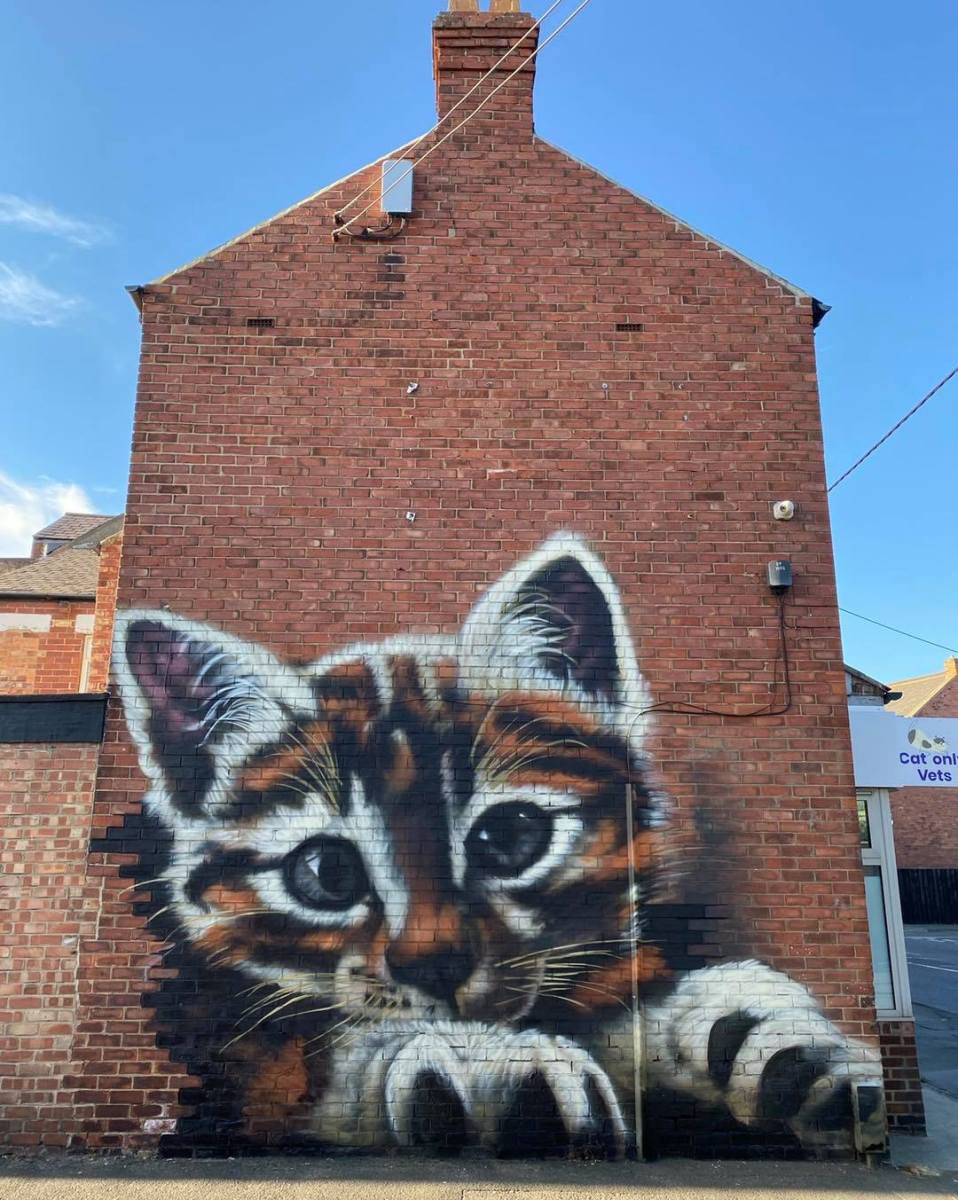
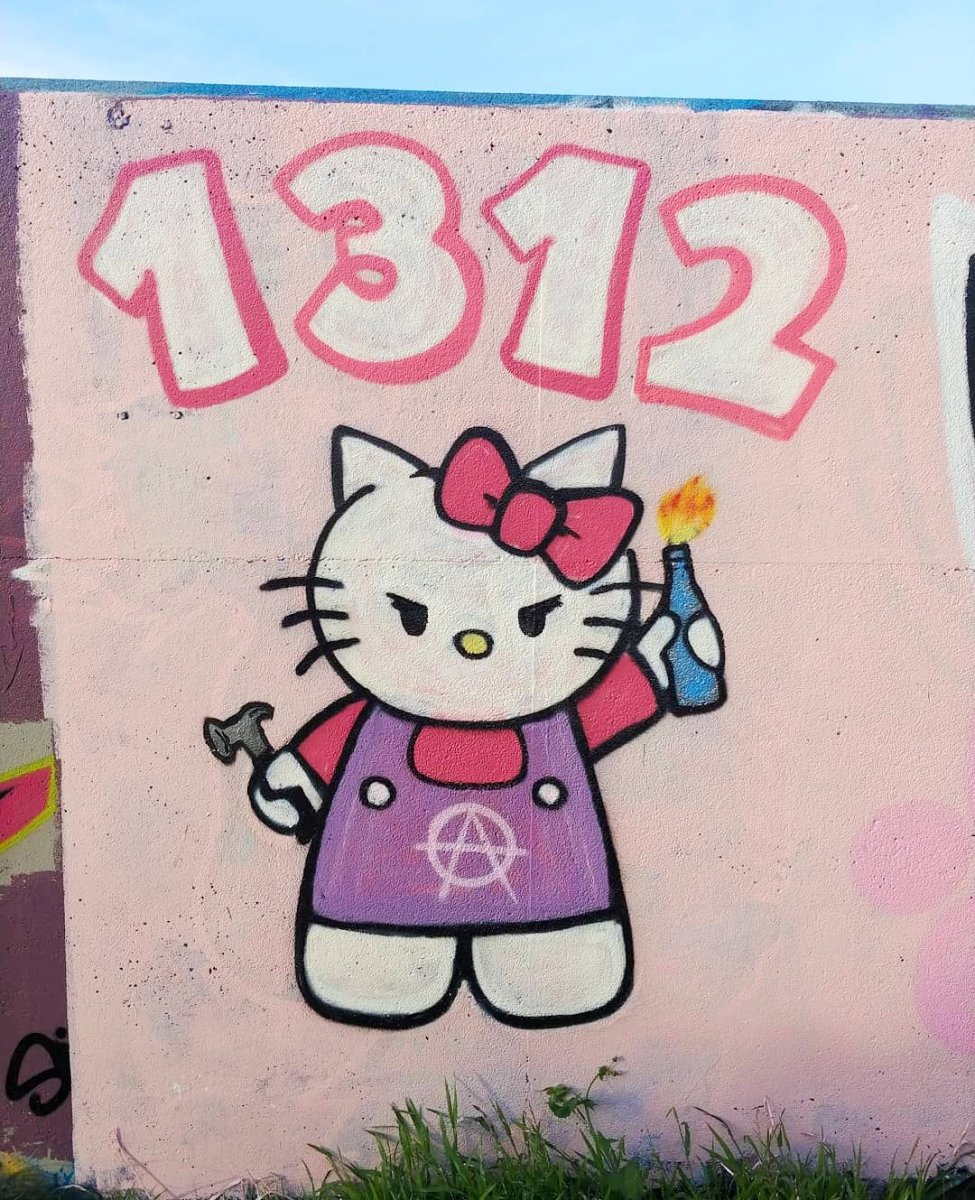
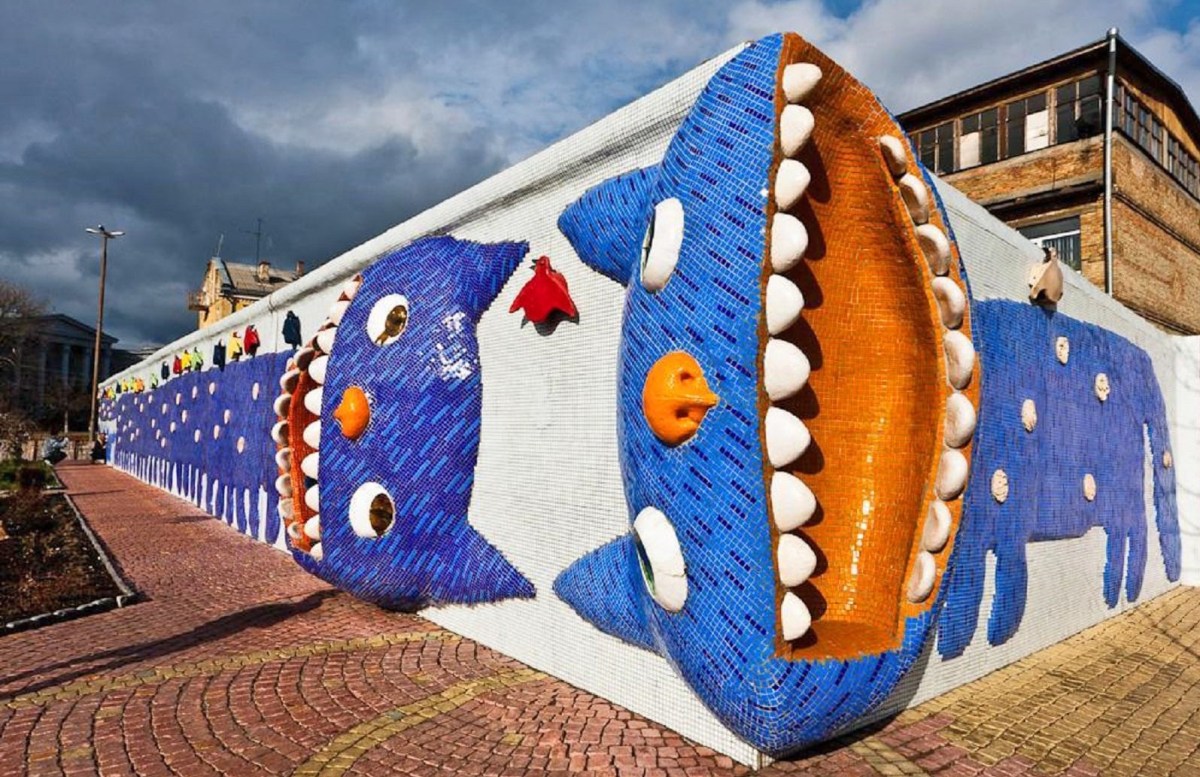
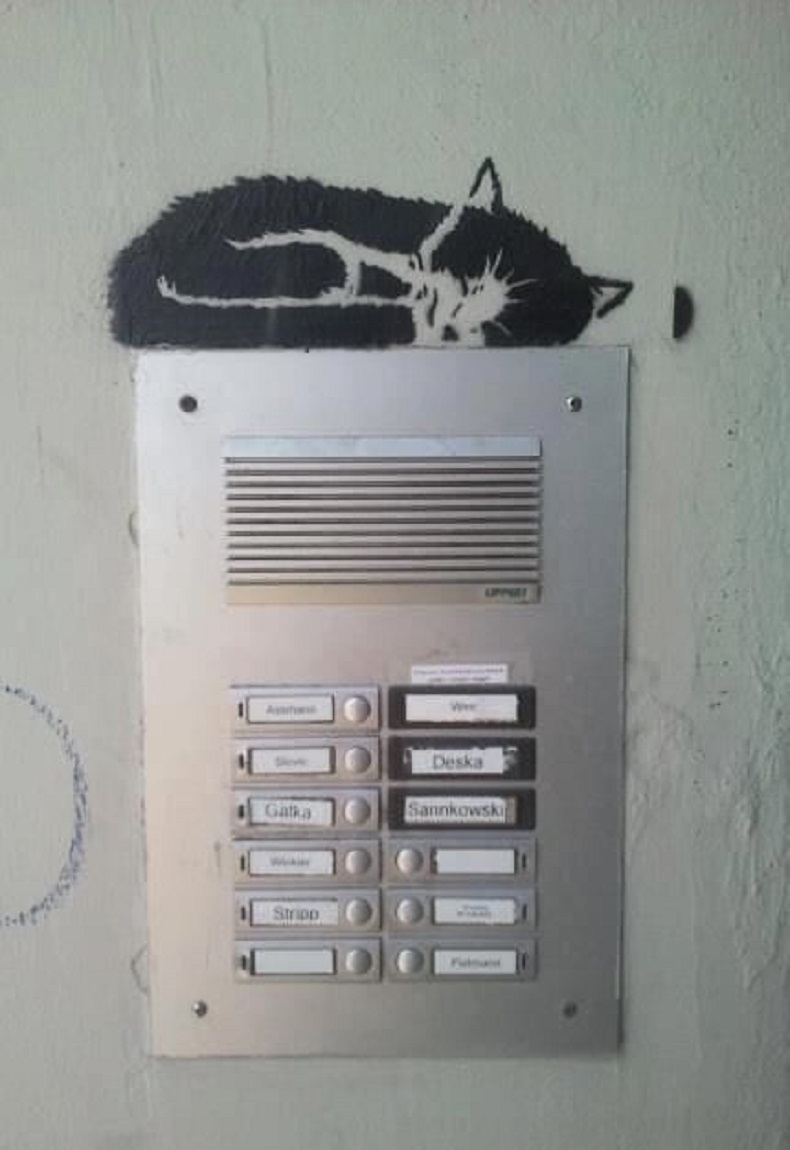
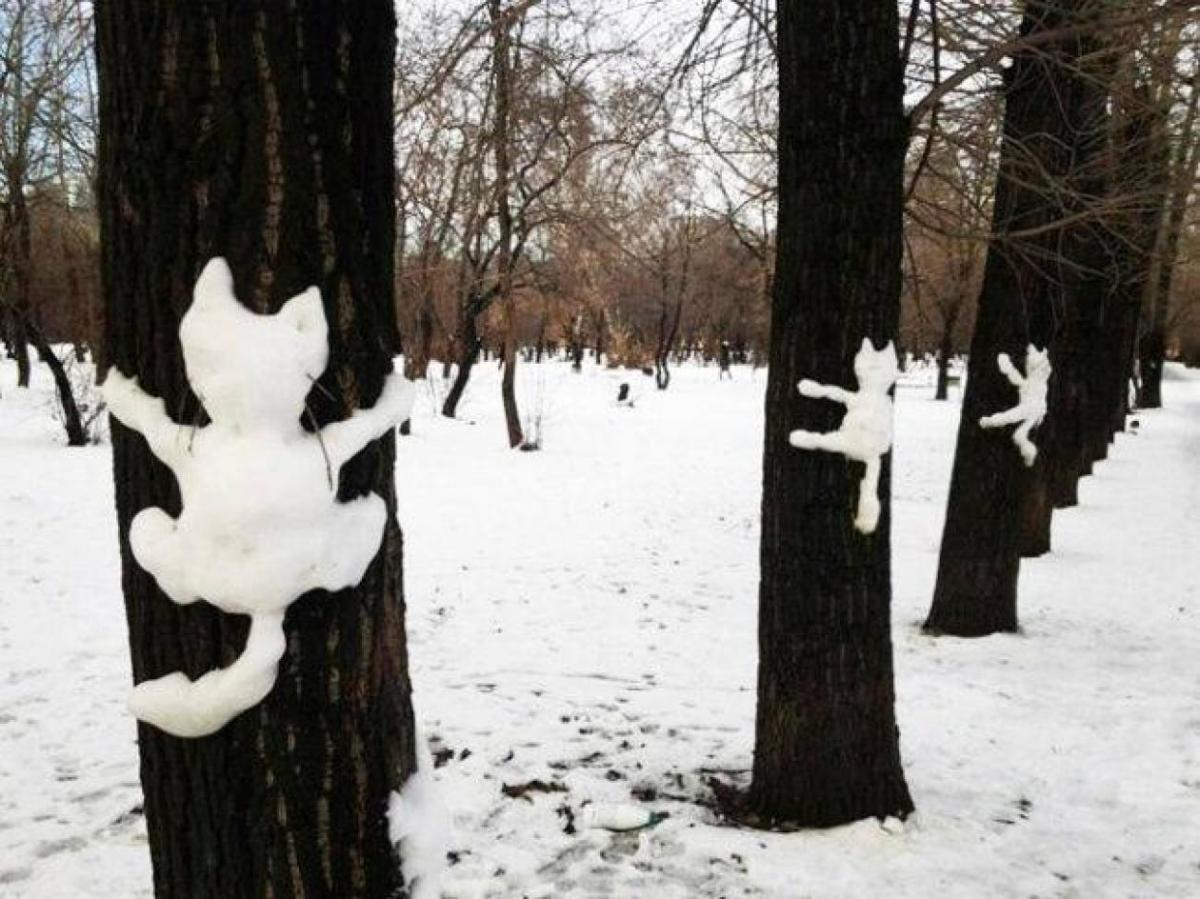
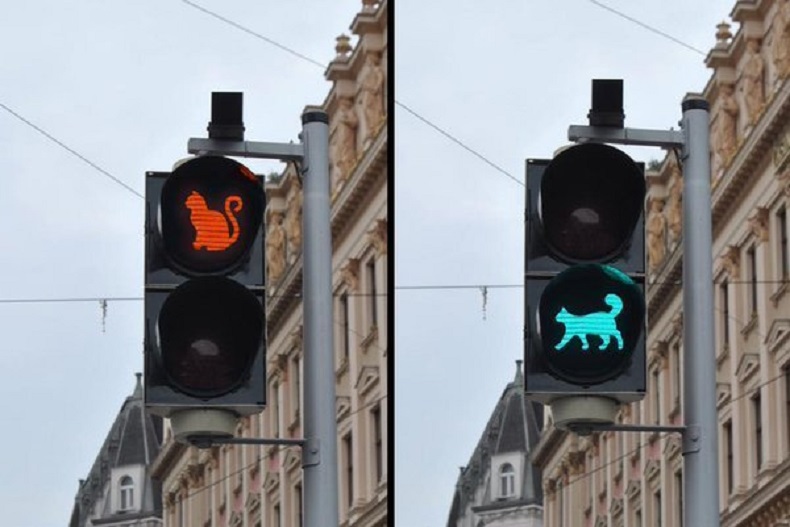
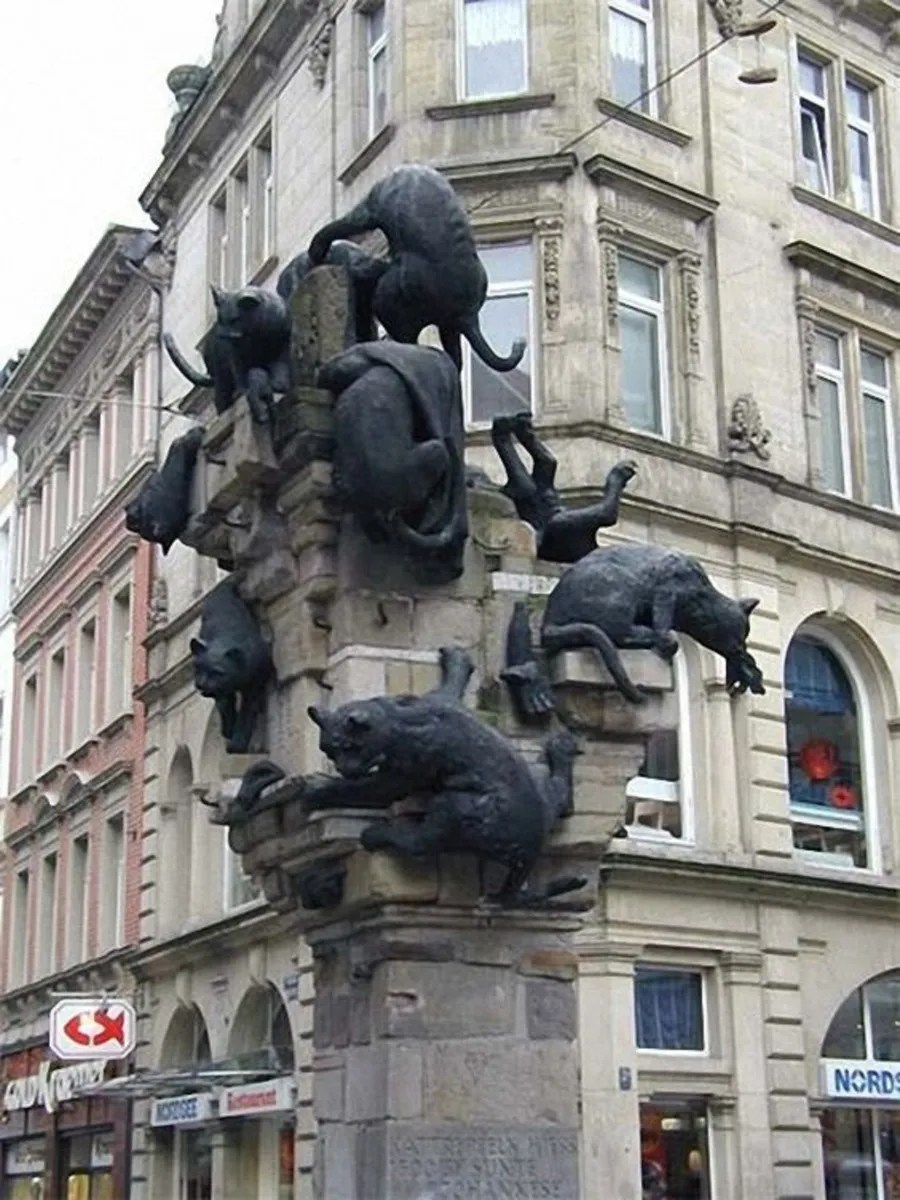
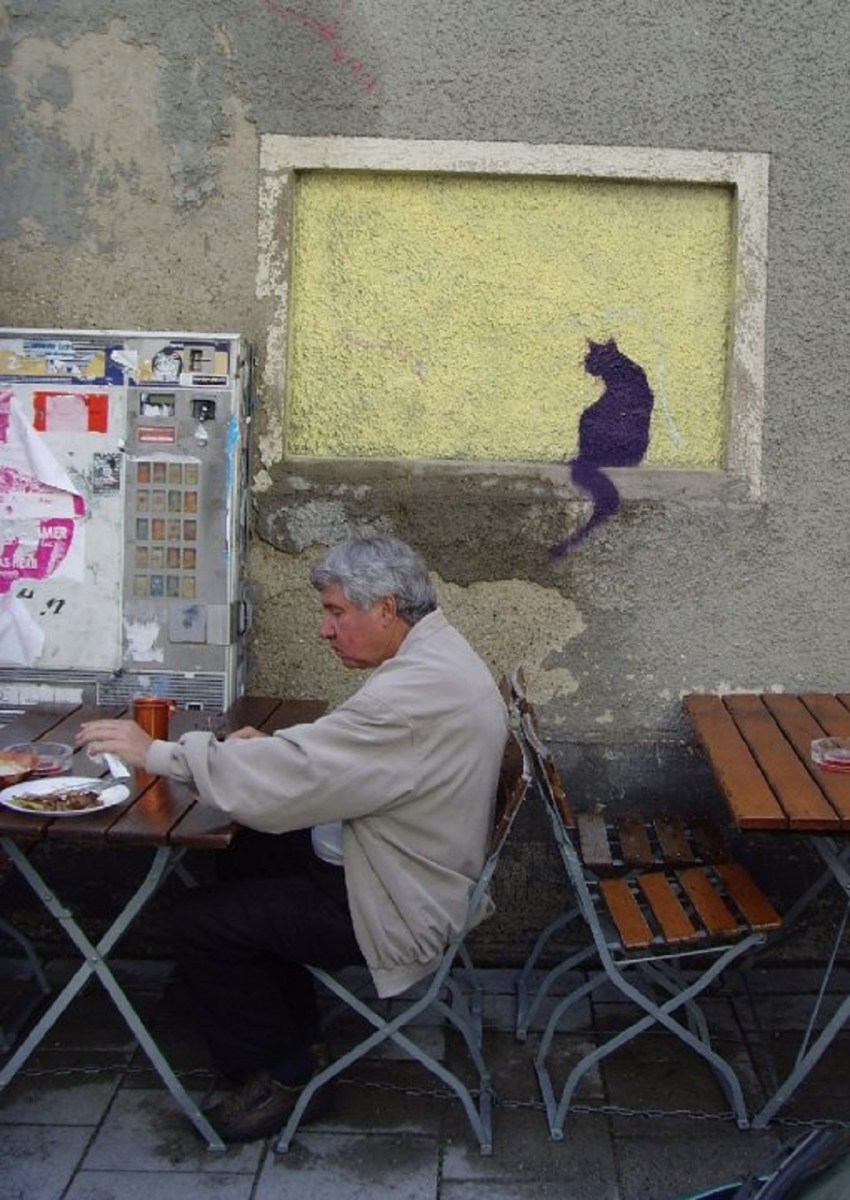
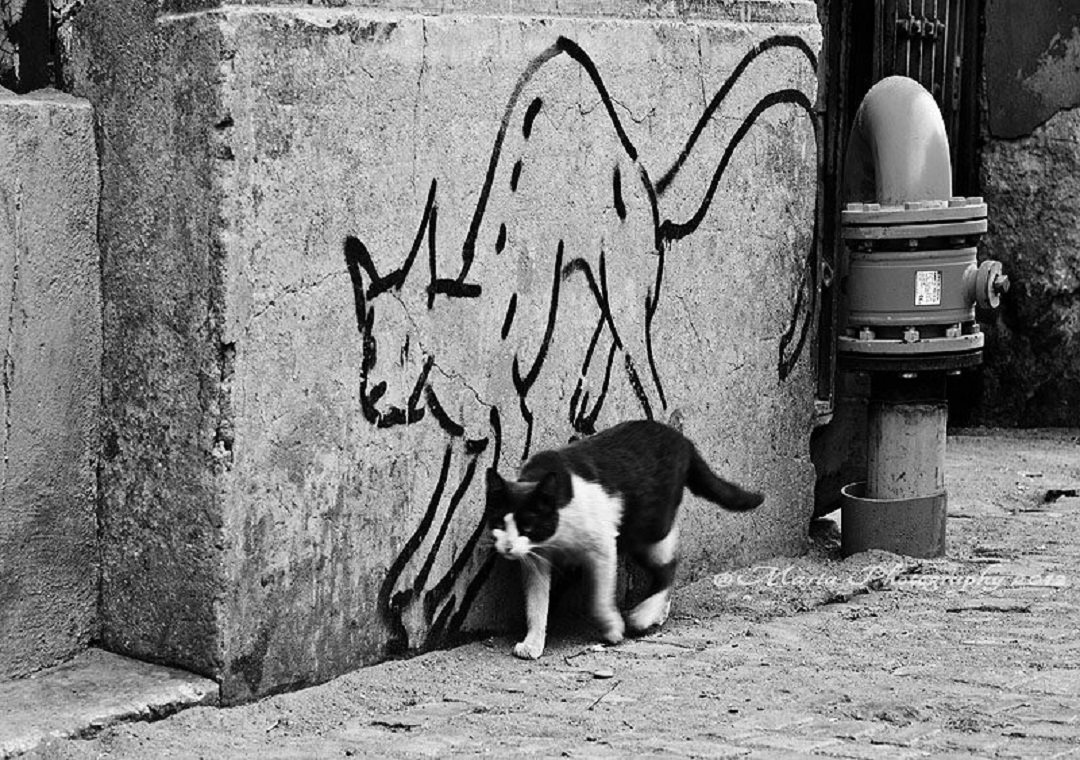
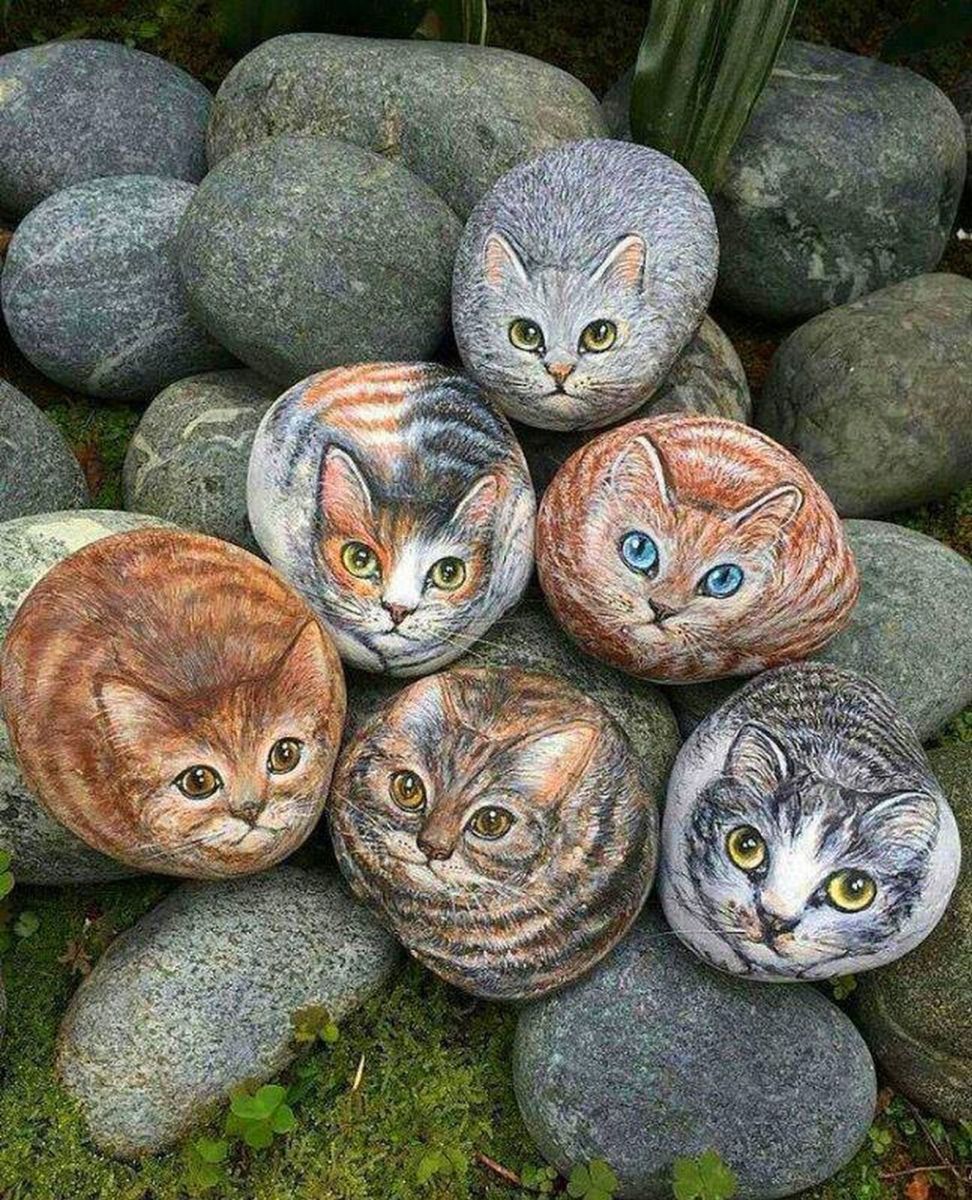
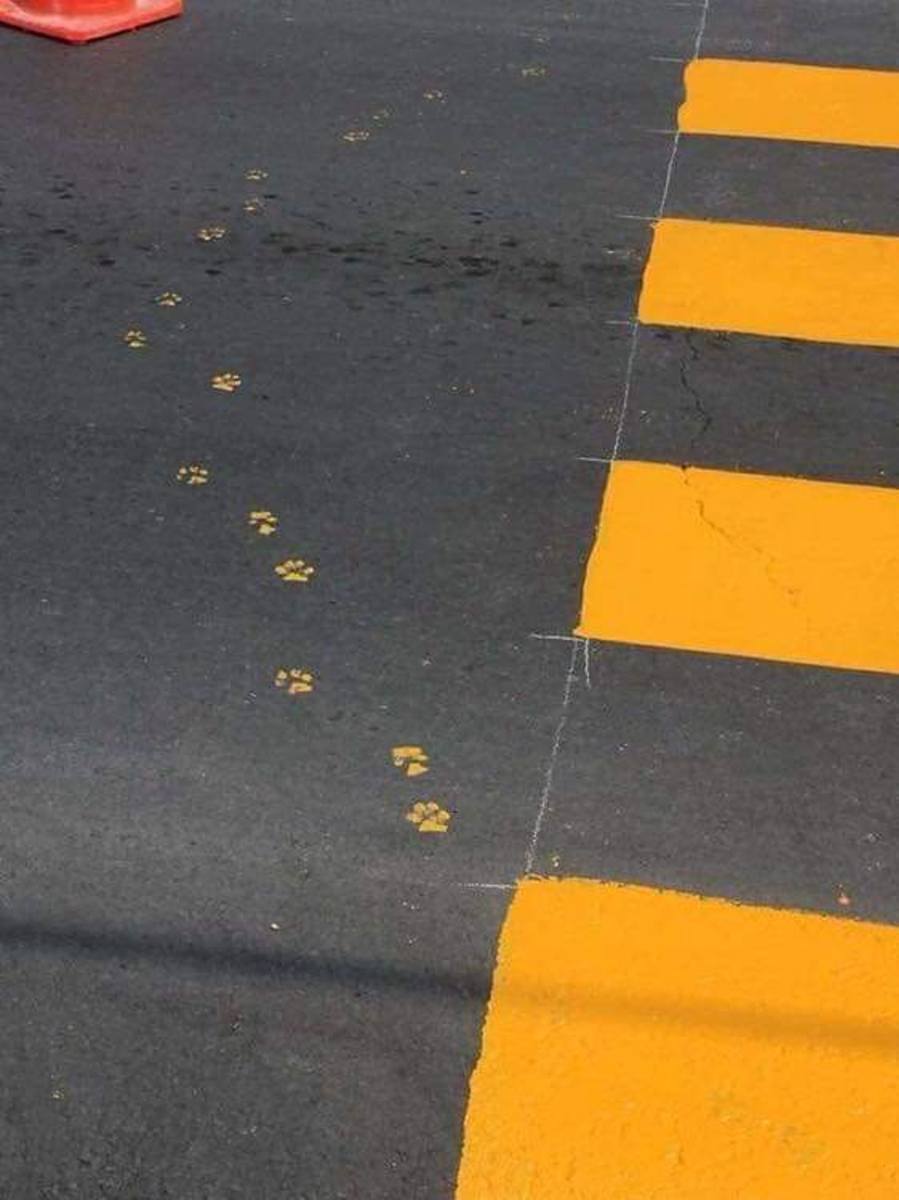
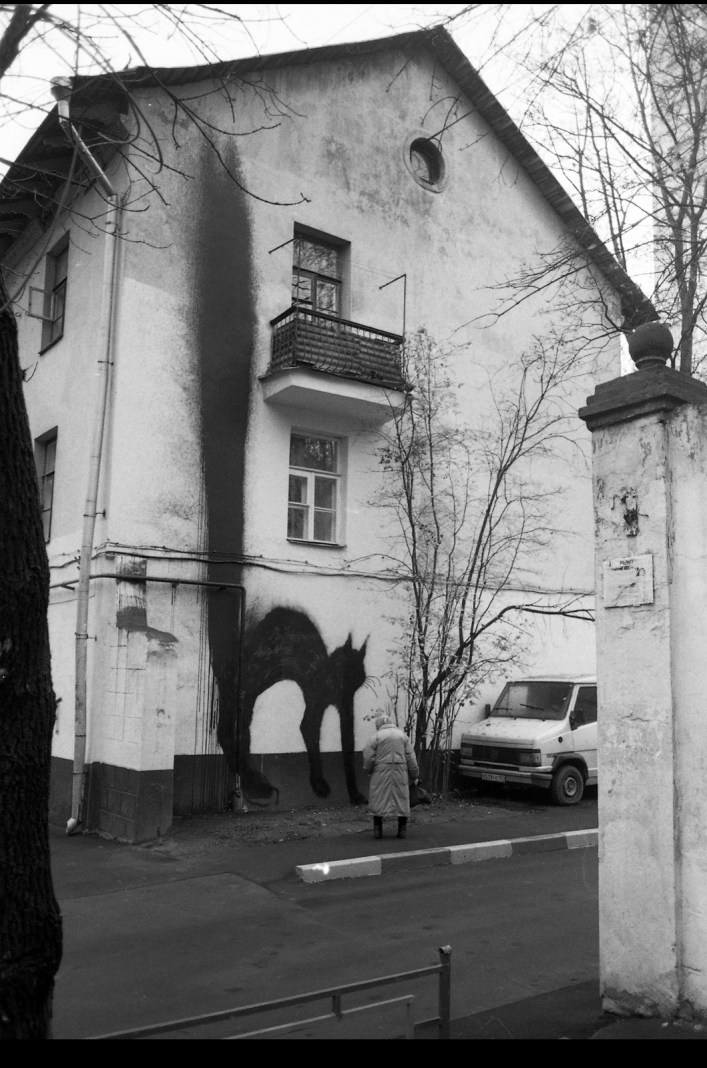
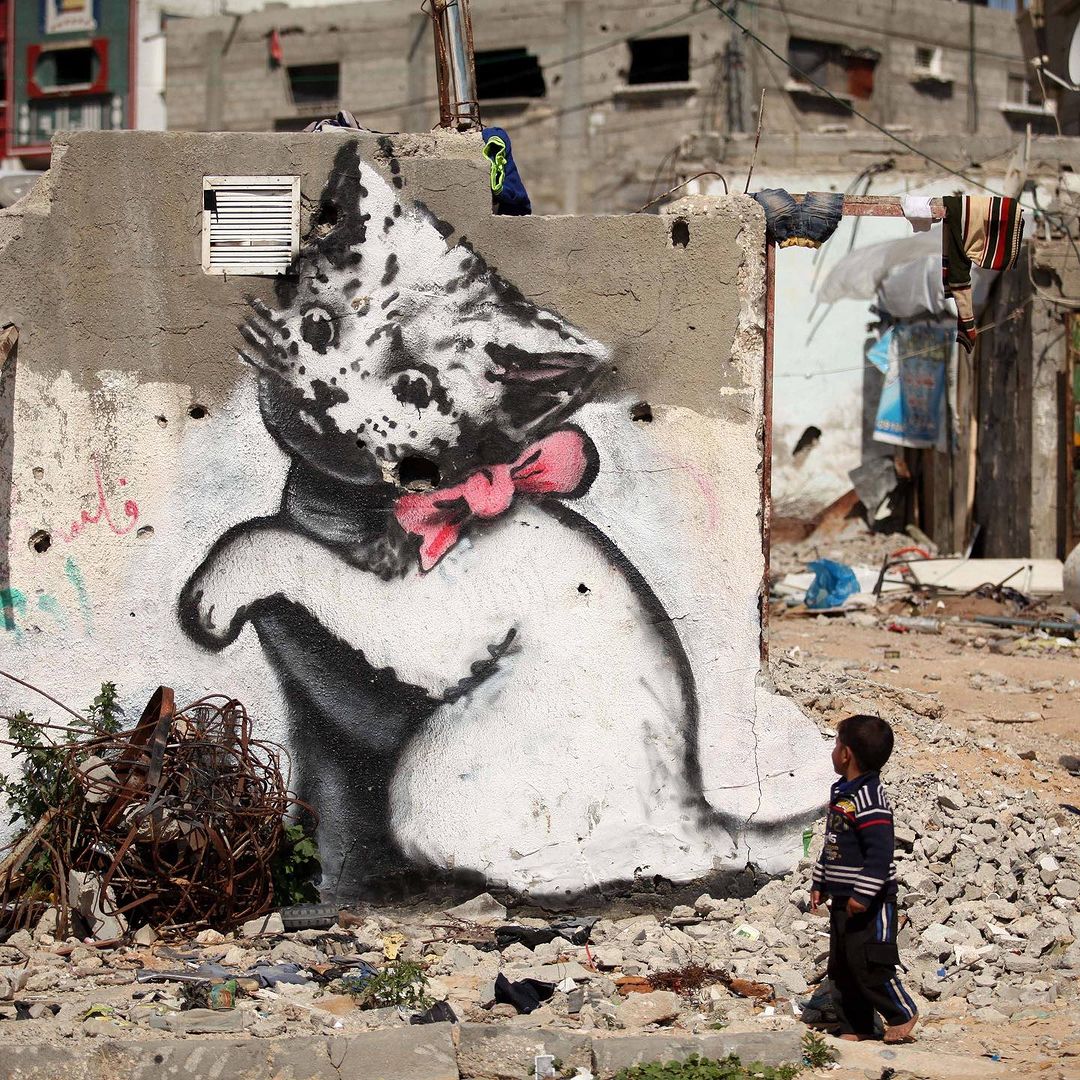
22 photos – A Collection of Street Art by Bordalo II
Content warning: On Facebook. -- This is a collection of Street Art by Bordalo II. ABOUT: Artur Bordalo (Lisbon, 1987) uses the artist name Bordalo II, which he chose as a tribute to his grandfather, the painter Real Bordalo, in order to promote a continuity and reinventi
—
This is a collection of Street Art by Bordalo II.
ABOUT: Artur Bordalo (Lisbon, 1987) uses the artist name Bordalo II, which he chose as a tribute to his grandfather, the painter Real Bordalo, in order to promote a continuity and reinvention of his artistic legacy.
His youth took place between the hours spent in the studio of his grandfather Real Bordalo, who had an incessant passion for watercolors and oils and portrayed landscapes and typical scenes of the city, and the adventures around illegal graffiti in the underworld of the city of Lisbon.
He attended the Painting course at the Faculty of Fine Arts in Lisbon for eight years, without ever having completed it, but says that these years allowed him to discover sculpture, ceramics, and to experiment with a variety of materials that have distanced him from painting, which had taken him there in the first place.
The public space would become the chosen stage for his explorations of color and scale and the platform where he gradually transformed his habits and channeled his experiences in the construction and development of his artistic work, which is currently focused on questioning the materialistic and greedy society of which he is (also) part.
The excessive production and consumption of stuff, which results in the continuous production of “garbage” and consequently in the destruction of the Planet, are the central themes of his production. This “garbage” assumes itself as the unusual and unique raw material that Bordalo uses in the construction of small and large scale pieces that he has spread around the world and that, above all, intend to be the vehicle of a universal manifesto.
—
On Facebook.
On Facebook.
On Facebook.
On Facebook.