Search

Items tagged with: art

The Silent Giant of 1580: A Stone Guardian Weathered by Centuries in Italy


Content warning: Discover the Apennine Colossus, a monumental 16th-century sculpture by Giambologna, hidden within the lush landscapes of Tuscany, Italy. This breathtaking masterpiece, standing over 10 meters tall, blends art and nature with its intricate design and hidde


The Incredible Ocean Statue of Neptune (Poseidon) in Gran Canaria, Spain


Content warning: On the southern coast of Gran Canaria, at the serene Melenara Beach in Telde, the awe-inspiring statue of Neptune (Poseidon) commands attention. Created by renowned sculptor Luis Arencibia, this four-meter-tall bronze masterpiece merges mythology with the


Mud Maid – Living sculpture by Sue and Pete Hill (5 photos and video)


Content warning: Sculptor Sue and Pete Hill The Mud Maid is a living sculpture by Sue and Pete Hill created 1998 at Lost Gardens of Heligan, Pentewan, St.Austell, Cornwall, England. Depending on the season, the mud maid’s ‘hair’ and ‘clothes’ change when the seasonal plan


#treecreature

(: aNNa 😀 blume: “My suggestion would be the theme #tree-mas. You can post photos, pictures, collages, poems, essays… or whatever else you can think of here with the tags: #tree, #tree-mas25. The main thing is #tree 😉
It also fits in with #Diadvent / #Diadvent25.
I look forward to your ideas.”

#Diaspora game, #game, #fun, #end-of-the-year, #treemas, #Tree-mas, #art, #creative, #pictures, #collages, #poems, #essays
12_03


Some delightfully delicate new works from Susanna Bauer

https://www.thisiscolossal.com/2025/12/susanna-bauer-stitched-leaves-rock-paper-scissors/

#art #nature

A detail of a composition by Susanna Bauer of a magnolia leave that has been cut and stitched together with two accordion-like folds
A detail of a composition by Susanna Bauer of two plane tree leaves stitched layered on top of one another and stitched together


Powder White Snow Glistens in the Sunlight, 1913 / Gustaf Fjaestad (1868-1948)
#art
#art


Michael William Kaluta, ‘Comix International’, #17, April 1982
#art #comics


"break through the fog of reality"

the rules of the game are simple - choose a photo (preferably your own), edit with gimp and tag #sundaygimp on a Sunday 😉 … and follow the tag


#sundaygimp


(and also #Sunday-photo-edit )

Note: if you do not use gimp, but still want to play along, just use the tag #Sunday-photo-edit and edit the images with your favorite image editor

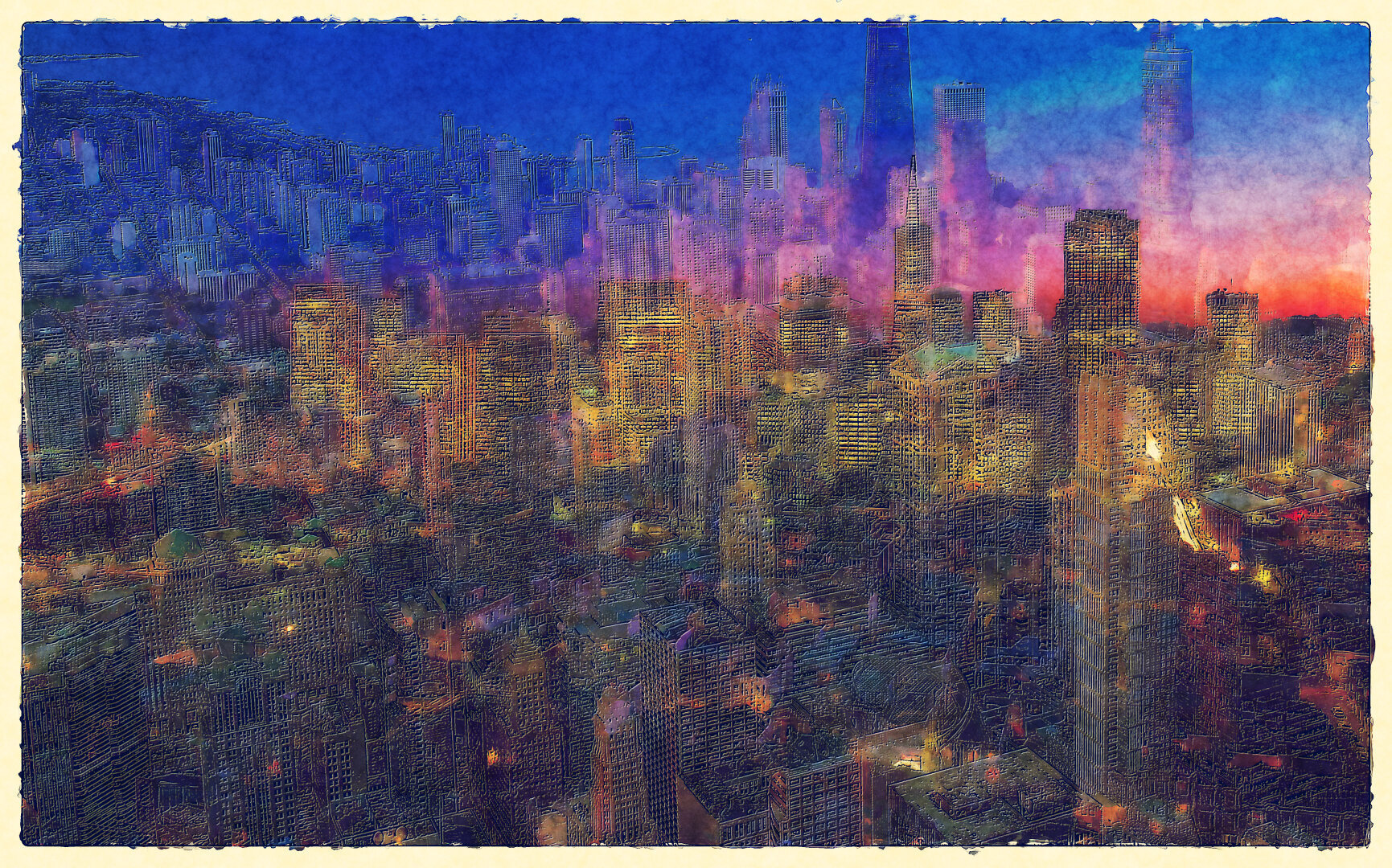
#AB, #AB25, #AB-11-25, #AB-SG, #AB-16-11-25, #gimp, #gmic, #Sundaygimp, #Kunst, #art, #Bildbearbeitung, #Bildmanipulation, #Tristesse-City, #Tristess, #Tristesse, #Tristessensammlung, #sur la route, #Realität, #Alltag, #Nebel, #Reality, #Everyday life, #Fog, #Réalité, #Quotidien, #Brouillard, #manipulation-de-photos, #image-editing, #retouche-d-image, #photo, #Foto, #myphoto, #mywork


Mon sundaygimp

Les règles du jeu sont simples - Choisissez une photo (de préférence la vôtre), éditez avec Gimp et taguez #sundaygimp, un dimanche; puis suivez le tag #sundaygimp (et aussi #dimanche-photo-edition)
Remarque: si vous n’utilisez pas Gimp, mais que vous voulez quand même jouer, utilisez simplement le tag #Sunday-photo-edit et modifiez les images avec votre éditeur d’image préféré.

#mywork, #photo, #photographie, #foto #amateur, #couleur, #Montreal, #photo-edit, #gimp, #gmic, #art, #creation


O Túnel (The Tunnel) 1951
Image/photo
#art #photo by José Oiticica #Filho


Michael J. Kaluta, covert art for ‘Time Warp’, 1984
#art #sciencefiction


My sweetie, a lot of people love you


Francois Octave Tassaert: La Femme Damnee 1859
#art

#art


I’m working on a new pottery surface design technique. New to me, at least: they have been doing this for many hundreds of years in Asia:

Carving a clay stamp, firing it, then using it o stamp the clay while it’s still a little bit soft. It reminds me of the thought process when printmaking.

I’m going to use a celadon style glaze to bring out the texture and beauty of the porcelain clay.

Wheel thrown porcelain

#pottery #handmade #clay #art #kentucky #printmaking #tea #mastoart #craft

Me holding a handmade clay stamp and wheel thrown cup with stamped textures. It’s a pretty cup


Johan Messely
#art, #peinture #Johan-Messely
Fraicheur sous la varangue...


Star Trails over El Capitan
* Image Credit & Copyright: Michael Bolte (UCSC)

Explanation:
Towering 3,000 feet from base to summit, the famous granite face of El Capitan in Earth's Yosemite National Park just hides the planet's north celestial pole in this skyscape. Of course, the north celestial pole is at the center of all the star trails. Their short arcs reflecting the planet's daily rotation on its axis are traced in a digital stack of 36 sequential exposures. Linear trails of passing airplane navigation lights and a flare from car lights along the road below are also captured in the sequential stack. But the punctuated trail of light seen against the sheer El Capitan itself follows a climbing team on the night of November 8, 2013. The team is ascending toward the summit along The Nose, a historic rock climbing route.

https://apod.nasa.gov/apod/ap140321.html

#space #earth #astrophotography #photography #astroart #art #science #nature

2014 March 21

Star Trails over El Capitan
 * Image Credit & Copyright: Michael Bolte (UCSC)

Explanation: 
Towering 3,000 feet from base to summit, the famous granite face of El Capitan in Earth's Yosemite National Park just hides the planet's north celestial pole in this skyscape. Of course, the north celestial pole is at the center of all the star trails. Their short arcs reflecting the planet's daily rotation on its axis are traced in a digital stack of 36 sequential exposures. Linear trails of passing airplane navigation lights and a flare from car lights along the road below are also captured in the sequential stack. But the punctuated trail of light seen against the sheer El Capitan itself follows a climbing team on the night of November 8, 2013. The team is ascending toward the summit along The Nose, a historic rock climbing route. 

Authors & editors: Robert Nemiroff (MTU) & Jerry Bonnell (UMCP)
NASA Official: Phillip Newman Specific rights apply.
NASA Web Privacy Policy and Important Notices
A service of: ASD at NASA / GSFC
& Michigan Tech. U.


Rio at Night
* Image Credit & Copyright: Babak Tafreshi (TWAN)

Explanation:
In this night skyscape setting stars trail above the western horizon over Rio de Janeiro, Brazil, a venue for the 2014 World Cup. Gentle arcs from the bright, colorful stars of Orion are near the center of the frame, while the starfield itself straddles planet Earth's celestial equator during the long exposure. Of course, trails from more local lights seem to create the strident paths through the scene. Air traffic smears an intense glow over an airport at the far right, while helicopters fly above the city and boats cruise near the coast. Striping the waterfront are tantalizing reflections of bright lights along Rio's central beaches, Botafogo and Flamengo. Near the horizon, the brightest fixed light is the famous Cristo statue overlooking Rio at night.

https://apod.nasa.gov/apod/ap140620.html

#space #earth #astrophotography #photography #astroart #art #science #nature

2014 June 20

Rio at Night
 * Image Credit & Copyright: Babak Tafreshi (TWAN)

Explanation: 
In this night skyscape setting stars trail above the western horizon over Rio de Janeiro, Brazil, a venue for the 2014 World Cup. Gentle arcs from the bright, colorful stars of Orion are near the center of the frame, while the starfield itself straddles planet Earth's celestial equator during the long exposure. Of course, trails from more local lights seem to create the strident paths through the scene. Air traffic smears an intense glow over an airport at the far right, while helicopters fly above the city and boats cruise near the coast. Striping the waterfront are tantalizing reflections of bright lights along Rio's central beaches, Botafogo and Flamengo. Near the horizon, the brightest fixed light is the famous Cristo statue overlooking Rio at night. 

Authors & editors: Robert Nemiroff (MTU) & Jerry Bonnell (UMCP)
NASA Official: Phillip Newman Specific rights apply.
NASA Web Privacy Policy and Important Notices
A service of: ASD at NASA / GSFC
& Michigan Tech. U.


A Luminous Night
* Image Credit & Copyright: Phil Hart

Explanation:
What shines in the world at night? Just visible to the eye, a rare electric blue glow spread along the shores of Victoria Lake on January 16, 2013. Against reflections of a light near the horizon, this digitally stacked long exposure recorded the bioluminescence of Noctiluca scintillans, plankton stimulated by the lapping waves. Above, the night skies of the Gippsland Lakes region, Victoria, Australia shine with a fainter greenish airglow. Oxygen atoms in the upper atmosphere, initially excited by ultraviolet sunlight, produce the more widely seen fading atmospheric chemiluminescence. Washed out by the Earth's rotation, the faint band of the southern summer Milky Way stretches from the horizon as star trails circle the South Celestial Pole.

https://apod.nasa.gov/apod/ap140809.html

#space #earth #astrophotography #photography #astroart #art #science #education

2014 August 9

A Luminous Night
 * Image Credit & Copyright: Phil Hart

Explanation: 
What shines in the world at night? Just visible to the eye, a rare electric blue glow spread along the shores of Victoria Lake on January 16, 2013. Against reflections of a light near the horizon, this digitally stacked long exposure recorded the bioluminescence of Noctiluca scintillans, plankton stimulated by the lapping waves. Above, the night skies of the Gippsland Lakes region, Victoria, Australia shine with a fainter greenish airglow. Oxygen atoms in the upper atmosphere, initially excited by ultraviolet sunlight, produce the more widely seen fading atmospheric chemiluminescence. Washed out by the Earth's rotation, the faint band of the southern summer Milky Way stretches from the horizon as star trails circle the South Celestial Pole. 

Authors & editors: Robert Nemiroff (MTU) & Jerry Bonnell (UMCP)
NASA Official: Phillip Newman Specific rights apply.
NASA Web Privacy Policy and Important Notices
A service of: ASD at NASA / GSFC
& Michigan Tech. U.


Star Trails Over Indonesia
*Image Credit & Licence: HuiChieh (my dark sky)

Explanation:
Both land and sky were restless. The unsettled land included erupting Mount Semeru in the distance, the caldera of steaming Mount Bromo on the left, flowing fog, and the lights of moving cars along roads that thread between hills and volcanoes in Bromo Tengger Semeru National Park in East Java, Indonesia. The stirring sky included stars circling the South Celestial Pole and a meteor streaking across the image right. The above 270-image composite was taken from King Kong Hill in mid-June over two hours, with a rising Moon lighting the landscape.

https://apod.nasa.gov/apod/ap140818.html

#space #earth #astrophotography #photography #astroart #art #science #nature

2014 August 18 

Star Trails Over Indonesia
 *Image Credit & Licence: HuiChieh (my dark sky)

Explanation: 
Both land and sky were restless. The unsettled land included erupting Mount Semeru in the distance, the caldera of steaming Mount Bromo on the left, flowing fog, and the lights of moving cars along roads that thread between hills and volcanoes in Bromo Tengger Semeru National Park in East Java, Indonesia. The stirring sky included stars circling the South Celestial Pole and a meteor streaking across the image right. The above 270-image composite was taken from King Kong Hill in mid-June over two hours, with a rising Moon lighting the landscape. 

Authors & editors: Robert Nemiroff (MTU) & Jerry Bonnell (UMCP)
NASA Official: Phillip Newman Specific rights apply.
NASA Web Privacy Policy and Important Notices
A service of: ASD at NASA / GSFC
& Michigan Tech. U.


2015 May 8

When Vega is North
 * Image Credit & Copyright: Miguel Claro | Dark Sky Alqueva

Explanation: 
In only about 12,000 years Vega will be the North Star, the closest bright star to our fair planet's North Celestial Pole. By then, when you fix your camera to a tripod long exposures of the night sky will show the concentric arcs of star trails centered on a point near Vega as Earth rotates on its axis. Of course, presently the bright star conveniently near the North Celestial Pole is Polaris, but that will change as the Earth's axis of rotation precesses, like the wobble of a spinning top with a precession period of about 26,000 years. If your camera is ready now and you don't want to wait 12,000 years for Vega to be the North Star, consider this ingenious demonstration of contemporary star trails (left) versus star trails reminiscent of the year 14000 CE. Both were recorded this April at the Alqueva Dark Sky Reserve in Alentejo, Portugal. To produce the more Vega-centric star trails of the distant future, astronomer Miguel Claro combined the rotation of two startracking camera mounts to create the apparent shift in the North Celestial Pole. (Addendum: Thanks to APOD readers who note that when Vega is the North Star it will also appear near the same position that Polaris is now relative to the landscape.) 

Authors & editors: Robert Nemiroff (MTU) & Jerry Bonnell (UMCP)
NASA Official: Phillip Newman Specific rights apply.


Auroras and Star Trails over Iceland
* Image Credit & Copyright: Vincent Brady

Explanation:
It was one of the quietest nights of aurora in weeks. Even so, in northern- Iceland during last November, faint auroras lit up the sky every clear night. The featured 360-degree panorama is the digital fusion of four wide-angle cameras each simultaneously taking 101 shots over 42 minutes. In the foreground is serene Lake Myvatn dotted with picturesque rock formations left over from ancient lava flows. Low green auroras sweep across the sky above showing impressive complexity near the horizon. Stars far in the distance appear to show unusual trails -- as the Earth turned -- because early exposures were artificially faded.

https://apod.nasa.gov/apod/ap150518.html

#space #earth #astrophotography #photography #astroart #art #science #nature

2015 May 18

Auroras and Star Trails over Iceland
 * Image Credit & Copyright: Vincent Brady

Explanation: 
It was one of the quietest nights of aurora in weeks. Even so, in northern- Iceland during last November, faint auroras lit up the sky every clear night. The featured 360-degree panorama is the digital fusion of four wide-angle cameras each simultaneously taking 101 shots over 42 minutes. In the foreground is serene Lake Myvatn dotted with picturesque rock formations left over from ancient lava flows. Low green auroras sweep across the sky above showing impressive complexity near the horizon. Stars far in the distance appear to show unusual trails -- as the Earth turned -- because early exposures were artificially faded. 

Authors & editors: Robert Nemiroff (MTU) & Jerry Bonnell (UMCP)
NASA Official: Phillip Newman Specific rights apply.
NASA Web Privacy Policy and Important Notices
A service of: ASD at NASA / GSFC
& Michigan Tech. U.


Ghosts and Star Trails
* Image Credit & Copyright: Chris Kotsiopoulos (GreekSky)

Explanation:
Don't be scared. Stars won't fall from the sky and ghosts won't really haunt your neighborhood tonight. But it looks like they might be doing just that in this eerie picture of an eccentric old abandoned house in moonlight. A treat for the eye the image is a trick of stacked multiple exposures, 60 frames exposed for 25 seconds each. While the digital frames were recorded with a camera fixed to a tripod, stars traced concentric arcs about the north celestial pole. But that's only a reflection of planet Earth's rotation on its axis. Conveniently marked by bright star Polaris, the pole could be positioned above the peaks of the deserted dwelling. Wrapped in a blanket to stay warm, the photographer's own movements during the exposures were blended into the ghostly apparitions. Of course, the grinning Jack-o-Lantern is there to wish you a safe and Happy Halloween!

https://apod.nasa.gov/apod/ap151031.html

#space #earth #astrophotography #photography #astroart #art #science #nature

2015 October 31

Ghosts and Star Trails
 * Image Credit & Copyright: Chris Kotsiopoulos (GreekSky)

Explanation: 
Don't be scared. Stars won't fall from the sky and ghosts won't really haunt your neighborhood tonight. But it looks like they might be doing just that in this eerie picture of an eccentric old abandoned house in moonlight. A treat for the eye the image is a trick of stacked multiple exposures, 60 frames exposed for 25 seconds each. While the digital frames were recorded with a camera fixed to a tripod, stars traced concentric arcs about the north celestial pole. But that's only a reflection of planet Earth's rotation on its axis. Conveniently marked by bright star Polaris, the pole could be positioned above the peaks of the deserted dwelling. Wrapped in a blanket to stay warm, the photographer's own movements during the exposures were blended into the ghostly apparitions. Of course, the grinning Jack-o-Lantern is there to wish you a safe and Happy Halloween! 

Authors & editors: Robert Nemiroff (MTU) & Jerry Bonnell (UMCP)
NASA Official: Phillip Newman Specific rights apply.
NASA Web Privacy Policy and Important Notices
A service of: ASD at NASA / GSFC
& Michigan Tech. U.


Cerro Tololo Trails
* Image Credit & Copyright: Babak Tafreshi (TWAN), AURA

Explanation:
Early one moonlit evening car lights left a wandering trail along the road to the Chilean Cerro Tololo Inter-American Observatory. Setting stars left the wandering trails in the sky. The serene view toward the mountainous horizon was captured in a telephoto timelapse image and video taken from nearby Cerro Pachon, home to Gemini South. Afforded by the mountaintop vantage point, the clear, long sight-line passes through layers of atmosphere. The changing atmospheric refraction shifts and distorts the otherwise steady apparent paths of the stars as they set. That effect also causes the distorted appearance of Sun and Moon as they rise or set near a distant horizon.

https://apod.nasa.gov/apod/ap161022.html

#space #earth #astrophotography #photography #astroart #art #science #nature

2016 October 22

Cerro Tololo Trails
 * Image Credit & Copyright: Babak Tafreshi (TWAN), AURA

Explanation: 
Early one moonlit evening car lights left a wandering trail along the road to the Chilean Cerro Tololo Inter-American Observatory. Setting stars left the wandering trails in the sky. The serene view toward the mountainous horizon was captured in a telephoto timelapse image and video taken from nearby Cerro Pachon, home to Gemini South. Afforded by the mountaintop vantage point, the clear, long sight-line passes through layers of atmosphere. The changing atmospheric refraction shifts and distorts the otherwise steady apparent paths of the stars as they set. That effect also causes the distorted appearance of Sun and Moon as they rise or set near a distant horizon. 

Authors & editors: Robert Nemiroff (MTU) & Jerry Bonnell (UMCP)
NASA Official: Phillip Newman Specific rights apply.
NASA Web Privacy Policy and Important Notices
A service of: ASD at NASA / GSFC
& Michigan Tech. U.


Alborz Mountain Star Trails
* Image Credit & Copyright: Stéphane Guisard (Los Cielos de America, TWAN)

Explanation:
Colourful star trails arc through the night in this wide-angle mountain and skyscape. From a rotating planet, the digitally added consecutive exposures were made with a camera fixed to a tripod and looking south, over northern Iran's Alborz Mountain range. The stars trace concentric arcs around the planet's south celestial pole, below the scene's rugged horizon. Combined, the many short exposures also bring out the pretty star colours. Bluish trails are from stars hotter than our Sun, while yellowish trails are from cooler stars. Near the center, the remarkably pinkish trail was traced by the star-forming Orion Nebula.

https://apod.nasa.gov/apod/ap180302.html

#space #earth #astrophotography #photography #astroart #art #science #nature

2018 March 2

Alborz Mountain Star Trails
 * Image Credit & Copyright: Stéphane Guisard (Los Cielos de America, TWAN)

Explanation: 
Colourful star trails arc through the night in this wide-angle mountain and skyscape. From a rotating planet, the digitally added consecutive exposures were made with a camera fixed to a tripod and looking south, over northern Iran's Alborz Mountain range. The stars trace concentric arcs around the planet's south celestial pole, below the scene's rugged horizon. Combined, the many short exposures also bring out the pretty star colours. Bluish trails are from stars hotter than our Sun, while yellowish trails are from cooler stars. Near the center, the remarkably pinkish trail was traced by the star-forming Orion Nebula. 

Authors & editors: Robert Nemiroff (MTU) & Jerry Bonnell (UMCP)
NASA Official: Phillip Newman Specific rights apply.
NASA Web Privacy Policy and Important Notices
A service of: ASD at NASA / GSFC
& Michigan Tech. U.


Rotation of the Large Magellanic Cloud
* Image Credit & Licence: ESA, Gaia, DPAC

Explanation:
This image is not blurry. It shows in clear detail that the largest satellite galaxy to our Milky Way, the Large Cloud of Magellan (LMC), rotates. First determined with Hubble, the rotation of the LMC is presented here with fine data from the Sun-orbiting Gaia satellite. Gaia measures the positions of stars so accurately that subsequent measurements can reveal slight proper motions of stars not previously detectable. The featured image shows, effectively, exaggerated star trails for millions of faint LMC stars. Inspection of the image also shows the center of the clockwise rotation: near the top of the LMC's central bar. The LMC, prominent in southern skies, is a small spiral galaxy that has been distorted by encounters with the greater Milky Way Galaxy and the lesser Small Magellanic Cloud (SMC).

#space #earth #astrophotography #photography #astroart #art #science #nature

https://apod.nasa.gov/apod/ap180516.html

2018 May 16

Rotation of the Large Magellanic Cloud
 * Image Credit & Licence: ESA, Gaia, DPAC

Explanation: 
This image is not blurry. It shows in clear detail that the largest satellite galaxy to our Milky Way, the Large Cloud of Magellan (LMC), rotates. First determined with Hubble, the rotation of the LMC is presented here with fine data from the Sun-orbiting Gaia satellite. Gaia measures the positions of stars so accurately that subsequent measurements can reveal slight proper motions of stars not previously detectable. The featured image shows, effectively, exaggerated star trails for millions of faint LMC stars. Inspection of the image also shows the center of the clockwise rotation: near the top of the LMC's central bar. The LMC, prominent in southern skies, is a small spiral galaxy that has been distorted by encounters with the greater Milky Way Galaxy and the lesser Small Magellanic Cloud (SMC). 

Authors & editors: Robert Nemiroff (MTU) & Jerry Bonnell (UMCP)
NASA Official: Phillip Newman Specific rights apply.
NASA Web Privacy Policy and Important Notices
A service of: ASD at NASA / GSFC
& Michigan Tech. U.


Circumpolar Star Trails
Image Credit & Copyright: Gabriel Funes

Explanation:
As Earth spins on its axis, the stars appear to rotate around an observatory in this well-composed image from the Canary Island of Tenerife. Of course, the colorful concentric arcs traced out by the stars are really centered on the planet's North Celestial Pole. Convenient for northern hemisphere astro-imagers and celestial navigators alike, bright star Polaris is near the pole and positioned in this scene to be behind the telescope dome. Made with a camera fixed to a tripod, the series of over 200 stacked digital exposures spanned about 4 hours. The observatory was not operating on that clear, dark night, but that's not surprising. The dome houses the Teide Observatory's large THEMIS Solar Telescope.

https://apod.nasa.gov/apod/ap190118.html

#space #earth #astrophotography #photography #astroart #art #science #nature

2019 January 18

Circumpolar Star Trails
Image Credit & Copyright: Gabriel Funes

Explanation: 
As Earth spins on its axis, the stars appear to rotate around an observatory in this well-composed image from the Canary Island of Tenerife. Of course, the colorful concentric arcs traced out by the stars are really centered on the planet's North Celestial Pole. Convenient for northern hemisphere astro-imagers and celestial navigators alike, bright star Polaris is near the pole and positioned in this scene to be behind the telescope dome. Made with a camera fixed to a tripod, the series of over 200 stacked digital exposures spanned about 4 hours. The observatory was not operating on that clear, dark night, but that's not surprising. The dome houses the Teide Observatory's large THEMIS Solar Telescope. 

Authors & editors: Robert Nemiroff (MTU) & Jerry Bonnell (UMCP)
NASA Official: Phillip Newman Specific rights apply.
NASA Web Privacy Policy and Important Notices
A service of: ASD at NASA / GSFC
& Michigan Tech. U.