The passion of de Falla with the passion of Jacqueline du Pre... Cello: Jacqueline du Pré (1945-1987) Guitar: John Williams Date recording: 1963 Composer: Manuel de Falla (1876 - 1946) In his Spanish Suite, Manuel de Falla did more than just reproduce the emotionality of folklore, suspended between deep singing and elemental rhythm – he sublimated it. The musical narration, varying from one individual miniature to the next, draws the audience into a kaleidoscope of colourful images of music and movement, provoking it into active participation. "Jota" is a Spanish dance and folk song #MyMusicCollection #cello #JacquelineDuPre #JohnWilliams #classicalmusic #DeFalla #music
He rises and begins to round, He drops the silver chain of sound, Of many links without a break, In chirrup, whistle, slur and shake.
For singing till his heaven fills, 'Tis love of earth that he instils, And ever winging up and up, Our valley is his golden cup And he the wine which overflows to lift us with him as he goes.
Till lost on his aerial rings In light, and then the fancy sings
— Composer: Ludwig van Beethoven (17 December 1770 -- 26 March 1827) — Performers: Alban Berg Quartett — Year of recording: 1981
String Quartet No. 16 in F major, Op. 135, written in 1826.
00:00 - I. Allegretto 06:22 - II. Vivace [Scherzo] 09:50 - III. Lento assai e cantante tranquillo 17:39 - IV. Grave ma non troppo tratto - Allegro ("Der schwer gefasste Entschluss")
Beethoven wrote the bulk of this, his final quartet, in a two-month burst of activity amid health problems and shortly after his nephew Karl attempted to commit suicide. But there's not a hint of self-pity or anguish in this compact, good-natured work. For Beethoven's valedictory composition, this quartet is surprisingly small-scaled, finding inspiration in the quartets of Beethoven's one-time teacher Haydn.
Harmonies poétiques et religieuses (Poetic and Religious Harmonies), S.173, is a cycle of piano pieces written by Franz Liszt at Woronińce (Voronivtsi, the Polish-Ukrainian country estate of Liszt’s mistress Princess Carolyne von Sayn-Wittgenstein) in 1847, and published in 1853. The pieces are inspired by the poetry of Alphonse de Lamartine, as was Liszt’s symphonic poem Les Préludes. [+]
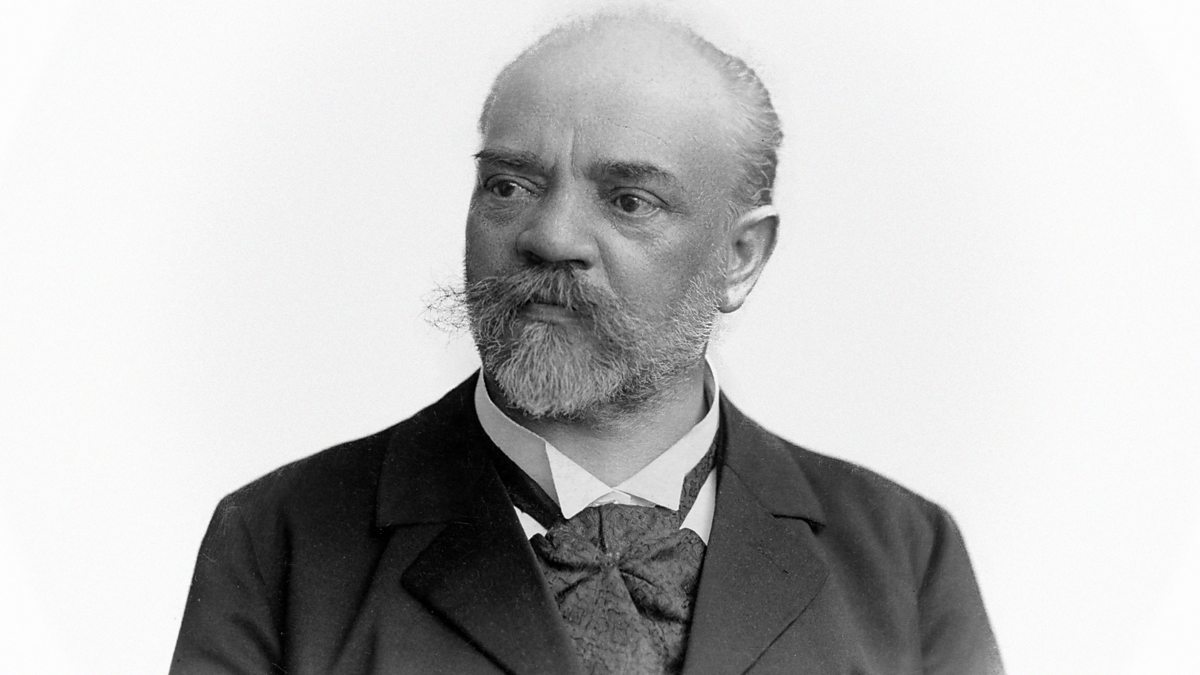
Composer: Antonín Dvorák Artist: Inna Poroshina (piano)
Dvorák considered himself only a modest pianist (he was a string player), and his music for piano has for long been neglected and considered of secondary importance to his symphonies, concertos and chamber works. Whilst undoubtedly true, the output for solo piano does contain some of his more mundane efforts, closer study of the music reveals some gems well worth getting to know, and that all contain his innate gift for melody.
His largest work featuring piano, the G major piano concerto has finally made some headway in the concert repertoire, and has always been championed by leading pianists – Richter and Aimard to name just two. The piano trios, quartets and the quintet all have effective piano parts, and are well laid out for the pianist. So why has the solo piano music been so neglected?
These works span his entire creative life, from the simple little Polka in E of 1860, to the Theme and Variations, Suite in A, and the Humoresques of 1894. These last three works are his masterpieces for piano, and indeed the Seventh Humoresque in G became very famous due its use in a Joan Crawford film in 1946, and through arrangements by Fritz Kreisler and Art Tatum. The Suite in A, dating from his time in America (where he composed his Ninth Symphony ‘From the New World’) is better known today in its orchestral version.
These CDs contain some wonderful little known music by one the best-loved composers – music that deserves a wider audience.
Teaser de « Cabaret Satie » Concert - spectacle de Philippe Nesme [Le compositeur Erik Satie] Carmen Martinez-Pierret [La pianiste Marcelle Meyer] Elsa Fabrega [L’ artiste peintre Suzanne Valadon] Musiques & Textes d'Erik Satie Styliste / Assistante à la mise en scène : Elsa Fabrega Metteur en scène / Réalisateur : Philippe Nesme [Les Films de peu, 2016] Contact programmateurs : management@musicaactiva.com + info teaser : Musique : « Gnossienne II », par Carmen Martinez-Pierret
Piano Sonata No. 1 in F minor, Op. 2, No. 1 00:07 I Allegro 05:50 II Adagio 10:15 III Menuetto – Allegretto 13:57 IV Prestissimo
Piano Sonata No. 7 in D major, Op. 10, No. 3 21:30 I Presto 28:28 II Largo e mesto 37:01 III Menuetto: Allegro 40:04 IV Rondo: Allegro
Piano Sonata No. 9 in E major, Op. 14, No. 1 45:14 I Allegro 52:17 II Allegretto 58:13 III Rondo – Allegro comodo
Piano Sonata No. 12 in A-flat major, Op. 26 "Funeral March" 01:01:46 I Andante con variazioni 01:08:29 II Scherzo: Allegro molto 01:11:32 III Marcia funebre sulla morte di un eroe: Maestoso andante 01:17:35 IV Allegro
01:21:35 Bagatelle in G major, op.126 no.1 (Andante con moto, Cantabile e compiacevole)
Recorded live at the Great Hall of the Moscow Conservatory, 15 October 1976
No.1 en mi bémol mineur Op.33 No.1 (00:00) No.2 en si majeur Op.33 No.2 (08:09) No.3 en la bémol majeur Op.33 No.3 (13:33) No.4 en mi bémol majeur Op.36 (18:39) No.5 en si bémol majeur Op.37 (24:56) No.6 en ré bémol majeur Op.63 (32:05) No.7 en do dièse mineur Op.74 (40:53) No.8 en ré bémol majeur / Pièces brèves (49:07) No.9 en si mineur Op.97 (50:55) No.10 en mi mineur Op.99 (55:14) No.11 en fa dièse mineur Op.104 No.1 (59:16) No.12 en mi mineur Op.107 (1:03:33) No.13 en si mineur Op.119 (1:08:02)
Thème et variations en Do dièse mineur Op.73 Thème (1:15:47) Variation I (1:18:03) Variation II (1:19:15) Variation III (1:20:04) Variation IV (2:20:43) Variation V (1:21:29) Variation VI (1:22:21) Variation VII (1:24:22) Variation VIII (1:25:17) Variation IX (1:26:25) Variation X (1:27:59) Variation XI (1:29:05)
The late, renowned Austrian pianist Friedrich Gulda performs 2 Mozart Piano Sonatas. His first interpretation is of # 9, K.311 in D major followed by # 12, K.332 in F major. Gulda was most famous for his Mozart and Beethoven interpretations, although he also performed the music of J. S. Bach (often on clavichord), Schubert, Chopin, Schumann, Debussy and Ravel.
K.311 ~ Allegro con spirito Andante con espressione Rondeau (allegro) K. 332 ~Allegro Adagio Allegro assai
I remember Friedrich Gulda well, as a classmate taught the son of Gulda in piano playing... Gulda later in his career played a lot of jazz... great jazz!
— Composer: Ludwig van Beethoven (17 December 1770 -- 26 March 1827) — Performers: Alban Berg Quartett — Year of recording: 1981
String Quartet No. 16 in F major, Op. 135, written in 1826.
00:00 - I. Allegretto 06:22 - II. Vivace [Scherzo] 09:50 - III. Lento assai e cantante tranquillo 17:39 - IV. Grave ma non troppo tratto - Allegro ("Der schwer gefasste Entschluss")
Beethoven wrote the bulk of this, his final quartet, in a two-month burst of activity amid health problems and shortly after his nephew Karl attempted to commit suicide. But there's not a hint of self-pity or anguish in this compact, good-natured work. For Beethoven's valedictory composition, this quartet is surprisingly small-scaled, finding inspiration in the quartets of Beethoven's one-time teacher Haydn.
#NowPlaying #NP #MusicArt of Rally: Original Game Soundtrack by Tatreal.
This album is an impressive collection of 51 (!) well-produced #instrumental #synthwave tracks. Perfect as background music, three of the tracks also are absolute bangers for me: Run, Confidence and The Perfect Corner.
🎹 Francesco Piemontesi 🎹 Herbert Blomstedt ▫ conductorPROGRAMME: W.A. Mozart: Piano Concerto in B major KV 595 Franz Schubert: Symphony no 8, D944
Performed live at the Elbphilharmonie in Hamburg on December 11th, 2020.
A great orchestra with a great soloist... but to me this si a "Herbie show" first and foremost. It is always quite mesmerizing to watch Maestro Blomstedt, still very much on top of his game - he is currently the oldest active conductor in the world at 93 years of age. And conducting Schubert´s "Die Große C-Dur" from memory, of course ! 🤍
The other day I was having a conversation about music with some people I work with in a Restaurant in Amsterdam. These two guys are younger than me and, being young Europeans, they could not conceive I don't like electronic music. I tried to explain that musicians are important for me to appreciate a song, and that leaving the generation of sound to machines was, for me, a last resort, in case the music was just too complex to be played by humans.
This reminded me of the song (or musical piece) called G-spot Tornado, written by Frank Zappa. Zappa wrote that song for the Jazz from Hell album, and said the piece was too difficult to be played by humans, so he used a Synclavier DMS to play all the parts. I showed them that song as an example of the electronic music I could listen to. They were surprised at what they were listening.
This whole event, in turn, reminded me of the performance of this song by the Ensemble Modern in Frankfurt, Germany. In addition to the ensemble playing a wonderful, amazing rendition of the song (which was being conducted by Zappa, for... show more
The other day I was having a conversation about music with some people I work with in a Restaurant in Amsterdam. These two guys are younger than me and, being young Europeans, they could not conceive I don't like electronic music. I tried to explain that musicians are important for me to appreciate a song, and that leaving the generation of sound to machines was, for me, a last resort, in case the music was just too complex to be played by humans.
This reminded me of the song (or musical piece) called G-spot Tornado, written by Frank Zappa. Zappa wrote that song for the Jazz from Hell album, and said the piece was too difficult to be played by humans, so he used a Synclavier DMS to play all the parts. I showed them that song as an example of the electronic music I could listen to. They were surprised at what they were listening.
This whole event, in turn, reminded me of the performance of this song by the Ensemble Modern in Frankfurt, Germany. In addition to the ensemble playing a wonderful, amazing rendition of the song (which was being conducted by Zappa, for his Yellow Shark album), behind Zappa -- and therefore in front of the orchestra) Canadian Dancer Louise Lecavalier was making a dance adaptation of the song. Her performance is as mind-blowing as the song, and the two together make for a show that is worth seeing many times.
Thus, here's the video to the song:
. Played by the Frankfurt Ensemble Modern. Written and Directed by Frank Zappa. Arranged by Ali N. Askin. Performed in dance by Louise Lecavalier
I watched Dark series and I think it pretty much sucked. They could do so much better with the plot.
But they have Nena's Irgendwie Irgendwo Irgendwann as soundtrack and I liked this song in the past. Now I downloaded five versions of it and I just can't stop listening to it imagining all sorts of fantasies related to the series (and not so much).