Content warning: I have always been interested in jails. After all, as canvas jails are just closed walls. I did a project a few years ago in Rikers Island and it was a fascinating experience because nothing happens in a prison, and when those who are there are confronted
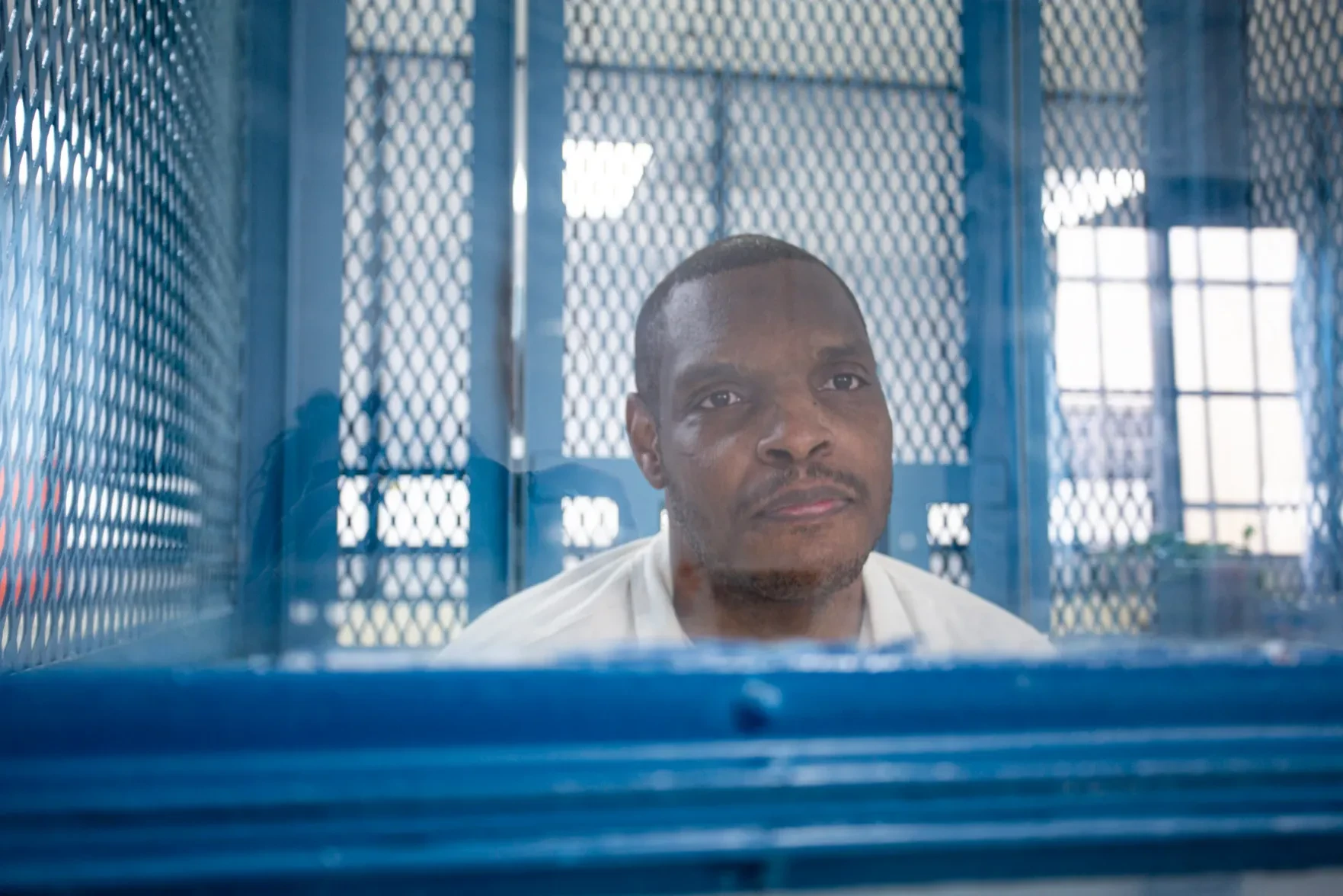
About the project in JR’s own words: “I have always been interested in jails. After all, as canvas jails are just closed walls. I did a project a few years ago in Rikers Island and it was a fascinating experience because nothing happens in a prison, and when those who are there are confronted with something new, it quickly becomes a highlight. They invest so much energy in it that it gets very emotional. A friend called me recently to say that I could be granted access to a jail in California. At first, I thought it would be too much paperwork and constraints, but luckily someone who participated in The Chronicles of San Francisco facilitated the process. So, with Google Earth, I browsed all the 35 State prisons of California, and I chose Tehachapi without knowing it was a maximum security prison… I just thought that the yard and the surroundings would make a perfect image. The idea was to meet with men working on rehabilitation, and to also engage formerly incarcerated men, their family members, as well as the prison staff, and survivors of violent crimes. When I got there, I understood that most of these men were incarcerated when they were teenagers between 13 and 20 … I told them about my project and made it clear that I did not want to know what they had done. They had a trial, they have been sentenced and I am not their judge. Nevertheless, a couple of guys left because they felt that their presence would be embarrassing for their families or for the families of their victims.
I was asked not to approach the guys too closely because they are not comfortable with interactions but when I got in, I couldn’t refrain from looking at them in the eyes, shaking their hands, introducing myself and asking their names. Just because that’s what humans do. They were amazingly grateful for this… A number of them were in prison for life because of the three strikes law in California.
Some will be freed because the law changed since they got in. During the process I was allowed to use my phone and I shared stories about the pasting on social media. I received reactions from everywhere, from their families, from victims, from critics, from people who were shocked by the swastika tattooed on the face of a man, etc. I shared them, we discussed. The families of the inmates started replying also on social media and there was a connection between the inside and the outside for a brief moment. When the piece was pasted we decided to wait for a couple of weeks so we could put together a platform for everyone to hear the stories. Why? Because we know that it is a sensitive subject and we wanted anyone to be able to listen to stories of hope and redemption, to get testimonies that one doesn’t normally hear. Because what happened there when these men, their guards, and some victims worked all together on an art piece has to be seen. We wanted to share the process and embrace the complexity of human actions and feelings that we have witnessed .. These men have been judged guilty when they were young, some were dragged into gangs and did heavy mistakes, and they have paid or are paying the price. They say that they changed and they are ready to become active citizens, to give a meaning to their lives.
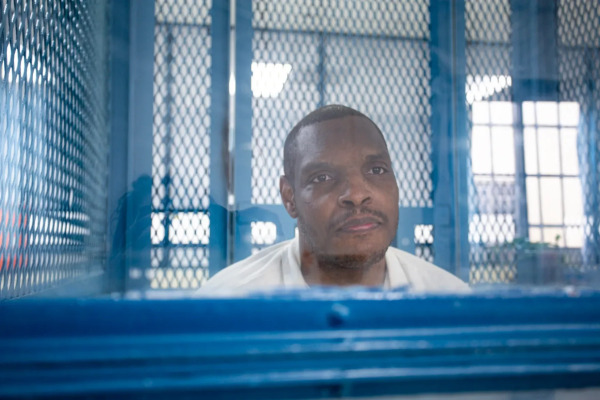
The final image was captured with a drone. It also features some formerly incarcerated men and victims who accepted to forgive and came back inside the prison to paste the huge image composed with 338 strips of paper.
A few years ago I started a journey called “Can art change the world?”. It is still an open question. And with this project, I want to raise another question: “Can a man change?”. Before answering yes or no, ask yourself the question: Did I change? Did I make mistakes, apologize and amend? If I did, why couldn’t they? You can download the free app for iPhone on bit.ly/JRmurals ands for Android on bit.ly/JRmuralsPlay – explore the image and listen to all the stories.
Thanks to my entire team who made it possible and of course @solguy, @Scottbudnick1 & @werepjustice , the all staff of the Jail for making this project possible!”
13K likes, 329 comments - jr on November 19, 2019: "We are working on a longer version of what we captured with @tashavanzandt inside Tehachapi Maximum security prison in California ... more soon !".
First, they gave us a window. It wasn't perfect, but it made life easier. This window was then improved and made more convenient. This quality, but also mafia-like practices, allowed them to create a #monopoly. Ultimately, this led to a decline in quality and customers being forced to accept #surveillance, subscriptions, #AI, and #cloud services. In the end, the window was barred and made smaller.
But for those who didn't get too comfortable behind the window, a penguin named TUX has a #jailbreak ready. Floss is a jailbreak that allows you to always get free updates a
... show more
We all build our own prison ...
First, they gave us a window. It wasn't perfect, but it made life easier. This window was then improved and made more convenient. This quality, but also mafia-like practices, allowed them to create a #monopoly. Ultimately, this led to a decline in quality and customers being forced to accept #surveillance, subscriptions, #AI, and #cloud services. In the end, the window was barred and made smaller.
But for those who didn't get too comfortable behind the window, a penguin named TUX has a #jailbreak ready. Floss is a jailbreak that allows you to always get free updates and continue to use old hardware. This helps the environment and your wallet. But #BigTech doesn't want you to know about it and wants to keep you in #prison and locked in dependency.
Ultimately, everyone must decide for themselves whether #freedom is more important to them than finding reasons to remain in prison of their own free will.
‘Humanitarian city’ would be concentration camp for Palestinians, says former Israeli PM
The “humanitarian city” Israel’s defence minister has proposed building on the ruins of #Rafah would be a concentration camp, and forcing #Palestinians inside would be #ethnic #cleansing, Israel’s former prime minister - Ehud #Olmert has told the Guardian.
#Israel was already committing #WarCrimes in #Gaza and the #WestBank, Olmert said, and construction of the camp would mark an escalation.
“It is a #ConcentrationCamp. I am sorry,” he said, when asked about the plans laid out by Israel Katz last week. Once inside, Palestinians would not be allowed to leave, except to go to other countries, Katz said.
If you know anything about prison #journalism, you know both how courageous Jason is, and how hard Michelle had to work to get inside to report this story.
Today in Labor History February 1, 1912: The Industrial Workers of the World (IWW) started the San Diego Free Speech Fight in response to a city ordinance preventing public speaking in and around the Stingaree neighborhood (now known as the Gaslamp Quarter). The authorities were trying to squelch labor and radical organizing in the multi-ethnic, working-class neighborhood, infamous for its houses of prostitution, gambling dens, opium dens and Chinese ghetto. Even as late as the 1980s, it still had a skid row feel, with its multitude of tattoo parlors, bars, sailors, junkies and fascination parlors. As a kid, I remember watching the con artists running games of 3-Card Monte on the sidewalks there.
The IWW had been active in San Diego since 1906. They organized timber workers and cigar makers, as well as workers at San Diego Consolidated Gas and Electric Company. Their strike at the power company led to the formation of a public service union, which disbanded in 1911, when many Wobblies flocked to Tijuana to join the anarchist Magonista revolution there.
As the Free Speech fight progressed, anarchists, socialists and liberals joined the struggle, deliberately speaking in the restricted zone so that the jails would overflow. And they all demanded individual trials in order to clog up the legal system. Jail conditions were horrendous. Prisoners were crowded into the drunk tanks and forced to sleep on vermin-infested floors. Beatings were routine. 63-year-old Michael Hoy died from a police beating in jail. The IWW called on members from across the country to ride the rails to San Diego to join the fight. At least 5,000 heeded the call.
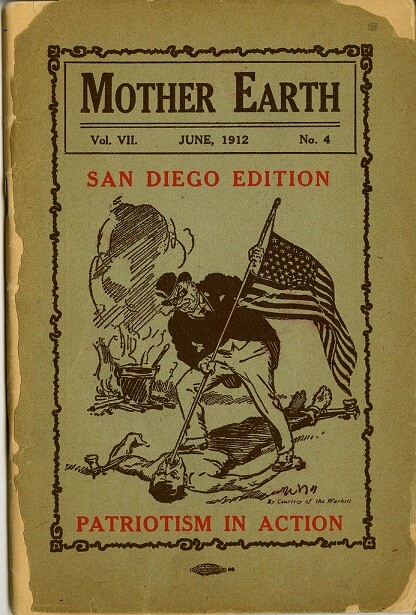
The local papers, of course, ran countless editorials attacking the radicals and glorifying the police. This encouraged vigilantes, who’d patrol the rail yards looking for incoming Wobblies. They deported many across county lines where they forced them to kiss the flag and run through gauntlets of men who beat them with pick axe handles. On May 7, the cops killed another Wobbly, Joseph Mikolash. And on May 15, vigilantes kidnapped Emma Goldman and her companion Ben Reitman, who had come to show their support. However, before deporting them, the vigilantes tarred and feathered Reitman and raped him with a cane. Ben Reitman was a physician who focused his practice on providing treatment for tramps, hobos, prostitutes and the most marginalized members of society. The July 11, 1912 edition of the IWW’s “Little Red Songbook” included the song: “We’re Bound for San Diego:”
In that town called San Diego, when the workers try to talk, The cops will smash them with a sap and tell them “take a walk.” They throw them in a bull pen and they feed them rotten beans. And they call that “law and order” in the city, so it seems.