Search
Items tagged with: streetArtFrance
9 New Street Art Highlights You’ll Want to See Twice (May 2025)
Content warning: Which one is your favorite?
From a mind-bending falcon hydra in Belgium to a vibrant homage to local fishers in Mexico, this fresh roundup showcases 9 standout street artworks around the world. This edition brings hyperrealistic portraits, vivid animal hybrids, and dreamlike surrealism—painted across walls, water tanks, and alleyways. Included: murals from Belgium, North Carolina, Mexico, Peru, the UK, and beyond.
Last year!: 106 Of The Most Beloved Street Art Photos – Year 2024
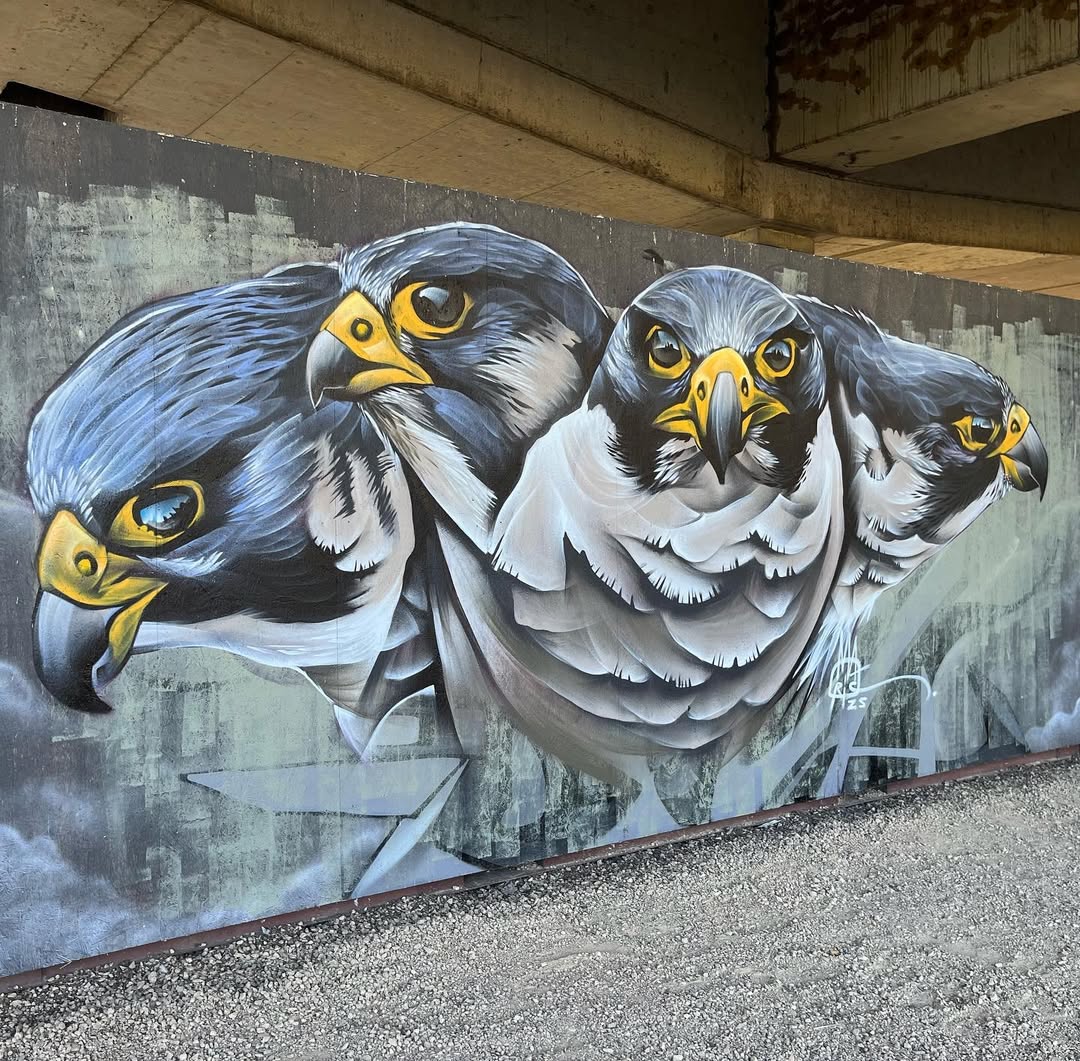
ÅLTĖR ĖGØ — Wevelgem, Belgium
A multi-headed falcon bursts through misty geometry in this surreal mural by Thomas Maris. Each head faces a different direction, enhancing the creature’s mythical character. The wings appear semi-abstract, integrating metallic and cloud textures.
🔗 Follow Thomas Maris on Instagram
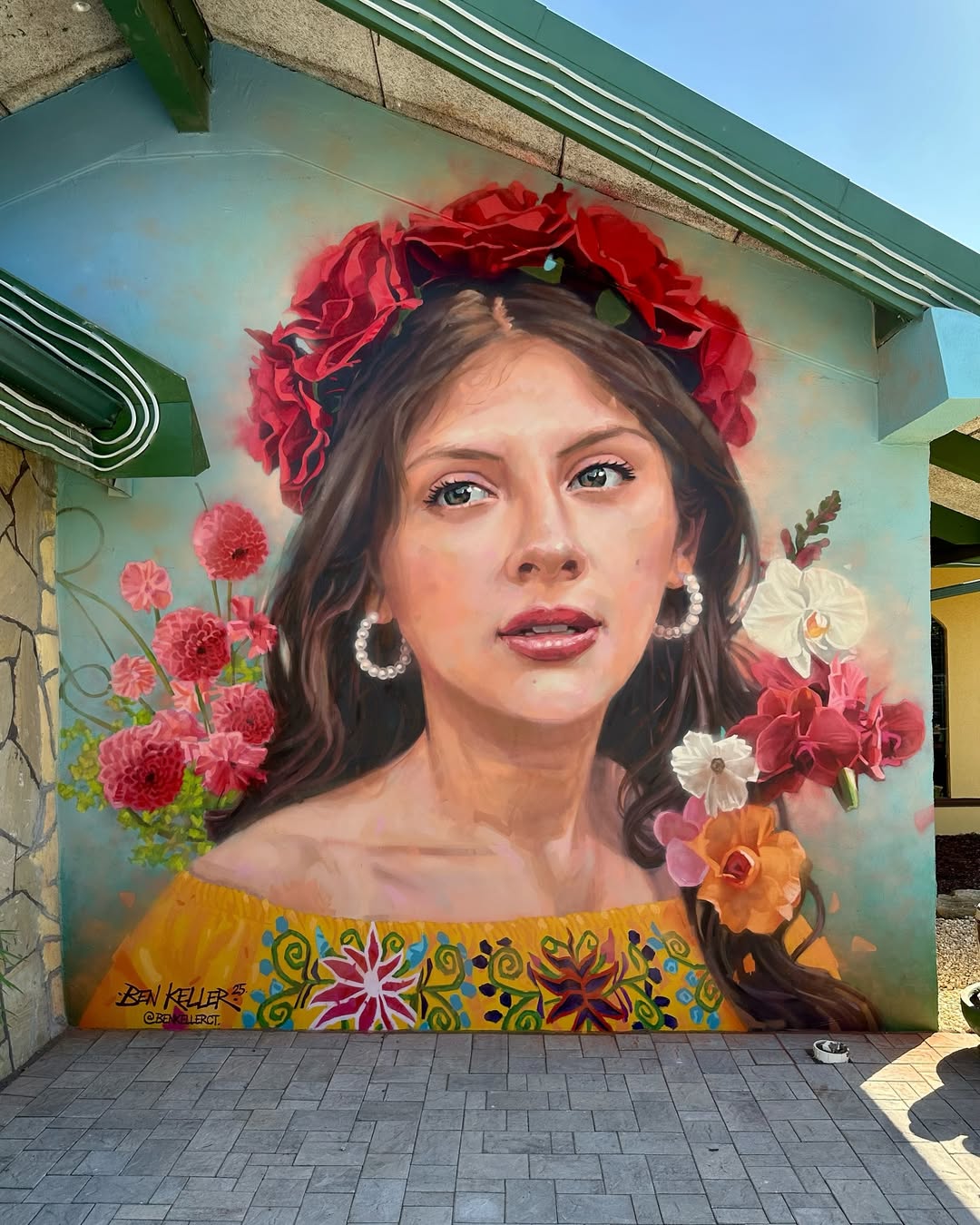
Floral Portrait — Charlotte, North Carolina, USA
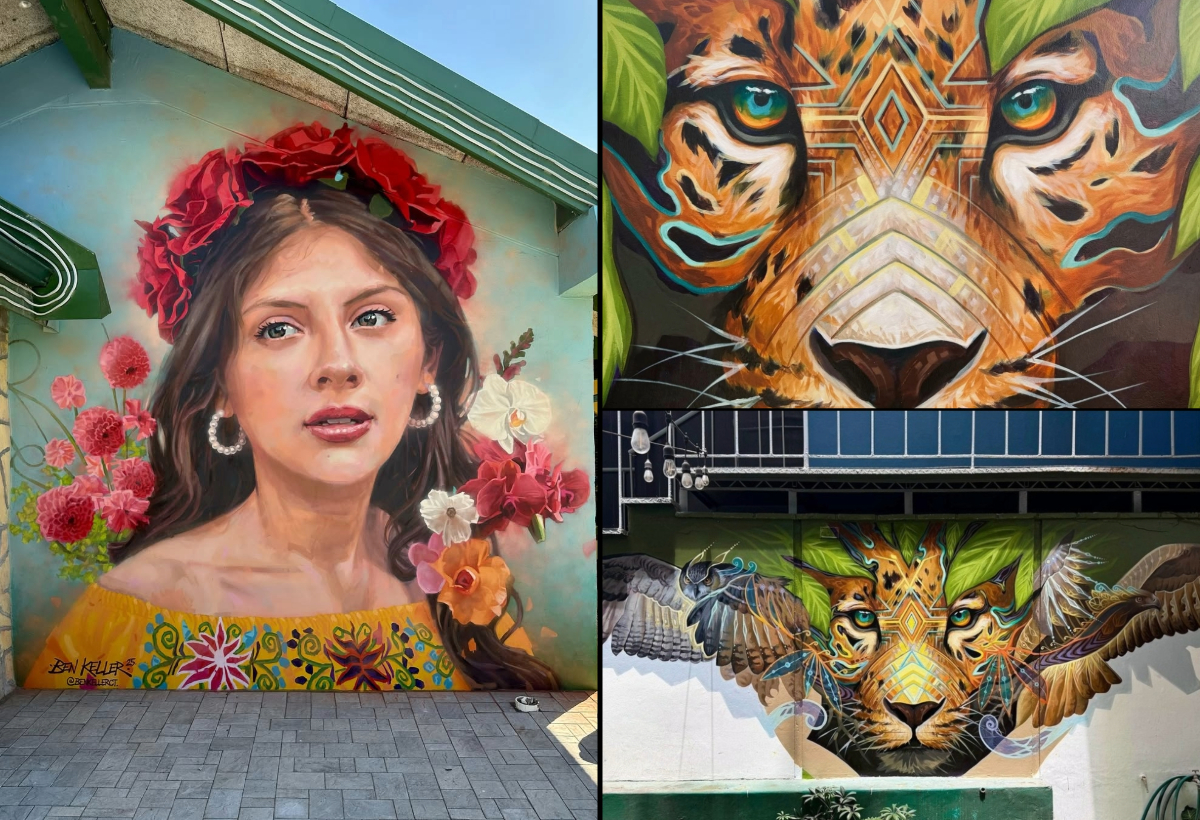
Ben Keller’s hyperrealistic mural on the wall of Azteca Mexican Restaurant captures a woman with soft, expressive eyes framed by roses and dahlias. Her embroidered yellow blouse adds a festive cultural note to the detailed floral backdrop.
🔗 Follow Ben Keller on Instagram
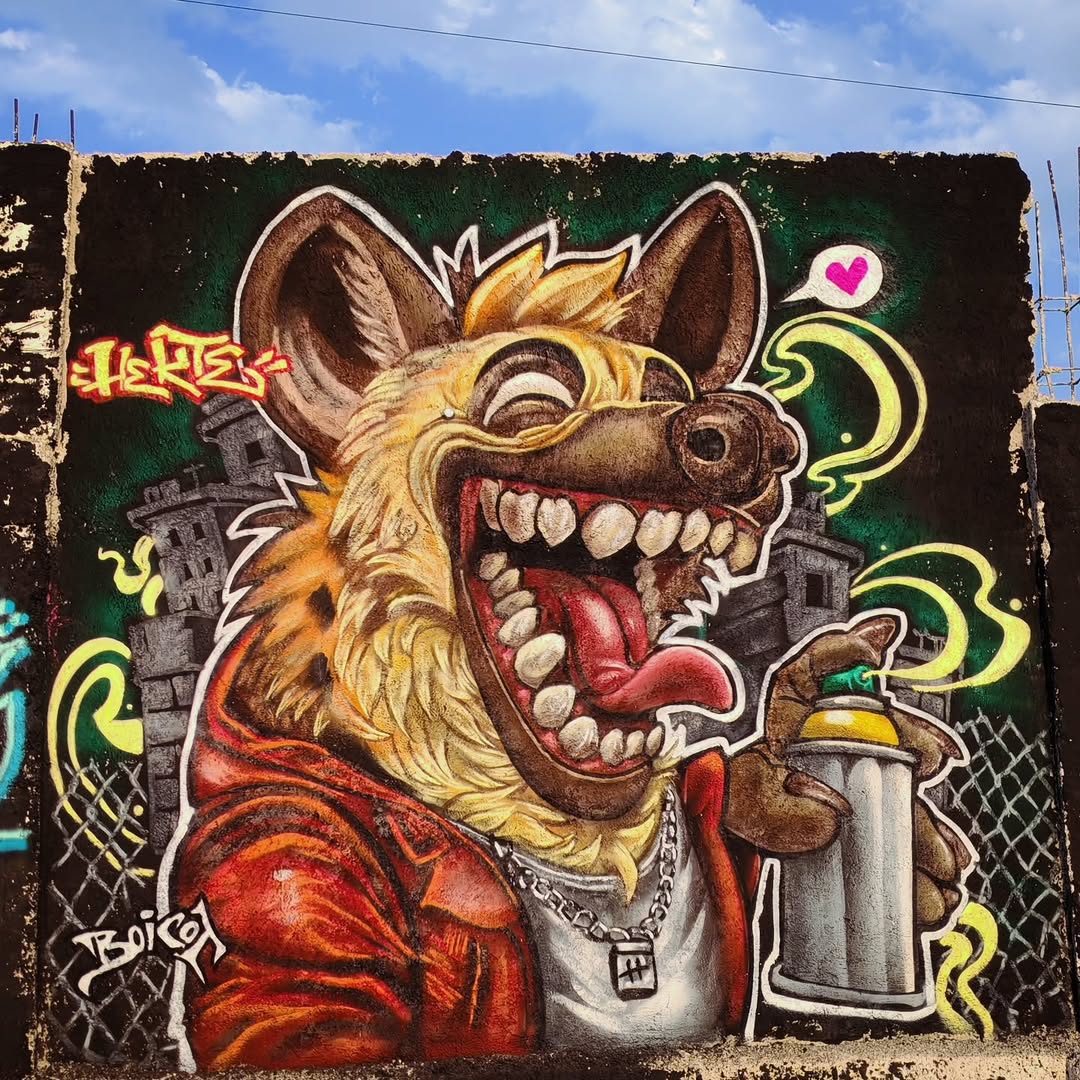
Laughing Hyena — San Juan Teotihuacán, Mexico
Jean Hekte transforms a crumbling wall into a bold cartoon explosion. A grinning hyena clutches a spray can amid smoky green swirls, with stylized buildings in the background. The energetic strokes channel both mischief and play.
🔗 Follow Jean Hekte on Instagram
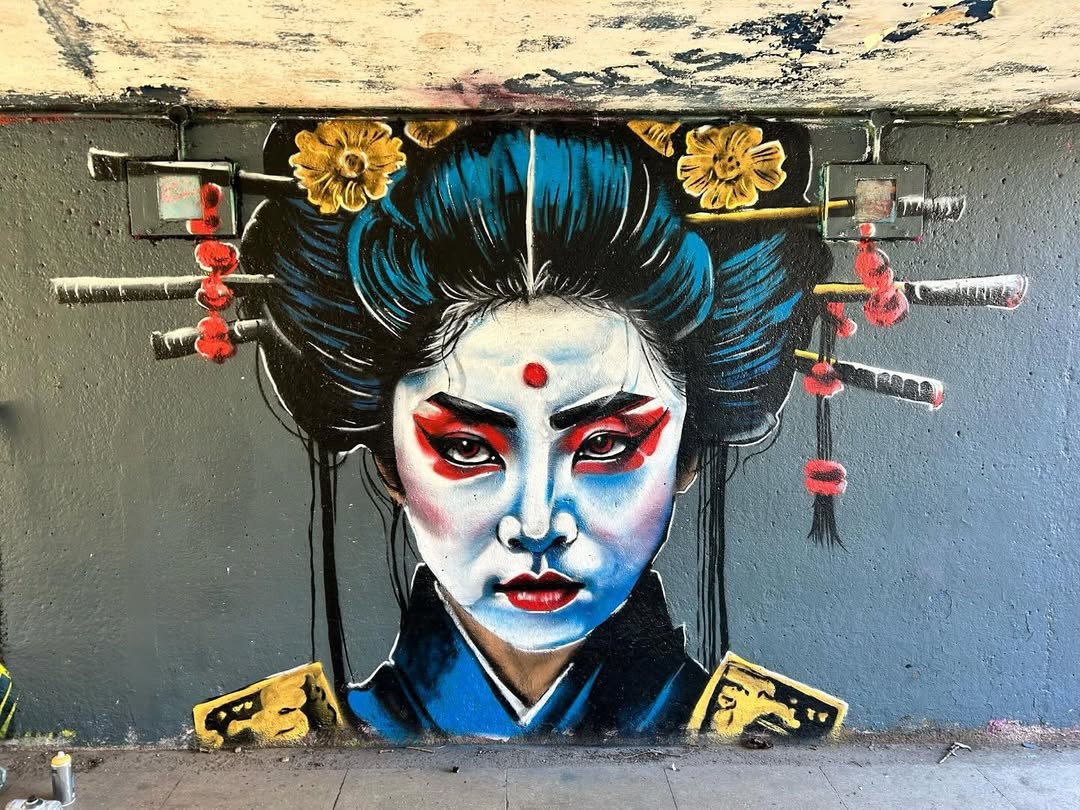
Warrior Geisha — Kingston upon Hull, UK
Steve Dixon’s mural shows a powerful gaze from a modernized geisha with bold red face paint and swords arranged in her blue-black hair. Yellow blossoms and red beads offset the intense blue tones of her robe.
🔗 Follow Steve Dixon on Instagram
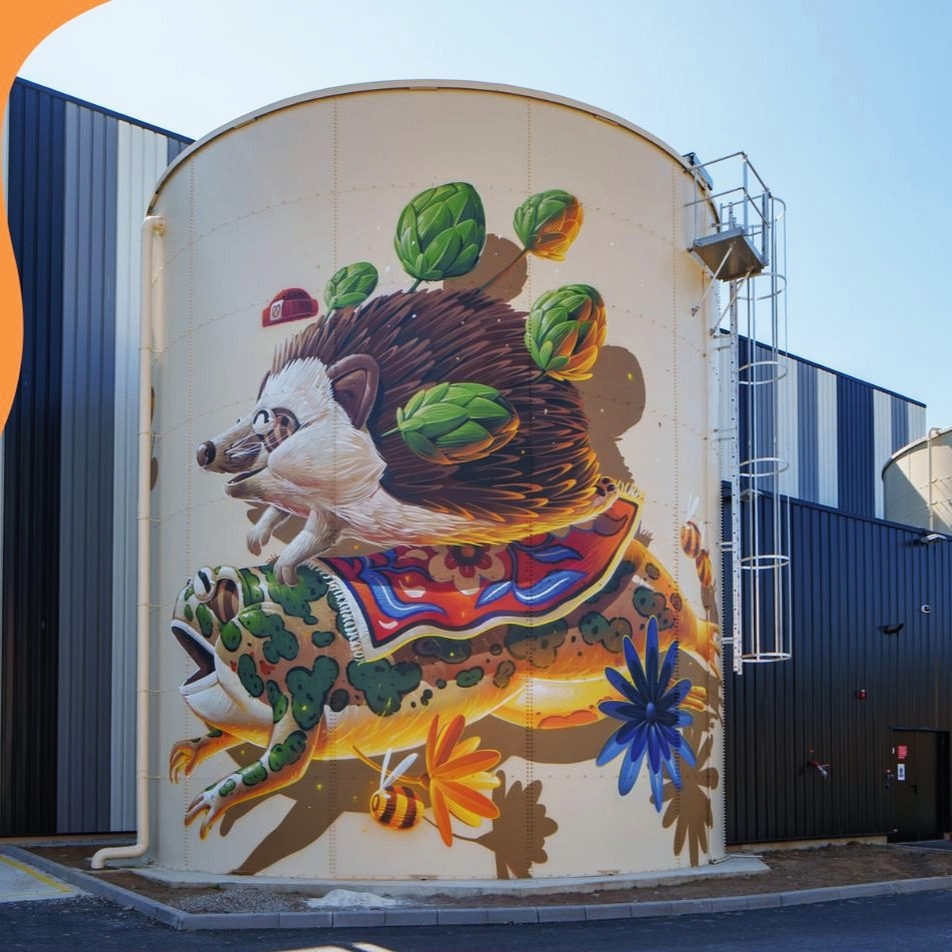
Hedgehog Ride — Duppigheim, France
On a cylindrical tank, STOM500 paints a whimsical hedgehog racing atop a wide-eyed frog. The hedgehog’s back is spiked with leafy greens while bees and oversized petals trail behind. A surreal and joyful blend of creatures and colors.
🔗 Follow STOM500 on Instagram
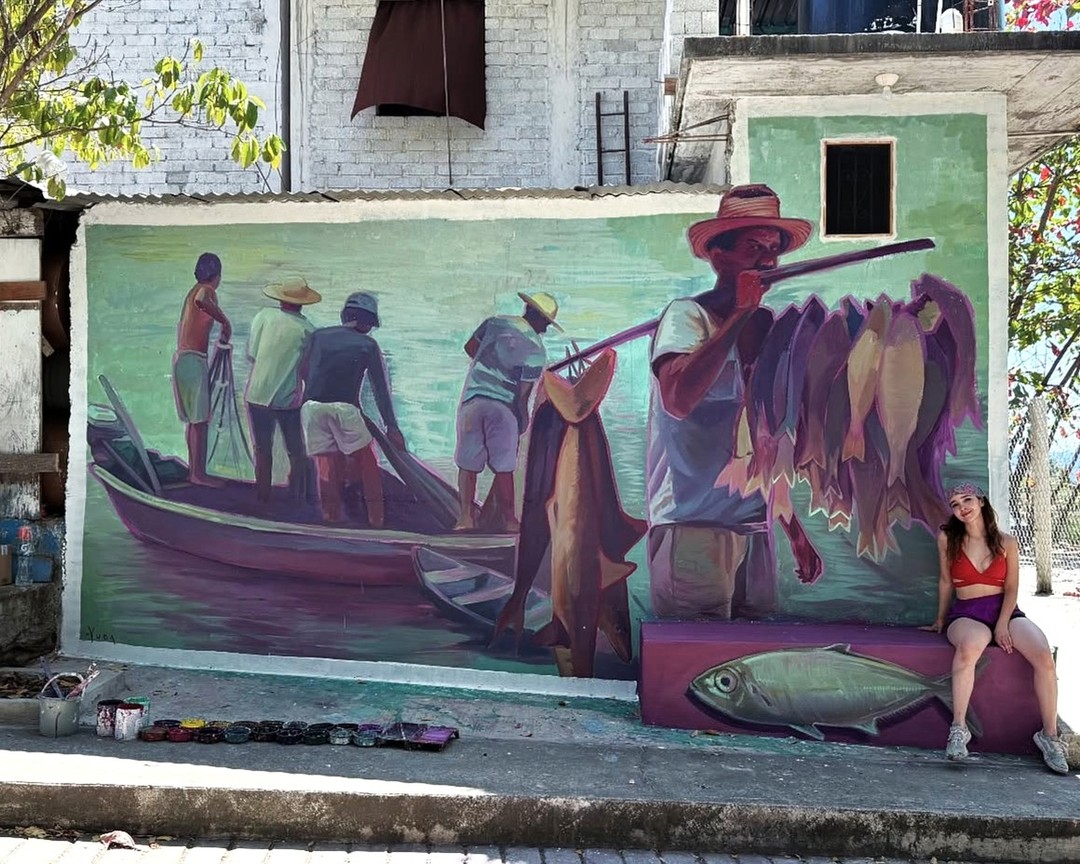
Market Scene — Puerto Escondido, Mexico
YUDA paints a tribute to local life, blending tones of magenta and green in this mural of fishermen returning with their catch. A woman poses next to the bench extension, integrated into the artwork with a painted fish.
🔗 Follow YUDA on Instagram
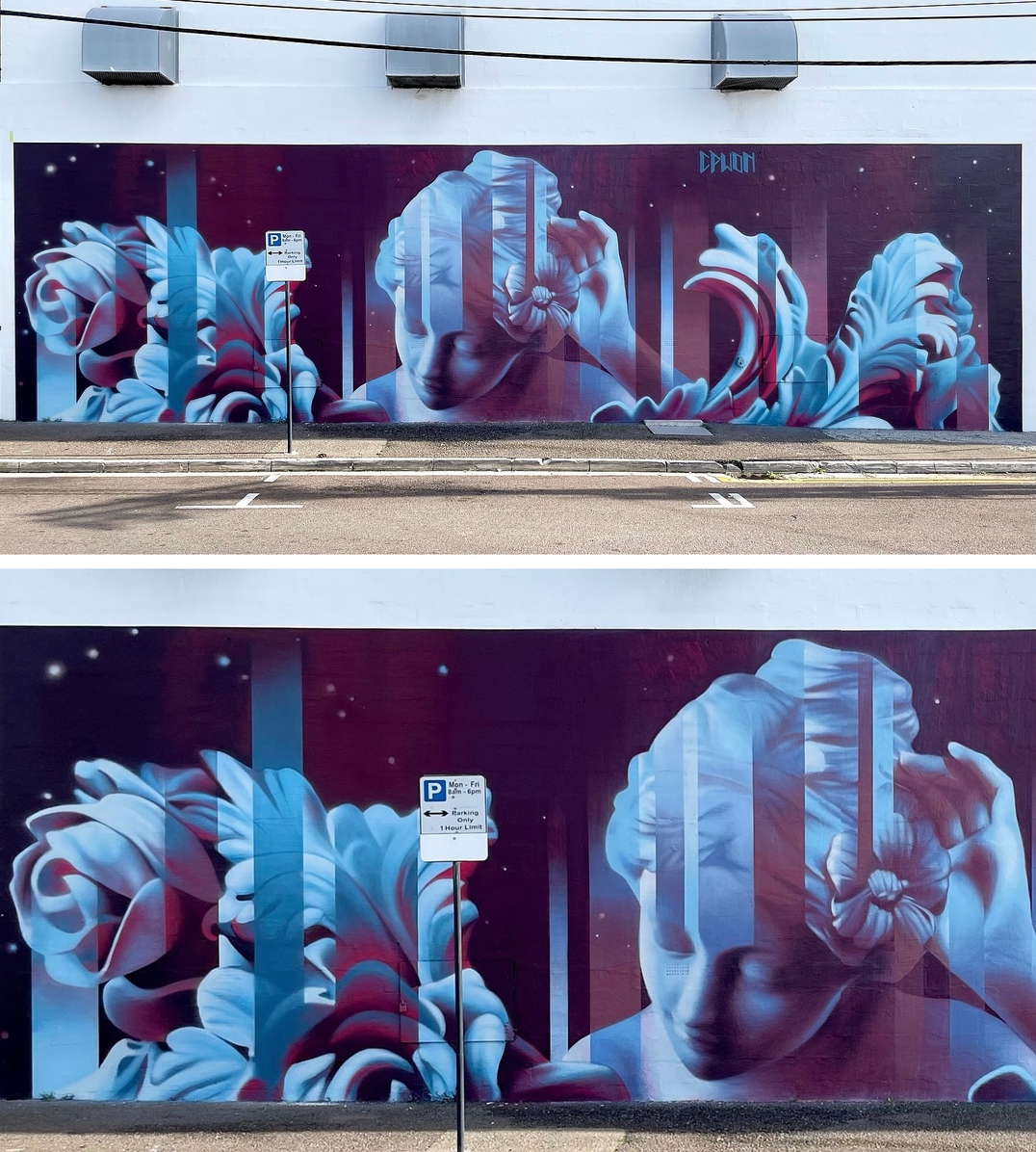
I Will Follow You (Renewed) — Hamilton, Bermuda
Claudio Picasso’s renewed mural shows a sculptural female figure partially veiled by vertical digital bars. Floral shapes melt into deep space tones as the statue closes her eyes, balancing digital distortion with classical beauty.
🔗 Follow Claudio Picasso on Instagram
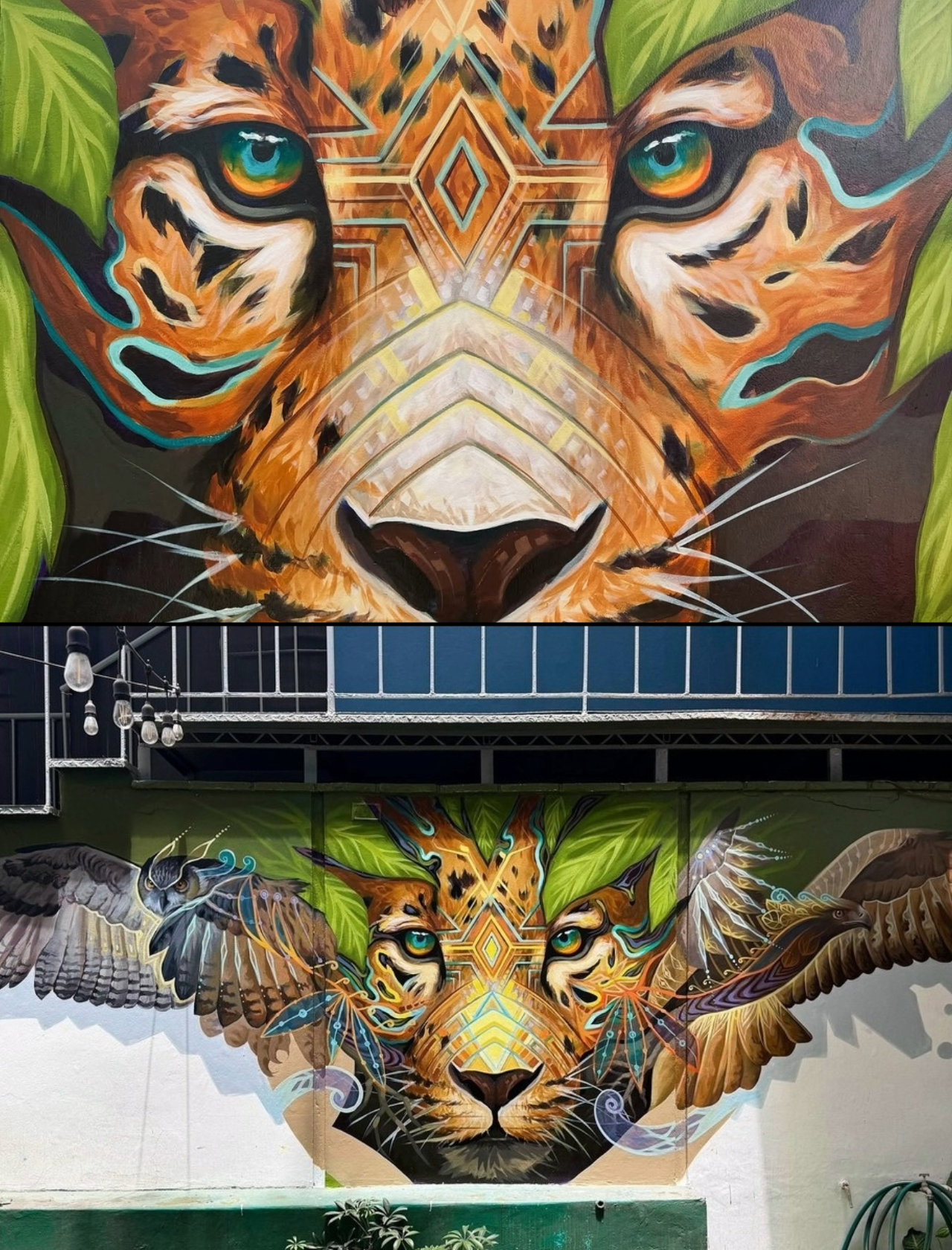
La Esencia de lo Salvaje — Lima, Peru
Oxy’s symmetrical jaguar stares directly ahead, flanked by two enormous wings. Tribal geometric patterns stretch from its forehead, and green leaves burst from above. The wings morph into ethereal birds in flight.
🔗 Follow Oxy on Instagram
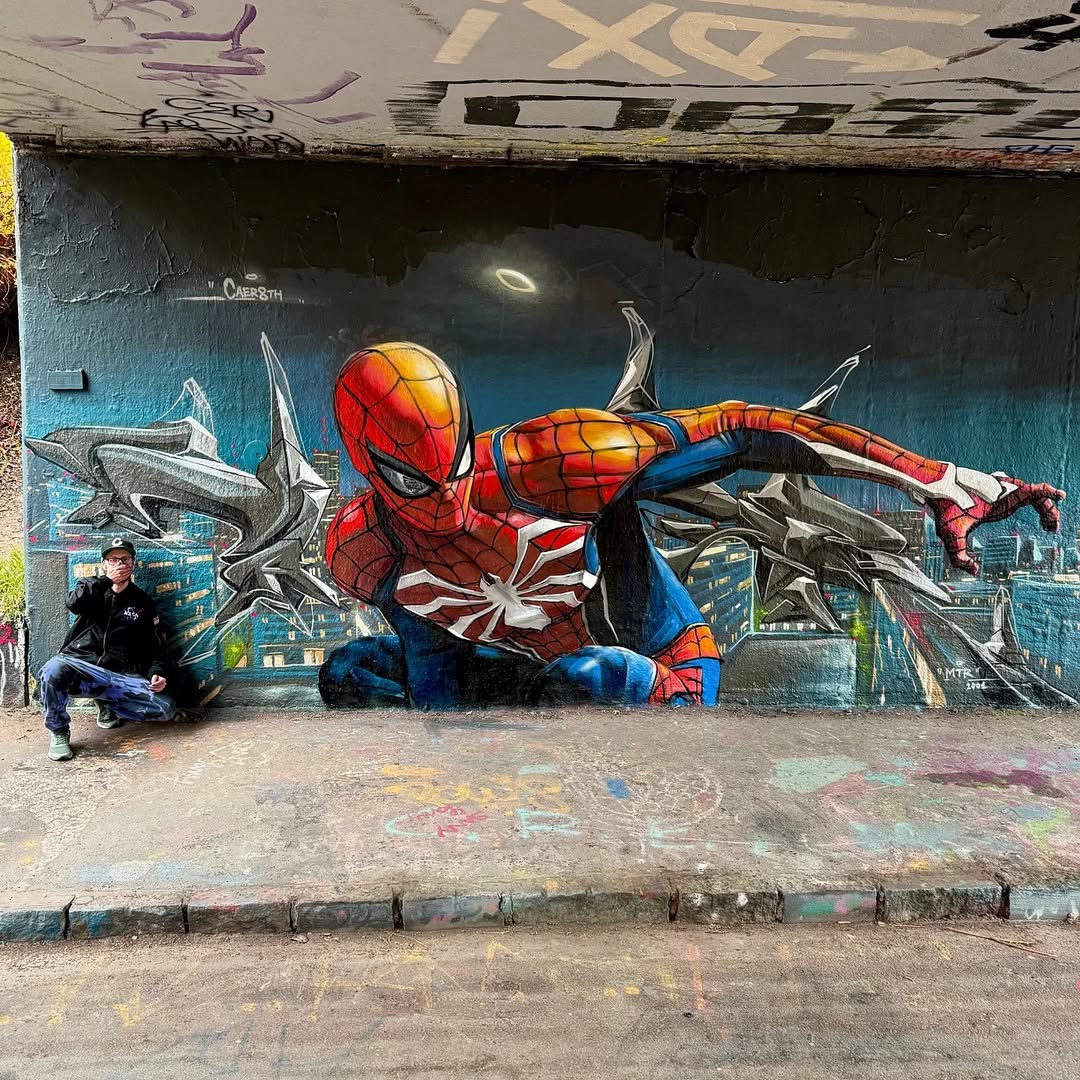
Spider-Man — Prague, Czech Republic
This mural by Vladimír Hirscher captures Spider-Man mid-pose, about to leap into action. Set against a stylized cityscape, the bright red and blue suit pops against the dark background under a bridge.
🔗 Follow Vladimír Hirscher on Instagram
From photorealistic portraits and cartoon mayhem to tributes to cultural heritage, these murals illustrate how public art continues to reimagine walls in every corner of the world. Each piece carries a spark of local identity while contributing to a global canvas.
More: Street Art Utopia: Why People Fall In Love With Outdoor Art (25 Photos)
Which one is your favorite?

11 Beautiful Artworks That Seem to Grow From Nature
Some artworks don’t just sit in nature—they become part of it. Around the world, artists are crafting sculptures and murals that seamlessly merge with their surroundings, using trees, vines, and landscapes as living elements of their work. These 11 pieces don’t fight against nature; they grow with it.
From giant figures emerging from forests to street art that transforms urban greenery into playful illusions, these eight stunning creations prove that art and nature can exist in perfect harmony.More: 8 Inspiring Sculptures Seamlessly Integrated with Nature
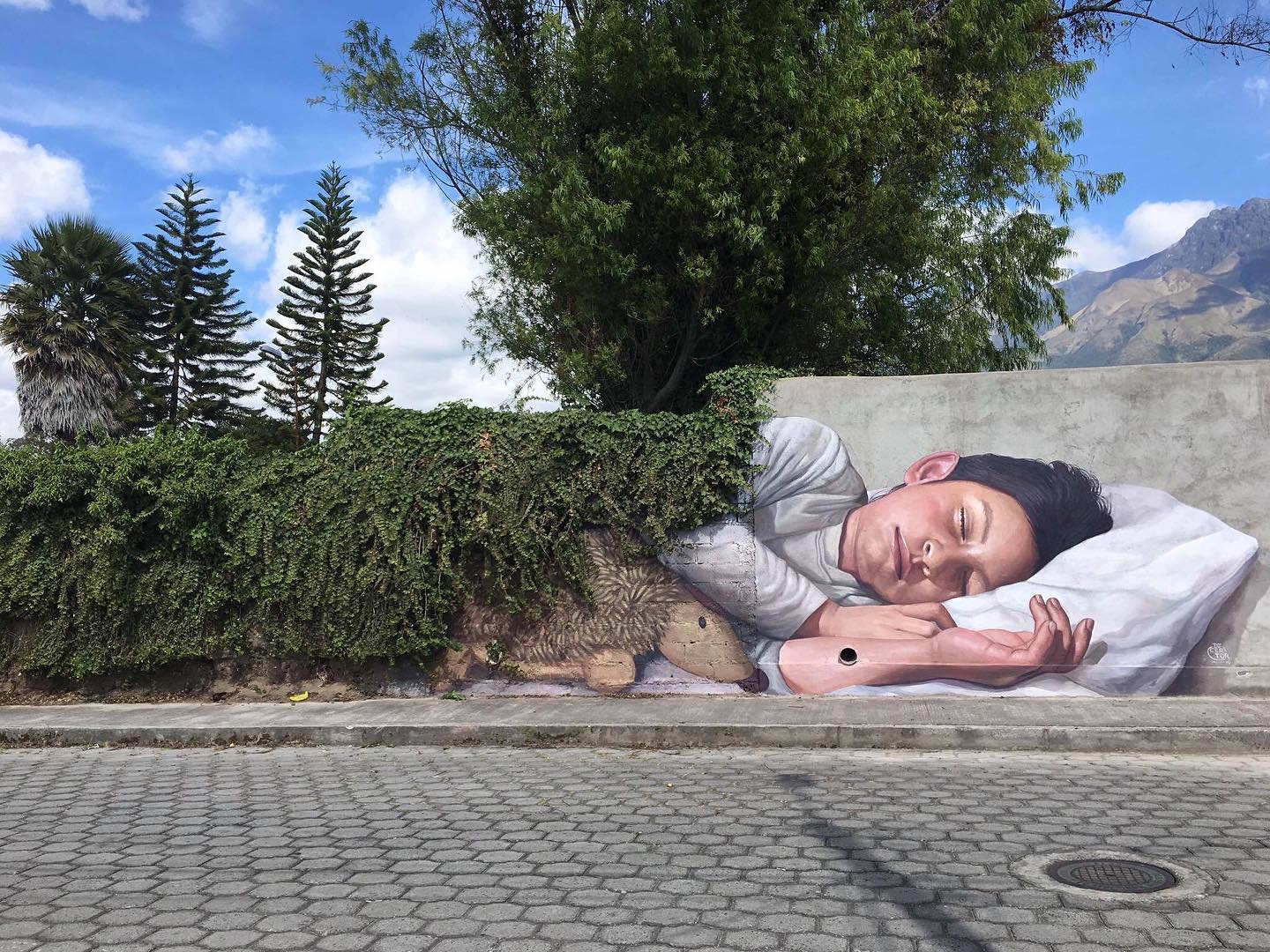
1. “Sleeping Child” by El Decertor (Imbabura, Ecuador)
A mural by El Decertor in Imbabura, Ecuador, depicting a young child sleeping against a concrete wall, with creeping ivy blending into the painting as a natural blanket.
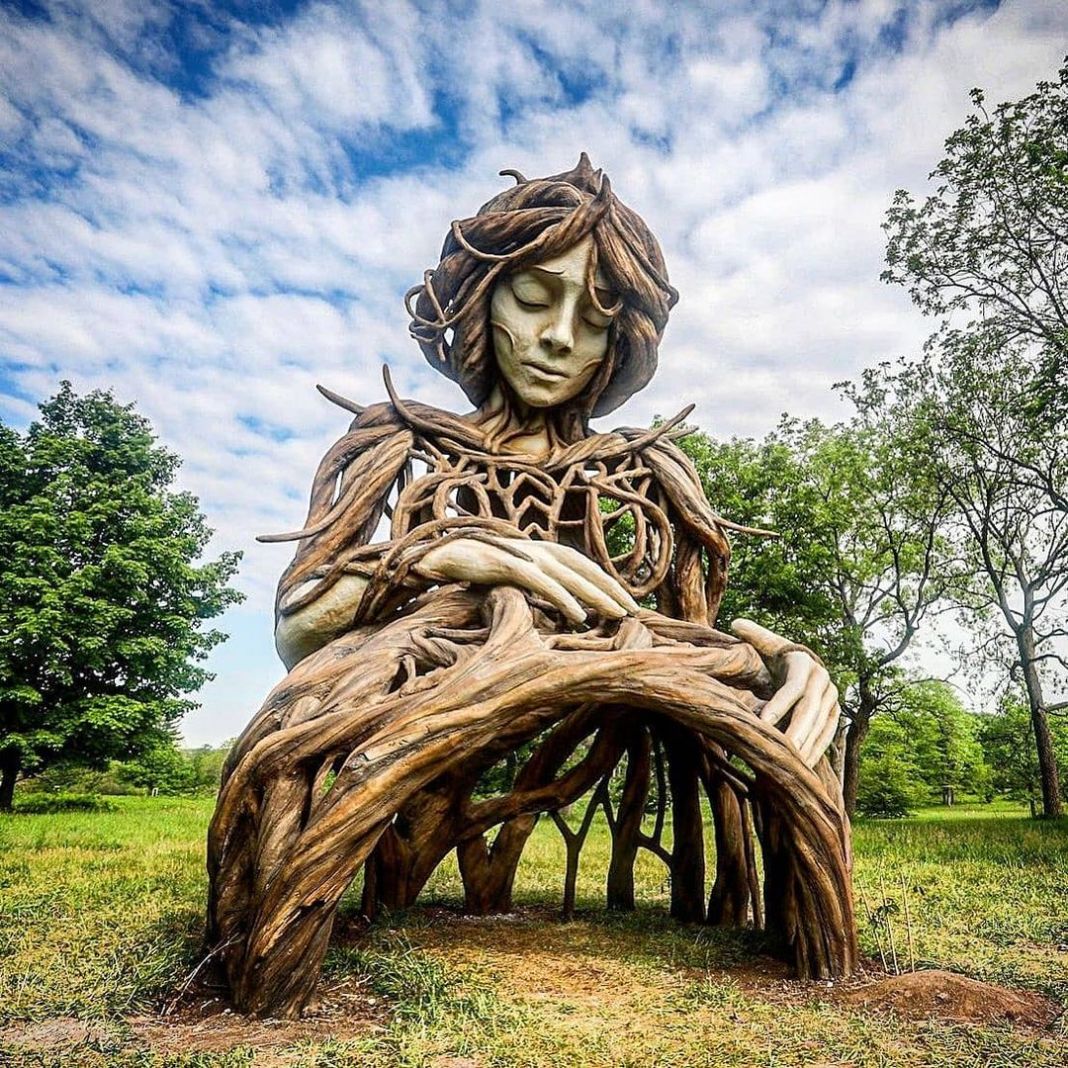
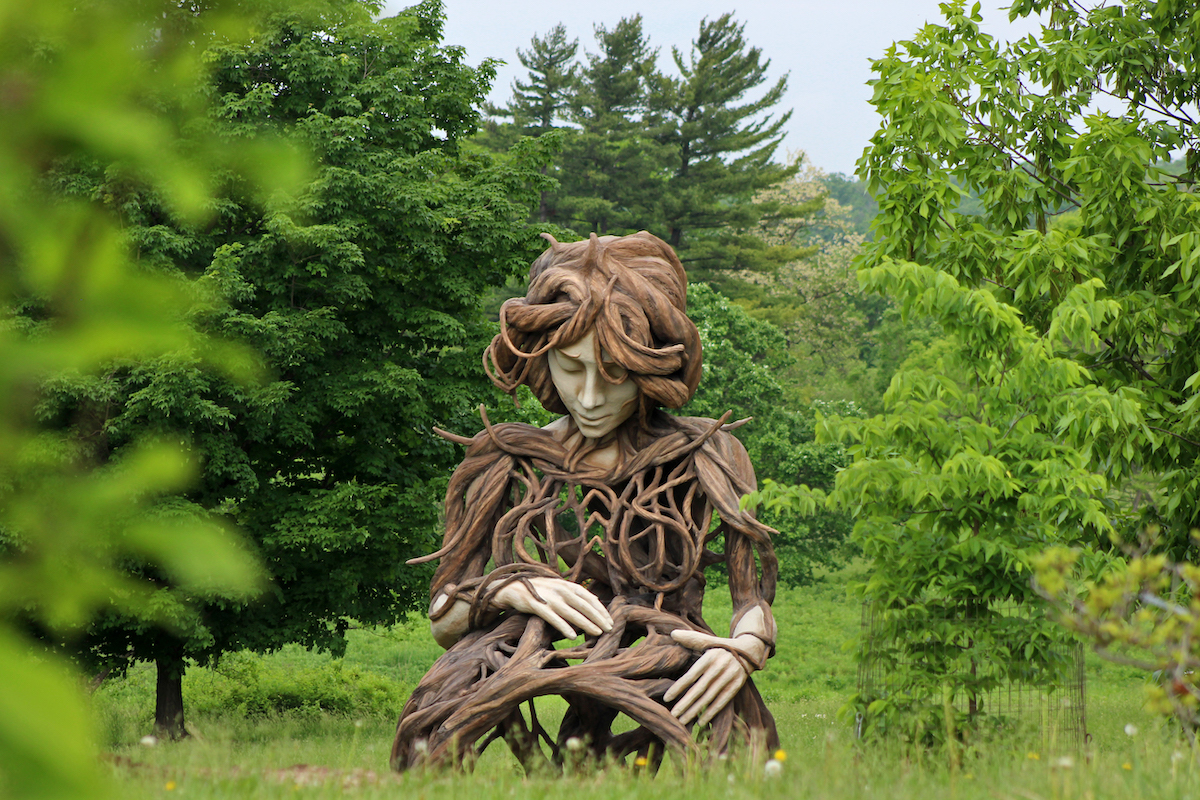
2. “UMI” by Daniel Popper (Illinois, USA)
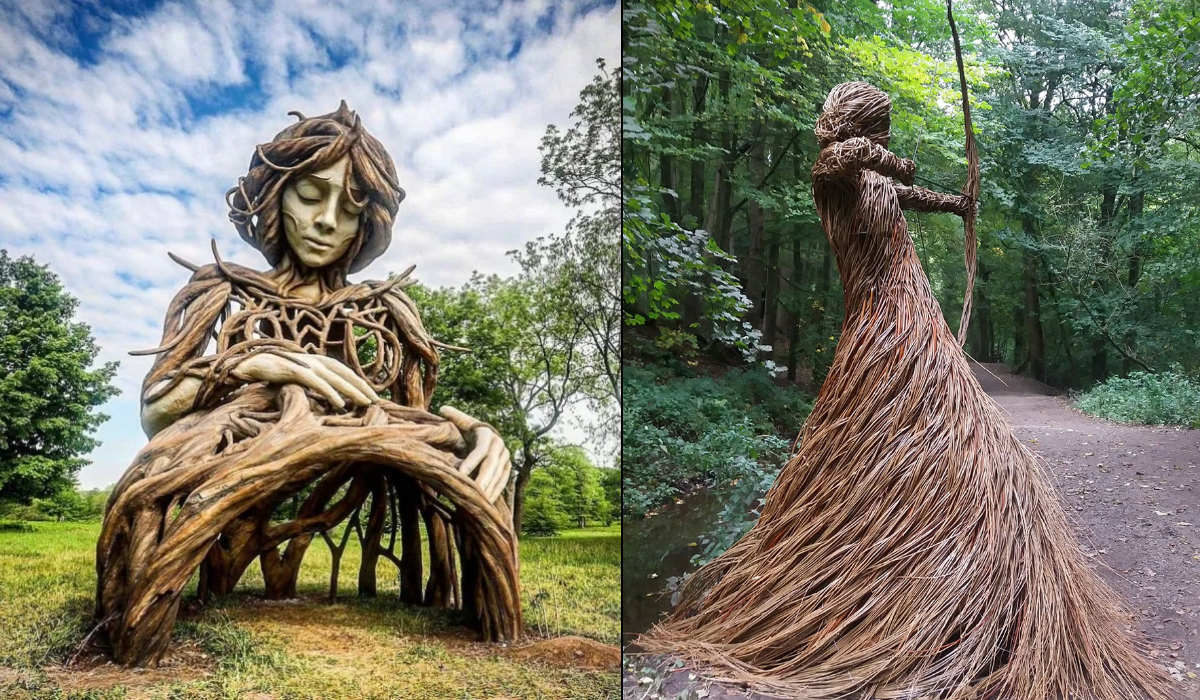
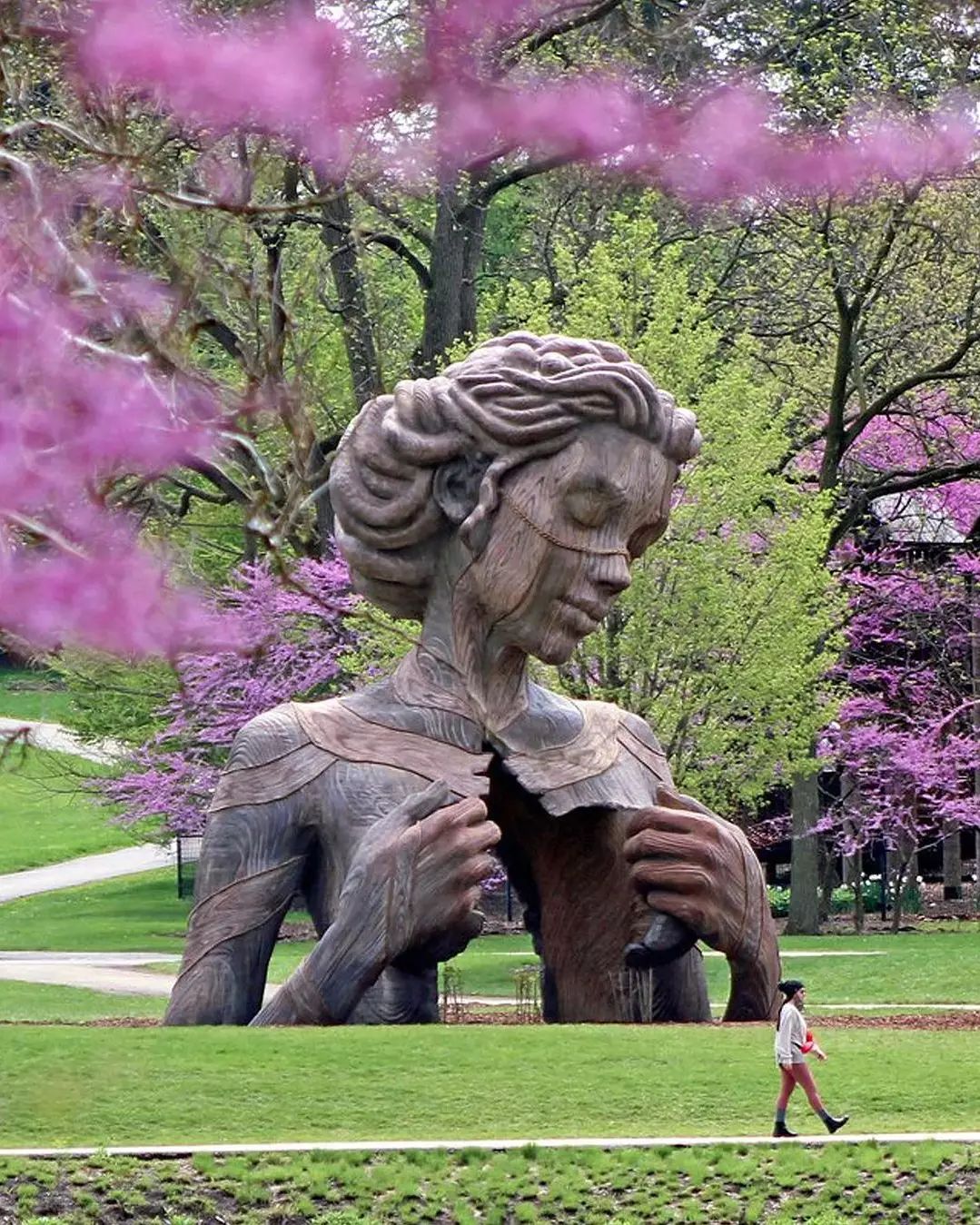
“UMI” by Daniel Popper at the outdoor tree museum The Morton Arboretum in Illinois, USA—an intricate wooden sculpture of a woman with tree roots weaving through her body, set in a green landscape.About and more photos: “UMI” Sculpture by Daniel Popper in Lisle, Illinois
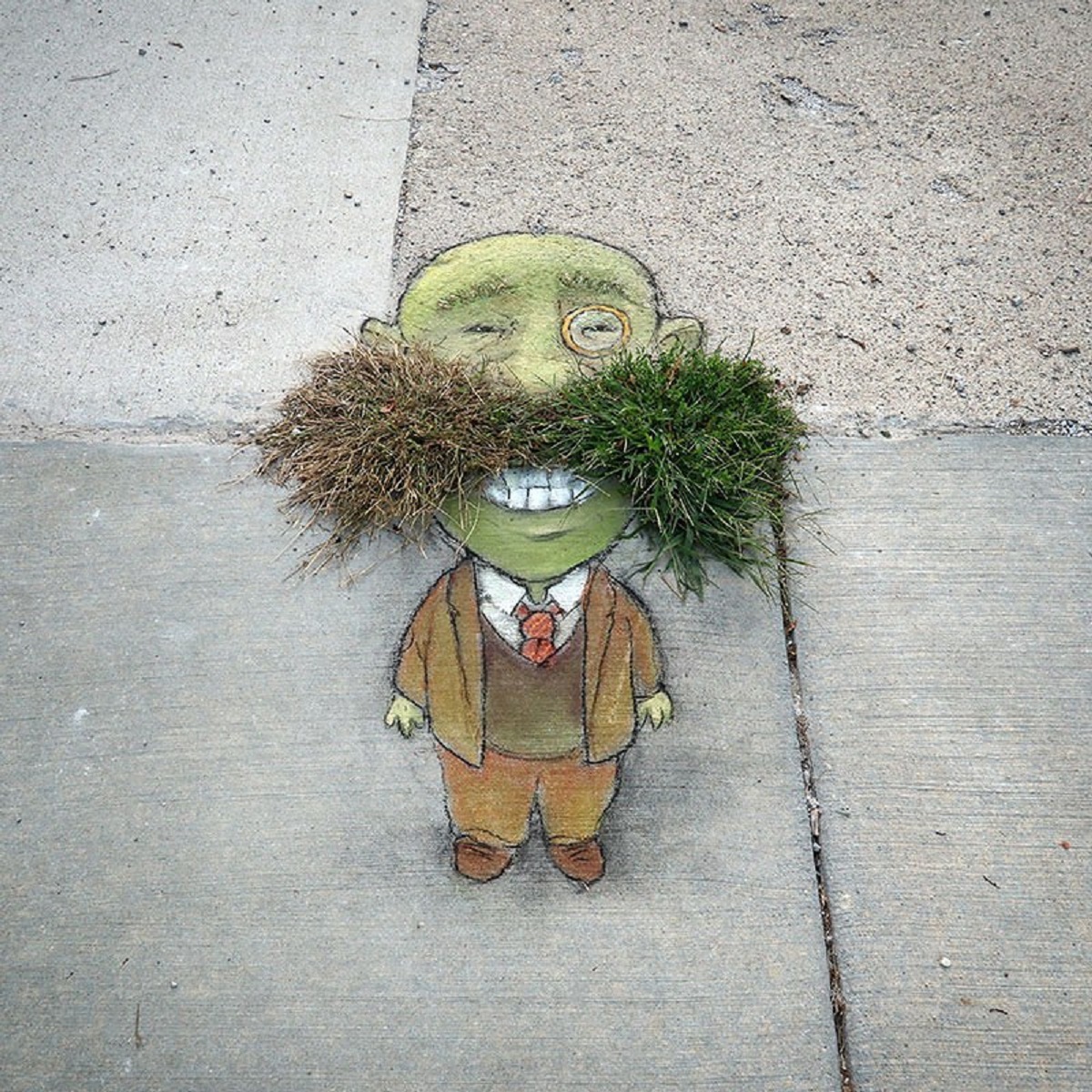
3. Street Art by David Zinn (Ann Arbor, USA)
A street art piece by David Zinn in Ann Arbor, USA, featuring a small green character with a real grass mustache blending into the pavement.More!: Street Art by Happiness Maker David Zinn (21 Photos)
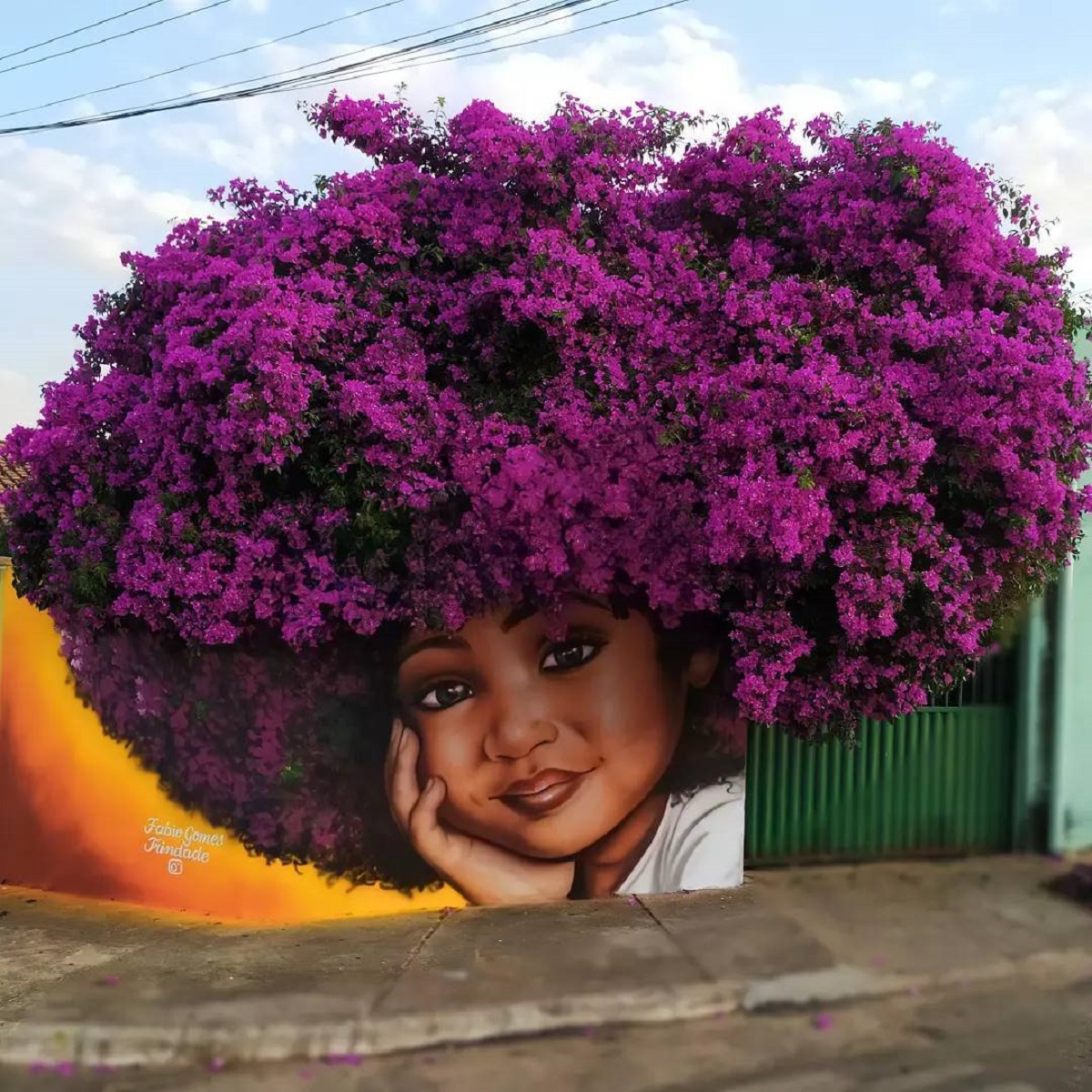
4. Flower Street Art by Fabio Gomes Trindade (Goiás, Brazil)
A mural by Fabio Gomes Trindade in Goiás, Brazil, featuring a girl’s face with a real tree forming her vibrant pink afro hairstyle.More by Fabio Gomes: How Fábio Gomes Turns Trees into Hair: Stunning Murals in Trindade
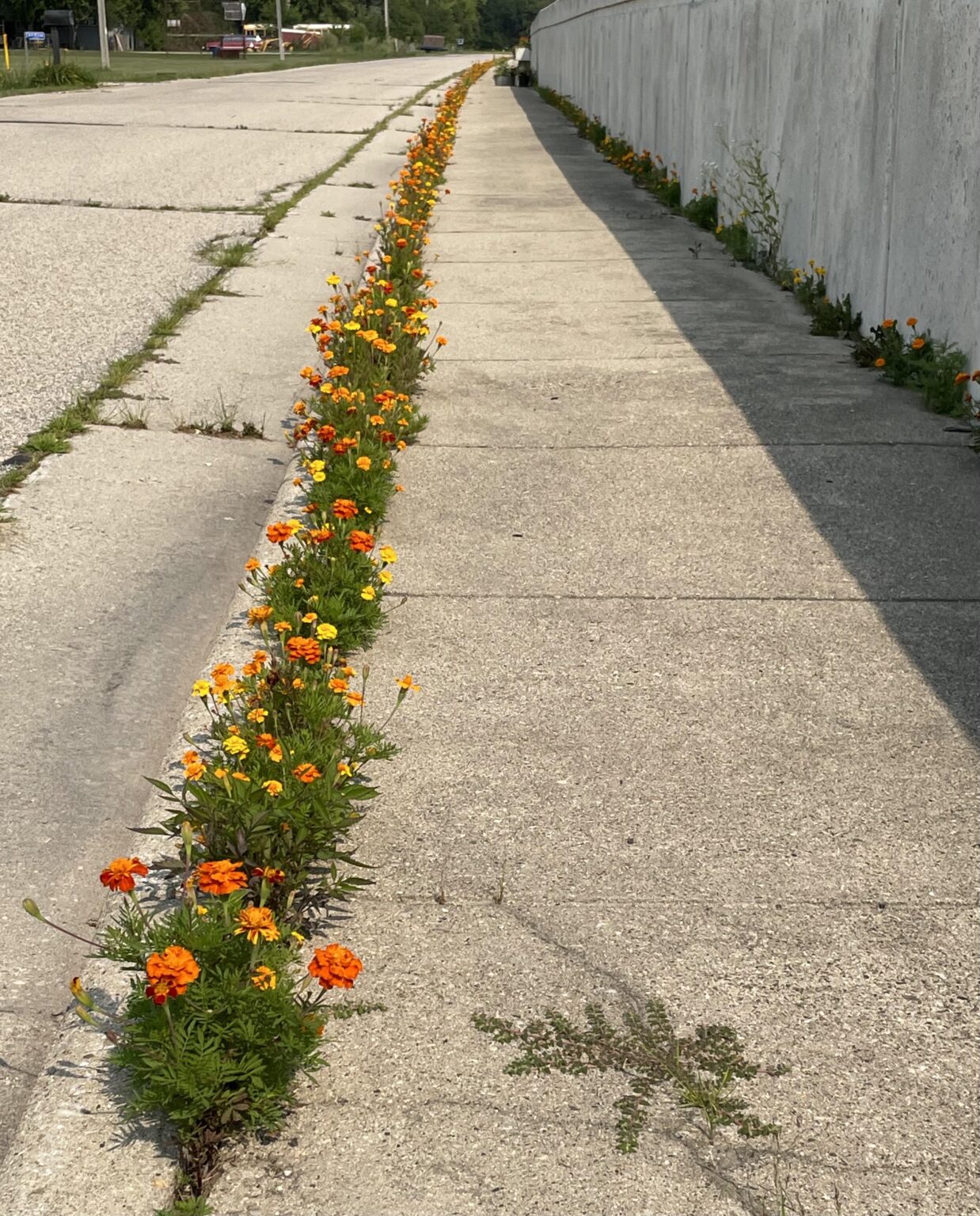
5. Sidewalk Flower Experiment
A beautiful example of accidental nature-inspired art—kindergarten children dropped seeds into sidewalk cracks, leading to a spontaneous floral pathway.More photos and about: Kindergarten children dropped seeds in the crack of the sidewalk to see what would happen
6. “Nature Rings” by Spencer Byles (Deep Forest, France)
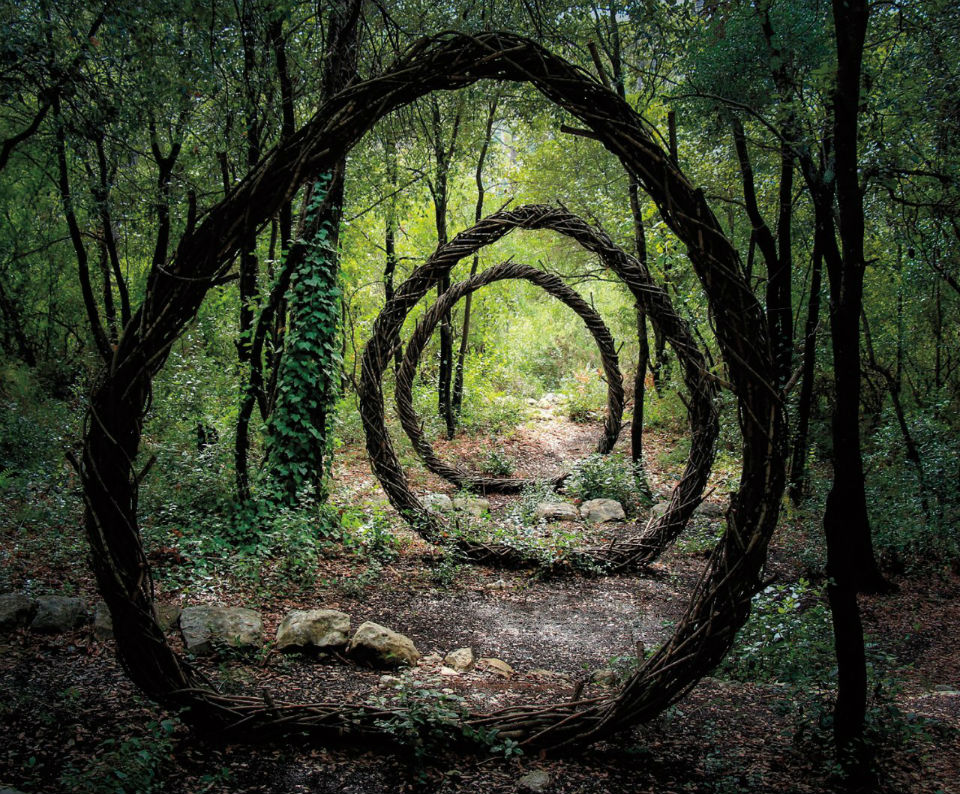
A series of woven circular sculptures by Spencer Byles made from natural branches, blending seamlessly with the surrounding forest.
7. Willow Archer by Anna & The Willow (UK)
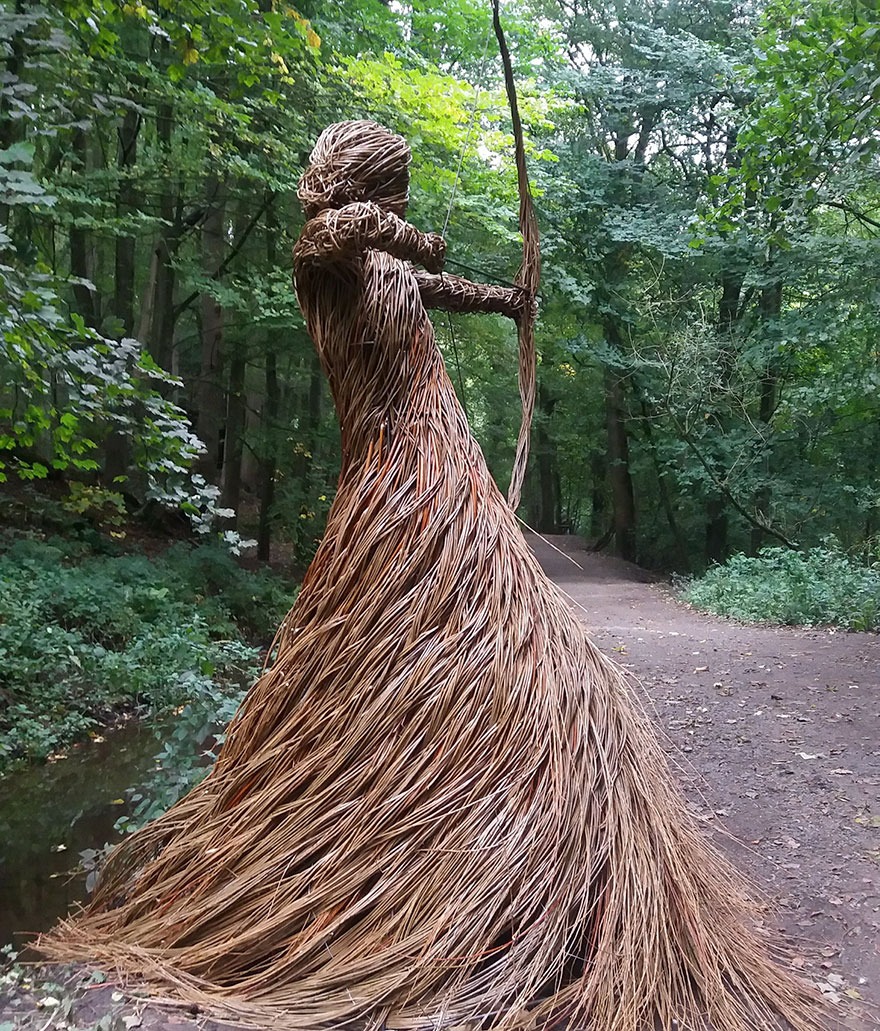
A woven willow sculpture of a female archer by Anna & The Willow, set against a wooded path.
8. Wire Mermaid by Martin Debenham (UK)
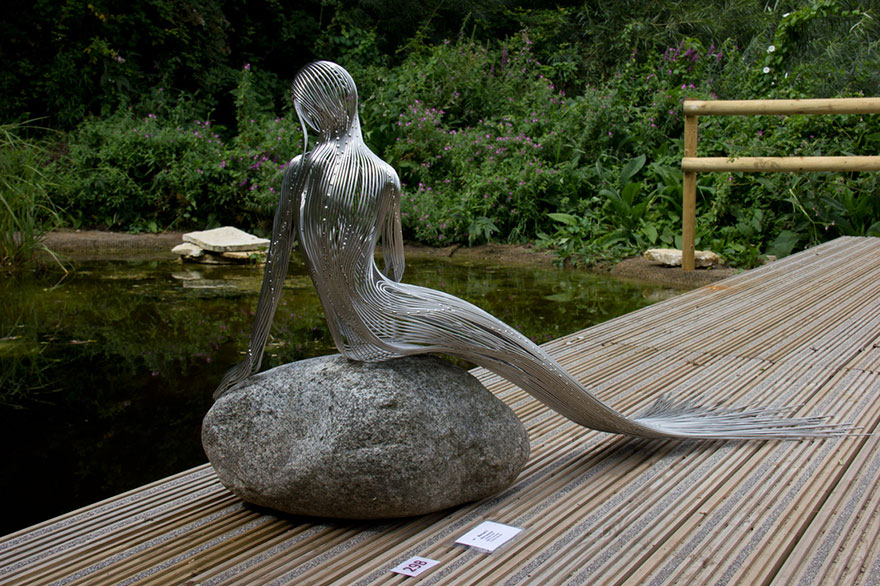
A wire sculpture by Martin Debenham of a mermaid sitting on a rock, with the intricate metalwork mimicking flowing water.
9. Snake in the Green — Hyères, France
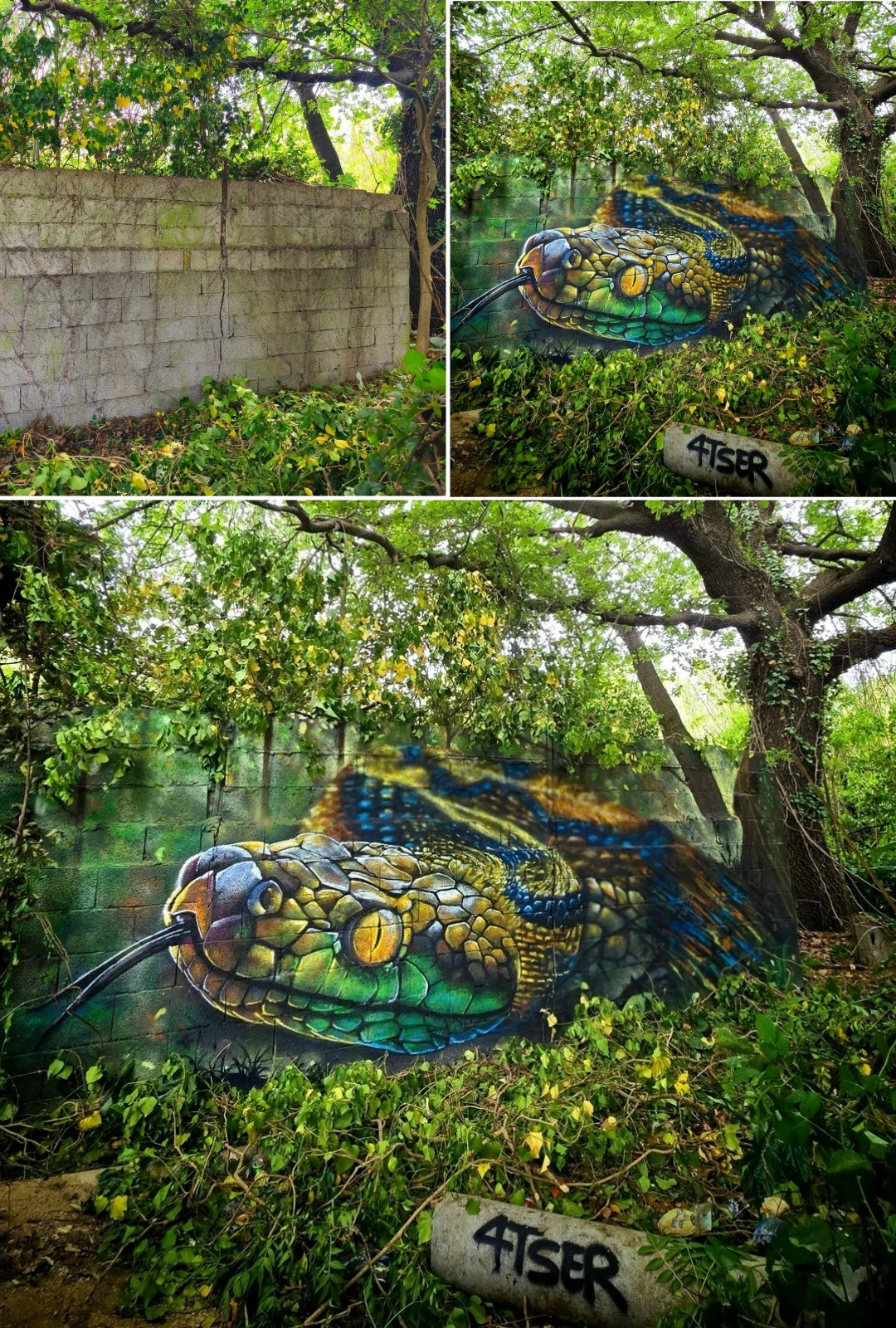
A plain gray cinderblock wall in a hidden grove was completely transformed into a lifelike snake by street artist Rest4. The viper, rendered in vibrant greens, blues, and yellows, emerges from the shadows of the forest floor. The before-and-after framing reveals the power of imagination to awaken forgotten spaces.
10. Fluentem Colos — Little Milford, Wales
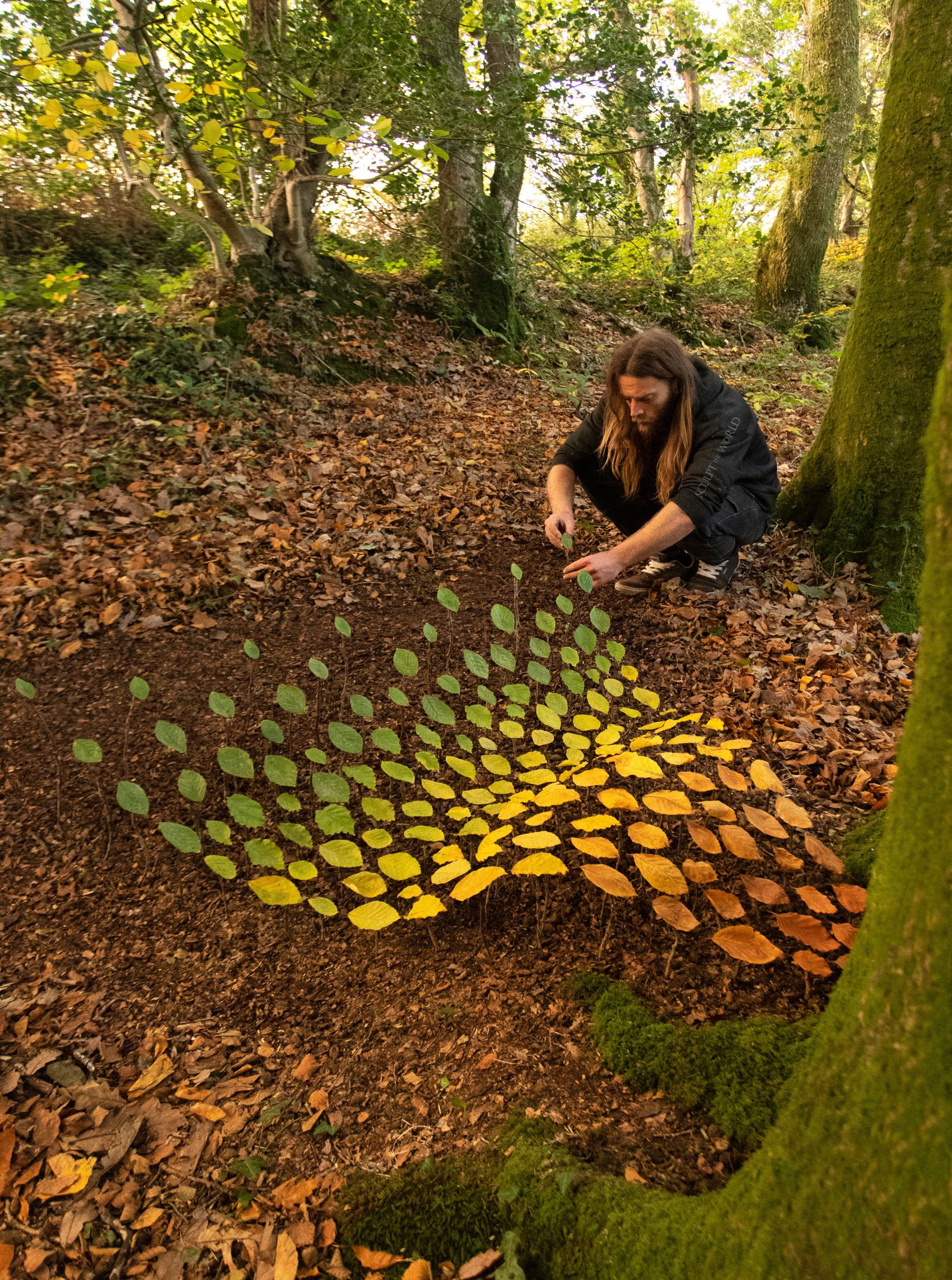
Land artist Jon Foreman created this delicate, wave-like gradient in a woodland clearing using carefully arranged leaves. Starting in green and fading to deep orange, the sculpture blends with the forest floor in color, shape, and motion—appearing to ripple like wind through grass. More by Jon Foreman: 9 Leaf Sculptures That Stir the Soul in the Forest (Art by Jon Foreman)
11. Florinda Camila — “WA” Marko Franco Domenak in Lima, Peru
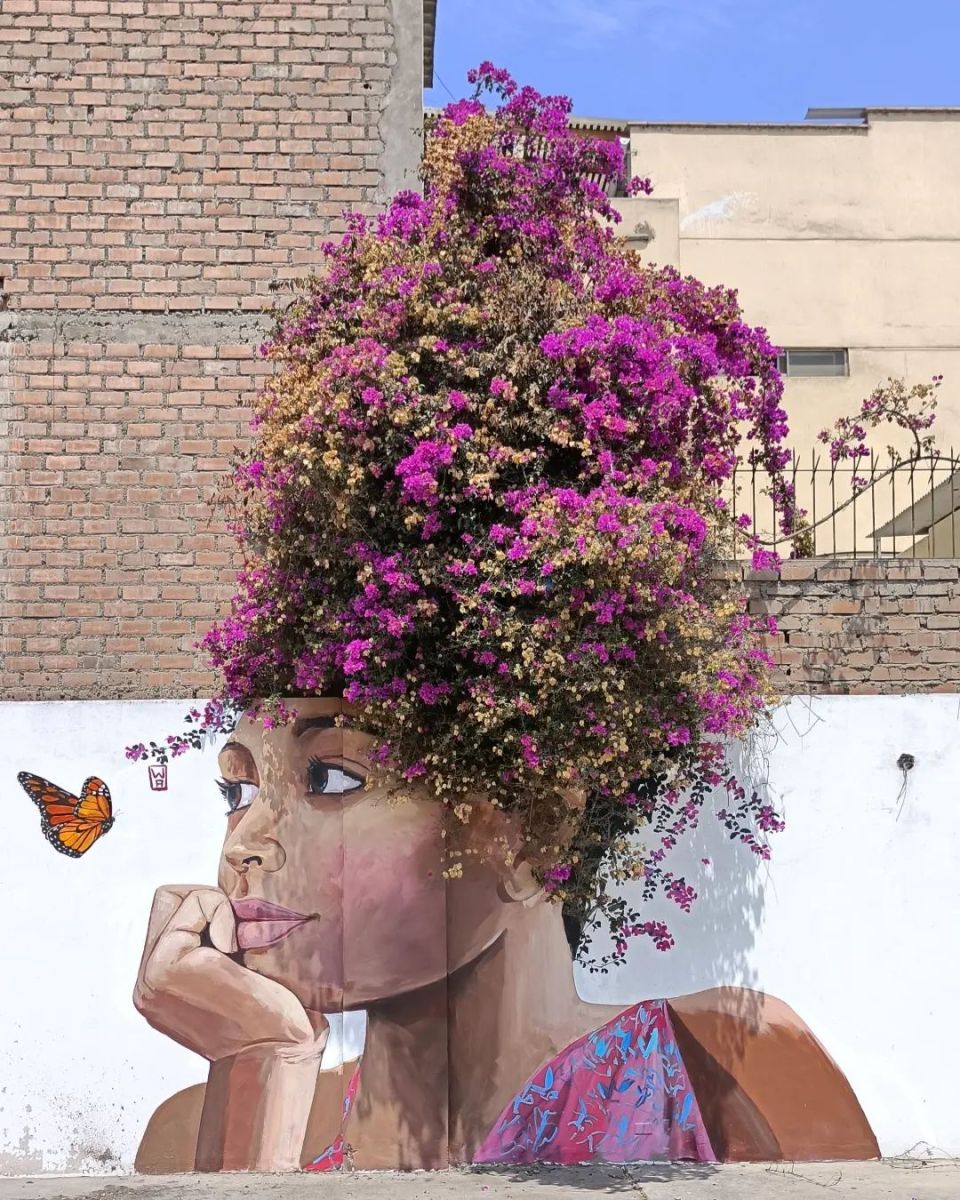
This creative mural cleverly incorporates a real bougainvillea bush as the hair of a painted woman. A monarch butterfly completes the peaceful scene, adding movement to this blend of paint and nature.🔗 Follow WA on Instagram
More: When Street Art Meets Nature (40 Photos)
Which one is your favorite?

Pick Your Favorite: New Art #3 (10 Photos)
Content warning: From the classical intensity of saints in Morelia, Mexico, to skaters flying over orange blooms in Los Angeles, this new collection captures the full spectrum of mural art. You’ll find a surreal underwater monarch rising in Florida, a mythical vision in T
From the classical intensity of saints in Morelia, Mexico, to skaters flying over orange blooms in Los Angeles, this new collection captures the full spectrum of mural art. You’ll find a surreal underwater monarch rising in Florida, a mythical vision in Turin, a red-haired muse watching over Madrid, and a tentacled creature crawling out of Barcelona’s walls. Scroll through, pick your favorite, and follow the artists who made it happen.
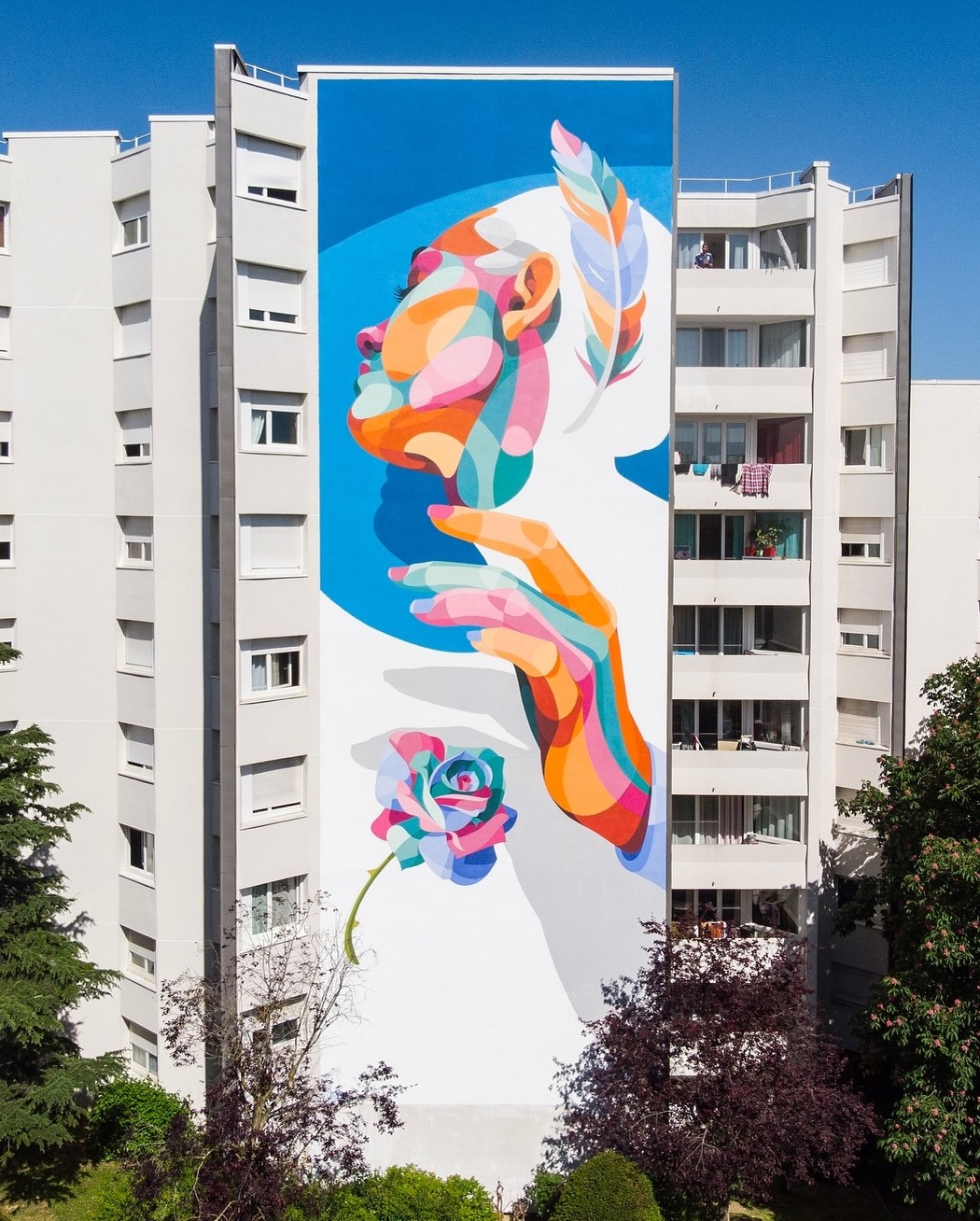
1. Color Bloom — Alber’s mural in Saint-Germain-en-Laye, France
A large-scale abstract portrait in overlapping blocks of color shows a woman in profile gazing upward. Her skin, hand, and a floating rose are painted in fluid segments of orange, pink, cyan, and violet. A feather passes behind her ear against a solid blue background.
🔗 Follow Alber on Instagram
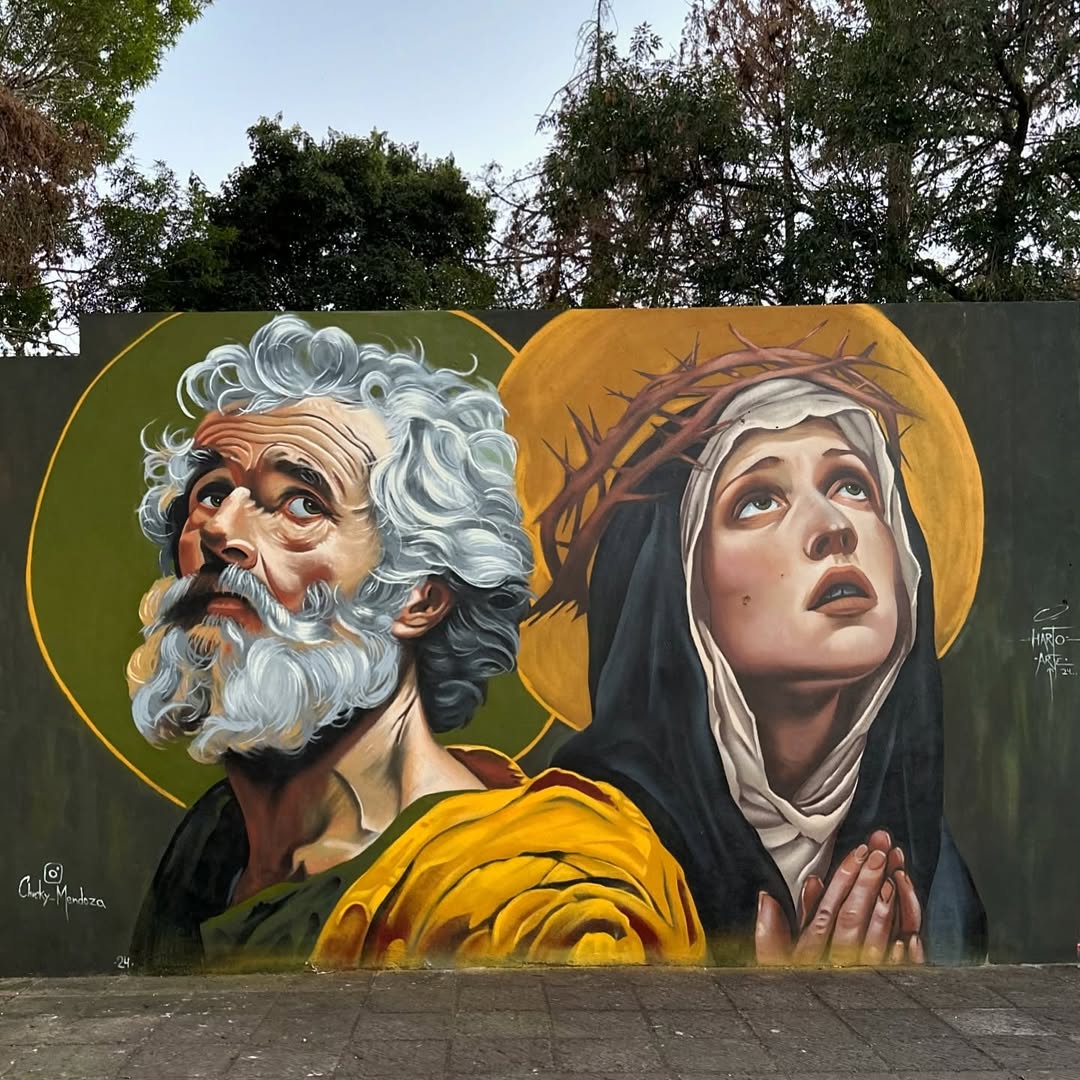
2. Devotion — Chucky Alfredo Mendoza’s mural in Morelia, Mexico
A religious scene features an elderly man with a white beard and yellow robe, looking up beside a woman wearing a crown of thorns and a black veil. Golden halos frame their heads, painted against a dark green background.
🔗 Follow Chucky Alfredo Mendoza on Instagram
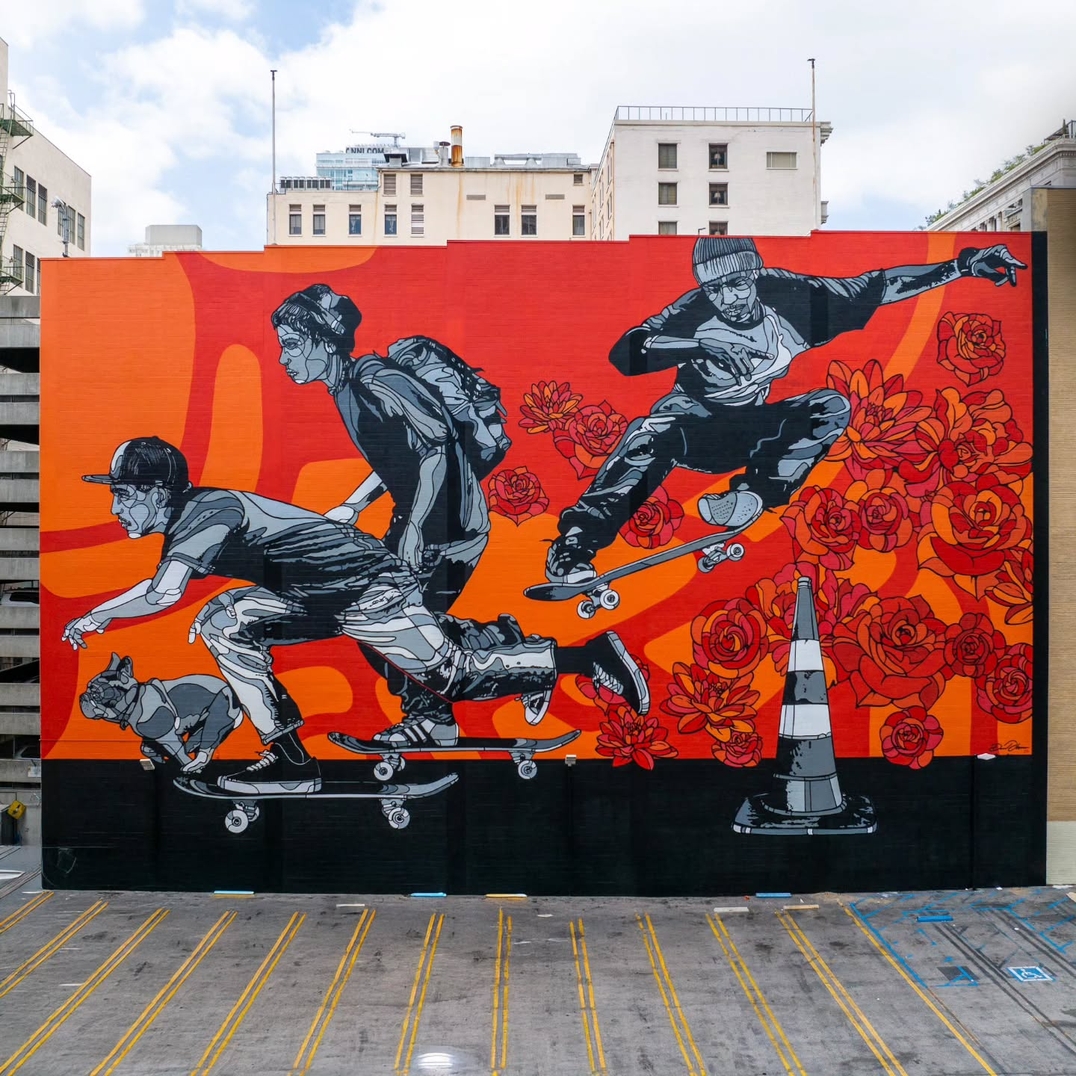
3. Street Flow — David Flores’ mural in Los Angeles, USA
Three skateboarders in grayscale ride and jump across a vivid red-and-orange background filled with line-art roses. A cat runs beside them, and an oversized traffic cone anchors the composition at street level.
🔗 Follow David Flores on Instagram
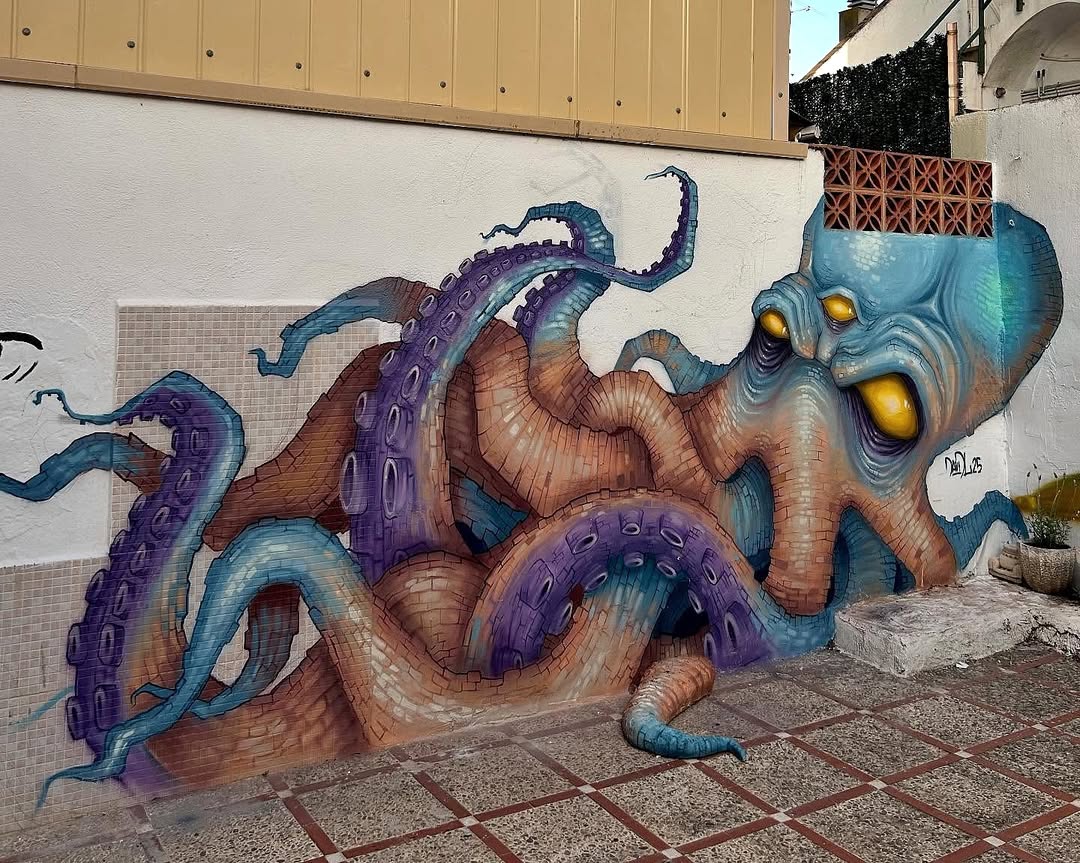
4. Octoform — DavidL’s mural in Barcelona, Spain
A octopus with glowing yellow eyes and detailed brick-textured skin crawls from the wall, its limbs wrapping around a tiled corner. The tentacles are painted in shifting tones of purple, blue, and tan. More by DavidL!: 15 Surreal Graffiti Artworks!: From Cookie Monster to Zombie Homer
🔗 Follow DavidL on Instagram
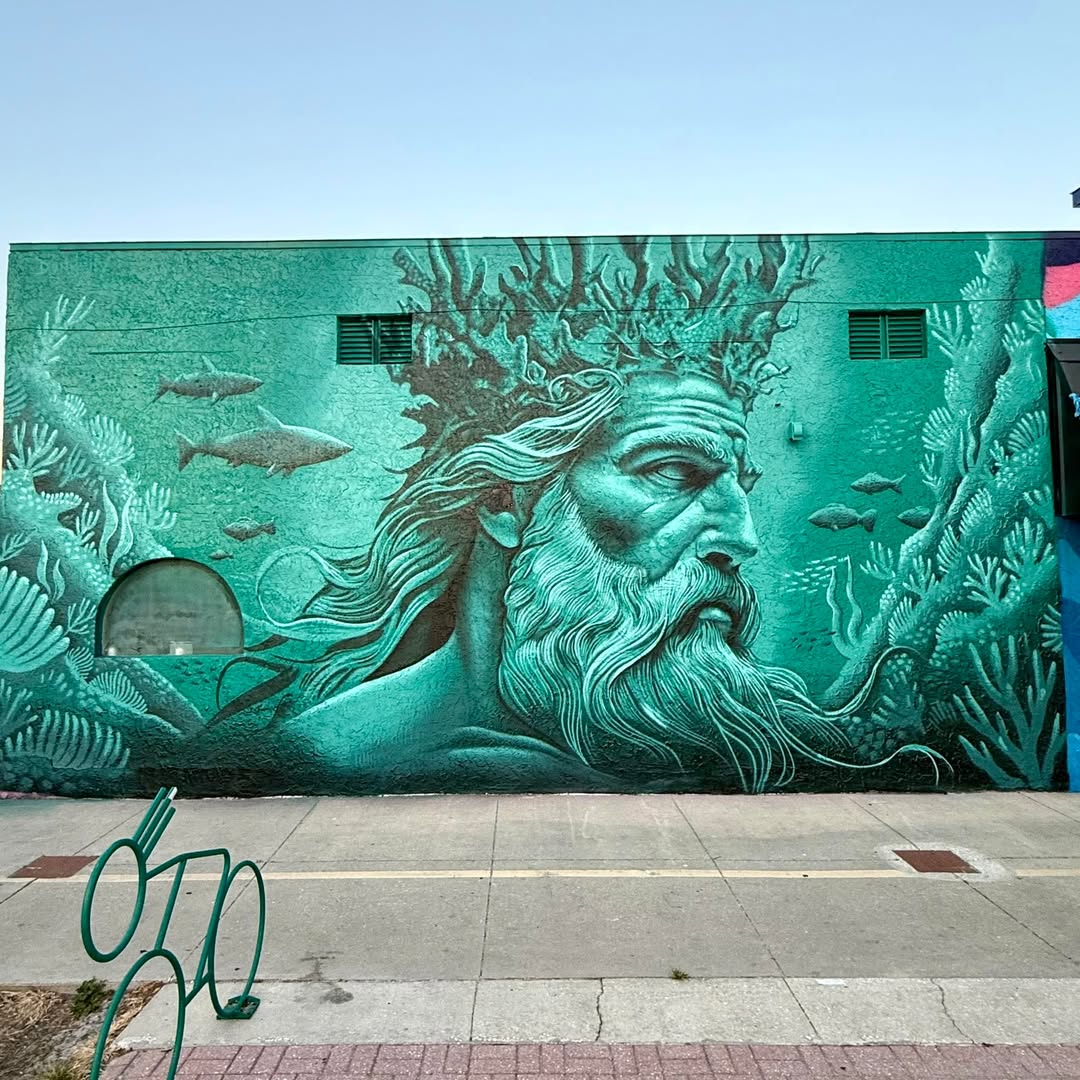
5. Neptune’s Watch — Derek Donnelly’s mural in Gulfport, Florida
A deep sea green-toned mural features the god of the sea with a flowing beard, crowned with coral and surrounded by ocean life. His gaze cuts through the watery scene as fish swim past and seaweed unfurls.
🔗 Follow Derek Donnelly on Instagram
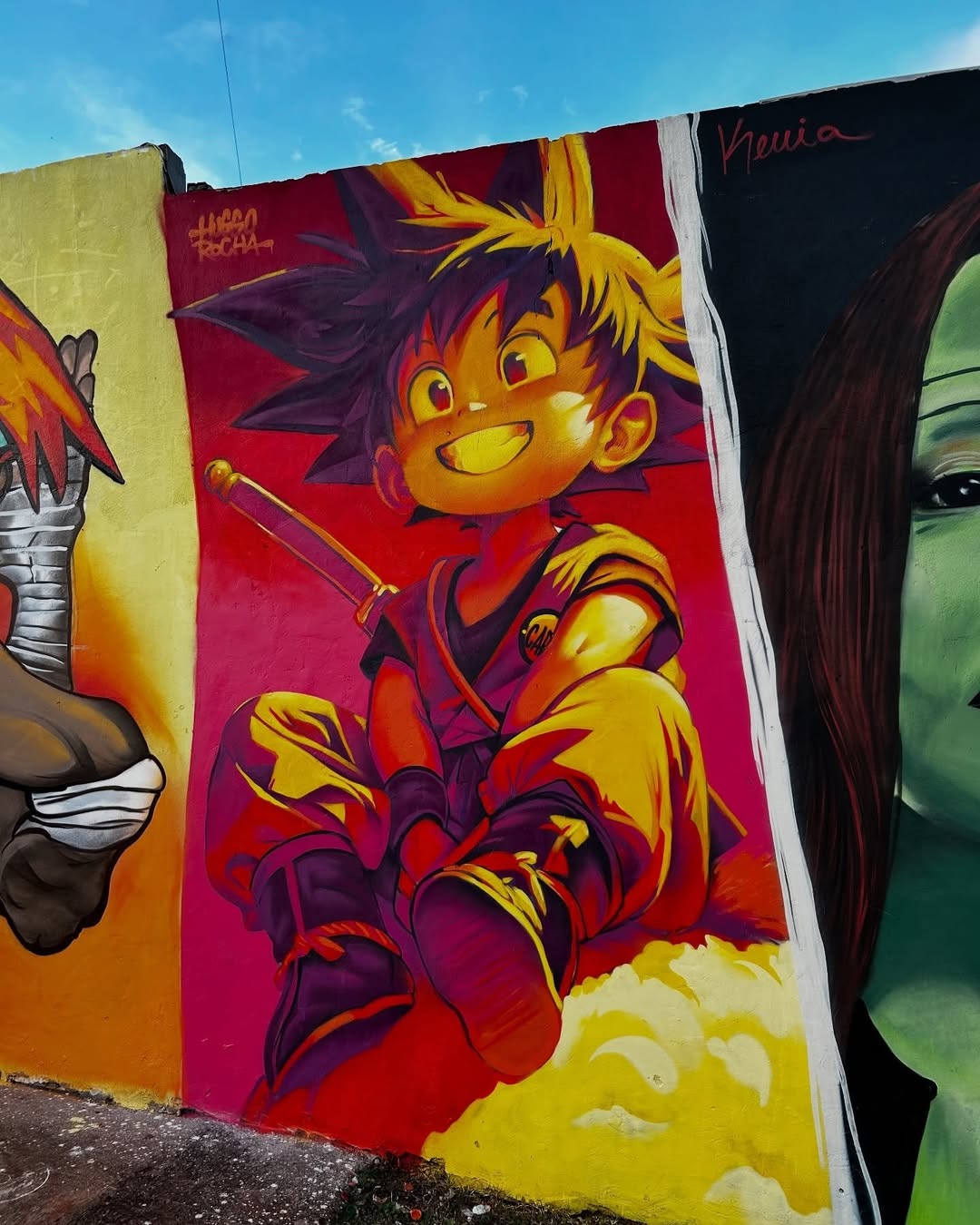
6. Saiyan Glow — Huggo Rocha’s mural in Londrina, Brazil
A bright anime-style mural of Goku from Dragon Ball shows him in vivid yellows, reds, and oranges, sitting on a flying cloud with a smile and sword on his back. The background is a red-to-yellow gradient.
🔗 Follow Huggo Rocha on Instagram
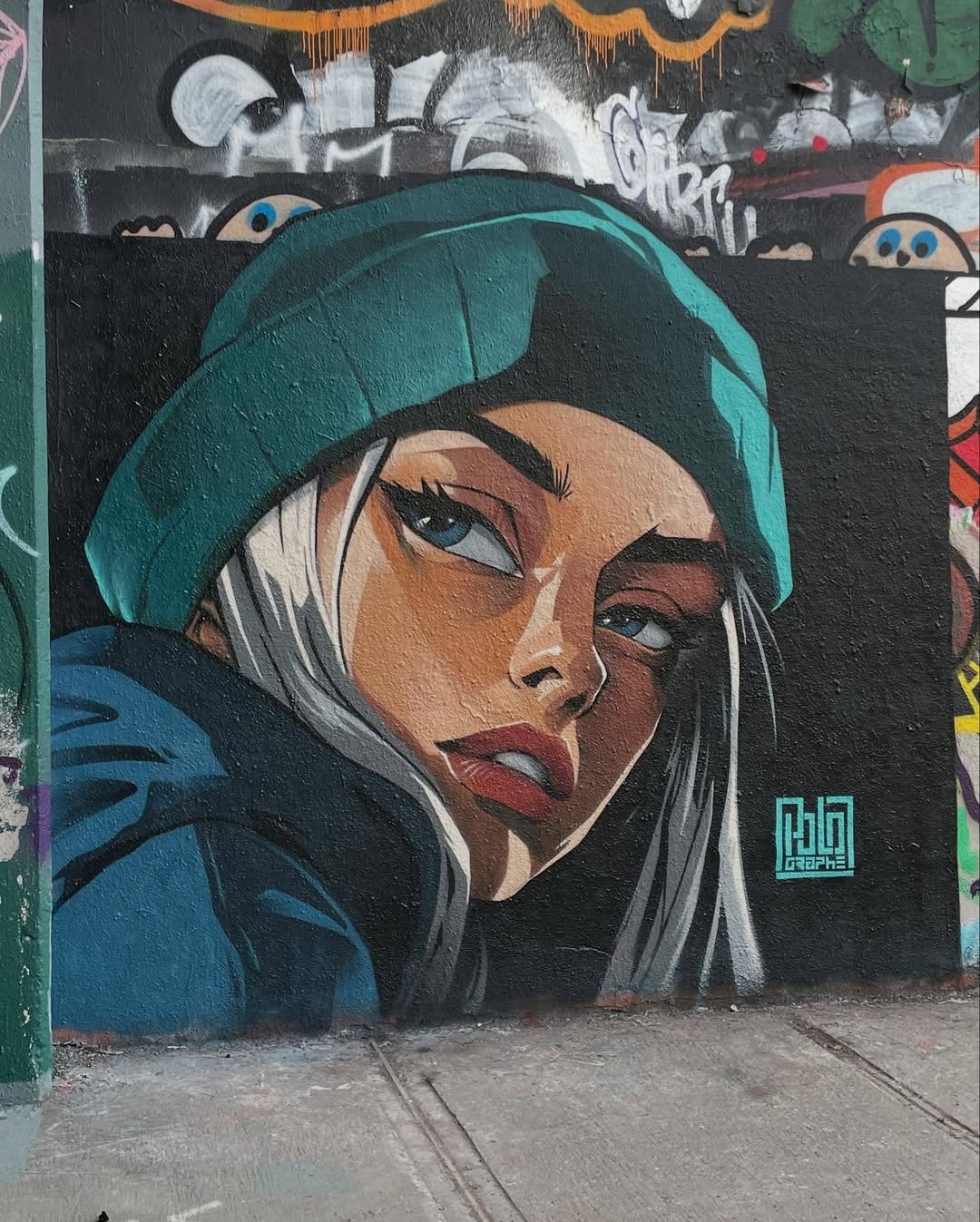
7. Winter Gaze — Polo’s mural in Montreal, Canada
A portrait of a young woman wearing a teal beanie and matching jacket. She has white-blond hair and sharp features, painted in a graphic, comic-inspired style with shadows and dark outlines.
🔗 Follow Polo (Polographe) on Instagram
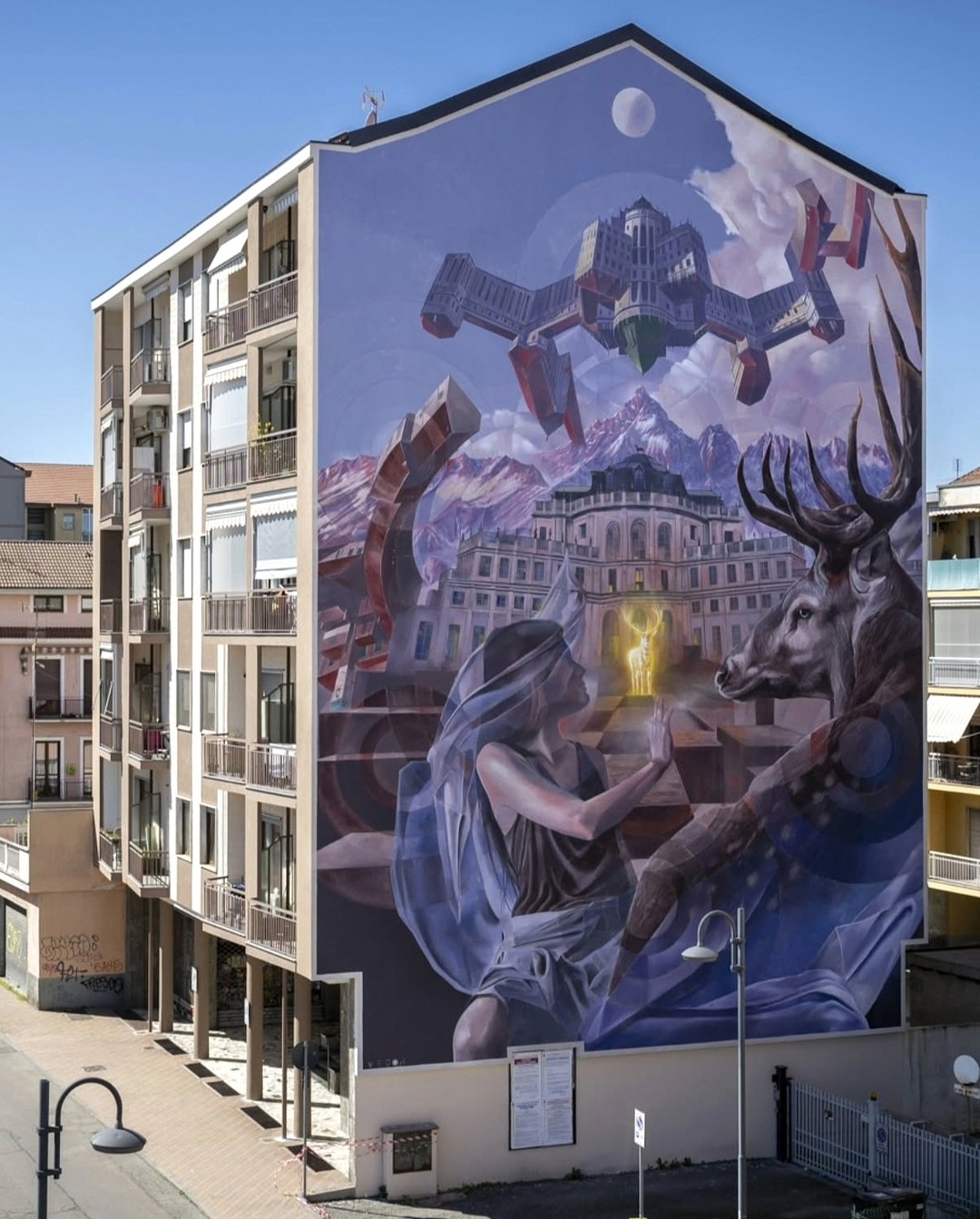
8. D1ana — Vesod’s mural in Turin, Italy
A mural mixing classical and digital themes: a woman in a blue veil reaches out toward a glowing orb between her and a stag, while buildings and a futuristic flying structure float in the background over mountains.
🔗 Follow Vesod on Instagram
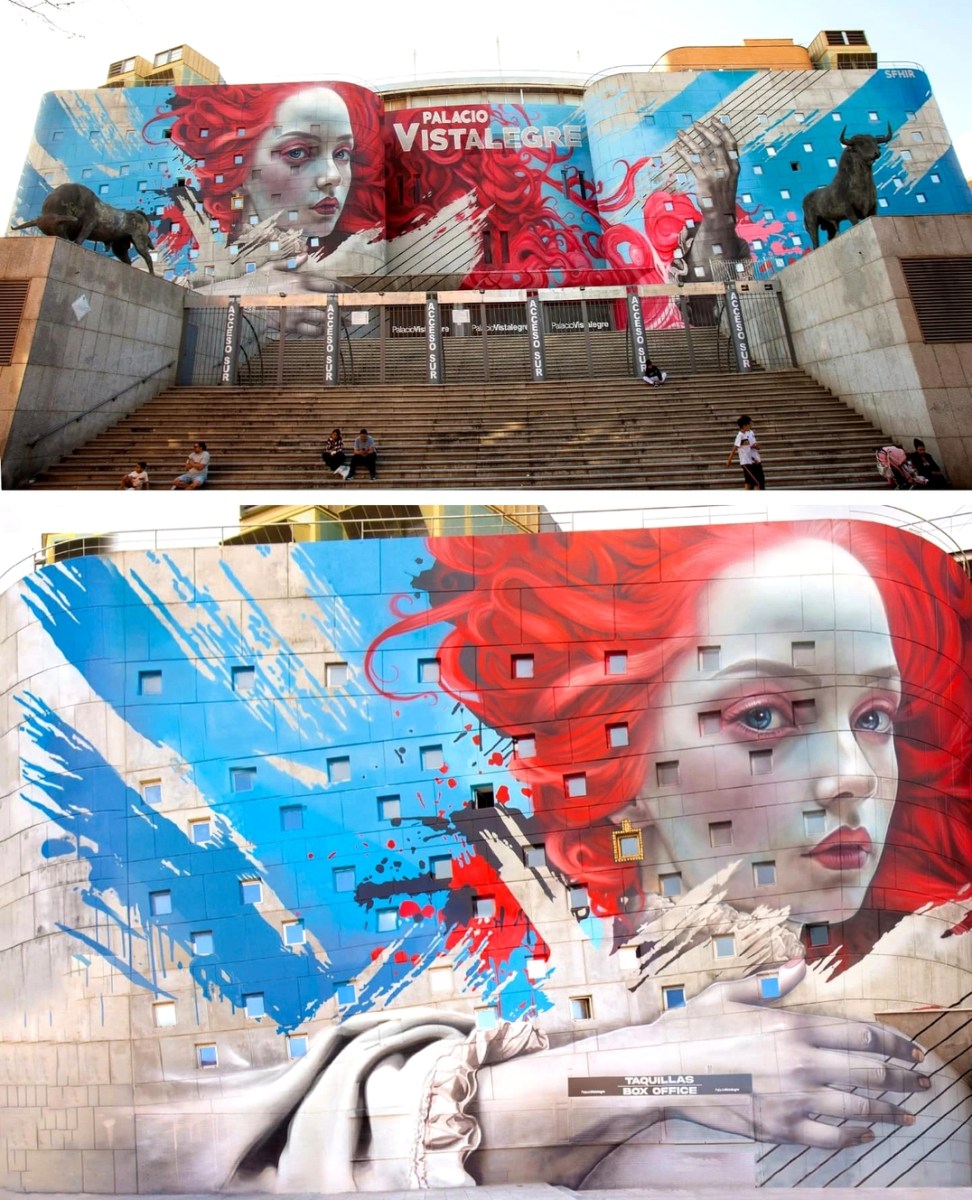
9. The Muse of Vistalegre — Sfhir’s mural in Madrid, Spain
A sprawling multi-panel piece of a woman with striking red hair painted across the façade of the Palacio Vistalegre. Her intense expression contrasts with abstract splashes of blue and red breaking through the wall. More!: Turning Walls into Stories! 6 Murals by SFHIR
🔗 Follow Sfhir on Instagram
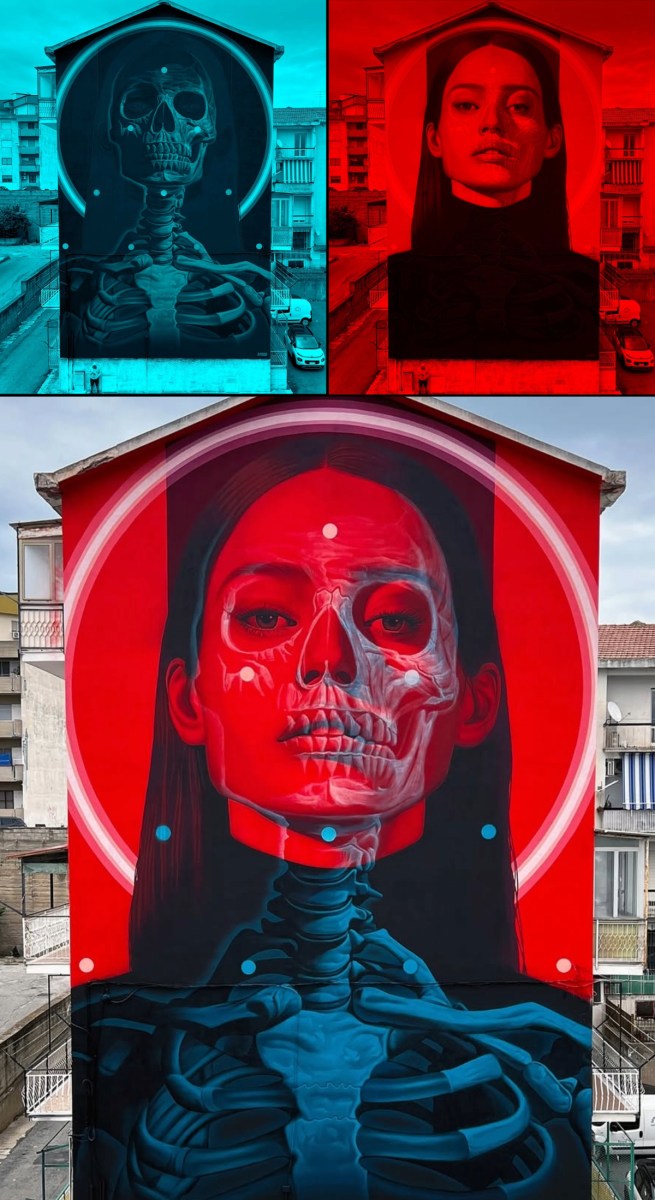
10. The Architect — INSANE51’s mural in Crotone, Italy
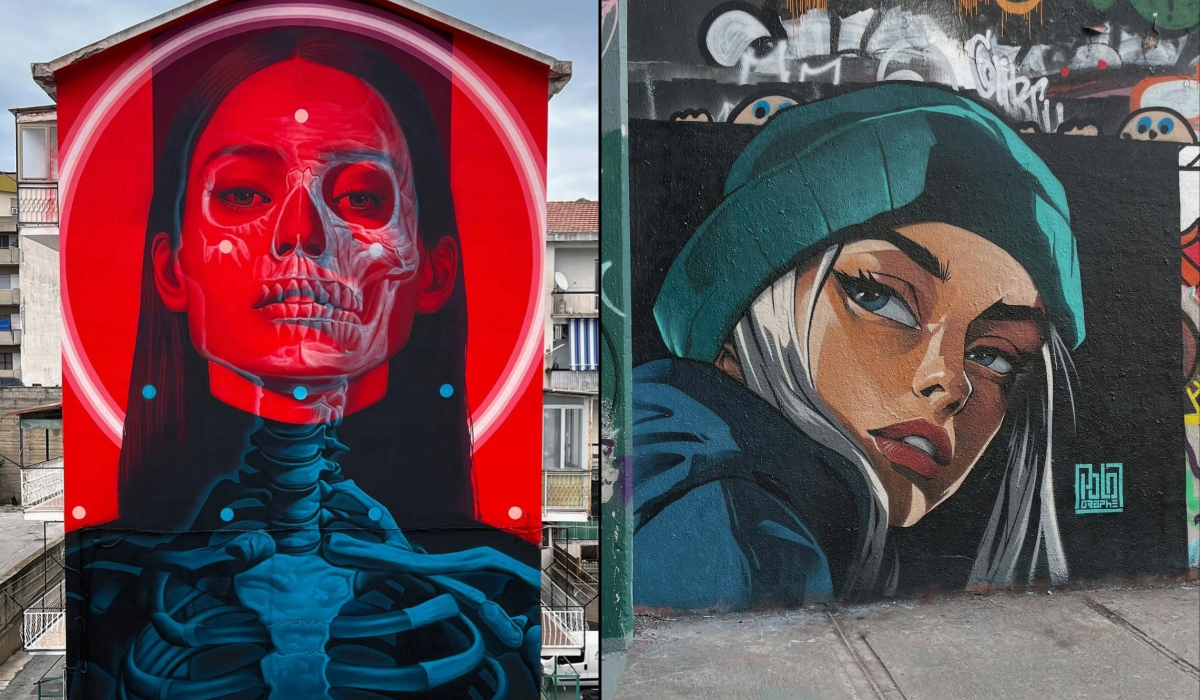
A dual-layer mural in red and blue tones that shifts when viewed with 3D glasses. A woman’s portrait overlays an anatomical skeleton of the same pose. The red background intensifies the x-ray effect.
🔗 Follow INSANE51 on Instagram
More: Master of Illusion!: 19 Jaw-Dropping 3D Graffiti Pieces by Odeith
Which one is your favorite?
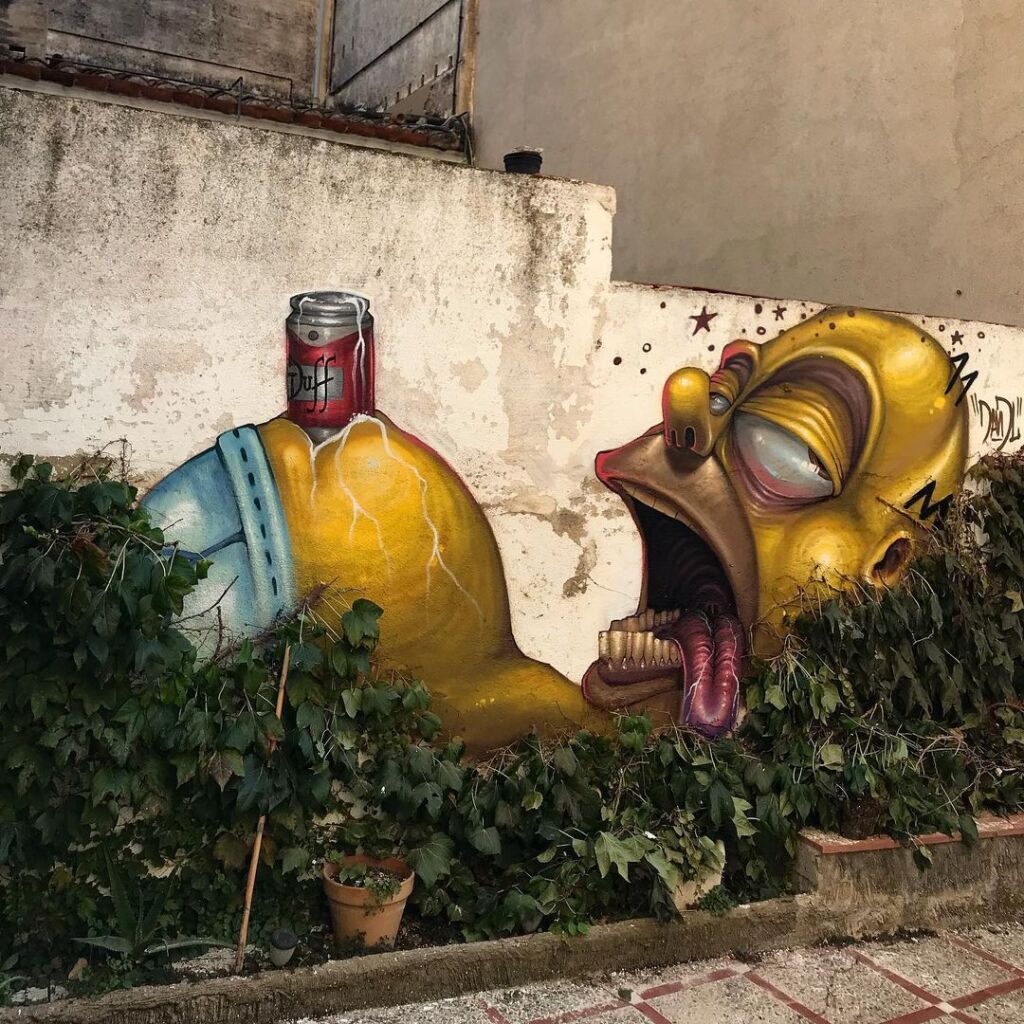
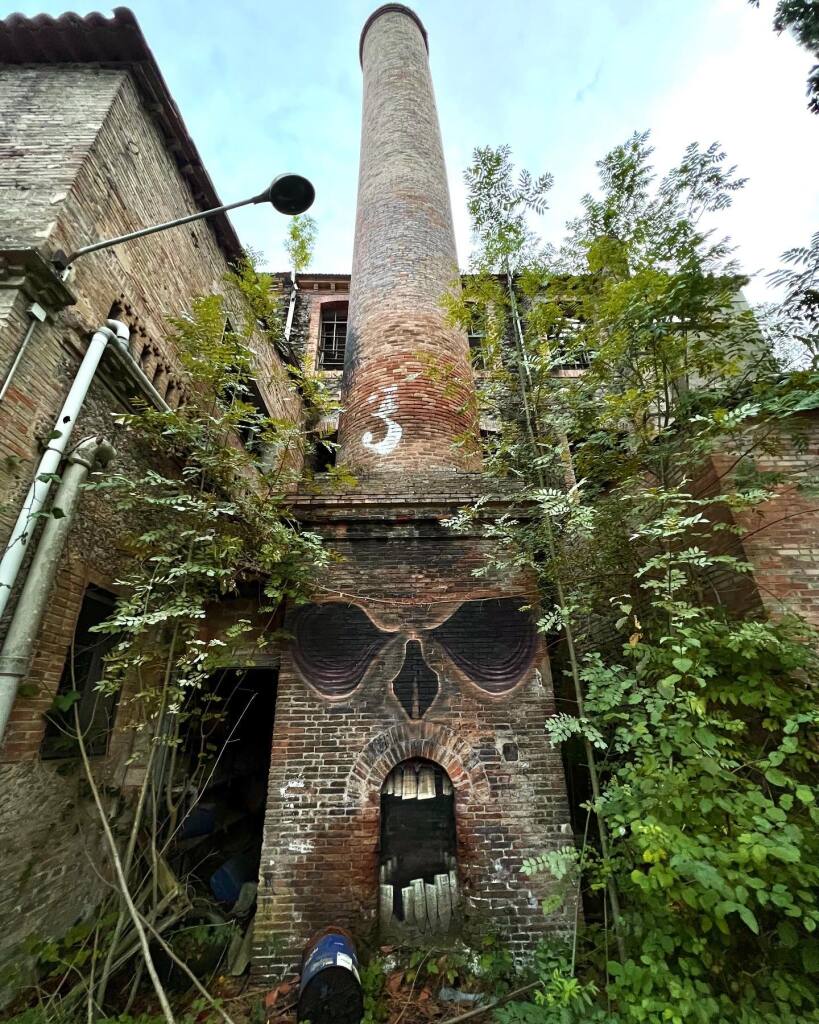
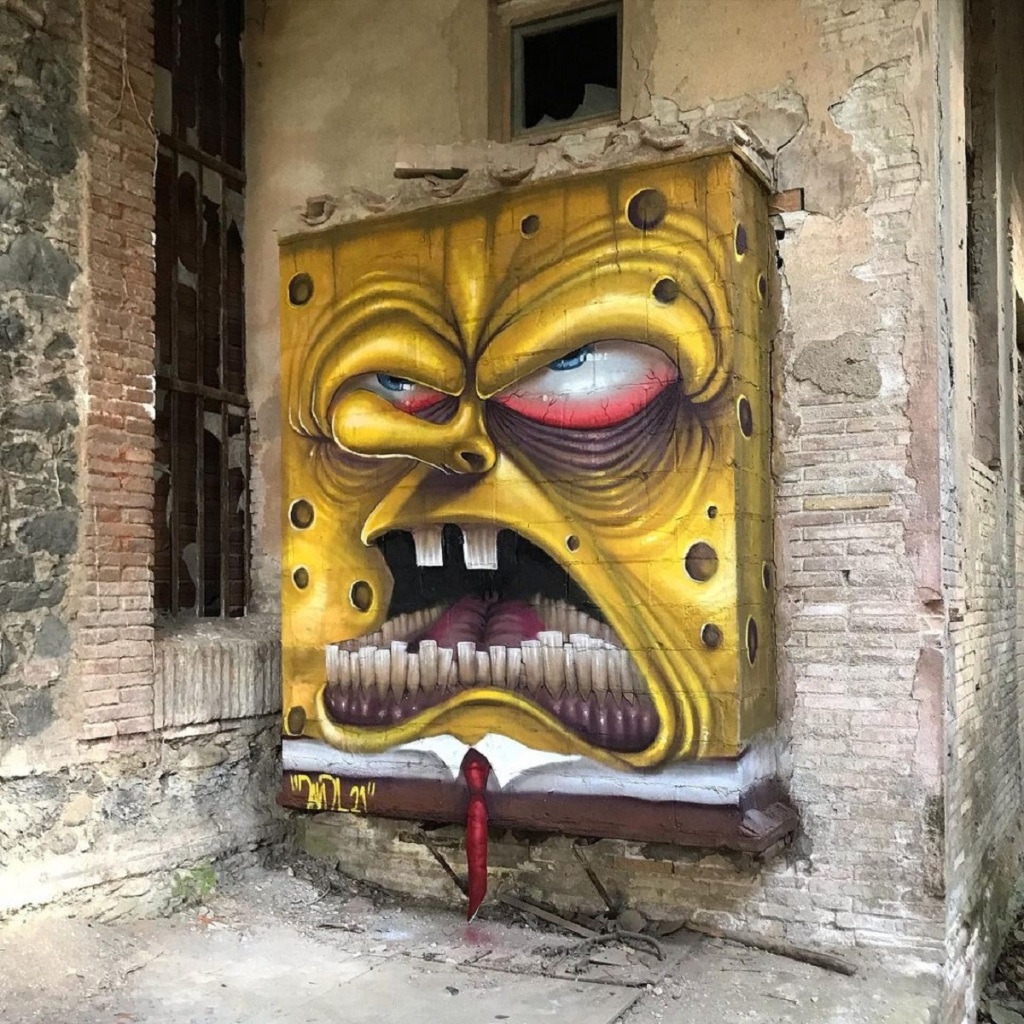
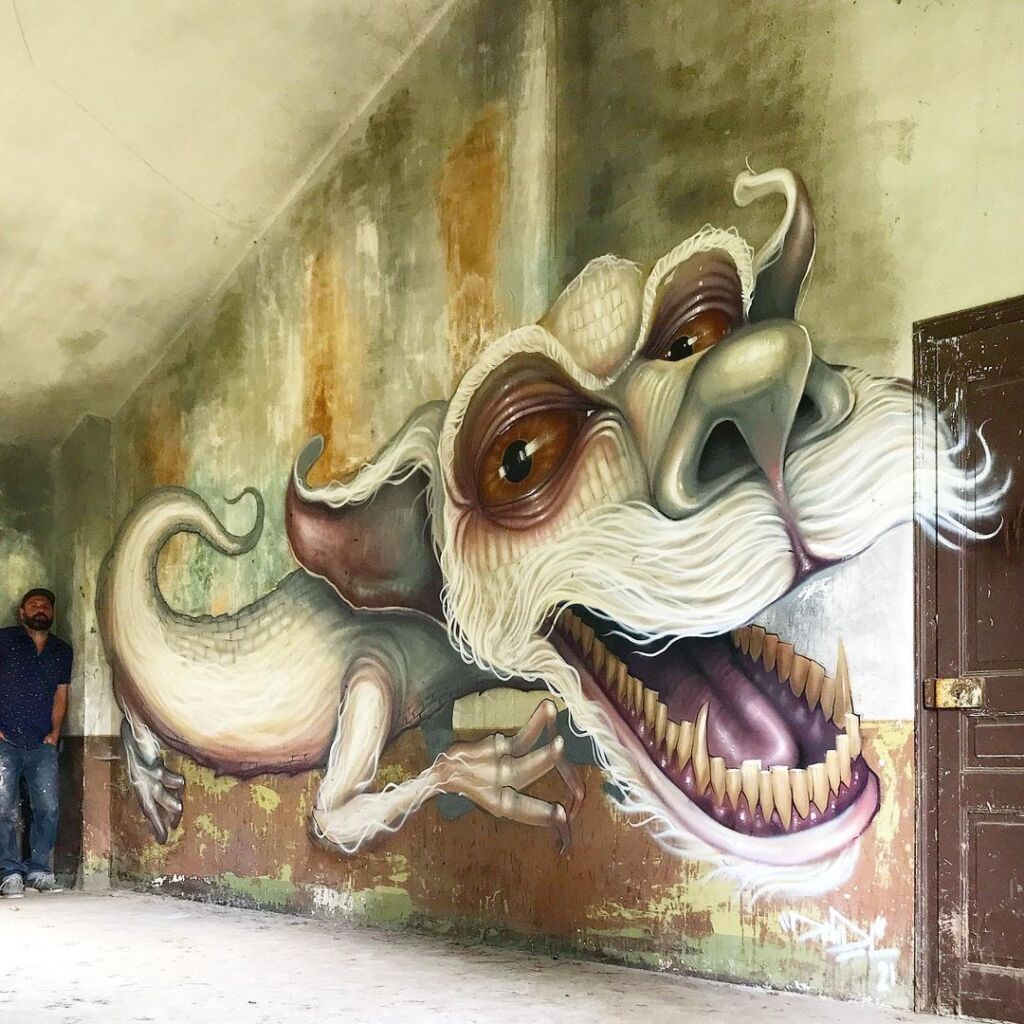
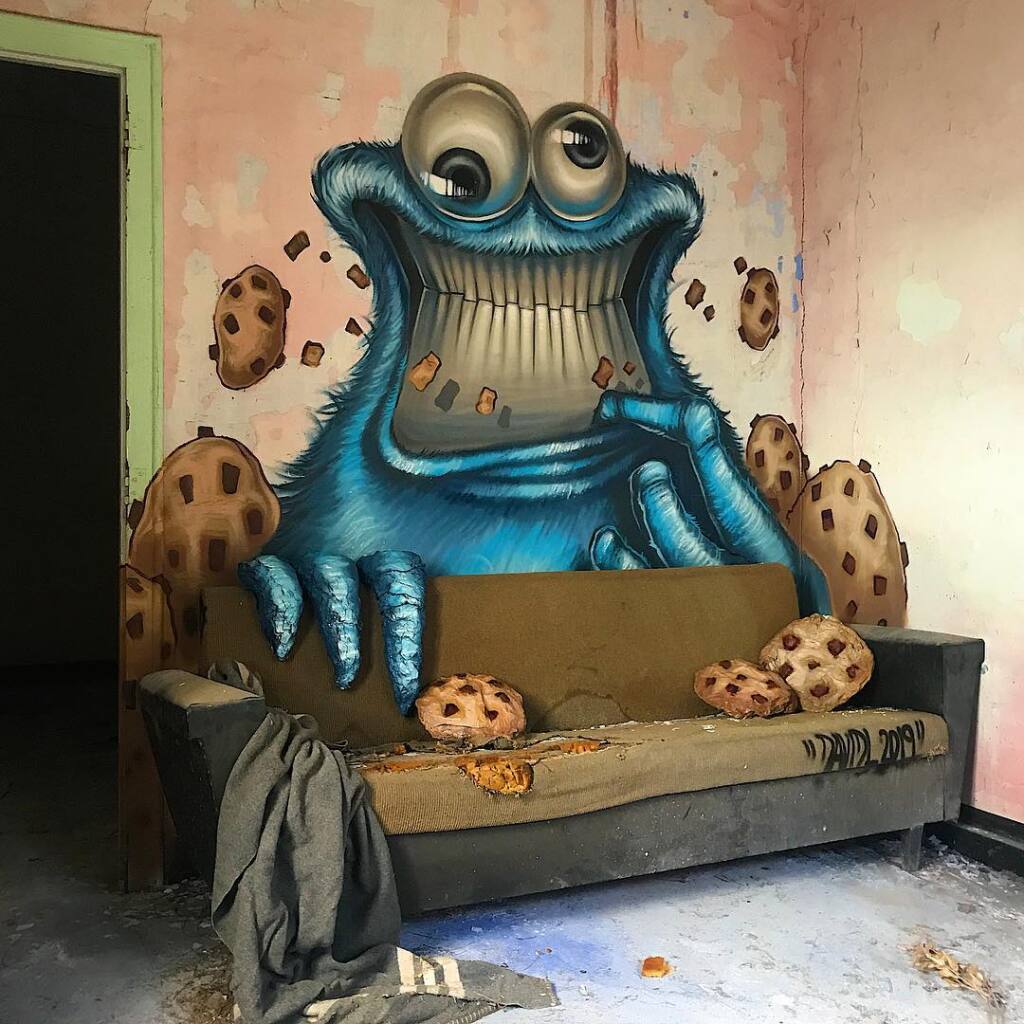
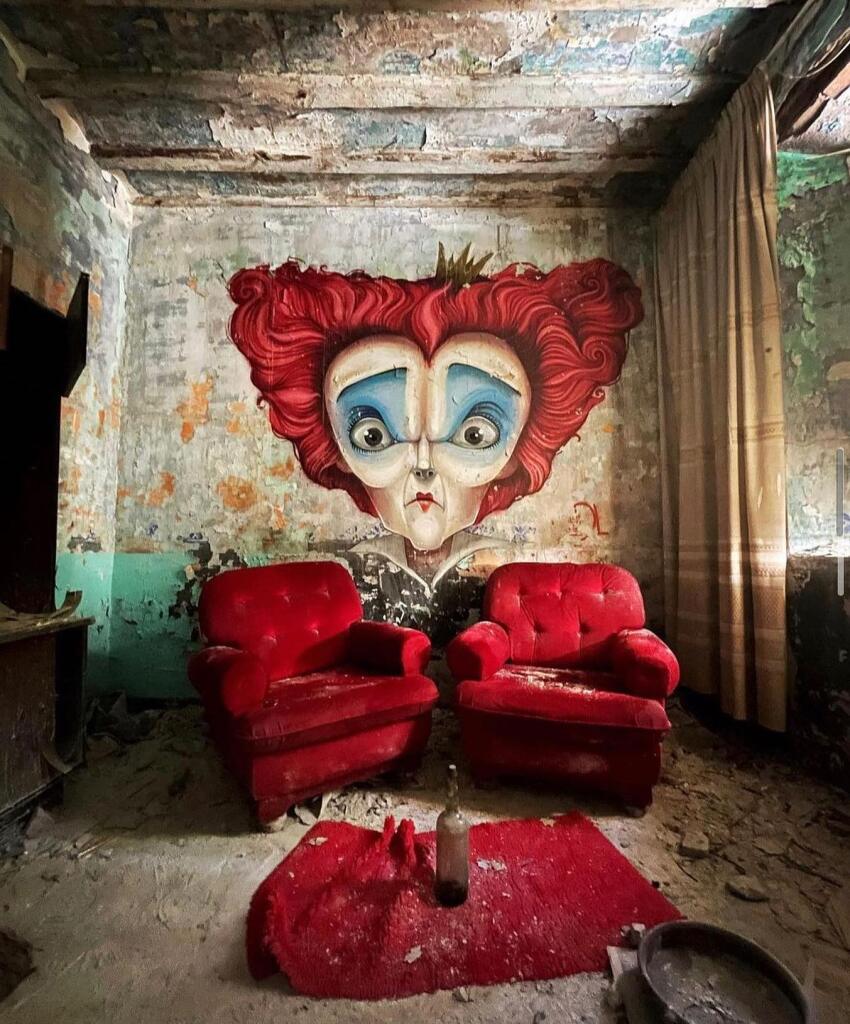
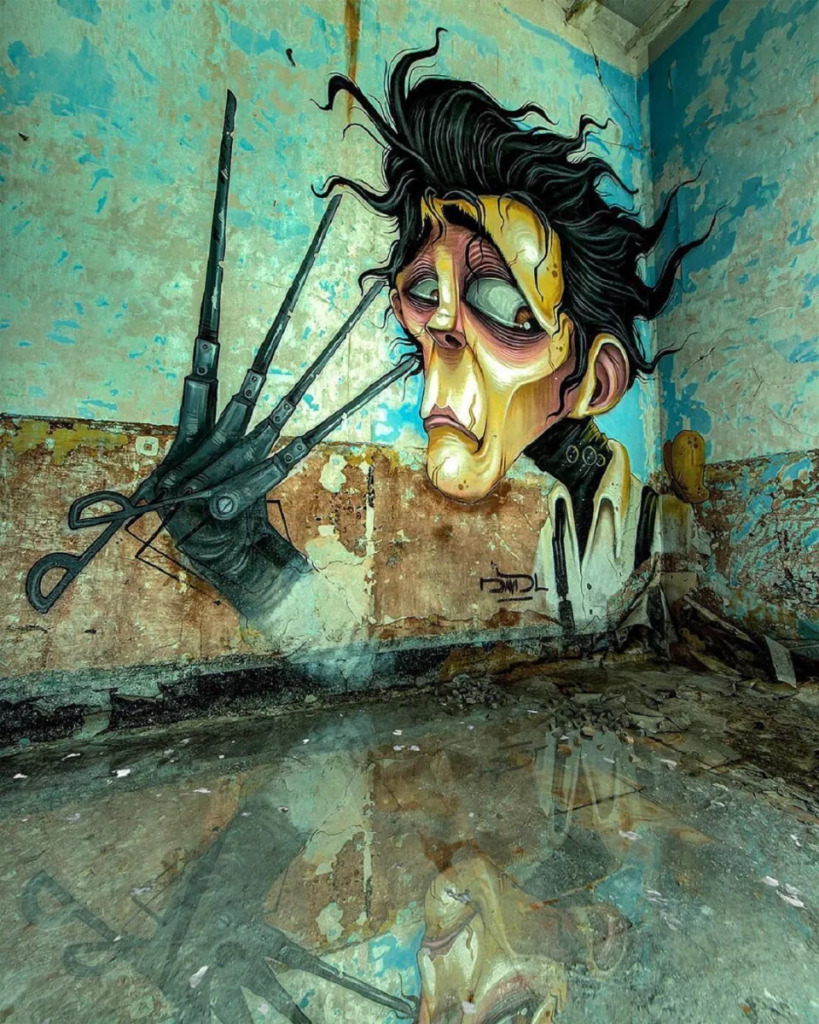
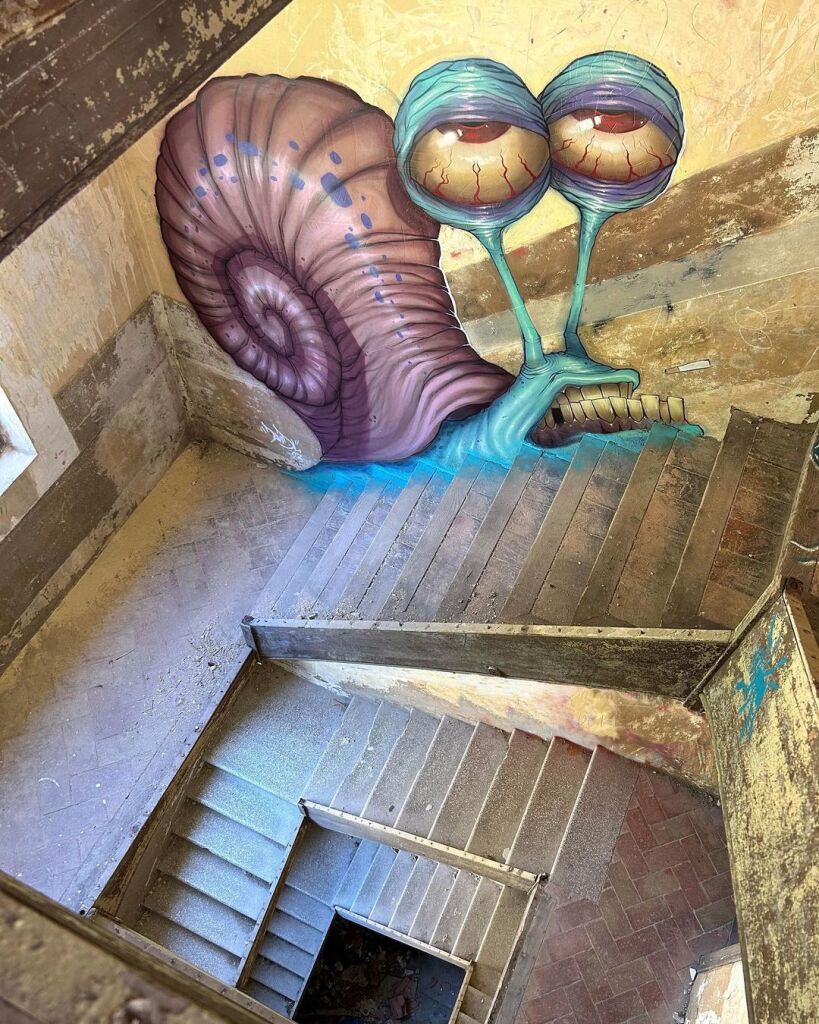
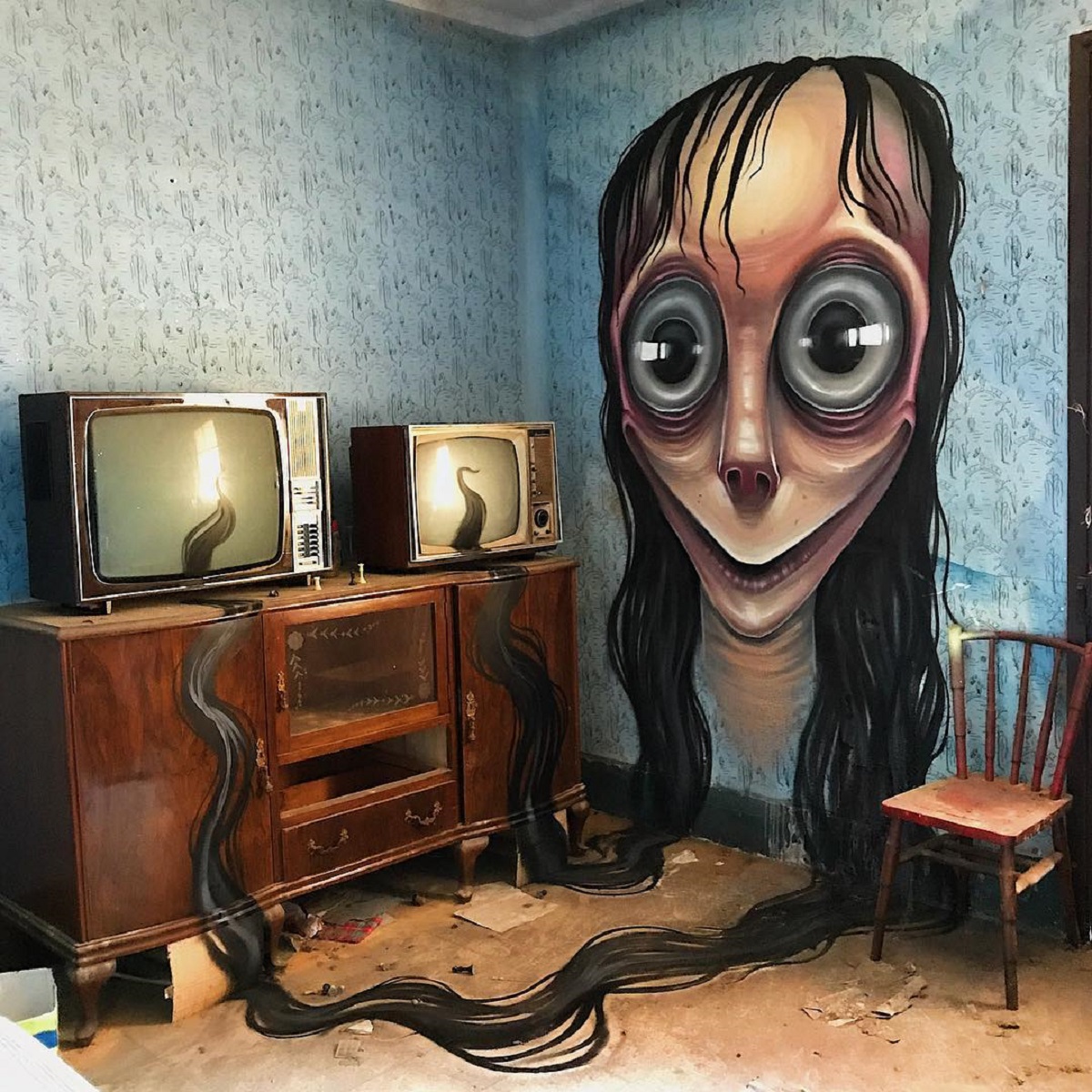
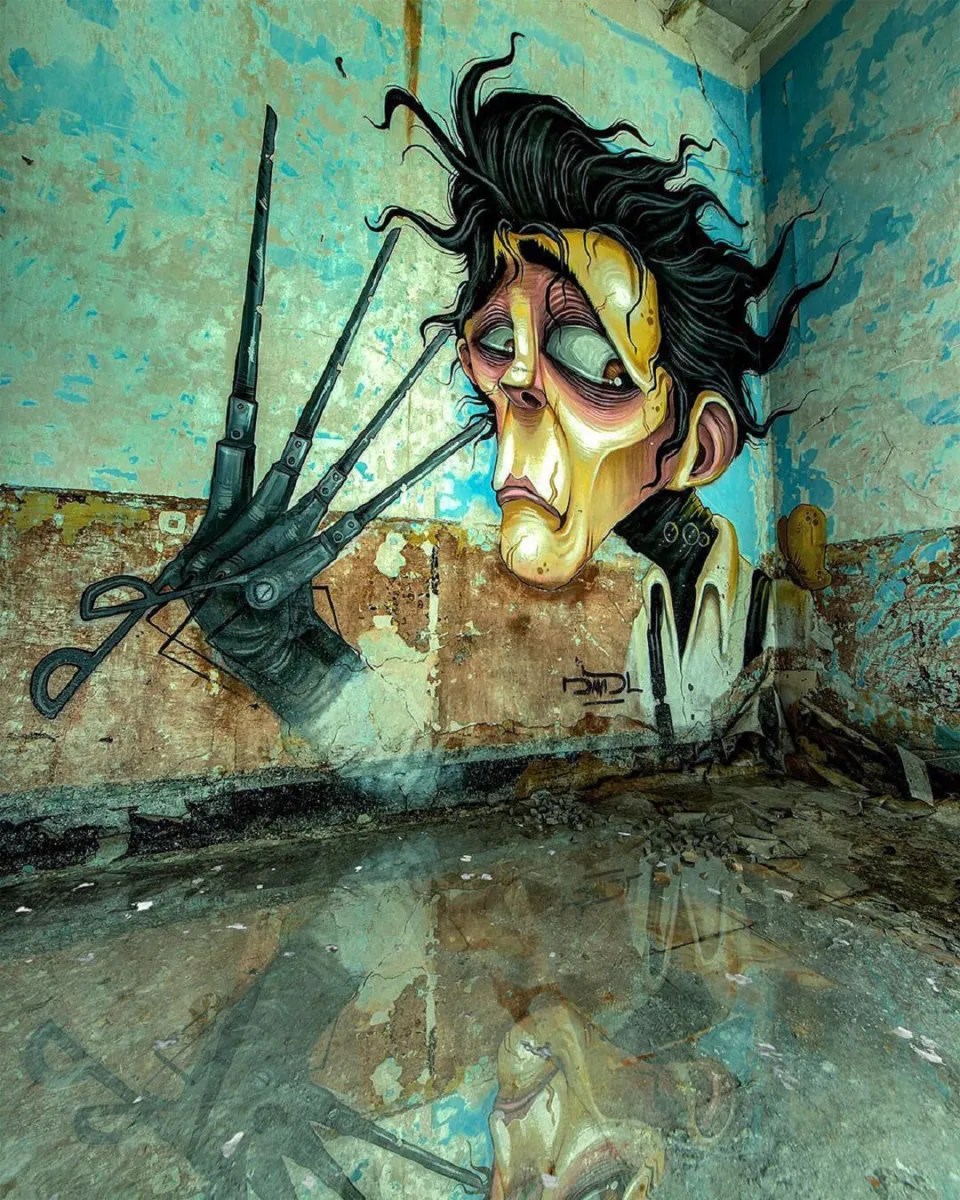
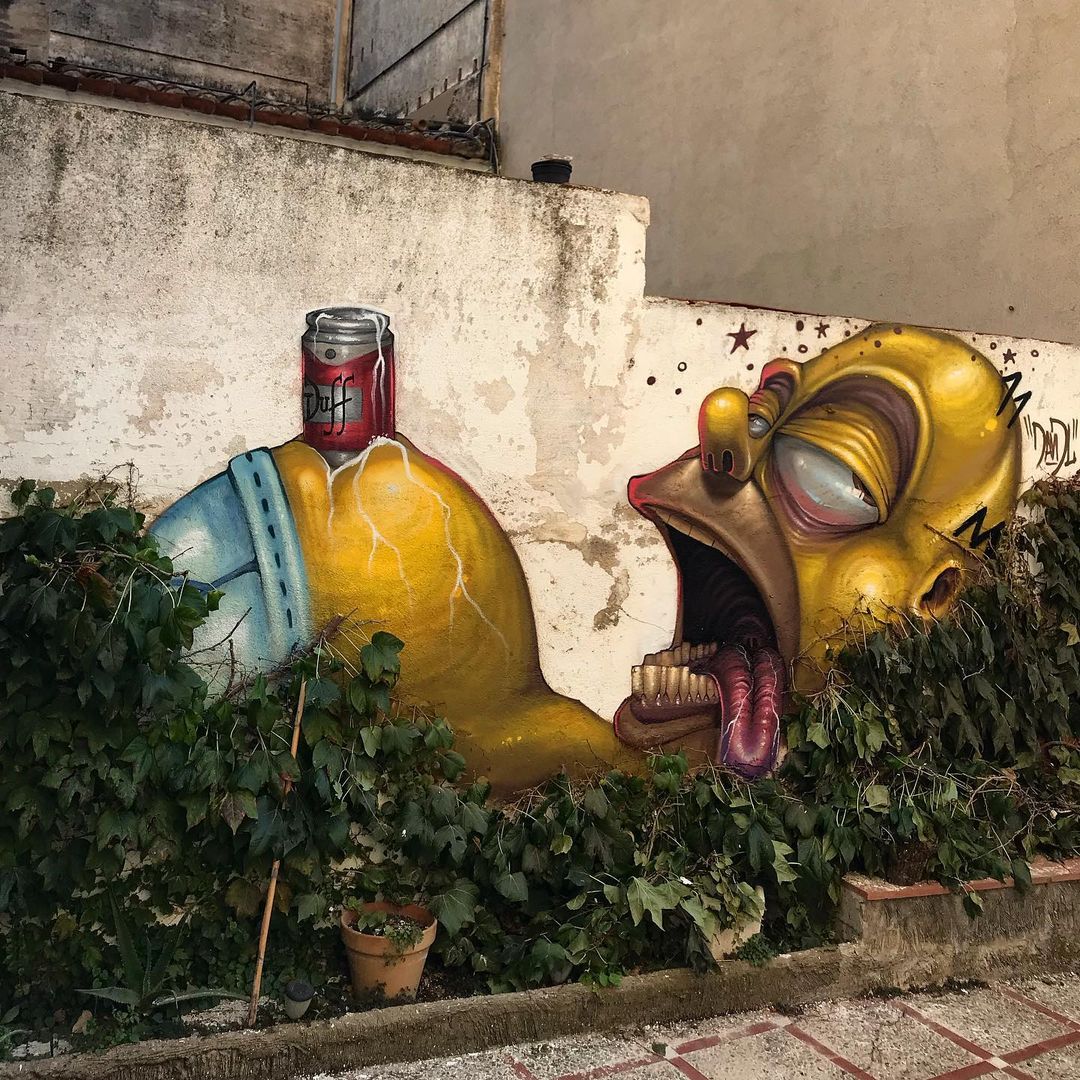
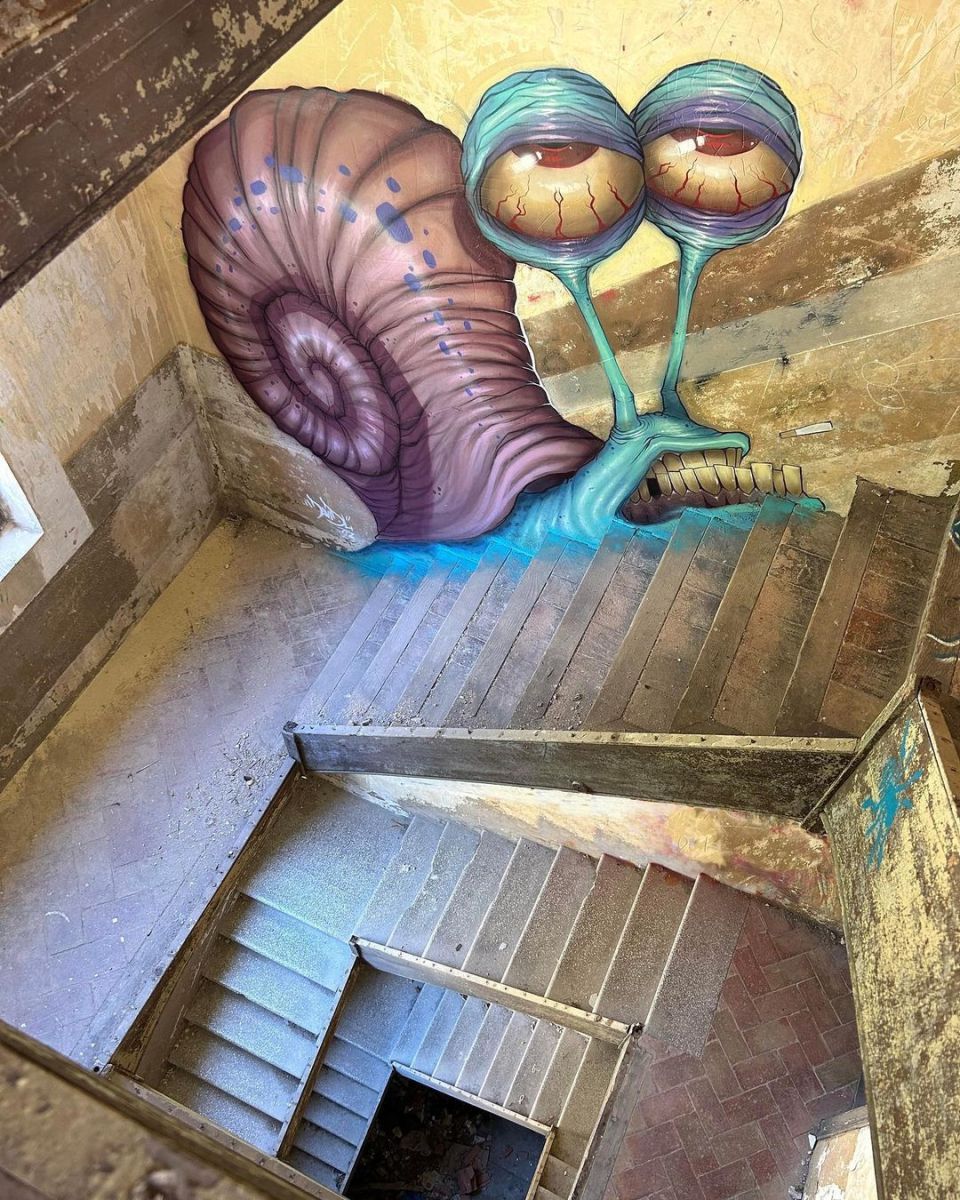
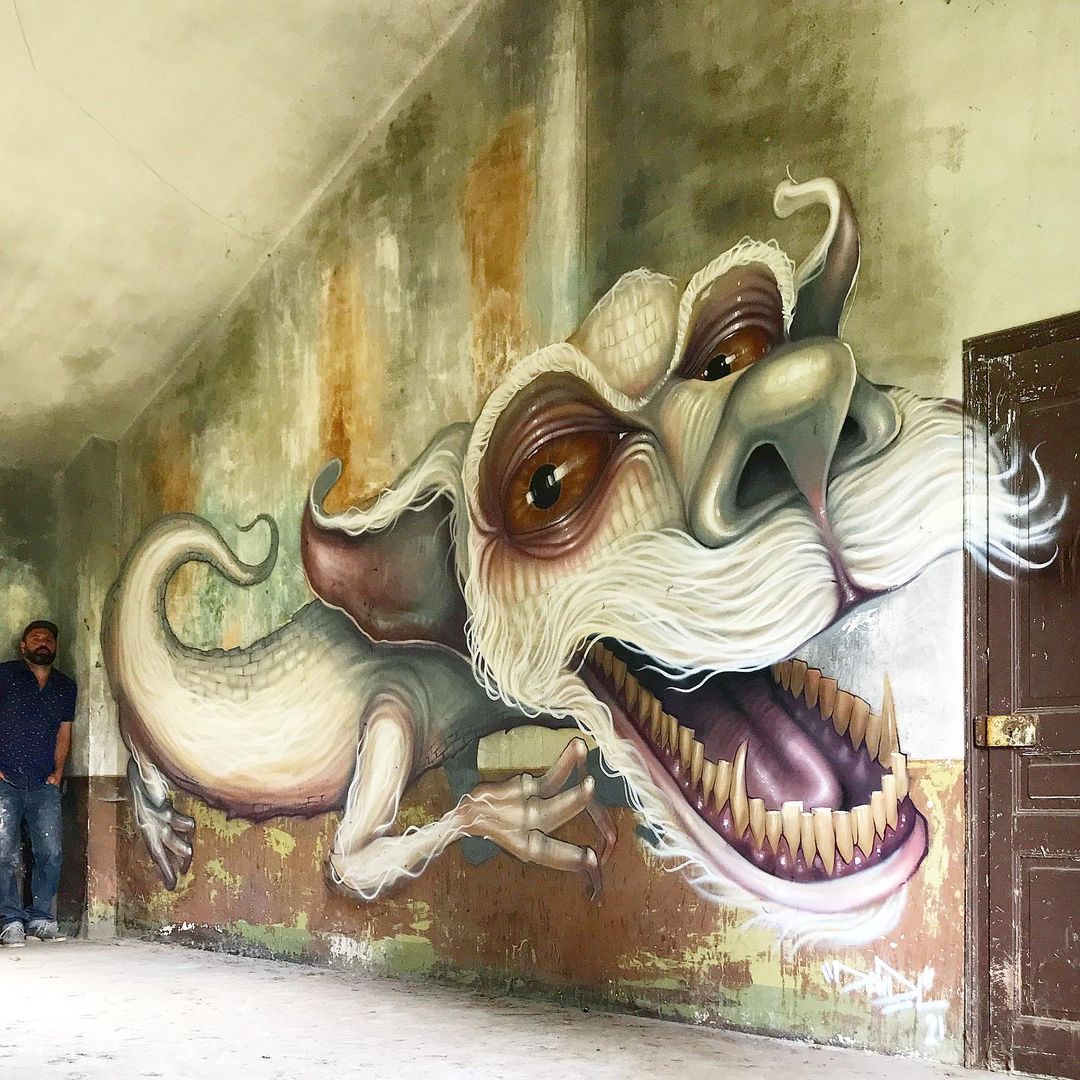
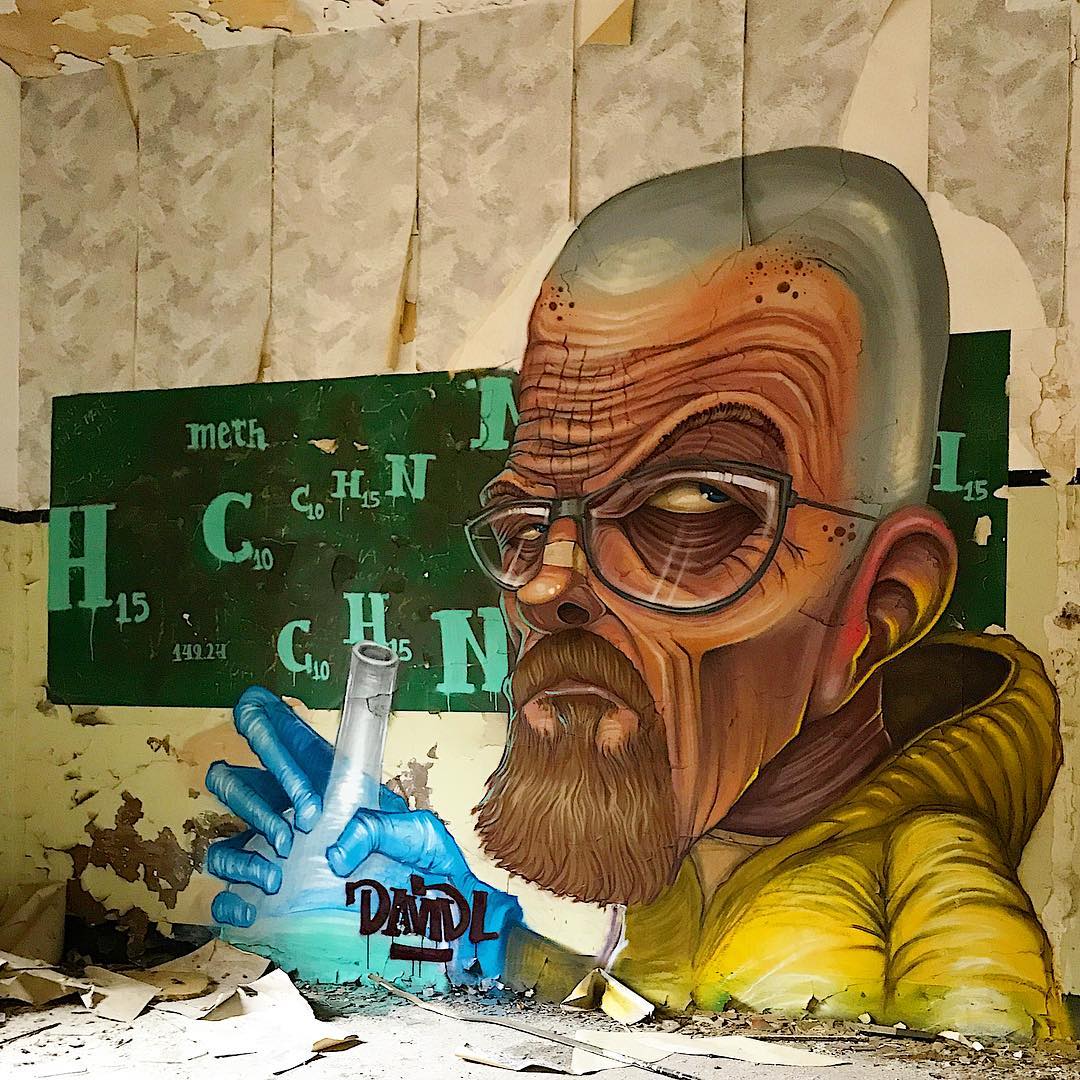
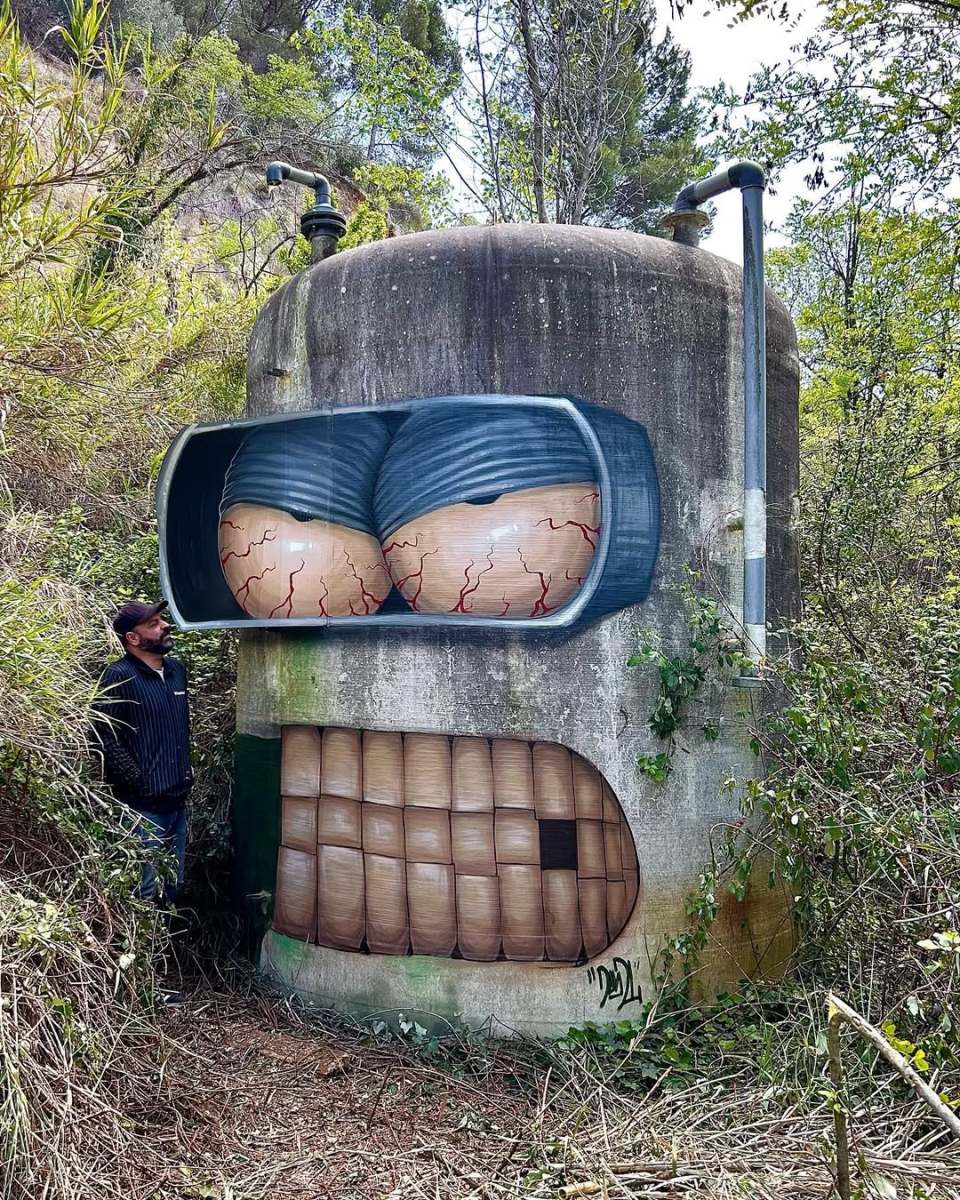
Surreal Art By DavidL! (15 Photos)
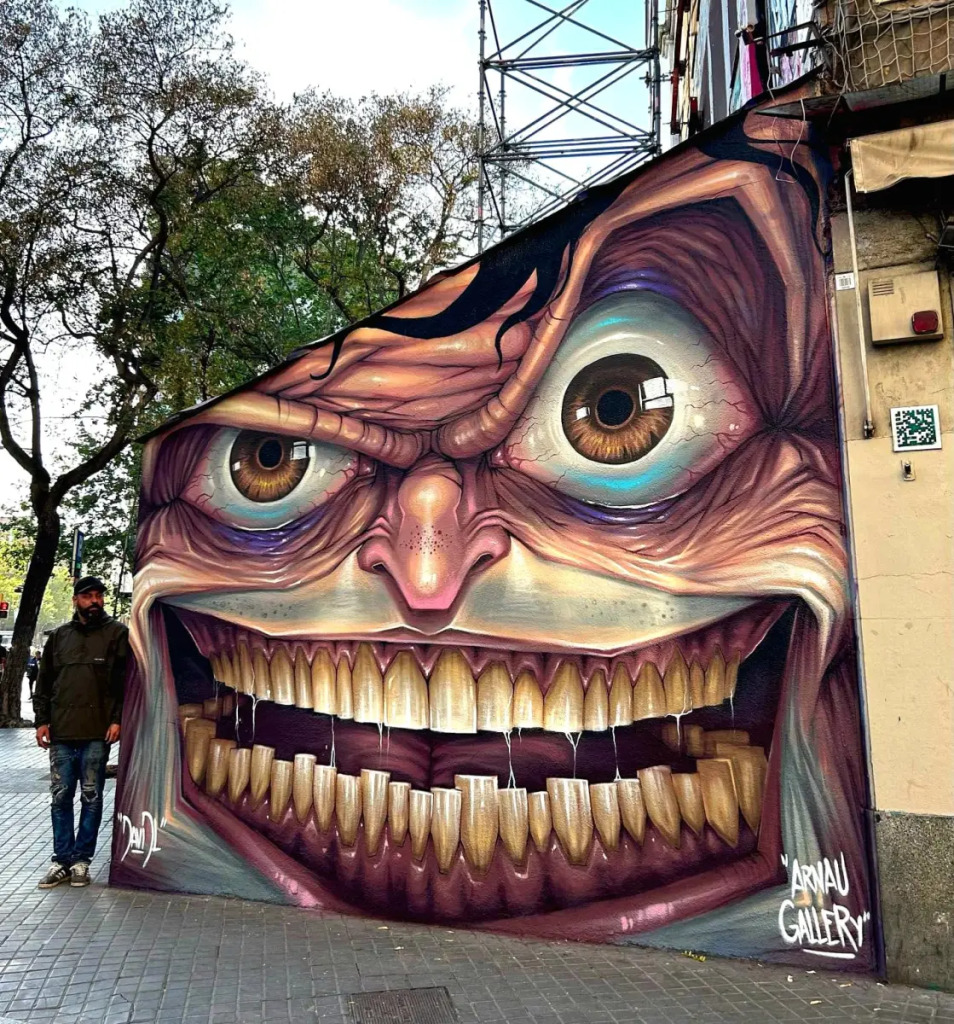
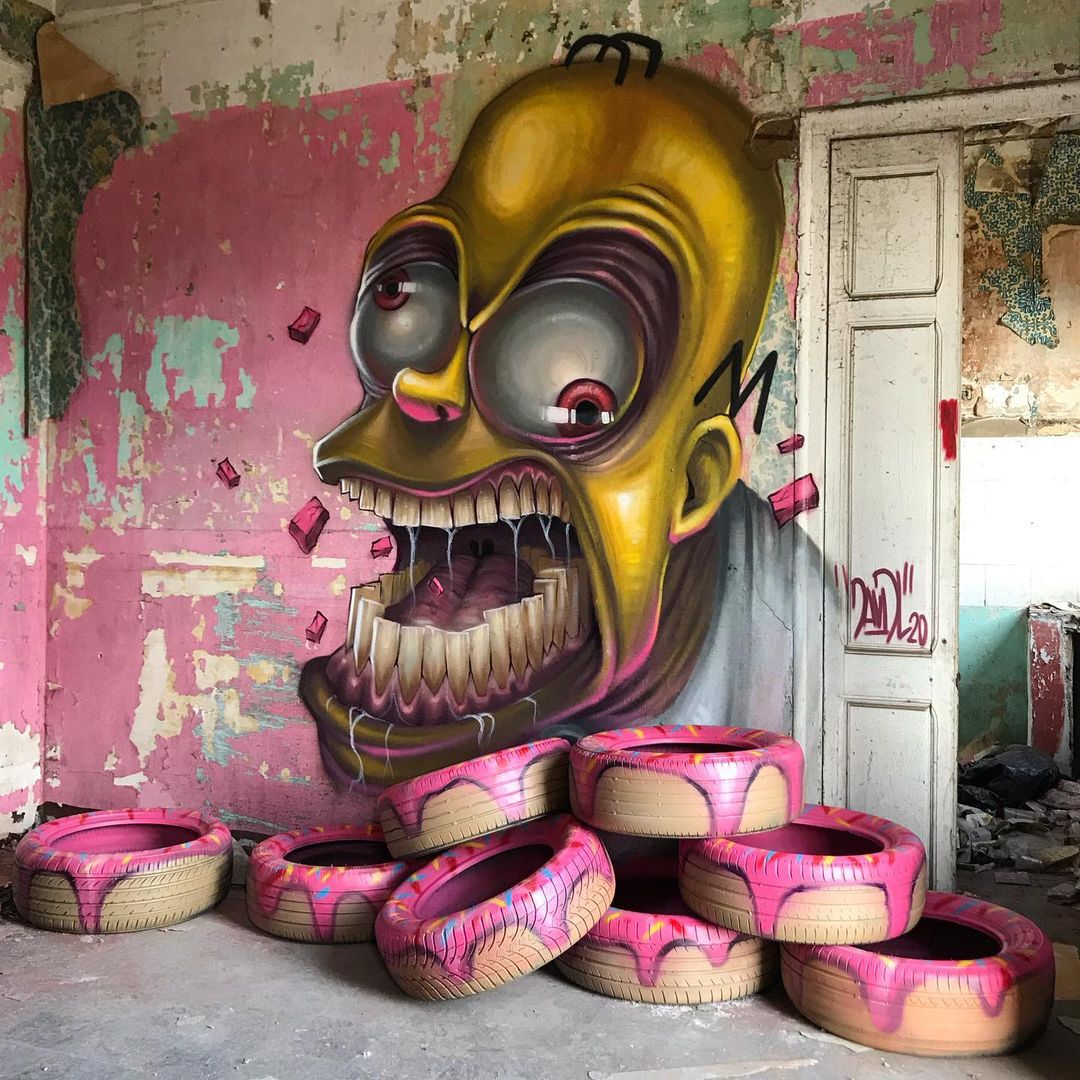
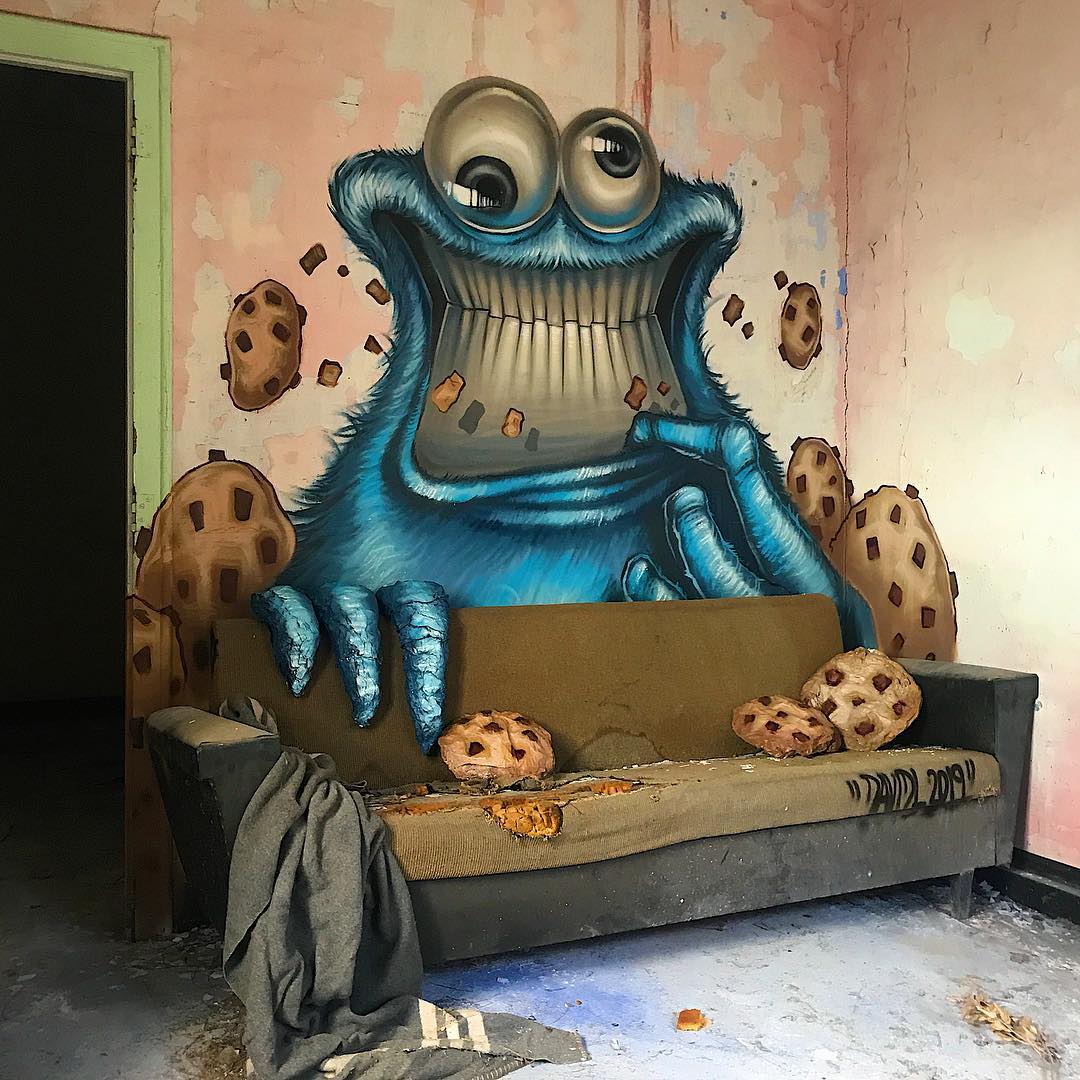
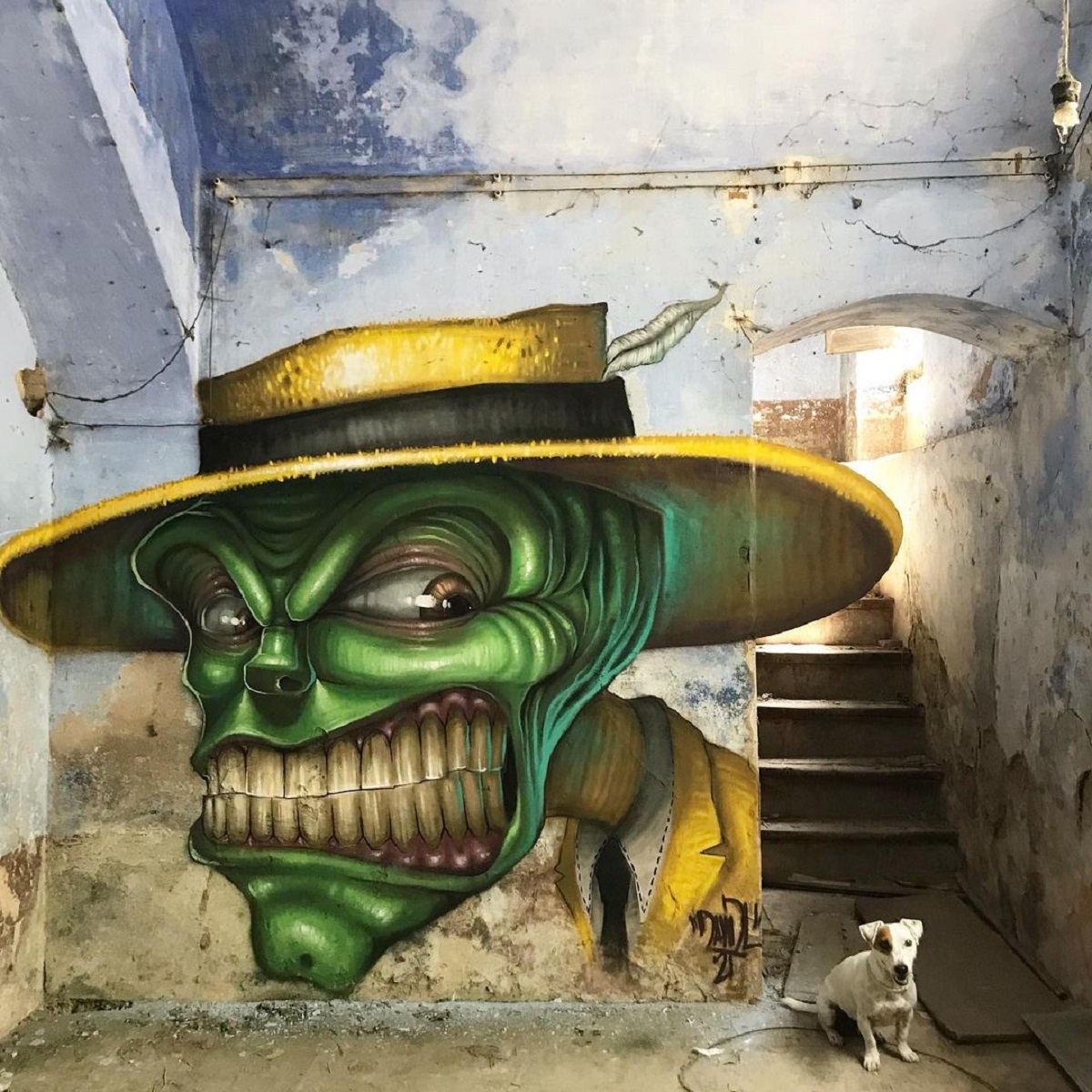
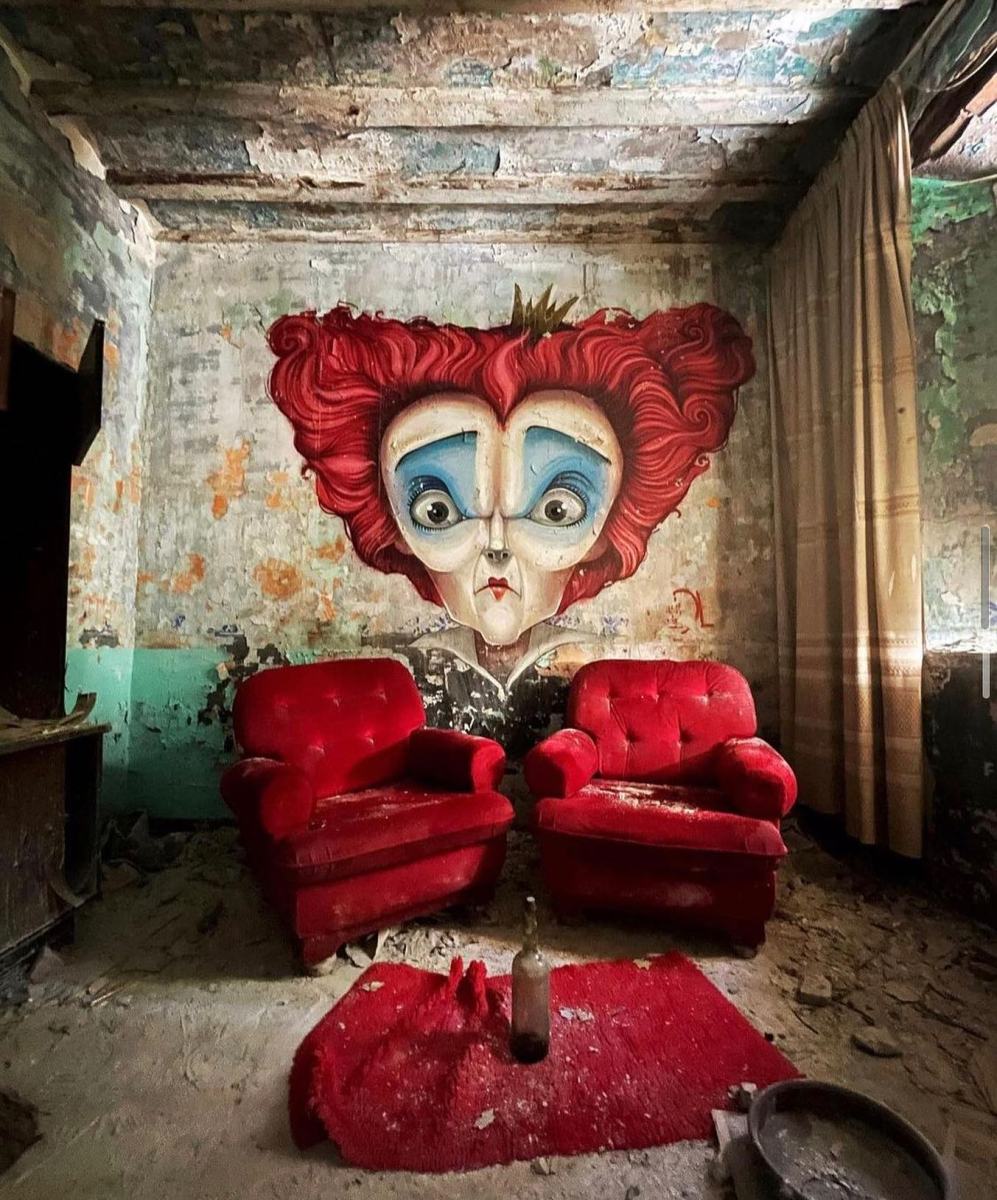
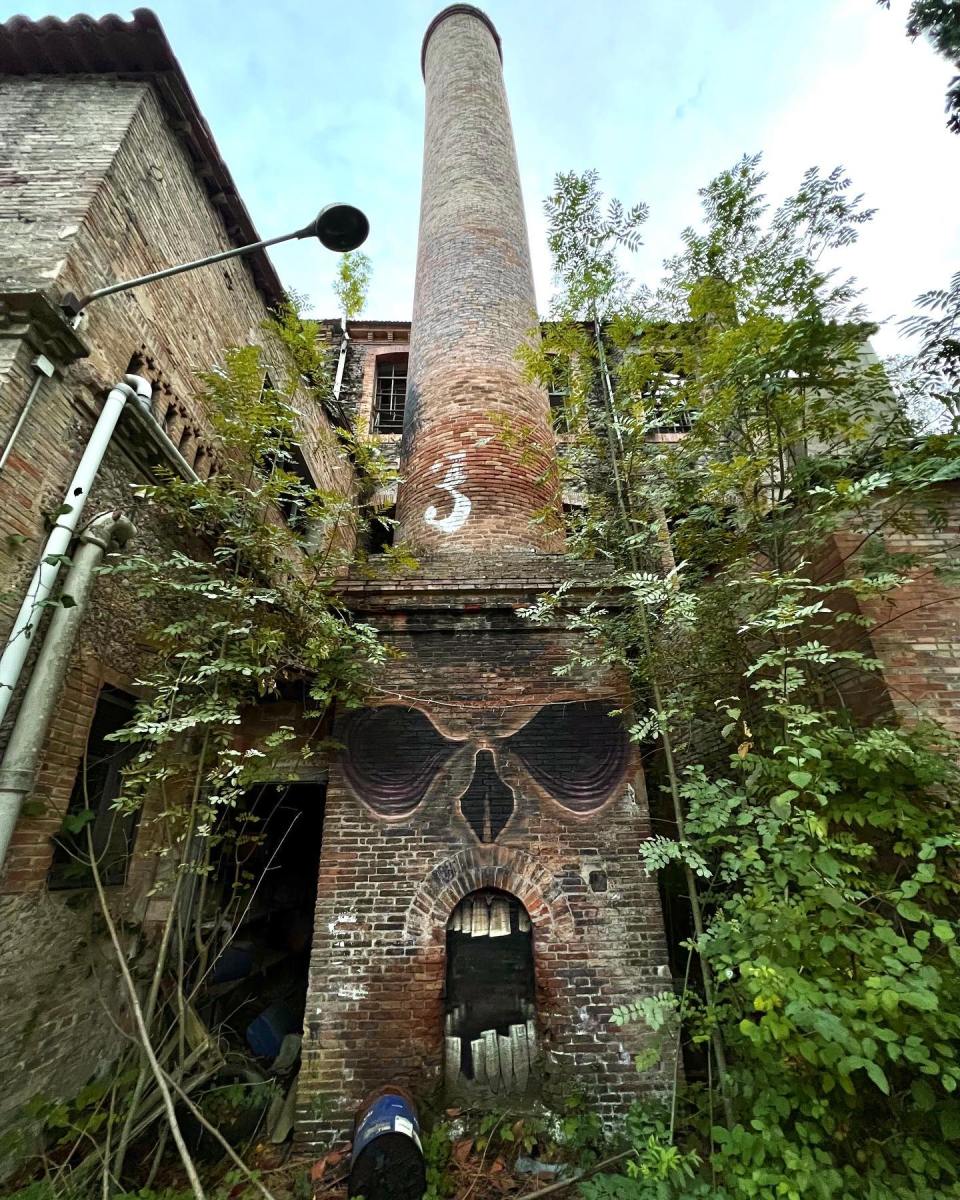
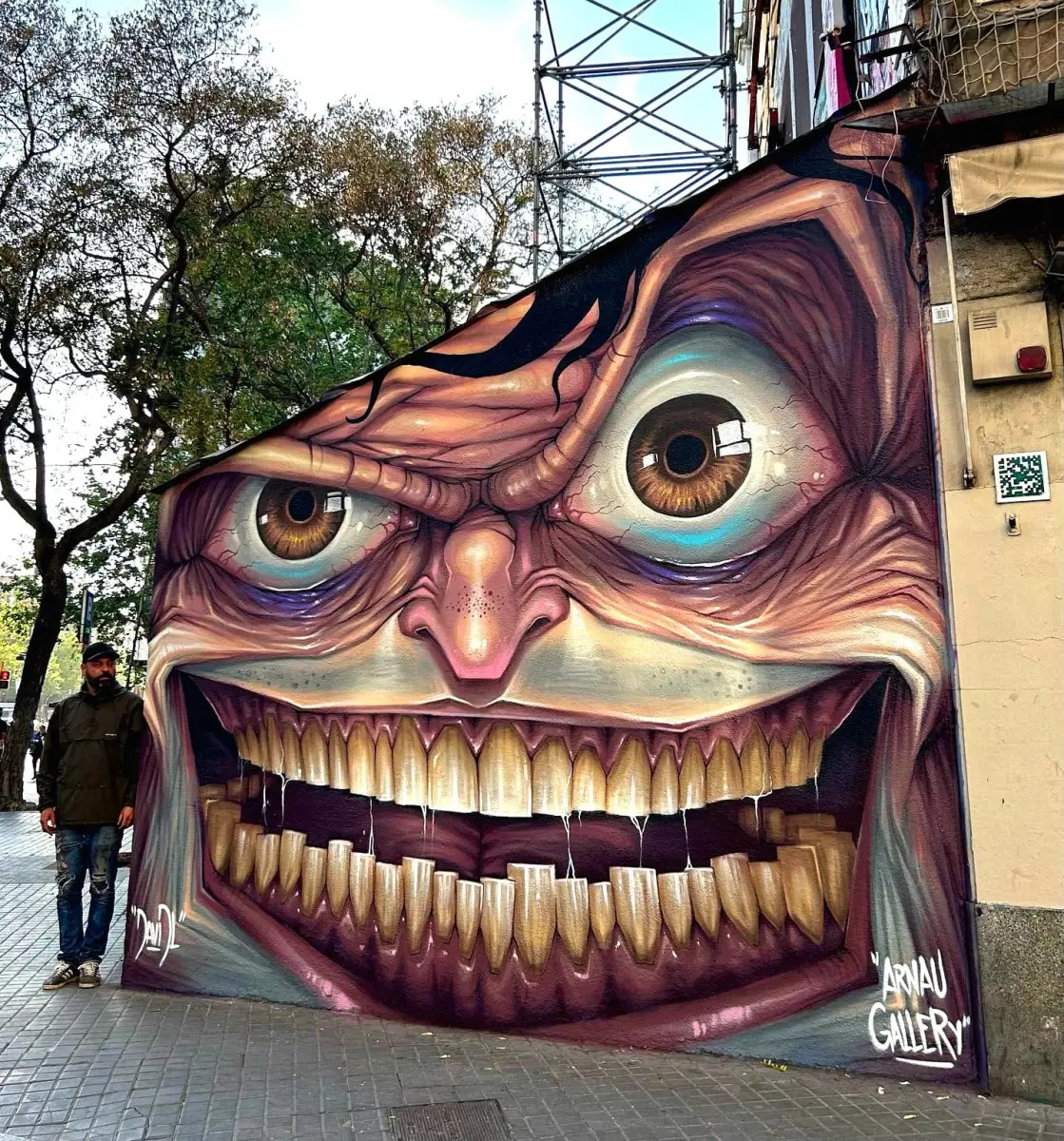
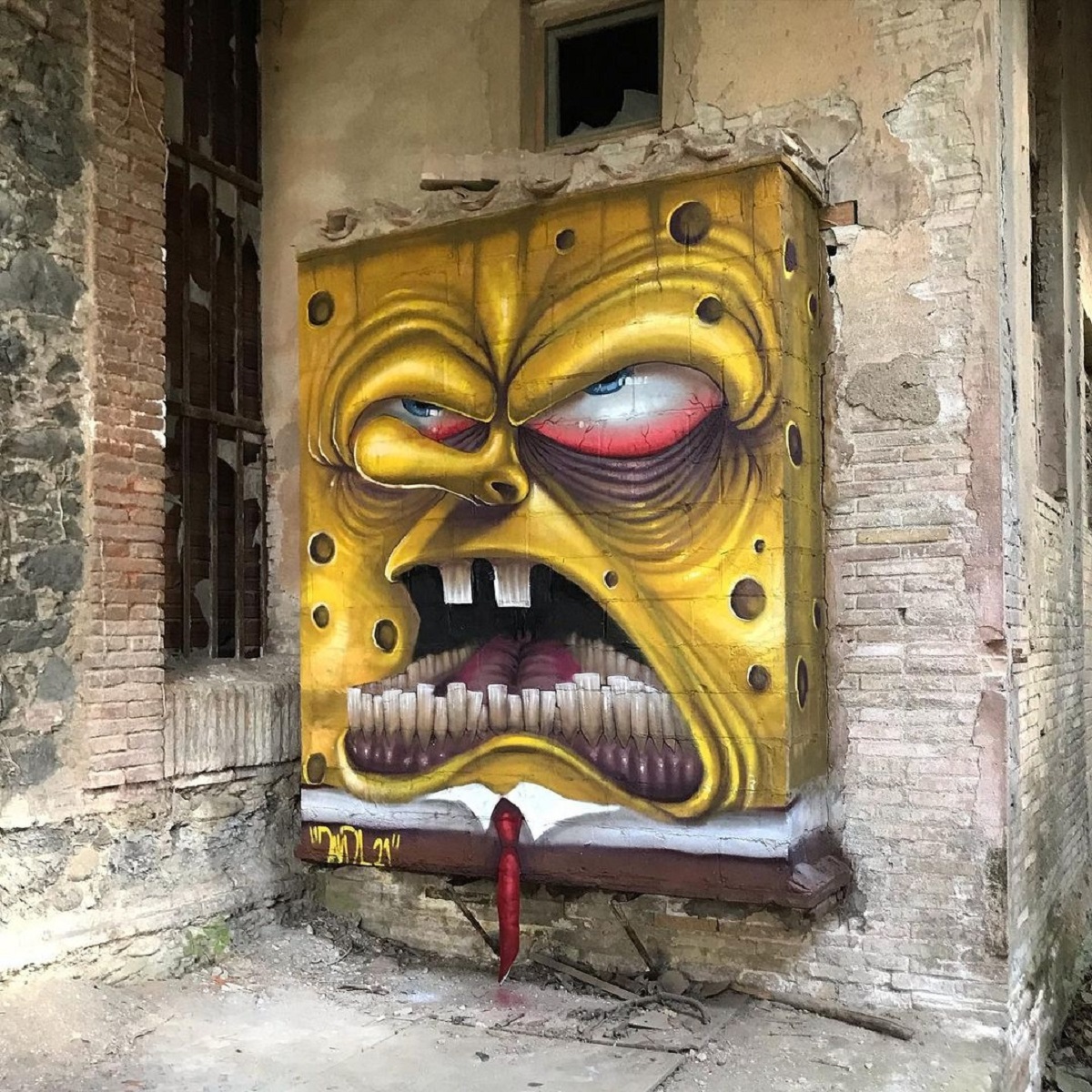
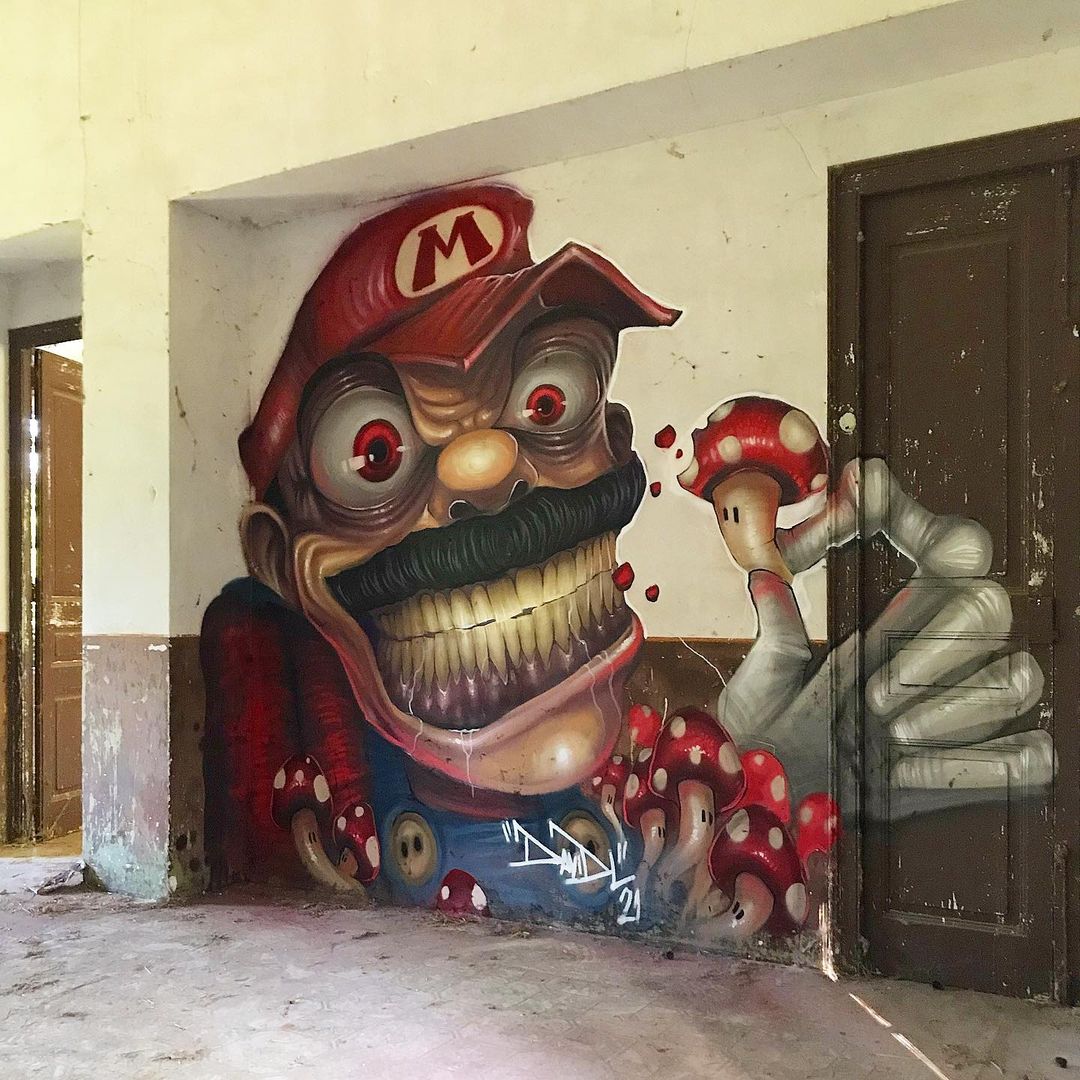
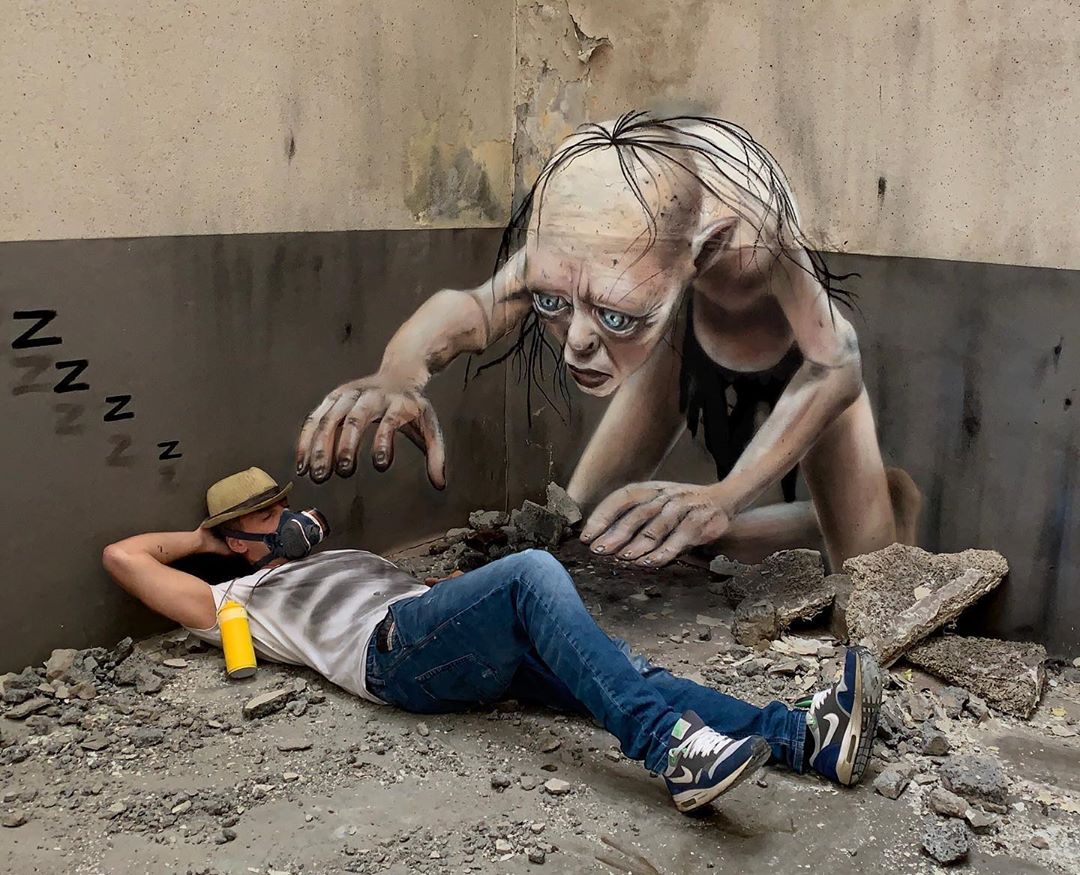
Discover the innovative world of post-graffiti through the lens of DavidL, a Barcelona-based artist renowned for his imaginative reinterpretations of iconic characters.
In this collection, we showcase 15 of his most popular works, all set against the evocative backdrop of abandoned locations outside Barcelona. Each piece reflects DavidL’s unique style, blending familiar imagery with a distinctive, edgy twist.Born in Spain in 1979, DavidL, a Barcelona-based post-graffiti artist, is renowned for his unique and imaginative remixes of familiar cartoon characters. He takes iconic figures, tosses them into a creative whirlwind, and recreates them in his distinctive, somewhat sinister style.
Photos by DLozano.
🔗 Follow DavidL on Instagram
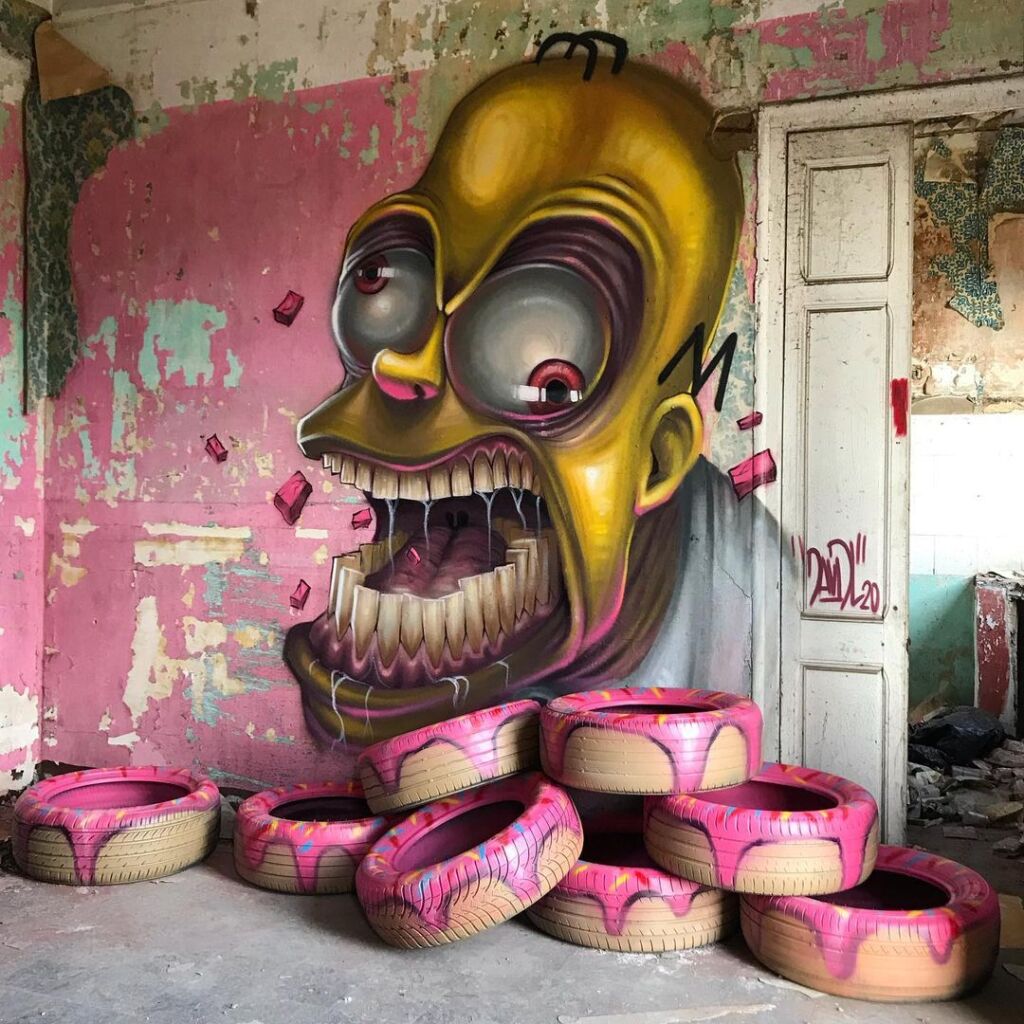
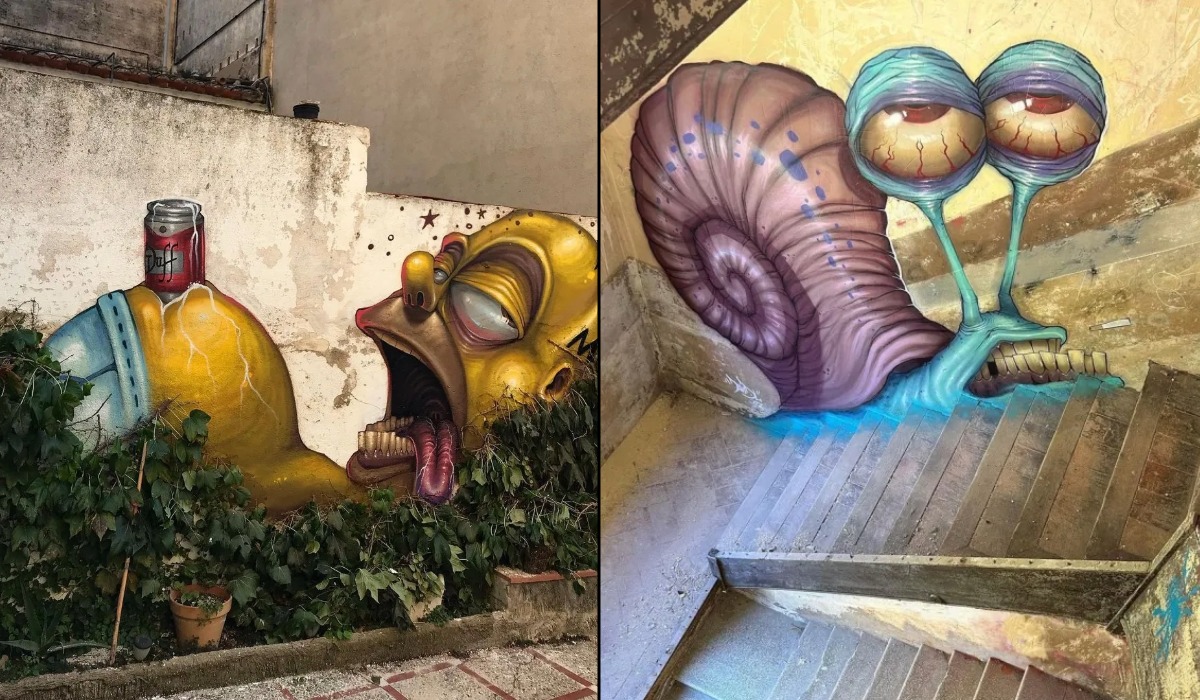
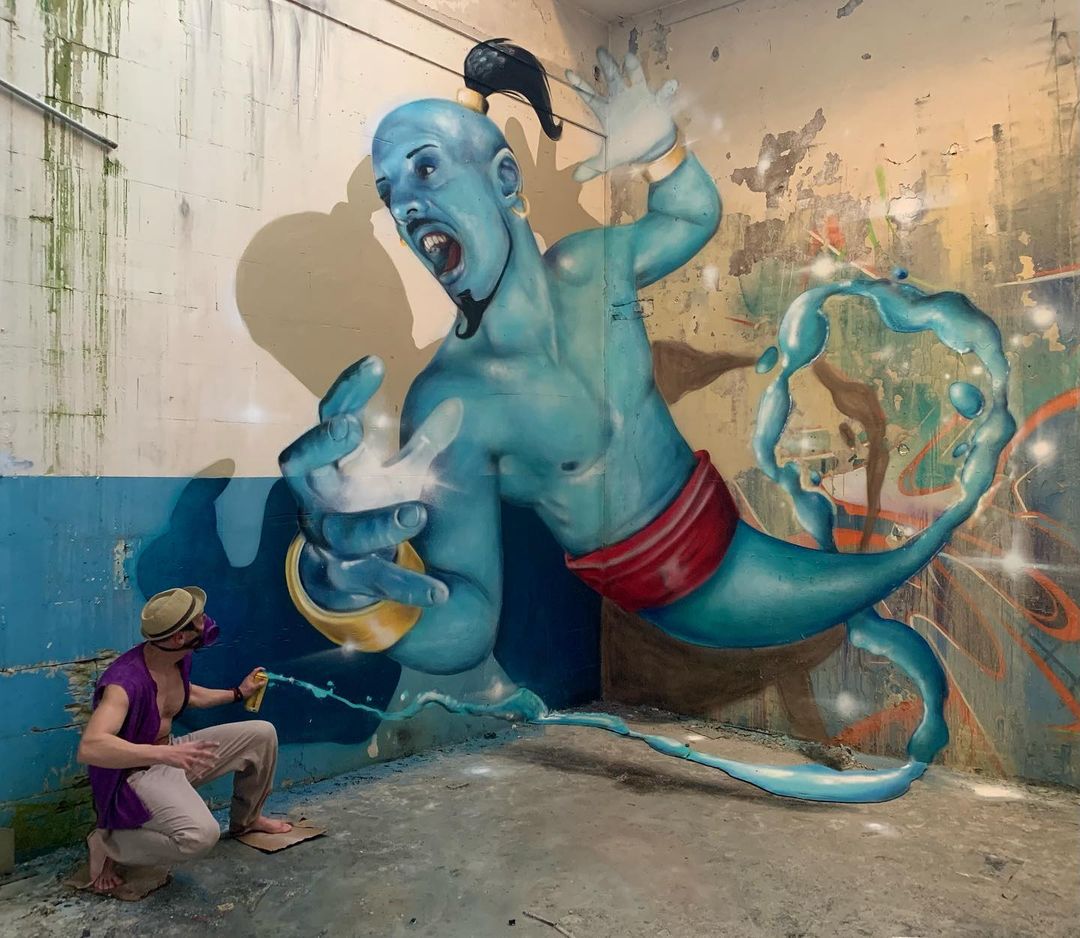
1. Homer Simpson:
Follow DavidL on Instagram at @davidl_bcn to explore more of his incredible post-graffiti creations. See behind-the-scenes glimpses, new artworks, and the fascinating process of bringing his bold and imaginative murals to life in abandoned locations outside Barcelona!
2. Blue Cookie Monster:
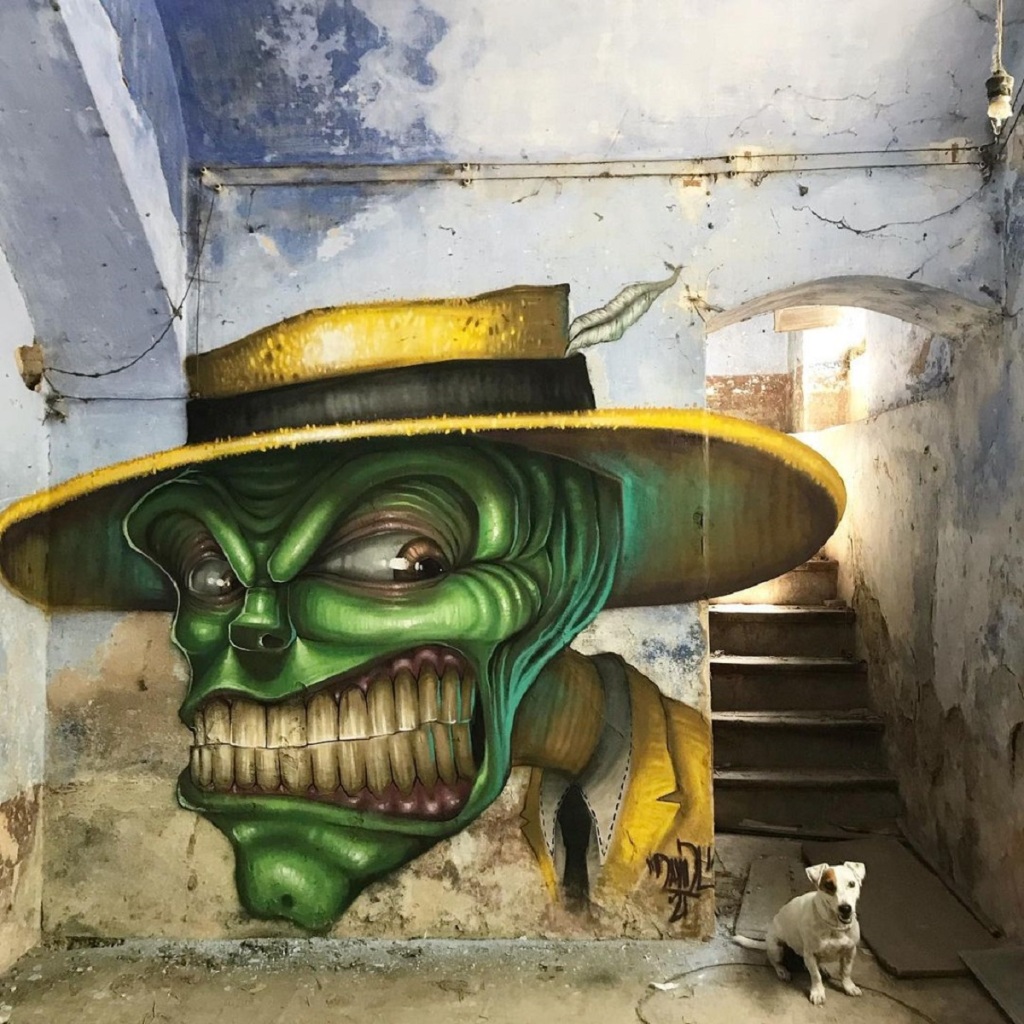
3. The Mask:
4. Red Queen:
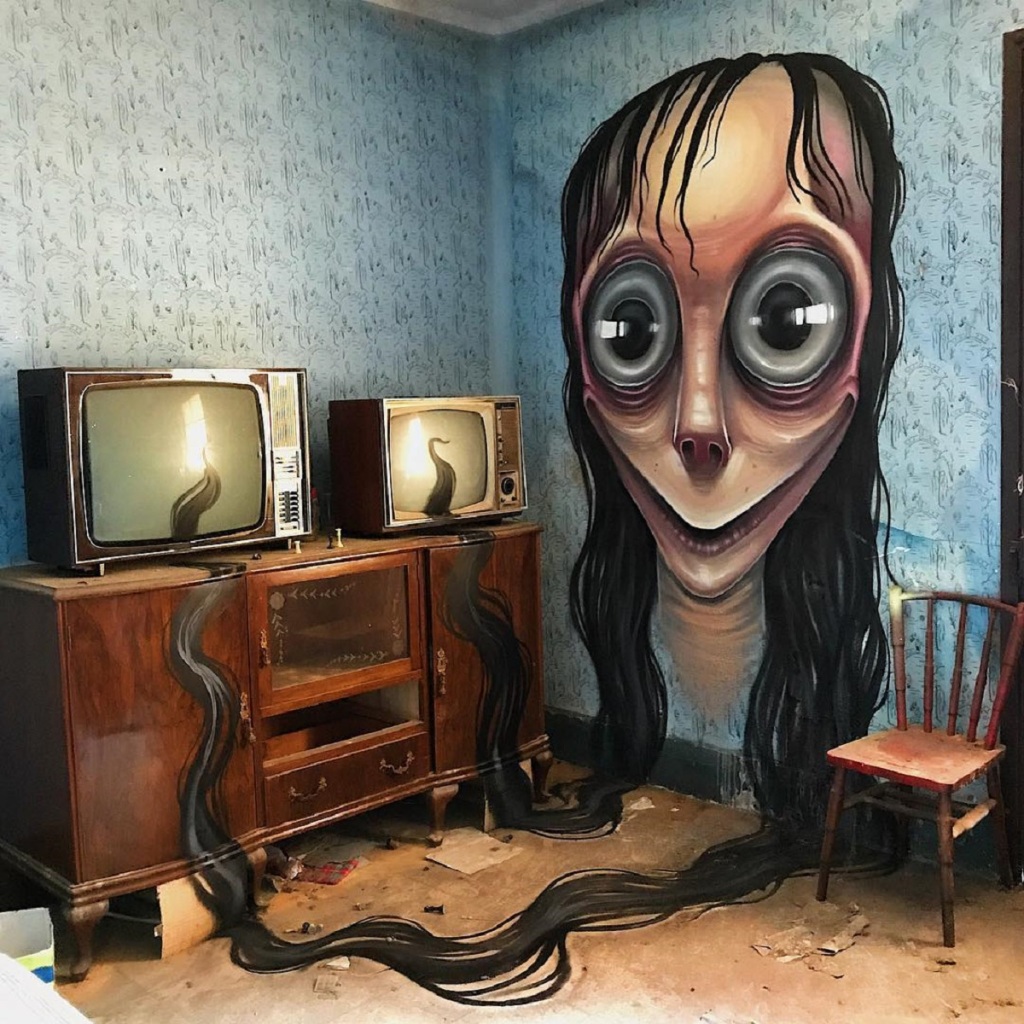
5. Momo:
6. Edward Scissorhands:
7. Homer Simpson:
8.
9.
10.
11. SpongeBob SquarePants:
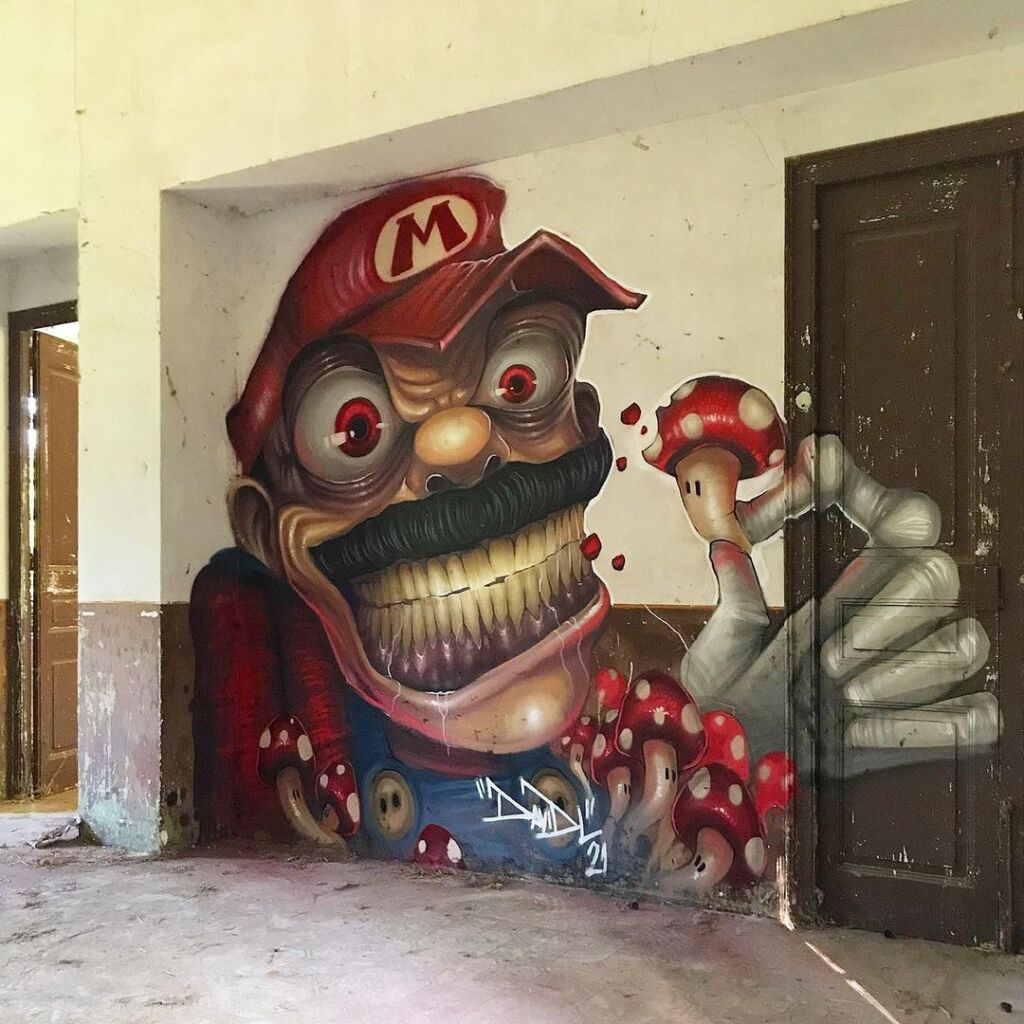
12. Super Mario:
13. Falkor from The NeverEnding Story:
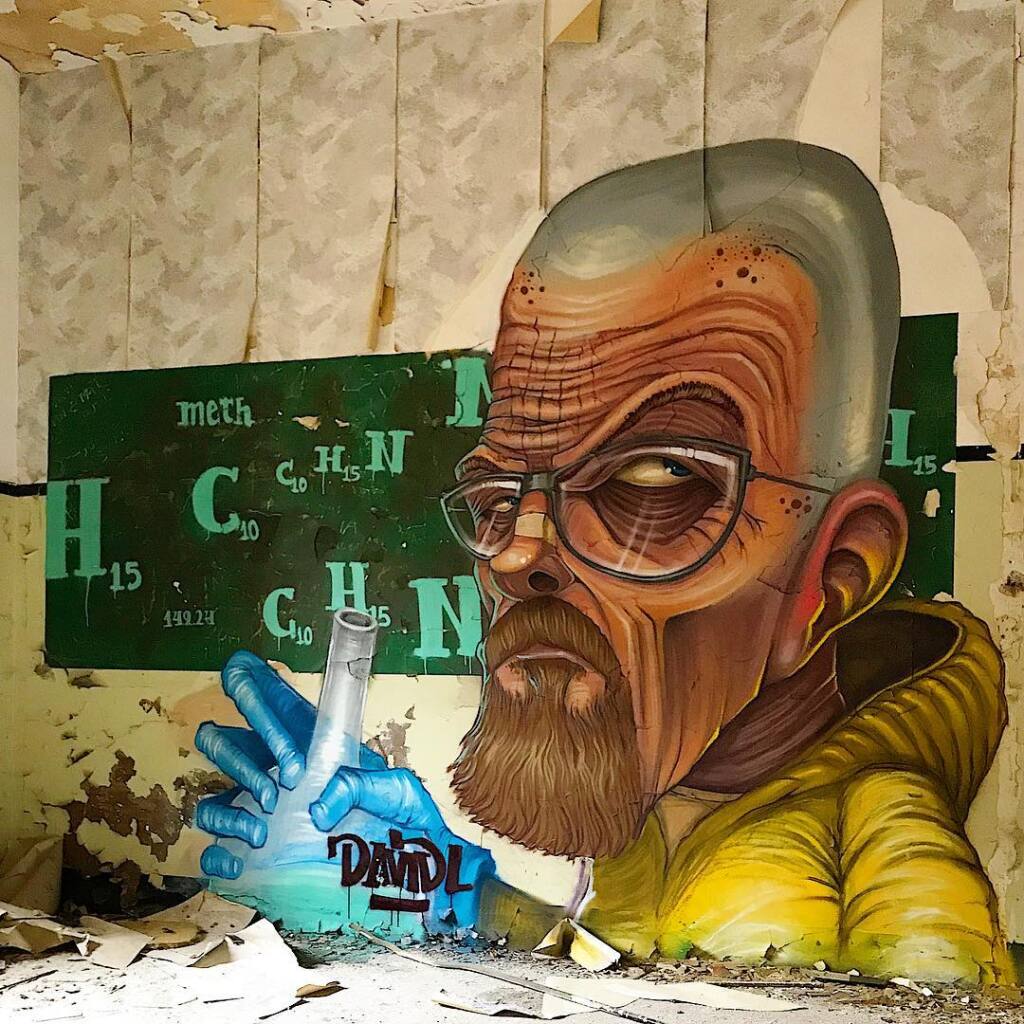
14. Breaking Bad:
15. Bender:
Which one is your favorite?
8 Times Seth Painted What Childhood Really Feels Like
Content warning: Which one is your favorite?
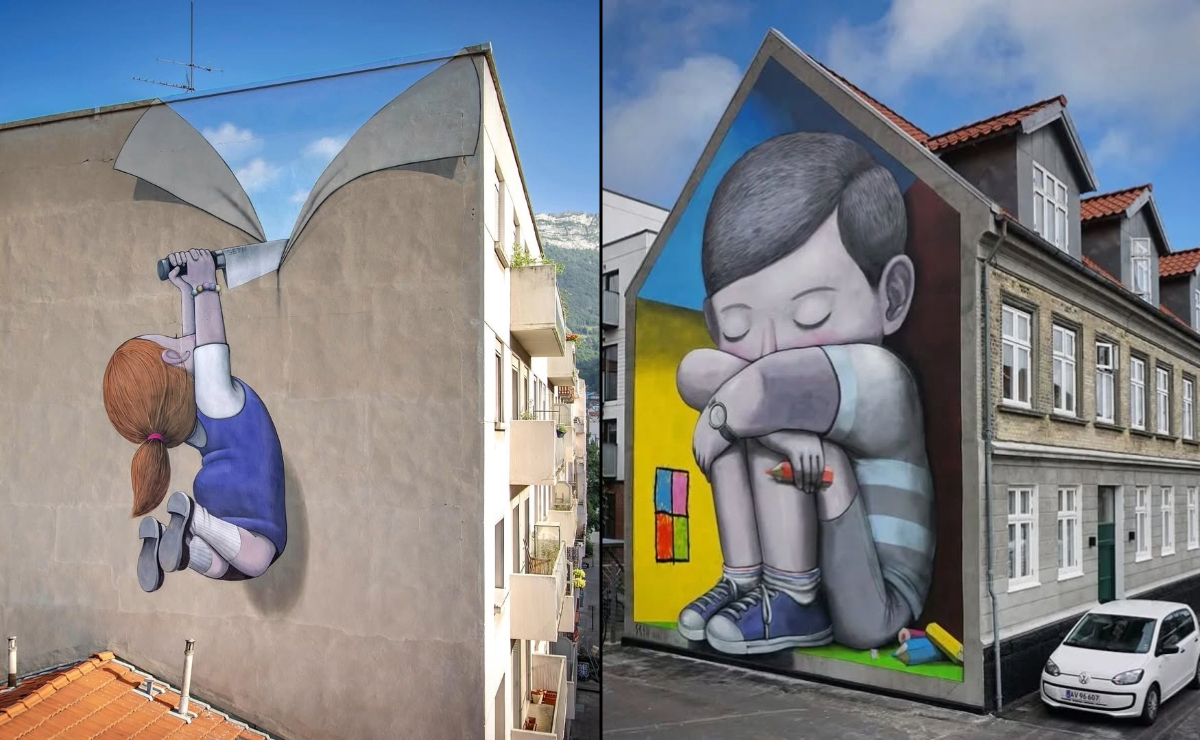
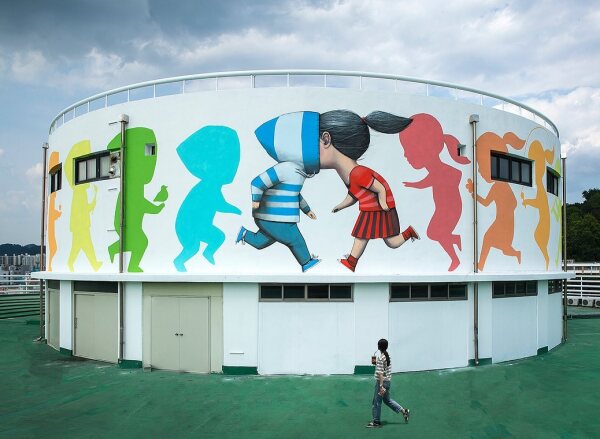
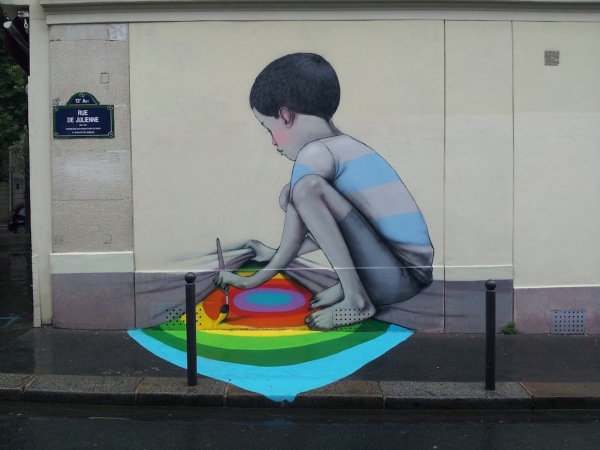
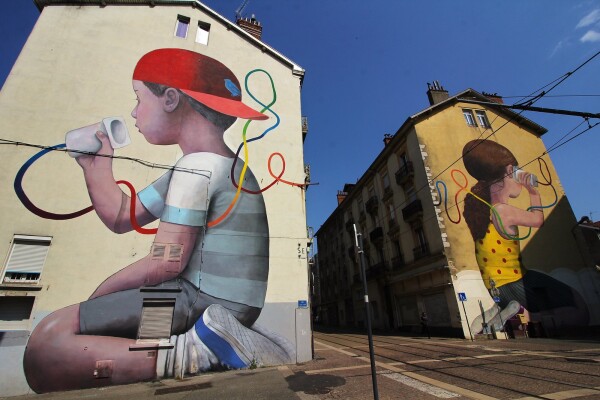
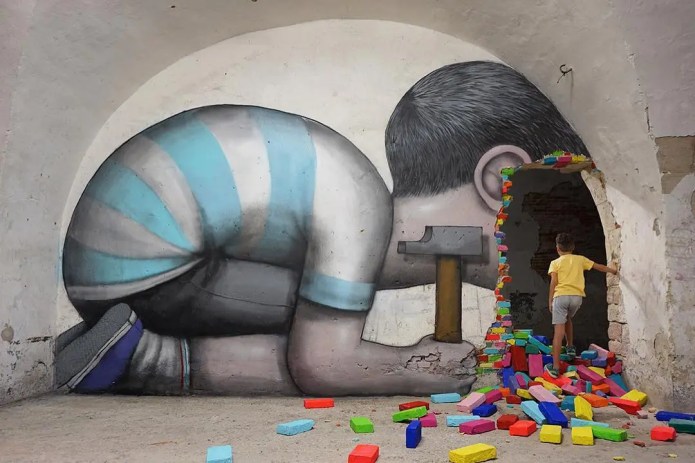
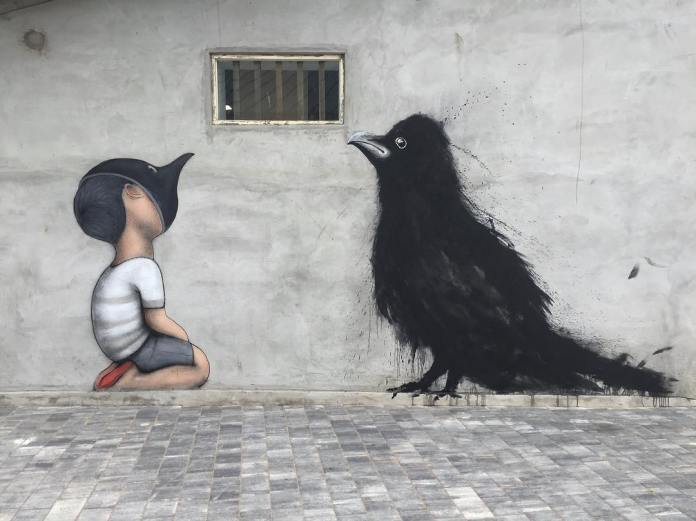
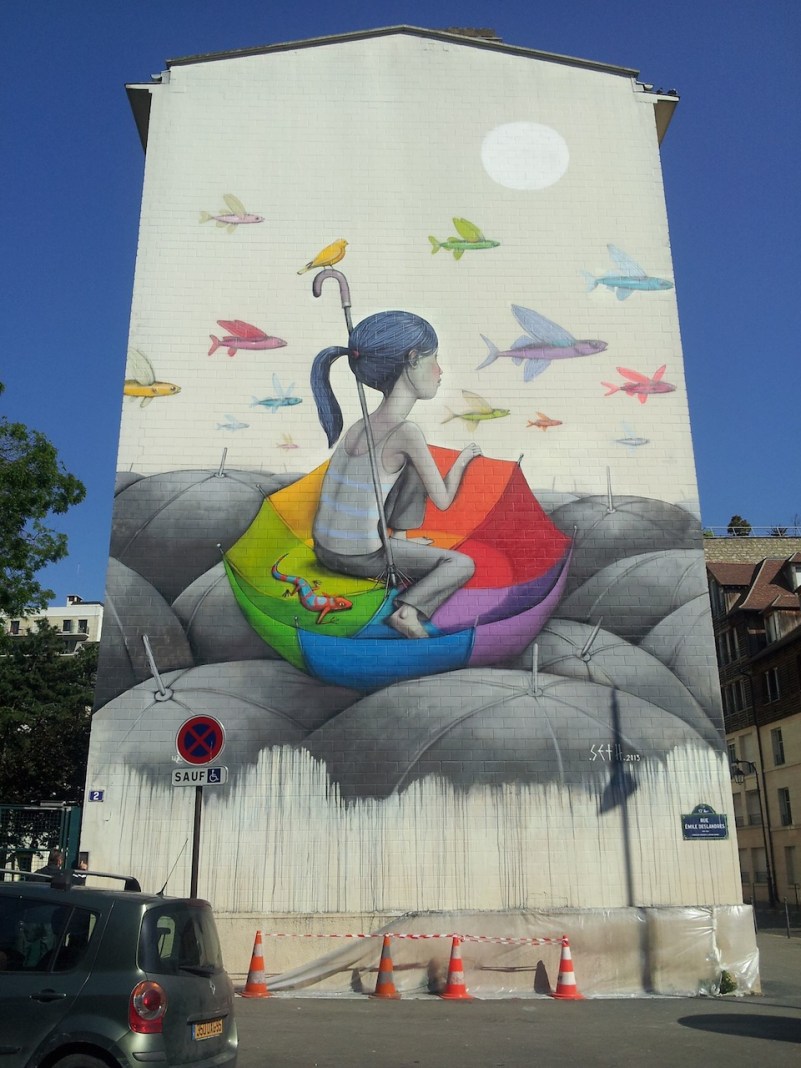
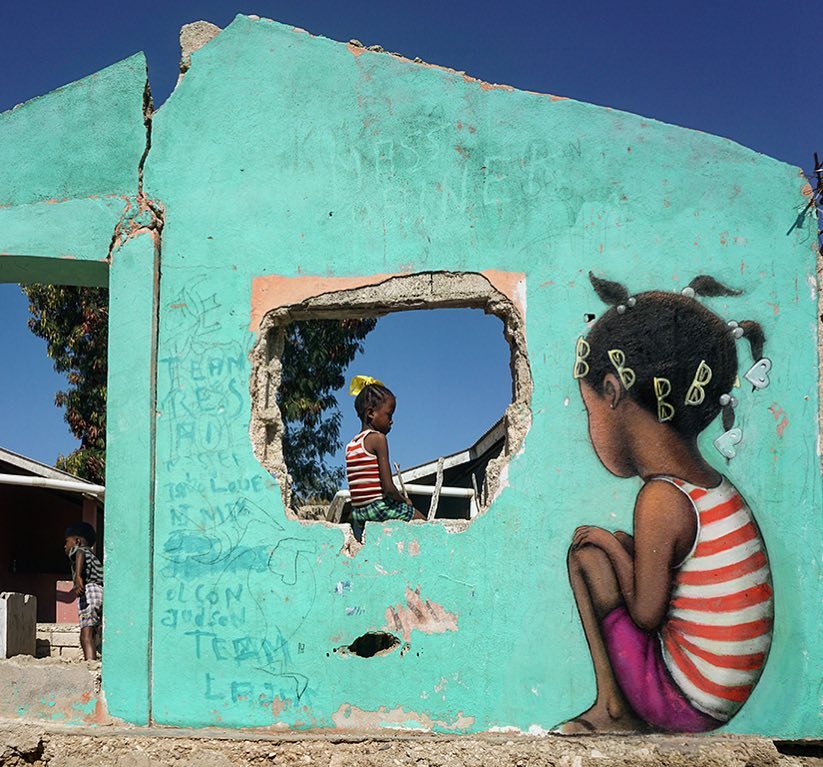
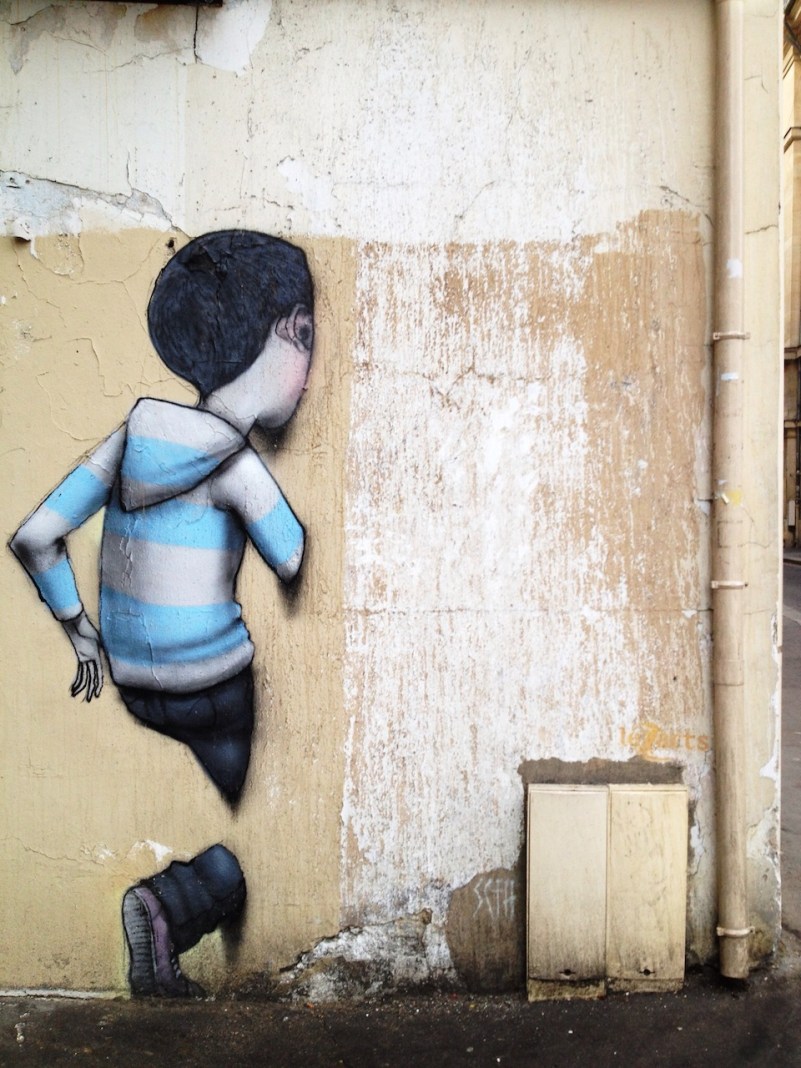
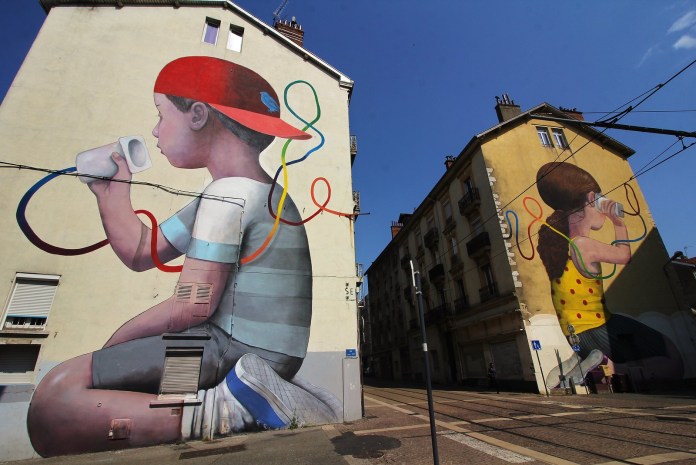
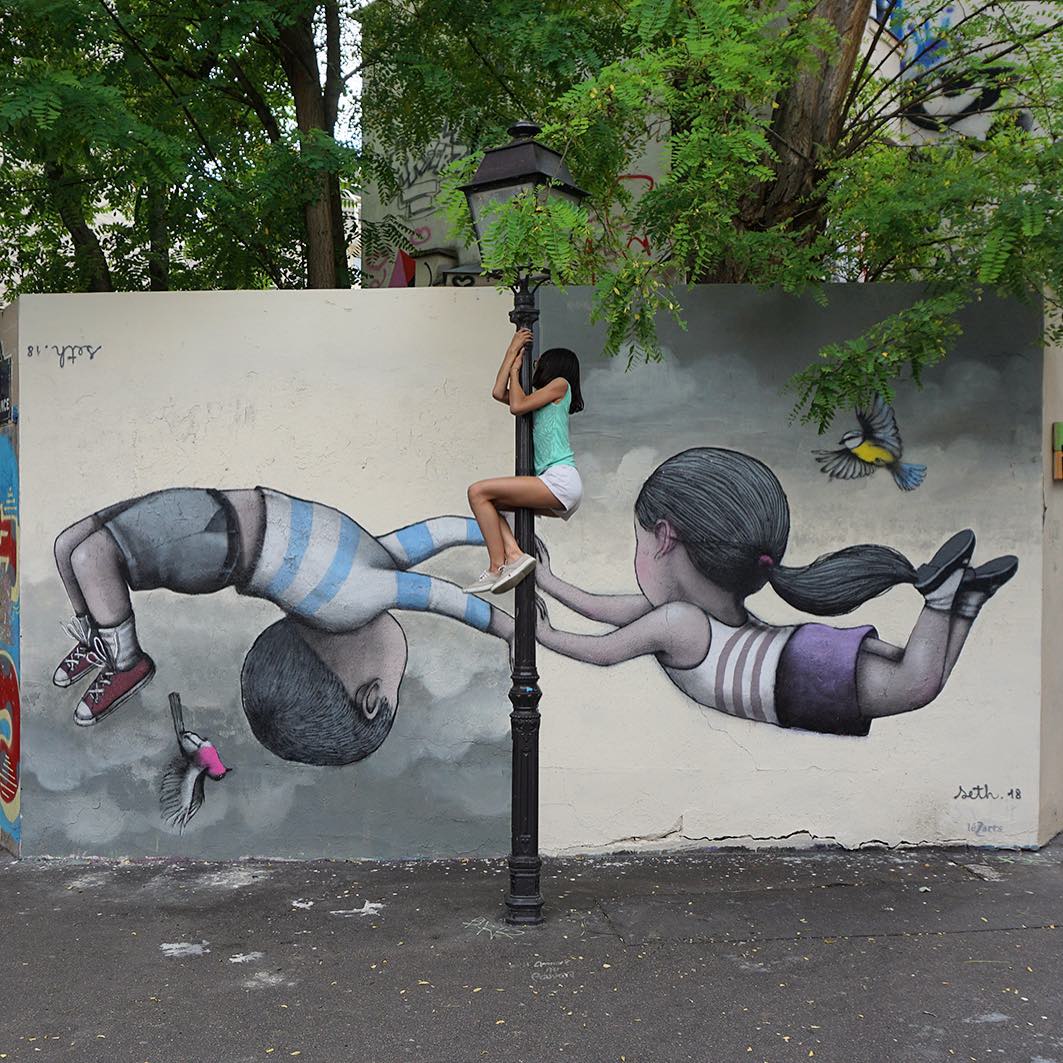
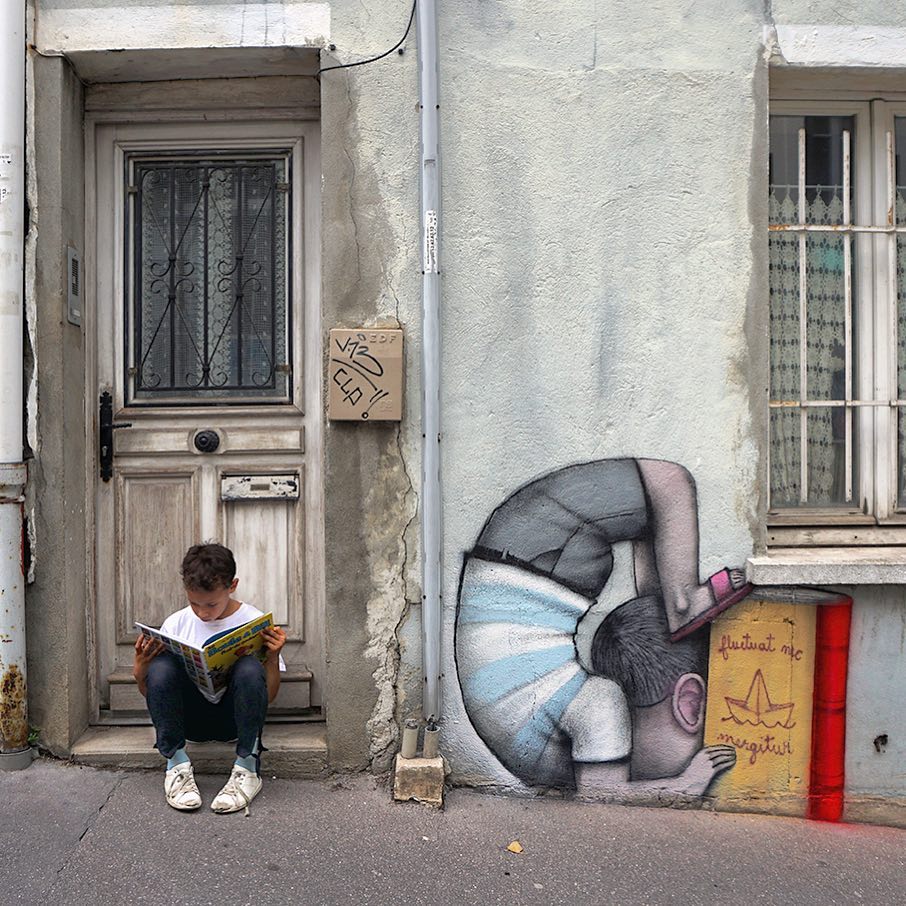
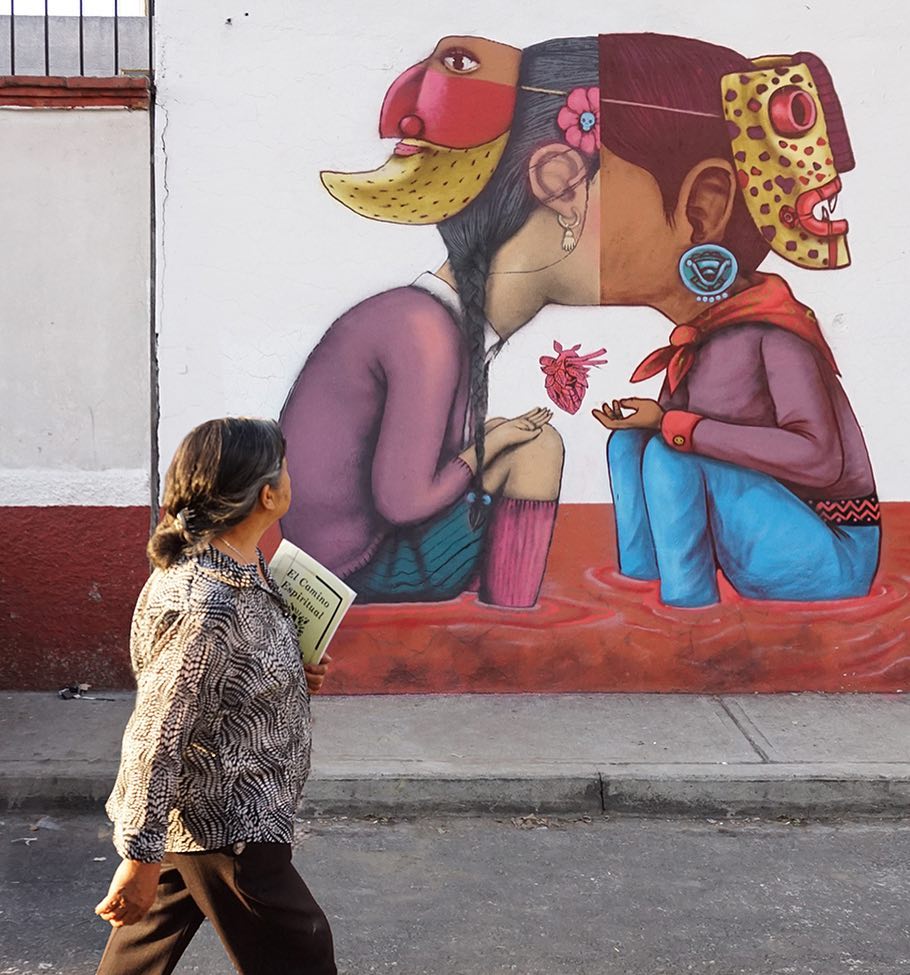
In Aalborg, Denmark, a boy curls up with a crayon on the side of a building, and in Le Mans, France, a child unzips a drab facade to reveal a burst of color. From Shanghai’s hidden alleyways to the rooftops of Grenoble, these murals by Seth Globepainter reimagine urban architecture through the lens of childhood. This collection features eight of his most poetic and site-responsive works—each one turning a blank wall into a portal of memory, play, or longing.
🔗 Follow Seth Globepainter on Instagram
More by and about Seth Globpanter!: 34 Murals That Turn Walls Into Wonders: Seth’s Street Art Will Blow Your Mind
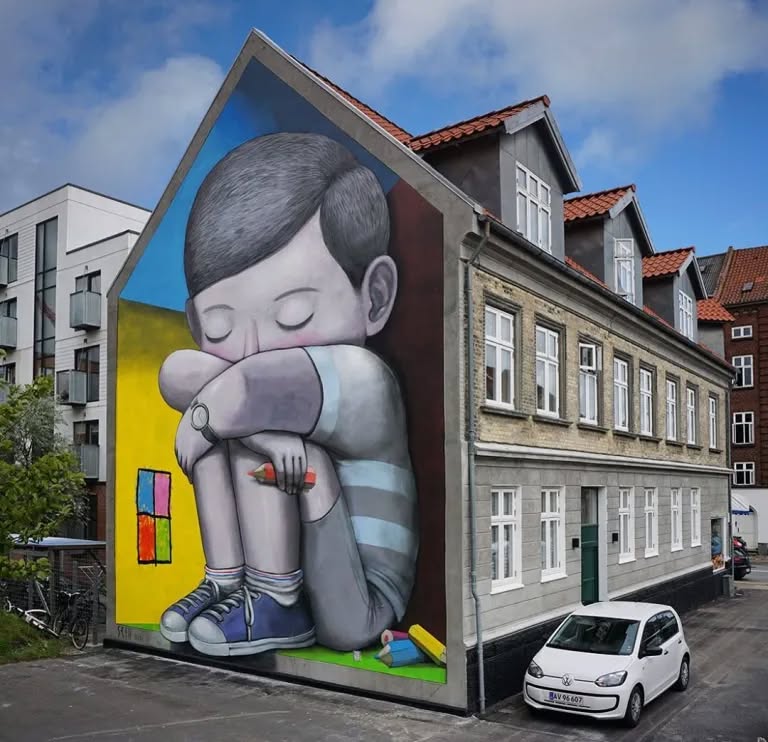
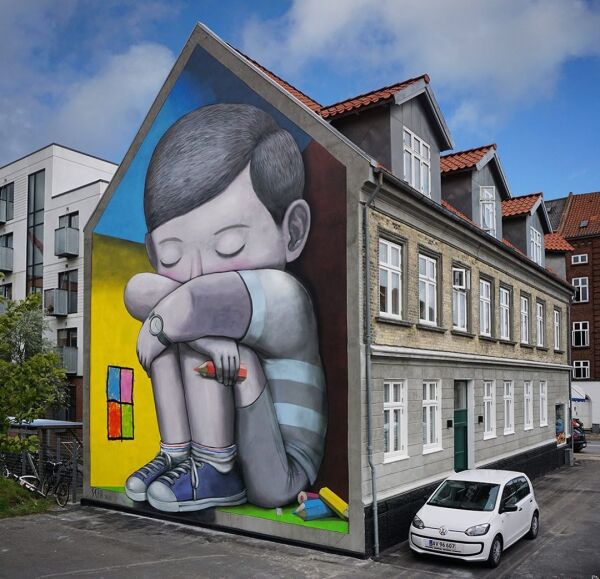
Jack in the Box — Aalborg, Denmark
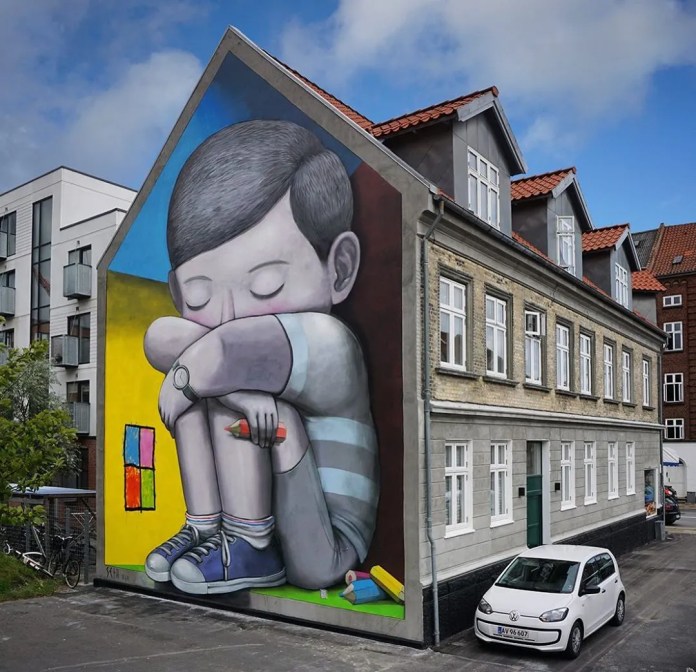
A child with closed eyes sits with knees pulled tight to the chest, drawn in large scale onto a gable end of a building. Surrounded by vivid blocks of yellow and blue, crayons scattered at his feet, the scene suggests retreat into imagination.
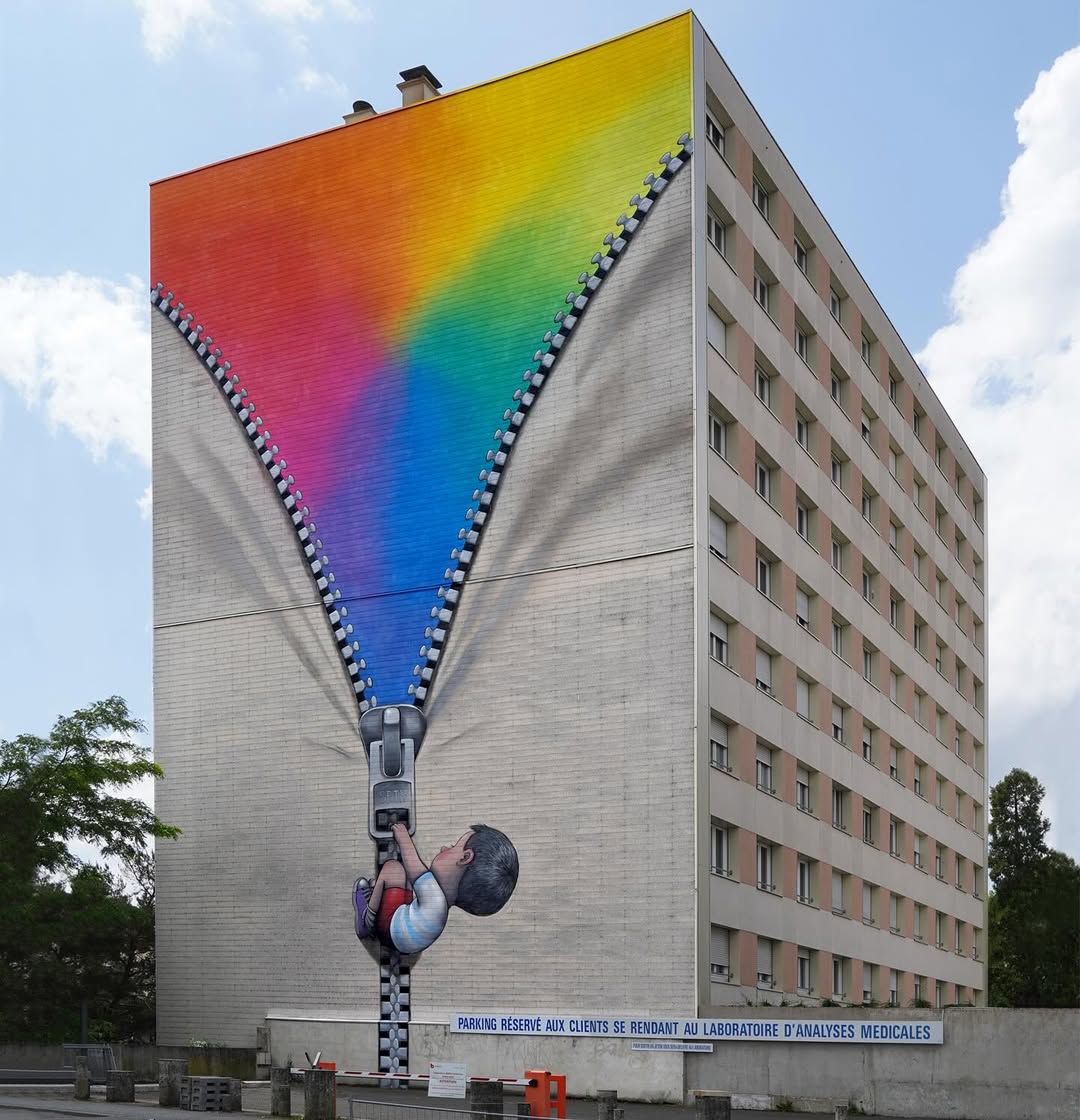
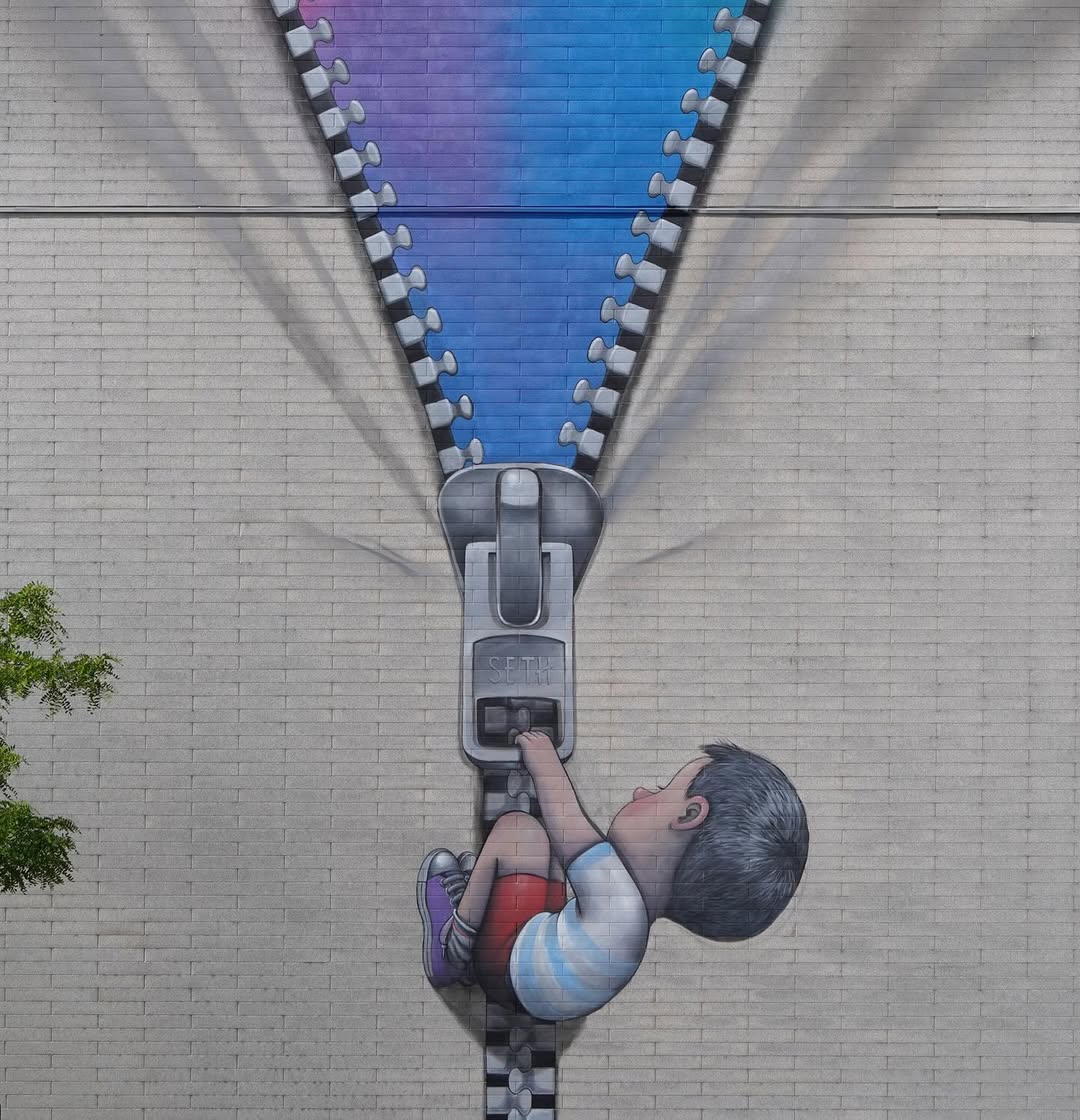
Unzip — Le Mans, France
A mural of a child pulling open an enormous zipper transforms the entire building facade. The gray surface is peeled back to reveal a vibrant gradient of rainbow colors behind, suggesting freedom, wonder, and hidden worlds.
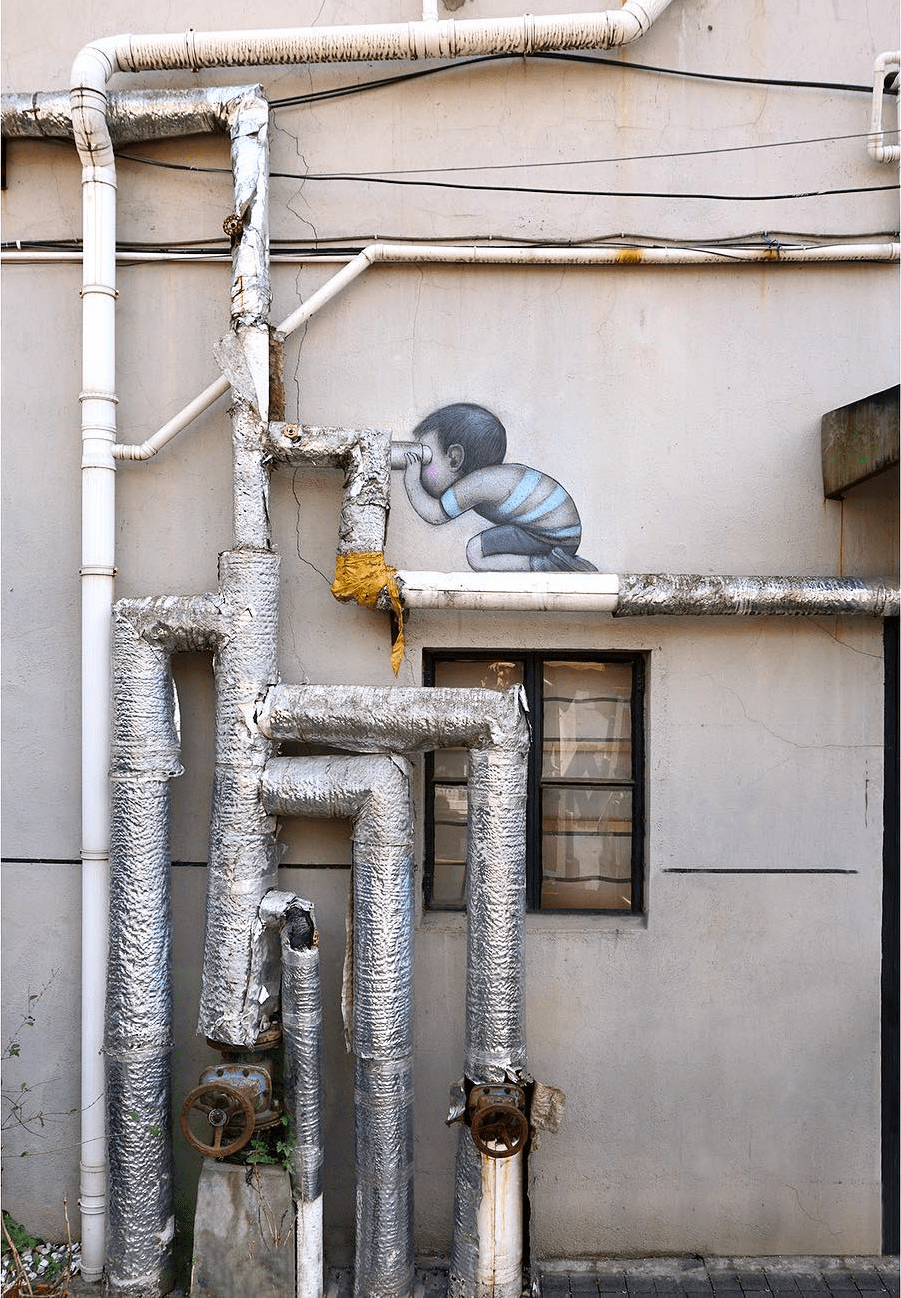
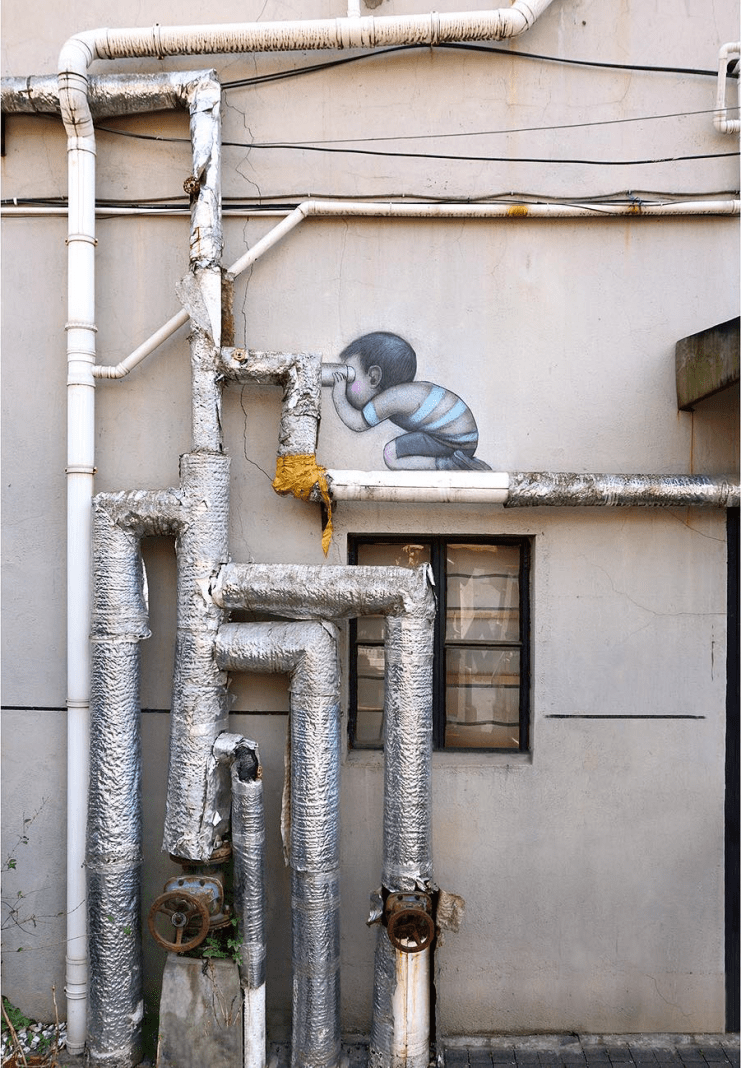
Periscope — Shanghai, China
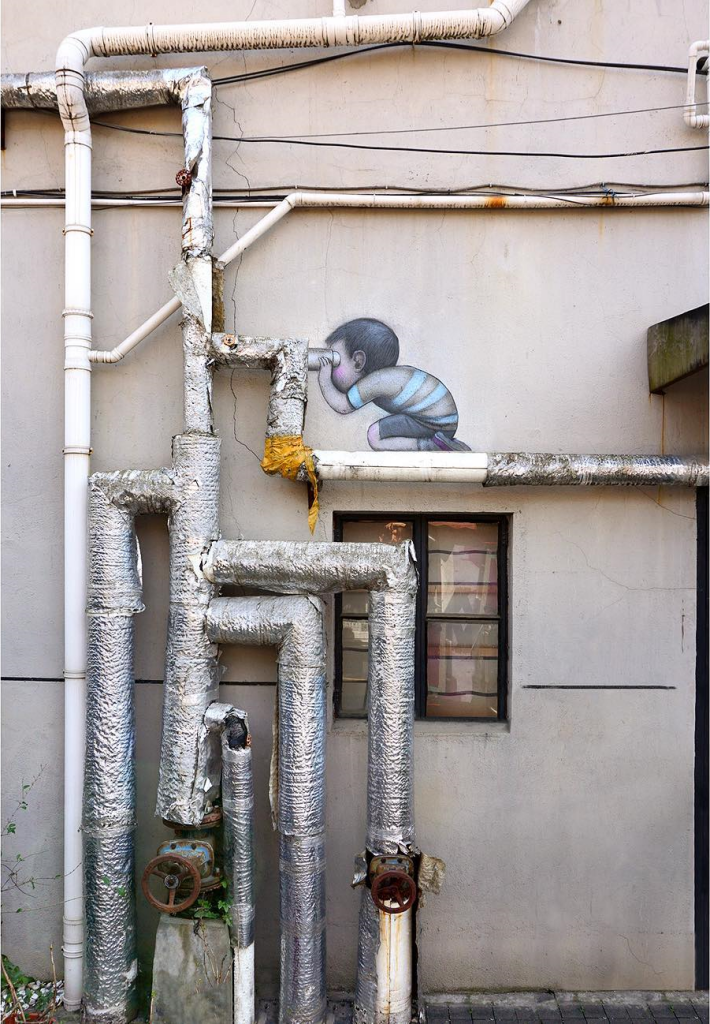
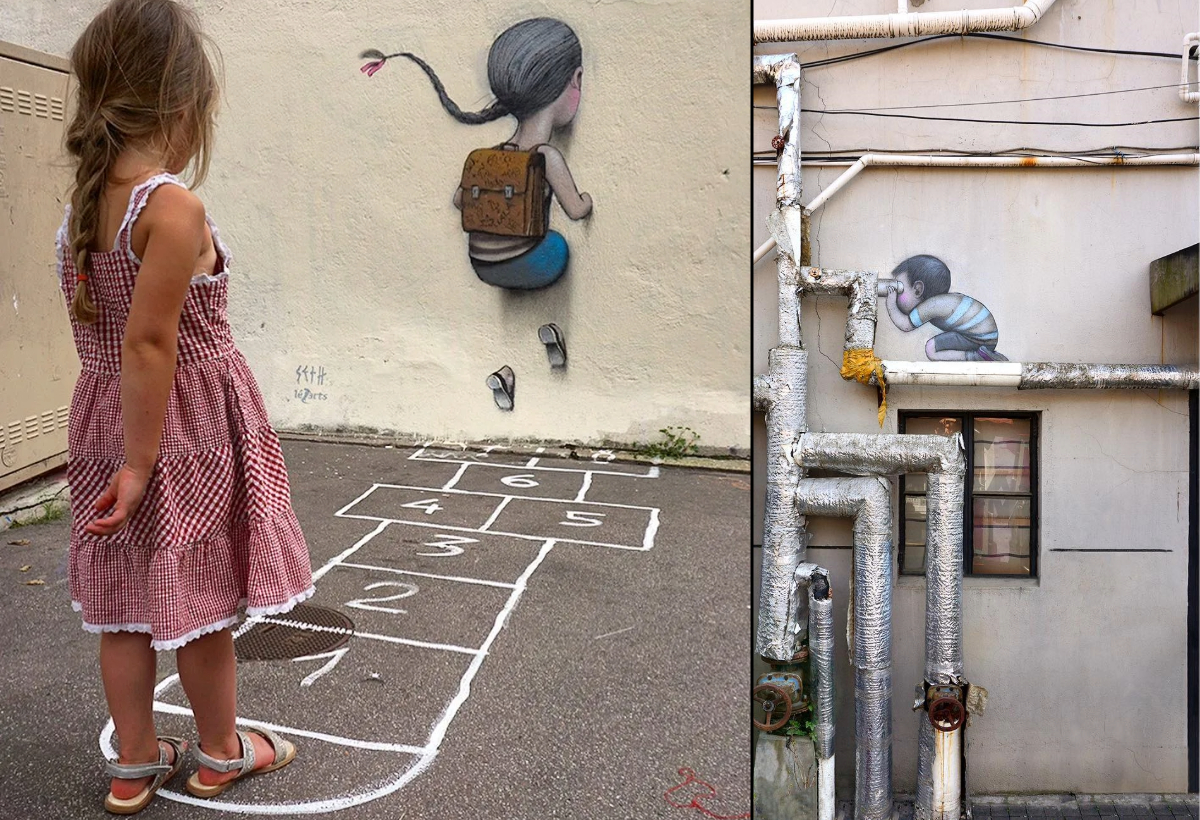
In a clever use of existing piping, a small painted child crouches and peers through a pipe formation like a submarine periscope. The art blends seamlessly into the real structure, turning utilities into imagination.
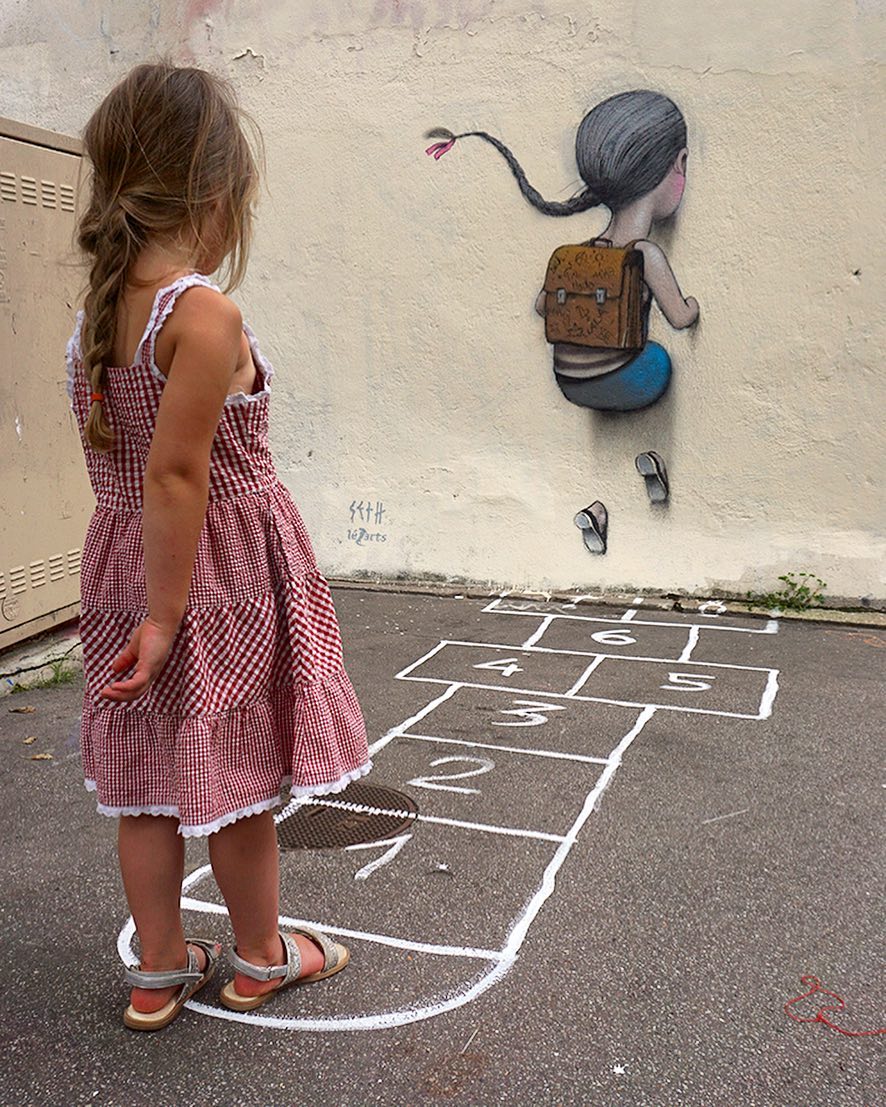
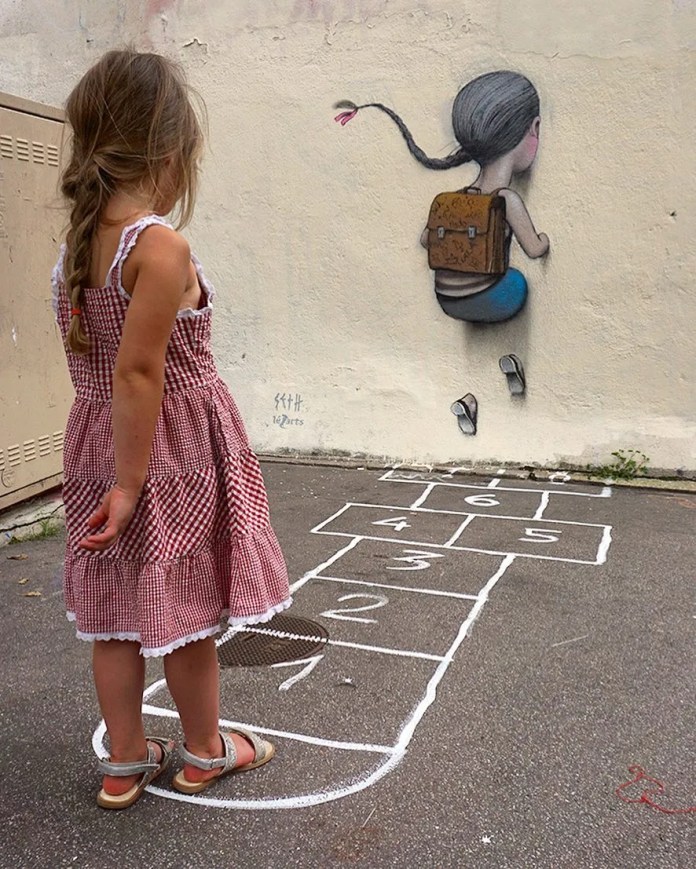
Hopscotch Girl — Paris, France
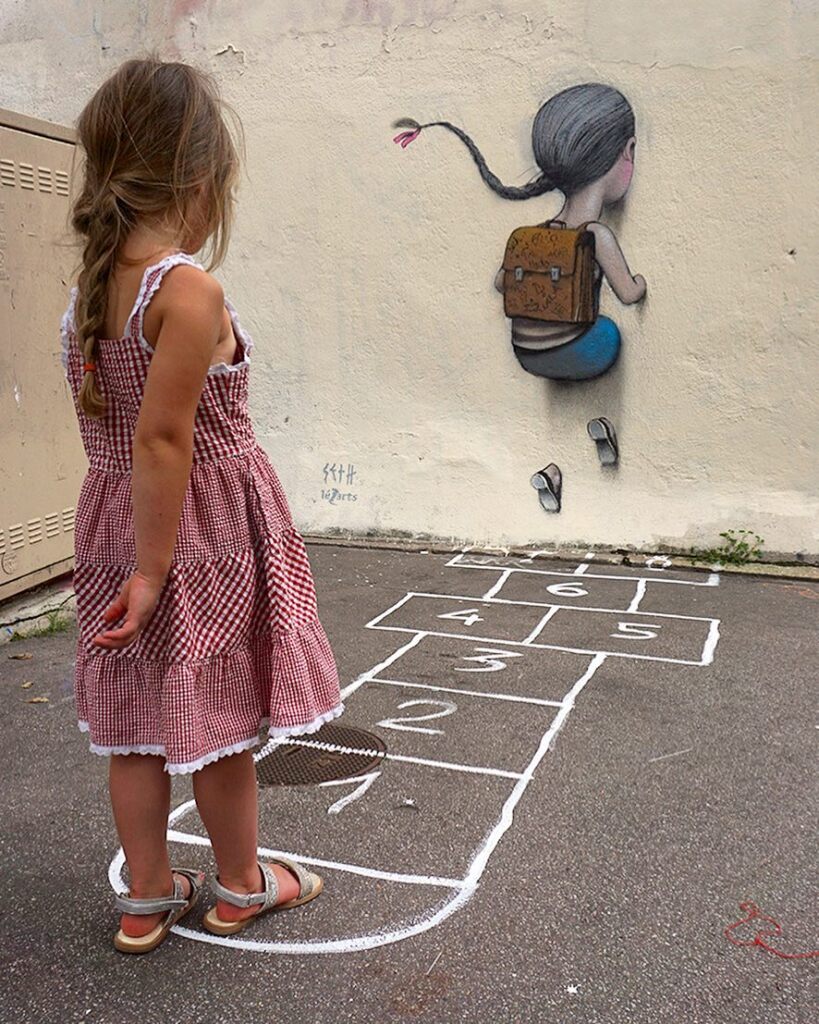
On a quiet street corner, a young girl in a red checkered dress stands at a hopscotch court, staring at a painted figure mid-jump. The painted girl has lost her shoes and seems to leap beyond the wall, capturing fleeting childhood moments.
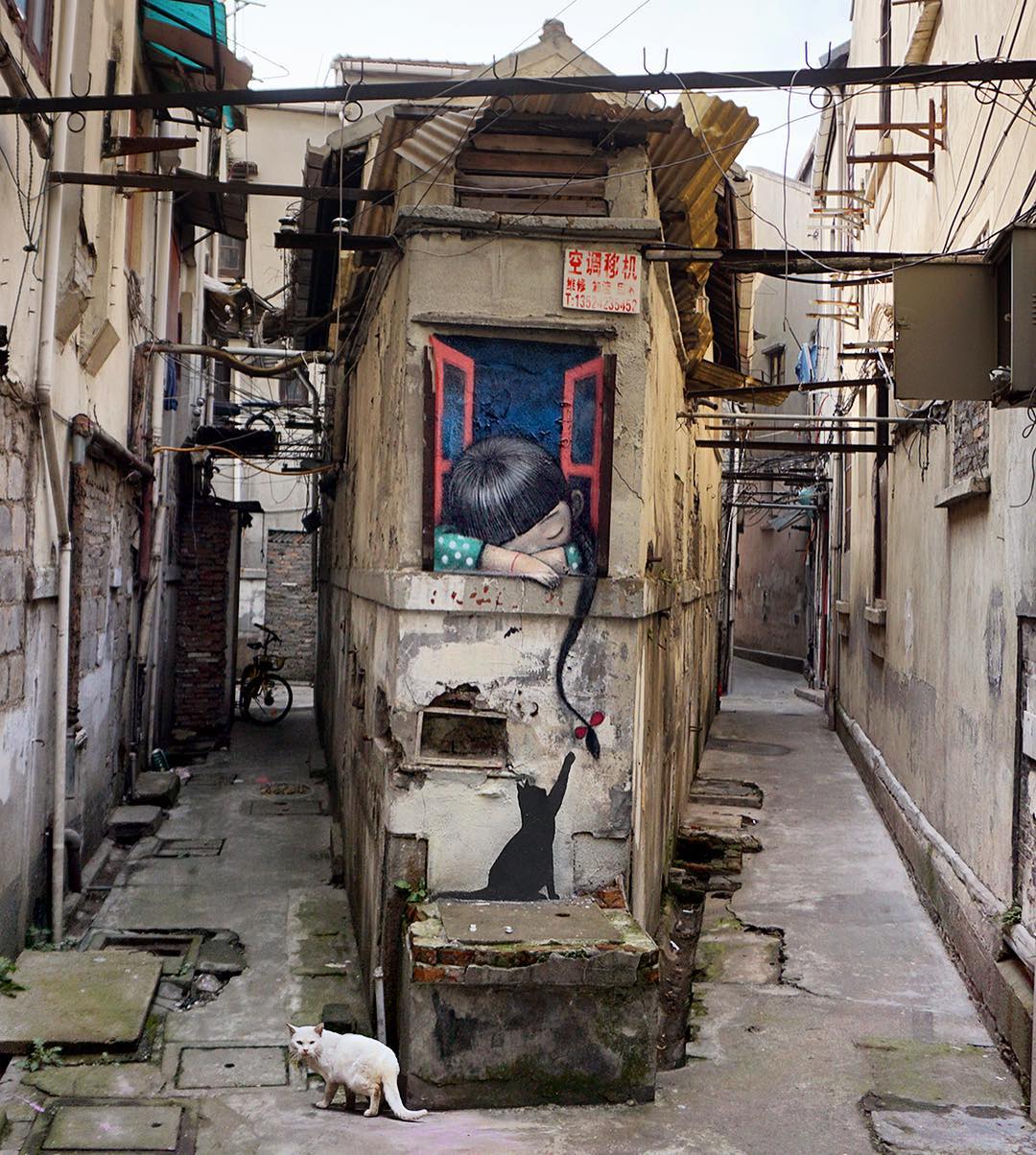
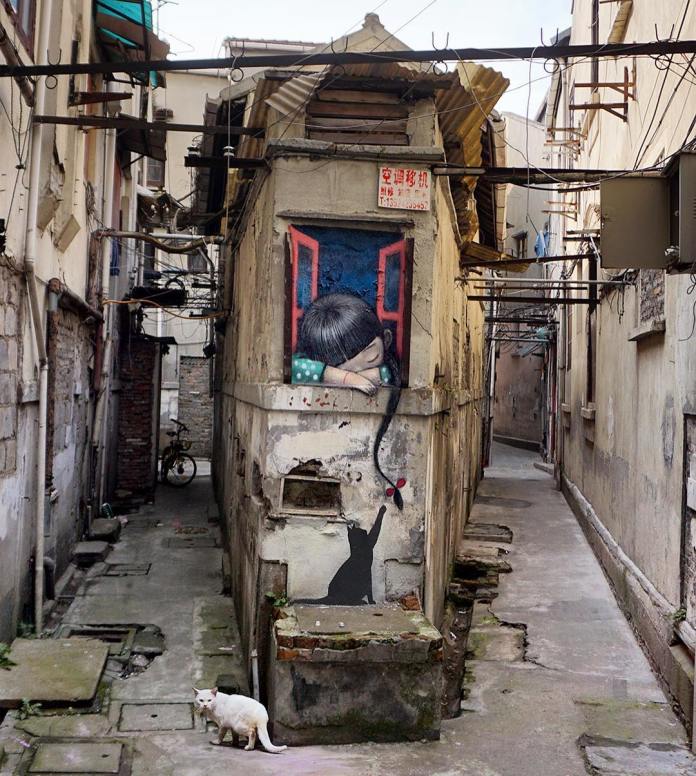
Cat Walk — Shanghai, China
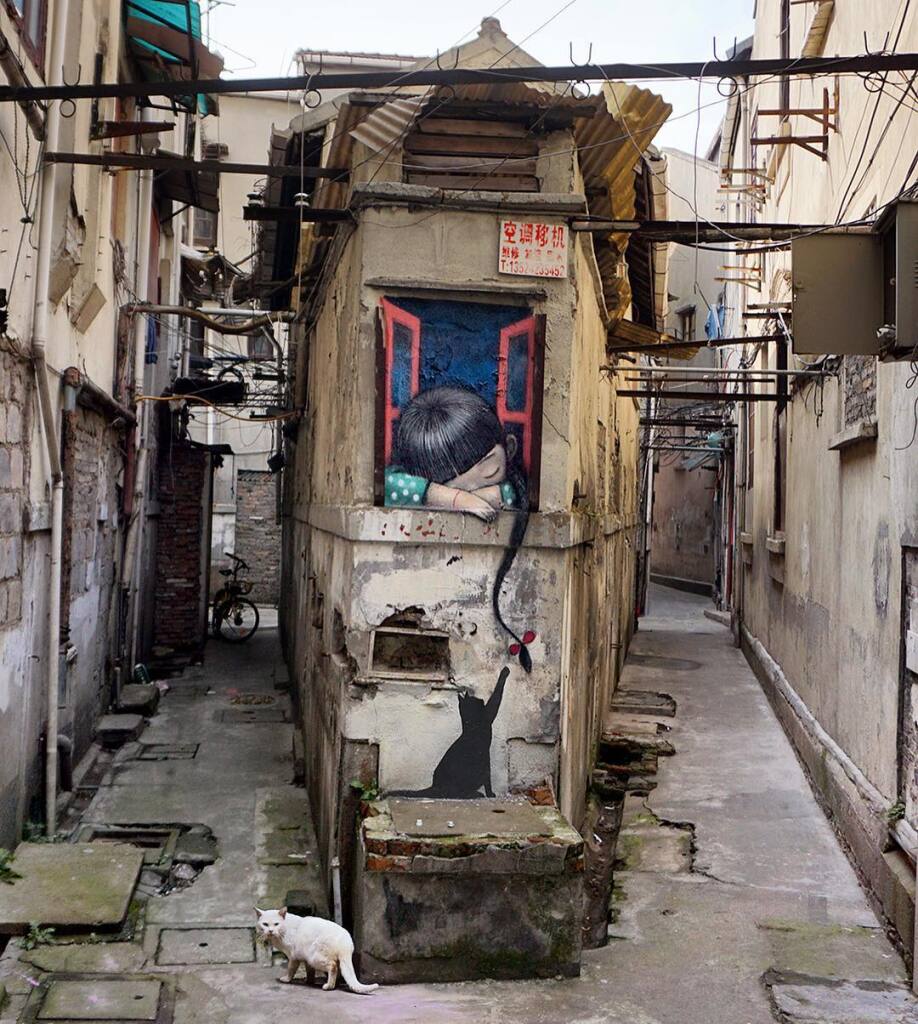
A mural of a girl with her head resting on folded arms appears framed in a red window. Her long ponytail dangles down the wall, playfully chased by the silhouette of a black cat reaching for a flower at its tip.
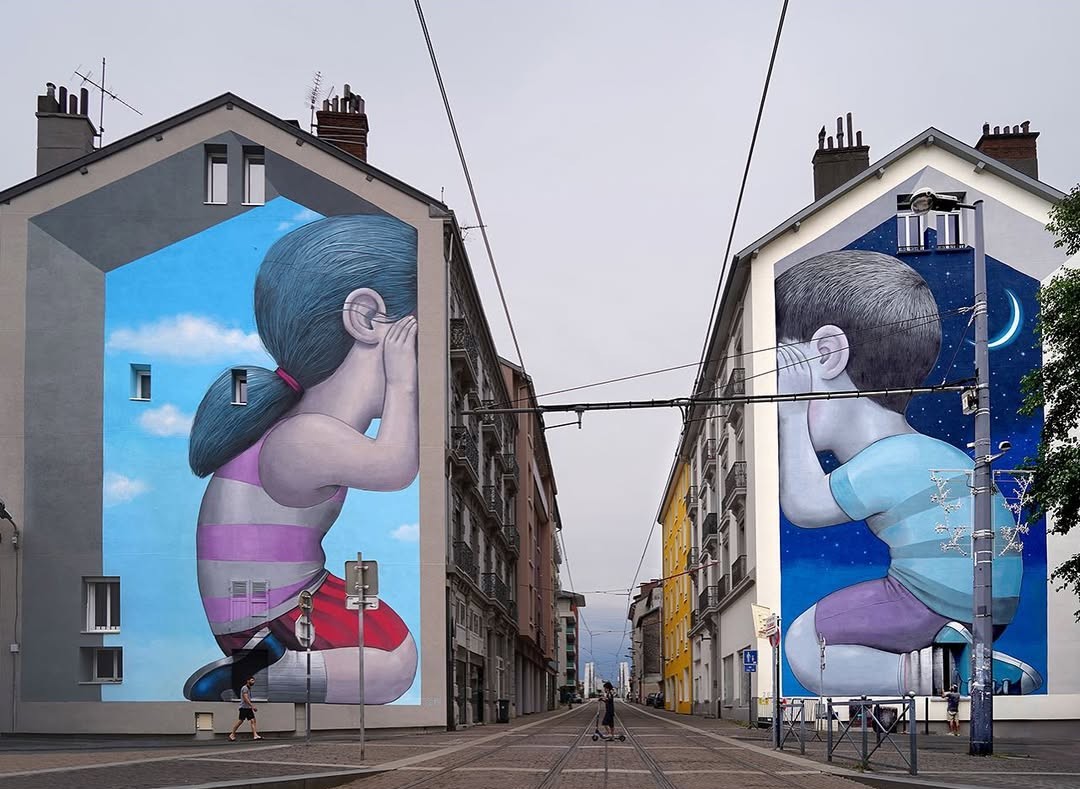
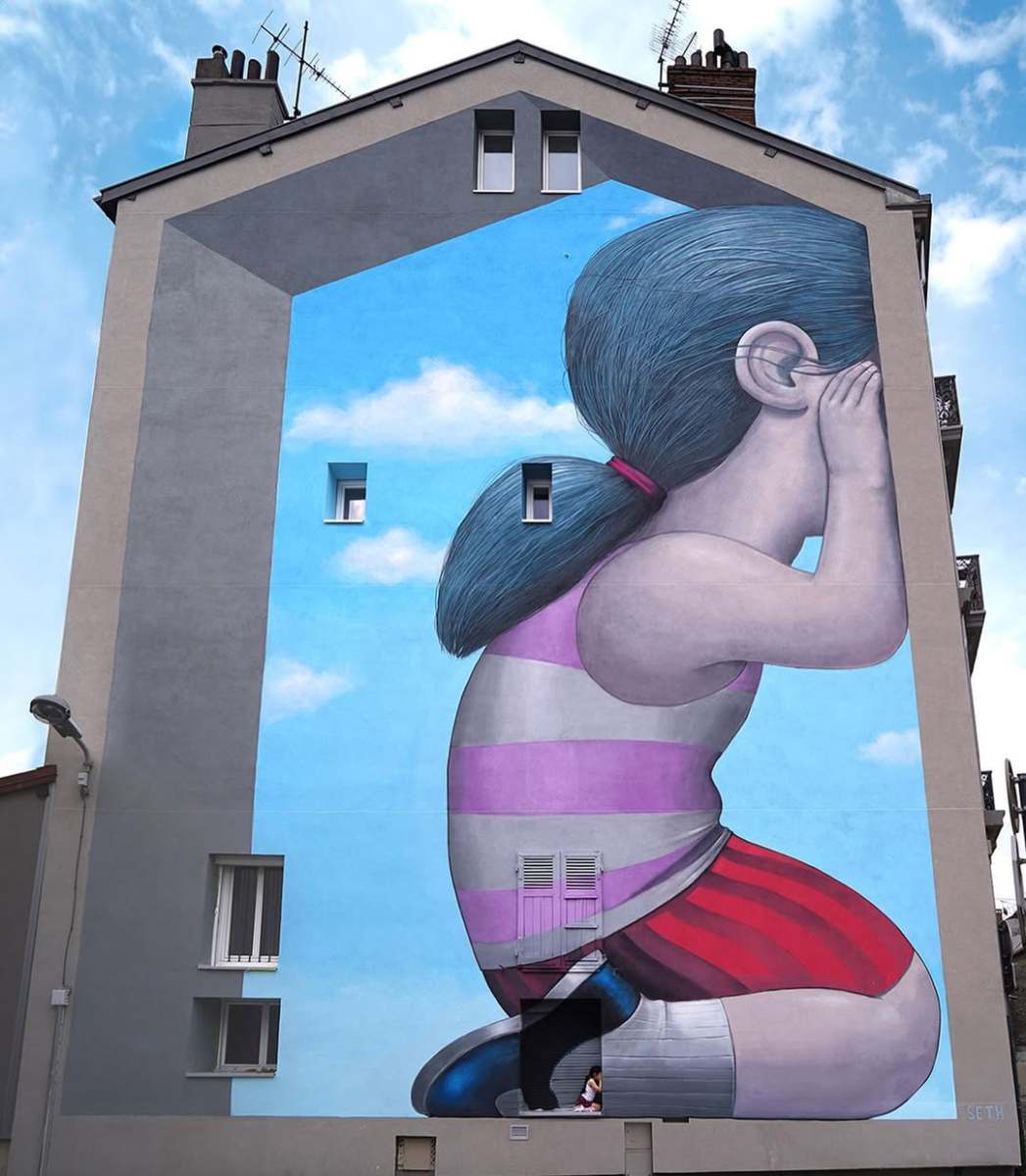
Eye to Eye — Fontaine, France
Two murals face each other across a street. On one wall, a girl whispers toward the other. On the opposite wall, a boy listens under a crescent moon. The murals reflect connection and imagination, using architectural space like a narrative thread.
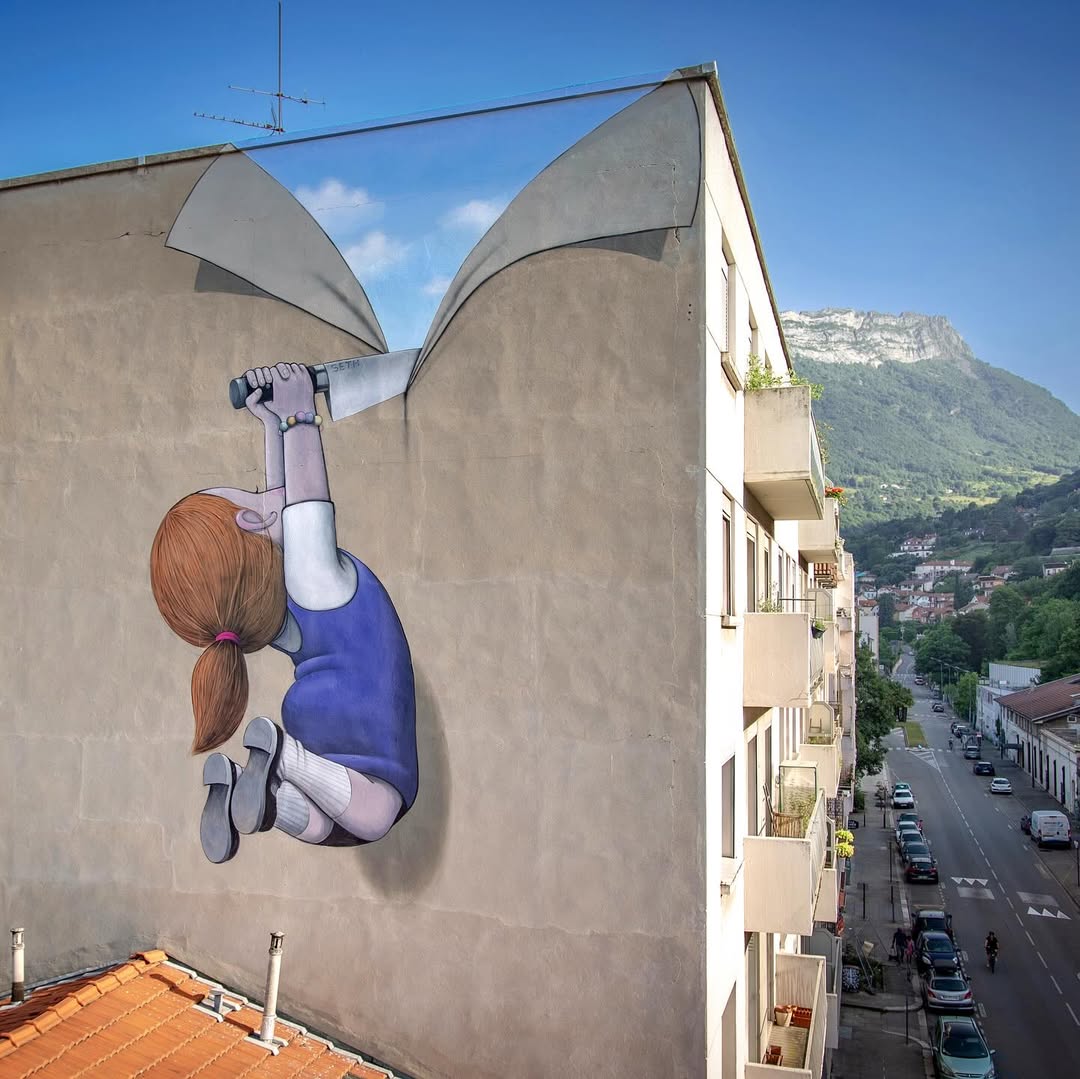
Hang On — Grenoble, France
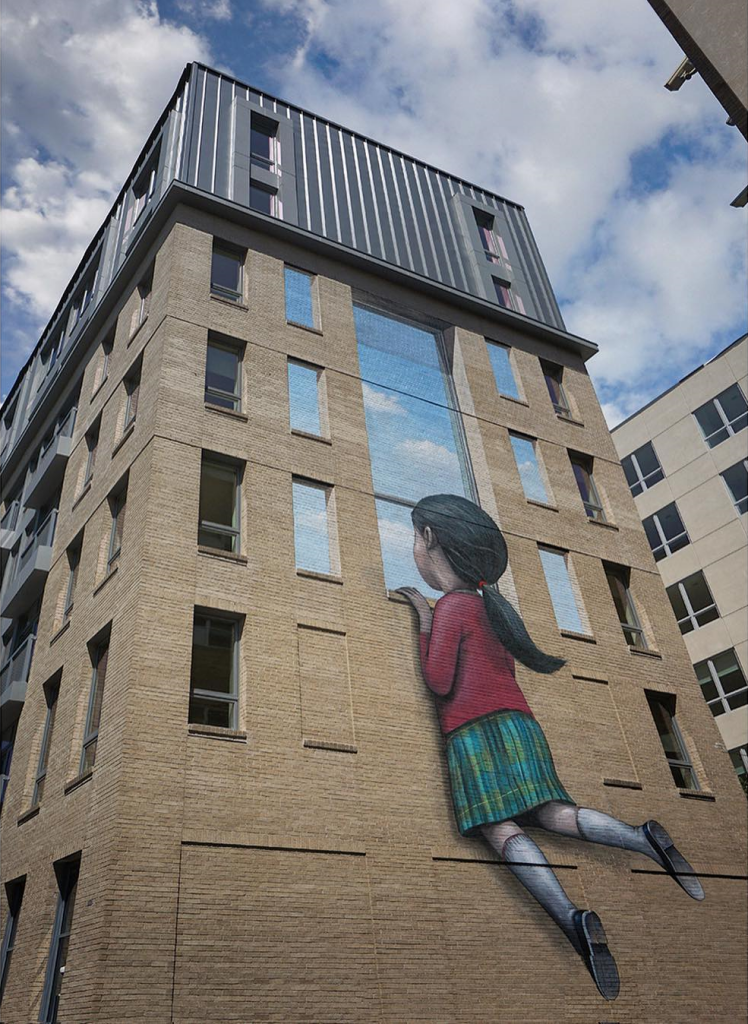
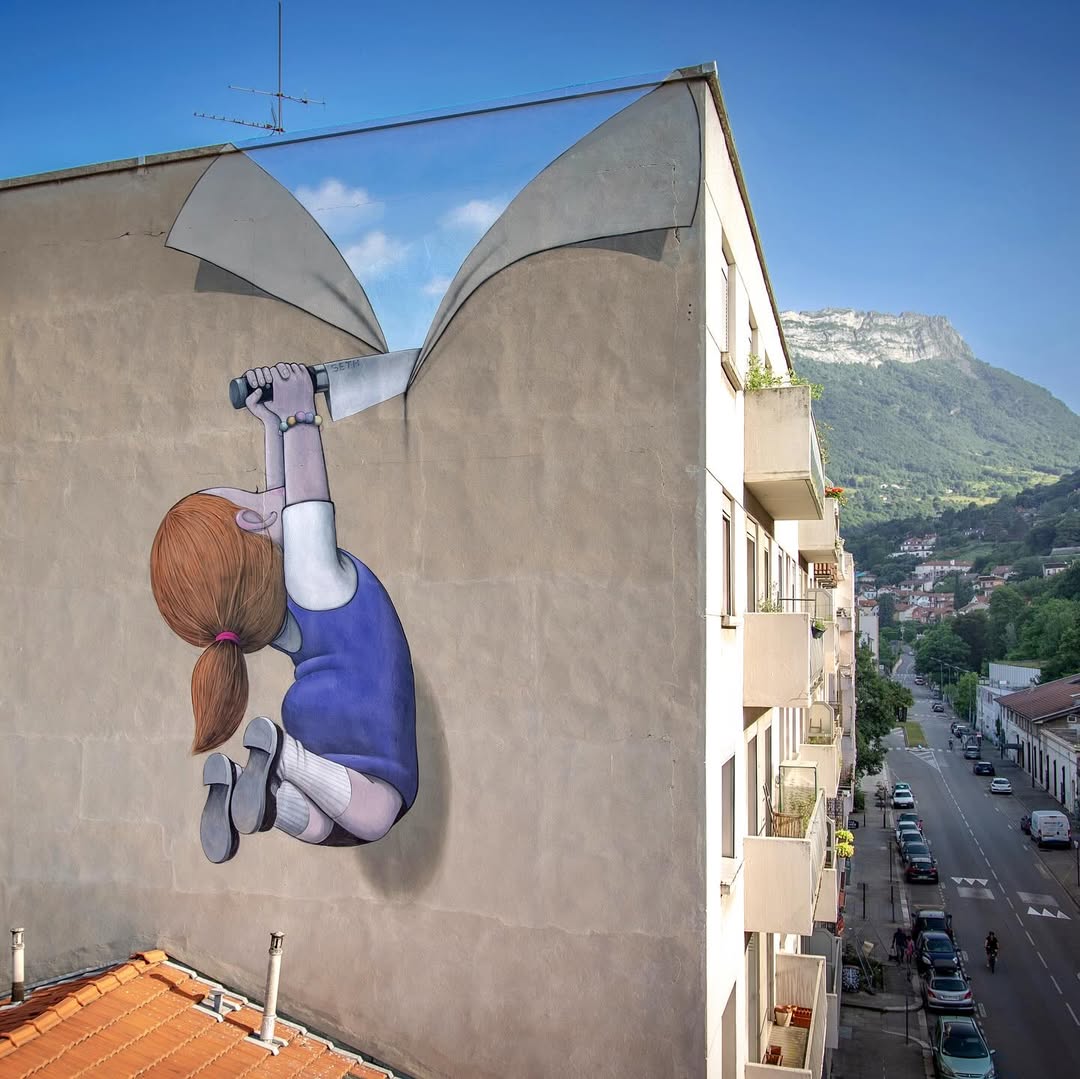
A girl clings to a painted tear in the building’s facade, appearing to pull back the gray surface to reveal bright blue sky. Her body swings with momentum as if caught mid-effort to uncover what lies beyond.
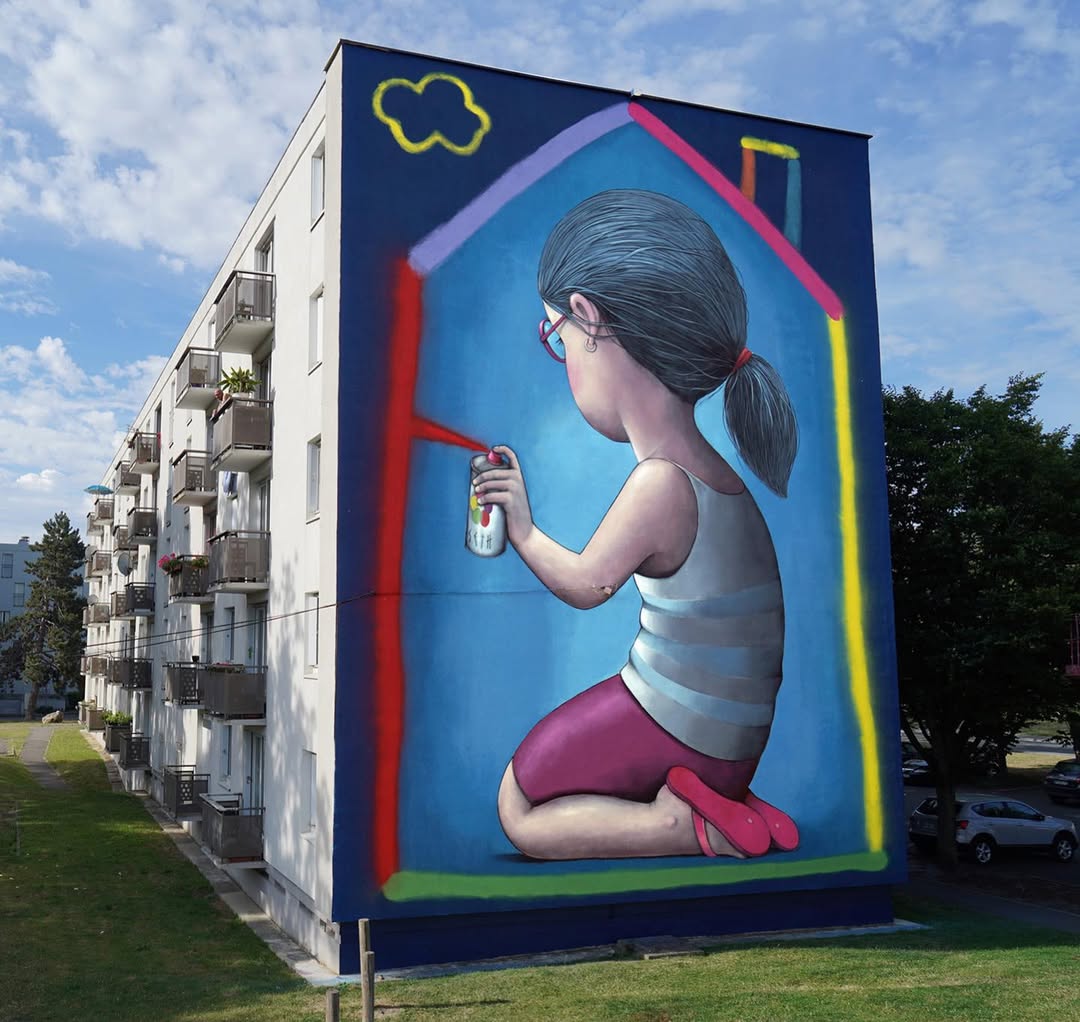
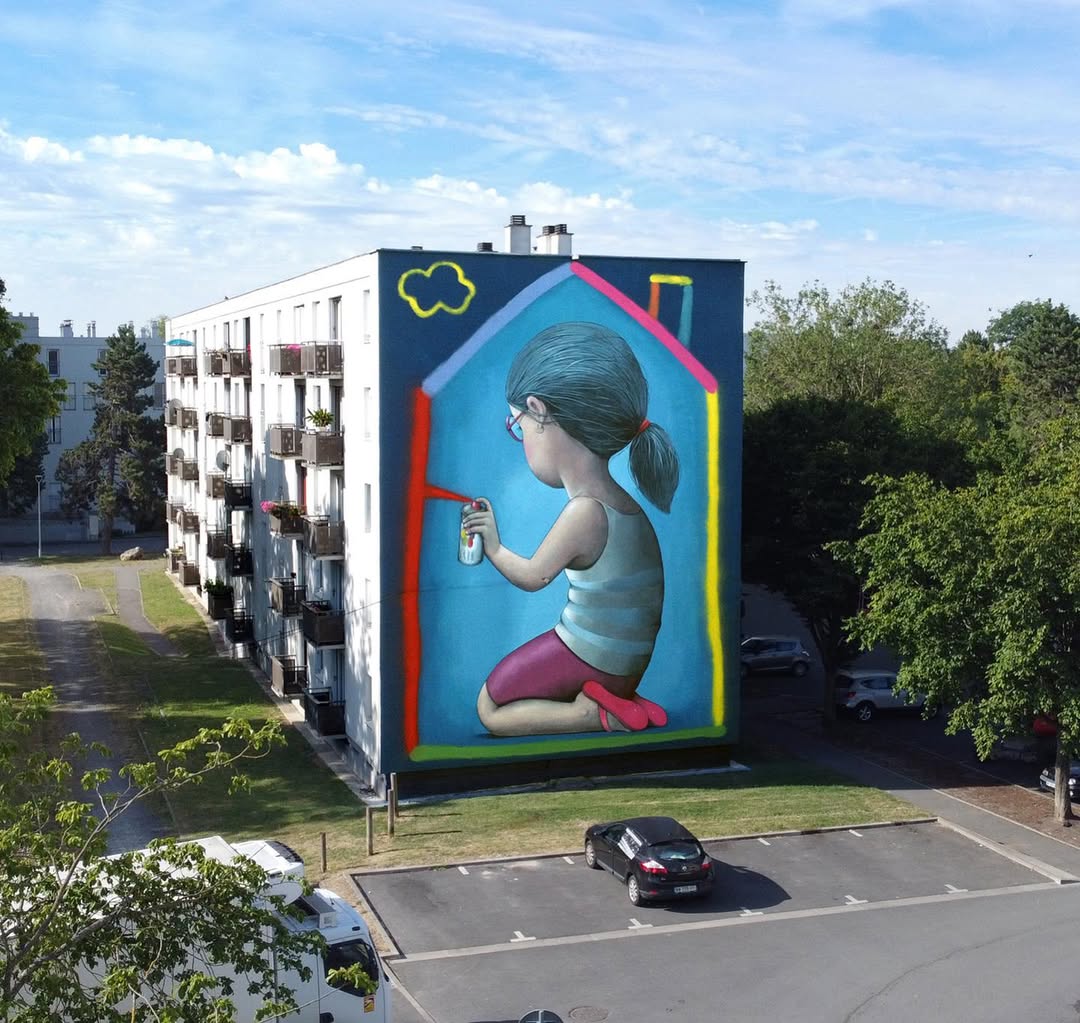
In My House by Box — Laon, France
A girl kneels inside a house-shaped outline, spray-painting walls onto the blank facade. Around her, simple shapes in red, yellow, and purple mimic a child’s drawing. It’s both playful and defiant—claiming space through art.
These murals don’t just decorate buildings—they redefine them. Seth Globepainter’s work invites us to see cities as living canvases where memory, play, and possibility are always within reach.
More: 6 Cute Murals By KATO: Bringing Walls to Life
Which one is your favorite?
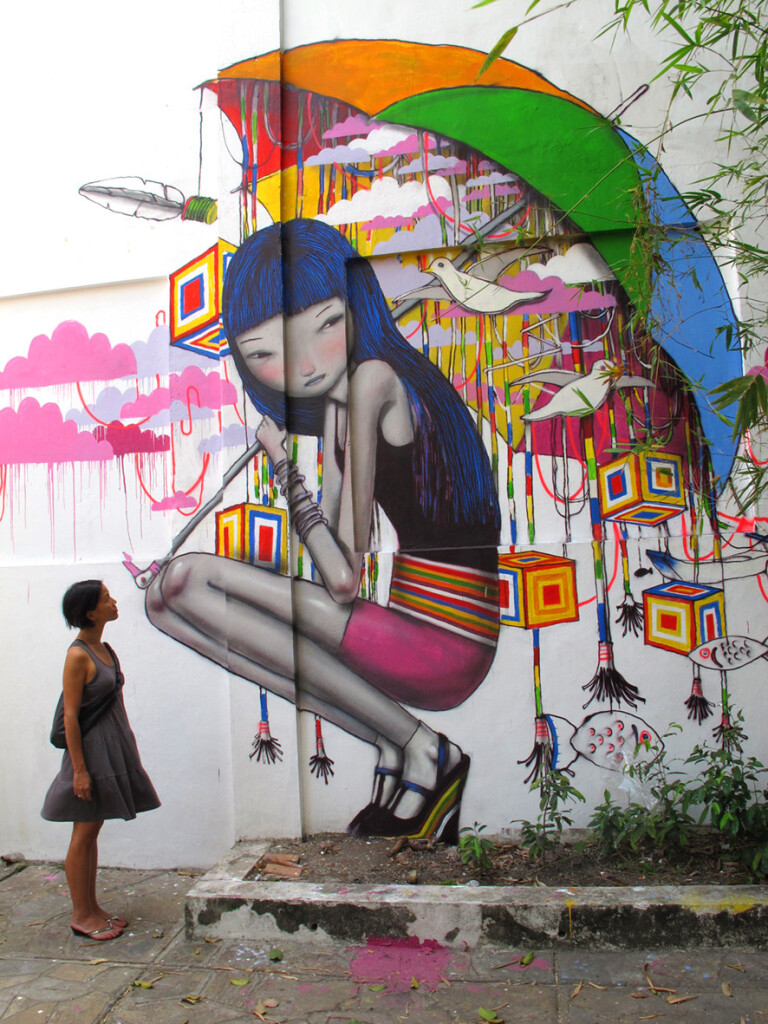
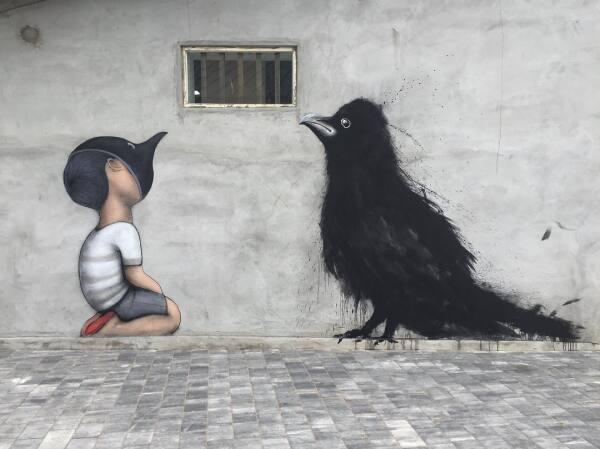
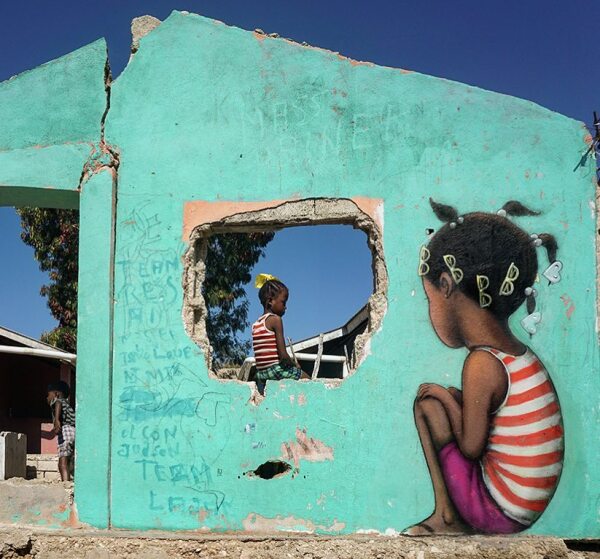
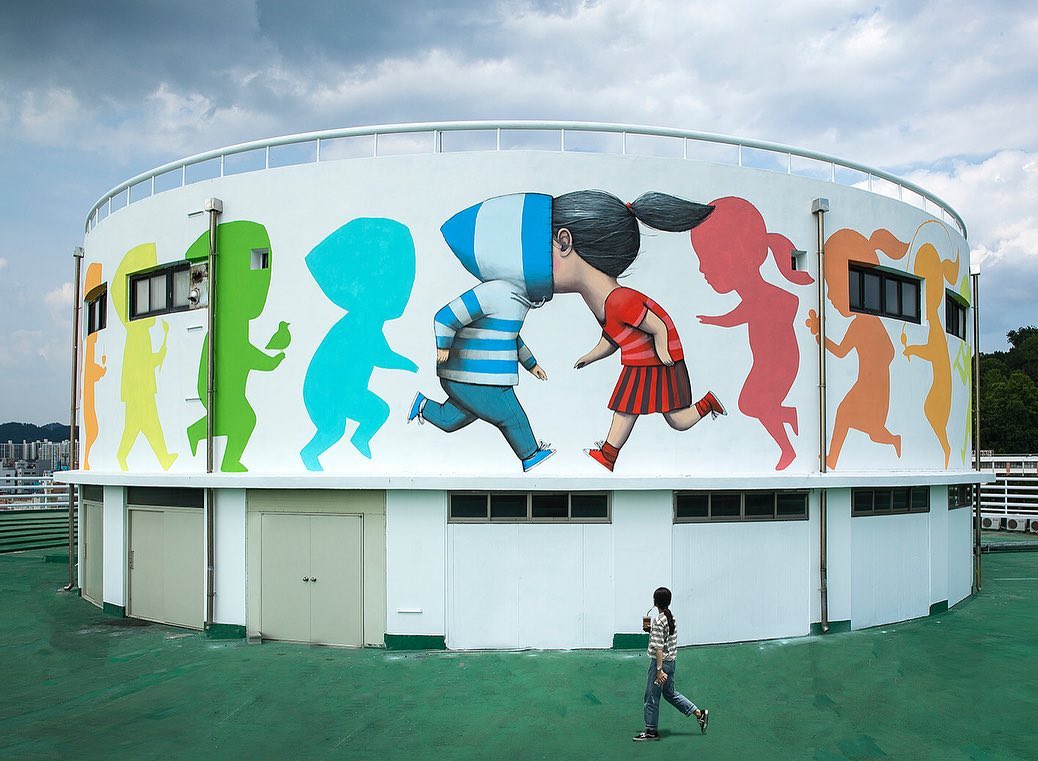
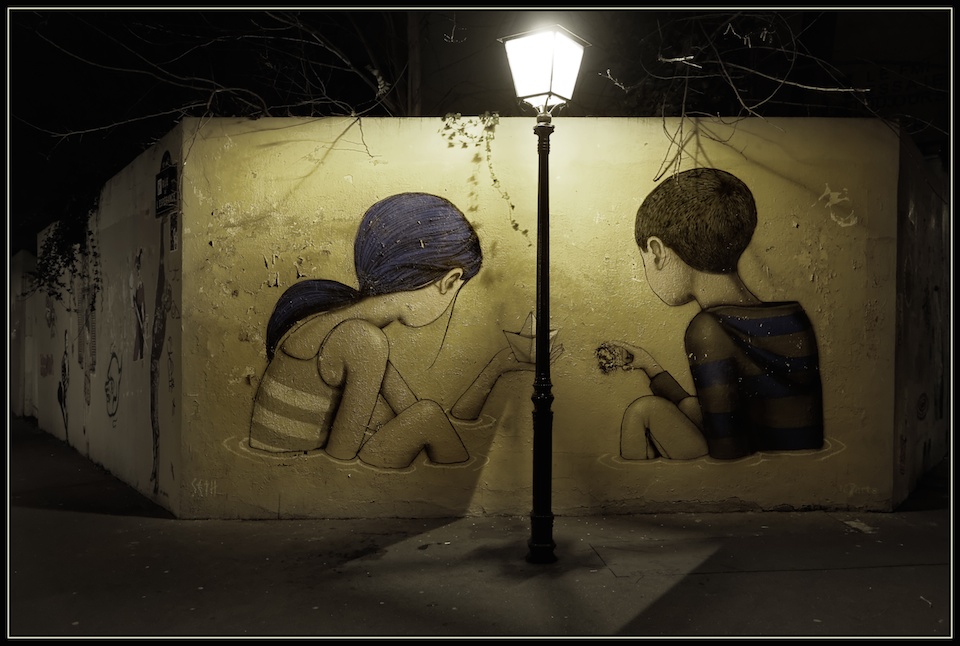
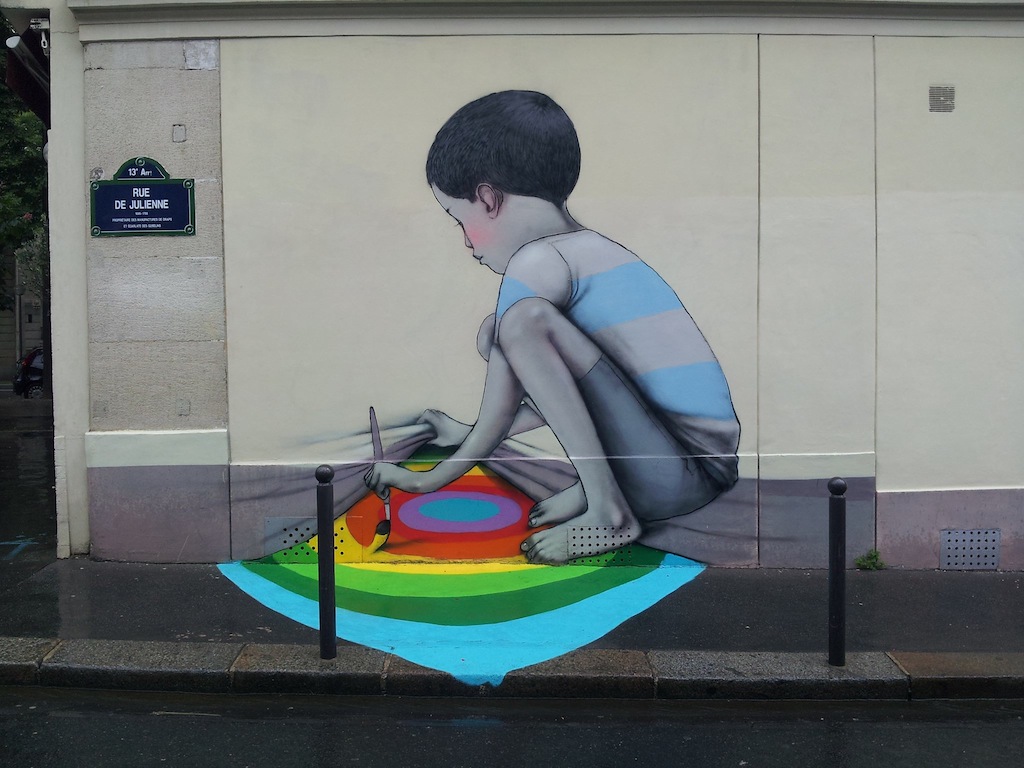
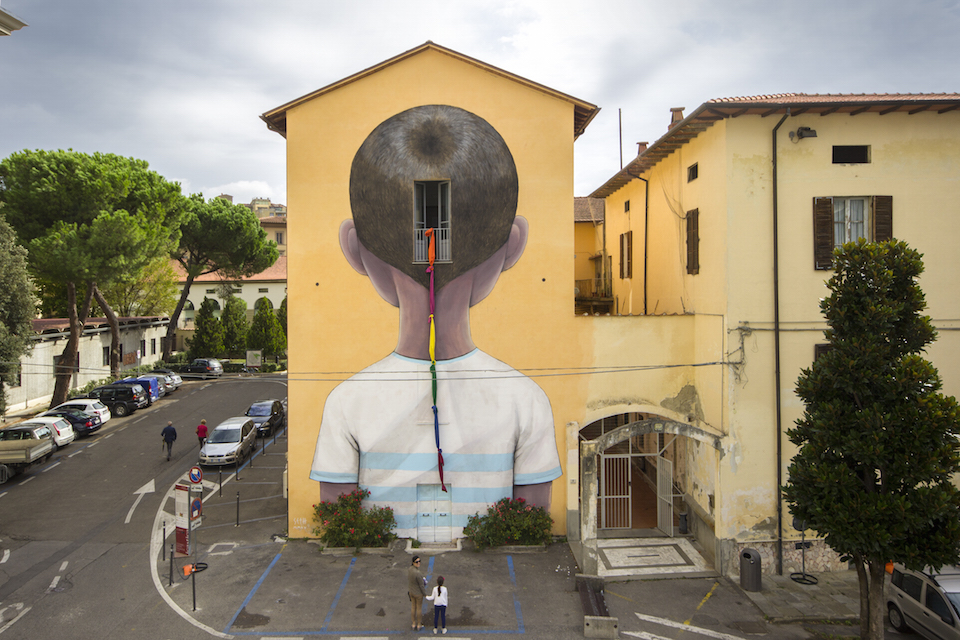
34 Murals That Turn Walls Into Wonders: Seth’s Street Art Will Blow Your Mind
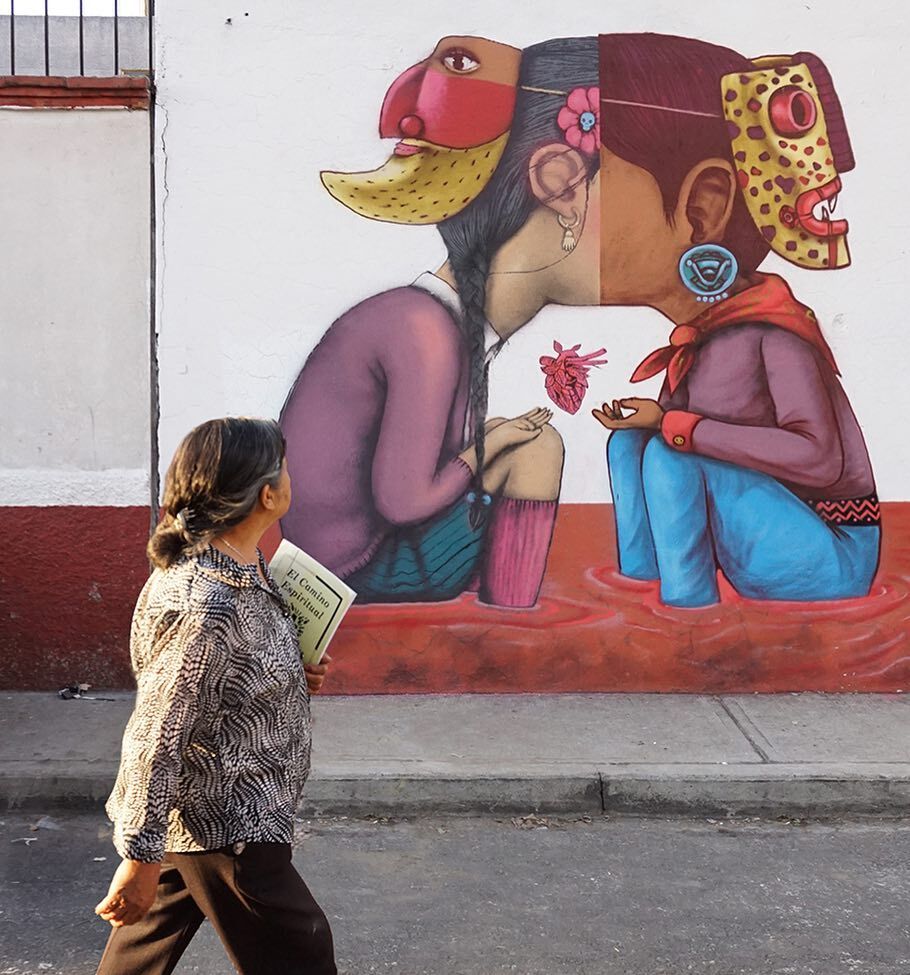
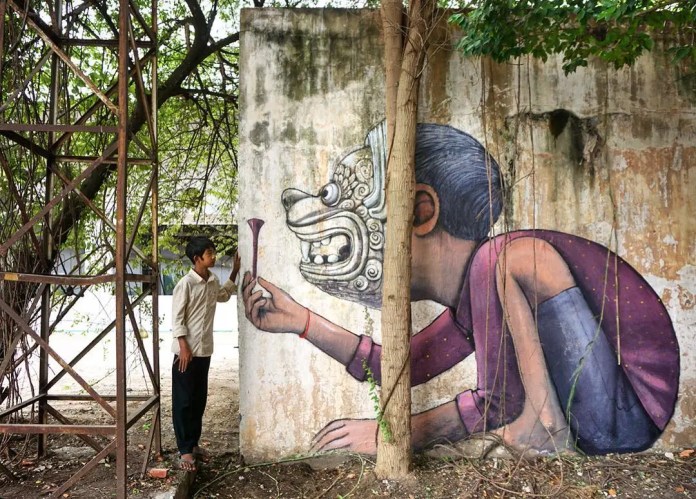
Take a journey into the colorful world of Seth Globepainter, a French street artist who turns boring walls into amazing, dreamlike art.
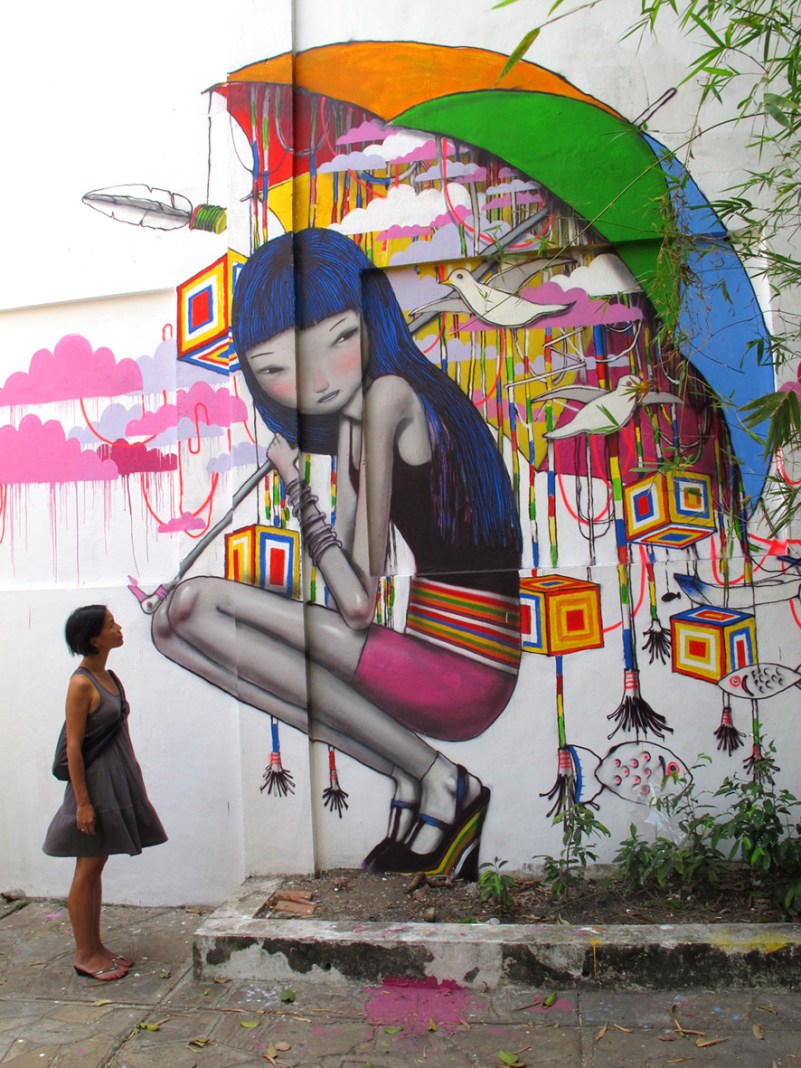
Born as Julien Malland in Paris, Seth started painting graffiti in the 1990s in the city’s 20th district. Over time, he grew into a famous mural artist, using bright colors and powerful emotions to create art that speaks to people all over the world.In this post, you’ll see 32 of Seth’s most magical murals. These artworks show how he can turn everyday buildings into unforgettable pieces of art.
A Creative Voyage:
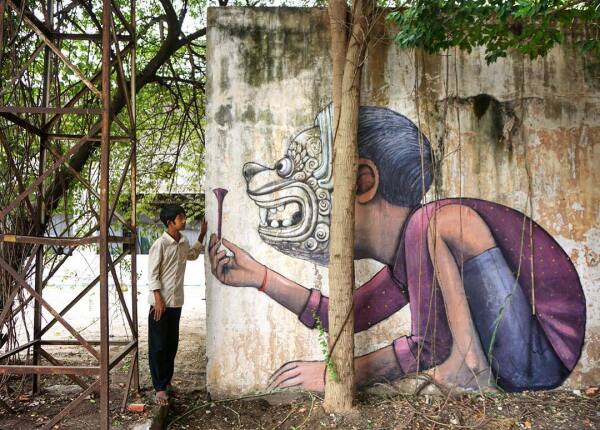
Seth’s life as an artist changed in 2003 when he started a world tour. He worked with artists from different cultures and learned new ways to paint in cities around the globe. This experience led to his book “Globe Painter” (2007) and the documentary series “Les Nouveaux Explorateurs,” which was shown on Canal+. Over five years, Seth visited 15 unique places, expanding his artistic style and creativity.During these travels, Seth developed his signature style, often focusing on themes of childhood and imagination.
1.
Enter the vortex – rue Jeanne d’Arc, Paris 13 with Galerie Itinerrance in Paris, France
2.
Viviane hesitate, La Butte aux cailles, Paris, France.
A World of Wonder:
Seth Globepainter’s art shows how street art can change the way we see the world. His murals bring out feelings and tell amazing stories. If you want to see more of Seth’s work, check out his official website! Feeling inspired? Share your street art photos and stories in our Facebook group “Your Street Art Utopia” and join the fun conversation!3.
Periscopes – Street Art by Seth in Shanghai, China.
4.
Cat Walk – Street Art by Seth in Shanghai, China.
5.
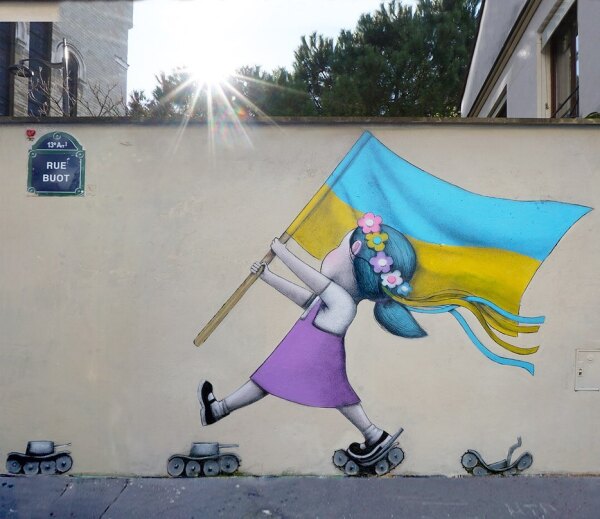
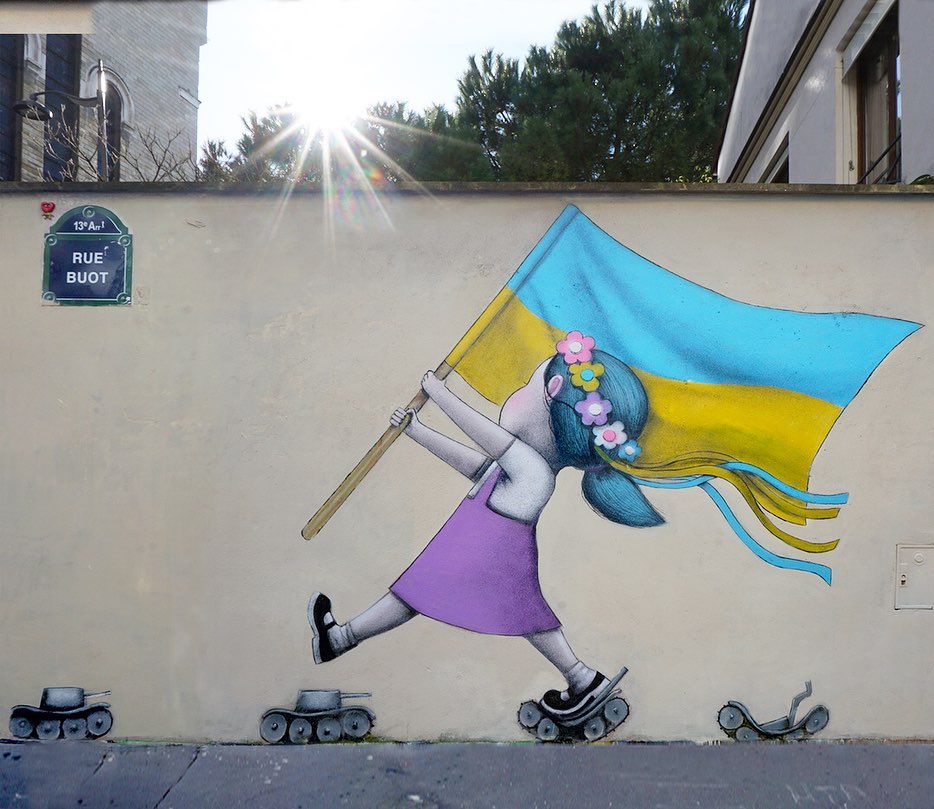
Seth on Putins War on Ukraine in Paris, France.
6.
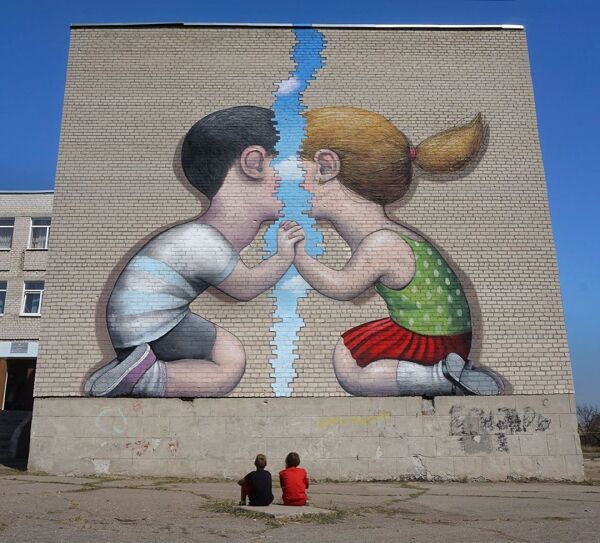
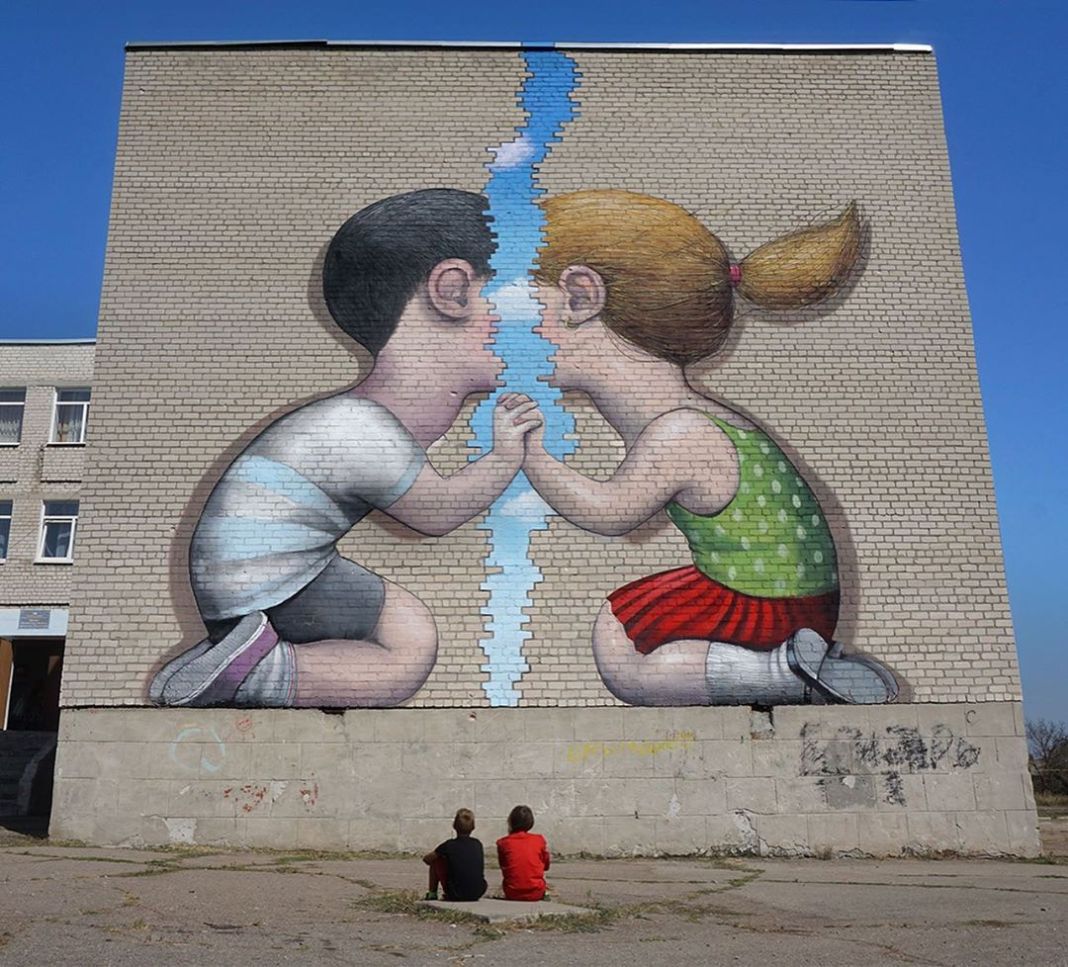
“Keep in touch” Popasna, Donbass Ukraine.
7.
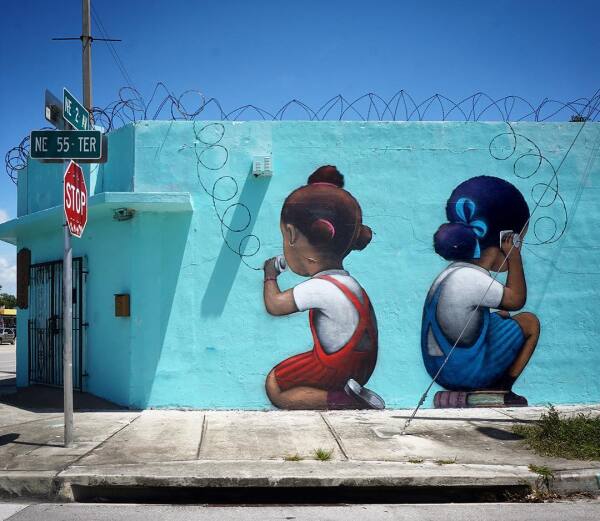
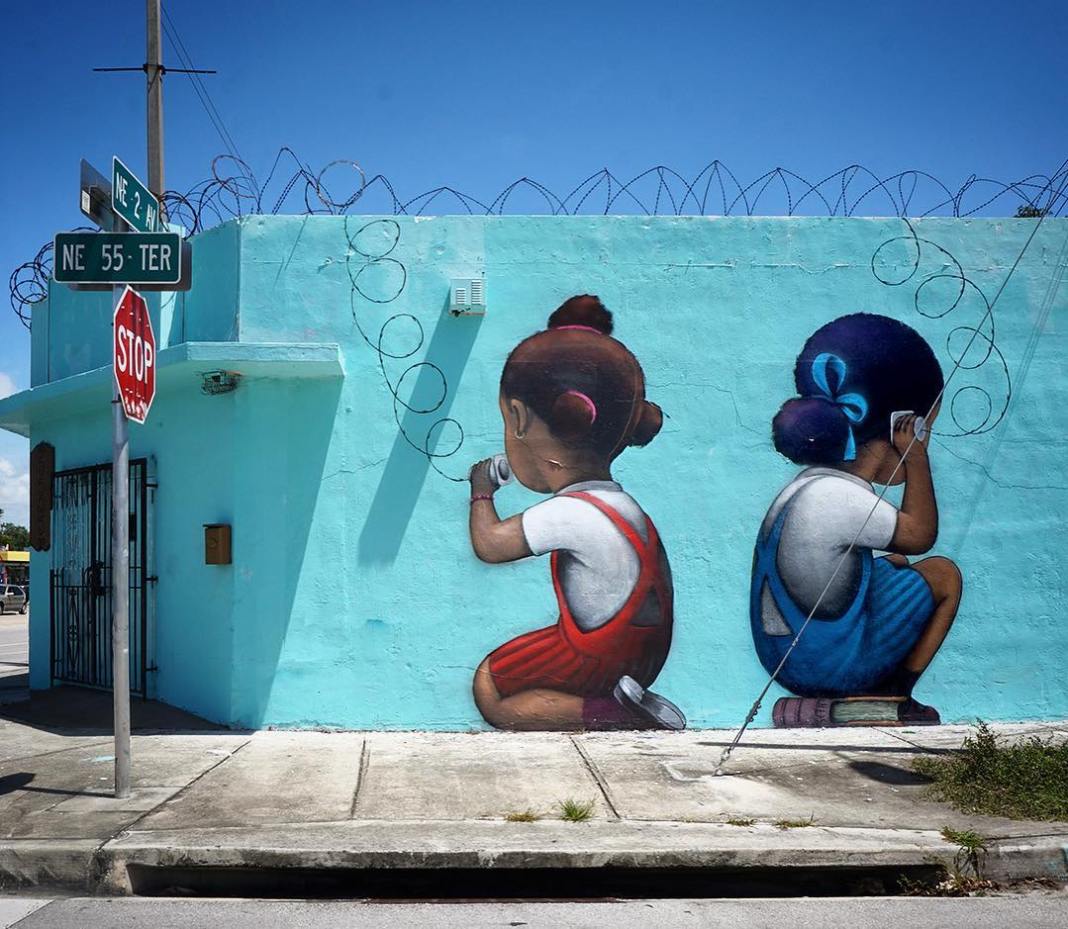
“Telefòn” Little Haïti, Miami.
8.
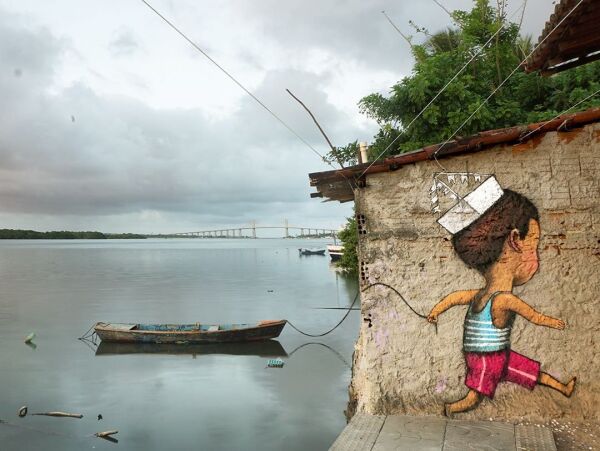
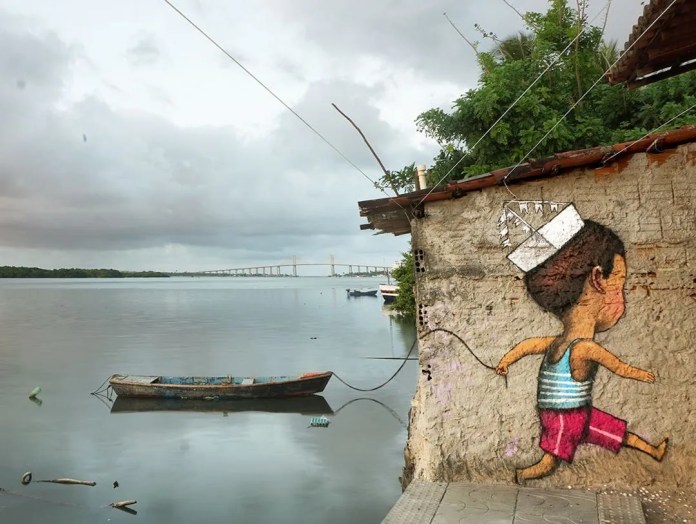
“O marinheiro ”, Passo da Pátria, Natal, Brasil.
9.
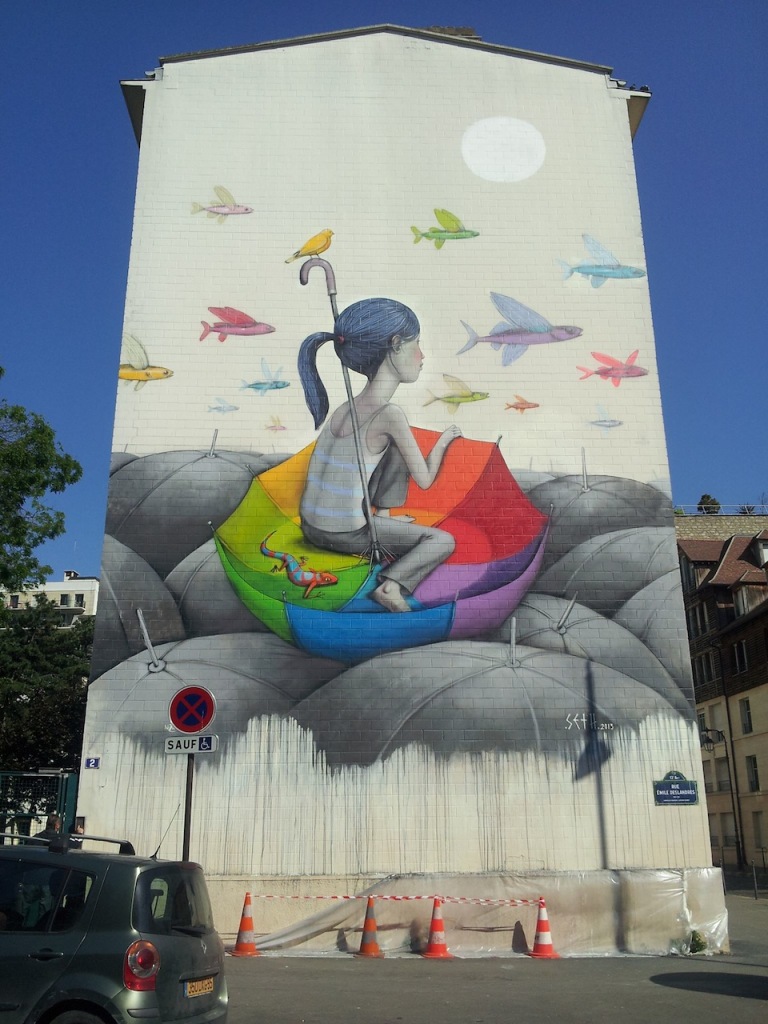
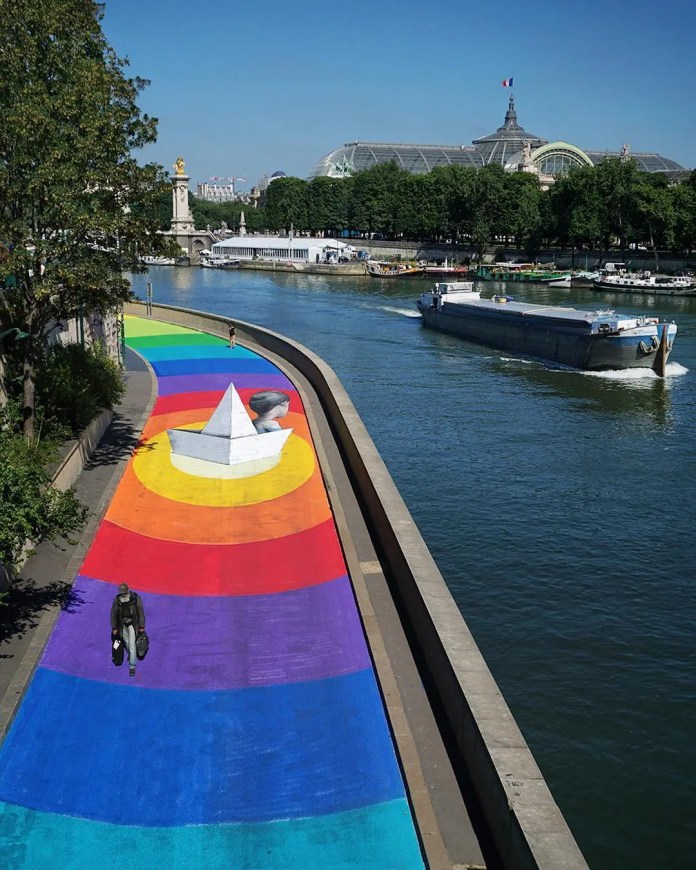
In Paris, France.
10.
“Little Thor” in Neuf-Brisach, France.
11.
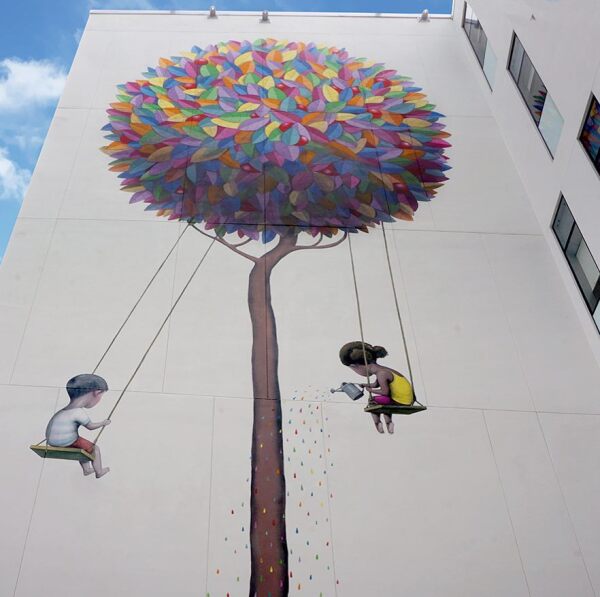
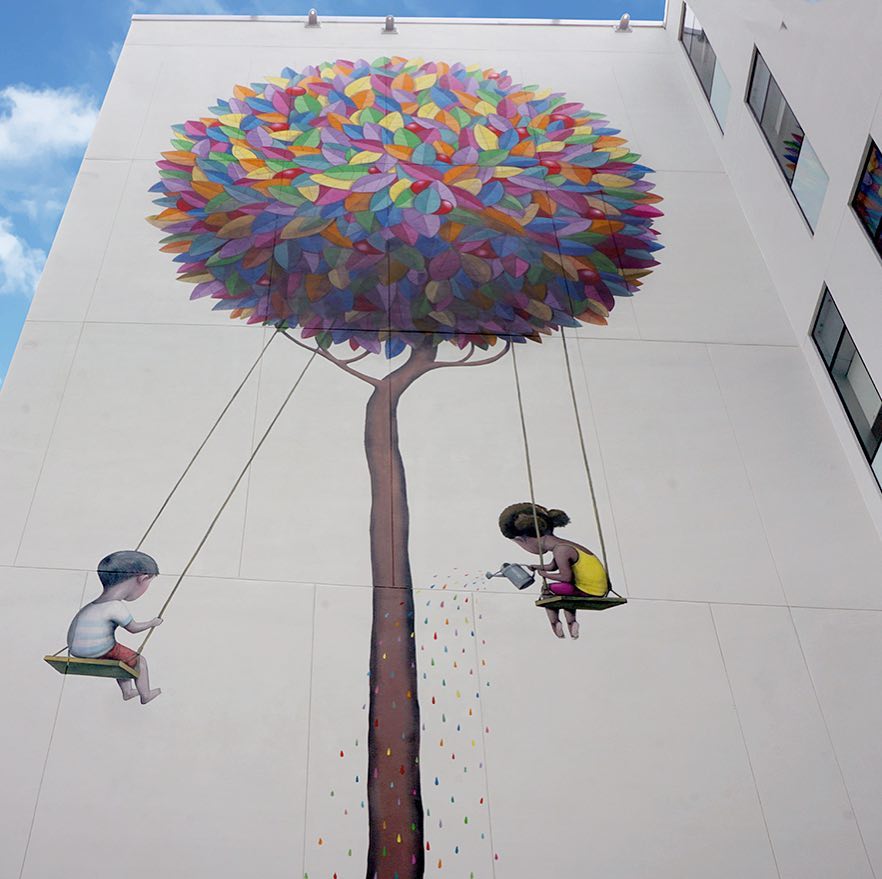
The gardeners – At Nicklaus children’s hospital in Miami, USA
12.
13.
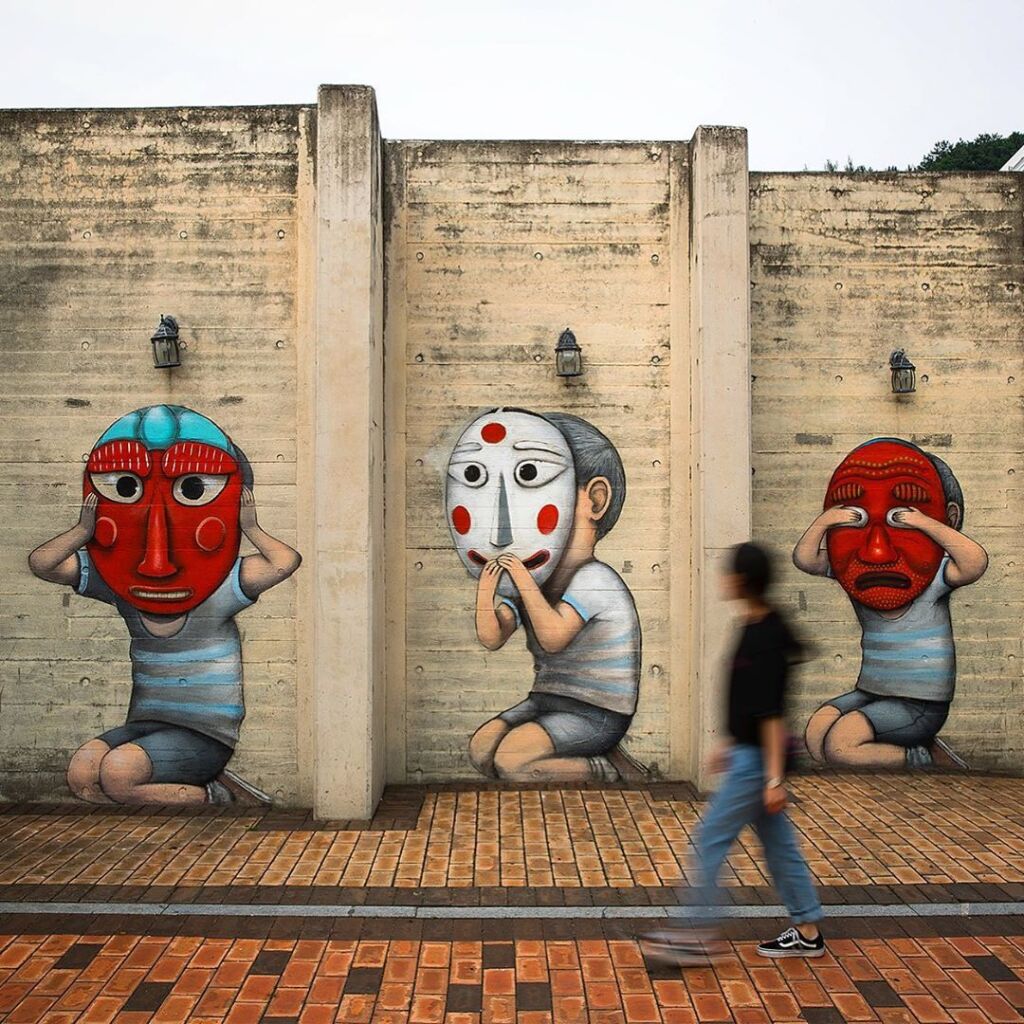
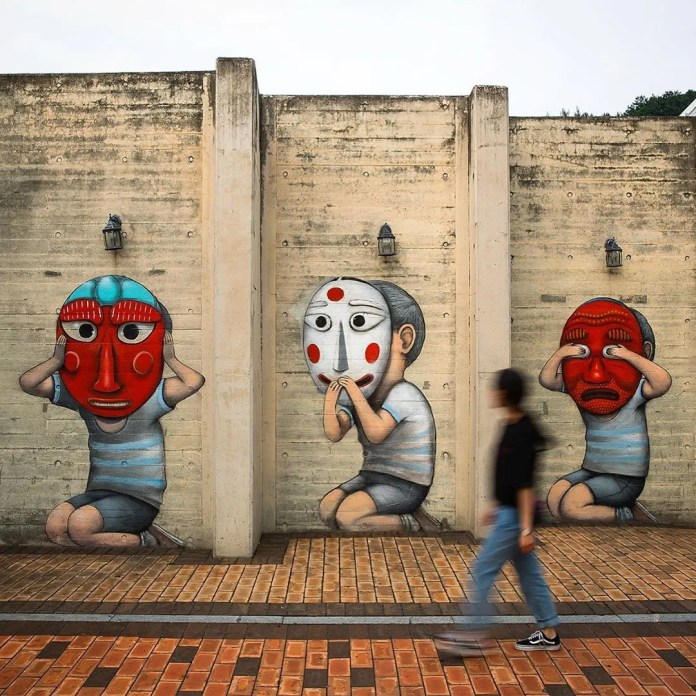
3 masks – Chosun University, Gwangju, South Korea.
14.
“Jack in the box” in Aalborg, Denmark
15.
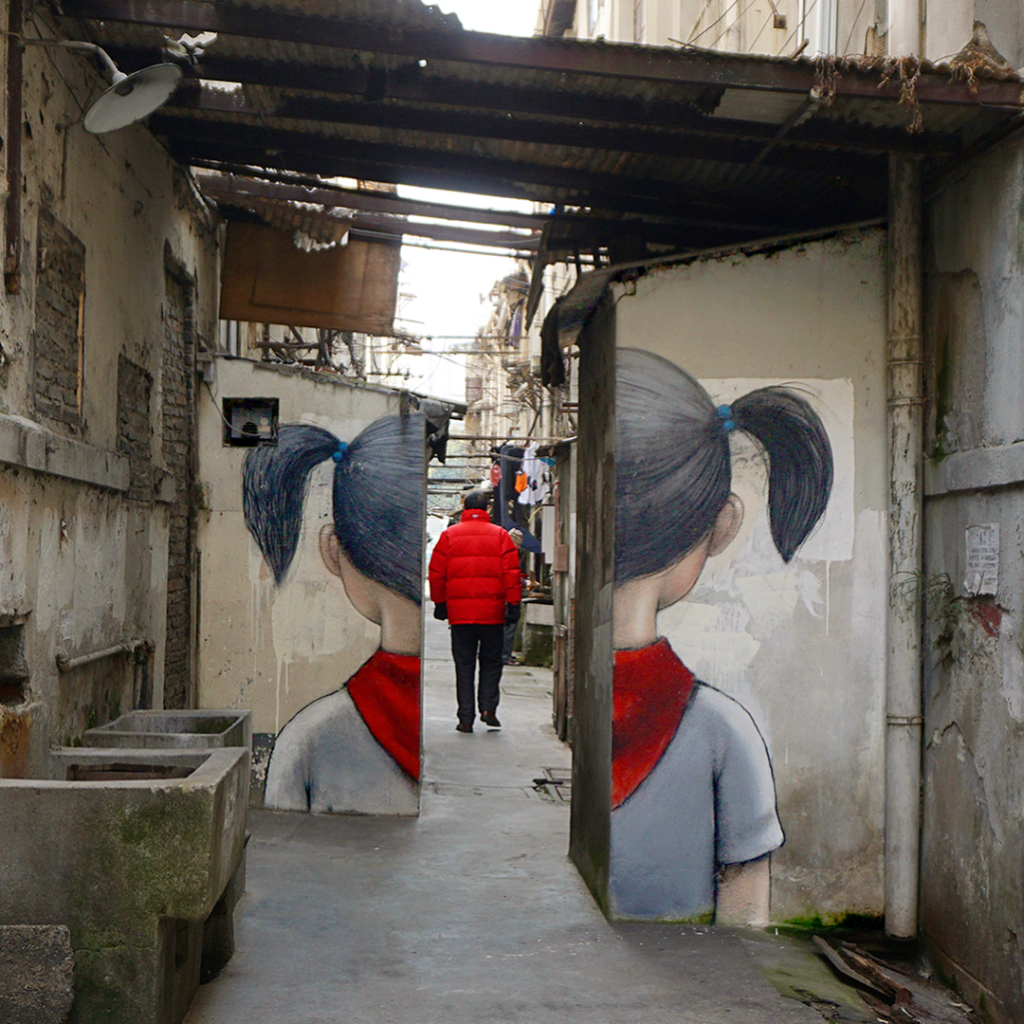
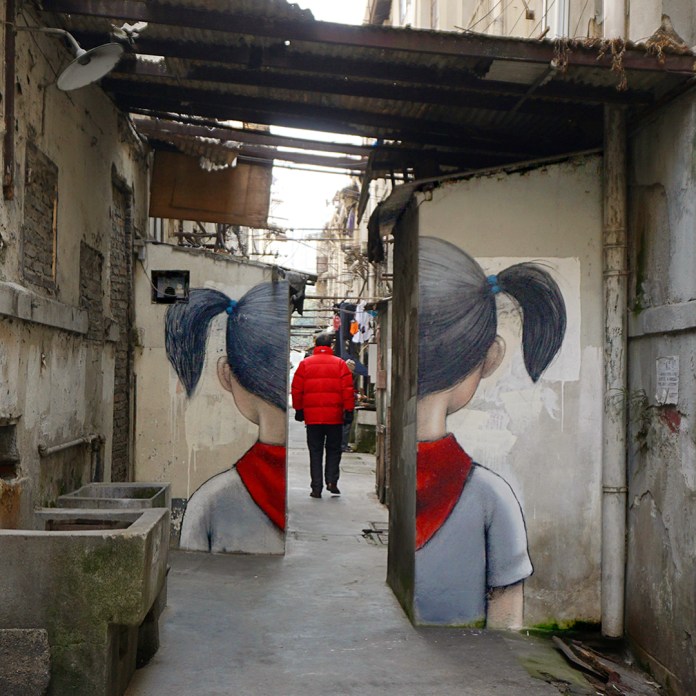
In a lane near Yu garden, Shanghai, China.
16
Collaboration with Korean painter Heo Dal Yong in Hae Dong, Damyang, South Korea.
17.
In Paris, France.
18.
Camsize and friend, Ravine-Sèche, Haïti.
19.
In Paris, France.
20.
21.
In Paris, France.
22.
In Paris, France
23.
24.
“The wire” in Fontaine, France.
25.
Lala can fly too, – Butte aux cailles, Paris, France.
26.
Jaho on his doorstep, Butte aux cailles, Paris, France.
27.
With Saner Edgar in Coyoacàn, Ciudad Mexico.
28.
In Phnom Penh, Cambodia.
29.
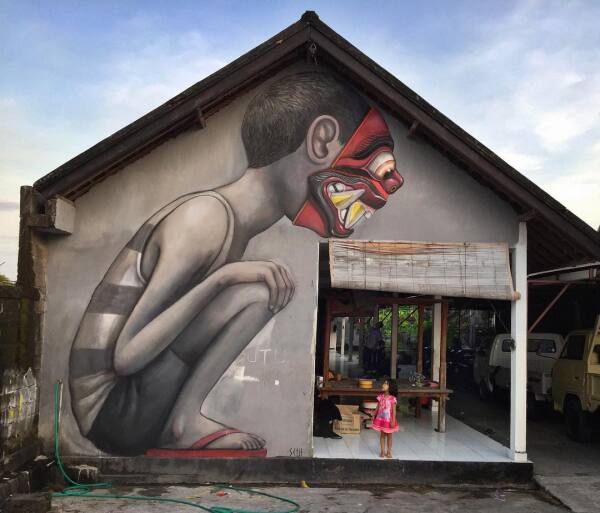
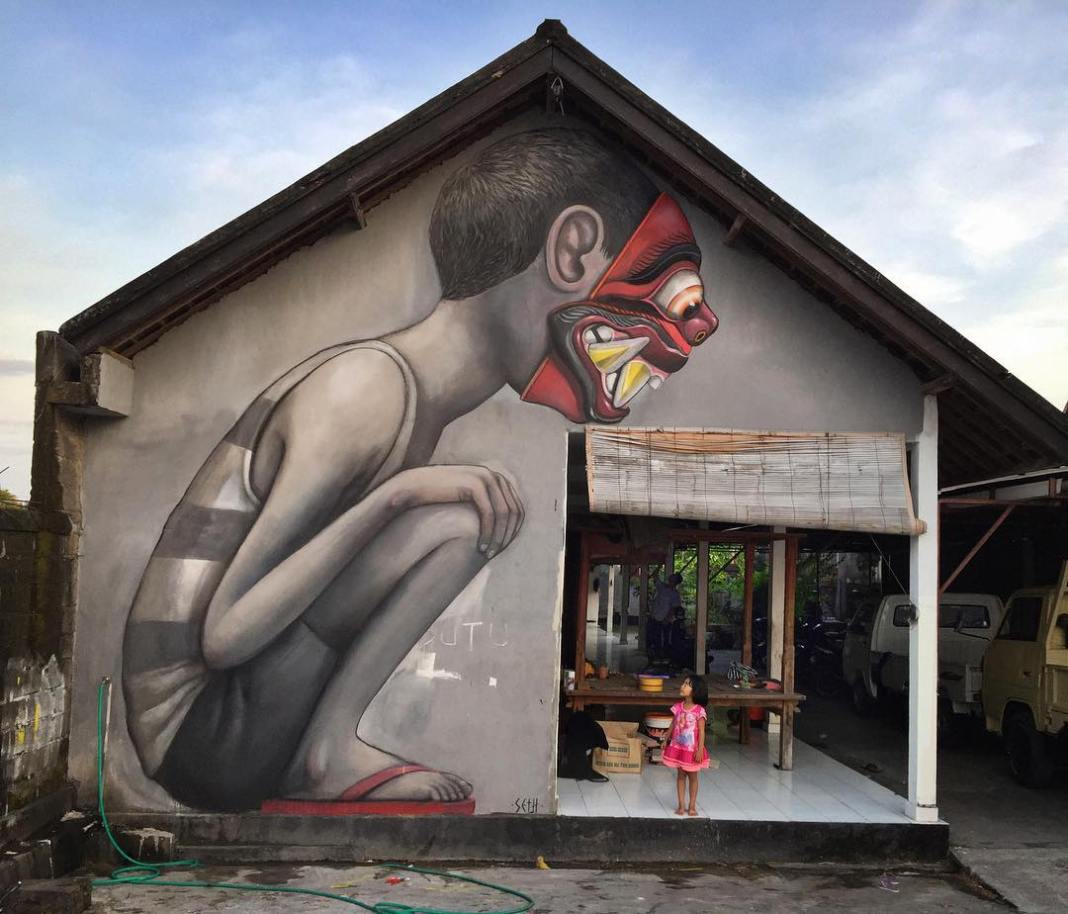
Little Putu meets her new friend, Canggu, Bali, Indonesia.
30.
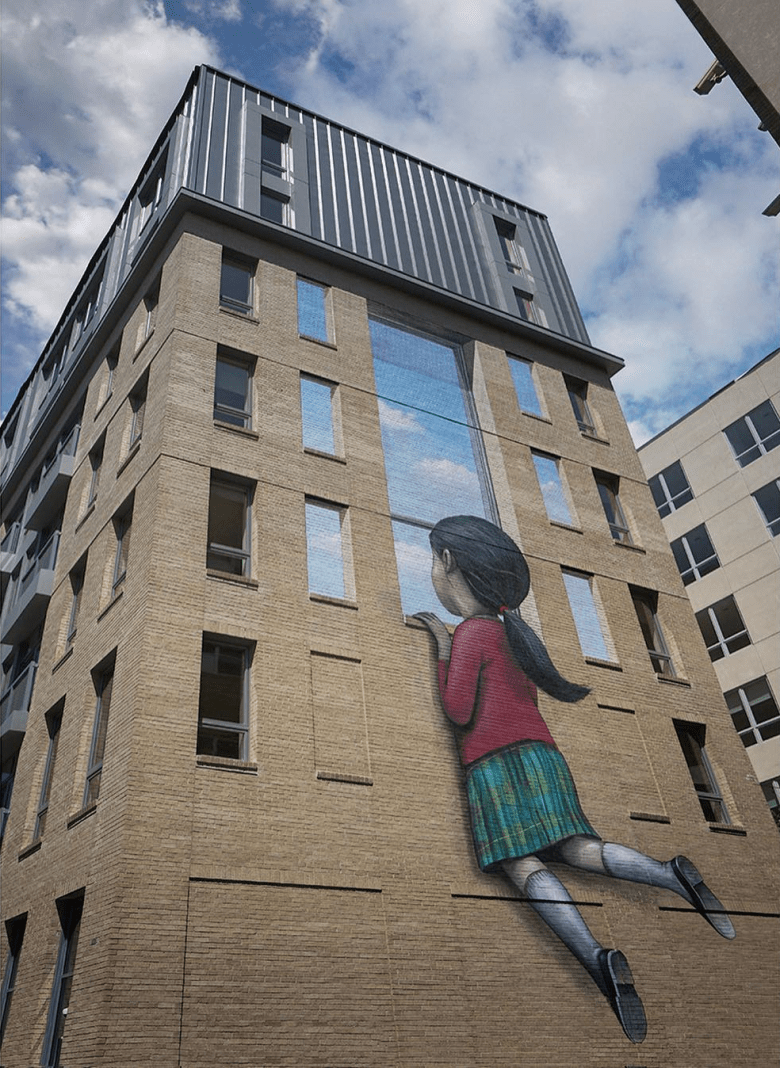
Wendy at the window – Jersey City, USA.
31.
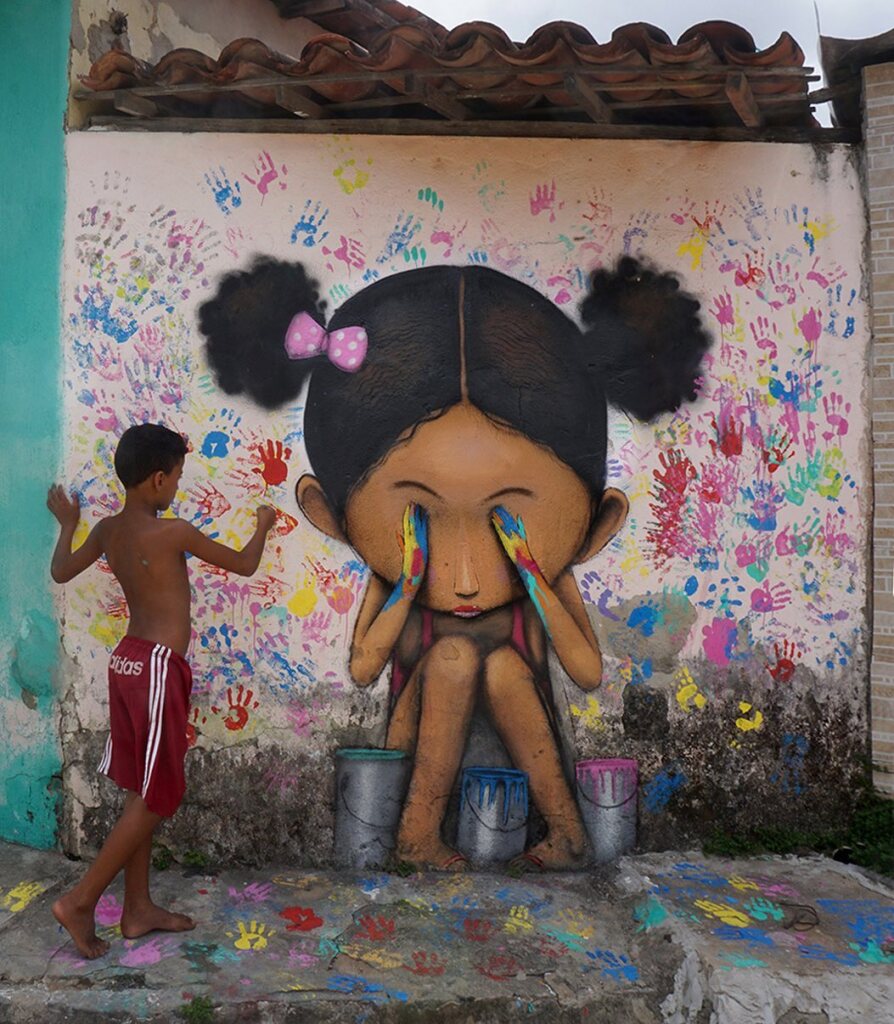
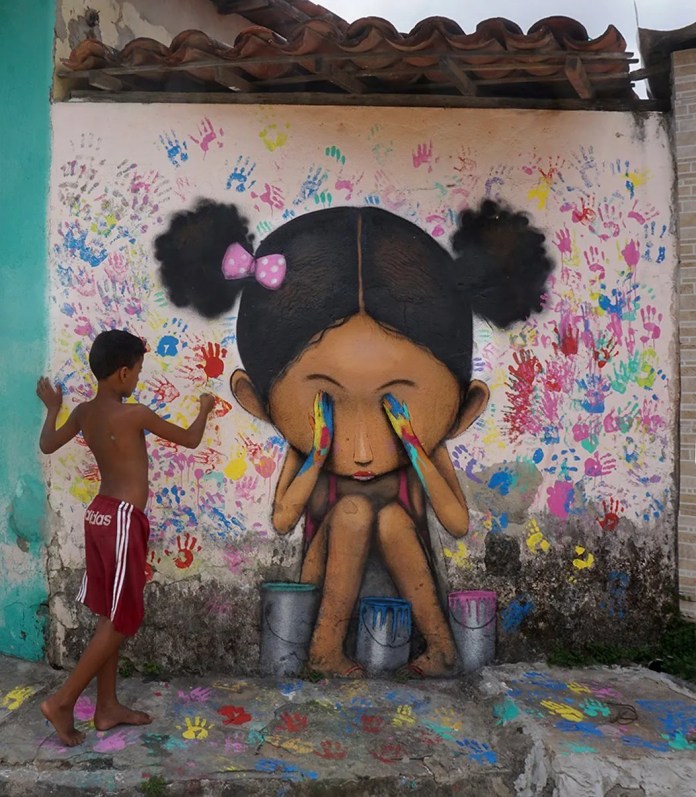
Dirty Hands – With the kids of Passo da Pátria, Natal, Brasil.
32.
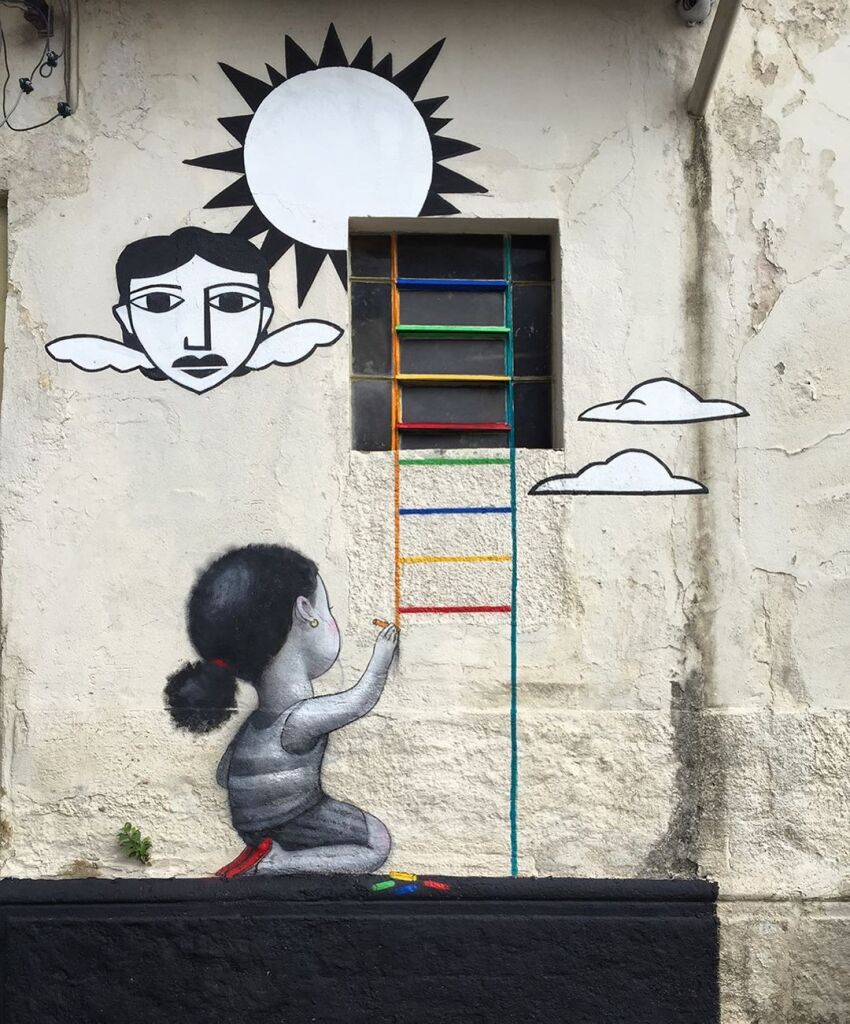
Escada – Collaboration with DERLON in Obrigado Irmão. São Paulo, Brazil.
33.
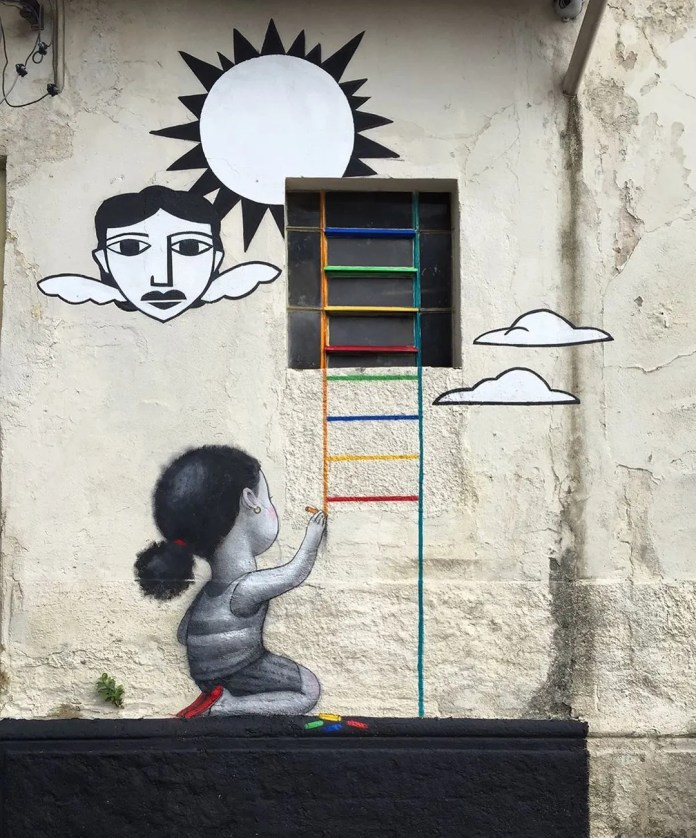
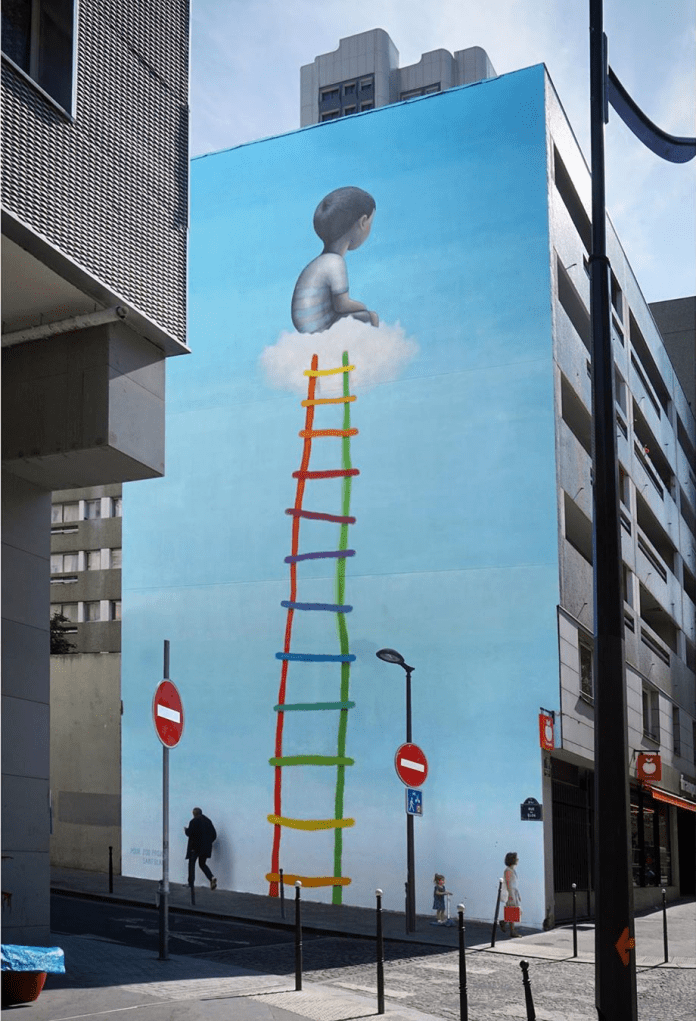
“The ladder ”, tribute to the artist Bilal Berreni, known by the pseudonym Zoo Project died in July 2013 at the age of 23. His name is given to a place in the district of Saint-Blaise in the 20th arrondissement of Paris, the same place where he grew up and where this mural is painted.
34.
“Hang on” for Street Art Fest Grenoble Alpes in Grenoble, France.
Which one is your favorite?
Fixing the World (12 Photos)
Content warning: Sometimes the best street art starts with the thing everyone else tries to hide. A crack becomes a dog’s body. A pothole gets a mosaic. A missing corner is filled with books. These pieces are not always practical repairs, but they share one simple idea: t
Sometimes the best street art starts with the thing everyone else tries to hide.
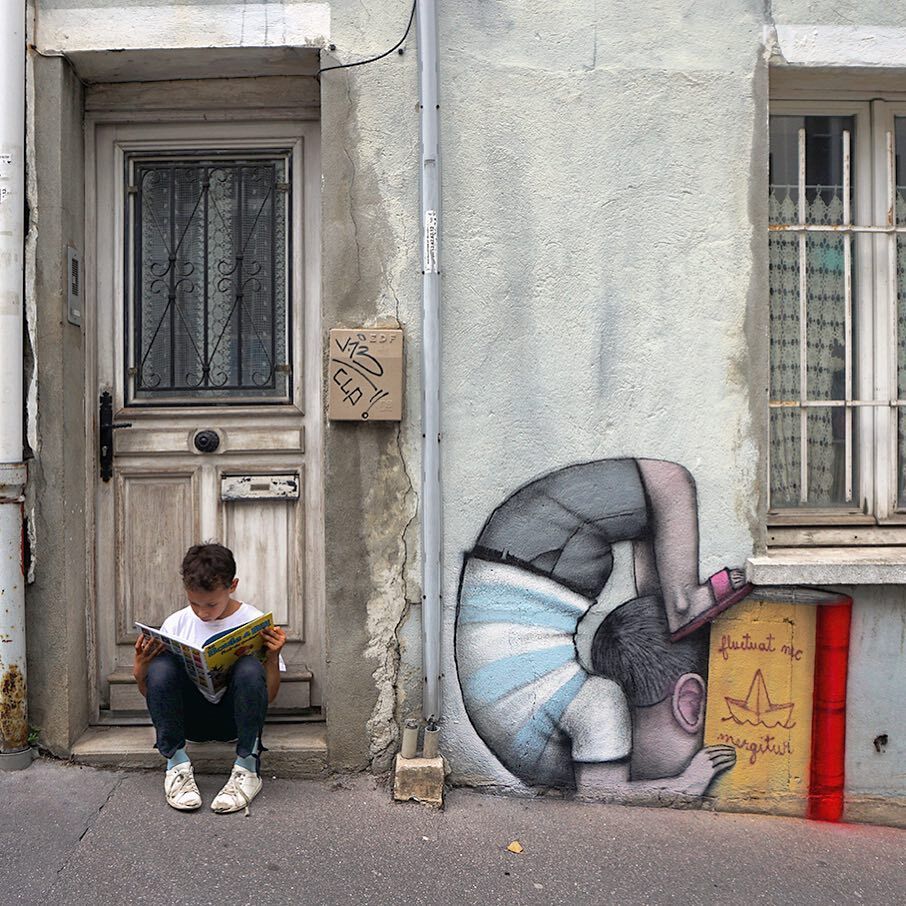
A crack becomes a dog’s body. A pothole gets a mosaic. A missing corner is filled with books. These pieces are not always practical repairs, but they share one simple idea: the city’s flaws can become the artwork.
Some artists patch damage with tiles, plastic bricks, thread, flowers, or plants. Others simply change how we see a sewer grate, a bent fence, or a leaning building. Either way, the flaw becomes the reason to stop and look.
More: Sculptures That Blend With Nature (10 Photos)
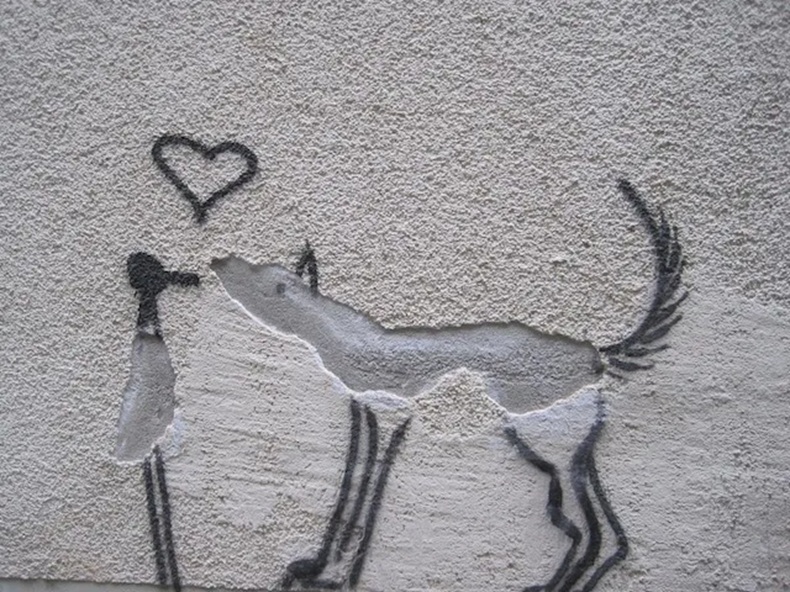
🐶 Love Dogs — Street Art in Leipzig, Germany
The rough patch is not covered up. It becomes the shaggy body of one dog. A few black lines add the second dog, the nuzzle, and the tiny heart above them. The wall does half the work, which is why the piece feels so light.
💡 Why it fits: The Leipzig setting adds a nice layer. The city’s official tourism site describes the former Baumwollspinnerei cotton mill as a major contemporary art center after yarn production ended in 1992, with about 100 artists’ studios and 11 galleries. Leipzig has a strong habit of giving old industrial surfaces a new cultural life; this wall does it in miniature.
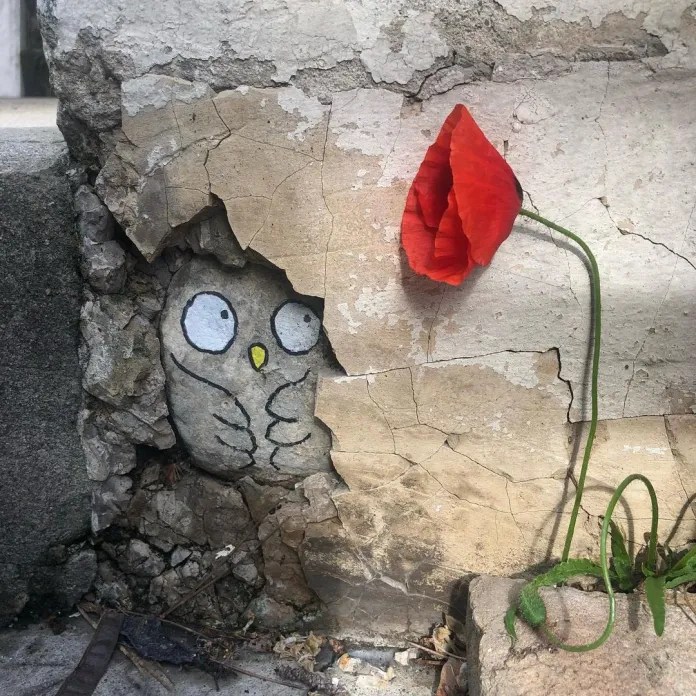
🦉 Owl and Poppy — By CAL in Lyon, France
The broken corner becomes a tiny owl nook. CAL keeps the drawing small, then lets the real red poppy do the bright work. It feels less like a mural and more like a street-side gift you only notice because the wall was damaged first. More by CAL: Street Art by CAL in Lyon, France (4 Photos)
💡 Why it fits: Red poppies are almost too perfect for a wall wound. Kew explains that seeds in the seed bank can often remain dormant for up to 80 years, and that heavily churned soil can stimulate them to germinate. In other words, disturbance can become the reason something blooms.
🔗 Follow CAL on Instagram
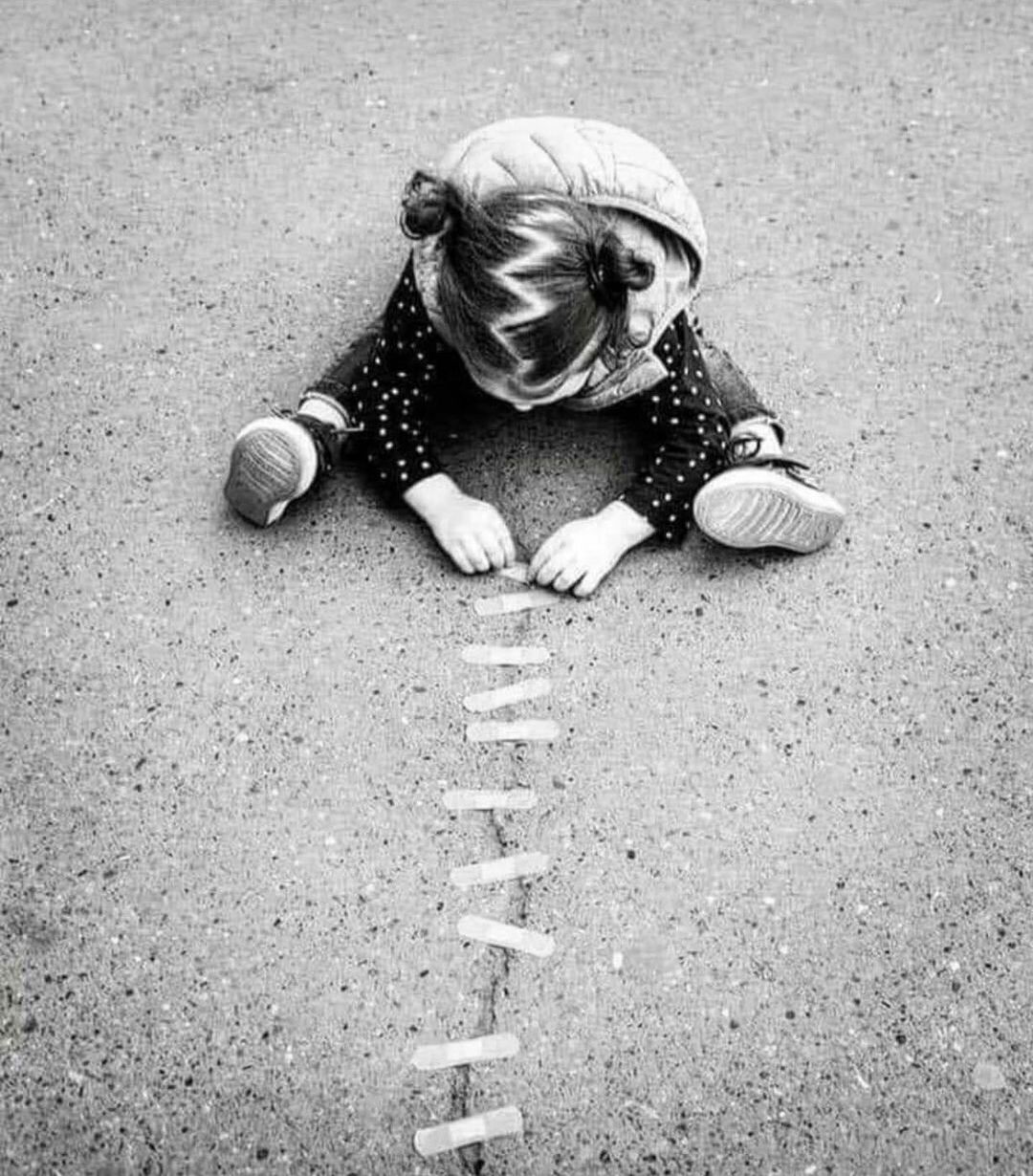
🩹 Girl With Bandages
The street has a scrape. This little girl is patching it with oversized bandages. Not exactly municipal-grade, but very kind.
💡 Why it fits: The real BAND-AID® story also began as a practical fix. According to the brand’s official history, Johnson & Johnson cotton buyer Earle Dickson combined adhesive tape and gauze in 1920 so his wife could bandage herself, and the first store version in 1921 came as a 3-by-18-inch strip that people cut to fit. A small fix became an everyday symbol of care.
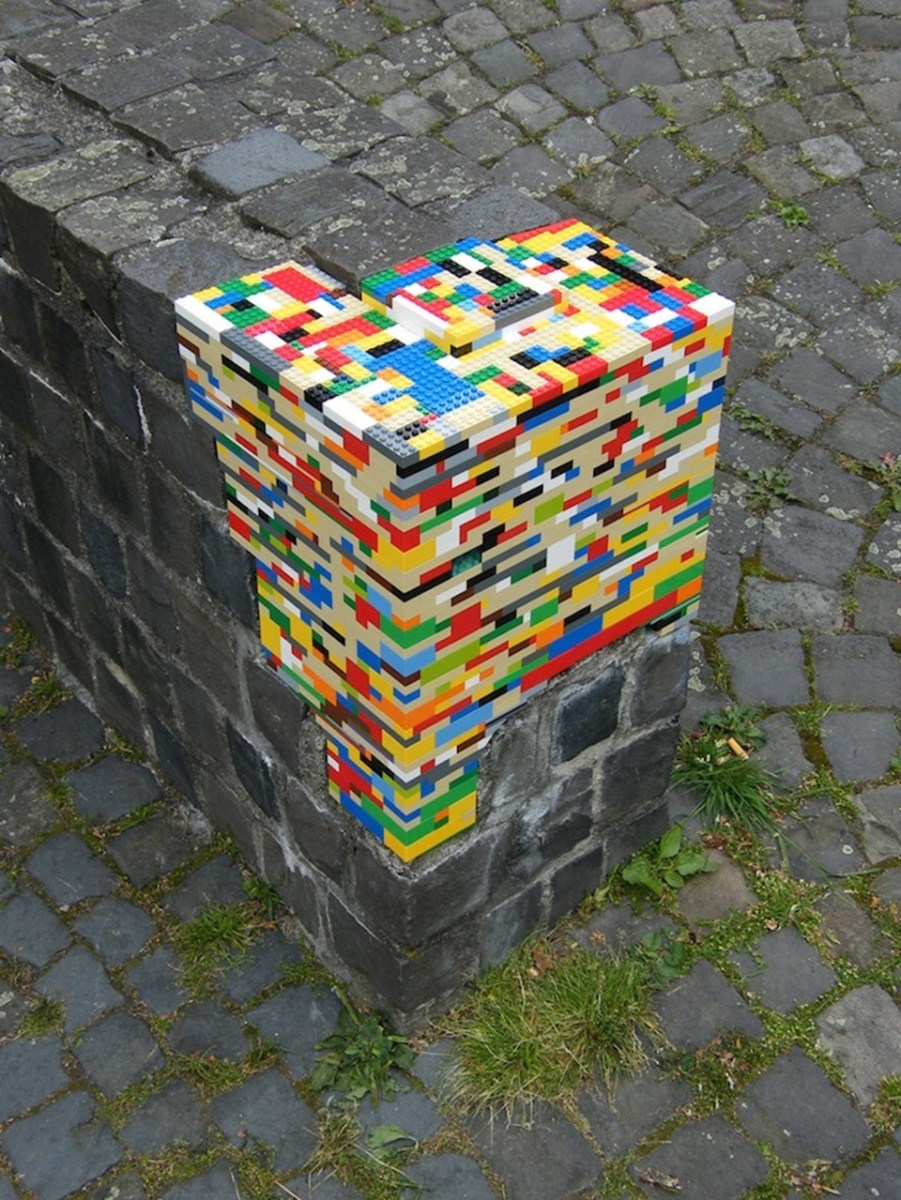
🧱 Dispatchwork — By Jan Vormann
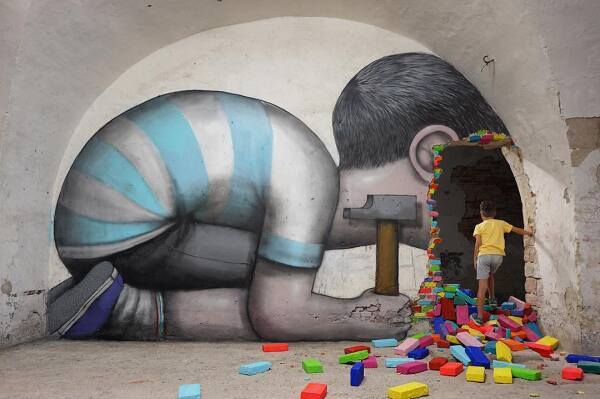
A stone wall usually asks for matching stone. Dispatchwork answers with color instead. The plastic construction bricks sit proudly inside the missing corner, turning the gap into a bright little map of what used to be there. More: What If LEGO Could Repair the World? (12 Photos)
💡 Why it fits: Jan Vormann’s official site lists Dispatchwork as starting in 2007 at Venti Eventi in Bocchignano, Italy, using plastic construction pieces to fill holes in broken walls. The later worldwide network is part of the charm: the idea spreads like a repair recipe anyone can recognize.
🔗 Follow Jan Vormann on Instagram
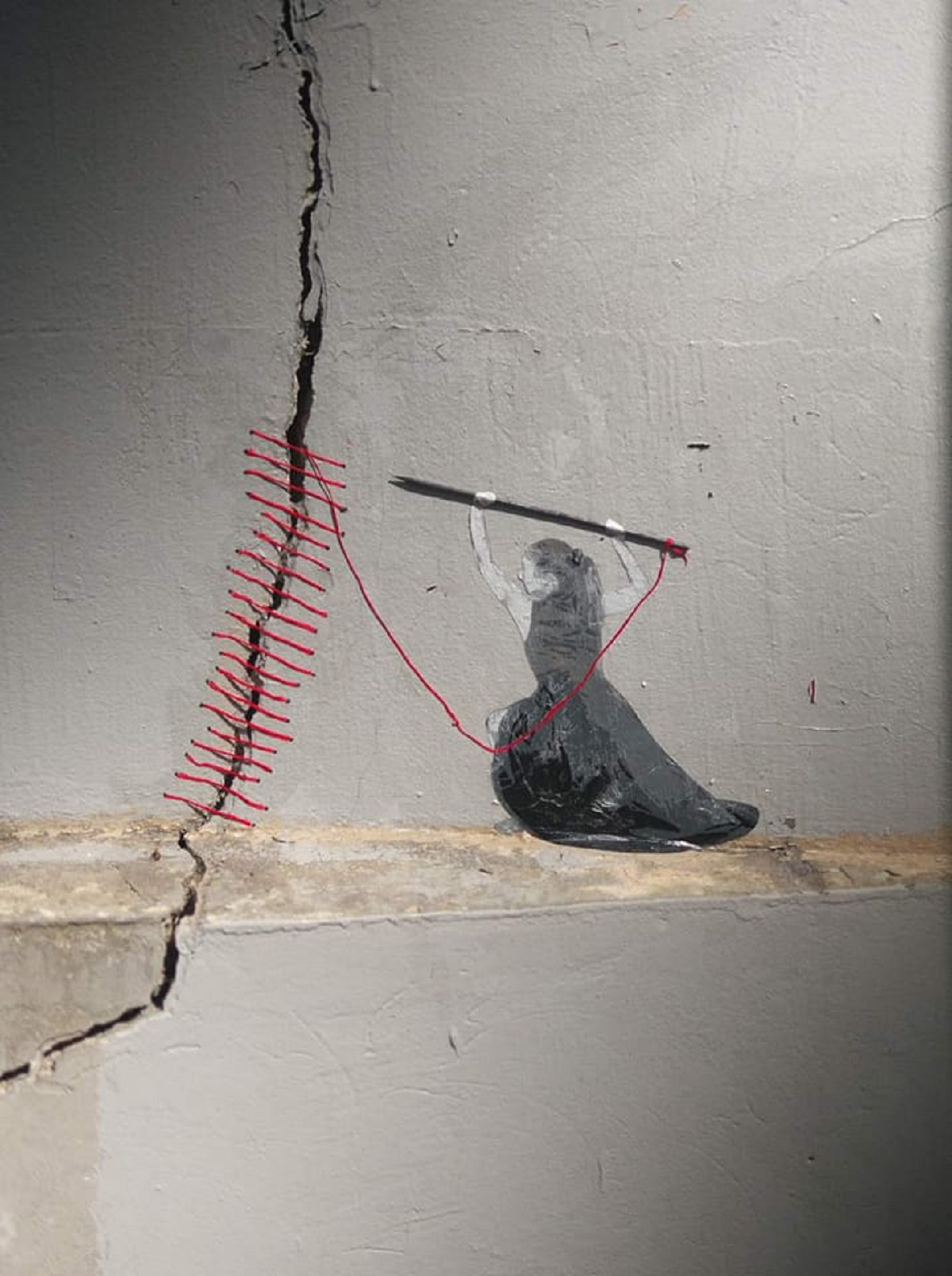
🪡 The Stitch — ENDER on Rue Villiers-de-L’Isle-Adam in Paris, France
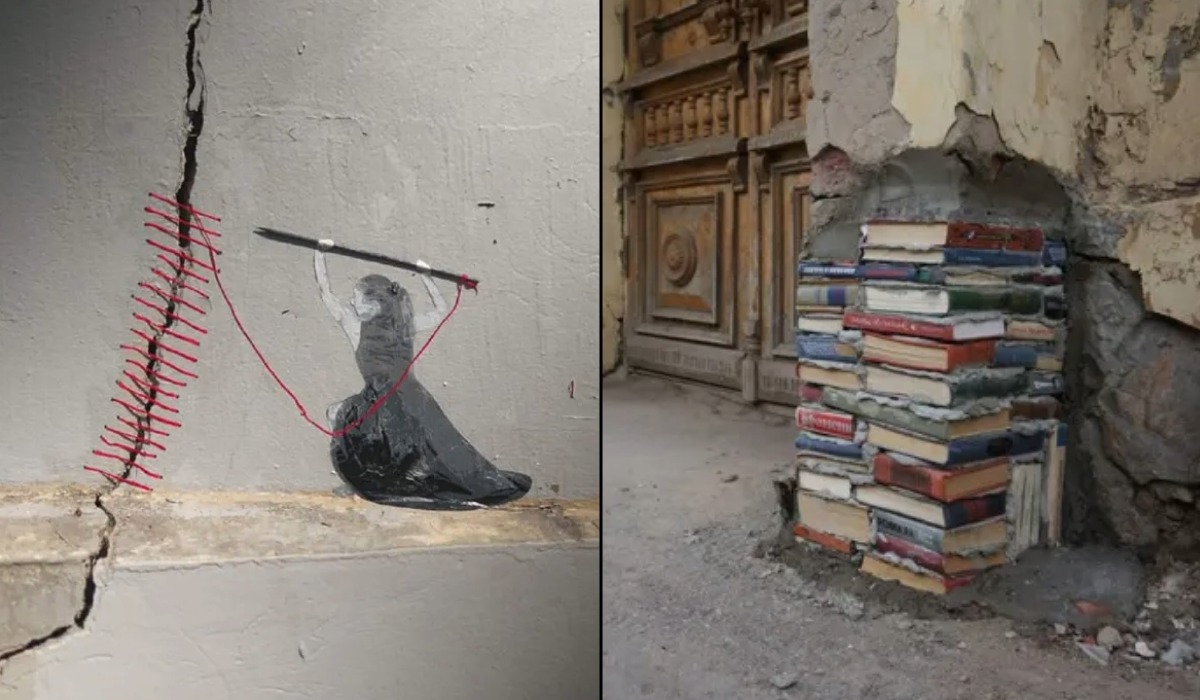
At the foot of a Paris wall, ENDER’s small figure does what a city crew would never do: she sews concrete. The real red thread crosses the crack like a seam, making the damage look fragile, deliberate, and strangely cared for. More: Repair Cracks with Art
💡 Why it fits: ENDER also has a theatre background. I Support Street Art notes that he has worked as a professional actor and often uses paste-ups because his multi-layer stencils would be difficult to spray. That background makes this tiny wall-mender read like a one-scene play.
🔗 Follow ENDER on Instagram
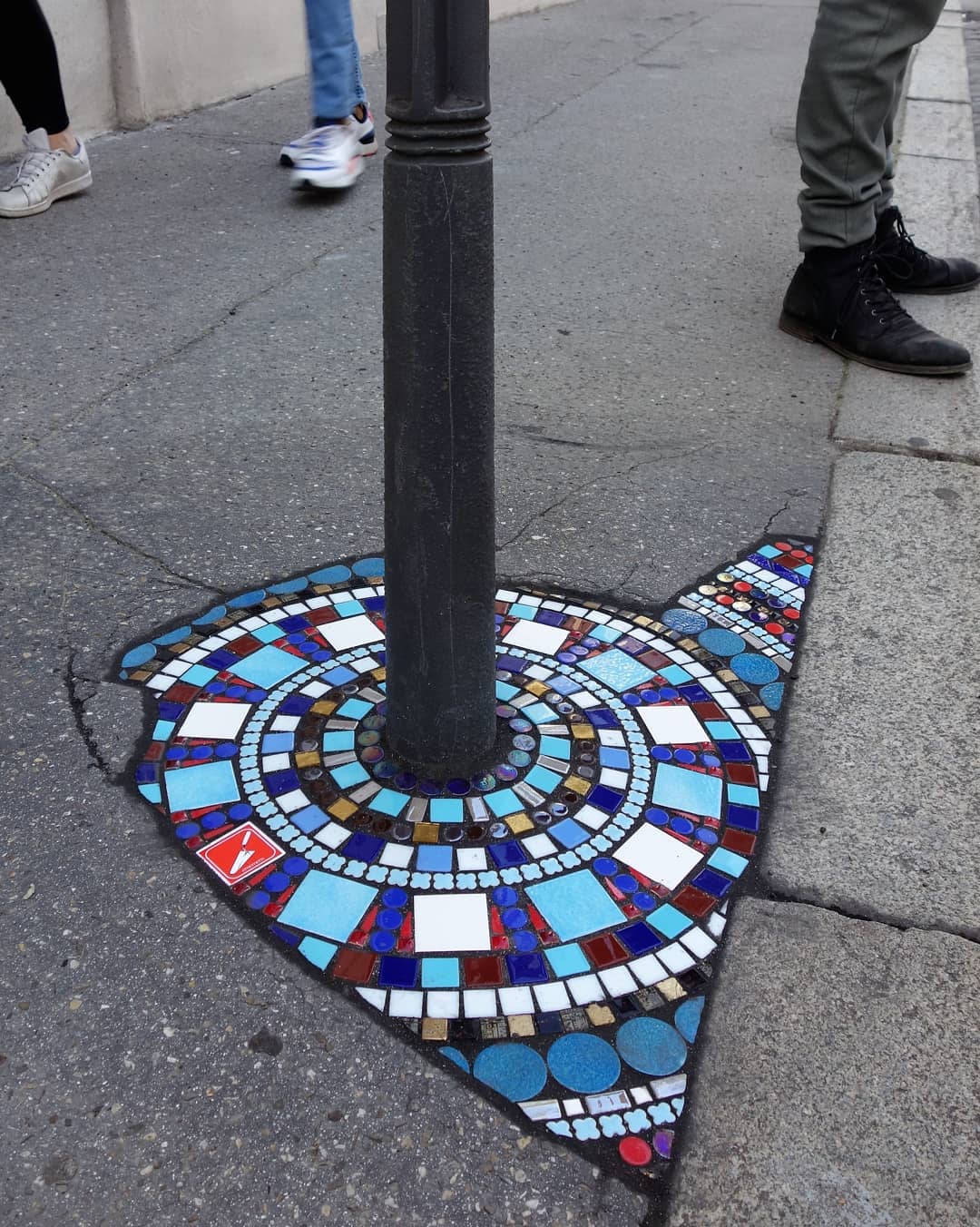
✨ Mosaic Patch — Ememem in Lyon, France
Here, the broken pavement does not disappear. It gets a tiled floor. Ememem’s mosaic sits around the lamppost like a small public rug, turning a bad patch of pavement into a place where your eyes stop for a second. More: Repairing Streets with Artful Mosaics (17 Photos)
💡 Why it fits: Ememem calls this practice “flacking”, from the French “flaque,” meaning puddle. The official text describes it as an art of repairing holes and compares it to kintsugi, the Japanese art of repairing while enhancing the break. The point is not to hide the scar; it is to make the scar worth noticing.
🔗 Follow Ememem on Instagram
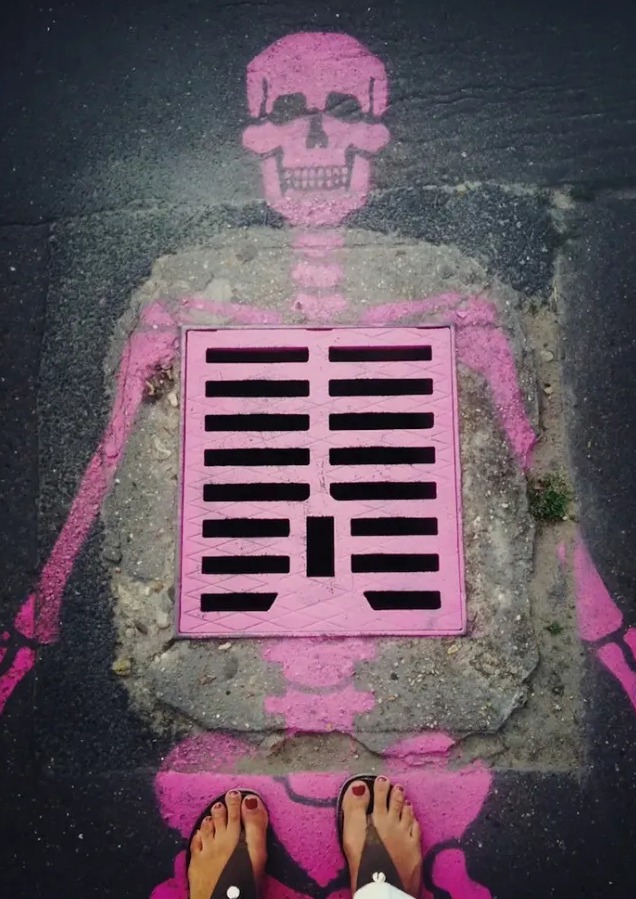
💀 Sewer Skeleton
The sewer grate was already doing half the drawing. The chalk artist used the square grid as a ribcage and built a neon pink skeleton around it. A 2013 Pixabay photo identifies the piece as chalk street art, but it does not name the artist. Nothing has been physically repaired; the fix is visual, turning street hardware into anatomy. More: Fixed It For You (10 Photos)
💡 Why it fits: Chalk art has a much older street life than social media. The Santa Barbara I Madonnari festival page notes that Italian street painting with chalk is believed to have begun in the 16th century, with traveling artists turning streets and public squares into temporary galleries during religious festivals. This skeleton keeps that temporary public-gallery spirit, just with a sewer grate as the starting point.
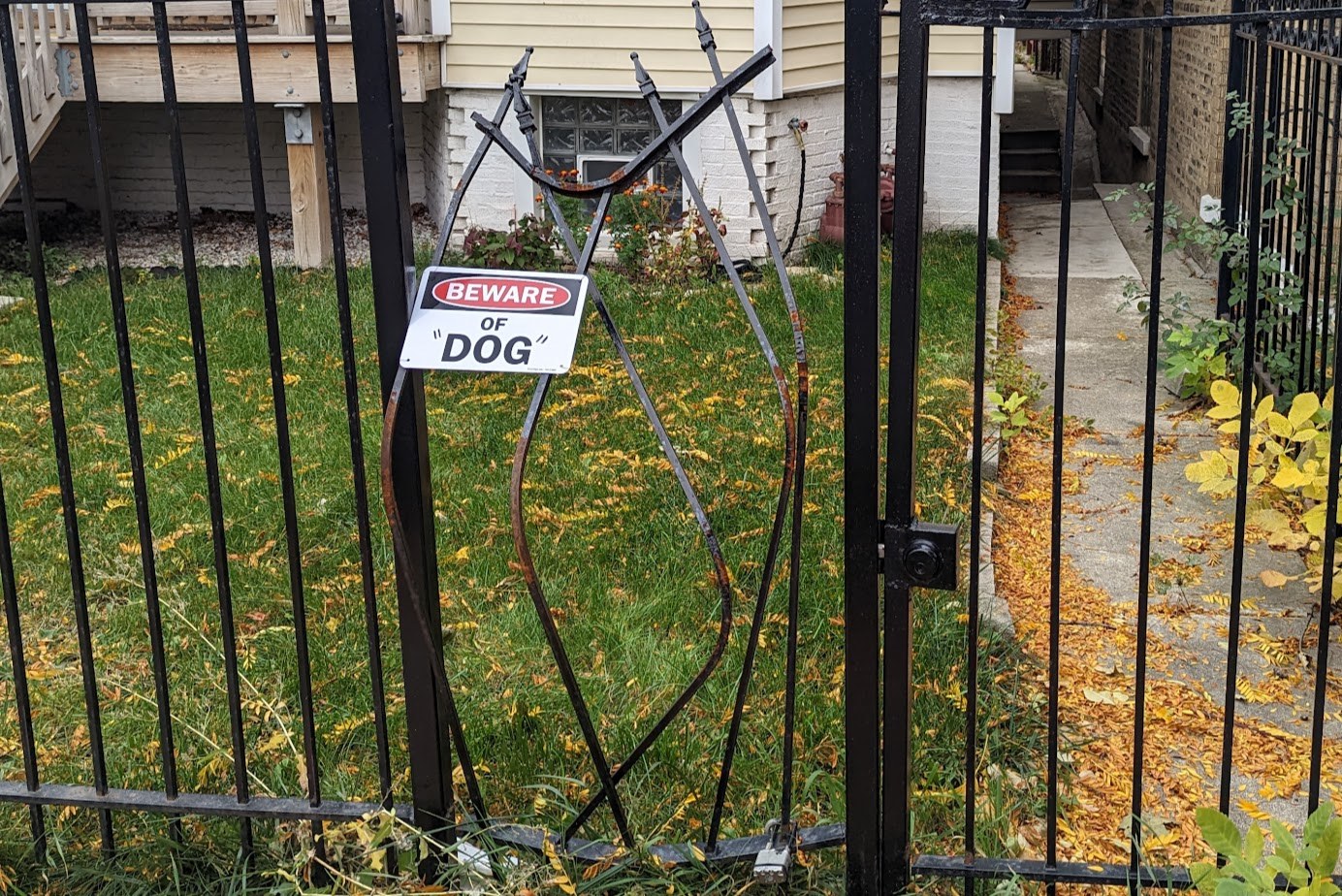
🐕 Bent Fence Dog
The bent bars already suggested a creature forcing its way through. The crooked “Beware of Dog” sign leans into the accident, making the damage read as a joke before any actual repair happened. In the original Reddit post, the poster said a tree had fallen on the fence and they were making the best of it while negotiating the repair.
💡 Why it fits: The trick is close to a readymade-style joke: an ordinary manufactured object gets reframed instead of replaced. This fence is not a museum object, of course. The humor comes from the same switch: context turns damage into character.
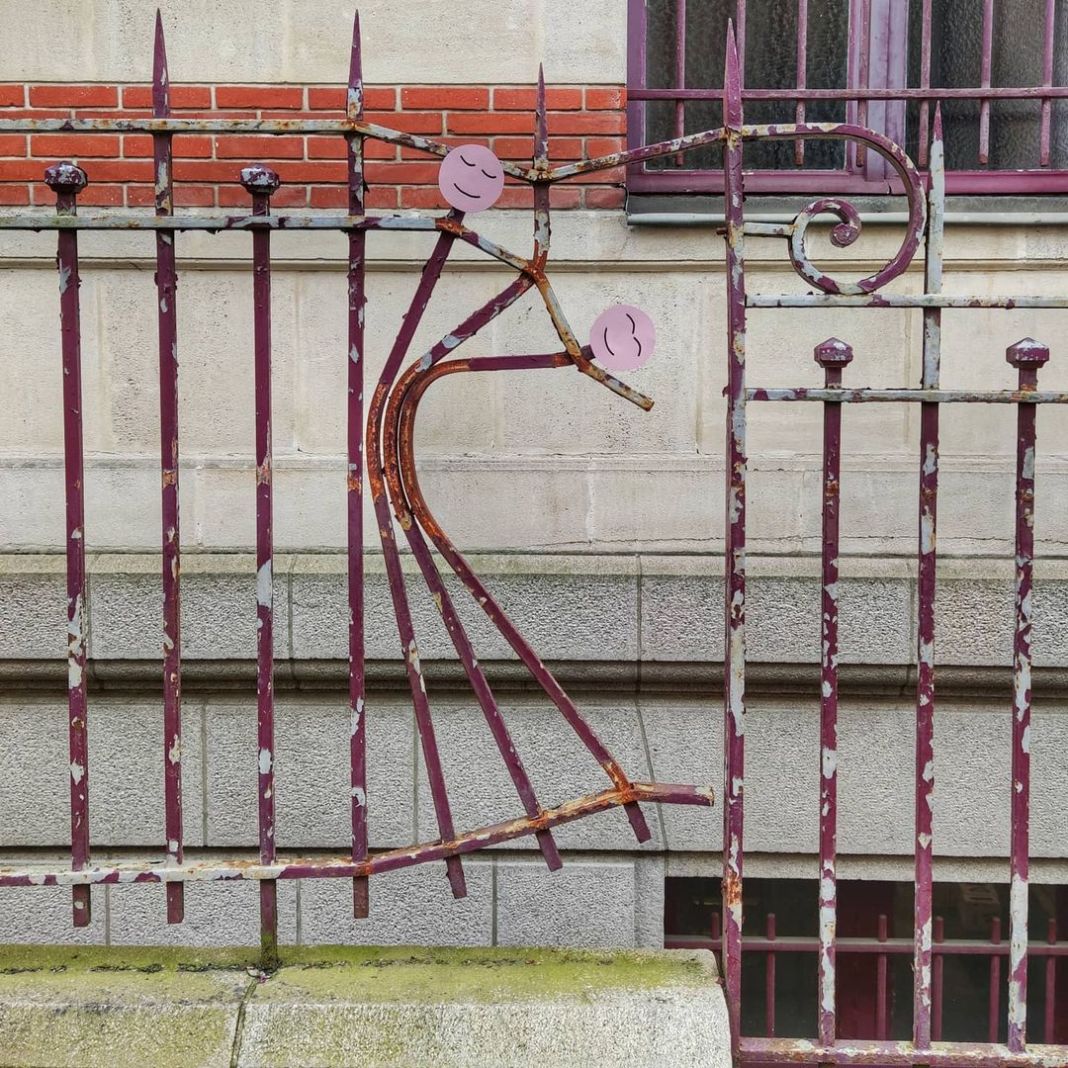
💃 Dancing Railing — Street Art by Oakoak
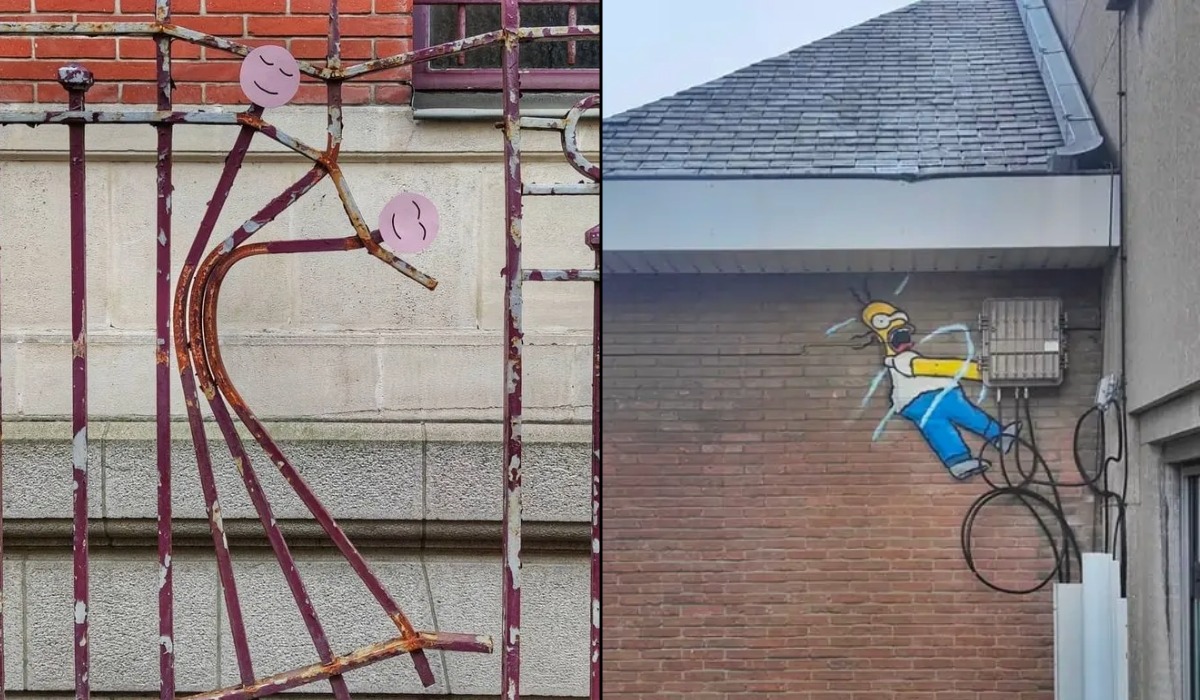
These railing bars are not being “fixed.” They are being cast in a tiny dance. Oakoak adds faces and small painted details, and the bent metal suddenly looks like two bodies caught mid-move. It is a tiny intervention, but it changes the whole railing. More: From Homer Simpson to Obelix: Oakoak’s Genius Street Art! (10 Photos)
💡 Why it fits: Oakoak’s official street-art portfolio shows how often he builds small visual jokes from the street itself. In a Guardian feature, he says he likes the surprise of finding street art anywhere. This bent-railing dance is exactly that kind of surprise: easy to miss, hard not to smile at once you see it.
🔗 Follow Oakoak on Instagram
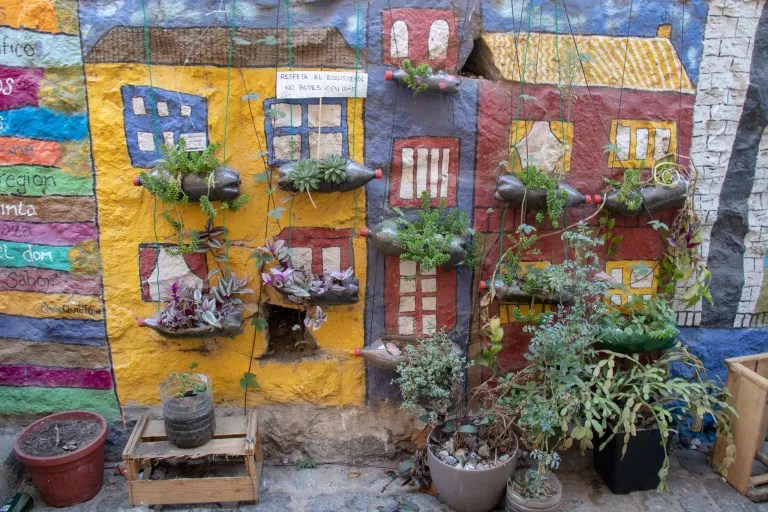
🪴 Upcycled Garden — Valparaíso, Chile
This wall was not only painted; it was given something to grow. Recycled bottles become hanging planters, so the mural moves from color to care: a small vertical garden attached to a public surface. More: Fixed It For You (10 Photos)
💡 Why it fits: The city context matters here. Chile’s National Cultural Heritage Service says Valparaíso’s historic quarter became a World Heritage Site in 2003 and is shaped by steep hills, alleyways, stairways, and sea-facing promenades rather than a simple flat grid. A bottle garden feels very Valparaíso: improvised, vertical, colorful, and public.
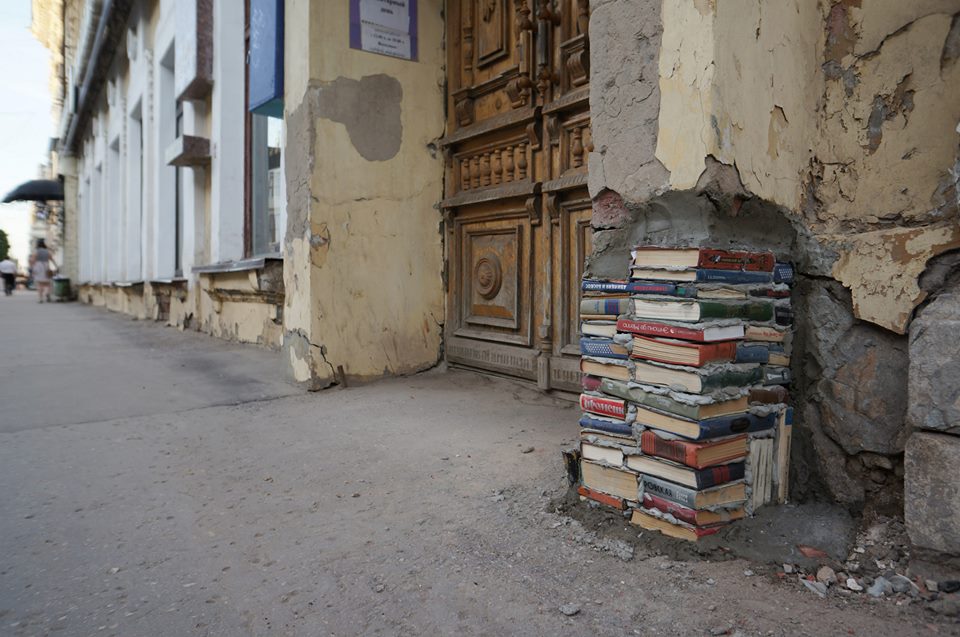
📚 Book Wall — Andrey Syaylev at Samara Public Library, Samara, Russia
A broken library corner becomes a stack of books, which is so simple it almost explains itself. Local Samara coverage places it at the Samara Public Library on Kuibyshev Street, 95, and a Volga News interview with Syaylev connects the joke directly to the building: a library is a house where books live. The repair matches the building’s meaning, not its material.
💡 Why it fits: Syaylev’s own page lists the piece as a 2013 site-specific installation made with books and cement, and says it became a network meme before the facade was later restored. The “repair” therefore had three lives: street intervention, internet image, and real renovation.
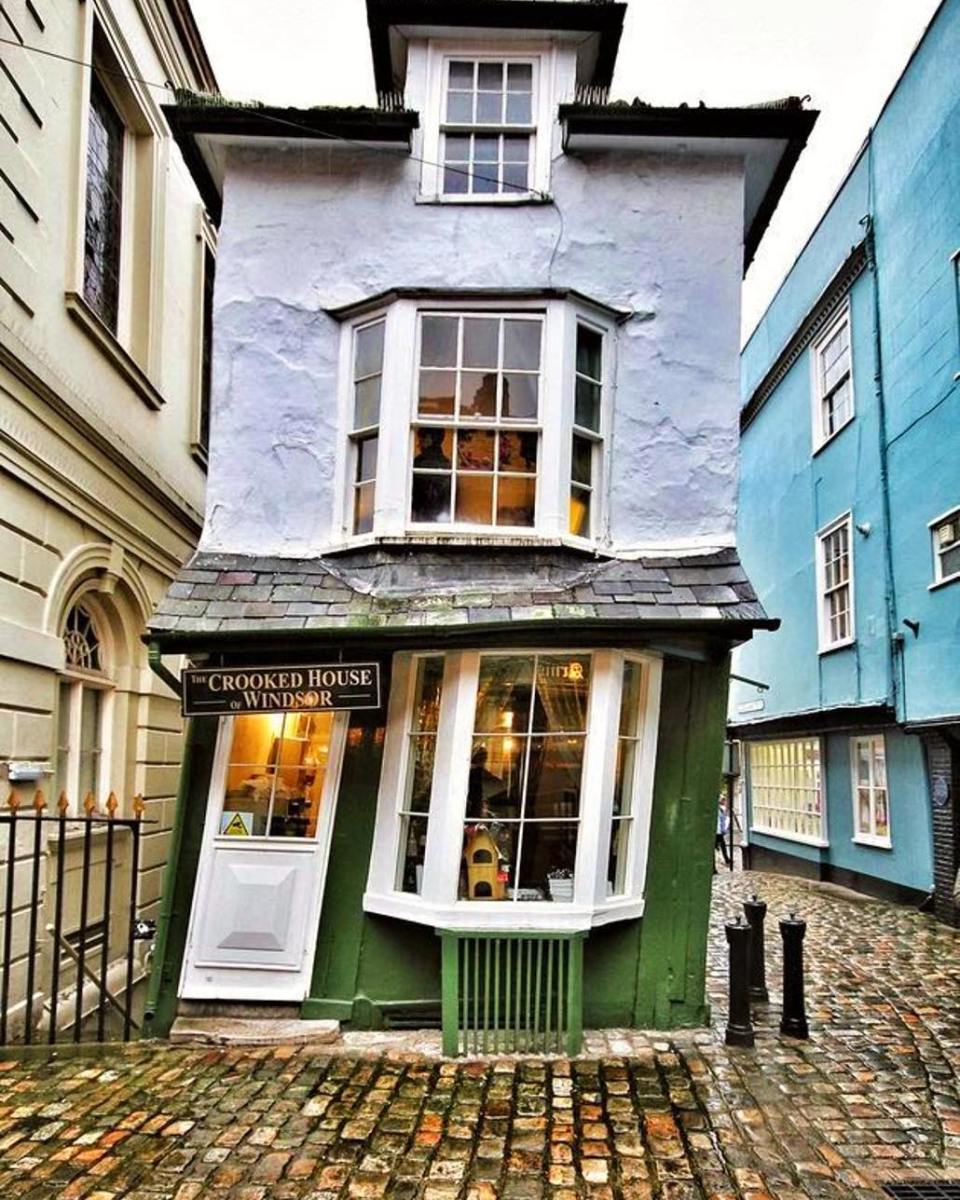
🏠 The Crooked House of Windsor — Windsor, England
This one stretches the theme, but in a useful way. Officially listed as Market Cross House, this Grade II building is dated 1687. Historic England describes the small timber-framed building as being on a “considerable cant.” It is not street art and not a repair intervention. The point is that the lean has become part of its public identity: the flaw is what people remember.
💡 Why it fits: Historic England’s official list entry says Market Cross House was first listed on 4 January 1950 and is protected under the Planning (Listed Buildings and Conservation Areas) Act 1990 as amended for special architectural or historic interest. If the other pieces show artists responding to damage, this one shows a city keeping an oddity visible.
Which one is your favorite?
Sculptures That Blend With Nature (10 Photos)
Public art can make a plain place worth stopping for.
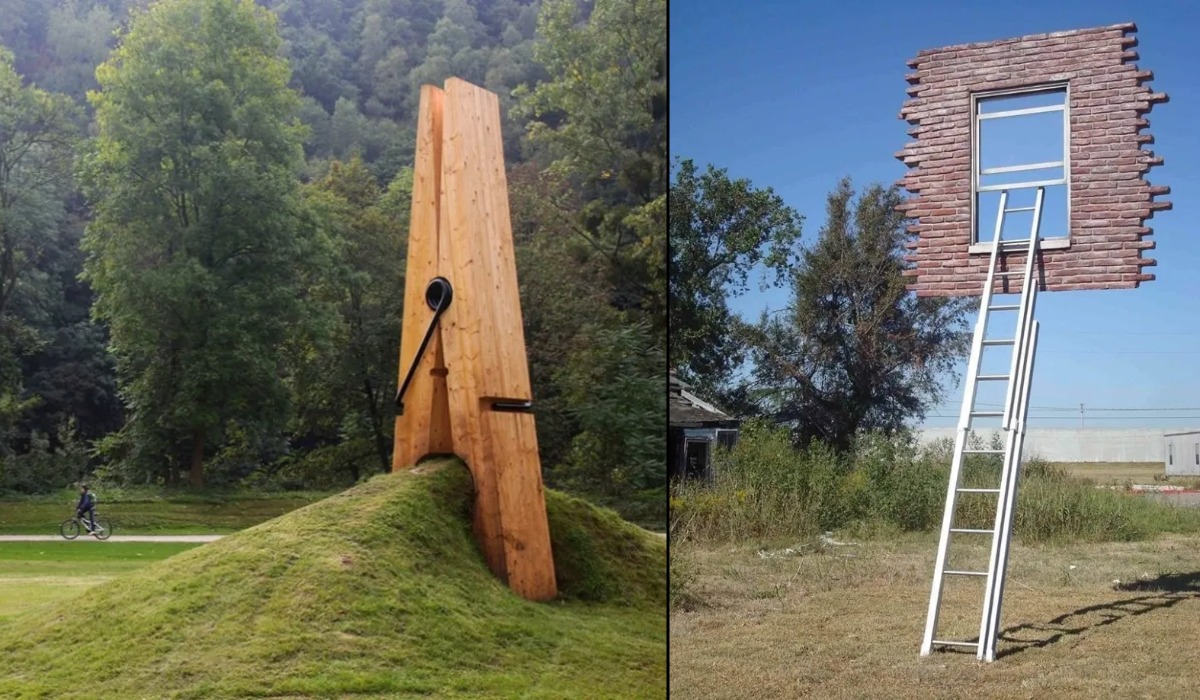
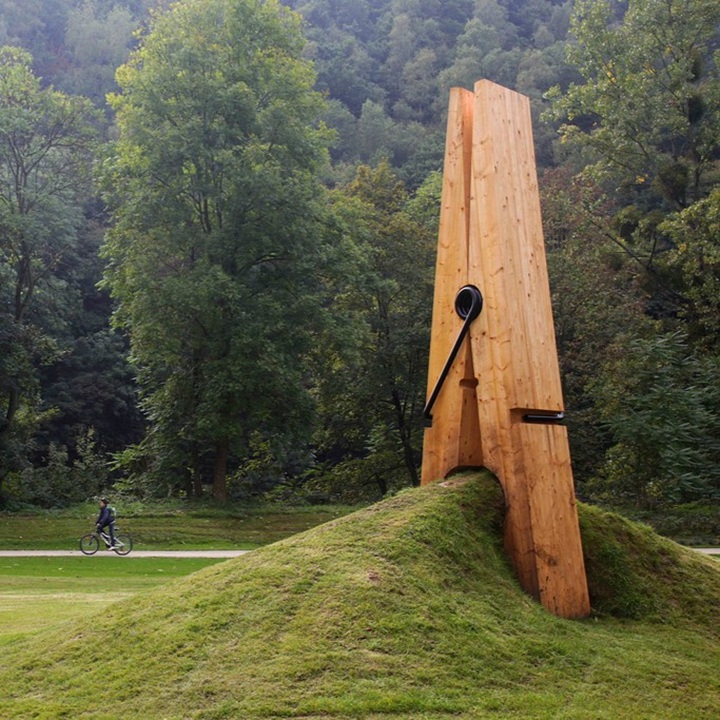
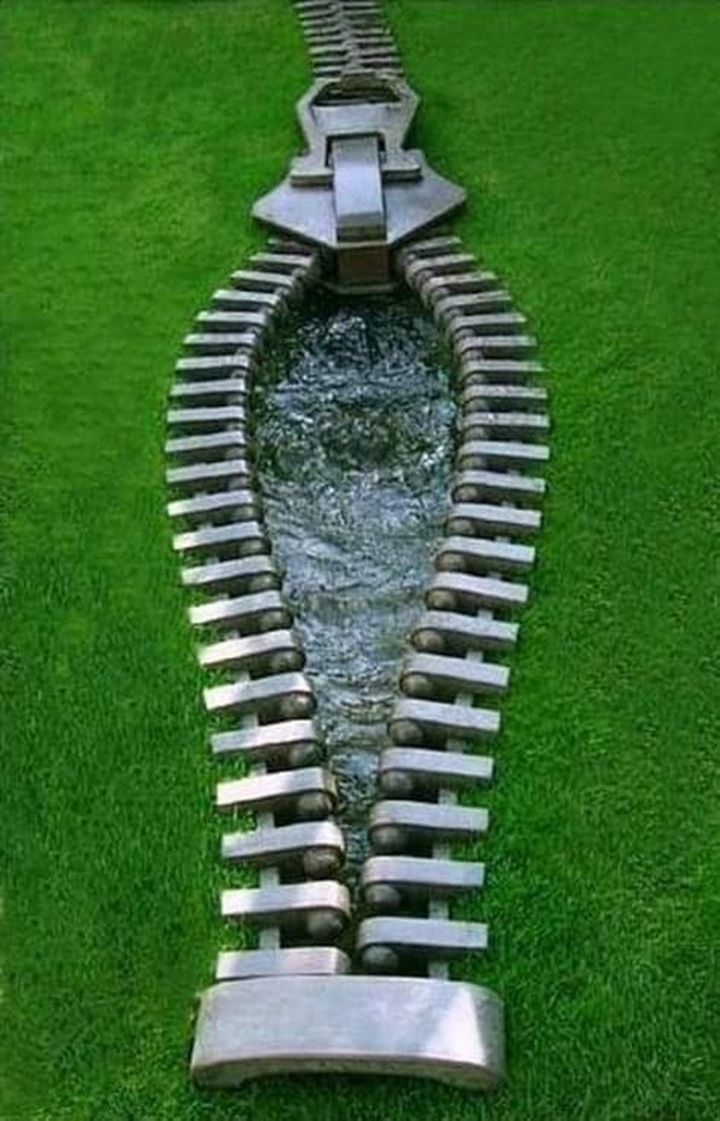
These sculptures use grass, trees, water, sand, and open space as part of the work.Here are 10 sculptures from around the world: a giant clothespin pinching the ground, a zipper opening a lawn, and a bench waiting in a slingshot. Small everyday ideas, made very large.
More: 30 Sculptures You (Probably) Didn’t Know Existed
🪵 Skin 2 — By Mehmet Ali Uysal, originally in Chaudfontaine Park, Belgium 🇧🇪
Made for Parc Hauster in Chaudfontaine, near Liège, Belgium, Skin 2 looks like a wooden clothespin pinching the ground. Turkish artist Mehmet Ali Uysal turned a clothespin into a sculpture so large that the lawn becomes part of the work.💡 Nerd Fact: The original Chaudfontaine installation is no longer a regular park stop: Atlas Obscura now marks the site as permanently closed and notes that the sculpture was no longer in the park in its April 2022 update. The work still appears in gallery records: Pi Artworks lists Skin 2 as a 2010 sculpture measuring 700 × 800 cm, courtesy of the municipality of Liège.
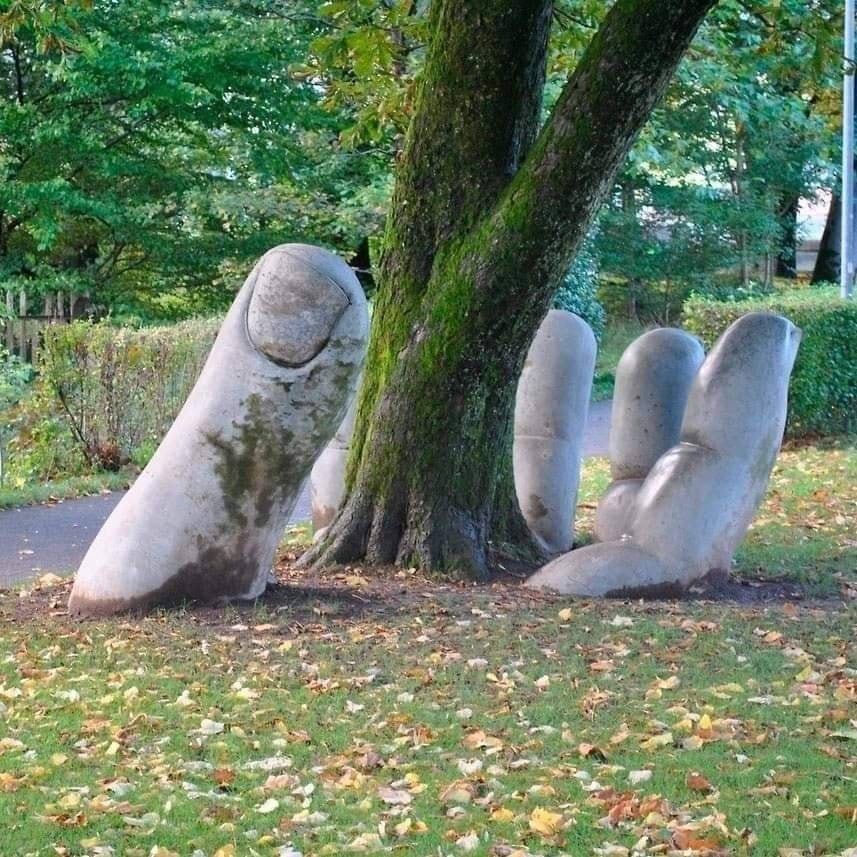
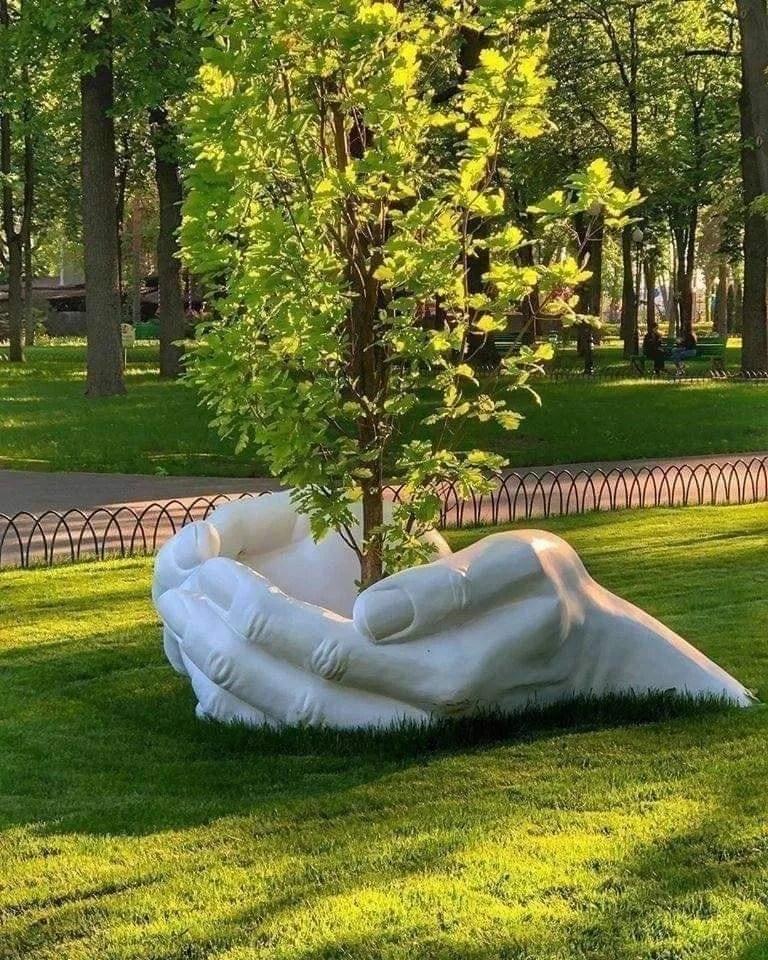
🤲 HAND and PARK TREE (The Caring Hand) — By Eva Oertli and Beat Huber in Glarus, Switzerland 🇨🇭
In the Volksgarten in Glarus, Switzerland, the work known as The Caring Hand rises around a living tree. Beat Huber documents the installation as HAND and PARK TREE, realized with Eva Oertli. The oversized concrete fingers make the tree look held and protected.💡 Nerd Fact: Beat Huber says the idea began in 1990 as an art-in-architecture proposal for a new agricultural school, but it was shelved because there was not enough space or money. When it was finally made for Skulptura 04 in 2004, it was planned to last only four months. Public pressure changed that: private donors raised CHF 43,700, and Glarus received the hand as a gift from the public.
About and more photos: The Caring Hand – Sculpture in Glarus, Switzerland
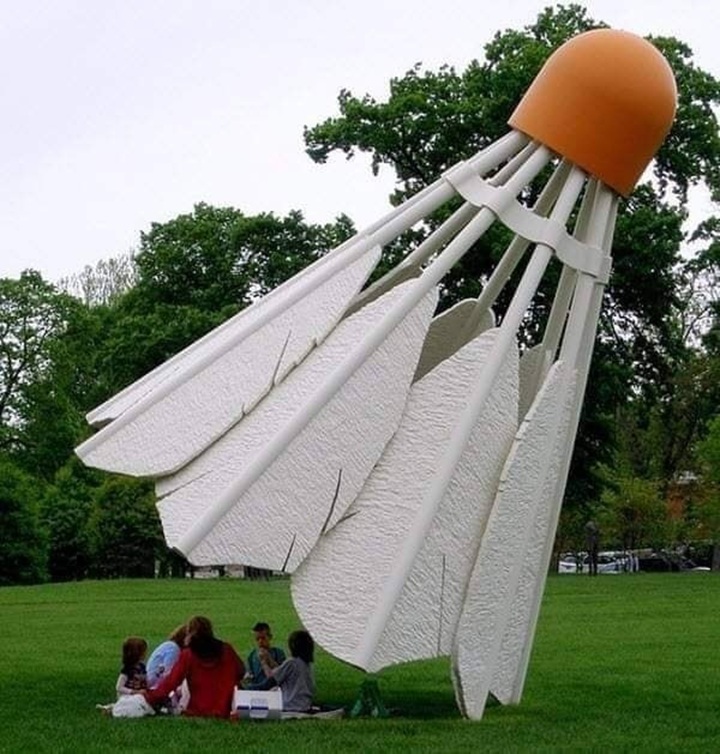
🏸 Shuttlecocks — By Claes Oldenburg and Coosje van Bruggen in Kansas City, Missouri, USA 🇺🇸
In the Donald J. Hall Sculpture Park at The Nelson-Atkins Museum of Art in Kansas City, Missouri, giant badminton birdies sit in the grass. The work, called Shuttlecocks, was created by Claes Oldenburg and Coosje van Bruggen. It looks like a huge game stopped mid-rally and nobody came back to clean it up. The museum lists each shuttlecock as nearly 18 feet tall, about 16 feet across, and 5,500 pounds.💡 Nerd Fact: Oldenburg and van Bruggen’s idea was architectural, not just oversized. The Nelson-Atkins says they imagined the museum building as the badminton net and the lawn as the playing field, then placed four shuttlecocks as if a rally had frozen on both sides of the “net.”
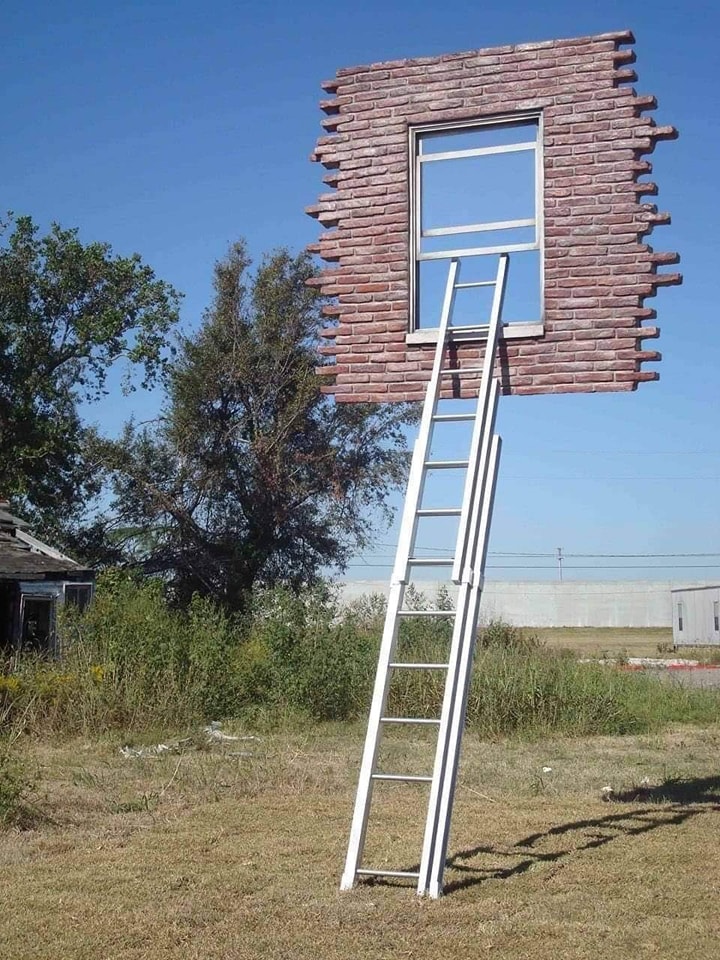
🪟 Window with Ladder – Too Late for Help — By Leandro Erlich in New Orleans, Louisiana, USA 🇺🇸
Leandro Erlich’s Window with Ladder – Too Late for Help shows a white ladder leading to a brick wall with an open window. The wall appears to float above the field with no house attached. The work is now in the Sydney and Walda Besthoff Sculpture Garden at the New Orleans Museum of Art.💡 Nerd Fact: NOMA lists the work’s hidden support system as a steel underground structure, but the context is more serious than the engineering. It was first installed in 2008 in a vacant lot in New Orleans’ Lower Ninth Ward for Prospect.1, in an area devastated by Hurricane Katrina.
🌳 Give — By Lorenzo Quinn, now in Pietrasanta, Italy 🇮🇹
Give by Italian artist Lorenzo Quinn shows two giant hands holding an tree. The hands sit low in the grass, making the tree look newly planted and protected.💡 Nerd Fact: Halcyon Gallery described Give (this time a olive tree) as a gift from Quinn and Halcyon Gallery to Pietrasanta, first unveiled in Florence’s Uffizi Gardens in 2020. Quinn’s biography says it later stood outside Palermo Cathedral before being permanently installed in Pietrasanta’s International Park of Contemporary Sculpture.
More by Lorenzo Quinn: Support – Message About Climate Change
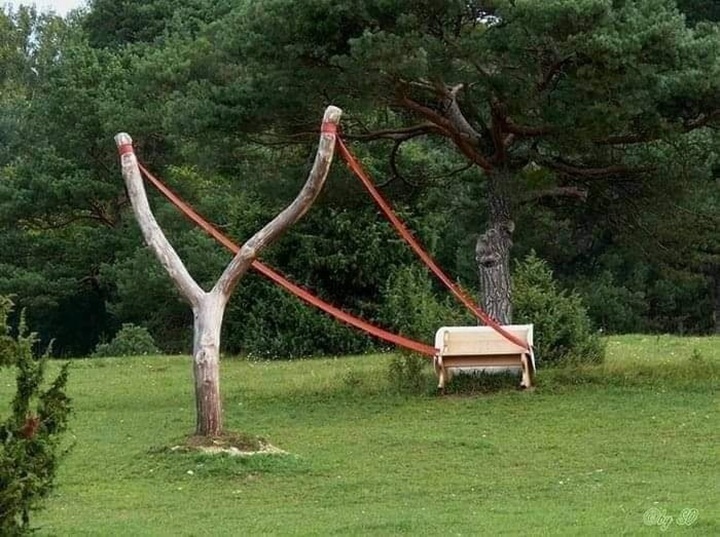
🚀 Schleudersitz — By Cornelia Konrads, made for Neustadt an der Donau, Germany 🇩🇪
German artist Cornelia Konrads built Schleudersitz with a wooden bench, rubber, steel cable, and the trees on site. It looks ready to launch across the grass. Sitting there might feel like trusting the artist a little too much.💡 Nerd Fact: The German title Schleudersitz means “ejection seat,” and the location made the joke sharper. Sculpture Network records the 2010 work as part of the Flying Objects exhibition on a former vineyard, now a leisure park, overlooking the Danube Valley.
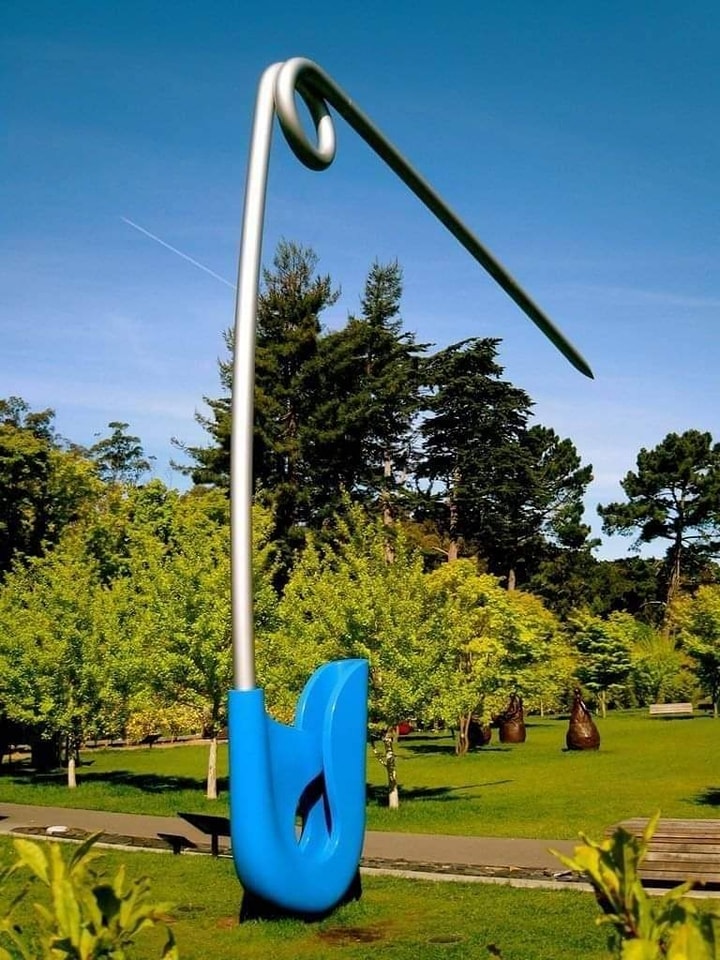
🧷 Corridor Pin, Blue — By Claes Oldenburg and Coosje van Bruggen in San Francisco, USA 🇺🇸
In the Barbro Osher Sculpture Garden at the de Young Museum in San Francisco, Corridor Pin, Blue stands over the garden like a sewing tool left in the wrong scale. Created by Claes Oldenburg and Coosje van Bruggen, the blue base and long silver pin make it hard to miss.💡 Nerd Fact: This giant safety pin is not alone. NOMA’s collection lists another Corridor Pin, Blue as edition 3/3, while the Nasher Museum identifies an artist’s proof with the same 255 × 256 × 16 inch dimensions. The “tiny” domestic object has siblings in more than one city.
🤐 Zip — By Mark Richard Hall in the Hamptons, New York, USA 🇺🇸
This grass-and-water zipper is best identified as Zip, a private Hamptons commission by British sculptor Mark Richard Hall. The oversized metal zipper opens the lawn into a narrow water feature, making the garden look unzipped.💡 Nerd Fact: This image is an easy caption trap. It often circulates online as a Yasuhiro Suzuki sculpture in Tokyo, but stronger sources point to Hall. Mark Richard Hall’s own studio lists a commission called Zip in the Hamptons, and Architectural Digest identifies a stainless-steel zipper sculpture by Hall embedded in the grass at a Southampton home. Suzuki’s verified zipper work is the boat-based Zip-Fastener Ship, which uses a wake to “unzip” water.
🌸 Hallow — By Daniel Popper, formerly at The Morton Arboretum in Lisle, Illinois, USA 🇺🇸
Daniel Popper’s Hallow is a monumental figure of a woman opening her chest. The hollow space inside is framed by hands, carved hair, and trees in bloom around the work. It was installed near Meadow Lake at The Morton Arboretum in Lisle, Illinois.💡 Nerd Fact: Hallow belonged to Popper’s Human+Nature exhibition, which the Morton Arboretum described as his first major U.S. exhibition and largest anywhere at the time. The Arboretum now notes that the exhibition has concluded, but Popper’s own text for the work connects Hallow to grief, self-expression, growth, and healing rather than a simple “nature goddess” reading.
More photos: 5 Photos of Sculpture “Hallow” By Daniel Popper in Lisle, Illinois
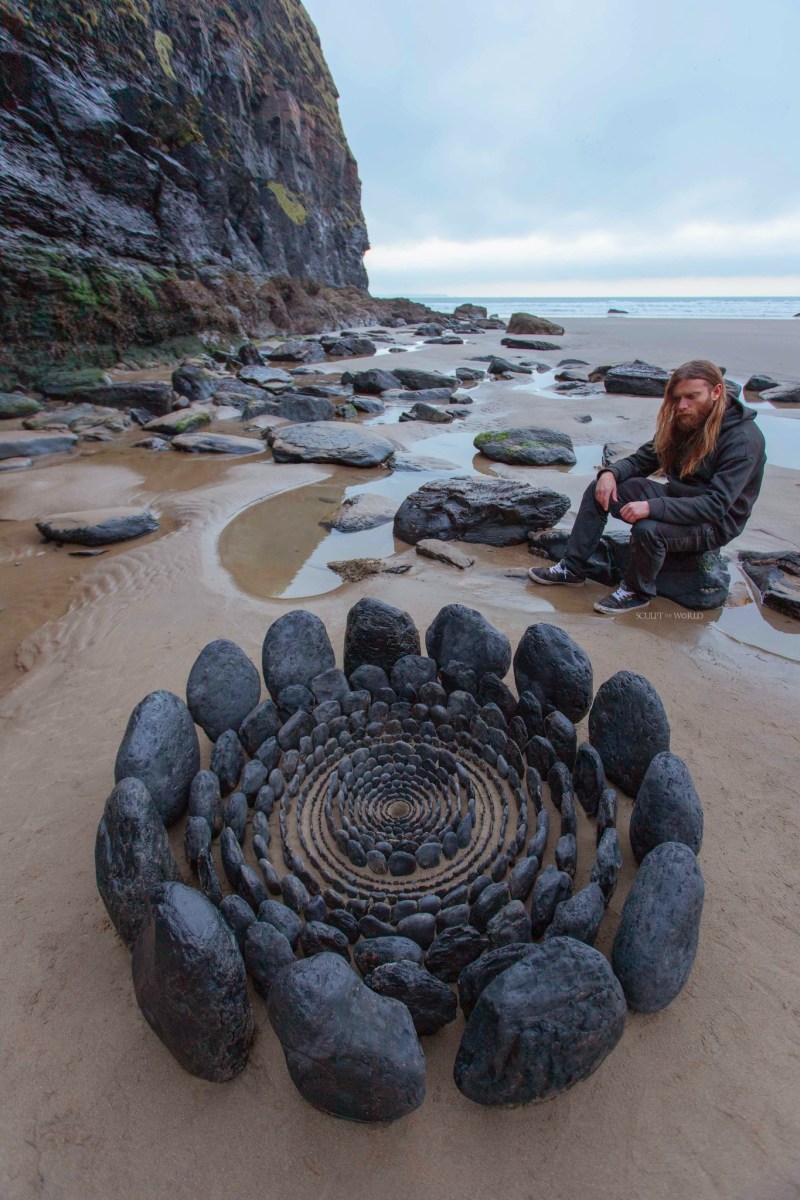
🌀 Augere — By Jon Foreman, created at Druidston, Wales, UK 🇬🇧
Jon Foreman arranged natural stones in tight circles on the sand at Druidston, Wales. In a 2025 post, Foreman identified the work as Augere. The piece changes as the tide moves in. More: Amazing Sculptures by Jon Foreman! (12 Photos)💡 Nerd Fact: Foreman’s land art is not built to survive the coast. In an interview, he says the tide washes a work back to the tide line and he returns the next day to “an empty canvas”. So with pieces like Augere, disappearance is not a failure. It is part of the schedule.
Which one is your favorite?
Land Artist Creates Ephemeral Stone Art on the Shores of the U.K.
Land artist Jon Foreman creates stone art on the shores of the U.K. His rock arrangements are tributes to the beaches and waves for which they reside.Sara Barnes (My Modern Met)
Saint Étienne's urban doodler with a sense of humour
Street artist Oak Oak adds a comic twist to seemingly mundane city landscapesGuardian staff reporter (The Guardian)
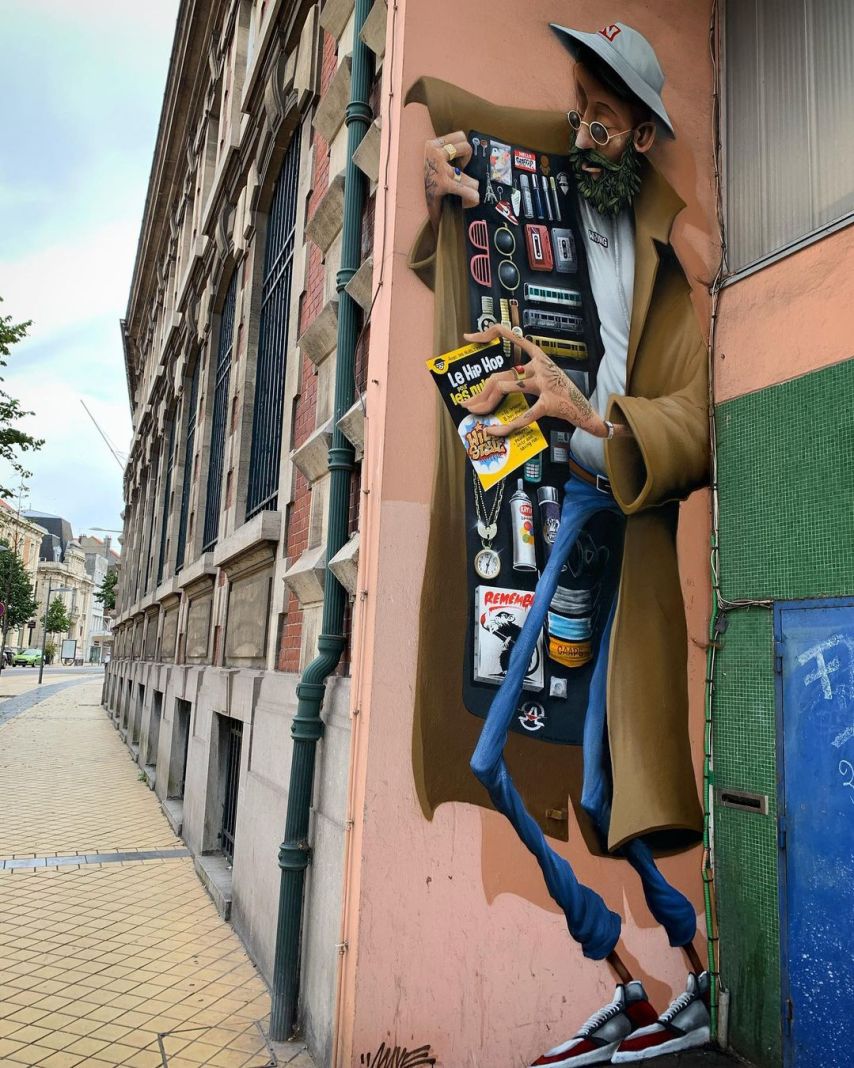
Street selling by MAYE in Calais, France
Content warning: Street artist MAYE By MAYE at jam_graffiti_calais in Calais, France. View this post on Instagram
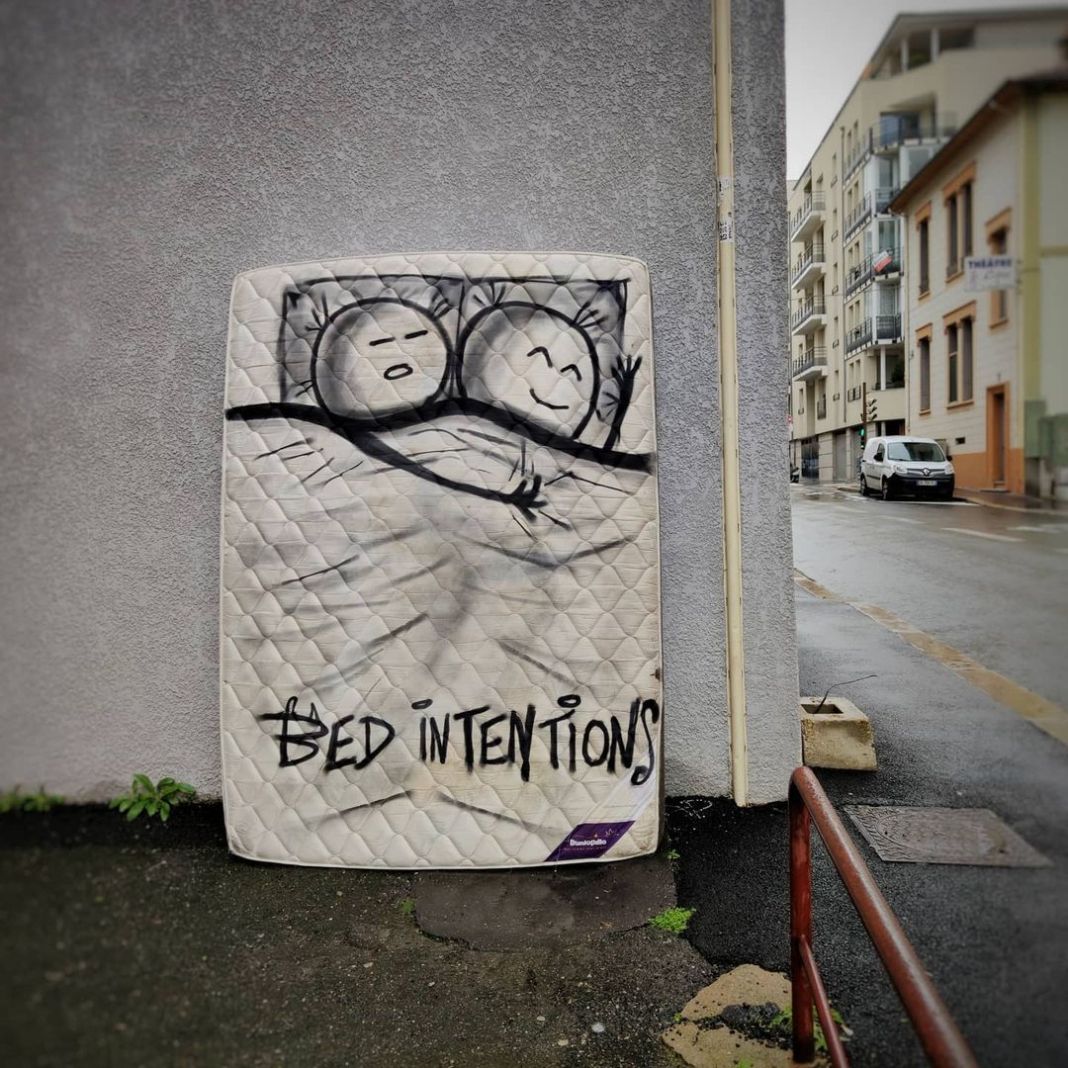
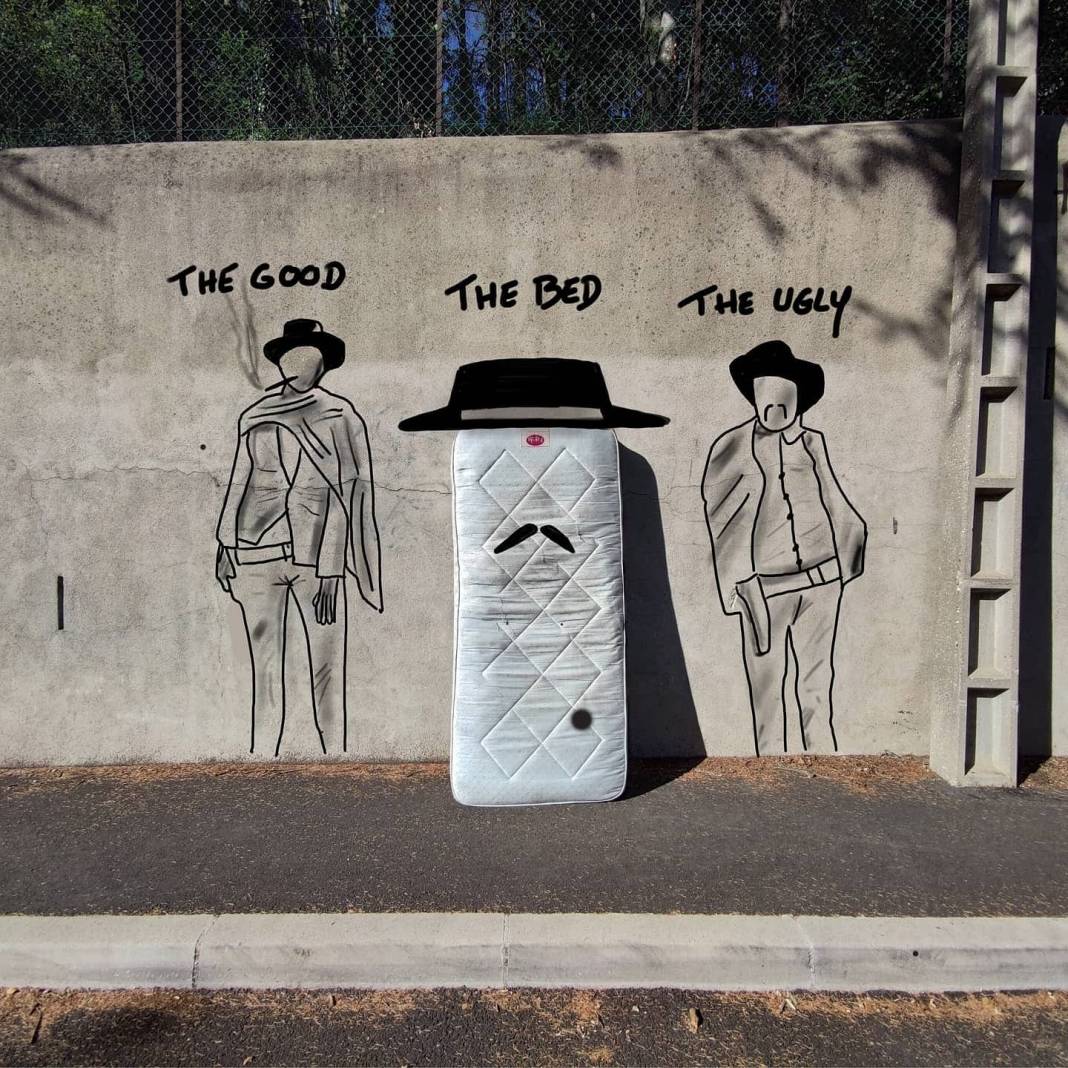
Bed intentions
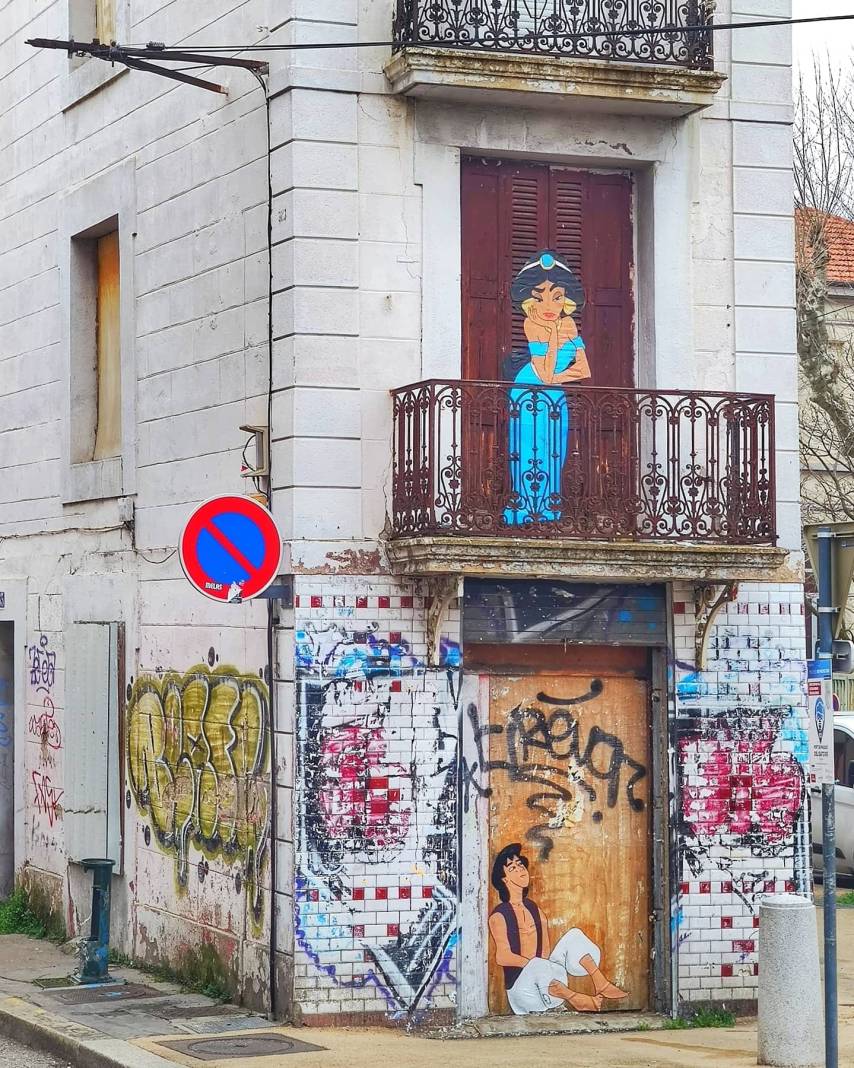
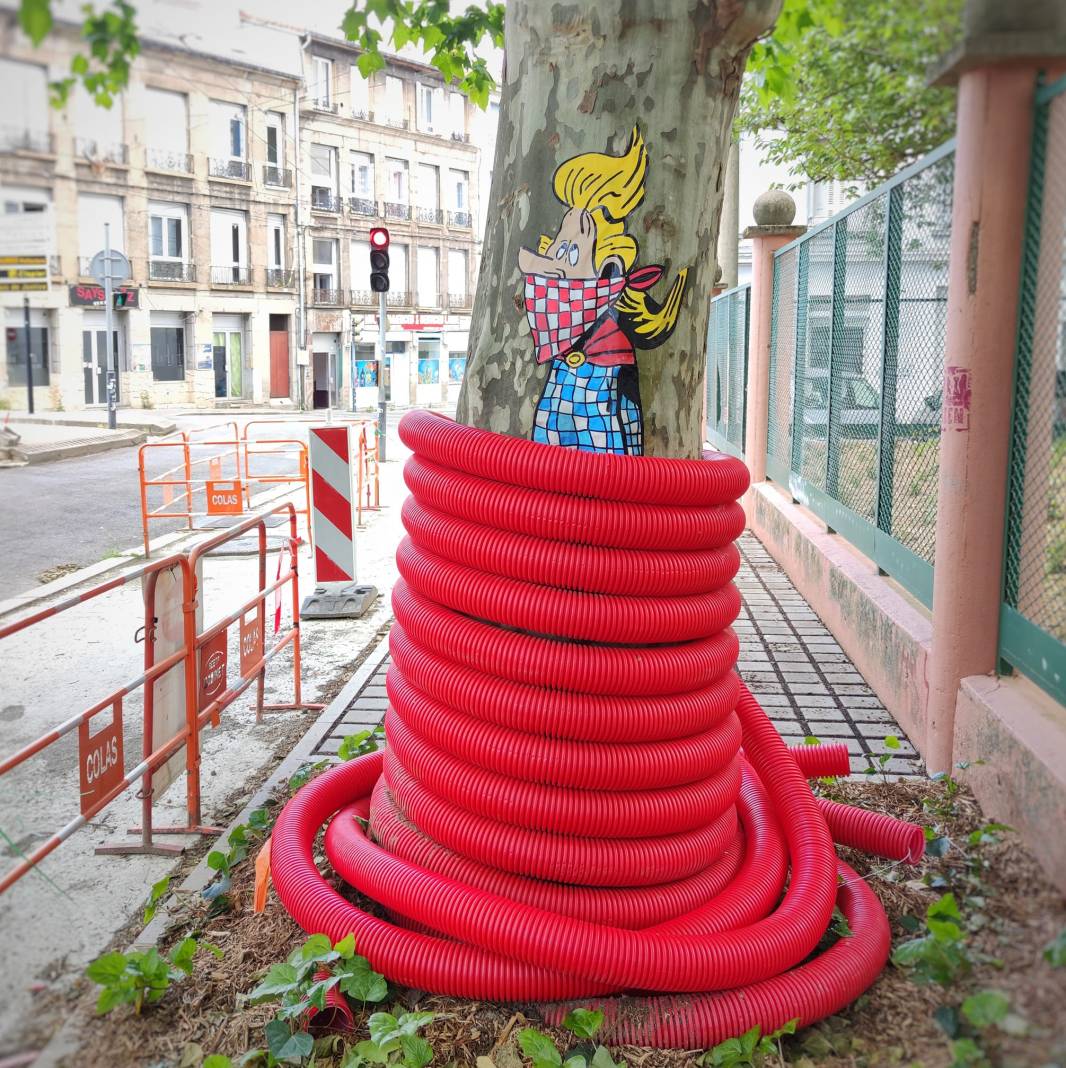
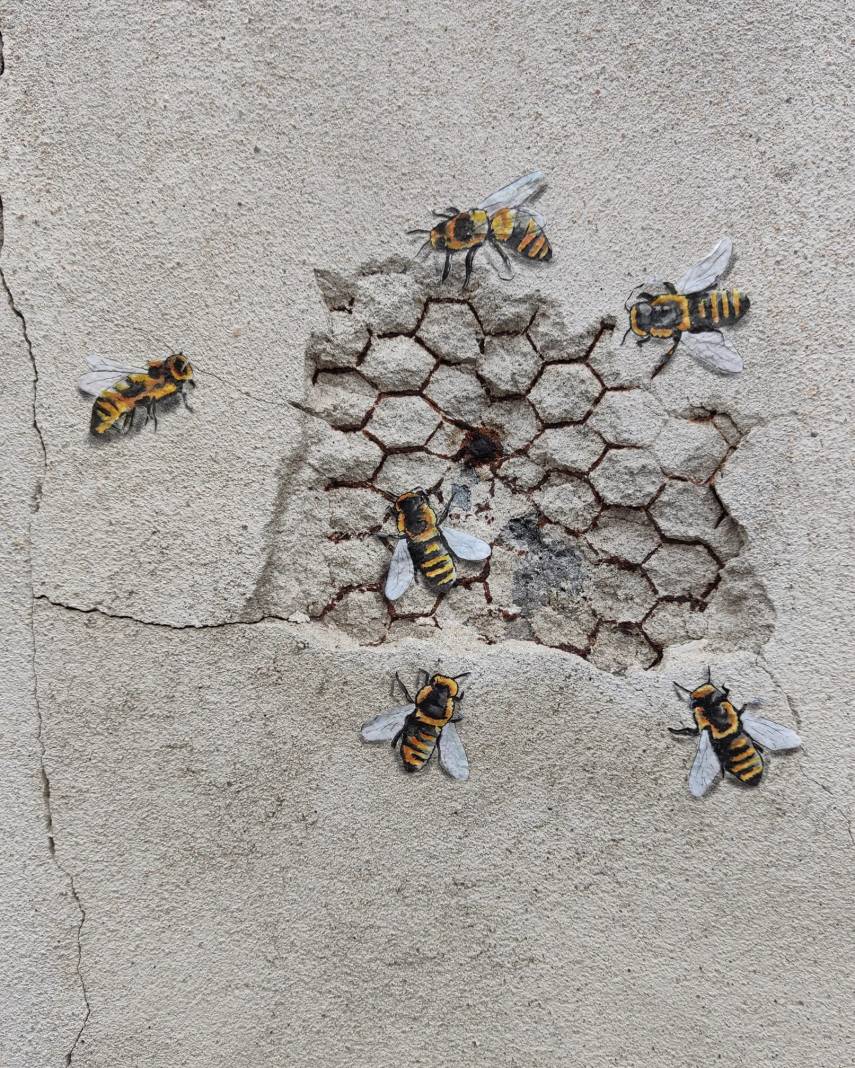
Content warning: Street Artist Oakoak By Oakoak in France. More by Oakoak on Street Art Utopia.
Street Artist Oakoak
By Oakoak in France.
More by Oakoak on Street Art Utopia.
Street Art by Oakoak (6 photos)
Oakoak: www.oakoak.fr // Instagram // Facebook
More by Oakoak on Street Art Utopia.
oakoak (@oakoak_street_art) • Instagram photos and videos
124K Followers, 354 Following, 882 Posts - See Instagram photos and videos from oakoak (@oakoak_street_art)www.instagram.com

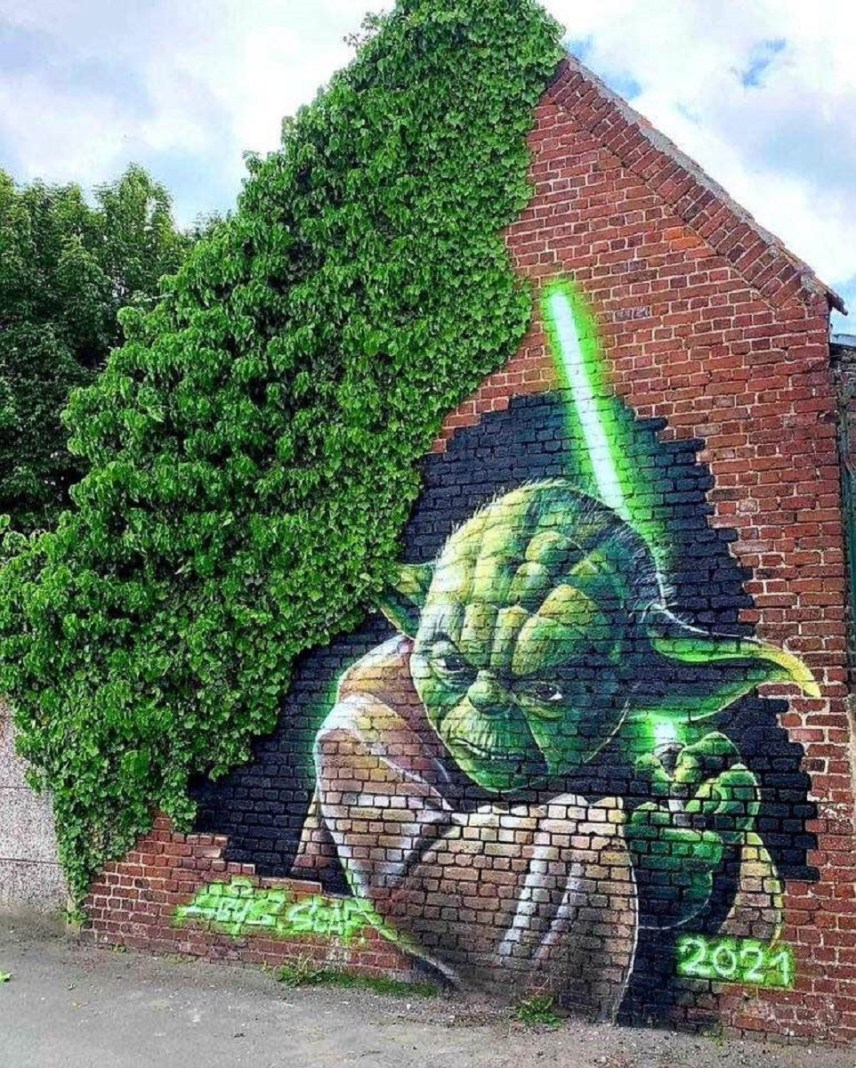
Yoda by Scaf Oner and ABYS in Béthune, France
Content warning: Graffiti artists Scaf Oner and ABYS By Scaf Oner and ABYS at festival Les petits bonheurs in Béthune, France. More: 26 3D Post-Graffiti By SCAF “500 people with disabilities and artists are assisting in order to give small moments of happiness to all” Com
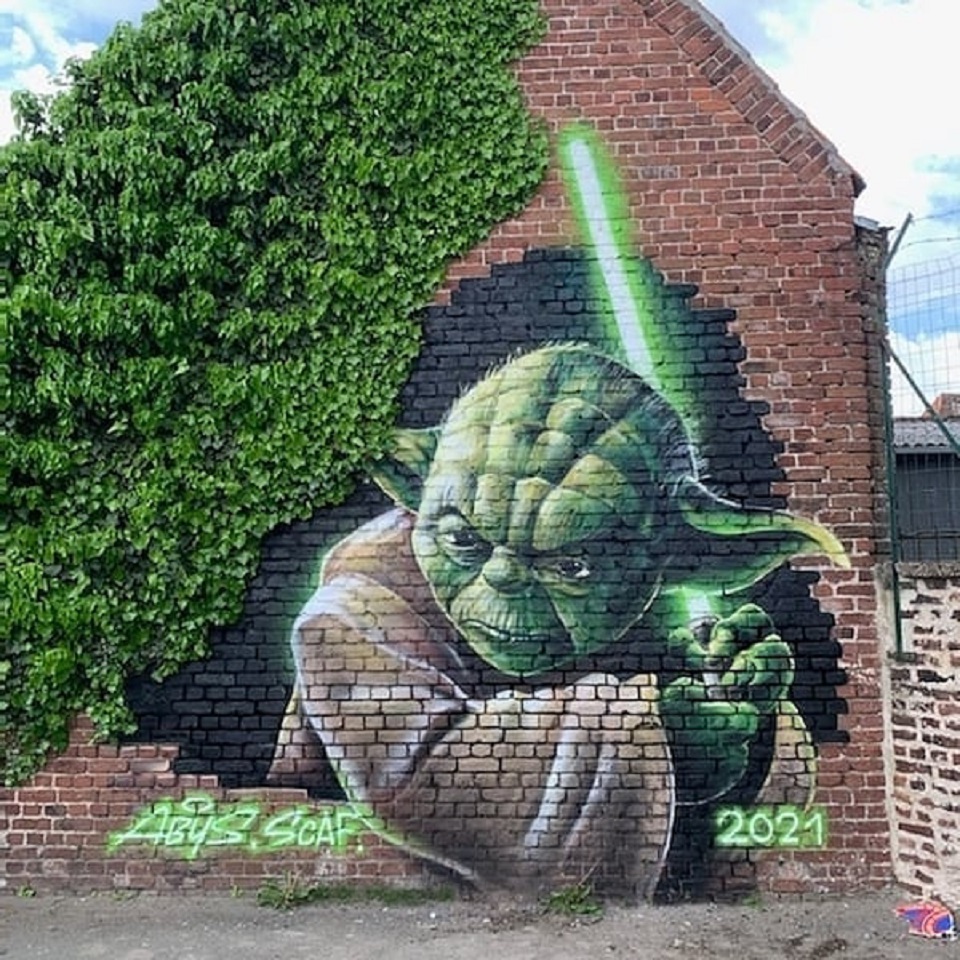
Graffiti artists Scaf Oner and ABYS
By Scaf Oner and ABYS at festival Les petits bonheurs in Béthune, France.
More: 26 3D Post-Graffiti By SCAF
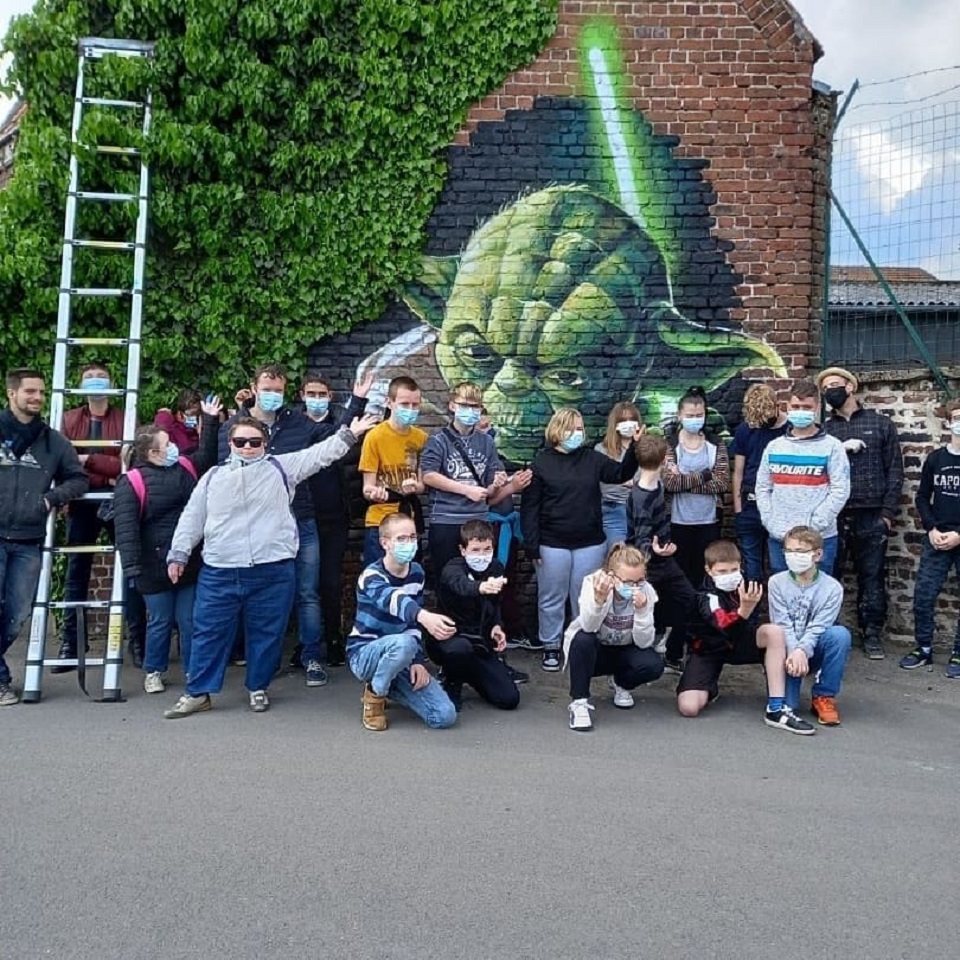
“500 people with disabilities and artists are assisting in order to give small moments of happiness to all”
Comments:
pic.twitter.com/4gwMkfRCOQ— STREET ART UTOPIA 🖼️ (@StreetArtUtopia) February 1, 2022
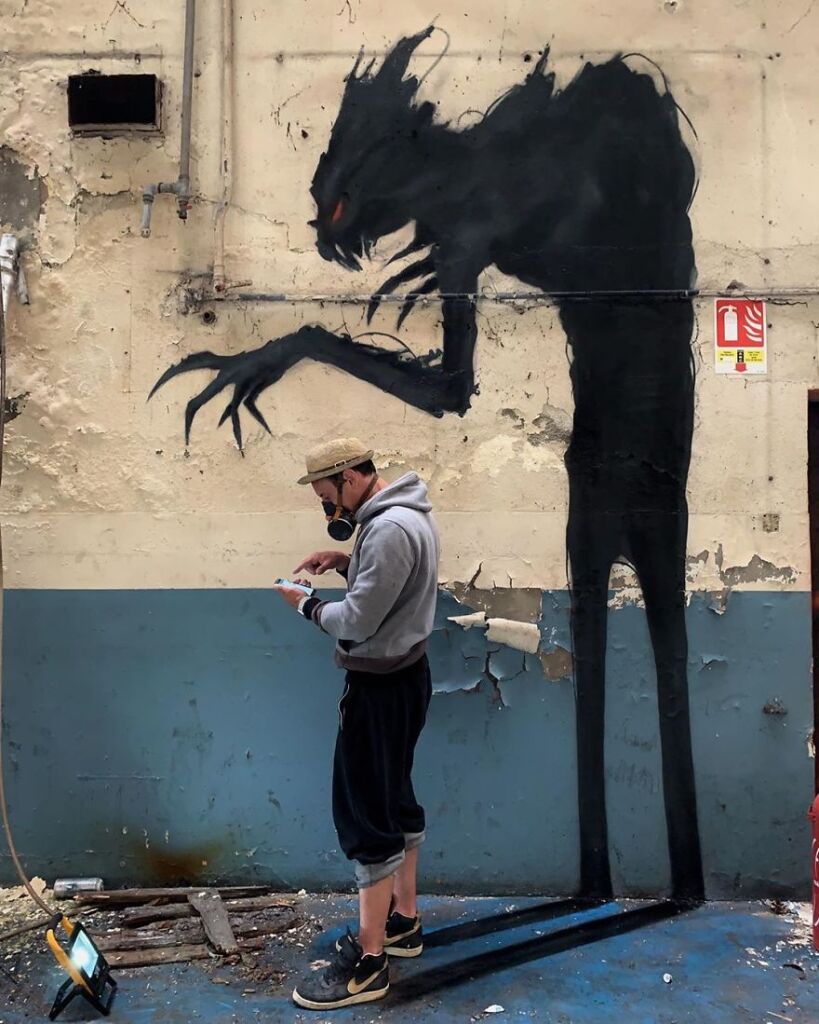
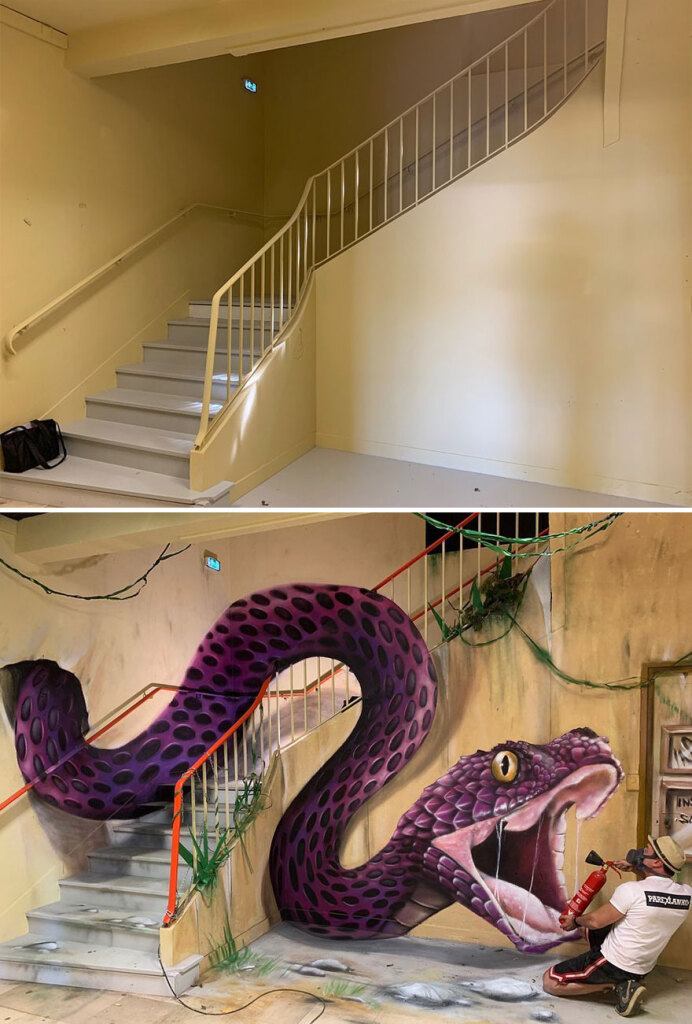
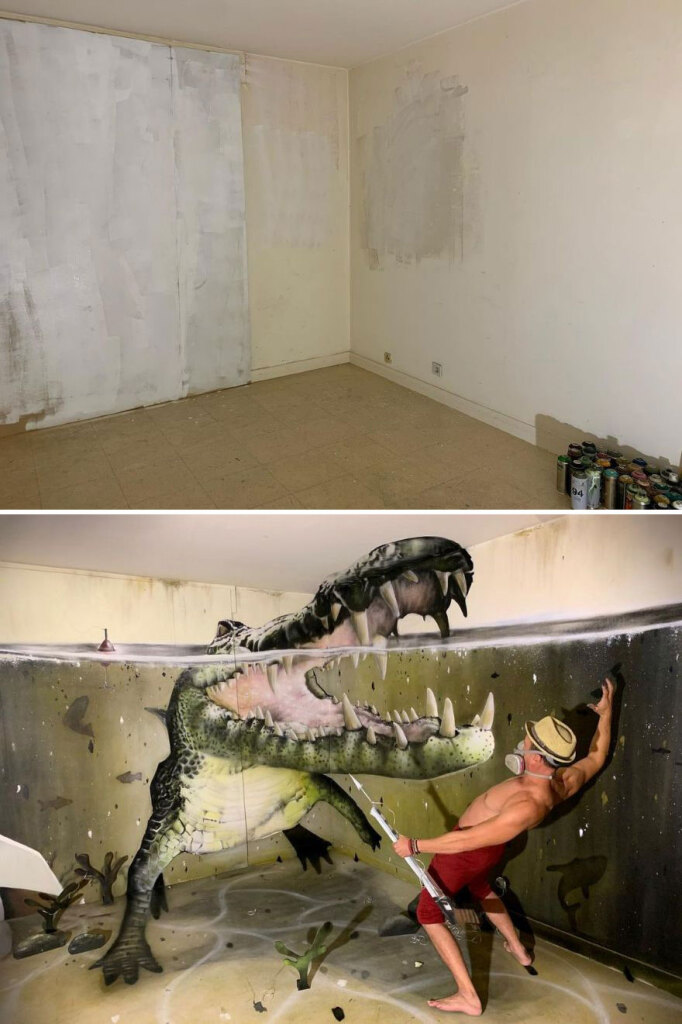
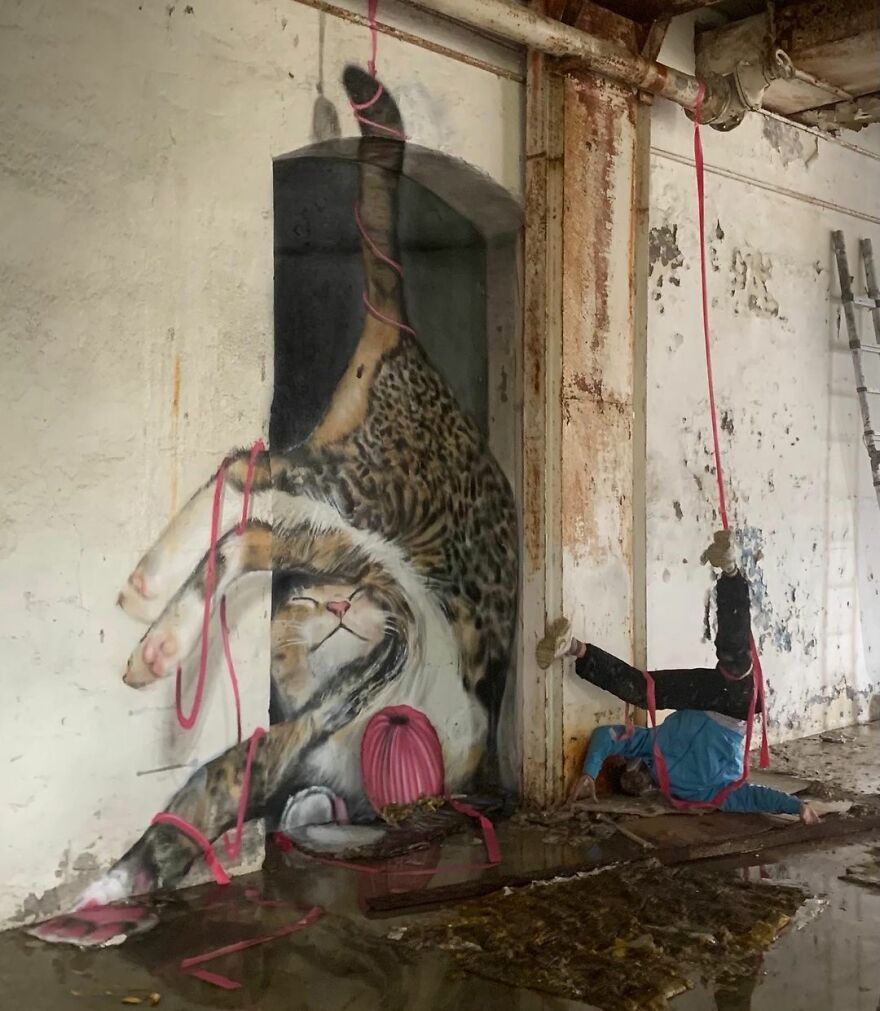
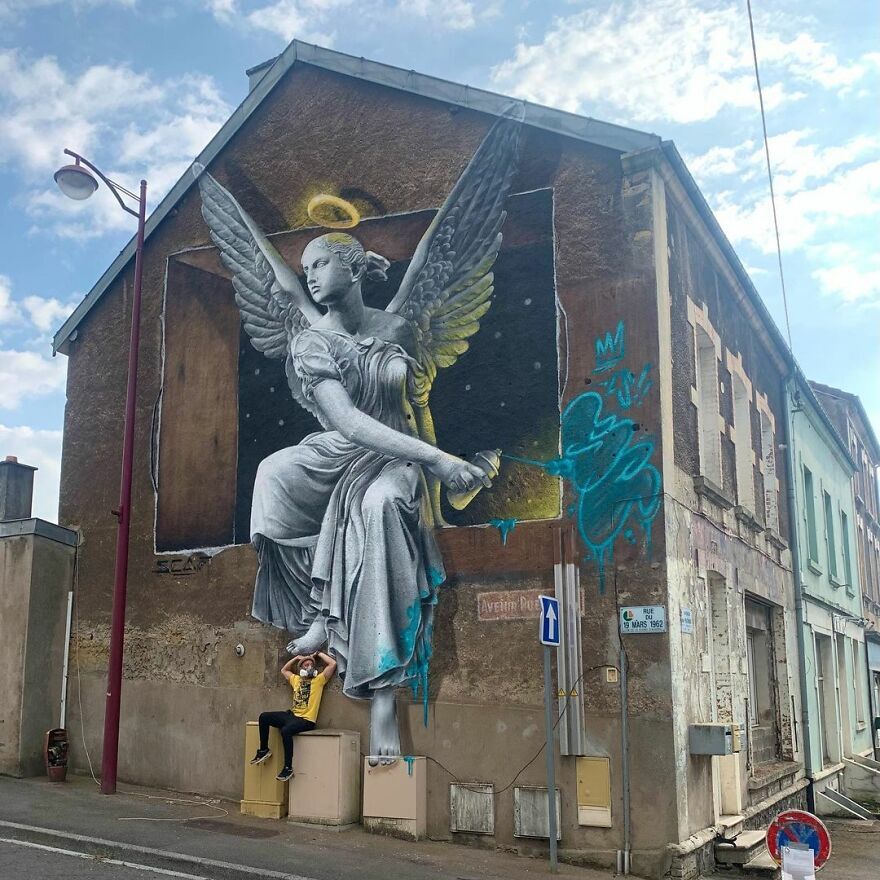
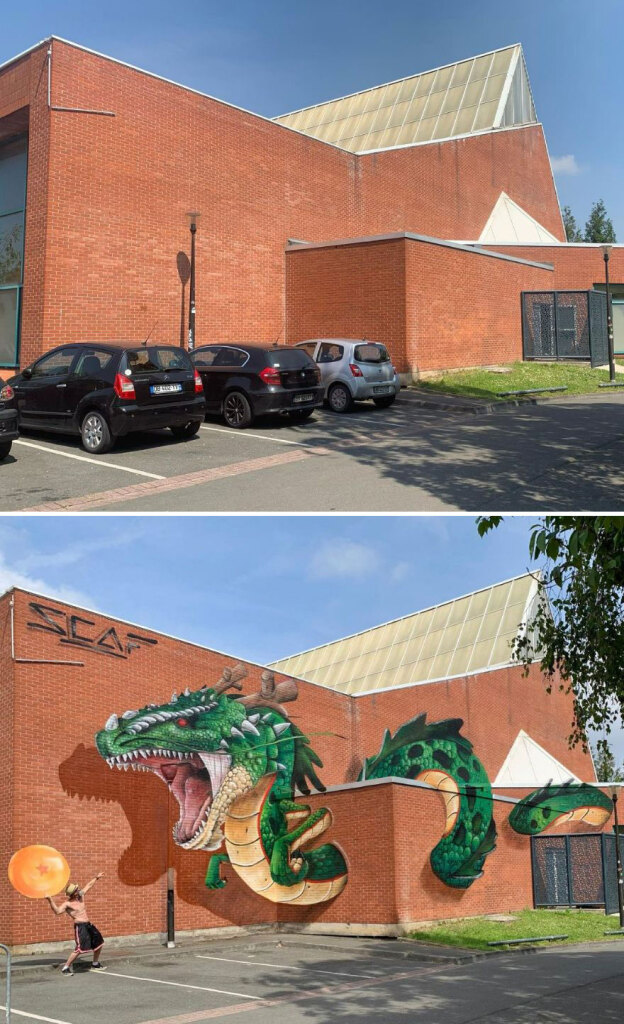
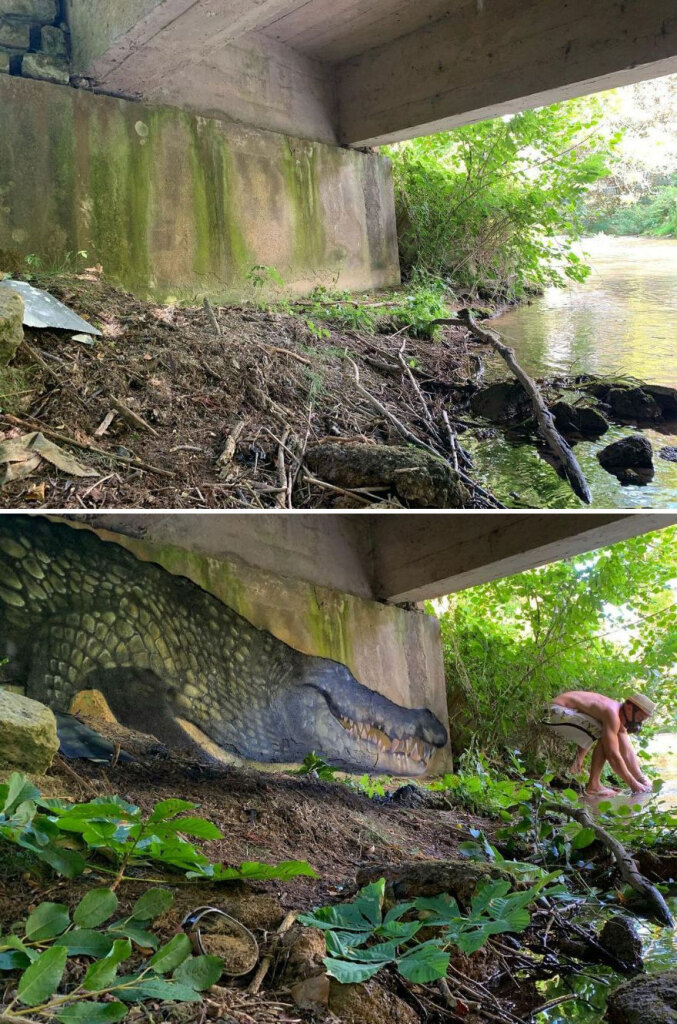
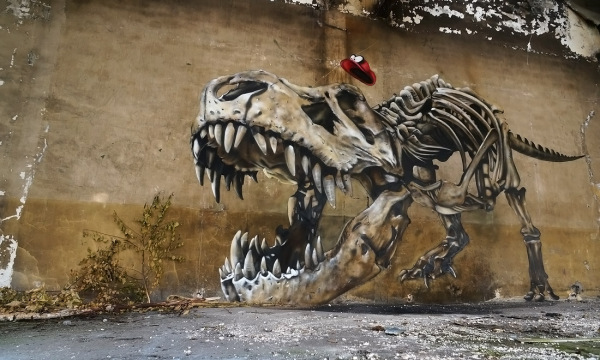
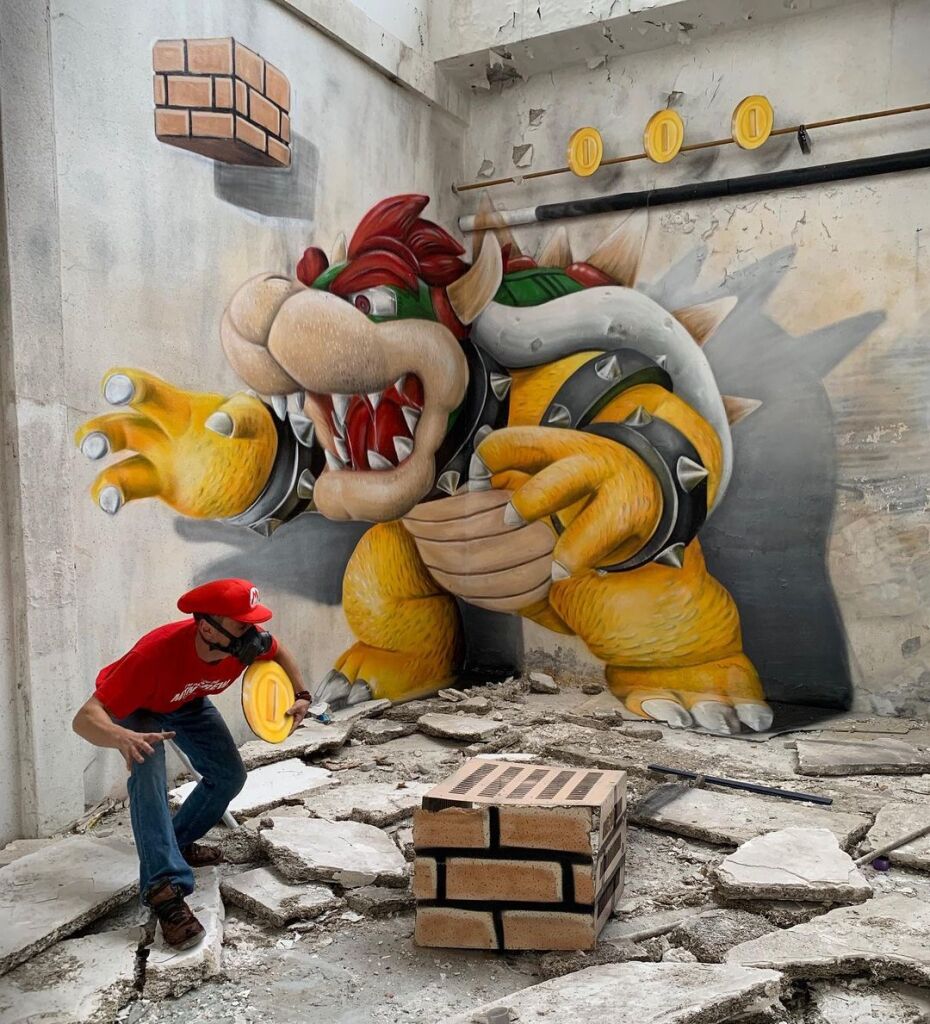
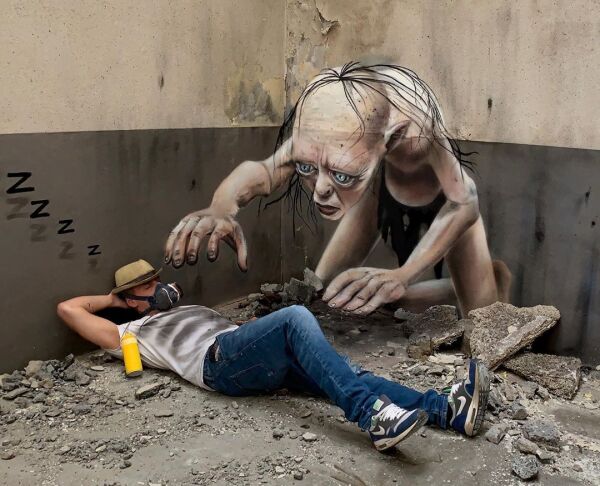
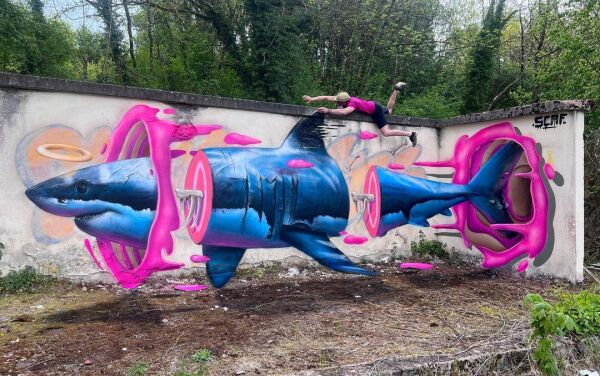
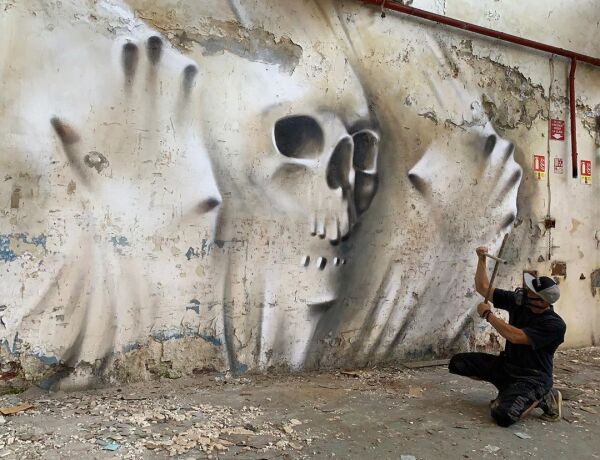
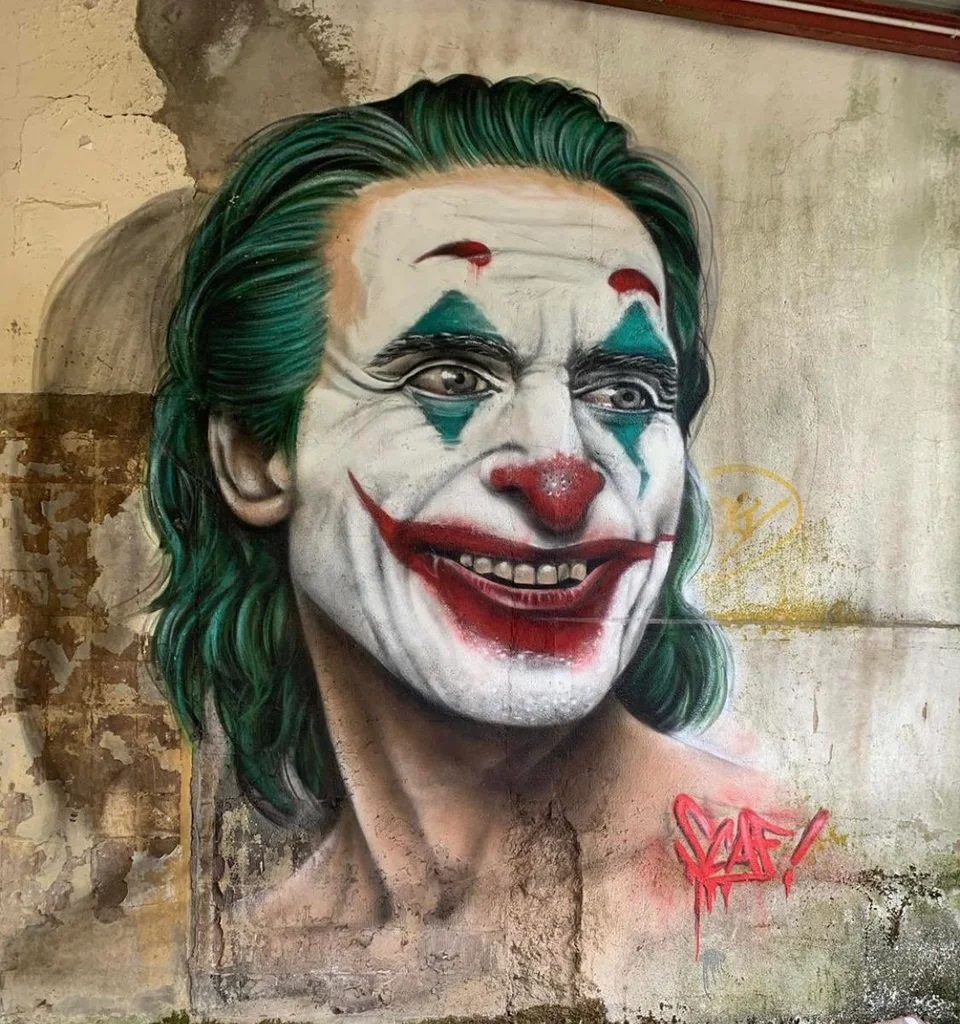
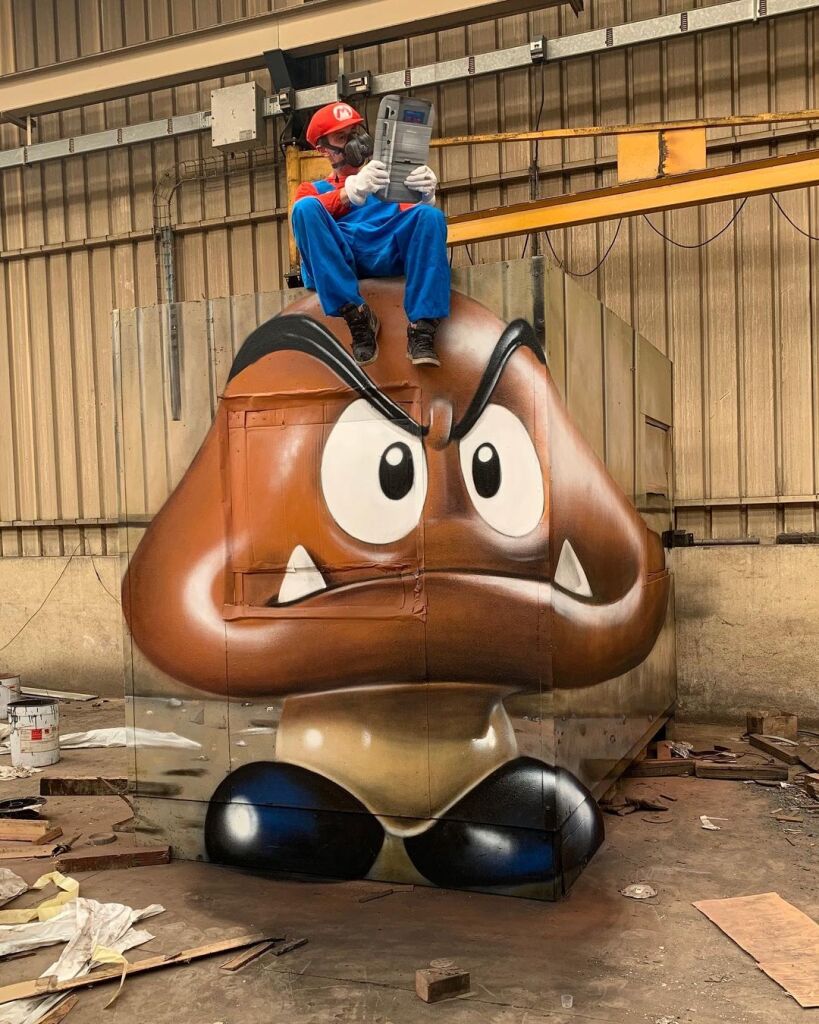
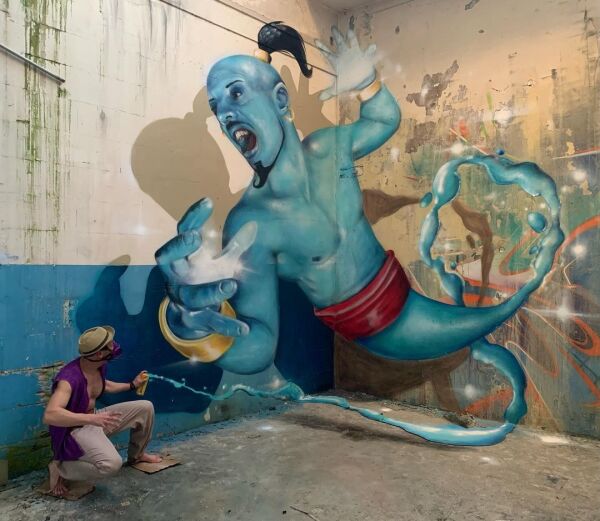
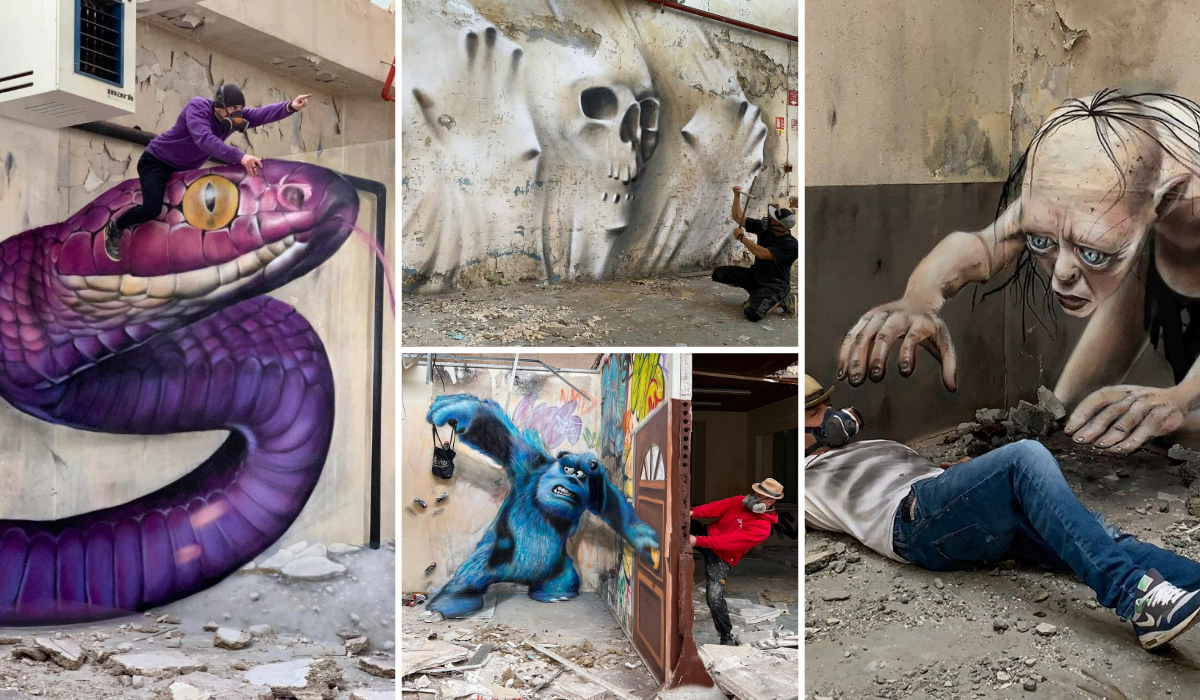
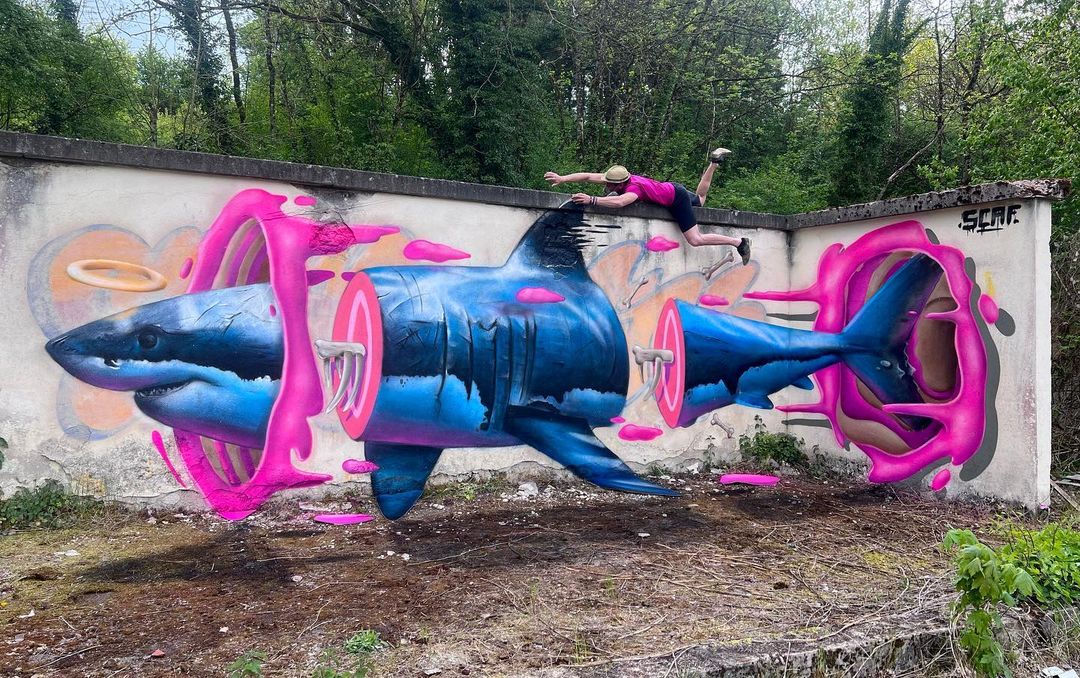
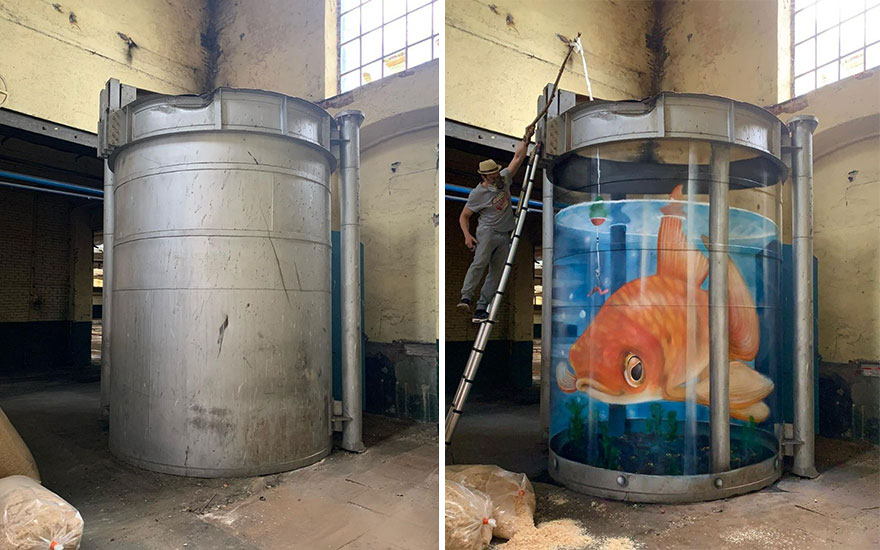
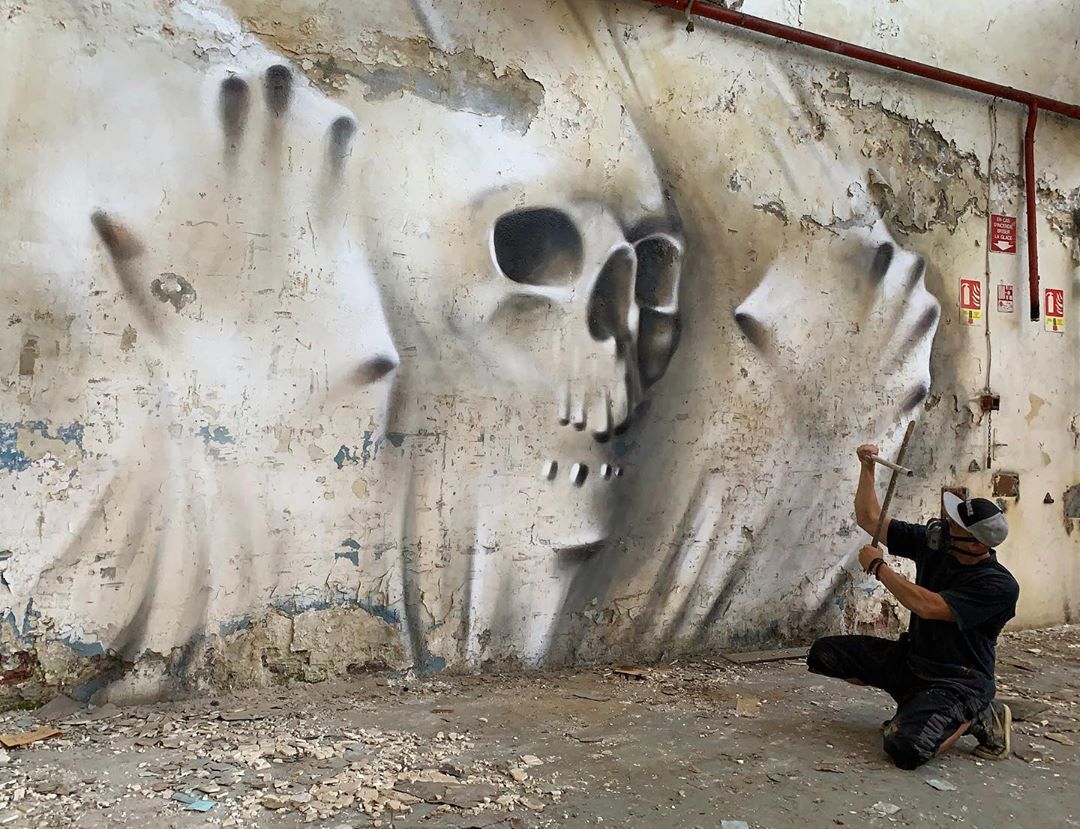
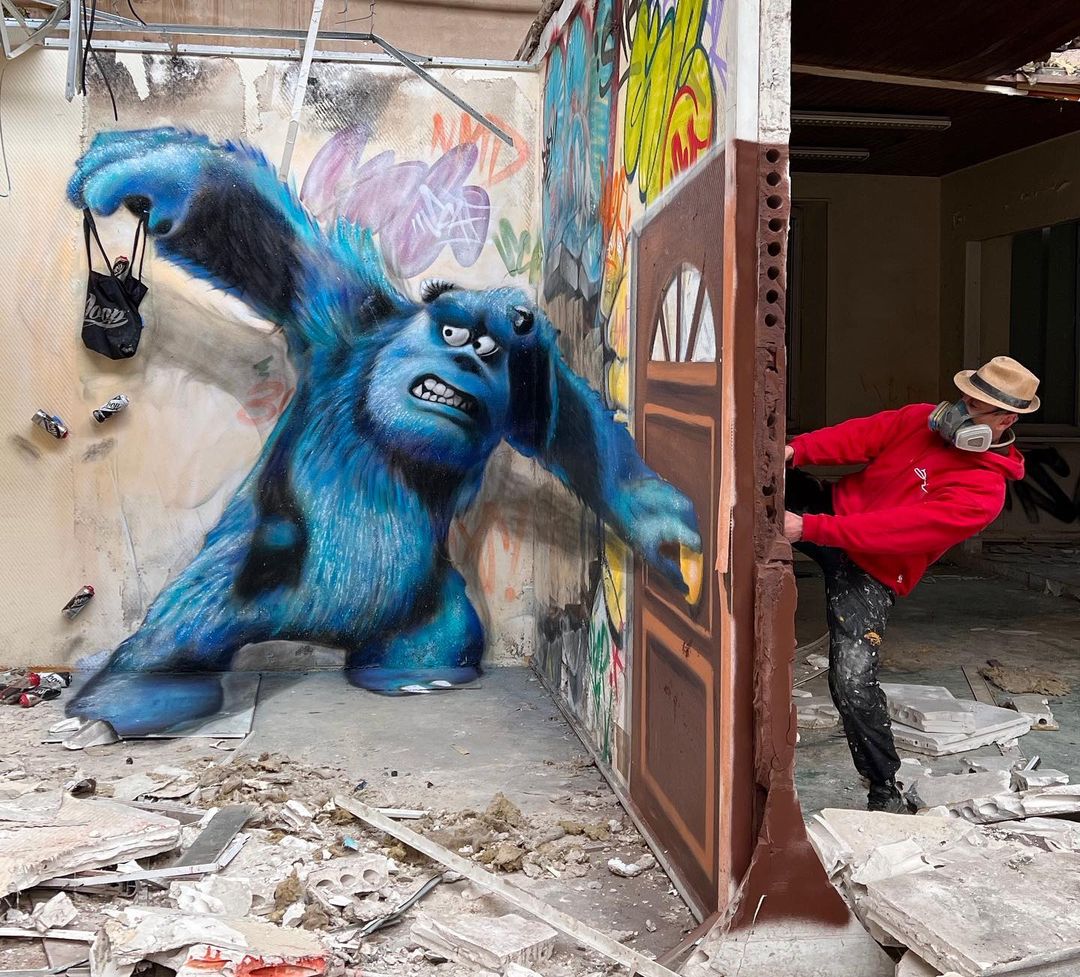
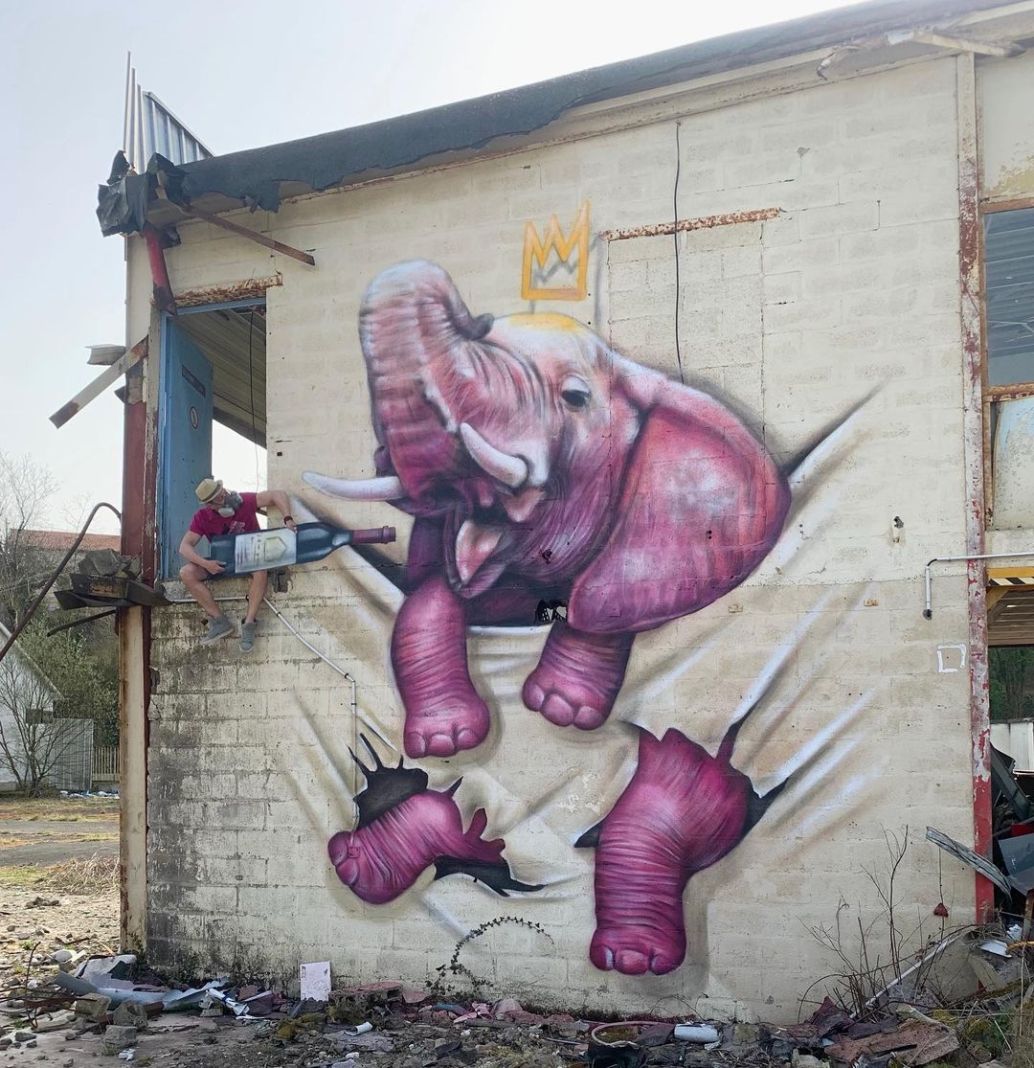
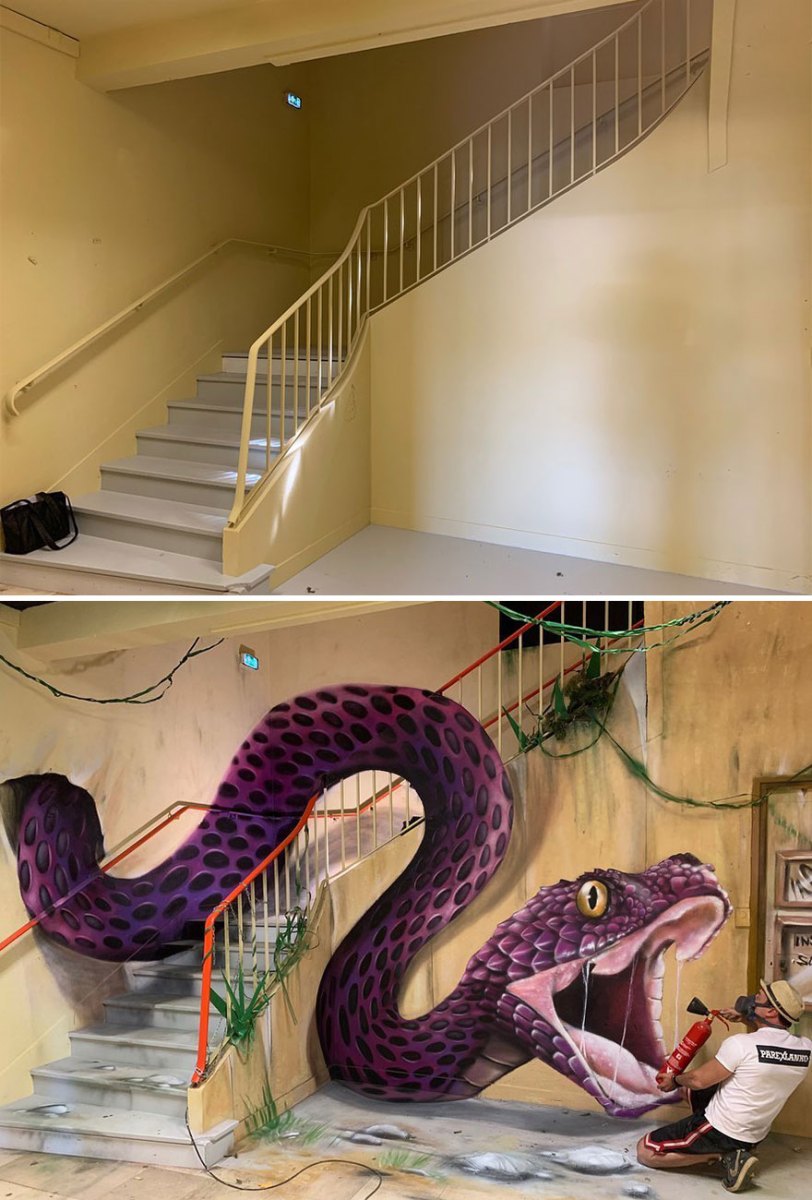
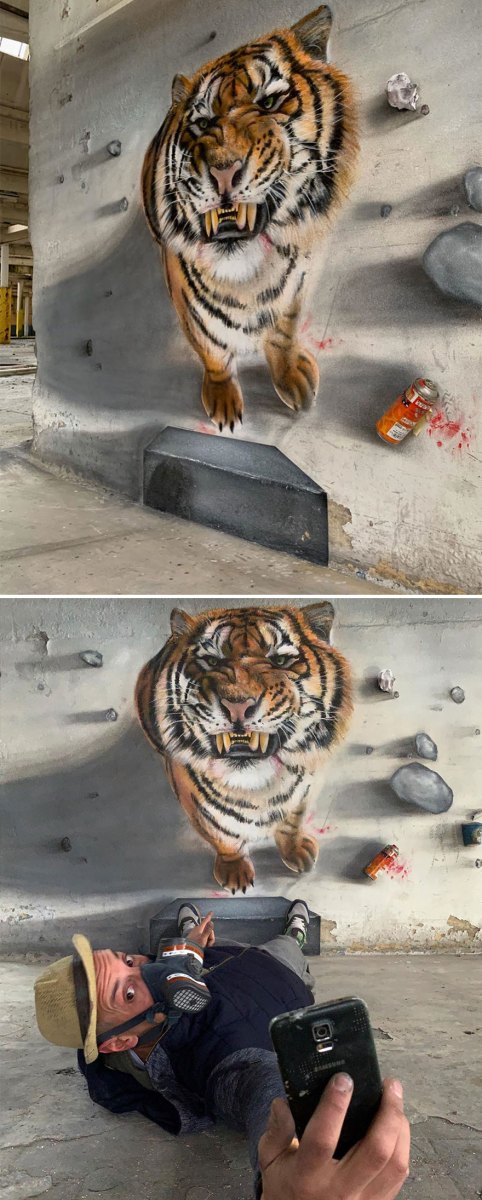
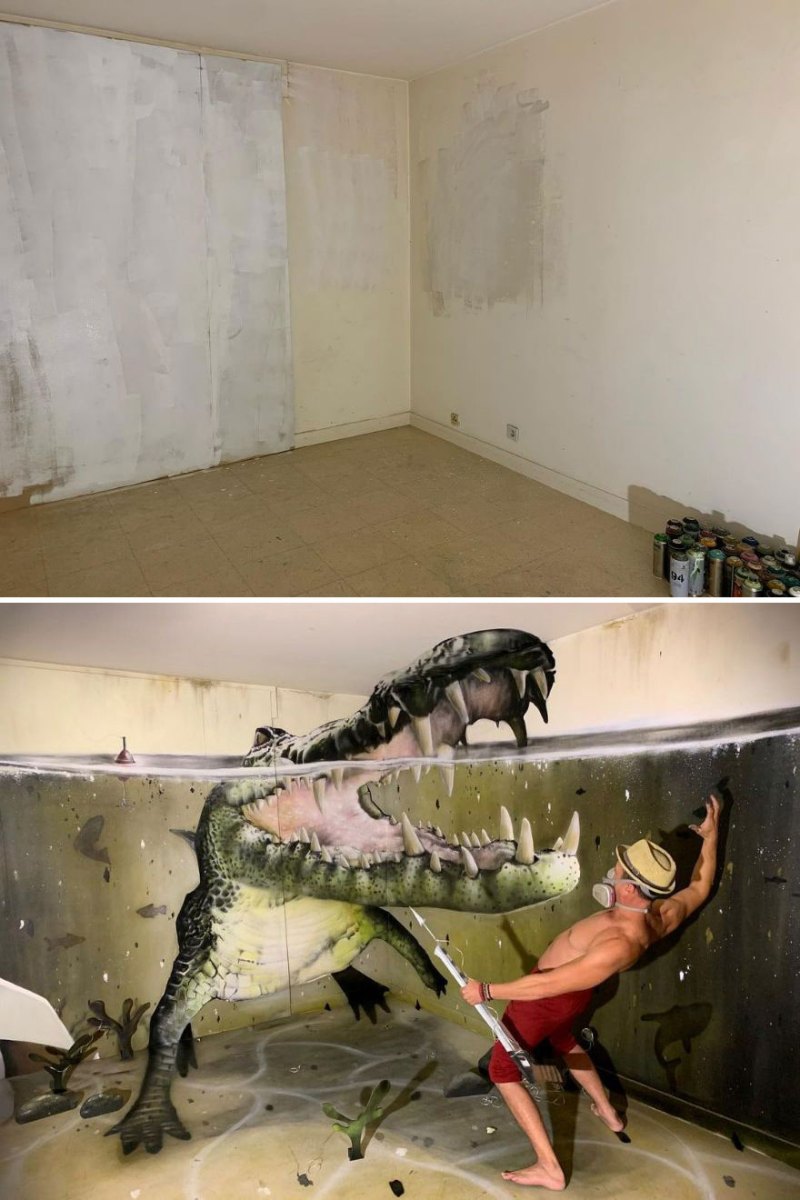
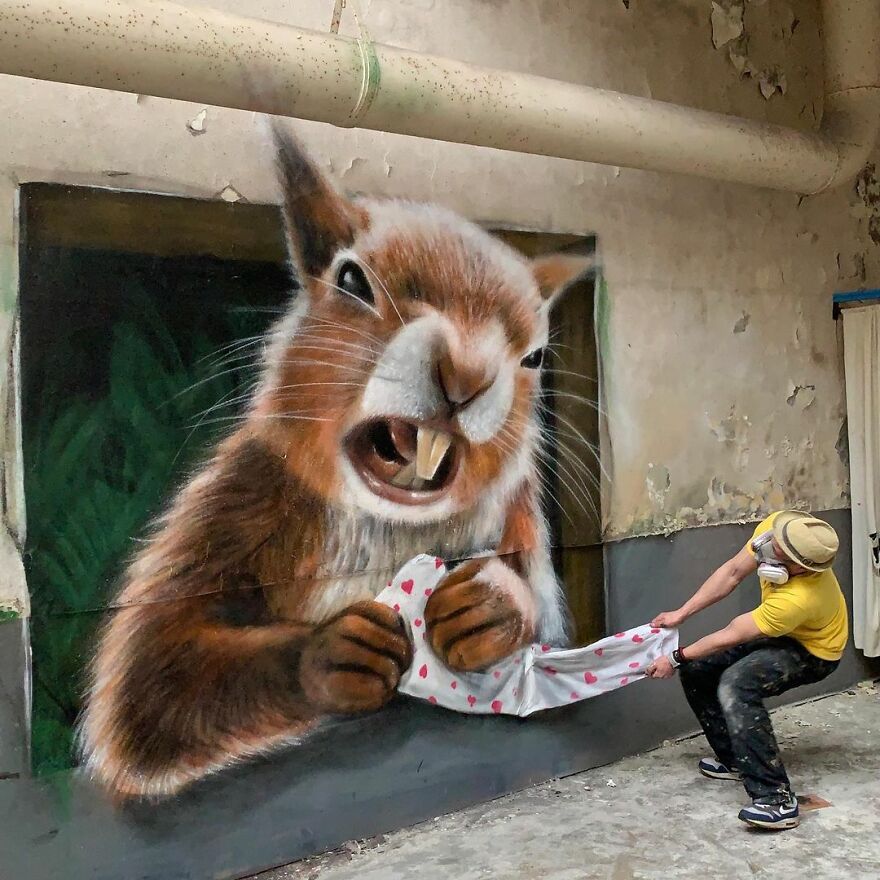
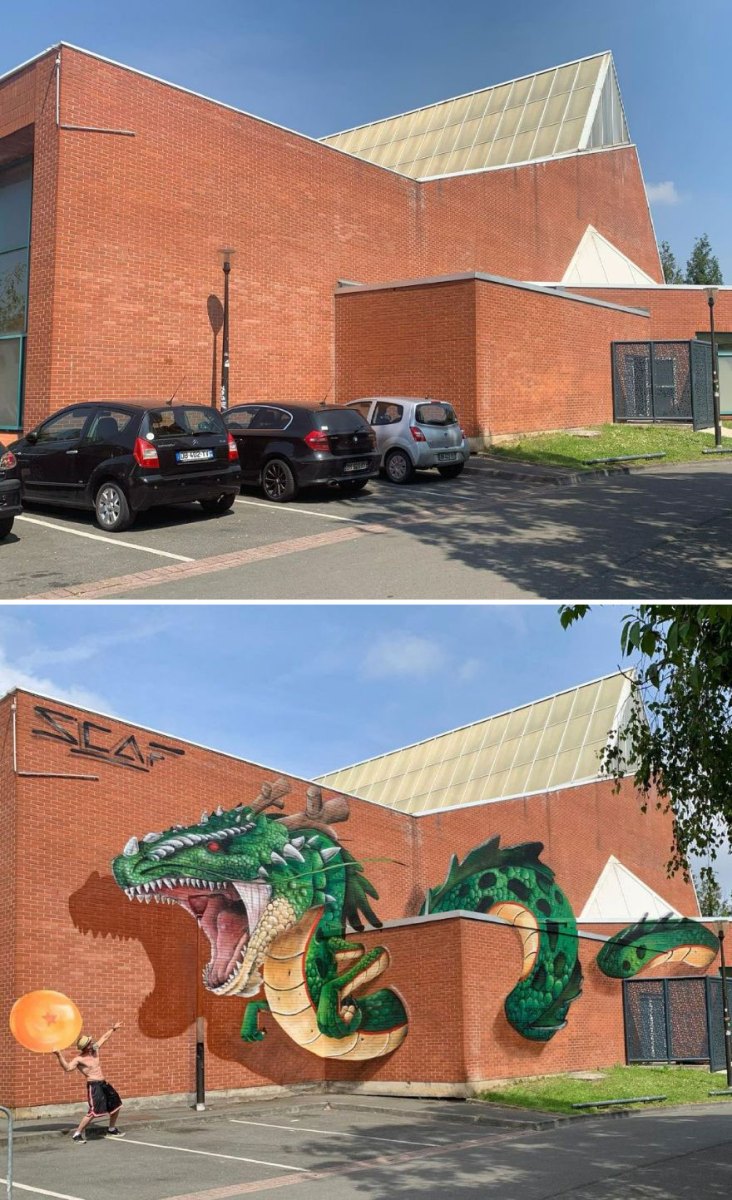
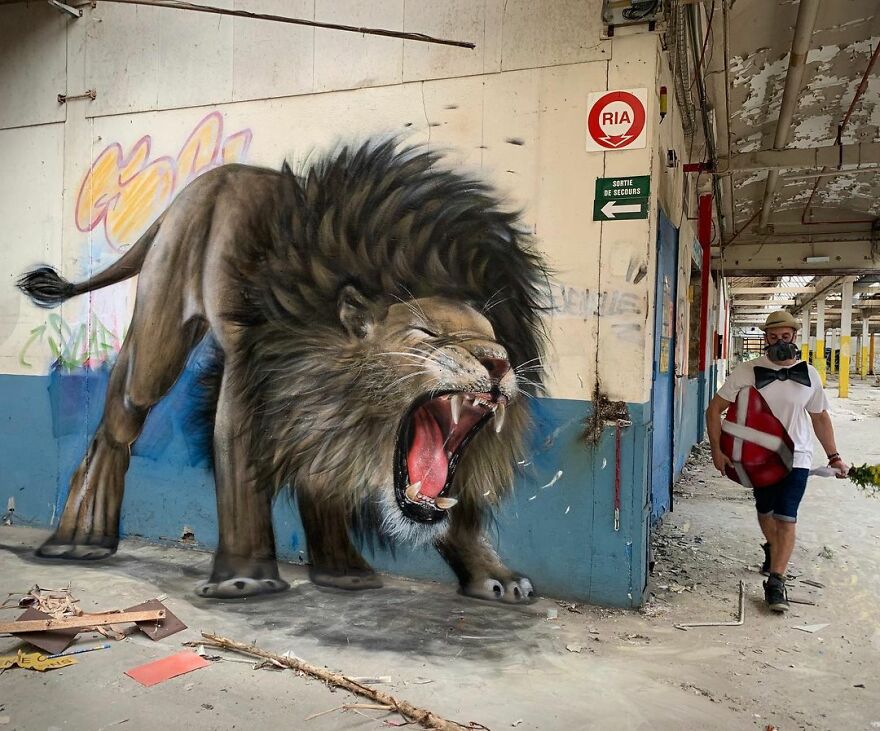
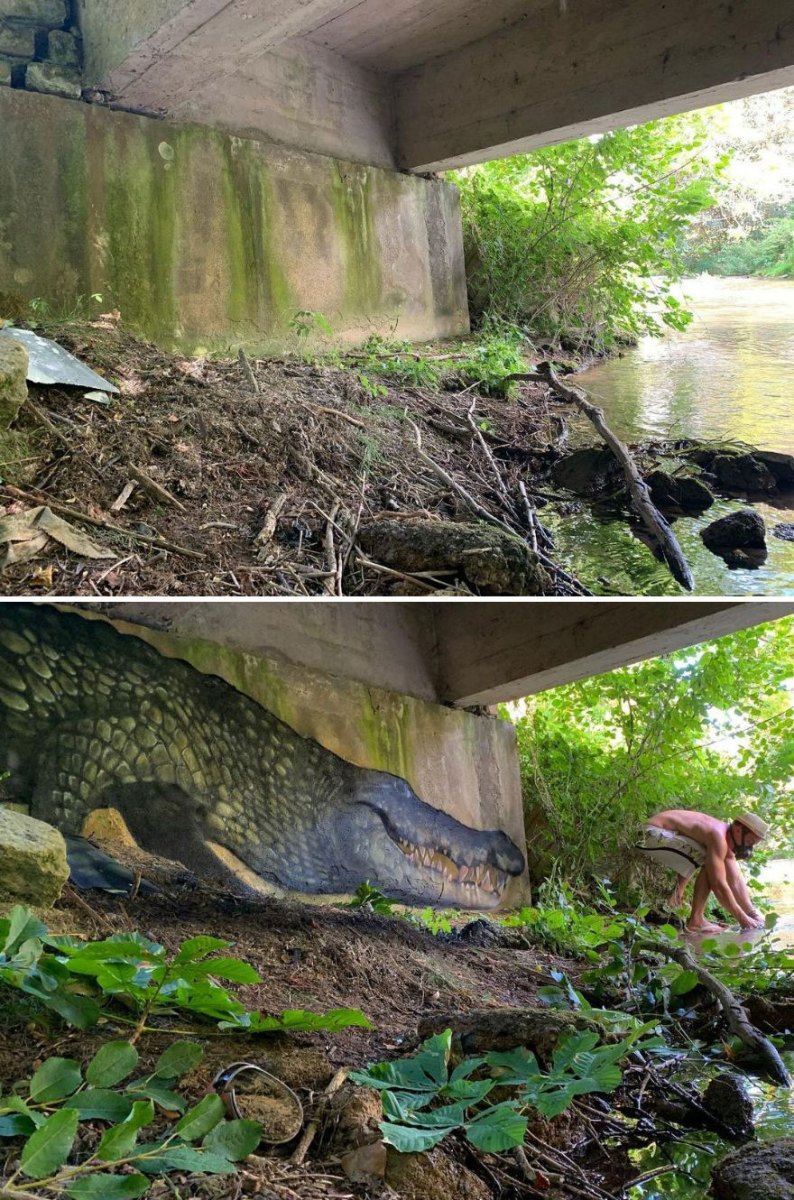
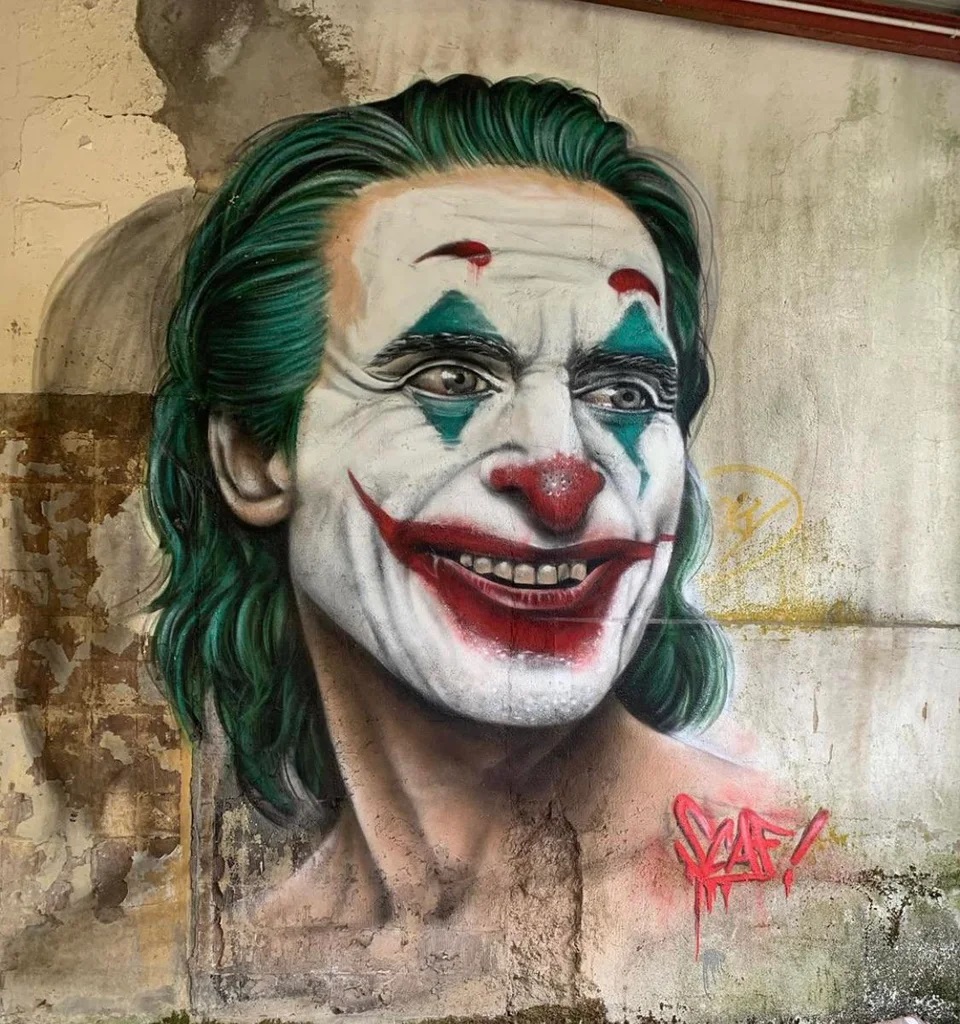
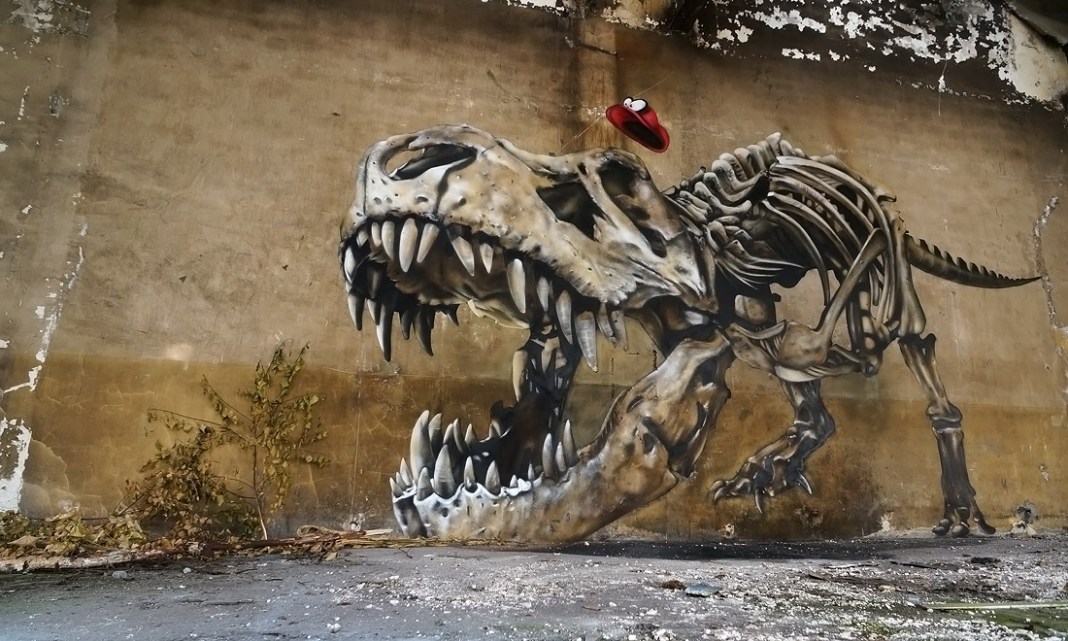
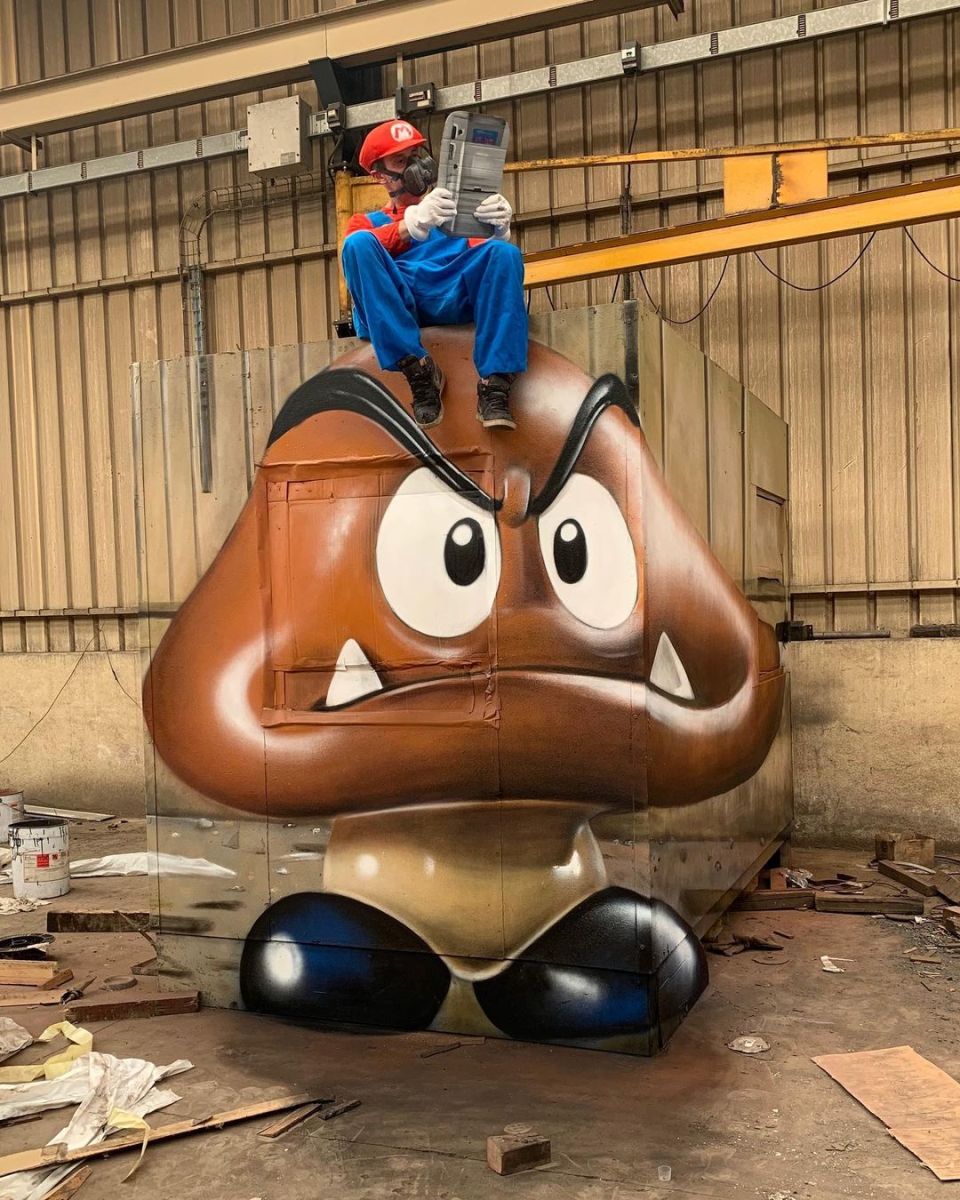
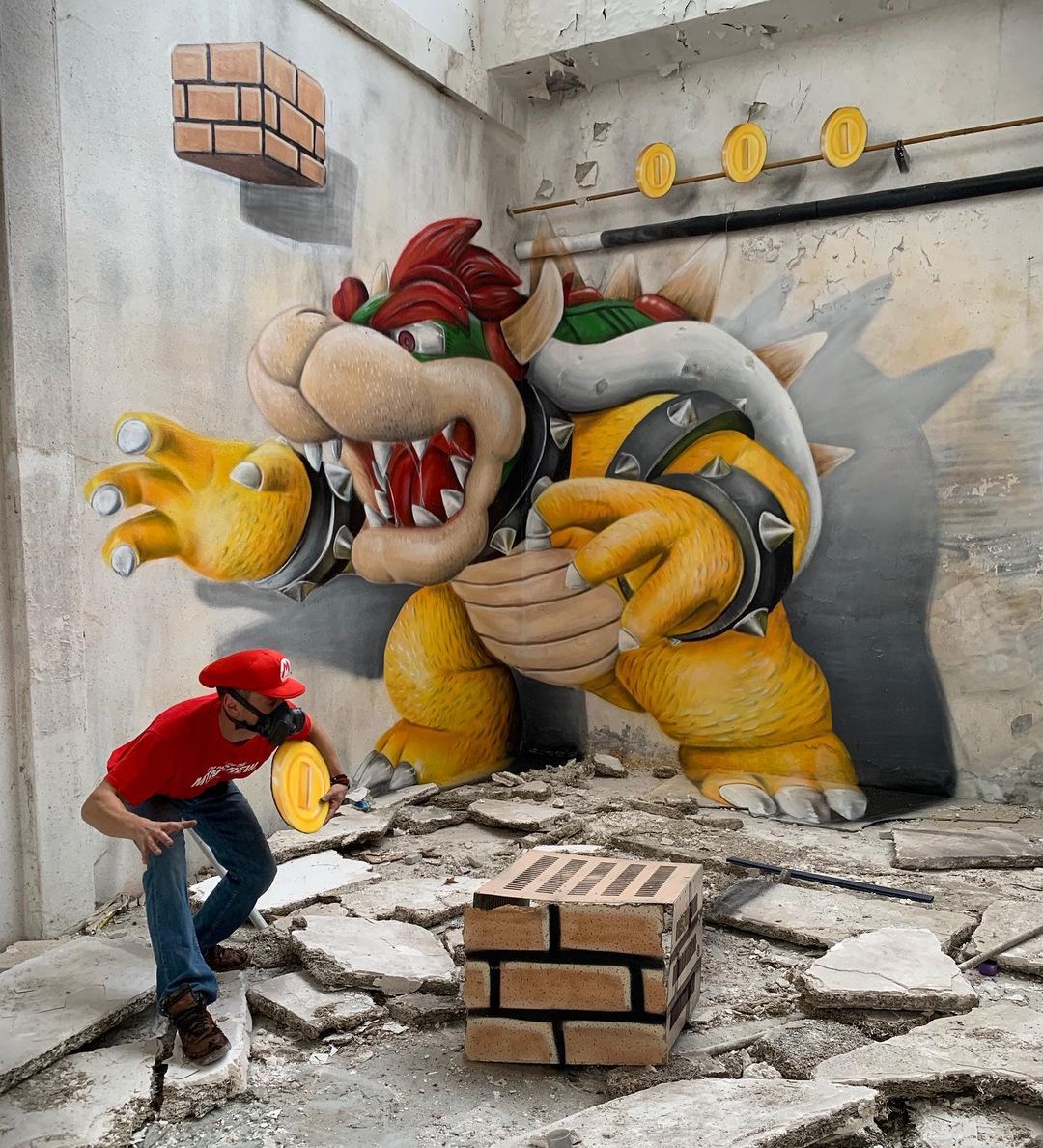
26 Amazing 3D Paintings by SCAF!
As street art has evolved from a frowned-upon act of vandalism into a widely-accepted form of creative expression, it has become a powerful medium for artists to voice social and political messages.
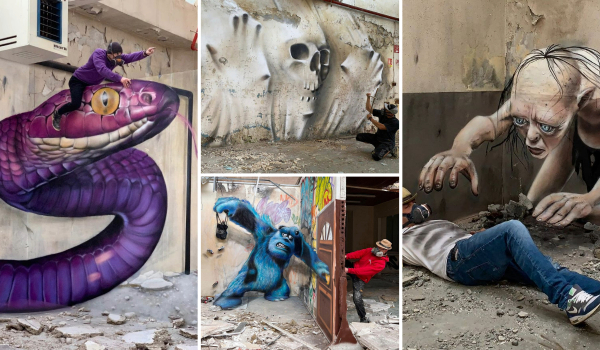
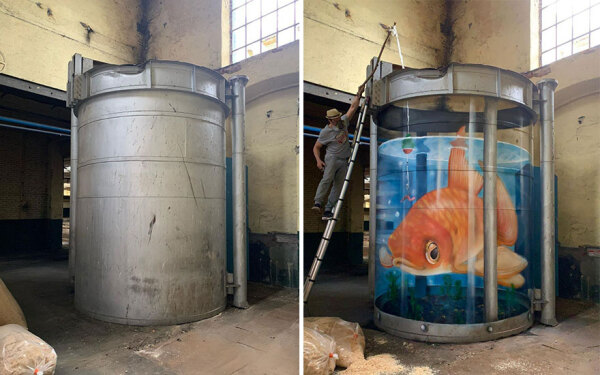
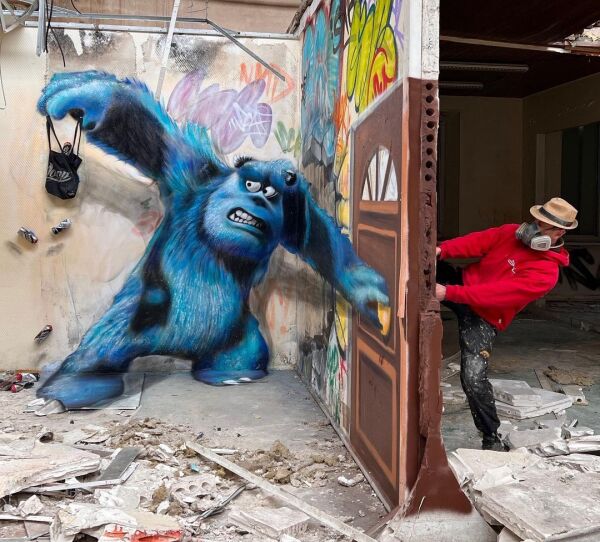
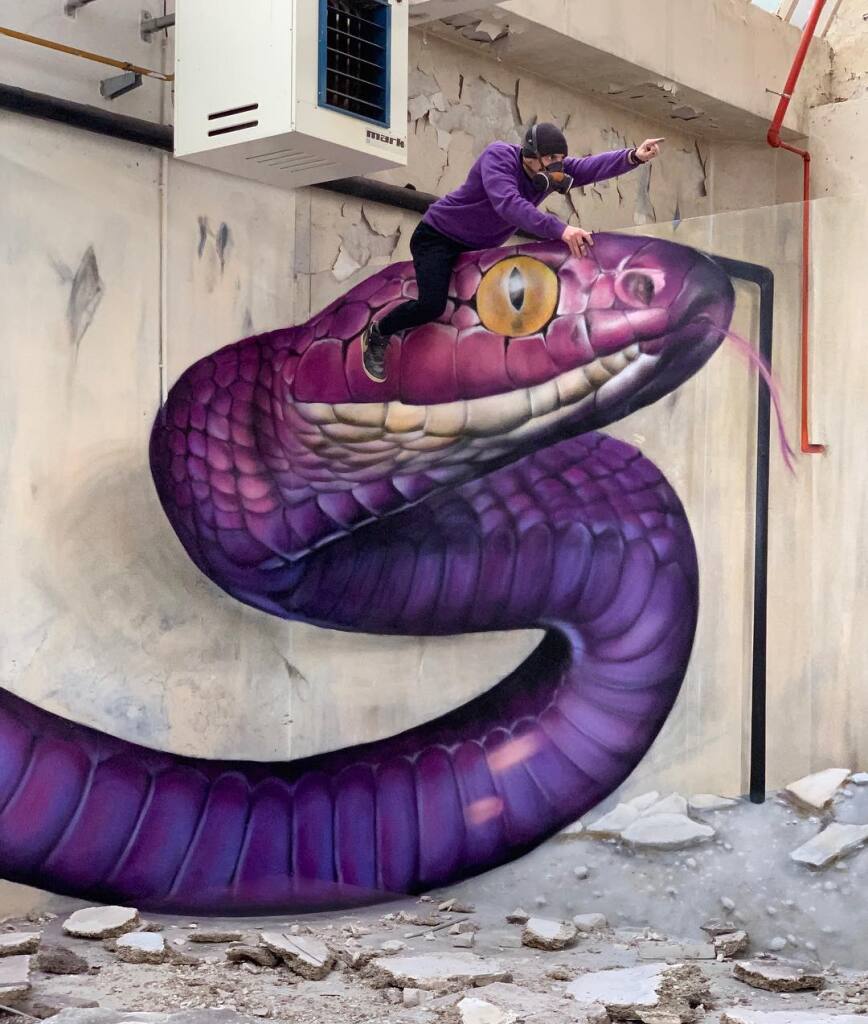
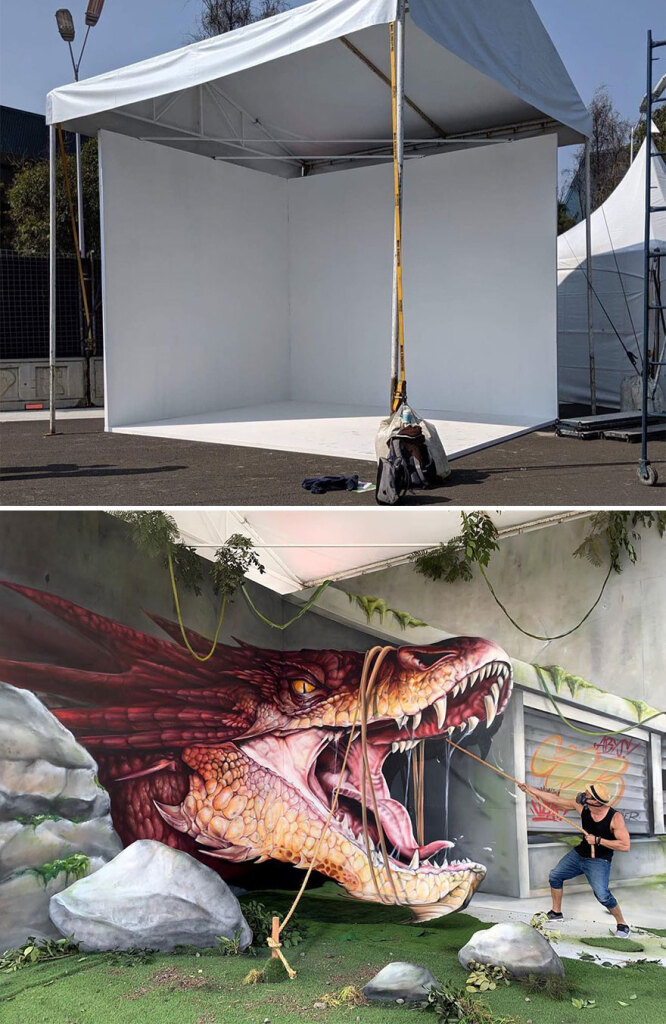
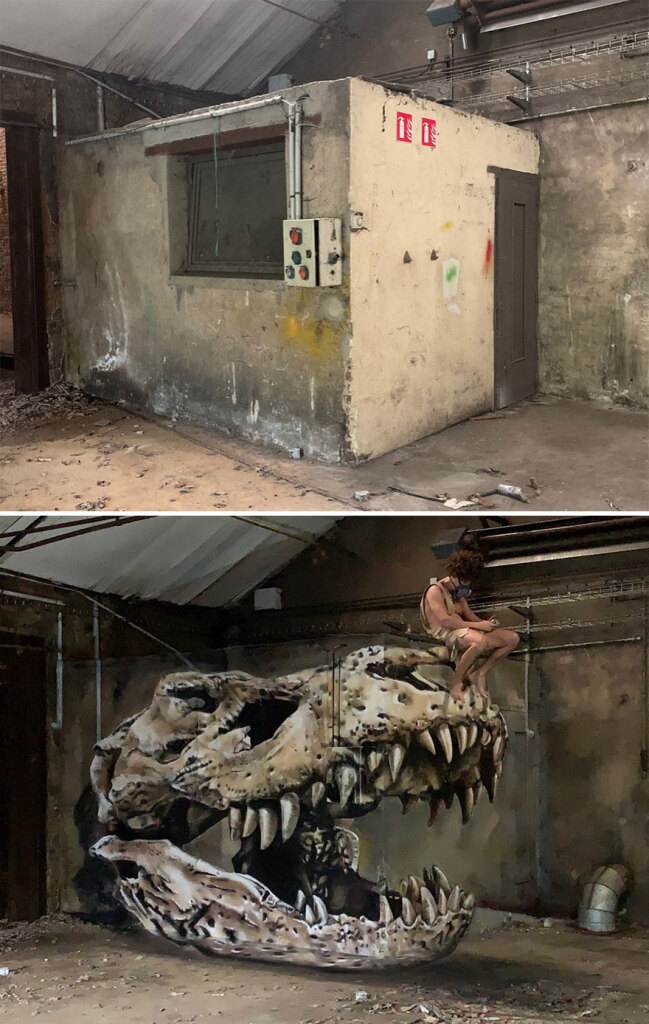
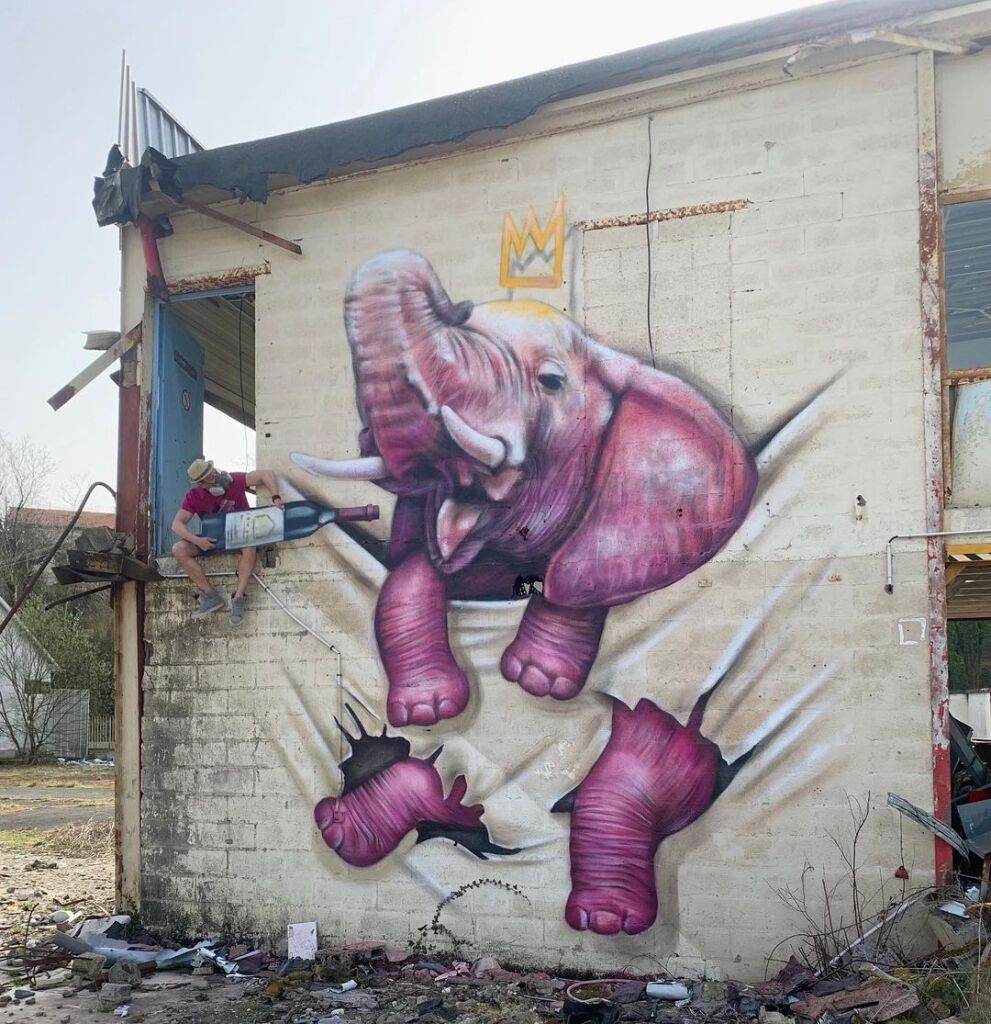
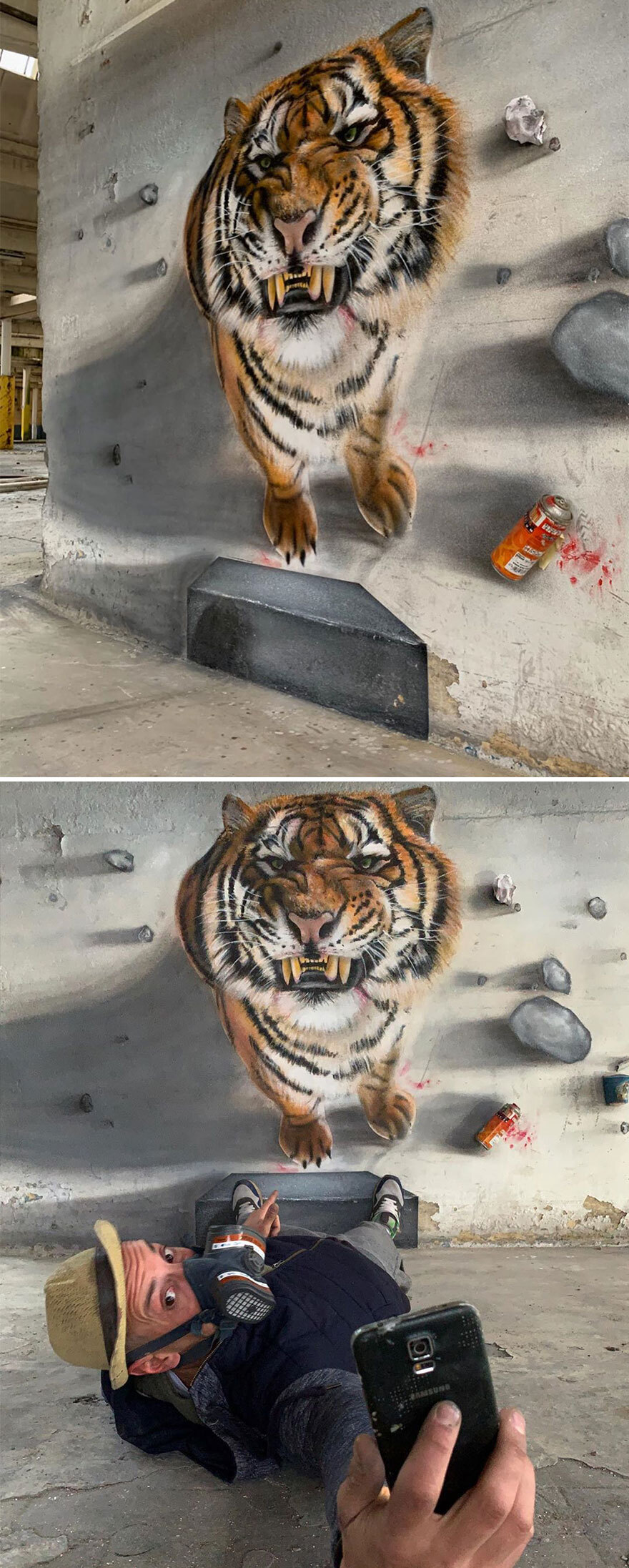
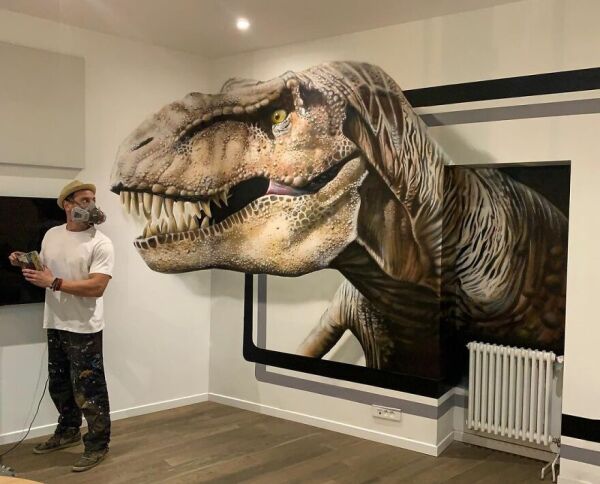
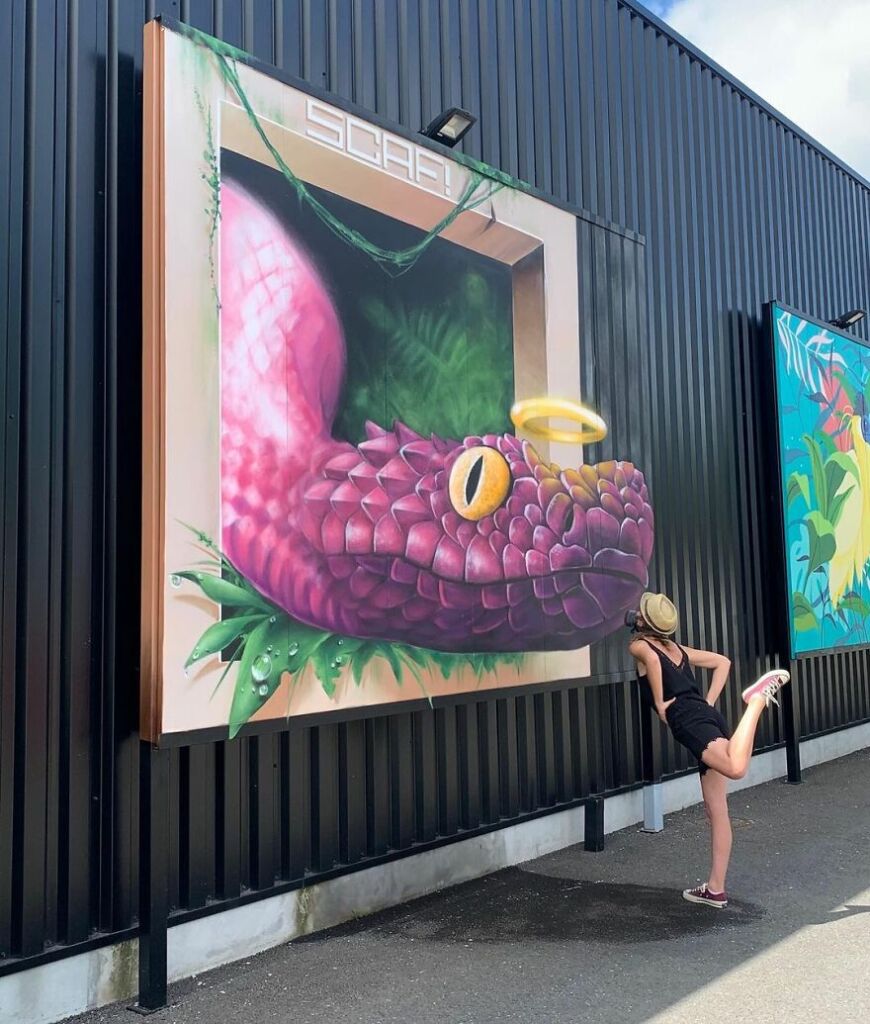
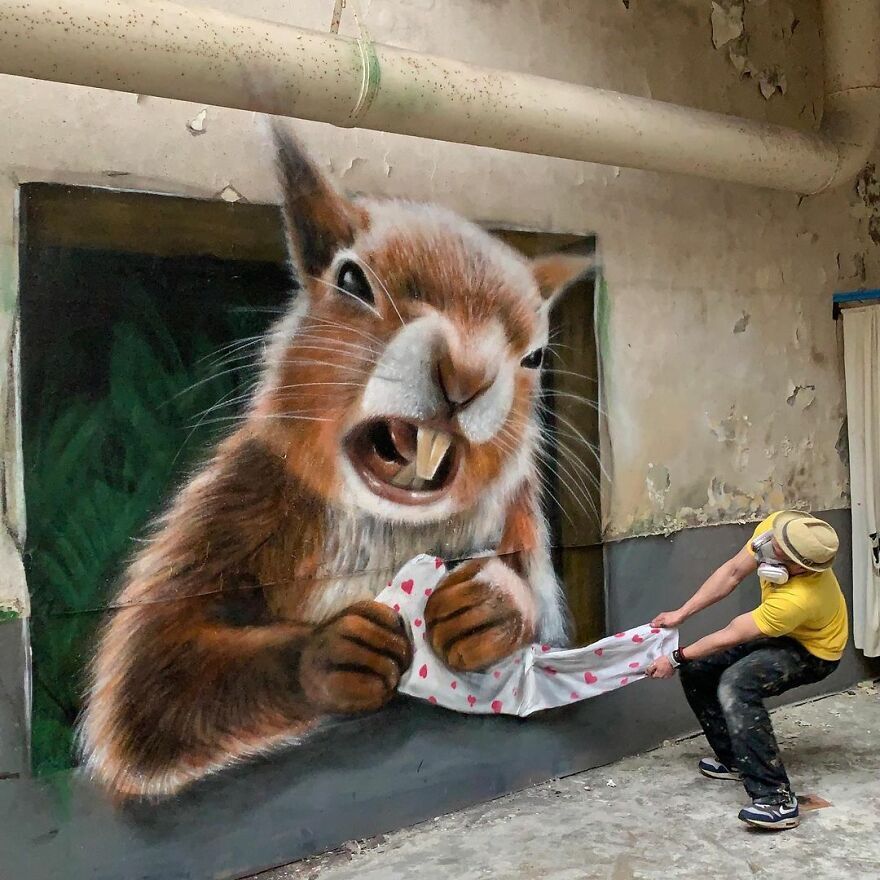
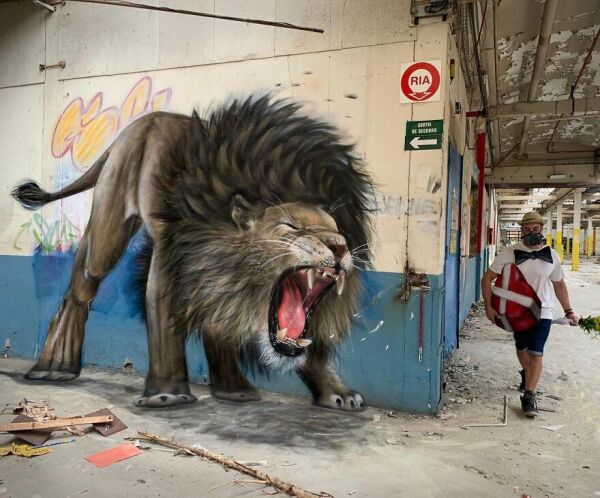
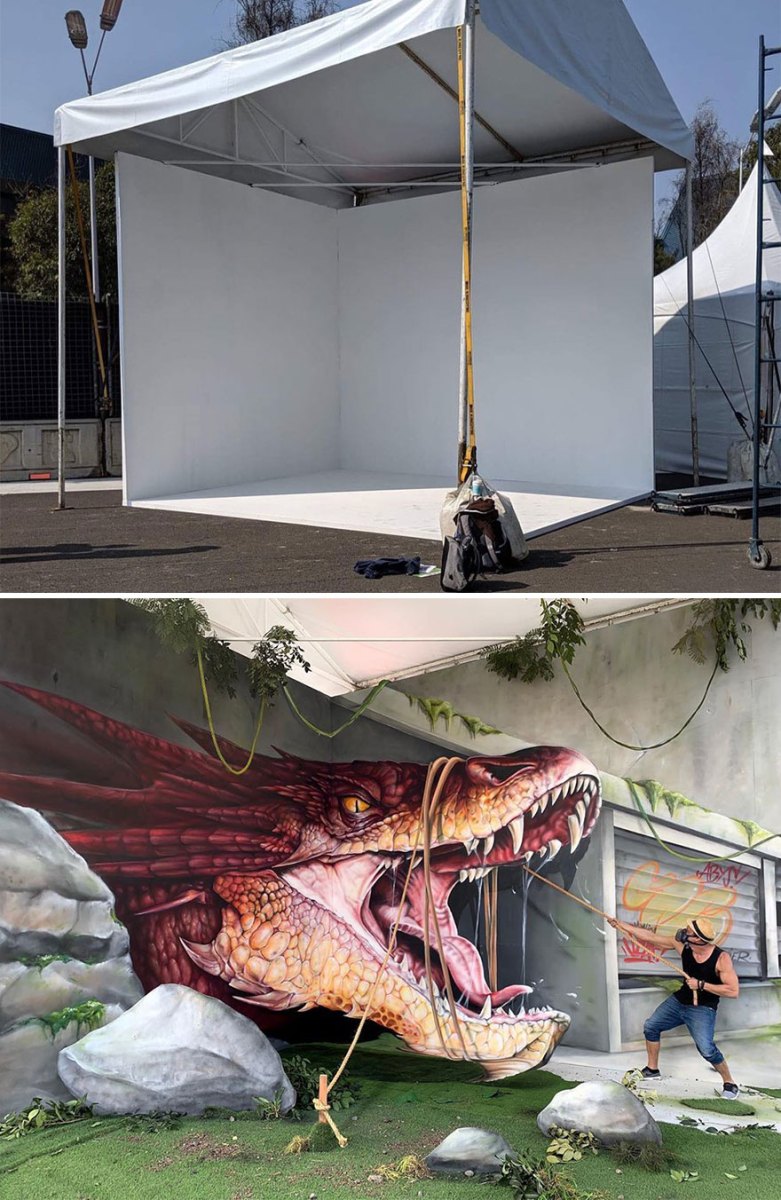
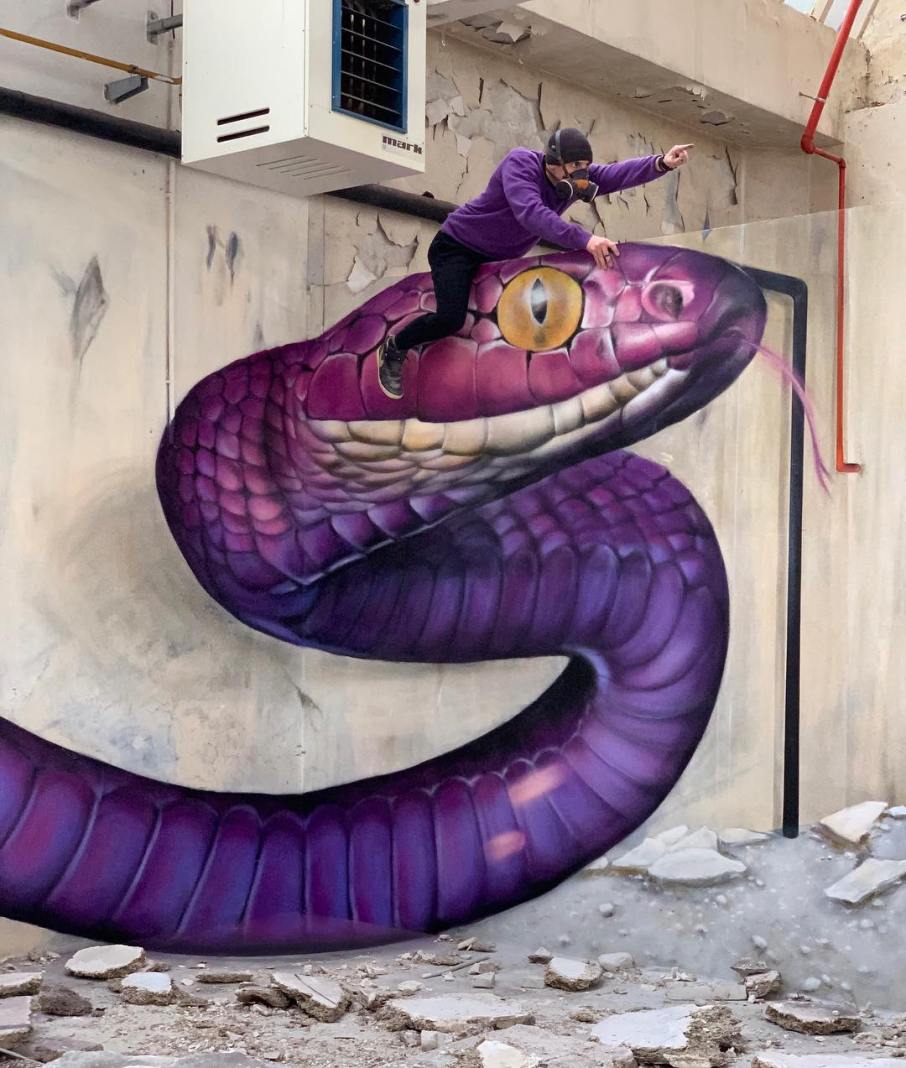
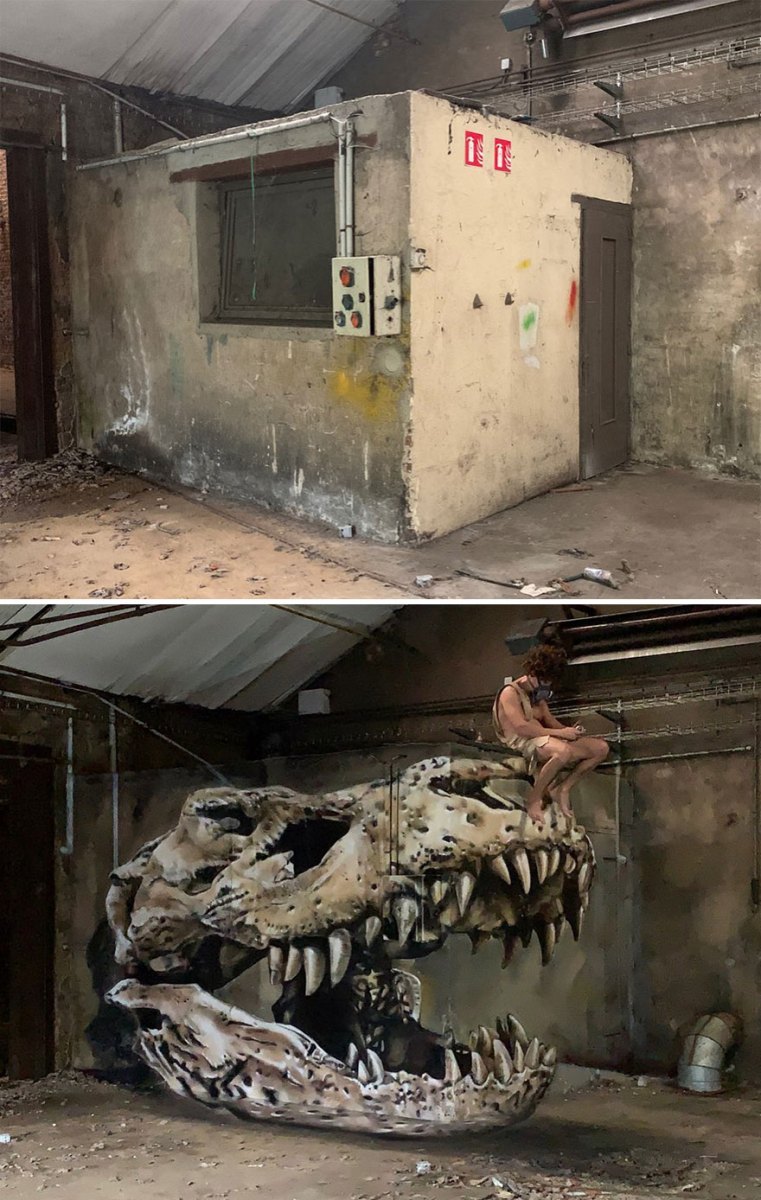
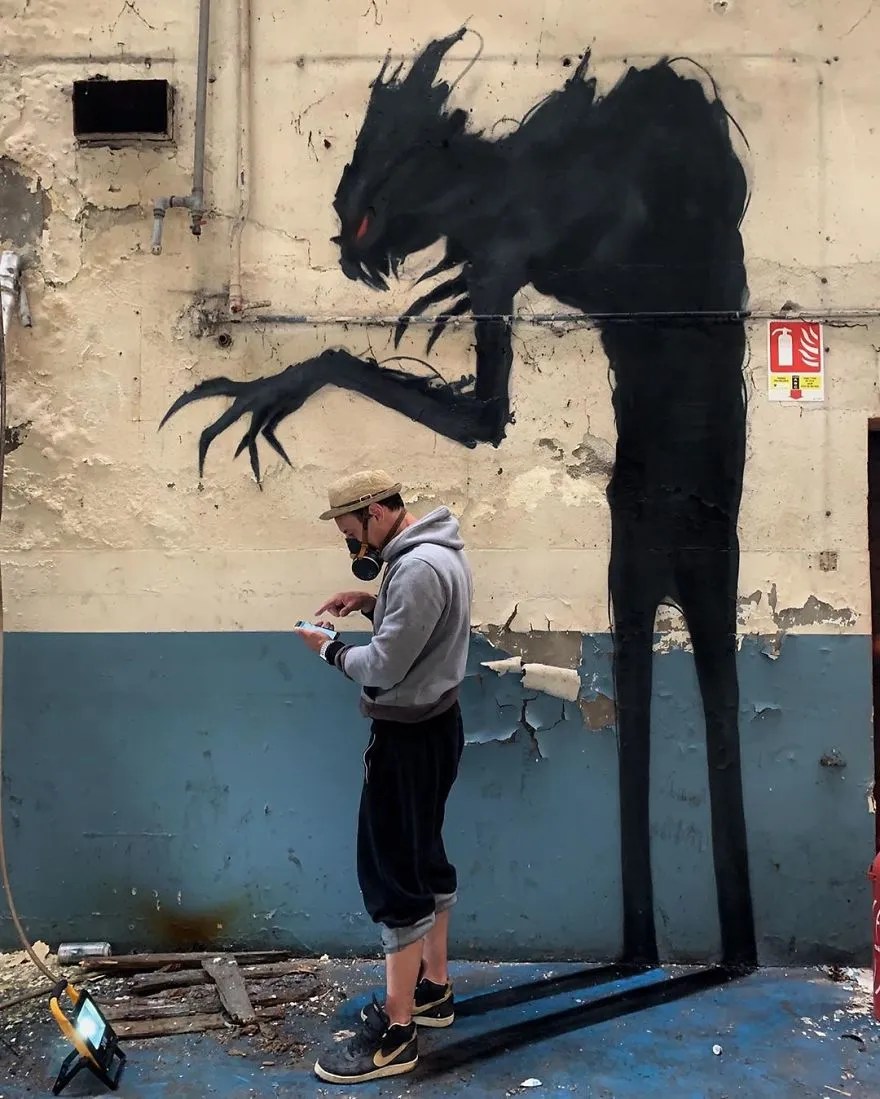
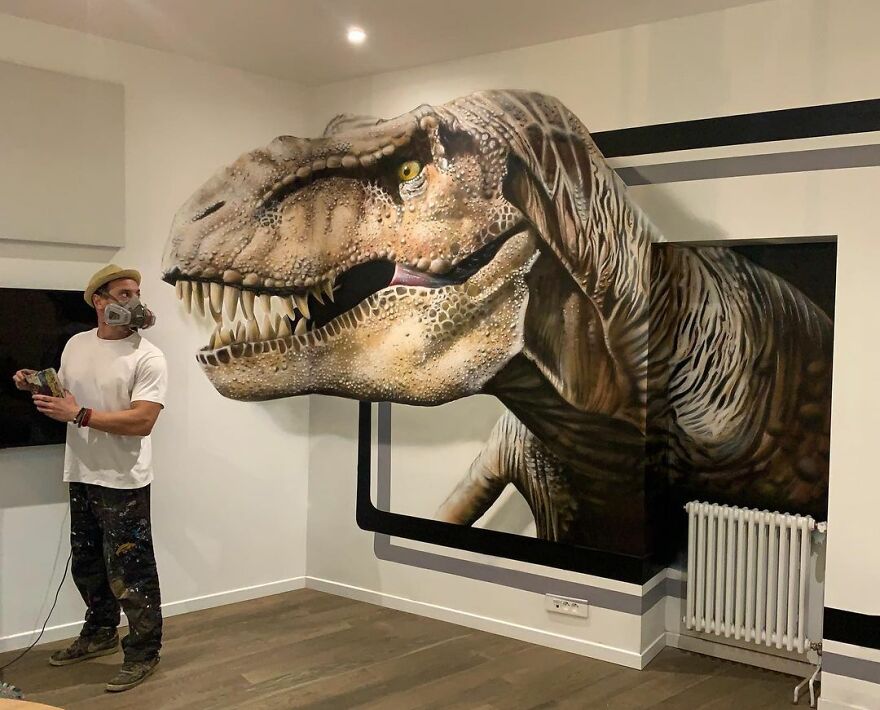
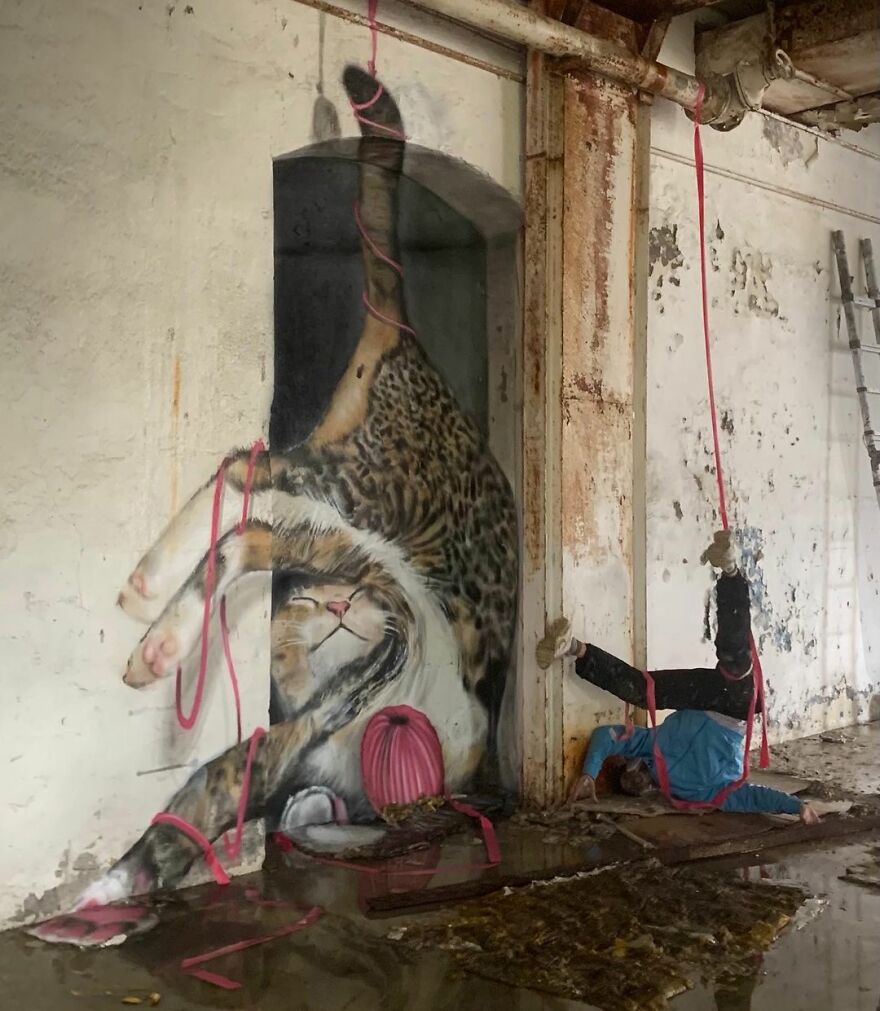
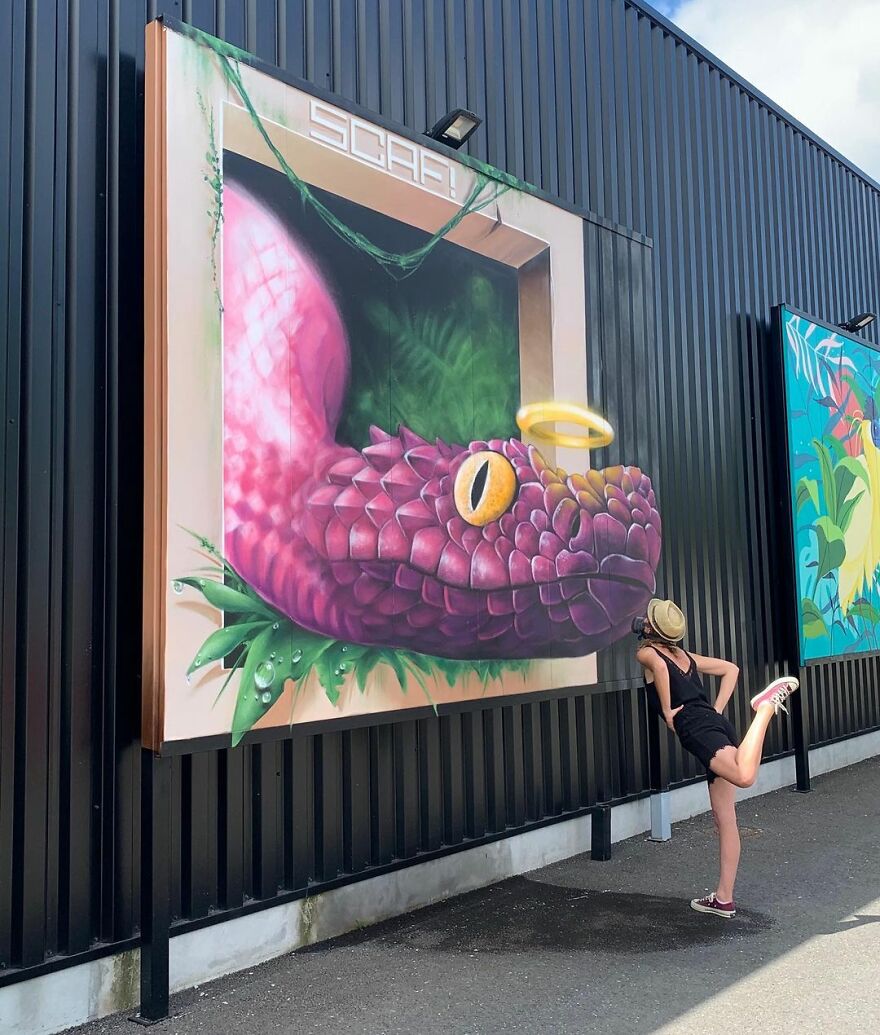
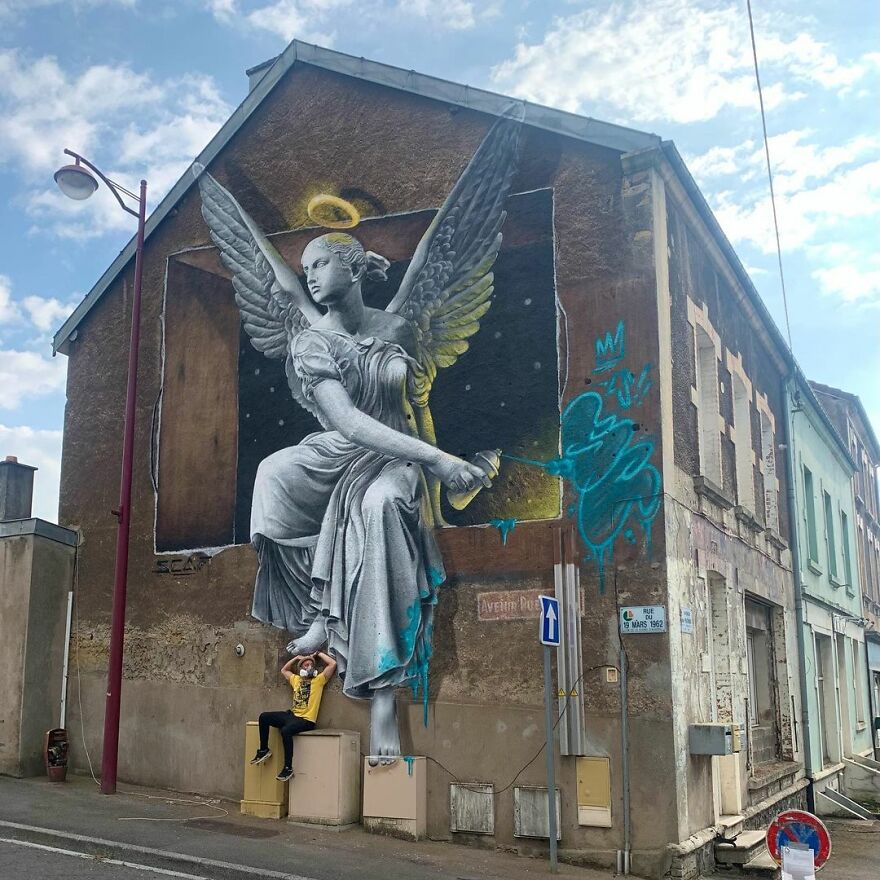
It has also turned into a source of joy, inspiration, and delight for residents and visitors alike. One such artist who has mastered the art of transforming mundane urban spaces into captivating visual experiences is the French street artist, Scaf.Scaf (Pierre Bertolotti), known for his mind-blowing 3D graffiti illusions, has garnered international acclaim for his ability to breathe new life into everyday objects. His vibrant creations, often featuring bold colors and clever optical illusion designs, are guaranteed to catch the attention of even the most hurried passerby.
With his uncanny talent for creating hyper-realistic, intricately detailed artworks, Scaf has become a celebrated figure in the global street art scene. His repertoire includes an impressive array of subjects, from prehistoric dinosaurs and menacing snakes to haunting skulls and futuristic robots.
Scaf: “The main goal is to make people smile. So that the people who discover my paintings will have a moment of lightness in a world where everything goes so fast and crazy. I watch a lot of cartoons. My goal is also to get away from the problems of everyday life and dream.”
Don’t miss out on Scaf’s latest creations! Follow him on Instagram to stay updated and explore more of his awe-inspiring 3D graffiti illusions.
Delve into a selection of Scaf’s most fascinating works below and uncover the ways in which he pushes the limits of street art to new heights:
What do you think about the art by SCAF?
Wrong but Right: Art By Oakoak (9 Photos)
Content warning: Since 2006, French street artist Oakoak has been transforming urban spaces into playgrounds of humor and creativity. Hailing from Saint-Étienne, he finds inspiration in everyday city details—cracks in walls, bent poles, and street fixtures—to create playf
Since 2006, French street artist Oakoak has been transforming urban spaces into playgrounds of humor and creativity.
Hailing from Saint-Étienne, he finds inspiration in everyday city details—cracks in walls, bent poles, and street fixtures—to create playful and poetic interventions that engage with their surroundings. His work turns overlooked elements into unexpected moments of joy, often bringing a smile to those who pass by.
Oakoak’s art has been exhibited globally, with solo shows in cities such as Newcastle, Barcelona, and Chicago, and collaborations with renowned artists like Fra Biancoshock and Zabou. Despite his international reach, his work retains an intimate and spontaneous quality, making the world feel a little more fun and a lot more alive.
🔗 Follow Oakoak on Instagram
1.
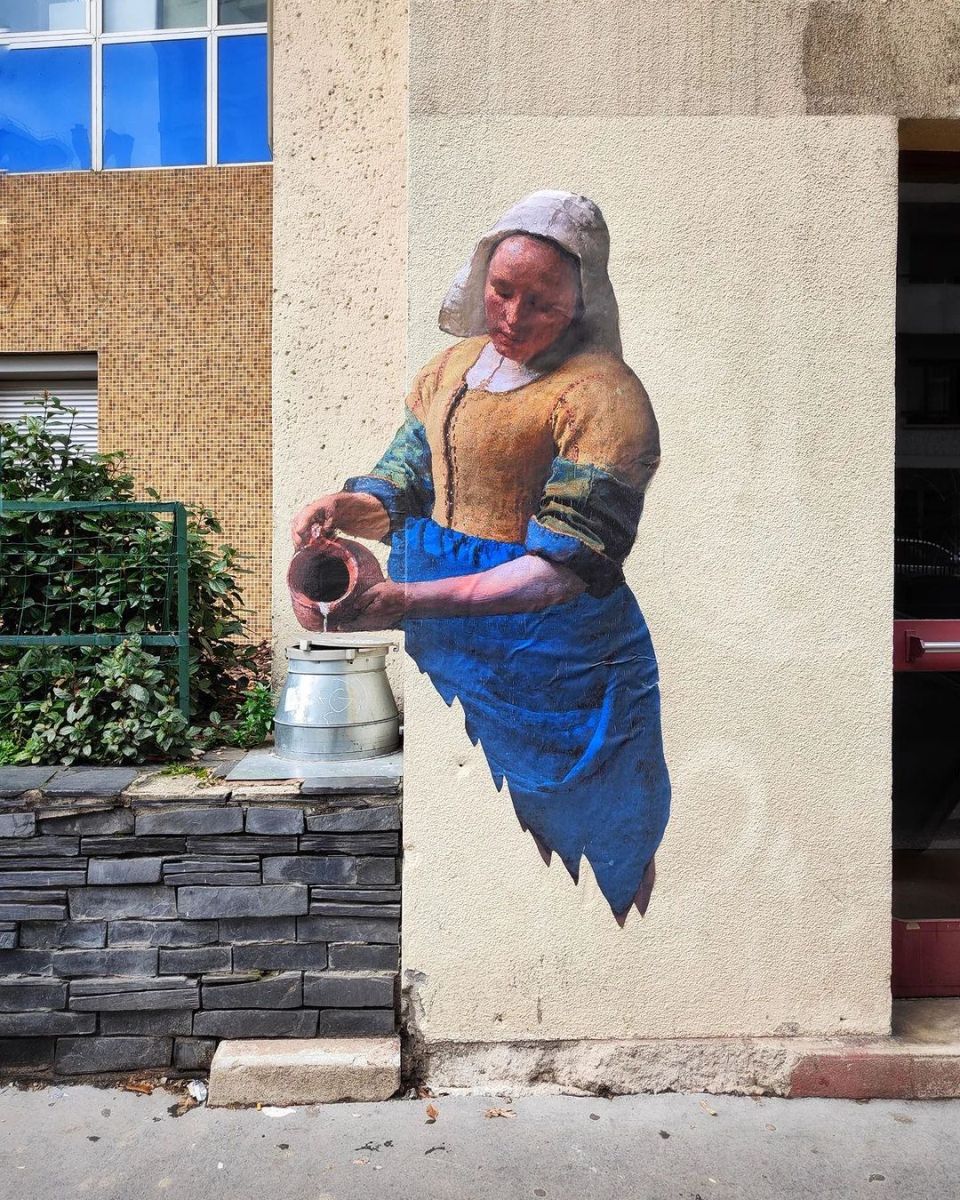
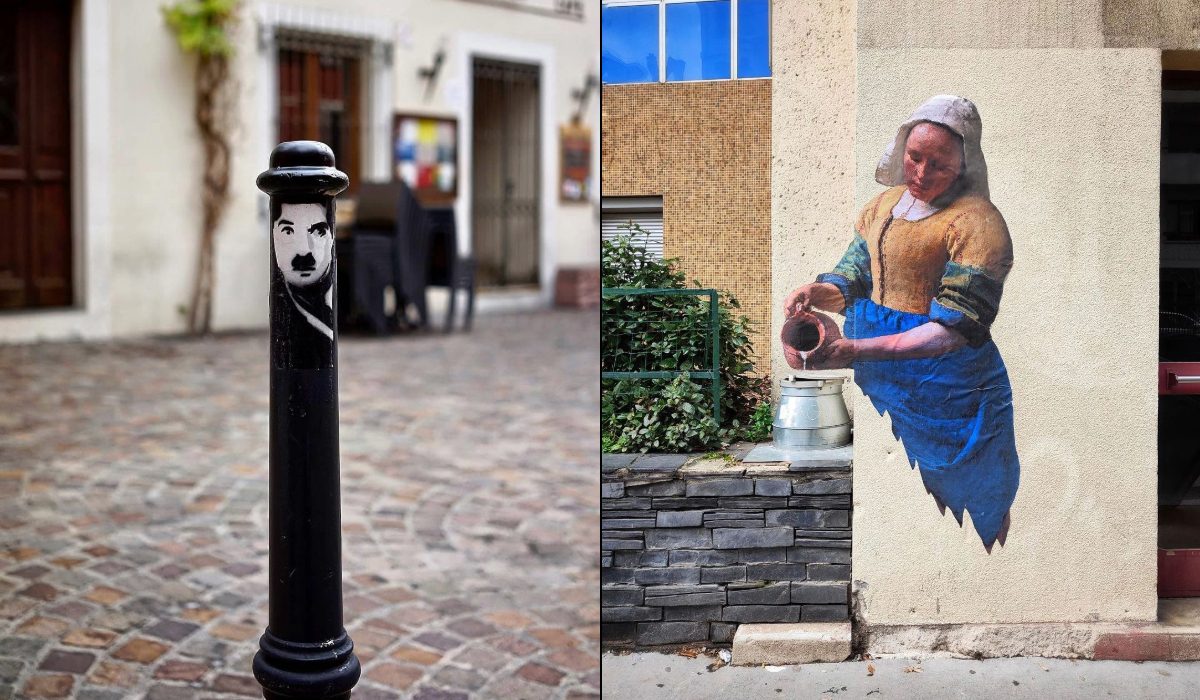
“The Milkmaid” Reimagined
Oakoak brings Johannes Vermeer’s The Milkmaid to life in an urban setting. The artwork is seamlessly integrated with a real milk can, making it appear as though the milk is pouring into it. This clever illusion merges classical art with modern street elements.
2.
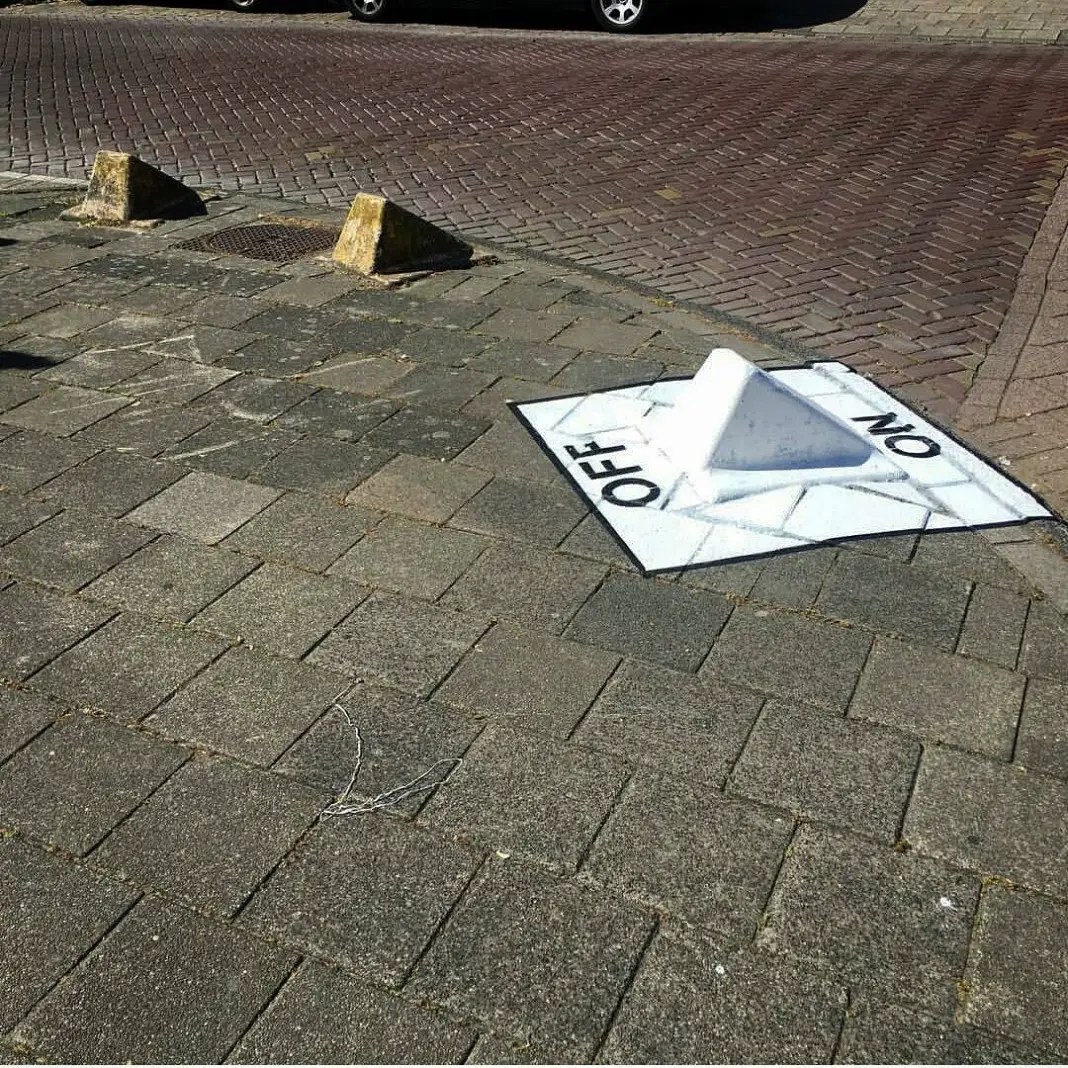
On/Off Switch
This playful street artwork creates the illusion of a massive “ON/OFF” switch embedded in the pavement. The protruding element gives the appearance of a button, making passersby want to reach down and flip it.
3.
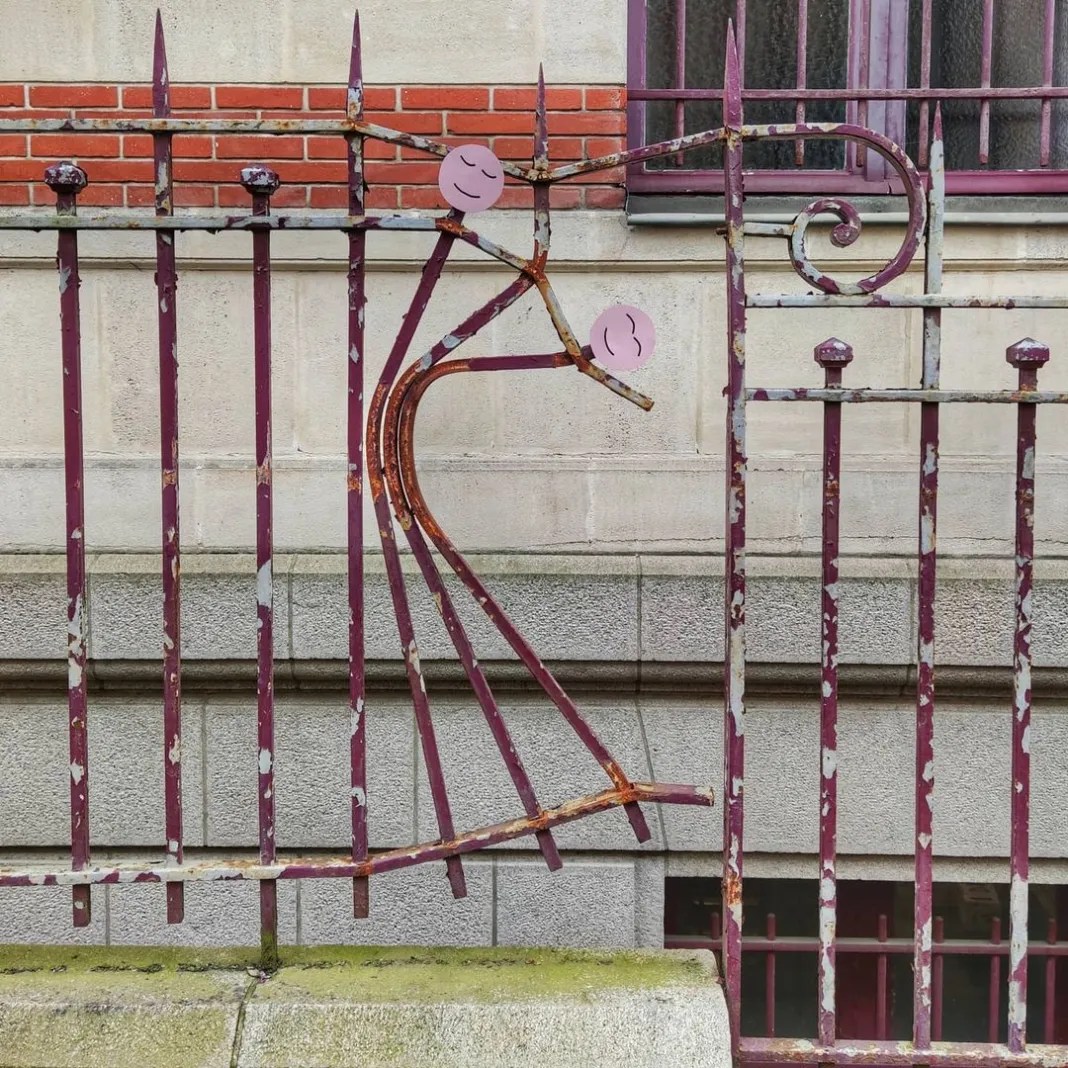
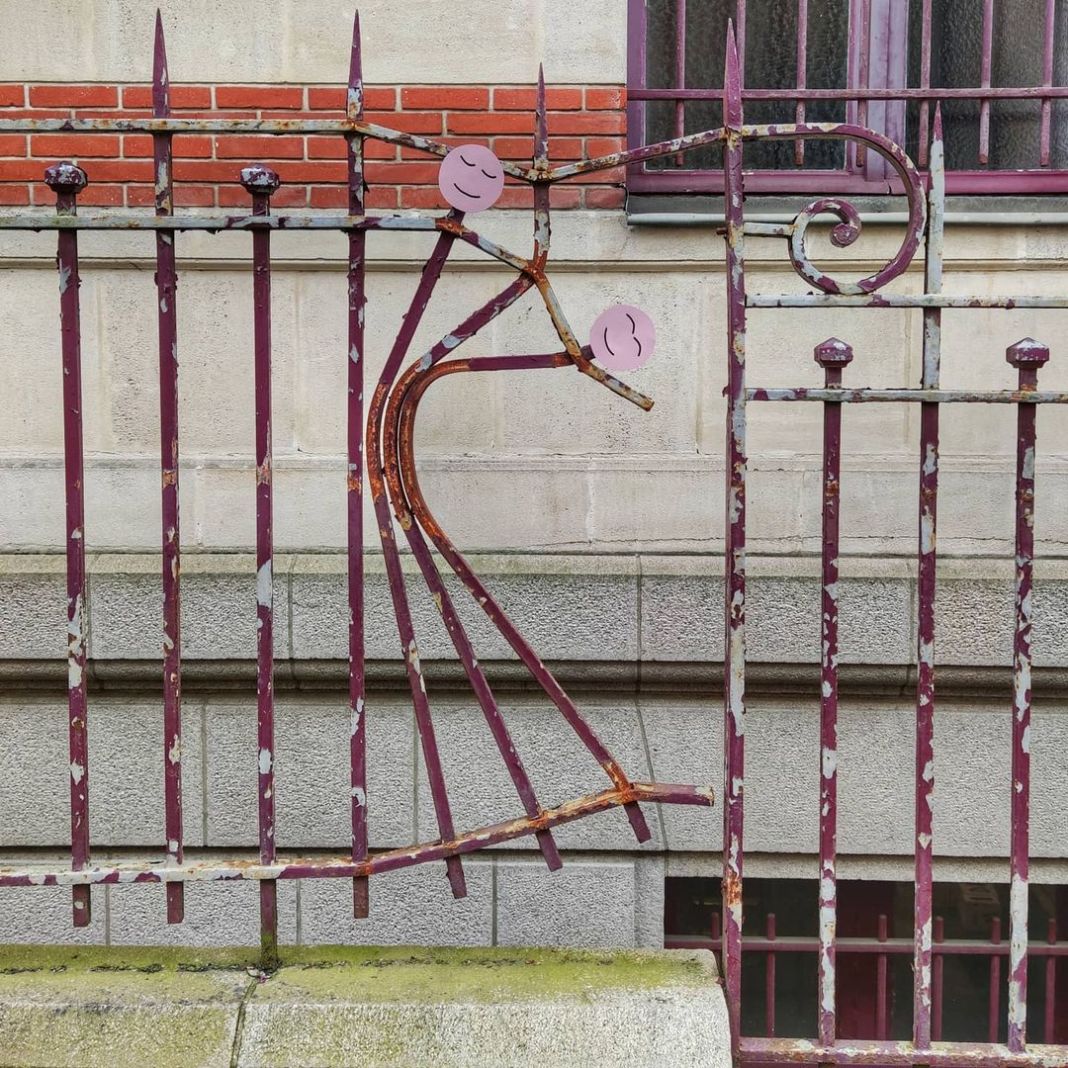
Dancing with the Fence
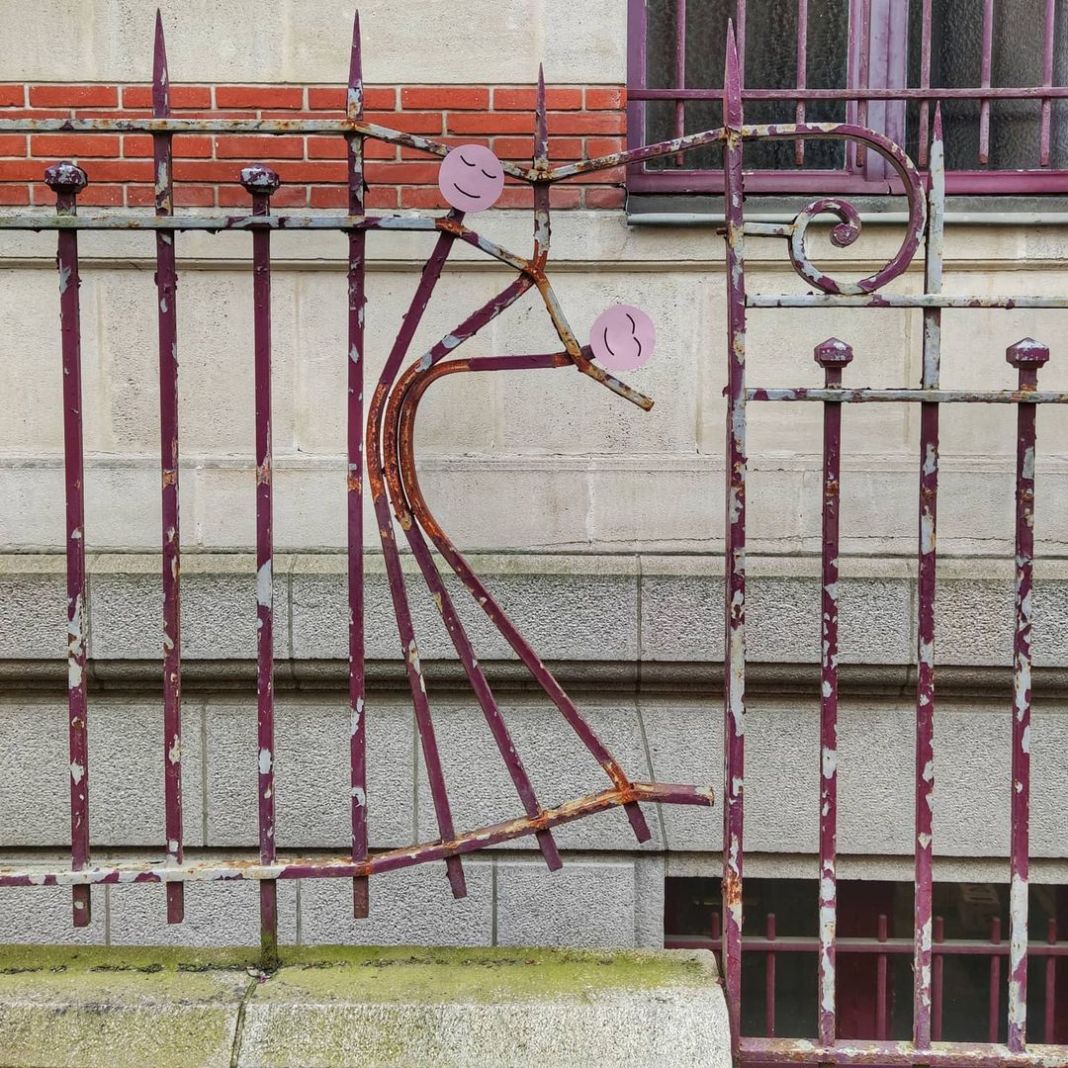
Oakoak transforms a bent section of an old metal fence into a dancing figure. By adding small, round faces to the rusted metal, the artwork gives life to what was once just urban decay, turning it into a whimsical moment of movement.
4.
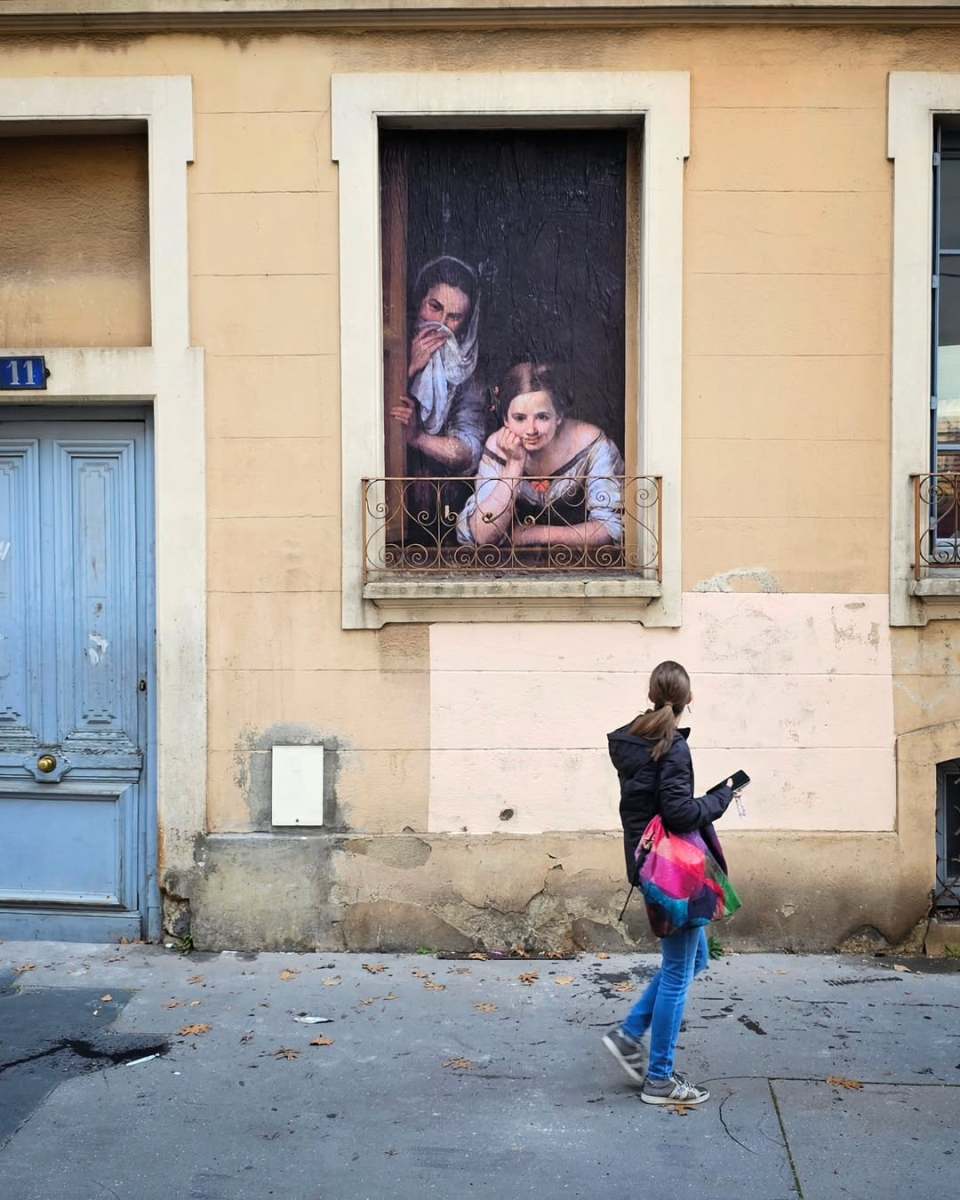
Balcony Illusion
In this creative piece, Oakoak uses a real iron balcony and extends it with a painted silhouette of a person standing on it. The clever placement of the figure makes it appear as if someone is leaning casually on the railing, blending reality and illusion.
5.
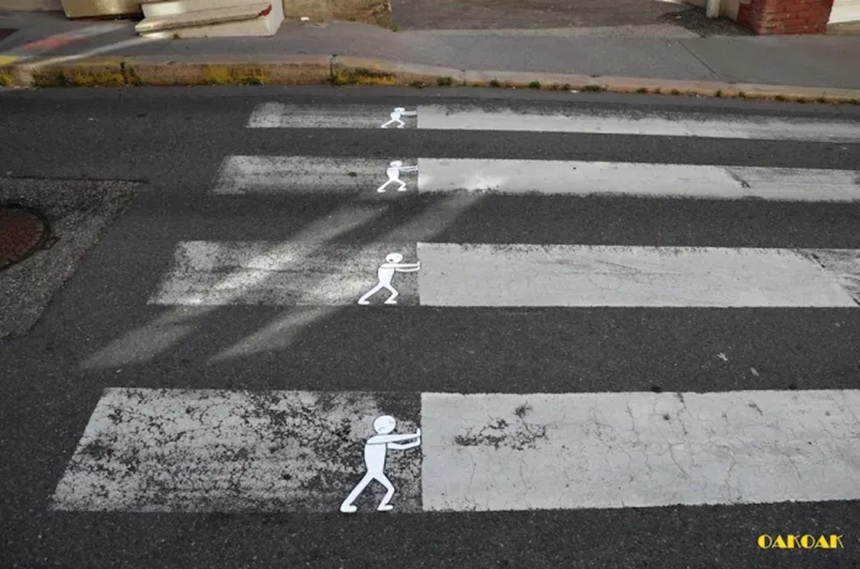
Pushing the Crosswalk – France
On a worn-out pedestrian crossing, small painted stick figures appear to be pushing the white stripes, playfully engaging with the faded lines as if they are part of a larger urban illusion. This intervention adds humor to a commonly overlooked street feature.
6.
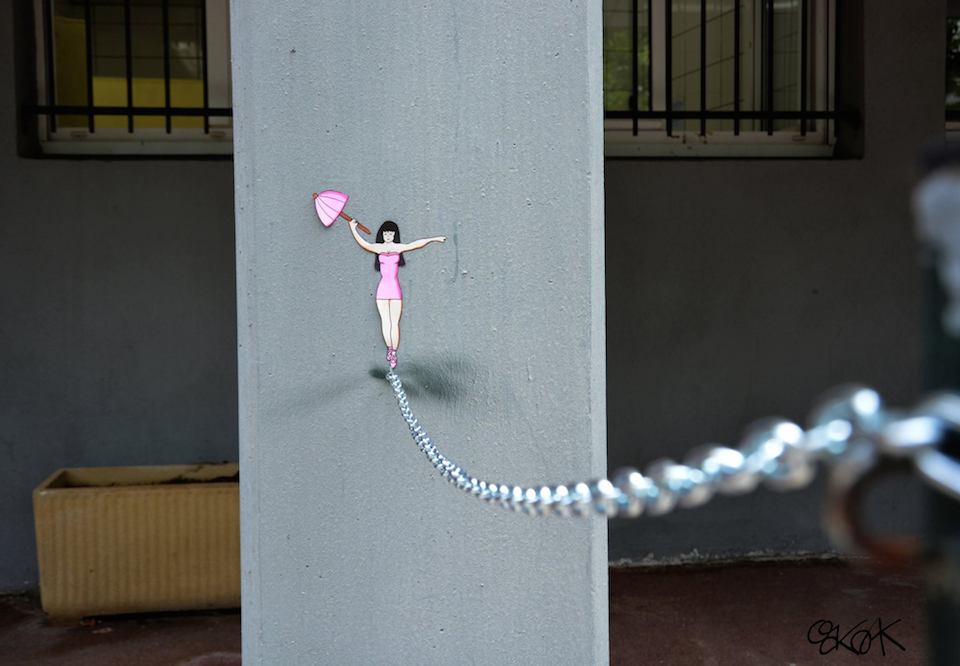
Tightrope Walker
A miniature figure in a pink dress balances on a real metal chain, holding an umbrella for support. The artwork transforms an ordinary urban element into a stage for a daring tightrope act.
7.
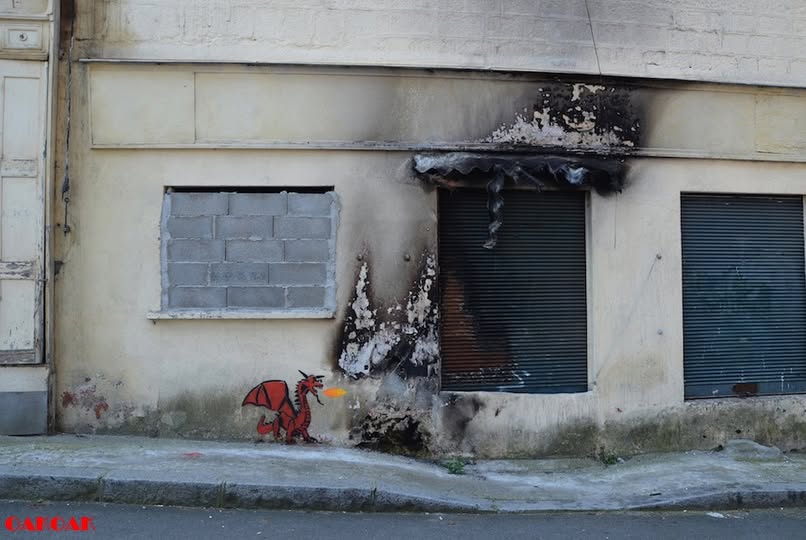
The Fire-Breathing Dragon
In this witty urban piece, Oakoak uses fire damage on a building’s exterior to create a scene where a small red dragon appears to be the cause of the scorched wall, breathing flames upward.
8.
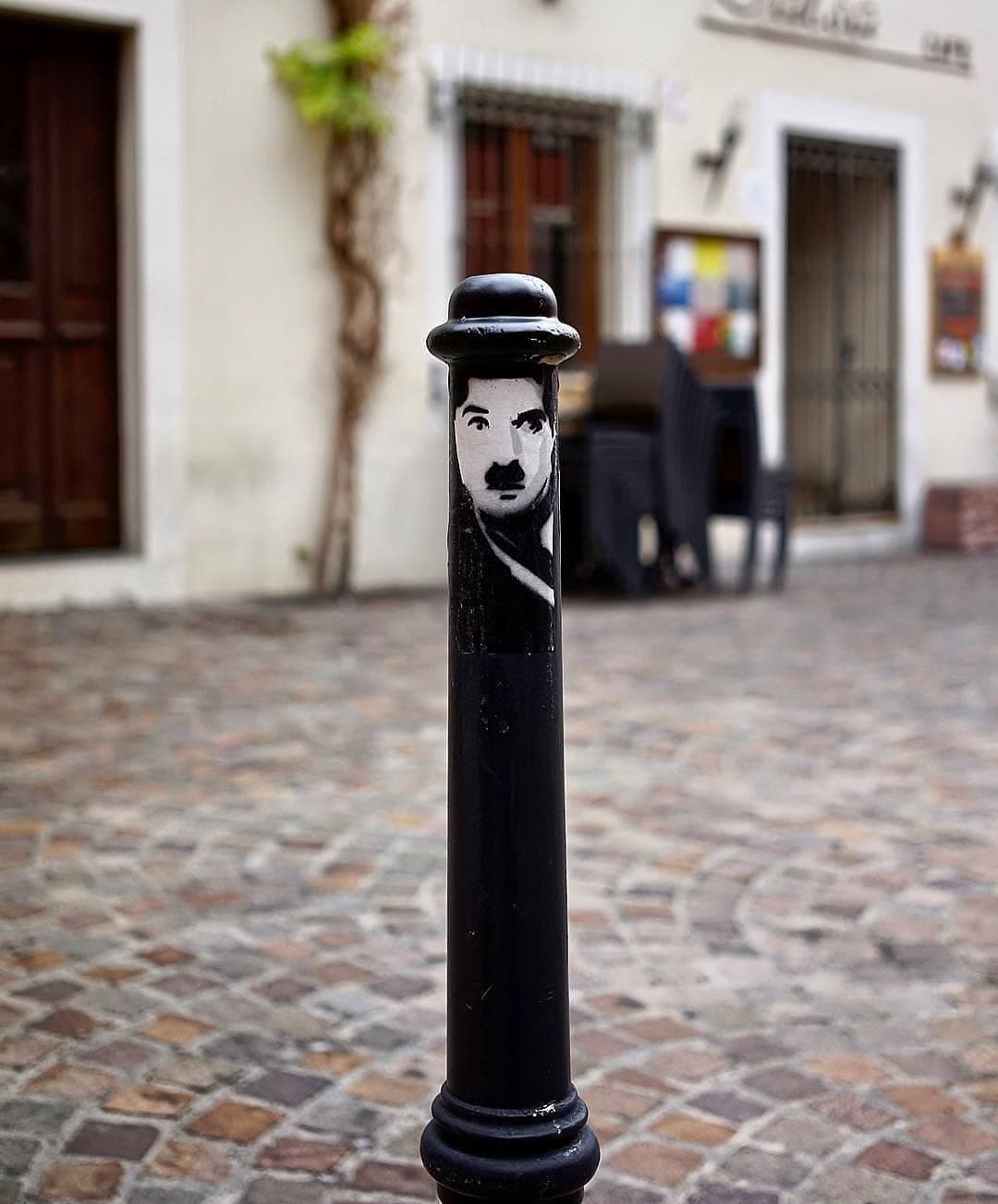
Charlie Chaplin Bollard
Oakoak turns a simple black bollard into a tribute to Charlie Chaplin. By adding the iconic face and hat, the mundane street fixture is transformed into a recognizable pop culture figure.
9.
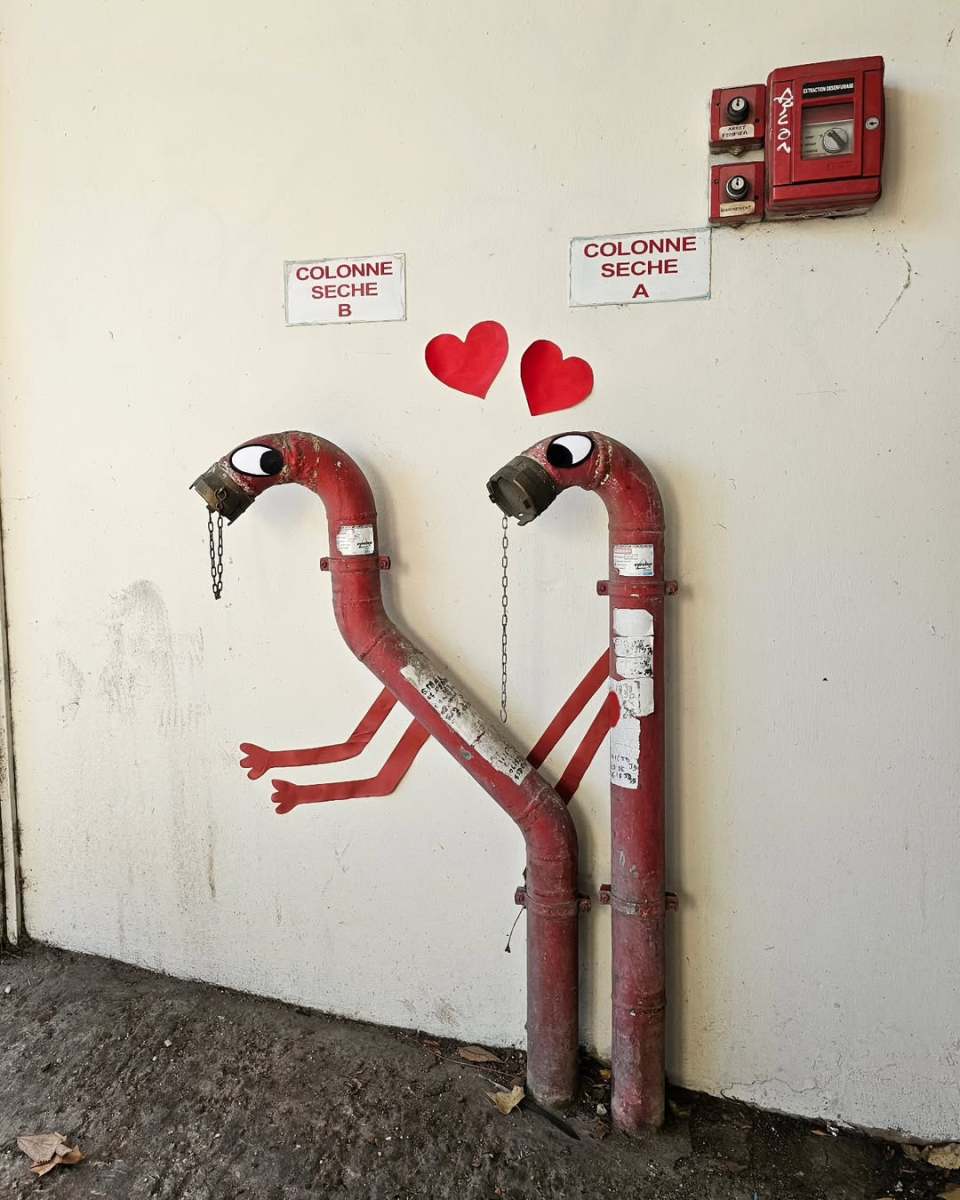
Hydrant Lovebirds
In this playful and romantic intervention, Oakoak transforms two red fire hydrant pipes into a pair of lovebirds gazing at each other. With painted eyes, arms, and floating hearts above them, the pipes appear to embrace, turning an ordinary urban feature into a charming street scene.
More by Oakoak: From Homer Simpson to Obelix: Oakoak’s Genius Street Art (10 Photos)
Which is your favorite?
Lovely by Oakoak (10 Photos)
Since 2006, OAKOAK has had streets, walls, sidewalks and roads as its playground. Originally from Saint Etienne, he sticks his drawings in each of the places he crosses in order to create a smile in the pedestrian at the bend of a street where he does not expect it.
His approach consists of diverting urban elements, playing with flaws that at first glance seem of no particular interest, such as cracks in a wall. He thus adds his own vision, his own references which often relate to the geek universe. A way of imagining the urban space in a more poetic way.From playful interactions with crosswalks to whimsical depictions of beloved cartoon characters like Homer Simpson and Obelix, Oakoak’s work brings a fresh perspective to the streets.
🔗 Follow OAKOAK on Instagram
1.
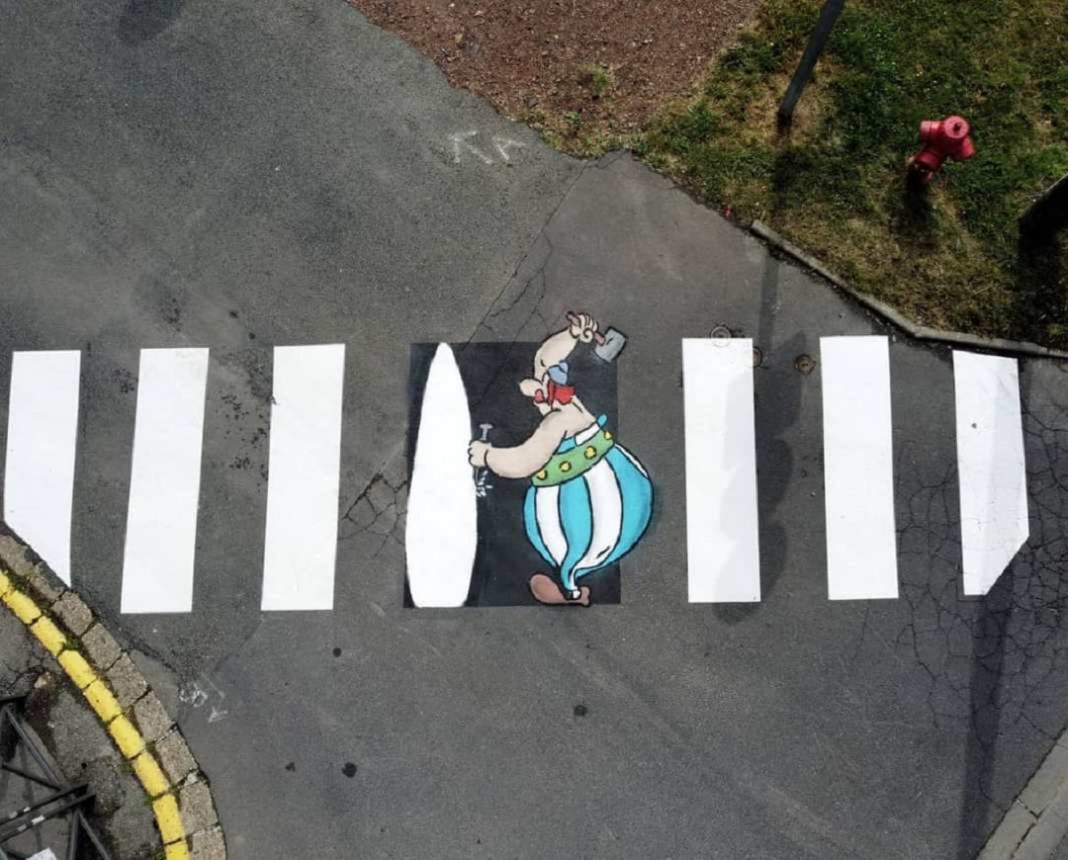
Oakoak transforms a pedestrian crossing into a playful scene with Obelix carrying a menhir, blending urban infrastructure with comic creativity.
2.
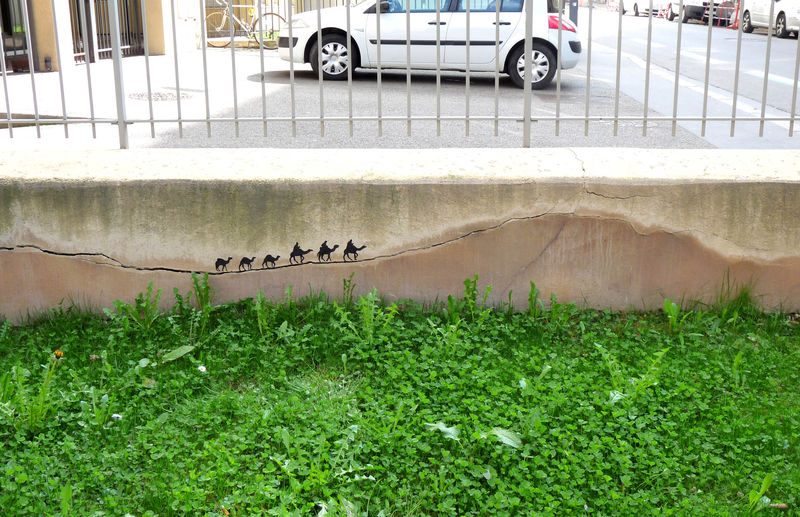
Oakoak turns a natural crack in a concrete wall into a desert path for a caravan of camels.
3.
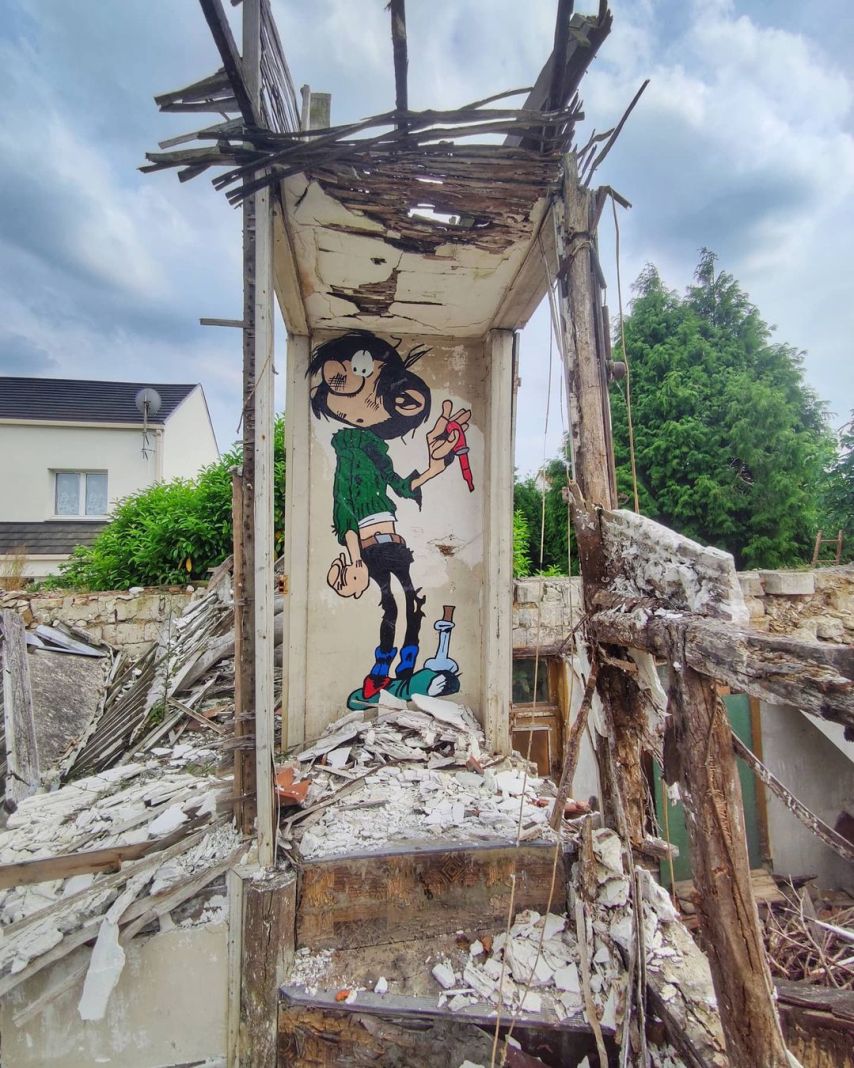
Gaston Lagaffe, painted by Oakoak, brings humor and life to the remains of a crumbling building.
4.
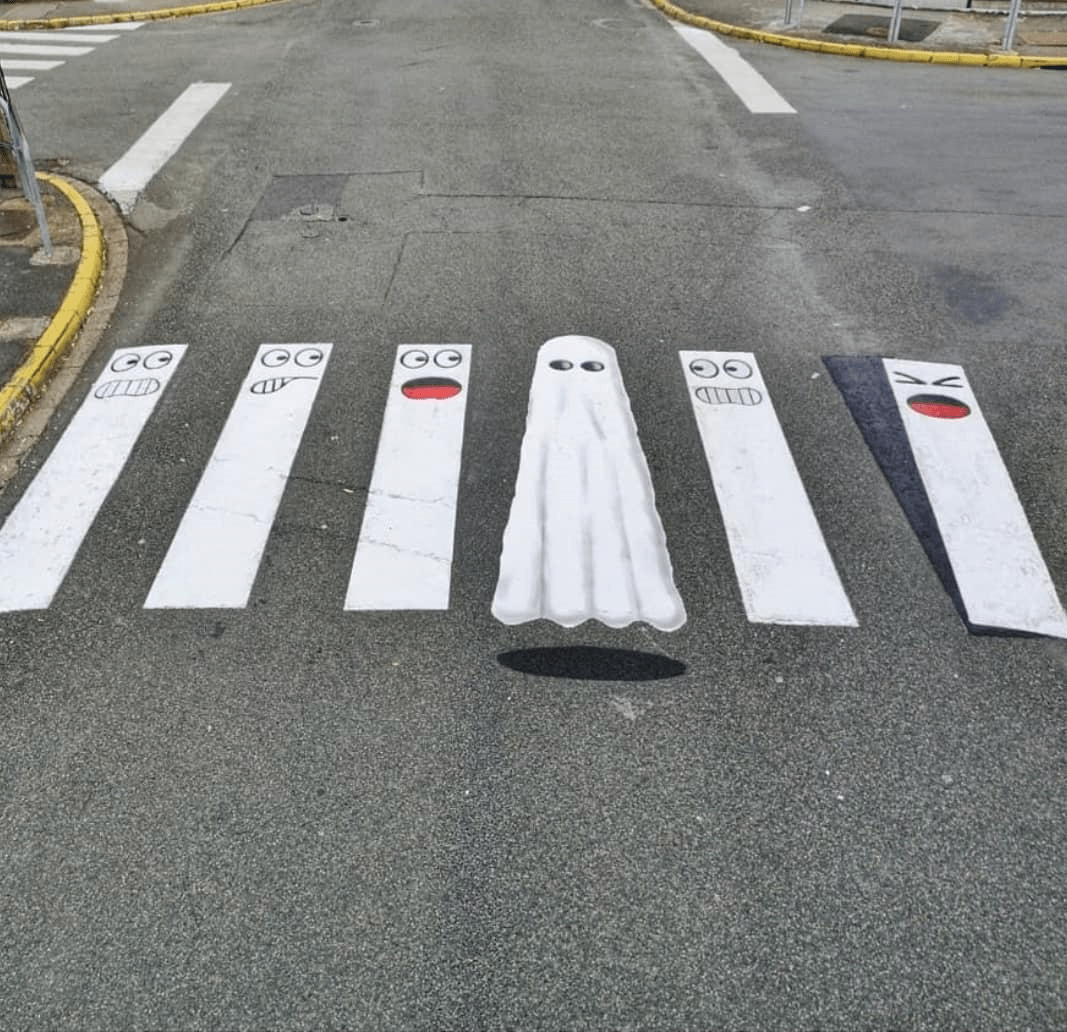
This crosswalk becomes a quirky playground in Oakoak’s hands, featuring cartoon faces and a 3D ghost.
5.
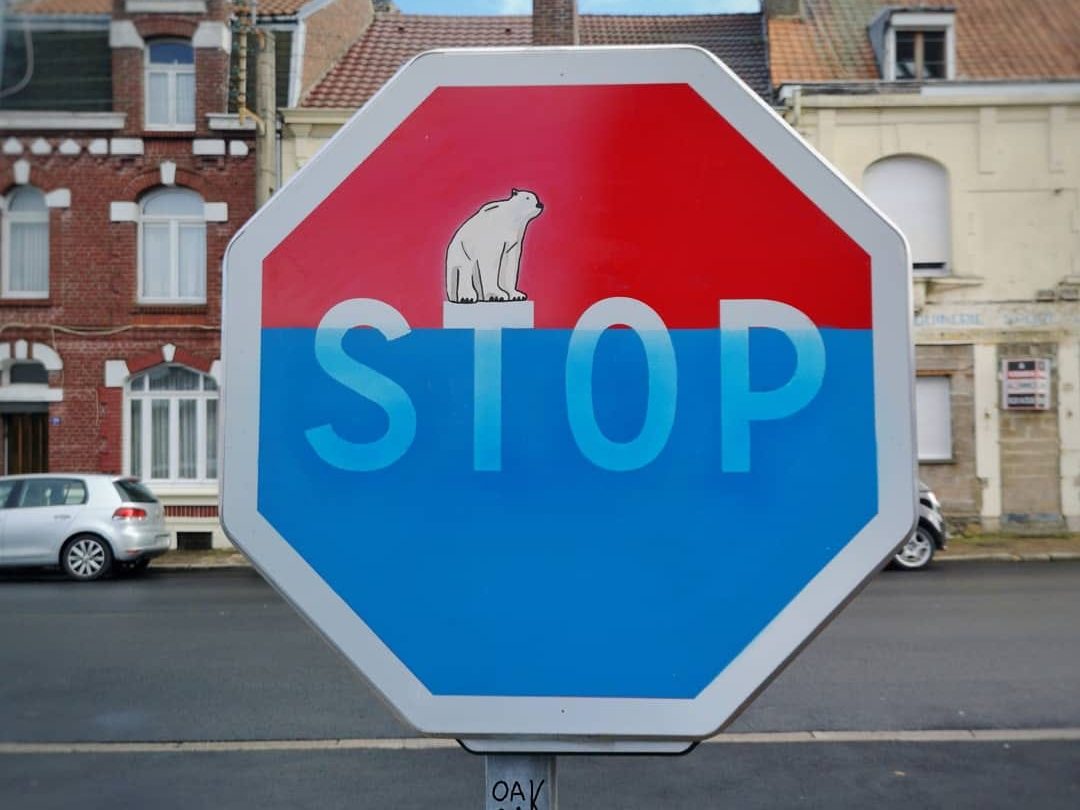
Oakoak uses a stop sign to highlight climate change with a polar bear stranded on melting ice.
6.
Oakoak transforms a bent metal fence into a joyful dancing figure.
7.
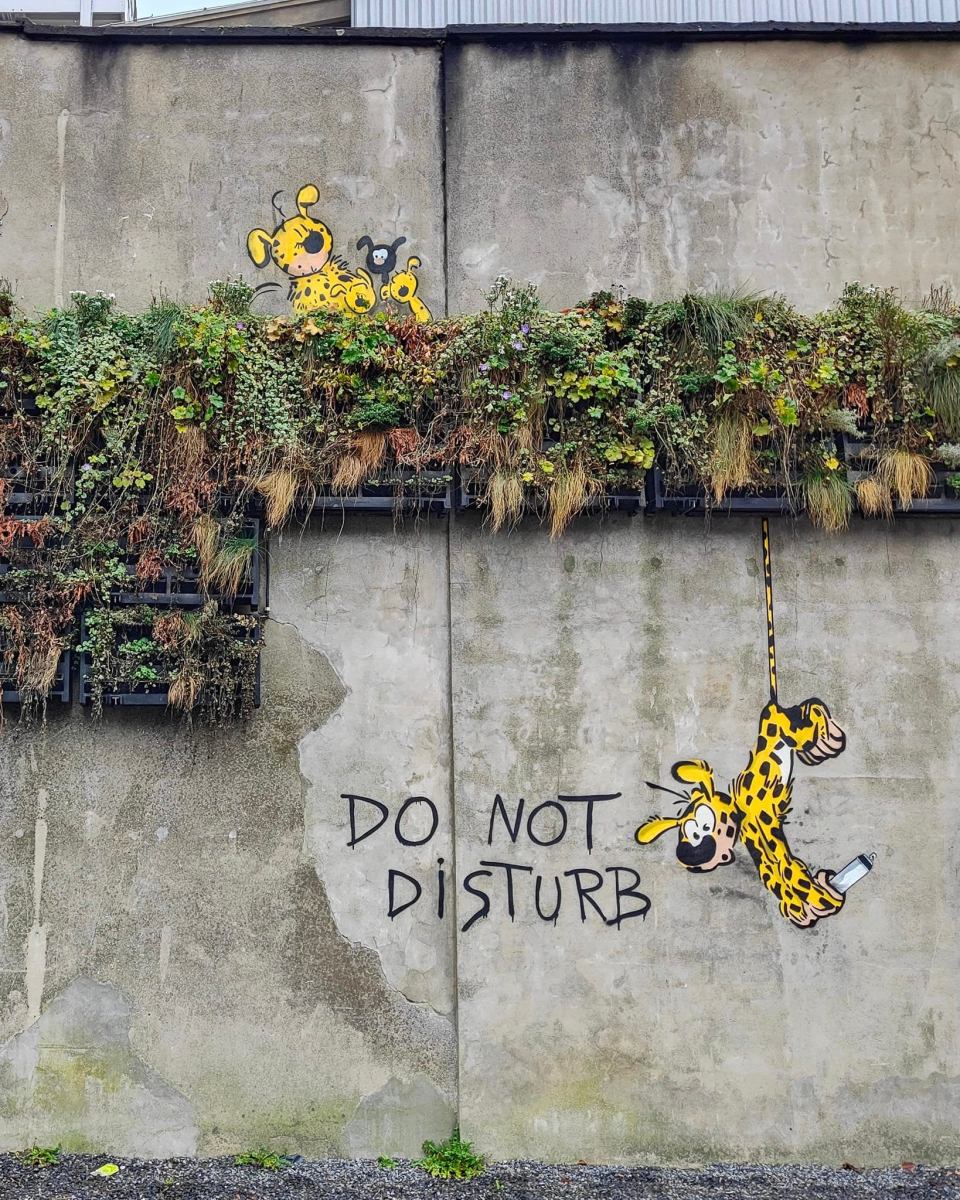
Marsupilami comes to life in Oakoak’s piece, swinging and peeking from an overgrown planter on a concrete wall.
8.
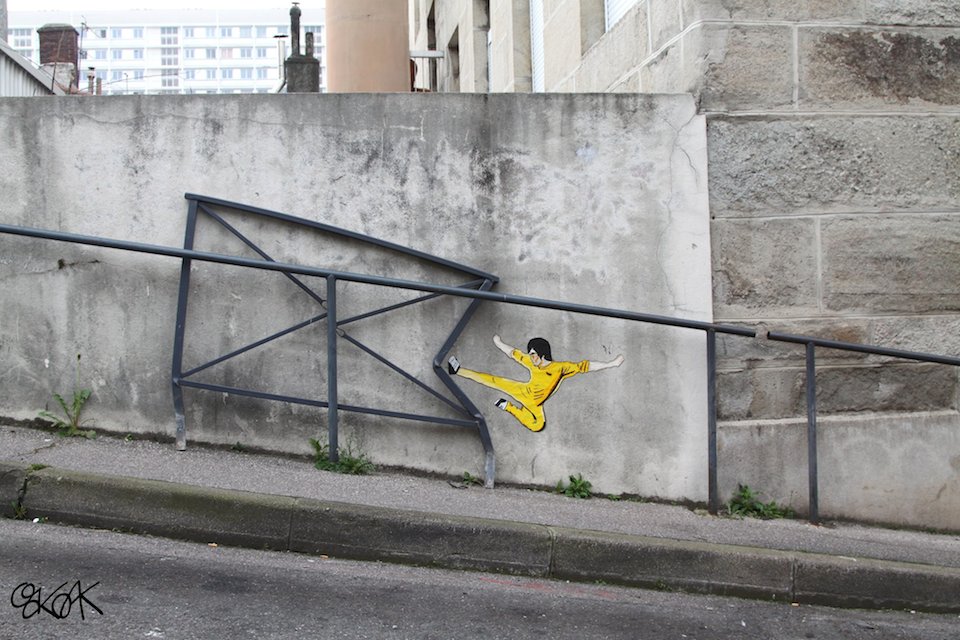
Oakoak incorporates a bent railing into a dynamic scene of Bruce Lee delivering a powerful kick.
9.
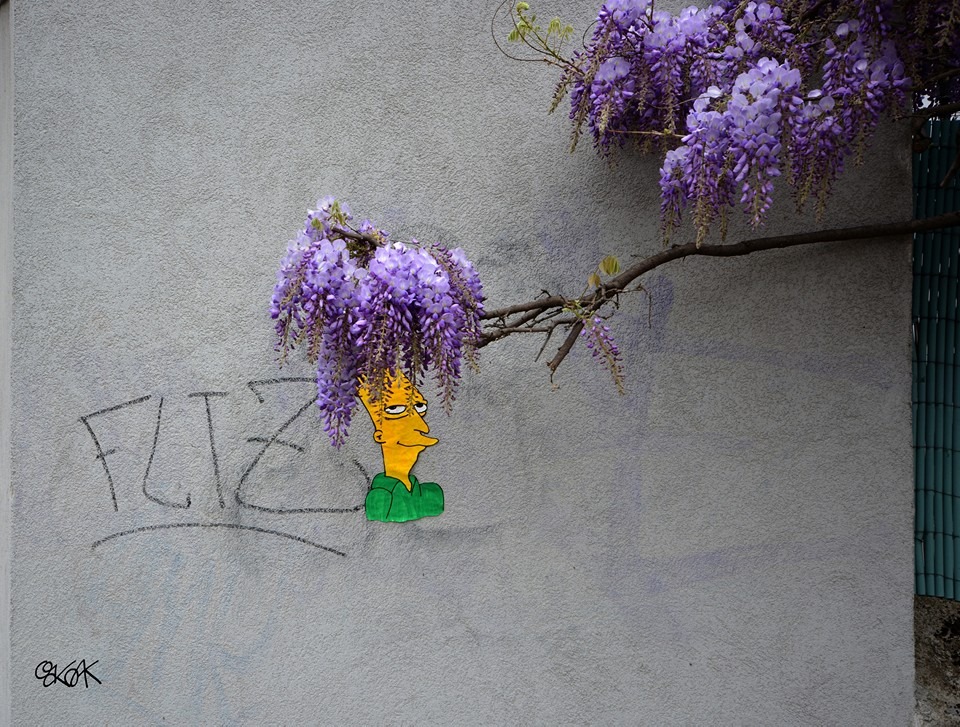
Oakoak humorously combines wisteria flowers with a painted Sideshow Bob.
10.
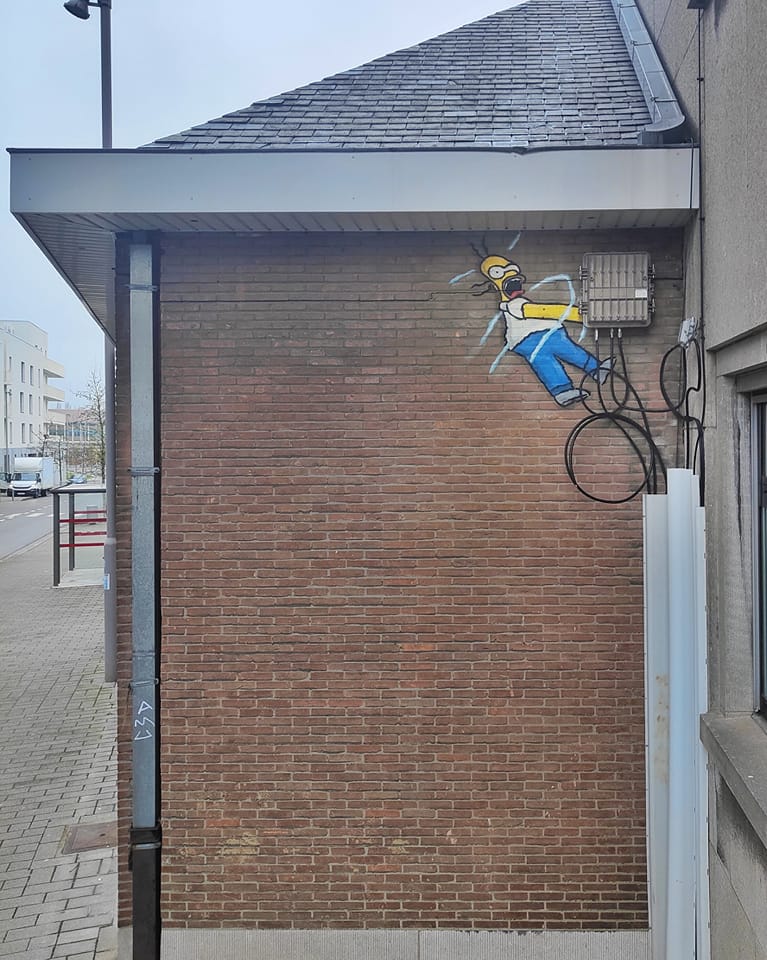
Homer Simpson hilariously interacts with real electrical wires.
OAKOAK: For me street art has to use urban elements. It’s the most important thing for street art. Using and playing with things you find in the street.
More: Wrong but Right: Art By Oakoak (9 Photos)
Which one is your favorite?
oakoak (@oakoak_street_art) • Instagram photos and videos
124K Followers, 354 Following, 882 Posts - See Instagram photos and videos from oakoak (@oakoak_street_art)www.instagram.com