Search
Items tagged with: oakoakStreetArt
9 Street Art Dragons That Look Ready to Fly Off the Wall
Content warning: Which one is your favorite?
Dragons have always symbolized power, wisdom, and imagination—and now they’ve taken flight across city walls around the world. From towering, photorealistic beasts to playful chalk sketches curled in brick cracks, these murals transform dull facades into realms of fantasy. This collection features striking dragons spotted from Malaysia to France, from anime tributes to mischievous creatures hiding in plain sight. Whether fierce, friendly, or surreal, each artwork showcases how street art keeps the myth alive in the heart of our cities.
More: 30 Sculptures You (probably) Didn’t Know Existed
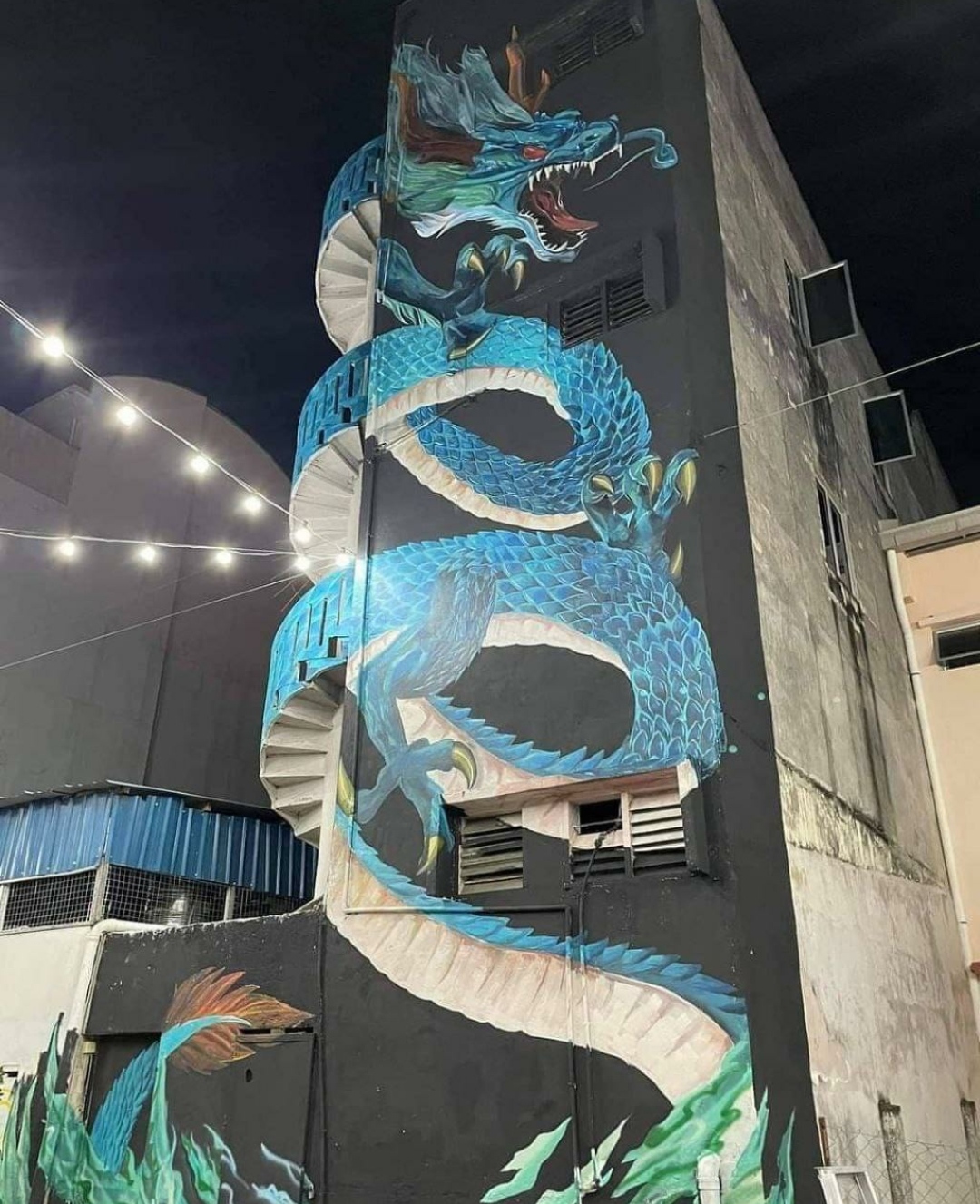
The Giant Greenish-Blue Dragon Mural — Kuantan, Malaysia
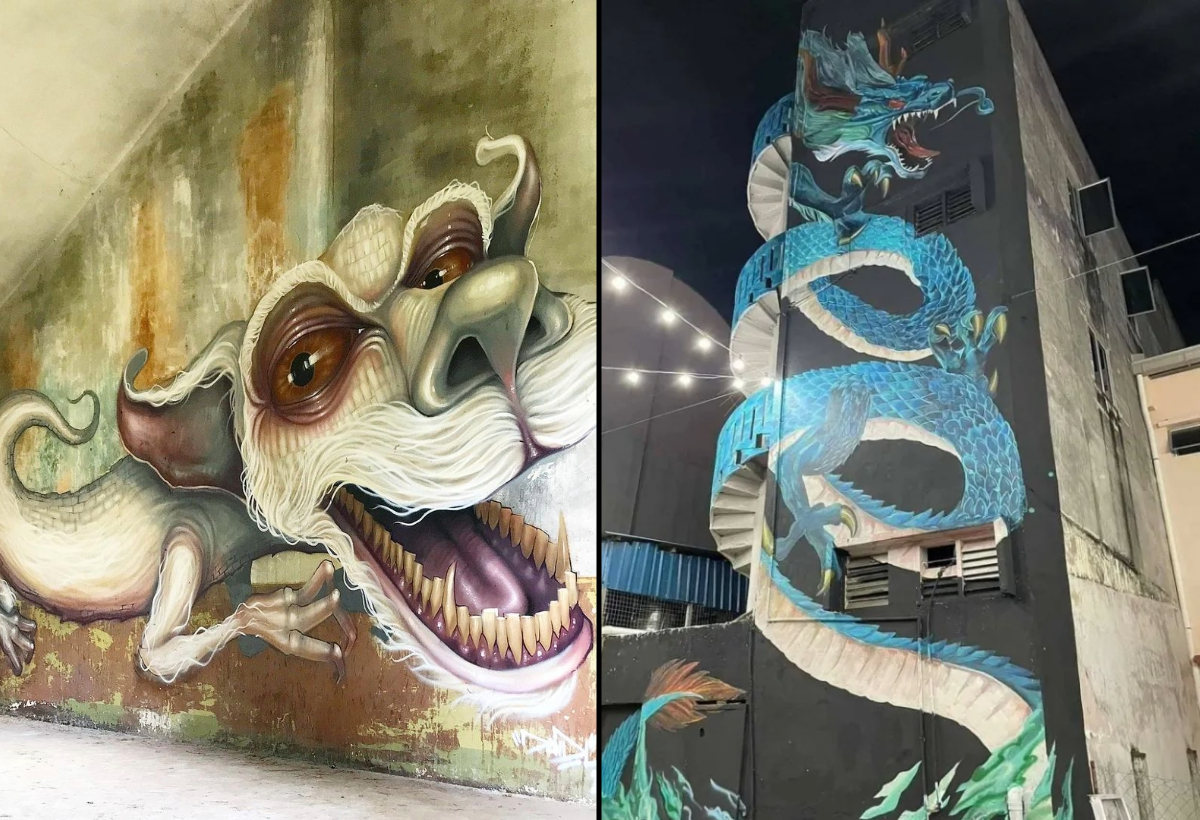
A three-story dragon coils around a spiral staircase, appearing to slither across the building’s surface. The detailed scales and vivid blues contrast with the black wall, giving this mural an almost cinematic presence. The mural is part of Project 06 at Kuantan Art Street in Pahang.
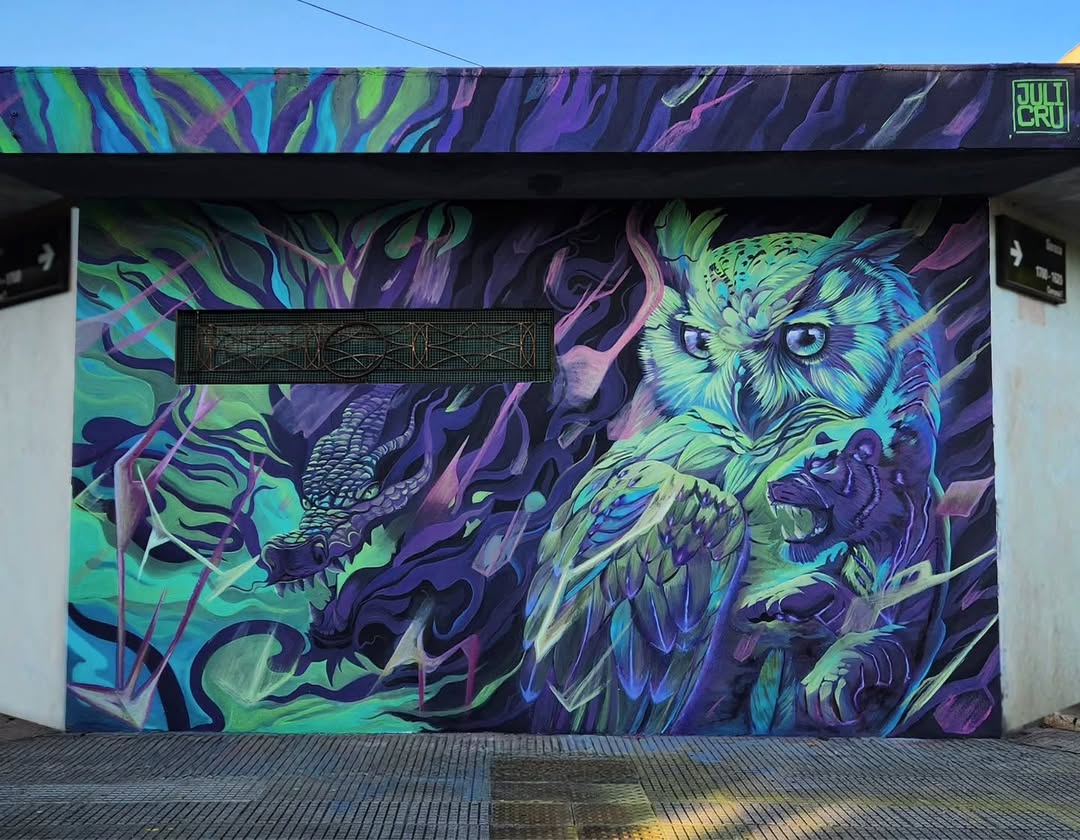
The Owl and the Dragon — Buenos Aires, Argentina
A glowing owl stares intensely from the right while a scaled dragon snakes through ethereal, neon-colored shadows on the left. Painted by Julian Cruz Solano, this fantasy-themed mural merges nocturnal power with mythic energy.
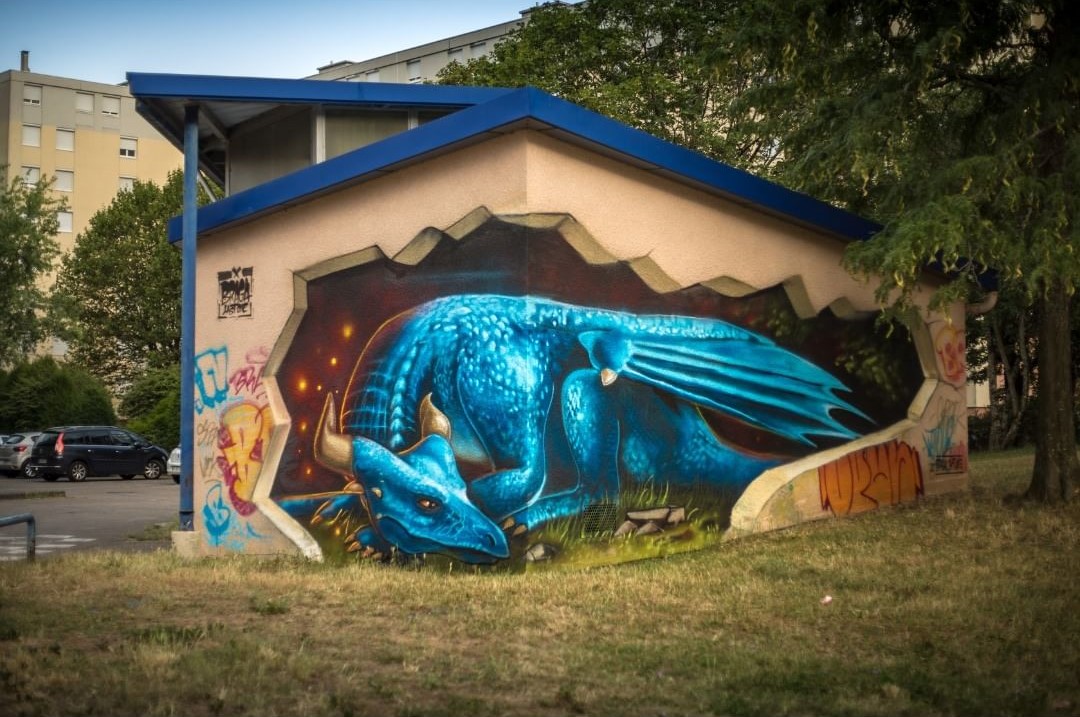
Dragon and Mouse — Le Pont-de-Claix, France
By Braga Last1, this clever piece features a green dragon painted to fit perfectly into the hollowed-out holes of a brick wall, peeking out with curiosity at a small painted mouse nearby. It’s a charming use of urban textures and playful narrative placement.
More: Mind-Bending 3D Street Art by Braga Last1: Anamorphic Masterpieces
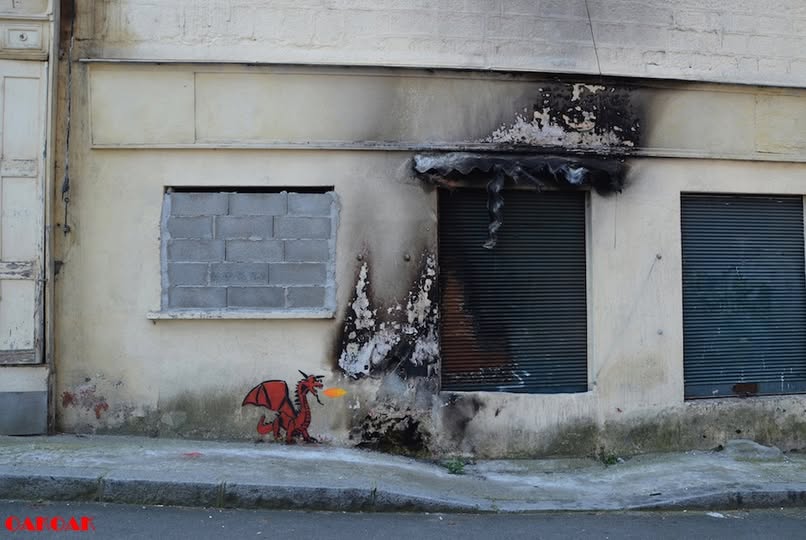
The Fire-Breathing Dragon — France
A tiny red dragon seems to have scorched the side of a building, cleverly incorporating real fire damage. This playful piece by Oakoak turns decay into storytelling, showing the dragon mid-roar.
More: From Homer Simpson to Obelix: Oakoak’s Genius Street Art! (10 Photos)
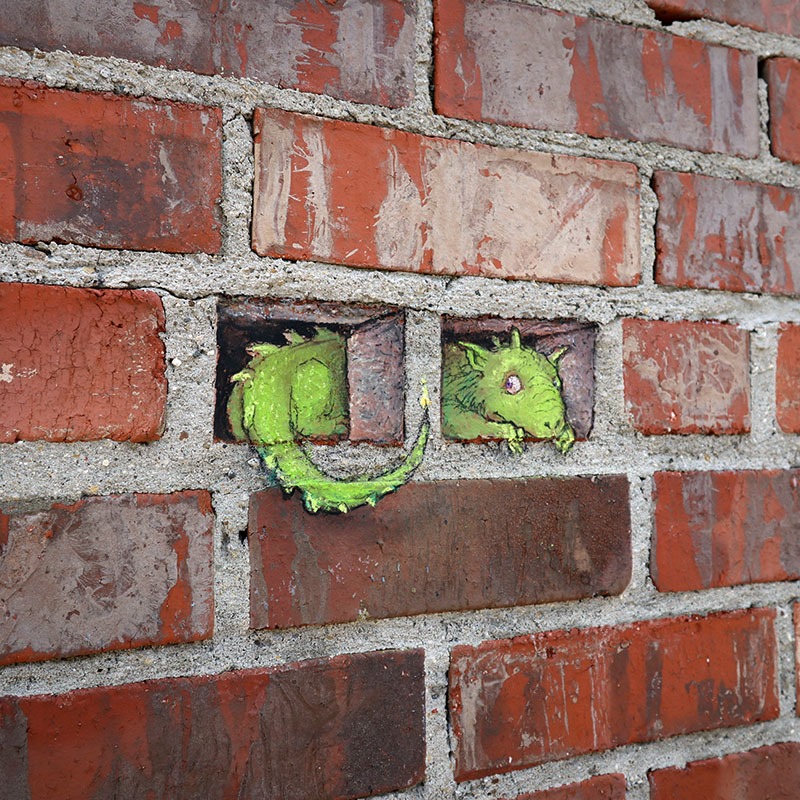
Surprise Birthday Party (Introvert Style) — Ann Arbor, Michigan, USA
Drawn by David Zinn, this whimsical chalk art features a small dragon playfully lying on its back as a mouse approaches. Fallen orange leaves are used as part of the dragon’s breath or laughter.
More: Whimsical Wonders: 7 Lovely Artworks by David Zinn
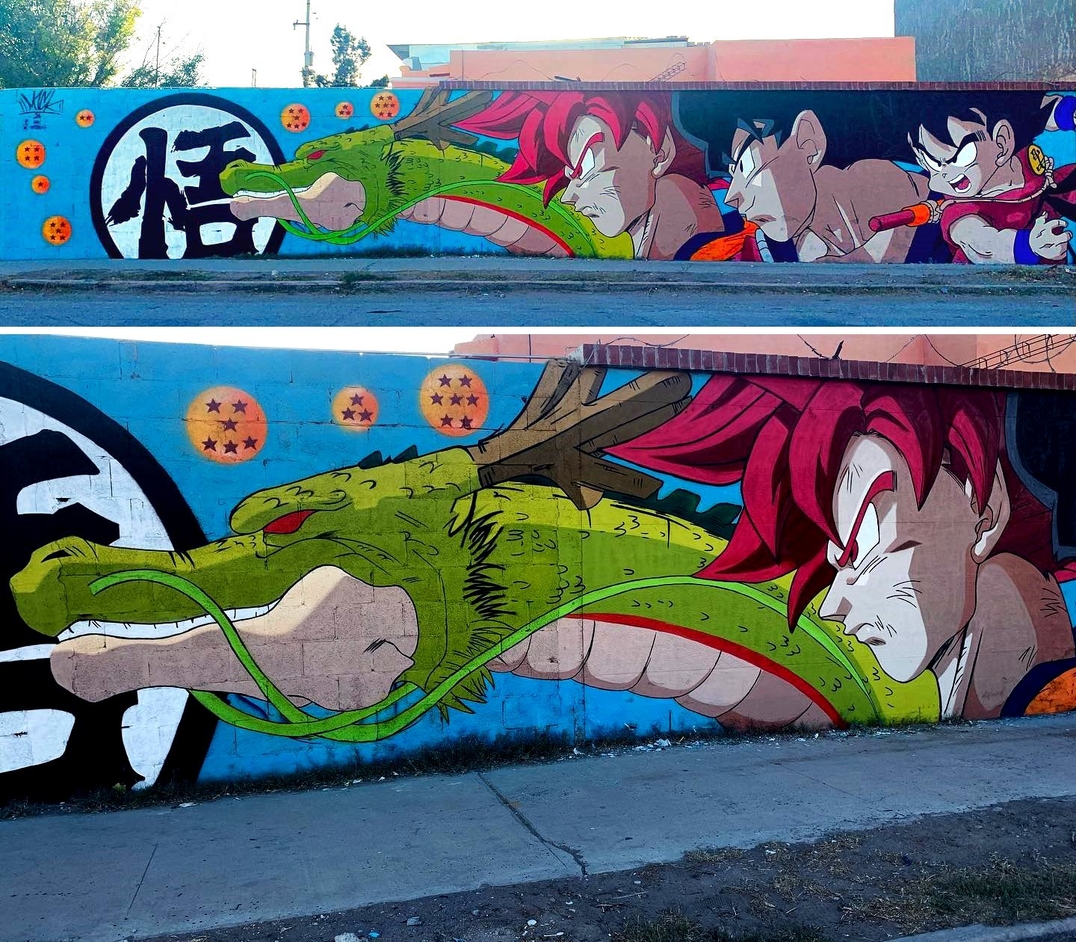
Dragon Ball Mural Tribute — Mexico
In tribute to Akira Toriyama, this mural features Shenron the dragon alongside iconic Dragon Ball characters. Bold colors and anime-style linework make it pop against the street setting.
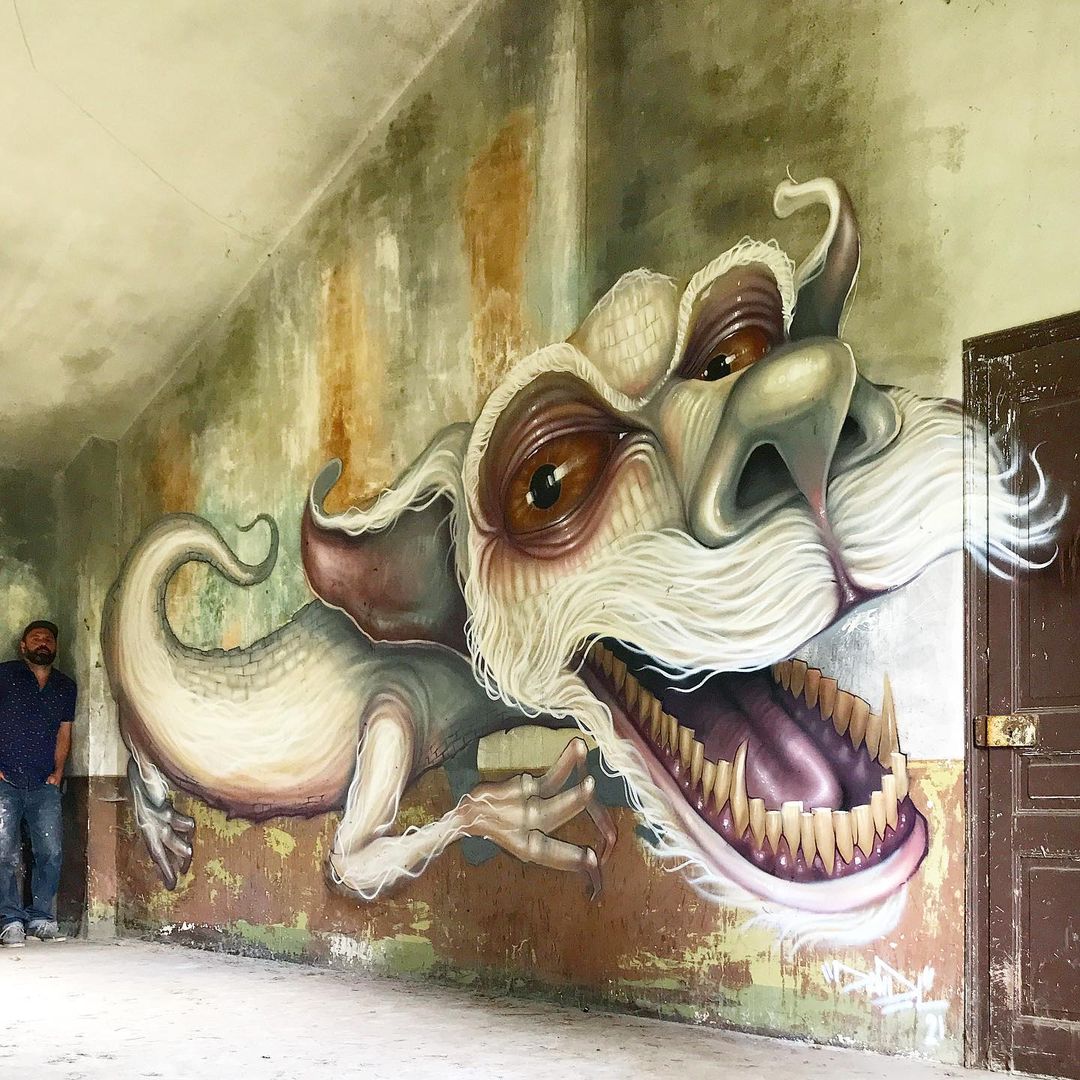
Falkor the Luckdragon — Outside Barcelona, Spain
This mural by DavidL features a surreal, exaggerated depiction of Falkor from The NeverEnding Story. The creature bursts through a decaying wall with a toothy grin, oversized amber eyes, and flowing white facial hair—melding fantasy nostalgia with the texture of urban decay.
More: 15 Surreal Graffiti Artworks!: From Cookie Monster to Zombie Homer
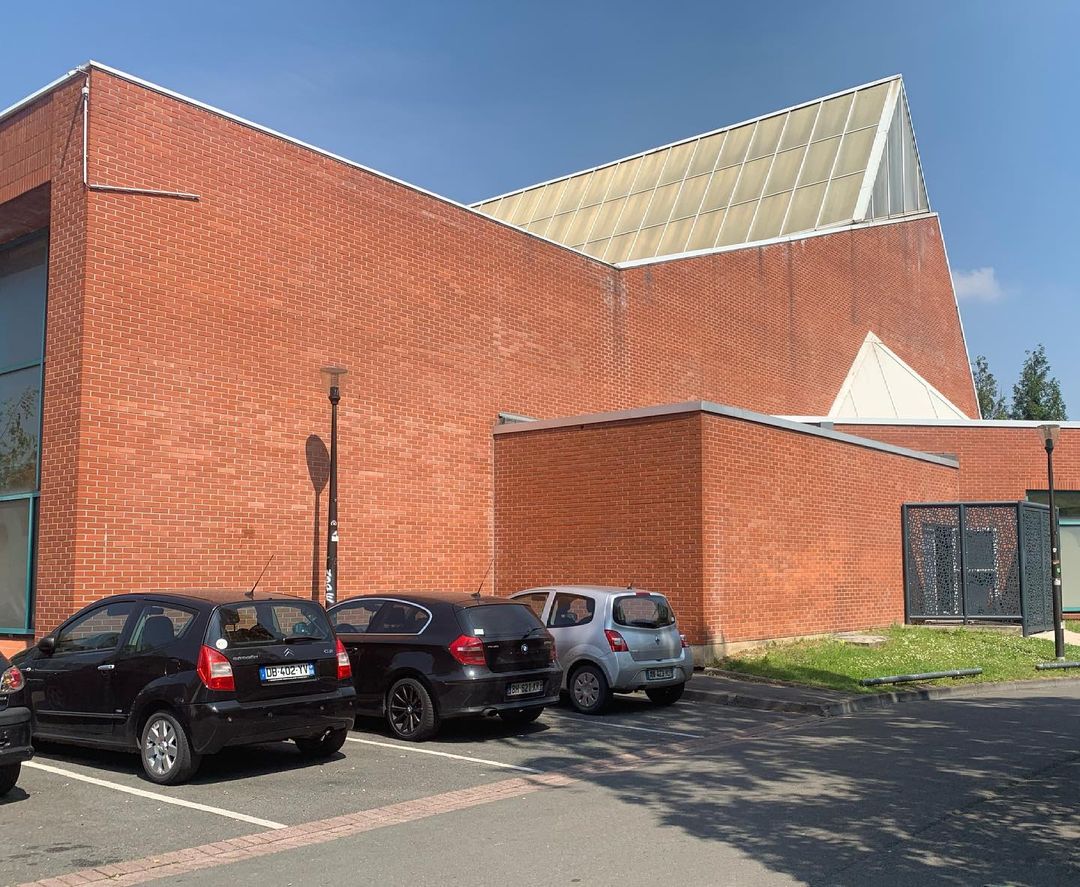
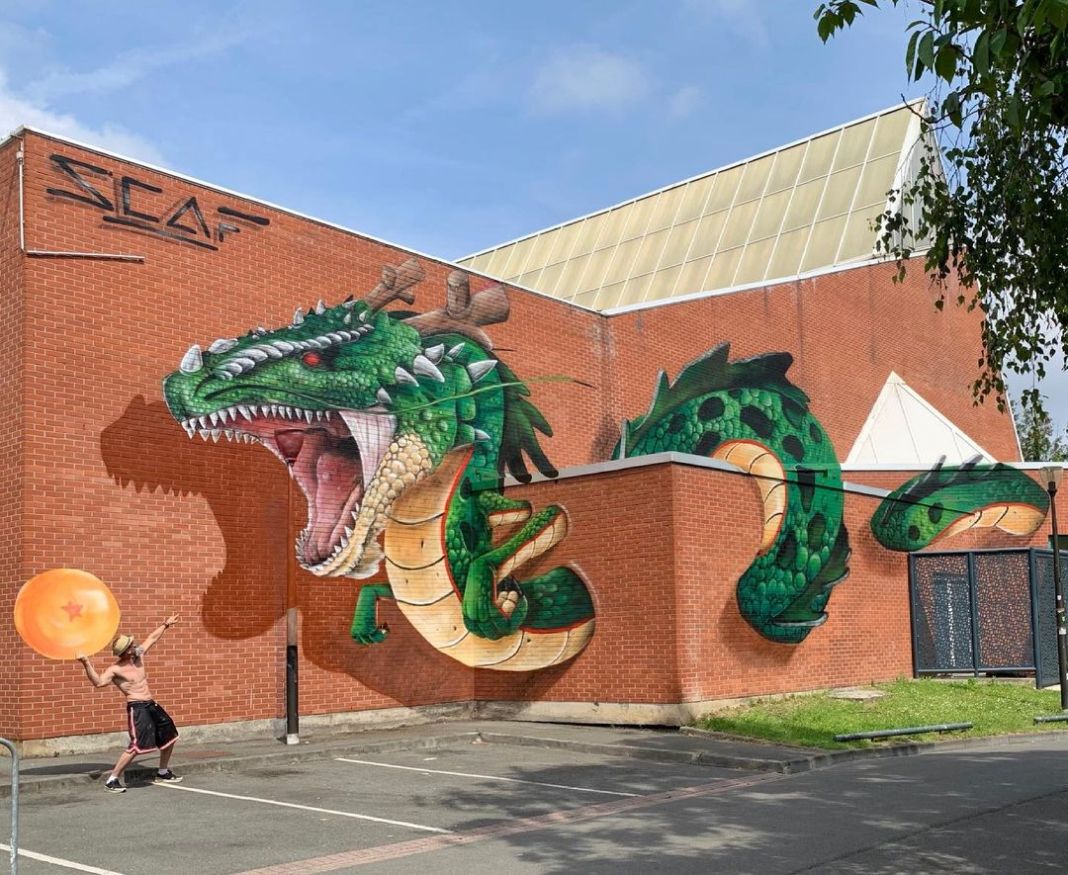
Shenron the Eternal Dragon — Roubaix, France
French artist Scaf painted this striking 3D mural of Shenron, the wish-granting dragon from Dragon Ball, across the angular facade of a red brick building. The illusion is so precise that the dragon’s head appears to burst out of the wall, with a fan posing below holding a four-star Dragon Ball for scale.
More: 26 Amazing 3D Paintings by SCAF!
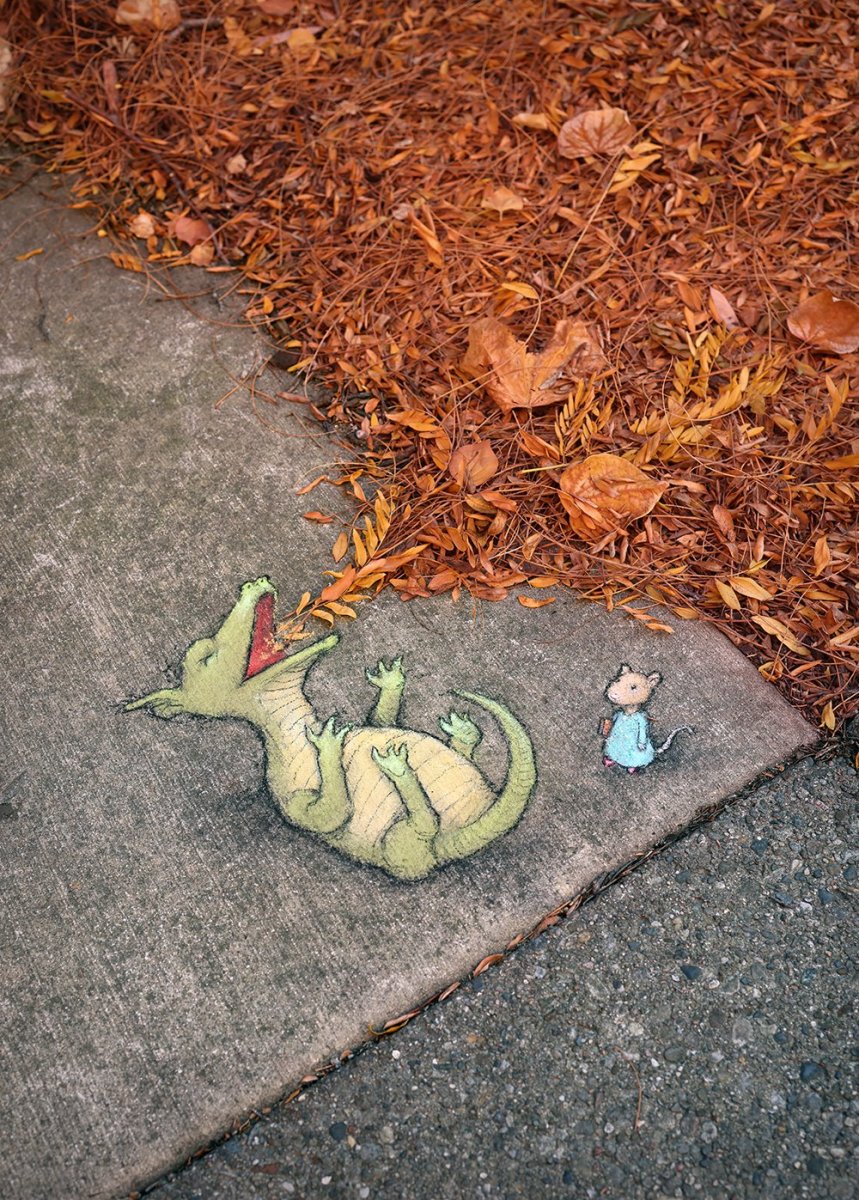
In Which Nadine Amuses a Dragon and Makes Autumn Happen — Ann Arbor, Michigan, USA
Drawn by David Zinn, this chalk artwork captures a whimsical moment between Nadine the mouse and a playful dragon lying on its back in laughter. The scene cleverly incorporates real fallen leaves as the dragon’s fiery breath or joyful energy, blending sidewalk and season into a charming narrative.
More: 18 Pics Of Land Art Sculptures by Jon Foreman
Which one is your favorite?

Sculptures You (probably) Didn’t Know Existed (30 Photos)
I love stumbling upon art that feels like a hidden gem—those incredible sculptures that stop you in your tracks and make you wonder, “How did I not know this existed?”
From massive figures seemingly rising from the earth to intricate works that play with gravity, these sculptures redefine what’s possible. Join me on a journey through 30 of the most amazing sculptures around the world, each with its own story and artistry that you probably didn’t know was out there. More: Sculptures With True Creativity (12 Photos)
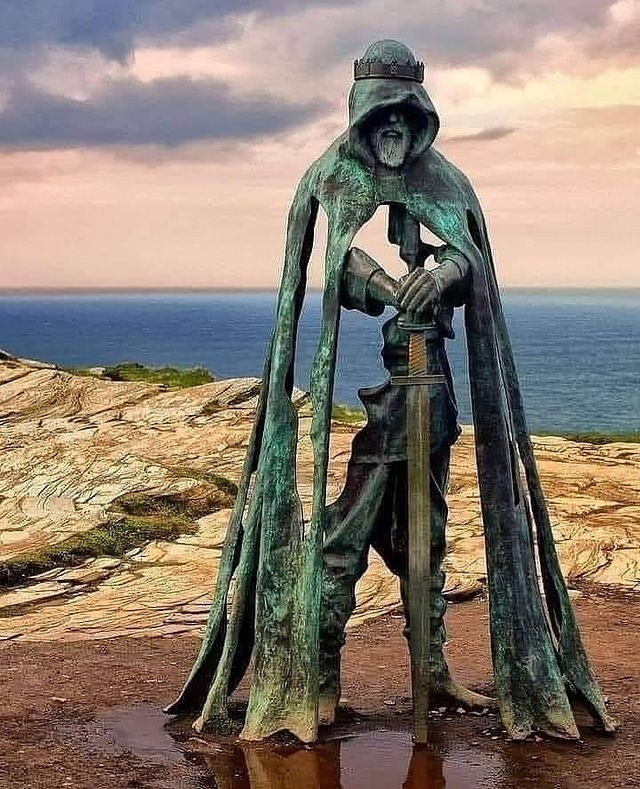
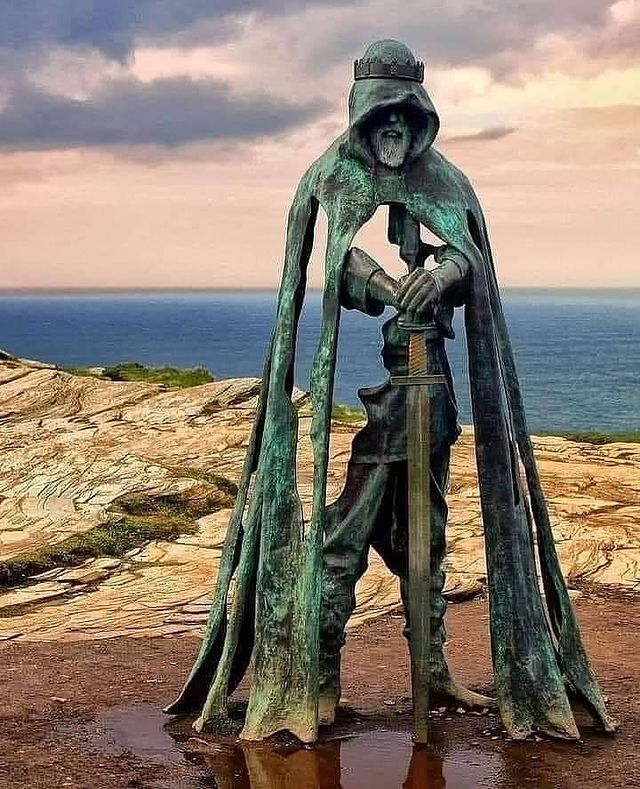
1. The Statue of King Arthur, located in Tintagel, England, is a striking bronze sculpture by artist Rubin Eynon.
Erected in 2016, this statue stands on the cliffs of Tintagel Castle, a site steeped in Arthurian legend. The sculpture, named “Gallos” (meaning “power” in Cornish), depicts a cloaked and crowned King Arthur holding his sword, with his body appearing to merge with the landscape. This artwork symbolizes the enduring power and mystery of the Arthurian legends that are deeply rooted in the area. More like this: 9 Amazing sculptures by Bruno Catalano: Fragmented travelers
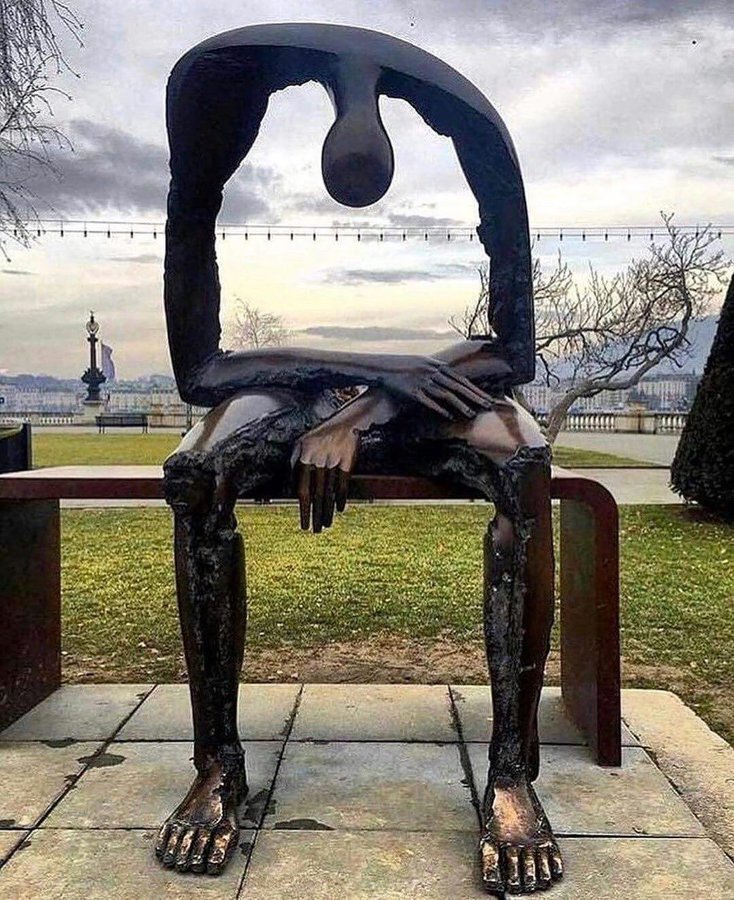
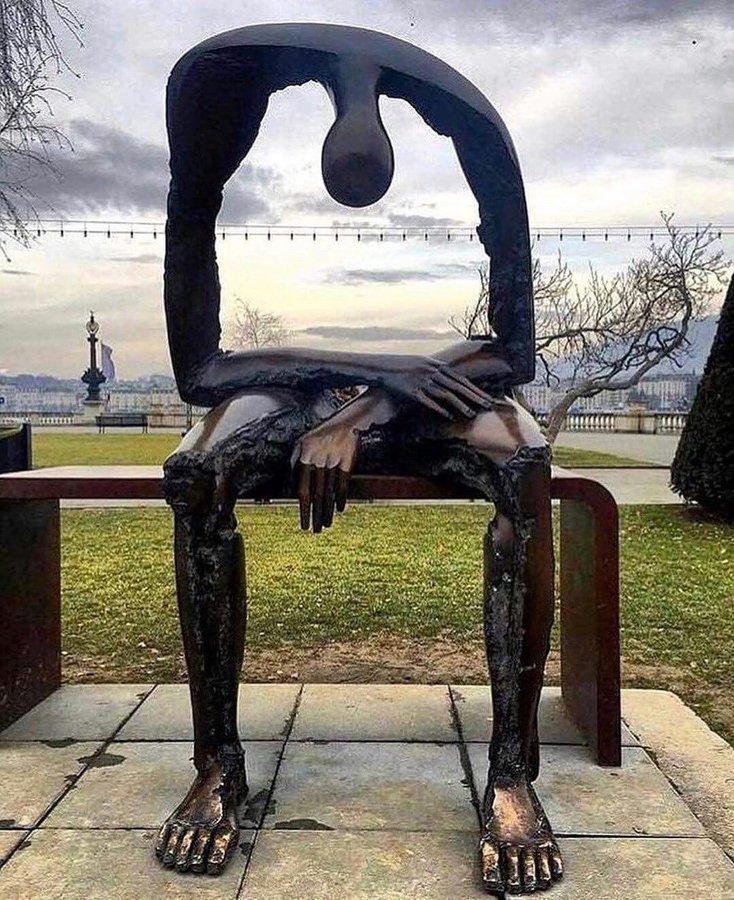
2. Albert György’s sculpture, Melancholy, captures the emptiness left by grief.
As John Maddox eloquently states, “We may look as if we carry on with our lives as before… but this emptiness is how we all feel… all the time.”
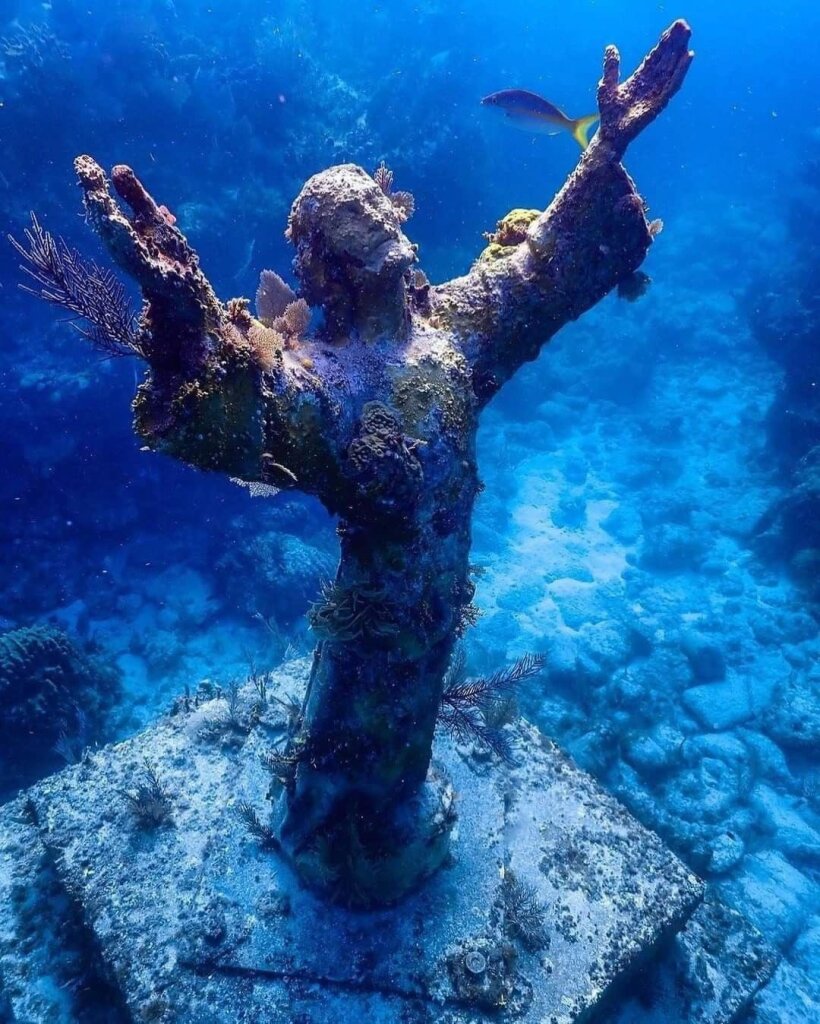
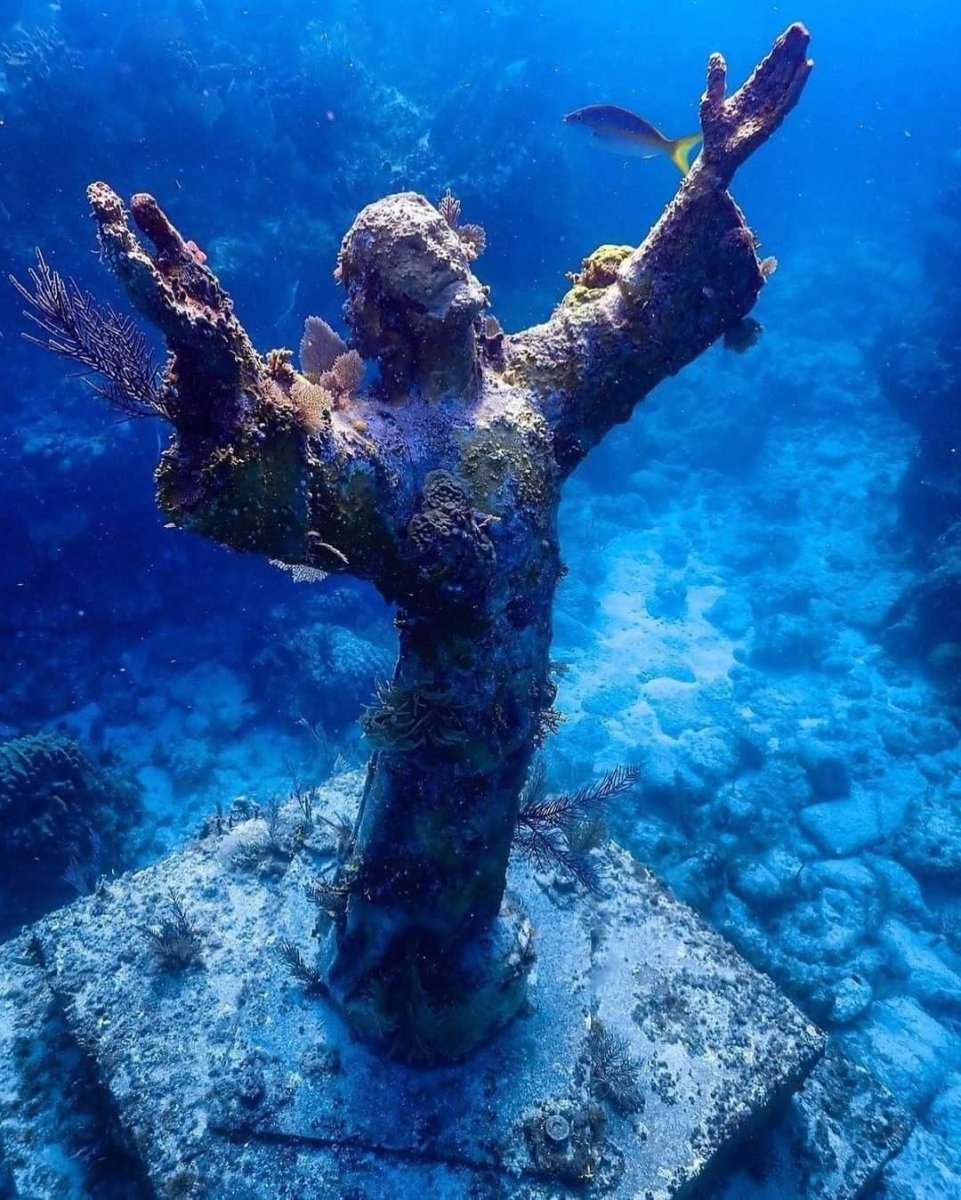
3. Christ of the Abyss is an extraordinary bronze statue created by Guido Galletti in 1954.
This unique piece rests on the seabed of the Mediterranean Sea, nestled between Camogli and Portofino on the Italian Riviera. Submerged beneath the azure waters, it continues to captivate divers and visitors with its serene and mystical presence.
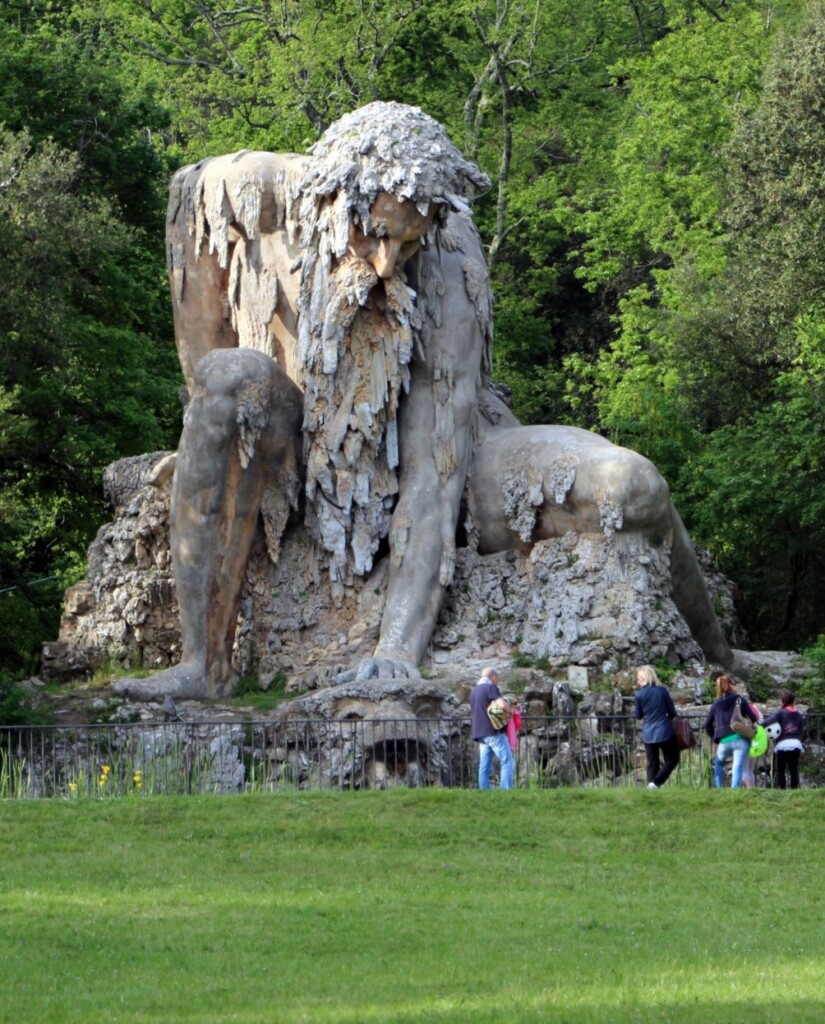
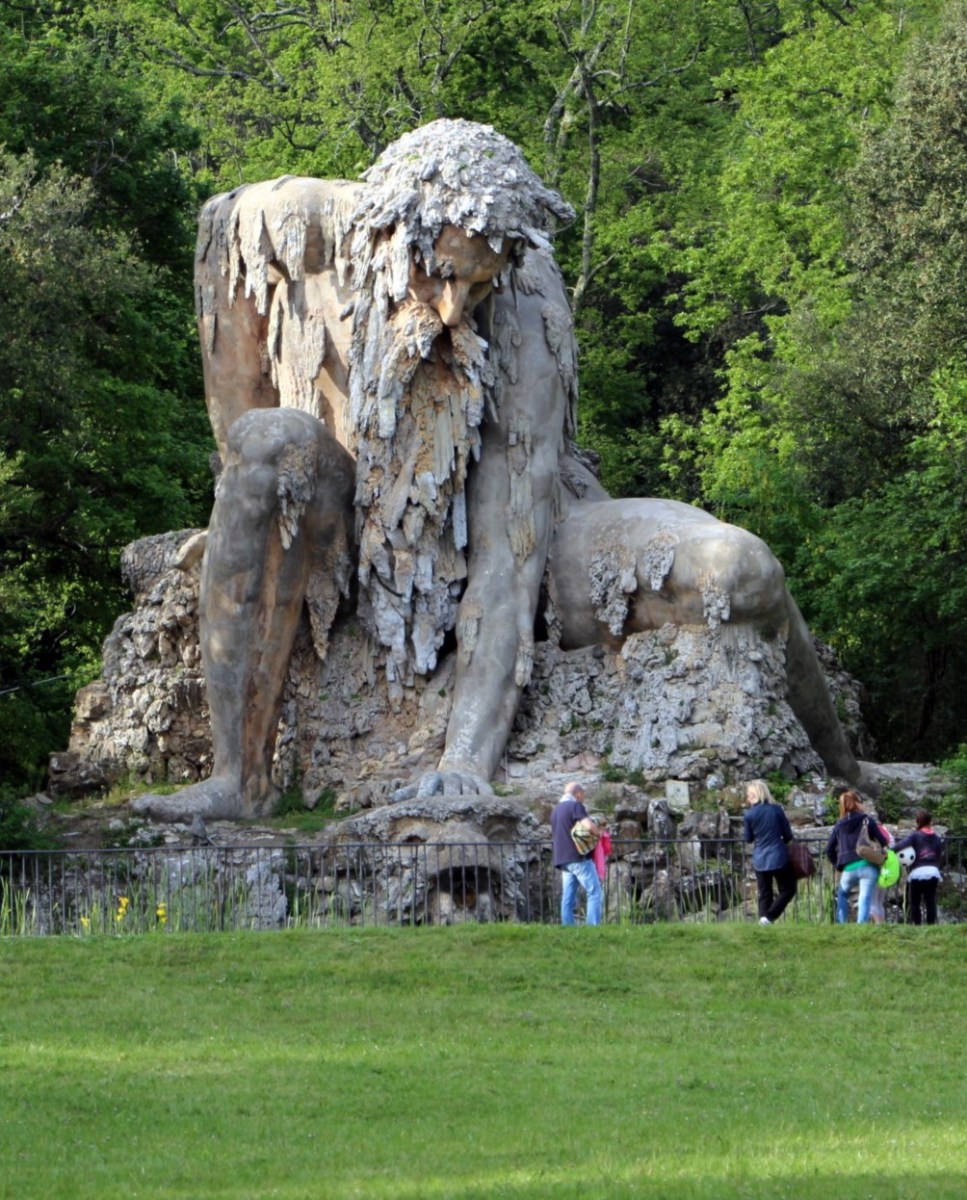
4. This colossal sculpture was created nearly 450 years ago by Flemish sculptor Giambologna as a symbol of Italy’s Apennine mountains. Standing at nearly 14 meters (45 ft) tall, it was commissioned by Francesco de Medici, the Grand Duke of Tuscany, in 1579.
Positioned above a pond, the statue features a chamber in its head where Francesco would sit and fish at night. When a fire was lit inside, the Colossus’s eyes glowed red, and smoke billowed from its nostrils, creating a striking visual effect. More: Discover the Apennine Colossus – A Remarkable 1580 Sculpture Hidden within Italy’s Apennine Mountains
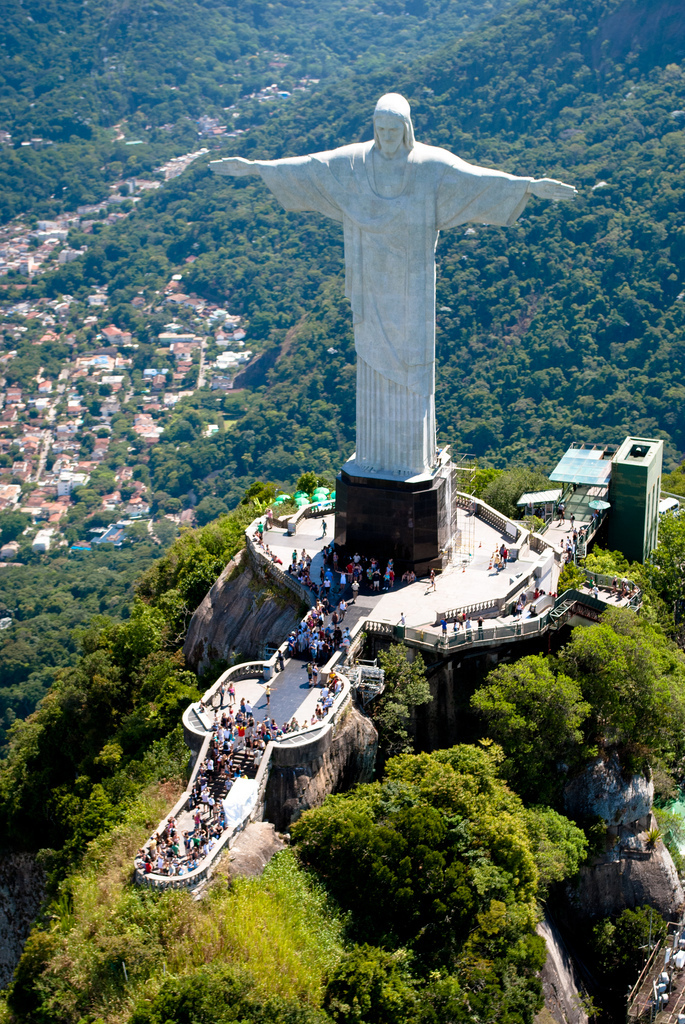
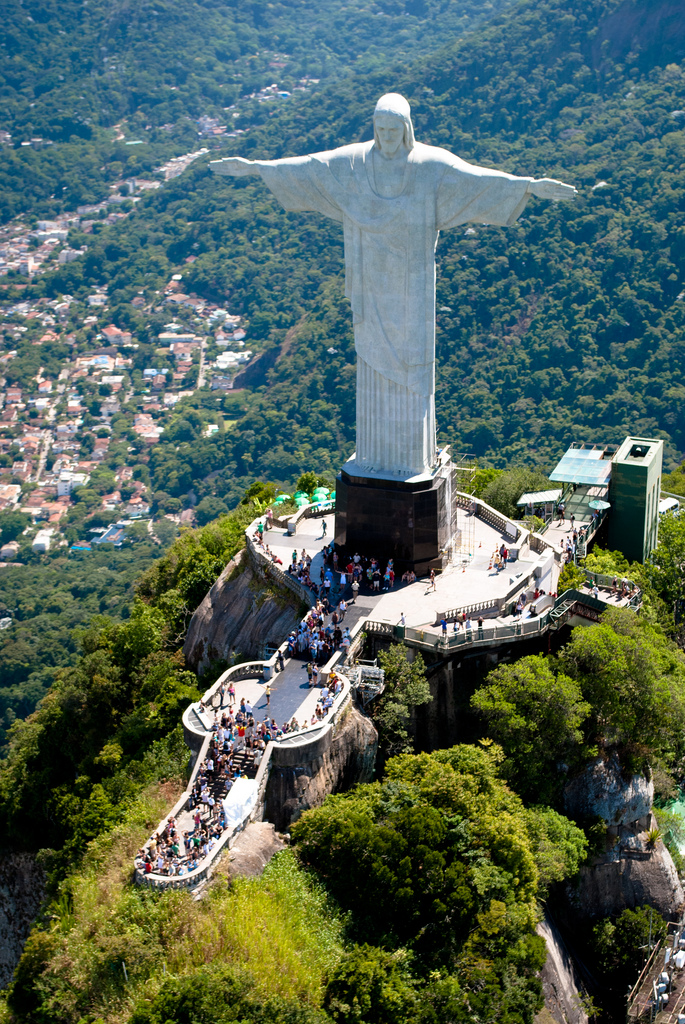
5. The Christ the Redeemer statue, standing atop Corcovado Mountain in Rio de Janeiro, Brazil, is one of the world’s most recognizable landmarks.
This 30-meter (98 ft) tall statue, with arms stretching 28 meters (92 ft) wide, overlooks the city, symbolizing peace and welcoming all with open arms. Completed in 1931 and designed by French sculptor Paul Landowski and Brazilian engineer Heitor da Silva Costa, it has become a symbol of Christianity around the globe and an enduring image of Brazil. More: Christ the Redeemer: An Icon of Faith and Artistry
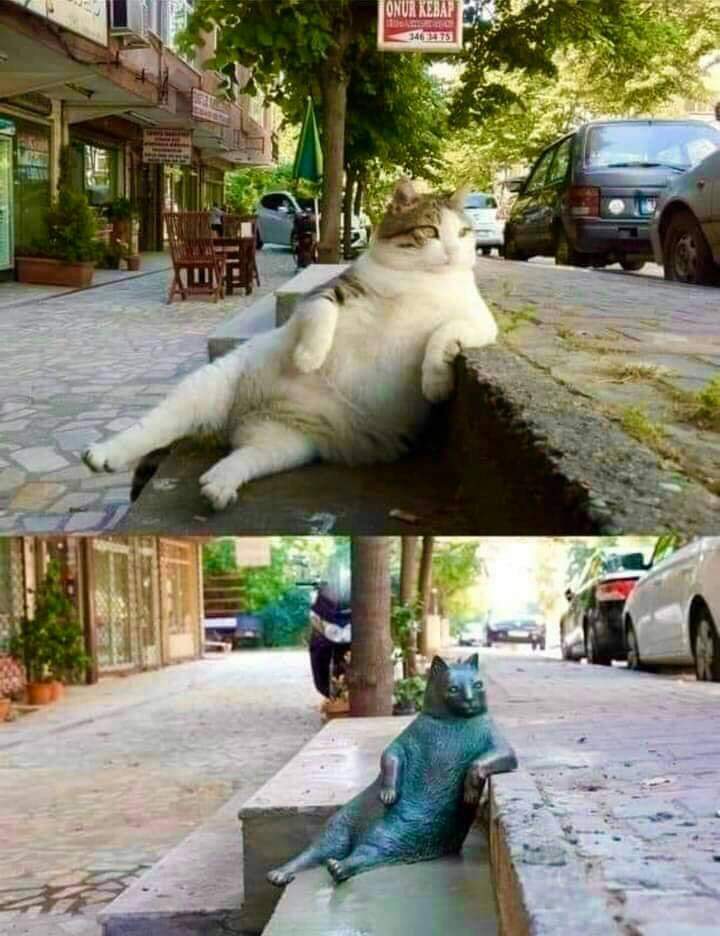
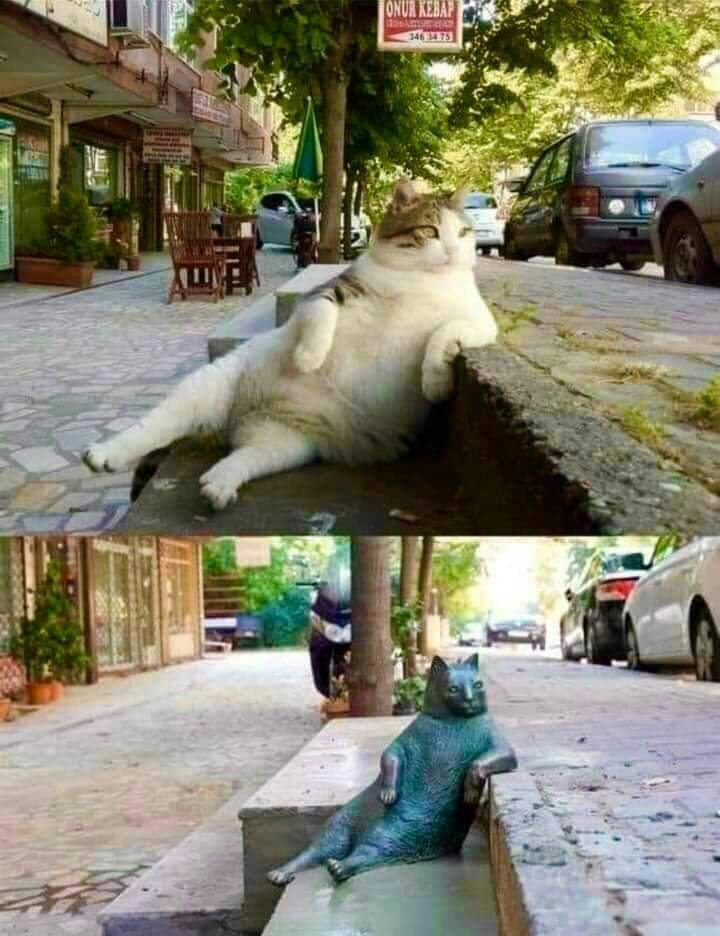
6. Not the most amazing statue, but definitely an amazing story. In Istanbul, Turkey, they made a statue to honor the famous stray cat (Tombili) that used to sit in this position and watch the passers by.
One month after its installation the sculpture went missing. A comment from Turkey MP Tuncay Özkan: “They stole the Tombili statue. They are enemies of everything beautiful. All they know is hate, tears and war”. The statue was safely returned a short time later. More photos here.
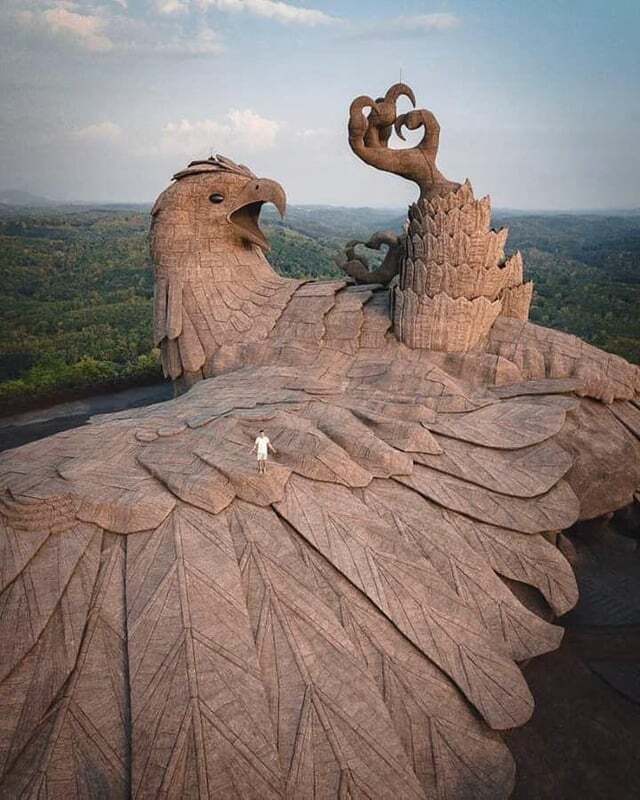
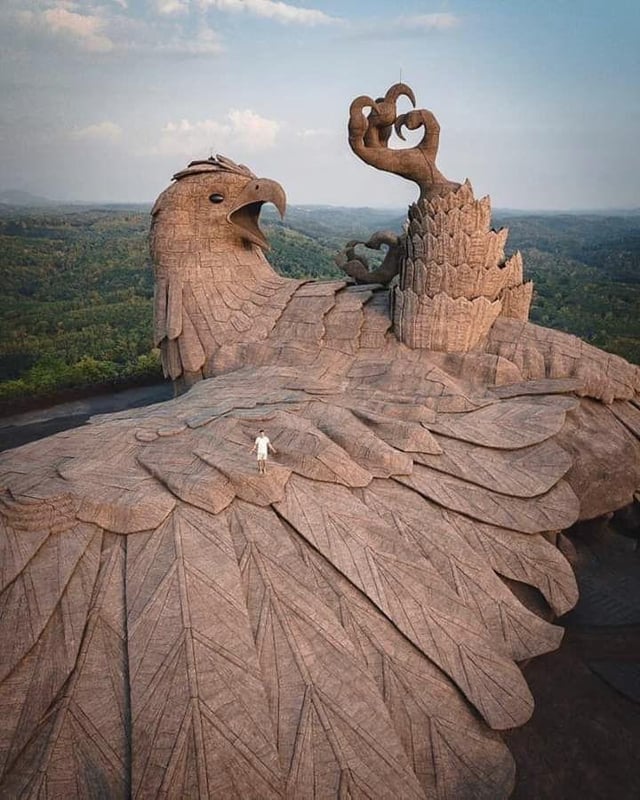
7. This eagle sculpture is the world’s largest bird statue, created by Indian artist Rajiv Anchal.
Located at Jatayu Earth’s Center in Kerala, India, the sculpture took a decade to complete. Spanning 200 feet in length, 150 feet in width, and 70 feet in height, this colossal work of art depicts the mythical eagle Jatayu from the Indian epic, Ramayana.
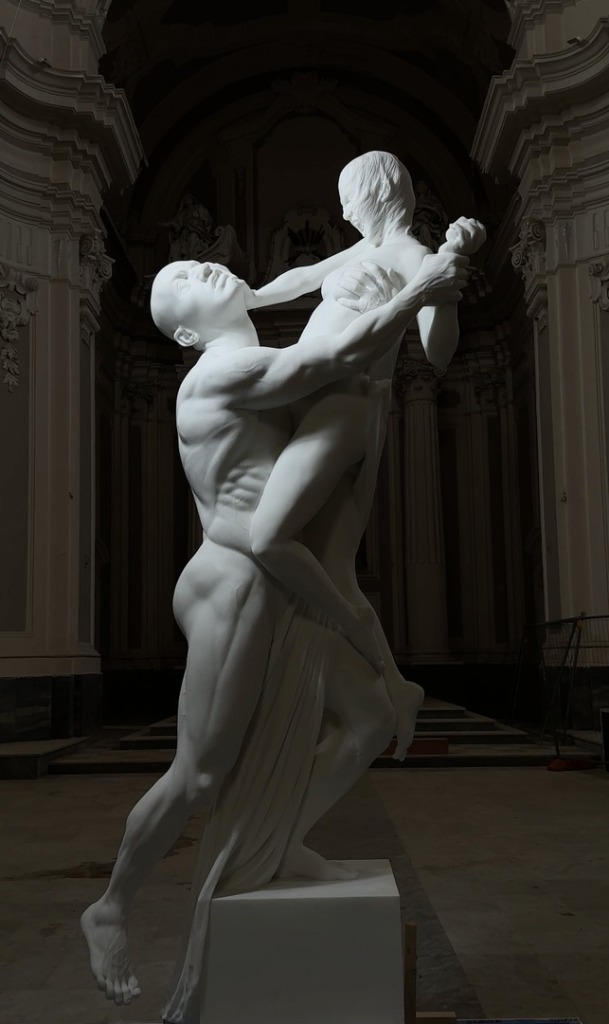
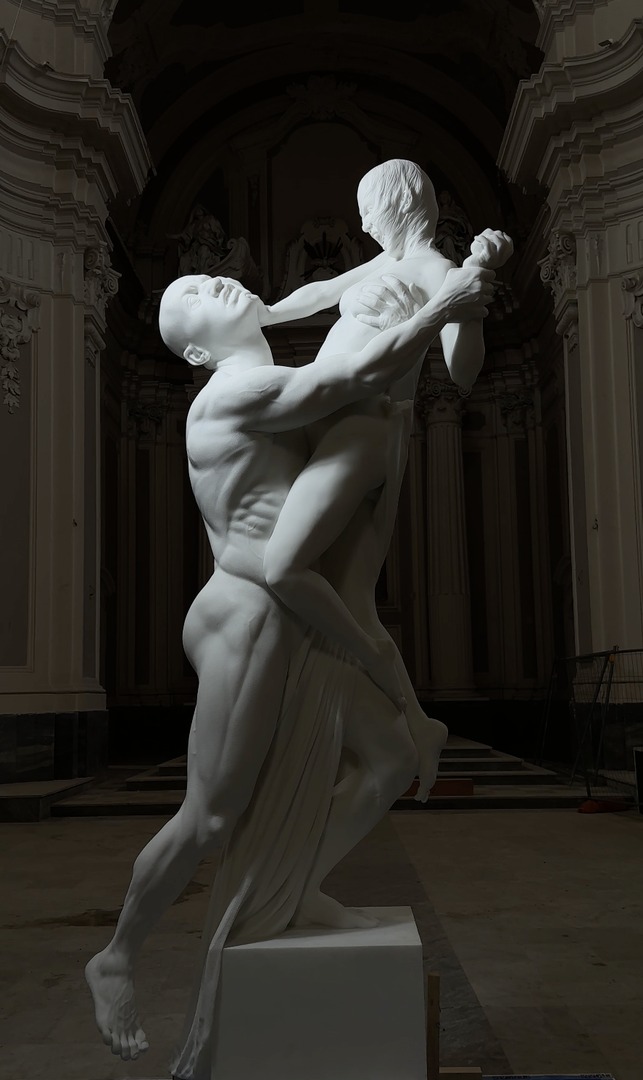
8. This stunning marble sculpture, Ajax and Cassandra, was crafted in 2022 by renowned Italian contemporary artist Jago.
The piece beautifully captures the dramatic moment between the Greek hero Ajax and the Trojan priestess Cassandra.
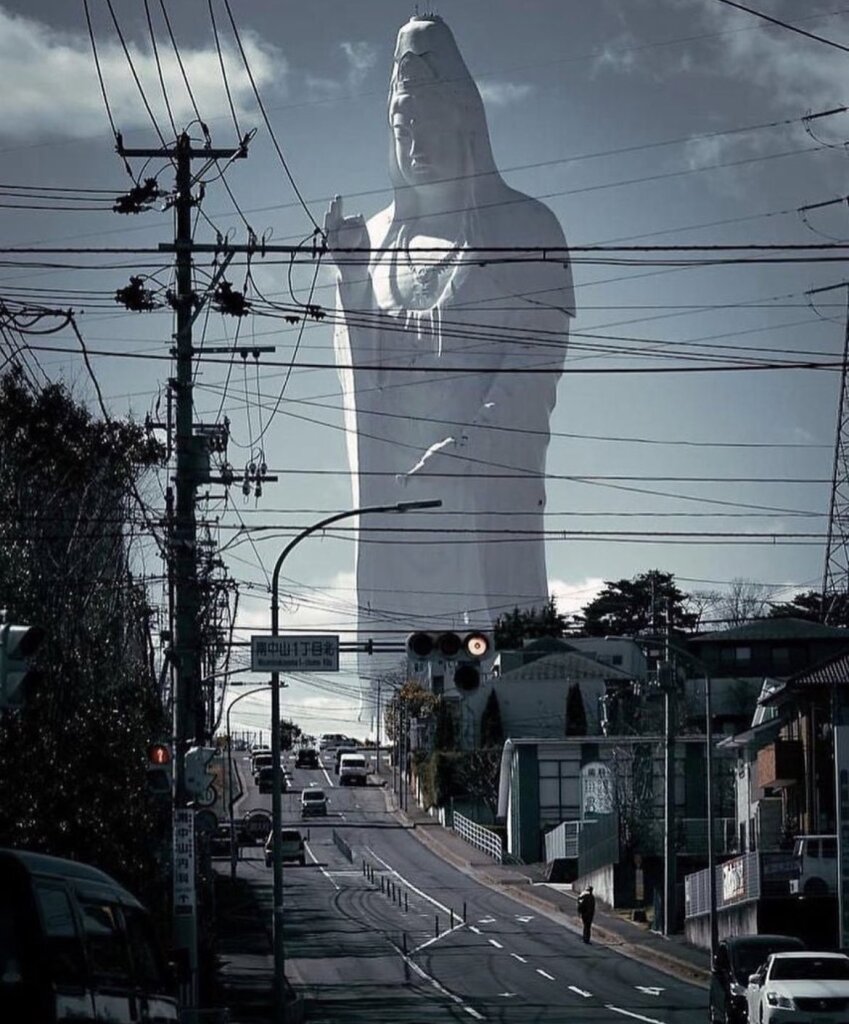
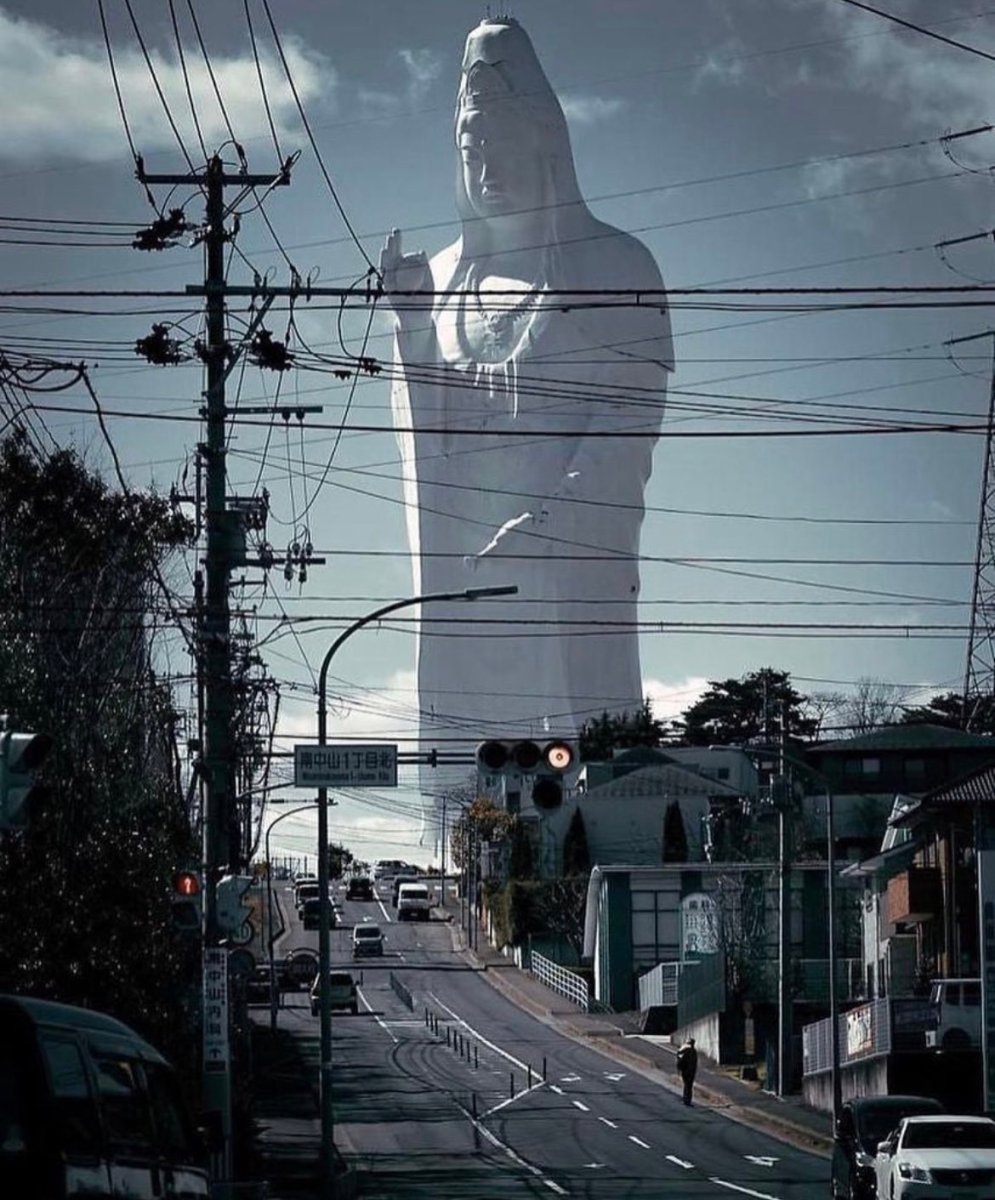
9. Sendai Daikannon in Japan, the eighth-tallest statue in the world at 100 meters (330 ft).
Its serene, watchful presence overlooks the quiet urban landscape, creating a striking contrast between its massive spiritual form and the everyday city life below.
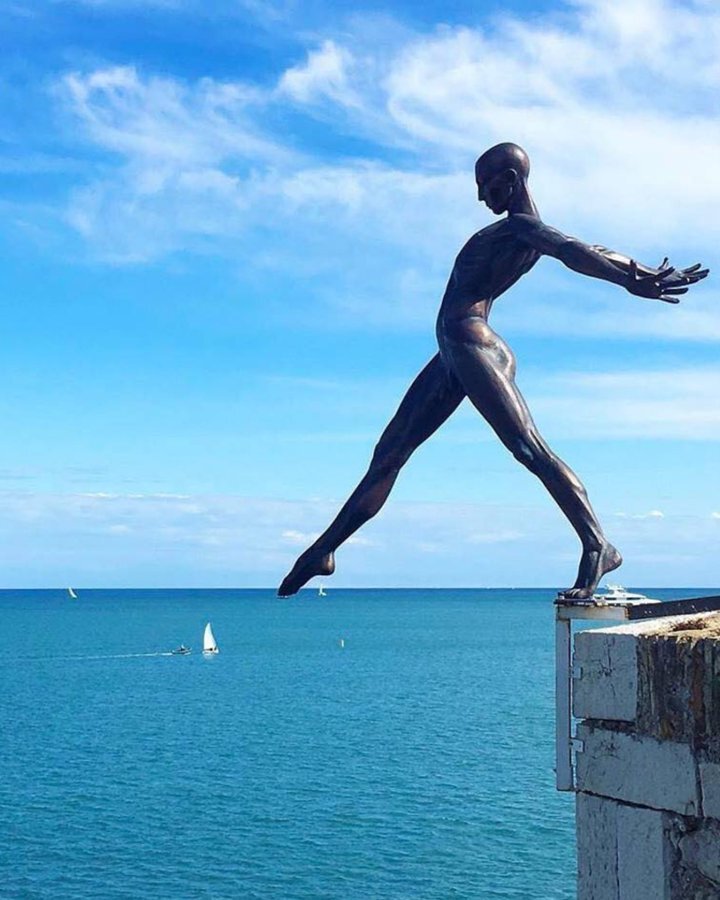
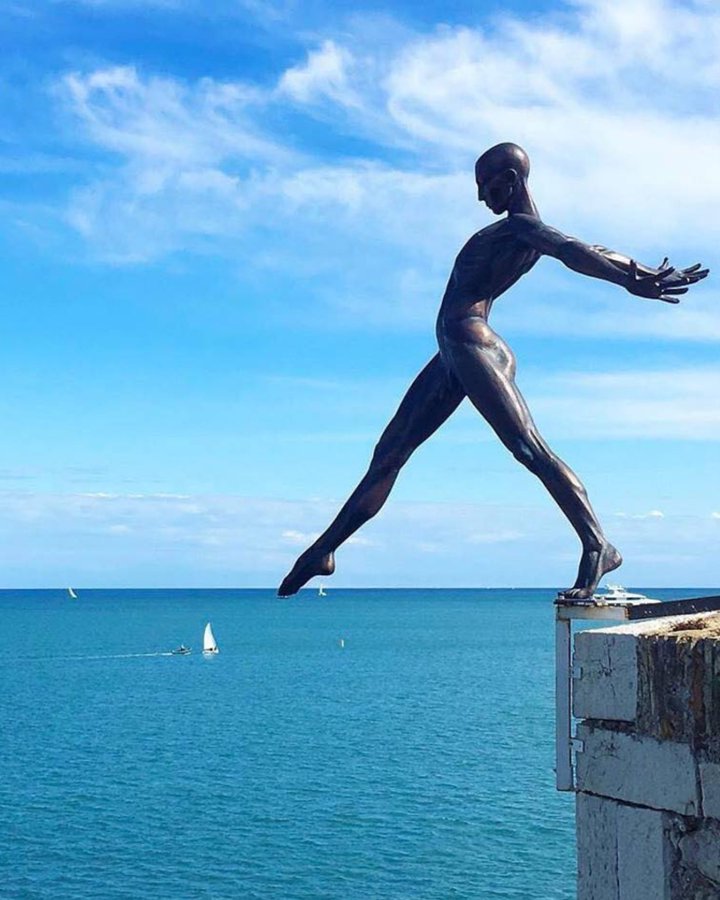
10. The great challenge by Nicolas Lavarenne. Antibes, French Riviera.
This striking bronze sculpture depicts a dynamic, elongated figure balancing on the edge of a cliff, arms outstretched as if preparing to leap into the vast blue sea below.
11. This is how the Statue of Unity in India looks like. It’s the tallest statue in the world: standing at 182 meters (597 ft) tall, it’s nearly three times the height of the Statue of Liberty.
This monumental statue of Sardar Vallabhbhai Patel, a key leader in India’s independence, stands on a massive platform with an observation deck, emphasizing its grandeur and scale.
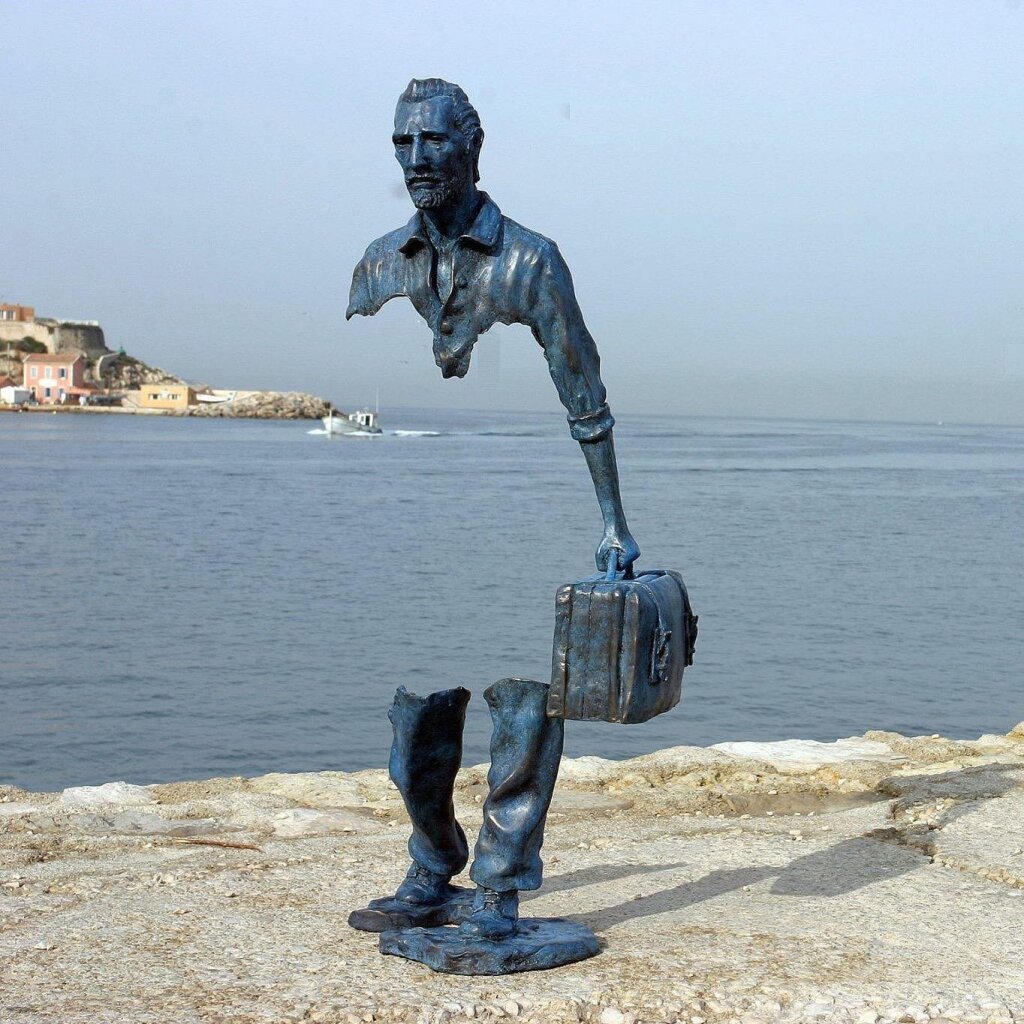
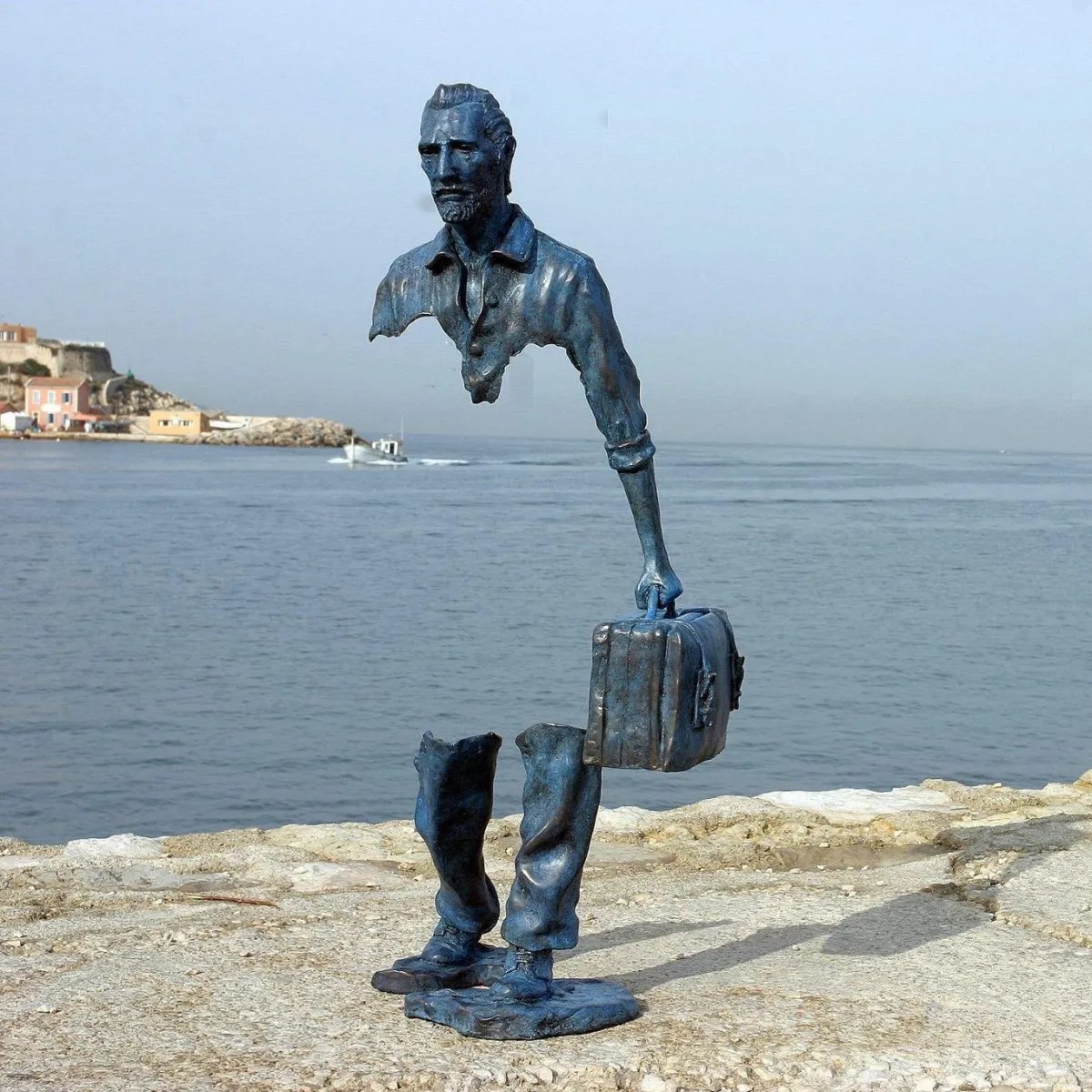
12. This sculpture by Bruno Catalano
Portrays the profound emptiness experienced by migrants as they depart from their homeland—leaving their loved ones and their community behind—in pursuit of a better life: More: 9 Fragmented travelers – Amazing sculptures by Bruno Catalano
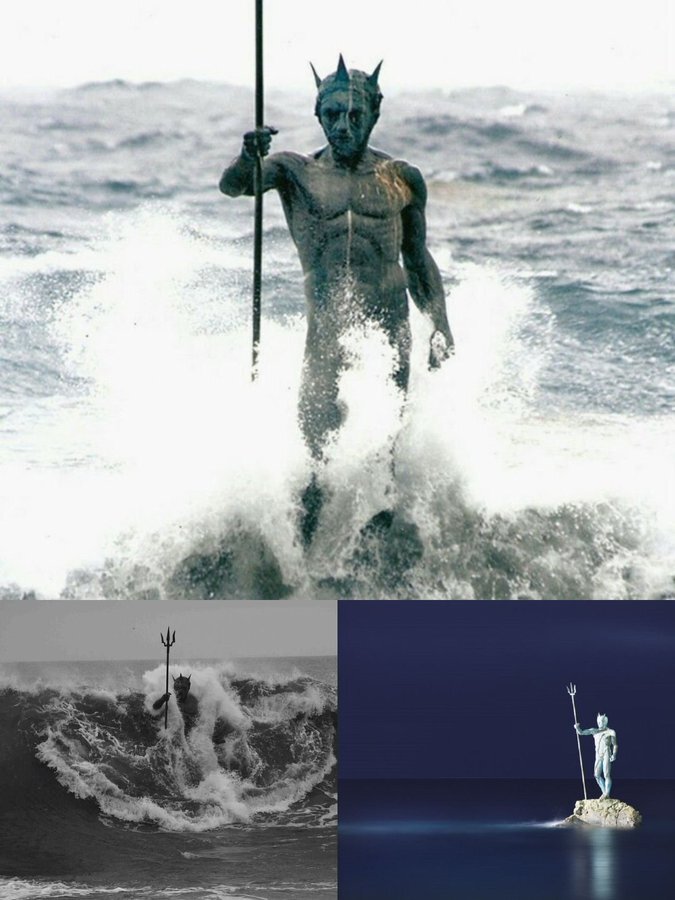
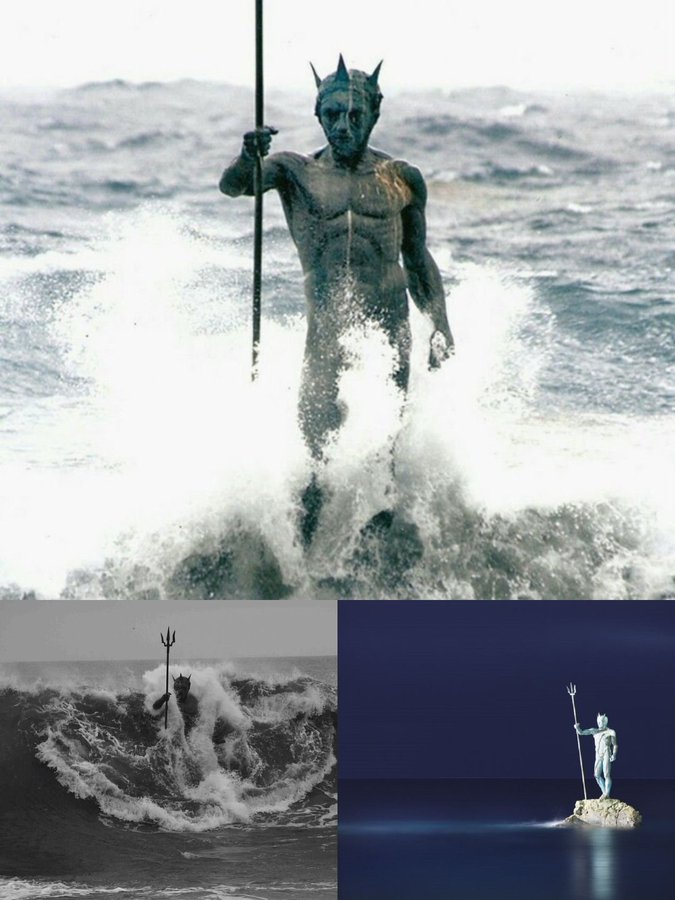
13. The incredible statue of Neptune (Poseidon) in Gran Canaria, Spain
Statue of Neptune (Poseidon) in Gran Canaria, Spain, standing powerfully against the waves with a trident in hand. This impressive sculpture captures the mythical god of the sea in a commanding pose, evoking themes of strength and the majesty of the ocean. More: The incredible ocean statue of Neptune (Poseidon) in Gran Canaria, Spain
14. Leshan Giant Buddha in China (800 AD) At 71 meters (233 ft) tall, this is the tallest pre-modern statue on Earth.
The Leshan Giant Buddha is carved into the cliffside in Leshan, Sichuan, China, overlooking the convergence of three rivers.
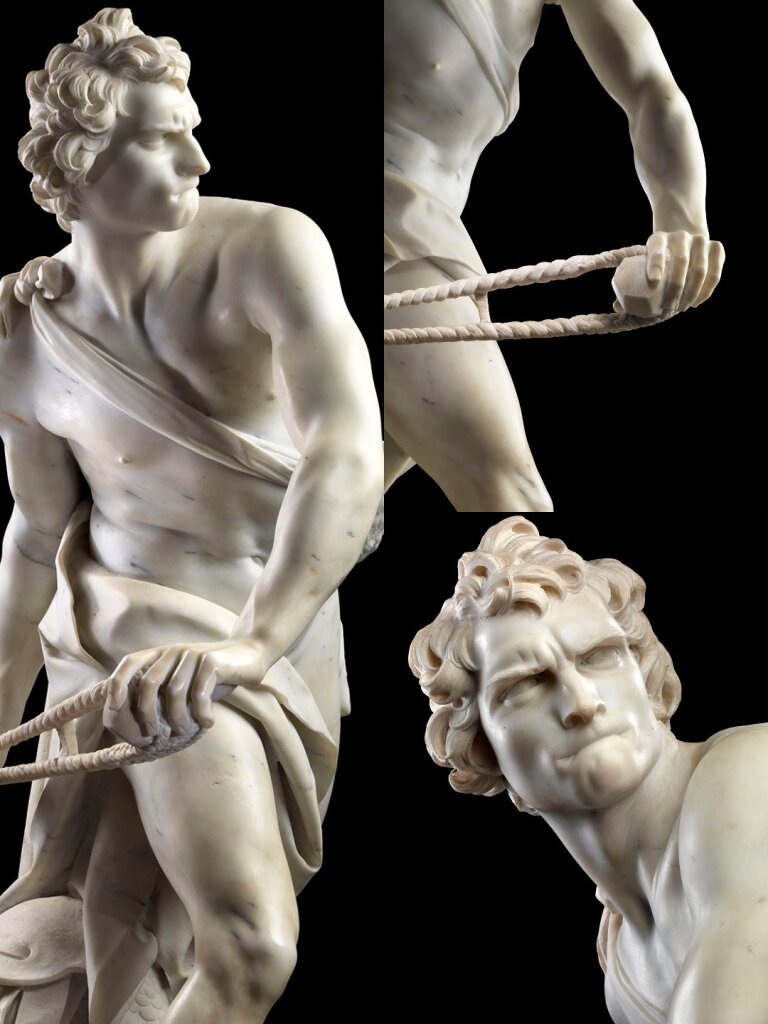
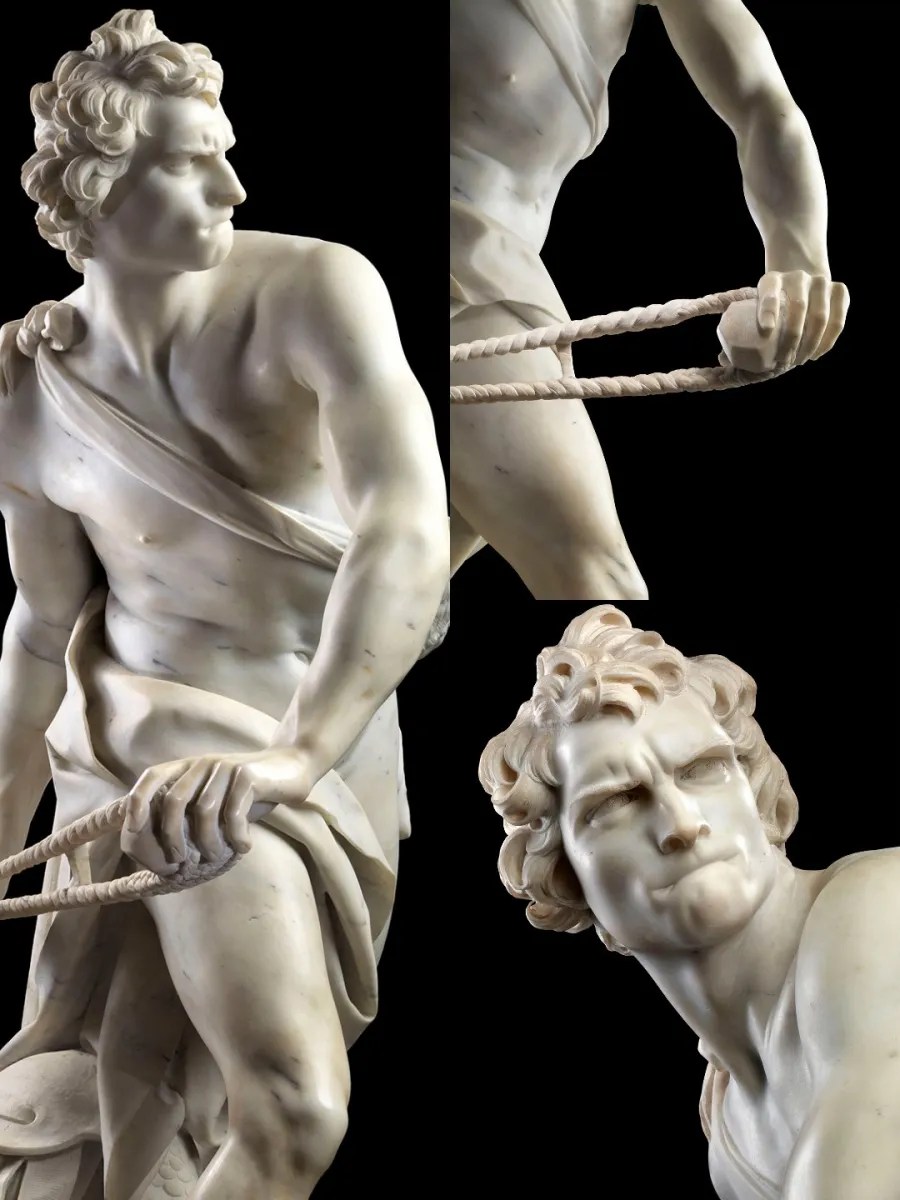
15. Close-up views of Gian Lorenzo Bernini’s marble statue of David, housed in the Galleria Borghese in Rome, Italy.
The dynamic sculpture captures the biblical hero mid-action, winding up to sling a stone. Bernini’s David is depicted with intense focus, furrowed brows, and clenched lips, conveying determination. The statue’s muscular arms and detailed hands grip the twisted ropes of the sling, showcasing Bernini’s skill in portraying tension and movement in marble. This statue contrasts Michelangelo’s famous David by capturing the hero in the midst of battle rather than in a calm, contemplative stance.
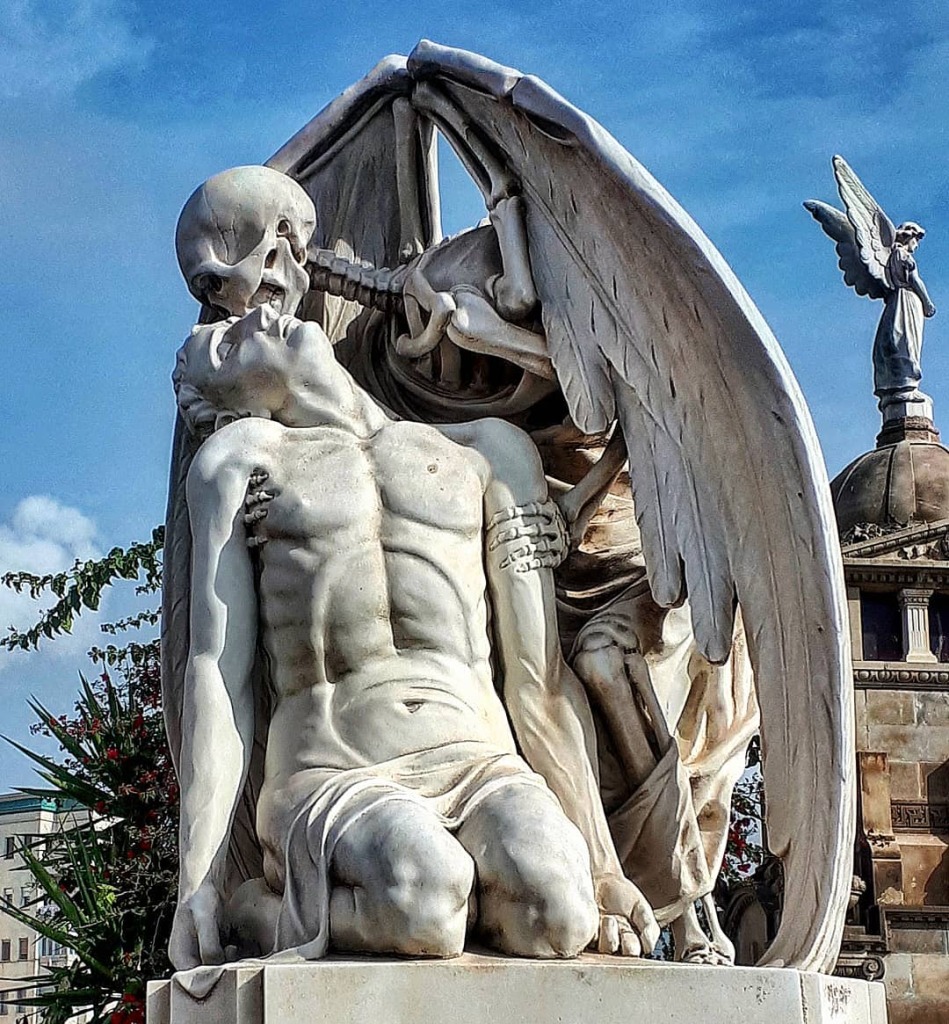
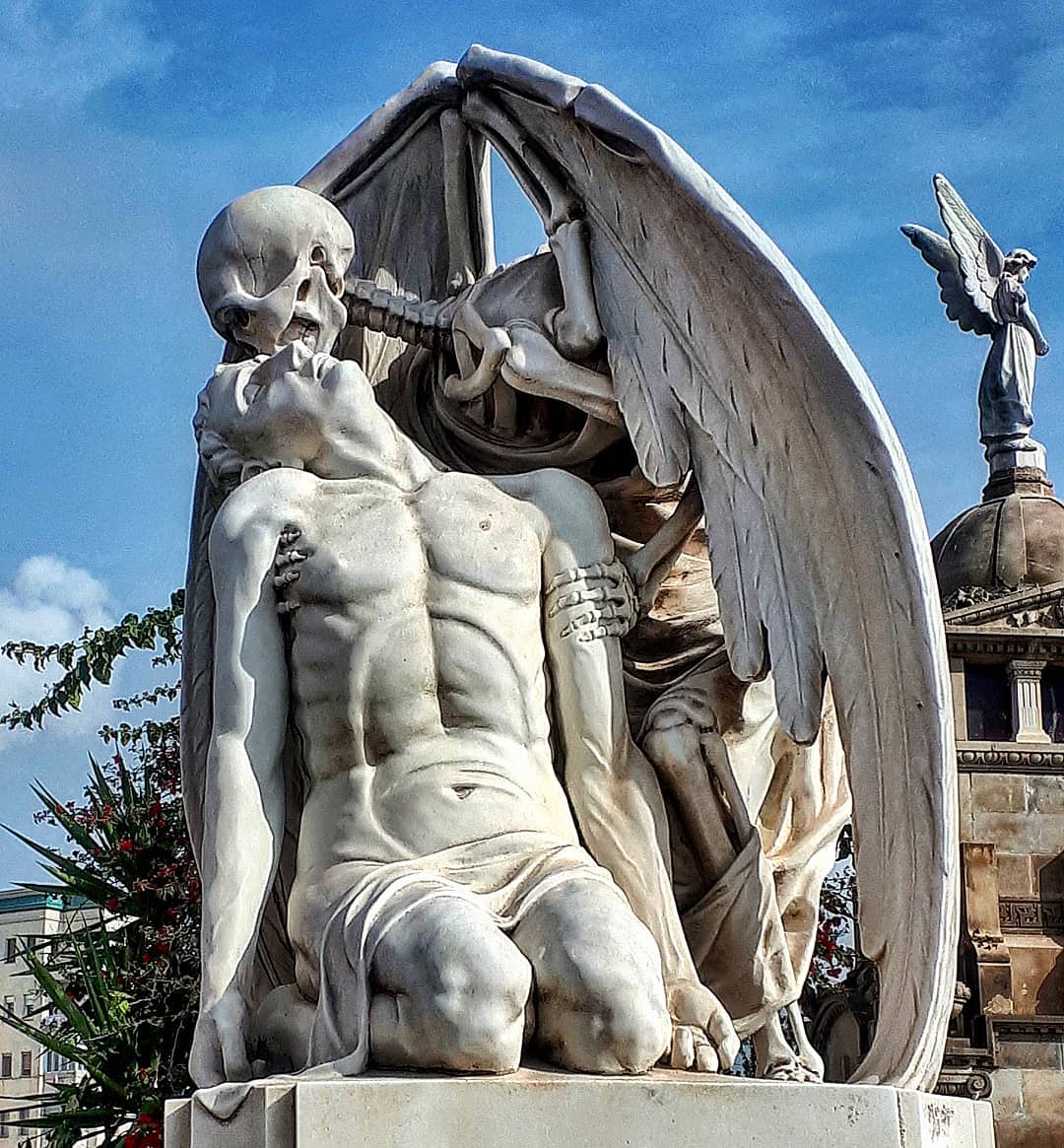
16. The Kiss of Death is a marble sculpture made in 1930 and found in Poblenou Cemetery, Barcelona.
This emotionally intense sculpture is renowned for its depiction of the delicate boundary between life and death, symbolized by Death’s kiss.
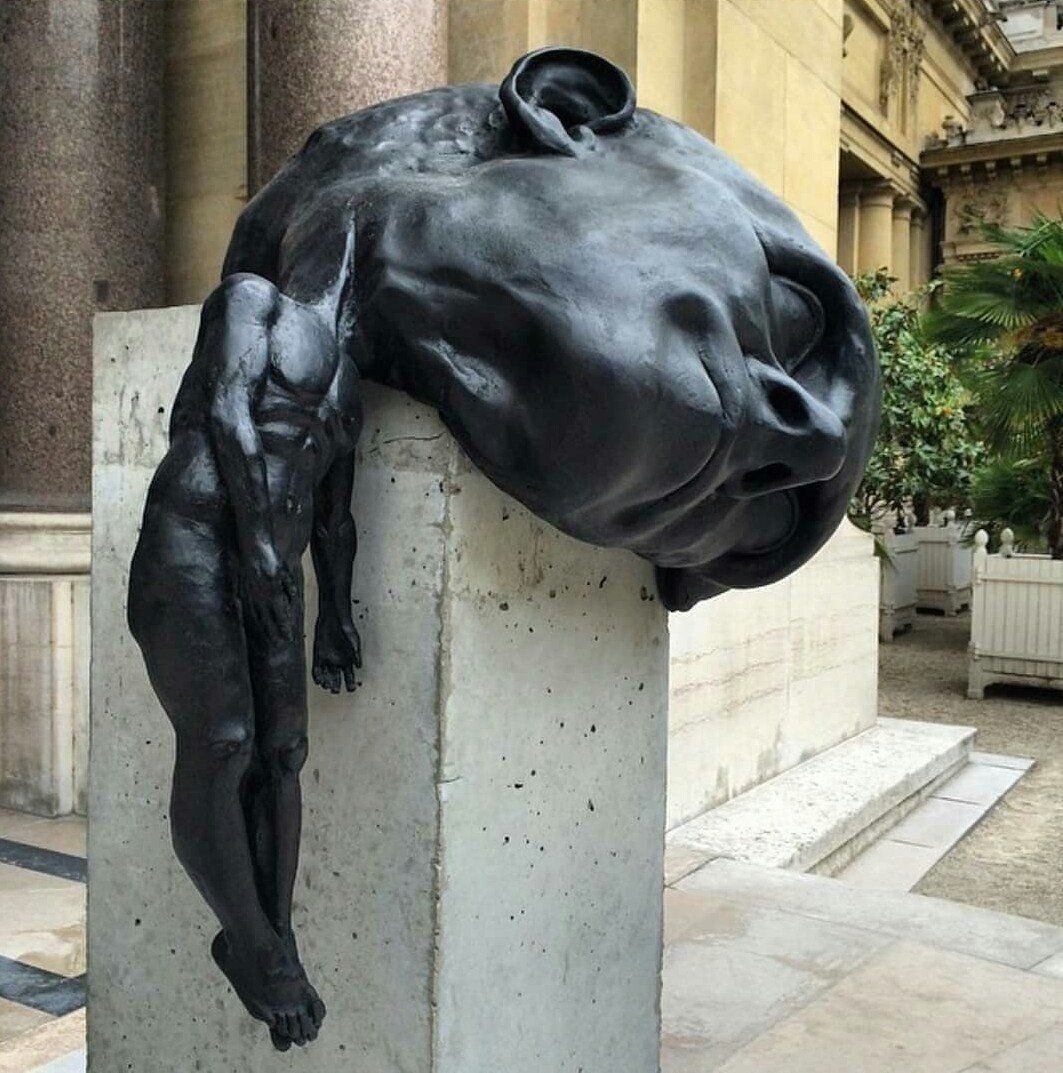
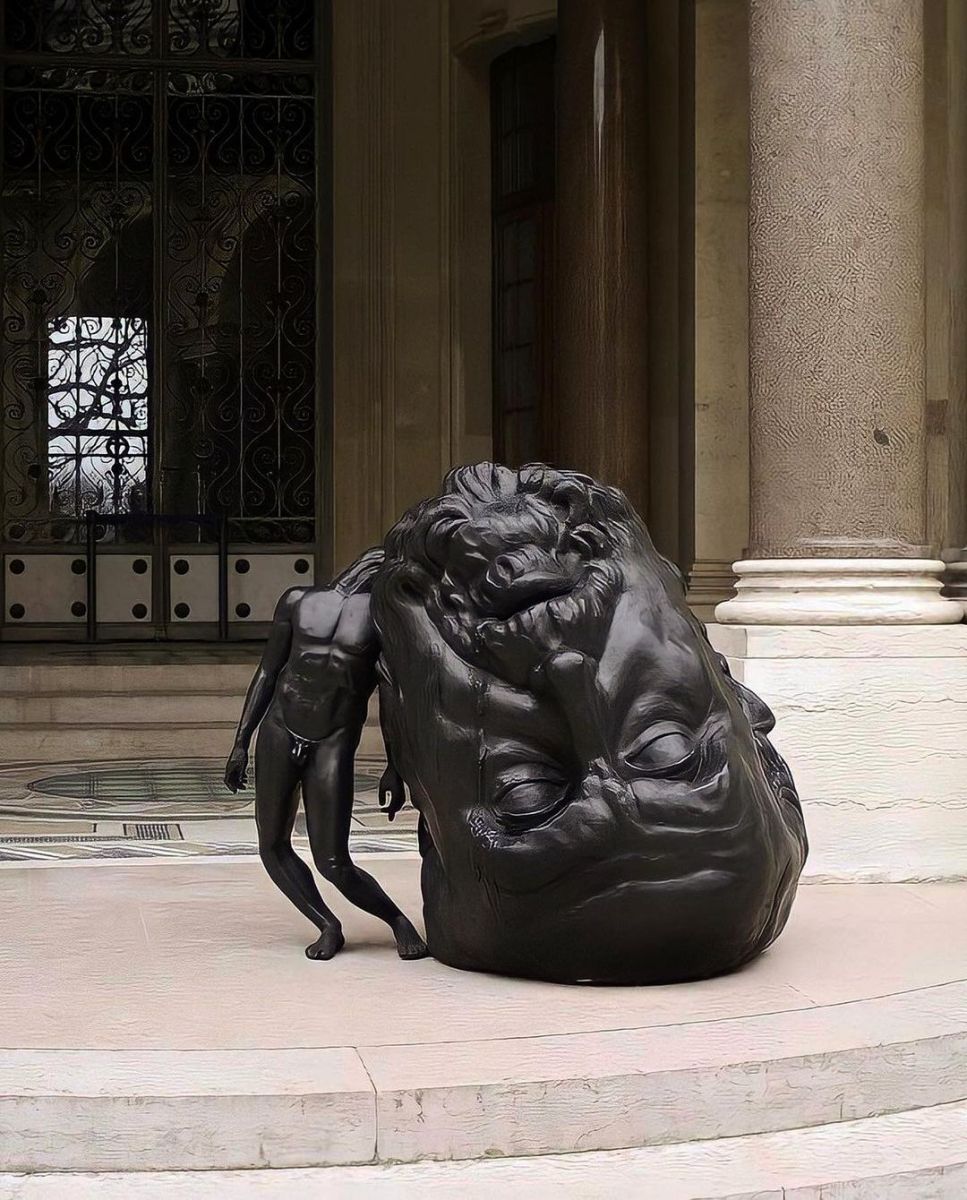
17. The Weight of Thought, bronze sculptures by Thomas Lerooy.
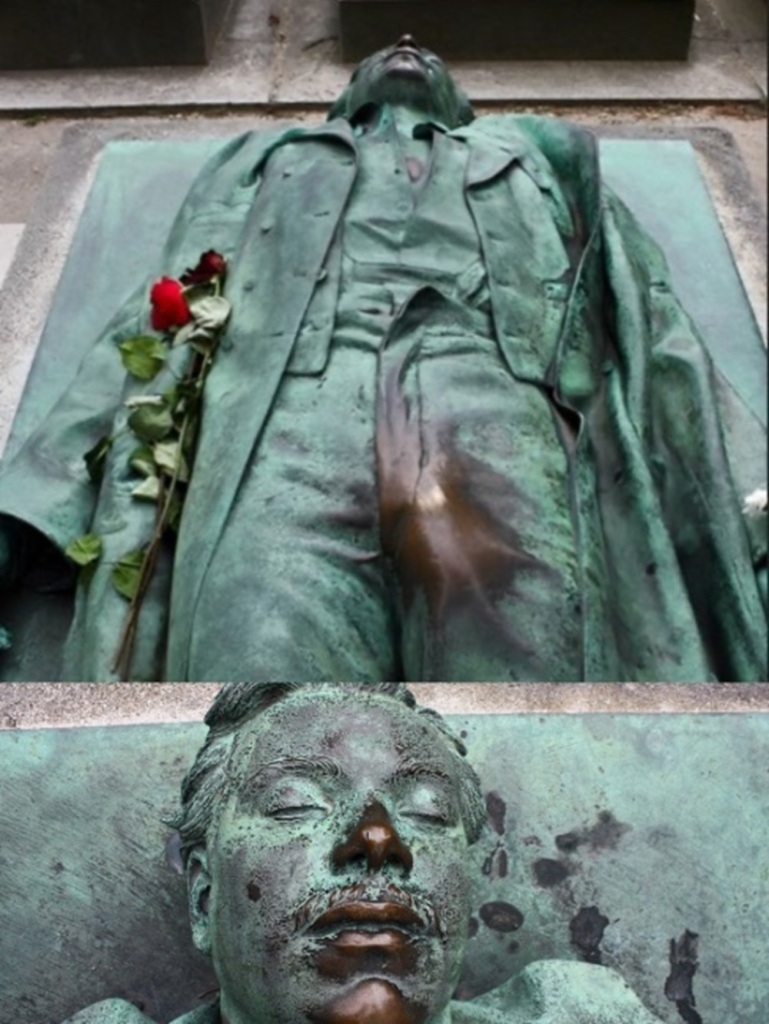
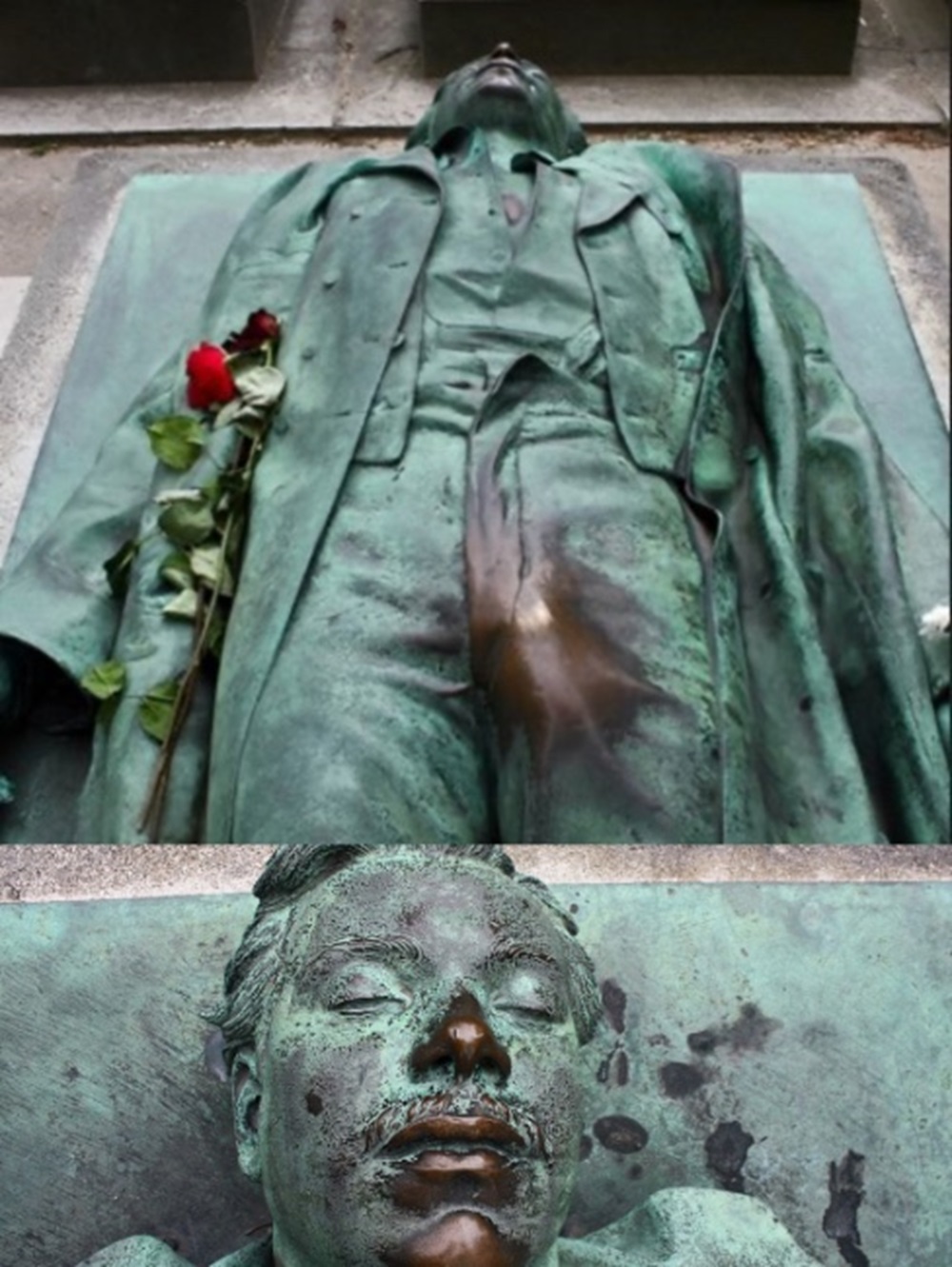
18. Victor Noir’s grave in Père-Lachaise cemetery, created by Patrick Magaud in 1984, has gained fame not for Noir’s journalistic work but for the legend surrounding his death and burial site.
Noir was a journalist shot dead, and his grave features a full-sized bronze statue of him lying down, as if recently shot. Over time, the statue became a fertility symbol. Legend has it that kissing the statue on the lips, leaving a flower in Victor’s hat, and rubbing the genital area enhances fertility, improves one’s sex life, or helps find a husband within a year. This has led to the lips and trousers’ bulge on the statue becoming noticeably shiny from repeated contact. In 2004, a fence was erected around the grave to prevent this practice, but public protest led to its removal. Victor Noir’s grave remains one of the most visited and talked-about monuments in Père-Lachaise.
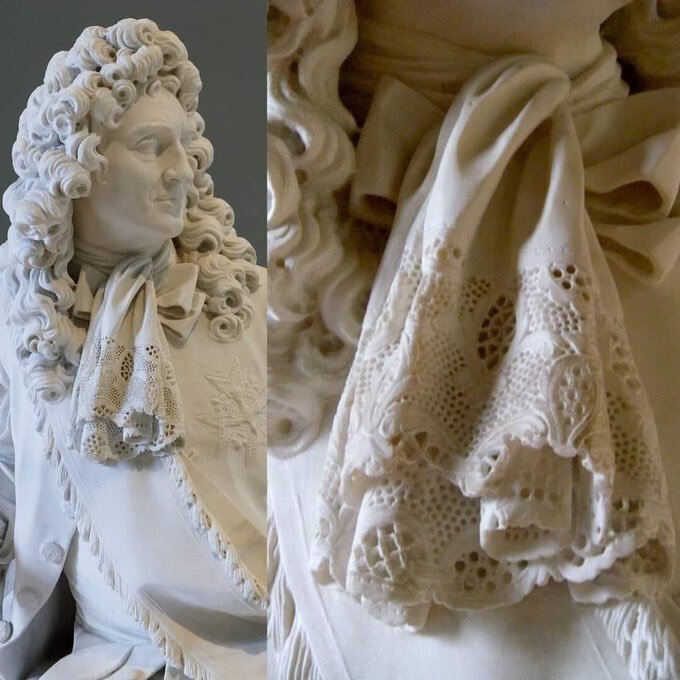
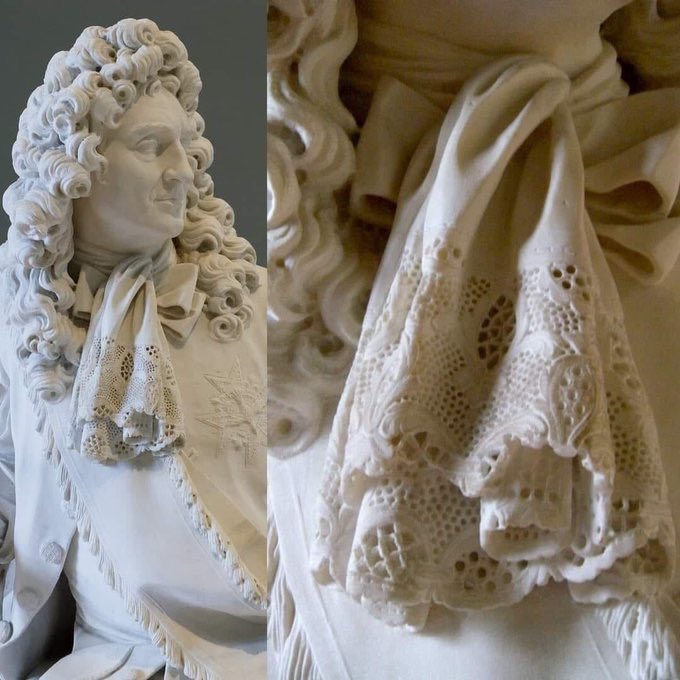
19. The amazing handkerchief detail in this marble statue made by French sculptor Louis Philippe Mouchy in 1781.
Featuring a highly realistic handkerchief carved to appear as delicate lace, draped around the neck of the figure. The sculpture captures the fine details of the lacework, folds, and textures, showcasing Mouchy’s skill in replicating soft fabrics in hard marble, a testament to his mastery of the medium. The statue also displays the figure’s elaborate curls and formal attire, highlighting the elegance and refinement typical of 18th-century French sculpture.
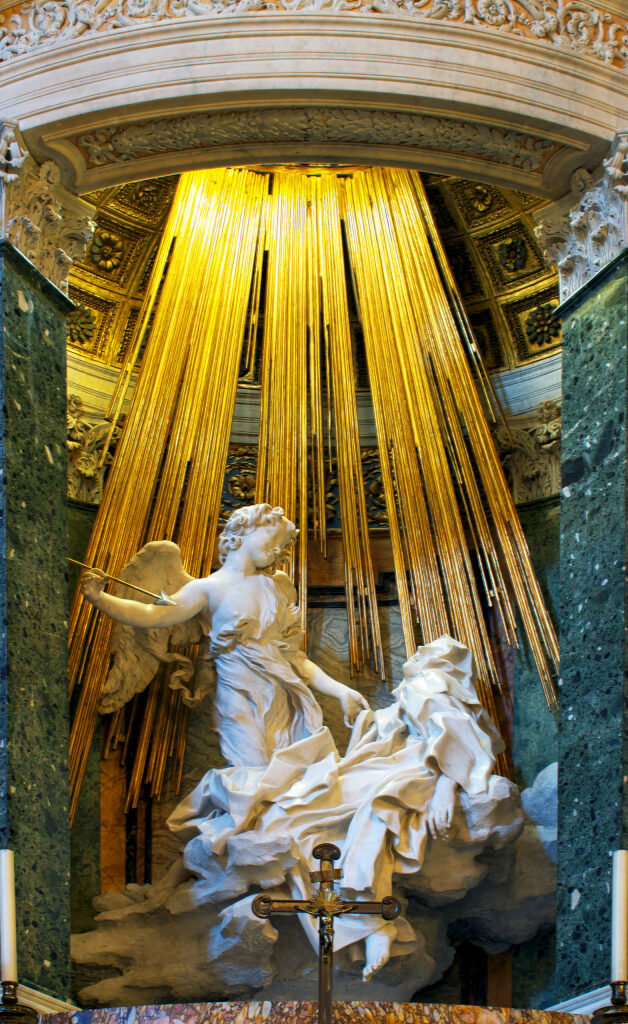
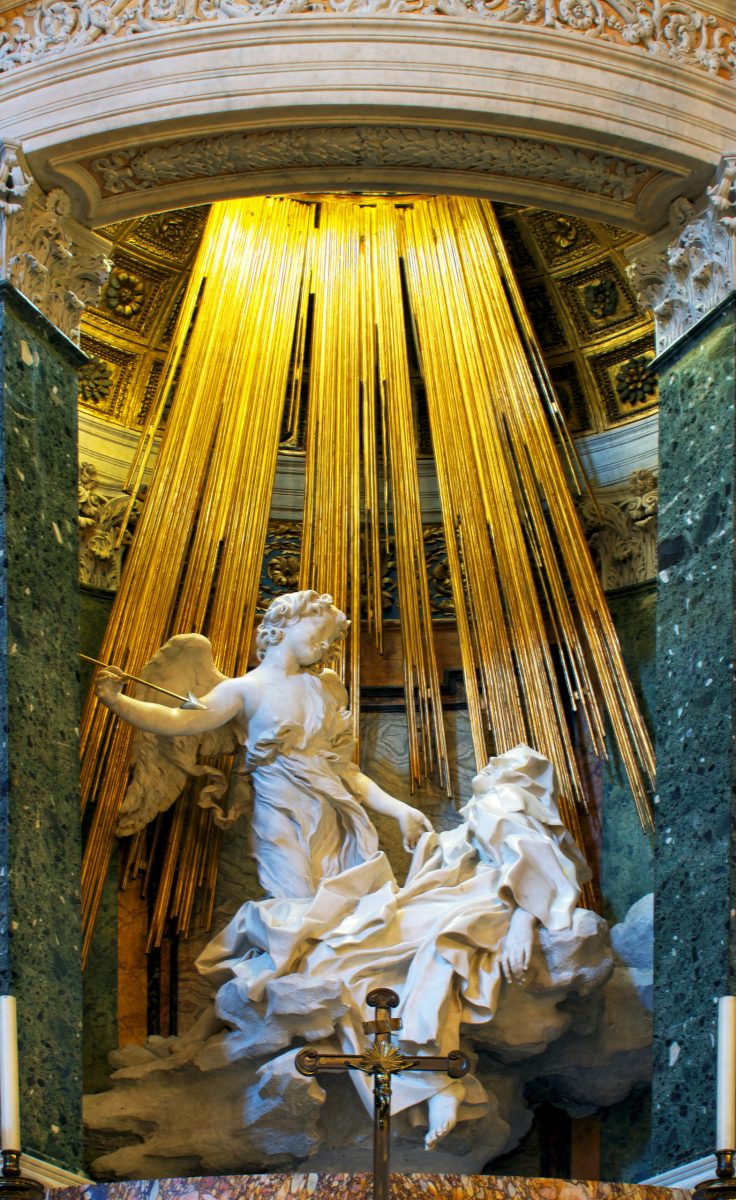
20. The Ecstasy of Saint Teresa, a renowned Baroque sculpture by Gian Lorenzo Bernini, located in the Cornaro Chapel of Santa Maria della Vittoria in Rome.
This intricate marble sculpture depicts Saint Teresa of Ávila in a moment of religious ecstasy, her face expressing both pain and bliss as an angel holds a golden spear poised above her. Radiant golden rays crafted from gilded bronze descend from above, symbolizing divine light and adding dramatic intensity to the scene.
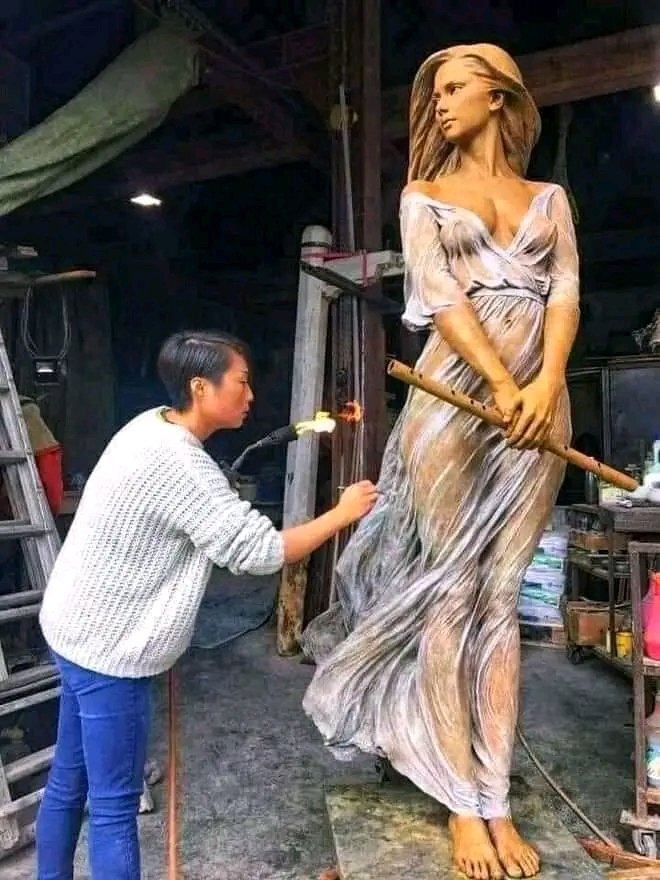
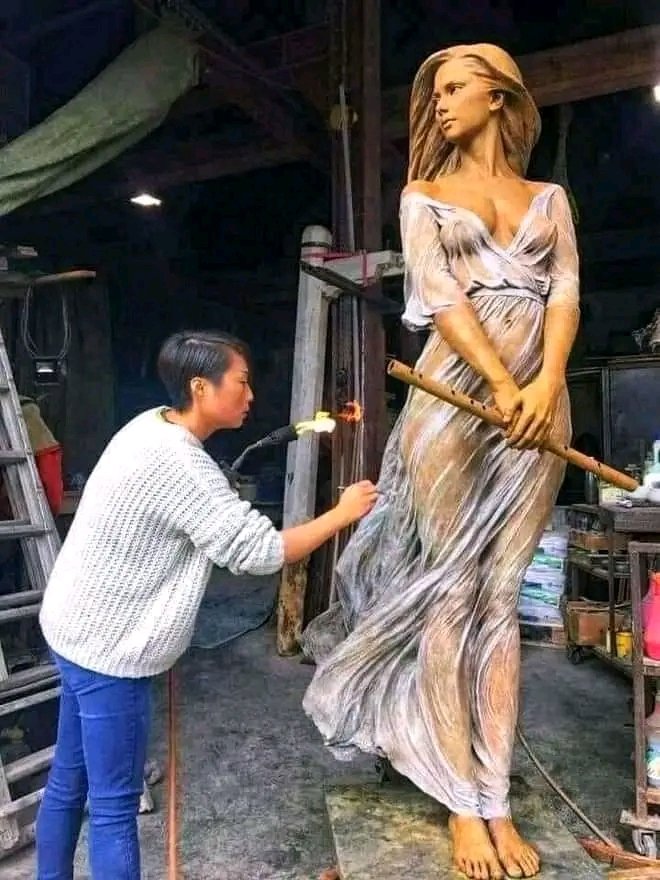
21. Luo Li Rong is a contemporary artist renowned for crafting hyper-realistic clay and bronze sculptures.
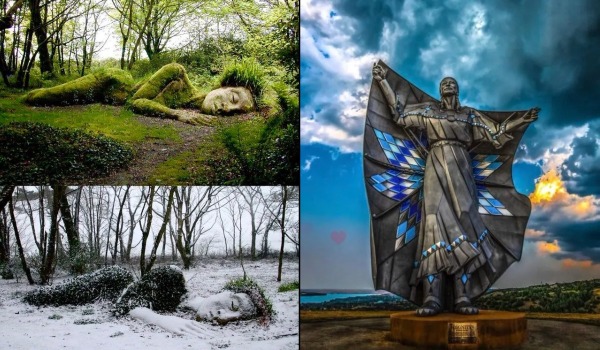
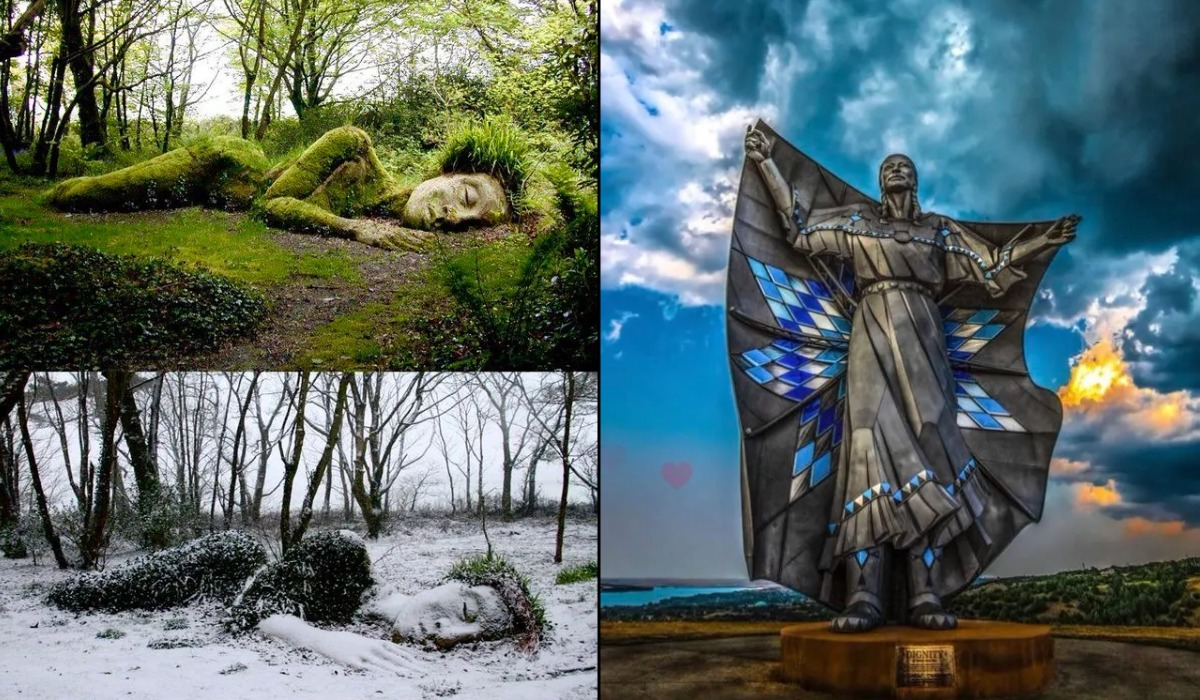
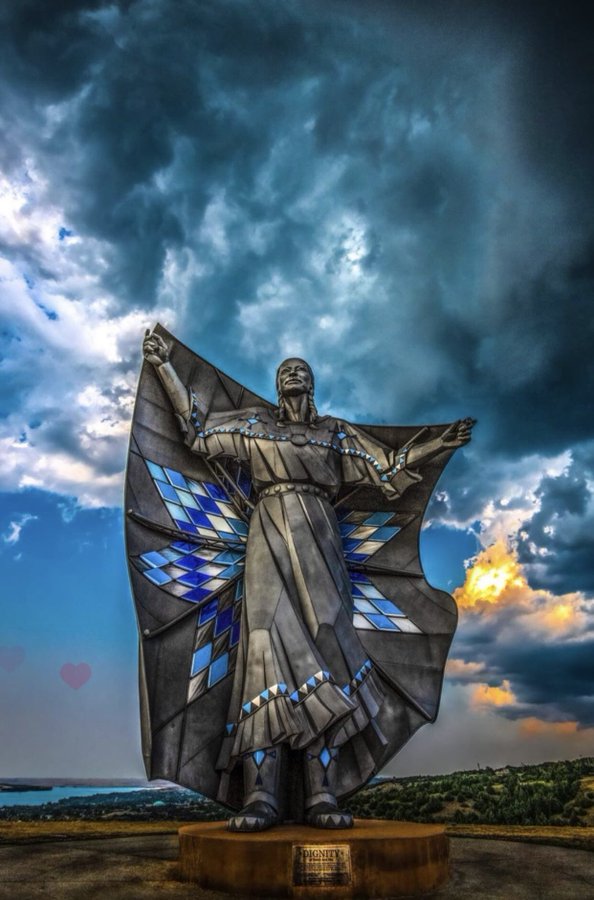
22. The Dignity statue in South Dakota, a stunning 50-foot-tall sculpture of a Native American woman draped in a star quilt.
The statue features a blend of metal and vibrant blue diamond shapes that catch the light, symbolizing the cultural heritage and spirit of the Lakota and Dakota people. The woman’s expression is serene, with her arms outstretched as if embracing the landscape around her.
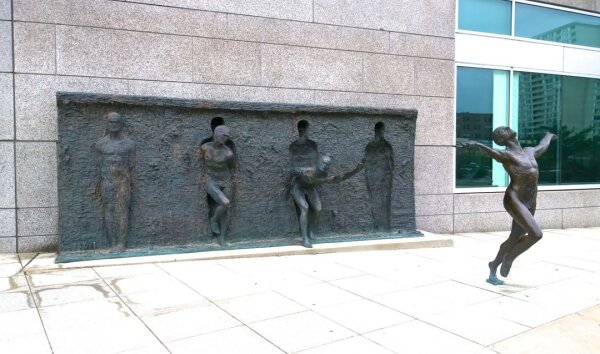
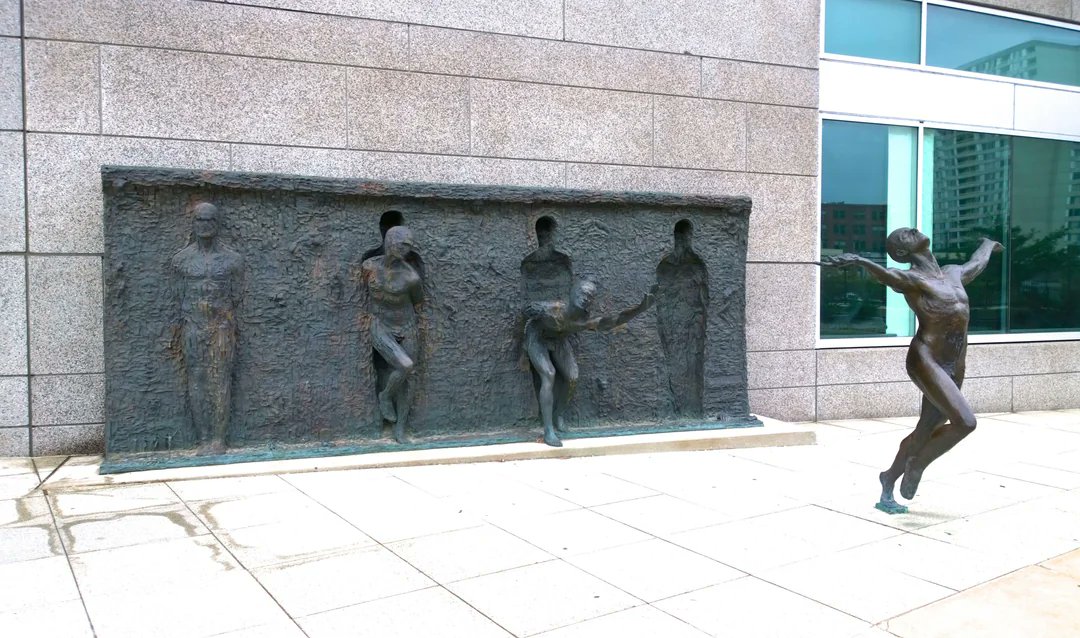
24. Freedom Sculpture, Philadelphia
“I wanted to create a sculpture almost anyone, regardless of their background, could look at and instantly recognize that it is about the idea of struggling to break free. This sculpture is about the struggle for achievement of freedom through the creative process” — Zenos Frudakis:
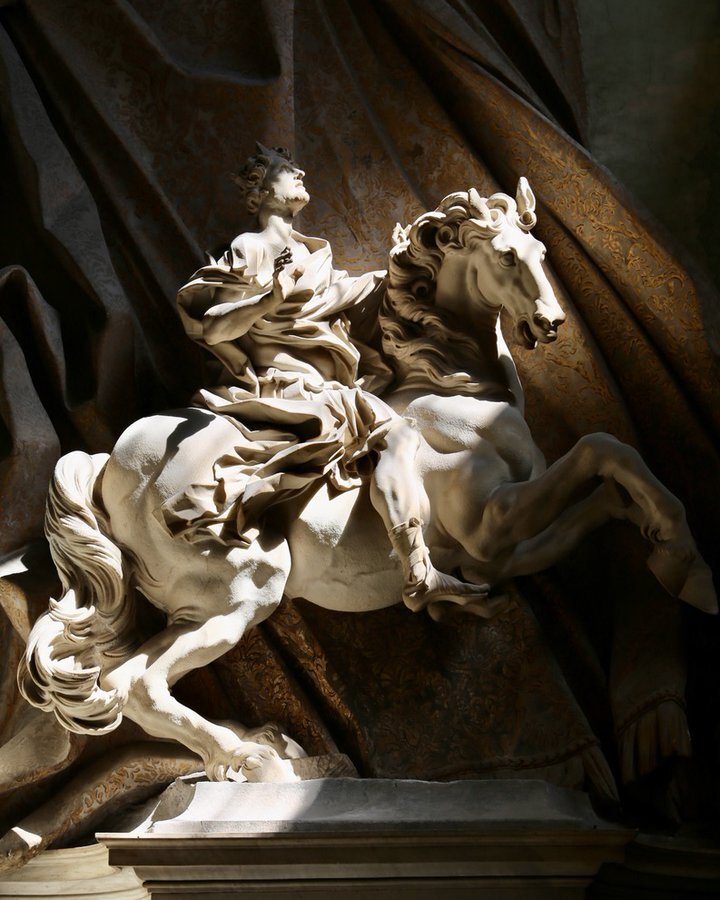
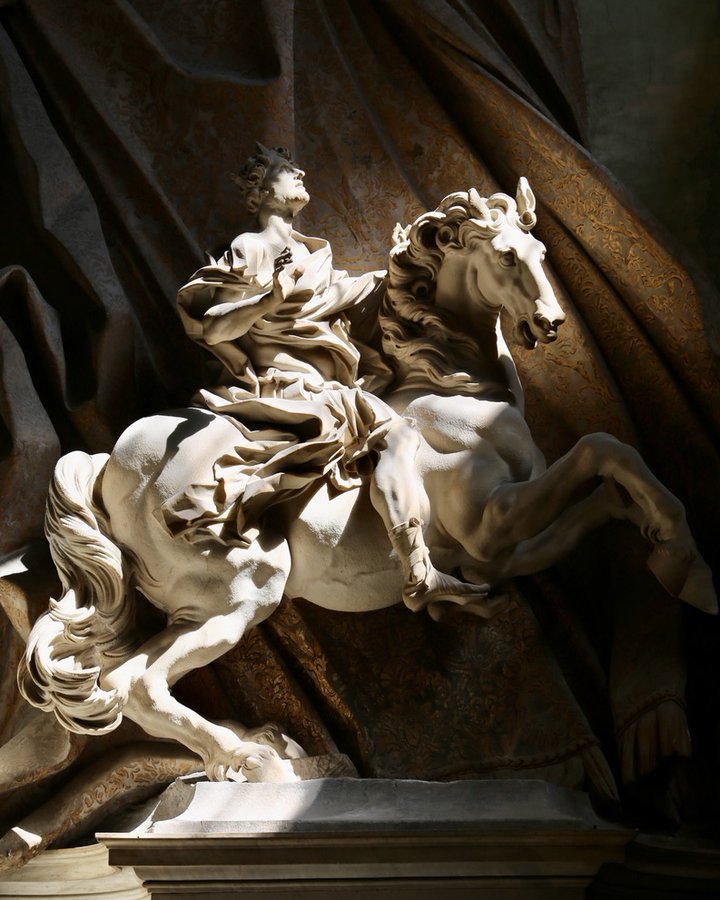
25. The vision of Constantine by Bernini is arguably one of the most underrated sculpture in art history.
Gian Lorenzo revolutionized the art form by infusing unprecedented movement into stone.
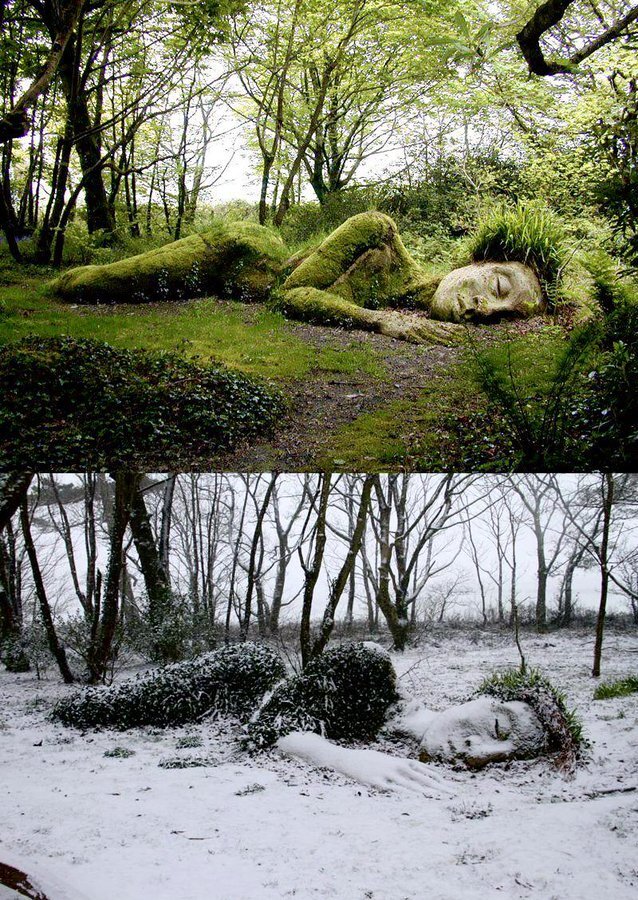
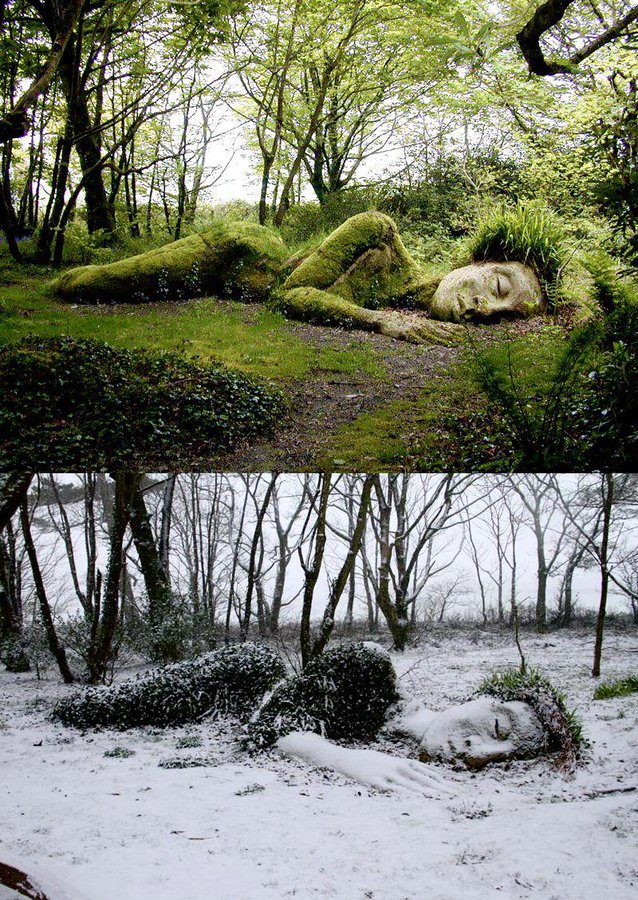
26. The Mud Maid by Sue Hill, located in the Lost Garden of Heligan, Cornwall, UK.
Depending on the time of the year, the mud maid’s hair and clothes change when the seasonal plants and moss grow over the sculpture. More: Mud Maid – Living sculpture by Sue and Pete Hill (5 photos and video).
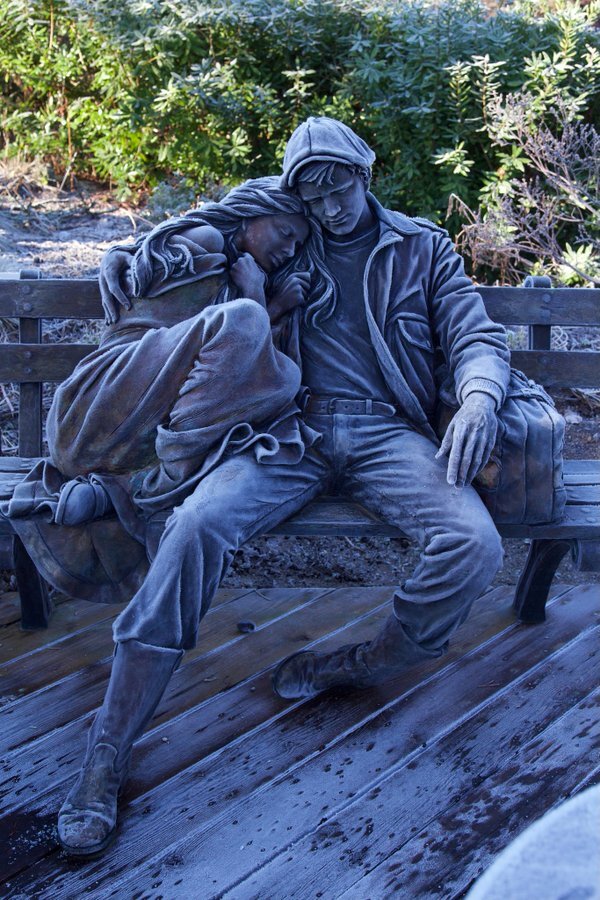
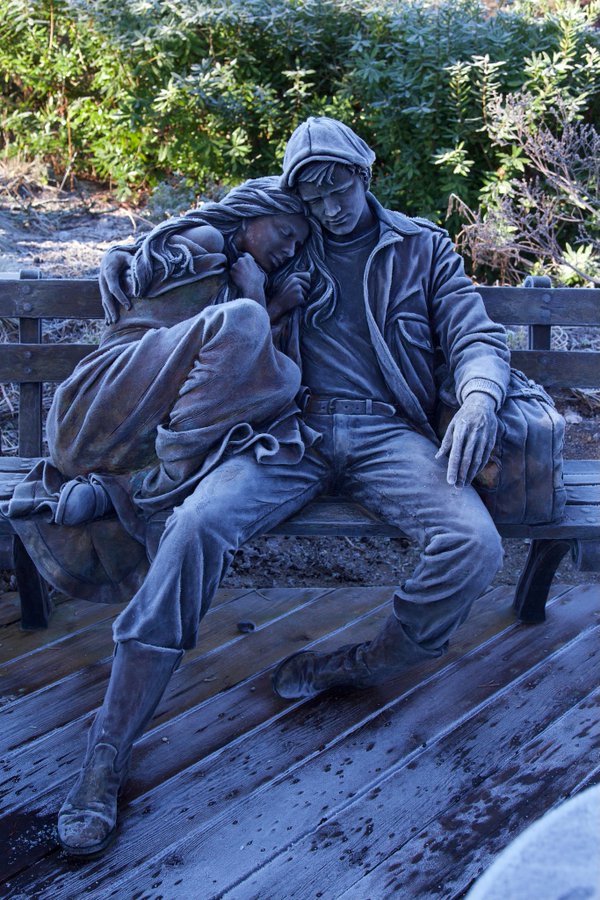
27. Departure, a stunning bronze sculpture by artist George Lundeen, highlighted by the frost.
The sculpture is subtly highlighted by a layer of frost, enhancing the scene with a sense of cold and quiet intimacy, as if capturing a moment of departure or waiting.
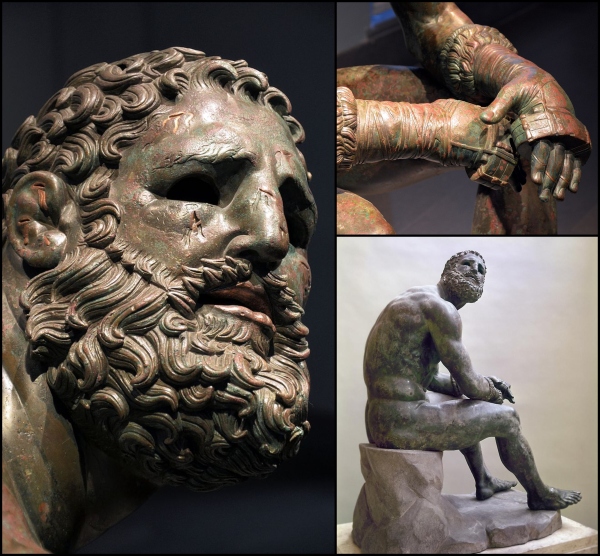
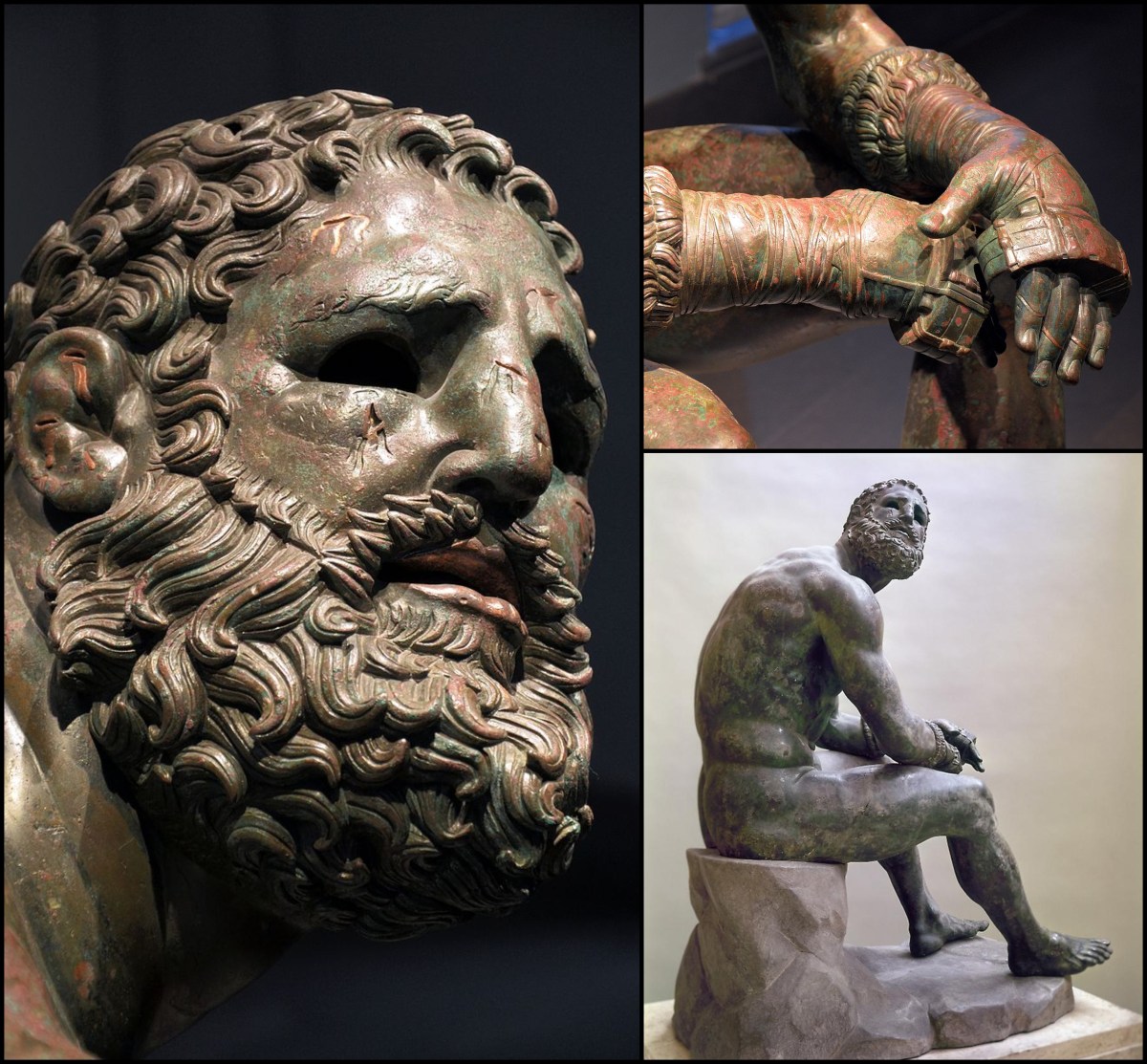
28. The Resting Boxer, crafted more than 2,000 years ago, is one of the most realistic sculptures ever made and one of the finest examples of bronze sculptures to have survived from the ancient world.
It was excavated in Rome in 1885. Its incredible features, such as its pose, gaze, broken nose, cauliflower ears, scarred face, and bruised eyes, have been enchanting the world ever since.
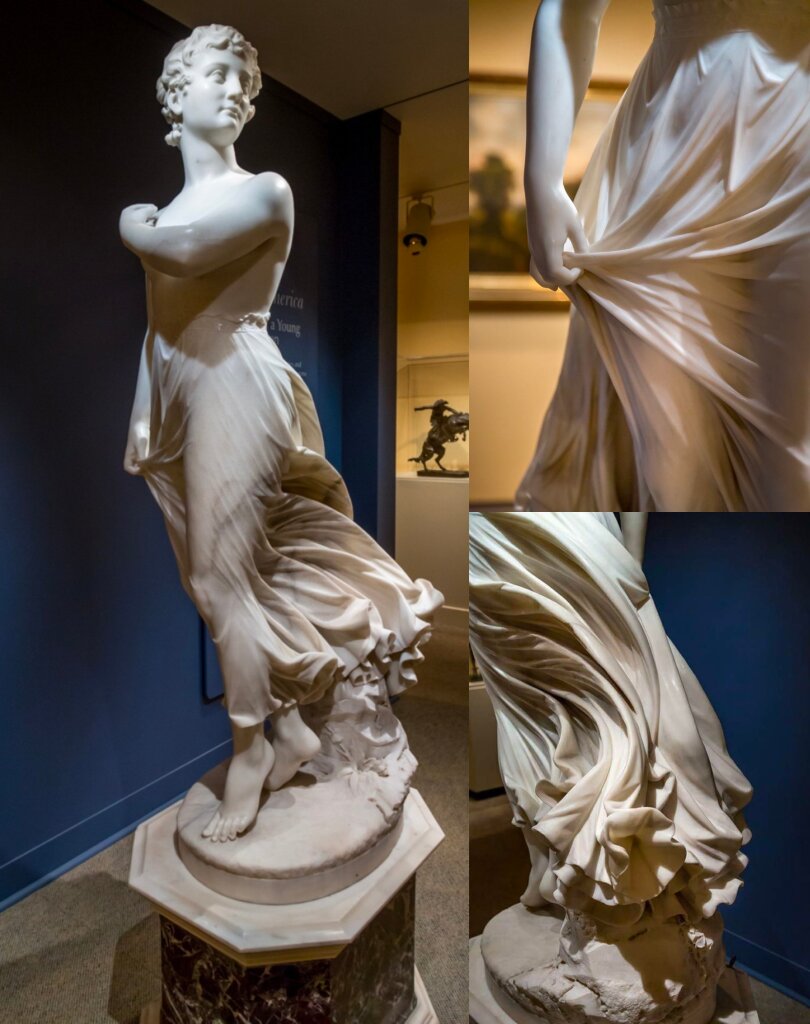
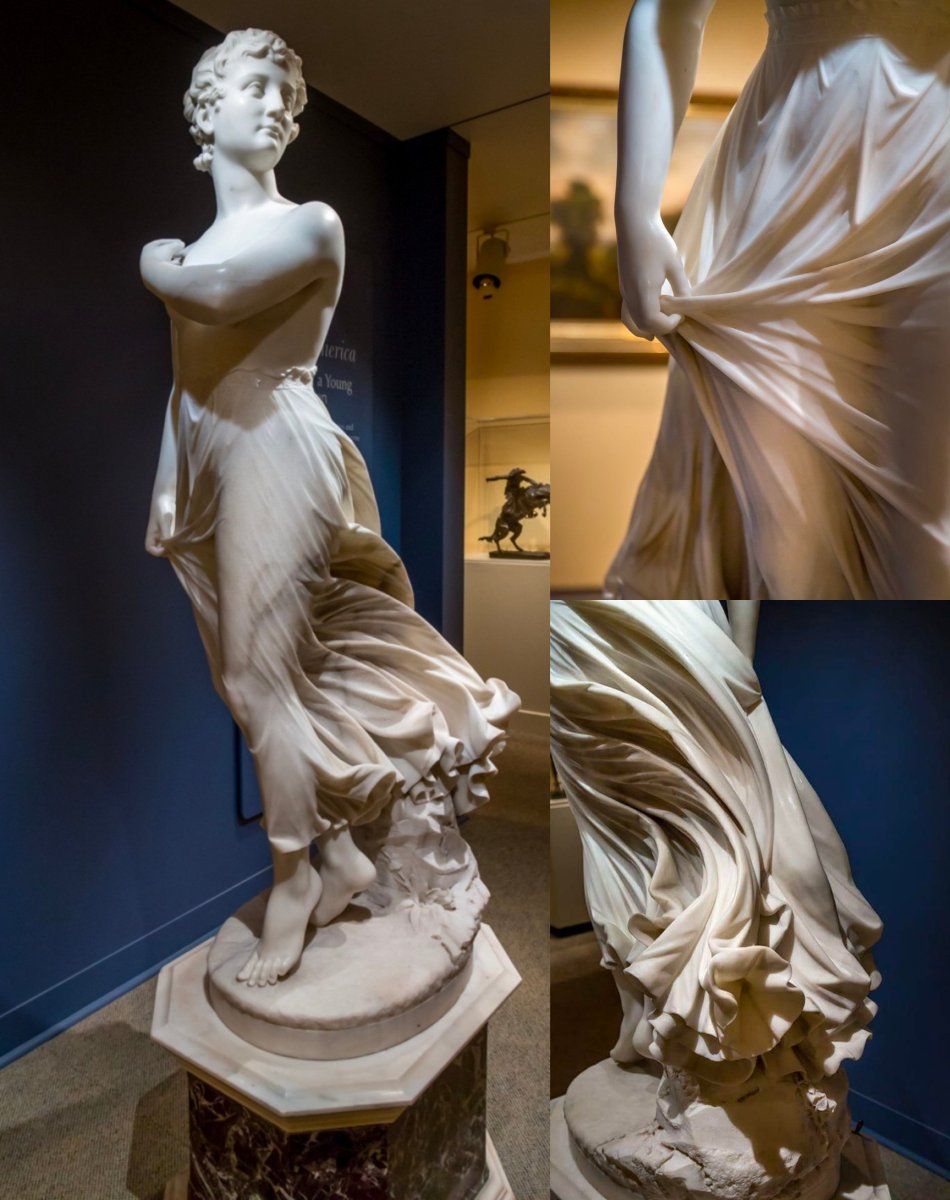
30. The mesmerizing details of The West Wind, a surreal marble sculpture by American artist Thomas Ridgeway Gould.
Gould’s masterpiece likely drew inspiration from Percy Shelley’s “Ode to the West Wind,” in which the west wind serves as an allegory for the cyclical nature of change and revolution:
More: Sculptures That Blend With Nature (10 Photos)
Which sculpture is your favorite?






Fixing the World (12 Photos)
Content warning: Sometimes the best street art starts with the thing everyone else tries to hide. A crack becomes a dog’s body. A pothole gets a mosaic. A missing corner is filled with books. These pieces are not always practical repairs, but they share one simple idea: t
Sometimes the best street art starts with the thing everyone else tries to hide.
A crack becomes a dog’s body. A pothole gets a mosaic. A missing corner is filled with books. These pieces are not always practical repairs, but they share one simple idea: the city’s flaws can become the artwork.
Some artists patch damage with tiles, plastic bricks, thread, flowers, or plants. Others simply change how we see a sewer grate, a bent fence, or a leaning building. Either way, the flaw becomes the reason to stop and look.
More: Sculptures That Blend With Nature (10 Photos)
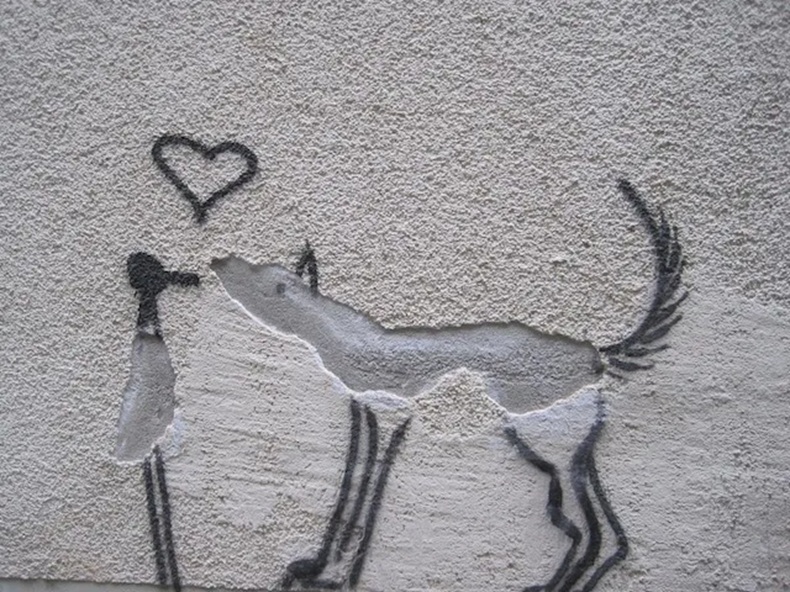
🐶 Love Dogs — Street Art in Leipzig, Germany
The rough patch is not covered up. It becomes the shaggy body of one dog. A few black lines add the second dog, the nuzzle, and the tiny heart above them. The wall does half the work, which is why the piece feels so light.
💡 Why it fits: The Leipzig setting adds a nice layer. The city’s official tourism site describes the former Baumwollspinnerei cotton mill as a major contemporary art center after yarn production ended in 1992, with about 100 artists’ studios and 11 galleries. Leipzig has a strong habit of giving old industrial surfaces a new cultural life; this wall does it in miniature.
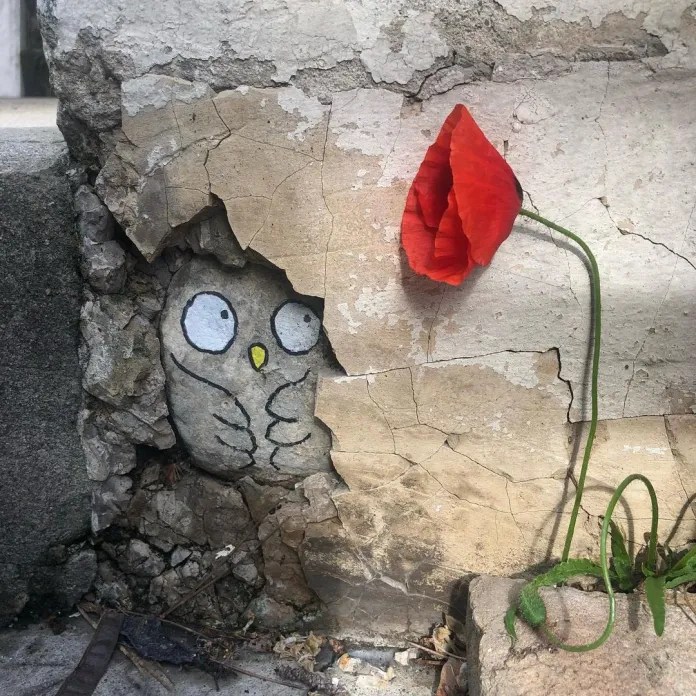
🦉 Owl and Poppy — By CAL in Lyon, France
The broken corner becomes a tiny owl nook. CAL keeps the drawing small, then lets the real red poppy do the bright work. It feels less like a mural and more like a street-side gift you only notice because the wall was damaged first. More by CAL: Street Art by CAL in Lyon, France (4 Photos)
💡 Why it fits: Red poppies are almost too perfect for a wall wound. Kew explains that seeds in the seed bank can often remain dormant for up to 80 years, and that heavily churned soil can stimulate them to germinate. In other words, disturbance can become the reason something blooms.
🔗 Follow CAL on Instagram
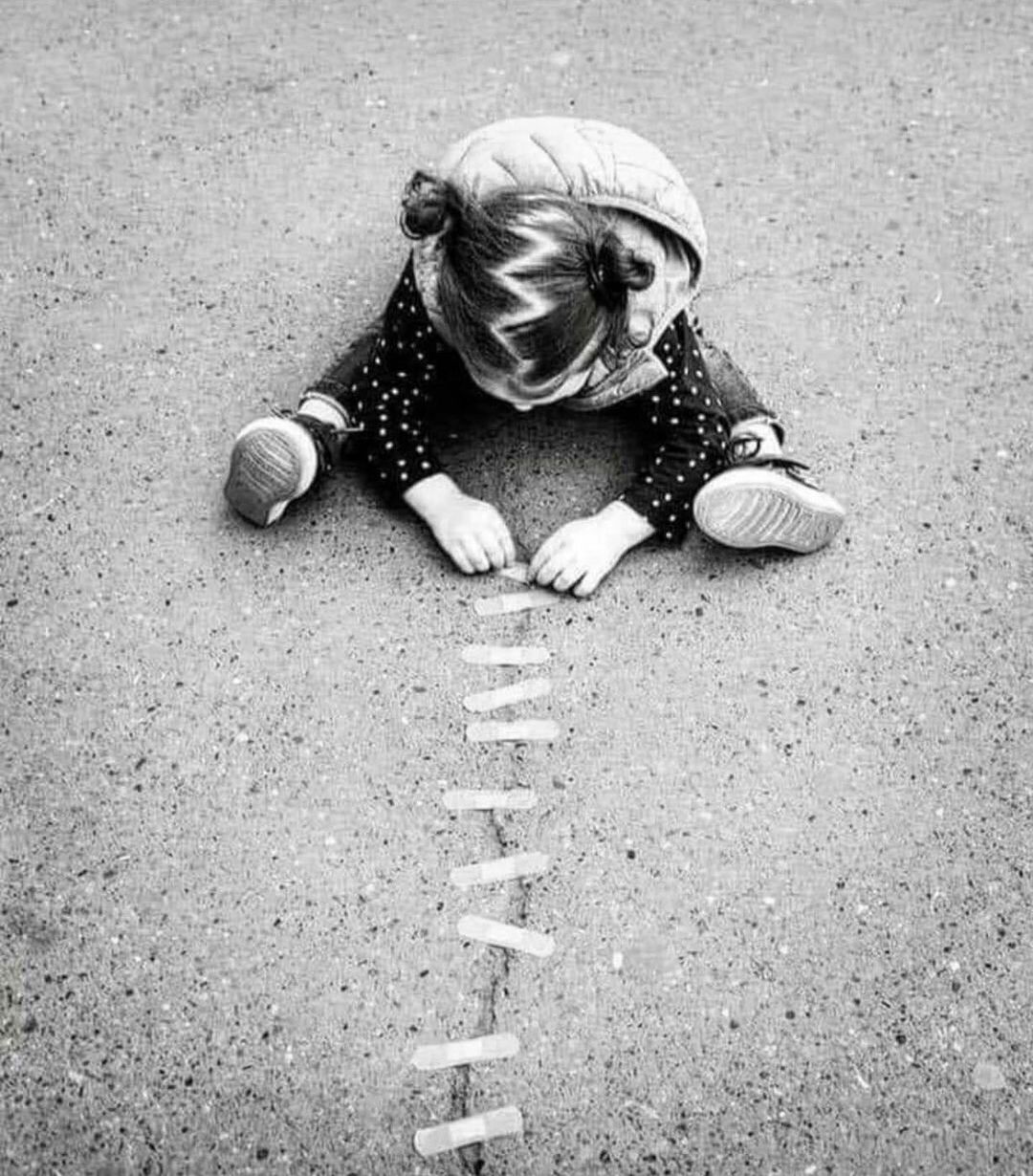
🩹 Girl With Bandages
The street has a scrape. This little girl is patching it with oversized bandages. Not exactly municipal-grade, but very kind.
💡 Why it fits: The real BAND-AID® story also began as a practical fix. According to the brand’s official history, Johnson & Johnson cotton buyer Earle Dickson combined adhesive tape and gauze in 1920 so his wife could bandage herself, and the first store version in 1921 came as a 3-by-18-inch strip that people cut to fit. A small fix became an everyday symbol of care.
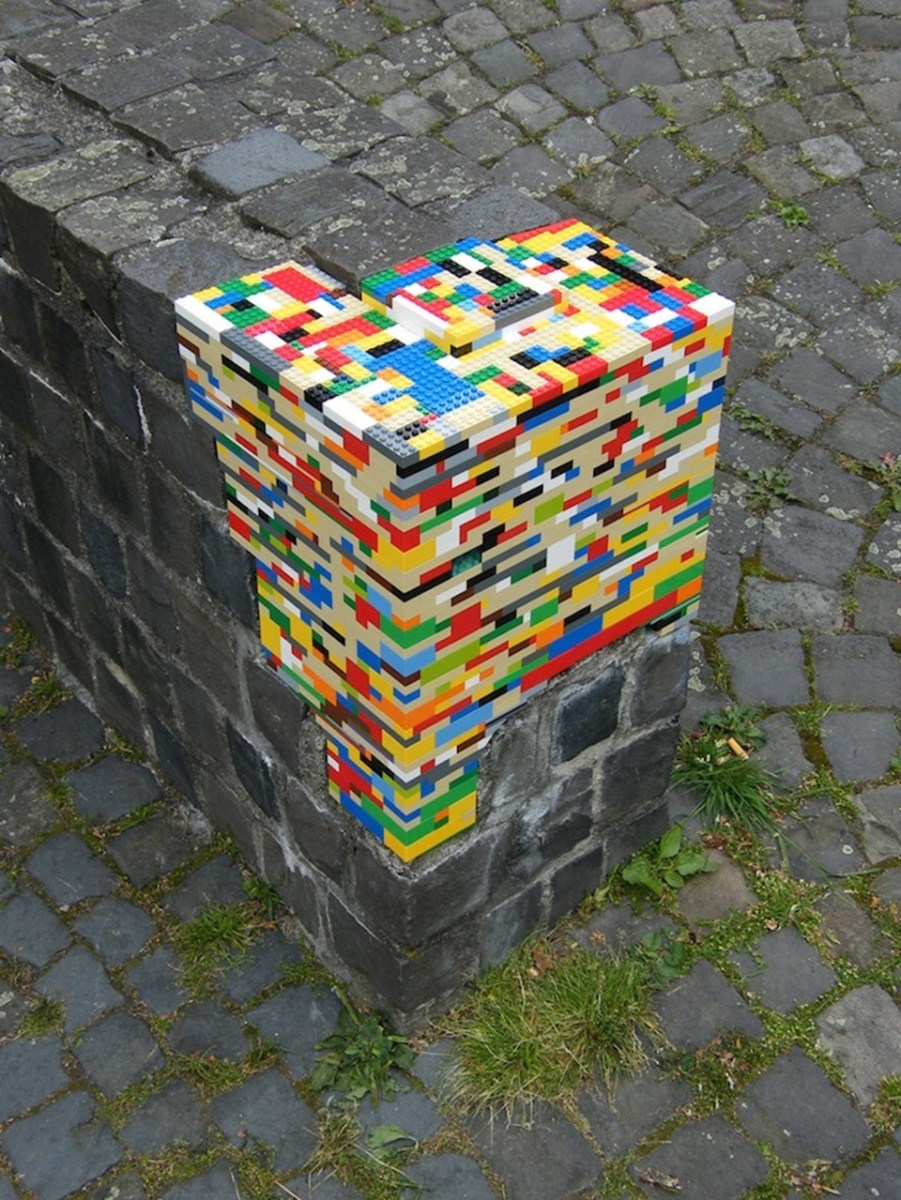
🧱 Dispatchwork — By Jan Vormann
A stone wall usually asks for matching stone. Dispatchwork answers with color instead. The plastic construction bricks sit proudly inside the missing corner, turning the gap into a bright little map of what used to be there. More: What If LEGO Could Repair the World? (12 Photos)
💡 Why it fits: Jan Vormann’s official site lists Dispatchwork as starting in 2007 at Venti Eventi in Bocchignano, Italy, using plastic construction pieces to fill holes in broken walls. The later worldwide network is part of the charm: the idea spreads like a repair recipe anyone can recognize.
🔗 Follow Jan Vormann on Instagram
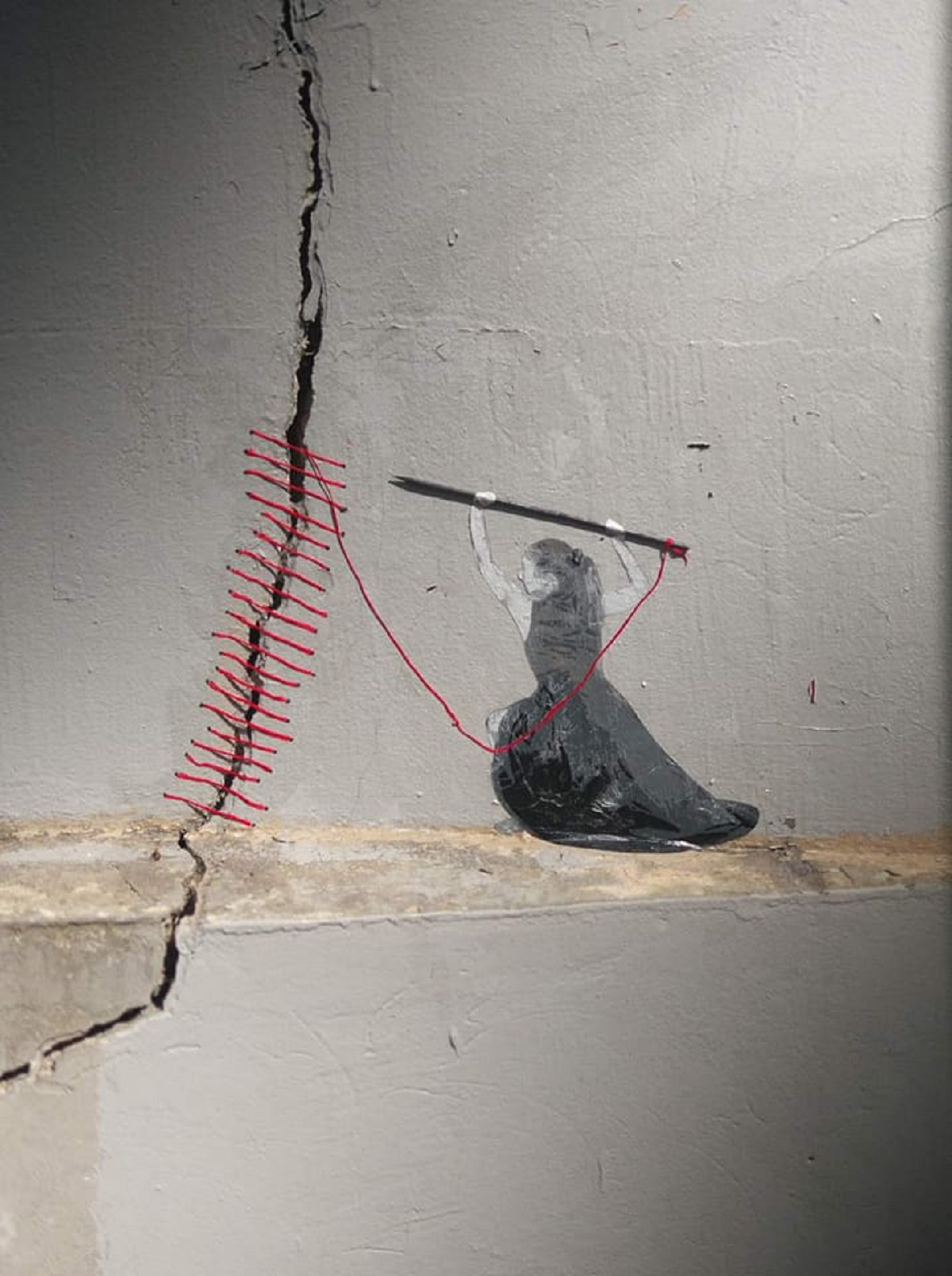
🪡 The Stitch — ENDER on Rue Villiers-de-L’Isle-Adam in Paris, France
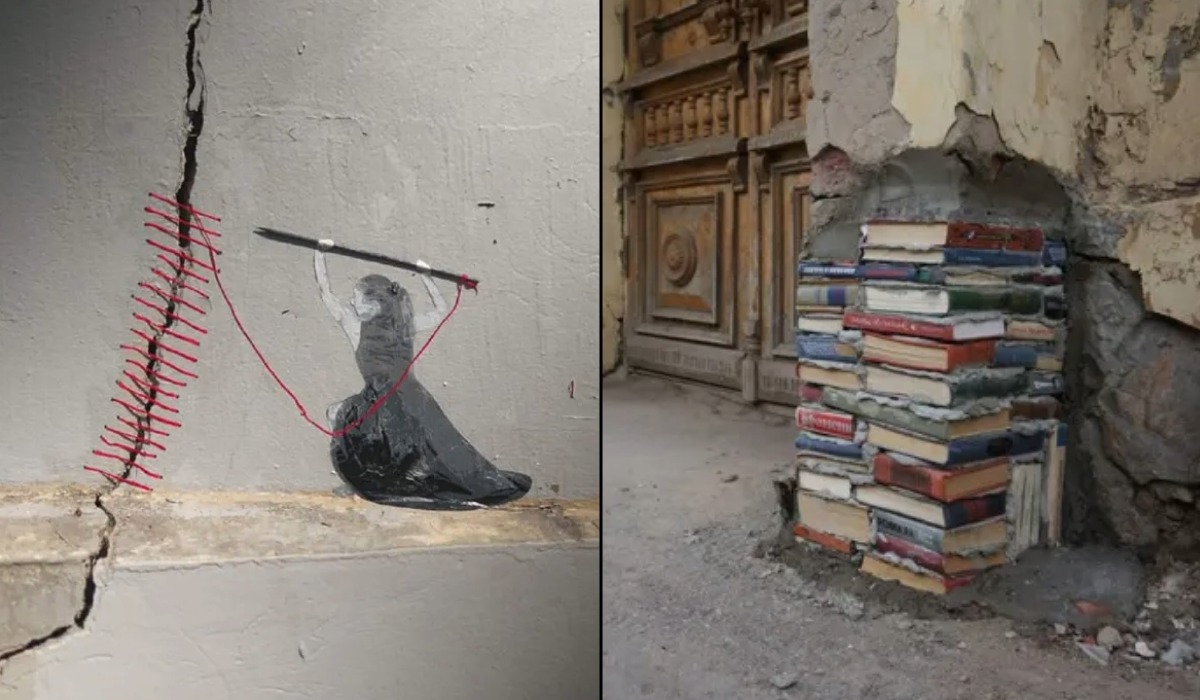
At the foot of a Paris wall, ENDER’s small figure does what a city crew would never do: she sews concrete. The real red thread crosses the crack like a seam, making the damage look fragile, deliberate, and strangely cared for. More: Repair Cracks with Art
💡 Why it fits: ENDER also has a theatre background. I Support Street Art notes that he has worked as a professional actor and often uses paste-ups because his multi-layer stencils would be difficult to spray. That background makes this tiny wall-mender read like a one-scene play.
🔗 Follow ENDER on Instagram
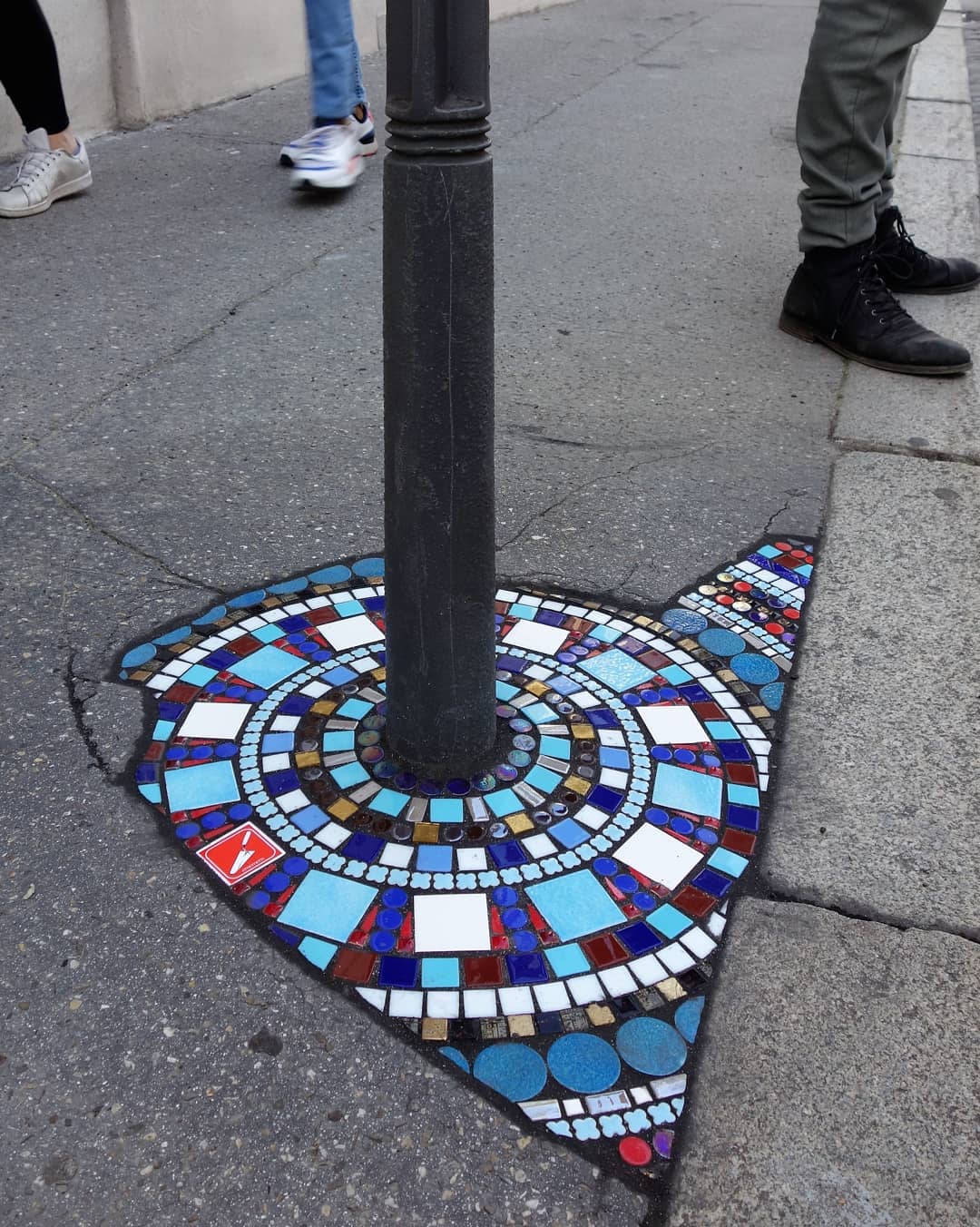
✨ Mosaic Patch — Ememem in Lyon, France
Here, the broken pavement does not disappear. It gets a tiled floor. Ememem’s mosaic sits around the lamppost like a small public rug, turning a bad patch of pavement into a place where your eyes stop for a second. More: Repairing Streets with Artful Mosaics (17 Photos)
💡 Why it fits: Ememem calls this practice “flacking”, from the French “flaque,” meaning puddle. The official text describes it as an art of repairing holes and compares it to kintsugi, the Japanese art of repairing while enhancing the break. The point is not to hide the scar; it is to make the scar worth noticing.
🔗 Follow Ememem on Instagram
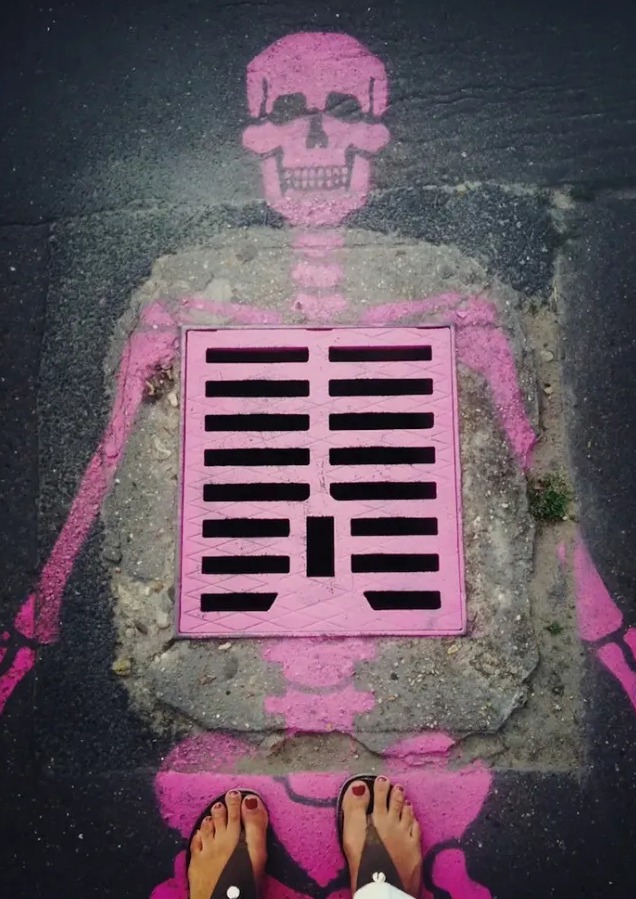
💀 Sewer Skeleton
The sewer grate was already doing half the drawing. The chalk artist used the square grid as a ribcage and built a neon pink skeleton around it. A 2013 Pixabay photo identifies the piece as chalk street art, but it does not name the artist. Nothing has been physically repaired; the fix is visual, turning street hardware into anatomy. More: Fixed It For You (10 Photos)
💡 Why it fits: Chalk art has a much older street life than social media. The Santa Barbara I Madonnari festival page notes that Italian street painting with chalk is believed to have begun in the 16th century, with traveling artists turning streets and public squares into temporary galleries during religious festivals. This skeleton keeps that temporary public-gallery spirit, just with a sewer grate as the starting point.
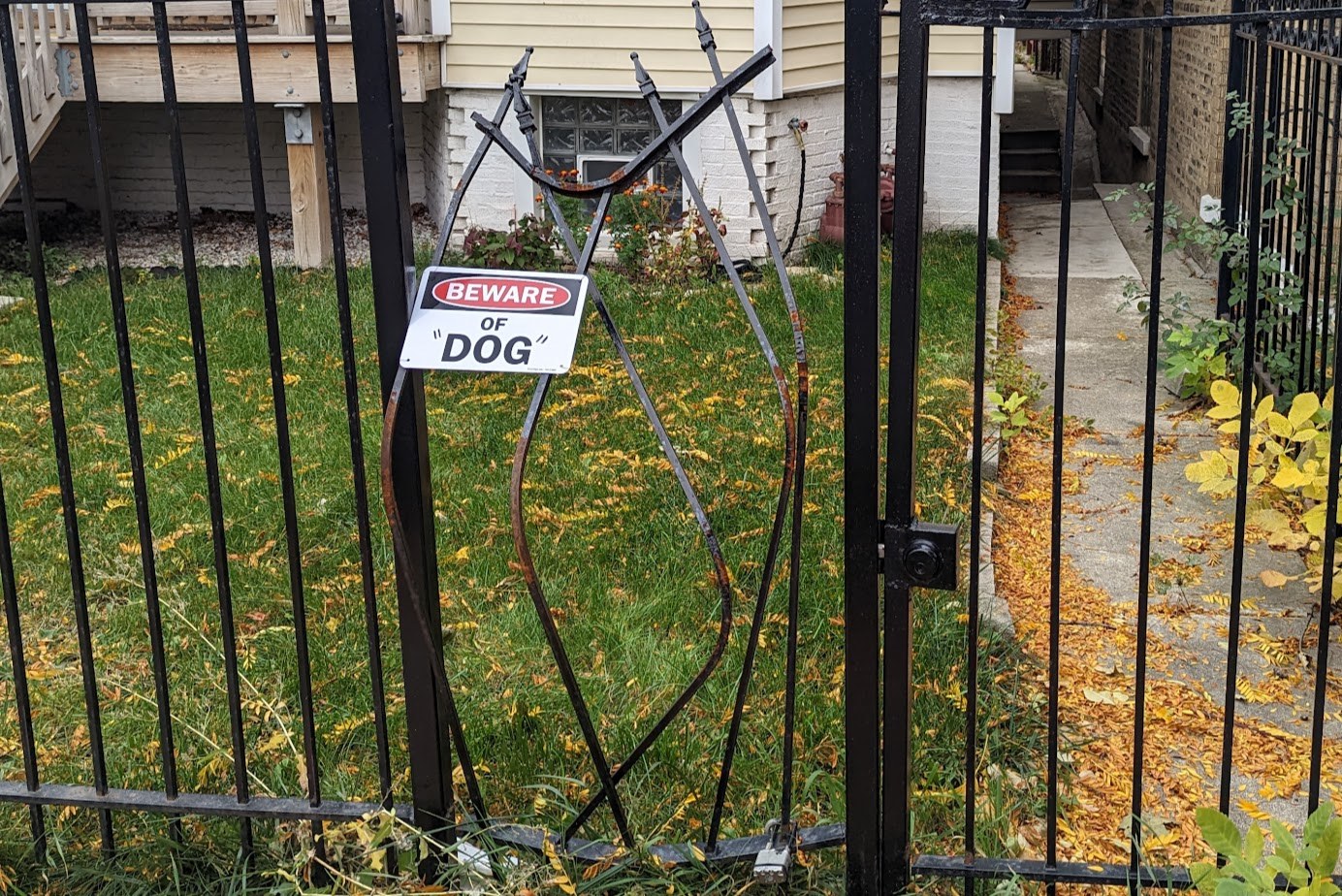
🐕 Bent Fence Dog
The bent bars already suggested a creature forcing its way through. The crooked “Beware of Dog” sign leans into the accident, making the damage read as a joke before any actual repair happened. In the original Reddit post, the poster said a tree had fallen on the fence and they were making the best of it while negotiating the repair.
💡 Why it fits: The trick is close to a readymade-style joke: an ordinary manufactured object gets reframed instead of replaced. This fence is not a museum object, of course. The humor comes from the same switch: context turns damage into character.
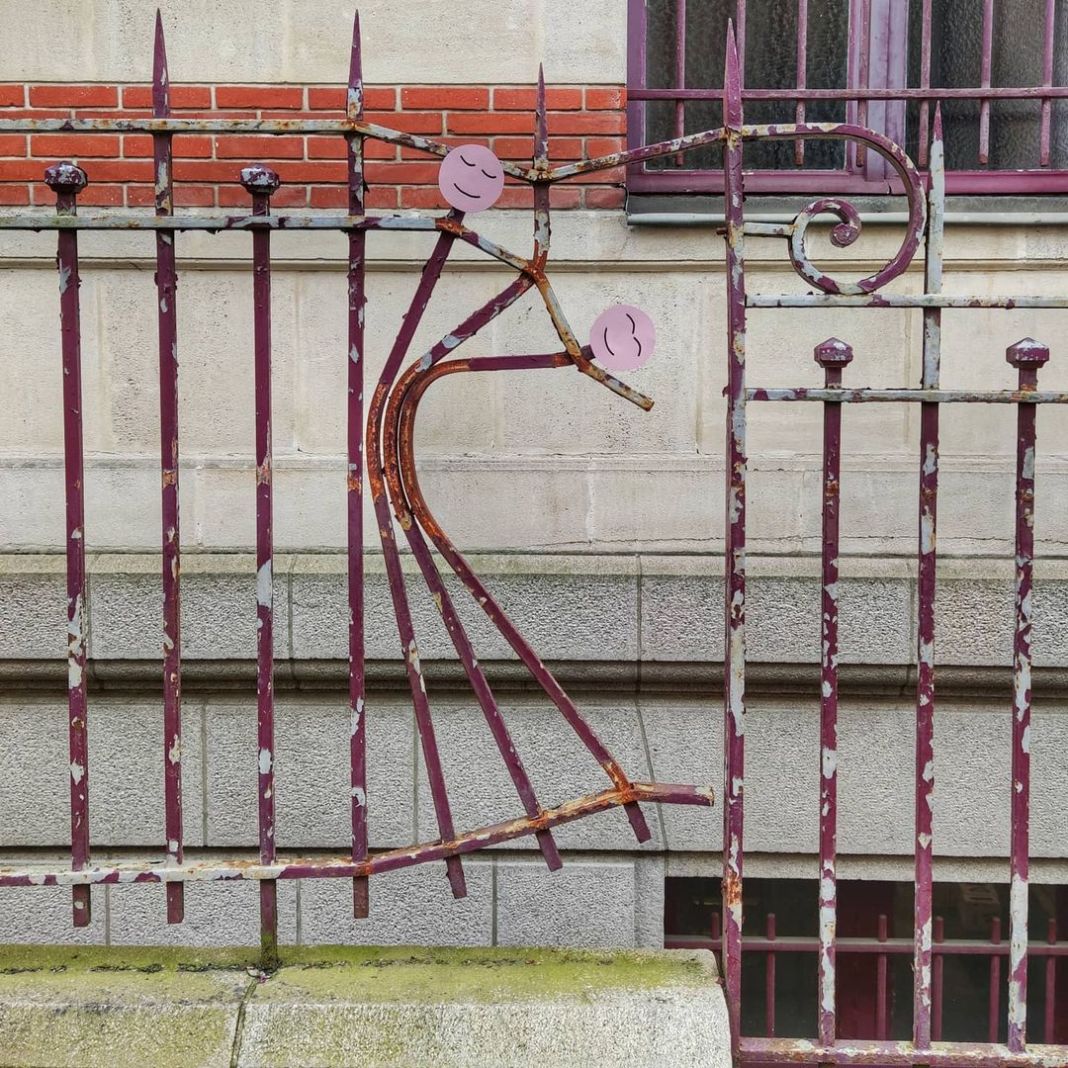
💃 Dancing Railing — Street Art by Oakoak
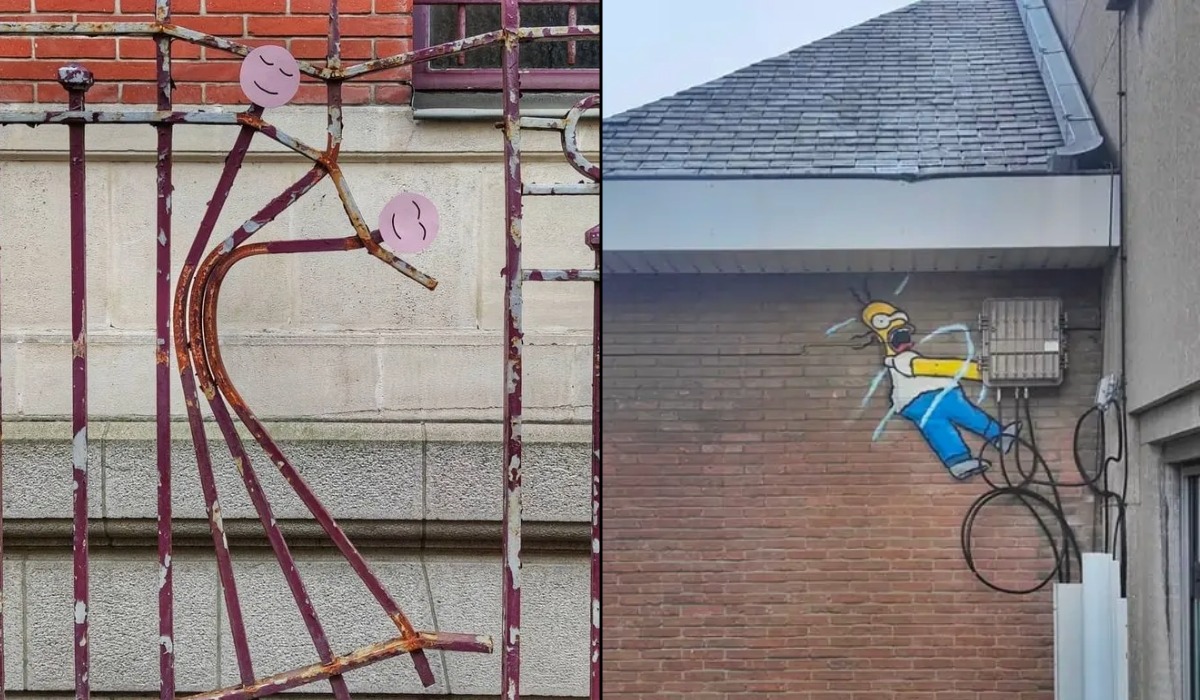
These railing bars are not being “fixed.” They are being cast in a tiny dance. Oakoak adds faces and small painted details, and the bent metal suddenly looks like two bodies caught mid-move. It is a tiny intervention, but it changes the whole railing. More: From Homer Simpson to Obelix: Oakoak’s Genius Street Art! (10 Photos)
💡 Why it fits: Oakoak’s official street-art portfolio shows how often he builds small visual jokes from the street itself. In a Guardian feature, he says he likes the surprise of finding street art anywhere. This bent-railing dance is exactly that kind of surprise: easy to miss, hard not to smile at once you see it.
🔗 Follow Oakoak on Instagram
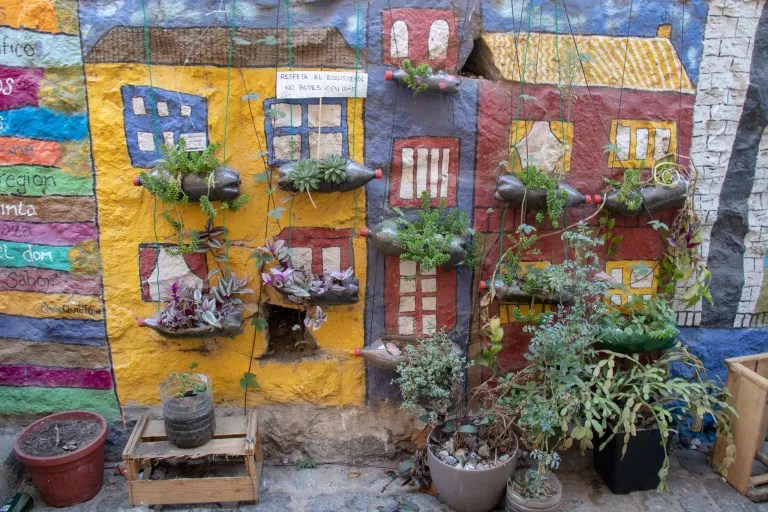
🪴 Upcycled Garden — Valparaíso, Chile
This wall was not only painted; it was given something to grow. Recycled bottles become hanging planters, so the mural moves from color to care: a small vertical garden attached to a public surface. More: Fixed It For You (10 Photos)
💡 Why it fits: The city context matters here. Chile’s National Cultural Heritage Service says Valparaíso’s historic quarter became a World Heritage Site in 2003 and is shaped by steep hills, alleyways, stairways, and sea-facing promenades rather than a simple flat grid. A bottle garden feels very Valparaíso: improvised, vertical, colorful, and public.
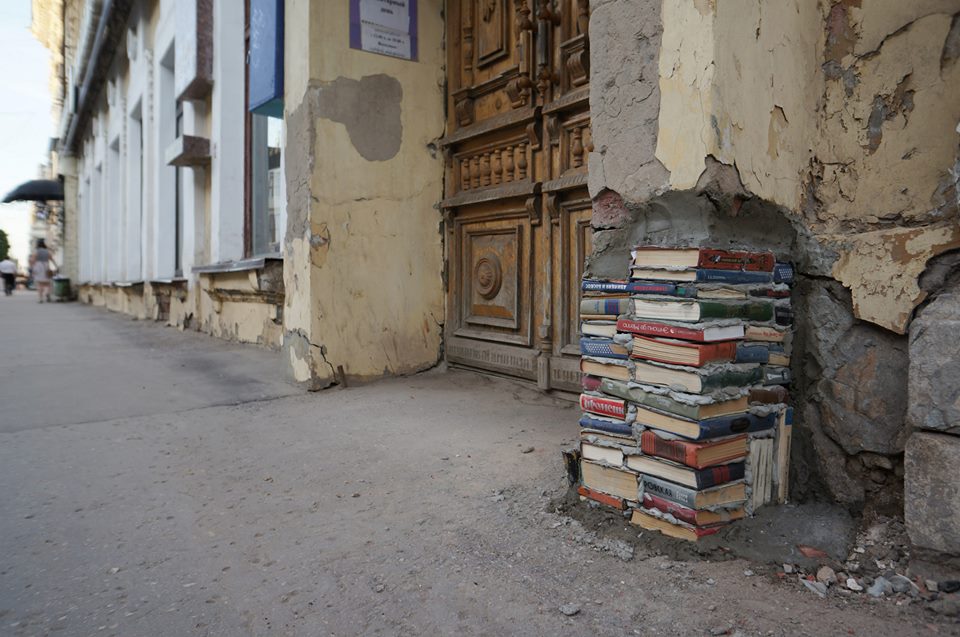
📚 Book Wall — Andrey Syaylev at Samara Public Library, Samara, Russia
A broken library corner becomes a stack of books, which is so simple it almost explains itself. Local Samara coverage places it at the Samara Public Library on Kuibyshev Street, 95, and a Volga News interview with Syaylev connects the joke directly to the building: a library is a house where books live. The repair matches the building’s meaning, not its material.
💡 Why it fits: Syaylev’s own page lists the piece as a 2013 site-specific installation made with books and cement, and says it became a network meme before the facade was later restored. The “repair” therefore had three lives: street intervention, internet image, and real renovation.
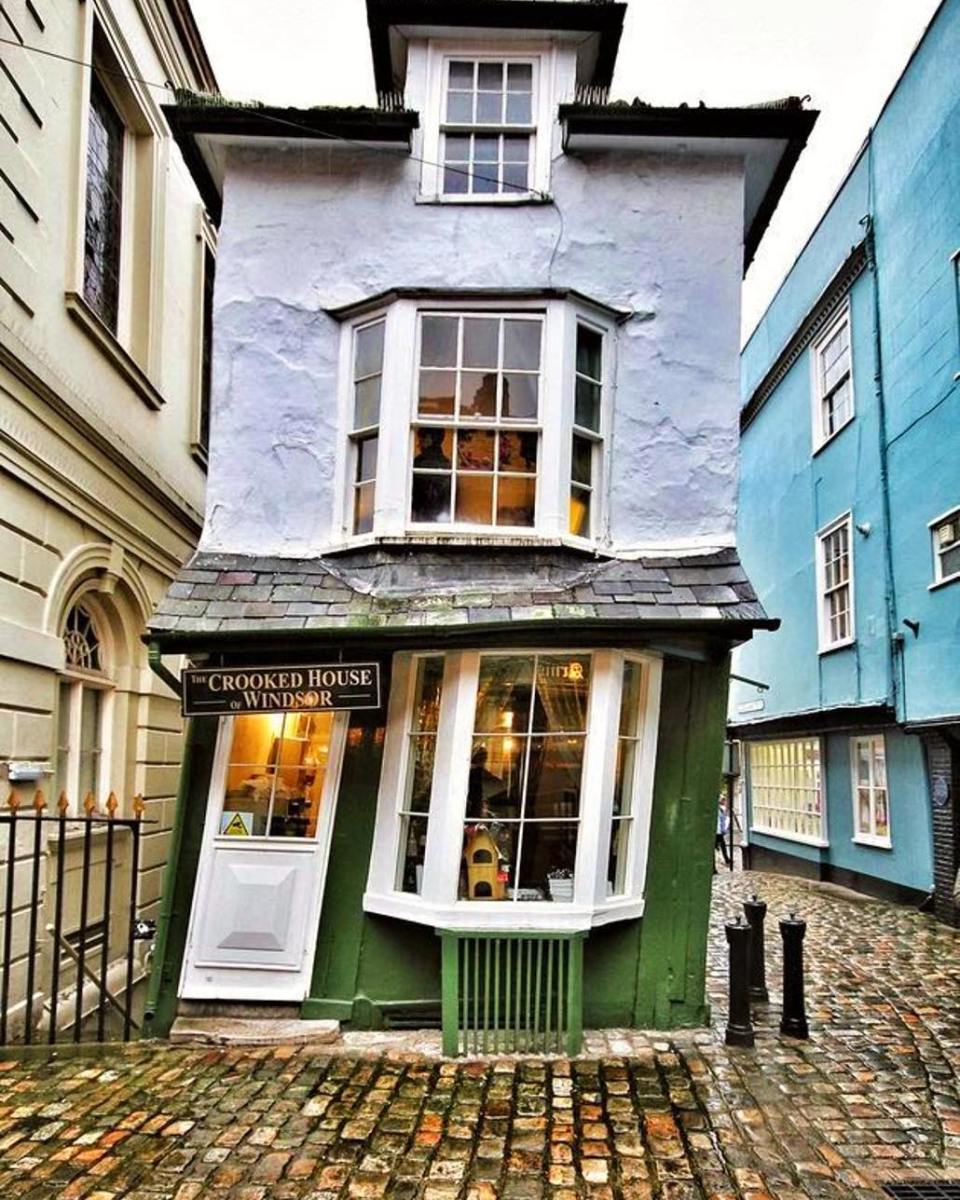
🏠 The Crooked House of Windsor — Windsor, England
This one stretches the theme, but in a useful way. Officially listed as Market Cross House, this Grade II building is dated 1687. Historic England describes the small timber-framed building as being on a “considerable cant.” It is not street art and not a repair intervention. The point is that the lean has become part of its public identity: the flaw is what people remember.
💡 Why it fits: Historic England’s official list entry says Market Cross House was first listed on 4 January 1950 and is protected under the Planning (Listed Buildings and Conservation Areas) Act 1990 as amended for special architectural or historic interest. If the other pieces show artists responding to damage, this one shows a city keeping an oddity visible.
Which one is your favorite?
Sculptures That Blend With Nature (10 Photos)
Public art can make a plain place worth stopping for.
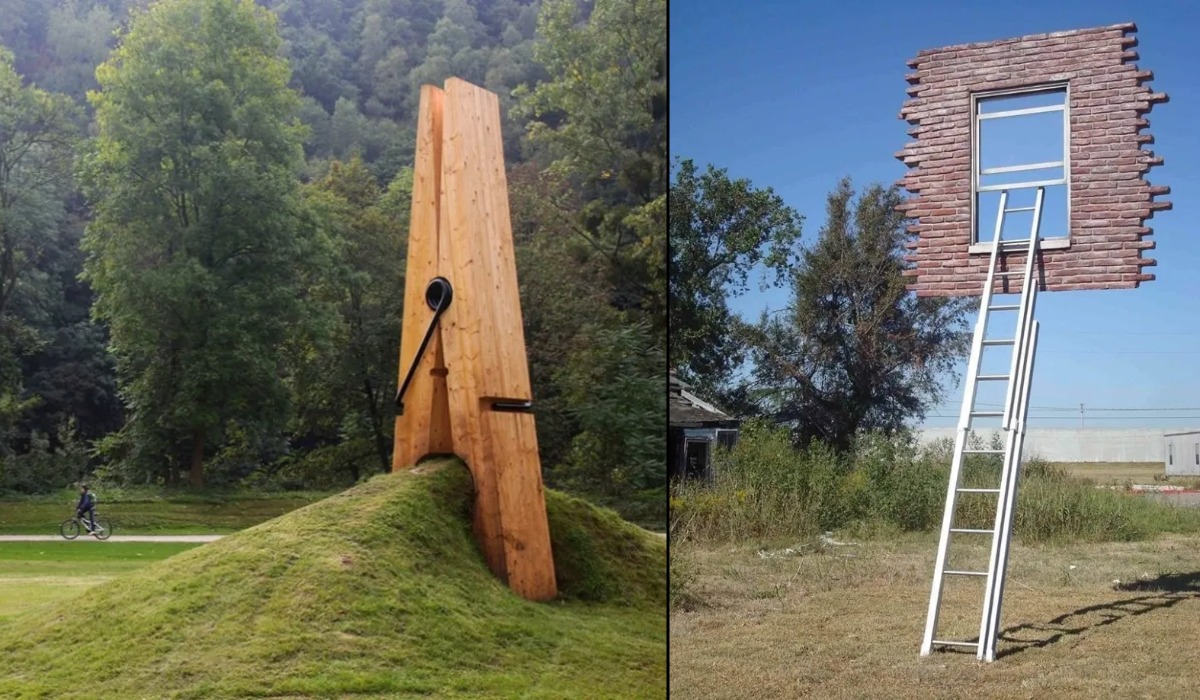
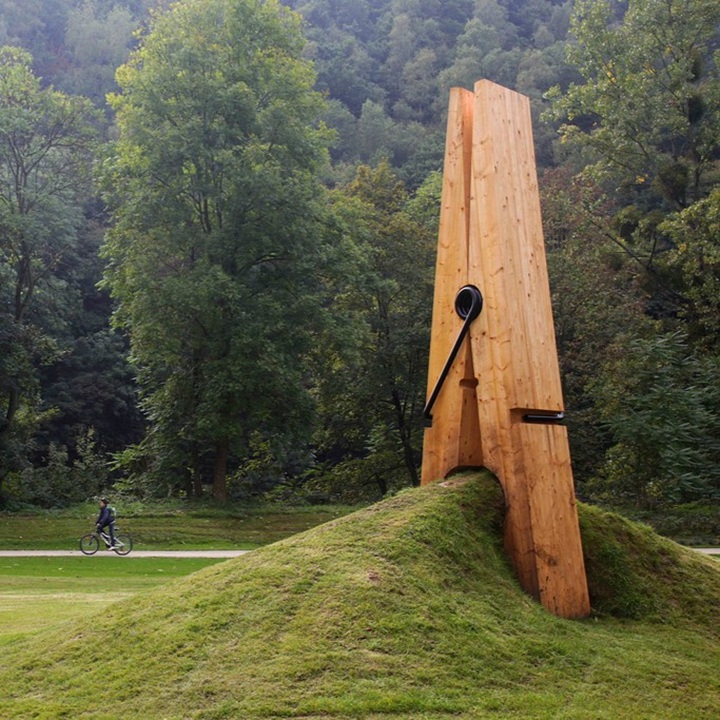
These sculptures use grass, trees, water, sand, and open space as part of the work.Here are 10 sculptures from around the world: a giant clothespin pinching the ground, a zipper opening a lawn, and a bench waiting in a slingshot. Small everyday ideas, made very large.
More: 30 Sculptures You (Probably) Didn’t Know Existed
🪵 Skin 2 — By Mehmet Ali Uysal, originally in Chaudfontaine Park, Belgium 🇧🇪
Made for Parc Hauster in Chaudfontaine, near Liège, Belgium, Skin 2 looks like a wooden clothespin pinching the ground. Turkish artist Mehmet Ali Uysal turned a clothespin into a sculpture so large that the lawn becomes part of the work.💡 Nerd Fact: The original Chaudfontaine installation is no longer a regular park stop: Atlas Obscura now marks the site as permanently closed and notes that the sculpture was no longer in the park in its April 2022 update. The work still appears in gallery records: Pi Artworks lists Skin 2 as a 2010 sculpture measuring 700 × 800 cm, courtesy of the municipality of Liège.
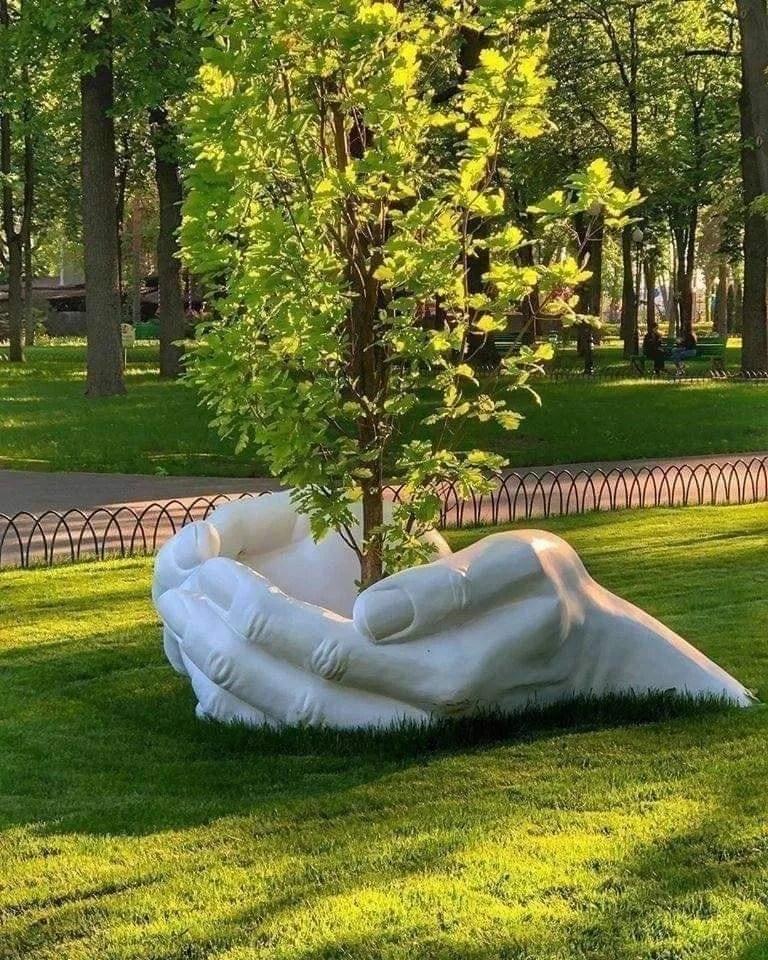
🤲 HAND and PARK TREE (The Caring Hand) — By Eva Oertli and Beat Huber in Glarus, Switzerland 🇨🇭
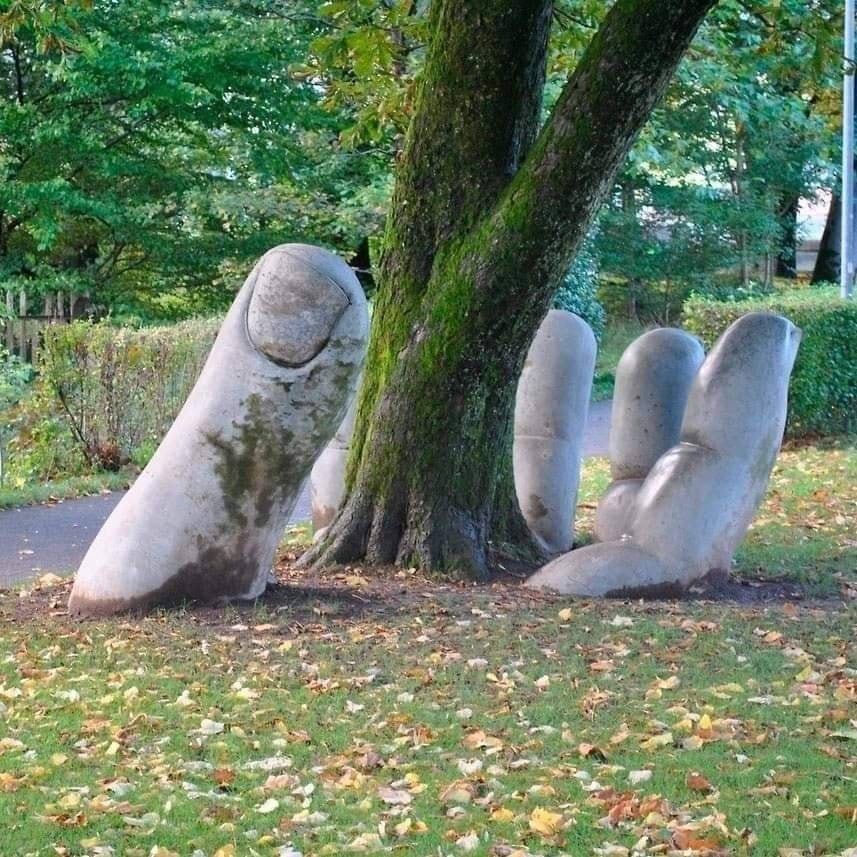
In the Volksgarten in Glarus, Switzerland, the work known as The Caring Hand rises around a living tree. Beat Huber documents the installation as HAND and PARK TREE, realized with Eva Oertli. The oversized concrete fingers make the tree look held and protected.💡 Nerd Fact: Beat Huber says the idea began in 1990 as an art-in-architecture proposal for a new agricultural school, but it was shelved because there was not enough space or money. When it was finally made for Skulptura 04 in 2004, it was planned to last only four months. Public pressure changed that: private donors raised CHF 43,700, and Glarus received the hand as a gift from the public.
About and more photos: The Caring Hand – Sculpture in Glarus, Switzerland
🏸 Shuttlecocks — By Claes Oldenburg and Coosje van Bruggen in Kansas City, Missouri, USA 🇺🇸
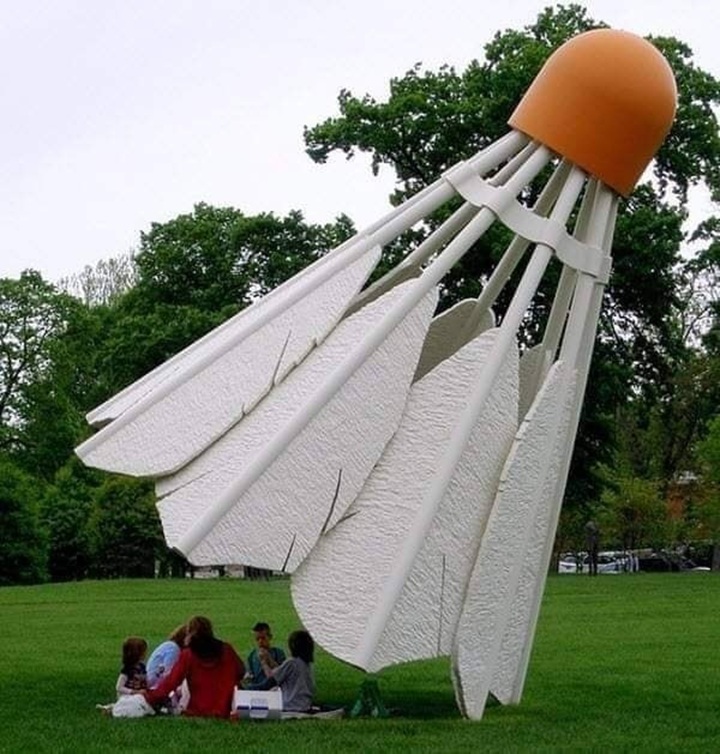
In the Donald J. Hall Sculpture Park at The Nelson-Atkins Museum of Art in Kansas City, Missouri, giant badminton birdies sit in the grass. The work, called Shuttlecocks, was created by Claes Oldenburg and Coosje van Bruggen. It looks like a huge game stopped mid-rally and nobody came back to clean it up. The museum lists each shuttlecock as nearly 18 feet tall, about 16 feet across, and 5,500 pounds.💡 Nerd Fact: Oldenburg and van Bruggen’s idea was architectural, not just oversized. The Nelson-Atkins says they imagined the museum building as the badminton net and the lawn as the playing field, then placed four shuttlecocks as if a rally had frozen on both sides of the “net.”
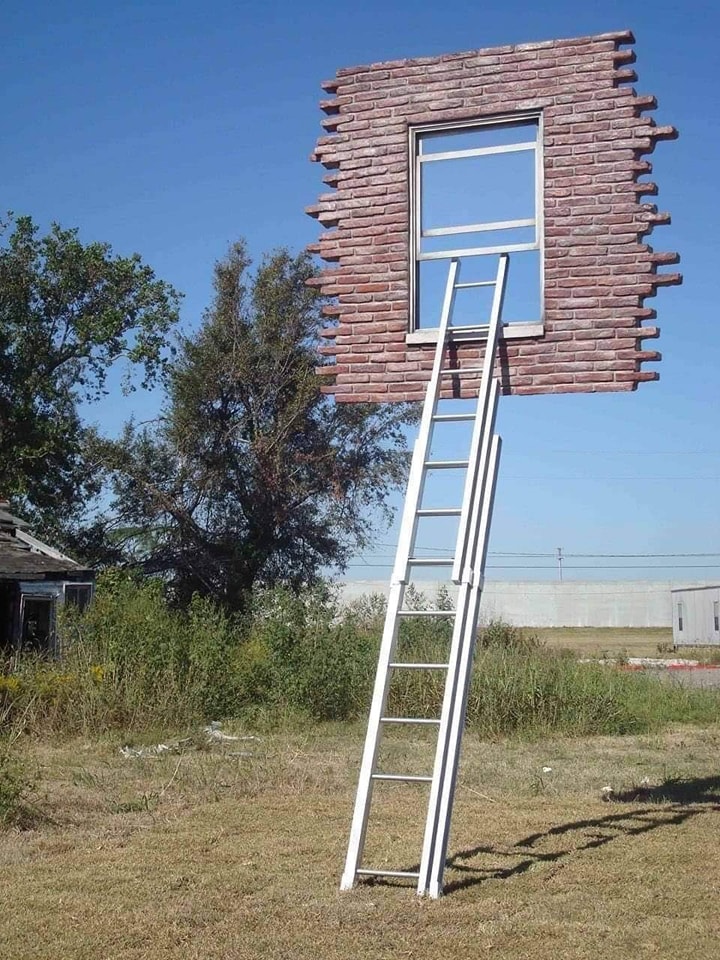
🪟 Window with Ladder – Too Late for Help — By Leandro Erlich in New Orleans, Louisiana, USA 🇺🇸
Leandro Erlich’s Window with Ladder – Too Late for Help shows a white ladder leading to a brick wall with an open window. The wall appears to float above the field with no house attached. The work is now in the Sydney and Walda Besthoff Sculpture Garden at the New Orleans Museum of Art.💡 Nerd Fact: NOMA lists the work’s hidden support system as a steel underground structure, but the context is more serious than the engineering. It was first installed in 2008 in a vacant lot in New Orleans’ Lower Ninth Ward for Prospect.1, in an area devastated by Hurricane Katrina.
🌳 Give — By Lorenzo Quinn, now in Pietrasanta, Italy 🇮🇹
Give by Italian artist Lorenzo Quinn shows two giant hands holding an tree. The hands sit low in the grass, making the tree look newly planted and protected.💡 Nerd Fact: Halcyon Gallery described Give (this time a olive tree) as a gift from Quinn and Halcyon Gallery to Pietrasanta, first unveiled in Florence’s Uffizi Gardens in 2020. Quinn’s biography says it later stood outside Palermo Cathedral before being permanently installed in Pietrasanta’s International Park of Contemporary Sculpture.
More by Lorenzo Quinn: Support – Message About Climate Change
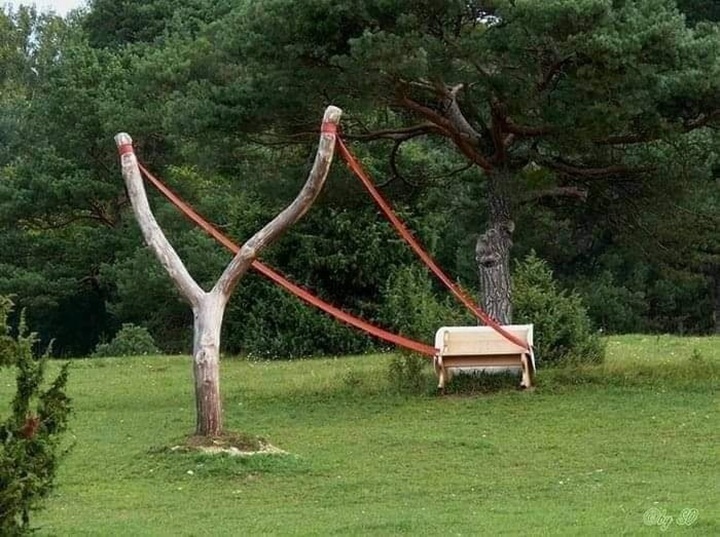
🚀 Schleudersitz — By Cornelia Konrads, made for Neustadt an der Donau, Germany 🇩🇪
German artist Cornelia Konrads built Schleudersitz with a wooden bench, rubber, steel cable, and the trees on site. It looks ready to launch across the grass. Sitting there might feel like trusting the artist a little too much.💡 Nerd Fact: The German title Schleudersitz means “ejection seat,” and the location made the joke sharper. Sculpture Network records the 2010 work as part of the Flying Objects exhibition on a former vineyard, now a leisure park, overlooking the Danube Valley.
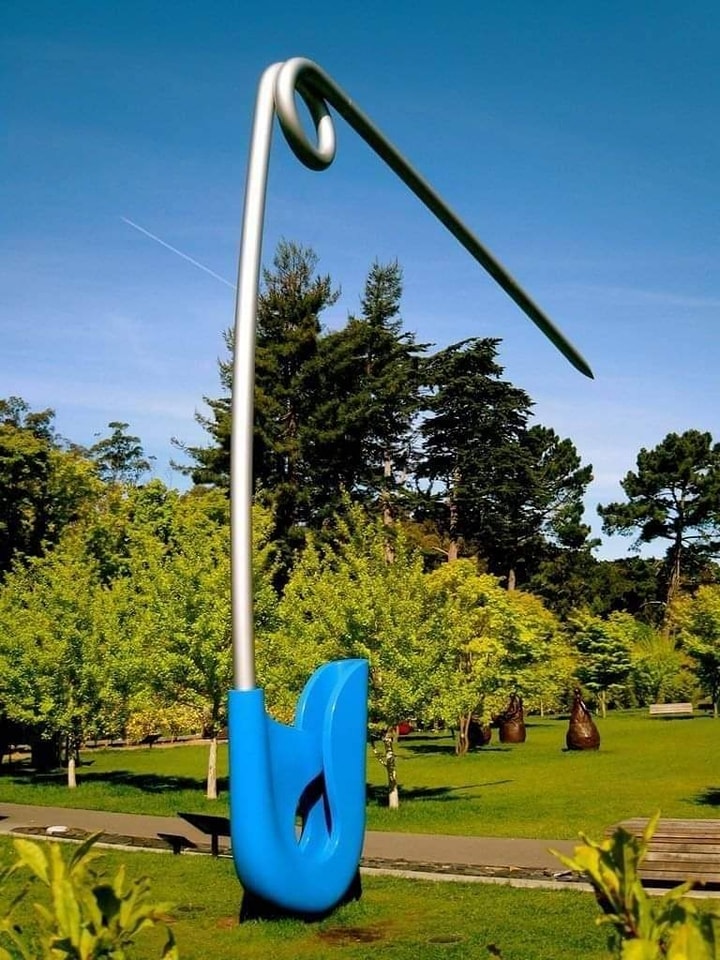
🧷 Corridor Pin, Blue — By Claes Oldenburg and Coosje van Bruggen in San Francisco, USA 🇺🇸
In the Barbro Osher Sculpture Garden at the de Young Museum in San Francisco, Corridor Pin, Blue stands over the garden like a sewing tool left in the wrong scale. Created by Claes Oldenburg and Coosje van Bruggen, the blue base and long silver pin make it hard to miss.💡 Nerd Fact: This giant safety pin is not alone. NOMA’s collection lists another Corridor Pin, Blue as edition 3/3, while the Nasher Museum identifies an artist’s proof with the same 255 × 256 × 16 inch dimensions. The “tiny” domestic object has siblings in more than one city.
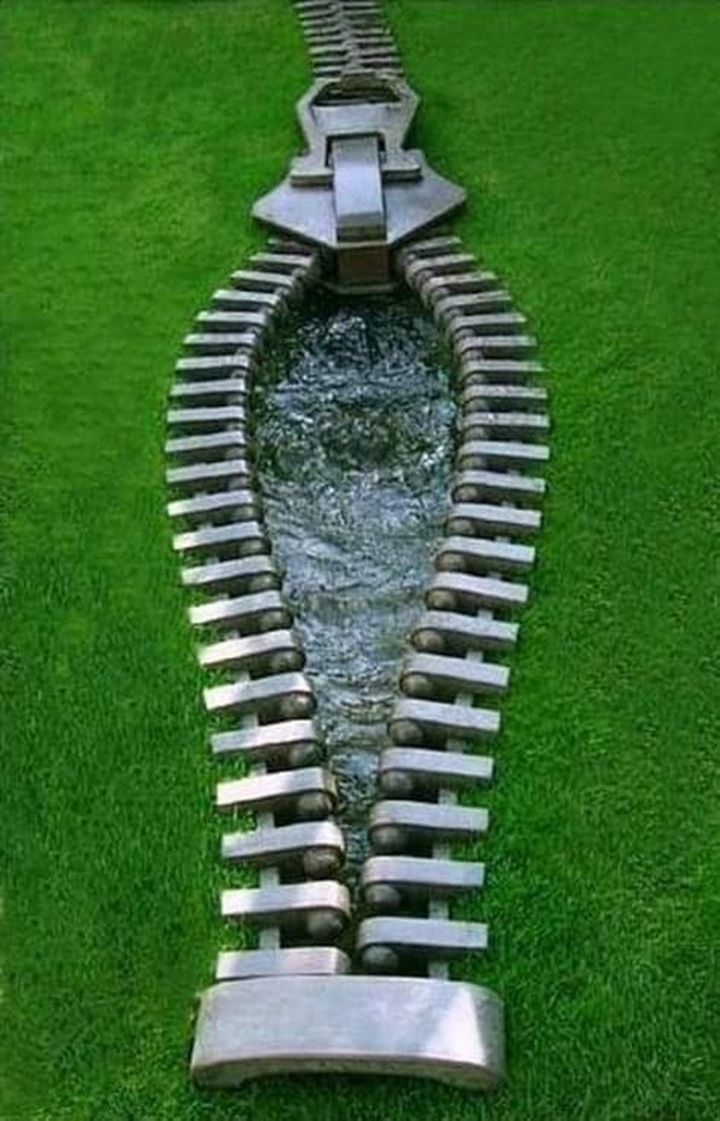
🤐 Zip — By Mark Richard Hall in the Hamptons, New York, USA 🇺🇸
This grass-and-water zipper is best identified as Zip, a private Hamptons commission by British sculptor Mark Richard Hall. The oversized metal zipper opens the lawn into a narrow water feature, making the garden look unzipped.💡 Nerd Fact: This image is an easy caption trap. It often circulates online as a Yasuhiro Suzuki sculpture in Tokyo, but stronger sources point to Hall. Mark Richard Hall’s own studio lists a commission called Zip in the Hamptons, and Architectural Digest identifies a stainless-steel zipper sculpture by Hall embedded in the grass at a Southampton home. Suzuki’s verified zipper work is the boat-based Zip-Fastener Ship, which uses a wake to “unzip” water.
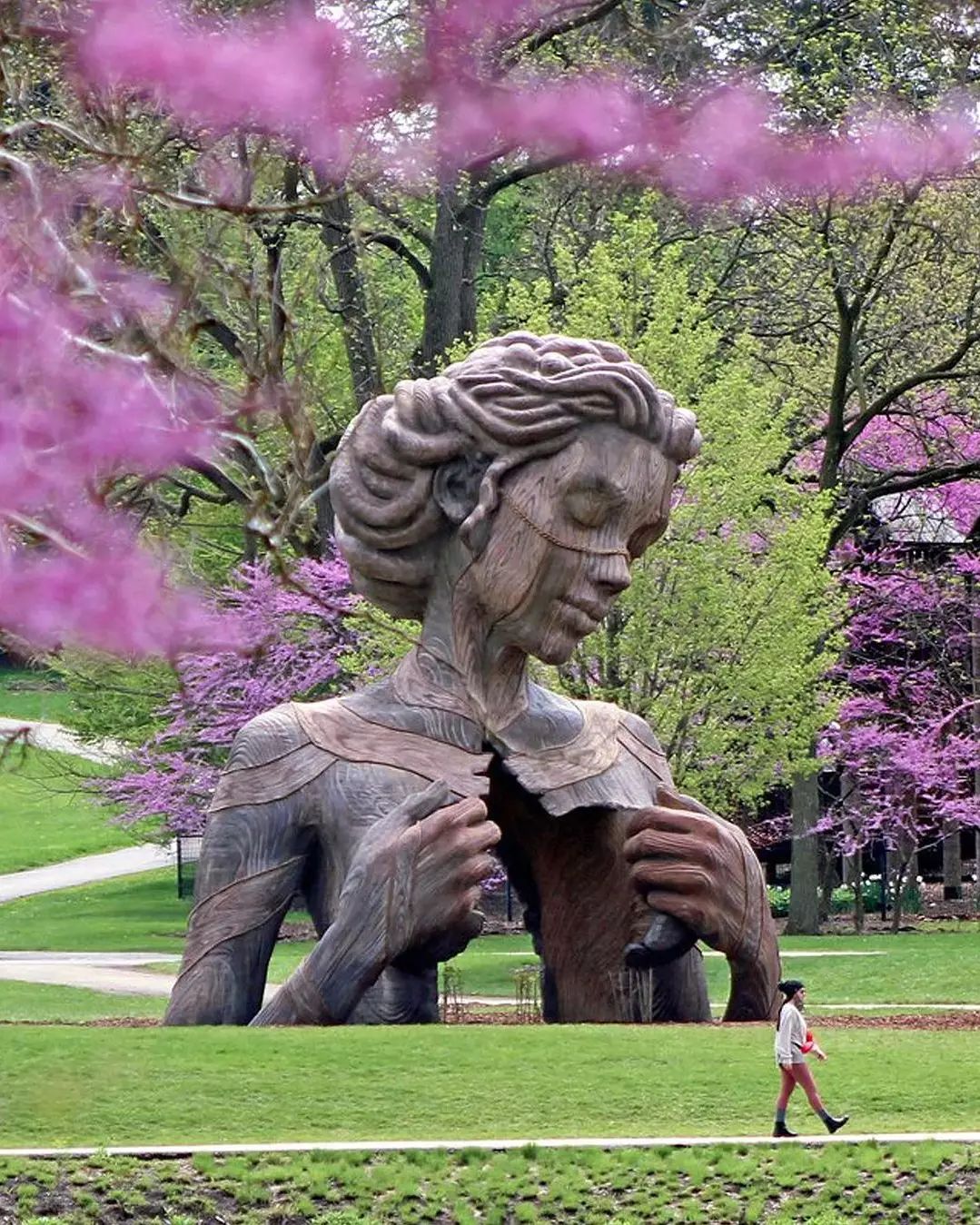
🌸 Hallow — By Daniel Popper, formerly at The Morton Arboretum in Lisle, Illinois, USA 🇺🇸
Daniel Popper’s Hallow is a monumental figure of a woman opening her chest. The hollow space inside is framed by hands, carved hair, and trees in bloom around the work. It was installed near Meadow Lake at The Morton Arboretum in Lisle, Illinois.💡 Nerd Fact: Hallow belonged to Popper’s Human+Nature exhibition, which the Morton Arboretum described as his first major U.S. exhibition and largest anywhere at the time. The Arboretum now notes that the exhibition has concluded, but Popper’s own text for the work connects Hallow to grief, self-expression, growth, and healing rather than a simple “nature goddess” reading.
More photos: 5 Photos of Sculpture “Hallow” By Daniel Popper in Lisle, Illinois
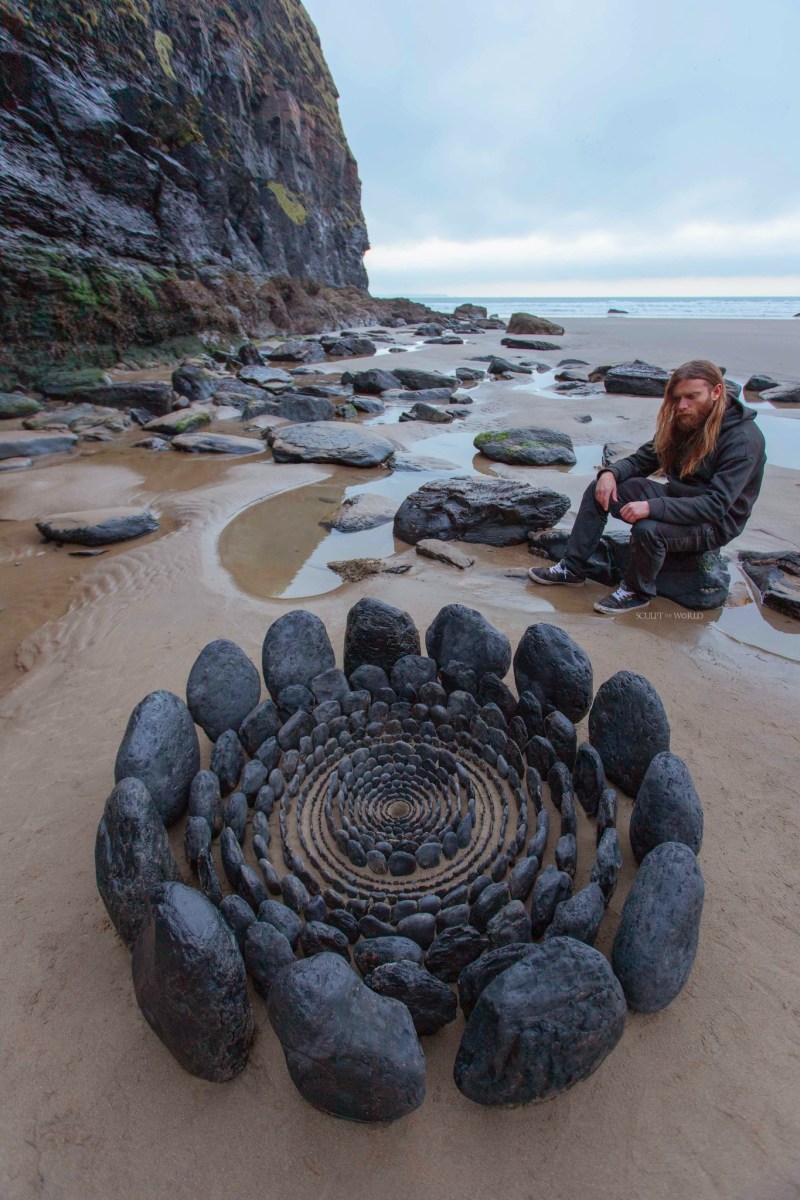
🌀 Augere — By Jon Foreman, created at Druidston, Wales, UK 🇬🇧
Jon Foreman arranged natural stones in tight circles on the sand at Druidston, Wales. In a 2025 post, Foreman identified the work as Augere. The piece changes as the tide moves in. More: Amazing Sculptures by Jon Foreman! (12 Photos)💡 Nerd Fact: Foreman’s land art is not built to survive the coast. In an interview, he says the tide washes a work back to the tide line and he returns the next day to “an empty canvas”. So with pieces like Augere, disappearance is not a failure. It is part of the schedule.
Which one is your favorite?
Land Artist Creates Ephemeral Stone Art on the Shores of the U.K.
Land artist Jon Foreman creates stone art on the shores of the U.K. His rock arrangements are tributes to the beaches and waves for which they reside.Sara Barnes (My Modern Met)
Saint Étienne's urban doodler with a sense of humour
Street artist Oak Oak adds a comic twist to seemingly mundane city landscapesGuardian staff reporter (The Guardian)
This Is Clever (12 Photos)
Content warning: 12 clever street artworks where the city completes the idea. Bins, signs, drains, stairs, facades, and even an old stone relief become part of the piece. Here, placement matters as much as paint. More: Unreal Moments (9 Photos) 🍪 Cookie Time A purple publ
12 clever street artworks where the city completes the idea.
Bins, signs, drains, stairs, facades, and even an old stone relief become part of the piece. Here, placement matters as much as paint.
More: Unreal Moments (9 Photos)
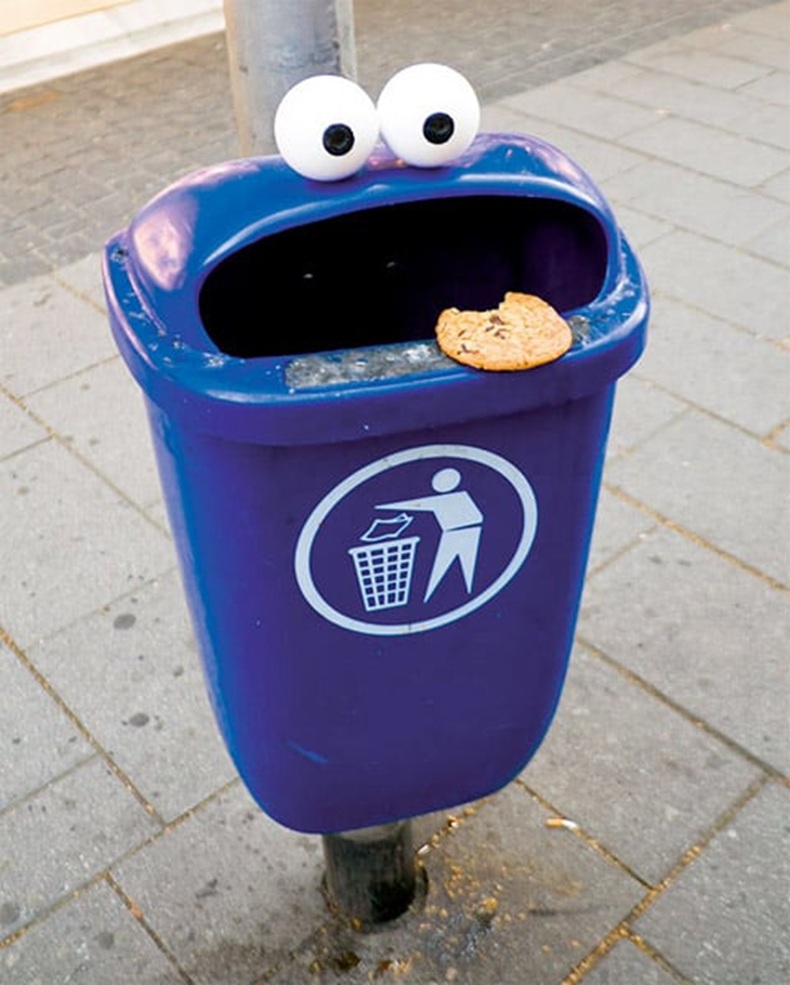
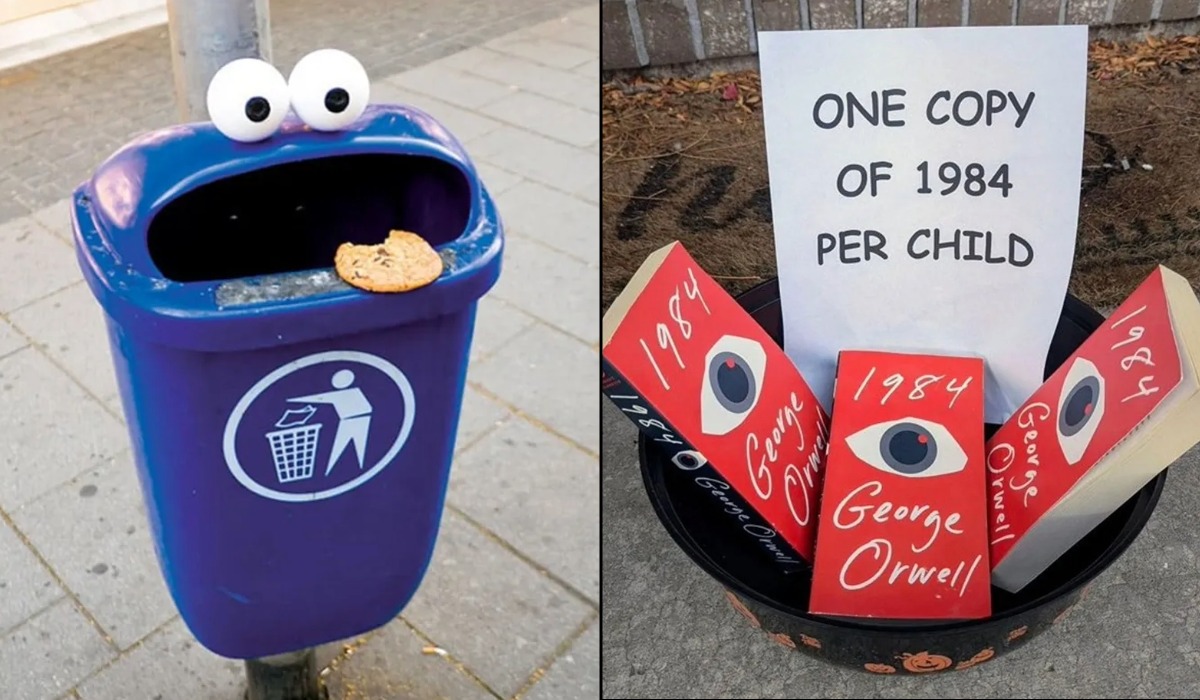
🍪 Cookie Time
A purple public trash bin gets two big googly eyes, and that is mostly all it needs. The cookie on the rim completes the Cookie Monster setup.
💡 Nerd Fact: The character who became Cookie Monster predates Sesame Street. Jim Henson’s archive traces him to the 1966 “Wheel Stealer,” created for an unaired Wheels, Crowns and Flutes snack commercial, before he was later remade in blue without teeth.
More: Googly-Eyed Art (17 Photos)
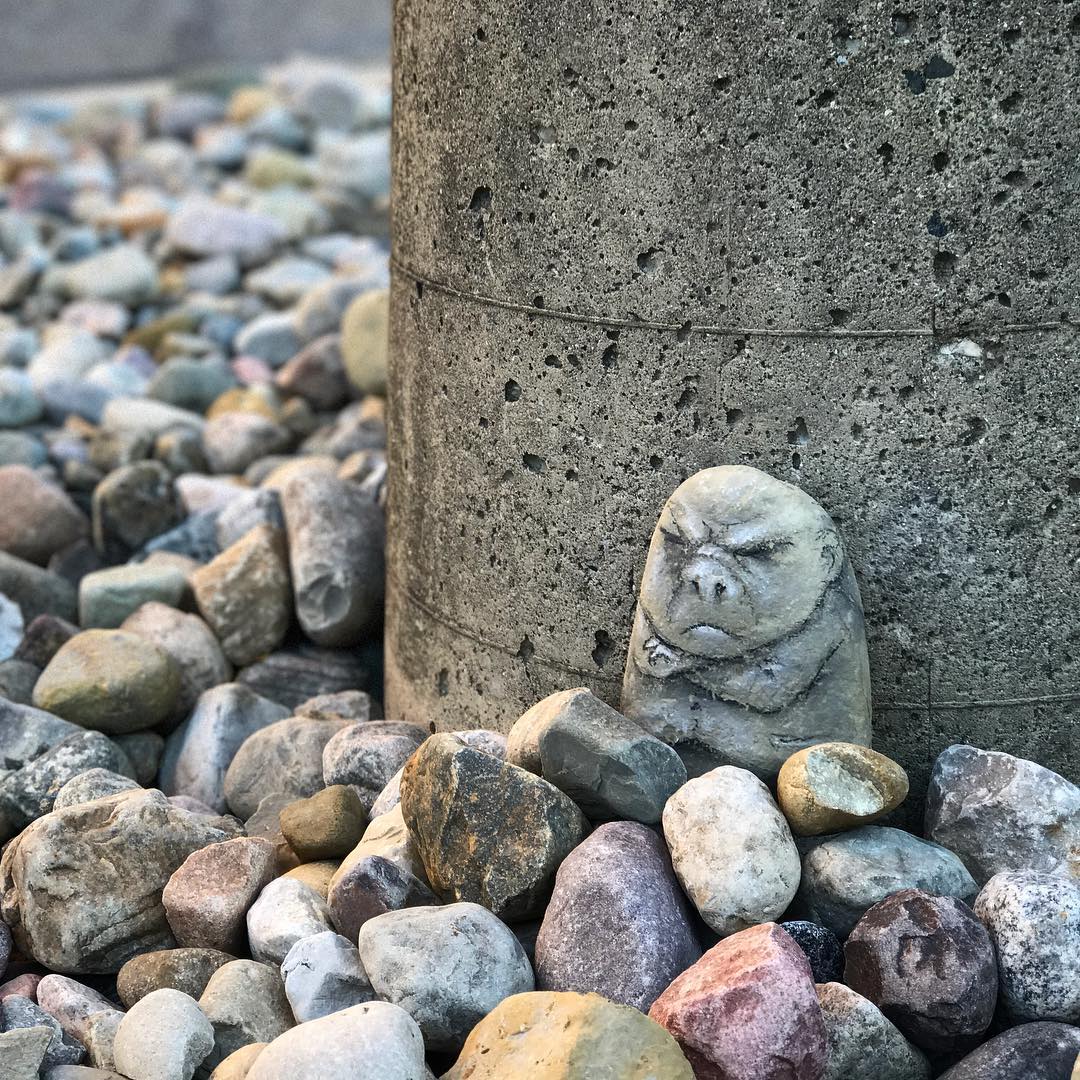
🪨 Grumpy Stone — By David Zinn at the University of Michigan in Ann Arbor, Michigan, USA 🇺🇸
A small stone with a frown and crossed arms sits among the pebbles beside a concrete pillar at the University of Michigan campus in Ann Arbor, Michigan. It is easy to miss at first. It fits David Zinn’s temporary chalk practice: a tiny find in the city becomes a character. More: Cute Art by David Zinn (16 Photos)
💡 Nerd Fact: Zinn uses a playfully scholarly phrase for his method. His temporary drawings are made with chalk, charcoal, and found objects, then improvised on location through what his own bio calls “ephemeral pareidolic anamorphosis”.
🔗 Follow David Zinn on Instagram
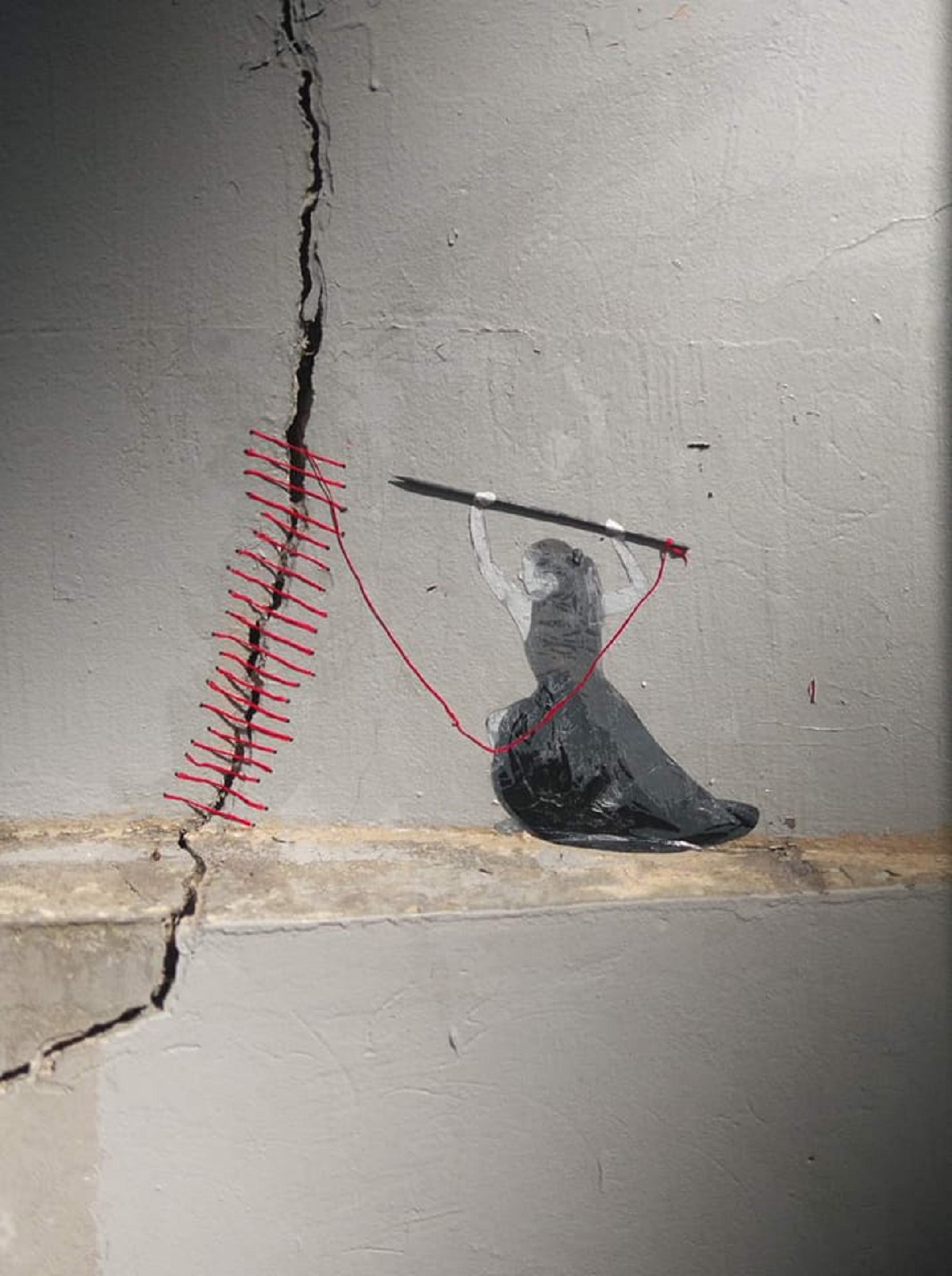
🧵 Repairing the Wall — By ENDER at Rue Villiers-de-L’Isle-Adam in Paris, France 🇫🇷
On Rue Villiers-de-L’Isle-Adam in Paris, a small painted figure pulls red thread across a cracked wall, making the concrete look stitched shut. The crack is the whole point. More photos: Repair Cracks with Art
💡 Nerd Fact: Turning damage into part of the design has a long art history. In Japanese ceramics, kintsugi repairs broken vessels with gold lacquer, making the repaired break part of the object’s value rather than something to hide, as The Met notes in its Japanese ceramics history.
🔗 Follow ENDER on Instagram
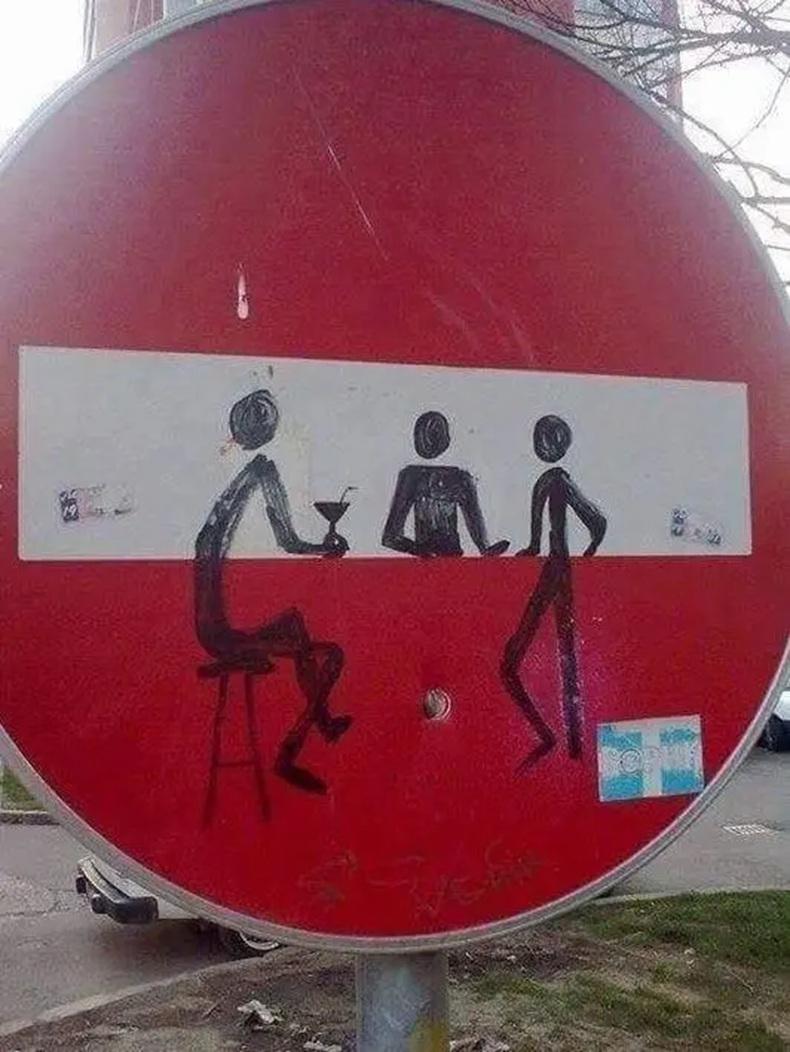
🍸 The Street Bar — By CLET in France 🇫🇷
Documented as a CLET piece spotted in France, this modified “No Entry” sign turns the white bar into a tiny counter. Small black figures sit and lean around it, turning a traffic instruction into a bar scene. The joke fits CLET Abraham’s long-running practice of altering road signs with removable black stickers.
💡 Street-Sign Nerd Fact: CLET has described street art as something that should make people pause and ask what a work “gives” and “takes away.” In a later interview with The Florentine, he framed street art as a way to develop critical thinking, not just decorate city furniture.
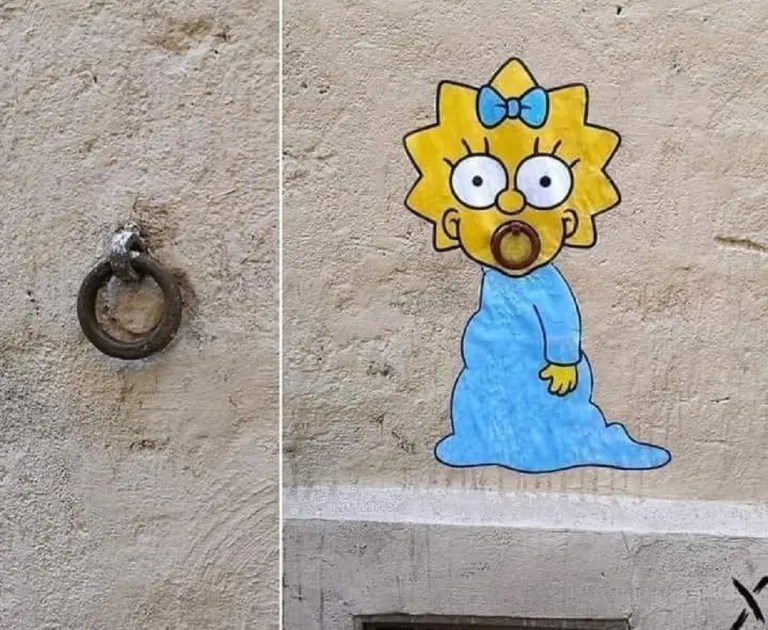
🍼 Maggie’s Pacifier — By EFIX
A metal ring on the wall becomes Maggie Simpson’s pacifier. EFIX paints the rest of the character around it, so the object delivers the punchline. More: EFIX’s Clever Art (9 Photos)
💡 Pop-Culture Nerd Fact: The Simpsons family did not begin as a half-hour sitcom. The Simpsons started in 1987 as short cartoons on The Tracey Ullman Show before expanding into its own series, according to Encyclopaedia Britannica.
🔗 Follow EFIX on Instagram
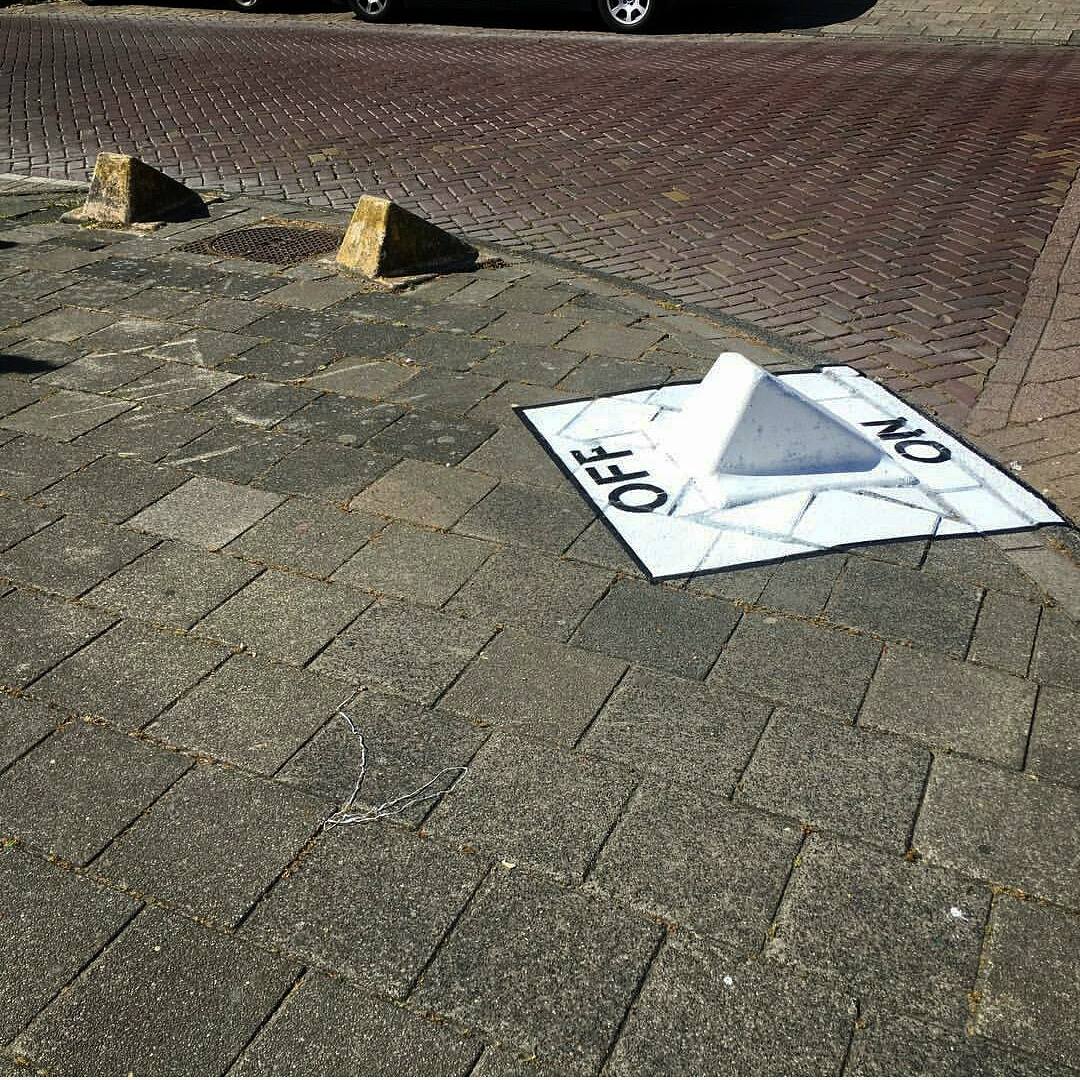
🔘 ON / OFF — By Oakoak in Amsterdam, Netherlands 🇳🇱
Oakoak’s official street-art archive lists this piece as “ON / OFF” in Amsterdam, June 2016. A raised sidewalk barrier becomes a giant switch, with the concrete shape forming the toggle. More: Oakoak’s Genius Street Art (10 Photos)
💡 Nerd Fact: Oakoak is from Saint-Étienne, France, and has been turning city details into comic-like street scenes since 2006; Urban Nation describes his work as a way to “poeticize the urban environment.”
🔗 Follow Oakoak on Instagram
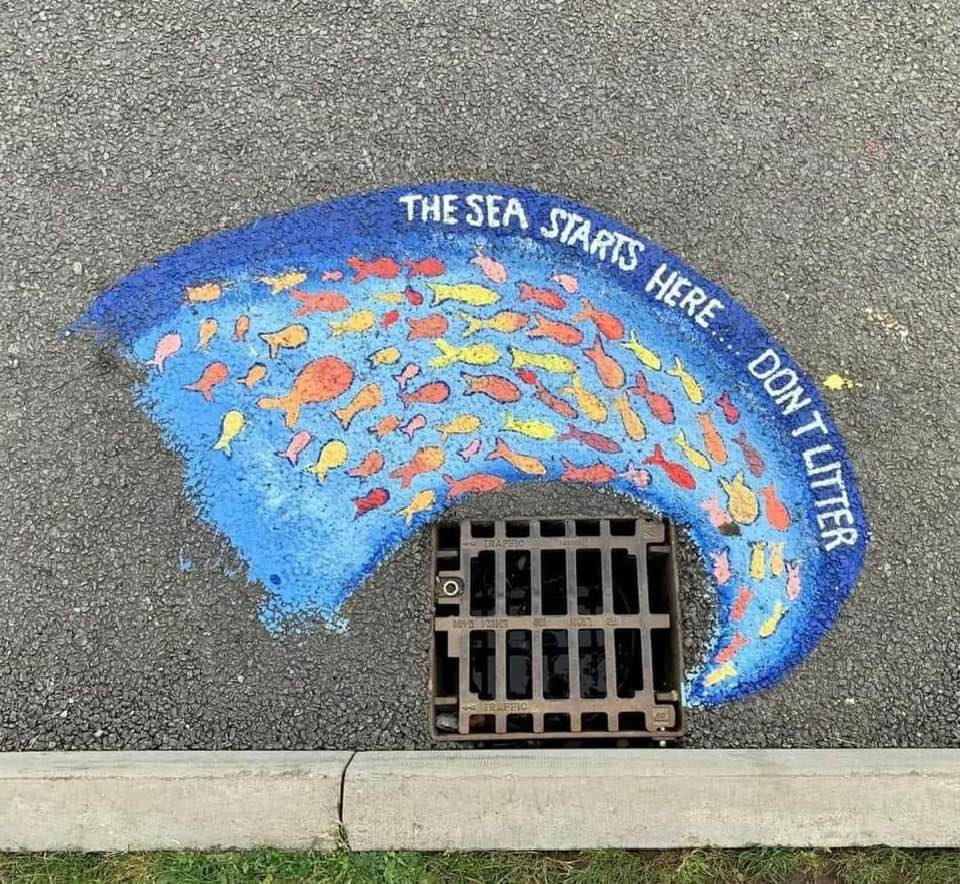
🌊 The Sea Starts Here — Unknown Artist
A storm drain sits in the middle of a blue painted wave filled with small fish. The artist is not confirmed, but the message echoes real stormwater-awareness projects such as Project Storm, which used “Don’t Litter. The Sea Starts Here” drain stencils to connect street trash with marine pollution.
💡 Eco Nerd Fact: Storm drains are not built-in trash filters. The U.S. EPA explains that stormwater running over streets and hard surfaces can flow directly into a water body or storm drain with no soil, plants, or treatment facility filtering out pollutants.
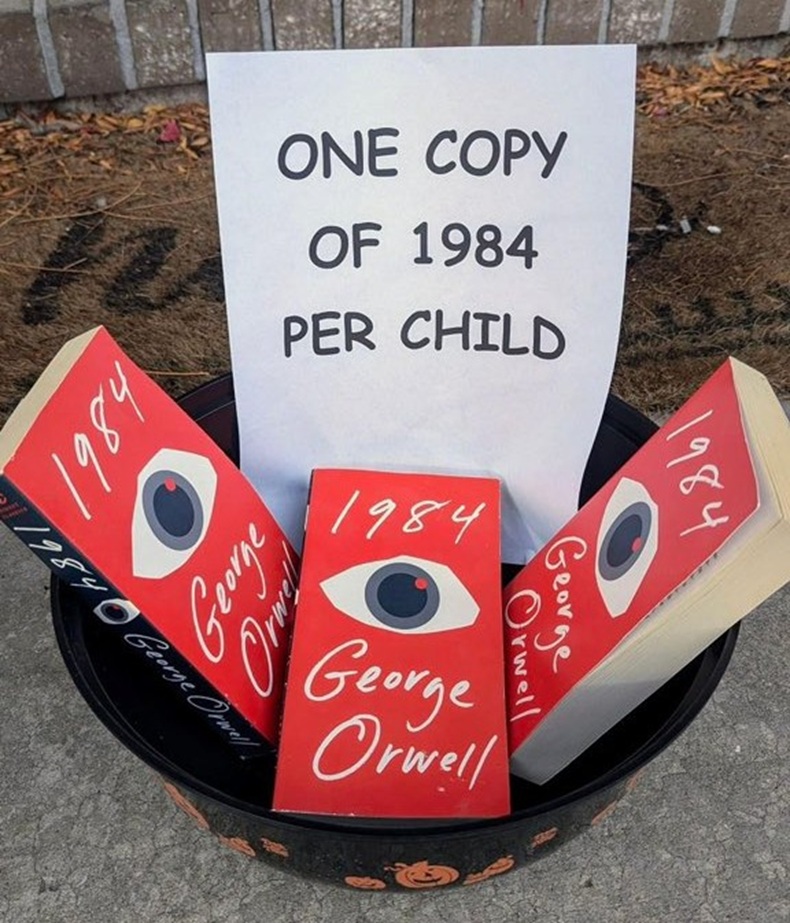
🎃 1984 Halloween Bowl
A black Halloween bowl is filled with copies of George Orwell’s 1984 instead of candy. The sign reads: “One Copy of 1984 Per Child.”
💡 Book Nerd Fact: 1984 did more than imagine a future dictatorship. The Orwell Foundation notes that the novel helped introduce phrases such as “Big Brother,” “thought police,” “Room 101,” “doublethink,” and “newspeak” into the English language.
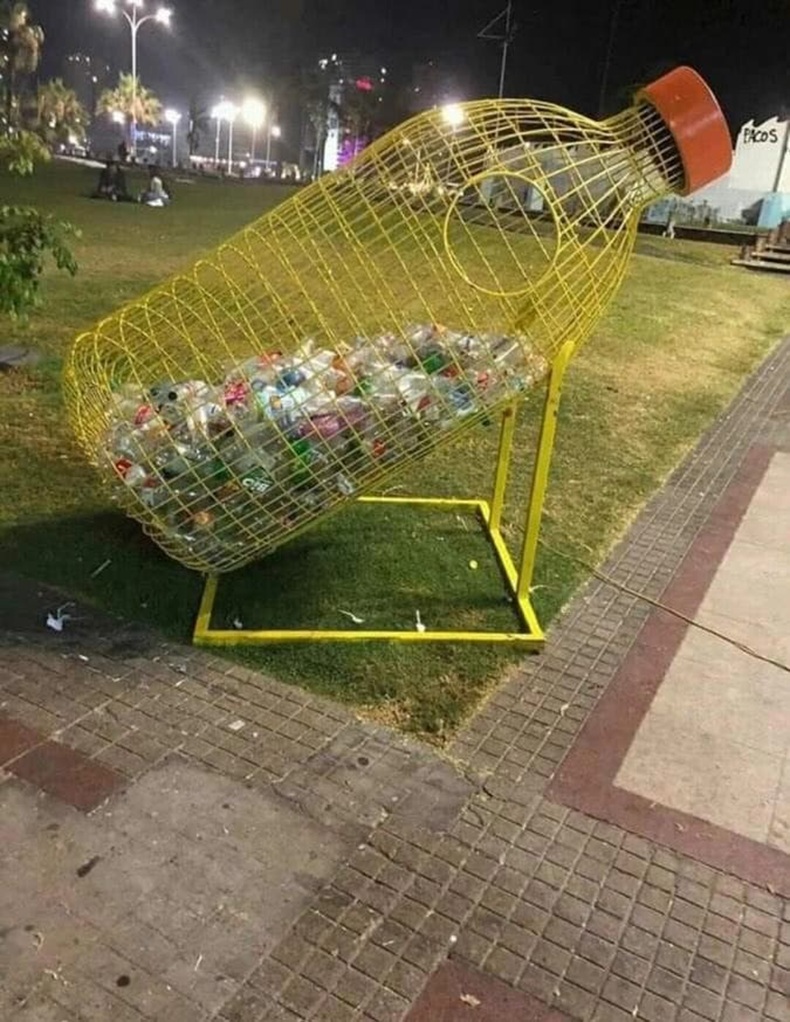
♻️ Giant Bottle Bin
A large wire-frame bottle works as a recycling container for plastic bottles. The shape makes the point without needing many words.
💡 Design Nerd Fact: The same visual-first idea has research behind it. A Journal of Environmental Psychology study found that waste-disposal signs with icons or pictures of permitted items improved sorting performance compared with signs using only words.
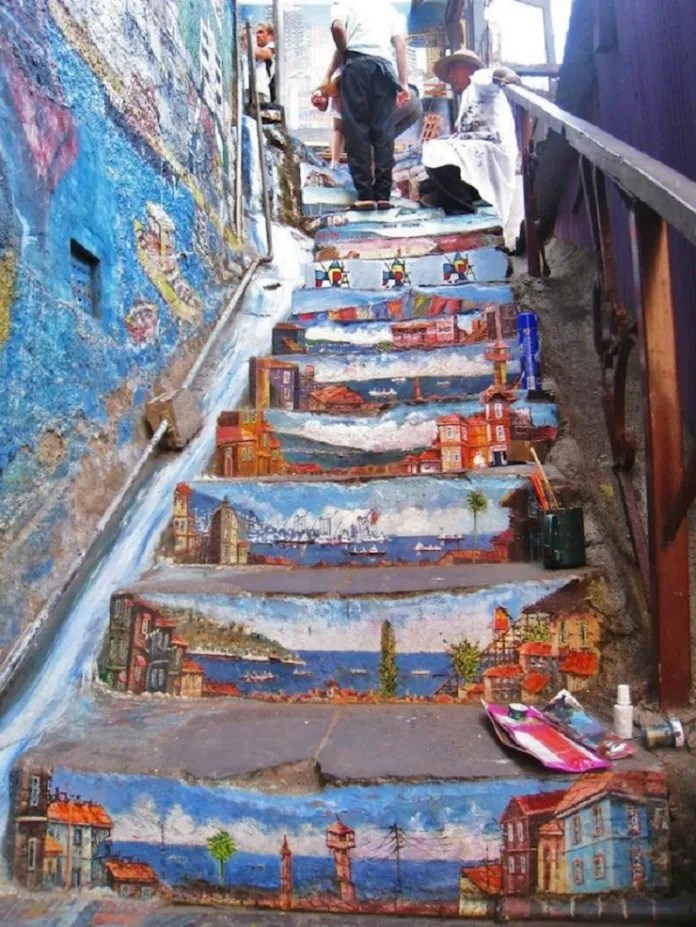
🪜 Painted Staircase — Commonly credited to Mario Celedón in Valparaíso, Chile 🇨🇱
On a narrow hillside staircase in Valparaíso, each riser carries part of a painted seafront scene. Boats, water, hills, and colorful buildings climb with the steps. This much-circulated piece is commonly credited to Mario Celedón, whose detailed paintings appear across the city; La Vereda del Sol also documents his mural work around Valparaíso.
💡 City Nerd Fact: Valparaíso’s historic quarter is a UNESCO World Heritage Site, and UNESCO describes the city as a natural amphitheatre whose urban fabric is adapted to steep hillsides, complete with preserved early industrial infrastructure such as the city’s famous hill “elevators”.
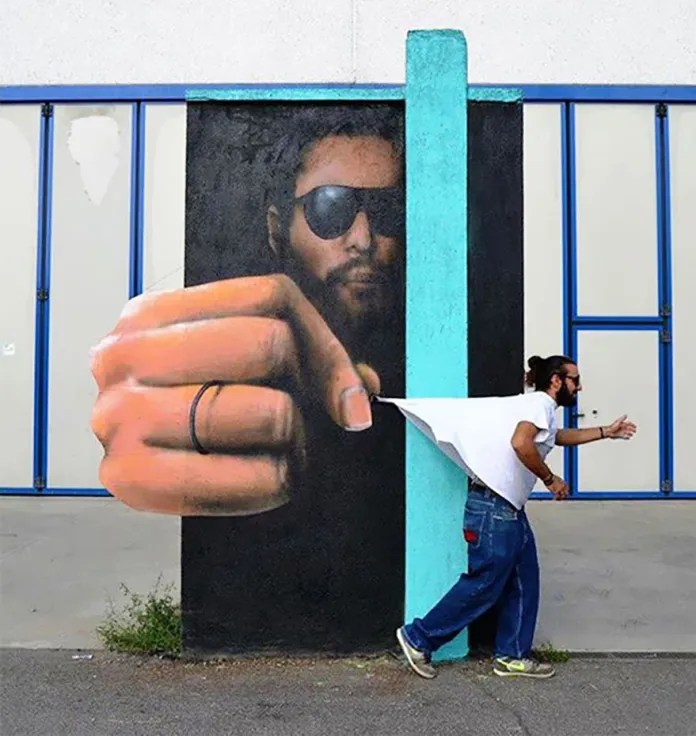
👋 Wall Grab — By Cosimo CHEONE Caiffa in Italy 🇮🇹
A painted man in sunglasses reaches out from behind a blue wall pillar. His fingers line up with a passerby’s shirt, making the passerby part of the scene. The piece fits Cheone’s practice of integrating urban details into murals; Tabor Art notes that he is a self-taught Italian street artist active in the province of Milan. More: Murals by CHEONE (24 Photos)
💡 Artist Nerd Fact: Cheone, born Cosimo Caiffa in Gallipoli in 1979, has been self-taught since 1995; his biography says he spent around seven years studying light and shadow before developing his street-art practice.
🔗 Follow Cosimo CHEONE Caiffa on Instagram
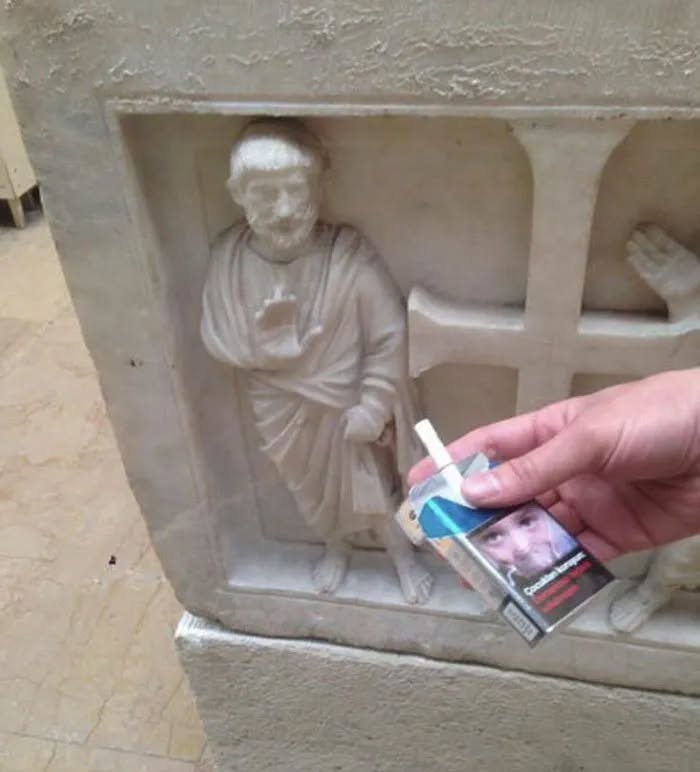
🗿 No, Thanks
A hand holding a cigarette pack lines up with a carved figure on an old stone relief. It looks like the statue is making the offer. No, thanks. More: Playing With Statues (23 Photos)
💡 Conservation Nerd Fact: This kind of joke is best done without touching the artwork. The Canadian Conservation Institute warns that natural salts and oils from hands can mark clean surfaces, and even glossy or highly polished stone may hold fingerprints that require extra cleaning.
Which one is your favorite?
Unreal Moments (9 Photos)
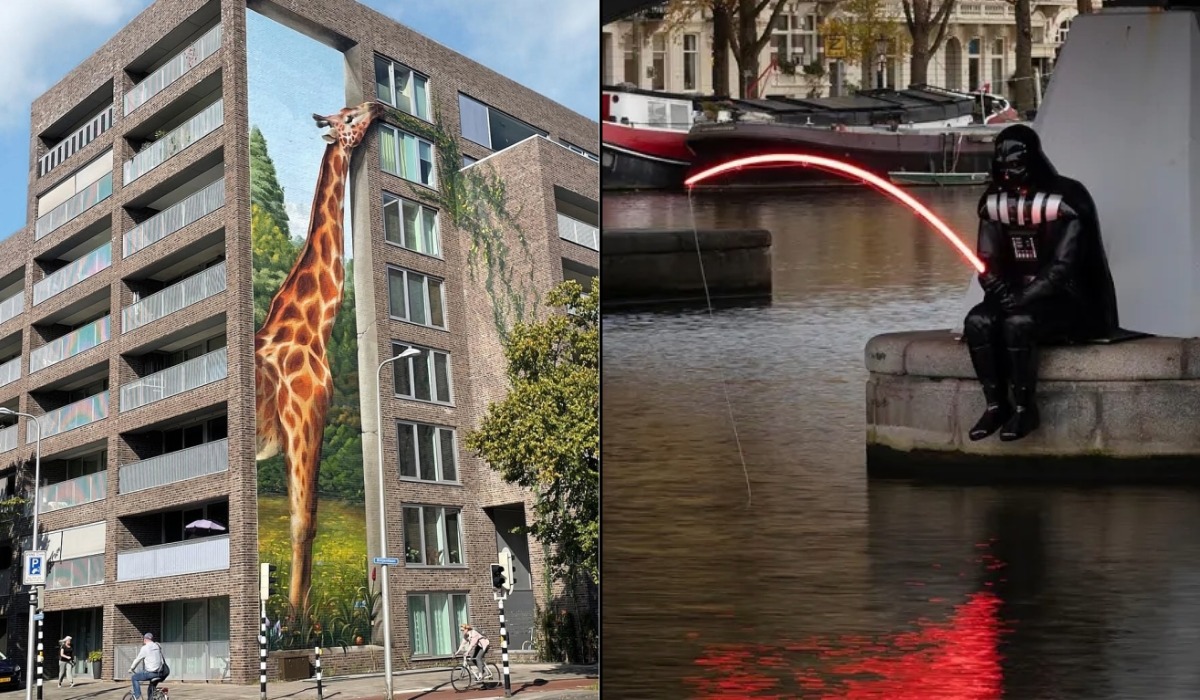
9 Unexpected illusions. Playful distortions. Familiar scenes reimagined. In this collection, artists from across the globe bend reality with paint, sculpture, and wit—placing a giraffe in a city block, turning bollards into Pac-Man, and handing Darth Vader a fishing pole. Scroll through eight moments that feel too unreal to be true, yet are all hiding in plain sight.
More: 12 Times I Found Street Art Cleverly Using Its Surroundings
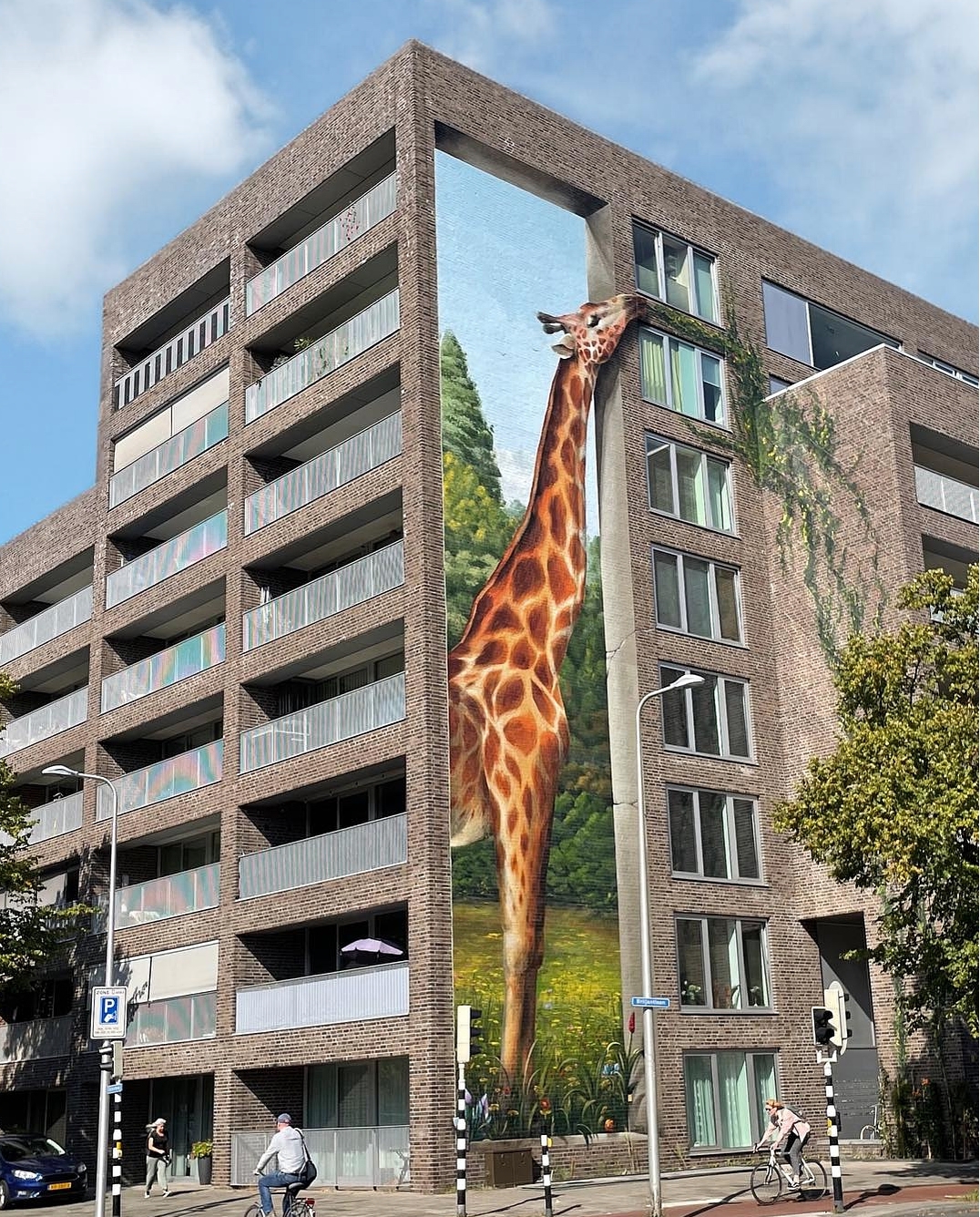
1. Giraffe Eating the Plants — Jan Is De Man in Utrecht, Netherlands
A hyperrealistic giraffe emerges from the side of a residential building to nibble on balcony plants. Painted with seamless depth, the mural merges nature with the urban landscape in a scene that feels entirely possible—until you blink. More!:8 Happy 3D Artworks by Jan Is De Man🔗 Follow Jan Is De Man on Instagram
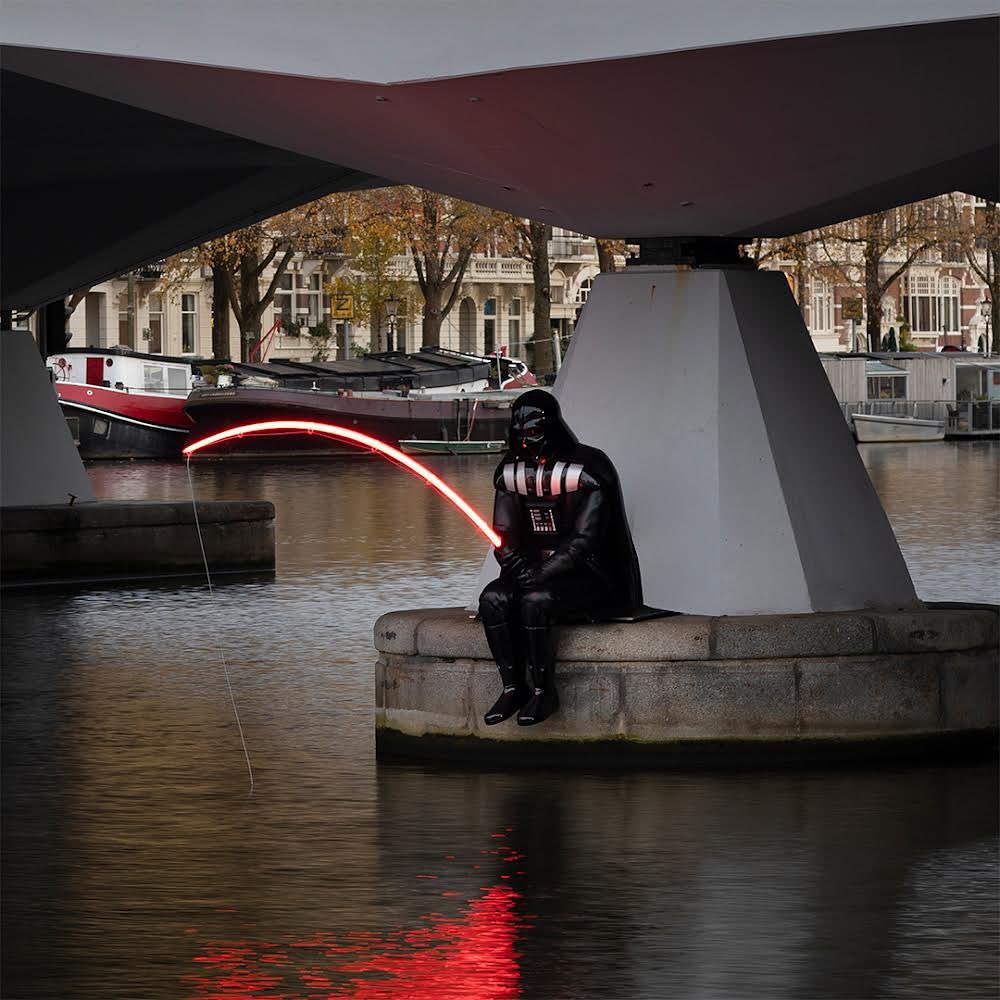
2. Darth Fisher — Frankey in Amsterdam, Netherlands
Under a quiet bridge in Amsterdam, Darth Vader sits patiently fishing—with a glowing red lightsaber. This unexpected sculpture by Frankey turns the Star Wars villain into a calm waterside figure, lit eerily by the blade’s red reflection. More!: 6 pics – Darth Fisher (by Frankey in Amsterdam)🔗 Follow Frankey on Instagram
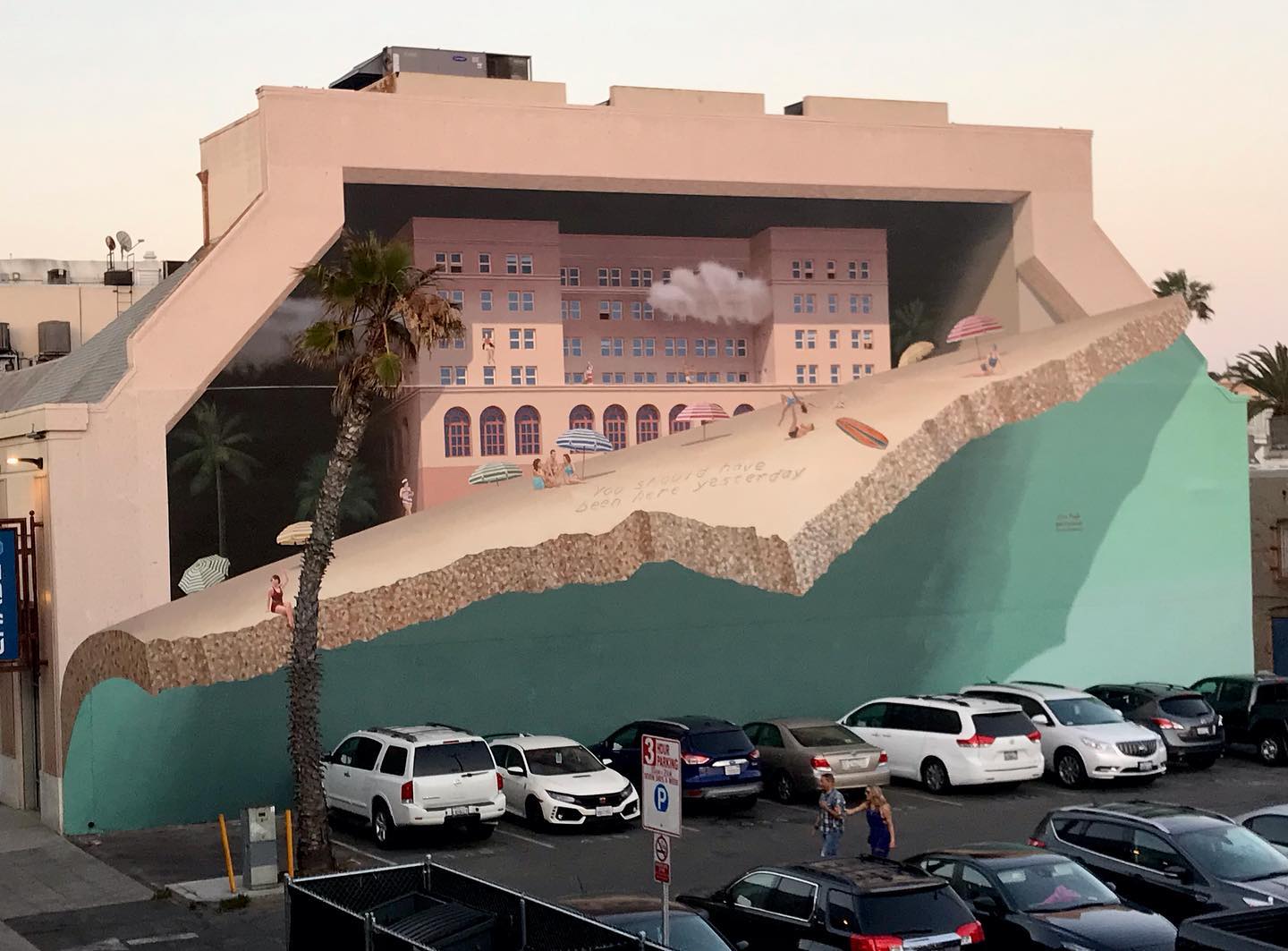
3. Surf and Sand Club — John Pugh in Hermosa Beach, California, USA
This large-scale mural splits open the side of a building to reveal a retro beach scene. The faux 3D illusion draws you into the architecture itself, transforming the wall into a cliffside resort. More photos!: ‘Here Yesterday’ – Amazing 3D Mural in Hermosa Beach, California!🔗 Follow John Pugh on Instagram
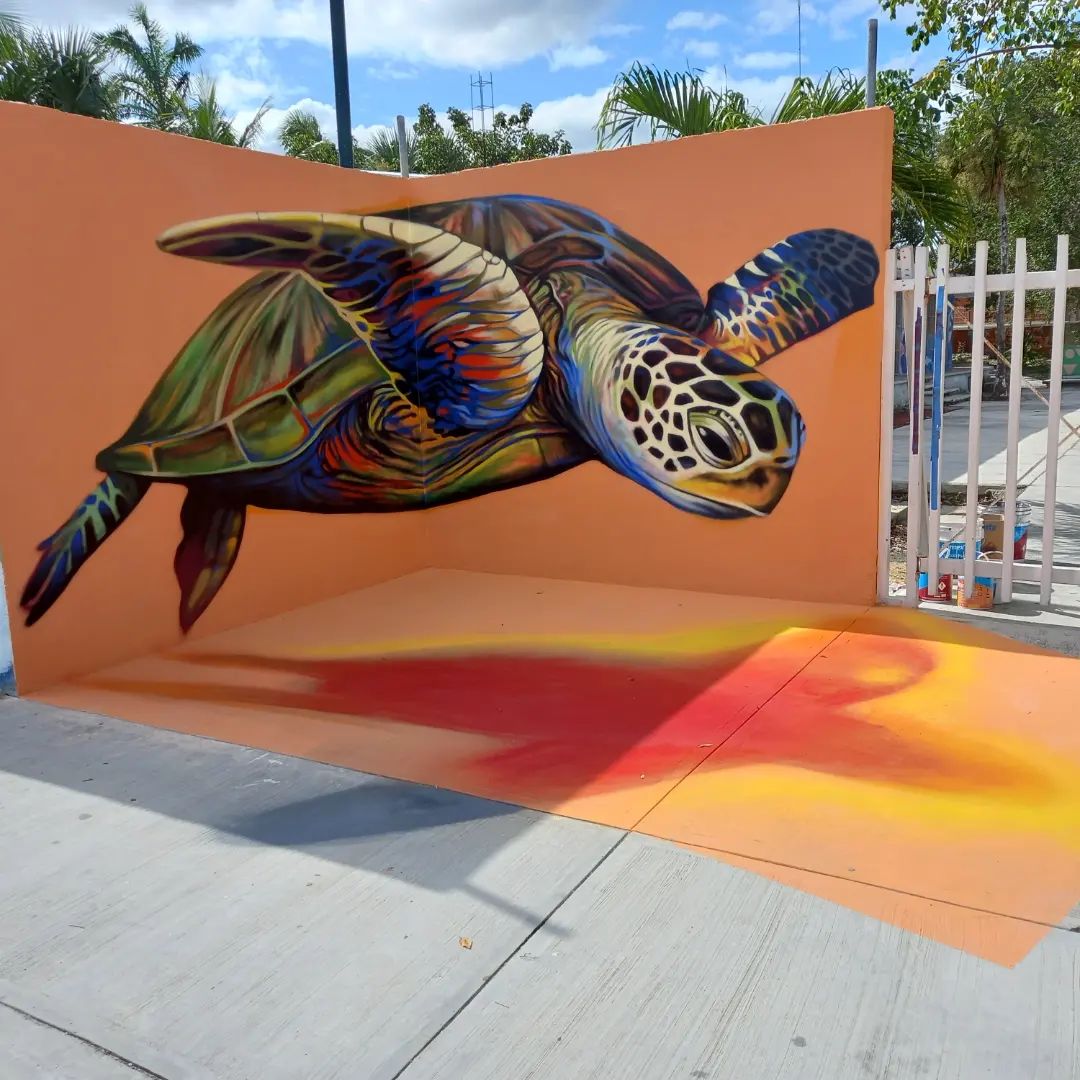
4. 3D Painted Turtle — Hebsart in Akumal, Mexico
Using both wall and floor space, this colorful sea turtle appears to float mid-air. The body is painted in striking blues, greens, and reds, enhanced by a realistic shadow that anchors the illusion. More!: 6 Walls Where Hebs Art Left Something You Can Still Feel🔗 Follow Hebsart on Instagram
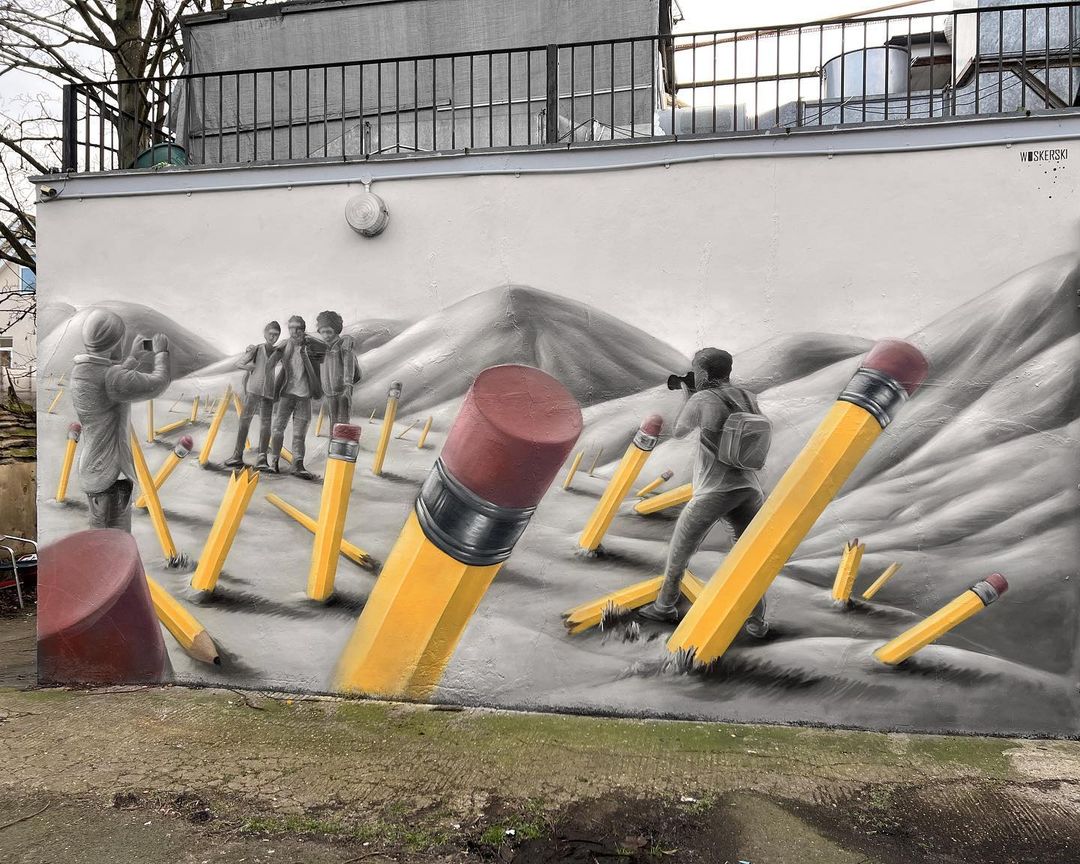
5. A Photo Opportunity — WOSKerski in London, UK
A surreal mural of giant yellow pencils scattered in a greyscale mountain landscape. Tourists pose for pictures among the pencils, blending fantasy and street culture in this illusion created for SprayExhibition20. More!: 9 Times WOSKerski Made UK Walls Feel Like Glitches in Reality🔗 Follow WOSKerski on Instagram
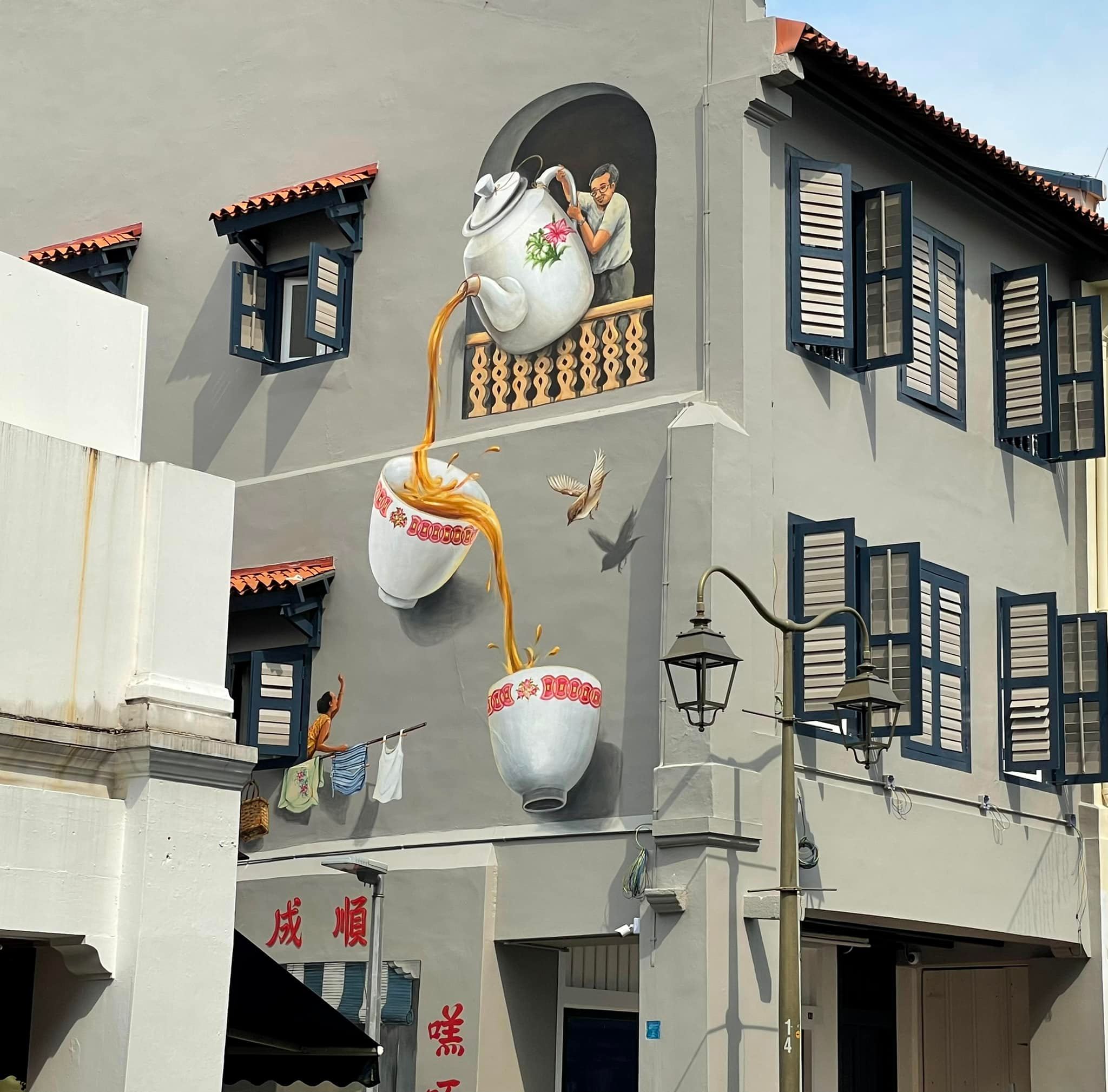
6. Tea Time Illusion — Yip Yew Chong in Singapore
A mural that spills out of itself—literally. Painted cups catch flowing tea from a teapot, while birds and laundry float between windows. The placement of shadows and spillage turns a flat wall into a dimensional scene. See it all!: Beautiful Street Art in Chinatown, Singapore (15 pics +video)🔗 Follow Yip Yew Chong on Instagram
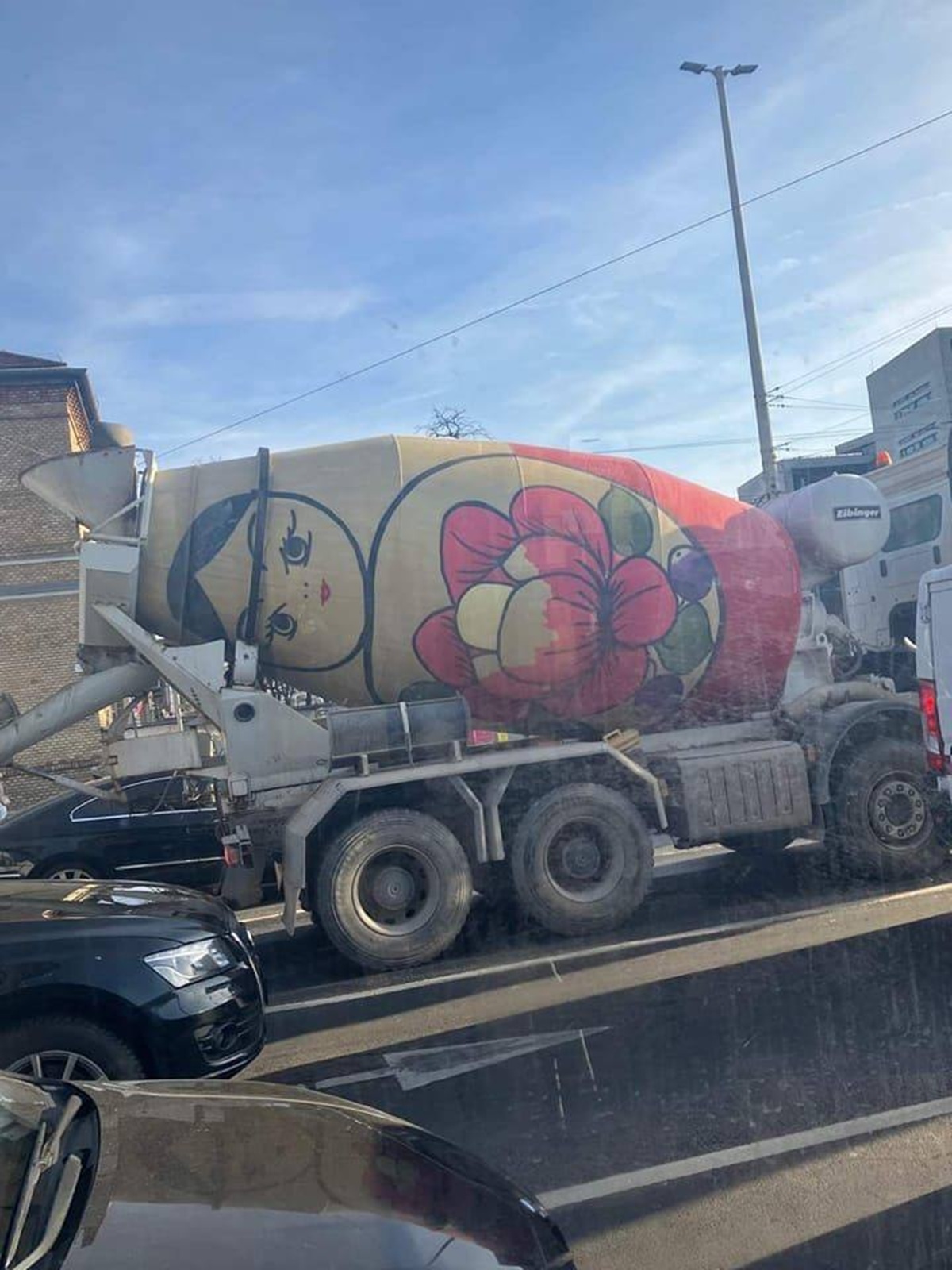
7. Matryoshka Truck
A cement truck painted like a Russian nesting doll rolls down a street, turning industrial machinery into playful visual art. The result: a moving sculpture that breaks expectations in traffic.
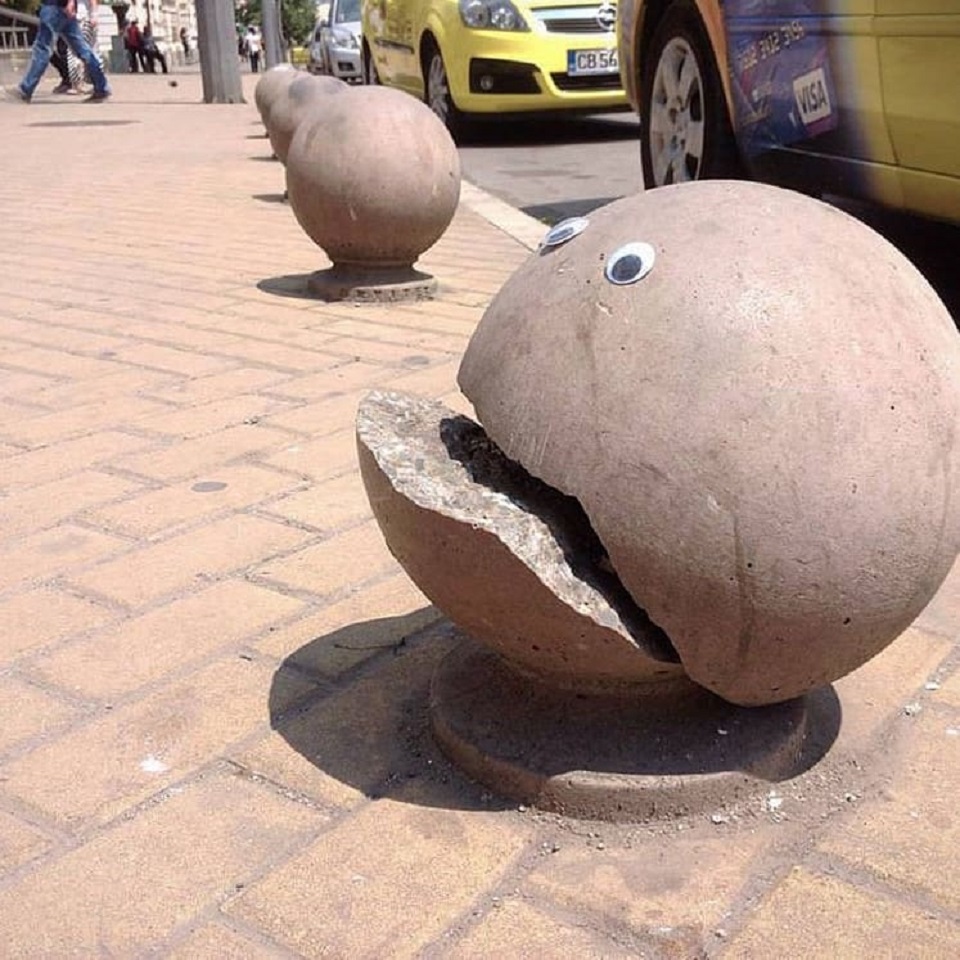
8. Hungry Bollards — Vanyu Krastev in Bulgaria
Concrete sidewalk spheres in Bulgaria transformed into hungry Pac-Man characters with just a pair of googly eyes. Artist Vanyu Krastev is known for bringing humor to urban decay by giving broken infrastructure a personality. More!: Googly-Eyed Art (17 Photos)🔗 Follow Vanyu Krastev on Instagram
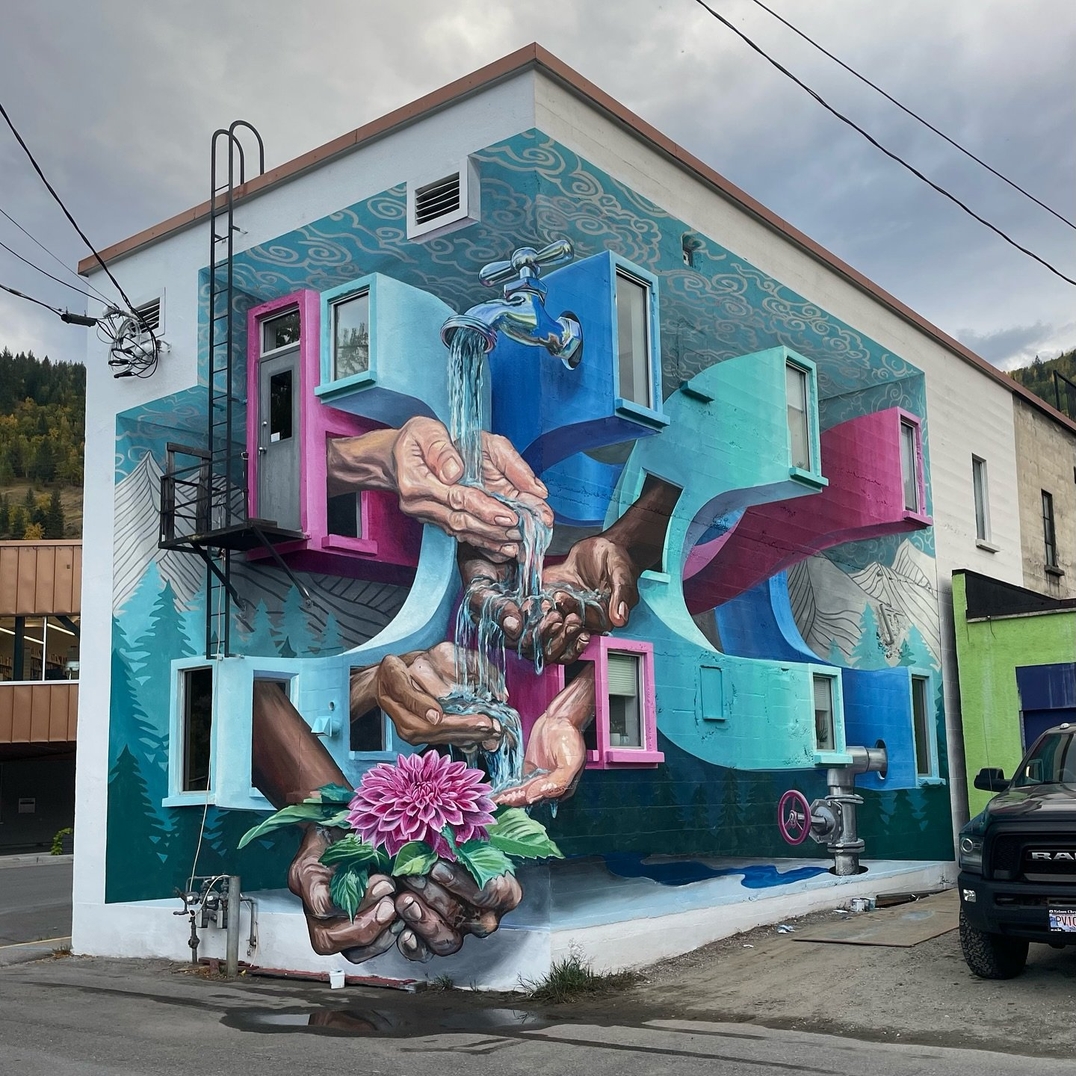
9. Flow of Life — Ty Mural Guy in Trail, BC, Canada
A 3D-style mural depicting interconnected hands catching and passing flowing water, symbolizing generosity and shared care. The composition bends perspective with cascading movement and geometric shapes that extend the illusion of space.🔗 Follow Ty Mural Guy on Instagram
More: 30 Sculptures You (probably) Didn’t Know Existed
Which one is your favorite?
Nineteen Eighty-Four | The Orwell Foundation
Published in 1949, and written while Orwell was seriously ill with tuberculosis, 1984 is perhaps Orwell's most famous work.The Orwell Prize (The Orwell Foundation)
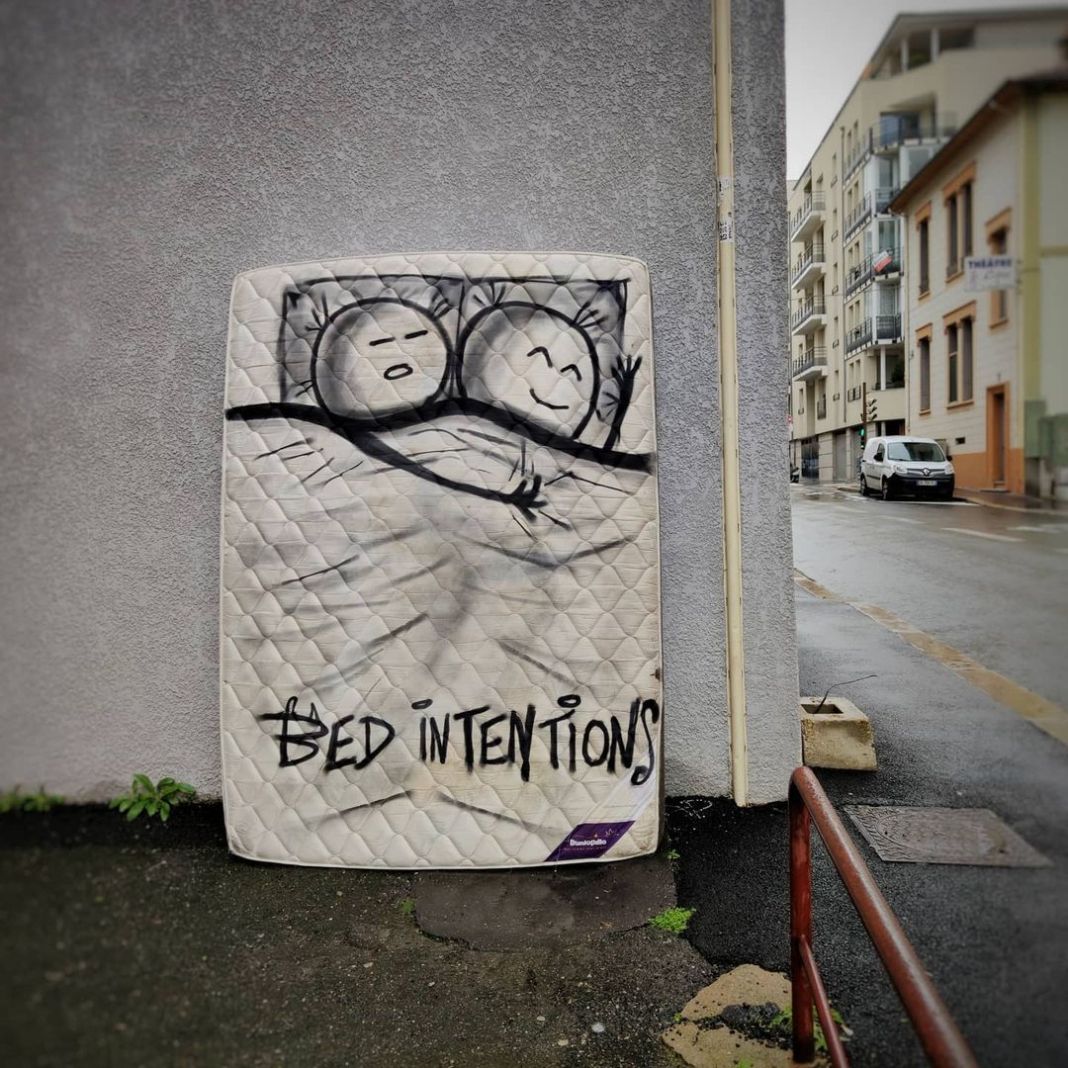
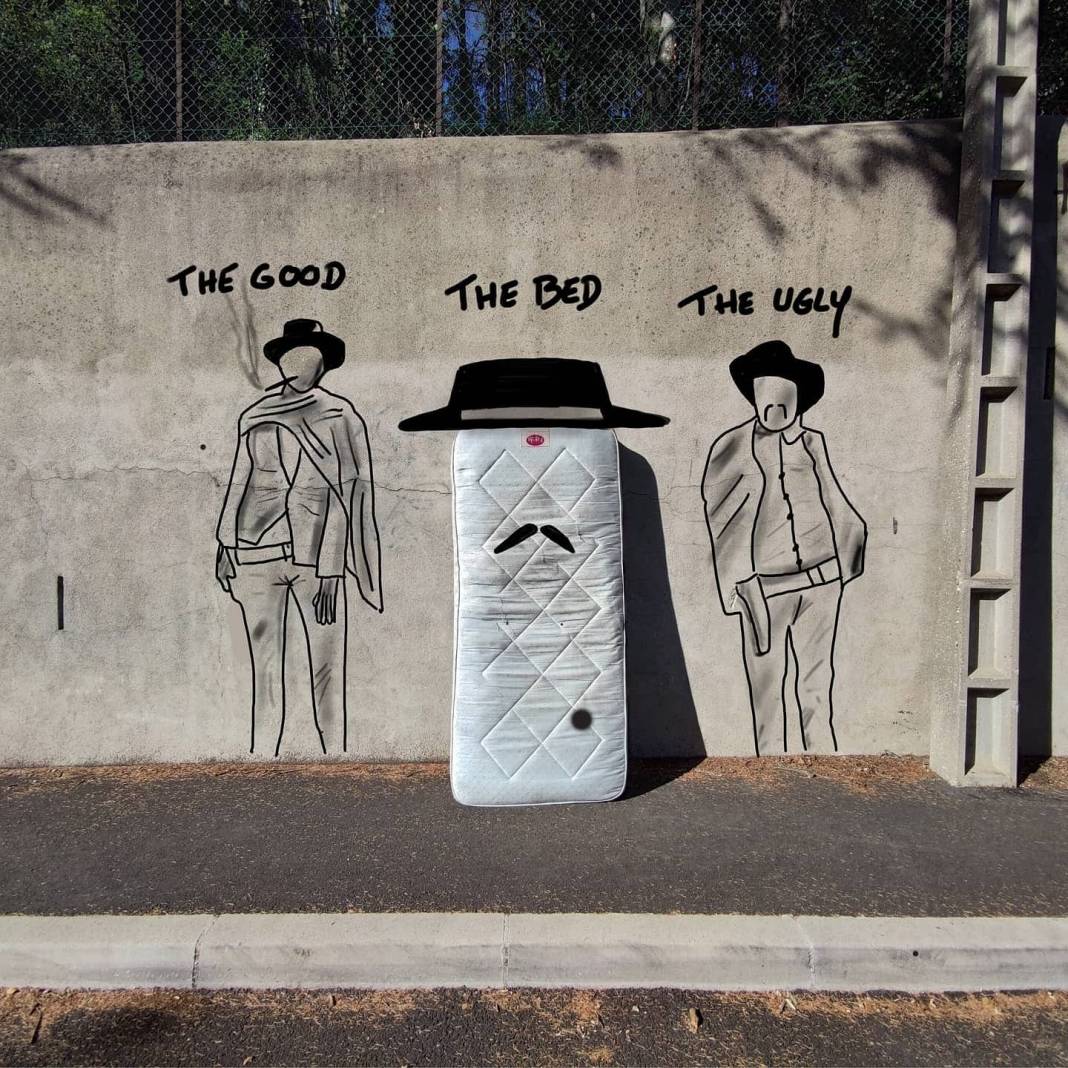
Bed intentions
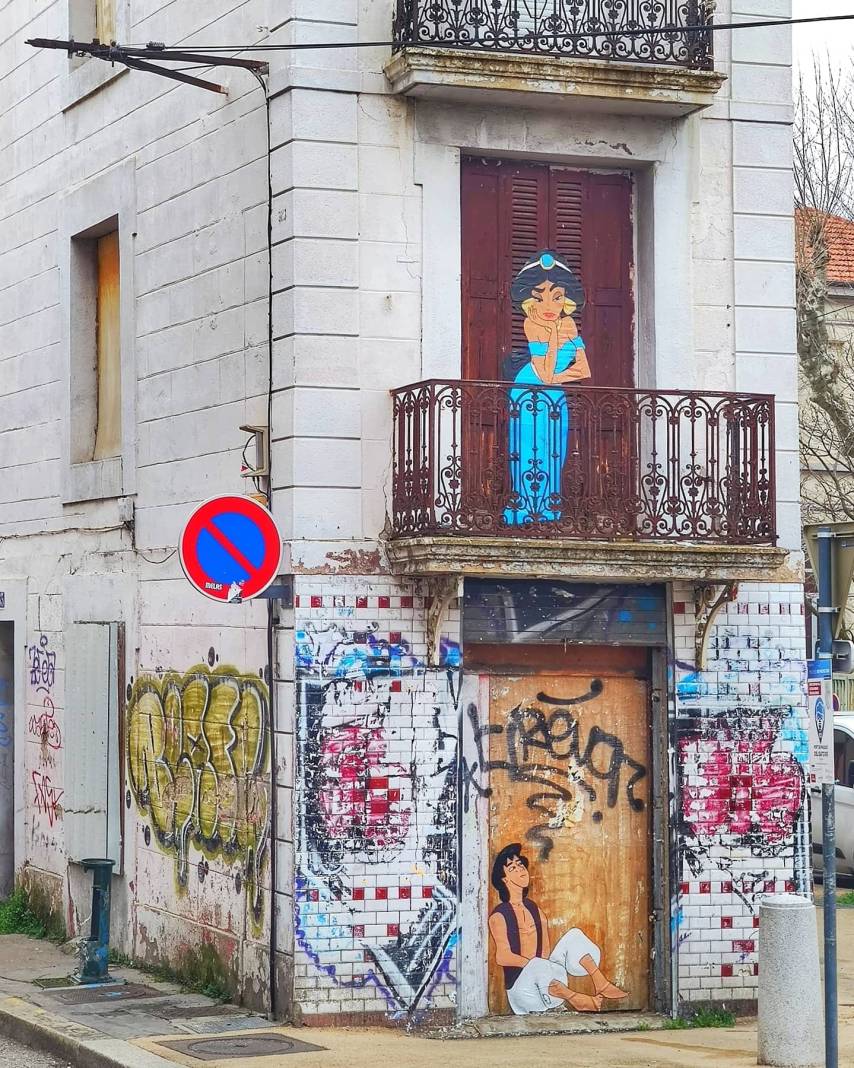
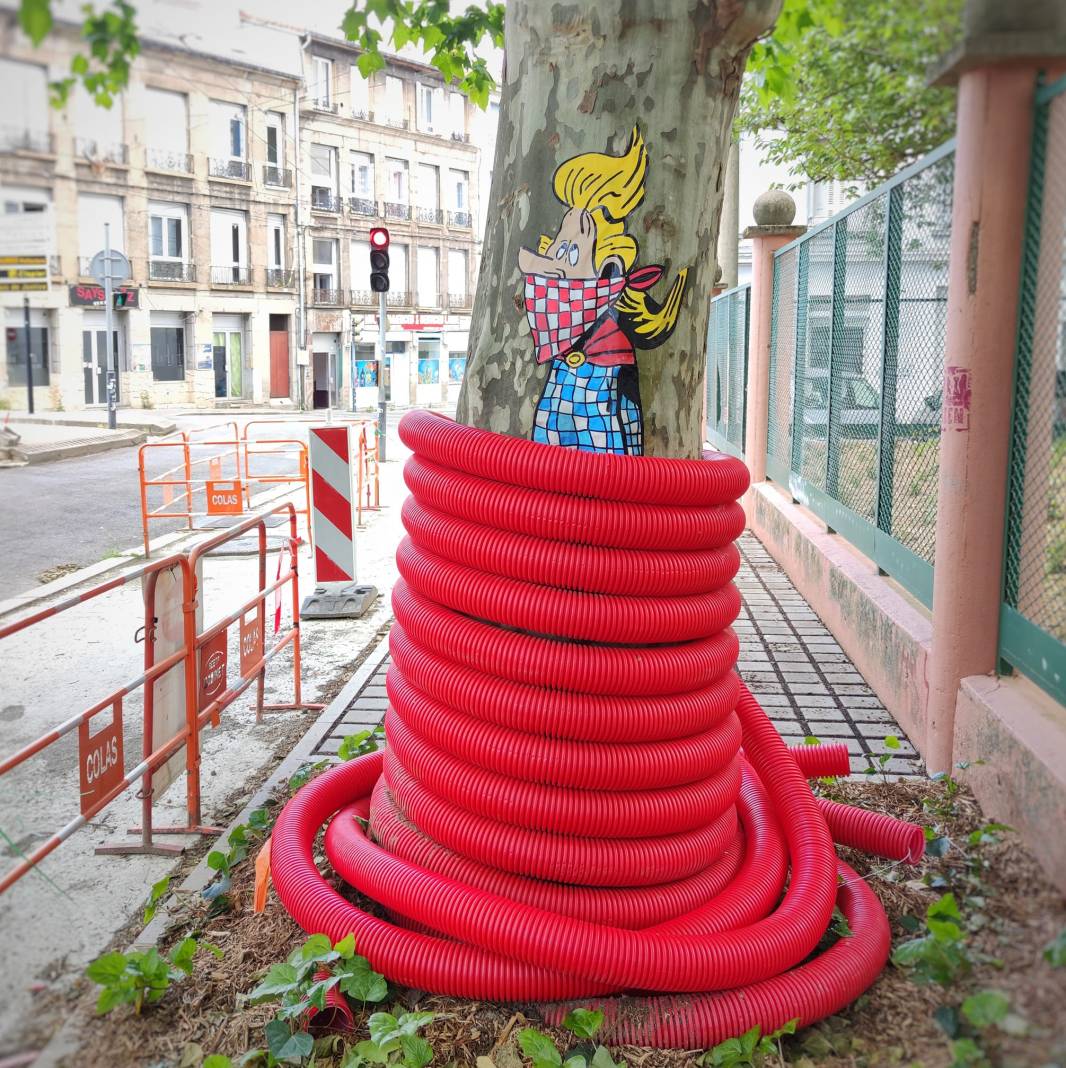
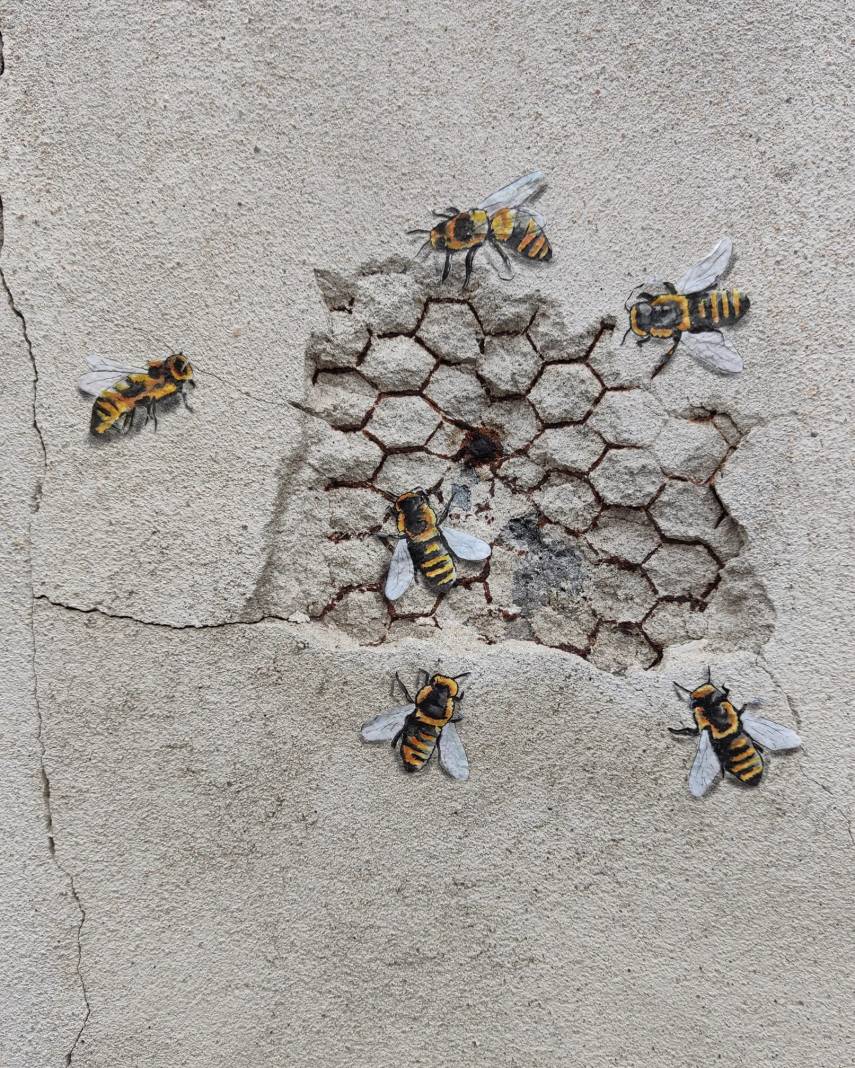
Content warning: Street Artist Oakoak By Oakoak in France. More by Oakoak on Street Art Utopia.
Street Artist Oakoak
By Oakoak in France.
More by Oakoak on Street Art Utopia.
Street Art by Oakoak (6 photos)
Oakoak: www.oakoak.fr // Instagram // Facebook
More by Oakoak on Street Art Utopia.
oakoak (@oakoak_street_art) • Instagram photos and videos
124K Followers, 354 Following, 882 Posts - See Instagram photos and videos from oakoak (@oakoak_street_art)www.instagram.com

Clever Surprises (8 Photos)
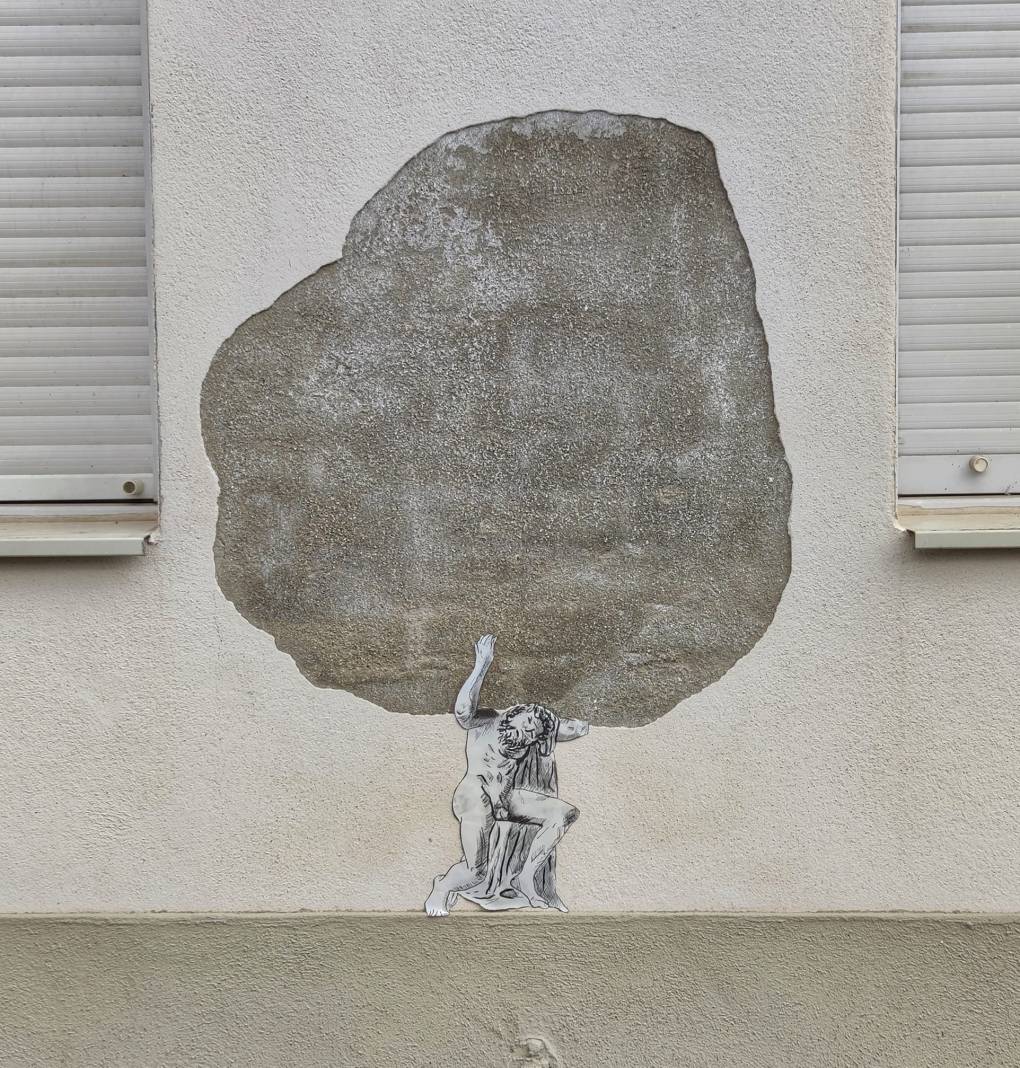
Content warning: From a wall crack turned into a bird to a “dog library” for sticks, this collection brings together eight playful street artworks that twist everyday objects into clever surprises. Expect invisible men, rock dinosaurs, sewer covers turned into record play
From a wall crack turned into a bird to a “dog library” for sticks, this collection brings together eight playful street artworks that twist everyday objects into clever surprises. Expect invisible men, rock dinosaurs, sewer covers turned into record players, and more creative illusions that prove the streets are full of imagination.
More!: Made You Smile (8 Photos)
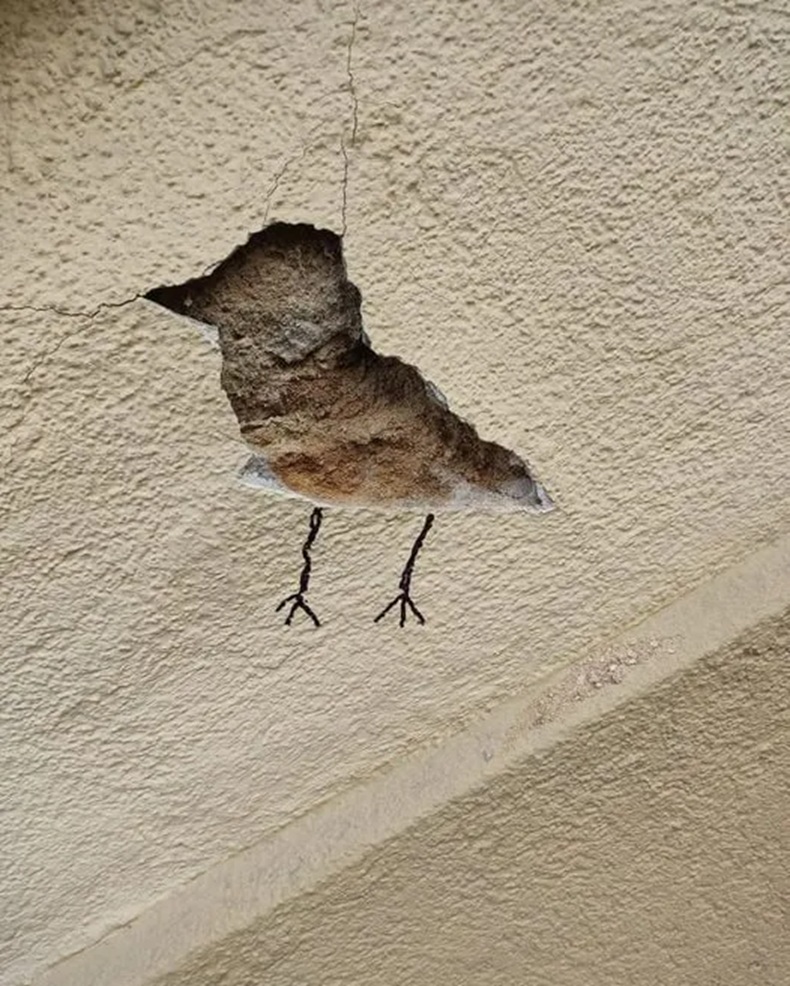
1. Bird Crack
A simple crack in the wall turned into the body of a bird with two legs drawn underneath. A minimal intervention that turns damage into creativity.
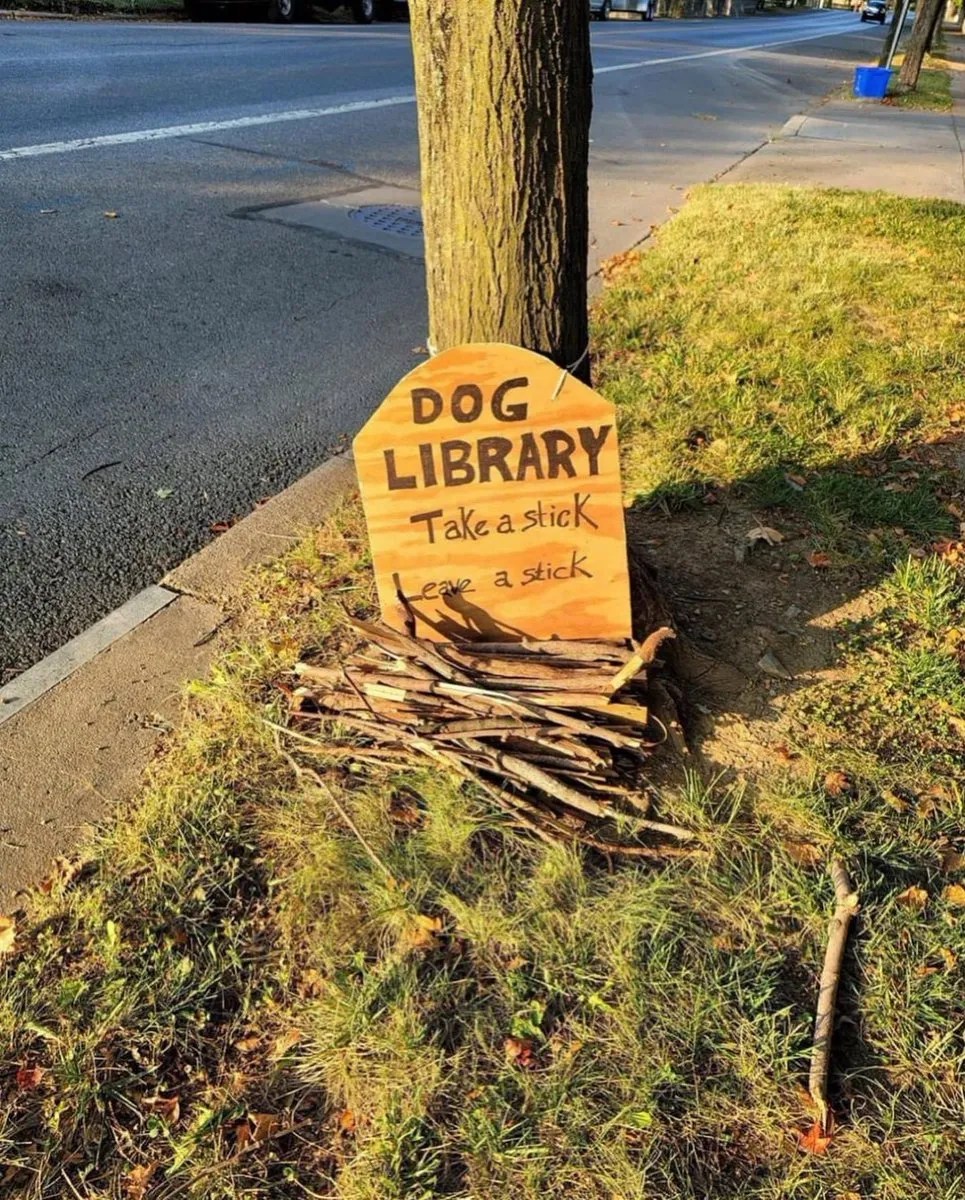
2. Dog Library
A humorous installation with a sign reading “Dog Library: Take a stick, leave a stick.” A witty nod to how dogs collect sticks, presented like a public service.
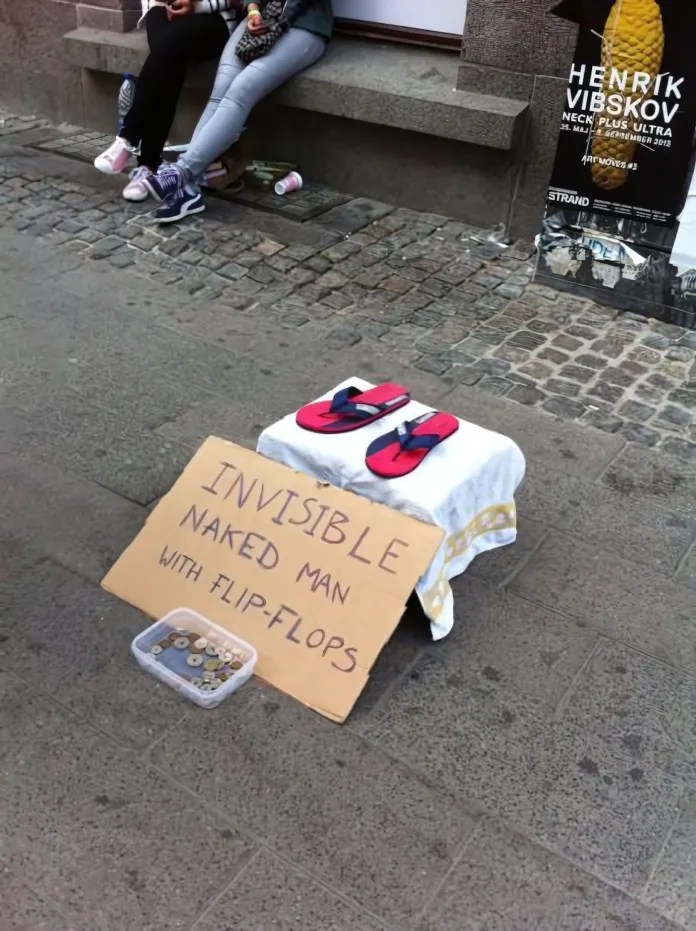
3. Invisible Man
A small setup on the street with flip-flops on a stool and a sign announcing an “Invisible Naked Man.” A funny take on busking with nothing to see but imagination.
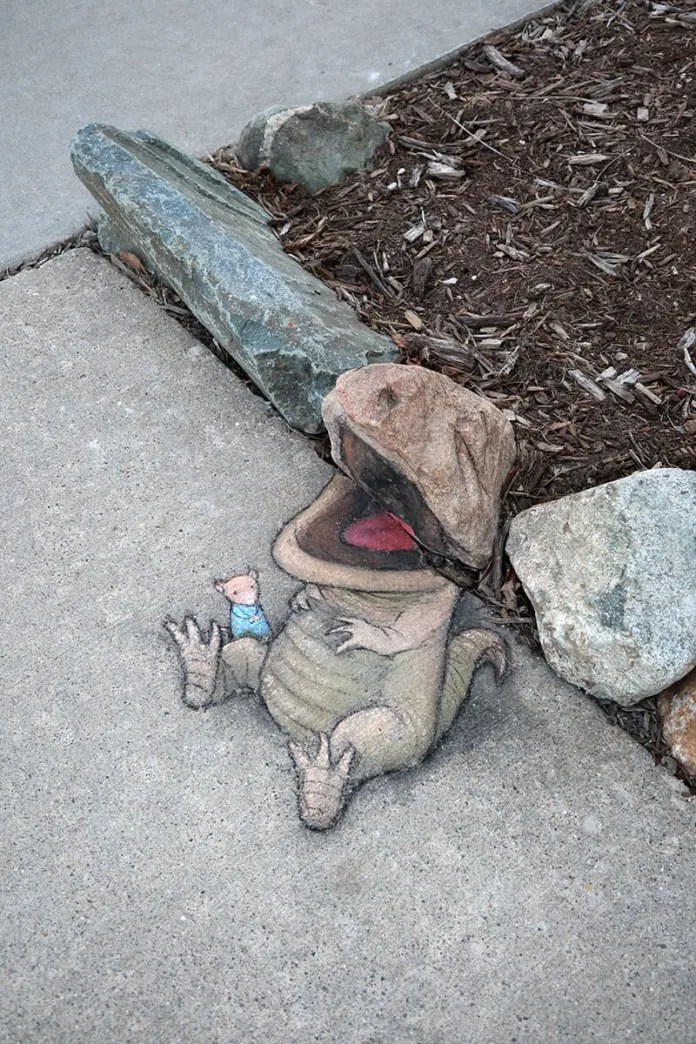
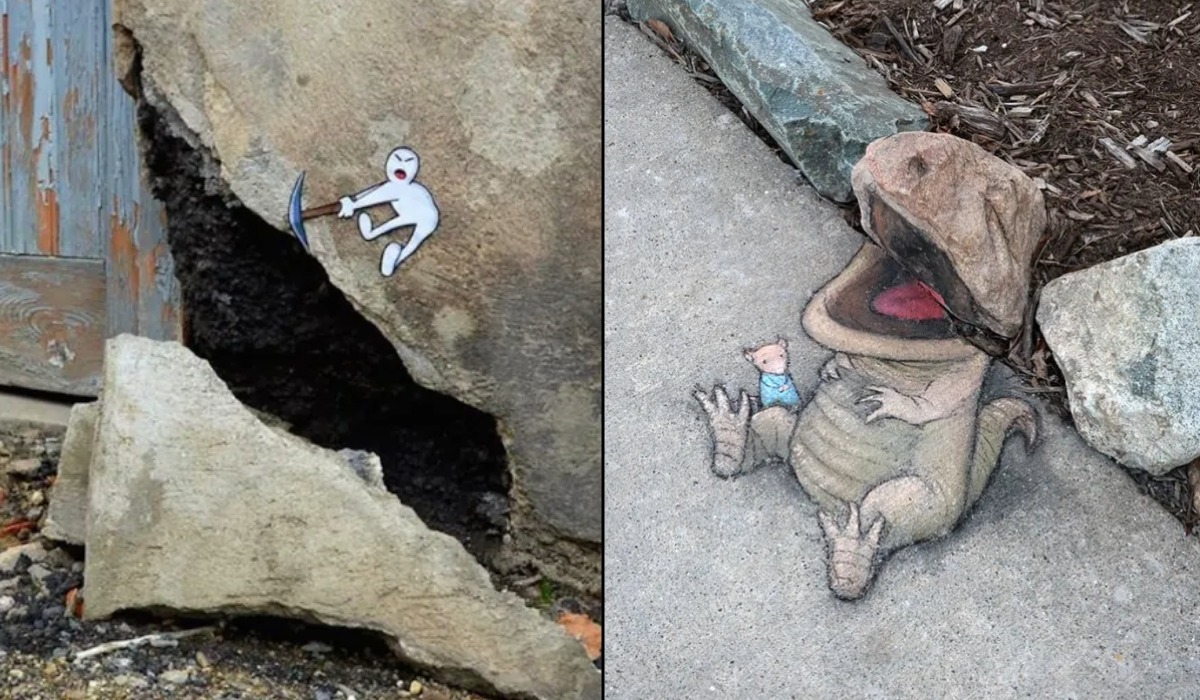
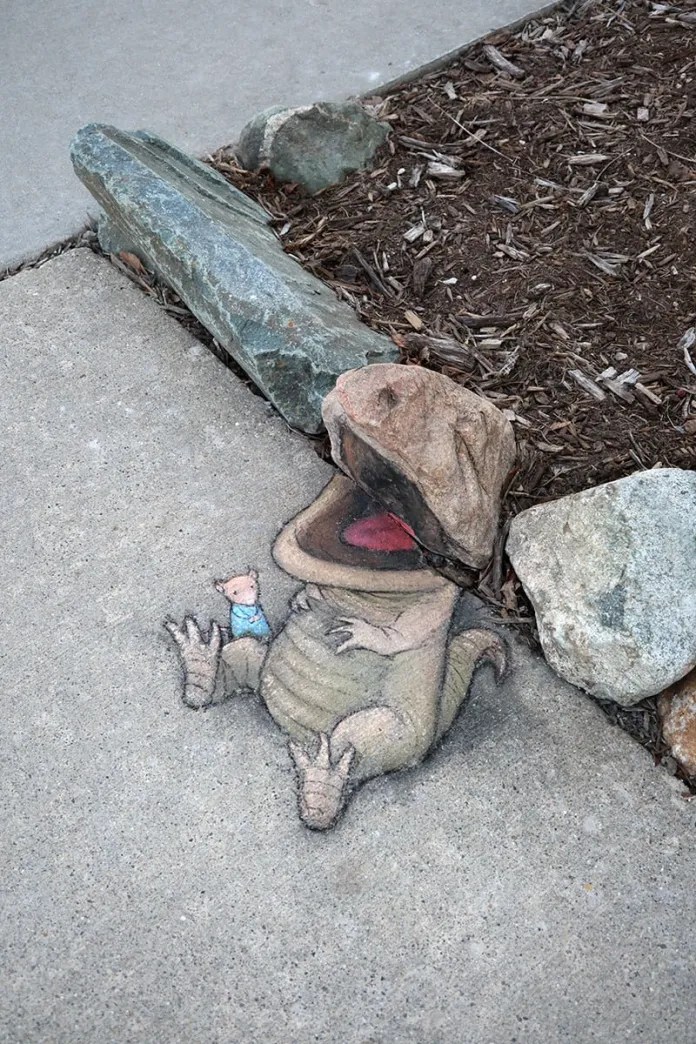
4. Rock Dinosaur — David Zinn in USA
A rock on the sidewalk becomes the head of a dinosaur, complete with an open mouth and tiny arms, thanks to clever chalk art. More!: Cute Art By David Zinn (14 Photos)
🔗 Follow David Zinn on Instagram
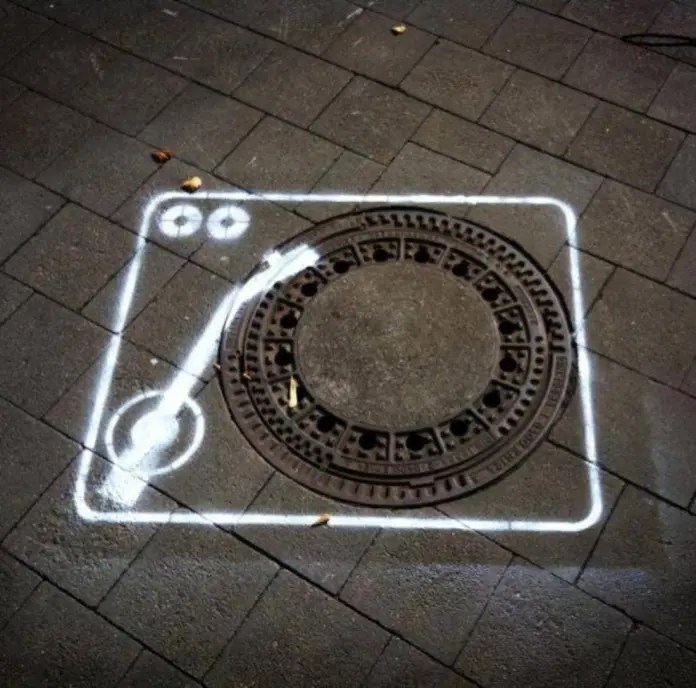
5. DJ Cover
A manhole cover is outlined with white paint to resemble a turntable, turning a functional object into a playful nod to music culture.
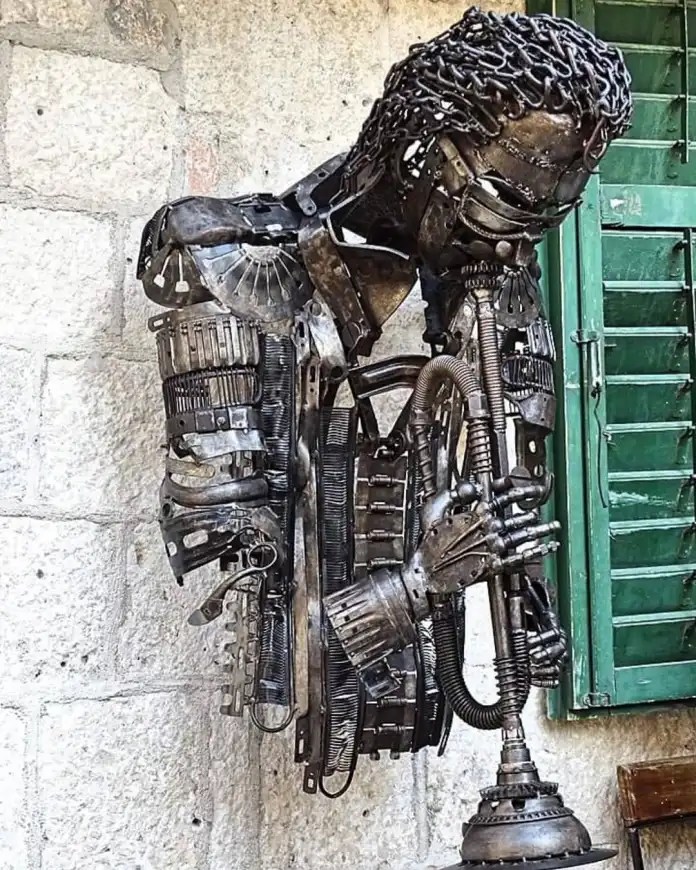
6. Miles Davis Sculpture — Vlado Kostov in Kotor, Montenegro
A sculpture of Miles Davis made from scrap metal, created by Vlado Kostov. The piece merges music and machinery in the old town of Kotor.
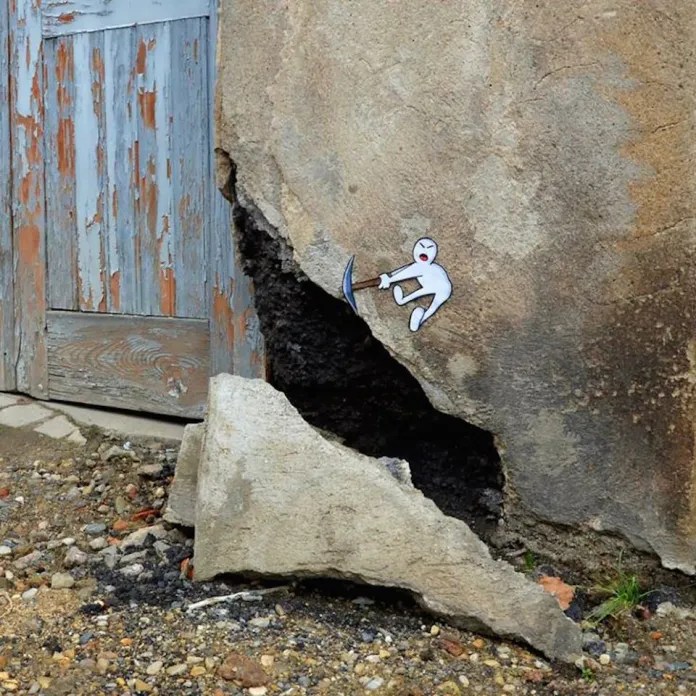
7. The Cracks — Oakoak in France
A small painted figure with a pickaxe appears to be working on a real crack in the stone, blending painting with physical damage. More!: Street Art By Oakoak (9 Photos)
🔗 Follow Oakoak on Instagram
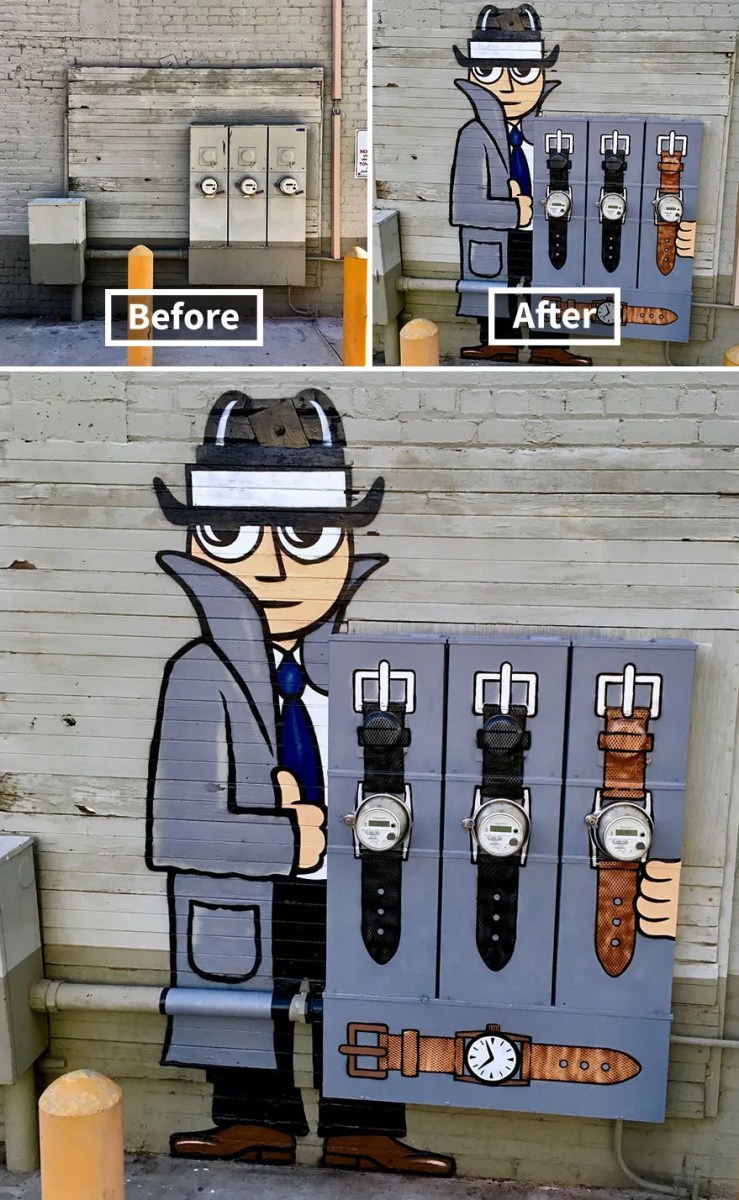
8. Shady Watch Dealer — Tom Bob in California, USA
Utility meters on a wall are transformed into watches, displayed by a painted shady dealer character. A clever piece by Tom Bob that reimagines urban infrastructure. More!: 33 Artworks by Creative Genius Tom Bob (That Will Make You Smile)
🔗 Follow Tom Bob on Instagram
More: Funny Signs! (18 Photos)
Which one is your favorite?
Made You Smile (15 Photos)
Sometimes the world feels like it’s moving too fast, but these artists are here to remind us to stop and look at the little things.
From a simple rock that tells a joke to a pedestrian crossing that has come to life, these small artworks prove that creativity is often most powerful when it’s unexpected.We’ve gathered 15 photos that will brighten your day and remind you that there is magic waiting in the cracks of the sidewalk—if you only take a moment to look.
More: Funny Signs (20 Photos)
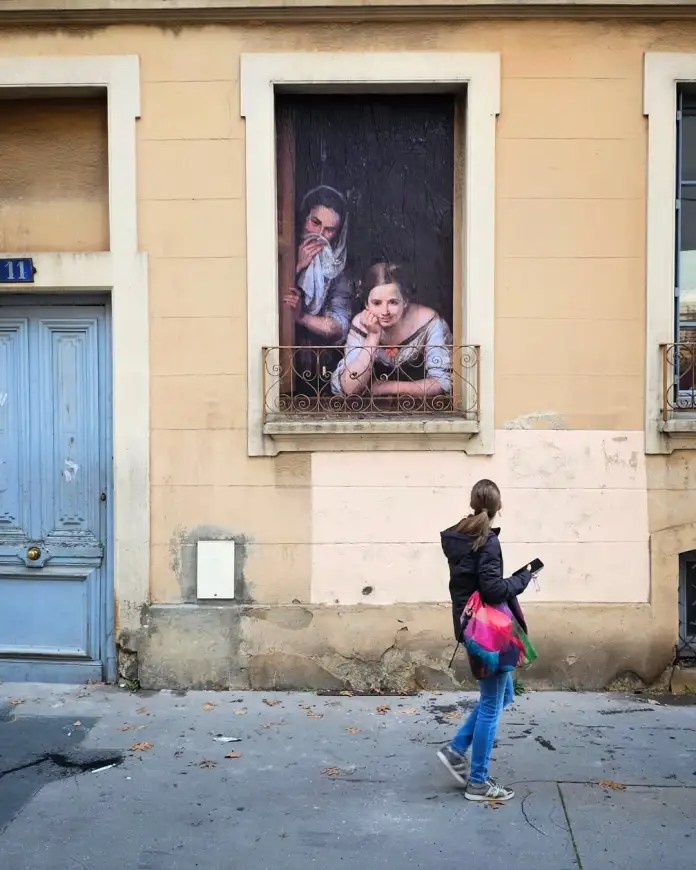
Balcony Illusion by Oakoak in Paris, France
By adding a mural of two figures peeking out from a boarded-up window, Oakoak breathes life back into an abandoned building. The way the characters seem to be watching the world go by creates a playful loop of “people-watching” that adds charm to a neglected space. More!: Wrong but Right – Art By Oakoak (9 Photos)💡 Nerd Fact: Oakoak has been building tiny site-specific jokes out of cracks, shadows, and road markings since 2006, so works like this feel almost like street-level readymades: the city supplies the object, and the artist supplies the twist.
🔗 Follow Oakoak on Instagram
Nadine and the Surprisingly Effective Joke by David Zinn
David Zinn is a master of the “temporary smile.” Using nothing but chalk and the natural shape of a rock on the sidewalk, he created a scene where a little green monster is cracking up at a joke told by his character Nadine. It’s a perfect example of how a bit of imagination can turn a gray corner into a scene of pure joy. More!: 9 Cute Spring Drawings by David Zinn💡 Nerd Fact: Zinn’s own site describes his temporary pavement works as improvisations made from chalk, charcoal, and found objects. That makes him a great example of pareidolia in action: the brain’s habit of seeing meaningful images in random shapes, pebbles, and cracks.
🔗 Follow David Zinn on Instagram
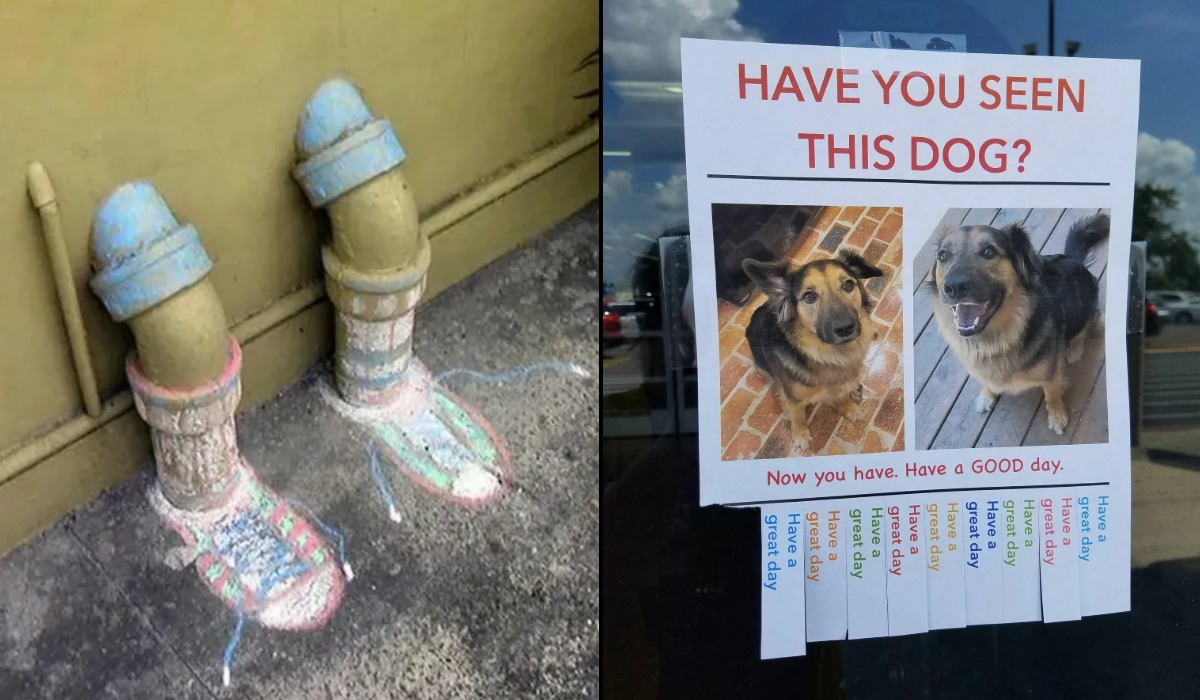
Have You Seen This Dog?
This isn’t your typical lost pet flyer. Instead of a missing dog, the poster simply asks, “Have you seen this dog?” and then answers with a picture of a happy pup: “Now you have. Have a GOOD day.” It’s a wonderful bit of low-tech street art designed specifically to lift a stranger’s mood.
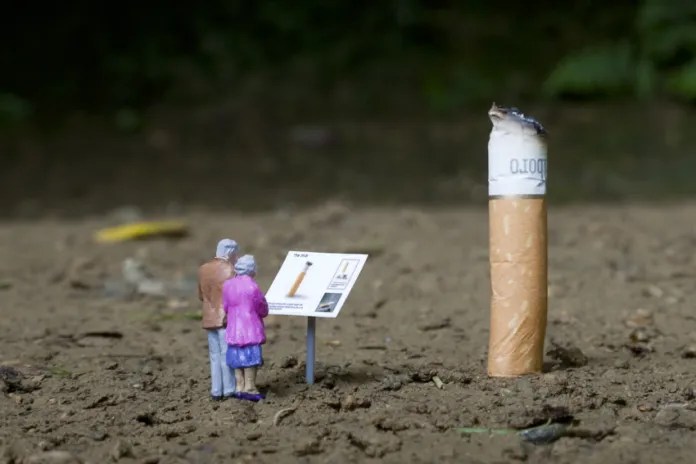
Little People Museum — Slinkachu in UK
A miniature installation where tiny figurines examine a cigarette butt displayed as if it were a museum artifact. More!: 7 Tiny Street Dramas by Slinkachu💡 Nerd Fact: Slinkachu’s mini scenes are not just cute visual gags. He says they are meant to mix surprise with the loneliness and melancholy of big-city life, which is why his tiny characters often feel funny and slightly heartbreaking at the same time.
🔗 Follow Slinkachu on Instagram
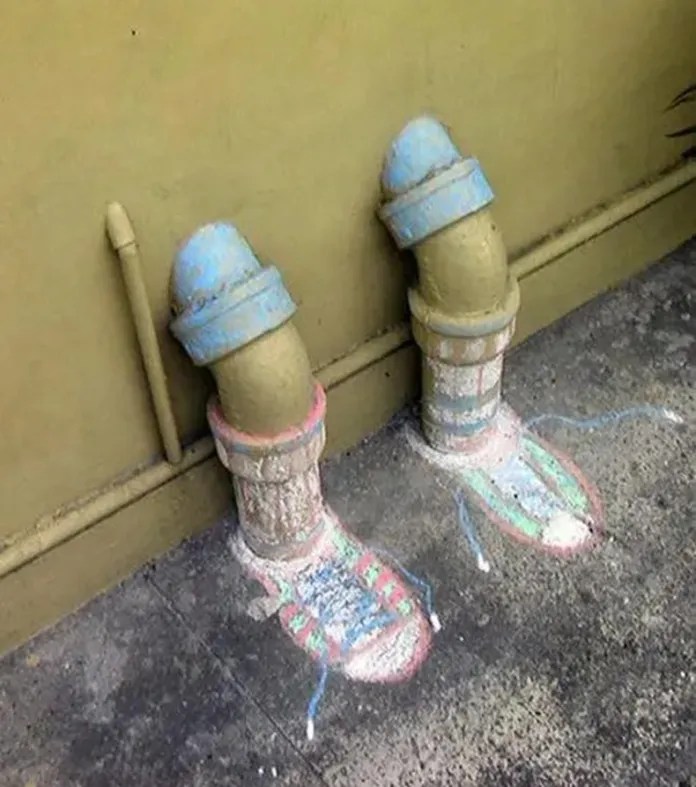
Keeping the Feet Warm
Someone decided that these pipes looked a little too cold standing on the sidewalk. By painting colorful socks and sneakers onto the concrete below them, the artist turned a dull plumbing fixture into a pair of legs ready for a walk. It’s the kind of whimsical detail that makes city life feel more personal.
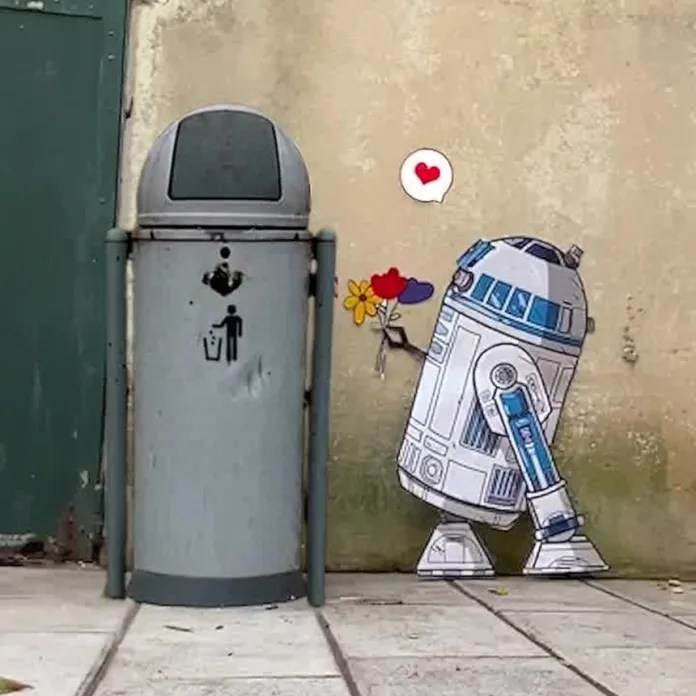
R2-D2’s Day Off by EFIX
Even droids need a moment of romance. EFIX added a cardboard character to a public trash can, making it look like R2-D2 is sheepishly offering flowers to a bin. It’s a brilliant way to humanize our city streets with a bit of pop-culture humor. More!: EFIX’s Clever Art (9 Photos)💡 Nerd Fact: EFIX says he uses childhood pop-culture characters to keep our “child soul” alive and make people see street furniture differently; the Star Wars trivia layer is that R2-D2’s name itself came from a sound-editing label, “Reel 2, Dialog 2.”
🔗 Follow EFIX on Instagram
Museum Quality Dandelion by Michael Pederson in Sydney, Australia
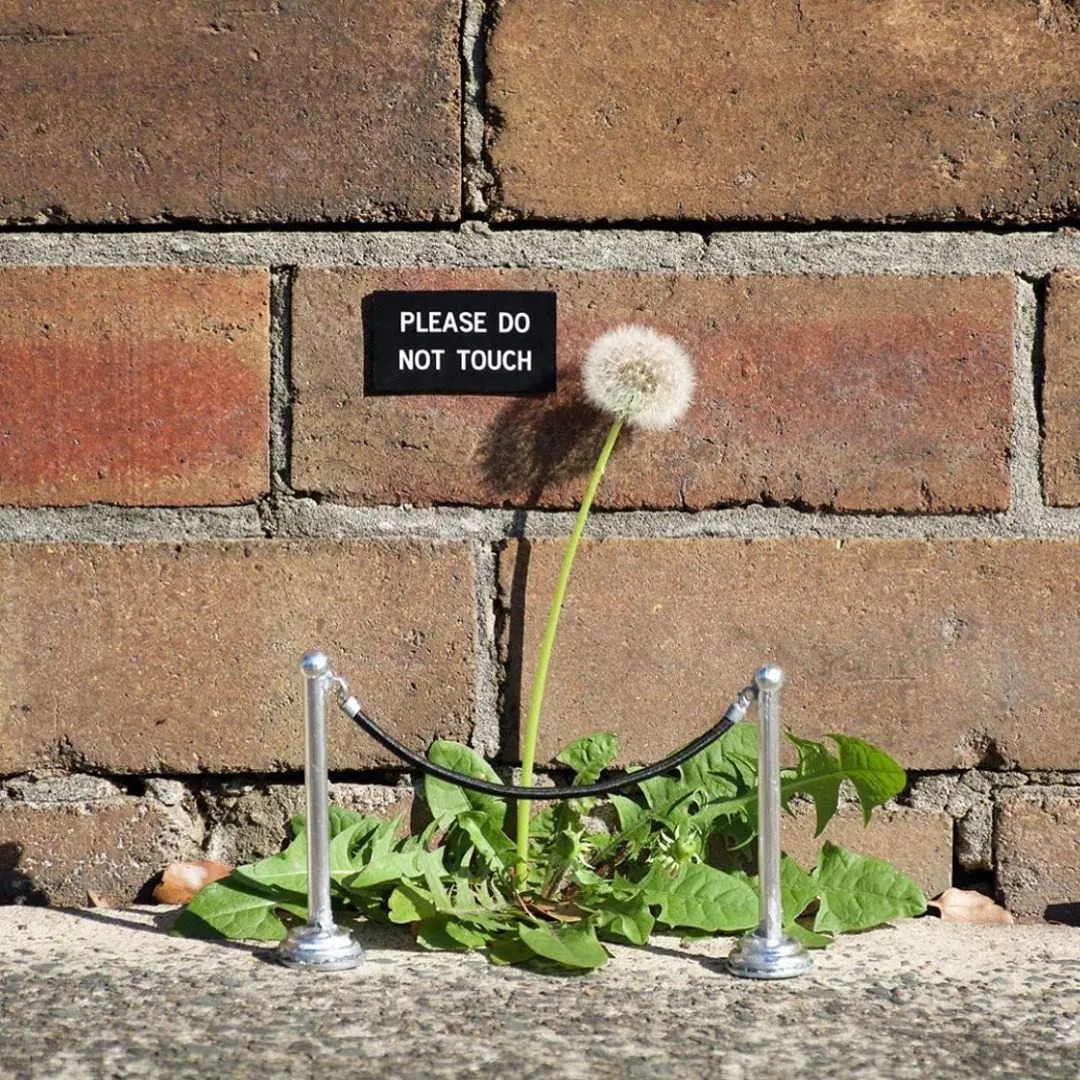
Michael Pederson treats the most ignored parts of the city with the highest respect. By placing tiny museum stanchions and a “Please Do Not Touch” sign around a common dandelion growing through the pavement, he forces us to appreciate the resilience of nature in the concrete jungle. More!: Clever Art By Michael Pederson (17 Photos)💡 Nerd Fact: Pederson has been making tiny public interventions since 2013, and his signature move is to leave small, playful installations in unexpected places. So the “museum” around the weed is really part of a bigger practice: making overlooked corners behave like cultural landmarks.
🔗 Follow Michael Pederson on Instagram
Charlie Chaplin by Tom Bob in Massachusetts, USA
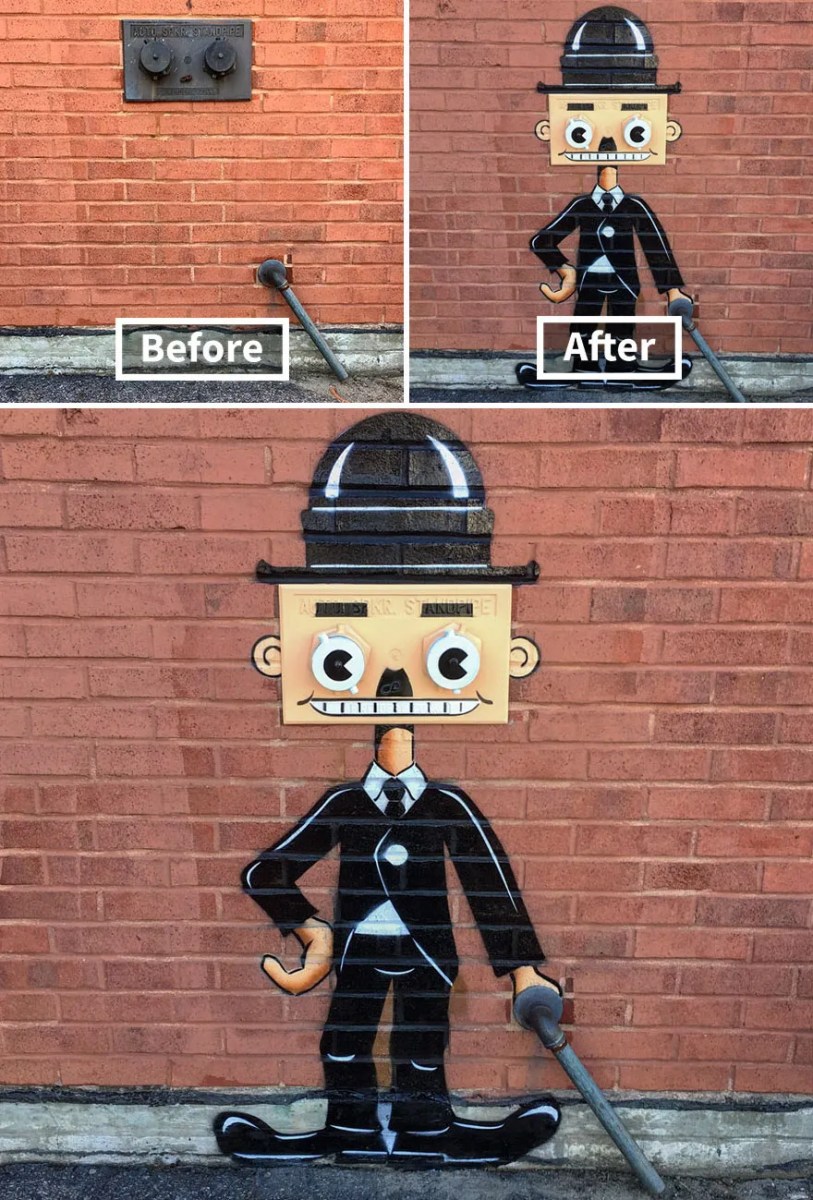
Tom Bob is the king of the “before and after.” Here, he transformed a standard red standpipe and a bit of patched concrete into the legendary Charlie Chaplin. By adding the iconic bowler hat, mustache, and cane, he turned a boring piece of infrastructure into a cinematic tribute that makes everyone stop and grin. More!: 33 Artworks by Creative Genius Tom Bob (That Will Make You Smile)💡 Nerd Fact: Tom Bob once said some street objects seem to “tell” him what they want to become. Chaplin is an especially nerdy match here, because the Tramp costume was famously built out of contradictions: baggy pants, tight coat, small hat, and huge shoes.
🔗 Follow Tom Bob on Instagram
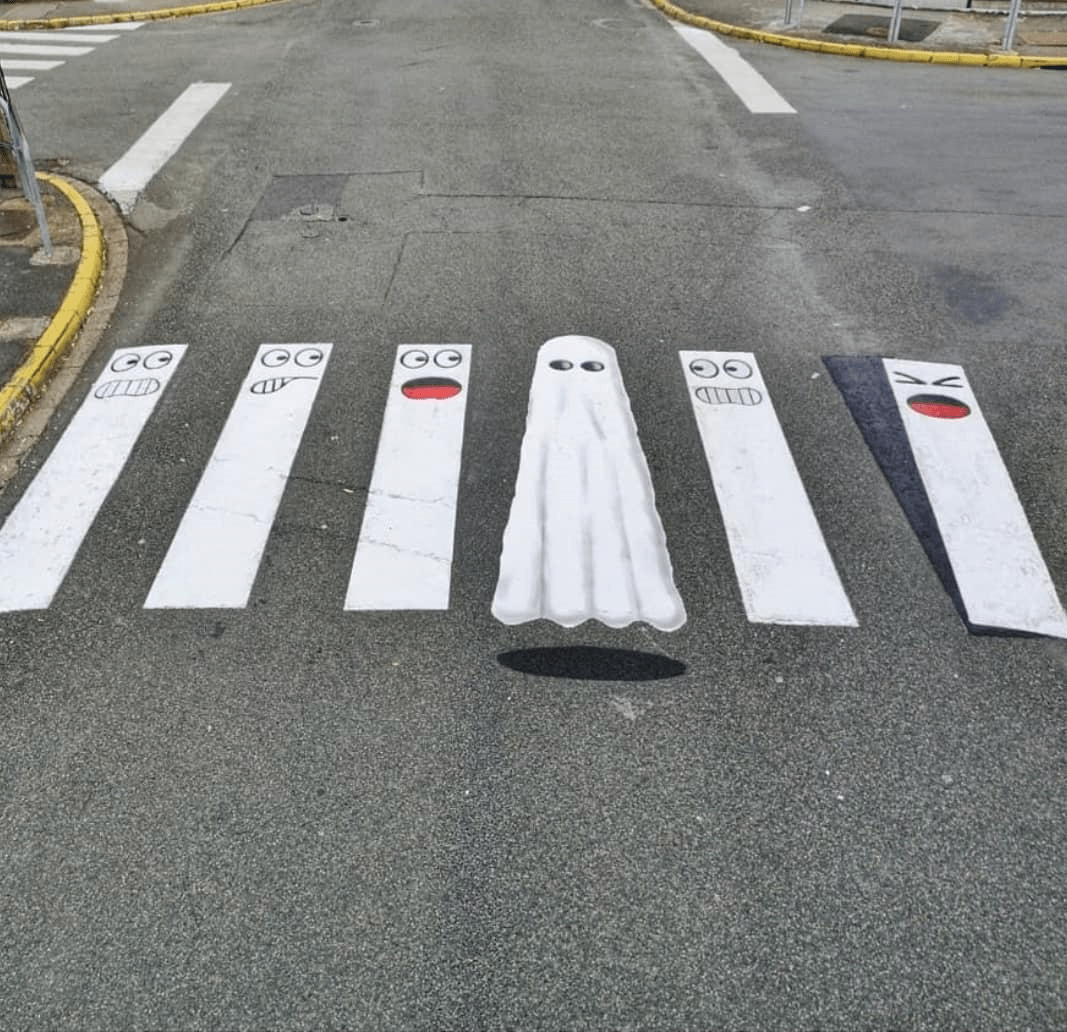
The Ghost Crossing by Oakoak in Auchel, France
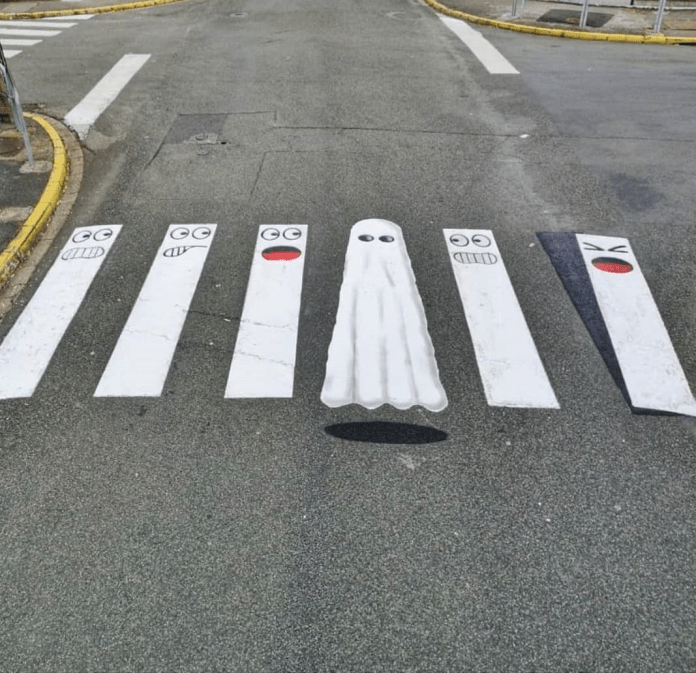
Street artist Oakoak is famous for his “blink-and-you’ll-miss-it” wit. By adding eyes and a clever shadow to one stripe of a crosswalk, he transformed a standard piece of traffic safety into a floating ghost. It’s simple, smart, and impossible not to smile at. More by Oakoak: Lovely by Oakoak (10 Photos)💡 Nerd Fact: Oakoak’s real trick is how little he actually adds. His whole practice is built around letting existing road markings, cracks, and shadows do most of the storytelling, which is why pieces like this feel more like discoveries than decorations.
🔗 Follow Oakoak on Instagram
“The Fabulous Tale of Being Different” by Case Maclaim in Madrid, Spain
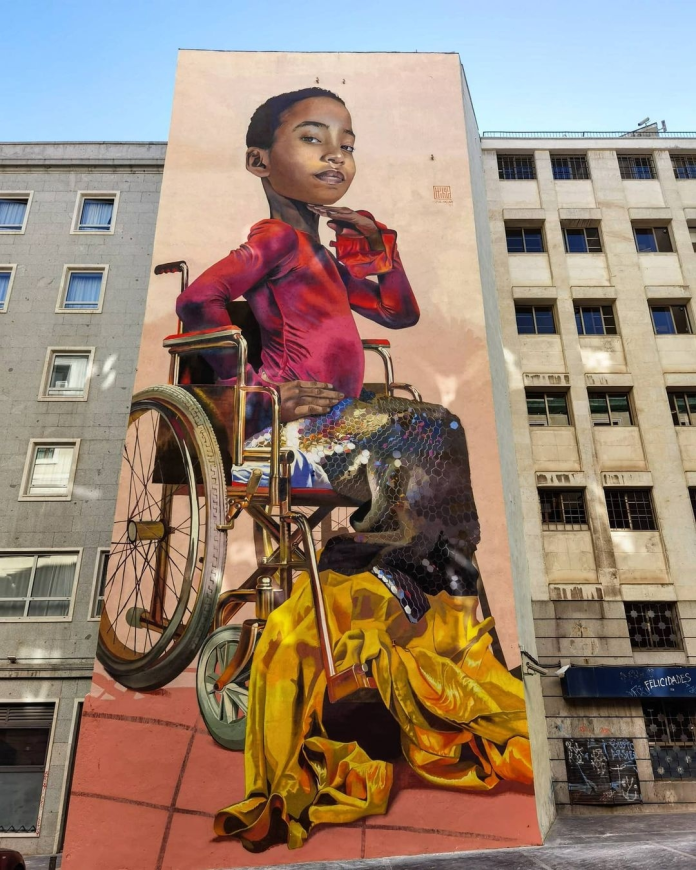
Case Maclaim’s mural in Madrid depicts a young person in a wheelchair draped in vibrant fabrics, blending strength and softness in a single portrait. More photos!: The Fabulous Tale Of Being Different (by Case Maclaim in Madrid)Case Maclaim: I believe the actual beauty of fairy tales is that it is up to our imagination how the character looks and moves and that version is not really up to debate, as it is just like a fingerprint, very unique and personal. With this mural in the old, historical city center of Madrid I wanted to try a different approach. So I gave the viewer a new character of a yet unknown fairy tale. I have high hopes that it will encourage specially the young audience to come up with their very own story, in which the lead is a confident, black child in a golden wheelchair and in a self-made mermaid costume.
🔗 Follow Case Maclaim on Instagram
A Helping Paw by Trevor Cole in Nanaimo, British Columbia, Canada
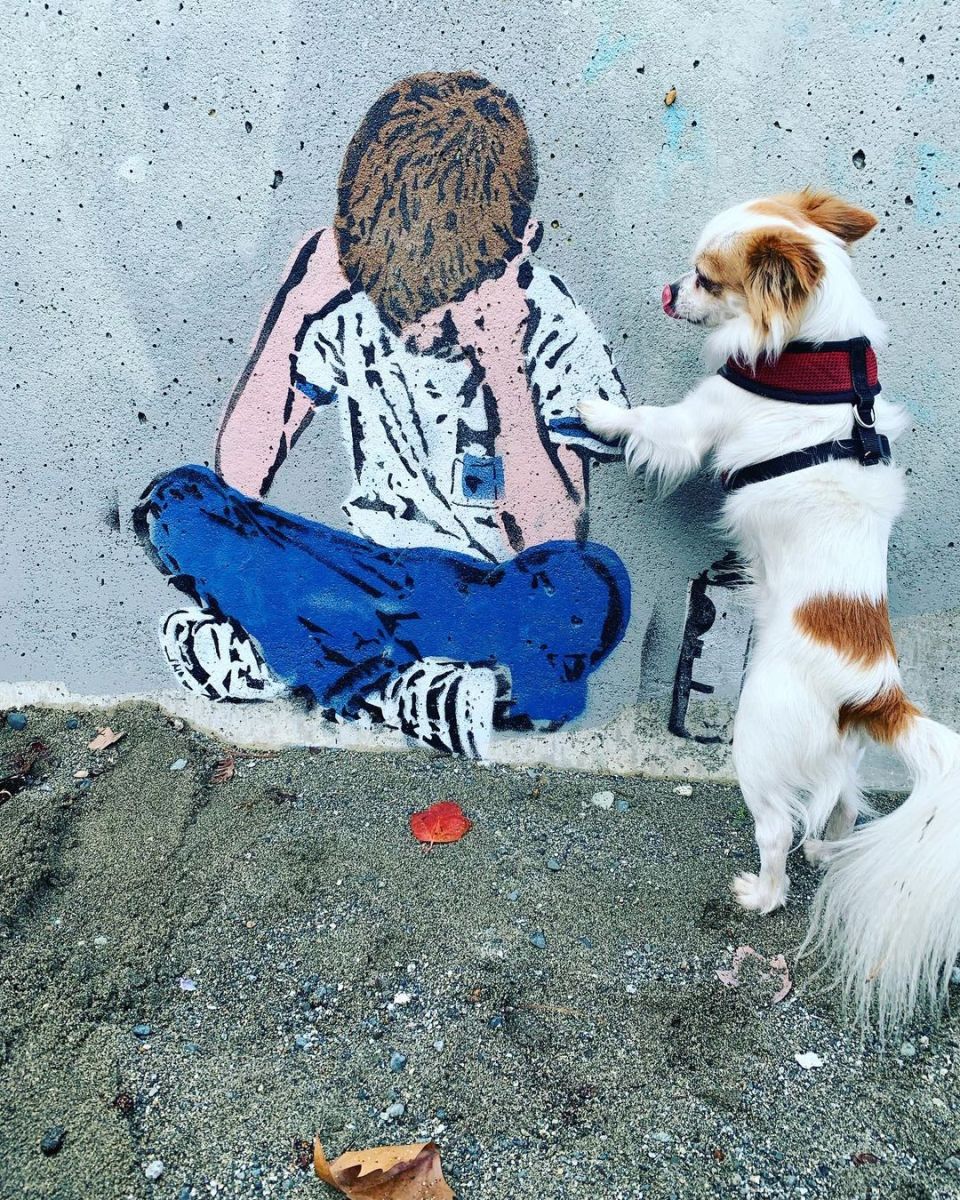
Sometimes the best art is the kind that triggers a real-world reaction. This photo captures a real-life dog reaching out to “comfort” a stencil of a sad boy on a wall. It’s a beautiful, spontaneous moment that proves empathy isn’t just for humans.Stencil by Trevor Cole in Nanaimo, British Columbia, Canada. Photo by Erika Lopez of her dog Carlos.
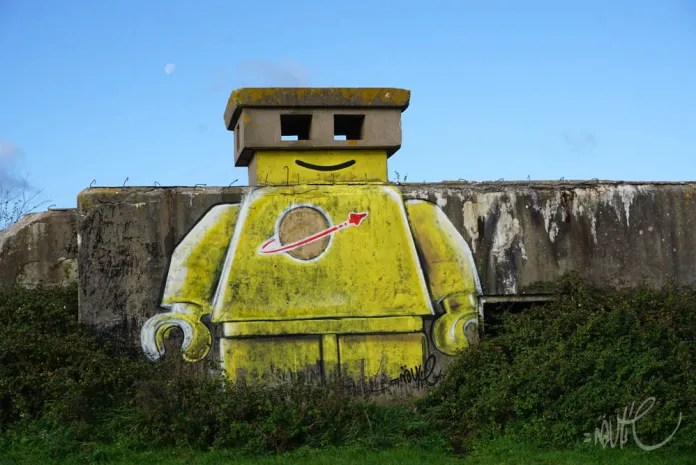
Lego Man by Näutil in Saint-Pierre-Église, France
Turning a cold, concrete bunker from WWII into a giant, smiling LEGO man is a brilliant way to reclaim a historical space. This mural by näutil creates a sharp, playful contrast between the heavy history of the structure and the simple joy of a childhood toy. It’s a perfect example of how art can change the energy of a location completely. More photos here!More: Life and Poetry By Näutil (15 Photos!)
💡 Nerd Fact: For näutil, painting bunkers is biographical, not random: he grew up in a seafaring family and started doing graffiti on coastal blockhaus walls. The LEGO skin also echoes Jan Vormann’s Dispatchwork project, which has been “repairing” damaged walls with toy bricks since 2007.
🔗 Follow näutil on Instagram
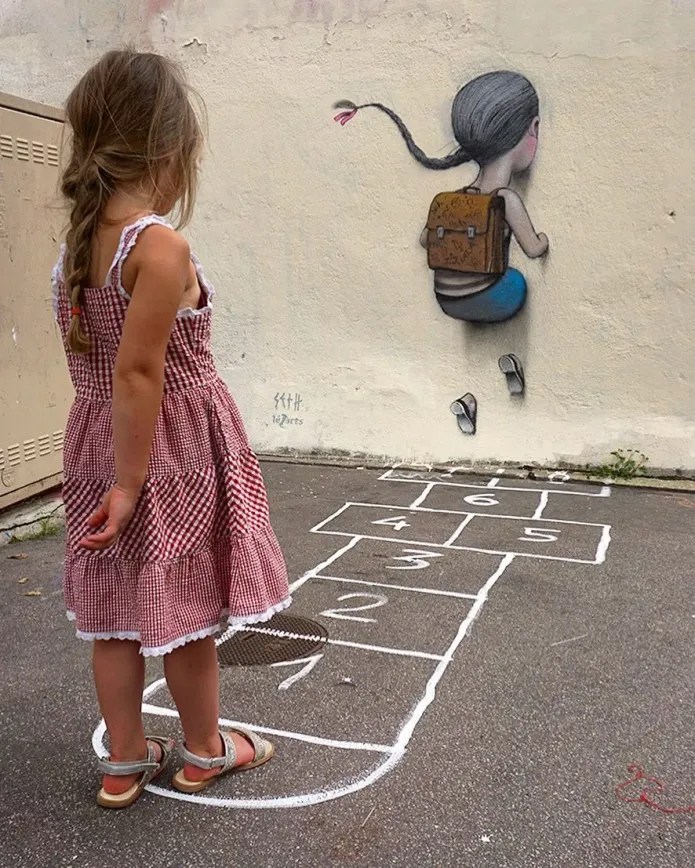
Viviane Hesitate by Seth Globepainter in Paris, France
In the La Butte-aux-cailles neighborhood, Seth Globepainter captures a perfect moment of childhood curiosity. This interaction—where a real girl stops to watch a mural of a character jumping into a wall—bridges the gap between our world and the world of imagination.More by Seth!: 34 Murals That Turn Walls Into Wonders: Seth’s Street Art Will Blow Your Mind
💡 Nerd Fact: Seth’s children often hide or turn away their faces on purpose. He says that lets viewers project themselves into the work, and since 2003 he has used childhood as a way to make murals question, dream, and look beyond rather than preach.
🔗 Follow Seth Globepainter on Instagram
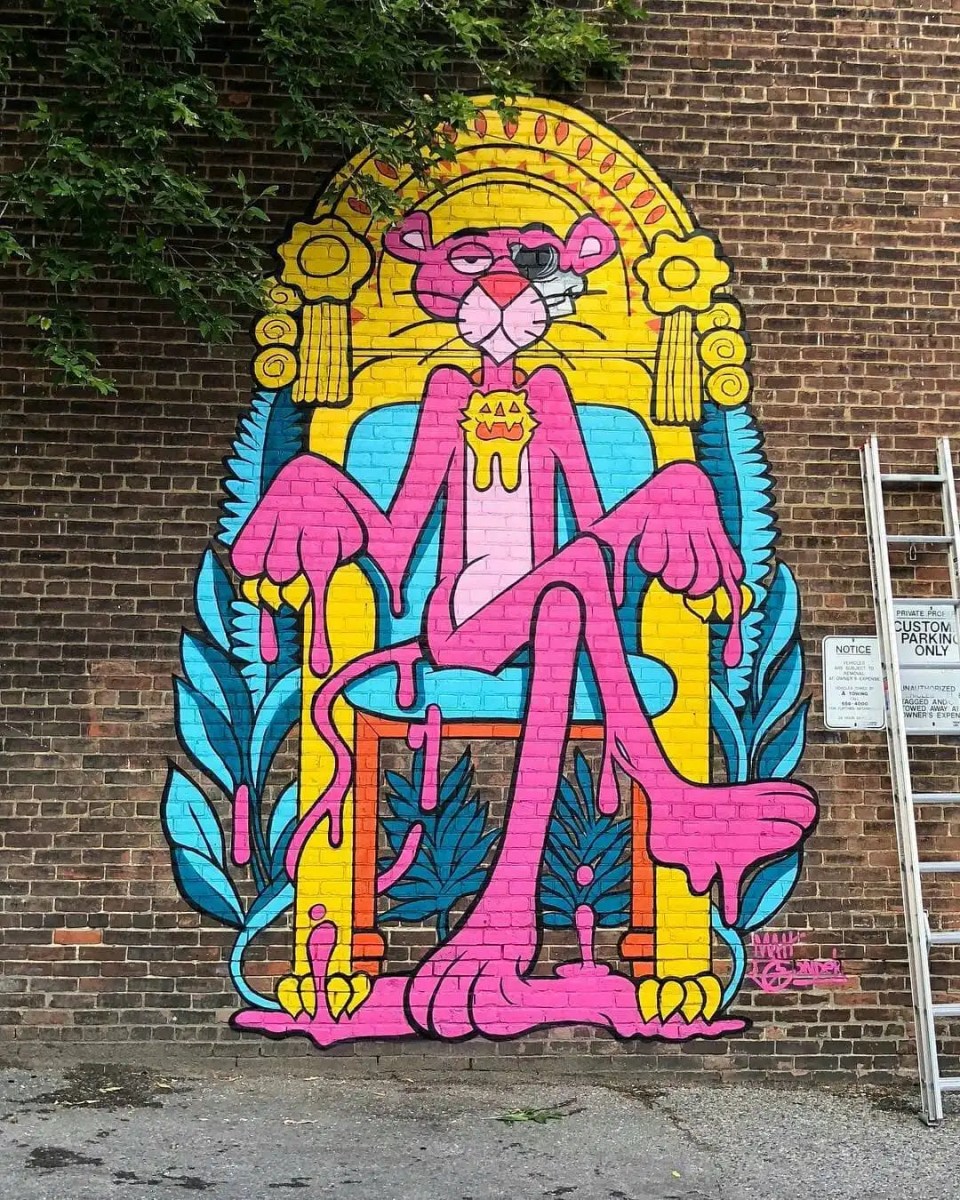
Pop Art Pink Panther by Matt Gondek in Toronto, Canada
Matt Gondek is known for his signature “deconstructed” style, where iconic pop culture figures appear to be melting. This massive mural in Toronto takes the suave Pink Panther and places him on a colorful, gritty throne. It’s a bold piece that proves even the most classic characters can be reinvented with a modern, slightly rebellious edge.💡 Nerd Fact: The Pink Panther did not begin as a standalone cartoon star at all: he was created in 1963 for the film credits and later spun off into more than 125 theatrical shorts and multiple TV shows. So handing him to a “deconstructive pop artist” like Matt Gondek is basically pop culture remixing one of its own oldest cool icons.
🔗 Follow Matt Gondek on Instagram
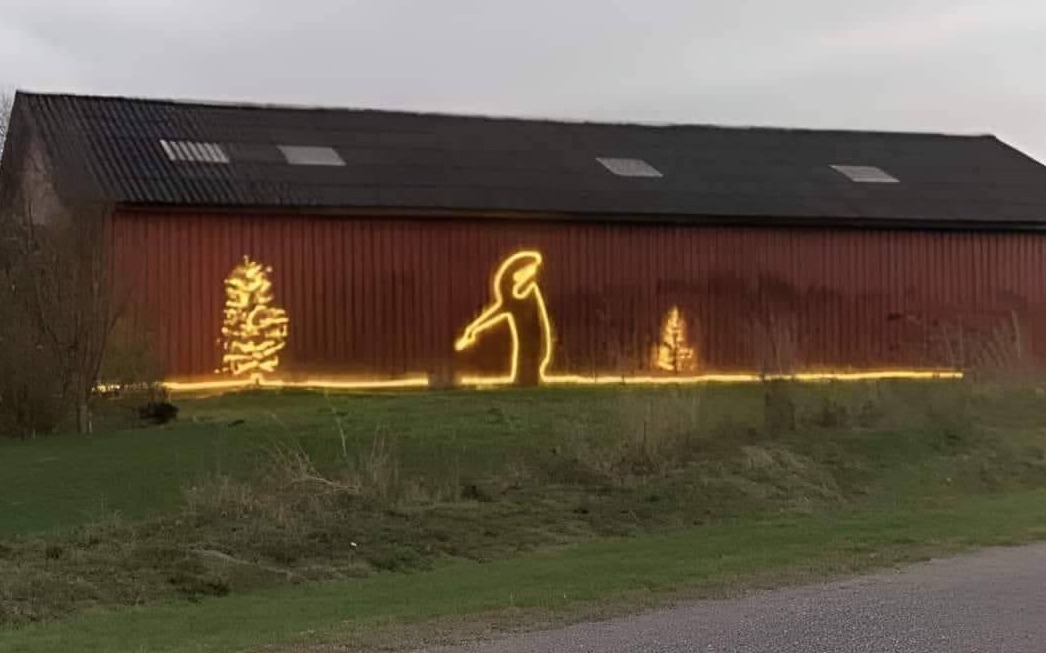
La Linea on the Barn
The classic character “La Linea,” created by Italian animator Osvaldo Cavandoli, makes a surprise appearance on the side of this rural barn. The simplicity of the single continuous line is a masterpiece of minimalist storytelling. Seeing this high-strung character “walking” across a farm building is an instant nostalgia trip for anyone who grew up with his expressive adventures.💡 Nerd Fact: La Linea is older than many people realize: the rights holder Quipos says Cavandoli introduced the character in 1969, and that single-line grouch later travelled to around fifty countries. It is basically a masterclass in how much personality one uninterrupted line can carry.
Which one is your favorite?

Wrong but Right: Art By Oakoak (9 Photos)
Content warning: Since 2006, French street artist Oakoak has been transforming urban spaces into playgrounds of humor and creativity. Hailing from Saint-Étienne, he finds inspiration in everyday city details—cracks in walls, bent poles, and street fixtures—to create playf
Since 2006, French street artist Oakoak has been transforming urban spaces into playgrounds of humor and creativity.
Hailing from Saint-Étienne, he finds inspiration in everyday city details—cracks in walls, bent poles, and street fixtures—to create playful and poetic interventions that engage with their surroundings. His work turns overlooked elements into unexpected moments of joy, often bringing a smile to those who pass by.
Oakoak’s art has been exhibited globally, with solo shows in cities such as Newcastle, Barcelona, and Chicago, and collaborations with renowned artists like Fra Biancoshock and Zabou. Despite his international reach, his work retains an intimate and spontaneous quality, making the world feel a little more fun and a lot more alive.
🔗 Follow Oakoak on Instagram
1.
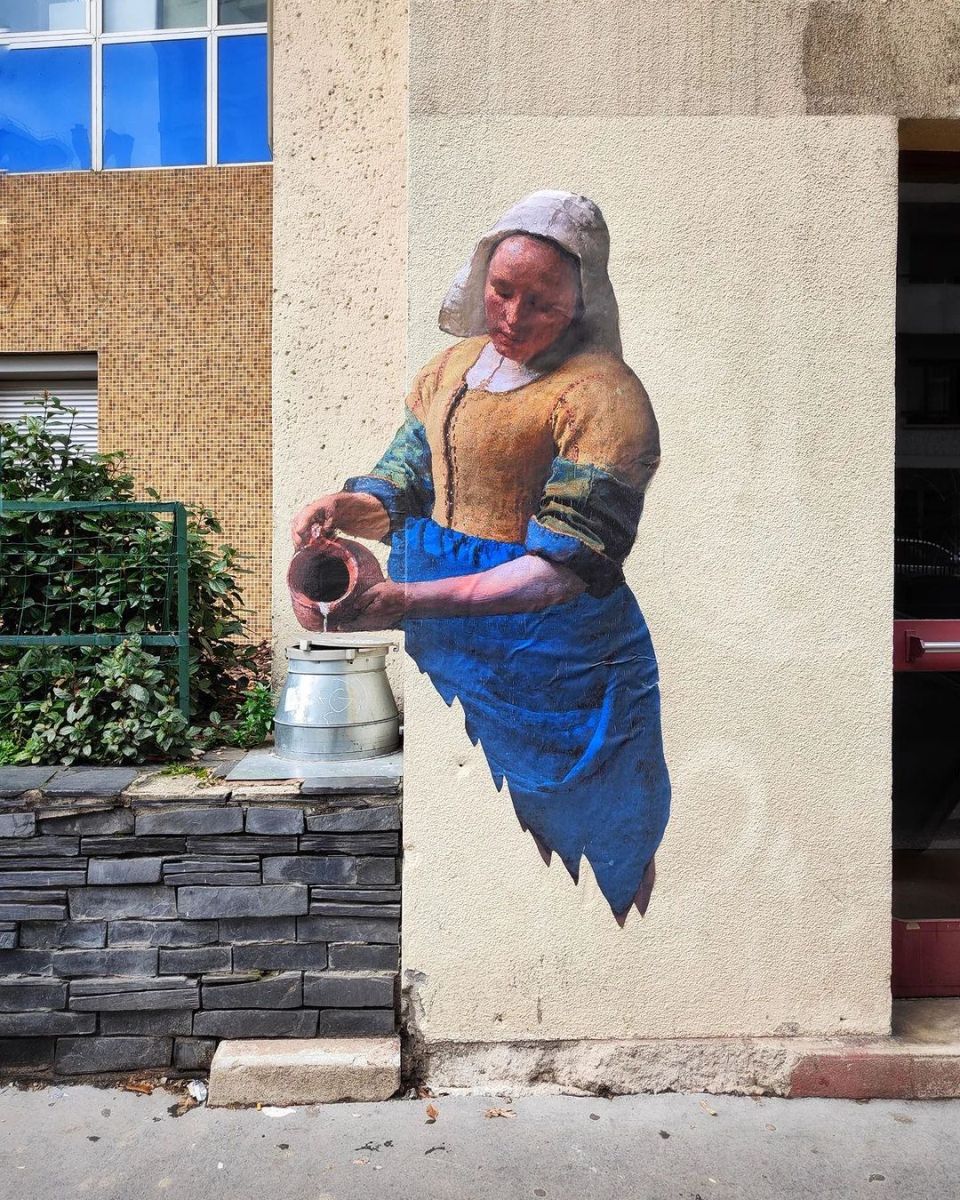
“The Milkmaid” Reimagined
Oakoak brings Johannes Vermeer’s The Milkmaid to life in an urban setting. The artwork is seamlessly integrated with a real milk can, making it appear as though the milk is pouring into it. This clever illusion merges classical art with modern street elements.
2.
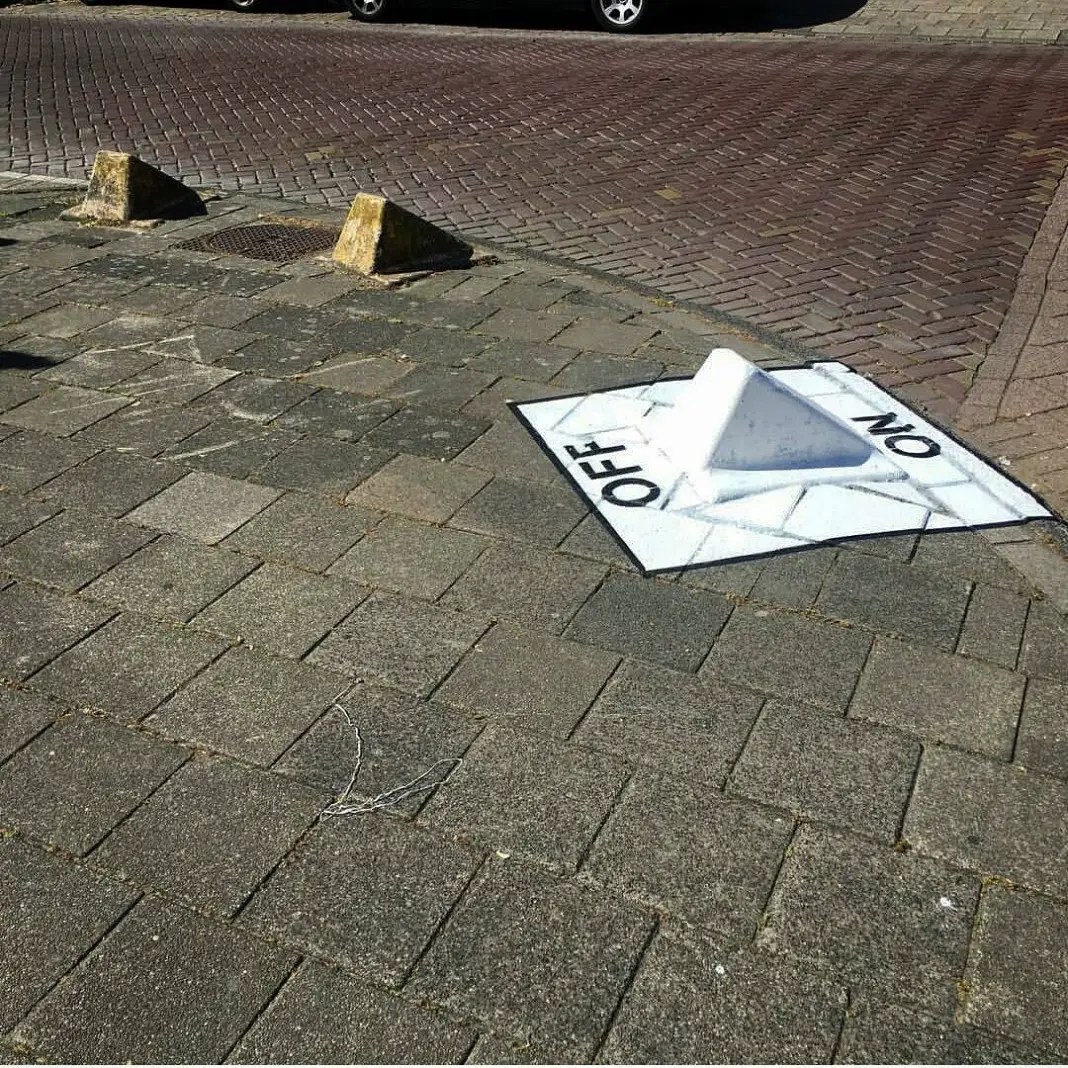
On/Off Switch
This playful street artwork creates the illusion of a massive “ON/OFF” switch embedded in the pavement. The protruding element gives the appearance of a button, making passersby want to reach down and flip it.
3.
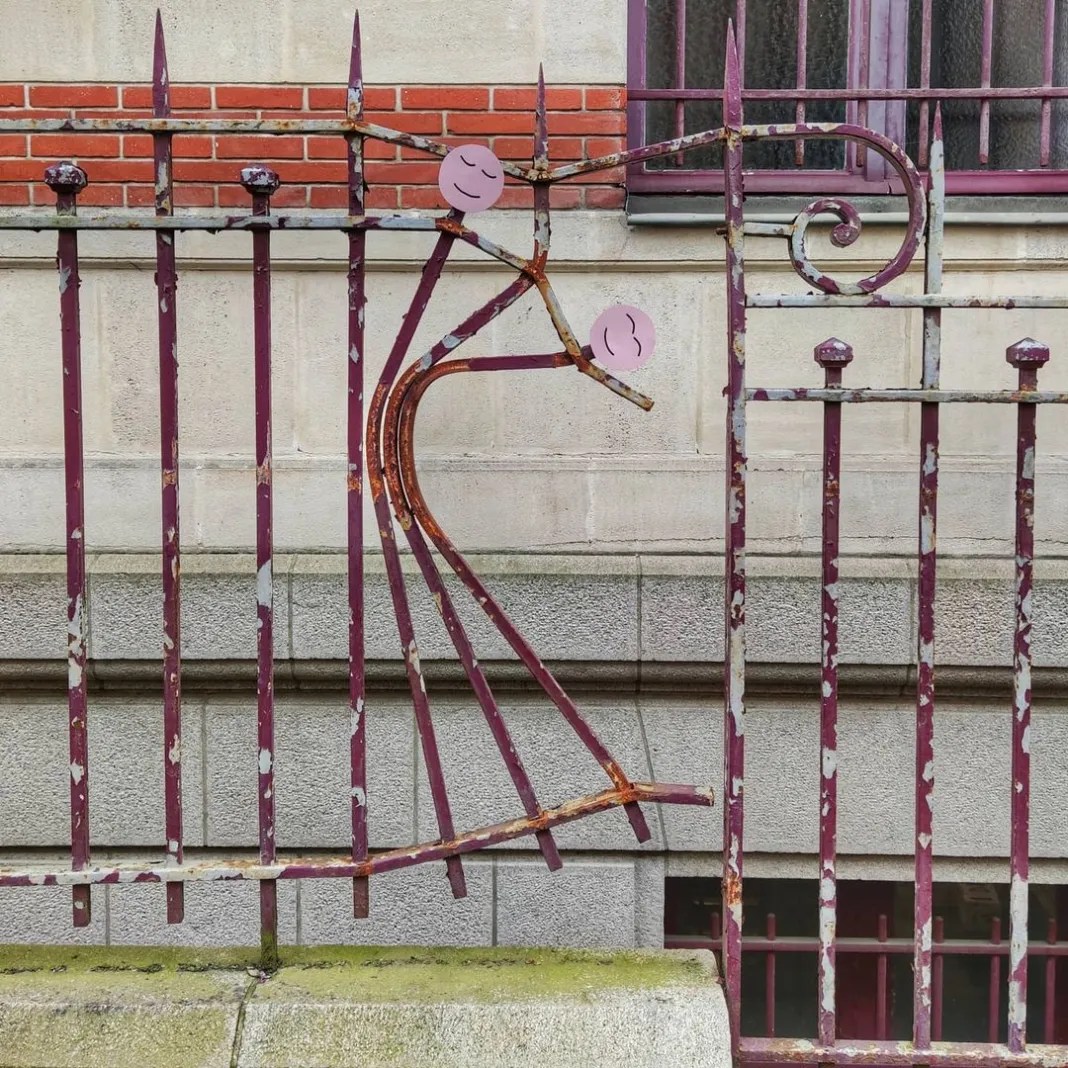
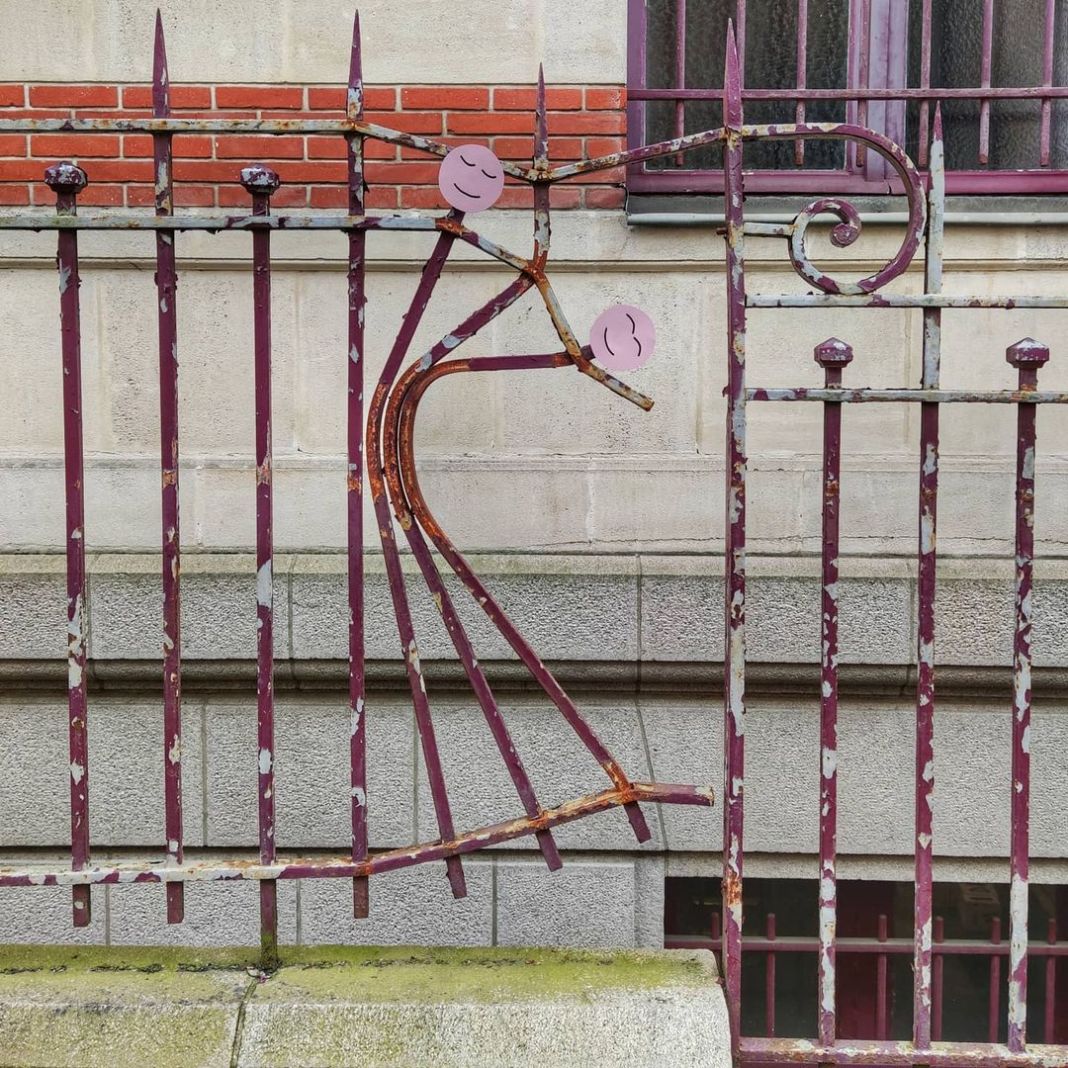
Dancing with the Fence
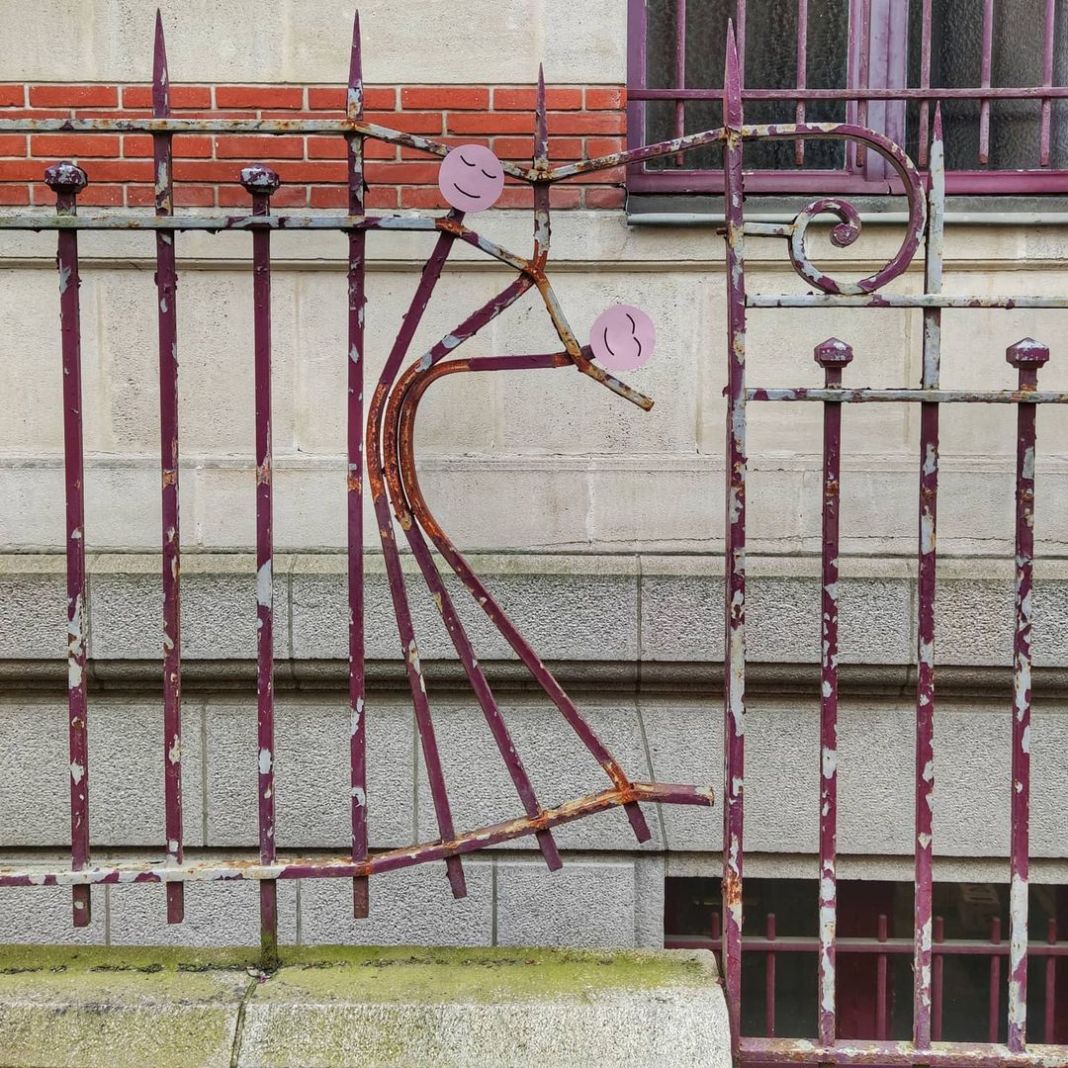
Oakoak transforms a bent section of an old metal fence into a dancing figure. By adding small, round faces to the rusted metal, the artwork gives life to what was once just urban decay, turning it into a whimsical moment of movement.
4.
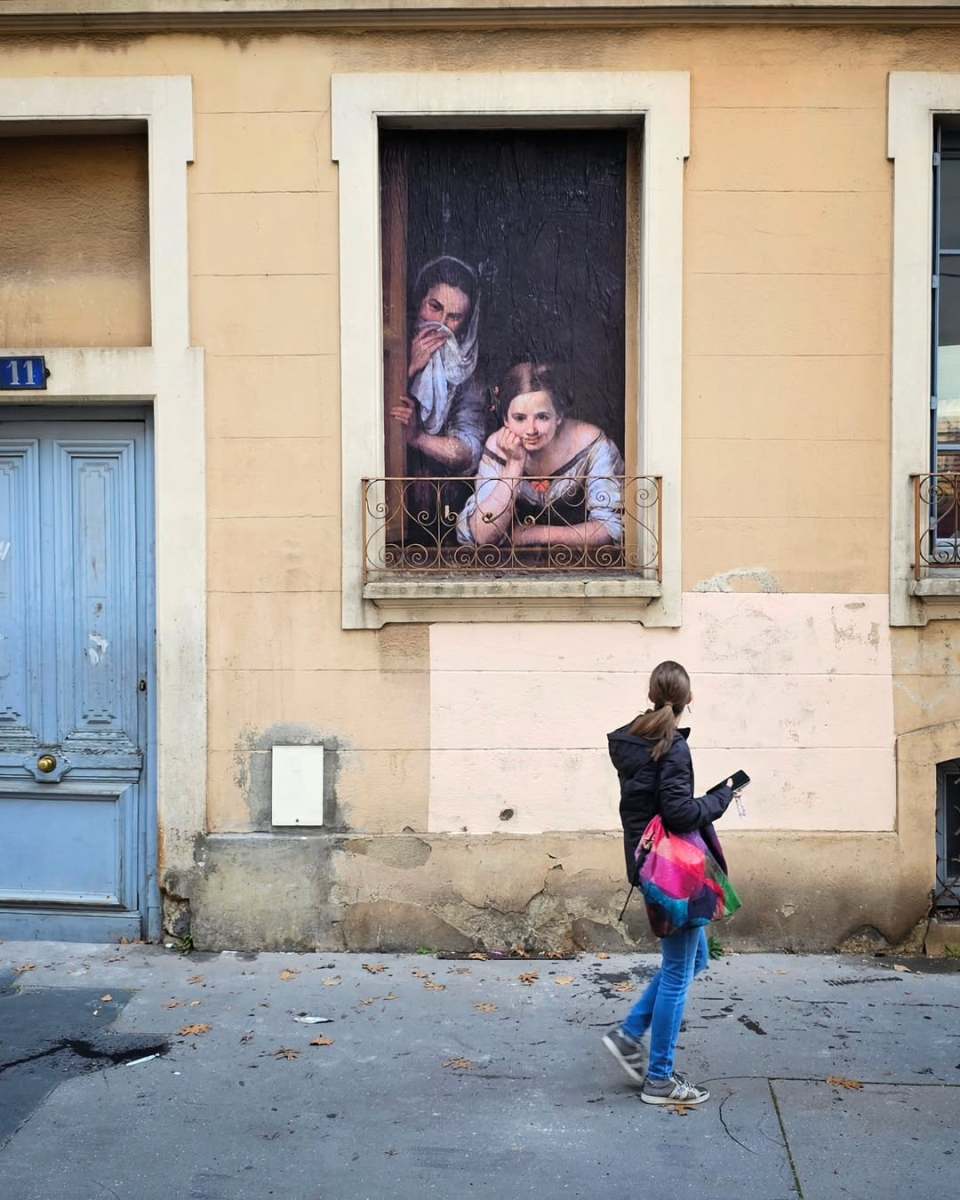
Balcony Illusion
In this creative piece, Oakoak uses a real iron balcony and extends it with a painted silhouette of a person standing on it. The clever placement of the figure makes it appear as if someone is leaning casually on the railing, blending reality and illusion.
5.
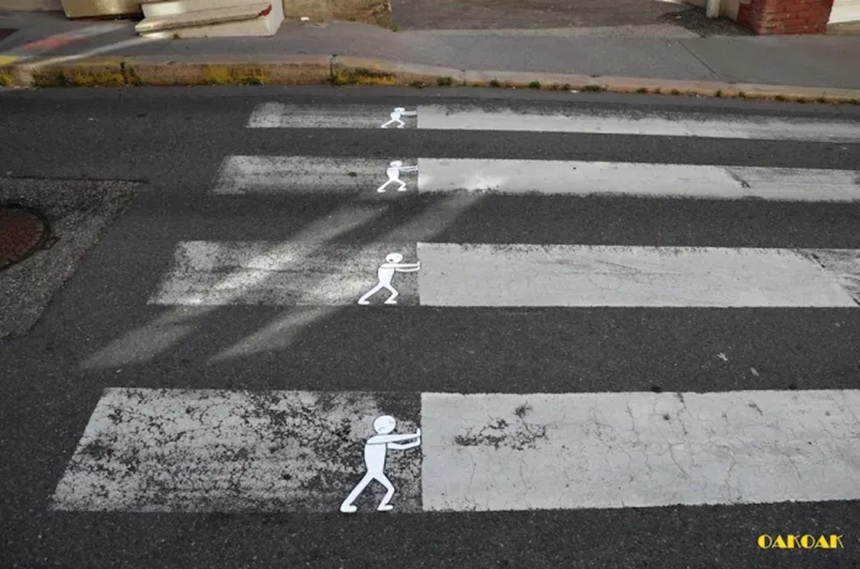
Pushing the Crosswalk – France
On a worn-out pedestrian crossing, small painted stick figures appear to be pushing the white stripes, playfully engaging with the faded lines as if they are part of a larger urban illusion. This intervention adds humor to a commonly overlooked street feature.
6.
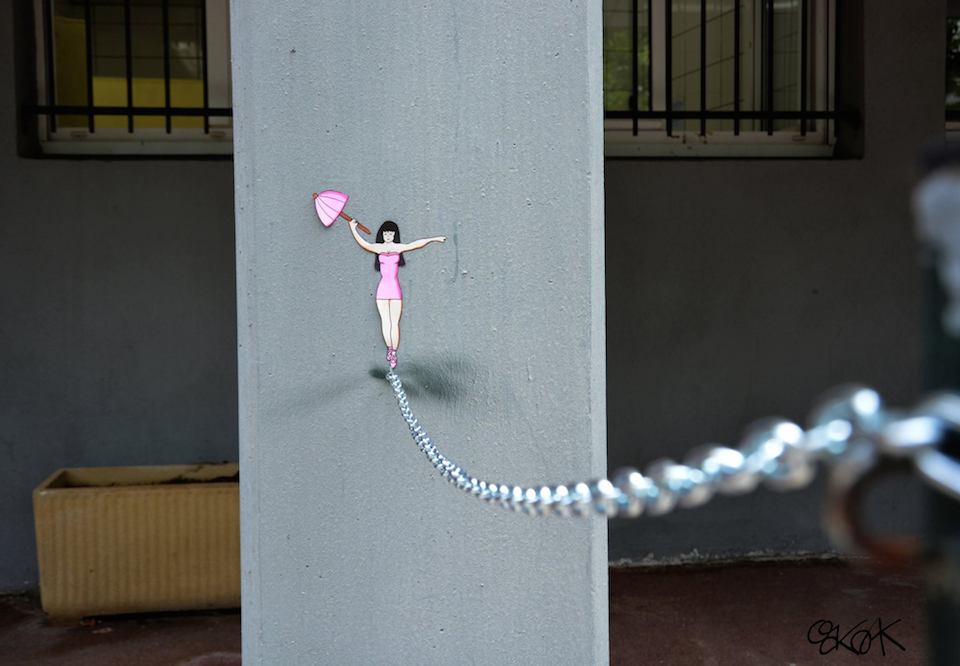
Tightrope Walker
A miniature figure in a pink dress balances on a real metal chain, holding an umbrella for support. The artwork transforms an ordinary urban element into a stage for a daring tightrope act.
7.
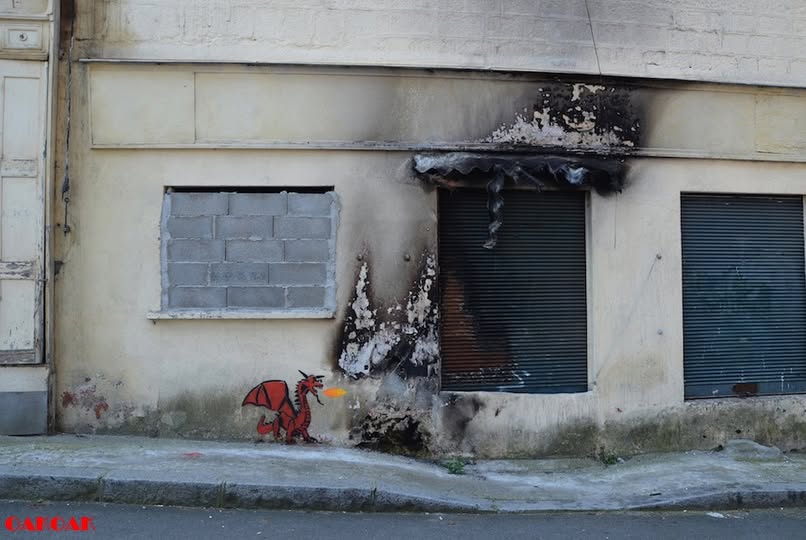
The Fire-Breathing Dragon
In this witty urban piece, Oakoak uses fire damage on a building’s exterior to create a scene where a small red dragon appears to be the cause of the scorched wall, breathing flames upward.
8.
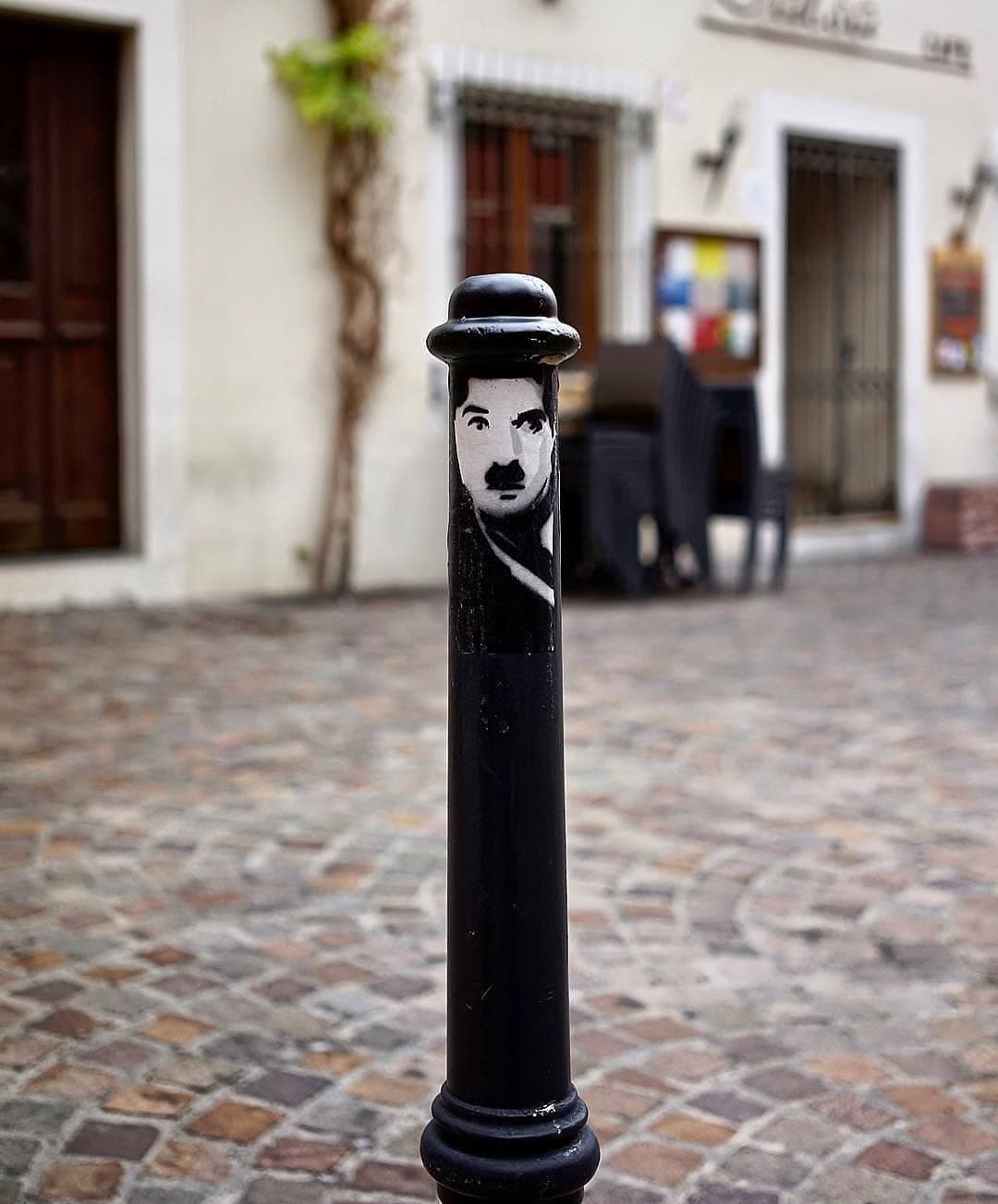
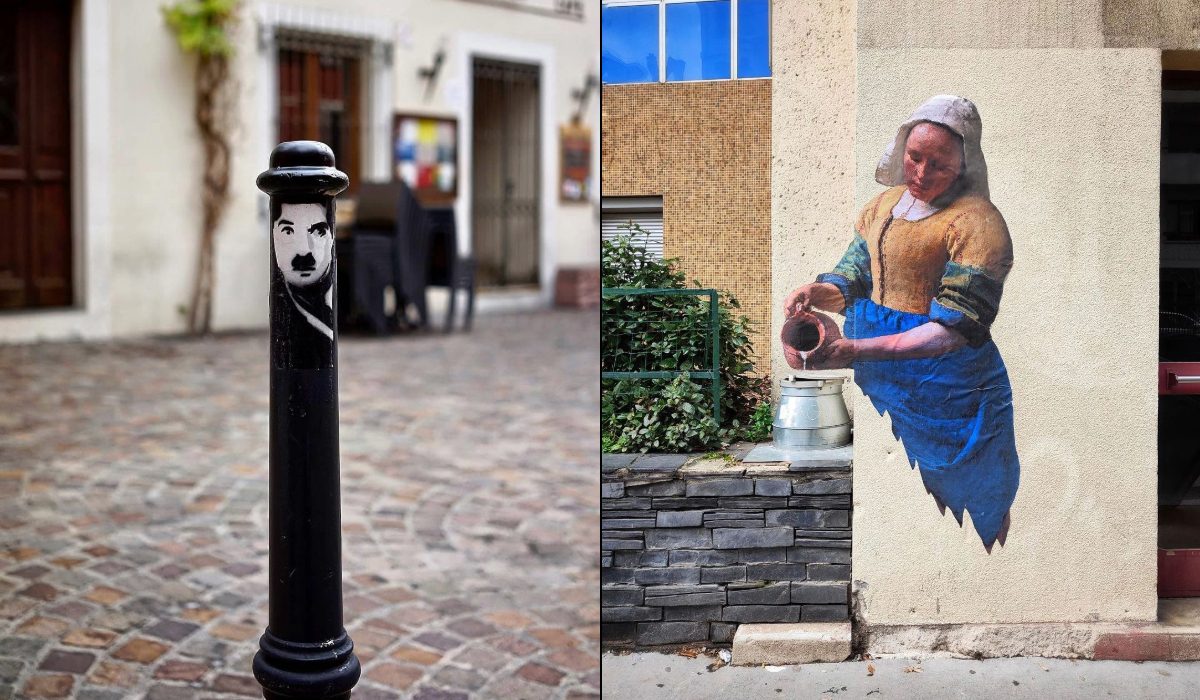
Charlie Chaplin Bollard
Oakoak turns a simple black bollard into a tribute to Charlie Chaplin. By adding the iconic face and hat, the mundane street fixture is transformed into a recognizable pop culture figure.
9.
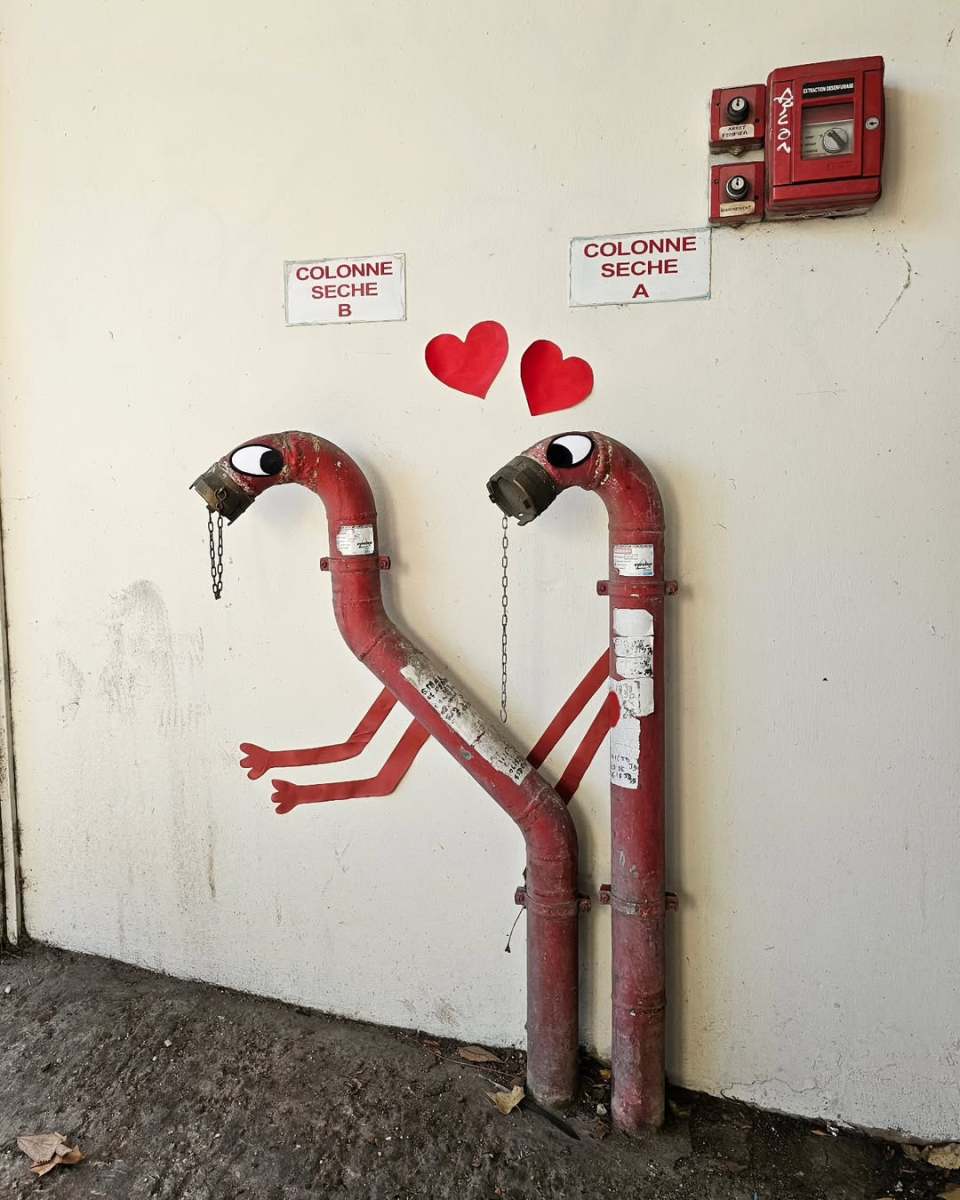
Hydrant Lovebirds
In this playful and romantic intervention, Oakoak transforms two red fire hydrant pipes into a pair of lovebirds gazing at each other. With painted eyes, arms, and floating hearts above them, the pipes appear to embrace, turning an ordinary urban feature into a charming street scene.
More by Oakoak: From Homer Simpson to Obelix: Oakoak’s Genius Street Art (10 Photos)
Which is your favorite?
Lovely by Oakoak (10 Photos)
Since 2006, OAKOAK has had streets, walls, sidewalks and roads as its playground. Originally from Saint Etienne, he sticks his drawings in each of the places he crosses in order to create a smile in the pedestrian at the bend of a street where he does not expect it.
His approach consists of diverting urban elements, playing with flaws that at first glance seem of no particular interest, such as cracks in a wall. He thus adds his own vision, his own references which often relate to the geek universe. A way of imagining the urban space in a more poetic way.From playful interactions with crosswalks to whimsical depictions of beloved cartoon characters like Homer Simpson and Obelix, Oakoak’s work brings a fresh perspective to the streets.
🔗 Follow OAKOAK on Instagram
1.
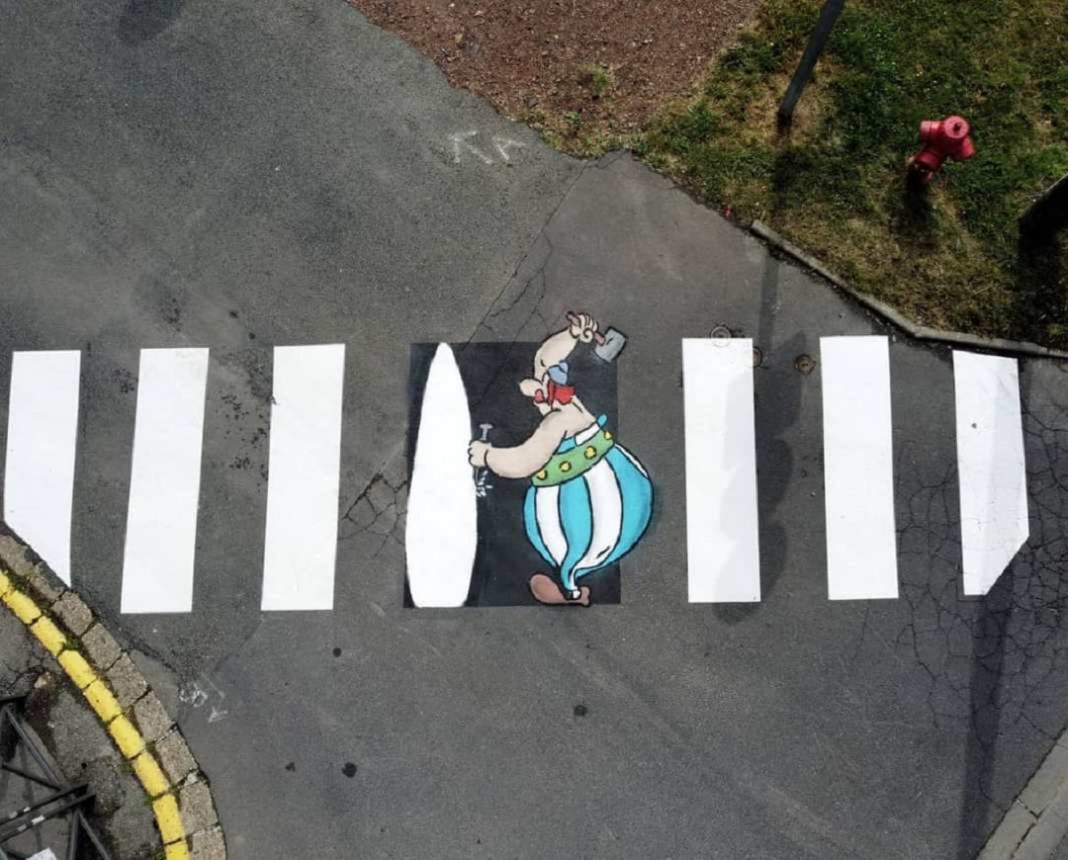
Oakoak transforms a pedestrian crossing into a playful scene with Obelix carrying a menhir, blending urban infrastructure with comic creativity.
2.
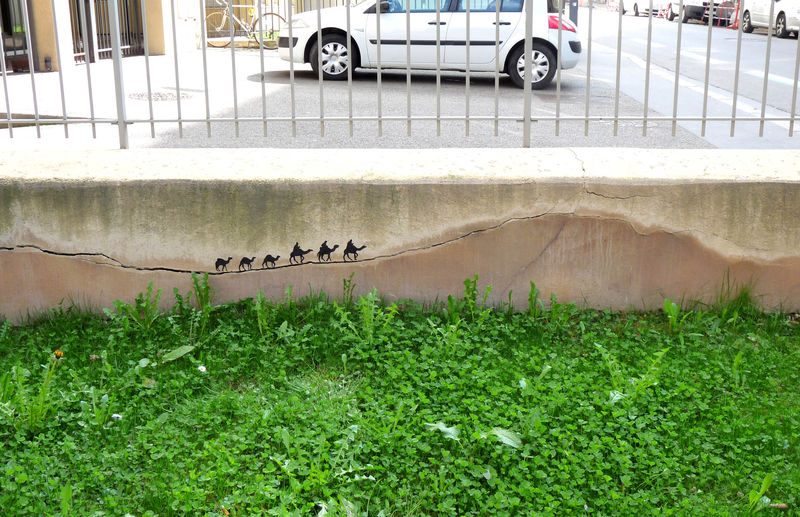
Oakoak turns a natural crack in a concrete wall into a desert path for a caravan of camels.
3.
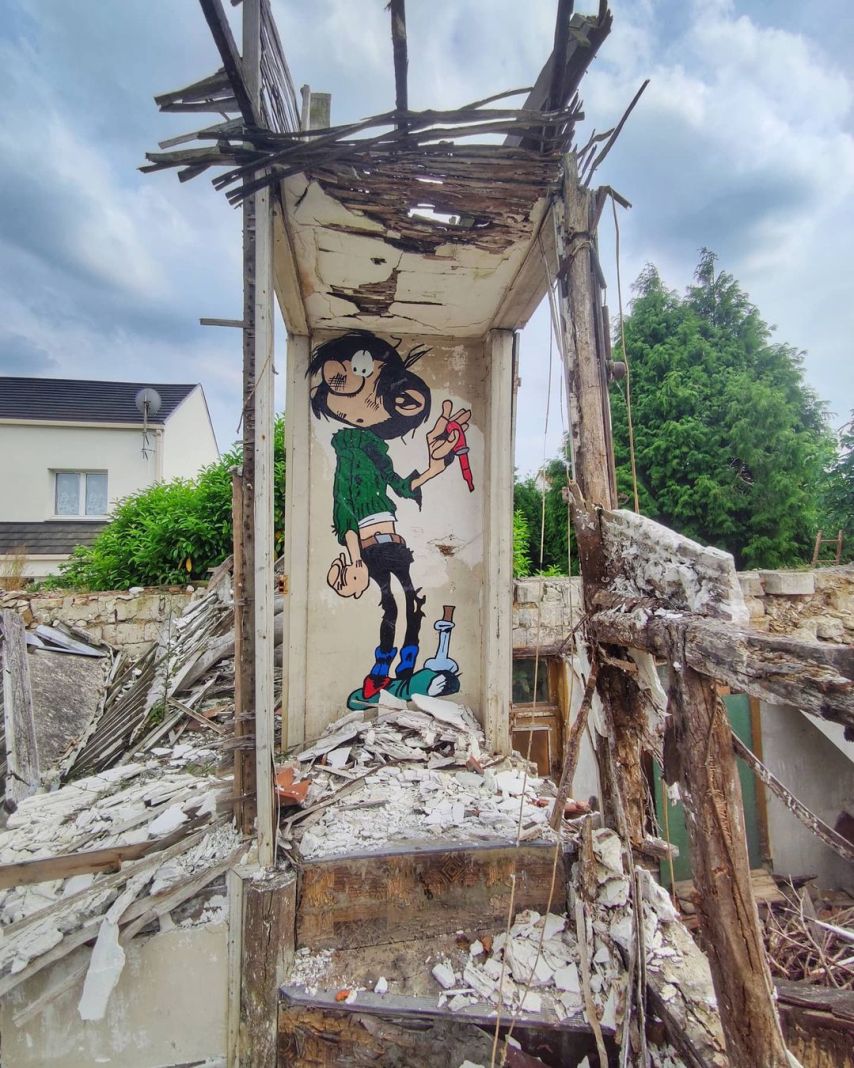
Gaston Lagaffe, painted by Oakoak, brings humor and life to the remains of a crumbling building.
4.
This crosswalk becomes a quirky playground in Oakoak’s hands, featuring cartoon faces and a 3D ghost.
5.
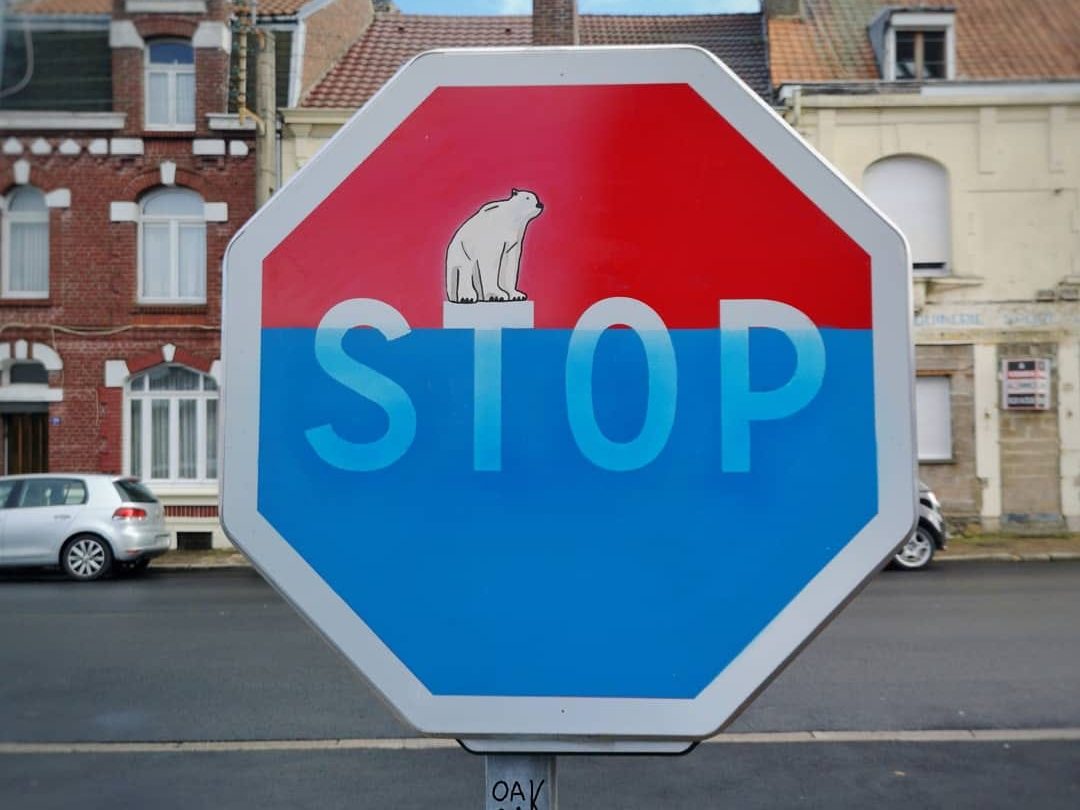
Oakoak uses a stop sign to highlight climate change with a polar bear stranded on melting ice.
6.
Oakoak transforms a bent metal fence into a joyful dancing figure.
7.
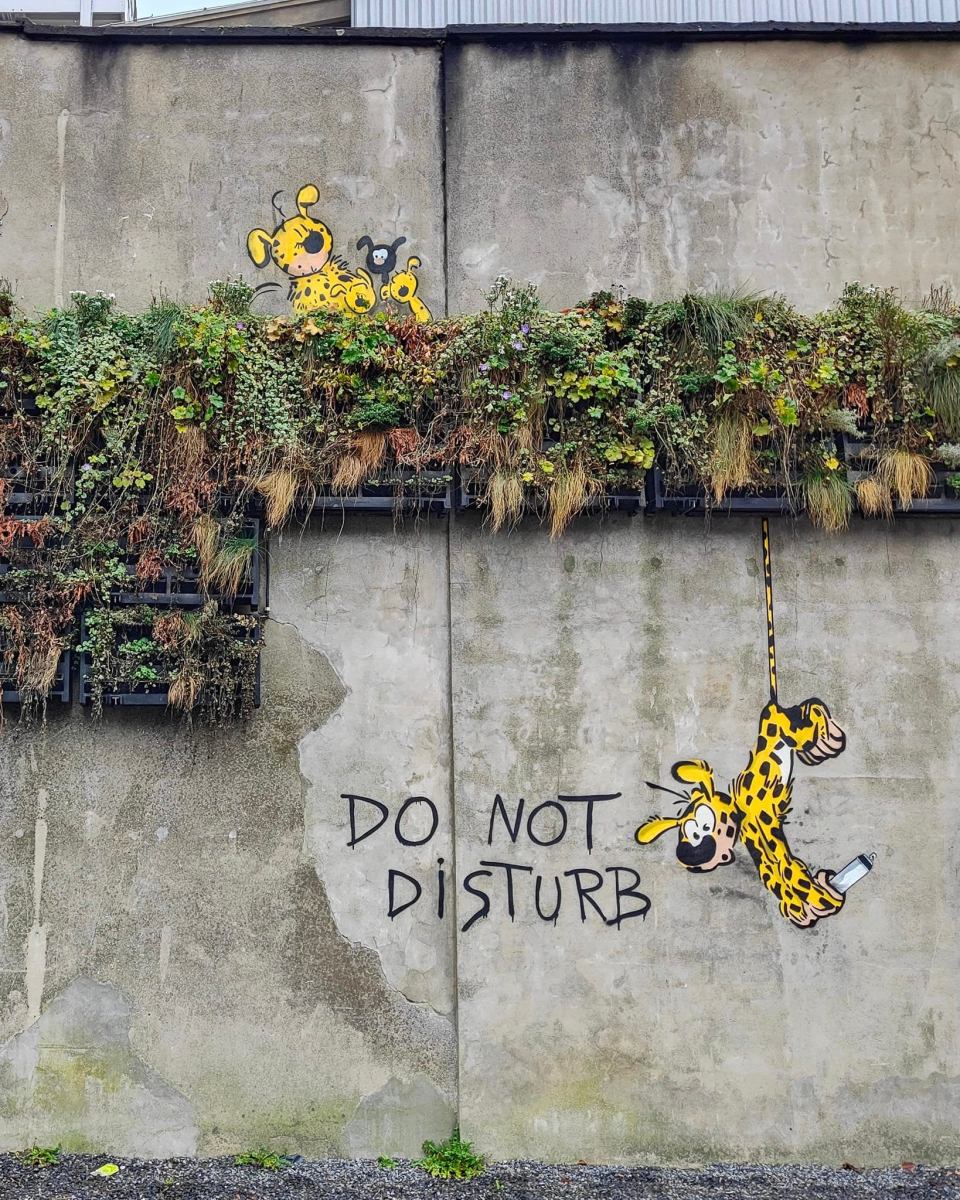
Marsupilami comes to life in Oakoak’s piece, swinging and peeking from an overgrown planter on a concrete wall.
8.
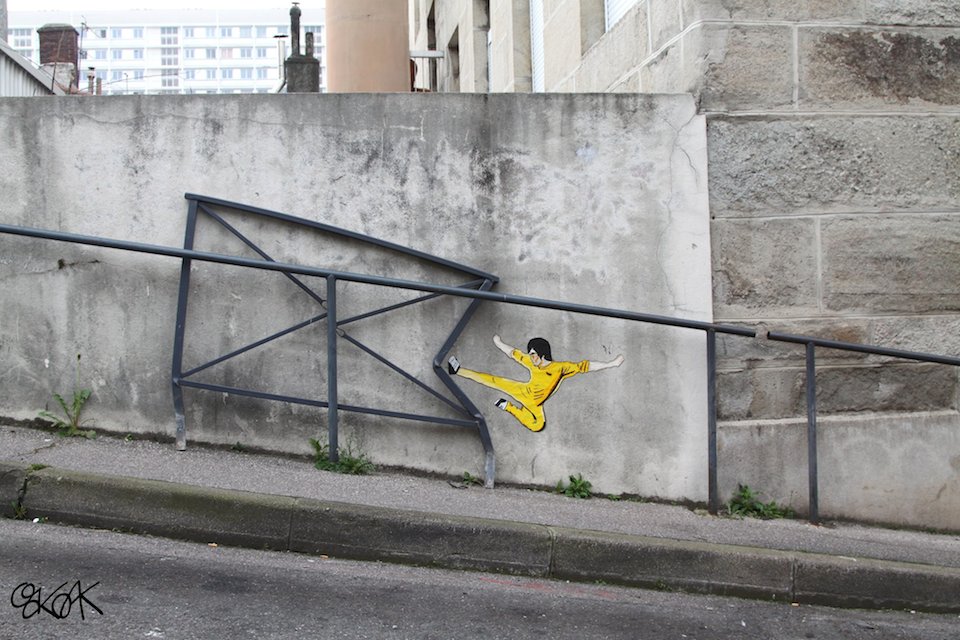
Oakoak incorporates a bent railing into a dynamic scene of Bruce Lee delivering a powerful kick.
9.
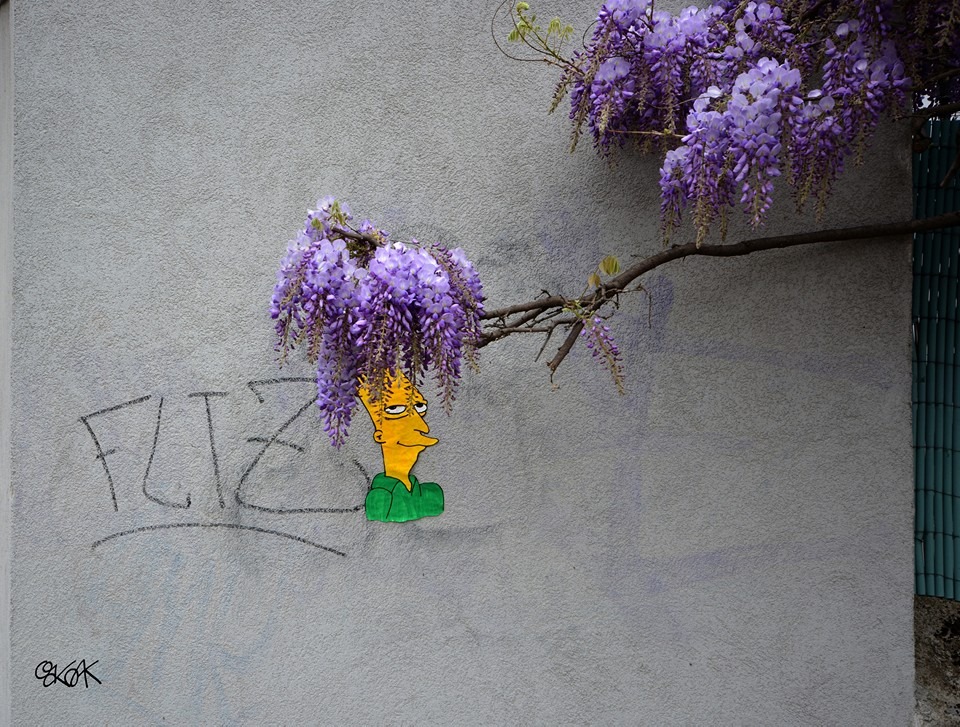
Oakoak humorously combines wisteria flowers with a painted Sideshow Bob.
10.
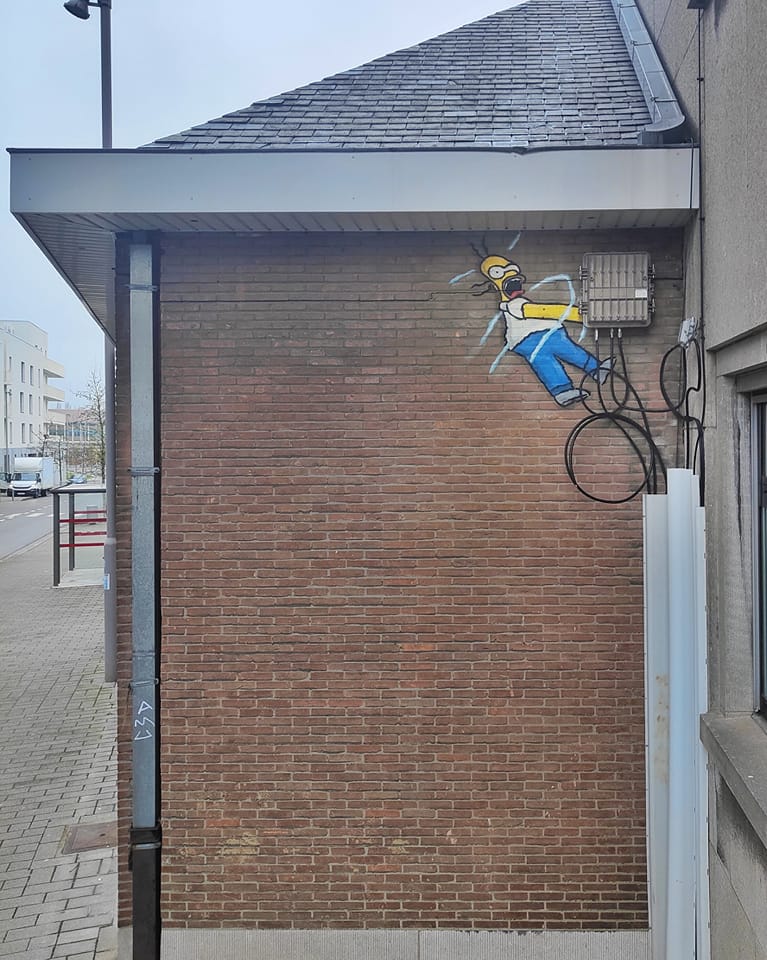
Homer Simpson hilariously interacts with real electrical wires.
OAKOAK: For me street art has to use urban elements. It’s the most important thing for street art. Using and playing with things you find in the street.
More: Wrong but Right: Art By Oakoak (9 Photos)
Which one is your favorite?
oakoak (@oakoak_street_art) • Instagram photos and videos
124K Followers, 354 Following, 882 Posts - See Instagram photos and videos from oakoak (@oakoak_street_art)www.instagram.com