Search
Items tagged with: technologicalunemployment
"The rise of industrial software".
Should we think of ourselves as entering an "industrial" era of software? The term seems odd since I've been hearing the term "software industry" my whole life (it seems like). But Chris Loy explains what he means by this:
"For most of its history, software has been closer to craft than manufacture: costly, slow, and dominated by the need for skills and experience. AI coding is changing that, by making available paths of production which are cheaper, faster, and increasingly disconnected from the expertise of humans."
"Traditionally, software has been expensive to produce, with expense driven largely by the labour costs of a highly skilled and specialised workforce. This workforce has also constituted a bottleneck for the possible scale of production, making software a valuable commodity to produce effectively."
"Industrialisation of production, in any field, seeks to address both of these limitations at once, by using automation of processes to reduce the reliance on human labour, both lowering costs and also allowing greater scale and elasticity of production. Such changes relegate the human role to oversight, quality control, and optimisation of the industrial process."
"The first order effect of this change is a disruption in the supply chain of high quality, working products. Labour is disintermediated, barriers to entry are lowered, competition rises, and rate of change accelerates."
"A second order effect of such industrialisation is to enable additional ways to produce low quality, low cost products at high scale. Examples from other fields include: industrialisation of printing processes led to paperback genre fiction, industrialisation of agriculture led to ultraprocessed junk food, and industrialisation of digital image sensors led to user-generated video."
"In the case of software, the industrialisation of production is giving rise to a new class of software artefact, which we might term disposable software: software created with no durable expectation of ownership, maintenance, or long-term understanding."
"In the early twentieth century, scientific advances were expected to eradicate hunger and usher in an era of abundant, nourishing food. Instead, hunger and famine persist. In 2025, there are 318 million people experiencing acute hunger, even in countries with an agricultural surplus. Meanwhile, in the wealthiest nations, industrial food systems have produced abundance of a different kind: the United States has an adult obesity rate of 40% and a growing diabetes crisis. Ultraprocessed foods are widely recognised as harmful, yet the overwhelming majority of Americans consume them each day."
"Industrial systems reliably create economic pressure toward excess, low quality goods."
The rise of industrial software
#solidstatelife #ai #genai #codingai #technologicalunemployment
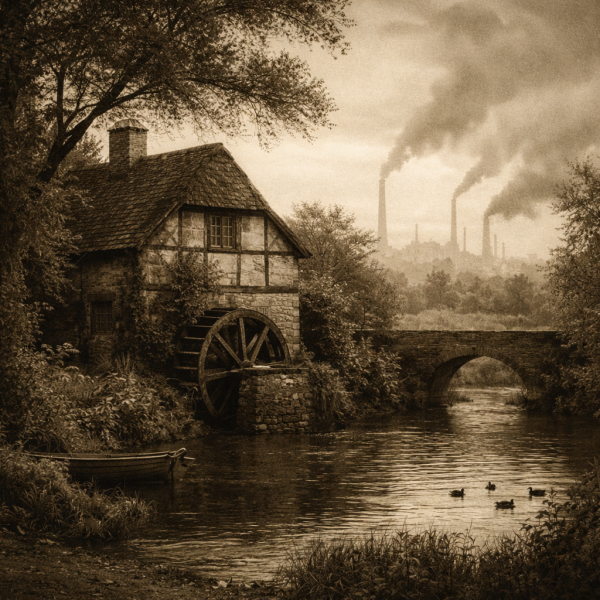
The rise of industrial software | Chris Loy
> _**Industrial**_ > > _adj. (sense 3a)_ > > Of or relating to productive work, trade, or manufacture, esp.chrisloy.dev
