Search
Items tagged with: urbanNatureArt
Art That Grows From the Earth (9 Photos)
Content warning: Which one is your favorite?
There is a unique kind of magic that happens when an artist stops trying to compete with nature and starts collaborating with it. From quiet forest goddesses to surreal illusions that appear to “pinch” the very skin of the world, these sculptures don’t just sit on the landscape—they emerge from it.
In this collection, we explore works across the globe, from the lush gardens of England to the parks of Illinois and the mountains of Switzerland. Some hold living trees gently in their palms, while others transform with the seasons, disappearing under snow only to bloom again in the spring. All of them invite us to see the earth not just as a setting, but as a living, breathing canvas.
More: 8 Inspiring Sculptures Seamlessly Integrated with Nature
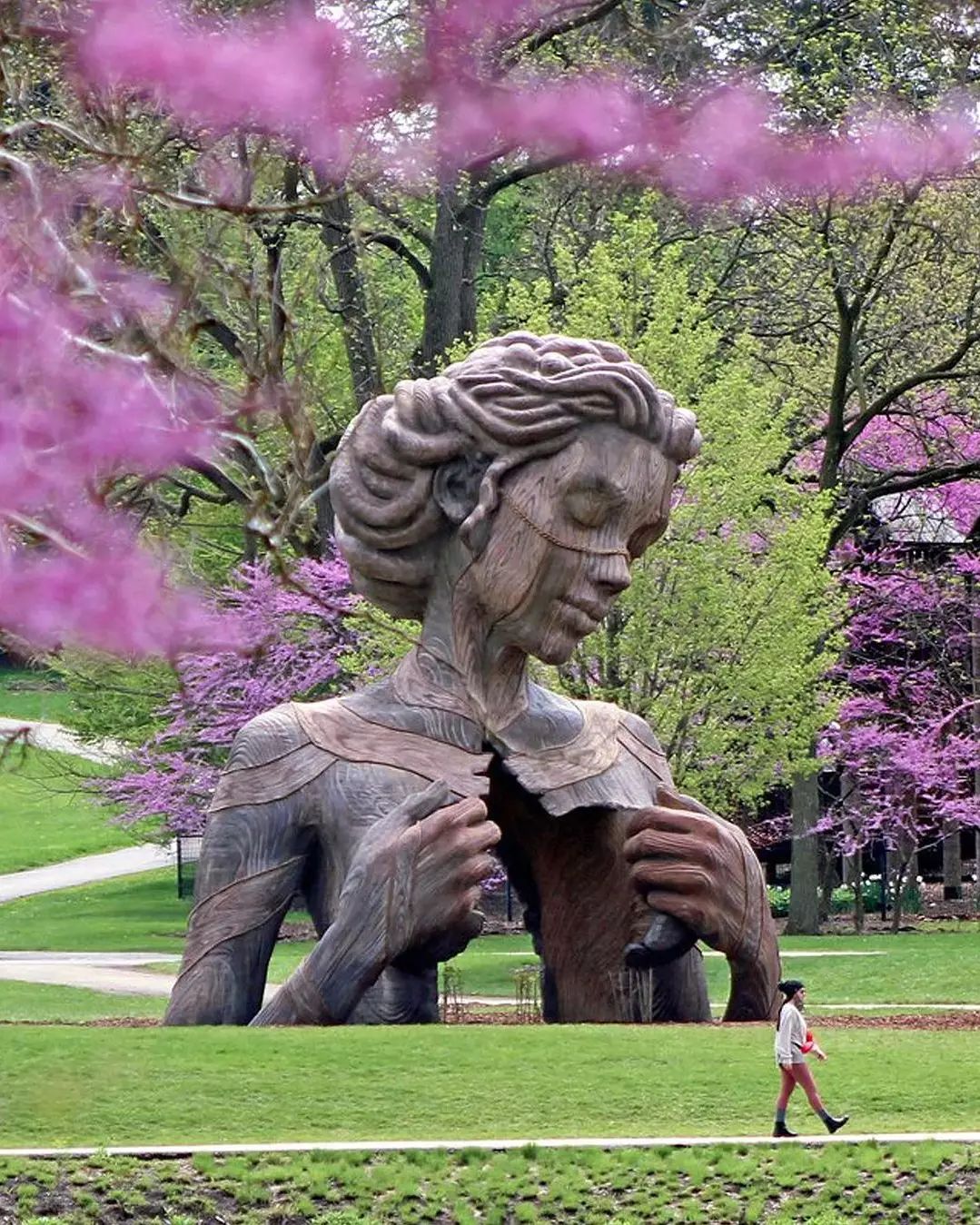
1. Hallow — Daniel Popper (Lisle, Illinois, USA)
Daniel Popper is known for his monumental figures, but “Hallow” feels particularly intimate despite its scale. This wooden figure stands with her chest pulled open, creating a literal doorway for visitors to step through. Surrounded by blooming pink trees, the sculpture suggests that the path to nature begins by opening our own hearts to it.
More: 5 Photos of Sculpture “Hallow” By Daniel Popper
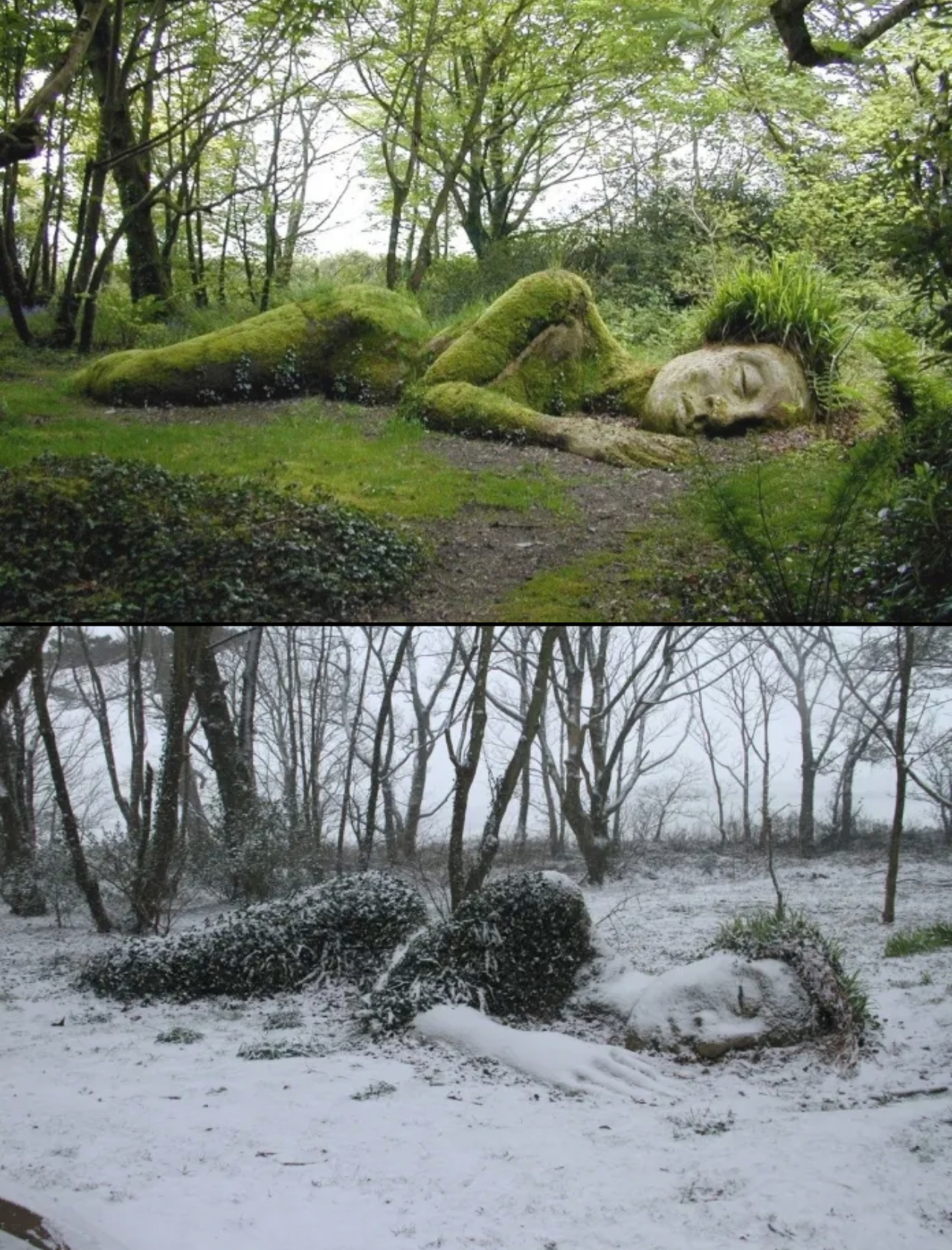
2. Mud Maid — Sue Hill (Cornwall, UK)
Resting in The Lost Gardens of Heligan, the Mud Maid is a “living” sculpture in the truest sense. Her “hair” and “skin” are made of seasonal plants and moss, meaning she changes her appearance throughout the year. She is a reminder that art in nature is never static; it grows, withers, and waits for the thaw just like the rest of the forest.
More: Mud Maid – Living sculpture by Sue and Pete Hill (5 photos and video)
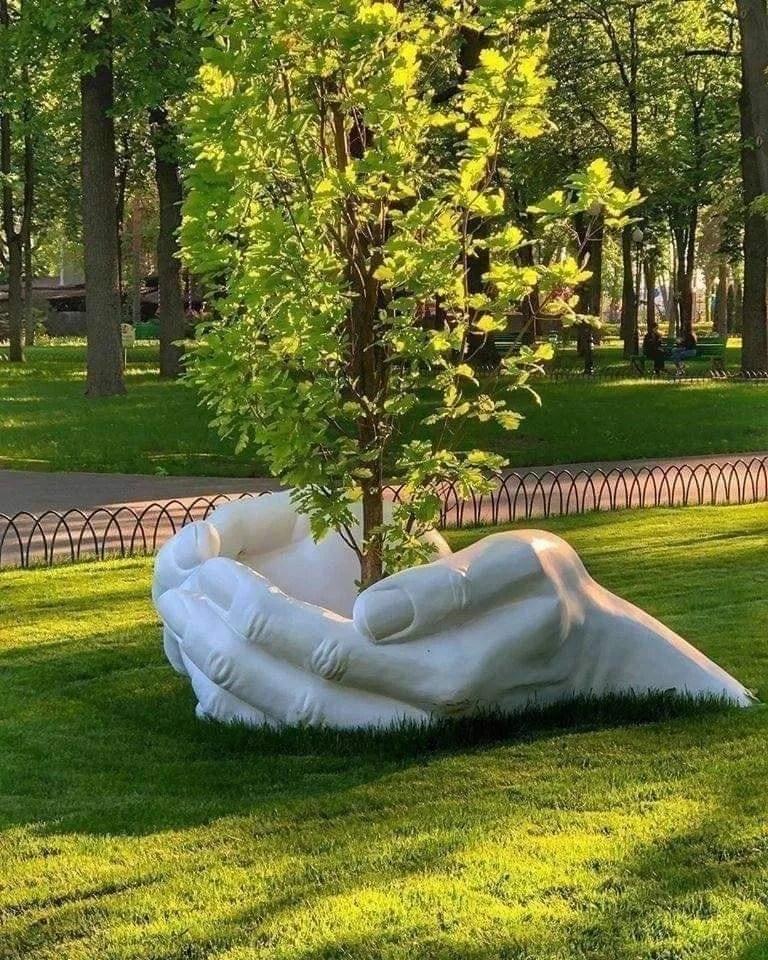
3. Give — Lorenzo Quinn
Lorenzo Quinn’s work often focuses on the human hand as a tool of both creation and destruction. In “Give,” two massive, pristine white hands emerge from the earth to cradle a single living tree. It’s a powerful visual metaphor for our responsibility as stewards of the environment—holding life with care rather than a clenched fist.
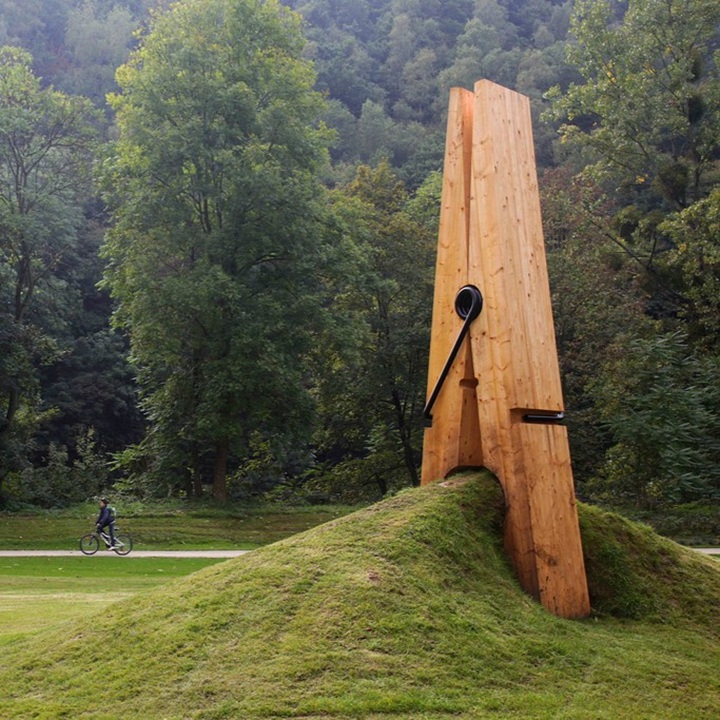
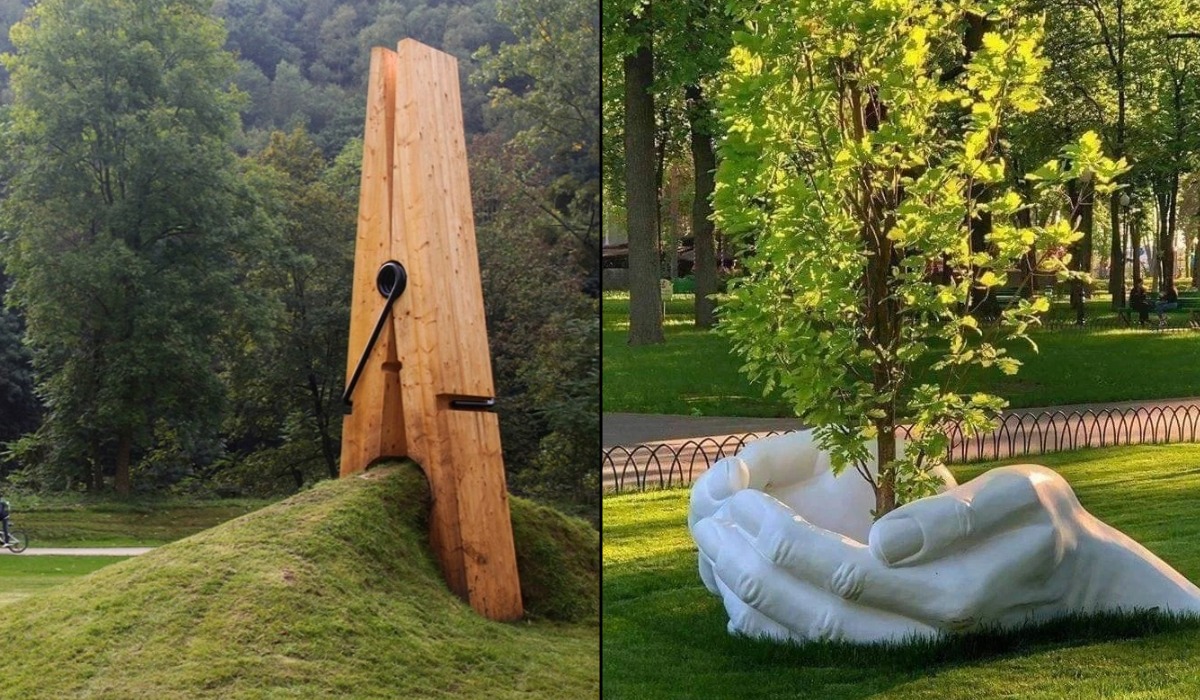
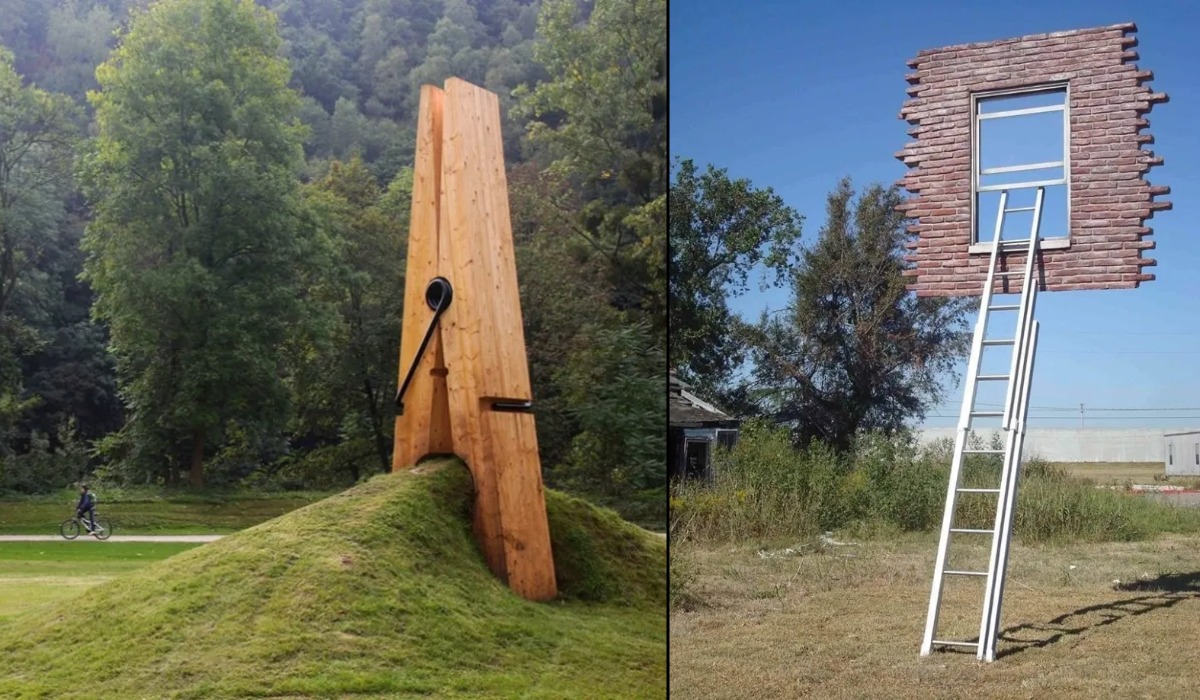
4. Clothespin — Mehmet Ali Uysal (Chaudfontaine, Belgium)
Art doesn’t always have to be solemn; sometimes it’s a giant joke played on the landscape. Mehmet Ali Uysal’s “Clothespin” makes the heavy, solid earth look as light as a piece of laundry. By “pinching” a mound of grass, the sculpture transforms a public park into a surreal, tactile playground.
🔗 Follow Mehmet Ali Uysal on Instagram
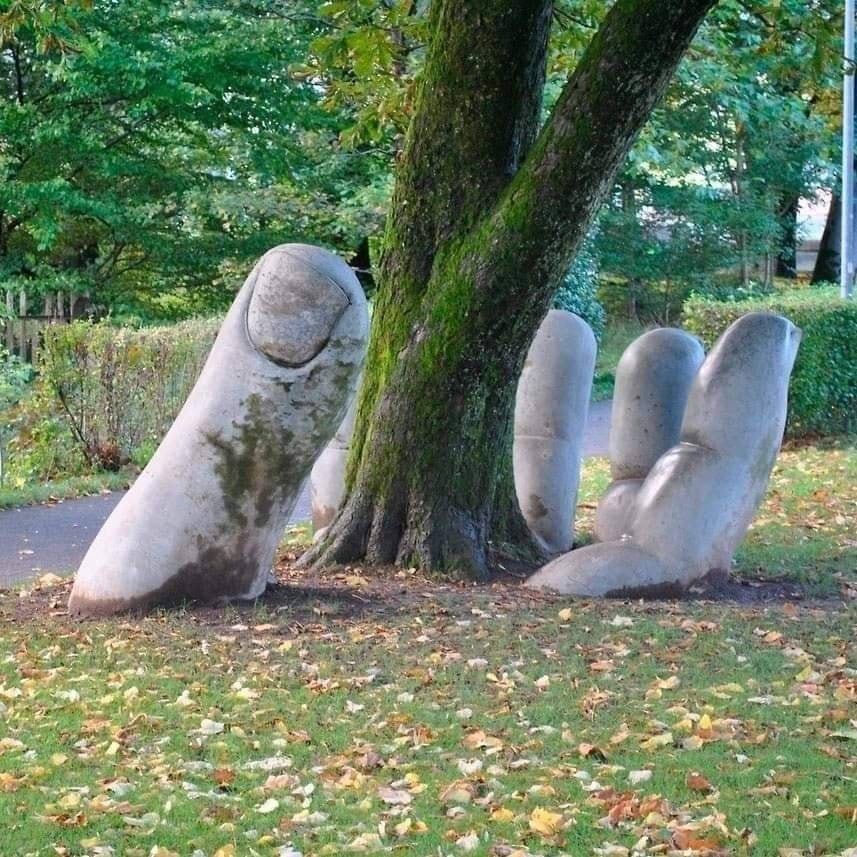
5. Caring Hand — Eva Oertli & Beat Huber (Glarus, Switzerland)
Located in the heart of Glarus, this sculpture turns a tree into a protected treasure. The “Caring Hand” rises from the soil to wrap its fingers around the trunk, blending the industrial feel of the sculpture with the organic growth of the park. It’s a silent, permanent gesture of protection.
More: The Caring Hand – Sculpture by Eva Oertli and Beat Huber
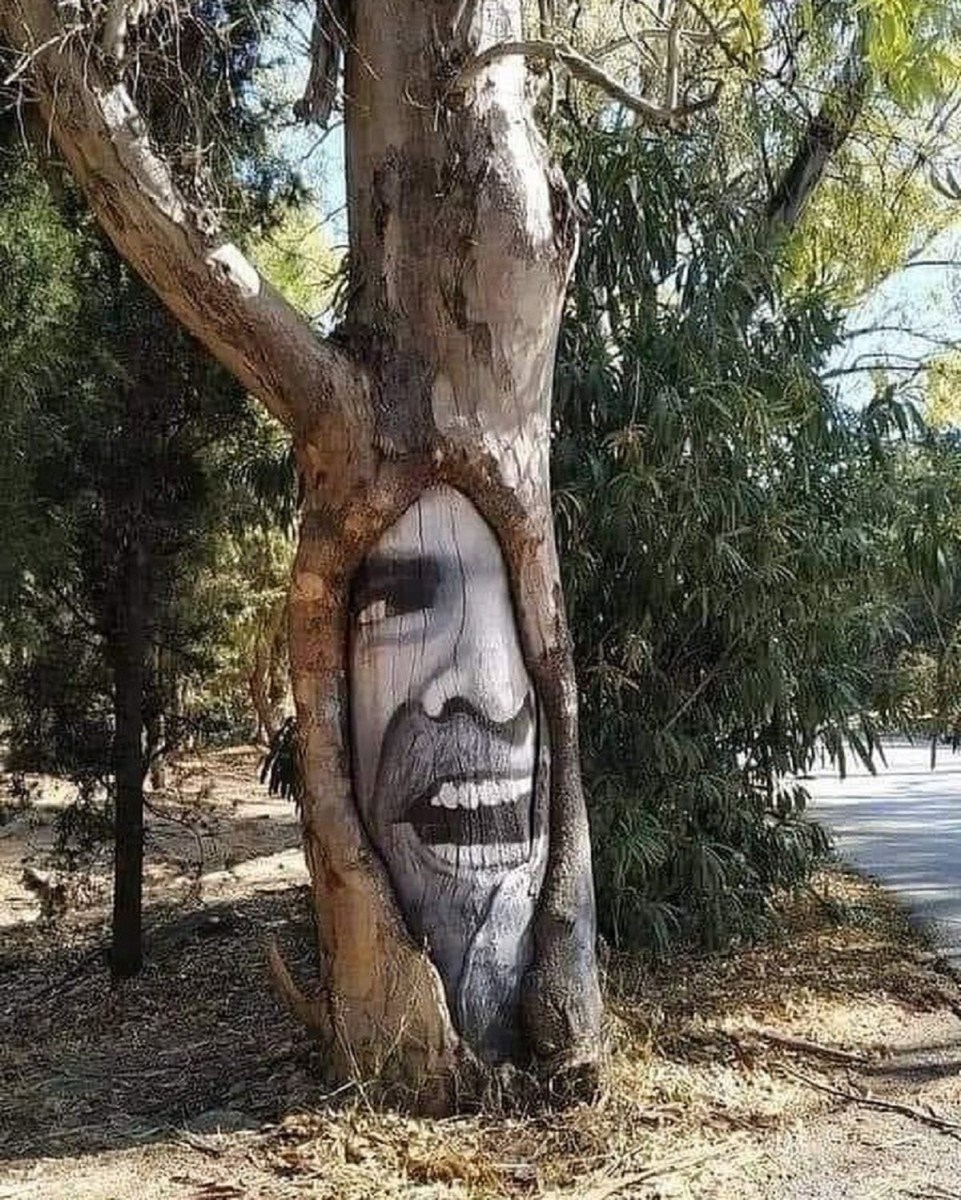
6. I’m Home!
Sometimes the most striking art is the kind you almost miss. By painting a face directly onto the split heart of a tree, the artist reveals a “soul” within the wood. The natural texture of the trunk becomes part of the portrait, making it look as though the figure has been hiding there all along, waiting for the bark to part.
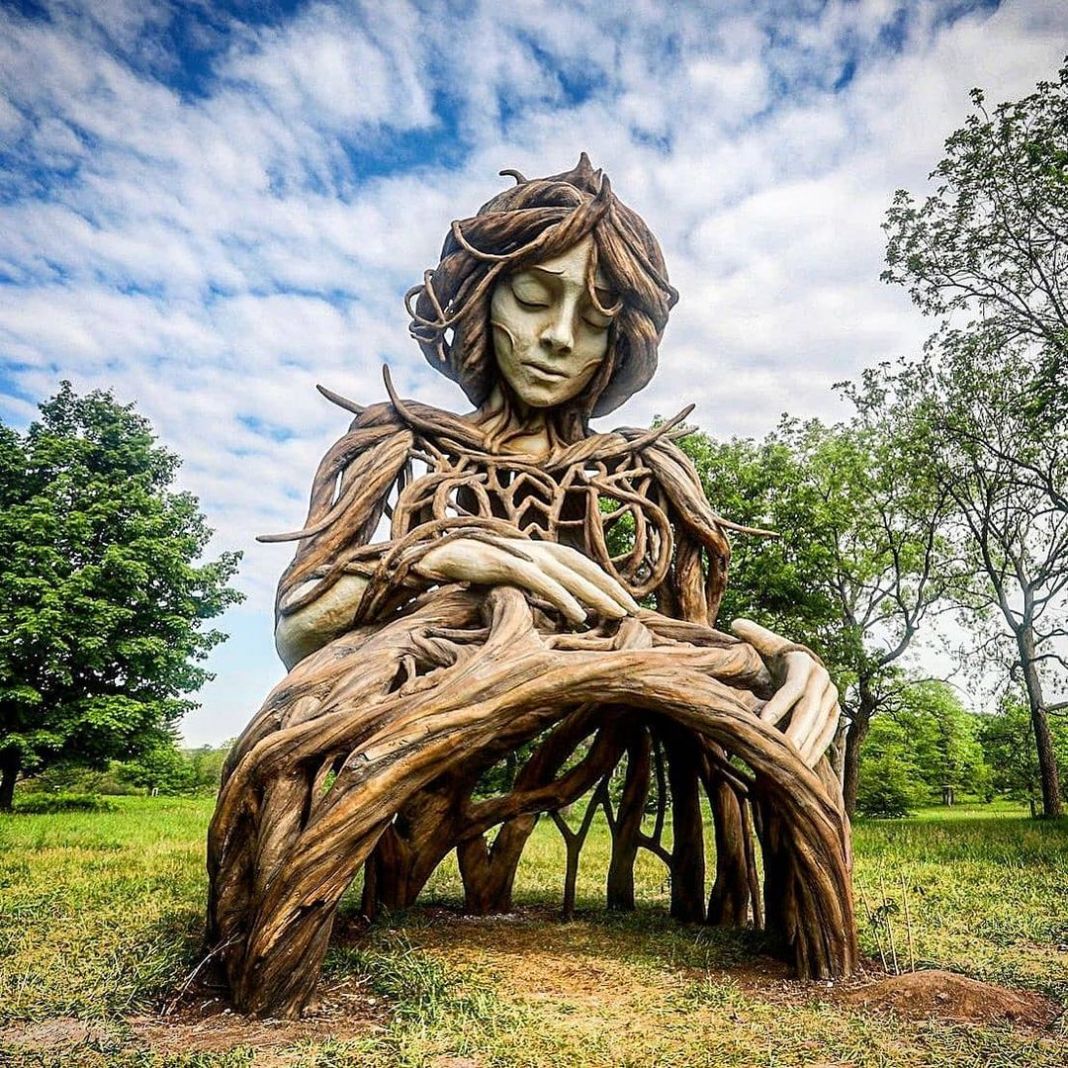
7. UMI — Daniel Popper (Chicago, Illinois, USA)
“UMI” translates to “Mother” in Arabic, and this sculpture perfectly captures the concept of Mother Nature. Built with a skeleton of intertwined roots and branches, the figure appears to be in the middle of a slow, graceful ascent from the soil. It reminds us that we are not separate from the earth—we are made of the same stuff.
More: “UMI” Sculpture by Daniel Popper in Lisle, Illinois
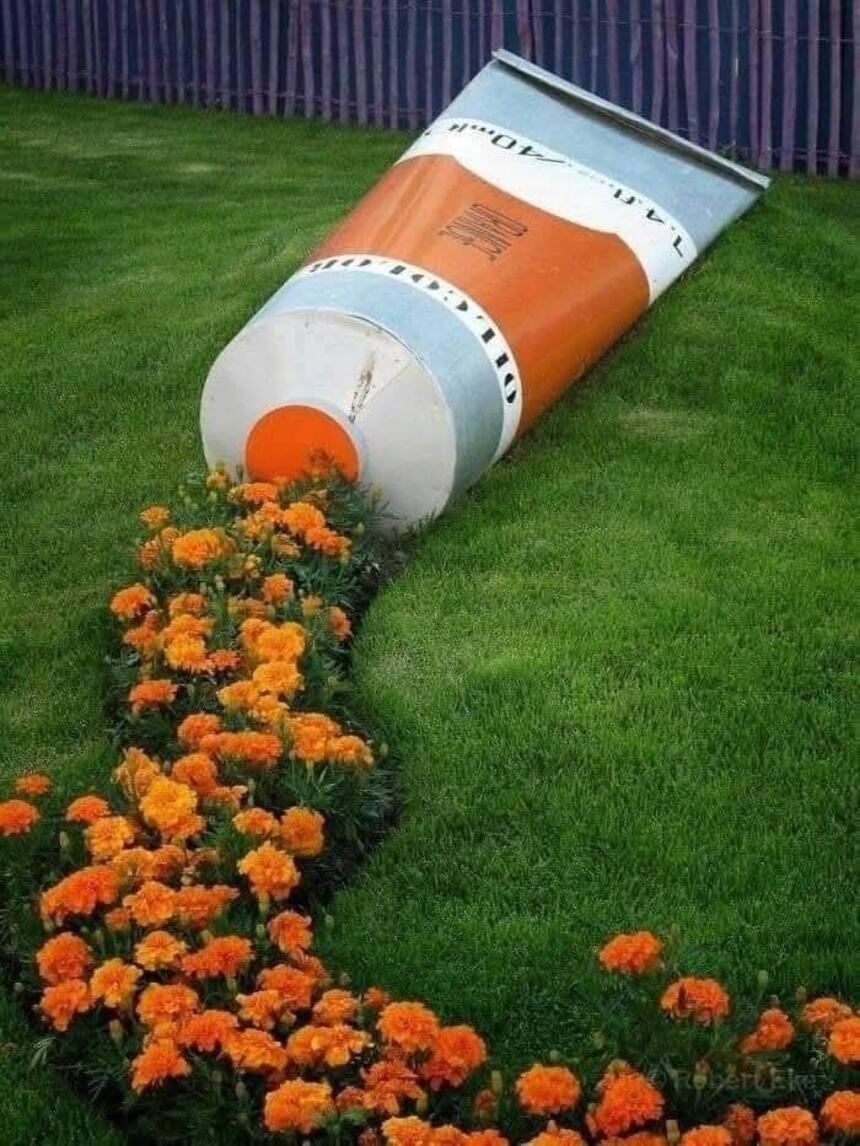
8. Flower Tube
What if the vibrant colors of a garden weren’t just grown, but “painted” onto the grass? This whimsical installation treats nature like a medium, with a giant paint tube squeezing out a river of orange marigolds. It’s a literal interpretation of the idea that nature is the ultimate artist.
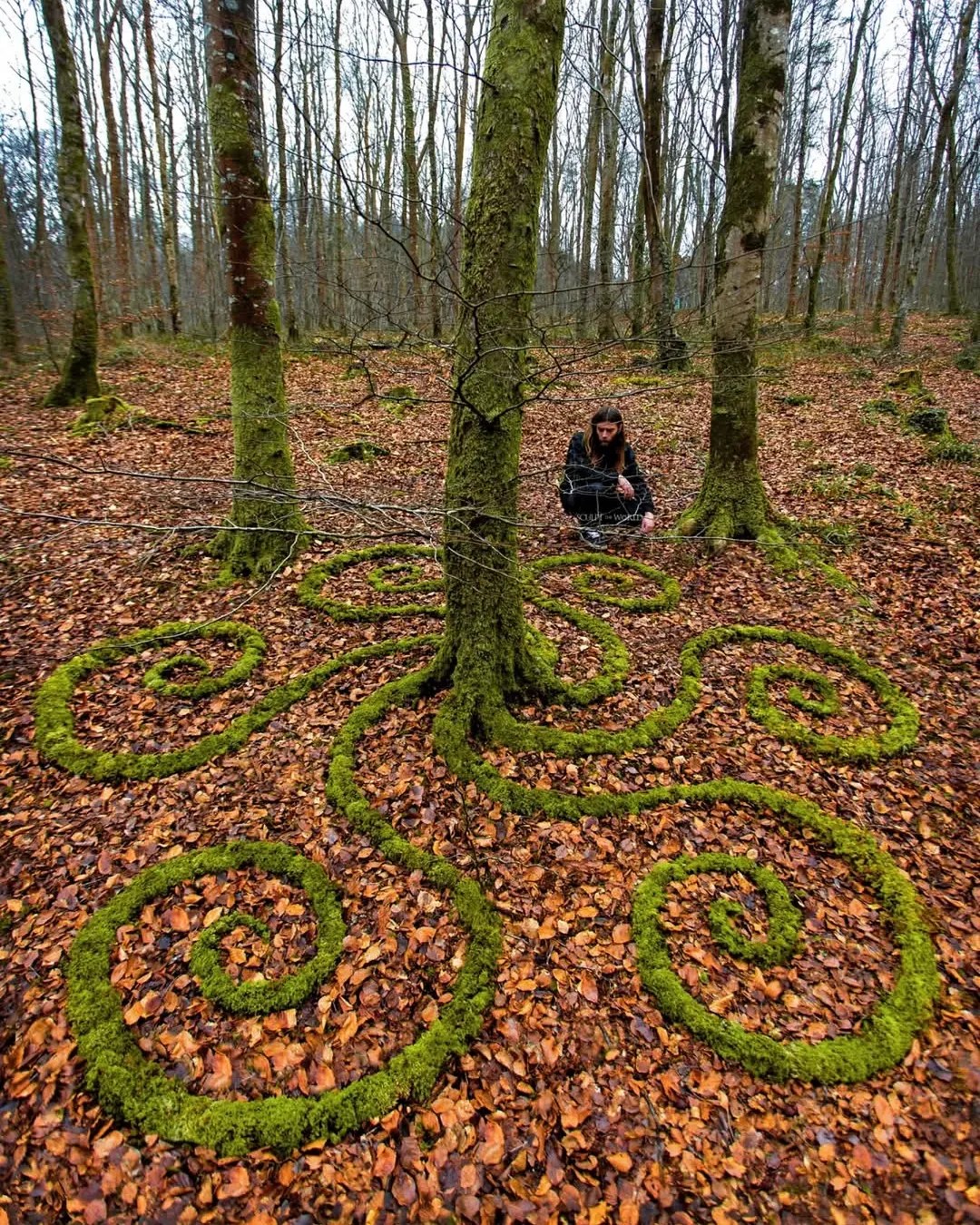
9. Musco — Jon Foreman (Minwear Woods, Wales)
Jon Foreman’s land art is famously ephemeral. Using only what he finds on the forest floor—leaves, moss, stones, and soil—he creates intricate patterns that the wind or rain will eventually reclaim. “Musco” is a tribute to the geometry found in the wild, proving that even the most fleeting art can leave a lasting impression. More by Jon Foreman!: 10 Forest Sculptures By Jon Foreman
🔗 Follow Jon Foreman on Instagram
More: When Street Art Meets Nature (40 Photos)
Which one is your favorite?

Sculptures That Blend With Nature (10 Photos)
Public art can make a plain place worth stopping for.
These sculptures use grass, trees, water, sand, and open space as part of the work.Here are 10 sculptures from around the world: a giant clothespin pinching the ground, a zipper opening a lawn, and a bench waiting in a slingshot. Small everyday ideas, made very large.
More: 30 Sculptures You (Probably) Didn’t Know Existed
🪵 Skin 2 — By Mehmet Ali Uysal, originally in Chaudfontaine Park, Belgium 🇧🇪
Made for Parc Hauster in Chaudfontaine, near Liège, Belgium, Skin 2 looks like a wooden clothespin pinching the ground. Turkish artist Mehmet Ali Uysal turned a clothespin into a sculpture so large that the lawn becomes part of the work.💡 Nerd Fact: The original Chaudfontaine installation is no longer a regular park stop: Atlas Obscura now marks the site as permanently closed and notes that the sculpture was no longer in the park in its April 2022 update. The work still appears in gallery records: Pi Artworks lists Skin 2 as a 2010 sculpture measuring 700 × 800 cm, courtesy of the municipality of Liège.
🤲 HAND and PARK TREE (The Caring Hand) — By Eva Oertli and Beat Huber in Glarus, Switzerland 🇨🇭
In the Volksgarten in Glarus, Switzerland, the work known as The Caring Hand rises around a living tree. Beat Huber documents the installation as HAND and PARK TREE, realized with Eva Oertli. The oversized concrete fingers make the tree look held and protected.💡 Nerd Fact: Beat Huber says the idea began in 1990 as an art-in-architecture proposal for a new agricultural school, but it was shelved because there was not enough space or money. When it was finally made for Skulptura 04 in 2004, it was planned to last only four months. Public pressure changed that: private donors raised CHF 43,700, and Glarus received the hand as a gift from the public.
About and more photos: The Caring Hand – Sculpture in Glarus, Switzerland
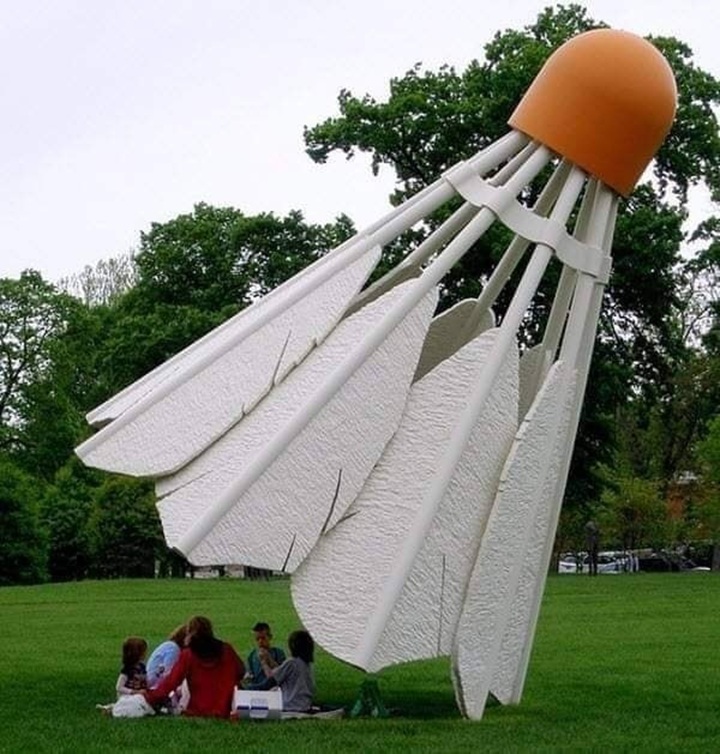
🏸 Shuttlecocks — By Claes Oldenburg and Coosje van Bruggen in Kansas City, Missouri, USA 🇺🇸
In the Donald J. Hall Sculpture Park at The Nelson-Atkins Museum of Art in Kansas City, Missouri, giant badminton birdies sit in the grass. The work, called Shuttlecocks, was created by Claes Oldenburg and Coosje van Bruggen. It looks like a huge game stopped mid-rally and nobody came back to clean it up. The museum lists each shuttlecock as nearly 18 feet tall, about 16 feet across, and 5,500 pounds.💡 Nerd Fact: Oldenburg and van Bruggen’s idea was architectural, not just oversized. The Nelson-Atkins says they imagined the museum building as the badminton net and the lawn as the playing field, then placed four shuttlecocks as if a rally had frozen on both sides of the “net.”
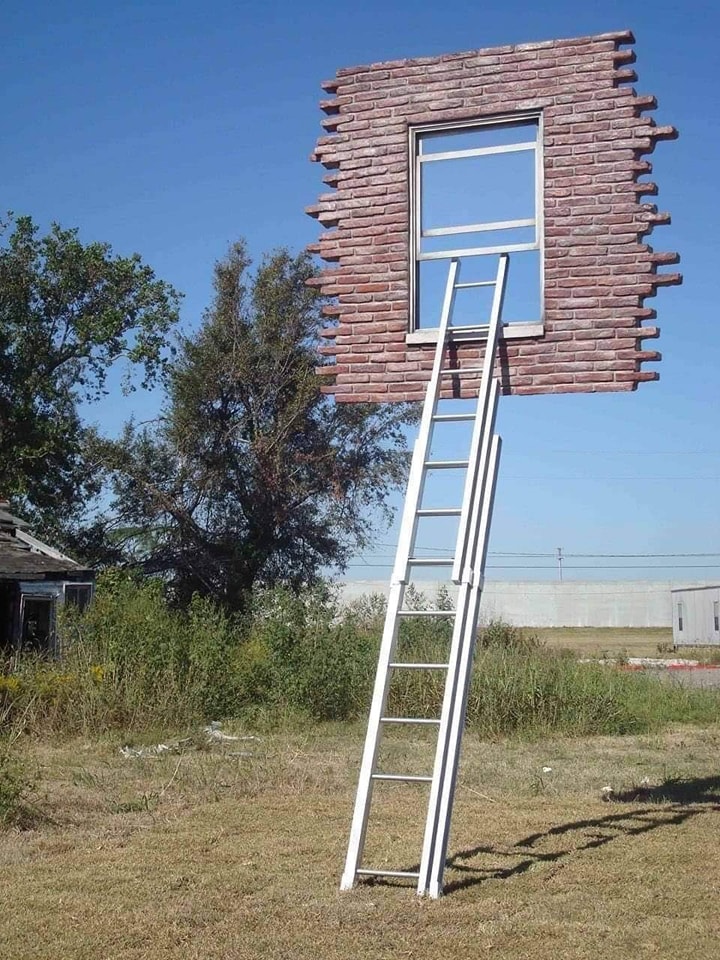
🪟 Window with Ladder – Too Late for Help — By Leandro Erlich in New Orleans, Louisiana, USA 🇺🇸
Leandro Erlich’s Window with Ladder – Too Late for Help shows a white ladder leading to a brick wall with an open window. The wall appears to float above the field with no house attached. The work is now in the Sydney and Walda Besthoff Sculpture Garden at the New Orleans Museum of Art.💡 Nerd Fact: NOMA lists the work’s hidden support system as a steel underground structure, but the context is more serious than the engineering. It was first installed in 2008 in a vacant lot in New Orleans’ Lower Ninth Ward for Prospect.1, in an area devastated by Hurricane Katrina.
🌳 Give — By Lorenzo Quinn, now in Pietrasanta, Italy 🇮🇹
Give by Italian artist Lorenzo Quinn shows two giant hands holding an tree. The hands sit low in the grass, making the tree look newly planted and protected.💡 Nerd Fact: Halcyon Gallery described Give (this time a olive tree) as a gift from Quinn and Halcyon Gallery to Pietrasanta, first unveiled in Florence’s Uffizi Gardens in 2020. Quinn’s biography says it later stood outside Palermo Cathedral before being permanently installed in Pietrasanta’s International Park of Contemporary Sculpture.
More by Lorenzo Quinn: Support – Message About Climate Change
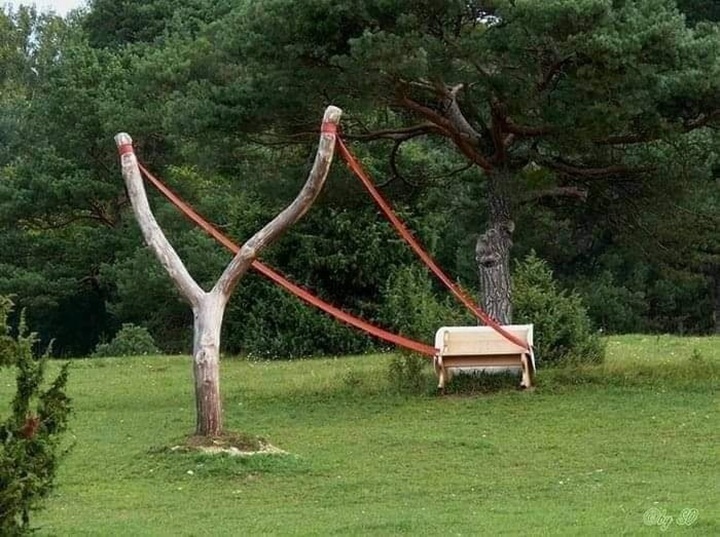
🚀 Schleudersitz — By Cornelia Konrads, made for Neustadt an der Donau, Germany 🇩🇪
German artist Cornelia Konrads built Schleudersitz with a wooden bench, rubber, steel cable, and the trees on site. It looks ready to launch across the grass. Sitting there might feel like trusting the artist a little too much.💡 Nerd Fact: The German title Schleudersitz means “ejection seat,” and the location made the joke sharper. Sculpture Network records the 2010 work as part of the Flying Objects exhibition on a former vineyard, now a leisure park, overlooking the Danube Valley.
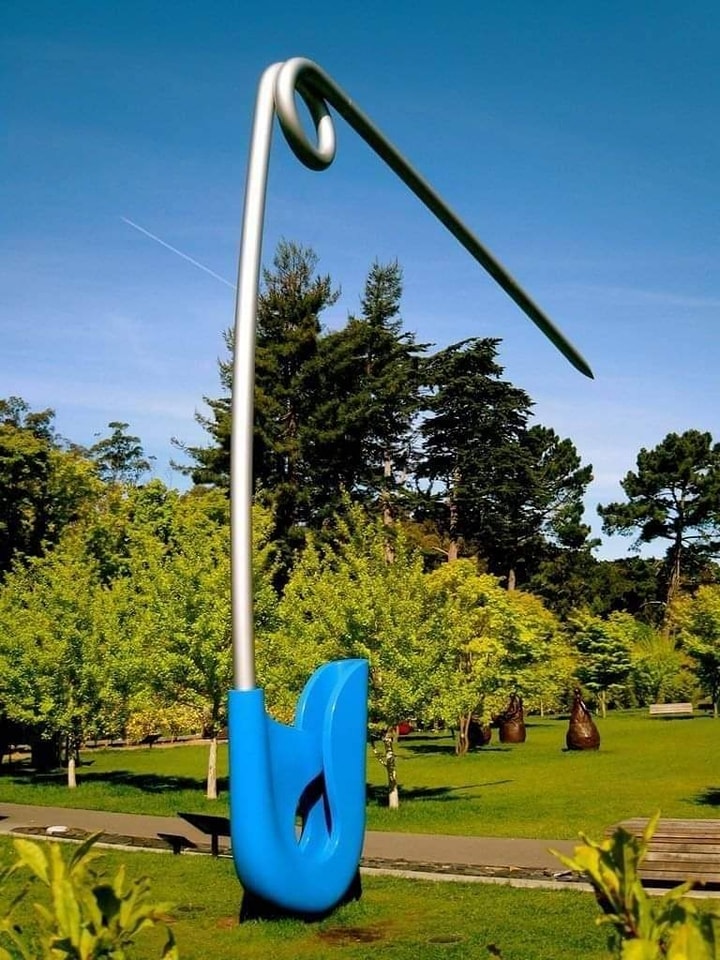
🧷 Corridor Pin, Blue — By Claes Oldenburg and Coosje van Bruggen in San Francisco, USA 🇺🇸
In the Barbro Osher Sculpture Garden at the de Young Museum in San Francisco, Corridor Pin, Blue stands over the garden like a sewing tool left in the wrong scale. Created by Claes Oldenburg and Coosje van Bruggen, the blue base and long silver pin make it hard to miss.💡 Nerd Fact: This giant safety pin is not alone. NOMA’s collection lists another Corridor Pin, Blue as edition 3/3, while the Nasher Museum identifies an artist’s proof with the same 255 × 256 × 16 inch dimensions. The “tiny” domestic object has siblings in more than one city.
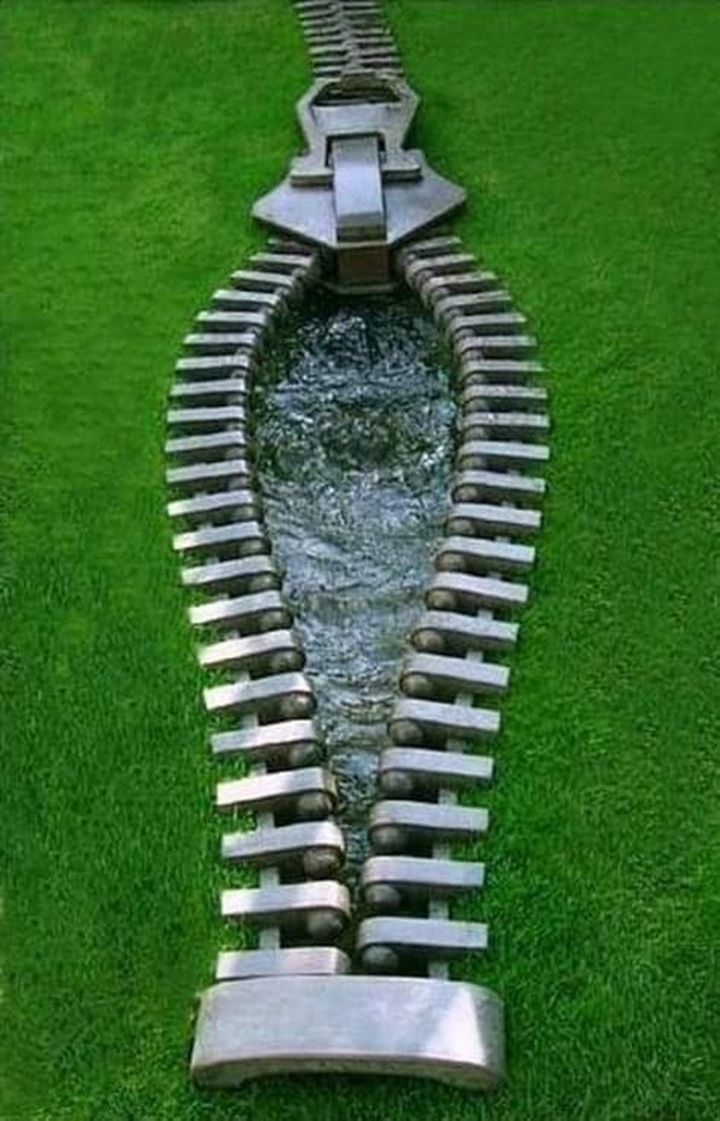
🤐 Zip — By Mark Richard Hall in the Hamptons, New York, USA 🇺🇸
This grass-and-water zipper is best identified as Zip, a private Hamptons commission by British sculptor Mark Richard Hall. The oversized metal zipper opens the lawn into a narrow water feature, making the garden look unzipped.💡 Nerd Fact: This image is an easy caption trap. It often circulates online as a Yasuhiro Suzuki sculpture in Tokyo, but stronger sources point to Hall. Mark Richard Hall’s own studio lists a commission called Zip in the Hamptons, and Architectural Digest identifies a stainless-steel zipper sculpture by Hall embedded in the grass at a Southampton home. Suzuki’s verified zipper work is the boat-based Zip-Fastener Ship, which uses a wake to “unzip” water.
🌸 Hallow — By Daniel Popper, formerly at The Morton Arboretum in Lisle, Illinois, USA 🇺🇸
Daniel Popper’s Hallow is a monumental figure of a woman opening her chest. The hollow space inside is framed by hands, carved hair, and trees in bloom around the work. It was installed near Meadow Lake at The Morton Arboretum in Lisle, Illinois.💡 Nerd Fact: Hallow belonged to Popper’s Human+Nature exhibition, which the Morton Arboretum described as his first major U.S. exhibition and largest anywhere at the time. The Arboretum now notes that the exhibition has concluded, but Popper’s own text for the work connects Hallow to grief, self-expression, growth, and healing rather than a simple “nature goddess” reading.
More photos: 5 Photos of Sculpture “Hallow” By Daniel Popper in Lisle, Illinois
🌀 Augere — By Jon Foreman, created at Druidston, Wales, UK 🇬🇧
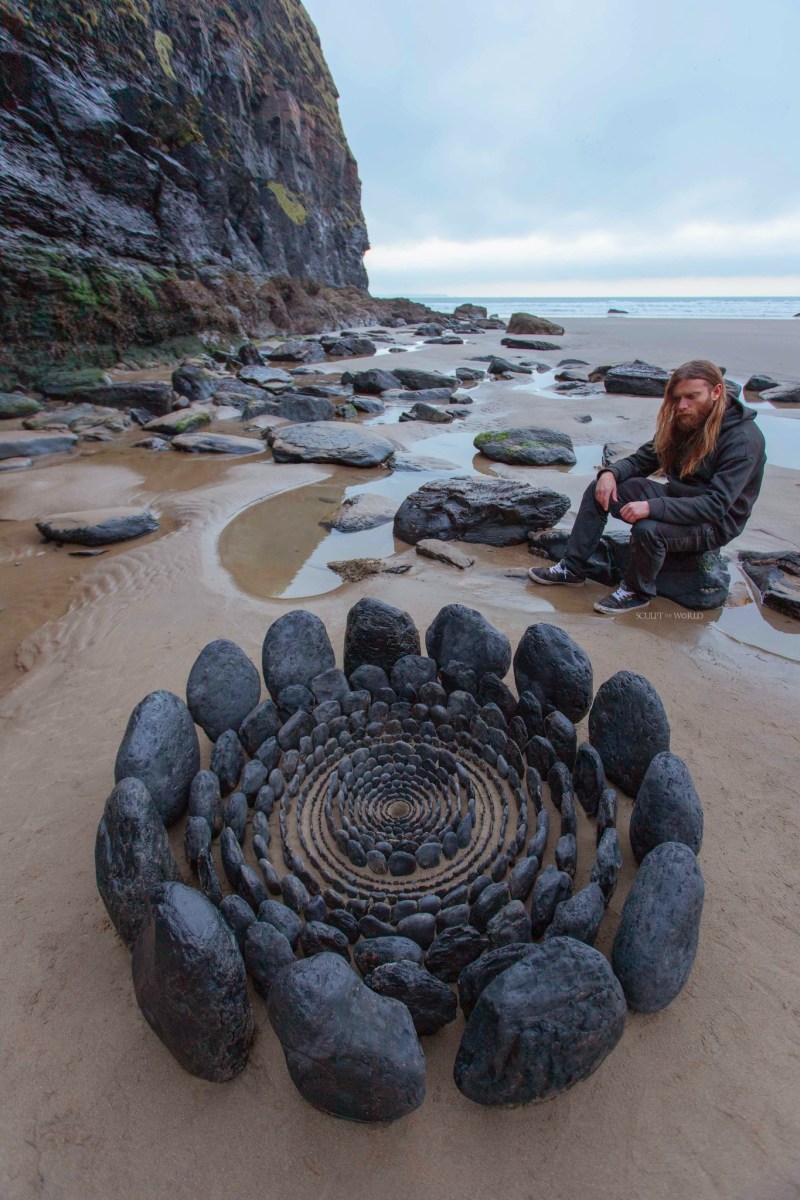
Jon Foreman arranged natural stones in tight circles on the sand at Druidston, Wales. In a 2025 post, Foreman identified the work as Augere. The piece changes as the tide moves in. More: Amazing Sculptures by Jon Foreman! (12 Photos)💡 Nerd Fact: Foreman’s land art is not built to survive the coast. In an interview, he says the tide washes a work back to the tide line and he returns the next day to “an empty canvas”. So with pieces like Augere, disappearance is not a failure. It is part of the schedule.
Which one is your favorite?
Land Artist Creates Ephemeral Stone Art on the Shores of the U.K.
Land artist Jon Foreman creates stone art on the shores of the U.K. His rock arrangements are tributes to the beaches and waves for which they reside.Sara Barnes (My Modern Met)

Nature Is Everything (12 Photos)
Content warning: Which one is your favorite?
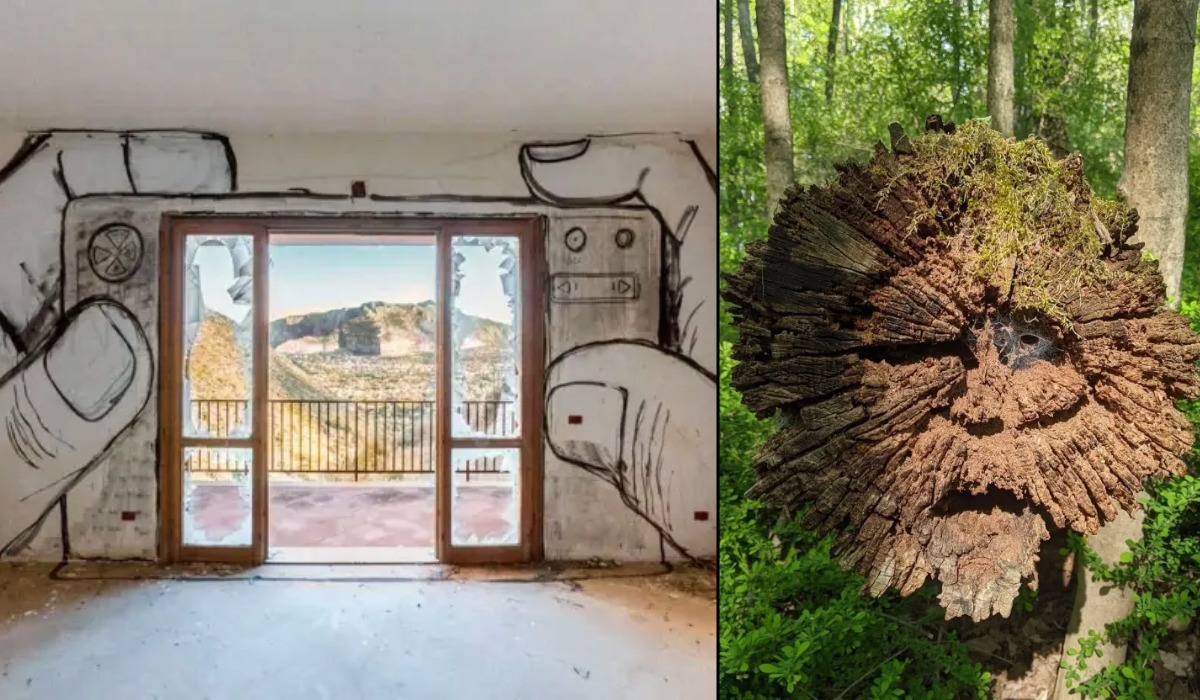
From tree roots shaped into geometric patterns in city parks to murals that turn flowers into hair, these eight pieces of street and environmental art show nature as the medium, the frame, and sometimes the message. In this post, you’ll see a face emerging from the forest, playful illusions, floral-haired portraits, and creatures breaking through walls. Featuring works from Brazil, the U.S., and beyond.
More: When Street Art Meets Nature (40 Photos)
1. Forest Spirit
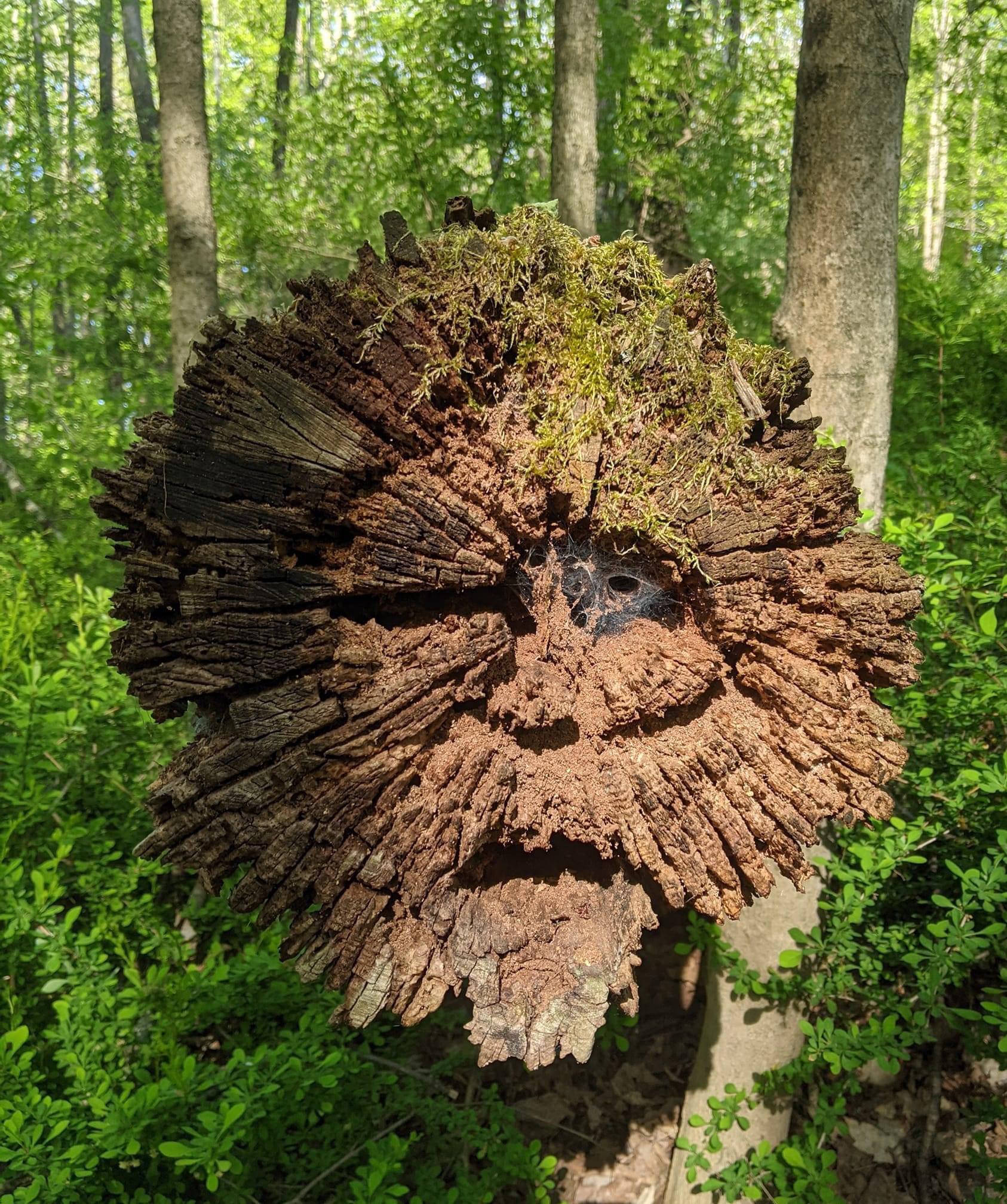
A broken tree trunk appears to reveal a hidden forest spirit. Its jagged bark mimics deep wrinkles and a stern expression, while moss on top looks like hair. A small web nestled in one of the “eyes” enhances the illusion of a face.
2. Natural Frame – Mural by Collettivo FX at the Pizzo Sella Art Village in Palermo
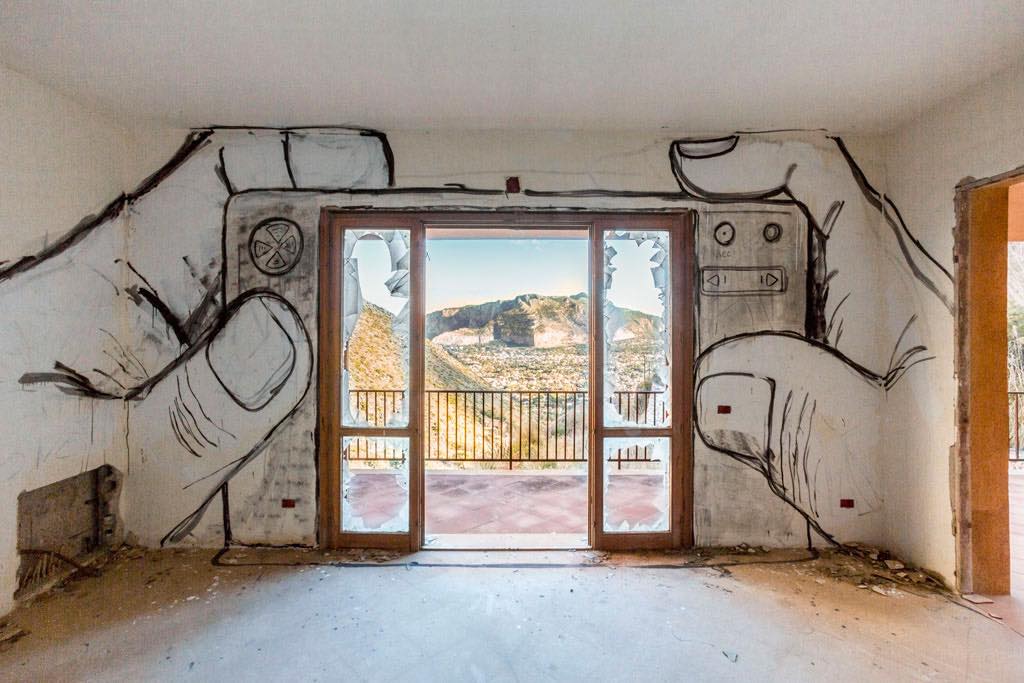
A black-and-white mural of two hands holding a camera turns a balcony doorway into a living photo. The window becomes the lens, perfectly framing a mountain view beyond.
🔗 Follow Collettivo FX on Instagram
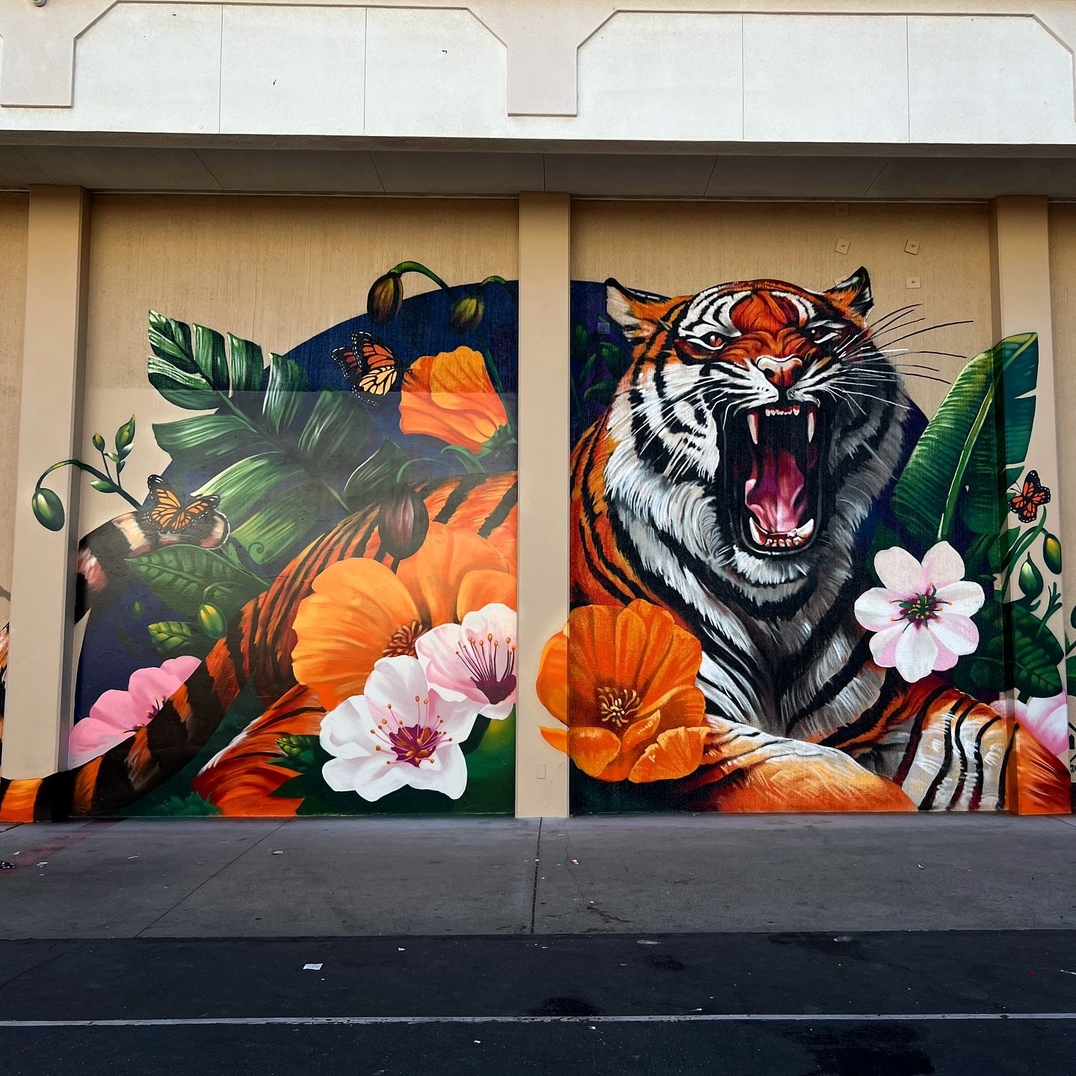
3. Jungle Roar — Cameron “CAMER1sf” Moberg in Modesto, CA, USA
A roaring tiger emerges from lush flowers and tropical leaves. Monarch butterflies flit across the background, blending wild nature with botanical elements in explosive color.
🔗 Follow CAMER1sf on Instagram
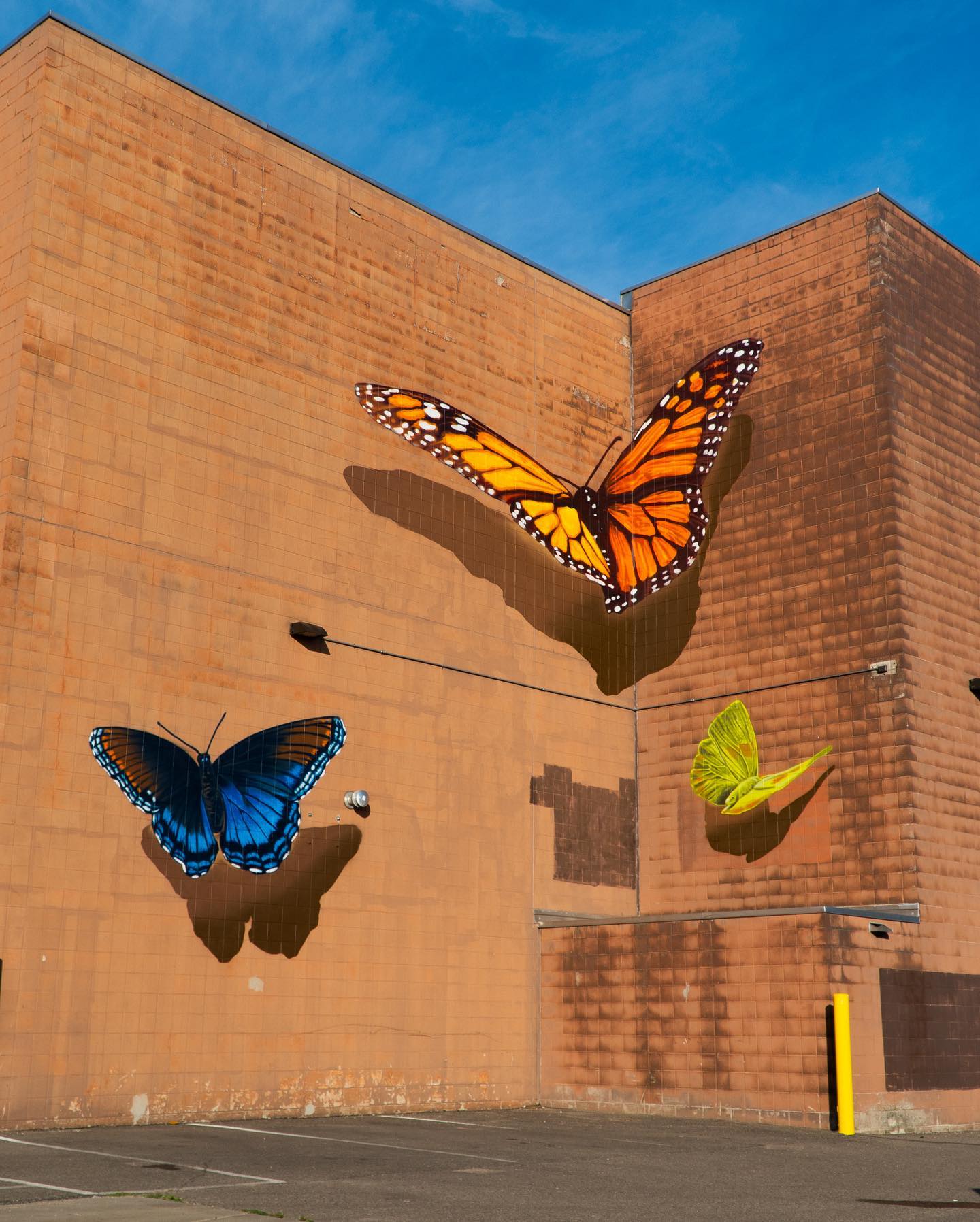
4. Butterfly Effect — CYFI in St. Paul, Minnesota, USA
Giant butterflies painted on a brick wall seem to lift off in 3D. Their vibrant wings cast painted shadows, enhancing the illusion that they’ve just landed—or are about to take flight.
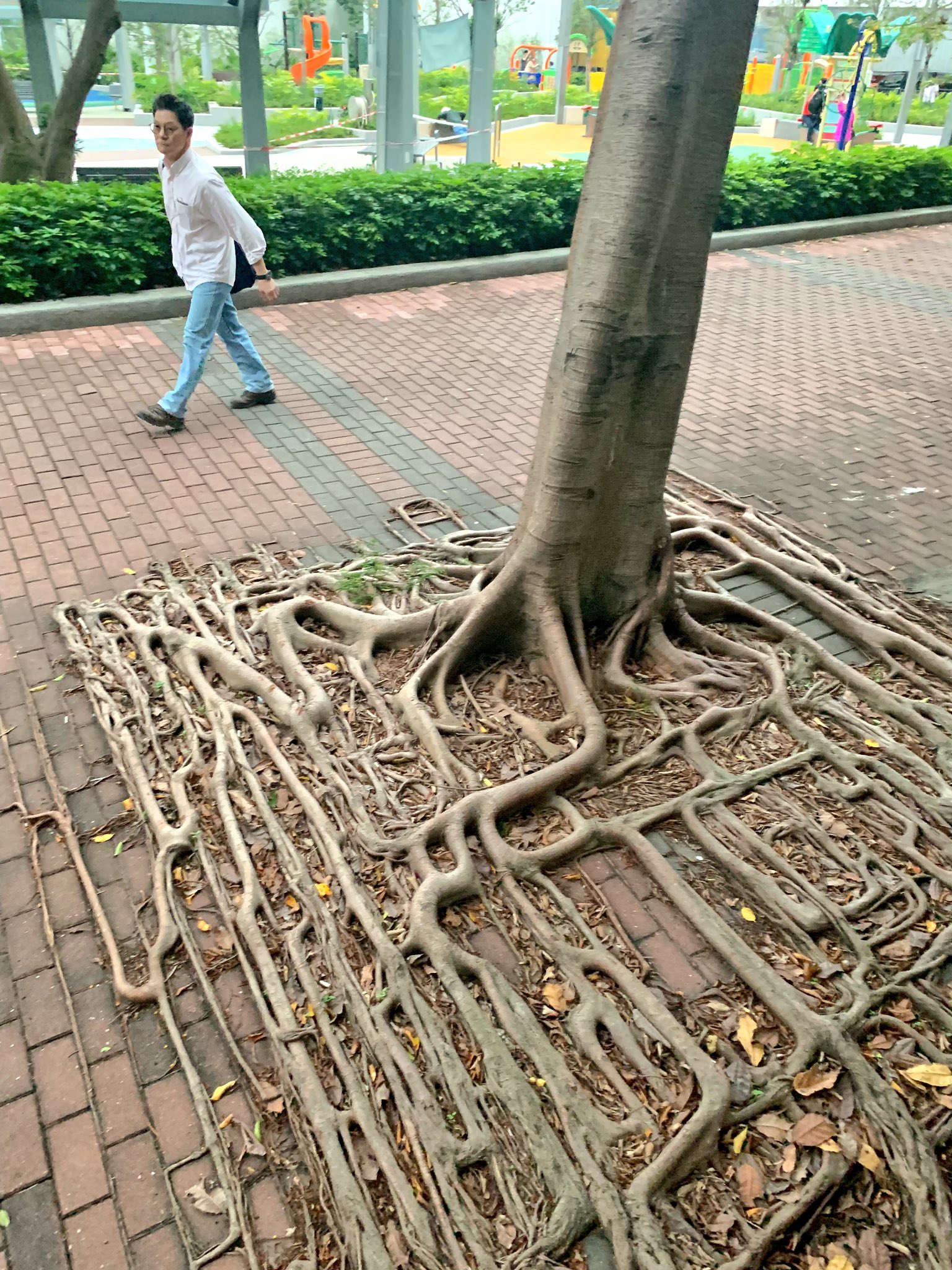
5. Urban Roots — Natural Growth in Hong Kong
Tree roots spread beneath a banyan tree in precise, parallel lines, mirroring city infrastructure. The organic lines seem almost digital, echoing circuit boards or subway maps.
More photos: Nature at Work: “Mondrianish” Banyan Tree Roots Create Art in Hong Kong
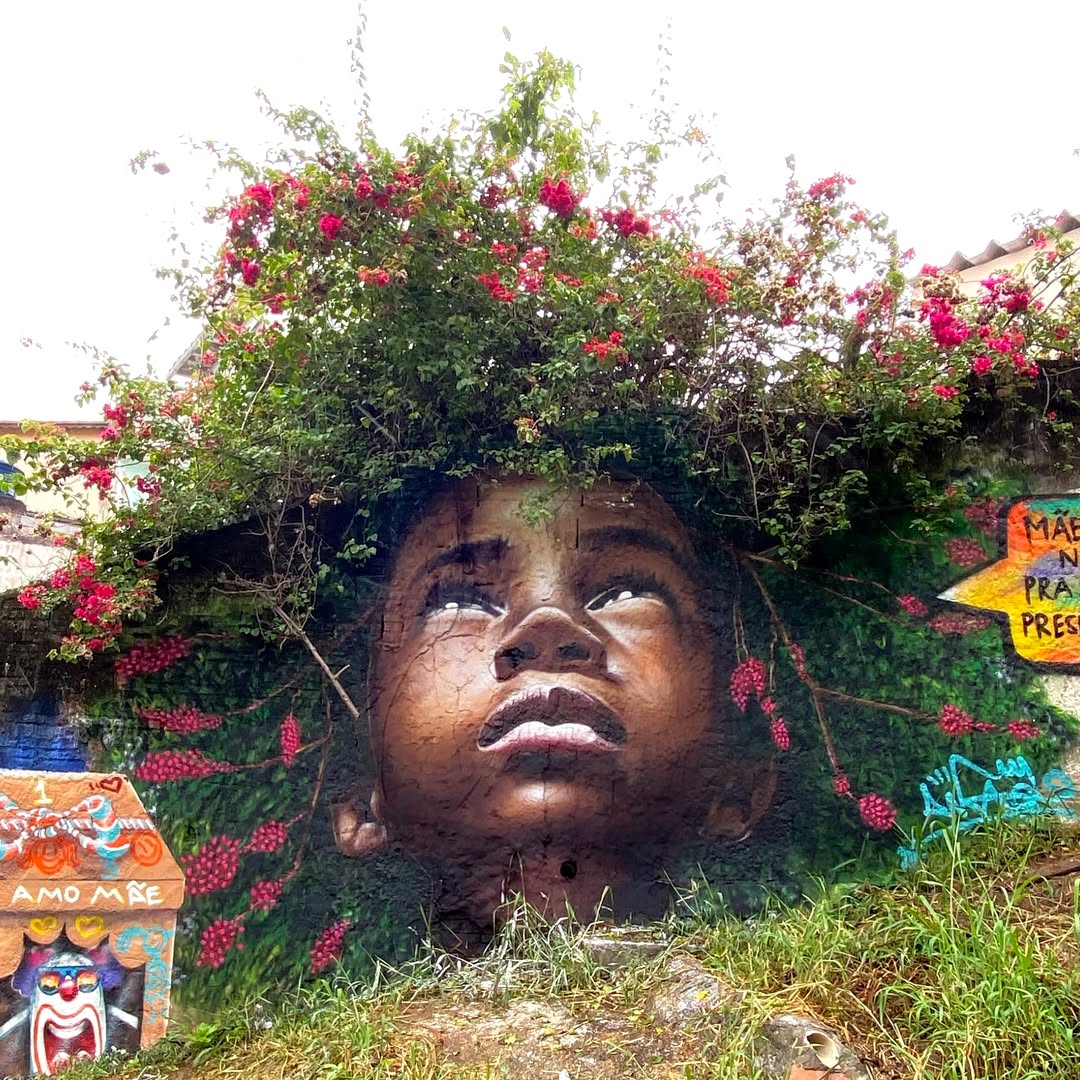
6. Looking Up — Rodrigo Rodrigues in São Paulo, Brazil
The painted face of a child gazes upward in awe, seamlessly blending into real flowering bushes growing from the top of the wall. The plant becomes the child’s hair, rich with blossoms.
🔗 Follow Rodrigo Rodrigues on Instagram

7. Crown of Bougainvillea — Fabio Gomes Trindade in Trindade, Goiás, Brazil
A smiling girl rests her chin on her hand beneath an enormous blooming bougainvillea. The mural is placed so the real plant completes her afro hairstyle with vibrant pink blossoms.
More: How Fábio Gomes Turns Trees into Hair: Stunning Murals in Trindade
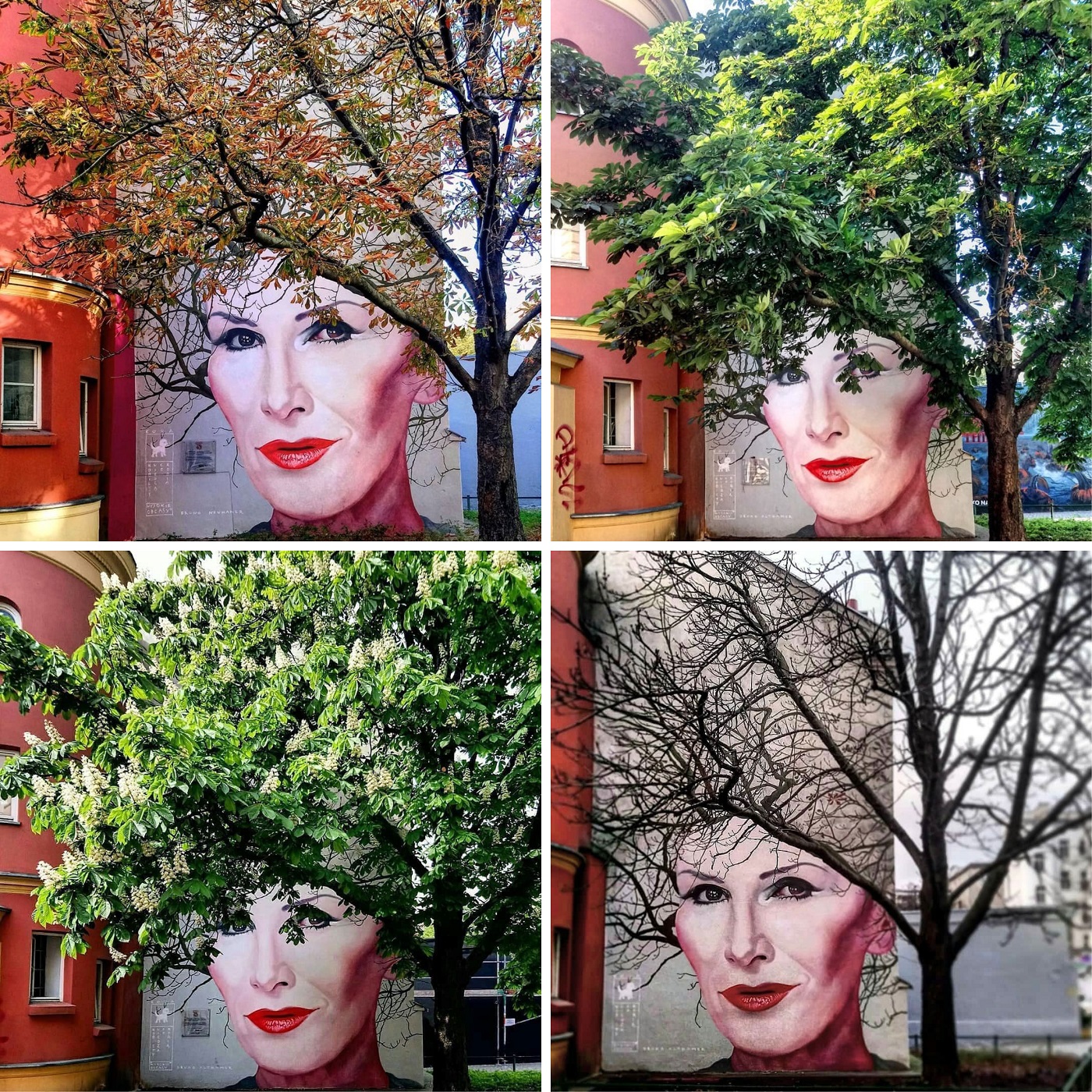
8. Four Seasons — Tribute to Kora by Bruno Althamer in Warsaw, Poland
A woman’s portrait is painted at the base of a tree. As the seasons change, the tree’s leaves become her hair—lush in summer, colorful in autumn, bare in winter, and flowering in spring.
More about it and photos: Four Seasons Tribute to Kora in Warsaw, Poland
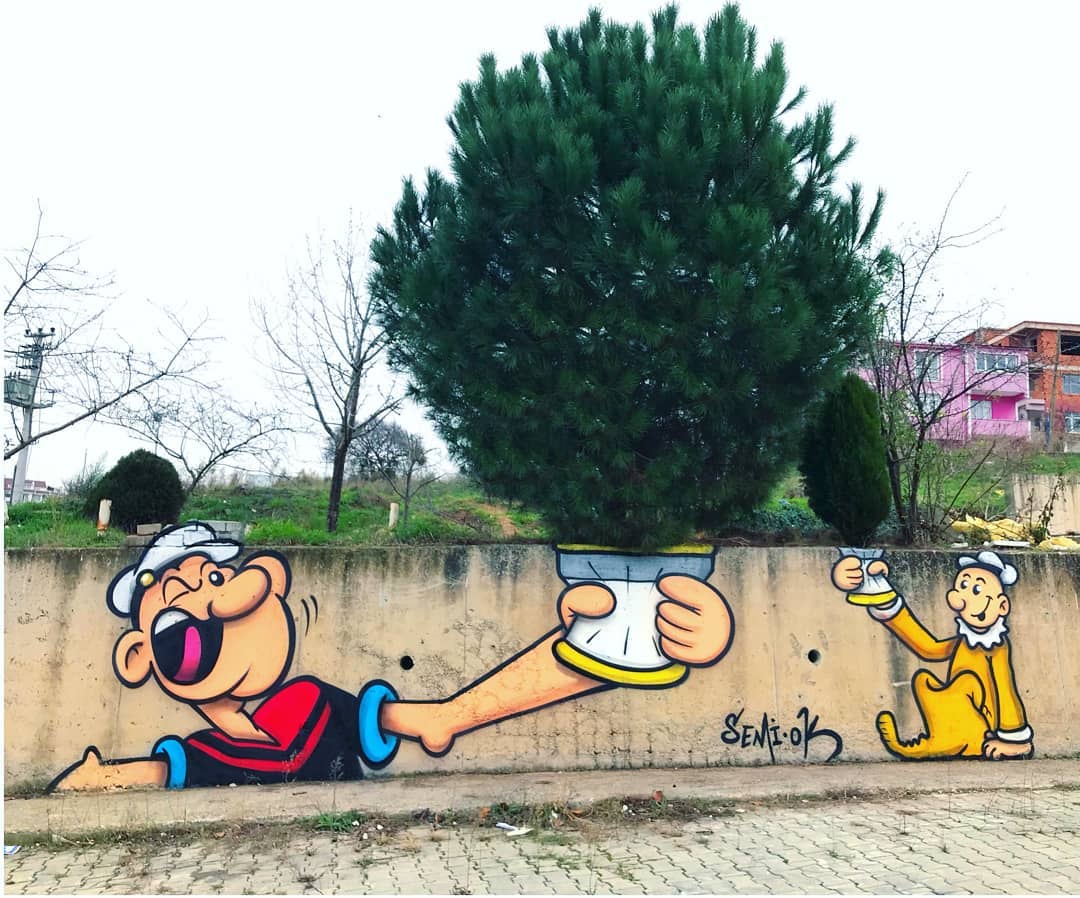
9. Popeye’s Spinach — Semi O.K in Kocaeli Province, Istanbul, Turkey
A street mural shows Popeye reaching across a wall to hand a can of spinach to his child. A real tree placed above the can appears as the bursting greenery, completing the cartoon illusion. More!: Playful Art By Semiok (8 Photos)
🔗 Follow [b]Semiok on Instagram
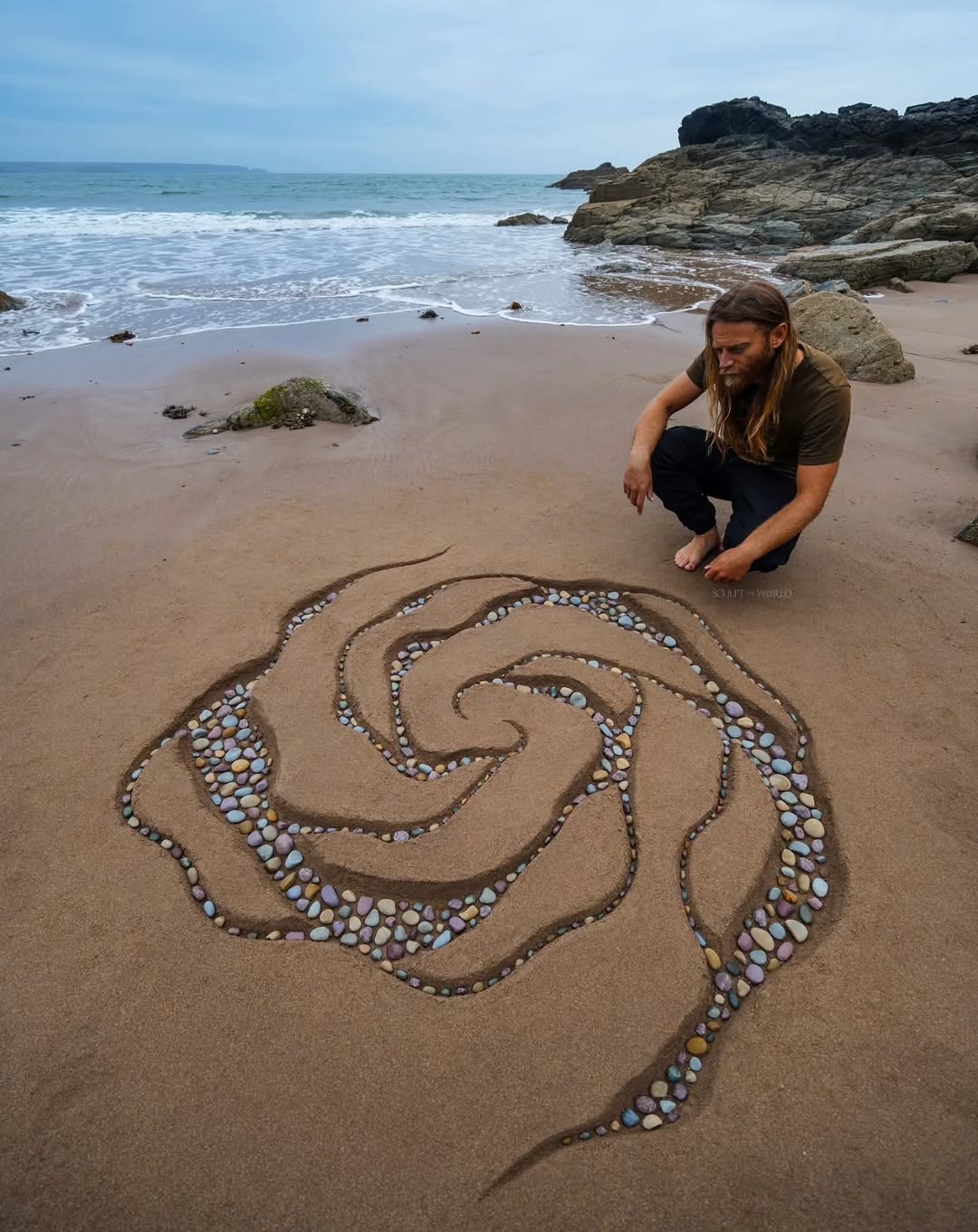
10. Carved Void at Lindsway Bay by Jon Foreman
More!: 10 Forest Sculptures By Jon Foreman
🔗 Follow [b]Jon Foreman on Instagram[/b]
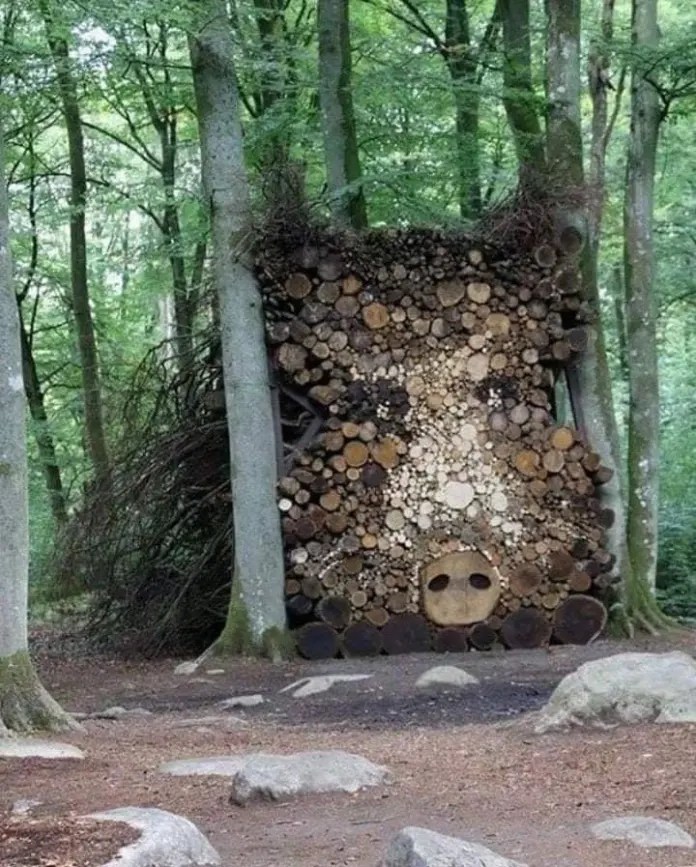
11. The Old Sow — Hannelie Coetzee in Knislinge, Sweden
A face assembled from stacked timber and branches, placed between trees in the forest at Wanås Konst sculpture park. Different sizes and tones of cut logs form eyes, a snout-like shape, and a clear outline that blends naturally into the woodland. More: Stubb Boar (5 photos)
🔗 Follow Hannelie Coetzee on Facebook
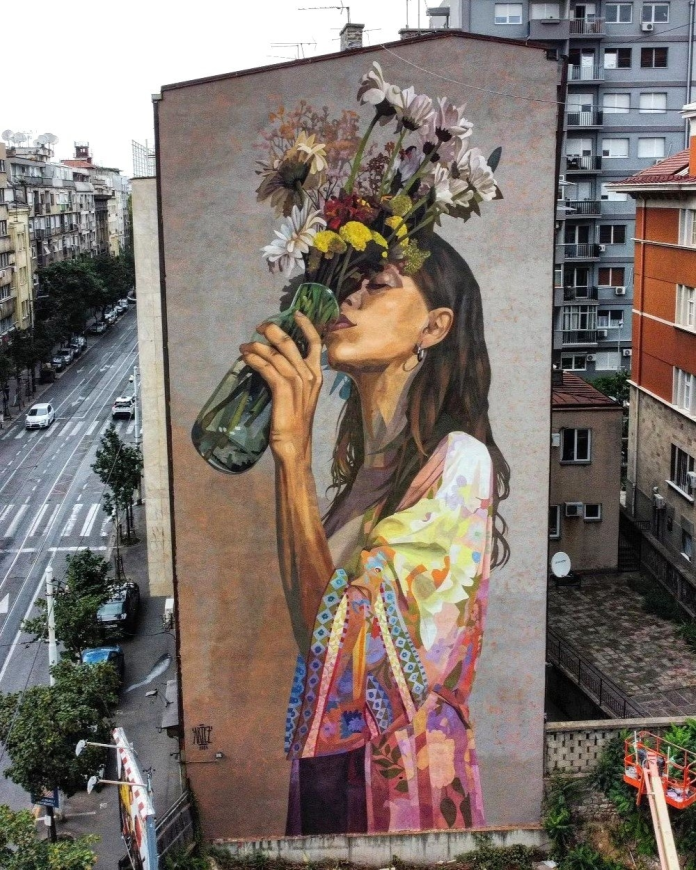
12. Thirst for Nature — Artez in Belgrade, Serbia
A mural of a woman lifting a glass vase of flowers toward her face. The detailed patterns of her clothing, the soft tones, and the rising bouquet create a connection between the figure and the surrounding cityscape.
🔗 Follow Artez on Instagram
More: Street Art Utopia: Why People Fall In Love With Outdoor Art (25 Photos)
Which one is your favorite?
Buildings That Look Like They’re From a Dream (8 Photos)
From a church in Iceland that looks like a spaceship preparing for launch, to a house zipped open on a street in Milan — this collection showcases architecture at its most imaginative. Included are cliffside wartime refuges, storybook cottages, optical illusions, and centuries-old constructions that defy gravity or blend perfectly into mountains. These aren’t digital renderings — they’re real places from around the world.
More: 8 Beautiful Artworks That Seem to Grow From Nature
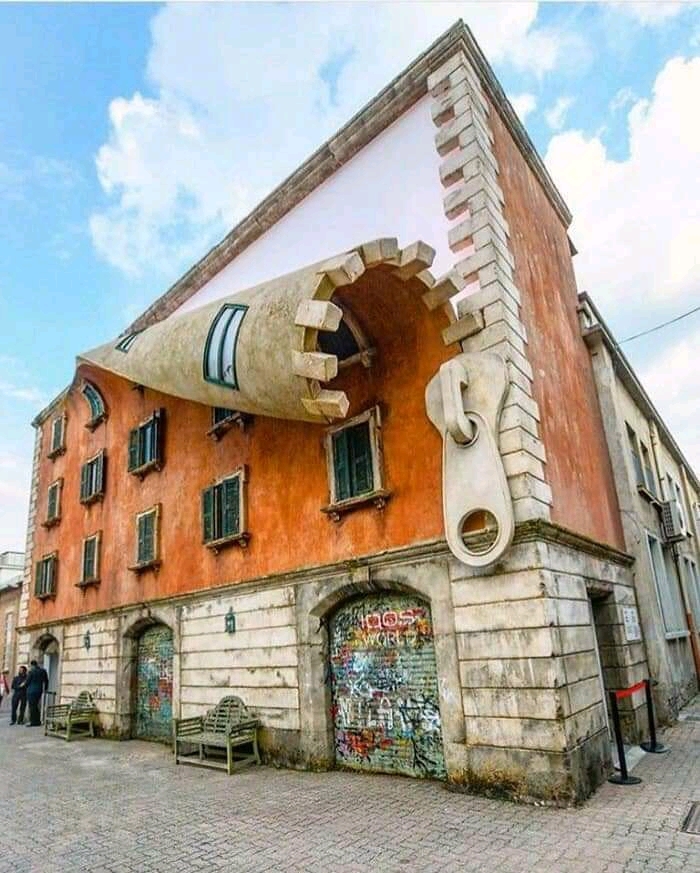
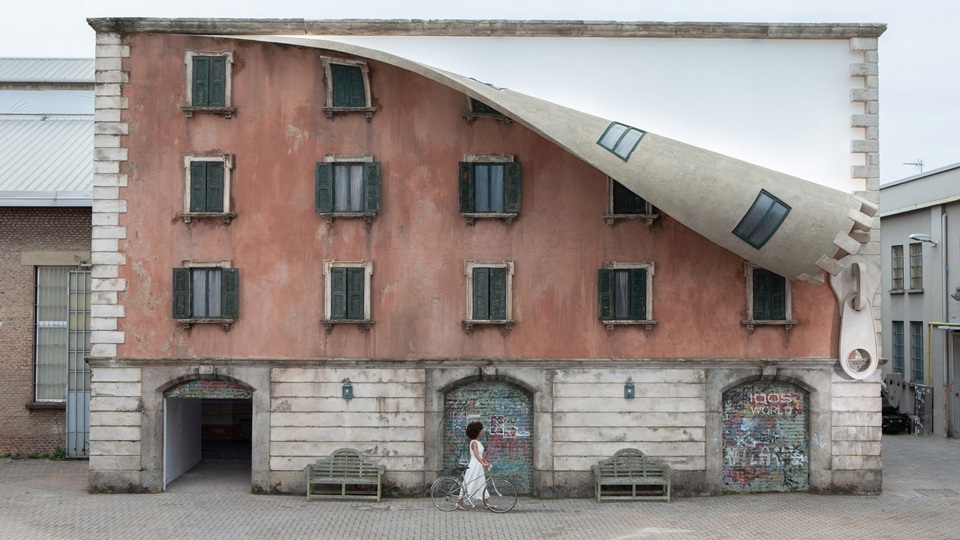
1. Unzipped Building — Alex Chinneck in Milan, Italy
A building facade appears to peel open like a jacket, with an oversized zipper curling away the wall to reveal its inner structure. This public installation by Alex Chinneck uses stone, concrete, and illusion to challenge how we perceive architecture.
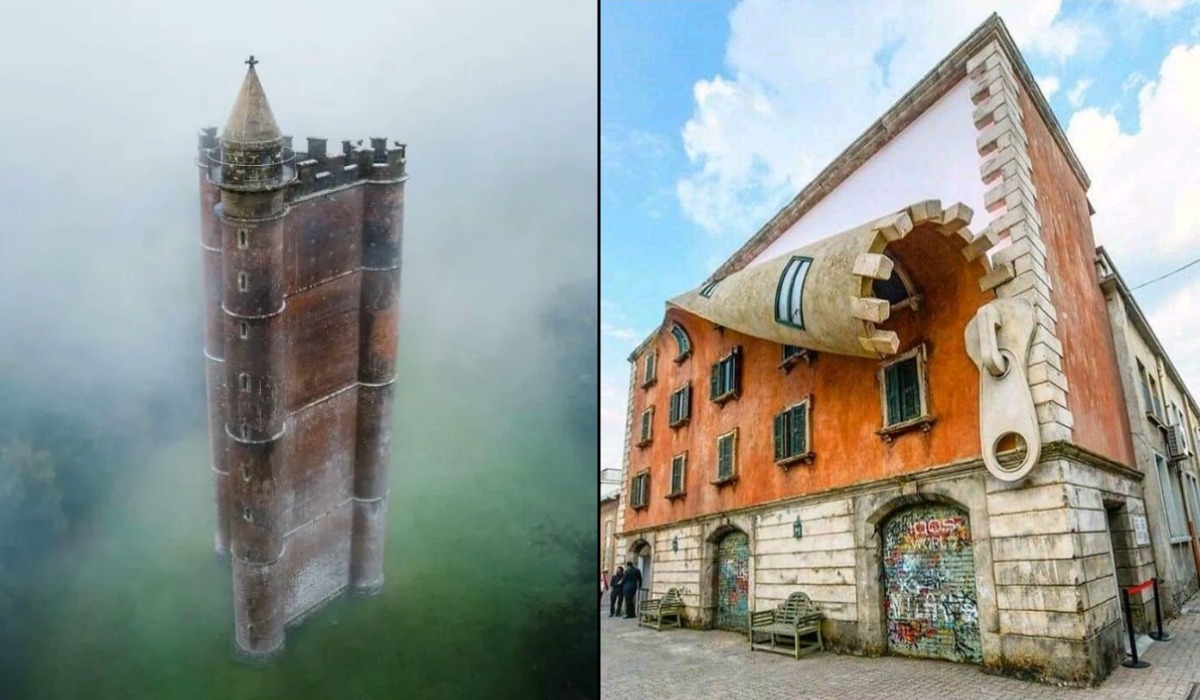
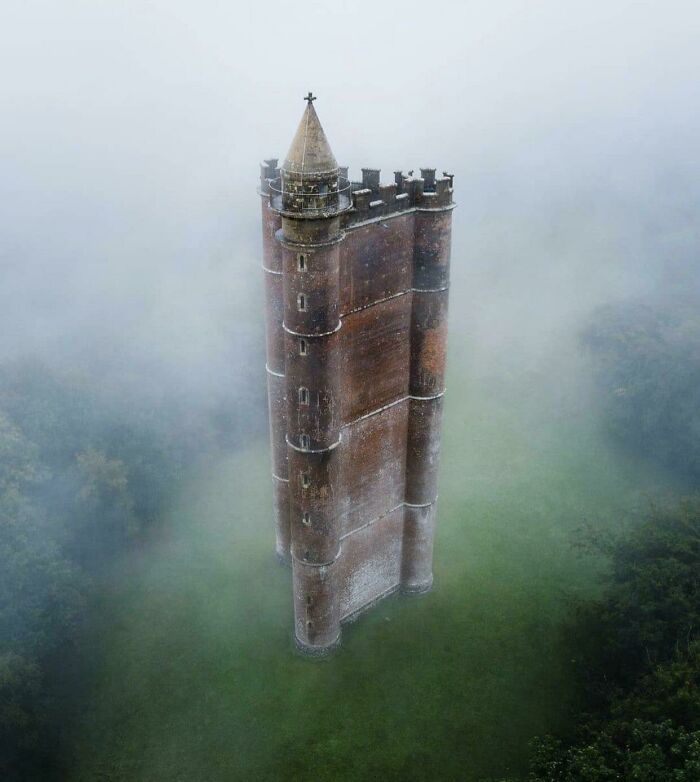
2. King Alfred’s Tower — England
This red-brick triangular tower rises dramatically from the fog in Somerset, England. Built in 1772, it commemorates Alfred the Great and reaches over 49 meters high with a narrow footprint that adds to its illusion of impossibility.
3. Alpine Refuge — Monte Cristallo, Italy
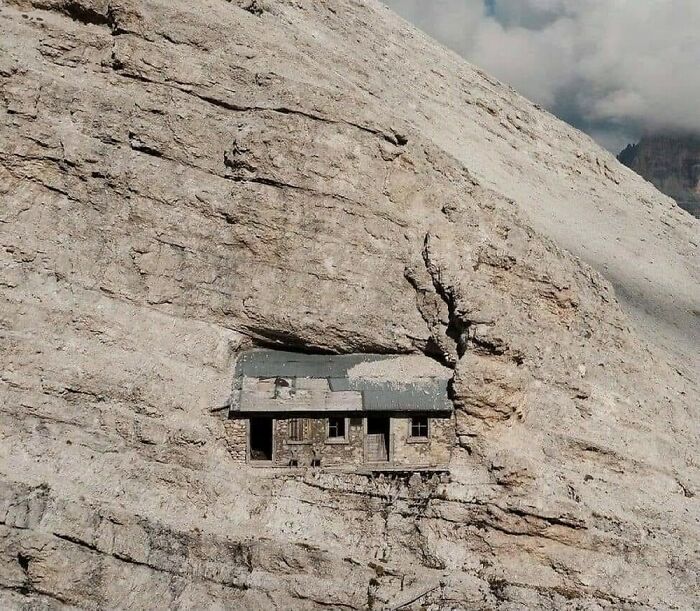
Located at 2,760 meters in the Dolomites, this hidden wooden shelter from World War I is embedded directly into the rockface. Built for survival, it now appears like a dreamlike relic barely distinguishable from the mountain.
4. Hallgrímskirkja Church — Reykjavík, Iceland
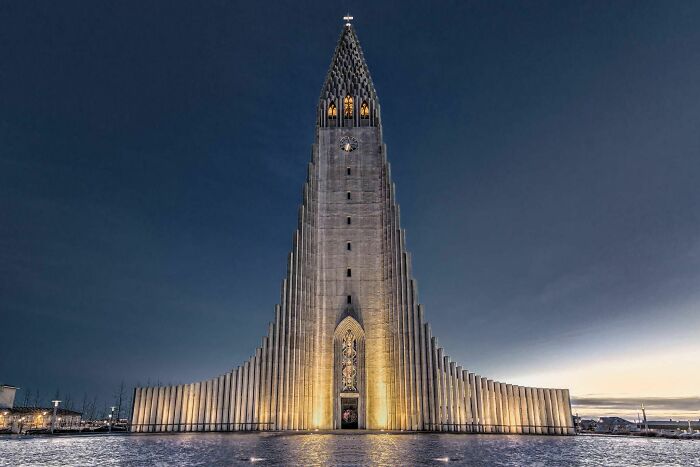
This iconic Lutheran church, inspired by basalt columns and volcanic formations, dominates the Reykjavík skyline. Designed in 1937 and completed in 1986, its symmetry and scale evoke science fiction architecture.
5. The House That Sank — The Crooked House, UK
Built in 1765 on top of a mine shaft, this British pub developed a pronounced tilt as the ground beneath it slowly gave way. Despite its slanting angles, it remained a local favorite for centuries.
6. Organic Slate Roof House — Germany
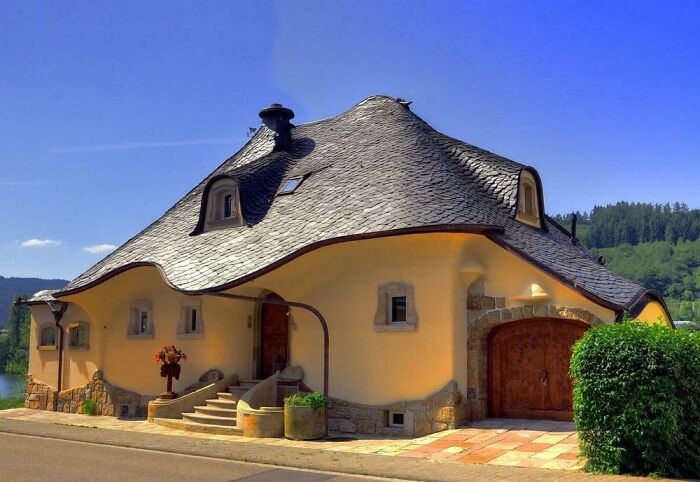
This home with flowing lines and a wave-shaped slate roof blurs the line between fairy tale and high-end eco-architecture. Natural stone and soft curves give it a whimsical yet grounded appearance.
7. Cliff House — France (Built 1347)
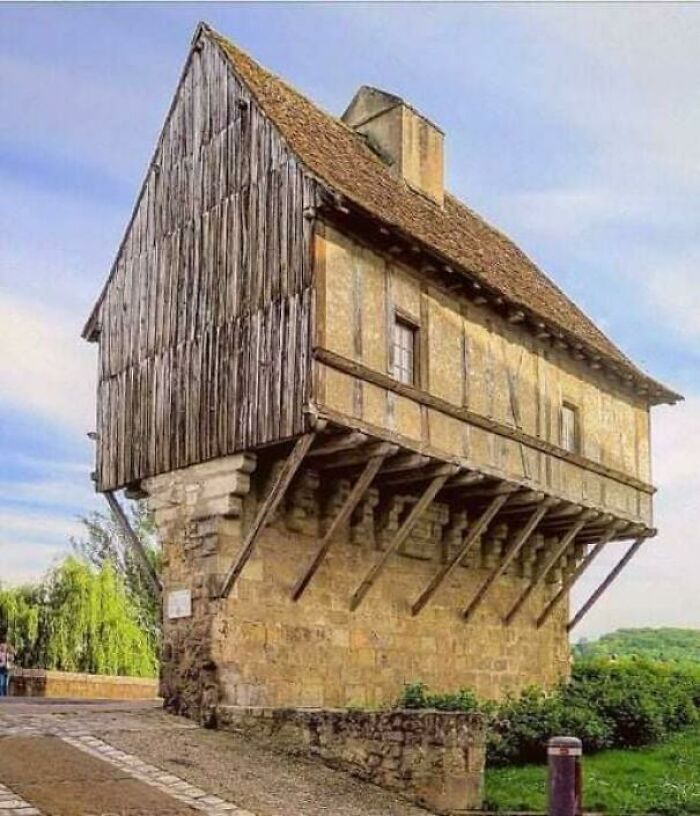
Balanced between eras and gravity, this timber-framed upper house sits atop massive medieval stonework. Located in France and completed in 1347, it seems to hover above the road with support beams stretching underneath.
8. Rock-Built Homes — Sanaa, Yemen
Traditional Yemeni tower houses in Sanaa rise directly from the rock, combining ancient stone masonry with ornate white geometric window frames. The buildings appear both sculpted by nature and intricately human-made.These buildings bend our expectations of what architecture can be — not just structures, but expressions of ingenuity, adaptation, and creativity. Whether carved into mountains or dressed like zippers, they show that the line between surreal and real is thinner than it seems.
More: 30 Sculptures You (probably) Didn’t Know Existed
Which one is your favorite?