Search
Items tagged with: natureInspiredSculptures
11 Beautiful Artworks That Seem to Grow From Nature
Content warning: Some artworks don’t just sit in nature—they become part of it. Around the world, artists are crafting sculptures and murals that seamlessly merge with their surroundings, using trees, vines, and landscapes as living elements of their work. These 11 pieces
Some artworks don’t just sit in nature—they become part of it. Around the world, artists are crafting sculptures and murals that seamlessly merge with their surroundings, using trees, vines, and landscapes as living elements of their work. These 11 pieces don’t fight against nature; they grow with it.
From giant figures emerging from forests to street art that transforms urban greenery into playful illusions, these eight stunning creations prove that art and nature can exist in perfect harmony.
More: 8 Inspiring Sculptures Seamlessly Integrated with Nature
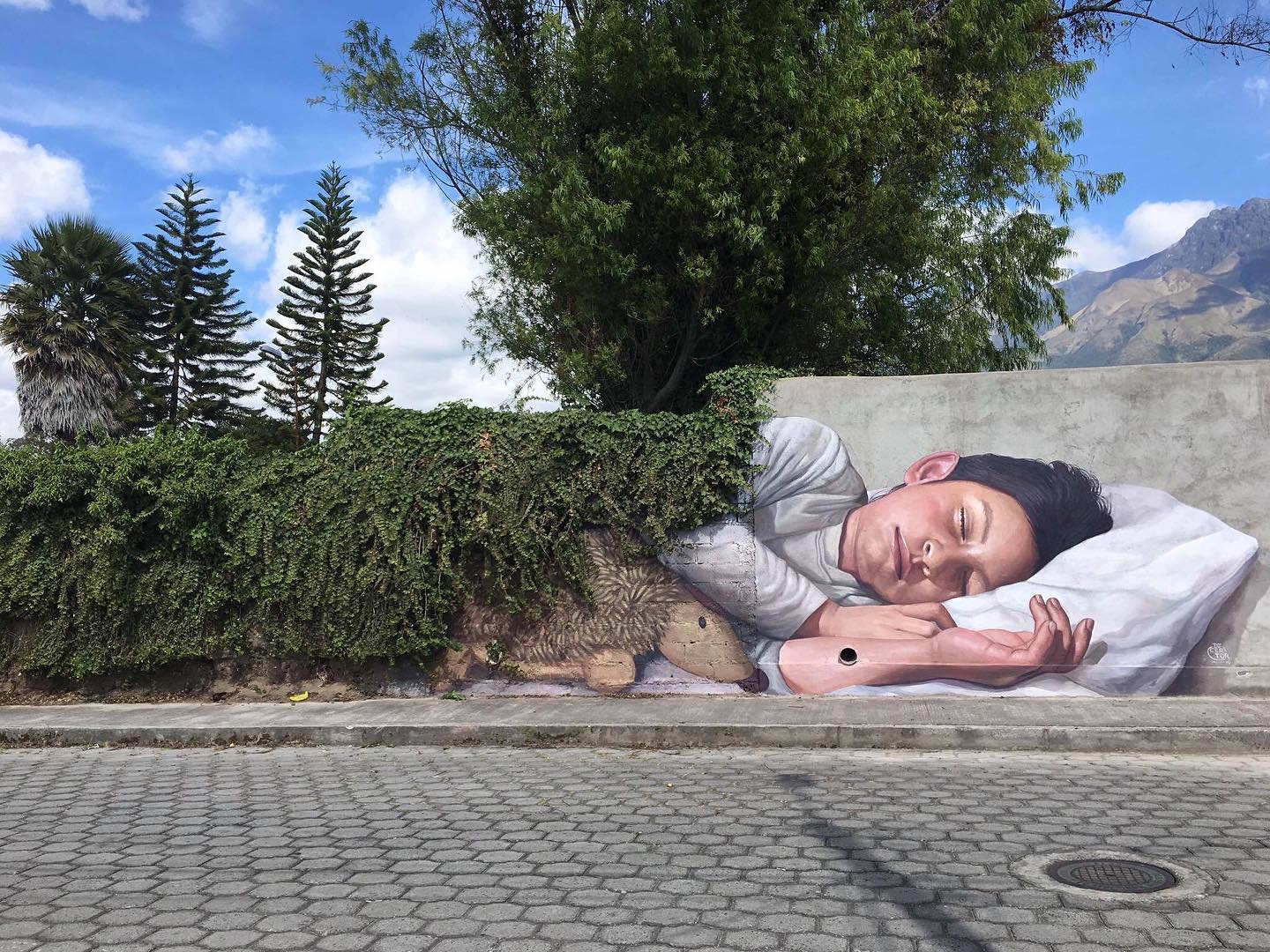
1. “Sleeping Child” by El Decertor (Imbabura, Ecuador)
A mural by El Decertor in Imbabura, Ecuador, depicting a young child sleeping against a concrete wall, with creeping ivy blending into the painting as a natural blanket.
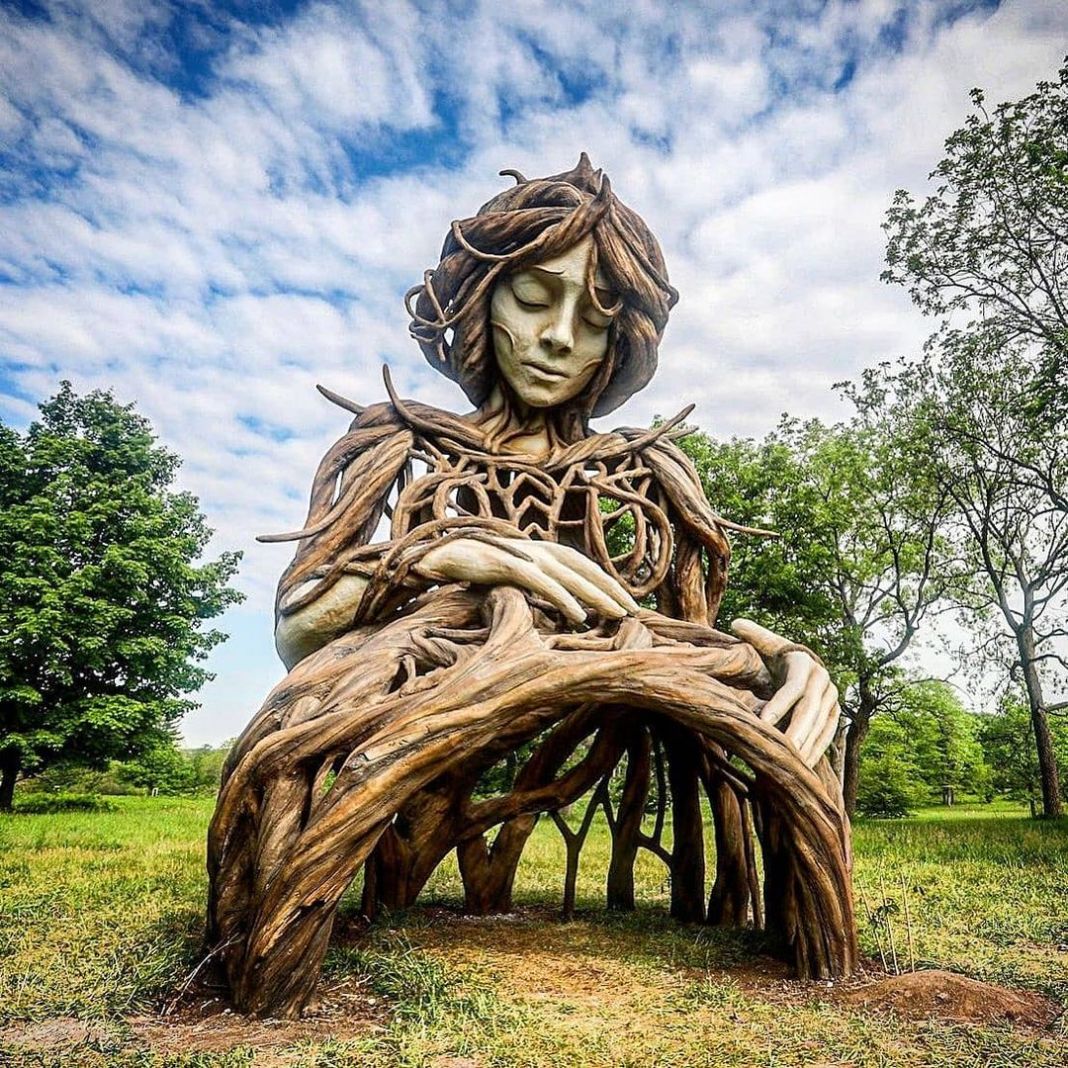
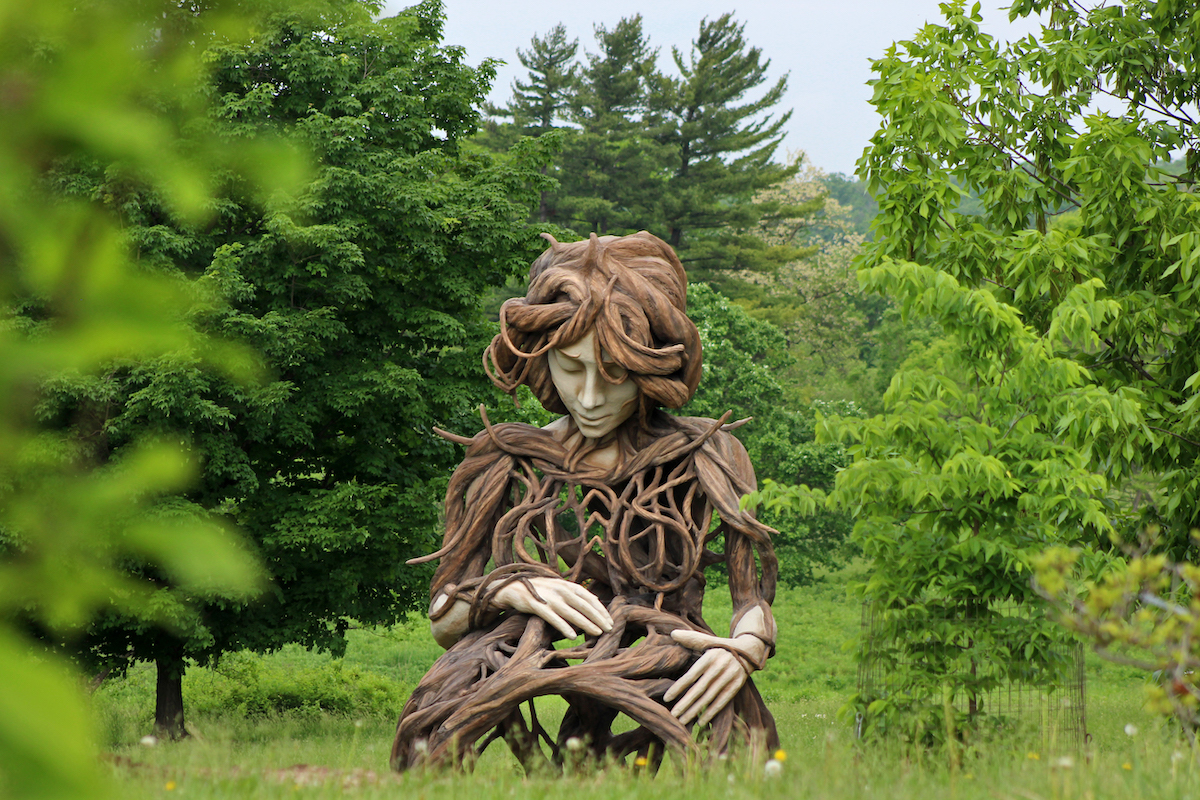
2. “UMI” by Daniel Popper (Illinois, USA)
“UMI” by Daniel Popper at the outdoor tree museum The Morton Arboretum in Illinois, USA—an intricate wooden sculpture of a woman with tree roots weaving through her body, set in a green landscape.
About and more photos: “UMI” Sculpture by Daniel Popper in Lisle, Illinois
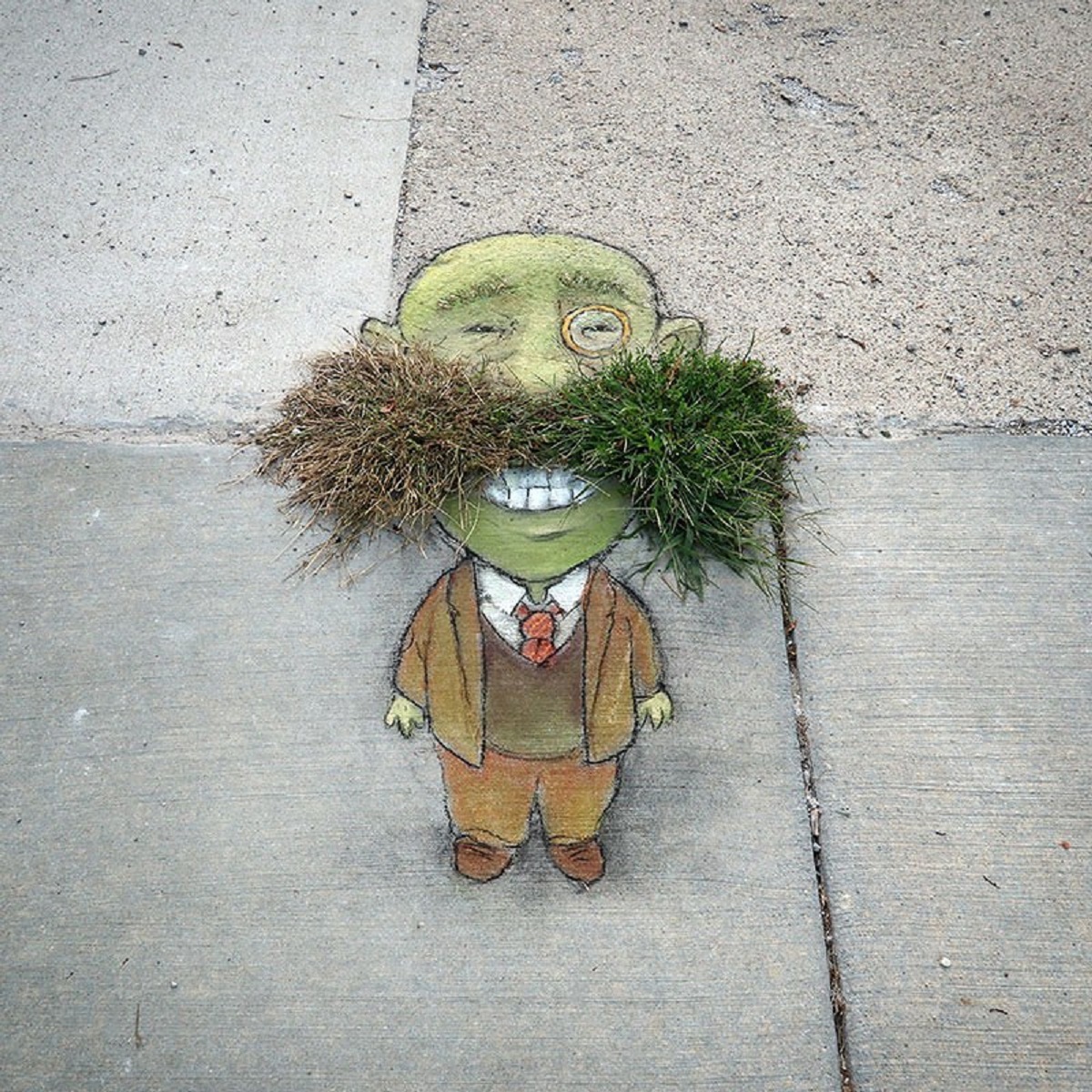
3. Street Art by David Zinn (Ann Arbor, USA)
A street art piece by David Zinn in Ann Arbor, USA, featuring a small green character with a real grass mustache blending into the pavement.
More!: Street Art by Happiness Maker David Zinn (21 Photos)

4. Flower Street Art by Fabio Gomes Trindade (Goiás, Brazil)
A mural by Fabio Gomes Trindade in Goiás, Brazil, featuring a girl’s face with a real tree forming her vibrant pink afro hairstyle.
More by Fabio Gomes: How Fábio Gomes Turns Trees into Hair: Stunning Murals in Trindade
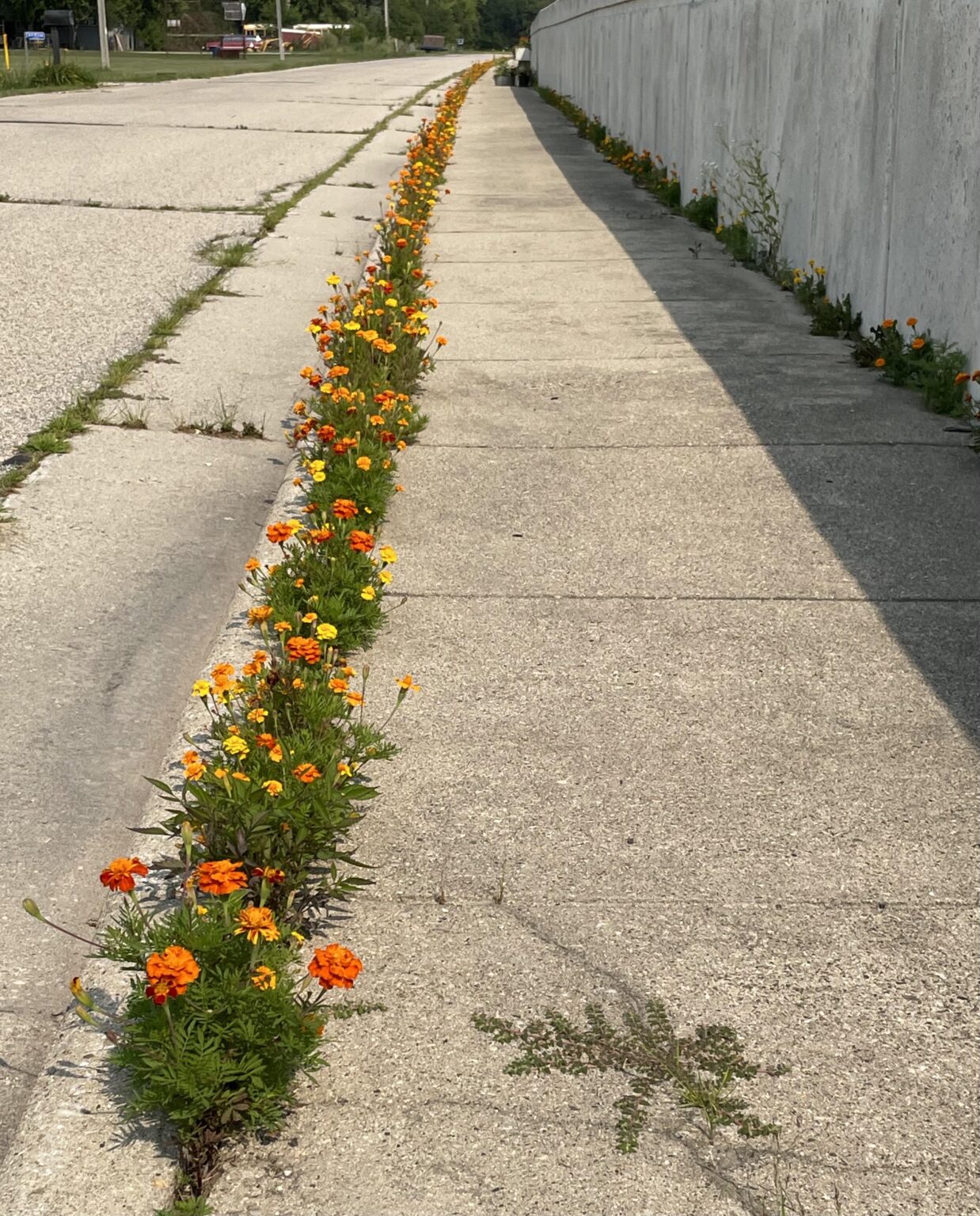
5. Sidewalk Flower Experiment
A beautiful example of accidental nature-inspired art—kindergarten children dropped seeds into sidewalk cracks, leading to a spontaneous floral pathway.
More photos and about: Kindergarten children dropped seeds in the crack of the sidewalk to see what would happen
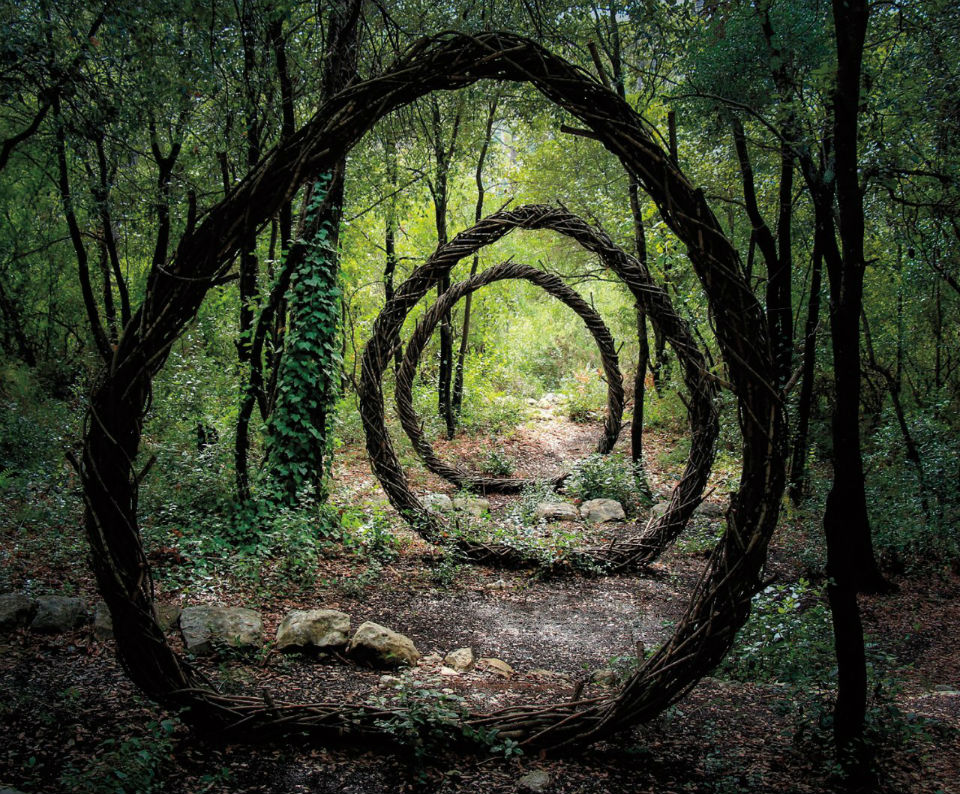
6. “Nature Rings” by Spencer Byles (Deep Forest, France)
A series of woven circular sculptures by Spencer Byles made from natural branches, blending seamlessly with the surrounding forest.
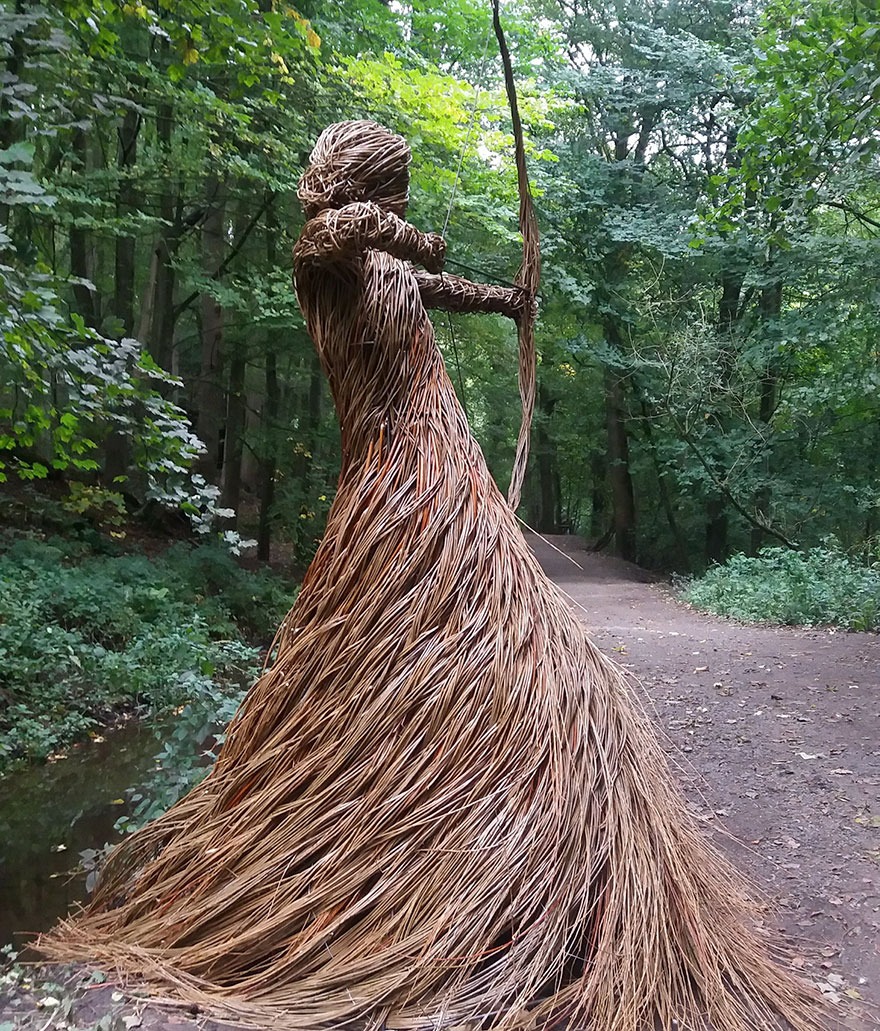
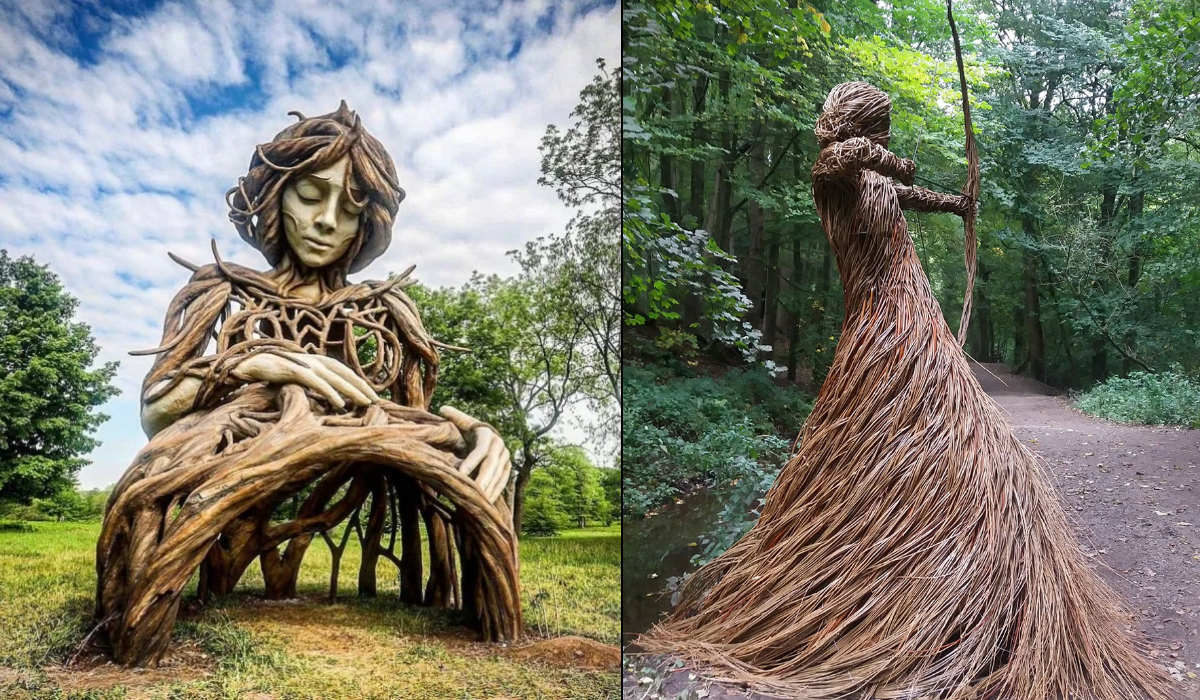
7. Willow Archer by Anna & The Willow (UK)
A woven willow sculpture of a female archer by Anna & The Willow, set against a wooded path.
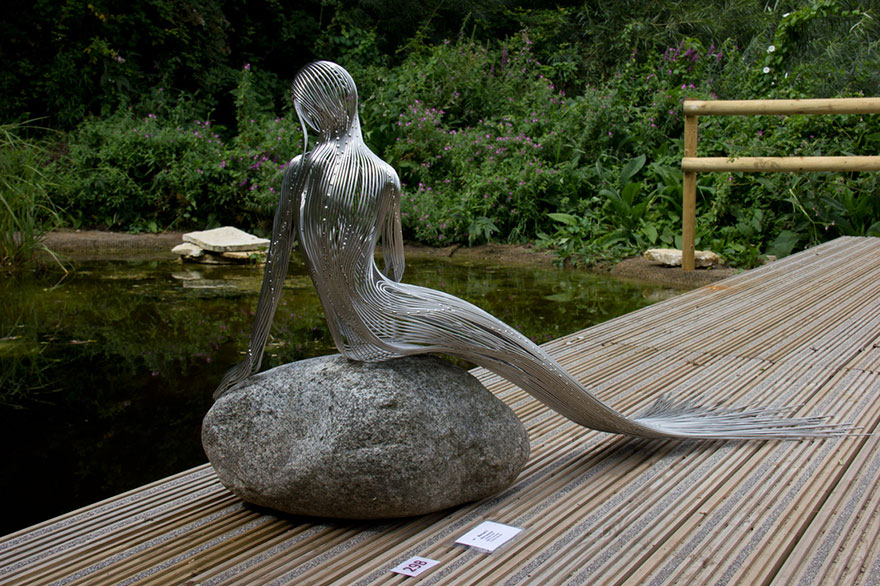
8. Wire Mermaid by Martin Debenham (UK)
A wire sculpture by Martin Debenham of a mermaid sitting on a rock, with the intricate metalwork mimicking flowing water.
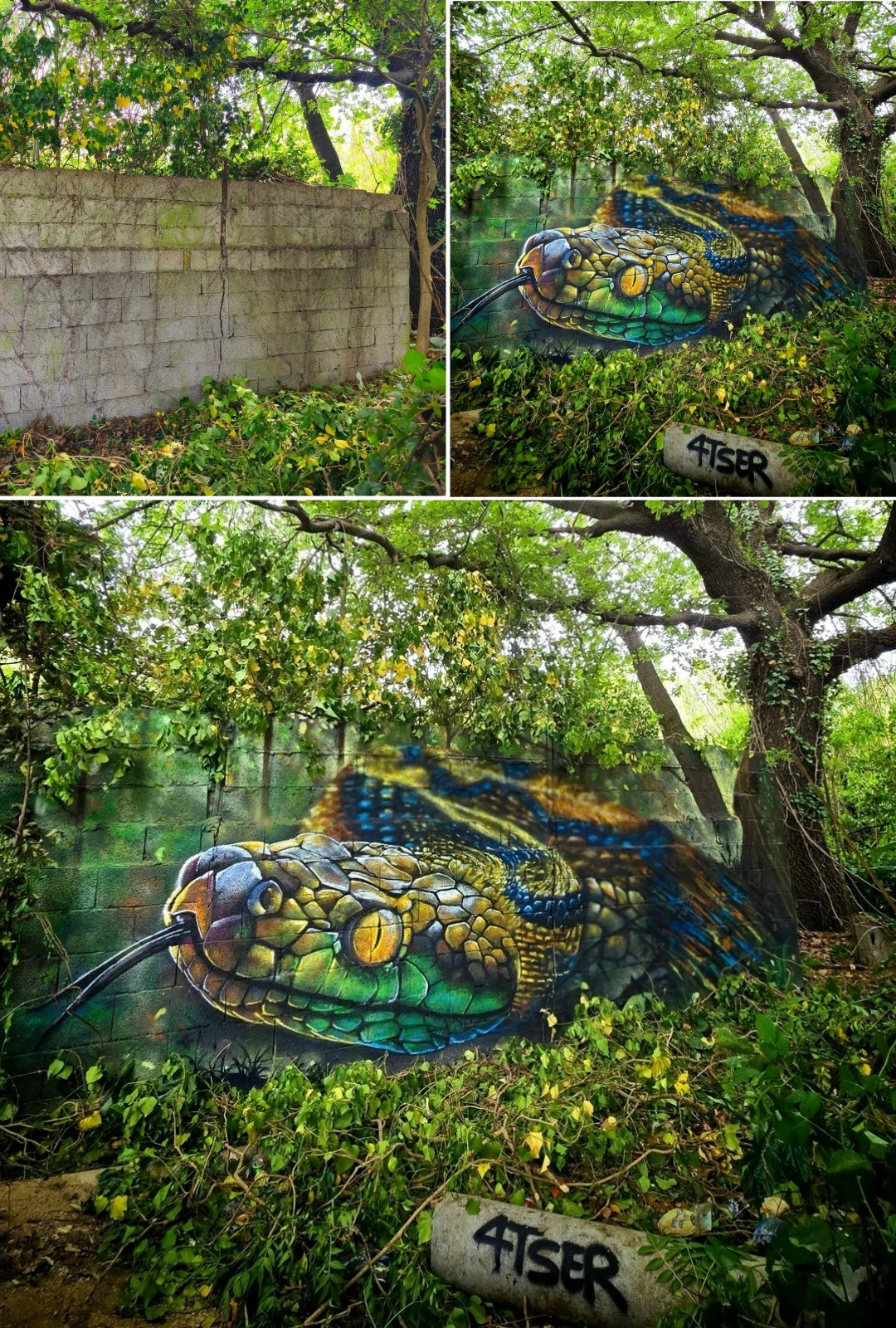
9. Snake in the Green — Hyères, France
A plain gray cinderblock wall in a hidden grove was completely transformed into a lifelike snake by street artist Rest4. The viper, rendered in vibrant greens, blues, and yellows, emerges from the shadows of the forest floor. The before-and-after framing reveals the power of imagination to awaken forgotten spaces.
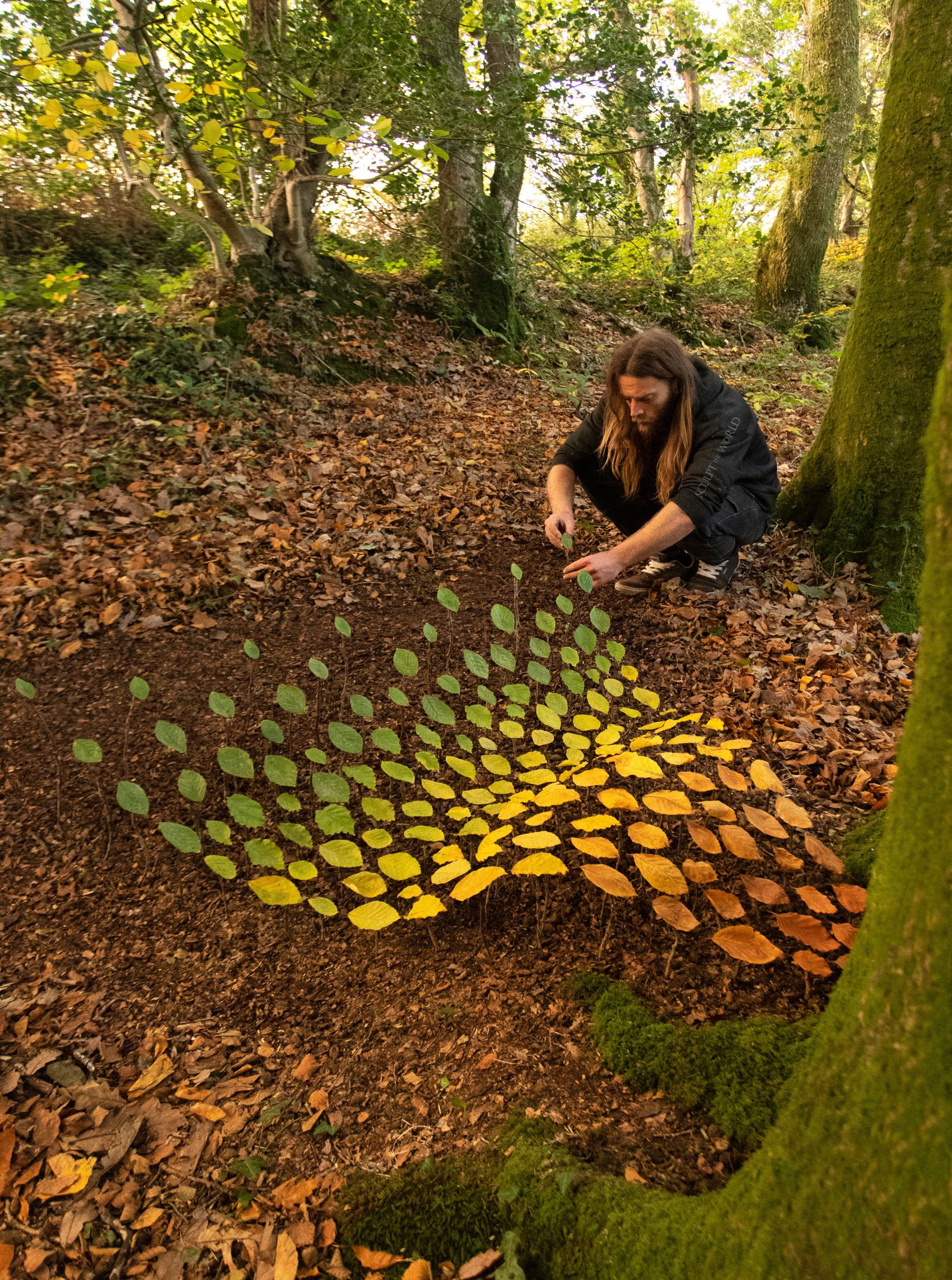
10. Fluentem Colos — Little Milford, Wales
Land artist Jon Foreman created this delicate, wave-like gradient in a woodland clearing using carefully arranged leaves. Starting in green and fading to deep orange, the sculpture blends with the forest floor in color, shape, and motion—appearing to ripple like wind through grass. More by Jon Foreman: 9 Leaf Sculptures That Stir the Soul in the Forest (Art by Jon Foreman)
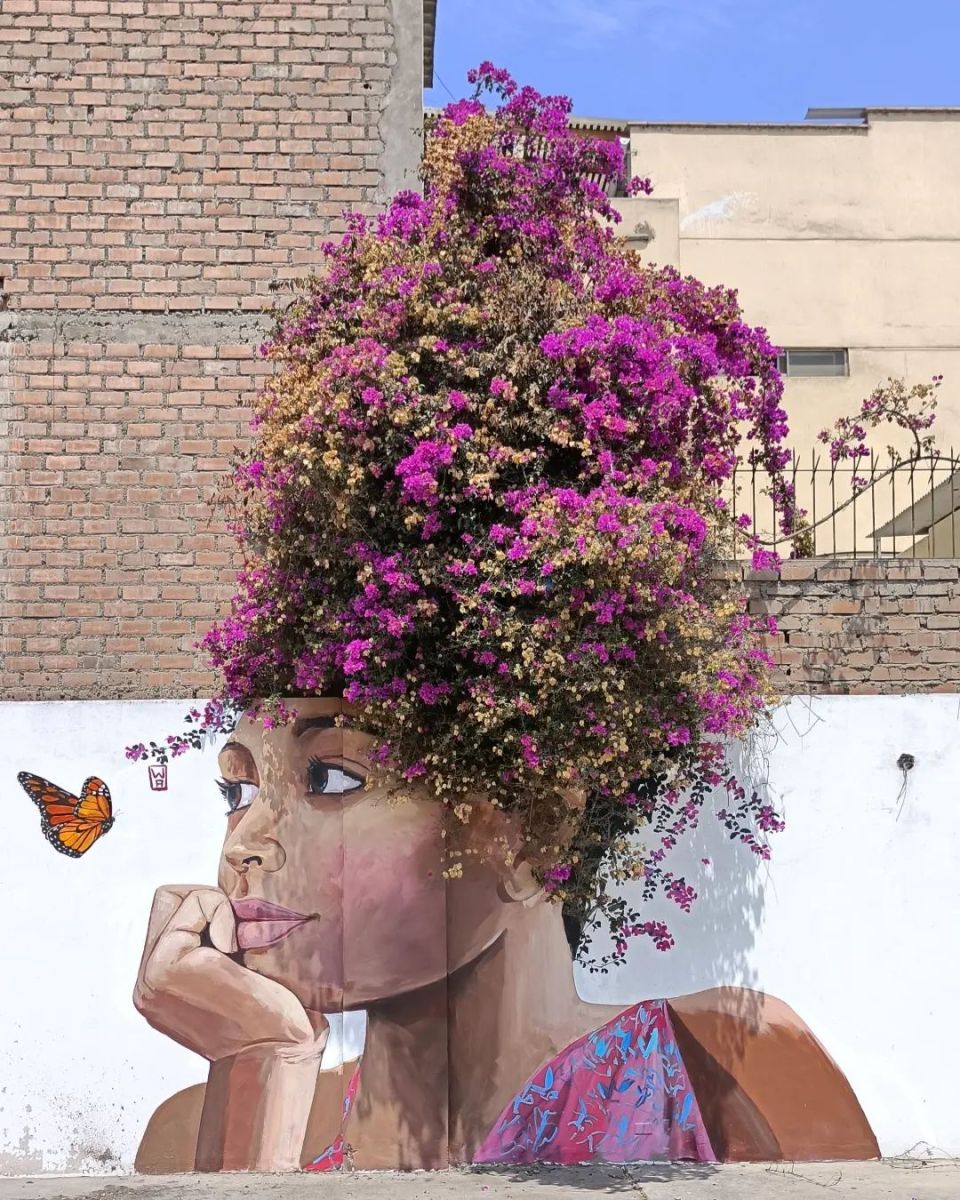
11. Florinda Camila — “WA” Marko Franco Domenak in Lima, Peru
This creative mural cleverly incorporates a real bougainvillea bush as the hair of a painted woman. A monarch butterfly completes the peaceful scene, adding movement to this blend of paint and nature.
🔗 Follow WA on Instagram
More: When Street Art Meets Nature (40 Photos)
Which one is your favorite?

Sculptures That Blend With Nature (10 Photos)
Public art can make a plain place worth stopping for.
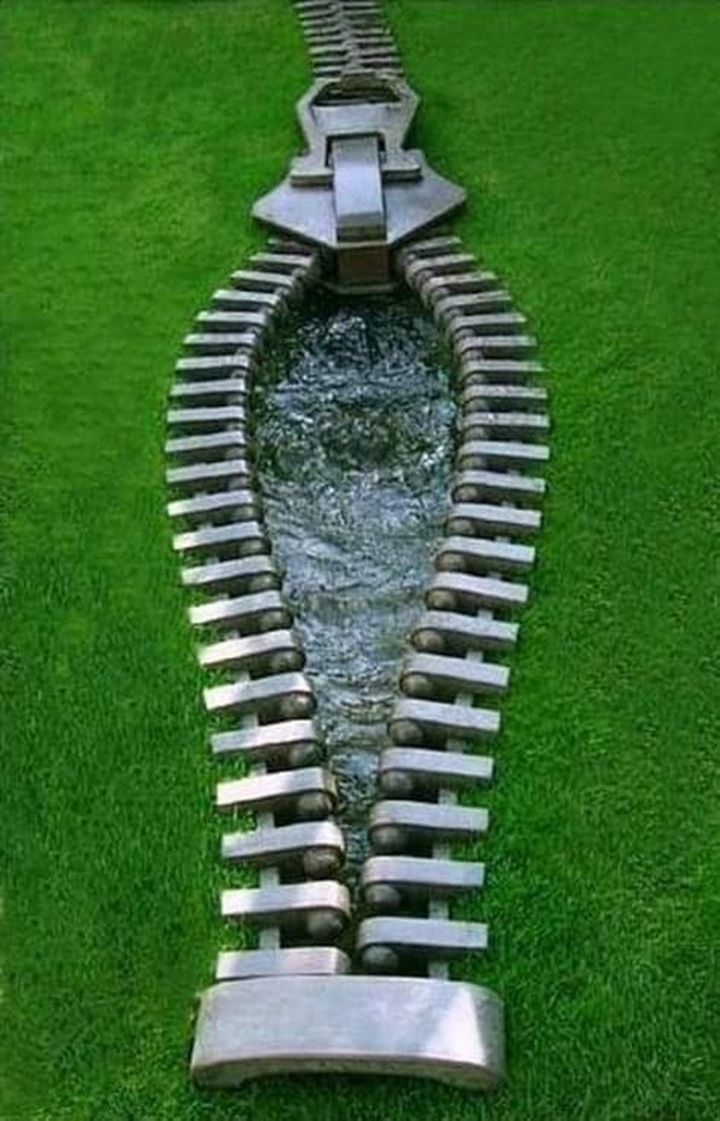
These sculptures use grass, trees, water, sand, and open space as part of the work.Here are 10 sculptures from around the world: a giant clothespin pinching the ground, a zipper opening a lawn, and a bench waiting in a slingshot. Small everyday ideas, made very large.
More: 30 Sculptures You (Probably) Didn’t Know Existed
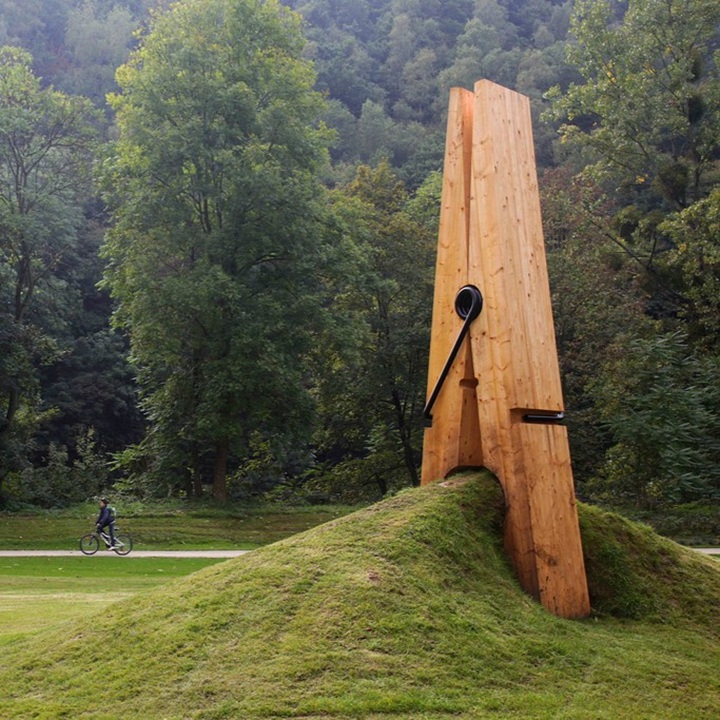
🪵 Skin 2 — By Mehmet Ali Uysal, originally in Chaudfontaine Park, Belgium 🇧🇪
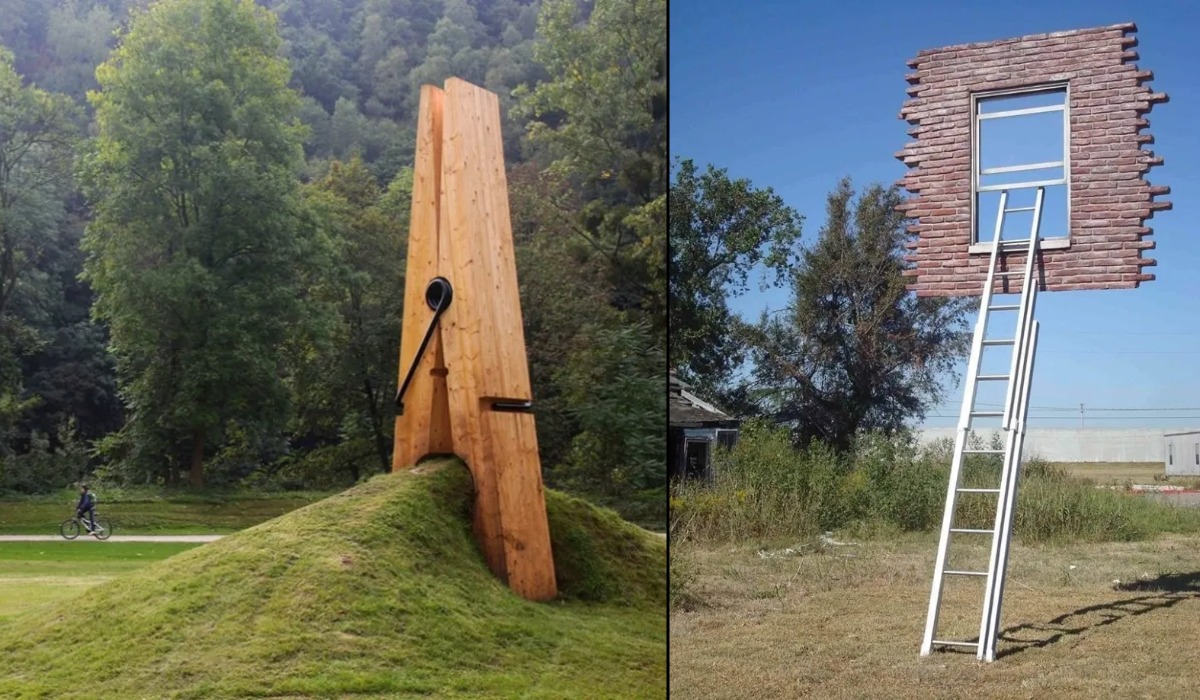
Made for Parc Hauster in Chaudfontaine, near Liège, Belgium, Skin 2 looks like a wooden clothespin pinching the ground. Turkish artist Mehmet Ali Uysal turned a clothespin into a sculpture so large that the lawn becomes part of the work.💡 Nerd Fact: The original Chaudfontaine installation is no longer a regular park stop: Atlas Obscura now marks the site as permanently closed and notes that the sculpture was no longer in the park in its April 2022 update. The work still appears in gallery records: Pi Artworks lists Skin 2 as a 2010 sculpture measuring 700 × 800 cm, courtesy of the municipality of Liège.
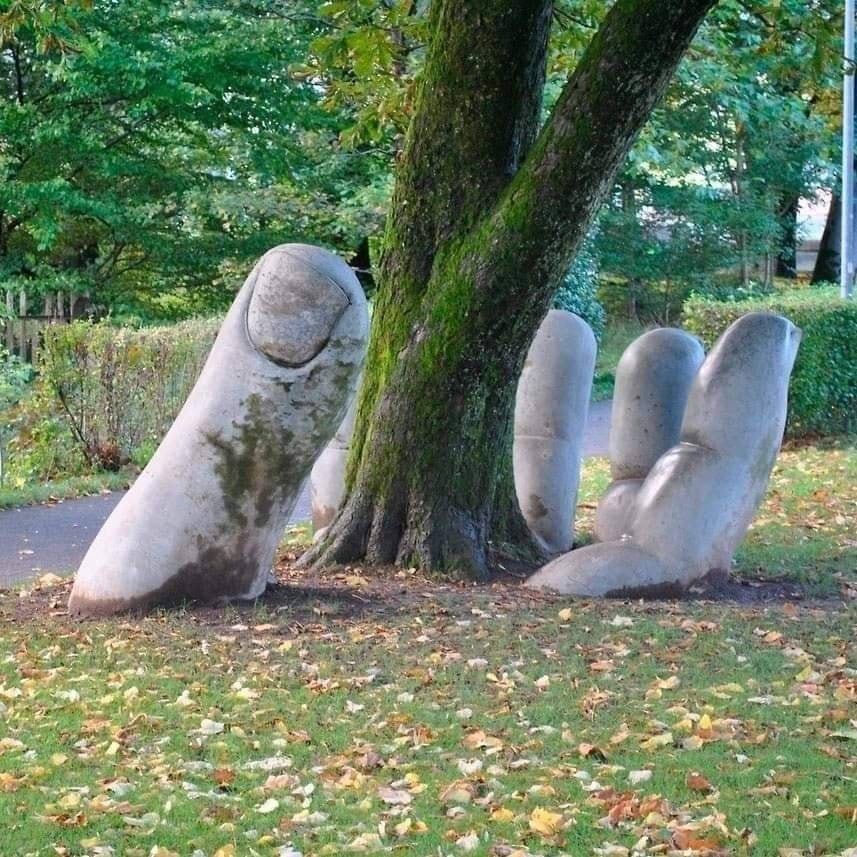
🤲 HAND and PARK TREE (The Caring Hand) — By Eva Oertli and Beat Huber in Glarus, Switzerland 🇨🇭
In the Volksgarten in Glarus, Switzerland, the work known as The Caring Hand rises around a living tree. Beat Huber documents the installation as HAND and PARK TREE, realized with Eva Oertli. The oversized concrete fingers make the tree look held and protected.💡 Nerd Fact: Beat Huber says the idea began in 1990 as an art-in-architecture proposal for a new agricultural school, but it was shelved because there was not enough space or money. When it was finally made for Skulptura 04 in 2004, it was planned to last only four months. Public pressure changed that: private donors raised CHF 43,700, and Glarus received the hand as a gift from the public.
About and more photos: The Caring Hand – Sculpture in Glarus, Switzerland
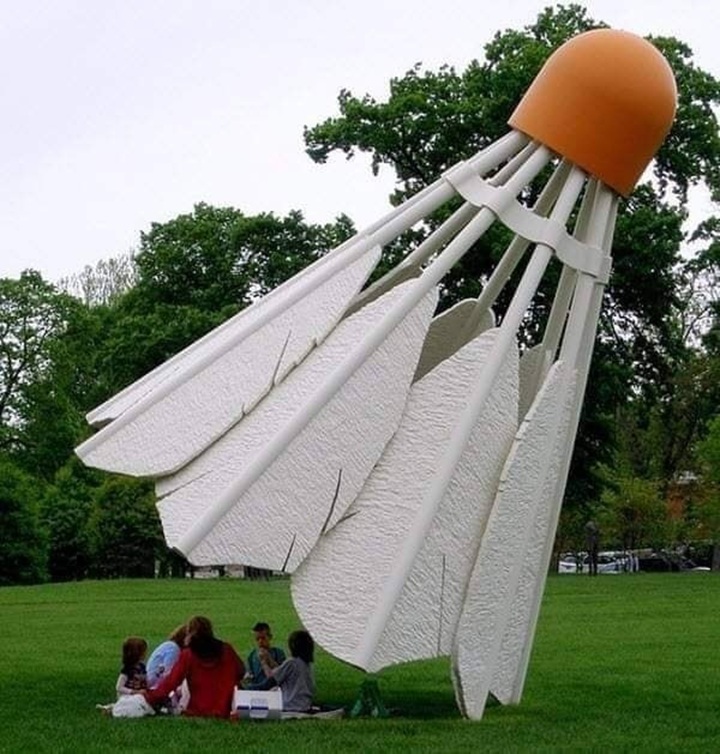
🏸 Shuttlecocks — By Claes Oldenburg and Coosje van Bruggen in Kansas City, Missouri, USA 🇺🇸
In the Donald J. Hall Sculpture Park at The Nelson-Atkins Museum of Art in Kansas City, Missouri, giant badminton birdies sit in the grass. The work, called Shuttlecocks, was created by Claes Oldenburg and Coosje van Bruggen. It looks like a huge game stopped mid-rally and nobody came back to clean it up. The museum lists each shuttlecock as nearly 18 feet tall, about 16 feet across, and 5,500 pounds.💡 Nerd Fact: Oldenburg and van Bruggen’s idea was architectural, not just oversized. The Nelson-Atkins says they imagined the museum building as the badminton net and the lawn as the playing field, then placed four shuttlecocks as if a rally had frozen on both sides of the “net.”
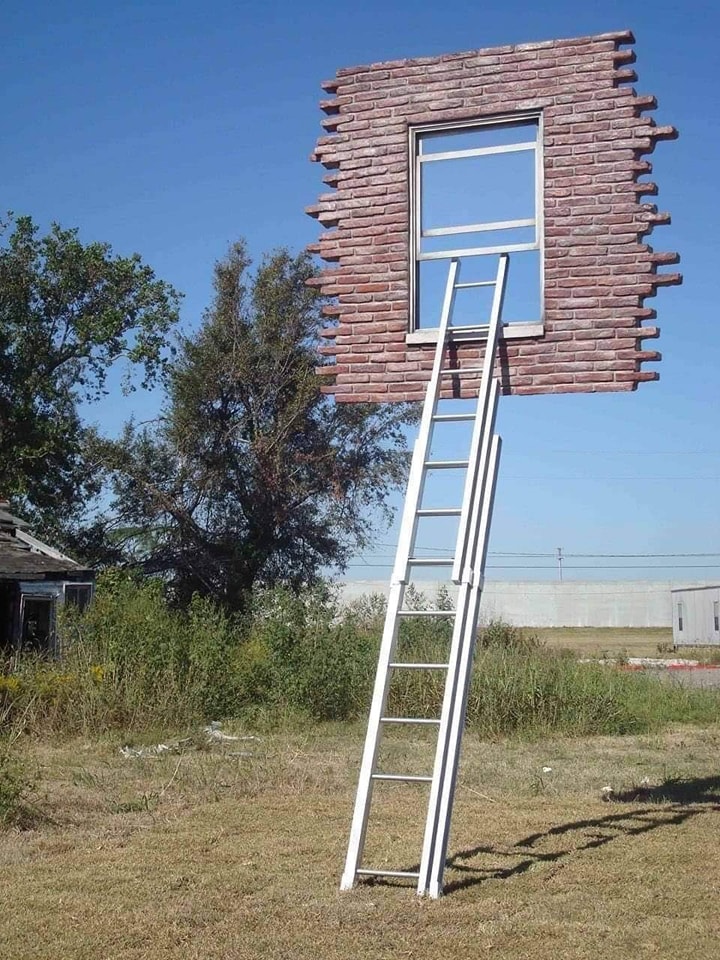
🪟 Window with Ladder – Too Late for Help — By Leandro Erlich in New Orleans, Louisiana, USA 🇺🇸
Leandro Erlich’s Window with Ladder – Too Late for Help shows a white ladder leading to a brick wall with an open window. The wall appears to float above the field with no house attached. The work is now in the Sydney and Walda Besthoff Sculpture Garden at the New Orleans Museum of Art.💡 Nerd Fact: NOMA lists the work’s hidden support system as a steel underground structure, but the context is more serious than the engineering. It was first installed in 2008 in a vacant lot in New Orleans’ Lower Ninth Ward for Prospect.1, in an area devastated by Hurricane Katrina.
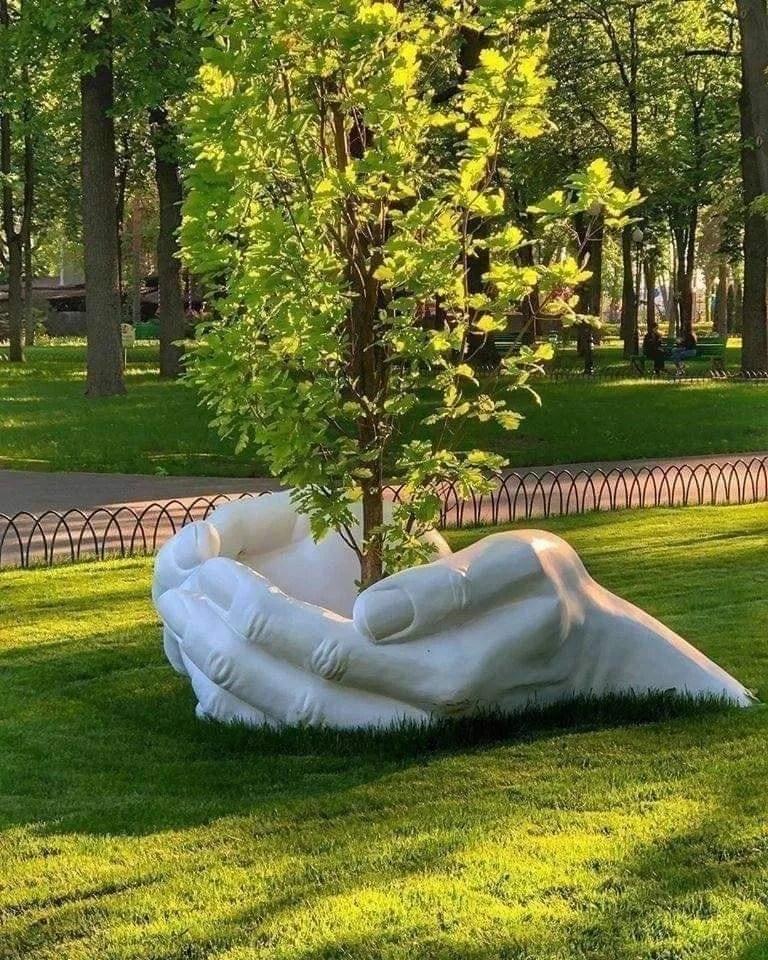
🌳 Give — By Lorenzo Quinn, now in Pietrasanta, Italy 🇮🇹
Give by Italian artist Lorenzo Quinn shows two giant hands holding an tree. The hands sit low in the grass, making the tree look newly planted and protected.💡 Nerd Fact: Halcyon Gallery described Give (this time a olive tree) as a gift from Quinn and Halcyon Gallery to Pietrasanta, first unveiled in Florence’s Uffizi Gardens in 2020. Quinn’s biography says it later stood outside Palermo Cathedral before being permanently installed in Pietrasanta’s International Park of Contemporary Sculpture.
More by Lorenzo Quinn: Support – Message About Climate Change
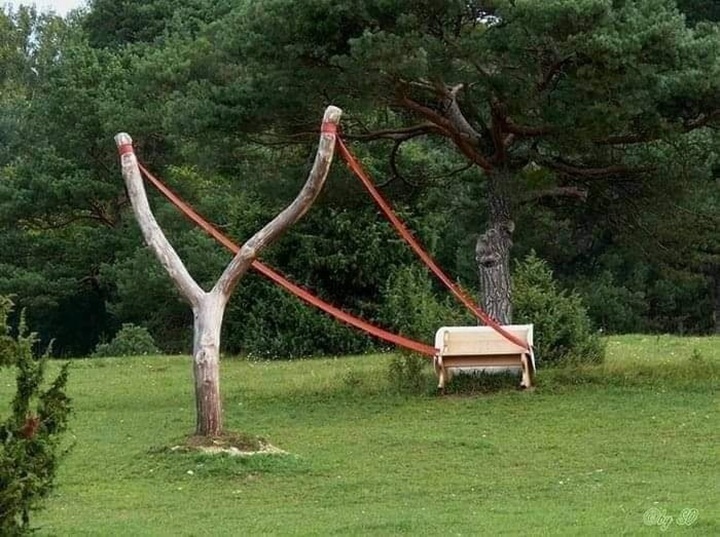
🚀 Schleudersitz — By Cornelia Konrads, made for Neustadt an der Donau, Germany 🇩🇪
German artist Cornelia Konrads built Schleudersitz with a wooden bench, rubber, steel cable, and the trees on site. It looks ready to launch across the grass. Sitting there might feel like trusting the artist a little too much.💡 Nerd Fact: The German title Schleudersitz means “ejection seat,” and the location made the joke sharper. Sculpture Network records the 2010 work as part of the Flying Objects exhibition on a former vineyard, now a leisure park, overlooking the Danube Valley.
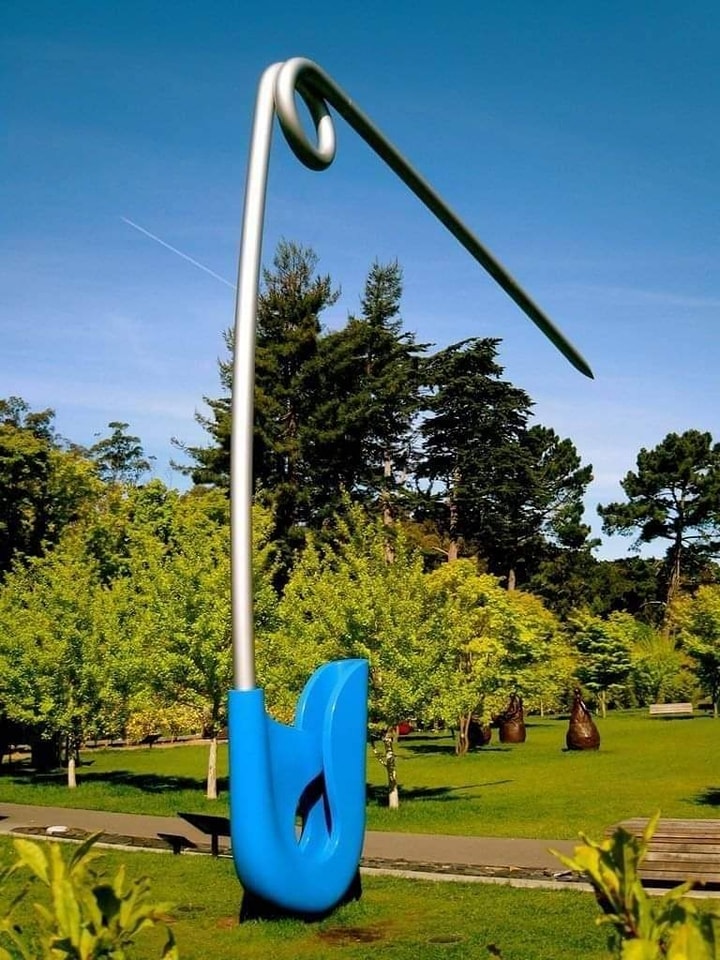
🧷 Corridor Pin, Blue — By Claes Oldenburg and Coosje van Bruggen in San Francisco, USA 🇺🇸
In the Barbro Osher Sculpture Garden at the de Young Museum in San Francisco, Corridor Pin, Blue stands over the garden like a sewing tool left in the wrong scale. Created by Claes Oldenburg and Coosje van Bruggen, the blue base and long silver pin make it hard to miss.💡 Nerd Fact: This giant safety pin is not alone. NOMA’s collection lists another Corridor Pin, Blue as edition 3/3, while the Nasher Museum identifies an artist’s proof with the same 255 × 256 × 16 inch dimensions. The “tiny” domestic object has siblings in more than one city.
🤐 Zip — By Mark Richard Hall in the Hamptons, New York, USA 🇺🇸
This grass-and-water zipper is best identified as Zip, a private Hamptons commission by British sculptor Mark Richard Hall. The oversized metal zipper opens the lawn into a narrow water feature, making the garden look unzipped.💡 Nerd Fact: This image is an easy caption trap. It often circulates online as a Yasuhiro Suzuki sculpture in Tokyo, but stronger sources point to Hall. Mark Richard Hall’s own studio lists a commission called Zip in the Hamptons, and Architectural Digest identifies a stainless-steel zipper sculpture by Hall embedded in the grass at a Southampton home. Suzuki’s verified zipper work is the boat-based Zip-Fastener Ship, which uses a wake to “unzip” water.
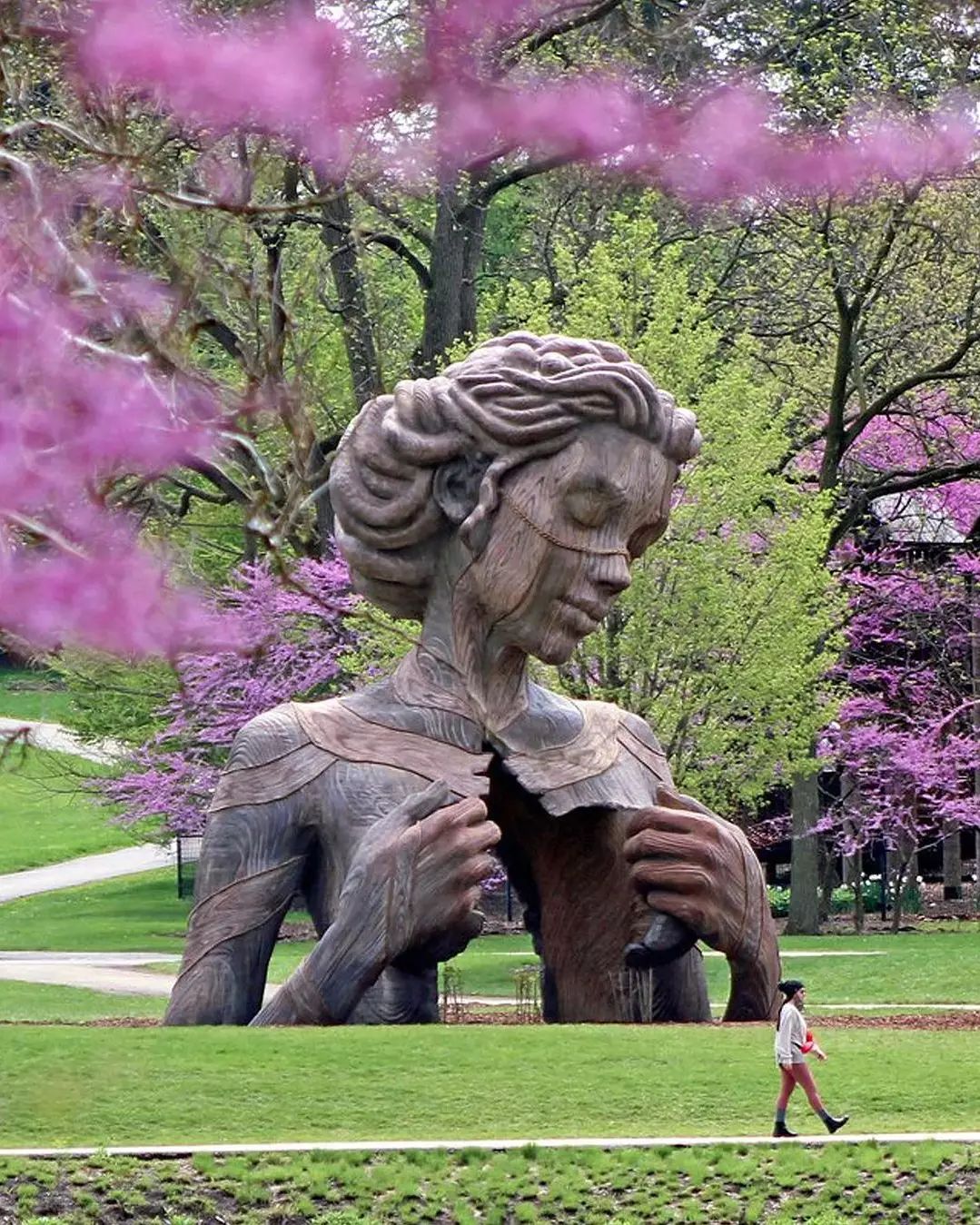
🌸 Hallow — By Daniel Popper, formerly at The Morton Arboretum in Lisle, Illinois, USA 🇺🇸
Daniel Popper’s Hallow is a monumental figure of a woman opening her chest. The hollow space inside is framed by hands, carved hair, and trees in bloom around the work. It was installed near Meadow Lake at The Morton Arboretum in Lisle, Illinois.💡 Nerd Fact: Hallow belonged to Popper’s Human+Nature exhibition, which the Morton Arboretum described as his first major U.S. exhibition and largest anywhere at the time. The Arboretum now notes that the exhibition has concluded, but Popper’s own text for the work connects Hallow to grief, self-expression, growth, and healing rather than a simple “nature goddess” reading.
More photos: 5 Photos of Sculpture “Hallow” By Daniel Popper in Lisle, Illinois
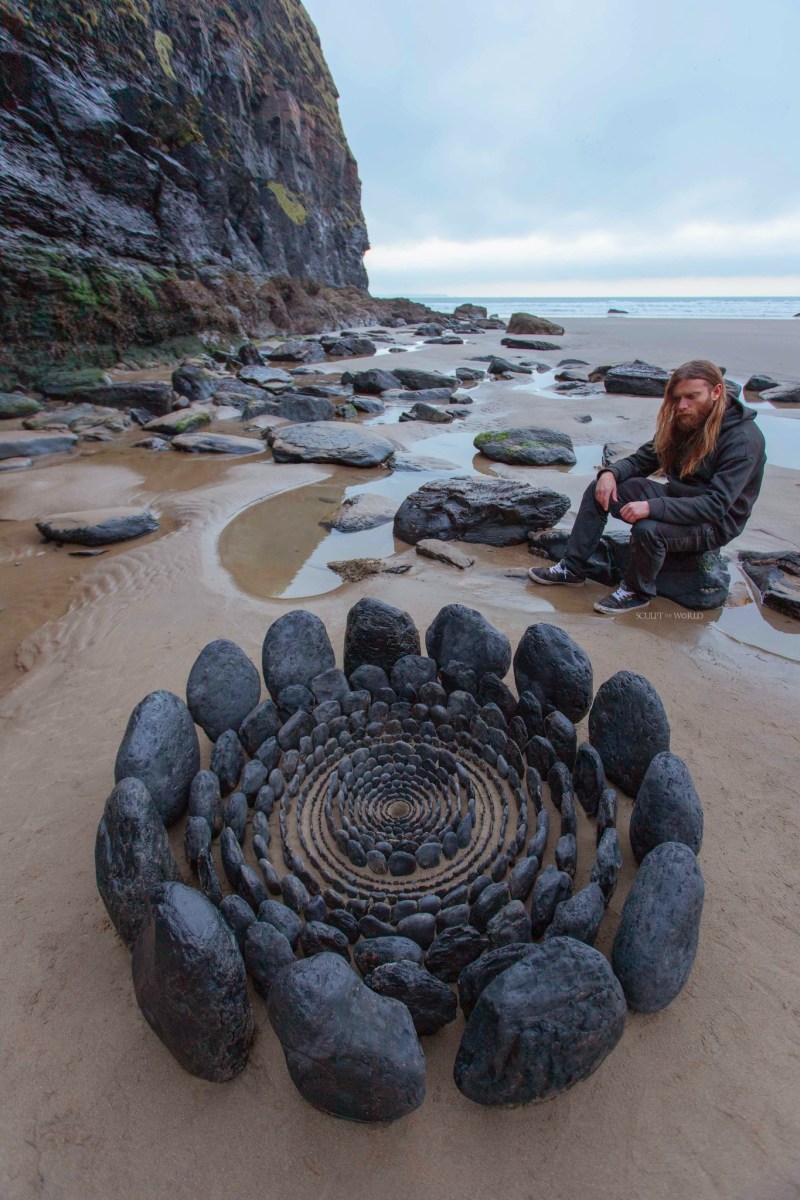
🌀 Augere — By Jon Foreman, created at Druidston, Wales, UK 🇬🇧
Jon Foreman arranged natural stones in tight circles on the sand at Druidston, Wales. In a 2025 post, Foreman identified the work as Augere. The piece changes as the tide moves in. More: Amazing Sculptures by Jon Foreman! (12 Photos)💡 Nerd Fact: Foreman’s land art is not built to survive the coast. In an interview, he says the tide washes a work back to the tide line and he returns the next day to “an empty canvas”. So with pieces like Augere, disappearance is not a failure. It is part of the schedule.
Which one is your favorite?
Land Artist Creates Ephemeral Stone Art on the Shores of the U.K.
Land artist Jon Foreman creates stone art on the shores of the U.K. His rock arrangements are tributes to the beaches and waves for which they reside.Sara Barnes (My Modern Met)