Search
Items tagged with: 57
100 of the Most Loved Photos on Street Art Utopia Right Now
Content warning: These are the 100 photos currently sitting at the top of Street Art Utopia’s ongoing Top Images collection. Get ready for a visual feast! This collection features the very best murals, sculptures, and clever street interventions. These are the images that
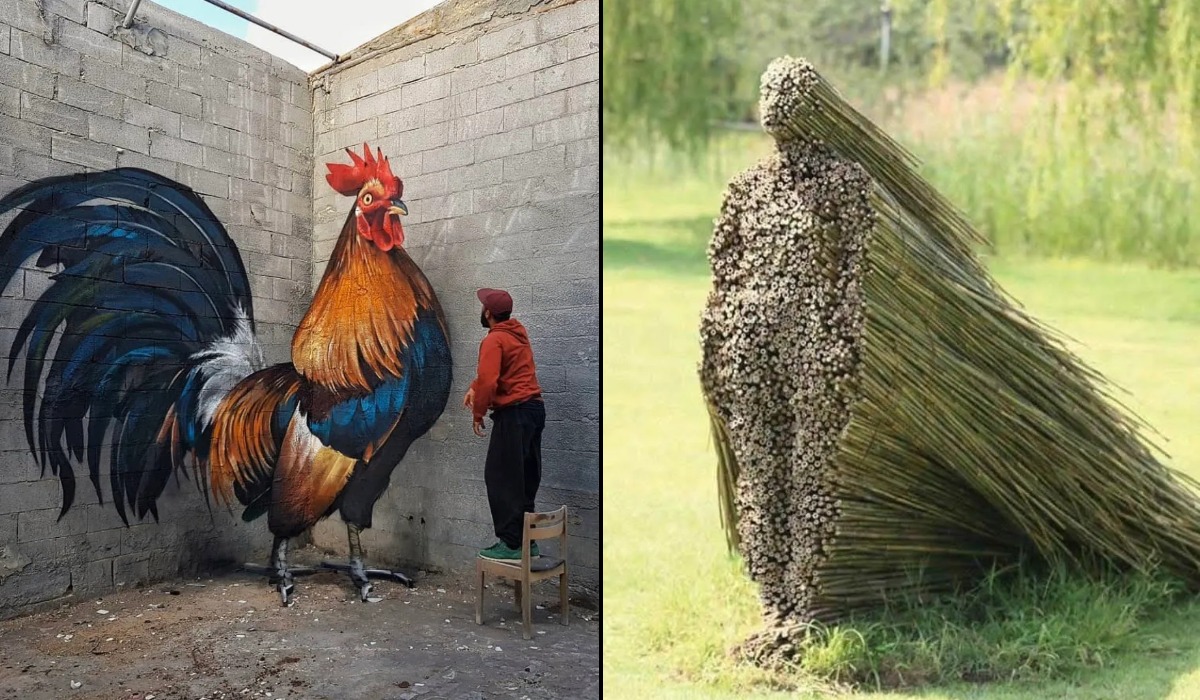
These are the 100 photos currently sitting at the top of Street Art Utopia’s ongoing Top Images collection.
Get ready for a visual feast! This collection features the very best murals, sculptures, and clever street interventions. These are the images that stop people mid-scroll and demand a second look. It is a mix of emotional public art and perfectly timed moments that celebrate pure creativity.
This roundup is for everyone who loves surprising ideas and unforgettable outdoor art. From nature merging with paint to giant illusions that defy logic. Every piece here earned its spot by capturing hearts around the world right now.
More: Top 100 Photos
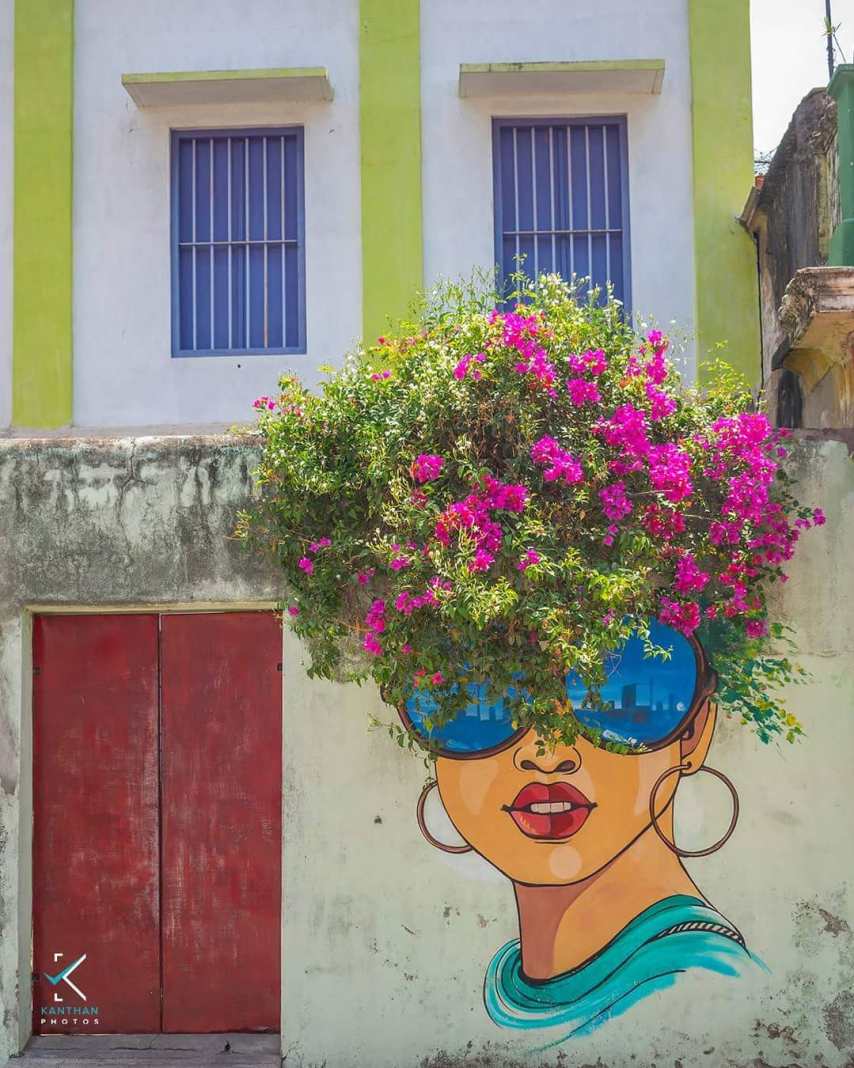
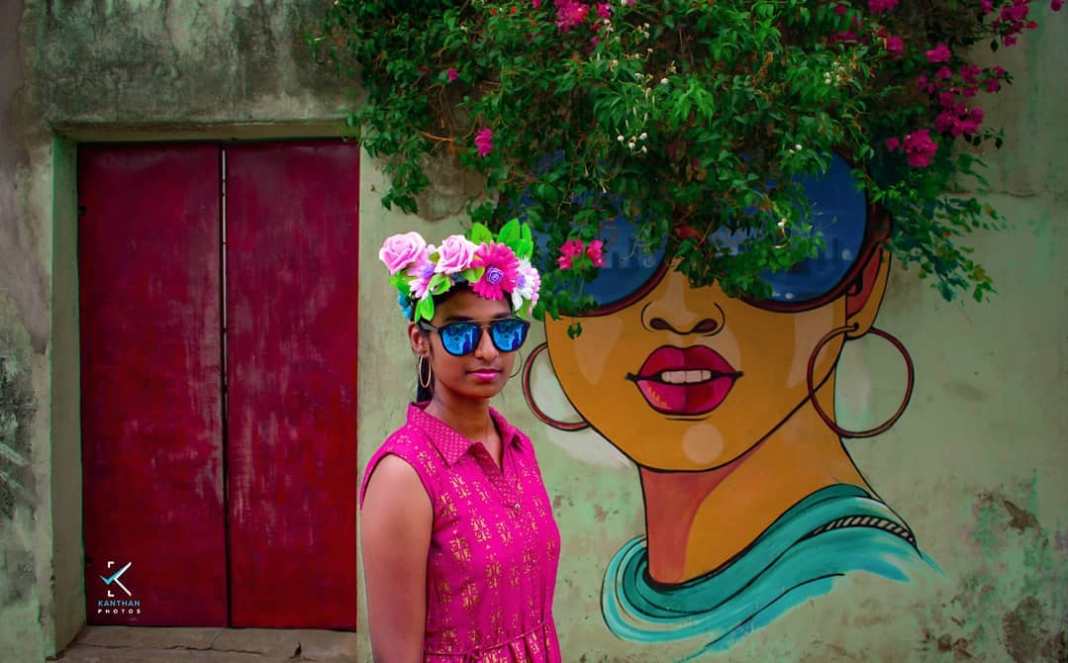
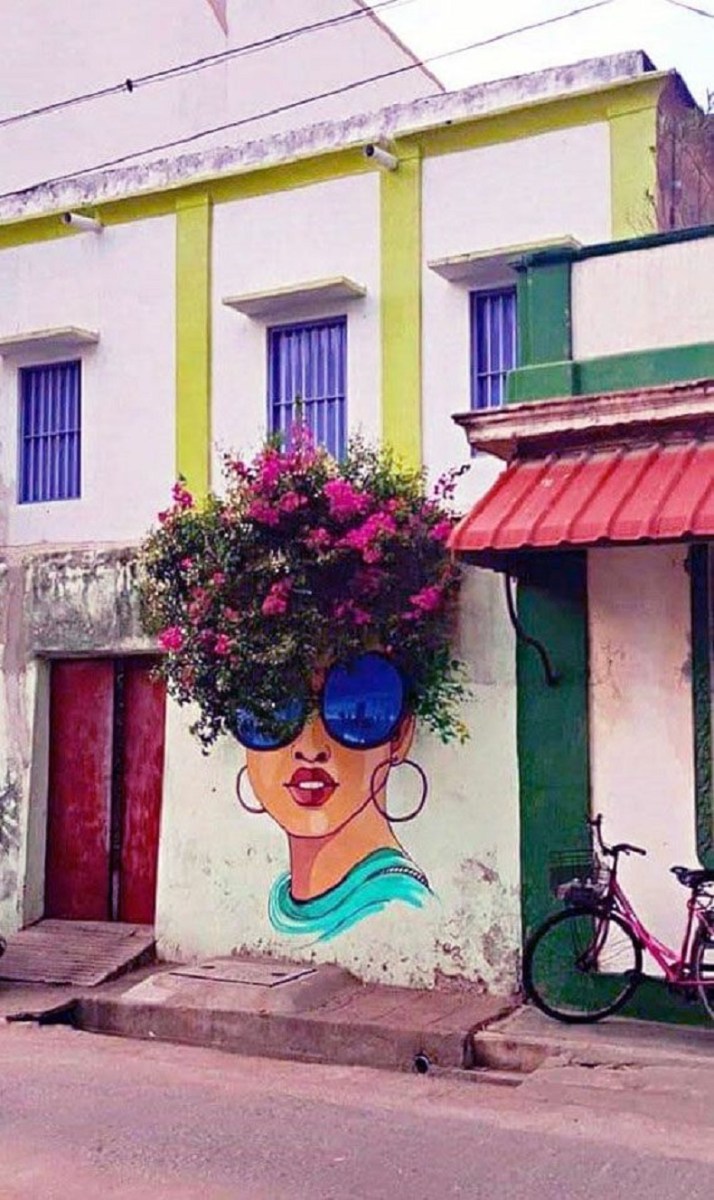
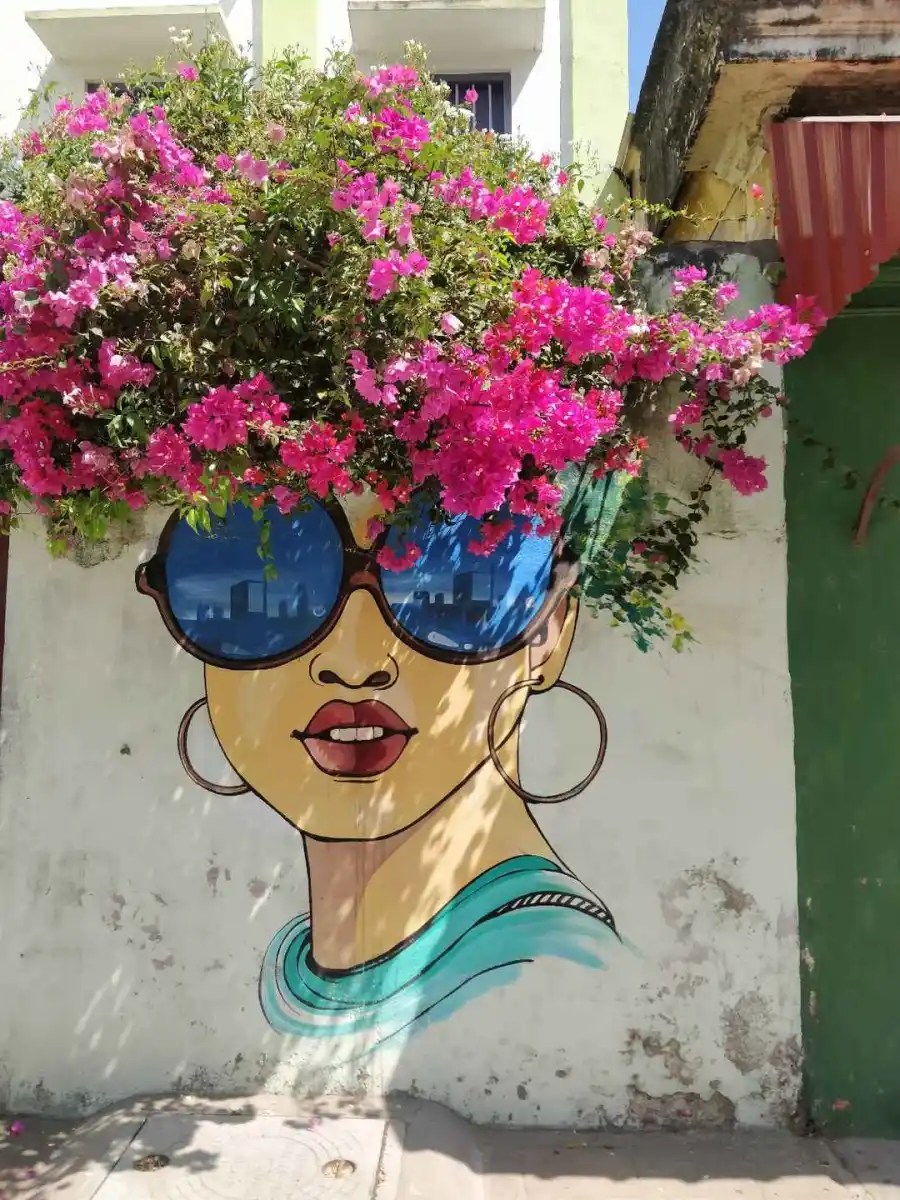
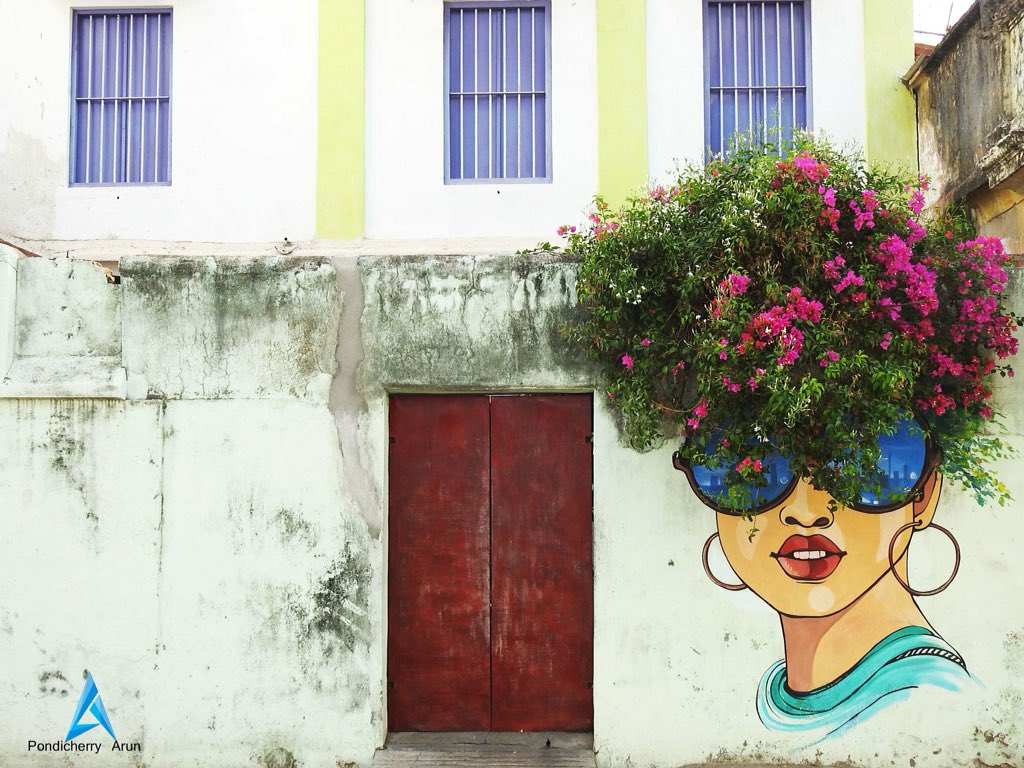
🌸 Bougainvillea Shades — By Kanthan in Pondicherry, India 🇮🇳
Sometimes nature handles the styling. The painted face and blue sunglasses already work beautifully, but the bougainvillea bursting above the wall turns the portrait into a living street-side fashion moment that changes with every bloom.
Nerd Fact: Bougainvillea’s name comes from Louis-Antoine de Bougainville, but the plant’s story is even better: botanist Philibert Commerson collected it on Bougainville’s expedition, while Jeanne Baret, traveling disguised as his assistant, became the first known woman to circumnavigate the globe. So this flower-crowned portrait carries a hidden history of exploration, botany, and gender disguise.
More photos: Street Art in Pondicherry, India
🔗 More photos by Kanthan on Instagram
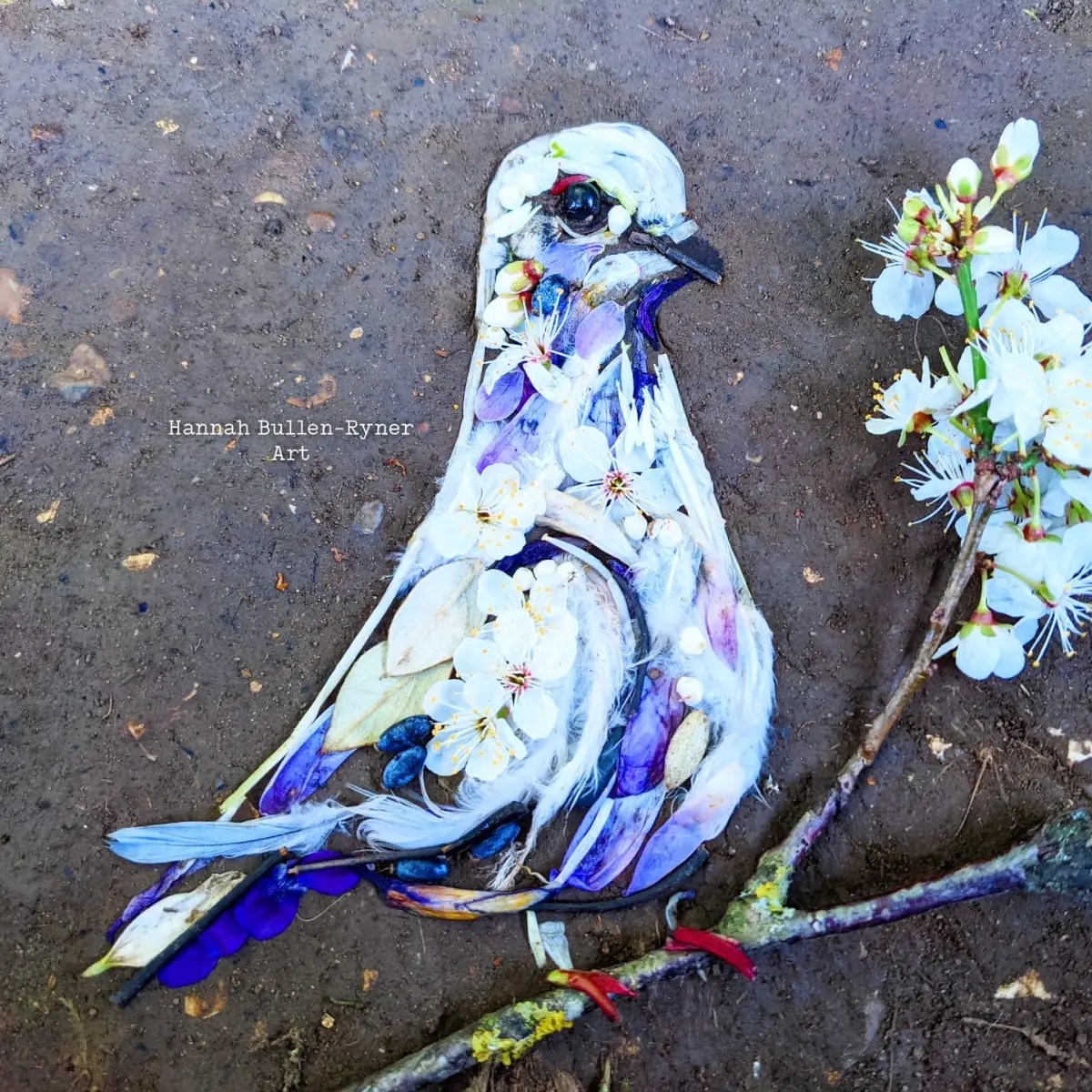
🕊️ Dove of Peace — By Hannah Bullen-Ryner
Hannah Bullen-Ryner builds birds that feel discovered rather than assembled. This dove is made from blossom, petals, feathers, and tiny natural fragments, giving the symbol of peace a fragile glow that feels even more meaningful because it will return to the earth.
Nerd Fact: Hannah calls herself an earth artist and says she works “purely with found materials,” creating ephemeral birds under an oak tree or in nearby woodland. On her own site she also notes that the works can fly away on the breeze within moments, which means the photograph is often the only lasting trace.
More: Nature Is Everything! 18 Stunning Artworks by Hannah Bullen-Ryner
🔗 Follow Hannah Bullen-Ryner on Instagram
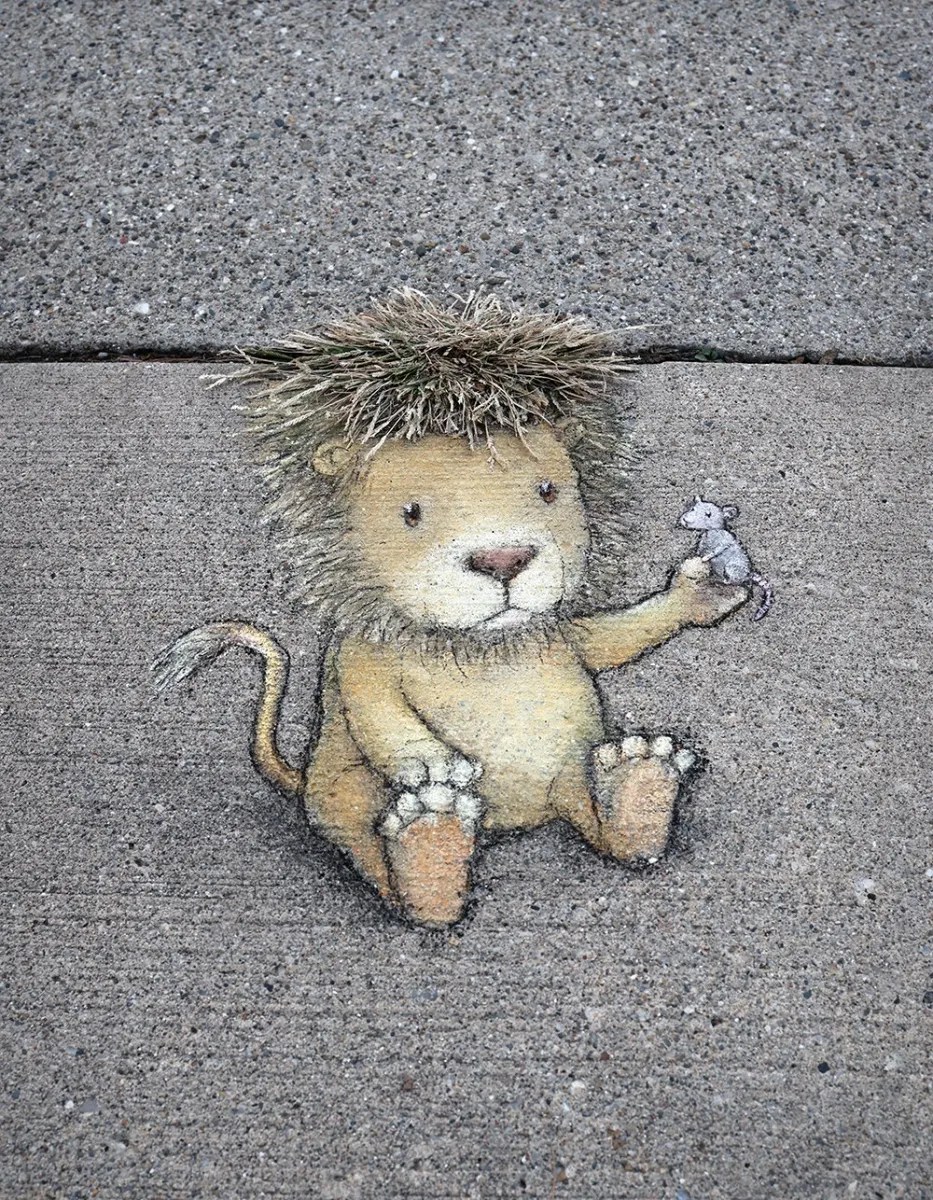
🦁 Mane Problem — By David Zinn in Ann Arbor, USA 🇺🇸
David Zinn is brilliant at noticing the one crack, weed, or texture that can turn a quick chalk drawing into a complete joke. Here, a tiny lion gets its mane from the real sidewalk, and a tuft of grass suddenly becomes the whole punchline.
Nerd Fact: Zinn’s temporary street drawings are made with chalk, charcoal, and found objects, and he describes the process as “ephemeral pareidolic anamorphosis”. In normal human language: he sees a shape the street already has, then draws the creature that was hiding there.
More: Cute Art By David Zinn (16 Photos)
🔗 Follow David Zinn on Instagram
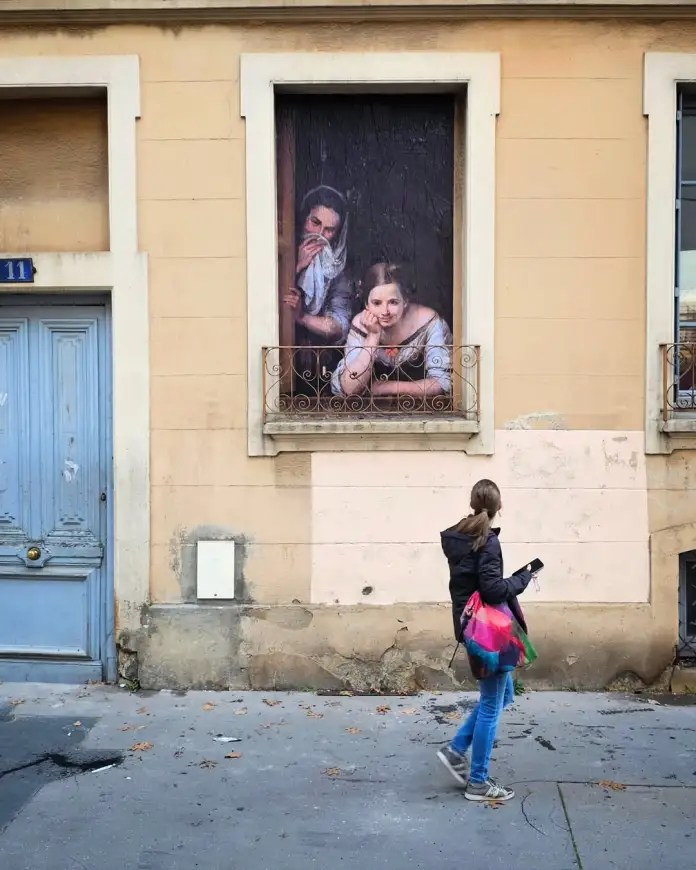
🪜 Balcony Illusion — By Oakoak in Paris, France 🇫🇷
Oakoak adds just enough painted life to make the existing architecture feel awake again. The little balcony illusion turns a neglected surface into a scene of people-watching, where the wall seems to look back at the street.
Nerd Fact: Oakoak has made the city his playground since 2006, using cracks, road markings, shadows, railings, and other flaws as story prompts. Urban Nation describes him as a French interventionist who turns everyday city objects into comic-like urban stories.
More: Wrong but Right: Art By Oakoak (9 Photos)
🔗 Follow Oakoak on Instagram
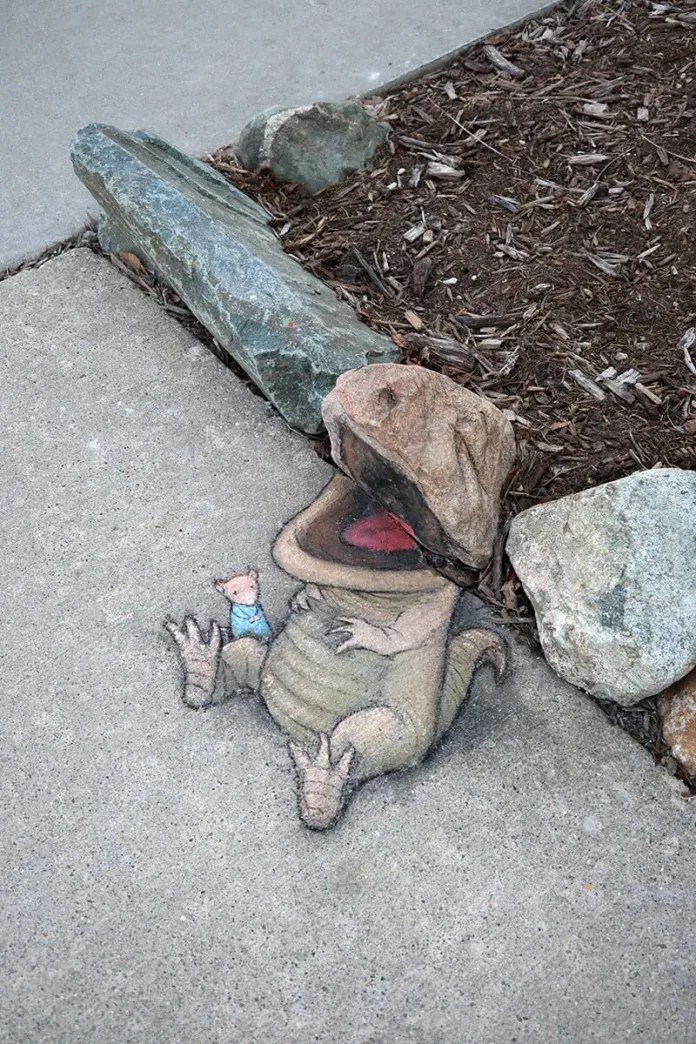
🐸 Nadine and the Surprisingly Effective Joke — By David Zinn
David Zinn turns a sidewalk rock and a little chalk character into a whole comedy scene. Nadine’s joke lands because the surrounding texture becomes part of the timing, making a gray corner feel suddenly full of personality.
Nerd Fact: Pareidolia is the brain’s habit of seeing meaningful forms in random shapes, like faces in clouds or animals in stains. Zinn pushes that instinct into street art by turning pavement flaws into improvised characters, using the chalk-charcoal-found-object method he documents on his site.
More: 9 Cute Spring Drawings by David Zinn
🔗 Follow David Zinn on Instagram

🐶 Have You Seen This Dog?
This is not a normal lost-pet flyer. Instead of creating worry, it gives the viewer a happy dog and a tiny mood reset: now you have seen the dog, and the day gets a little better.
Nerd Fact: The joke works because it borrows the visual language of lost-pet posters, one of the most familiar DIY notice formats in city life. Street art often uses that same “official-looking but handmade” energy to interrupt public space, a strategy discussed in writing on urban intervention as street-level creativity.
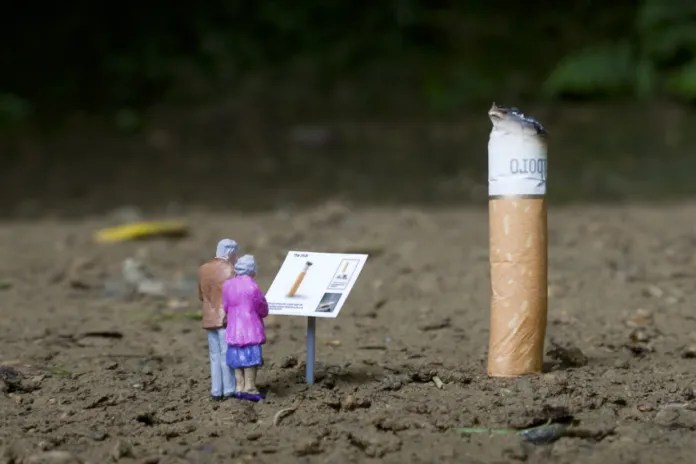
🖼️ Little People Museum — By Slinkachu in the UK 🇬🇧
Slinkachu turns a cigarette butt into a museum object by placing tiny figures around it like serious visitors. The scale shift is funny at first, then strangely touching, because the city suddenly feels much bigger and lonelier.
Nerd Fact: Slinkachu has been “abandoning little people on the streets” since 2006, according to his own site. The finished artwork is really two works at once: the tiny installation itself and the photograph that lets us notice the miniature drama hidden in the city.
More: 7 Tiny Street Dramas by Slinkachu
🔗 Follow Slinkachu on Instagram
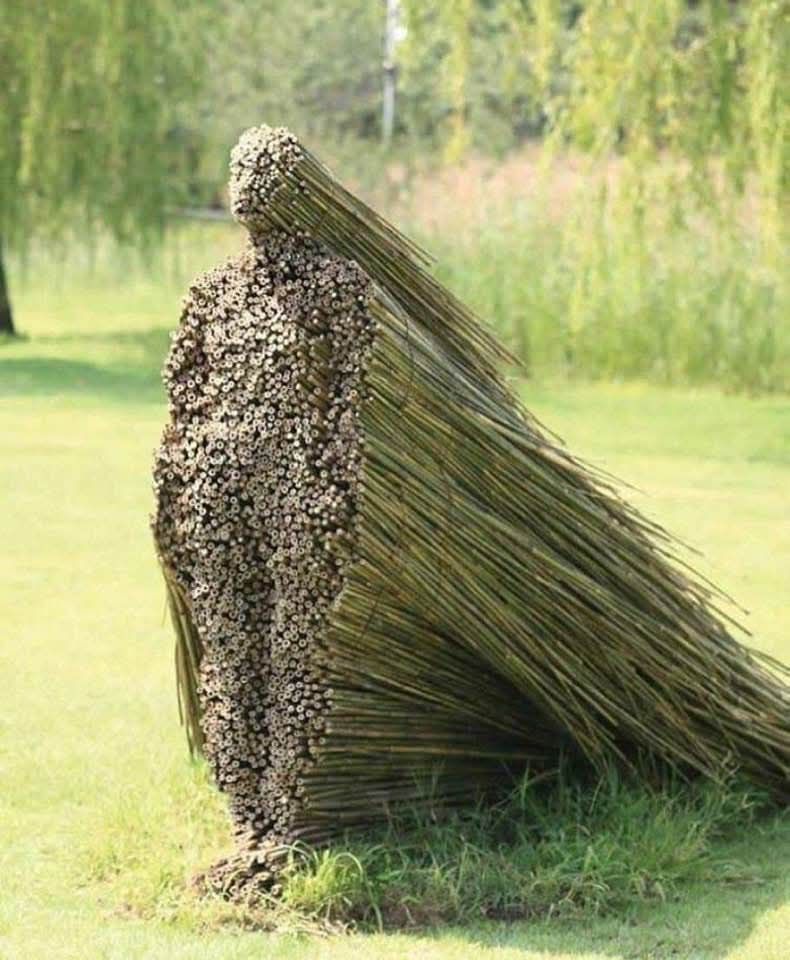
🌬️ Stillness in Motion — By Olga Ziemska in Oronsko, Poland 🇵🇱
Olga Ziemska makes branches behave like motion lines. The bundled willow creates a human silhouette while the sweeping tail reads like wind, memory, and speed, as if nature briefly stood up and started walking.
Nerd Fact: Ziemska’s own listing identifies the work as Stillness in Motion: The Matka Series (Poland), made in 2002 from locally reclaimed willow branches and metal. The word Matka means “mother” in Polish, tying the sculpture to place, origin, and the body’s first environment.
🔗 Follow Olga Ziemska Studio on Instagram
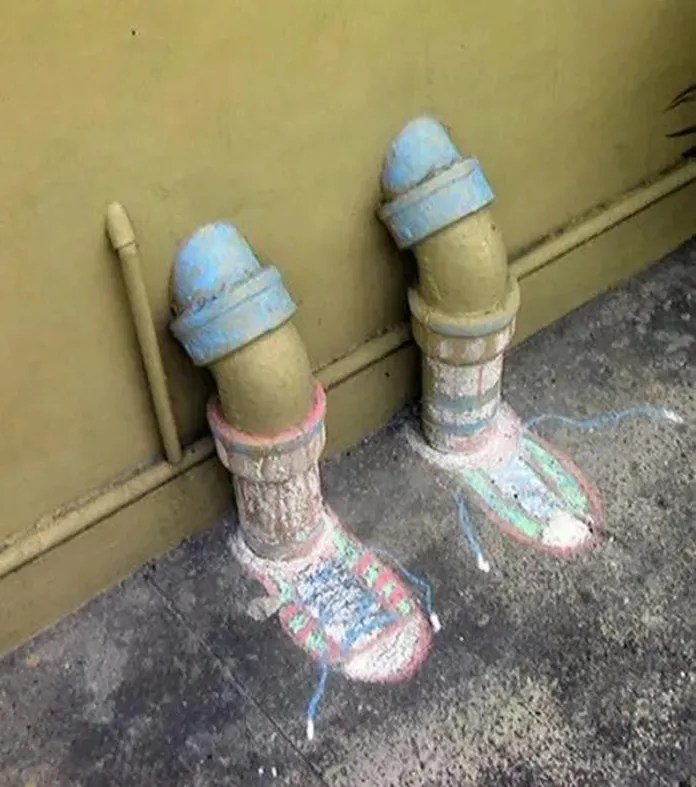
🧦 Keeping the Feet Warm
Someone looked at a cold sidewalk fixture and decided it needed socks and sneakers. With just a few painted details, a dull bit of infrastructure becomes a pair of legs ready to head out for a walk.
Nerd Fact: This is classic urban intervention logic: the artist does not need a blank wall, only a public object with the right shape. In street-art theory, this kind of work sits close to urban intervention, where the existing city becomes part of the artwork instead of just the surface.
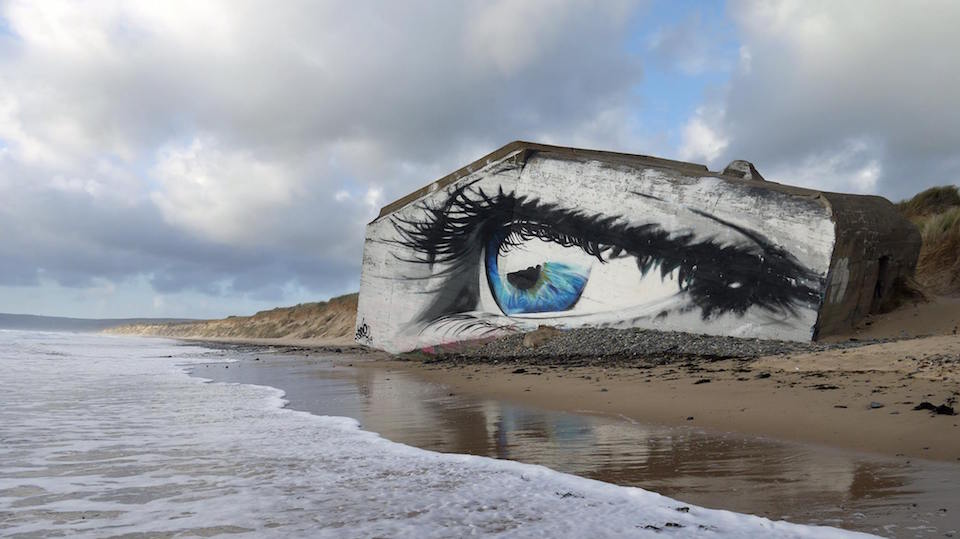
👁️ The Eye — By Näutil in Siouville-Hague, France 🇫🇷
This old WWII bunker already had a dramatic presence, but Näutil gave it emotion. The giant blue eye turns the concrete block into something watchful, with the waves and weather becoming part of the mural’s atmosphere.
Nerd Fact: The coastline around Normandy is still marked by the Atlantic Wall, the massive WWII German defense system of bunkers and fortifications. Turning one of those concrete remnants into an eye changes it from military architecture into a watching face, while the sea keeps reminding us that these structures were built to face invasion from the water.
More photos: By Näutil — In Siouville-Hague, France
🔗 Follow Näutil on Instagram
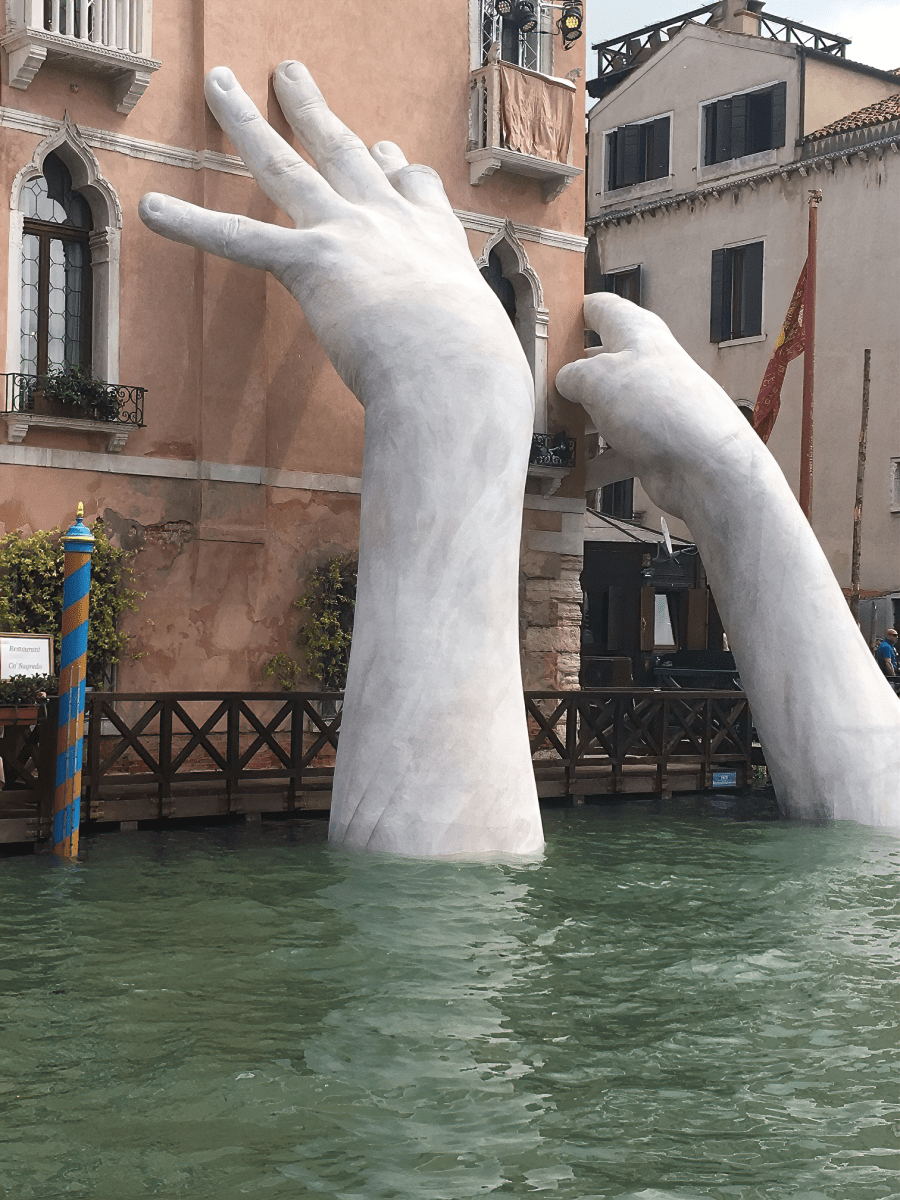
🤝 Support — By Lorenzo Quinn in Venice, Italy 🇮🇹
Lorenzo Quinn’s enormous hands rise from the water to hold up a Venetian building, turning climate anxiety into something physical. The sculpture feels like a warning, a gesture of care, and a reminder that the future needs support now.
Nerd Fact: Support became a climate-change icon because the hands appear to hold up Venice itself. UN Climate Change later used a 3-meter version at COP25 to remind visitors that rising seas threaten Venice and other coastal cities, while reports on the Venice installation note that the hands were modeled after the artist’s son’s hands.
🔗 Follow Lorenzo Quinn on Instagram
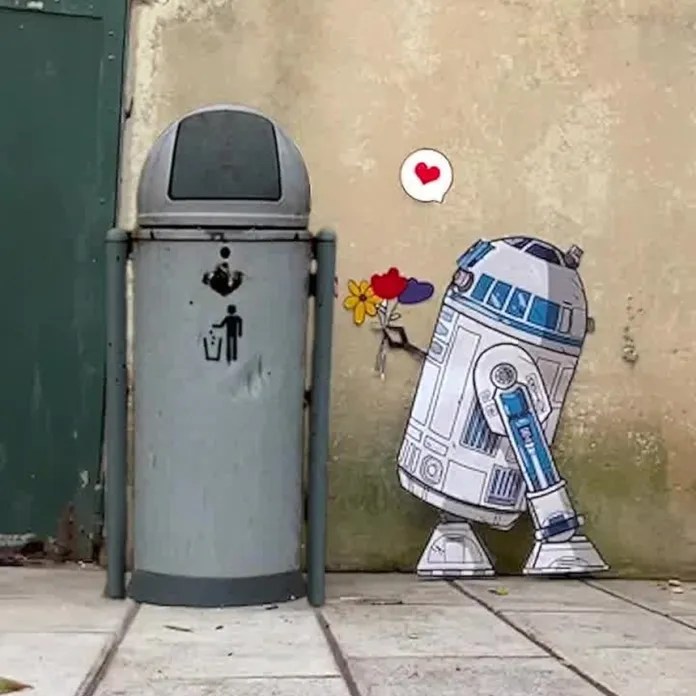
🤖 R2-D2’s Day Off — By EFIX
EFIX drops a sci-fi icon into a very ordinary street scene and makes the city feel instantly more playful. R2-D2’s awkward little moment with a trash can turns street furniture into pop-culture comedy.
Nerd Fact: R2-D2’s name is often linked to a George Lucas sound-editing note, “Reel 2, Dialog 2.” Whether you treat that as movie-lore or origin myth, it fits EFIX’s move perfectly: a technical-looking street object suddenly gets rewritten as a beloved Star Wars droid.
More: EFIX’s Clever Art (9 Photos)
🔗 Follow EFIX on Instagram
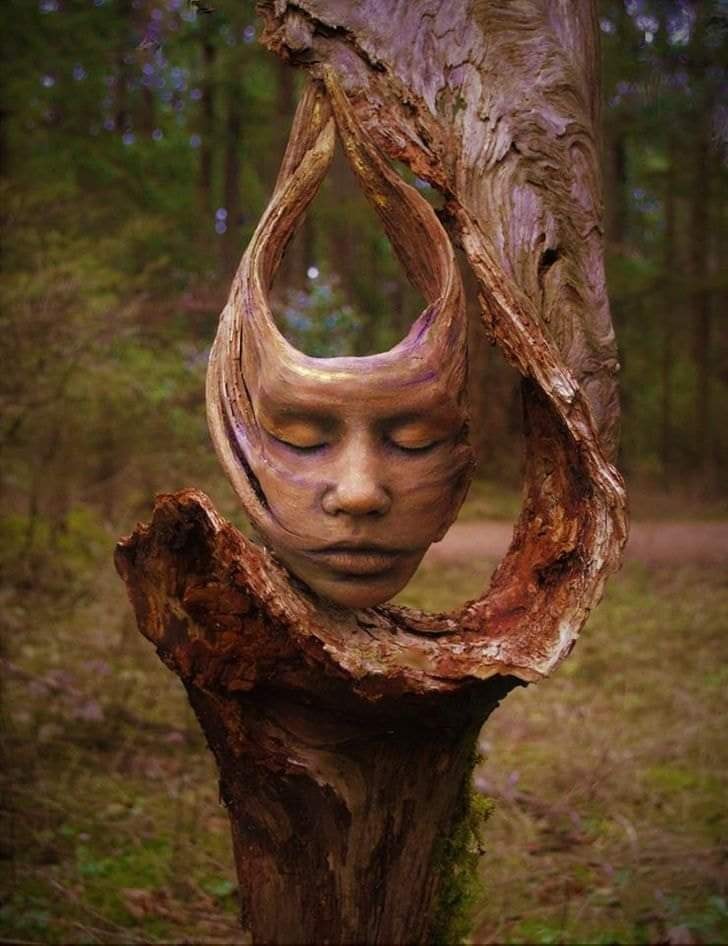
🪵 Spirit in Driftwood — By Debra Bernier in Victoria, Canada 🇨🇦
Debra Bernier does not force driftwood into shape; she follows what the wood already suggests. The grain, hollow curves, and softened human features make the figure feel as though the sea began the sculpture and the artist helped it speak.
Nerd Fact: Bernier writes that every piece of driftwood is already “a work of art” shaped by the earth, ocean, moon, and tides. That is why her figures feel revealed rather than carved from nothing: she is collaborating with wood already sculpted by nature.
More: 19 Driftwood Sculptures by Debra Bernier
🔗 Visit Shaping Spirit on Facebook
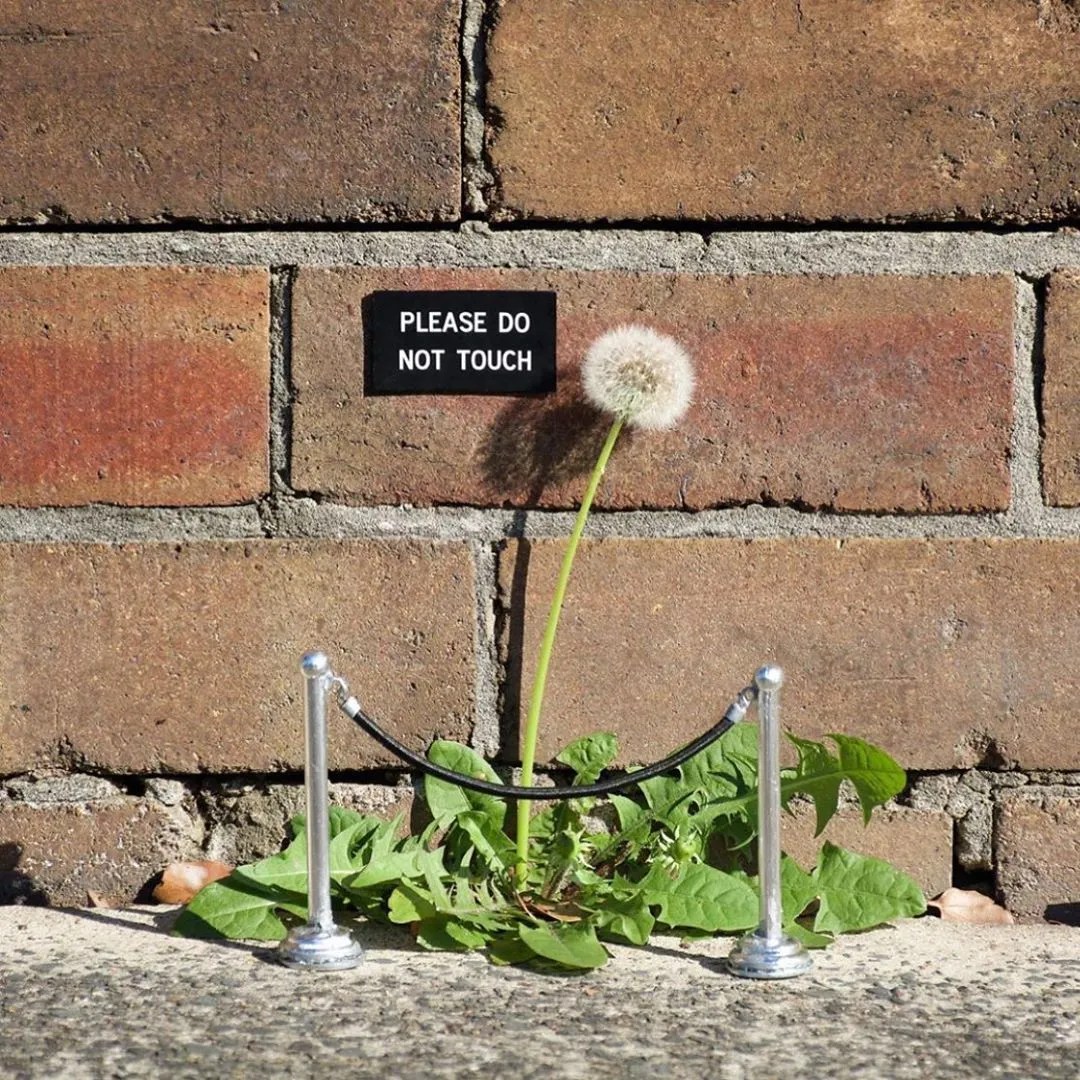
🌼 Museum Quality Dandelion — By Michael Pederson in Sydney, Australia 🇦🇺
Michael Pederson treats an overlooked pavement weed like a priceless museum object. The tiny stanchions and “do not touch” logic make the viewer slow down and recognize the dandelion’s stubborn beauty.
Nerd Fact: Pederson, working as Miguel Marquez Outside, often installs tiny signs that mimic official museum or city notices. Colossal describes his pieces as public interventions that look like normal placards at first glance, which is exactly why this dandelion suddenly feels institutionally important.
More: Clever Art By Michael Pederson (17 Photos)
🔗 Follow Michael Pederson on Instagram
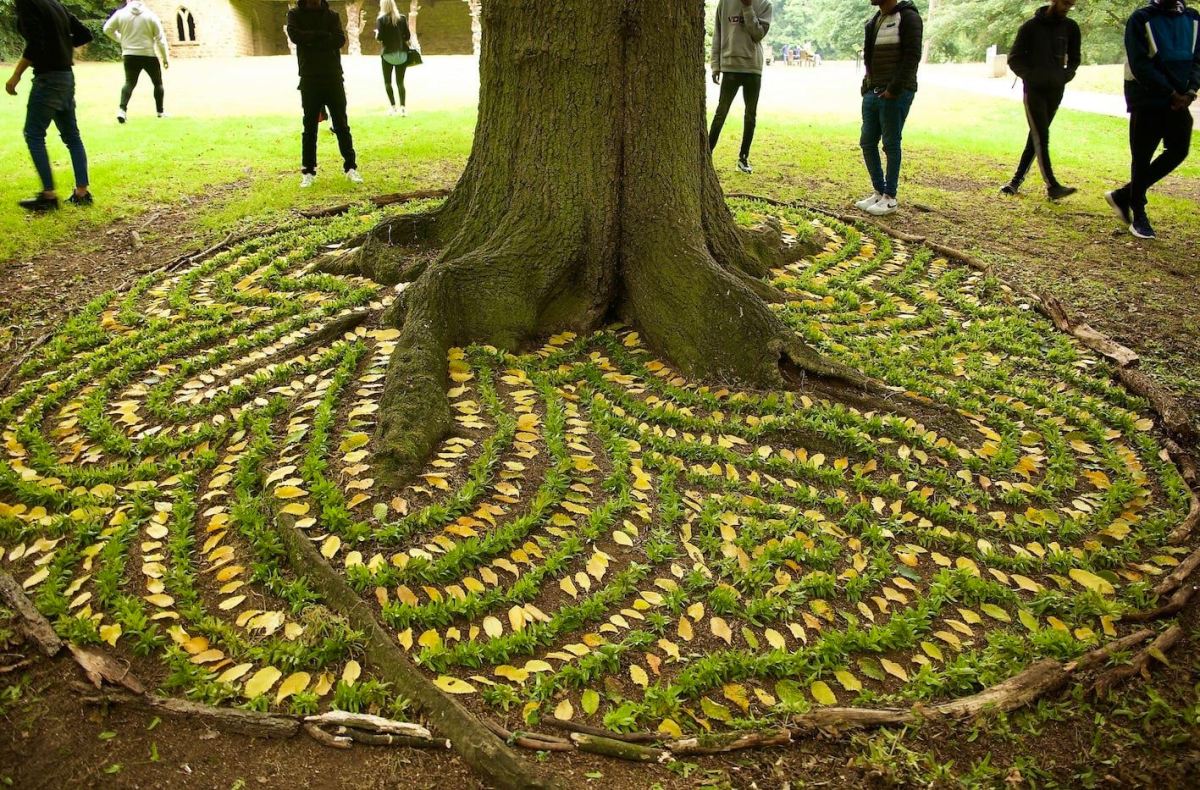
🌀 Tree Ring Mandala — By James Brunt in Syria 🇸🇾
James Brunt turns the ground around a tree into a temporary mandala. Leaves, sticks, and greenery spiral outward from the trunk, making the tree feel like the center of a quiet natural geometry.
Nerd Fact: Brunt’s land art belongs to a long tradition of making with what the site already gives you. His own practice uses stones, leaves, sticks, and found natural material to build patterns that are photographed before the weather takes them back; explore more through his official artist site.
More: Land Art by James Brunt (9 Photos)
🔗 Visit James Brunt’s website
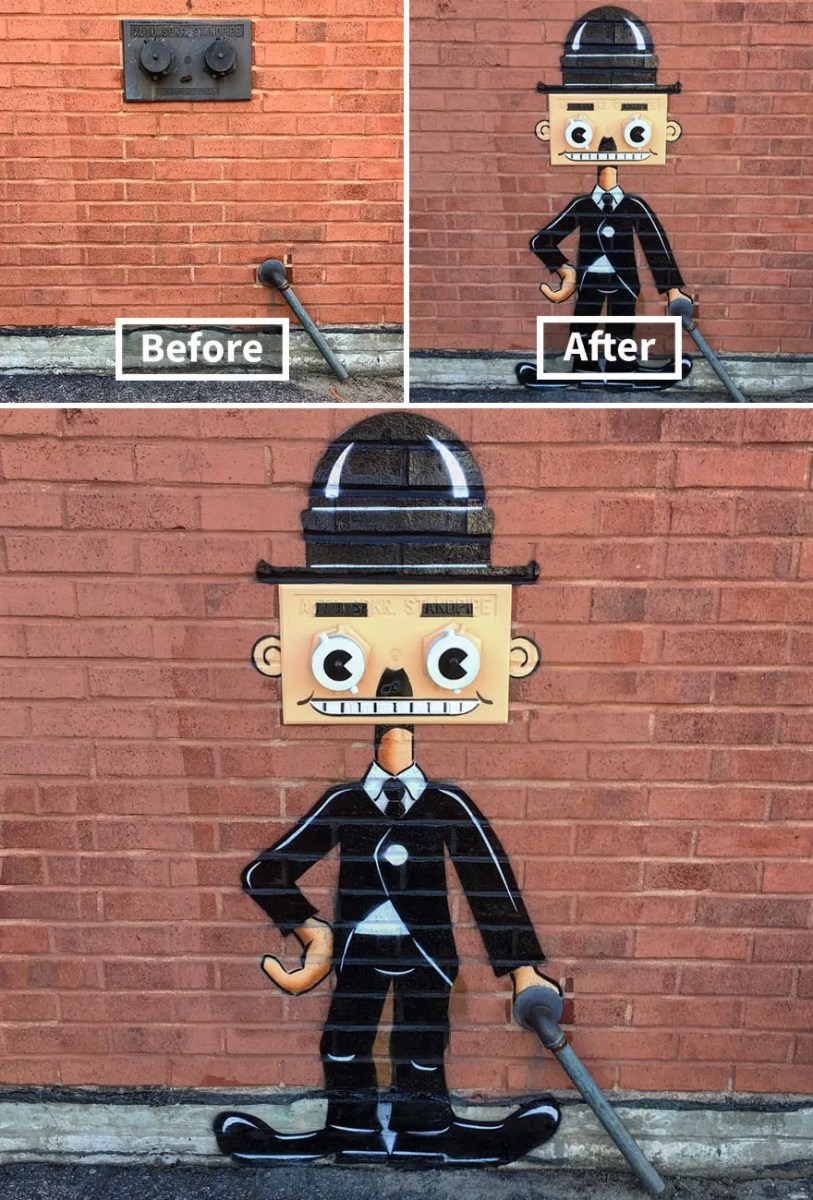
🎩 Charlie Chaplin — By Tom Bob in Massachusetts, USA 🇺🇸
Tom Bob turns a basic red standpipe into Charlie Chaplin with a few perfectly placed details. The hat, cane, mustache, and existing shape of the fixture all work together until infrastructure becomes a silent-film tribute.
Nerd Fact: Tom Bob’s signature is transforming mundane urban fixtures into joyful characters, while Chaplin’s Tramp costume was itself built from contradictions: tight coat, baggy pants, tiny hat, and huge shoes. It is a perfect match for an artist known for making ordinary objects become playful public characters.
More: 33 Artworks by Creative Genius Tom Bob
🔗 Follow Tom Bob on Instagram
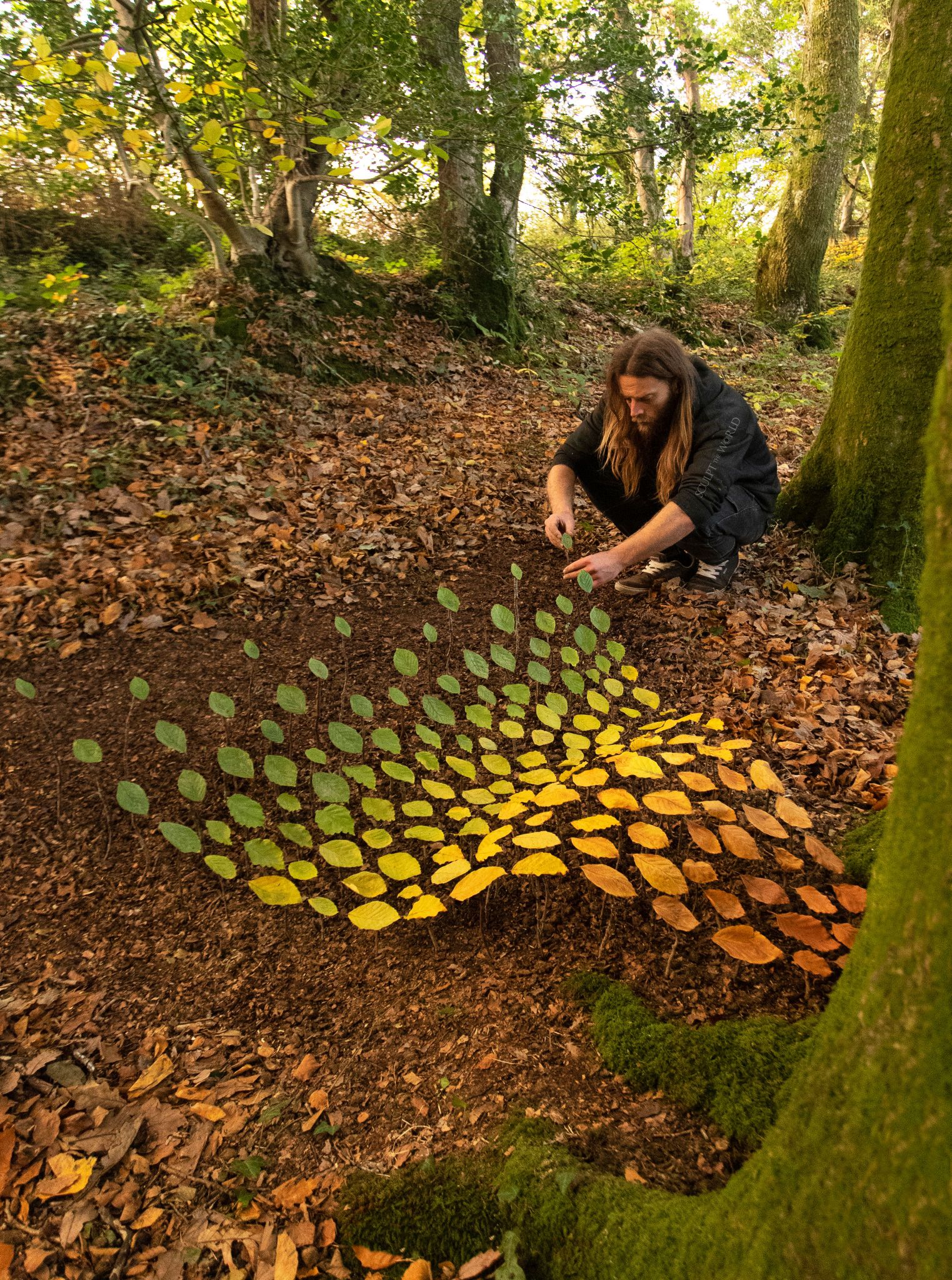
🍂 “Fluentem Colos” — By Jon Foreman in Little Milford, UK 🇬🇧
Jon Foreman arranges fallen leaves with the precision of a graphic designer. The green-to-gold shift looks almost digital, but the raised leaves make it both drawing and sculpture, entirely built from the forest floor.
Nerd Fact: Foreman’s practice is rooted in temporary land art: stones, leaves, tide, wind, and time are all part of the finished work. His Instagram and project name, Sculpt the World, fit the method perfectly: he is not decorating nature, he is briefly rearranging it.
More: 10 Forest Sculptures By Jon Foreman
🔗 Follow Jon Foreman on Instagram
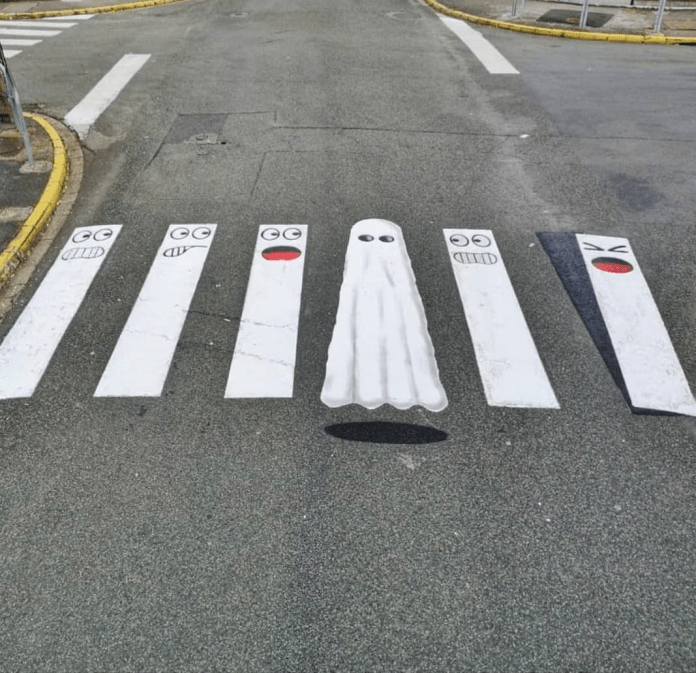
👻 The Ghost Crossing — By Oakoak in Auchel, France 🇫🇷
Oakoak turns a normal crosswalk stripe into a floating ghost with almost no added material. A bit of shadow, two eyes, and the existing road marking are enough to make a traffic feature feel haunted and friendly.
Nerd Fact: Brussels’ Parcours Street Art describes Oakoak’s method as hijacking elements of urban décor by playing with their flaws, often using geek-culture references to put poetry back into the city. That is exactly what happens here: a road marking becomes a character.
More by Oakoak: Lovely by Oakoak (10 Photos)
🔗 Follow Oakoak on Instagram
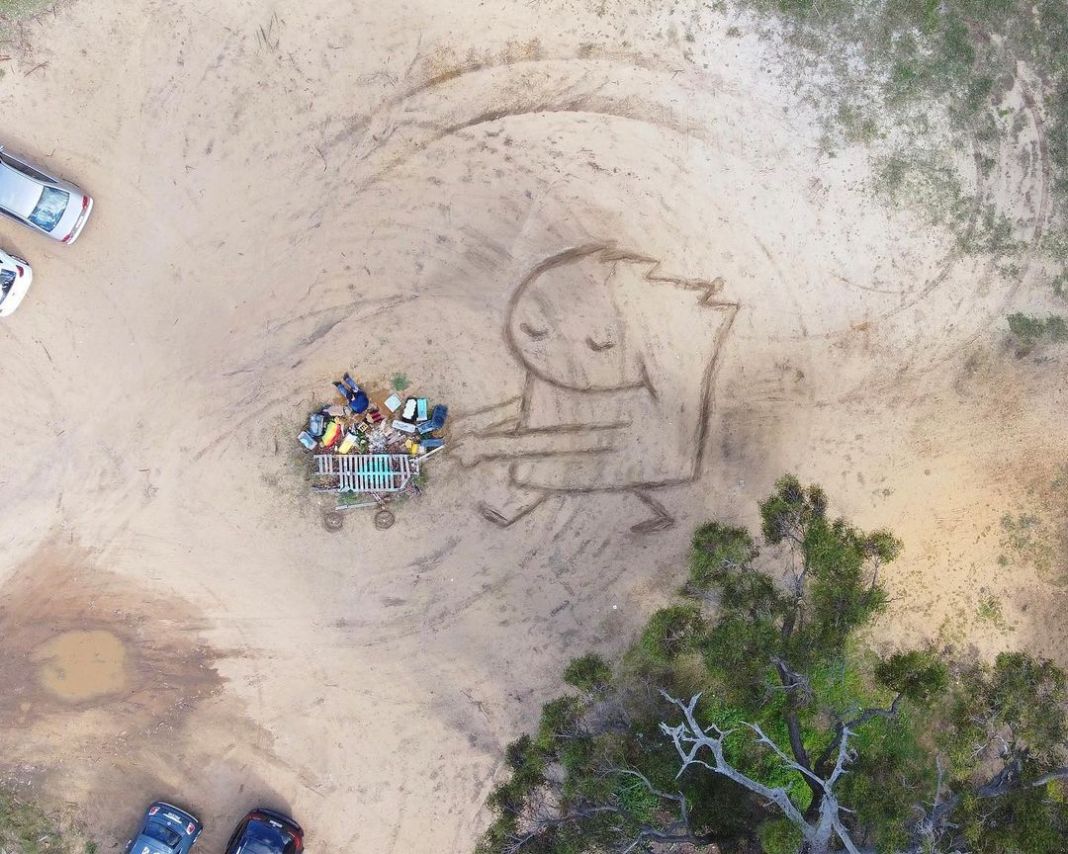
🏖️ Head in the Sand — By Ian Mutch in Dunsborough, Australia 🇦🇺
Ian Mutch uses the beach as both canvas and collaborator. Seen from above, the sand drawing becomes a giant temporary figure and a dry visual joke carved straight into the landscape.
Nerd Fact: Beach art is a race against tide, wind, and foot traffic, so drone photography becomes part of the artwork’s survival. Mutch’s large-scale coastal works are documented from above on his official artist site, where the landscape scale becomes clear.
More: “Head in the Sand” Beach Art by Ian Mutch
🔗 Follow Ian Mutch on Instagram
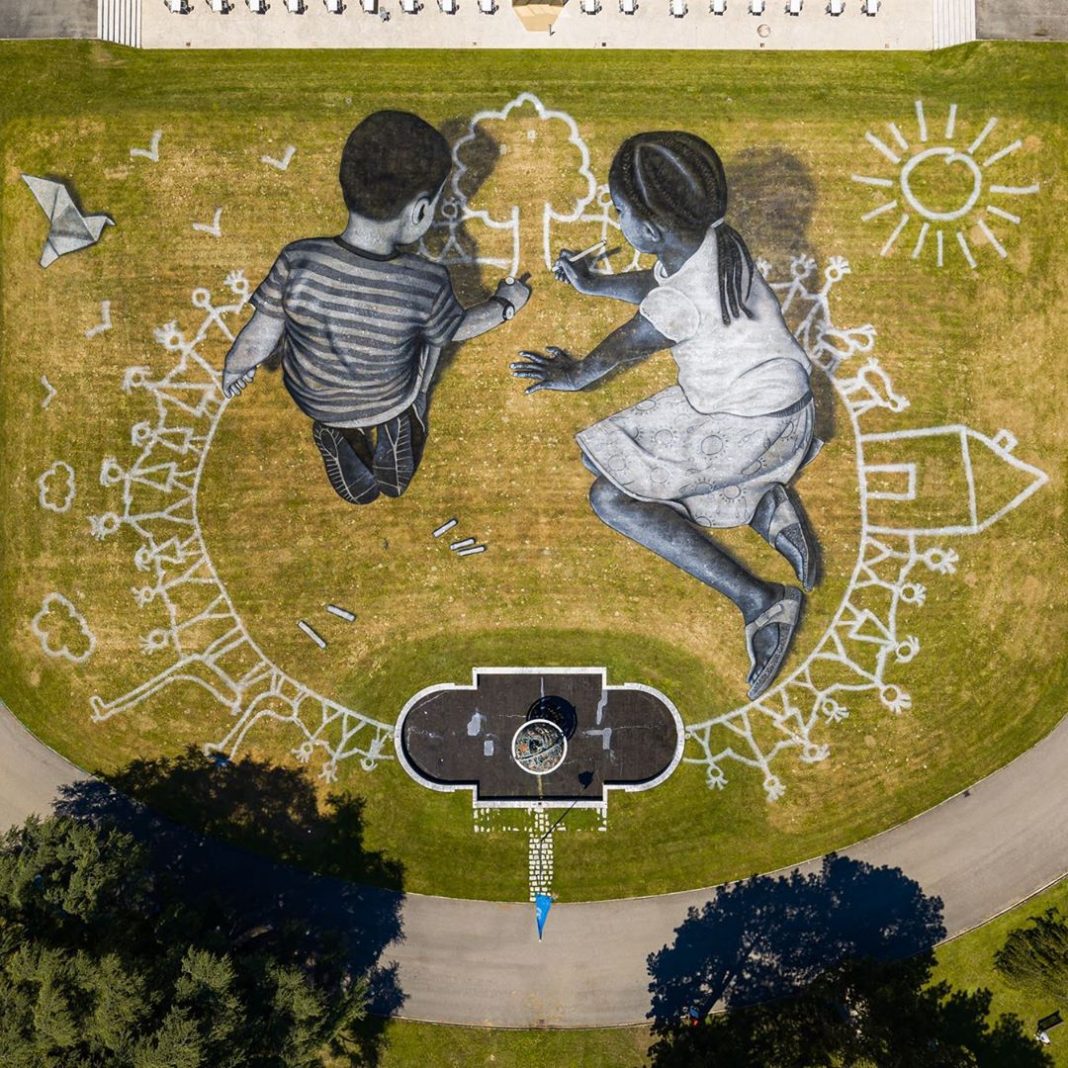
🌍 World in Progress — By Saype in Geneva, Switzerland 🇨🇭
Saype works at a scale where grass fields become sketchbooks. In World in Progress, children appear to draw a better future directly across the earth, combining public art, land art, and hope.
Nerd Fact: Saype created World in Progress in the park of the Palais des Nations for the UN Charter’s 75th anniversary. His own project text says the work evokes the collective construction of our future, while UN media notes it was painted on grass with biodegradable materials.
More: World in Progress — By Saype in Geneva
🔗 Follow Saype on Instagram
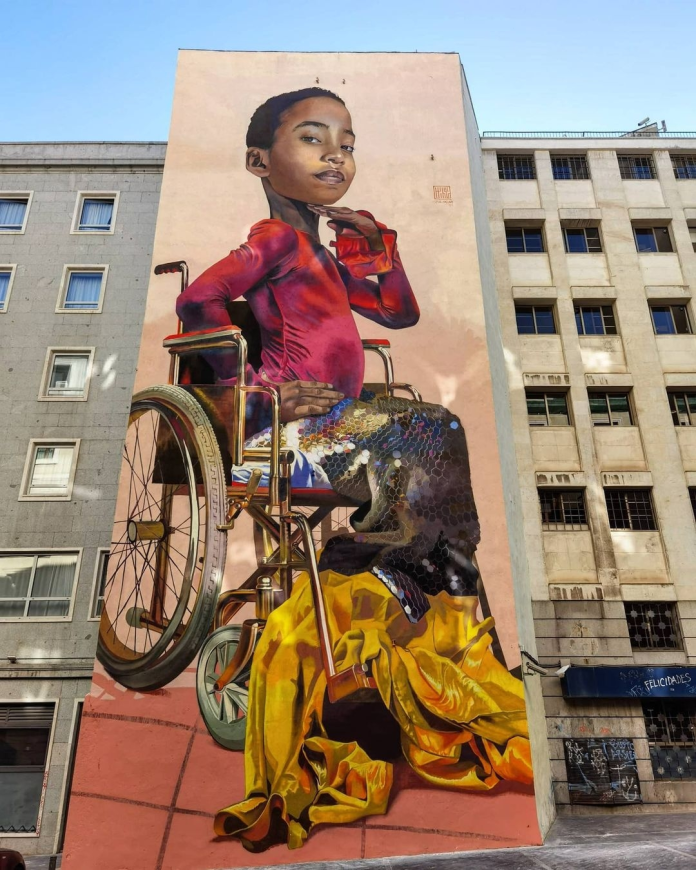
🎨 The Fabulous Tale of Being Different — By Case Maclaim in Madrid, Spain 🇪🇸
Case Maclaim’s Madrid mural introduces a confident child in a golden wheelchair and a self-made mermaid costume. The piece invites viewers, especially younger ones, to imagine their own fairytale where difference is not a limitation but the start of the story.
Nerd Fact: On Street Art Cities, Case explains that he wanted to create “a new character of a yet unknown fairy tale,” encouraging viewers to imagine their own story. He compares that personal interpretation to a fingerprint: unique and not up for debate.
More photos: The Fabulous Tale Of Being Different
🔗 Follow Case Maclaim on Instagram
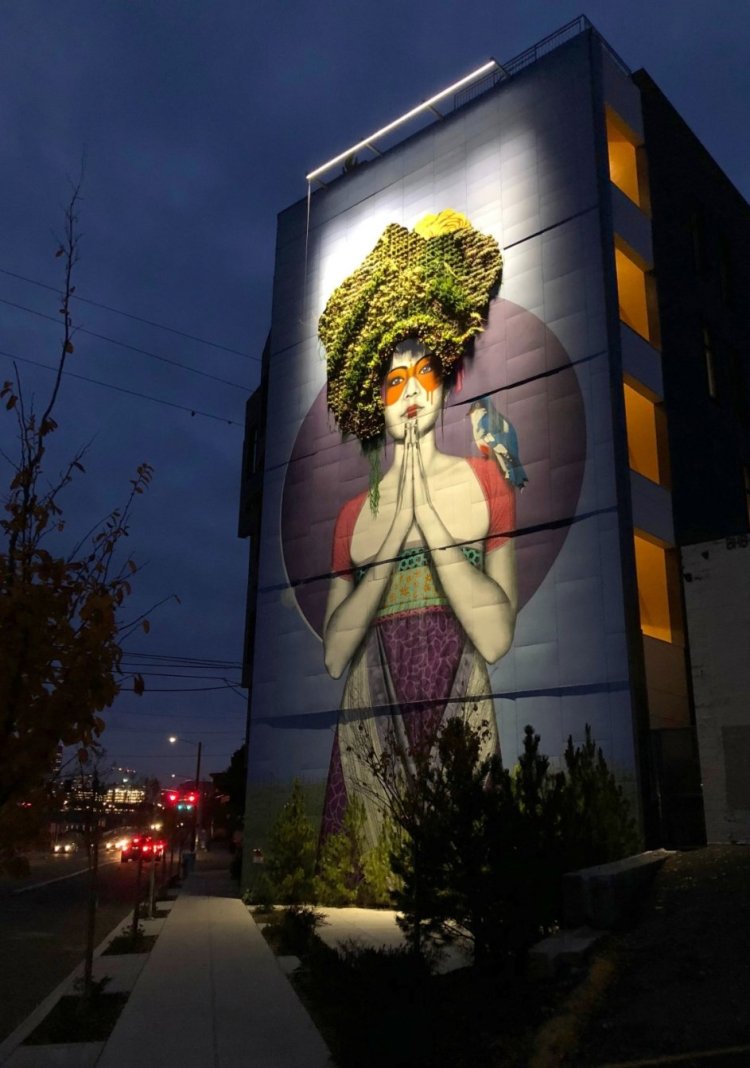
🌿 Living Crown — By Fin DAC in Portland, Oregon, USA 🇺🇸
Fin DAC let time finish this mural. The painted figure was already strong, but once the plants grew in, the living crown completed the wall and made the portrait feel fully alive.
Nerd Fact: Fin DAC said he waited to post final photos because the live plants needed time to grow in and look good. An Oregon write-up described the Portland mural as a 70-foot-tall geisha with living plants growing as her hair, making time part of the medium.
More: The Live Plants Needed Time to Grow — By Fin DAC in Portland
🔗 Follow Fin DAC on Instagram
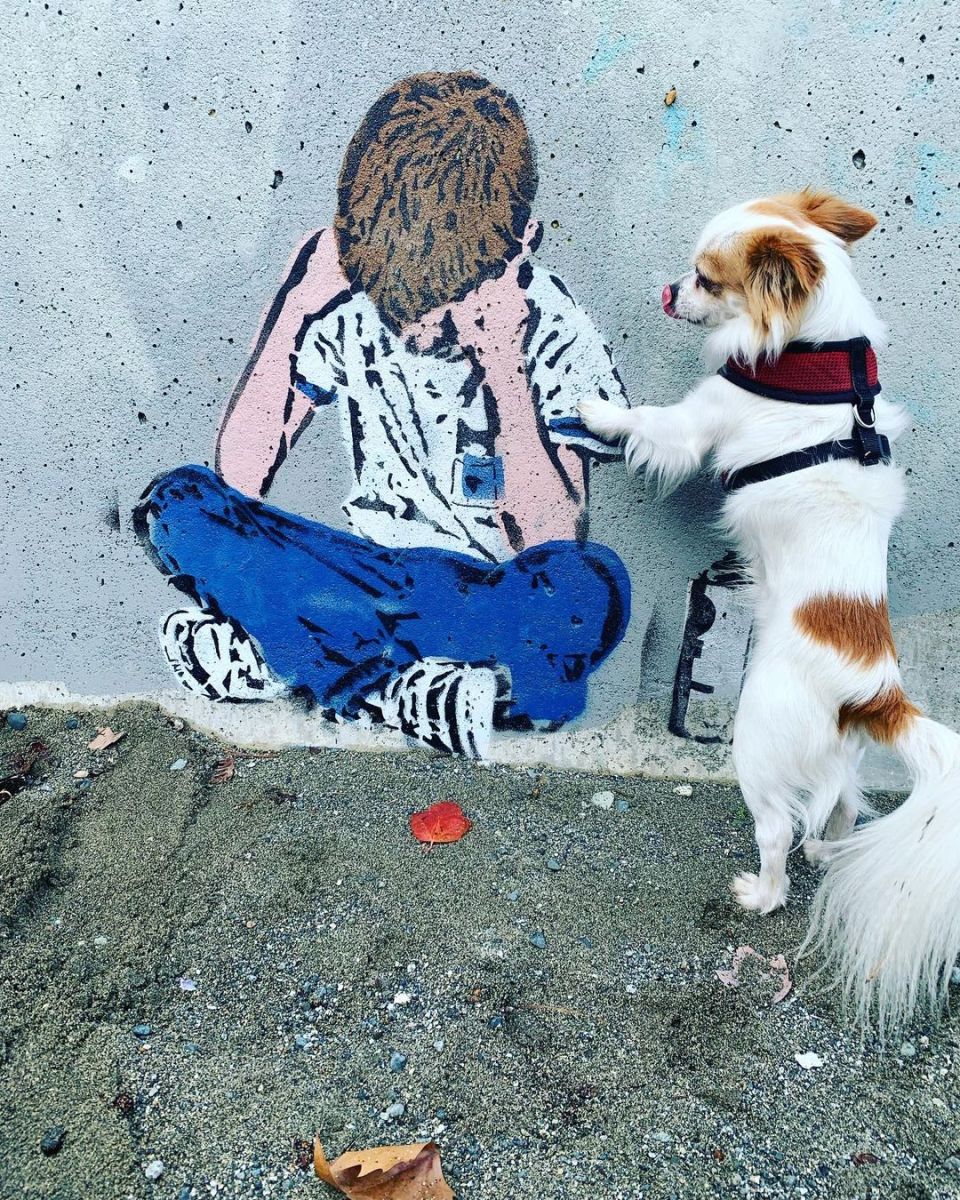
🐾 A Helping Paw — By Trevor Cole in Nanaimo, Canada 🇨🇦
Sometimes the best street art is completed by real life. A dog reaches toward a stencil of a sad boy as if trying to comfort him, turning the wall into a spontaneous moment of empathy.
Nerd Fact: The stencil is by Trevor Cole in Nanaimo, British Columbia, but the viral magic comes from Erika Lopez’s dog Carlos reaching toward it. Street Art Utopia’s original post credits both the painted work and the accidental performer, making Carlos part of the final image’s authorship.
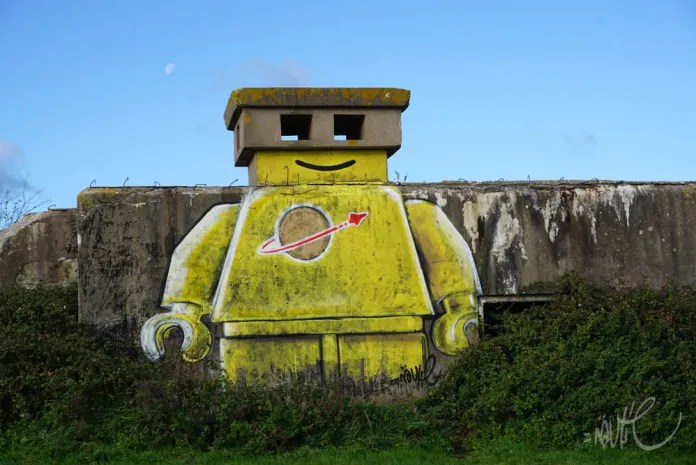
🧱 Lego Man — By Näutil in Saint-Pierre-Église, France 🇫🇷
Näutil turns a cold WWII bunker into a giant smiling LEGO figure, replacing heavy history with childhood play. The contrast is what makes it work: concrete becomes joy without pretending the structure was ever neutral.
Nerd Fact: The idea also echoes the wider language of “brick repairs” and toy-brick urban interventions, where bright plastic-looking bricks are used to symbolically mend broken city surfaces. In Näutil’s version, the entire bunker becomes one massive toy head, pushing the idea from tiny repair to full-object transformation.
More: Street Art by Näutil — Lego
🔗 Follow Näutil on Instagram
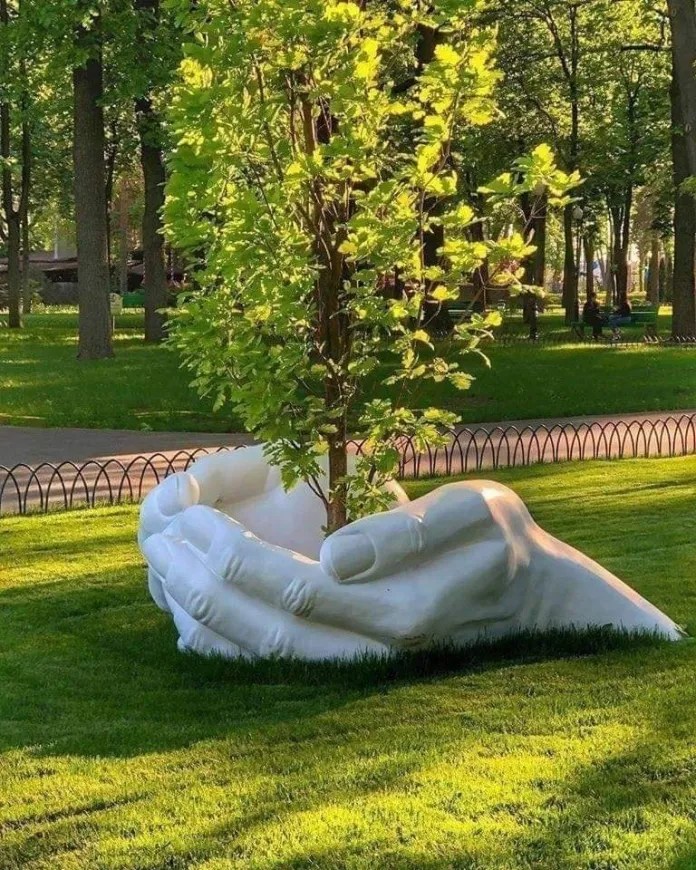
🌳 “Give” — By Lorenzo Quinn in Valencia, Spain 🇪🇸
Lorenzo Quinn reduces environmental care to one unforgettable gesture: open hands protecting new growth. The work is monumental, but the message is immediate and human, turning the tree into something actively held and protected.
Nerd Fact: Give exists in multiple versions, but the message stays consistent: nature as something humanity must actively protect. Halcyon Gallery writes that the Uffizi version uses an olive tree as a symbol of peace and was made with resin and recycled materials to reinforce the sustainability theme.
🔗 Follow Lorenzo Quinn on Instagram
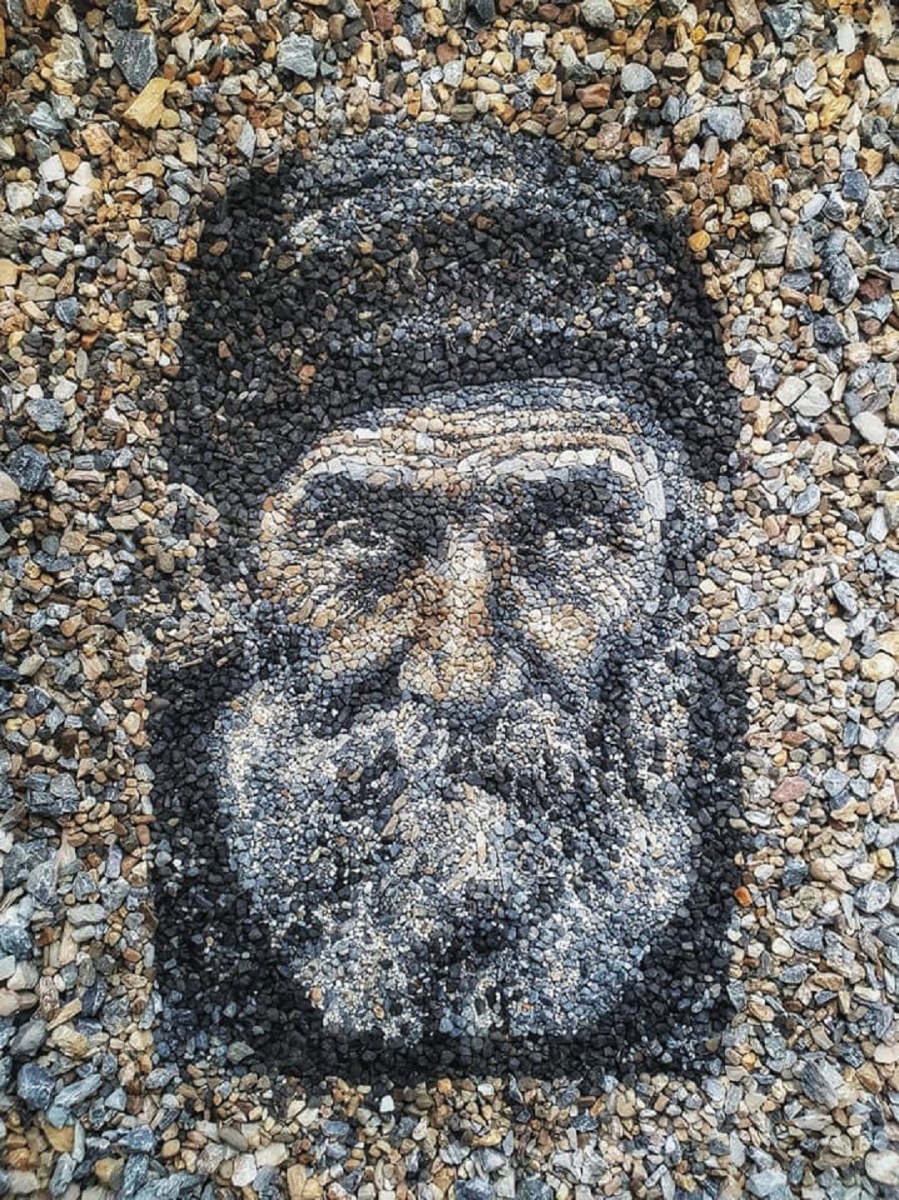
🎣 Fisherman — By Justin Bateman in Chiang Mai, Thailand 🇹🇭
Justin Bateman turns ordinary stones into a face that feels like it carries a whole life. The fisherman looks weathered and rooted, as if the portrait had been waiting inside the pebbles all along.
Nerd Fact: Bateman famously describes pebbles as his pixels, and in an artist interview he connects his impermanent practice to Tibetan sand mandalas, which are destroyed after completion. He even says he dismantles works because he does not want natural places permanently marked by human intervention.
More by Justin Bateman: Stone by Stone: Justin Bateman’s Incredible Pebble Art
🔗 Visit Justin Bateman’s website
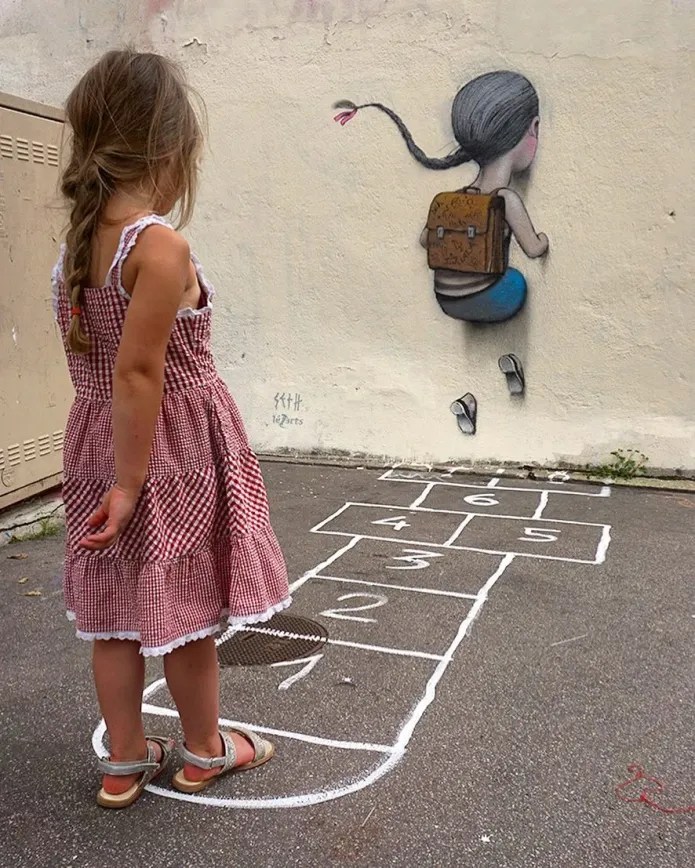
🦒 Viviane Hesitate — By Seth Globepainter in Paris, France 🇫🇷
In La Butte-aux-Cailles, Seth captures a small moment where real life and painted imagination meet. A child pauses to watch a mural figure moving into the wall, making the scene feel like a doorway between worlds.
Nerd Fact: Seth’s recurring children are often faceless, turned away, or partly hidden so viewers can project themselves into the scene. Colossal describes these figures as children who appear to witness something we cannot see, which is why his murals often feel like open doors into imagination.
More by Seth: 34 Murals That Turn Walls Into Wonders
🔗 Follow Seth Globepainter on Instagram
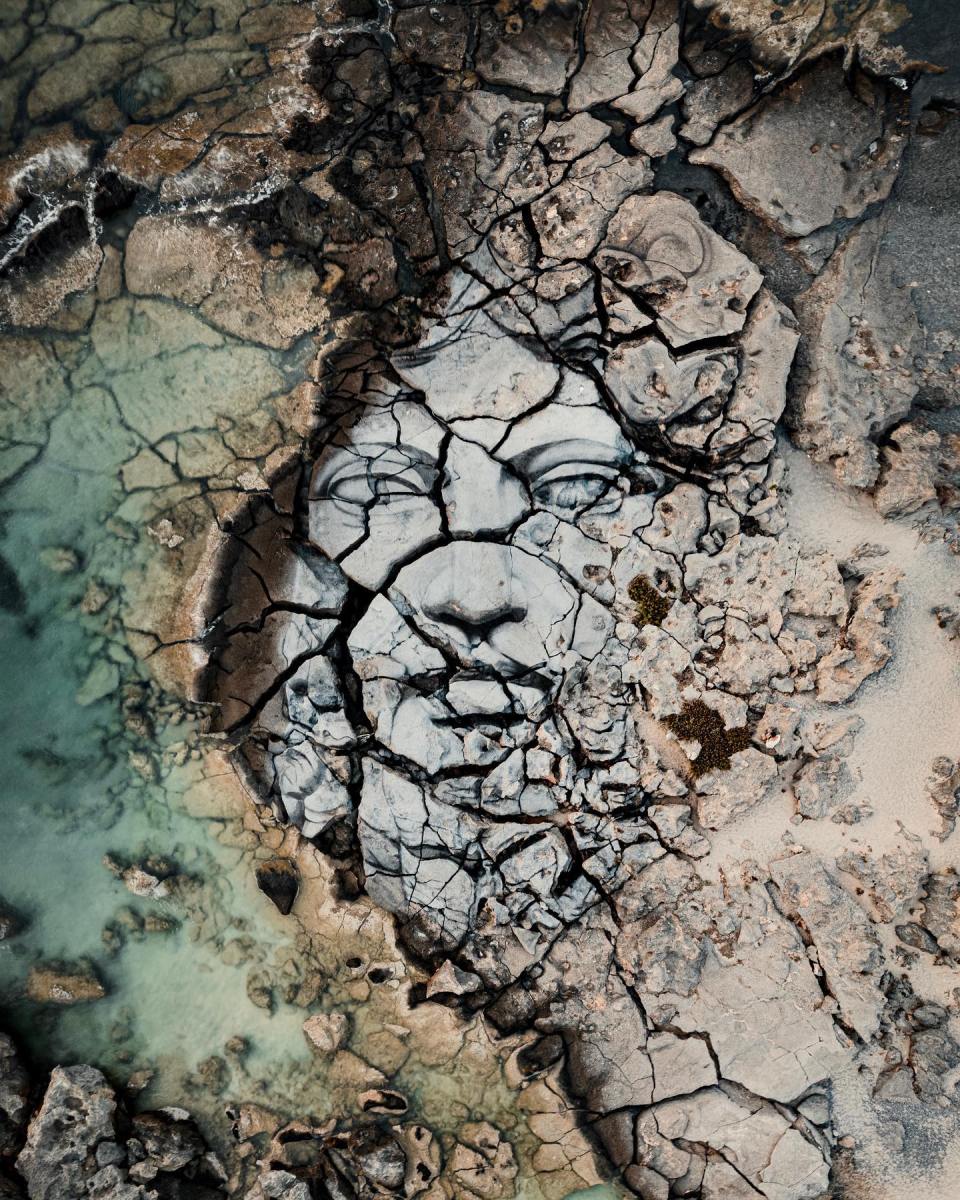
⛰️ Prometheus — By David Popa in Crete, Greece 🇬🇷
David Popa paints directly into the landscape with natural pigments, making the ground itself the medium. This cracked face of Prometheus feels ancient and temporary at the same time, part fresco, part ruin, part myth.
Nerd Fact: Popa describes his practice as creating ephemeral earth frescos in nature with natural materials such as chalk, charcoal, and earth mineral pigments. That means a myth about fire and human invention is painted here with materials that can return to the landscape.
More: Prometheus! The Supreme Trickster and God of Fire
🔗 Visit David Popa’s website
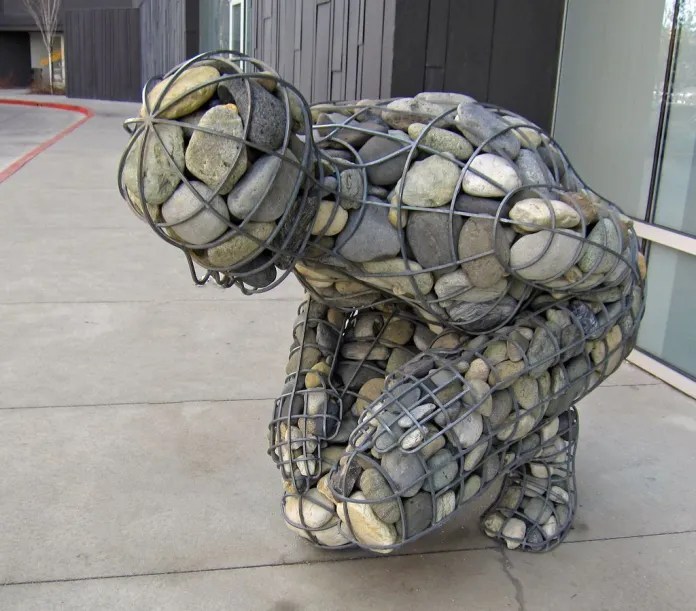
🪨 The Weight of Grief — By Celeste Roberge in California, USA 🇺🇸
Celeste Roberge gives emotional heaviness a body. The human form is built as a steel cage filled with stones, making grief feel physically carried rather than simply described.
Nerd Fact: The work is titled Rising Cairn. Roberge’s own site lists it as welded galvanized steel filled with 4,000 pounds of granite; cairns have also long been used as markers for burials, routes, and boundaries, which gives the sculpture its extra weight of memory.
🔗 Follow Celeste Roberge on Instagram
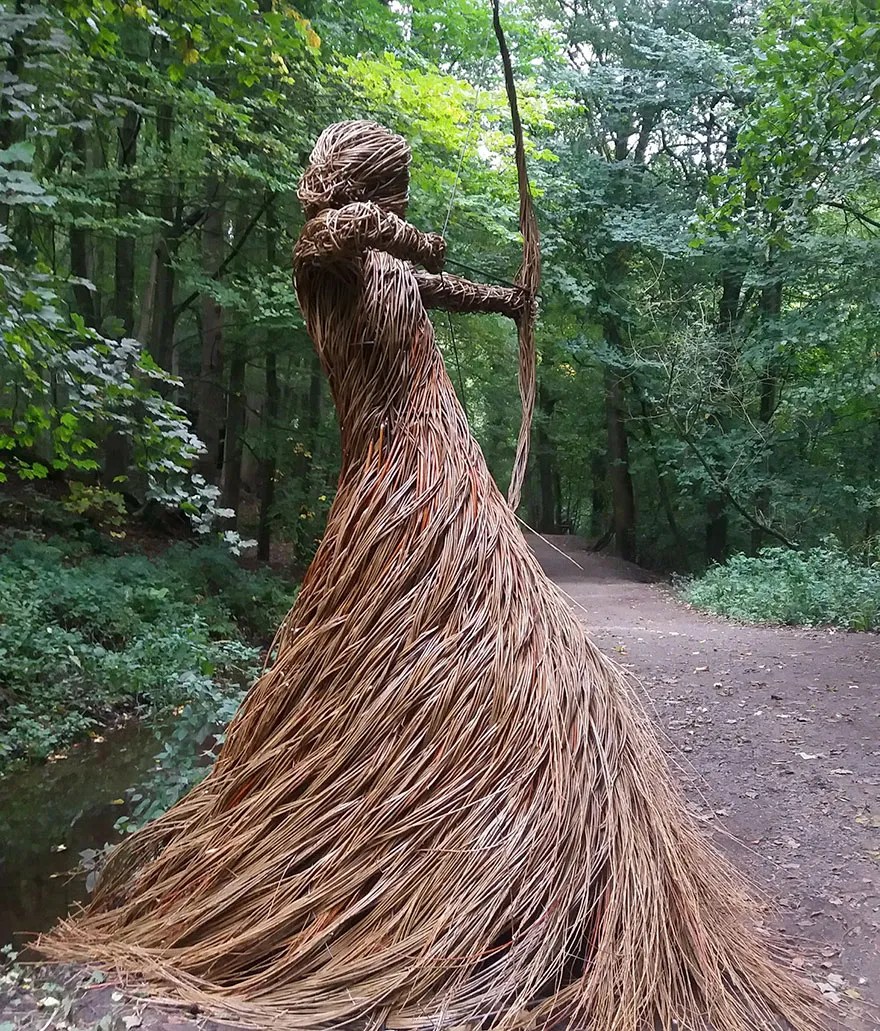
🏹 “Willow Archer” — By Anna & The Willow in the UK 🇬🇧
Anna & The Willow bends raw material into a figure that feels alert and alive. The woven body holds tension like a drawn bow, while the willow makes the sculpture feel like a guardian revealed by the forest.
Nerd Fact: Anna & The Willow’s sculptures are often made by weaving willow over steel frames. Willow has been used for baskets, hurdles, and living structures for centuries, so these figures sit between craft tradition and contemporary public sculpture; see more of the artist’s process and works through Anna & The Willow.
🔗 Follow Anna & The Willow on Instagram
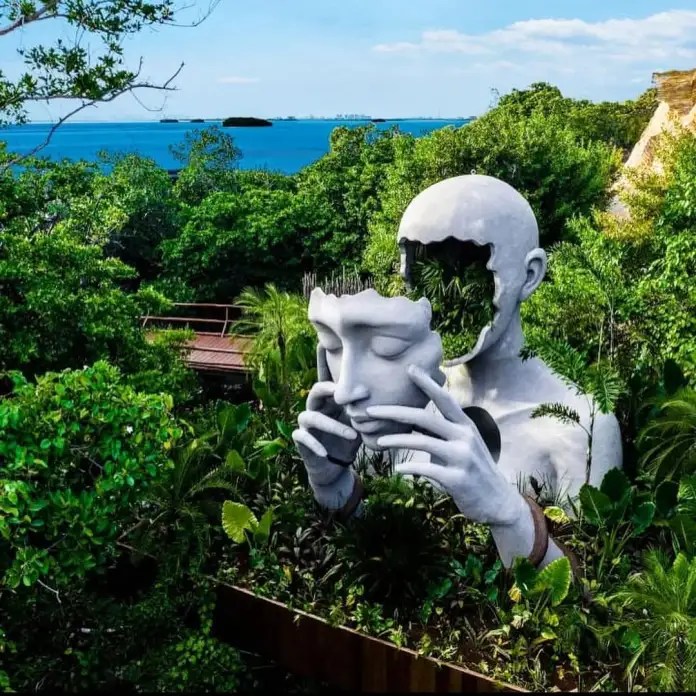
🌳 True Nature — By Daniel Popper in Cancún, Mexico 🇲🇽
Daniel Popper opens a monumental human form to reveal greenery inside. The sculpture turns the body into a gateway, suggesting that connection with nature is not outside us but part of our core.
Nerd Fact: Popper’s monumental sculptures often work like thresholds: visitors do not just look at them, they walk through or around them. His large-scale practice blends sculpture, festival architecture, and immersive public space, which is why works like this feel like portals rather than statues.
🔗 Follow Daniel Popper on Instagram
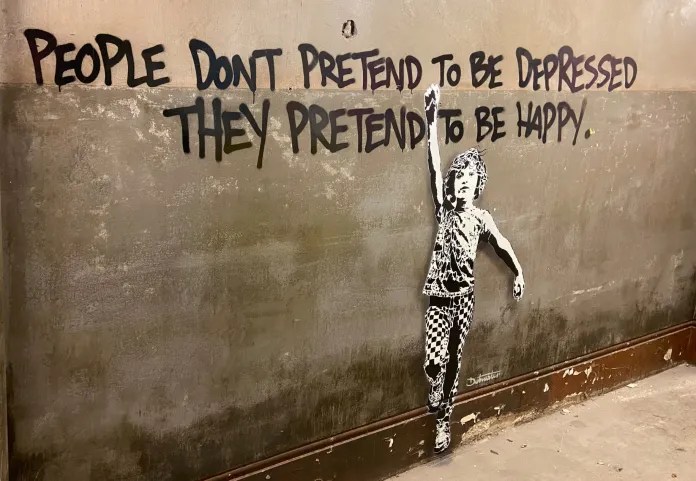
📝 People Don’t Pretend to Be Depressed — By Dotmasters in the UK 🇬🇧
Dotmasters uses one stencil and one hard sentence to turn the wall into a public mental-health reminder. The child figure moves past the message, but the words stay with the viewer.
Nerd Fact: Dotmasters is known for sharp stencil work that often looks simple until the message lands. This one works because it flips a common misunderstanding of depression: the mask is often happiness, not sadness. The artist’s wider practice mixes humor, social critique, and public-space interruption, visible in the work shared through Dotmasters’ own channels.
🔗 Follow Dotmasters on Instagram
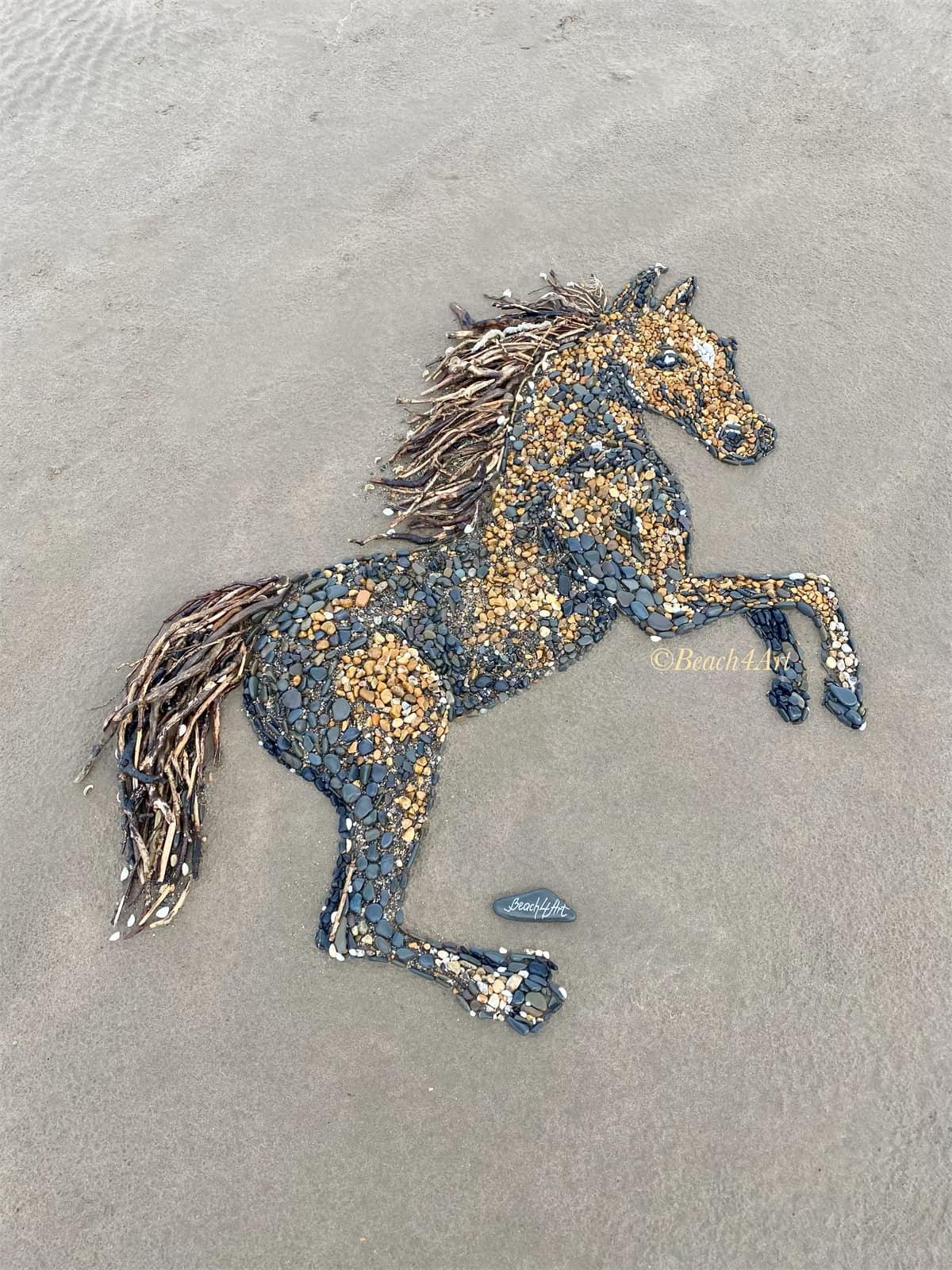
🐎 Pebble Stallion — By Beach4Art
Beach4Art makes stones and driftwood feel alive. The raised leg, wild mane, and pebble shading give this horse real energy, proving that a flat stretch of sand can still gallop.
Nerd Fact: Beach4Art is a family land-art project on the North Devon coast, where found beach materials become animals, portraits, and temporary scenes. That family-process detail matters: the work is both a finished image and a shared act of making outdoors, documented through Beach4Art’s own feed.
More: Horse Art (9 Photos)
🔗 Follow Beach4Art on Instagram
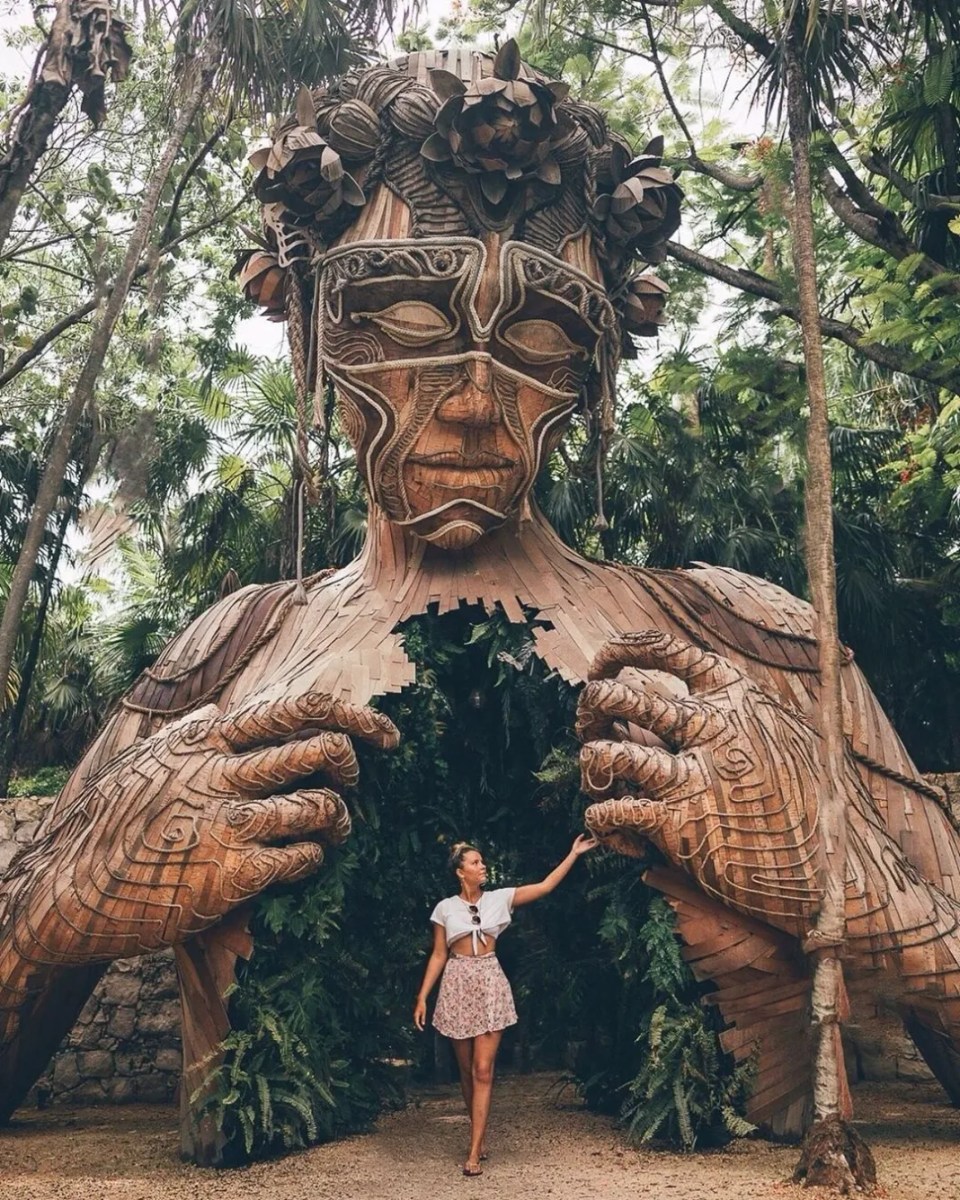
👹 The Wooden Giant in the Jungle — By Daniel Popper in Tulum, Mexico 🇲🇽
You do not just walk past this Daniel Popper piece; you stop. The monumental figure opens its chest into a lush passage, making sculpture, body, and tropical landscape feel like one portal.
Nerd Fact: The Spanish title is Ven a la Luz, meaning “come into the light.” Popper created the 33-foot figure for Art With Me in Tulum, and the open chest turns the sculpture into a literal walkway through the body, a format that fits his wider practice of large-scale immersive sculpture.
More: Come in to Light — Wooden Sculpture By Daniel Popper in Tulum
🔗 Follow Daniel Popper on Instagram
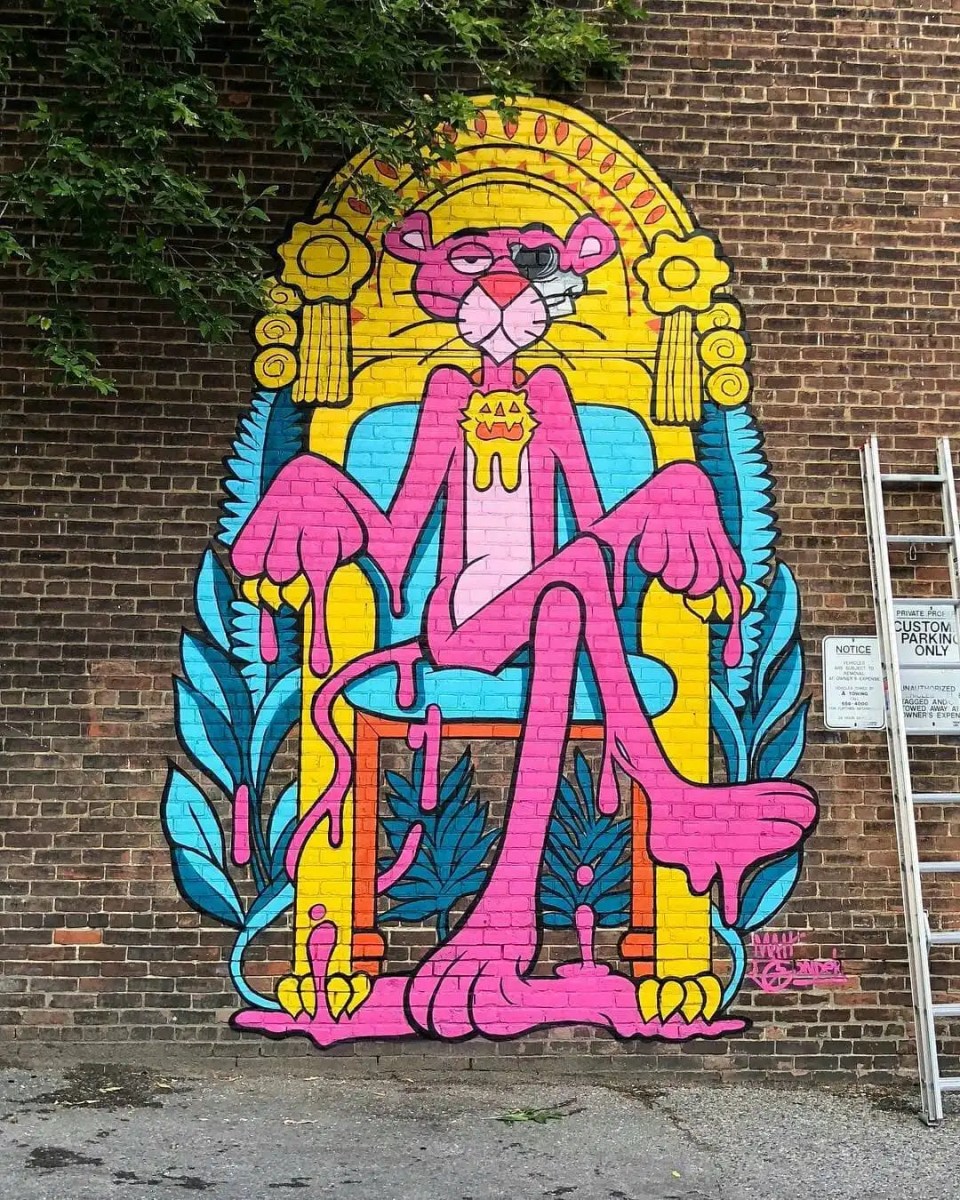
🐆 Pop Art Pink Panther — By Matt Gondek in Toronto, Canada 🇨🇦
Matt Gondek’s “deconstructed” pop style turns the Pink Panther into something explosive, colorful, and rebellious. The familiar cartoon coolness is still there, but now it feels like it is melting into street-art energy.
Nerd Fact: The Pink Panther began as an animated character in the title sequence of the 1963 film before becoming a cartoon icon. Gondek’s work often deconstructs pop characters, so this mural is pop culture eating itself in the best way: a 1960s screen mascot remixed through contemporary street-pop destruction.
🔗 Follow Matt Gondek on Instagram
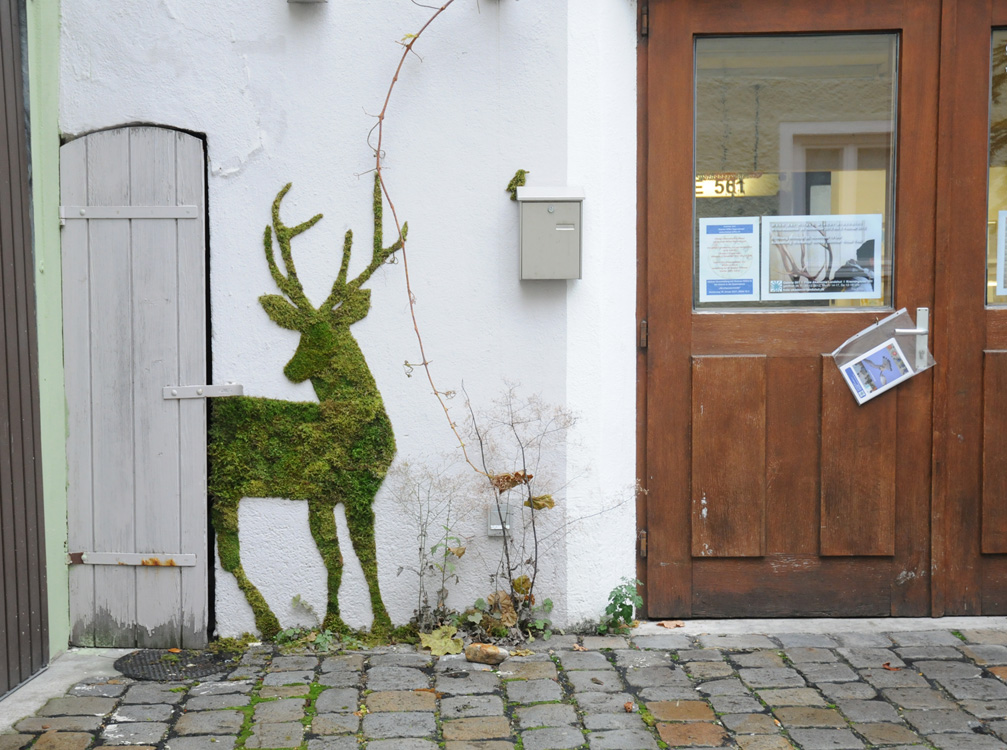
🦌 Moss Deer — By Carly Schmitt
Carly Schmitt makes the deer feel less painted than grown. Soft, green, and still, it looks as if the wall quietly decided it wanted wildlife.
Nerd Fact: Moss graffiti belongs to the greener side of street art, where the medium itself can be alive or biodegradable instead of spray paint. That makes the finished piece unstable in a good way: weather, moisture, and time can keep changing it after the artist leaves. See more of Schmitt’s practice through her own site.
🔗 Visit Carly Schmitt
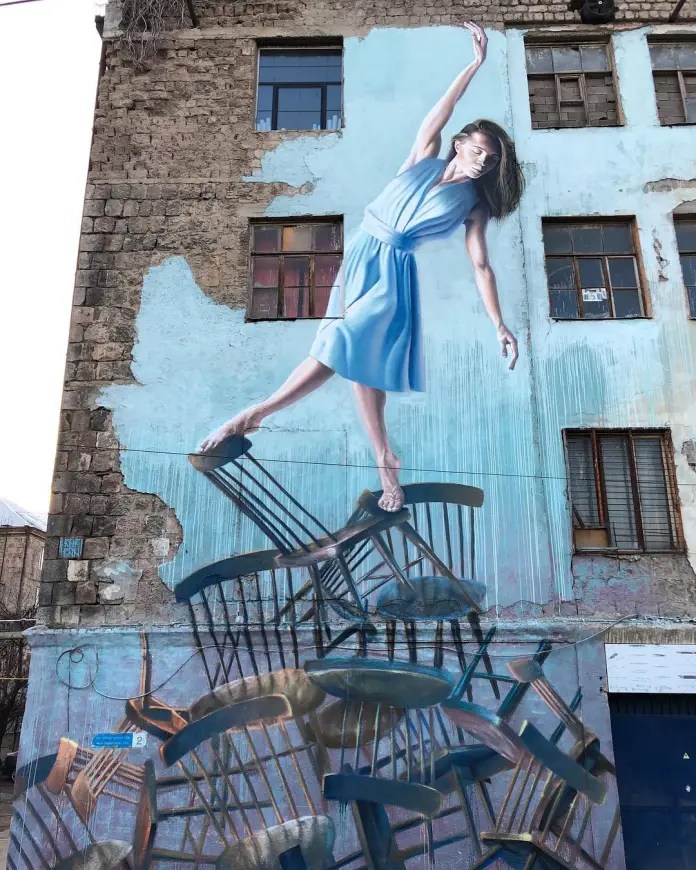
⚖️ Finding a good balance in life — By Sasha Korban in Tbilisi, Georgia 🇬🇪
Sasha Korban turns balance into a visible emotional state. The girl stands above tilting chairs, making life’s instability feel both dangerous and graceful.
Nerd Fact: Korban’s biography is part of why his murals hit hard: before becoming an international muralist, he worked in coal mining in Donetsk. That shift from underground labor to large public walls gives extra force to murals about pressure, balance, and survival; see more in this Sasha Korban mural collection.
More: Murals by Sasha Korban (16 Photos)
🔗 Follow Sasha Korban on Instagram
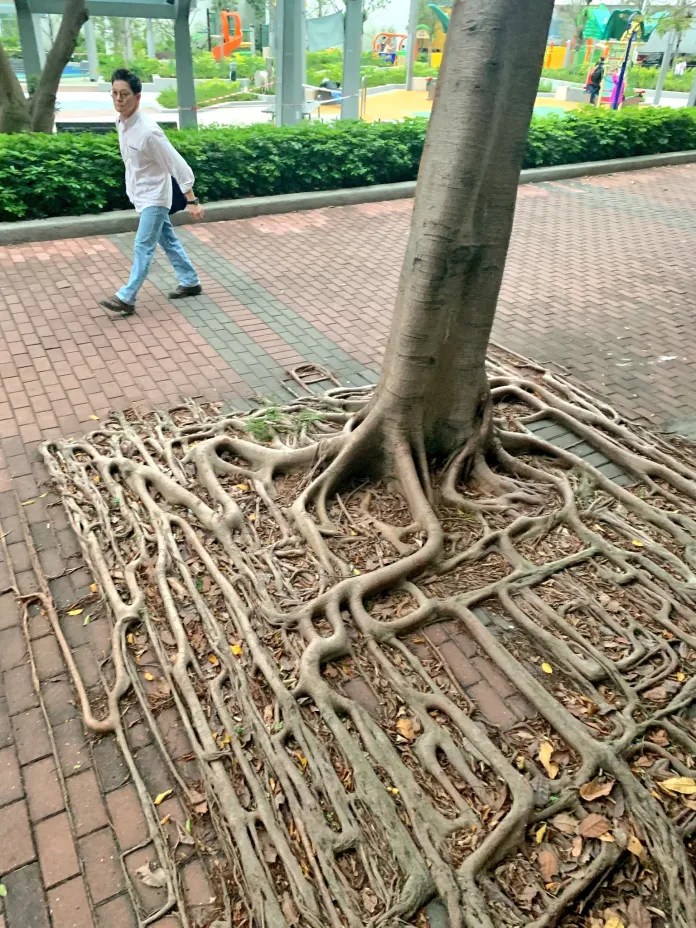
🧱 The Brick Eater — Hong Kong 🇭🇰
The banyan roots spread across the brick wall like a grid, making the scene look almost planned. It is a standoff between dense urban structure and a tree that refuses to be pushed aside.
Nerd Fact: Hong Kong’s stonewall trees are usually banyans that rooted into old masonry joints. They are both ecological survivors and heritage headaches: the same roots that make them beautiful can also challenge wall stability, which is why Hong Kong keeps detailed guidance on stonewall tree management.
More: When Trees Become Art (14 Photos)
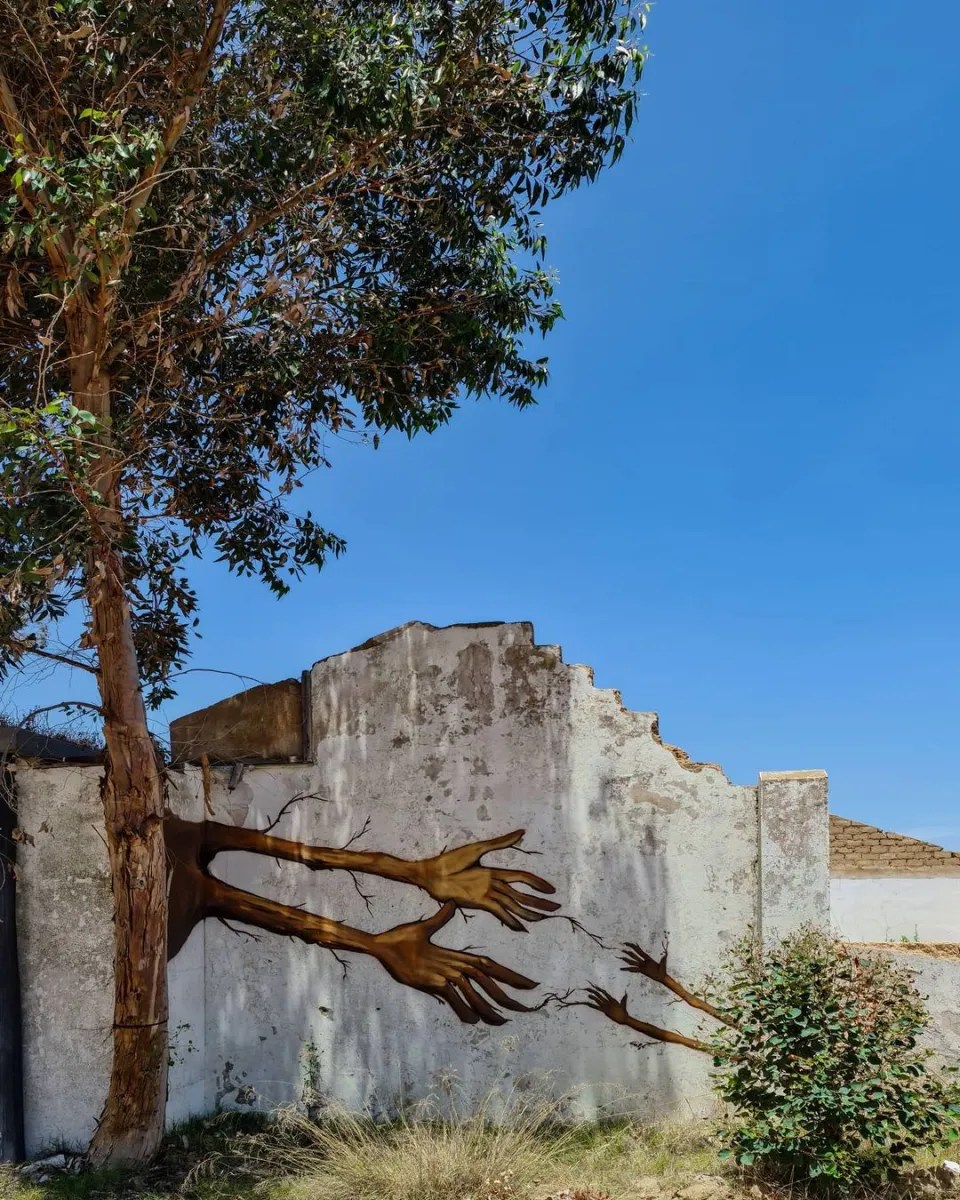
🐘 “Family Tree” — By Falko One in Riebeek West, South Africa 🇿🇦
Falko One treats the living trunk as though it was always meant to anchor the mural. Painted branches stretch across the broken wall like arms, turning real growth and ruined architecture into a story about connection.
Nerd Fact: Falko One is strongly associated with elephant murals across South Africa, but this work proves how flexible his visual language can be. Instead of painting an animal onto a wall, he lets the wall, the ruin, and the tree form a single living composition; more context and photos are in the original Family Tree post.
More: Family Tree
🔗 Follow Falko One on Instagram
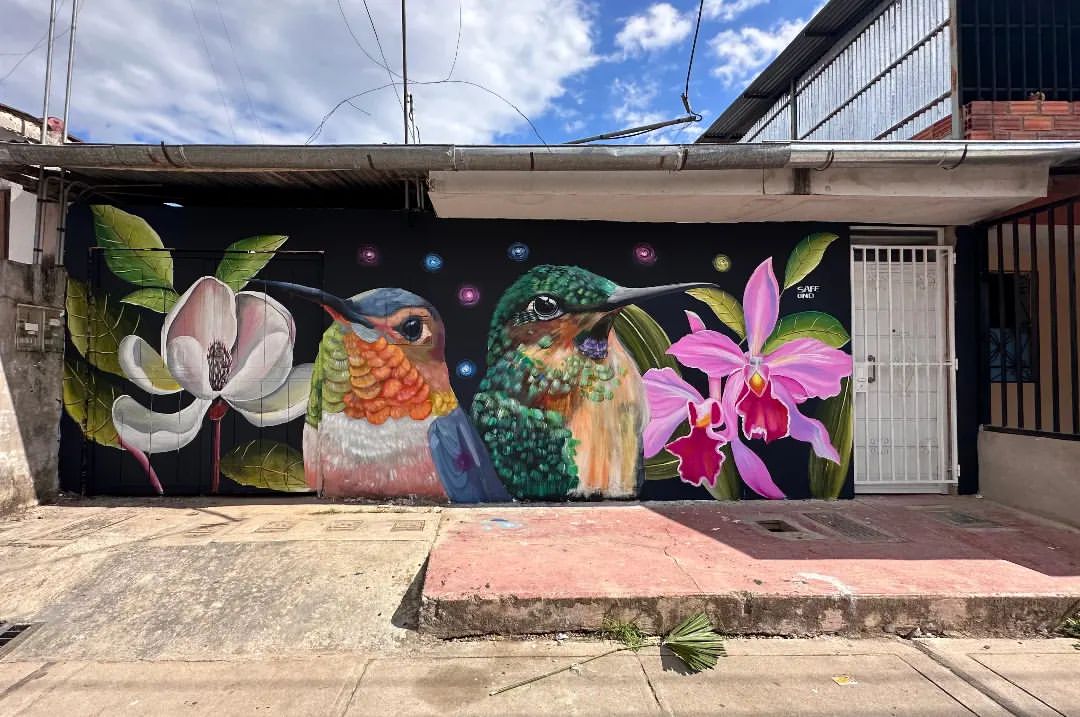
🐦 Hummingbird Bloom — By Safe in Moyobamba, Peru 🇵🇪
Safe brings rainforest color to a plain street wall. The hummingbirds and oversized blossoms feel lush and welcoming, turning concrete into a pocket of movement, brightness, and tropical life.
Nerd Fact: Moyobamba is known as Peru’s City of Orchids, and the region is famous for extraordinary orchid diversity. That makes the flowers in Safe’s mural more than decoration: they echo a real local identity tied to Moyobamba’s orchid culture.
More: Mural by Safe in Moyobamba, Peru for TierraQPinta
🔗 Follow Safe on Instagram
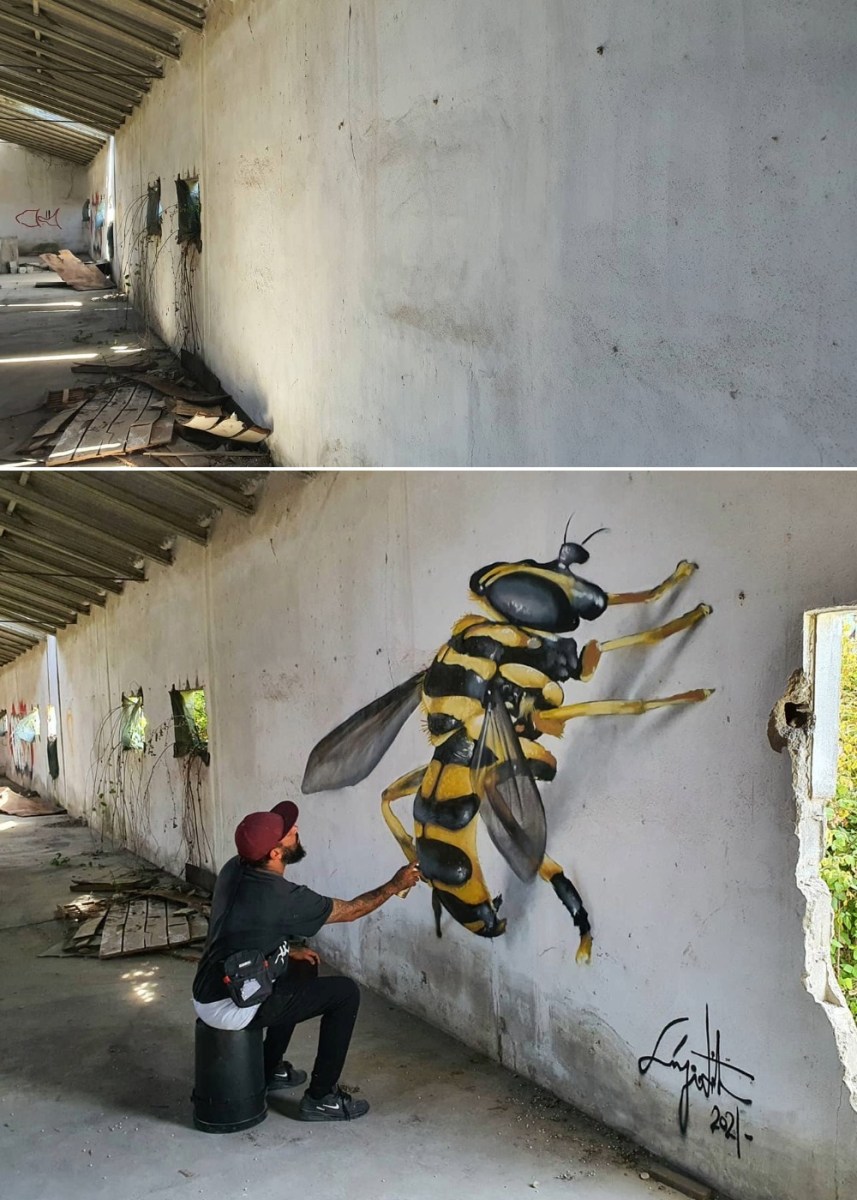
🐝 Giant Wasp — By Odeith
Odeith makes the wasp feel like it has taken over the room. The body hangs in space, the legs look tense, and the tiny brush detail makes it feel caught in the moment of becoming real.
Nerd Fact: The black-and-yellow striping reads instantly because it is a classic warning signal called aposematism. Odeith also uses anamorphosis: painting across surfaces so the illusion snaps into place from one specific viewpoint, a technique discussed in this interview about his 3D work.
🔗 Follow Odeith on Instagram
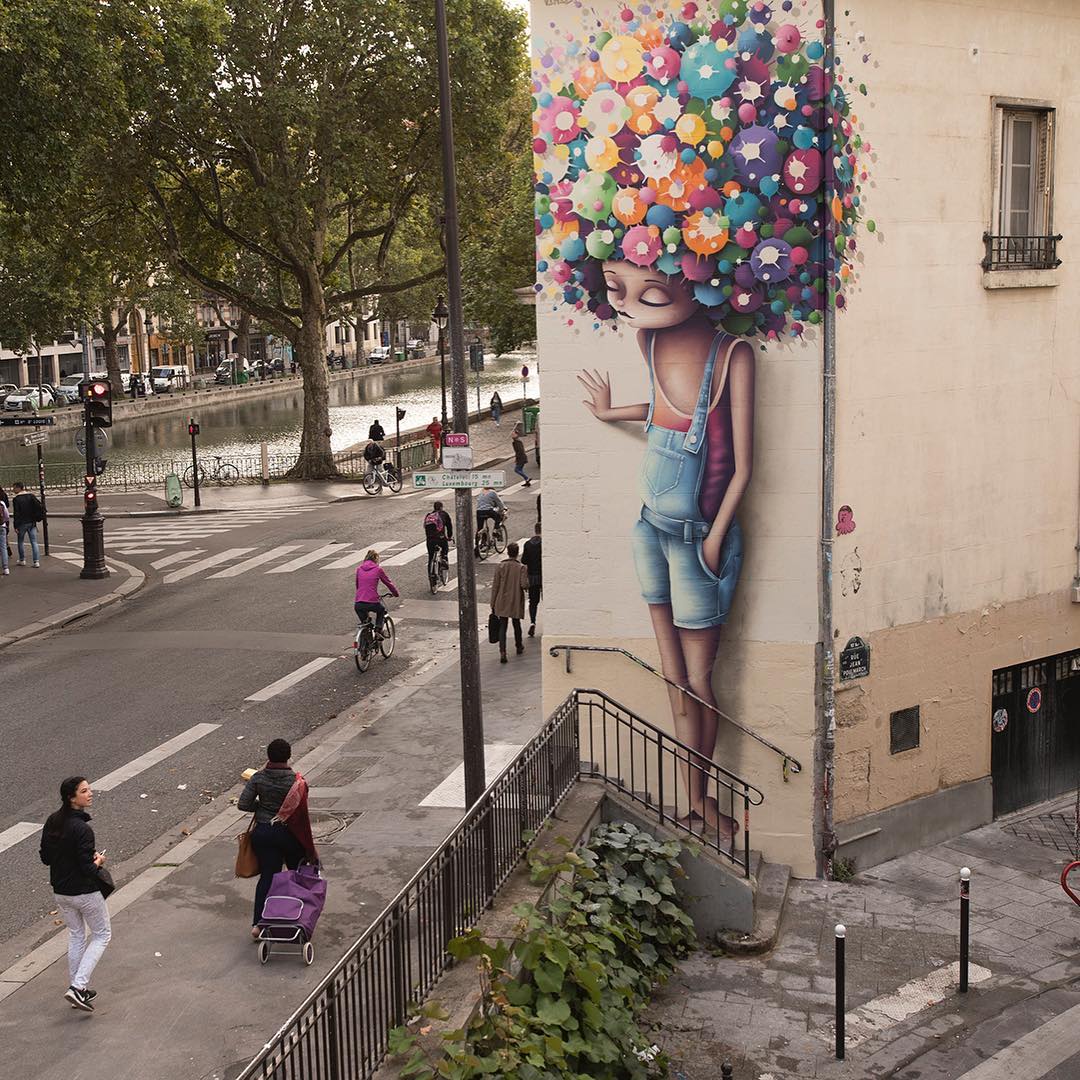
🌸 Girl with Floral Afro — By Vinie in Paris, France 🇫🇷
Vinie’s mural uses the building corner like a stage. The girl in denim overalls stands calmly while the huge floral hair lifts the portrait above the street and turns the facade into something playful and alive.
Nerd Fact: Vinie first came through graffiti lettering before developing her signature female characters with huge, plant-like hair. Her murals often make the wall’s real vegetation part of the portrait, a technique that turns architecture into a living hairstyle; see more in Vinie’s mural collection.
More: Vinie’s Stunning Murals (25 Photos)
🔗 Follow Vinie Graffiti on Instagram
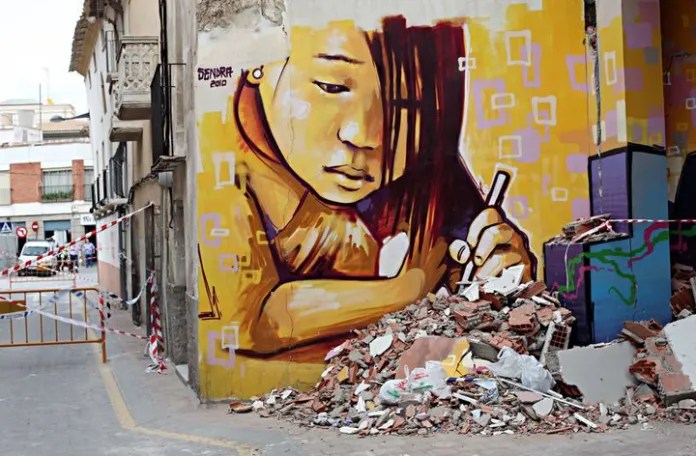
✍️ Girl Writing by Rubble — By Ramon Perez Sendra in Granada, Spain 🇪🇸
Sendra turns a rough, broken corner into a soft scene of concentration. The girl writing beside the rubble makes the construction-site texture feel less like ruin and more like a place where imagination survives.
Nerd Fact: Sendra often paints figures that feel quiet and introspective, then places them in rough urban contexts. That contrast is the point: tenderness lands harder when the wall around it is broken. More of his wall work and process appears through Ramon Perez Sendra’s artist feed.
🔗 Follow Sendra on Instagram
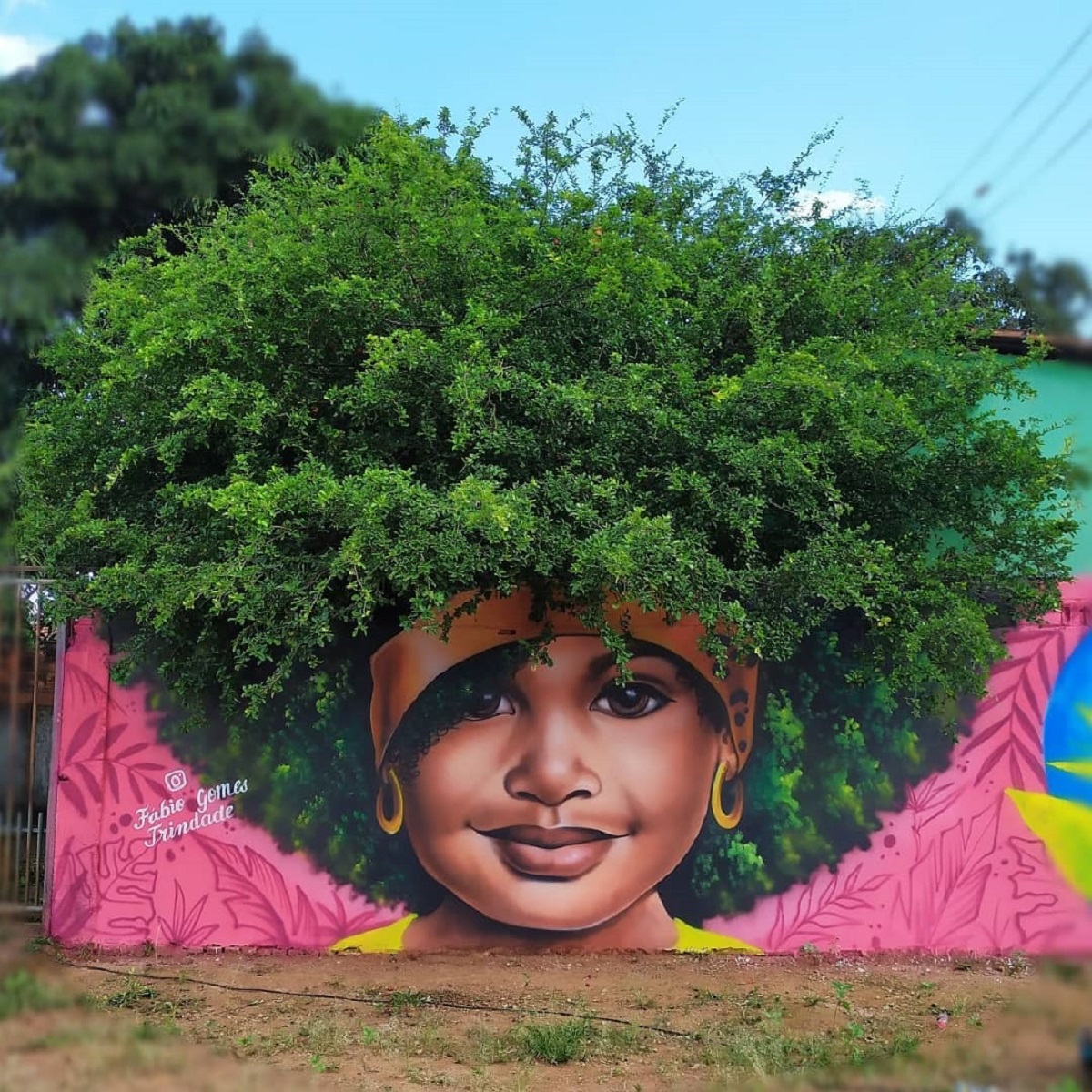
🌳 “Green Crown” — By Fábio Gomes Trindade in Trindade, Brazil 🇧🇷
Fábio Gomes Trindade paints portraits that wait for nature to complete them. Here the real tree canopy becomes the subject’s hair, adding texture and scale that no painted brushstroke could fake.
Nerd Fact: Fábio’s tree-hair murals depend on timing and placement as much as painting skill. The mural works on its own, but the living tree turns it into seasonal public art, changing with growth, trimming, and weather. See the Trindade series in How Fábio Gomes Turns Trees into Hair.
More: How Fábio Gomes Turns Trees into Hair
🔗 Follow Fábio Gomes Trindade on Instagram
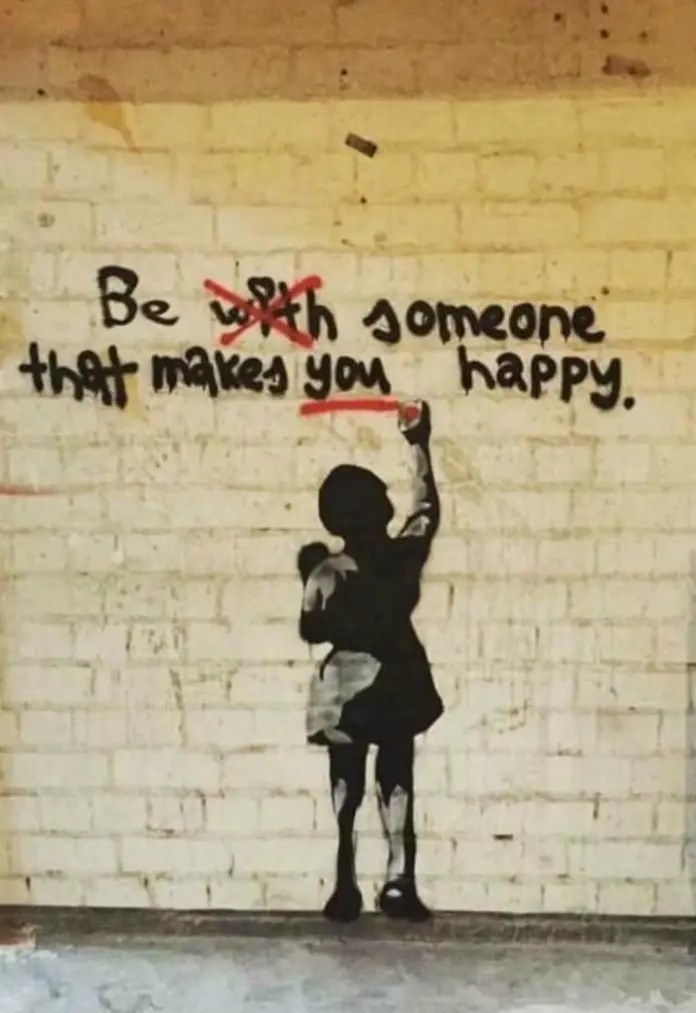
😊 Be Someone That Makes You Happy — In Bristol, UK 🇬🇧
A tiny painted editor changes the whole message. Instead of telling us to find someone else to make us happy, the stencil turns the sentence inward and makes it about self-worth.
Nerd Fact: Text-based street interventions often work by altering just one word or mark, because public signs already train us to read quickly. That makes this small edit powerful: it changes the sentence from romantic advice into a self-compassion prompt, exactly the kind of public-space reframe discussed in writing on street art and the city.
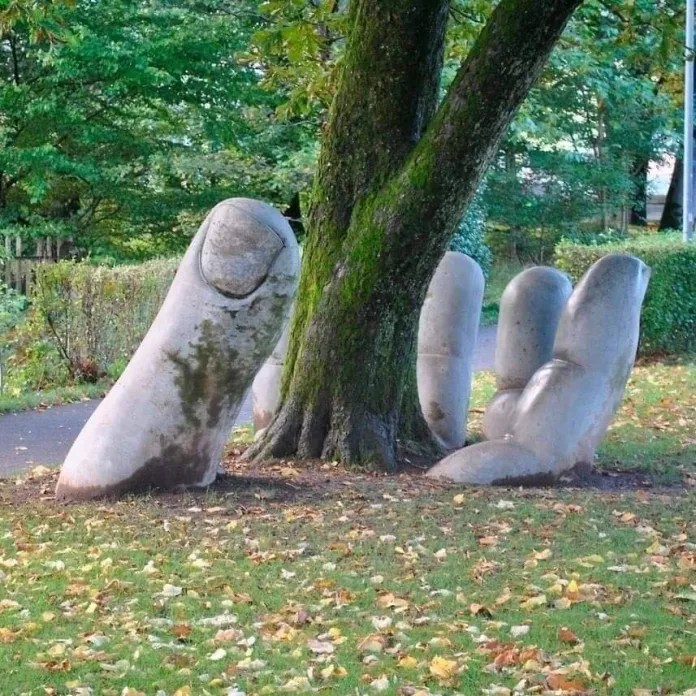
🖐️ The Gentle Giant — By Eva Oertli & Beat Huber in Glarus, Switzerland 🇨🇭
Massive sculpted fingers rise from the ground around a living tree, making protection feel both heavy and gentle. The contrast between the stone-like hand and fragile leaves gives the work its emotional force.
Nerd Fact: The piece began as a temporary installation idea but became beloved enough to remain in Glarus. Its power comes from scale reversal: a hand that normally fits around a twig becomes a landform sheltering a tree, turning care into architecture. More context appears in the tree-art roundup: When Trees Become Art.
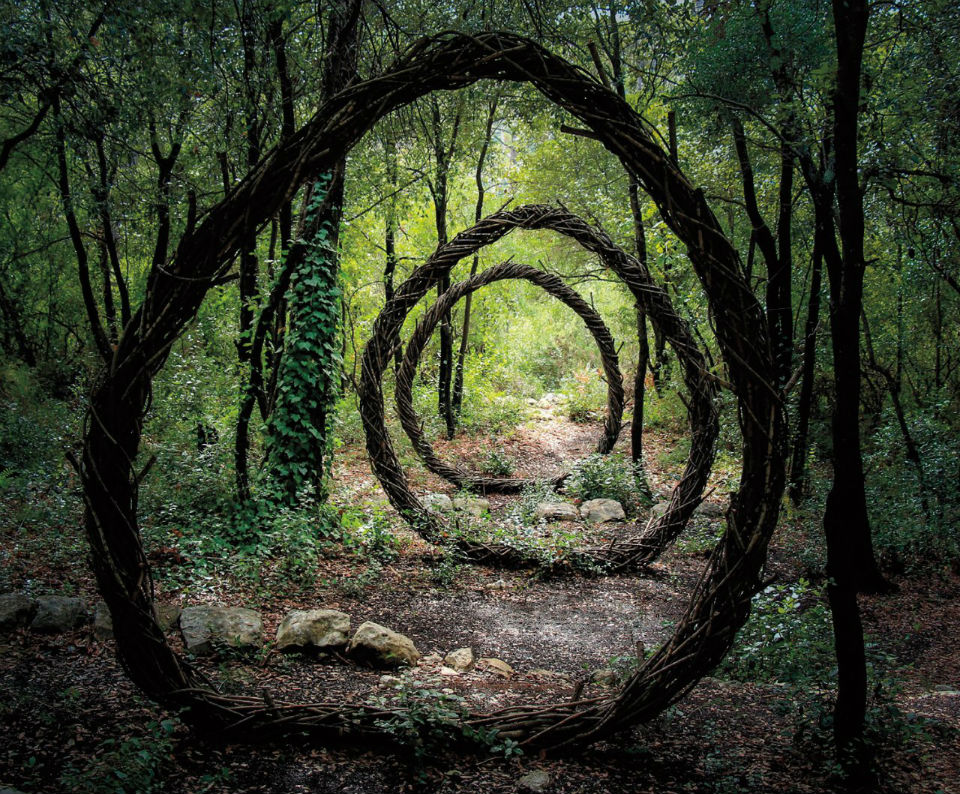
⭕ “Nature Rings” — By Spencer Byles in a French Forest 🇫🇷
Spencer Byles makes the woods feel as if they quietly invented geometry. The branch-woven circles frame the path like portals, while still belonging completely to the forest around them.
Nerd Fact: Byles says he has been making wild-forest sculptures from natural materials for more than 15 years, and that most of his work uses organic, ephemeral materials. During his French forest project, the pieces were not meant to last; they were meant to be reclaimed by the forest.
🔗 Follow Spencer Byles on Instagram
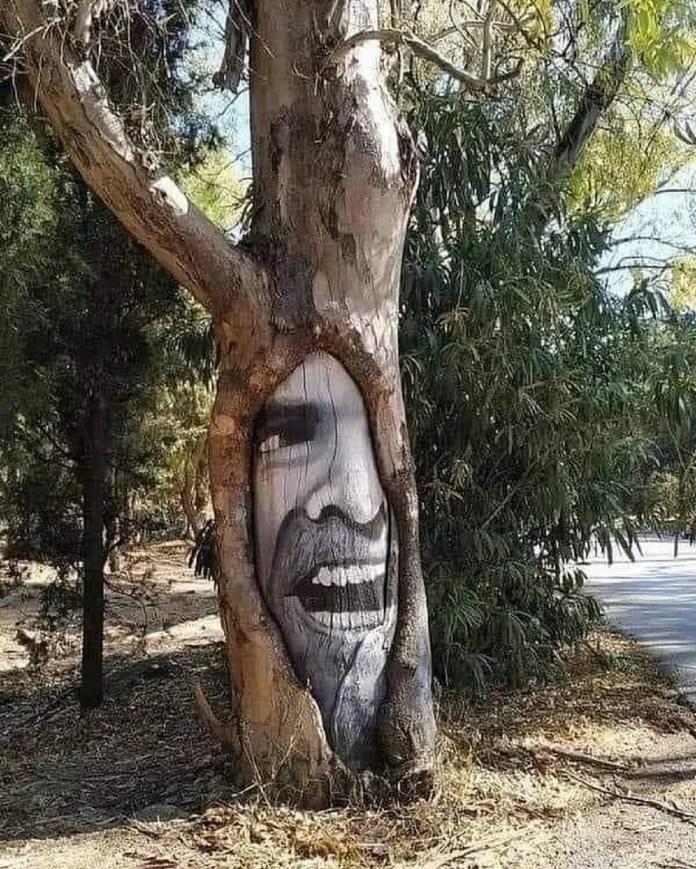
🪓 Here’s Johnny! — In Kaisariani, Athens, Greece 🇬🇷
A hollow tree trunk becomes the perfect frame for a black-and-white face. The result is eerie, funny, and easy to miss if you walk too fast, like the forest briefly looked back.
Nerd Fact: “Here’s Johnny!” was not in Stephen King’s original novel. Jack Nicholson improvised the line in Kubrick’s The Shining as a reference to Ed McMahon’s intro for Johnny Carson, which makes this tree gag a horror-film joke wrapped inside old American TV culture. The film reference is explained in detail by film-history writeups.
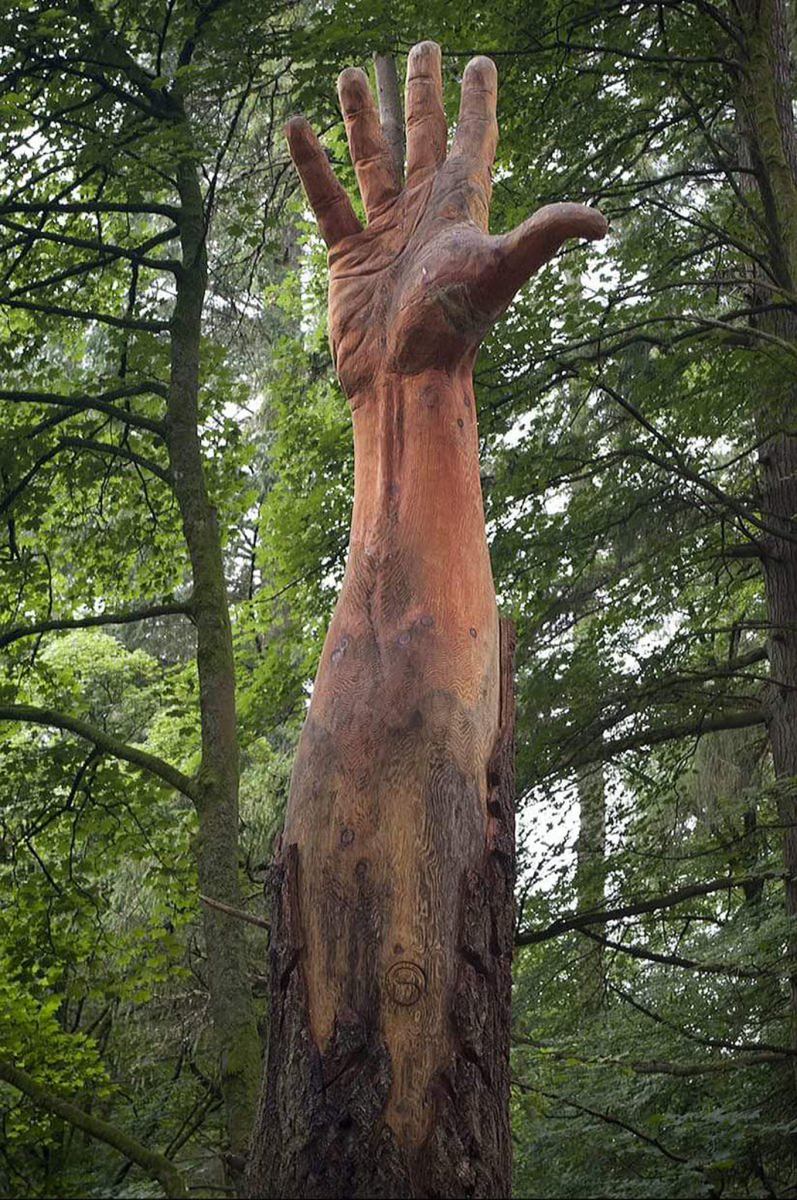
✋ “The Giant Hand” — By Simon O’Rourke in Wales, UK 🇬🇧
Simon O’Rourke turns a tree trunk into a gesture. Carved from the remains of a famous Douglas fir, the hand gives the fallen giant a second presence and makes its history impossible to ignore.
Nerd Fact: O’Rourke’s own account says the storm-damaged tree was the tallest in Wales and due to be felled. He named the piece Giant Hand of Vyrnwy, inspired by the area’s “Giants of Vyrnwy,” and imagined the hand as the tree’s last attempt to reach for the sky.
More: From Tallest Tree to Towering Sculpture: The Giant Hand of the UK
🔗 Visit Simon O’Rourke’s website
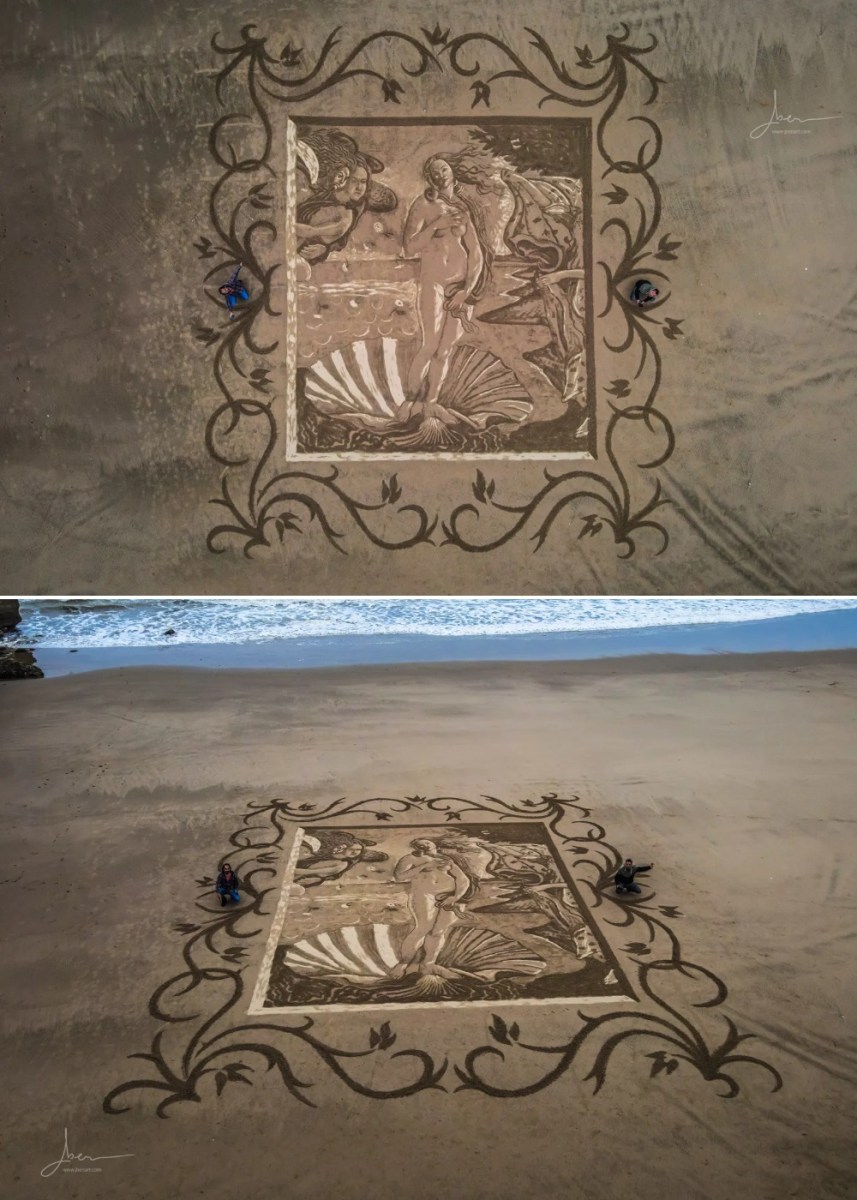
🐚 Birth of Venus — By Jben beach art and Thomas Cambois atelier in France 🇫🇷
Jben beach art and Thomas Cambois reinterpret Botticelli in sand, shadow, and shoreline scale. The beach becomes a temporary museum floor, with one tide waiting to erase the masterpiece.
Nerd Fact: Botticelli’s Birth of Venus was probably painted in the mid-1480s and shows Venus arriving from the sea. Re-making it directly in sand beside the tide brings the image back to the watery myth that inspired it, while Jben’s own practice centers on drawing large-scale temporary works on beaches.
More: 5 Pics Beach Art: Birth of Venus by Botticelli
🔗 Follow Jben beach art on Facebook and Thomas Cambois atelier on Facebook
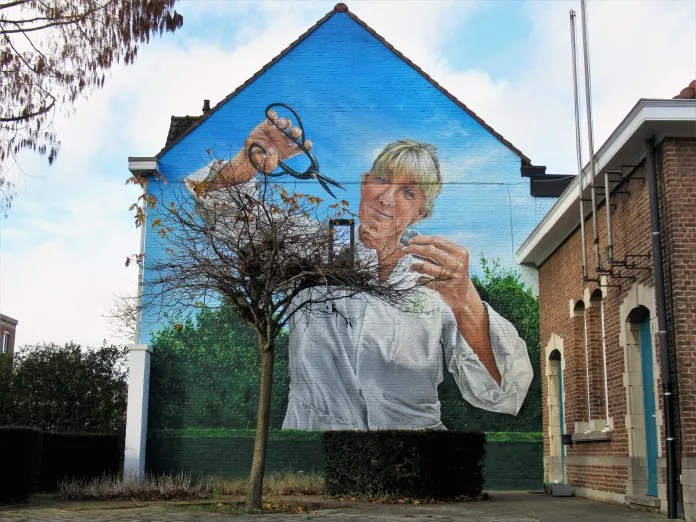
👨🌾 The Fake Gardener — By SMOK in Antwerpen, Belgium 🇧🇪
SMOK lines up a painted woman with a real tree so neatly that the flat wall seems to reach into our space. The scissors, the pose, and the leaves create a trompe-l’oeil moment that demands a double take.
Nerd Fact: Street Art Cities identifies the mural as part of SMOK’s 2022 Fake Views project and notes that viewers should look for the camera icon on the floor to find the correct angle. In other words, the artwork includes its own built-in viewing instructions.
🔗 Follow SMOK on Instagram
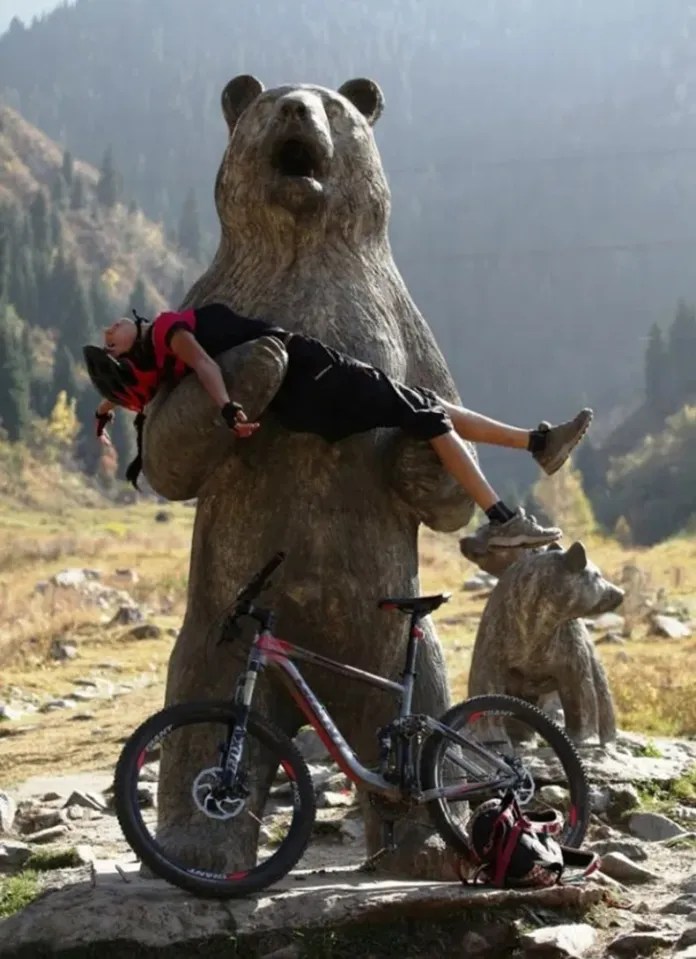
🐻 Bear Hug — In Boulder, Colorado, USA 🇺🇸
The scale does all the work here. A cyclist resting in the arms of a bear statue turns one bike stop into a wilderness melodrama, with the sculpture suddenly reading as a gentle protector.
Nerd Fact: The photo works because public sculpture becomes a prop only when the viewer physically joins the scene. “Playing with statues” is a kind of participatory art moment: the statue stays the same, but the audience changes the meaning for one perfectly timed image. More examples are collected in Playing With Statues.
More: Playing With Statues (23 Photos)
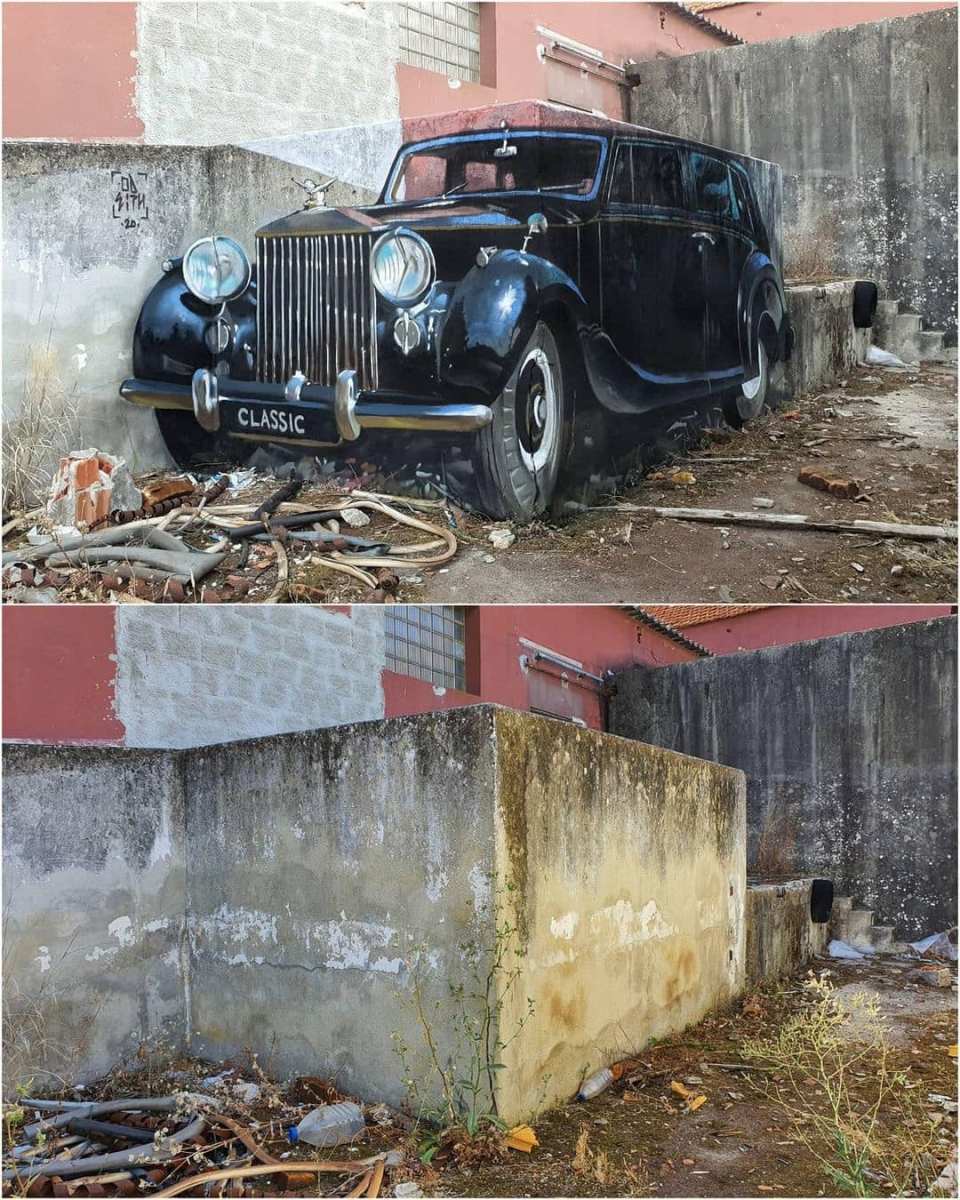
🚗 Classic Day — By Odeith
One concrete block, one perfect angle, and suddenly there is a vintage car. Odeith turns dead geometry into polished metal and believable mass with almost ruthless control.
Nerd Fact: This is anamorphic painting: the illusion only fully works from a specific viewpoint. Odeith is widely recognized for painting across more than one surface so objects seem to float or project outward, a technique explained in this GraffitiStreet interview about his 3D work.
🔗 Follow Odeith on Instagram
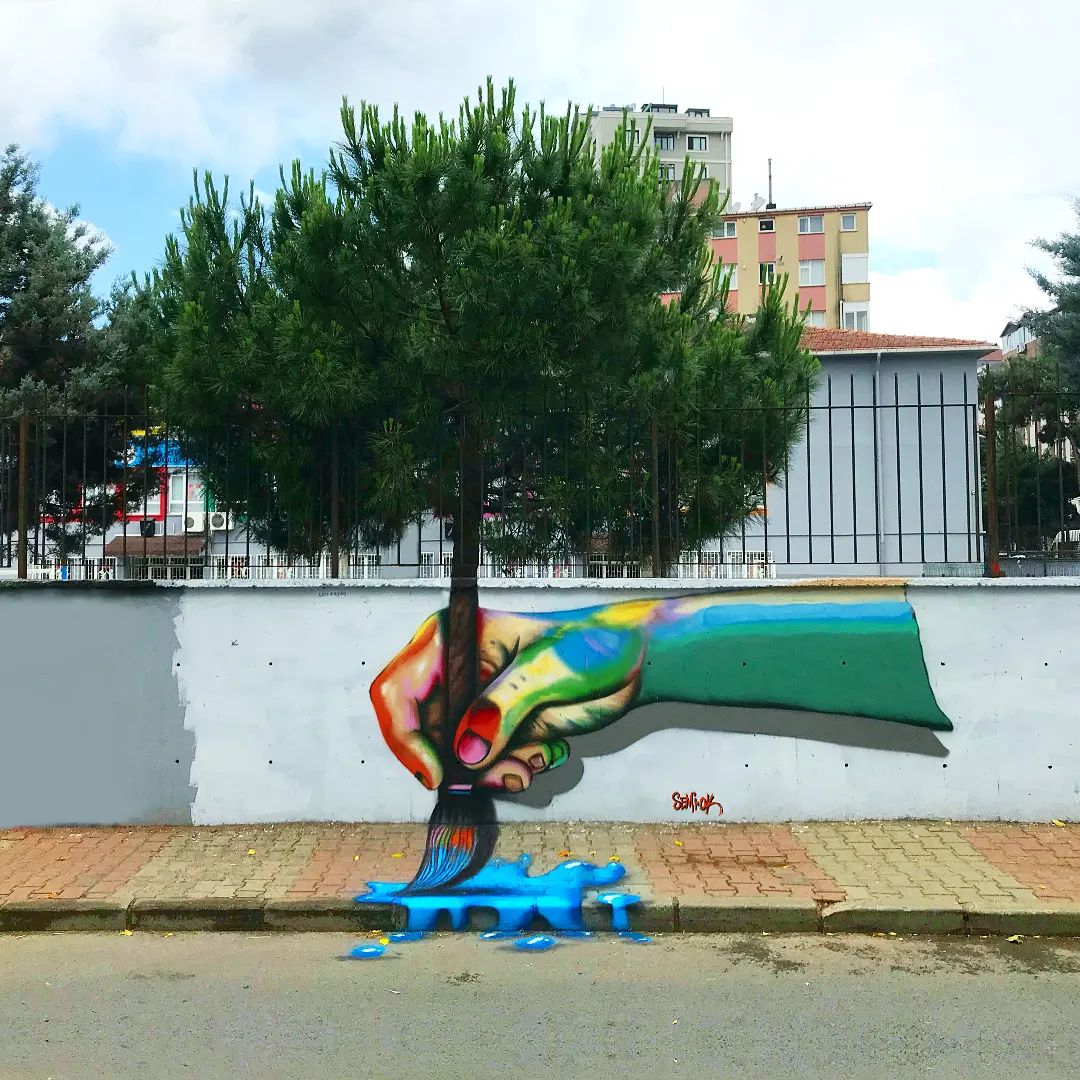
🖌️ “Painting Tree” — By Semi O.K. in Istanbul, Turkey 🇹🇷
Semi O.K. uses the real tree trunk as the handle of a paintbrush, while the painted hand and blue spill complete the image. It is a wonderfully economical idea: one smart intervention rewrites the whole street scene.
Nerd Fact: Semi O.K. has been active in street art since the 1990s, and this piece shows why object-based intervention can be so satisfying. The tree is not background; it is the physical handle of the painted brush. More photos and context are in the original Painting Tree post.
More: Painting Tree by Semi O.K in Istanbul, Turkey
🔗 Follow Semi O.K. on Instagram
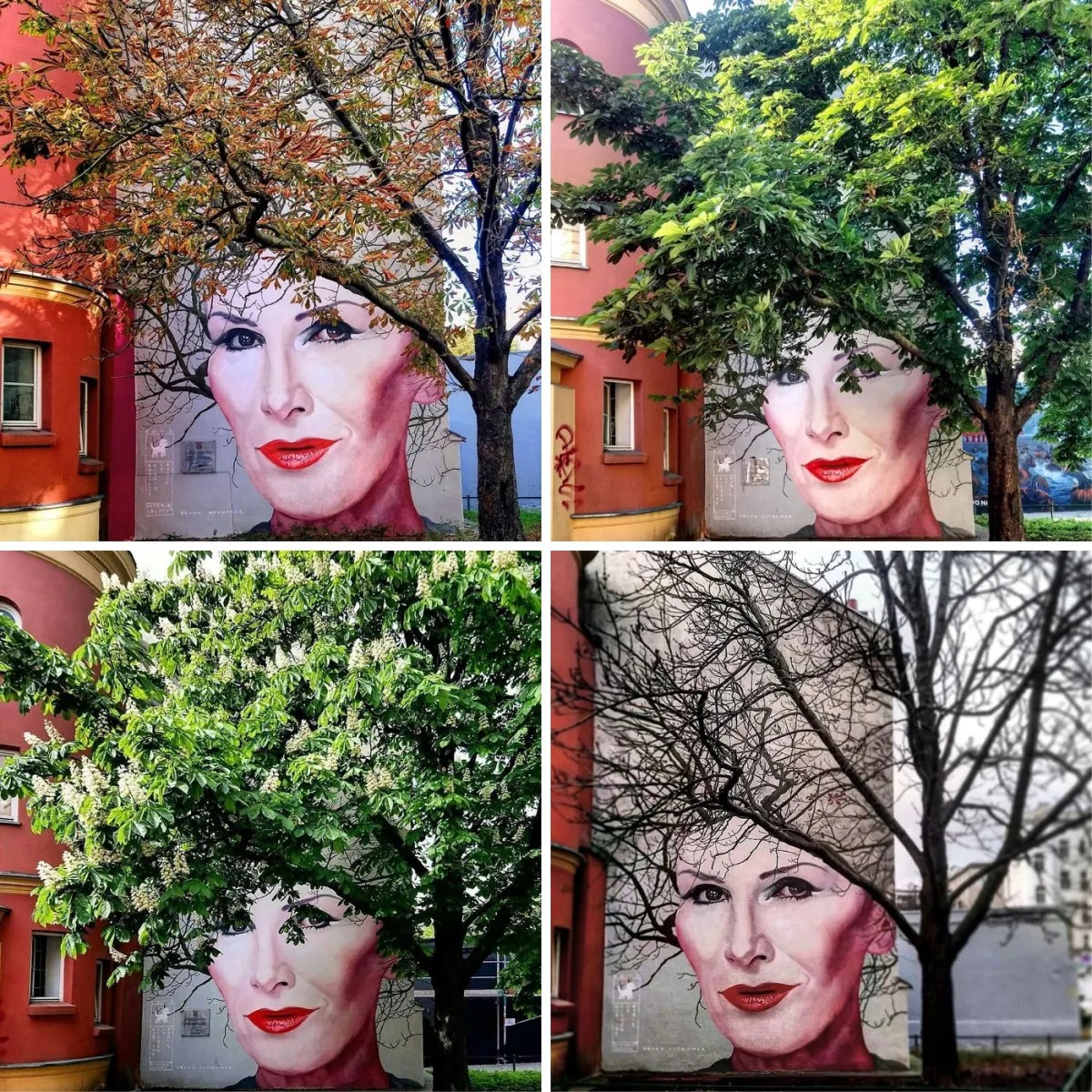
🍂 “Four Seasons Tribute to Kora” — By Bruno Althamer in Warsaw, Poland 🇵🇱
Bruno Althamer designed this tribute mural to stay unfinished on purpose. The tree in front becomes the portrait’s hair, changing through blossom, leaves, autumn color, and bare winter branches.
Nerd Fact: The mural honors Polish singer Kora, and the chestnut tree makes it a living portrait. The artwork changes with the seasons, so the “hair” is not painted once; it is renewed by spring leaves, summer fullness, autumn color, and winter branches. More photos are in the original Four Seasons Tribute to Kora post.
More: Four Seasons Tribute to Kora in Warsaw, Poland
🔗 Visit Bruno Althamer on Facebook
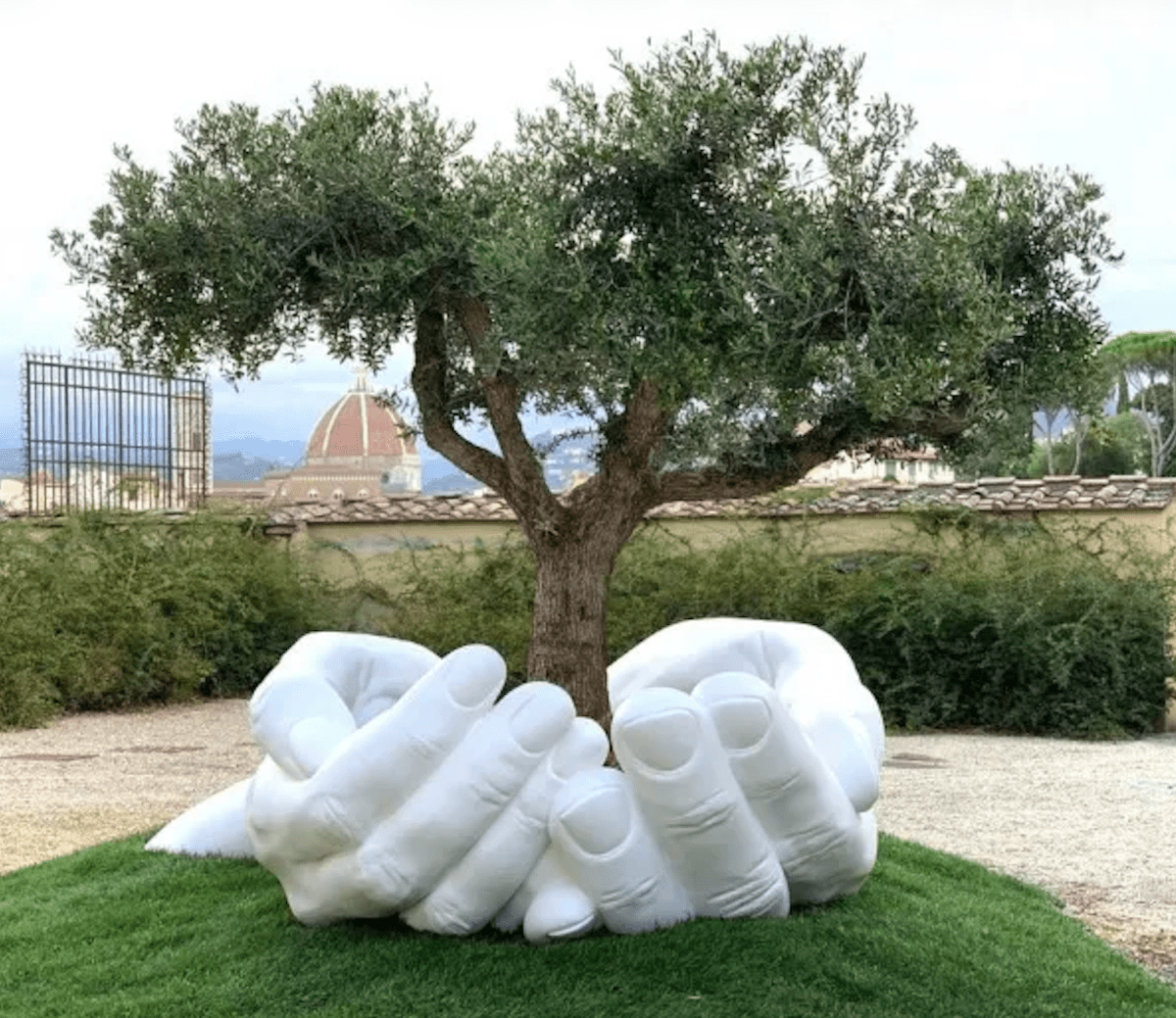
🌳 Give — By Lorenzo Quinn at The Uffizi Gardens, Florence 🇮🇹
Two white sculpted hands rise from the grass to cradle an olive tree. Lorenzo Quinn makes the act of giving back to nature feel monumental, simple, and impossible to miss.
Nerd Fact: Halcyon Gallery writes that Give carries a message of peace symbolized by an olive tree, while the sculpture’s resin and recycled materials extend the environmental message into the object itself. In other words, the artwork is not only about sustainability; its materials are part of the message.
🔗 Follow Lorenzo Quinn on Instagram
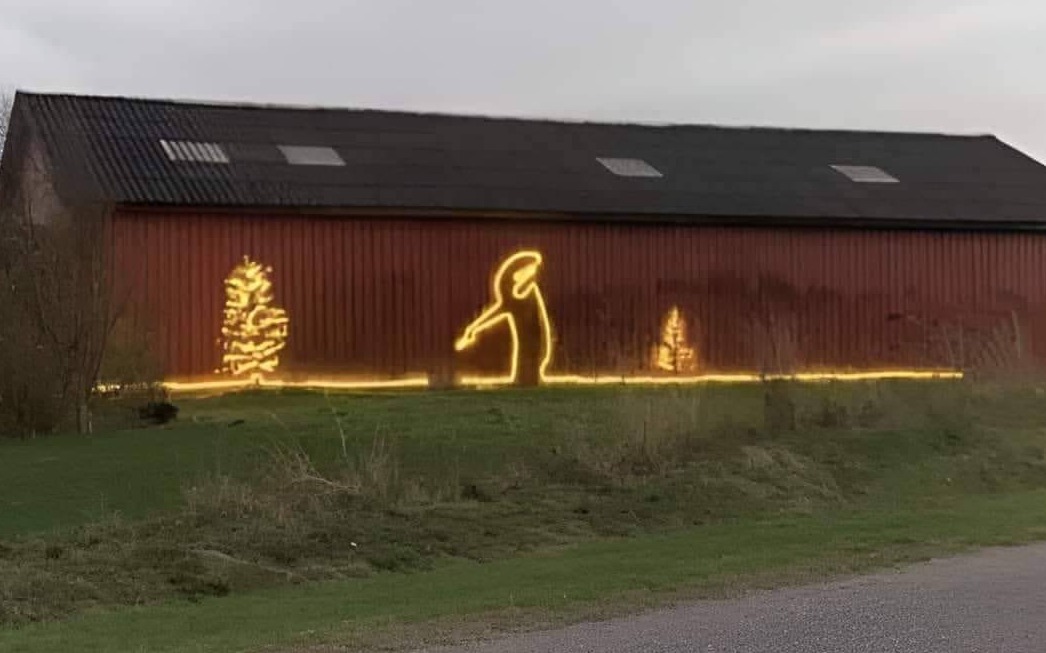
✏️ La Linea on the Barn
The classic single-line character appears across a rural barn, turning a simple facade into a nostalgic animation moment. The minimalism works because one continuous line can carry a surprising amount of personality.
Nerd Fact: Osvaldo Cavandoli created La Linea in 1969, originally connected to Italian TV advertising before the character became internationally known. The whole gag of the cartoon is that one line can be a ground, a world, a problem, and a person at the same time, which makes this barn version feel perfectly true to the character’s origin.
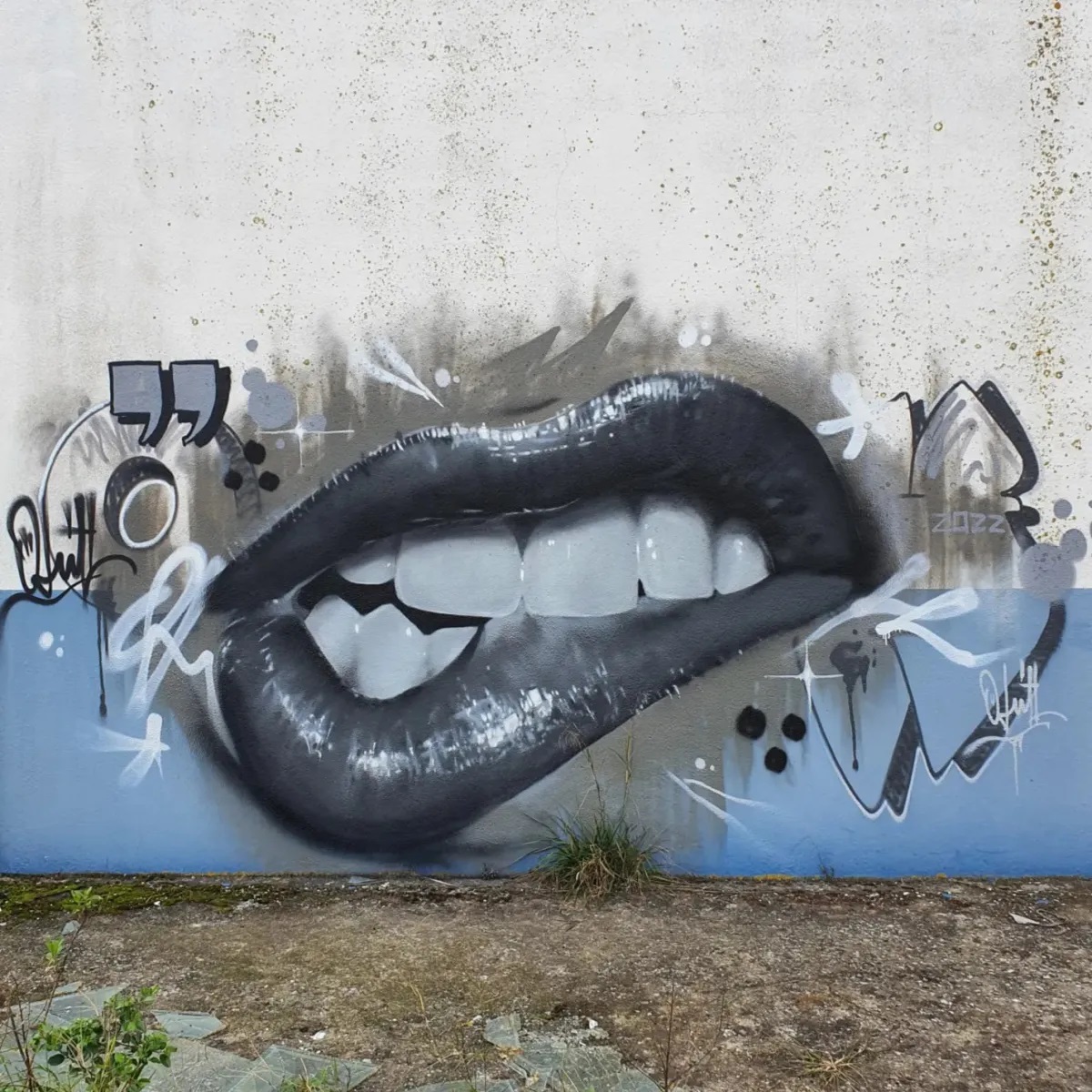
👄 Bite My Lips — By Odeith in Lisbon, Portugal 🇵🇹
No insect, vehicle, or monster here — just pure surface illusion. The shine, bite mark, and shadow make hard concrete feel soft, glossy, and uncomfortably alive.
Nerd Fact: Lips are a perfect test for trompe-l’oeil because viewers know instantly how soft, wet, and rounded they should look. Odeith’s version works because light and shadow make concrete seem like flesh. The effect relies on the same anamorphic illusion logic behind his larger object transformations.
🔗 Follow Odeith on Instagram
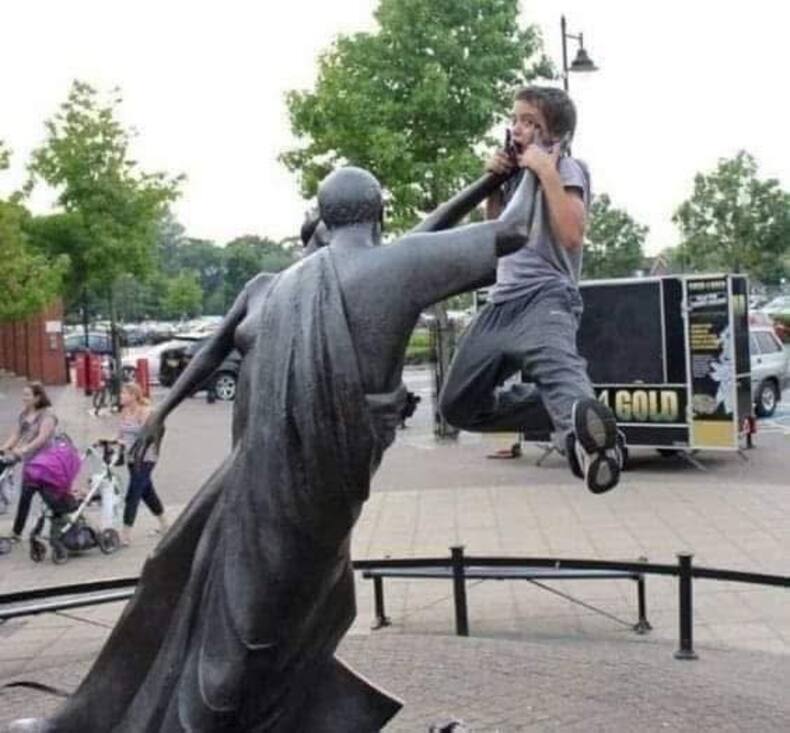
👋 The Playful Bop
The kid sells the illusion completely. The statue’s outstretched arm lines up with his face at the exact moment he jumps back, making the bronze figure look like it delivered a cartoonish bop.
Nerd Fact: This kind of image is a perspective trick, not a Photoshop trick. The joke depends on forced alignment between a static statue and a moving body, a classic camera illusion where timing and viewpoint create the “action.” See more examples in People Played With Statues.
More fun: People Played With Statues
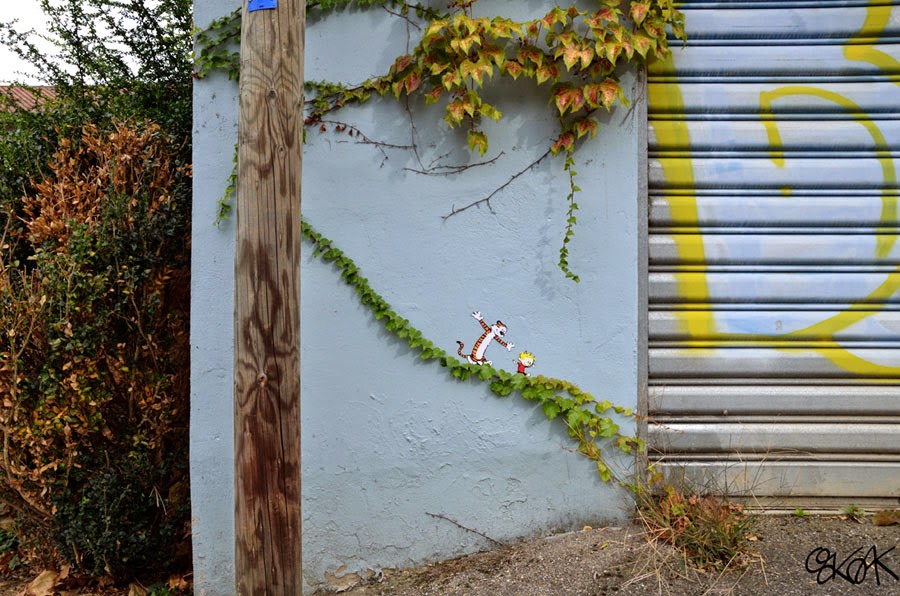
🐯 Calvin & Hobbes on a Vine — By Oakoak
Only Oakoak could turn a creeping plant into a full comic-strip landscape. The characters are tiny, but the joke lands instantly because the real vine becomes the missing slope.
Nerd Fact: This is site-specific street art in its purest form: remove the vine and the joke collapses. Oakoak’s whole method is to hijack existing city details and add the smallest possible visual twist, a practice Parcours Street Art describes as using flaws in the urban décor to put poetry back into the city.
🔗 Follow Oakoak on Instagram
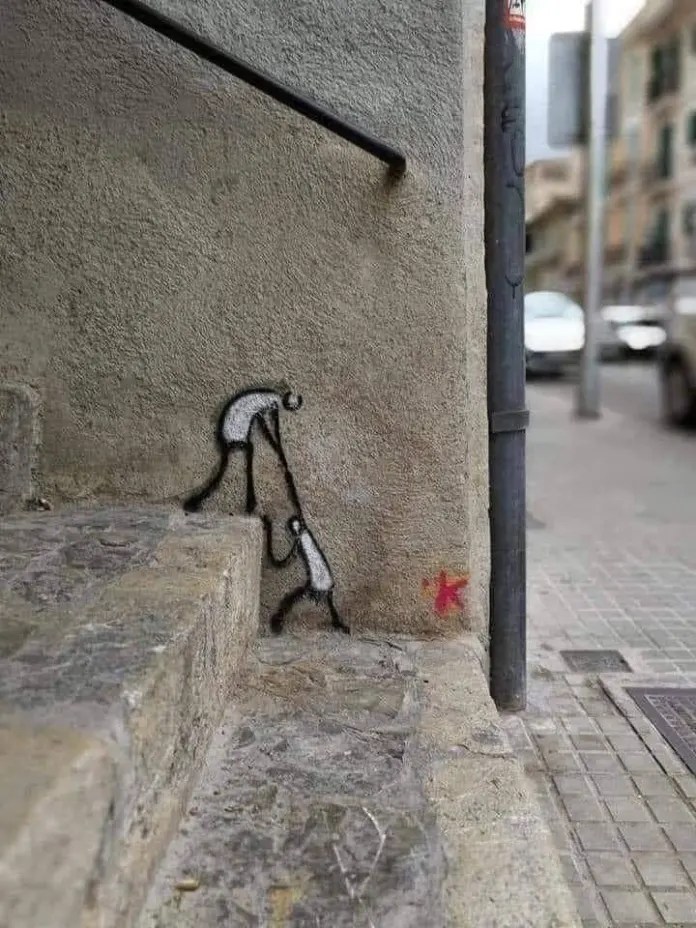
🤝 Helping Hands — By Exitenter in Florence, Italy 🇮🇹
Exitenter’s tiny wall piece turns a corner into a story of mutual aid. Two simple figures help each other upward, making empathy feel clear without needing a large mural or many details.
Nerd Fact: Exitenter, also known as “K,” often paints small figures with ladders, balloons, and simple lines in Florence. The scale is part of the message: instead of overwhelming the city, the work rewards people who slow down and notice small acts of help. See more through Exitenter’s own archive.
🔗 Follow Exitenter on Instagram
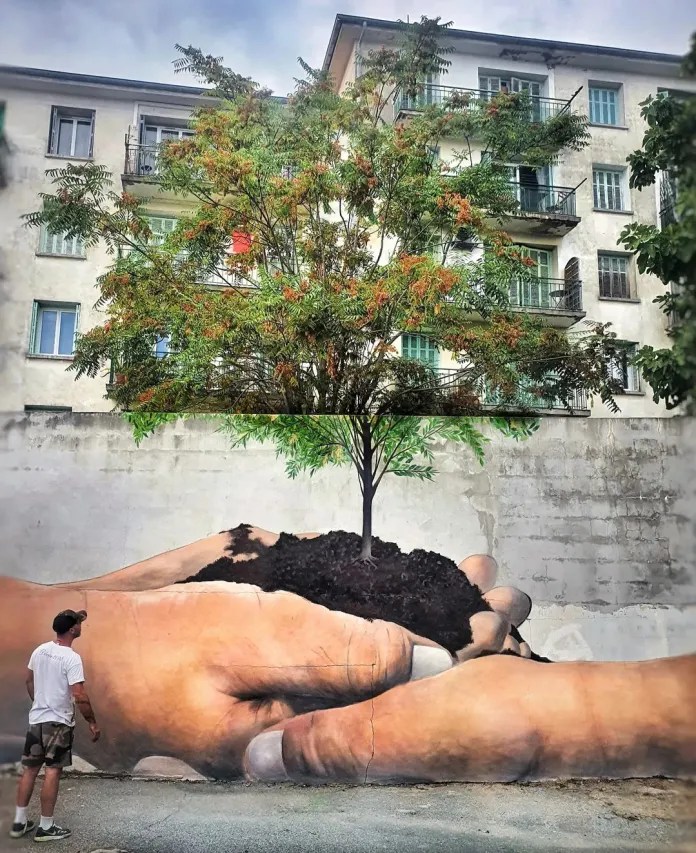
👐 Painted Hands, Real Roots — By Adrien Martinetti in Ajaccio, France 🇫🇷
Adrien Martinetti paints massive hands holding soil, while a real tree grows exactly where the illusion needs it. The mural and the living street element complete each other with bold, uncanny precision.
Nerd Fact: In Your Hands is a perfect title because the tree is literally placed in painted hands. The mural also turns root systems into a public image of responsibility: what is normally hidden underground becomes the thing everyone has to look at. See more from the artist through Adrien Martinetti.
🔗 Follow Adrien Martinetti on Instagram
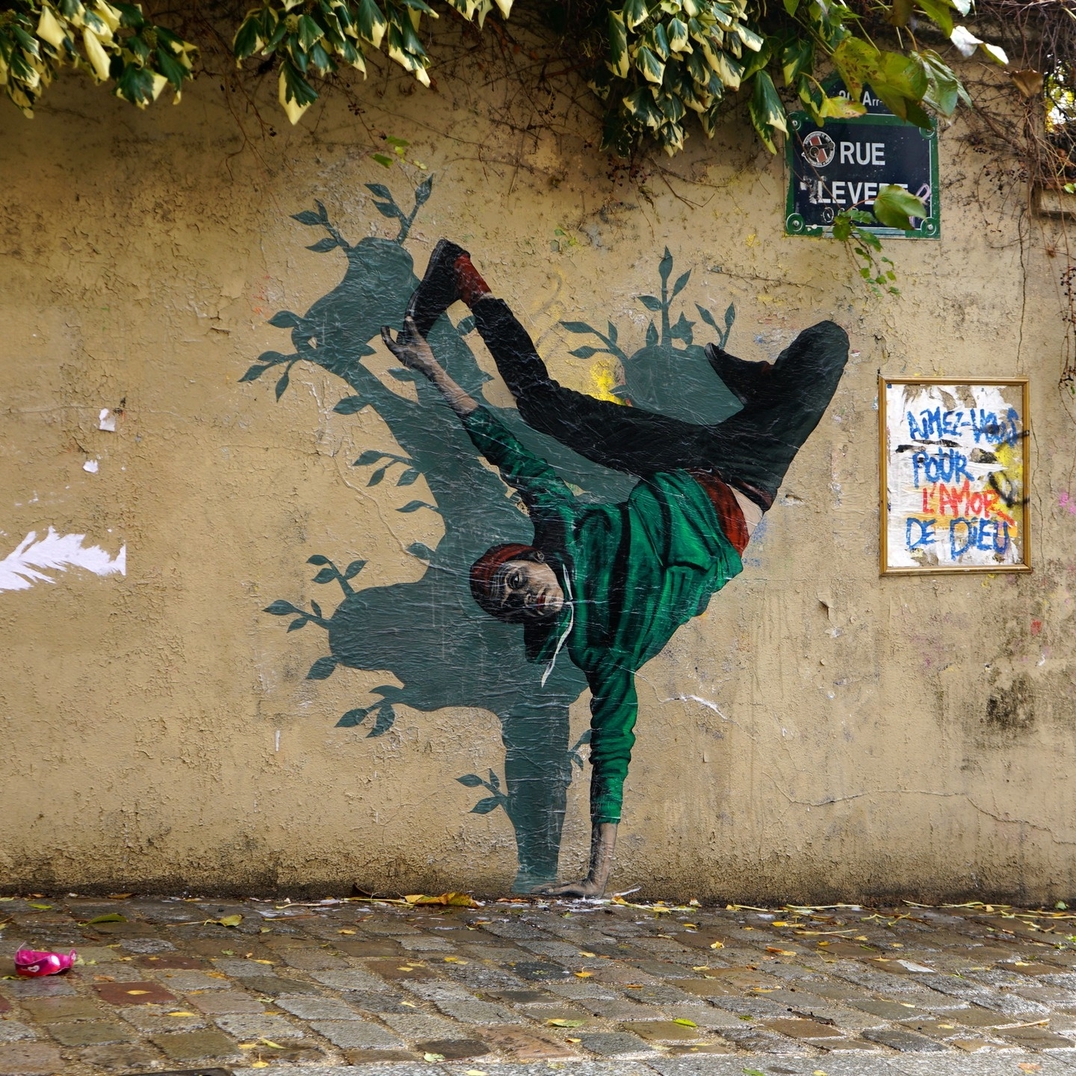
🌵 “Planté là” — By Levalet in Paris, France 🇫🇷
Levalet makes this Paris wall feel delightfully unstable. The figure seems to tumble into a plant-shadow, while real foliage above finishes the trick and ties the whole corner together.
Nerd Fact: The title is a French wordplay. Planté là can suggest being “planted there,” but planter là also carries the sense of leaving someone stuck or abandoned on the spot. Levalet’s street practice often relies on exactly this type of situational language-and-place joke, visible in his public interventions.
🔗 Follow Levalet on Instagram
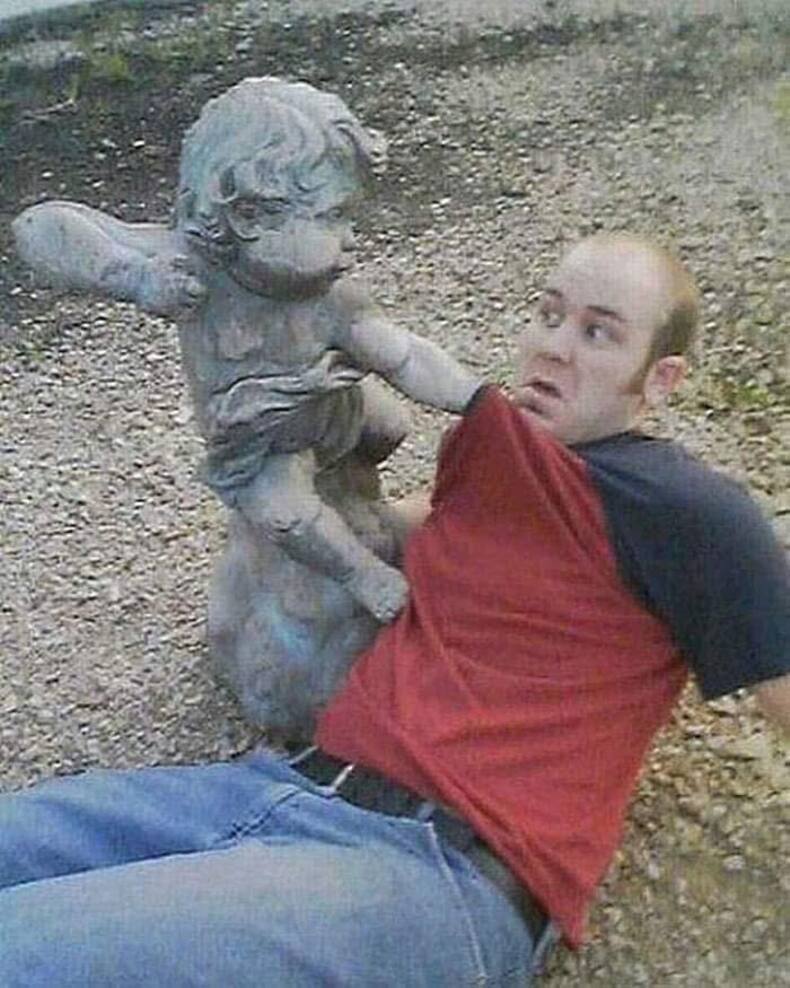
👼 The Surprising Cherub
A stone cherub reaches out, and the passerby reacts with perfect mock shock. The pose transforms a sweet classical sculpture into a fast, funny scene.
Nerd Fact: Many figures casually called cherubs in art are technically putti: chubby child figures, often winged, derived from Greco-Roman Eros imagery and widely used in Renaissance and Baroque art. Britannica’s entry on the putto explains why these little figures are everywhere in classical-looking sculpture.
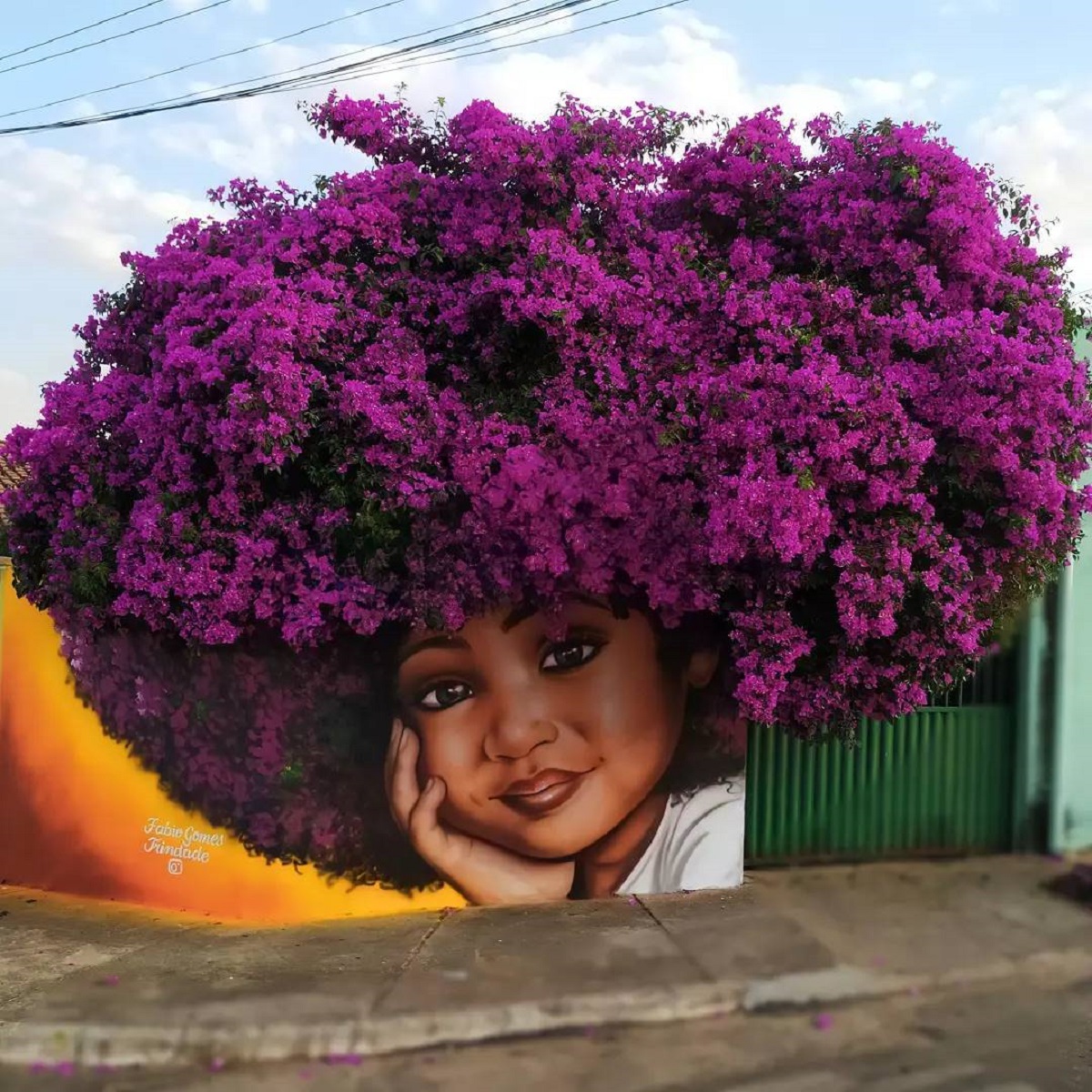
🌺 Blooming Hair — By Fabio Gomes Trindade in Trindade, Brazil 🇧🇷
Fabio Gomes Trindade paints a young girl beneath a real blooming bougainvillea so the flowers become her hair. The portrait is calm and strong, but the living afro is what makes it unforgettable.
Nerd Fact: This mural uses bougainvillea not just as a background plant but as the actual volume of the portrait’s hair. Because bougainvillea blooms in intense bracts rather than petals, the color reads almost like paint from a distance, which is why Fábio’s tree-and-flower hair murals photograph so dramatically.
More: How Fábio Gomes Turns Trees into Hair
🔗 Follow Fabio Gomes Trindade on Instagram
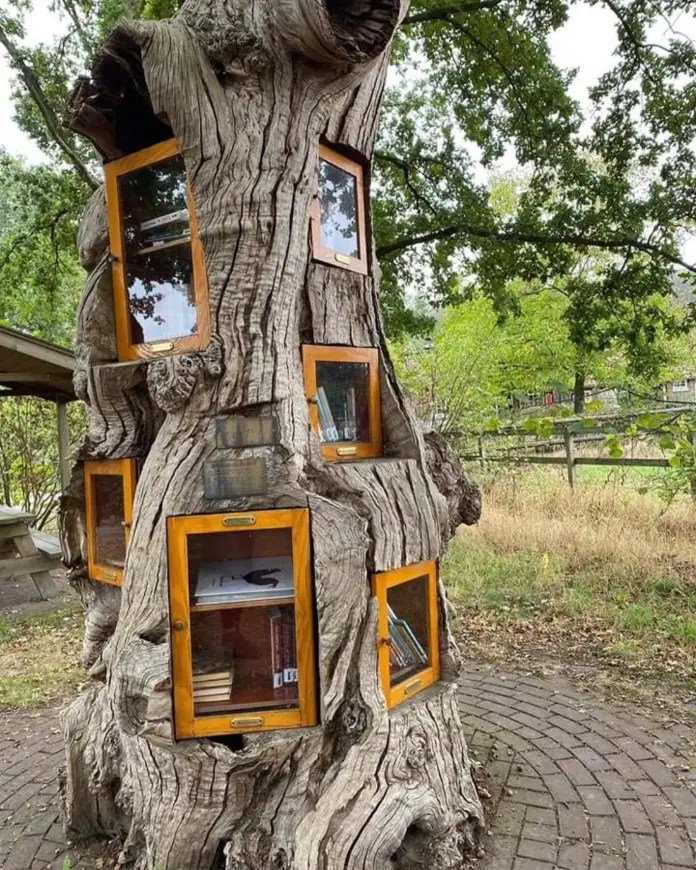
📚 The Wood That Reads — Ruurlo, Netherlands 🇳🇱
An old hollow tree trunk becomes an outdoor community library, with shelves tucked inside the bark. It gives the tree a second life as a place for stories, swapping shade for shared books.
Nerd Fact: The library is known as De (B)ruilboom, a Dutch wordplay around exchange and tree. Its charm is that it turns a dead or hollow trunk into social infrastructure: the tree stops producing leaves and starts circulating books. More context is collected in When Trees Become Art.
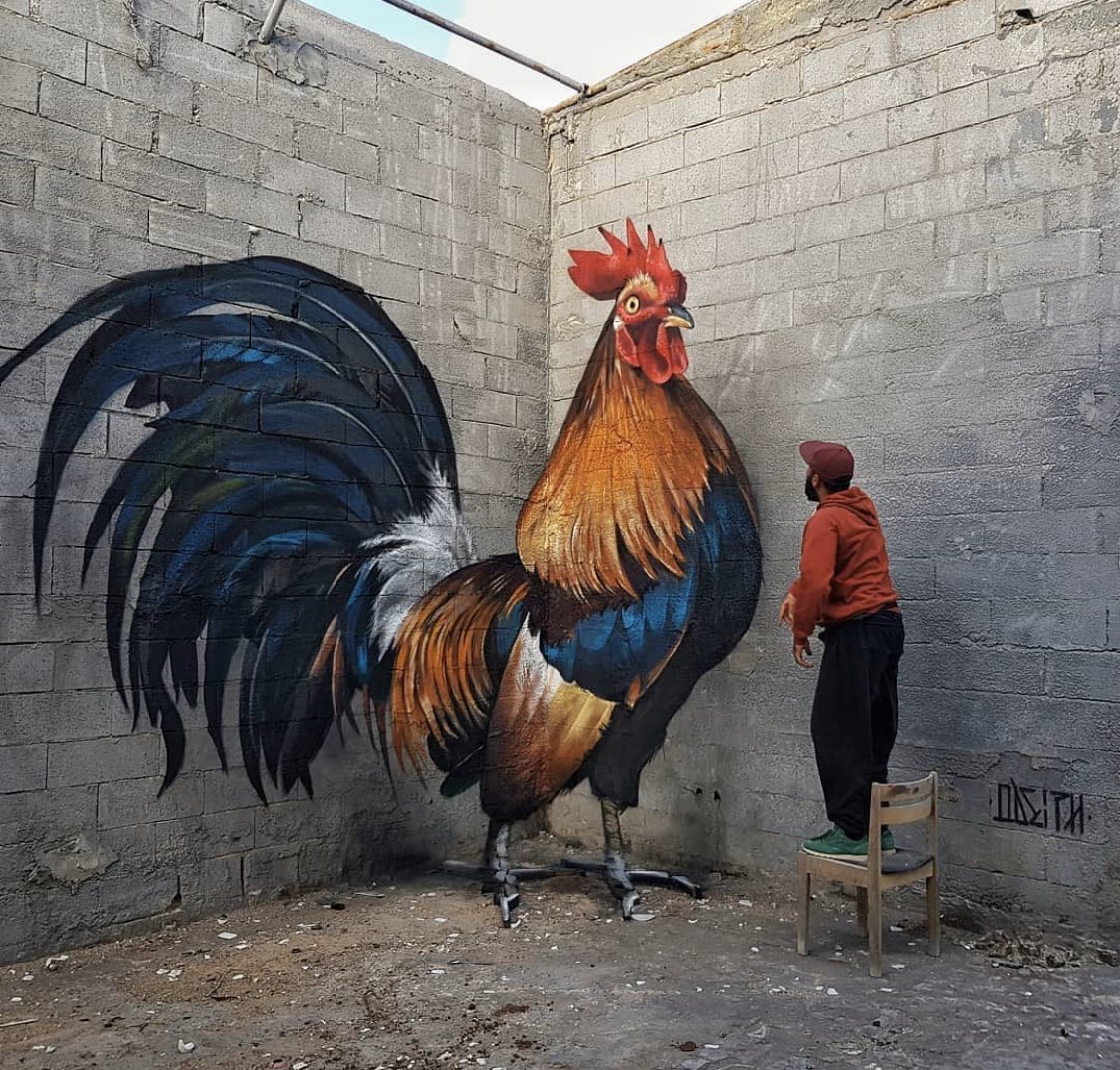
🐓 Giant Rooster — By Odeith in Lisbon, Portugal 🇵🇹
This rooster struts. Odeith uses the corner as chest, neck, tail, and attitude, turning the architecture into a body that seems to own the room.
Nerd Fact: In Portugal, a rooster immediately brings up the Galo de Barcelos, one of the country’s best-known folk symbols. The legend tells of a dead rooster miraculously crowing to prove a wrongly accused pilgrim’s innocence, which is why the rooster became a symbol of justice, faith, and national craft culture; see the Barcelos city account of the legend.
🔗 Follow Odeith on Instagram
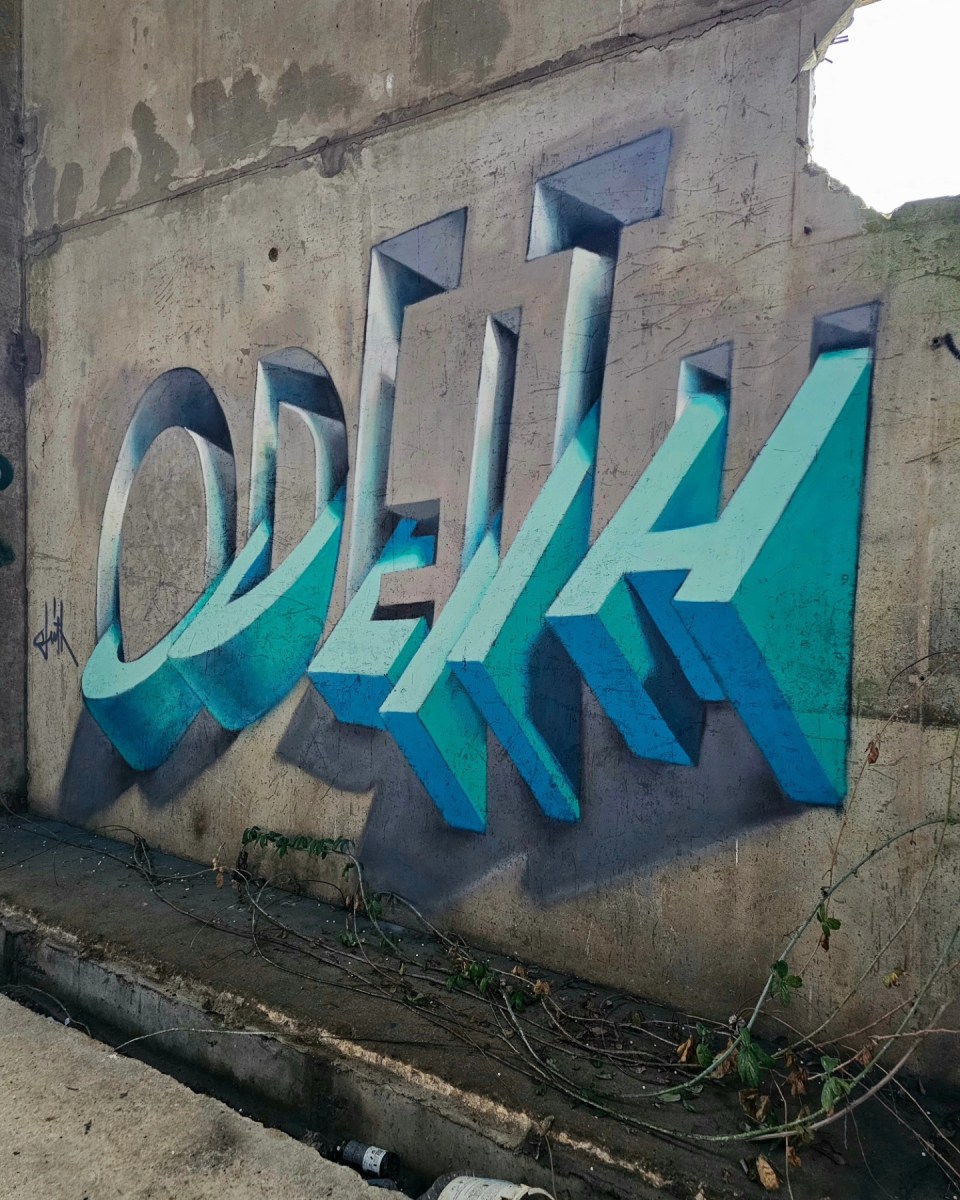
💎 Turquoise ODEITH — By Odeith
Here the subject is the signature itself. Odeith’s turquoise letters do not sit on the wall; they kick outward with sharp shadows and strange architectural depth.
Nerd Fact: Odeith’s name is not just a tag here; it becomes the illusion. The piece turns graffiti lettering into sculptural typography, using the same light-and-shadow control that makes his animals and objects appear three-dimensional. His own site frames the practice as visual experimentalism.
More: 3D Art By Odeith (25 Photos)
🔗 Follow Odeith on Instagram
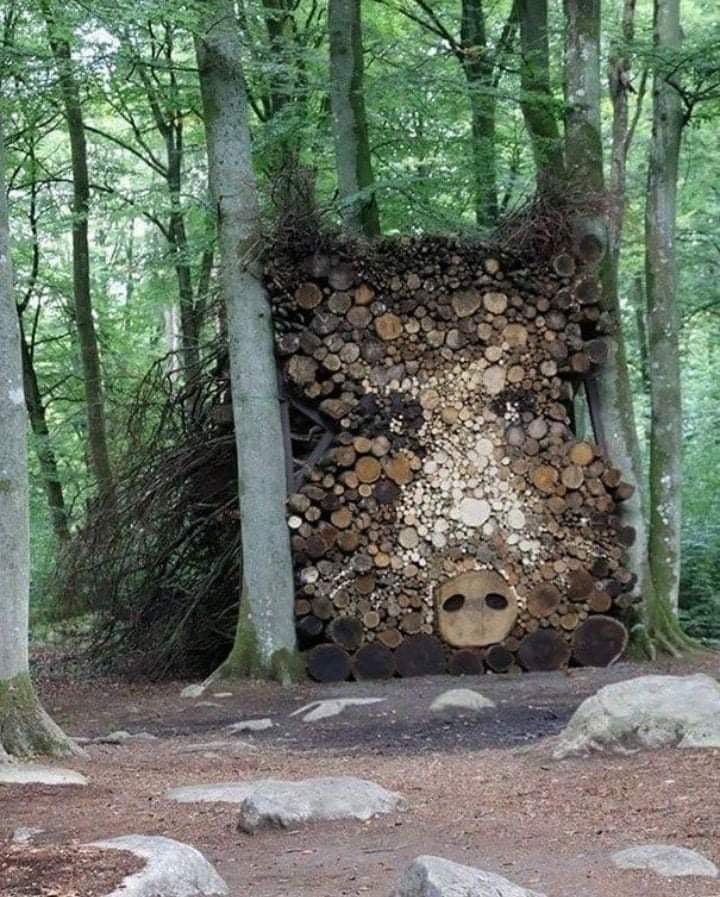
🐗 “The Old Sow” — By Hannelie Coetzee in Knislinge, Sweden 🇸🇪
Hannelie Coetzee turns cut logs and branches into something that feels half animal and half apparition. The stacked timber face emerges between trees like the forest compressed itself into a giant presence.
Nerd Fact: Coetzee made the work for the 2015 Barriers exhibition at Wanås Konst. The boar connects to the return of wild boar in Sweden, turning the sculpture into a rough, timber-built symbol of rewilding and memory. More photos are in Stubb Boar.
More: Stubb Boar (5 Photos)
🔗 Visit Hannelie Coetzee on Facebook
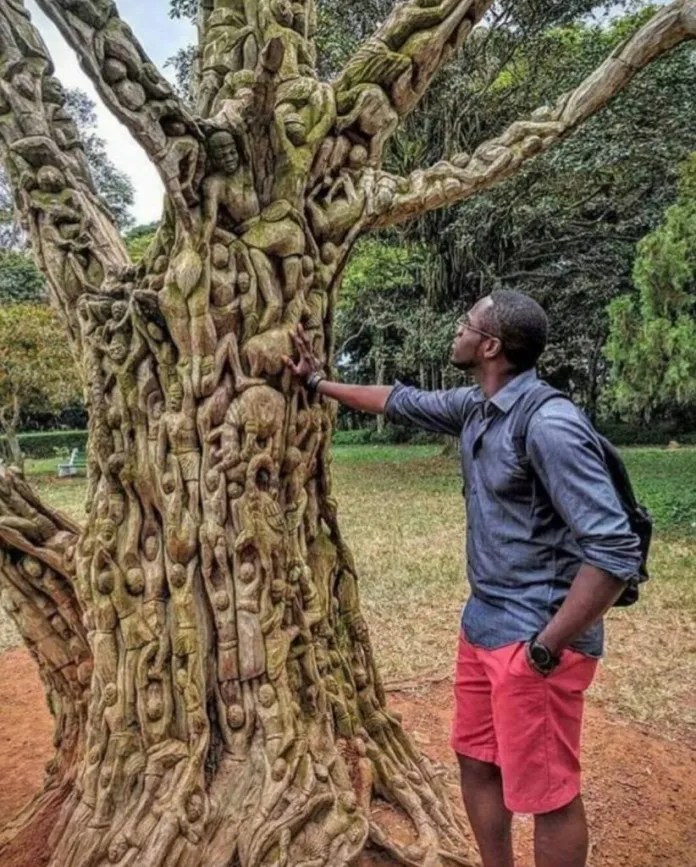
👥 The Wooden Crowd — Aburi Botanical Gardens, Ghana 🇬🇭
Look closely and the entire trunk becomes populated. Human figures climb, overlap, and press into each other, turning dead wood into a dense story about life, struggle, and community.
Nerd Fact: Aburi Botanical Gardens was established in the late 19th century and is one of Ghana’s best-known botanical sites. A carved trunk there becomes more than decoration: it places human stories directly inside a garden built for plant collection, education, and public memory. Explore the site through Ghana’s official tourism page.
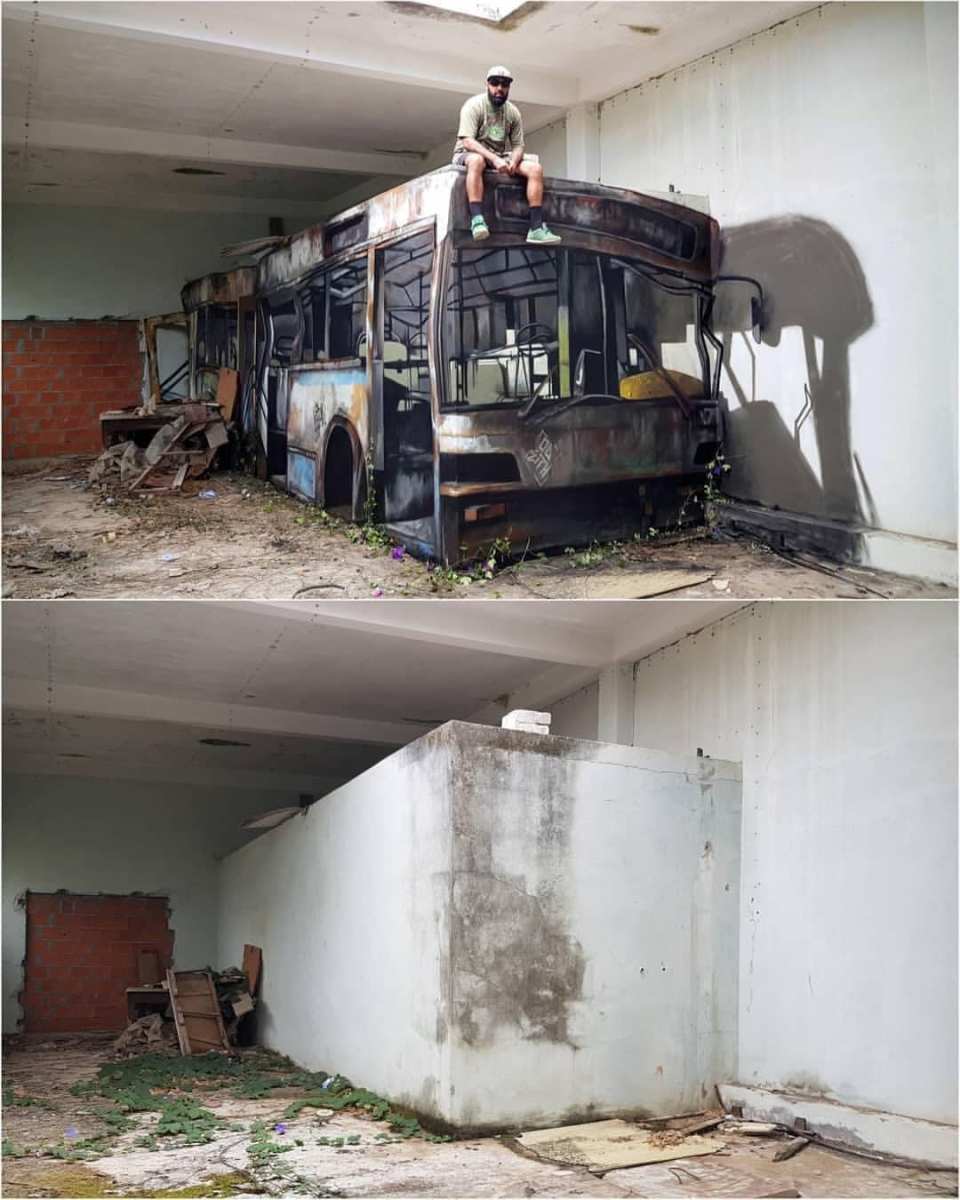
🚌 Burnt-Out Bus — By Odeith
Plot twist: the room is the bus. Odeith lets the architecture become the shell, with windows, damage, mass, and empty space all locking into a believable vehicle.
Nerd Fact: This illusion works because Odeith paints across multiple planes, forcing the wall, floor, and corner to read as one object from the chosen viewpoint. That is anamorphosis: a distorted image that becomes coherent only from one angle, the same 3D strategy described in interviews on his floating-object technique.
More: How To Paint a 3D Bus on Concrete — By Odeith
🔗 Follow Odeith on Instagram
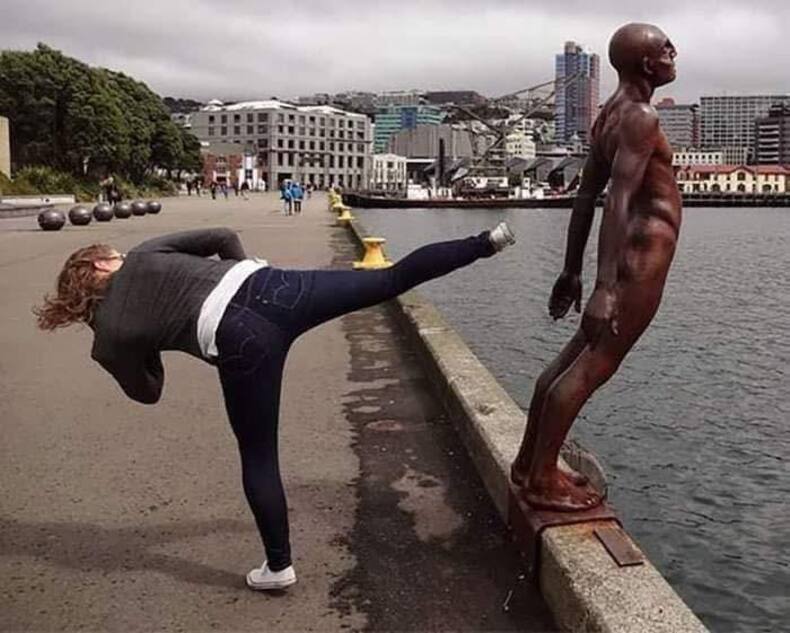
💃 Waterfront Acrobatics
This photo is all about timing and perspective. A dynamic human pose makes the leaning waterfront statue look like it has joined a modern dance routine.
Nerd Fact: Statue-play photos are tiny performances. The sculpture provides the fixed pose, but the human body supplies the missing motion, turning public art into a temporary collaboration between artist, passerby, and camera angle. More examples are collected in People Played With Statues.
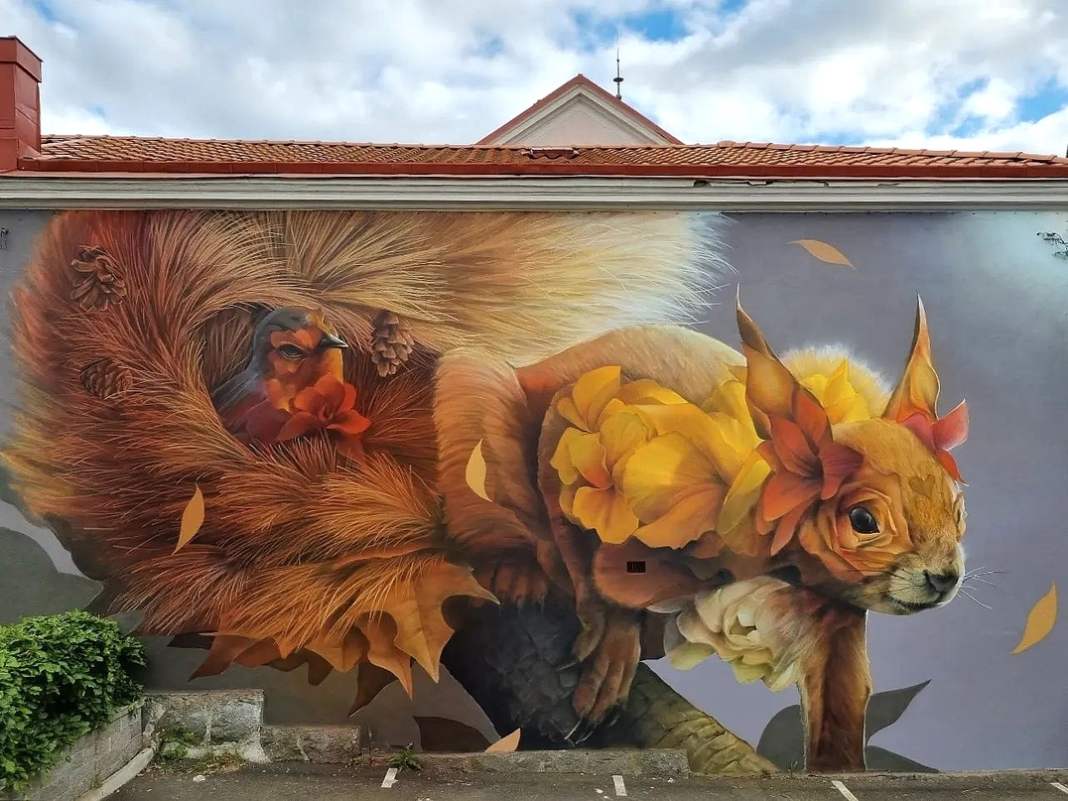
🐿️ The Squirrel and the Robin — By Curtis Hylton in Oskarshamn, Sweden 🇸🇪
A giant squirrel and robin take over the wall, turning the building into a neighborhood forest. Curtis Hylton’s wildlife murals make city surfaces feel suddenly full of habitat.
Nerd Fact: Curtis Hylton’s trademark is fusing flora and fauna, often using animals and plants to make walls feel like ecosystems. Herefordshire’s public-art collection describes his style as large-scale murals where flora and fauna are fused together, which is exactly what gives this squirrel-and-robin wall its biodiversity feel.
More: 10 Artworks by Curtis Hylton
🔗 Follow Curtis Hylton on Instagram
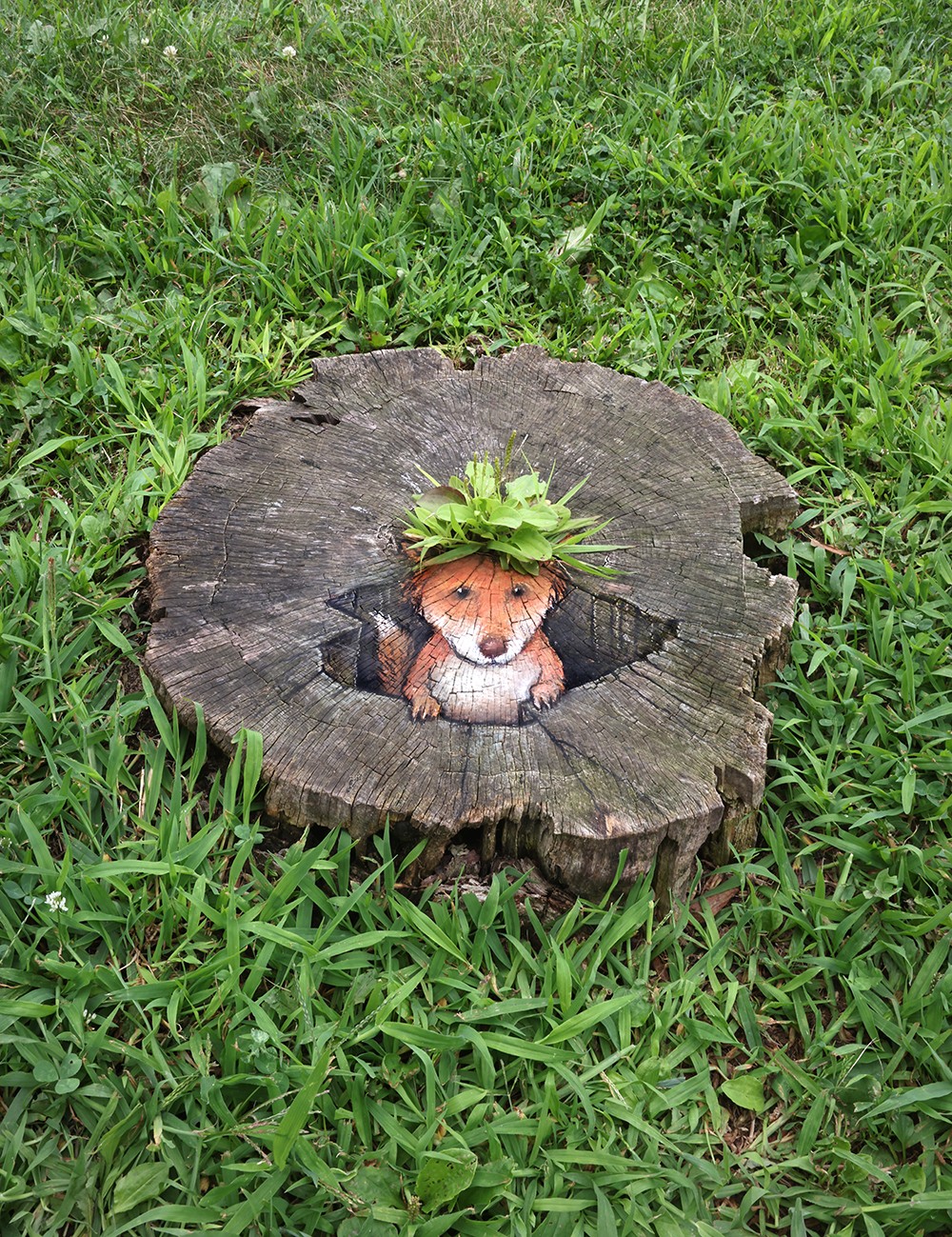
🦊 Patrice in a Plant Hat — By David Zinn
David Zinn finds the exact bit of reality his character needs. A tiny fox in a stump becomes instantly funnier because the real grass on top turns into a stylish accidental hat.
Nerd Fact: Zinn’s own product description for Nadine and the Chartreuse Respite identifies the plant co-star as Creeping Jenny and says the piece was created with chalk, charcoal, and a well-situated plant in Ann Arbor. It is a perfect example of his found-object sidewalk method.
More:12 Photos of Art by David Zinn
🔗 Follow David Zinn on Instagram
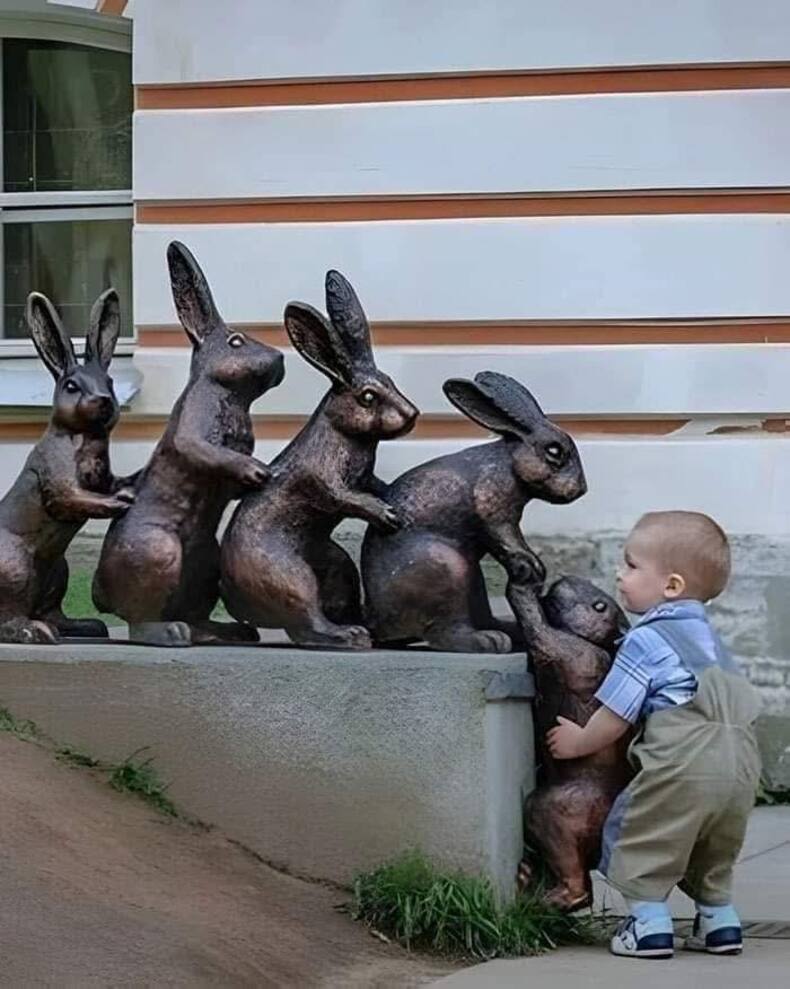
🐰 The Bunny Hug
Not every statue interaction has to be a prank. A toddler hugging the last bronze rabbit in the line adds a protective, warm human moment to the sculpture.
Nerd Fact: Rabbits and hares carry a huge range of art-historical meanings, from fertility and spring to resurrection, luck, and vulnerability. That symbolic flexibility is why the hug reads so warmly: the child is not just hugging an animal statue, but a figure already loaded with centuries of gentle associations.
More fun: People Played With Statues
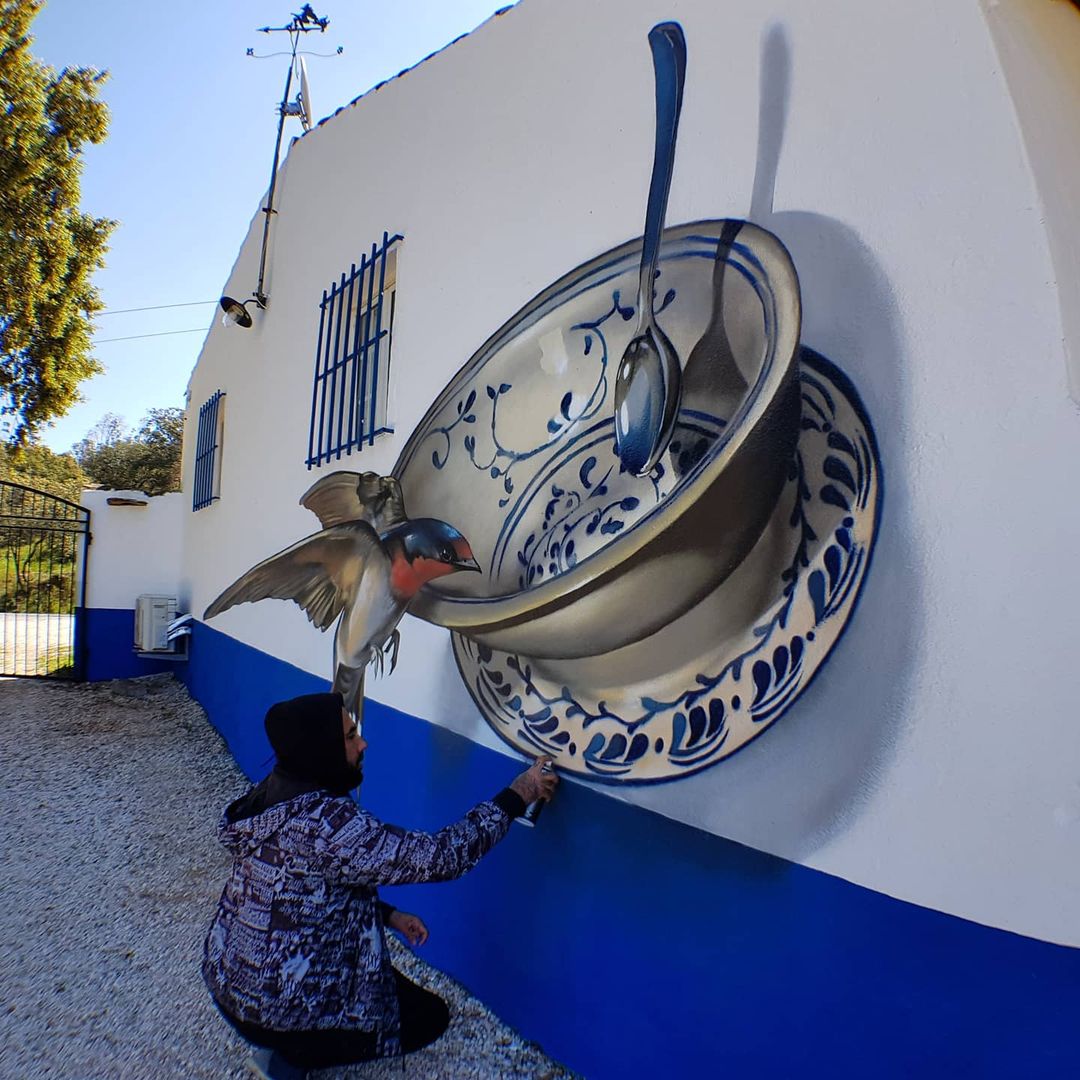
🥣 Porcelain Bowl and Swallow — By Odeith in Portugal 🇵🇹
This is one of Odeith’s quieter illusions, but the impact is huge. The bowl, spoon, and bird feel like a still life that wandered outdoors, grew enormous, and settled onto the wall.
Nerd Fact: The swallow is a deep Portuguese visual symbol. Bordallo Pinheiro registered the patent for his ceramic swallows in 1896, and the bird later became associated with home, family, love, and fidelity. Odeith’s wall swallow taps into that same Portuguese ceramic tradition.
🔗 Follow Odeith on Instagram
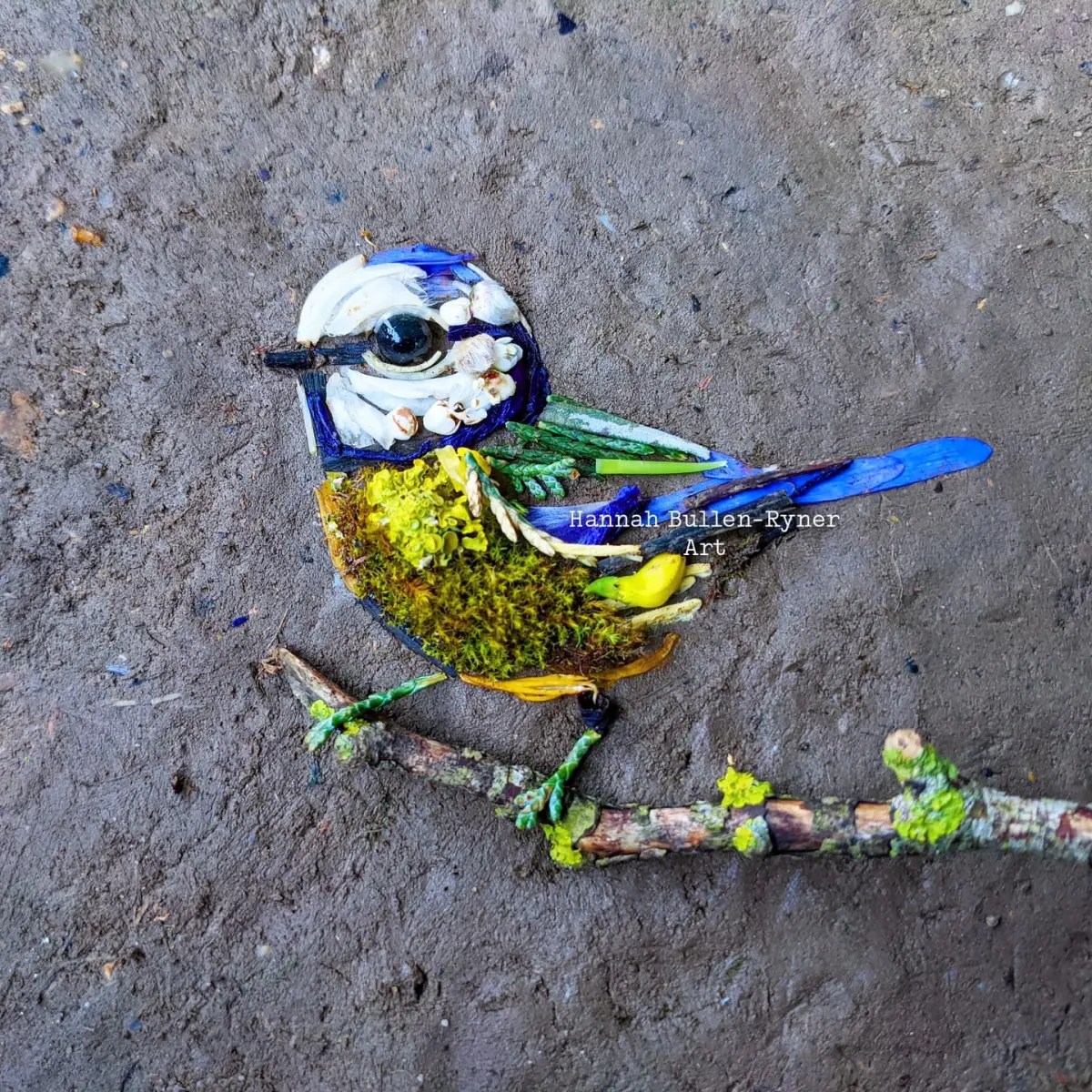
🐦 Bluetit — By Hannah Bullen-Ryner
Hannah Bullen-Ryner gathers nature and lets it become the bird itself. This bluetit feels delicate, bright, and alive, like it might hop away from the twig at any second.
Nerd Fact: Hannah’s bird pieces function like natural mosaics: each petal, feather, berry, and leaf becomes a brushstroke. On her website she explains that the works are made entirely from found materials and may disappear within moments, so the art lives between land art, bird portrait, and offering.
More: Nature Is Everything! 18 Stunning Artworks by Hannah Bullen-Ryner
🔗 Visit Hannah Bullen-Ryner
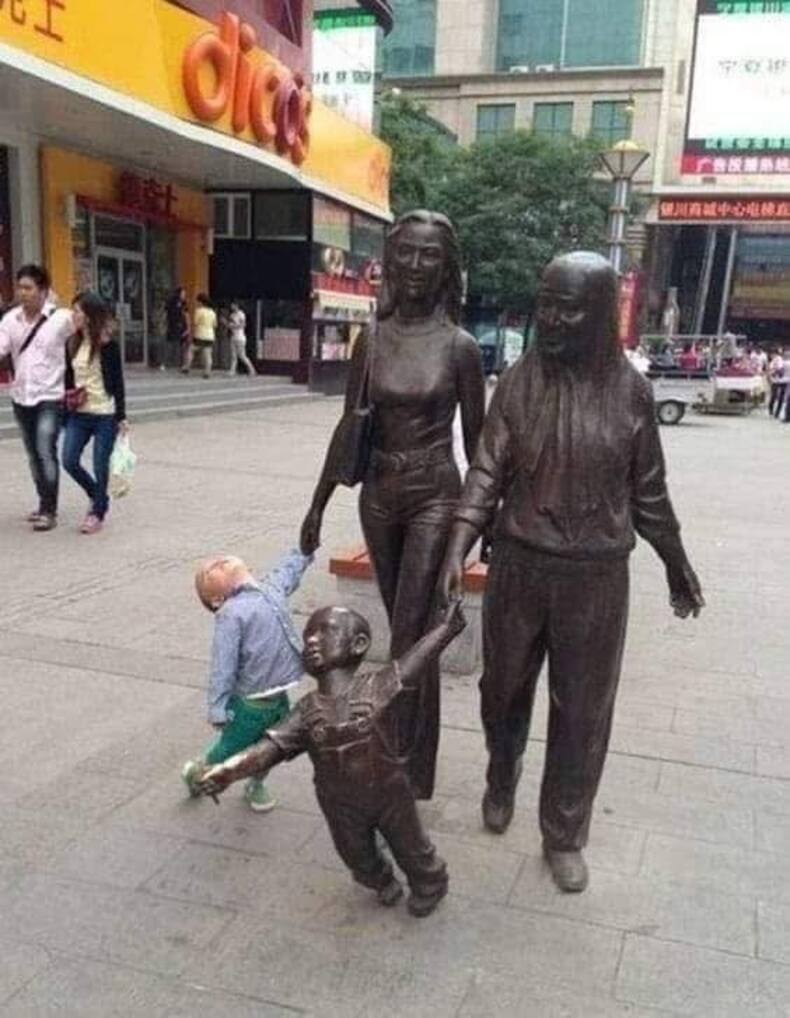
🏃 Let’s Go!
A child grabs the arm of a bronze statue as if urging a frozen friend to come out and play. The result turns public sculpture into something active, social, and joyful.
Nerd Fact: Public statues are designed to be looked at, but images like this turn them into scene partners. The fun is that nothing about the statue changes; the human pose supplies the missing narrative. It is a tiny, unscripted performance inside the public realm, collected with more examples in People Played With Statues.
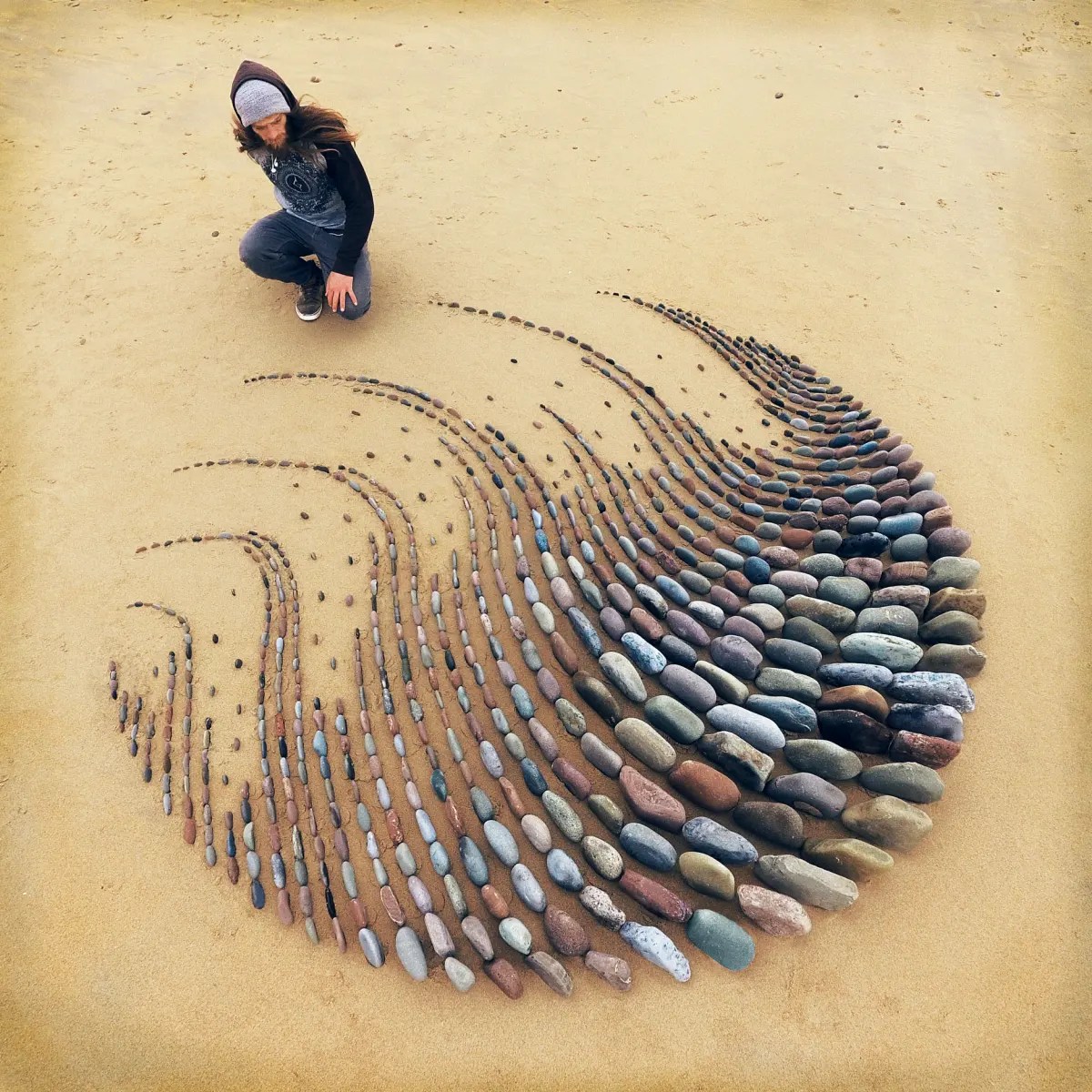
🌊 Fluidus — By Jon Foreman
Jon Foreman turns the beach into a temporary drawing board. The stones tighten and loosen like a pulse, creating a form that feels halfway between a wave, a shell, and pure abstraction.
Nerd Fact: Foreman often builds on beaches where tide and weather are active collaborators. That means “finished” is temporary by definition; a wave can erase the work and complete its cycle. His Sculpt the World project documents these pieces before nature edits them again.
More by Jon Foreman: Stone By Stone (20 Photos)
🔗 Follow Jon Foreman on Instagram
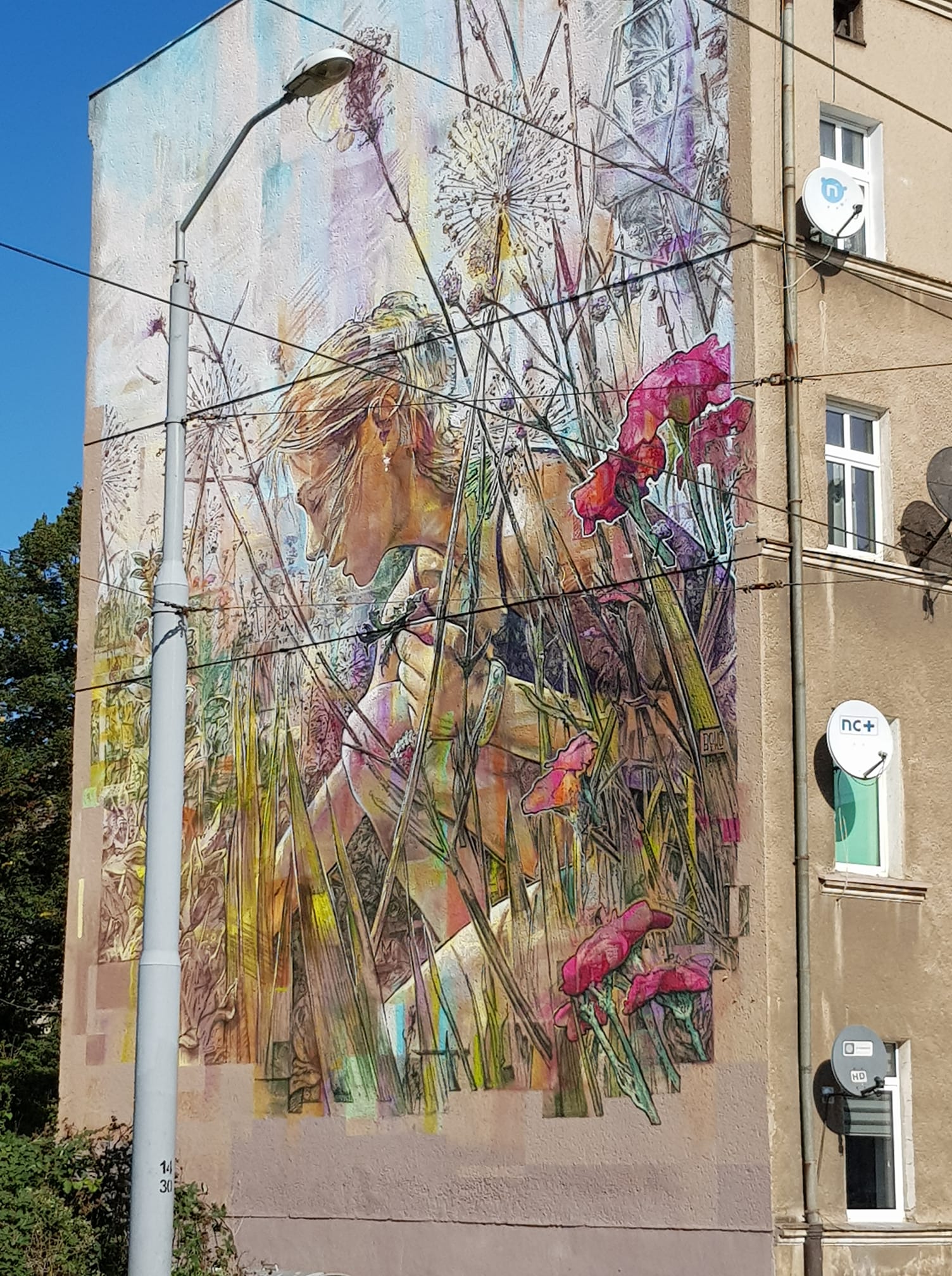
🌾 Among the Grass — By Krzysztof Bitka in Szczecin, Poland 🇵🇱
Krzysztof Bitka’s giant meadow flips the scale on the viewer. Instead of humans controlling nature, the human figure is swallowed by tall grass, making everyone below feel suddenly tiny.
Nerd Fact: The project title Pielenie means “weeding” in Polish, which makes the image a clever reversal. Instead of a person clearing unwanted plants, the plants visually overtake the person. More photos are collected in Flower Mural by Krzysztof Bitka.
More photos: Flower Mural by Krzysztof Bitka
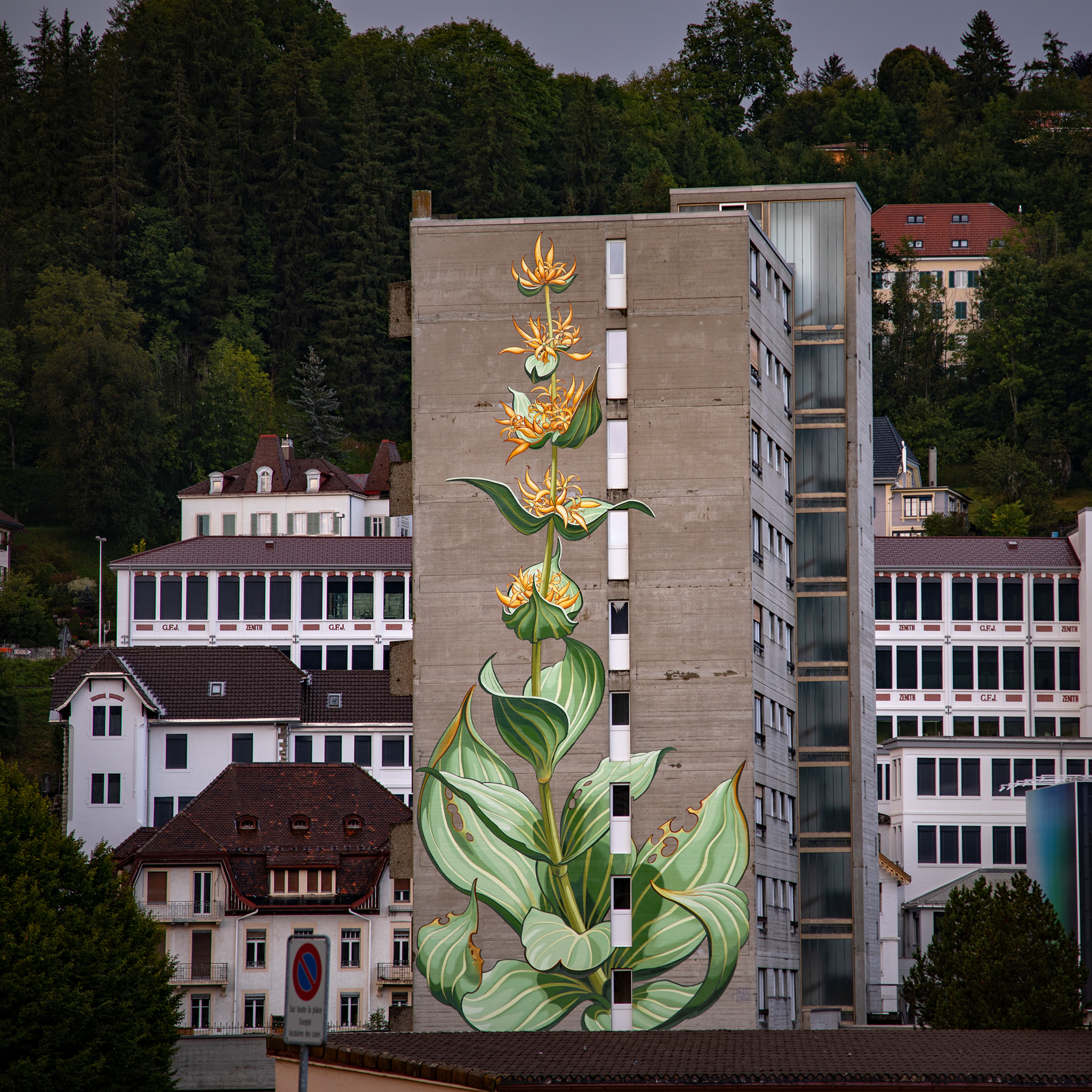
🌱 Gentiana Lutea — By Mona Caron in Le Locle, Switzerland 🇨🇭
Mona Caron makes a plant feel monumental without losing its fragility. The wildflower climbs the building as if nature has decided to claim an impossible surface.
Nerd Fact: Mona Caron’s botanical mural series began in 2010 with animations of painted plants growing on decaying city walls and breaking through concrete. Borås Art Museum describes her plant murals as a way of showing the “power of comeback,” which fits this Gentiana Lutea climbing the building.
More by Mona Caron: Flower Mural by Mona Caron in Switzerland
🔗 Follow Mona Caron on Instagram
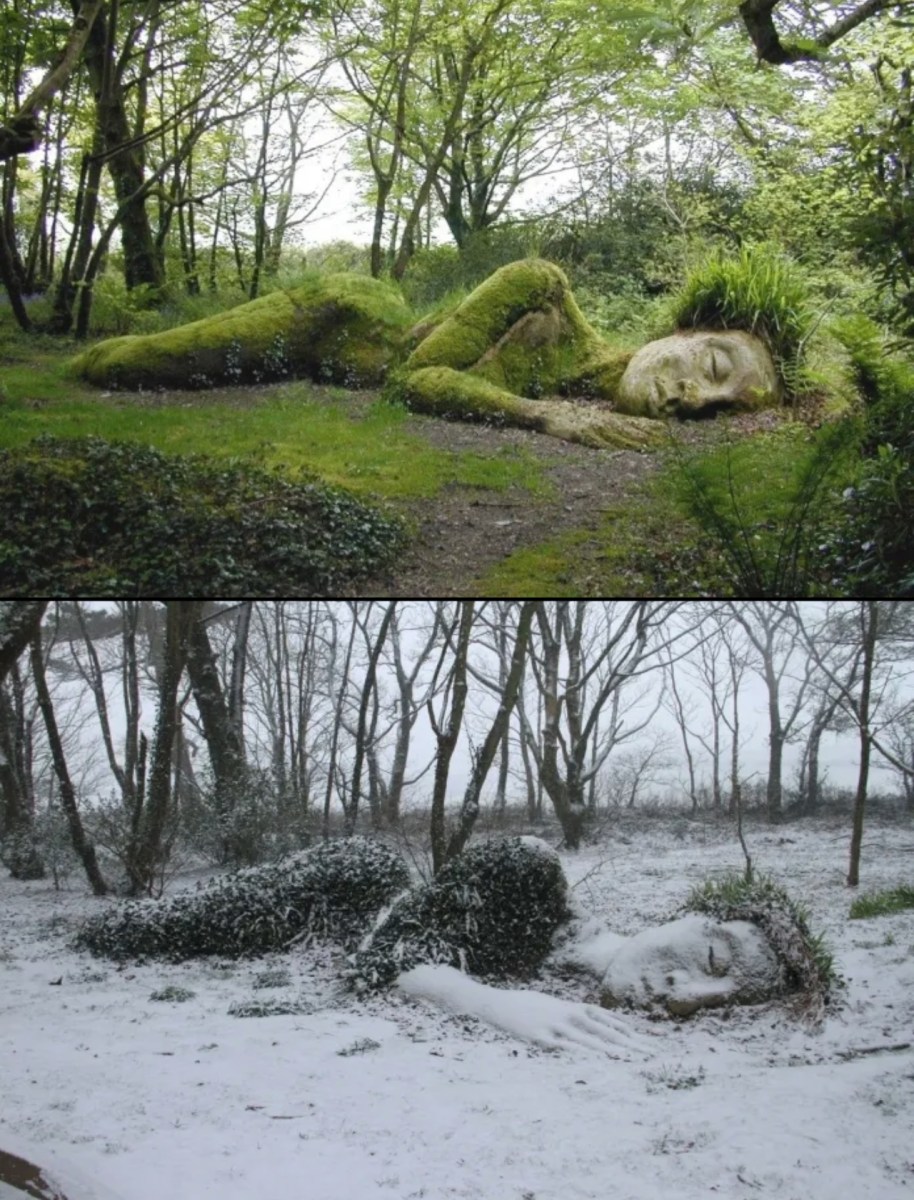
💤 Mud Maid — By Sue and Pete Hill in Cornwall, UK 🇬🇧
Mud Maid is part sculpture, part garden, and part sleeping spirit. Because she changes with the seasons, she feels less like an object and more like a living presence in the woods.
Nerd Fact: Sue and Pete Hill created Mud Maid at the Lost Gardens of Heligan, where the figure’s hair and clothing grow differently across the year. Heligan describes the sculpture as a sleeping giant who changes with the seasons, making time and plant growth part of the sculpture’s living body.
About and more photos: Mud Maid — Living Sculpture by Sue and Pete Hill
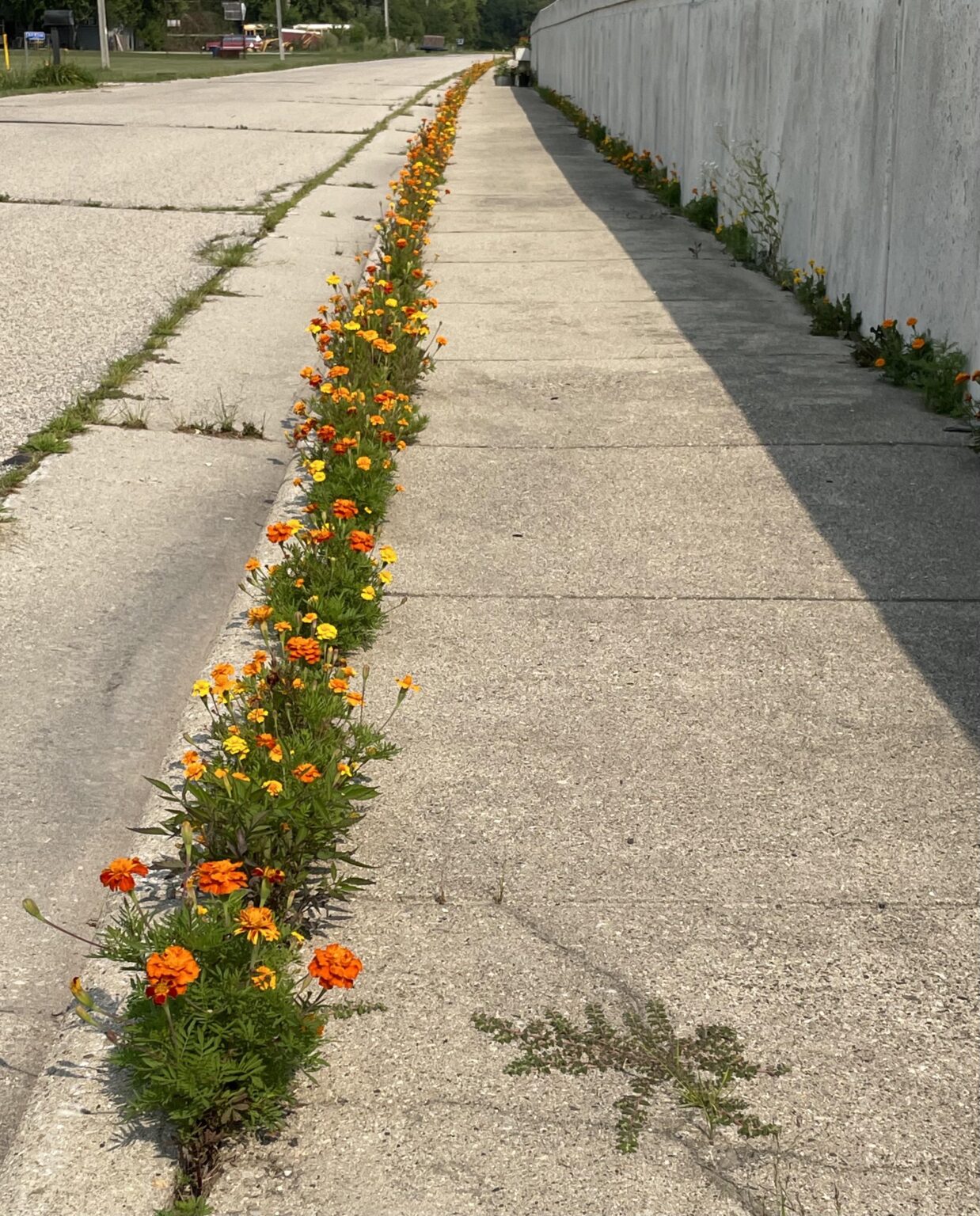
🌻 Sidewalk Flower Experiment — By kindergarten children
Never underestimate a seed. A rigid crack in the sidewalk becomes a ribbon of color, turning a small experiment into proof that growth can find a way through concrete.
Nerd Fact: Pavement cracks can act like accidental seedbeds because dust, organic matter, water, and heat collect there. Urban ecologists even study spontaneous plants growing in cracks because they reveal how resilient “ruderal” species colonize disturbed places, the same process turned into a classroom experiment in this sidewalk flower story.
Read more about it: Kindergarten children dropped seeds in the crack of the sidewalk
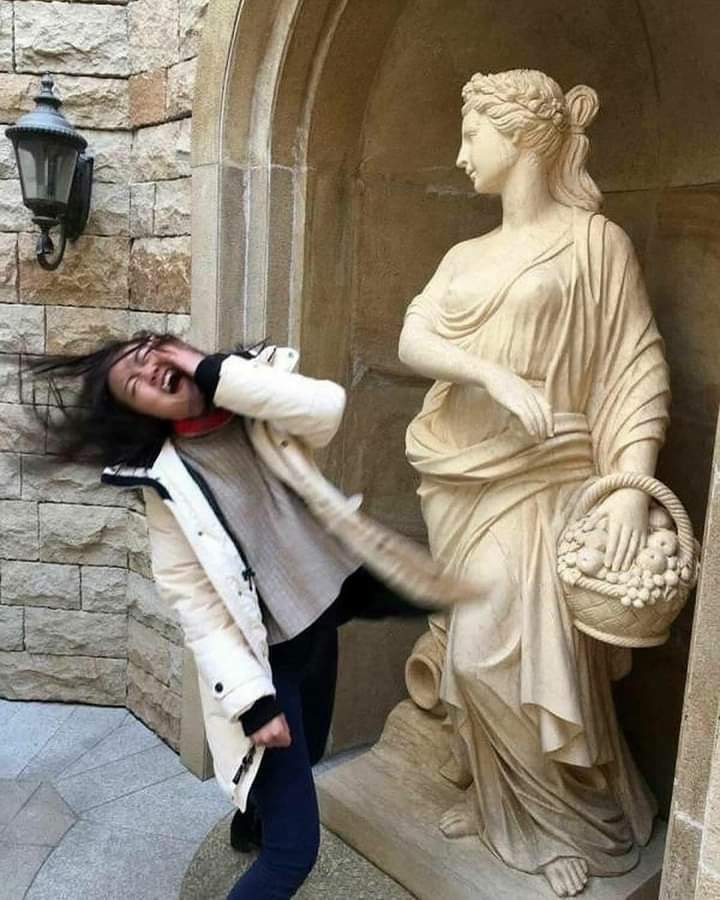
💁♀️ The Ultimate “How Dare You” Moment
A classical statue plus one perfectly timed hair flip turns a calm courtyard scene into elegant slapstick. The pose makes it feel like the statue has just stepped into a dramatic argument.
Nerd Fact: The joke depends on matching two expressive systems: the frozen theatrical gesture of classical sculpture and the split-second timing of candid photography. That is why statue-play photos feel so alive: they temporarily restore motion to a form designed to be still. More examples: Playing With Statues.
More: Playing With Statues (40 Photos)
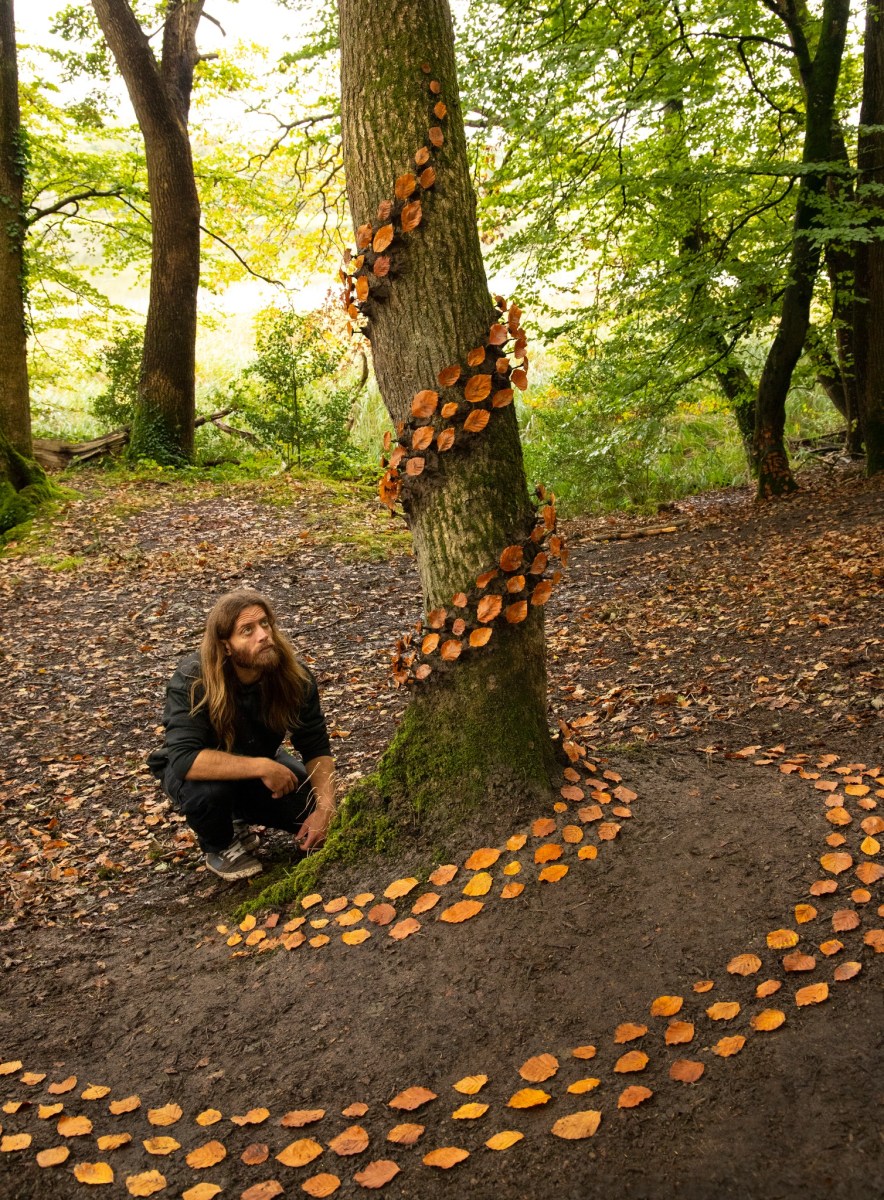
🌪️ The Autumn Tornado — By Jon Foreman in Wales, UK 🇬🇧
Jon Foreman rearranges autumn into a vortex. Yellow and orange leaves spiral around the trunk, making the forest look like it started drawing geometric motion on its own.
Nerd Fact: Foreman’s leaf spirals are temporary by design, but they are not random. The pattern uses color gradients and repeated natural units the way a designer might use pixels, only every “pixel” is a fallen leaf. Follow the ongoing land-art archive at Sculpt the World.
🔗 Follow Jon Foreman on Instagram
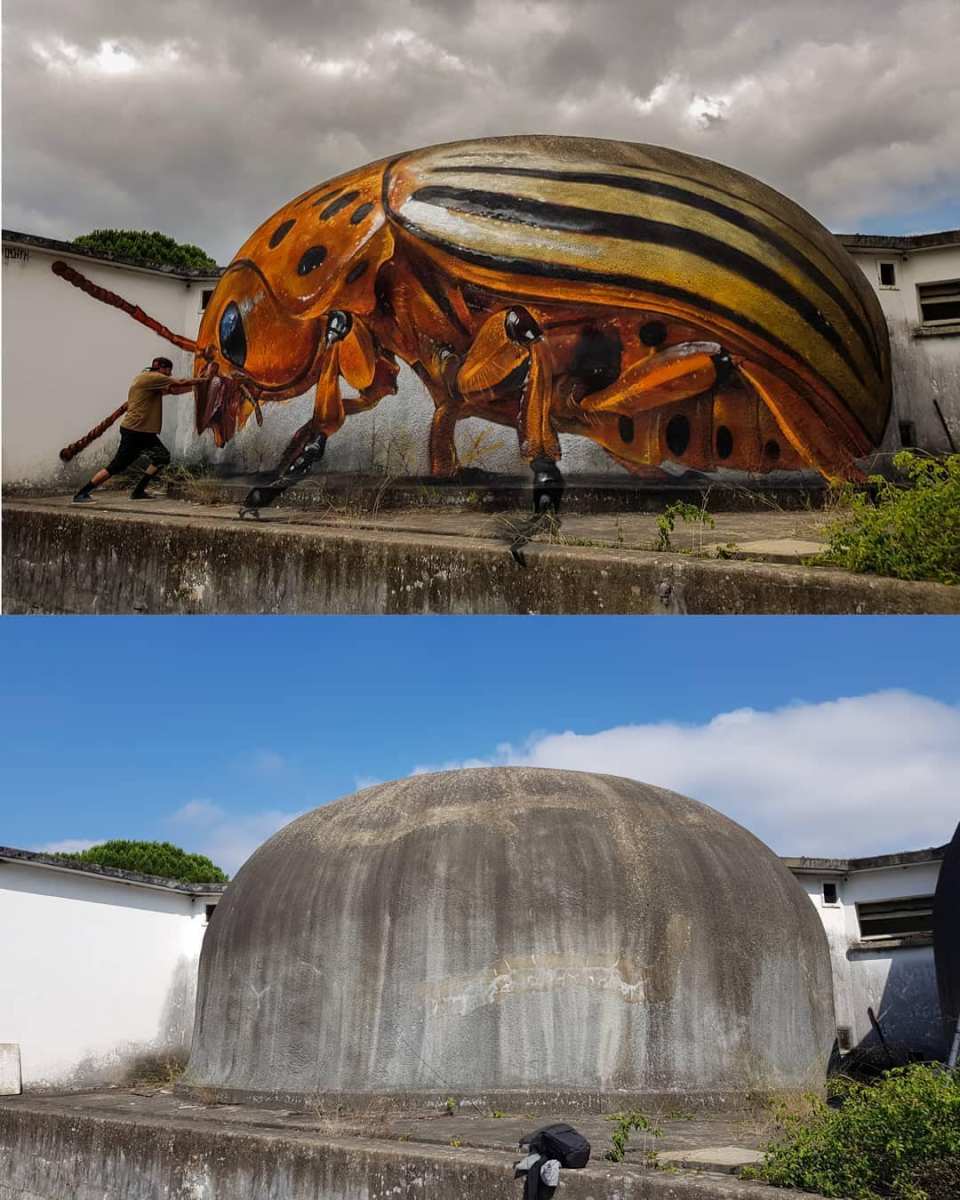
🐞 Giant Beetle — By Odeith
This is site-specific illusion at full strength. The rounded structure already wanted to be a beetle; Odeith simply saw the shell, legs, and lift-off energy before anyone else did.
Nerd Fact: Beetles are one of the largest groups of animals on Earth, and their hard wing cases, called elytra, are what make the body read so clearly. Odeith’s illusion is clever because the existing rounded structure already suggests that shell-like volume; his painting just turns architecture into insect anatomy. Learn more about his 3D method through Odeith’s official site.
More: 3D Art By Odeith (25 Photos)
🔗 Follow Odeith on Instagram
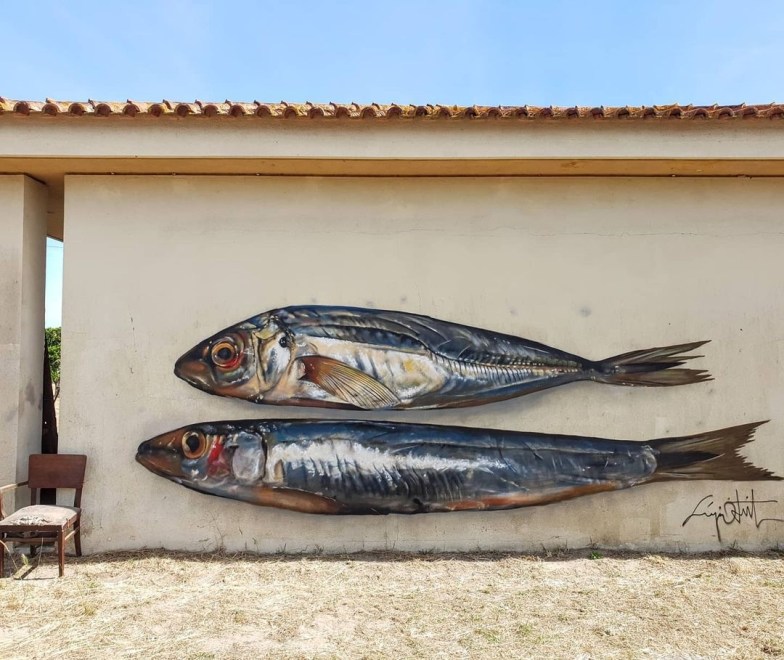
🐟 Silver Pair — By Odeith in Lisbon, Portugal 🇵🇹
Two fish on a plain wall, with nowhere for the illusion to hide. The realism has to do all the work, and it does, making the fish look like silver flashes pinned to the city.
Nerd Fact: In Lisbon, silver fish imagery carries an extra sardine echo. The city’s June festivities for Santo António are strongly associated with grilled sardines, so Odeith’s fish land in a place where fish are already part of urban celebration and memory. For context, visit Lisbon’s Santo António festival page.
🔗 Follow Odeith on Instagram
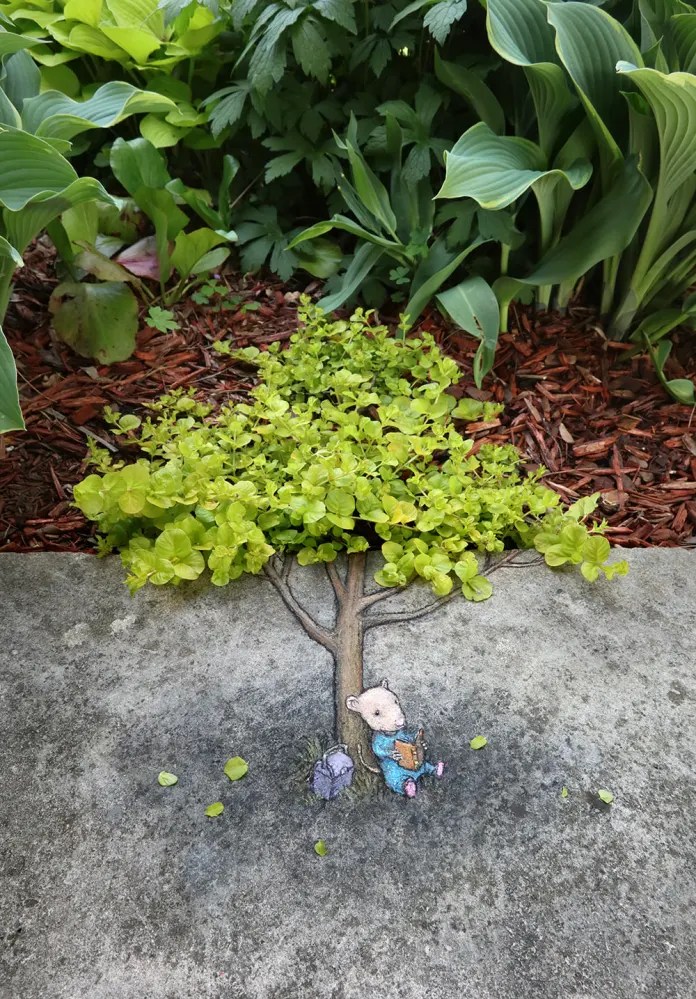
🐿️ The Temporary Tenant — By David Zinn in Ann Arbor, USA 🇺🇸
A tiny chalk creature relaxes beside a drawn tree, while real greenery becomes the leafy canopy. David Zinn makes a stump feel briefly inhabited, knowing rain will eventually wash the tenant away.
Nerd Fact: Zinn’s own title for this piece is Nadine and the Chartreuse Respite, and his print listing says it was made with chalk, charcoal, and a well-situated Creeping Jenny in Ann Arbor on May 16, 2021. That tiny plant is not decoration; it is one of the materials.
🔗 Follow David Zinn on Instagram
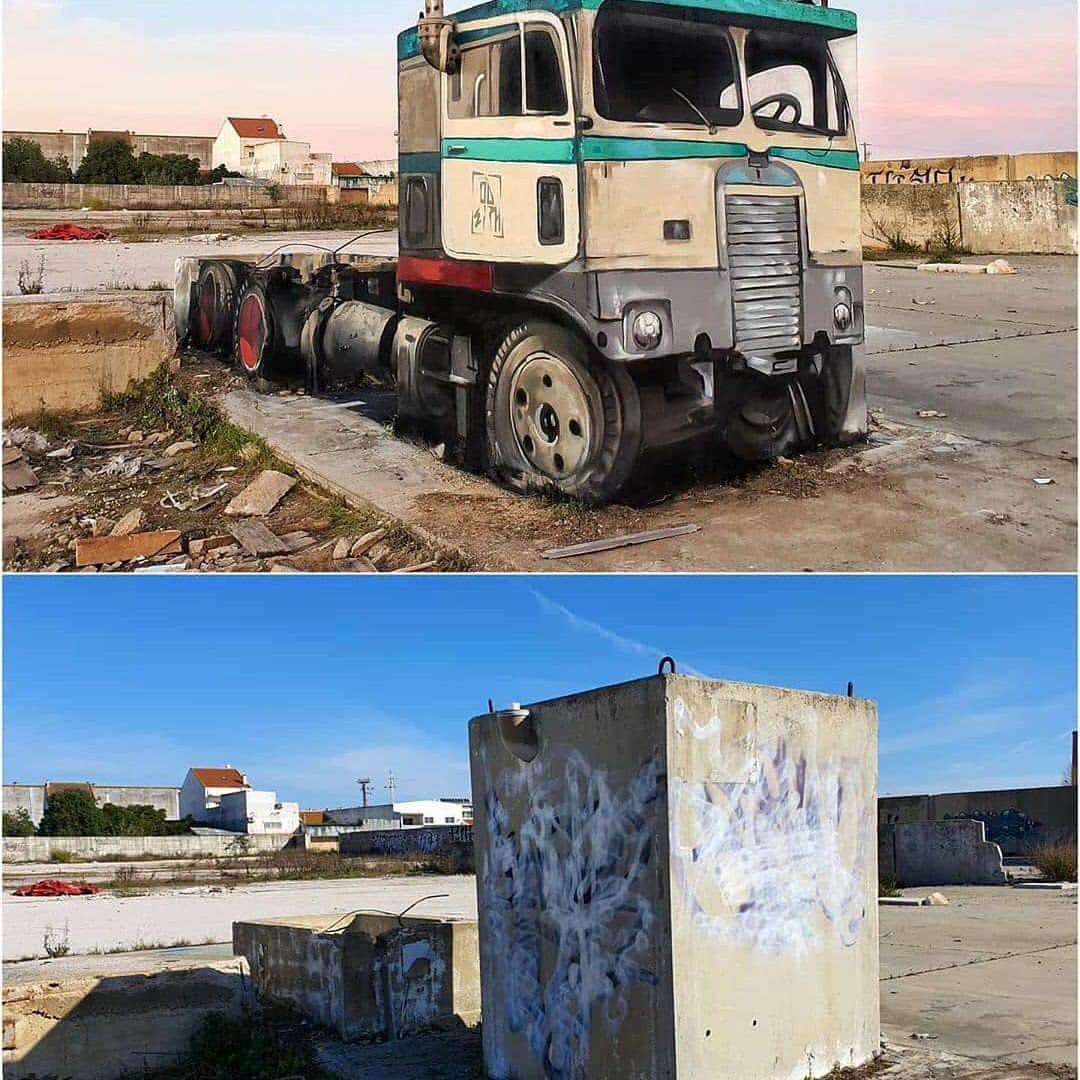
🚛 Truck Cab — By Odeith
Heavy is the word. Odeith locks the proportions so well that the truck feels parked rather than painted, with grille, wheel, cabin, and concrete all snapping into one believable object.
Nerd Fact: Vehicle illusions are especially difficult because viewers instantly recognize wrong proportions. Odeith solves that by using the block’s actual mass as the truck’s mass, then painting details that trick the eye into reading industrial weight. His broader 3D practice is documented on Odeith’s official site.
More: 3D Art By Odeith (25 Photos)
🔗 Follow Odeith on Instagram
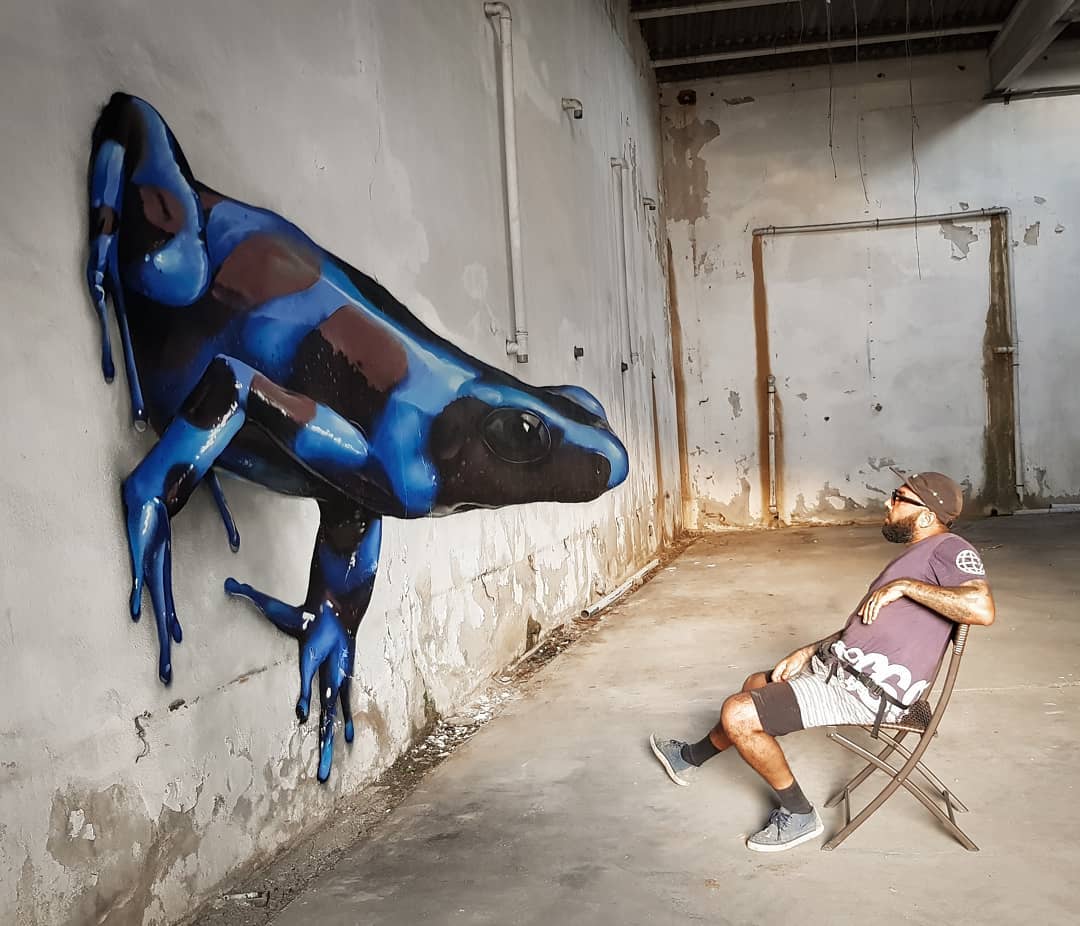
🐸 Giant Blue Frog — By Odeith in Portugal 🇵🇹
Odeith is especially dangerous with animals because he gets the eye contact right. This blue frog crouches in the ruin like it owns the place and knows you just walked in.
Nerd Fact: Frogs are powerful environmental symbols because amphibians have permeable skin and are highly sensitive to pollution and habitat change. Scientists often use them as indicators of ecosystem health, so a frog taking over a ruined wall carries more meaning than just visual surprise. Read more from AmphibiaWeb on amphibian declines.
🔗 Follow Odeith on Instagram
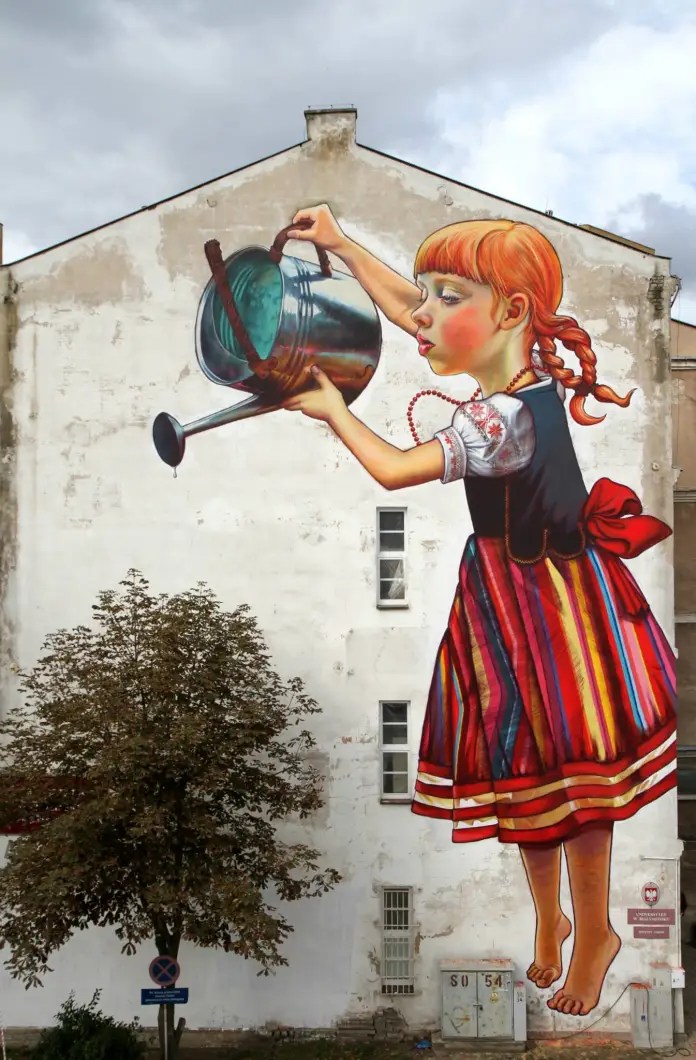
🚿 The Giant Watering Can — By Natalia Rak in Bialystok, Poland 🇵🇱
Natalia Rak places the girl and watering can with mathematical precision so the mural seems to pour water onto the real tree below. The whole building becomes a fairy-tale act of care.
More: 10 Breathtaking Murals by Natalia Rak
Nerd Fact: Rak later said The Legend of Giants took on a life of its own: it was placed under city protection in Białystok and included in a Polish Post street-art series. In other words, a mural about watering a tree became part of the city’s protected public memory; read the artist’s comment in this Natalia Rak interview.
🔗 Follow Natalia Rak on Instagram
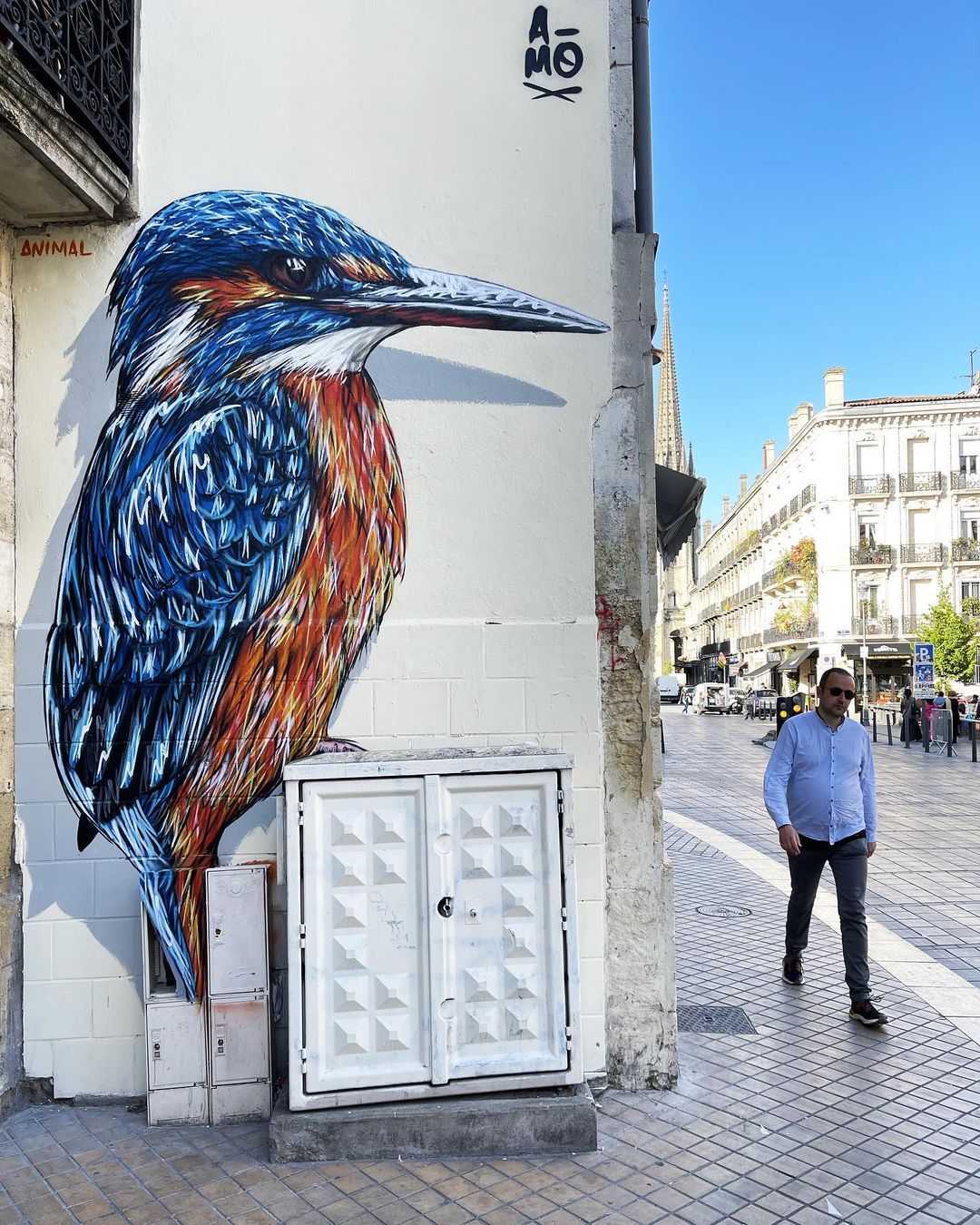
🐟 Kingfisher — By A-MO in Bordeaux, France 🇫🇷
A-MO paints the kingfisher directly on the building corner, perched above utility boxes as if it has just landed there. The blue, orange, and white strokes keep the bird realistic while still feeling sketched and energetic.
Nerd Fact: A-MO is known for a layered “paint-tag” method, building images from repeated graffiti tags and strokes. Bordeaux street-art guides describe his kingfisher in the Saint-Michel district as one of his most iconic local works, which makes this wall both animal mural and graffiti technique showcase.
🔗 Follow A-MO on Instagram
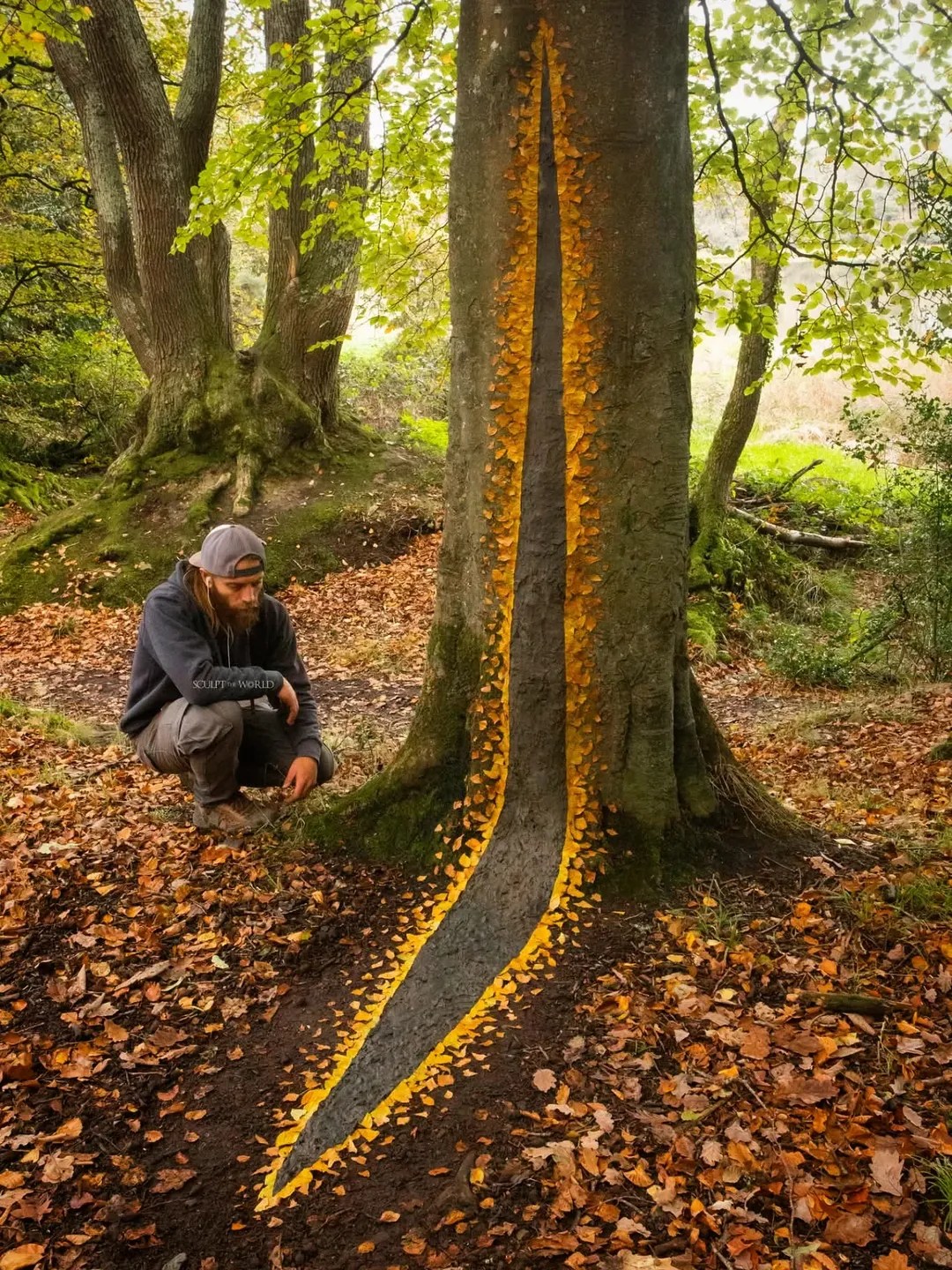
🍂 Portal — By Jon Foreman in Little Milford Woods, Wales 🇬🇧
This piece feels like an invitation to step through the woods differently. Jon Foreman uses found leaves and shape alone to make a threshold that sits between ritual and abstraction.
Nerd Fact: A portal is a strong form for land art because it asks the viewer to imagine crossing a boundary. Foreman builds that feeling with no architecture at all, only leaves, contrast, and repetition. The work belongs to his wider temporary nature practice documented through Sculpt the World.
🔗 Follow Jon Foreman on Instagram
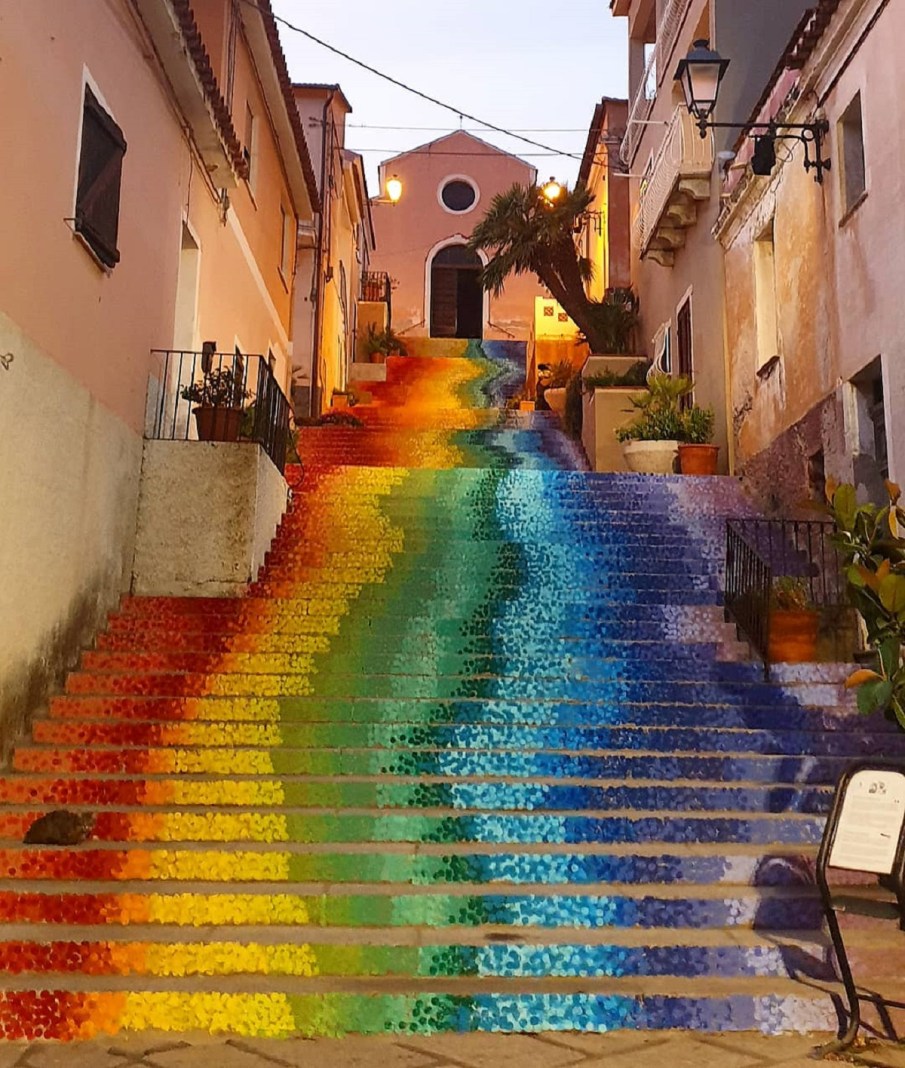
🌈 Rainbow Staircase — By Manuel Maratto in Arzachena, Italy 🇮🇹
Manuel Maratto turns an ordinary climb into something cinematic. The rainbow bands run uphill like liquid light, and the warm village setting makes the whole intervention feel soft and magical.
Nerd Fact: The Santa Lucia staircase in Arzachena has become a recurring public-art canvas through the ColorArz project. Maratto’s rainbow version shows how paint can change not only a surface but the feeling of a route: a functional staircase becomes a destination. More photos are in Rainbow Staircase by Maratto.
More: Rainbow Staircase by Maratto in Arzachena, Sardinia, Italy
🔗 Follow Manuel Maratto on Instagram
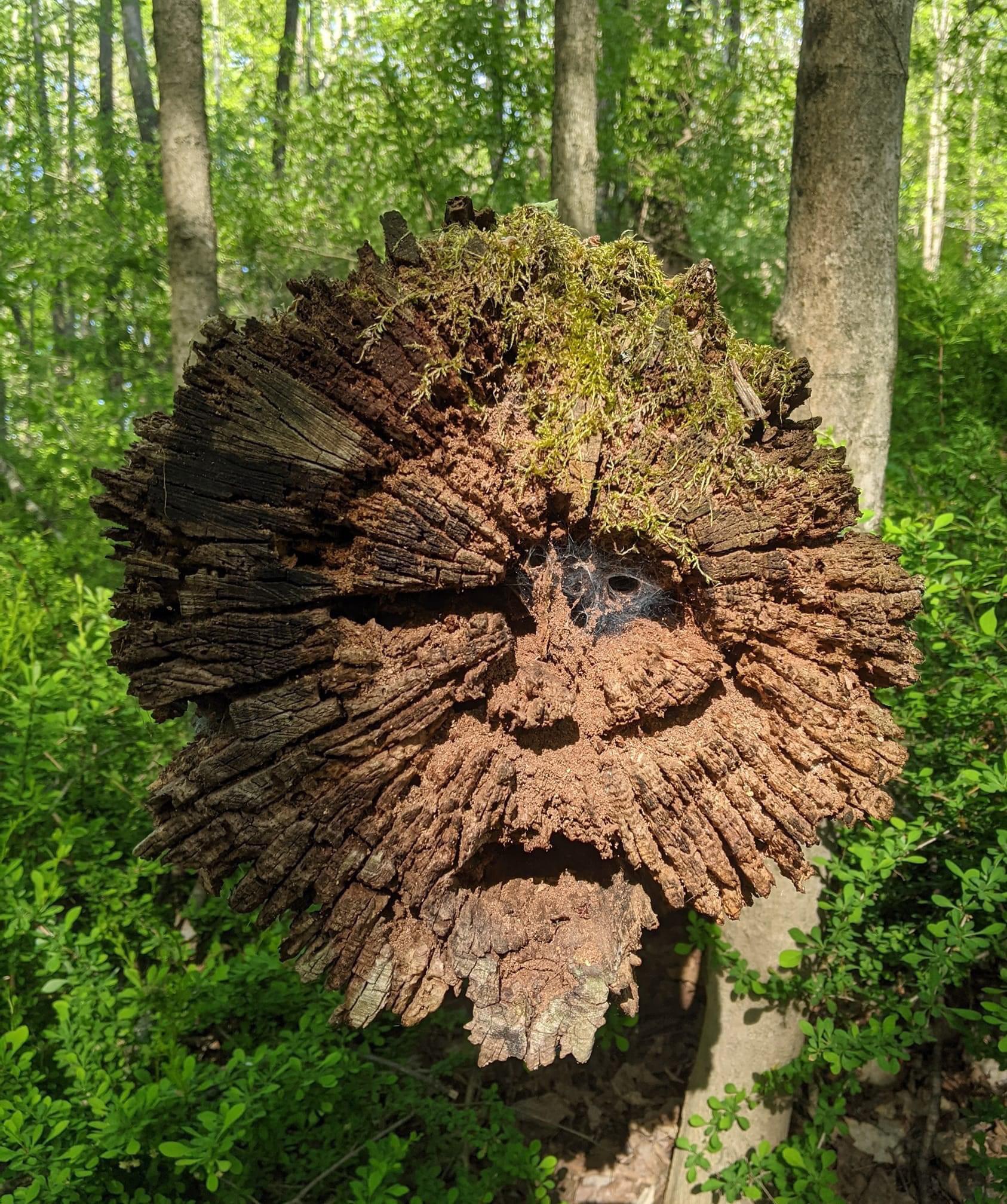
🌳 Forest Spirit — Artist Unknown
A face emerging from wood is a simple idea, but this one feels ancient and gentle. The bark and grain remain part of the character, so the tree never stops feeling like a tree.
Nerd Fact: Tree faces tap into an old human habit called pareidolia: we naturally read faces into knots, bark patterns, and shadows. That is why the carving feels less like an added object and more like a spirit the trunk was already hiding. For a broader look at this “faces in nature” effect, see Scientific American on pattern-seeking.
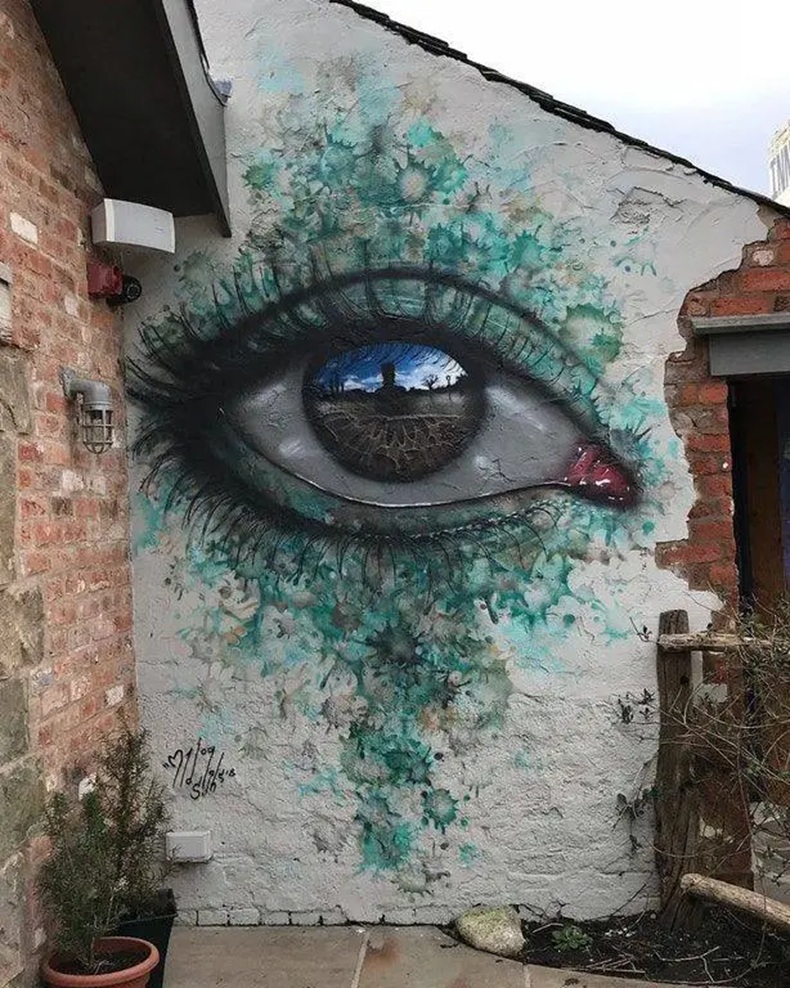
👁️ Reflective Eye — By My Dog Sighs in Eccleston, UK 🇬🇧
My Dog Sighs paints a huge eye on a rough wall, with the pupil reflecting the surrounding place and viewer. It makes the mural feel less like an image and more like a wall looking back.
Nerd Fact: My Dog Sighs often uses reflections inside his eyes to tell the story of a place. In a 2026 interview, he said he wants communities to feel the work belongs to them and that he wants to tell their story “through my eyes.” That makes each iris a tiny community portrait hidden inside a portrait.
More: Eyes That Speak: My Dog Sighs
🔗 Follow My Dog Sighs on Instagram
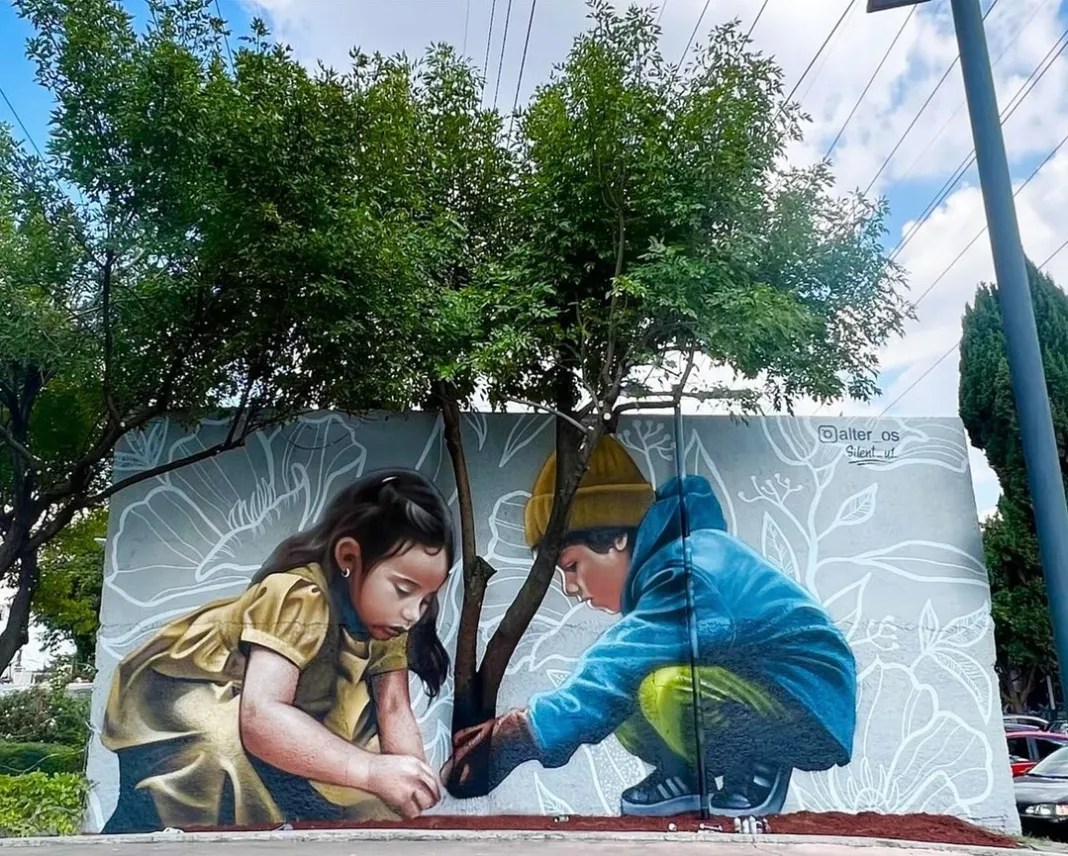
❤️ Beautiful Love — By Alter OS in Mexico City, Mexico 🇲🇽
Alter OS uses the real tree as the emotional center of the mural. The children’s gestures do the rest, turning a small wall into a caring, human scene.
Nerd Fact: Alter OS describes himself as an “Ilustrador Monumental & Artista Urbano.” That phrase fits this piece well: the mural is not huge in scale, but it makes a small tree feel emotionally monumental. See more of his public work through Alter OS on Instagram.
🔗 Follow Alter OS on Instagram
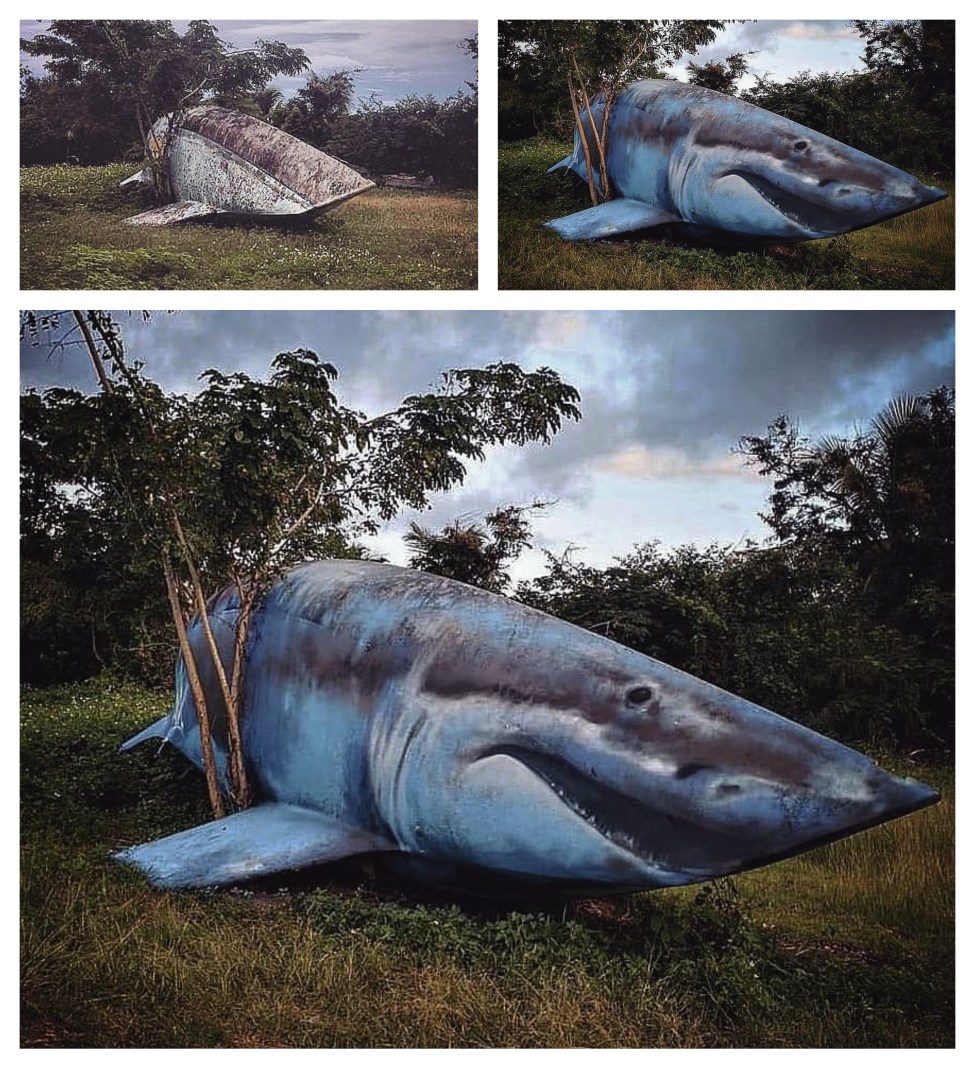
🦈 Blue Shark Boat — By Xanoy
Xanoy turns an old boat into a giant blue shark, and suddenly a useless object in the landscape becomes a stranded creature from the wrong world. It is simple, surreal, and instantly readable.
Nerd Fact: This is object transformation rather than mural painting in the normal sense: the boat already has the shark’s long body, pointed snout, and belly curve. Xanoy only has to reveal the animal hidden in the object, which is why the before-and-after effect in the original Blue Shark Boat post is so satisfying.
🔗 Follow Xanoy on Instagram
Which one is your favorite?

Street Art in Pondicherry, India
Faces and shrubs! Street Art from Pondicherry, India.
Comments:
In Conversation with My Dog Sighs: Art, Music and Community in Tanzania
My Dog Sighs discusses his Tanzania murals created with Last Night A DJ Saved My Life, reflecting on art and creative exchange.Donna (GraffitiStreet)

35 Street Art Gems From Brazil Full of Color and Imagination
Content warning: Brazilian street art can be massive, intimate, political, funny, and full of color. This collection gathers 35 photos from across the country — from São Paulo and Rio de Janeiro to Manaus, Belo Horizonte, Florianópolis, Petrolina, and beyond. 💡 Nerd Fact:
Brazilian street art can be massive, intimate, political, funny, and full of color. This collection gathers 35 photos from across the country — from São Paulo and Rio de Janeiro to Manaus, Belo Horizonte, Florianópolis, Petrolina, and beyond.
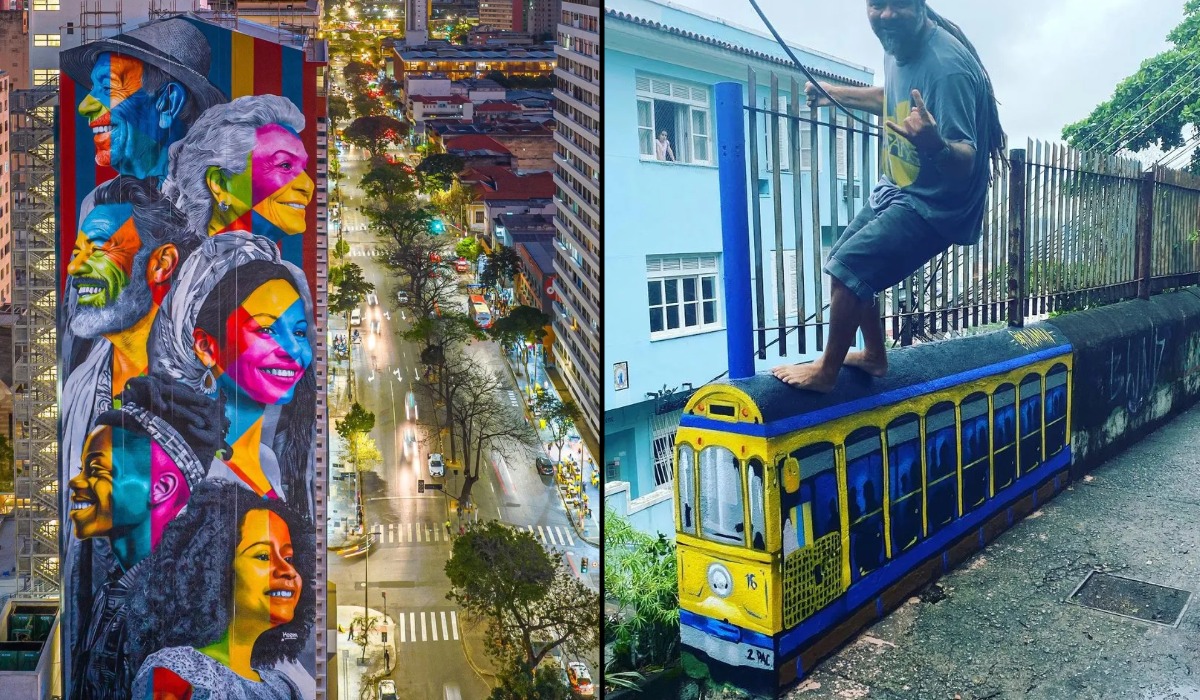
💡 Nerd Fact: São Paulo has its own street-writing universe called pichação, often stylized as pixação: a tall, angular style linked to protest, punk and heavy-metal lettering, and the city’s inequality. The Guardian’s deep dive explains why it is much more than “messy tags.”
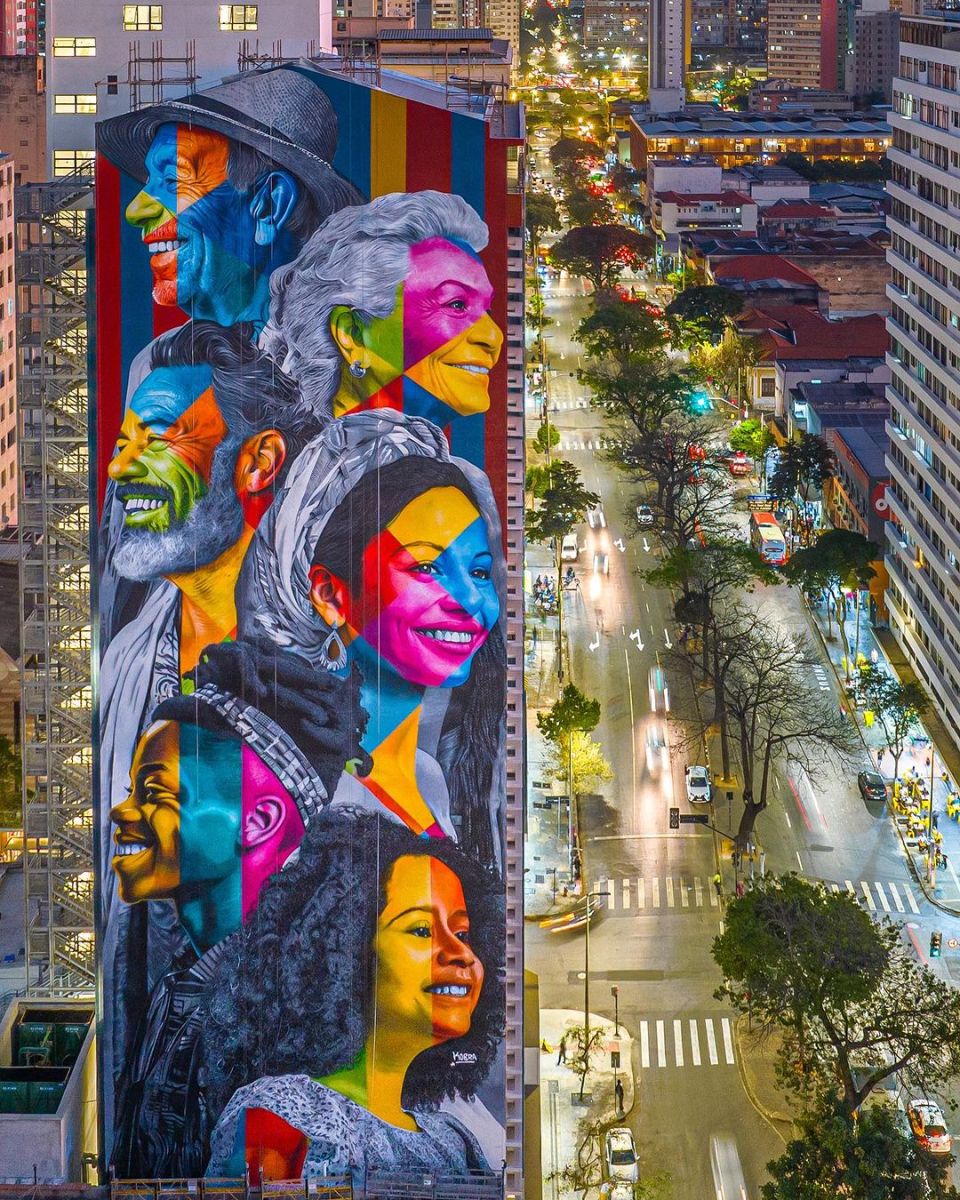
🌆 City of Faces — By Eduardo Kobra for Sesc Minas in Belo Horizonte, Brazil 🇧🇷
That Kobra palette is hard to miss: geometric blocks, huge scale, and faces that carry the wall. Sesc Minas announced the mural as an approximately 1,000-square-meter work on the side of its Belo Horizonte headquarters, facing Avenida Olegário Maciel. Kobra dedicated the mural to workers and everyday people in the city.
💡 Nerd Fact: Belo Horizonte is not just another big Brazilian city: Britannica notes that it was planned and built in the late 19th century to replace Ouro Preto as the capital of Minas Gerais.
More: Eduardo Kobra in Belo Horizonte on Street Art Utopia
🔗 Follow Eduardo Kobra on Instagram
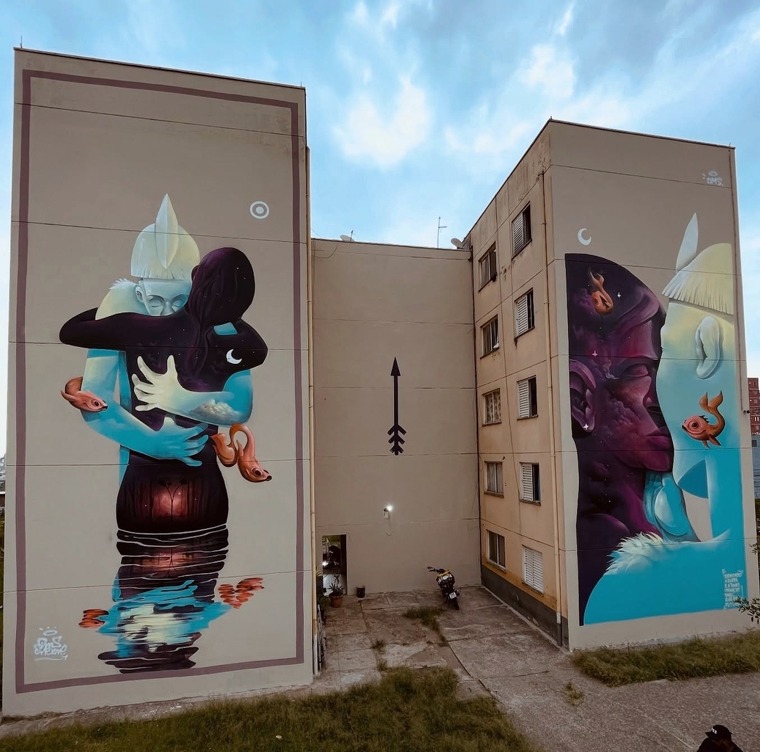
🌙 Between Two Walls — By Davi DMS in São Paulo, Brazil 🇧🇷
Davi DMS uses two neighboring walls like two panels of one story. The figures, fish, moon symbols, and water reflections make the courtyard feel private, as if the buildings are keeping the scene to themselves. The project post credits the work to Davi DMS in São Paulo for Projeto MAR / Museu de Arte de Rua, with photography by Clickairbh.
💡 Nerd Fact: The Museu de Arte de Rua angle matters here: according to the World Cities Culture Forum, São Paulo’s MAR program was created to democratize access to urban art and decentralize creative production across the city.
More: Davi DMS in São Paulo on Street Art Utopia
🔗 Follow Davi DMS on Instagram
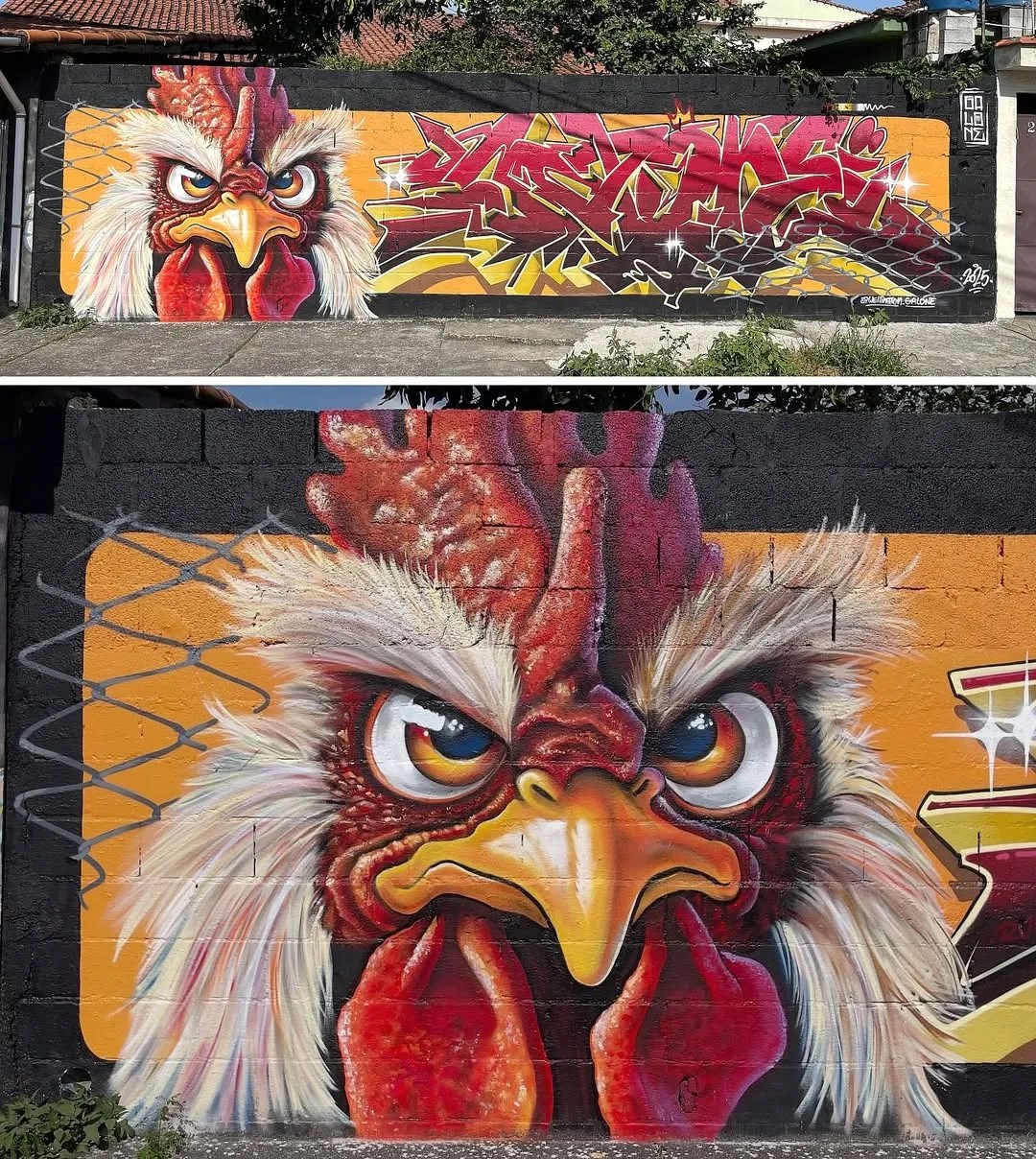
🐓 Angry Chicken — By Wellington Galone in Santa Isabel, Brazil 🇧🇷
This one works immediately, even as a tiny thumbnail. Wellington Galone gives the chicken sharp eyes, wild feathers, and enough attitude to hold its own next to the red and yellow lettering.
More: 10 New Street Art Murals from Brazil You Should See
🔗 Follow Wellington Galone on Instagram
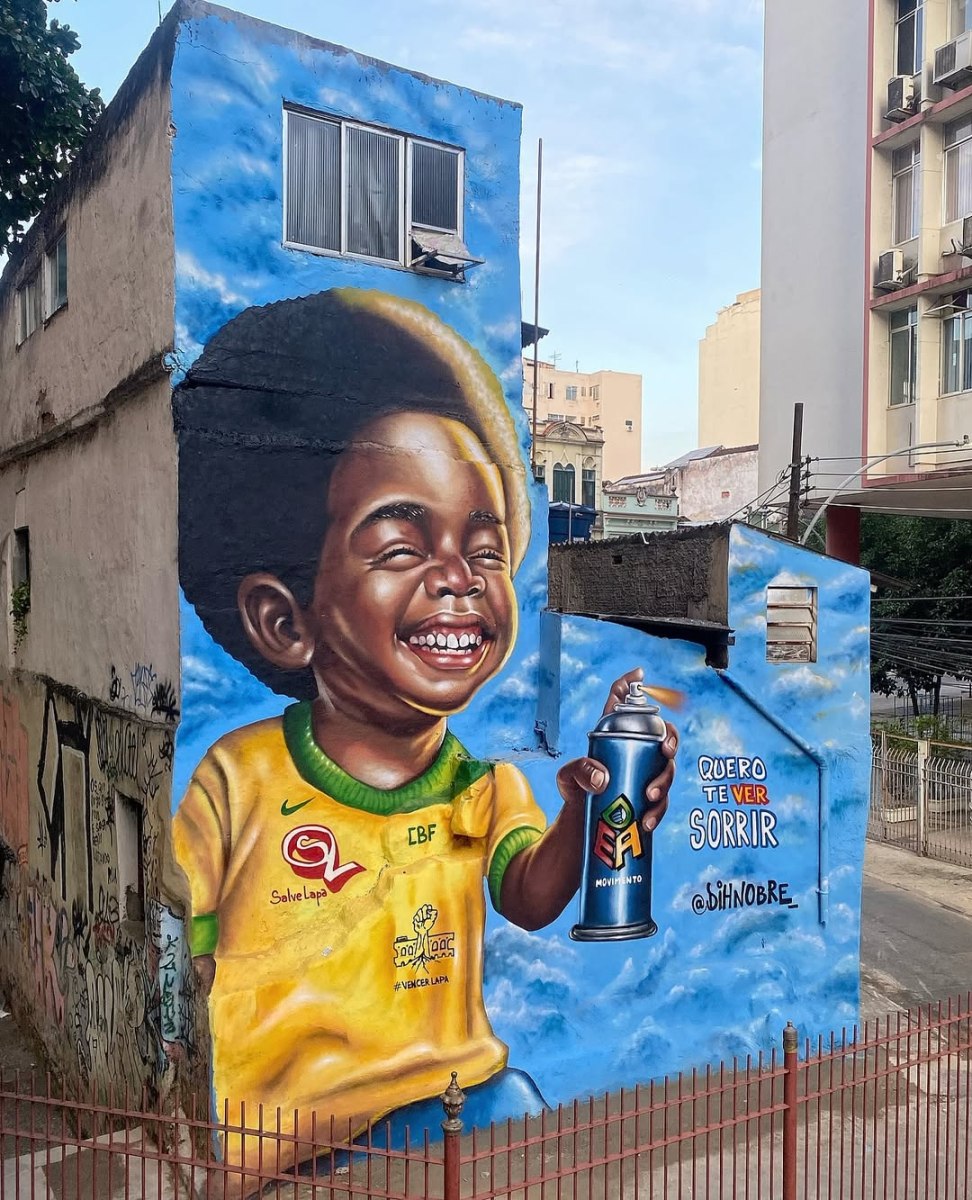
😊 I Want to See You Smile — By Diego Nobre in Rio de Janeiro, Brazil 🇧🇷
Diego Nobre puts a huge smile on the corner. The blue wall, yellow Brazil shirt, spray can, and laughing face keep the mood simple and direct. The message reads “Quero te ver sorrir” — “I want to see you smile” — and the painting delivers it clearly.
More: 10 New Street Art Murals from Brazil You Should See
🔗 Follow Diego Nobre on Instagram
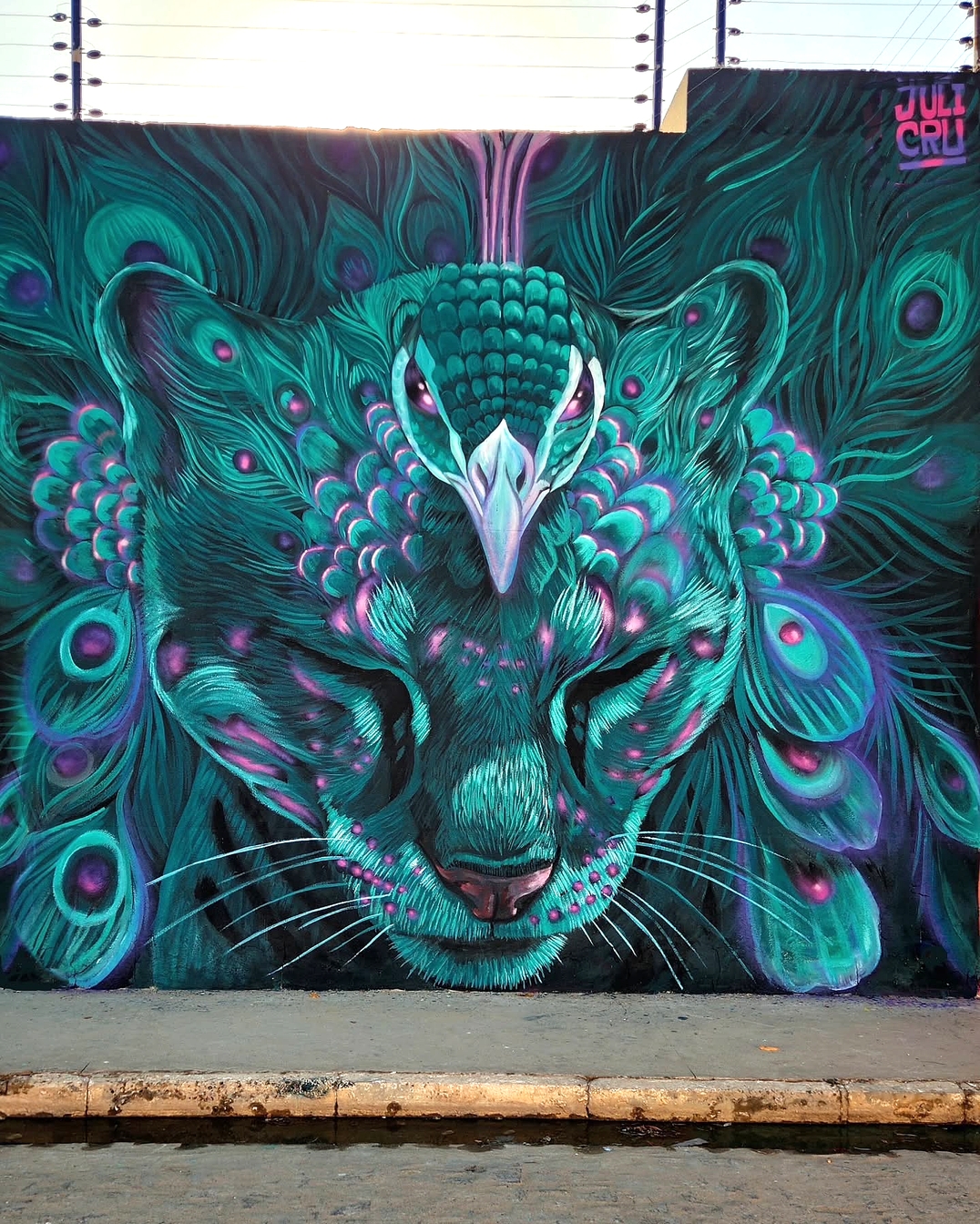
🦚 “La Selva en carnaval” — By Julián Cruz Solano in Petrolina, Brazil 🇧🇷
Julián Cruz Solano pushes a jaguar into peacock territory. Street Art Cities lists the piece as “La Selva en carnaval.” It was created for BEIRA, with the wall at R. Escritor Ariano Suassuna, 316, Jardim São Paulo, Petrolina. The face keeps its feline stare, while teal and purple feathers fan out around it like a bright, strange crown.
💡 Nerd Fact: The address name is a literary breadcrumb: Ariano Suassuna was the Brazilian writer behind Auto da Compadecida and a key figure in the Northeastern “Armorial Movement,” as Britannica summarizes.
More: 10 New Street Art Murals from Brazil You Should See
🔗 Follow Julián Cruz Solano on Instagram
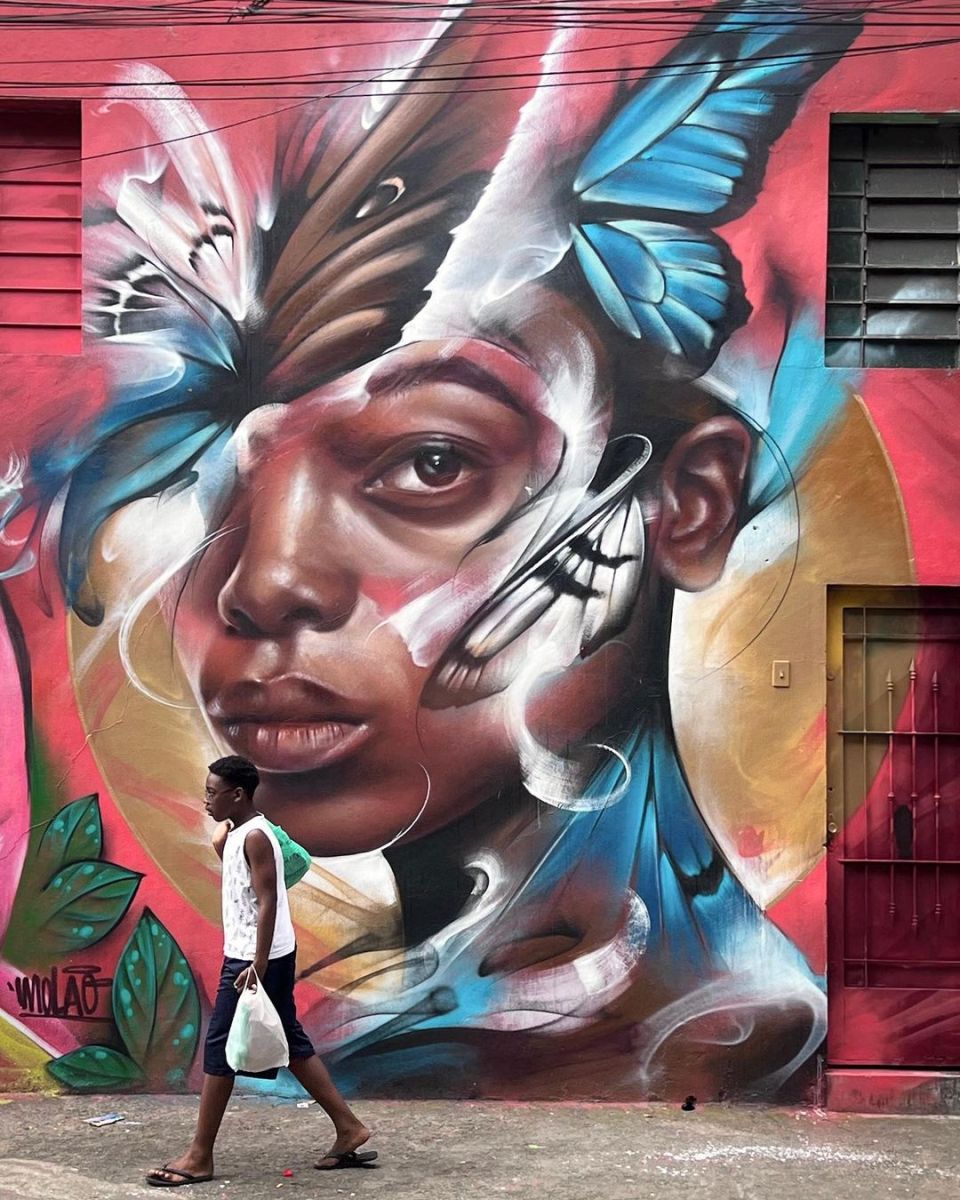
🦋 “Morphos” — By Filite in Taboão da Serra, Brazil 🇧🇷
Filite breaks the portrait into wings, smoke, and color. Streetartpedia’s post credits “Morphos” to Filite in Taboão da Serra for Graffiti Contra Enchente. The butterflies are not just decoration; they cut through the face and rebuild it, halfway between realism and a dream.
💡 Nerd Fact: Blue morpho butterflies are a science trick: their famous blue is structural color rather than blue pigment, created by microscopic structures that reflect and diffract light, as AskNature explains.
More: “Morphos” by Filite on Street Art Utopia
🔗 Follow Filite on Instagram
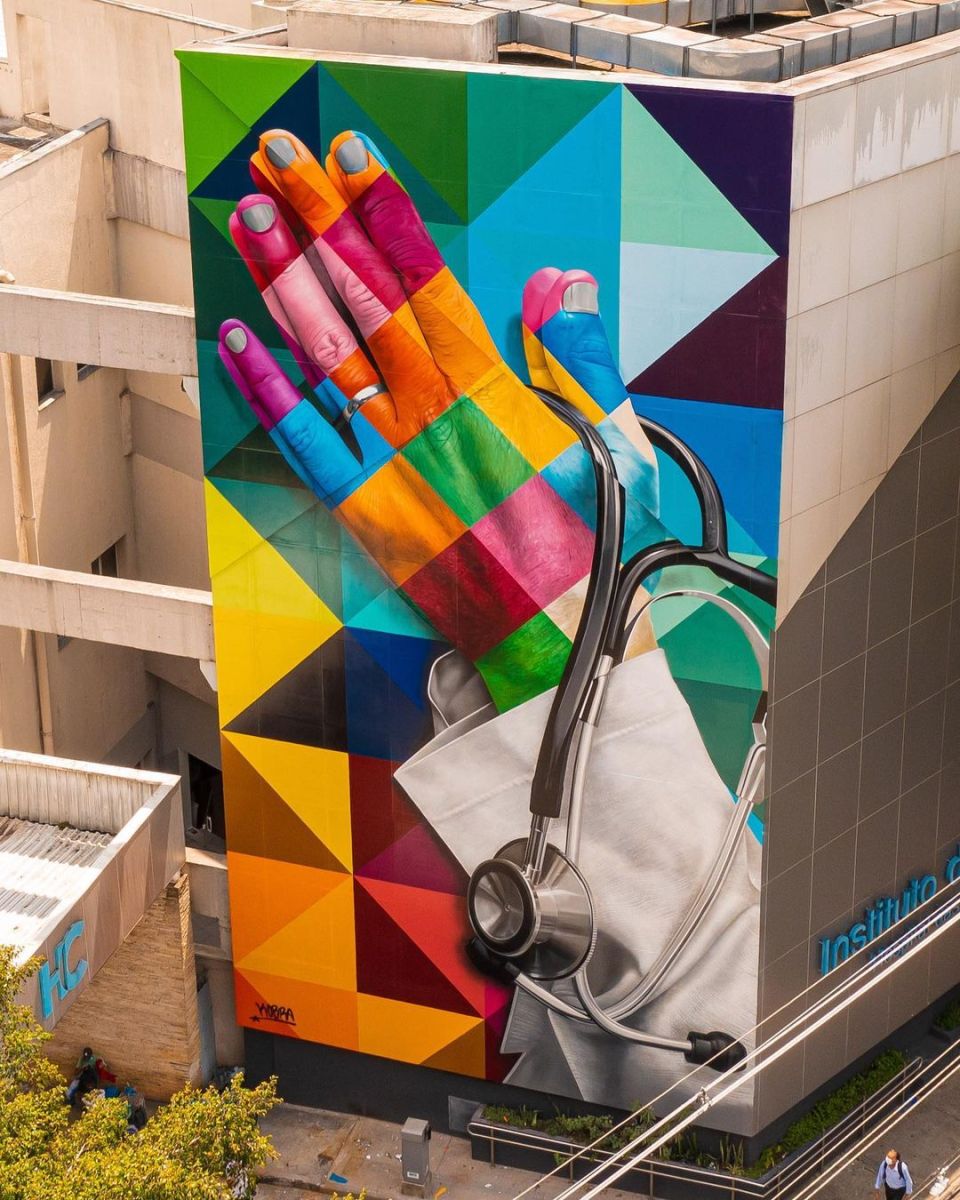
🩺 Science and Faith — By Eduardo Kobra in São Paulo, Brazil 🇧🇷
Kobra makes a simple gesture fill the whole wall. His project page for “Ciência e Fé” describes the mural as a 200-square-meter work on the façade of Hospital das Clínicas, made for São Paulo’s 468th anniversary and built around the idea that science and faith can stand together. The praying hands, stethoscope, and color blocks carry the message without needing much explanation.
💡 Nerd Fact: The hospital wall is loaded with context: FMUSP describes Hospital das Clínicas as part of the University of São Paulo and one of the largest hospital complexes in Latin America.
More: The Daily 10! – Graffiti and Street Art News #11
🔗 Follow Eduardo Kobra on Instagram
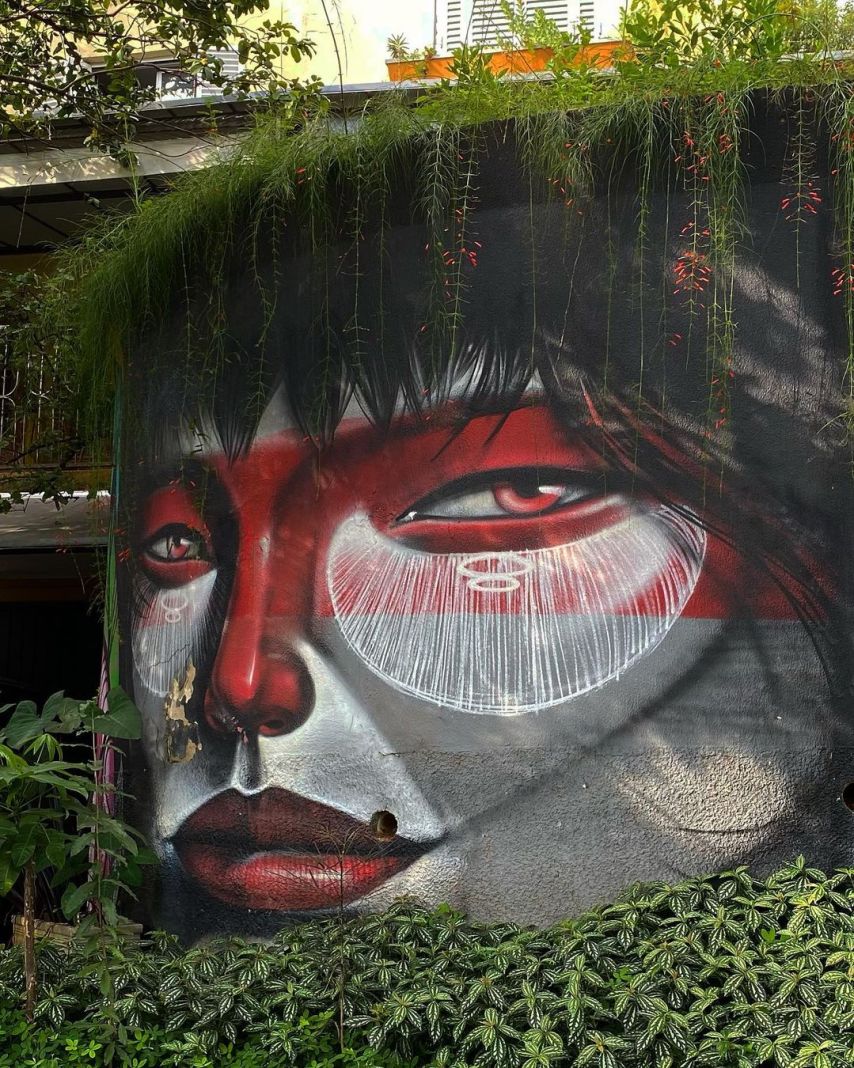
🌿 Nature Taking Over — By Tito Ferrara in São Paulo, Brazil 🇧🇷
Tito Ferrara lets the living plants do part of the portrait work. The greenery falls over the painted face like hair, shadow, and cover, so the mural feels rooted in the wall instead of placed on top of it. The work sits in Praça do Pôr do Sol, where the plants and the open-air setting are part of the piece.
💡 Nerd Fact: “Praça do Pôr do Sol” is the nickname most people use: the park’s own site explains that the official name is Praça Coronel Custódio Fernandes Pinheiros, in Alto de Pinheiros.
More: Nature Taking Over in São Paulo
🔗 Follow Tito Ferrara on Instagram
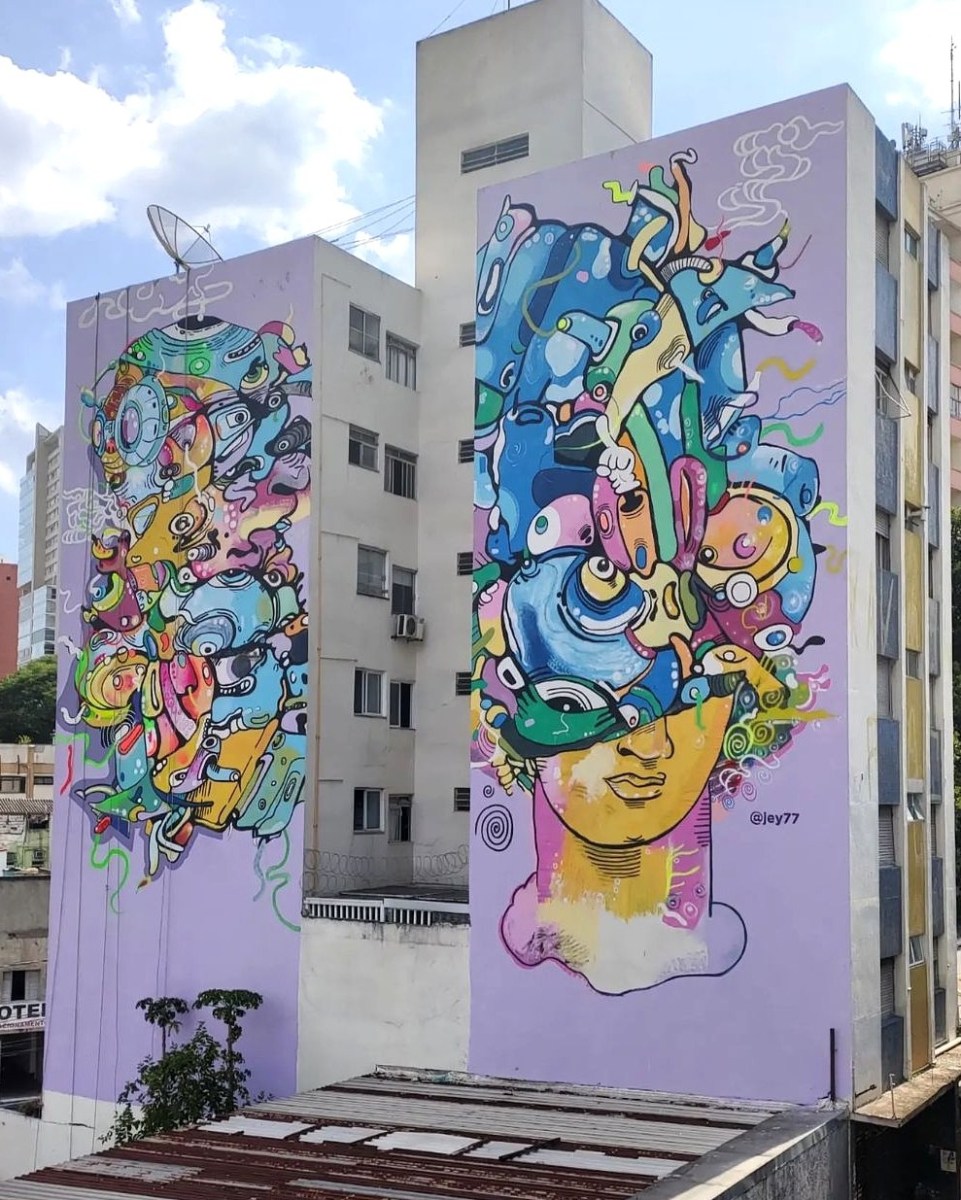
🎭 Vertical Imagination — By Jey77 in São Paulo, Brazil 🇧🇷
Jey77 packs the building sides with faces, loops, creatures, and floating shapes. The lavender background keeps the rush of lines readable, even at this scale.
💡 Nerd Fact: The scale fits the city: Britannica describes São Paulo as the largest city in the Southern Hemisphere and one of the world’s largest conurbations.
More: The Daily 10! – Graffiti and Street Art News #11
🔗 Follow Jey77 on Instagram
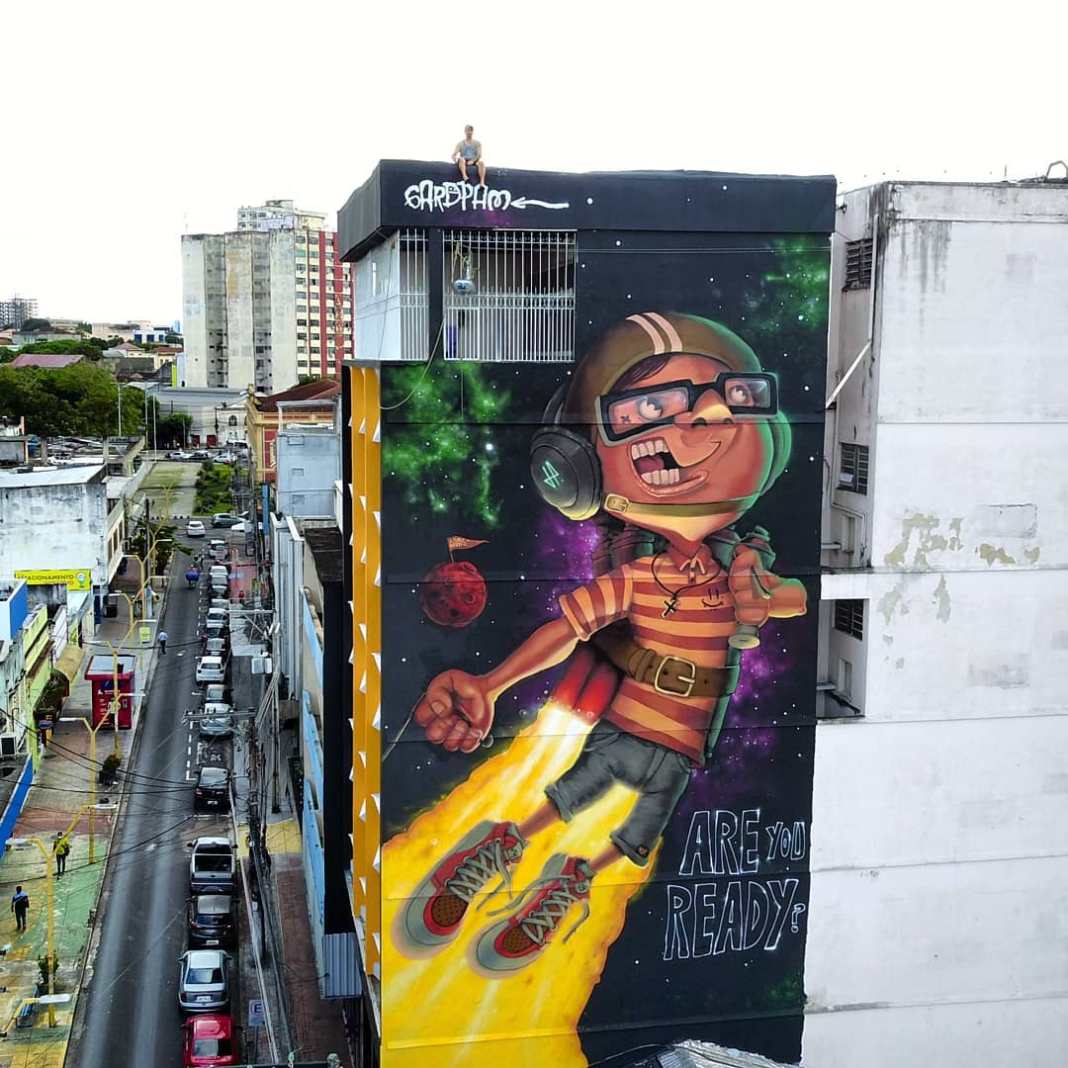
🚀 Are You Ready? — By Gardpam in Manaus, Brazil 🇧🇷
Gardpam gives the building a lift-off moment. The character shoots upward with headphones, space, and bright yellow energy under the shoes. It reads like a launchpad with personality. The work was painted at Mural Living for FAW 2021.
💡 Nerd Fact: Manaus is not a small jungle outpost; Britannica describes it as one of the Amazon basin’s largest urban centres, sitting deep in the rainforest on the Rio Negro.
More: Gardpam in Manaus on Street Art Utopia
🔗 Follow Gardpam on Instagram
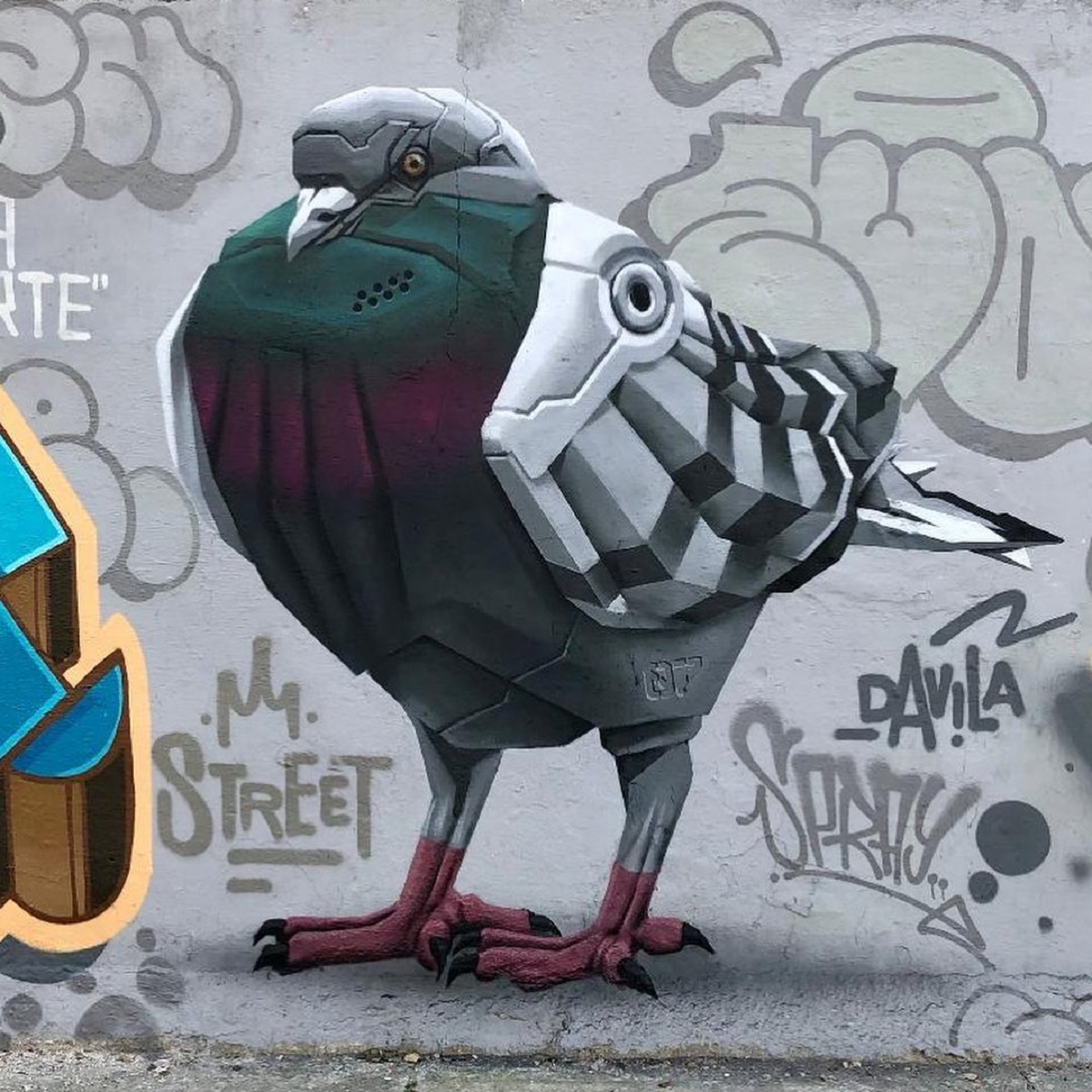
🐦 Mech Dove — By Denys Evol in São Paulo, Brazil 🇧🇷
Denys Evol gives a city pigeon a sci-fi upgrade. The bird still feels familiar, but the metallic panels and mechanical body make it look ready for a cyberpunk alley.
💡 Nerd Fact: City pigeons have a surprisingly ancient human connection: Cornell’s All About Birds notes that cuneiform tablets and Egyptian hieroglyphics point to pigeons being domesticated more than 5,000 years ago.
More: Mech Dove by Denys Evol
🔗 Follow Denys Evol on Instagram
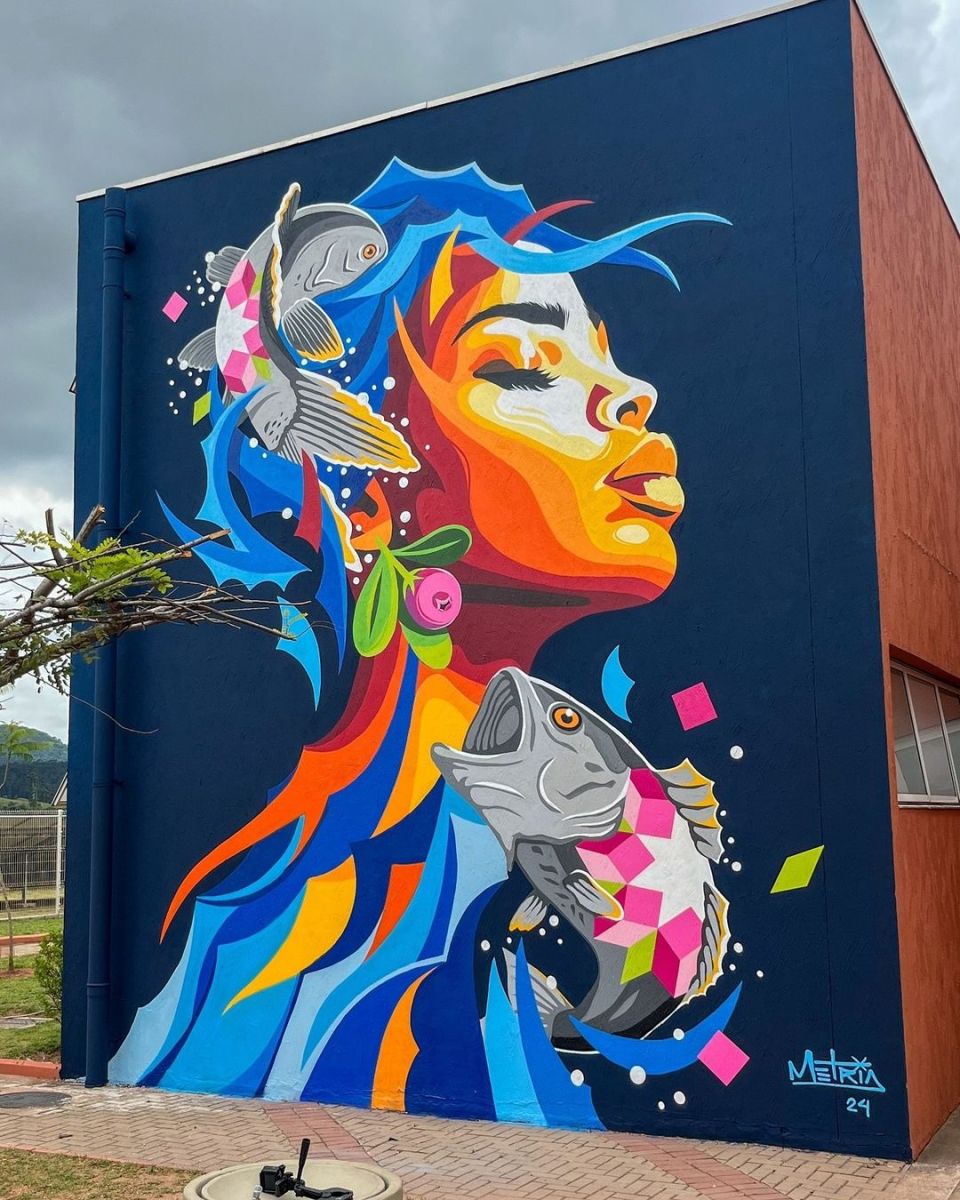
🐟 “CAI-A-MAR” — By Saulo Metria in Cajamar, Brazil 🇧🇷
Saulo Metria makes the wall feel fluid. In his own post, he describes “CAI-A-MAR” as a homage to Cajamar, created especially for SESI Cajamar. The profile, fish, flowers, and blue-orange ribbons all move upward together against the deep blue background.
💡 Nerd Fact: SESI is part of Brazil’s worker support and education network: the National Industry Confederation’s SESI page says the Social Service of Industry was created in 1946 to support education, health, safety, and quality of life for workers.
More: 106 Of The Most Beloved Street Art Photos – Year 2024
🔗 Follow Saulo Metria on Instagram
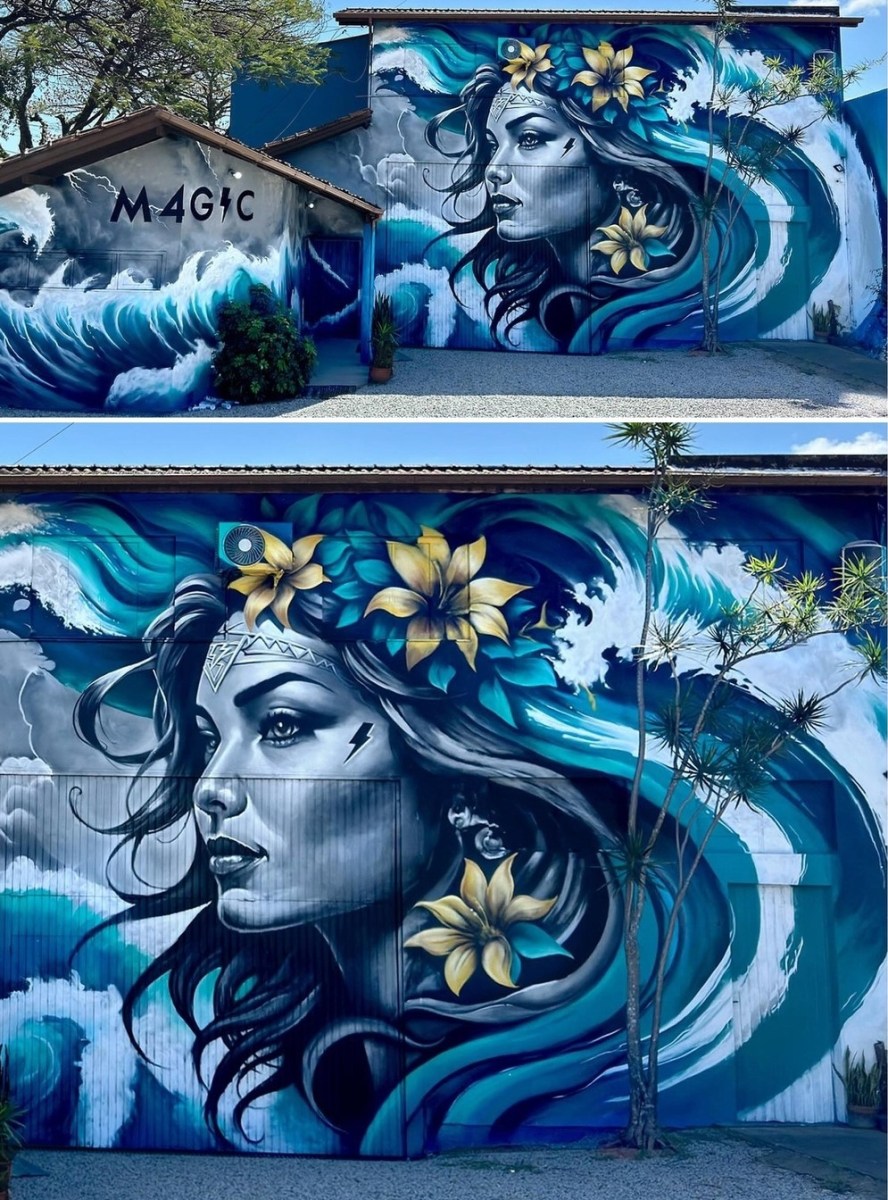
🌊 “Iemanjá” — By Henrique Montanari / EDMX in Florianópolis, Brazil 🇧🇷
Henrique Montanari, also known as EDMX, wraps the building in waves, flowers, and a calm grayscale portrait. His official site lists the Florianópolis project as “Magic”, while his Instagram materials identify the interactive mural as “Iemanjá,” created for Magic Surfboards. The blues lean coastal, and the yellow flowers pull the eye back to the face.
💡 Nerd Fact: Iemanjá is the Brazilian form of the Yoruba deity Yemonja; Britannica describes Yemonja as a life-giving, motherly deity in the Yoruba pantheon, while Brazilian coastal festivals connect her strongly with the sea.
More: 106 Of The Most Beloved Street Art Photos – Year 2024
🔗 Follow EDMX on Instagram
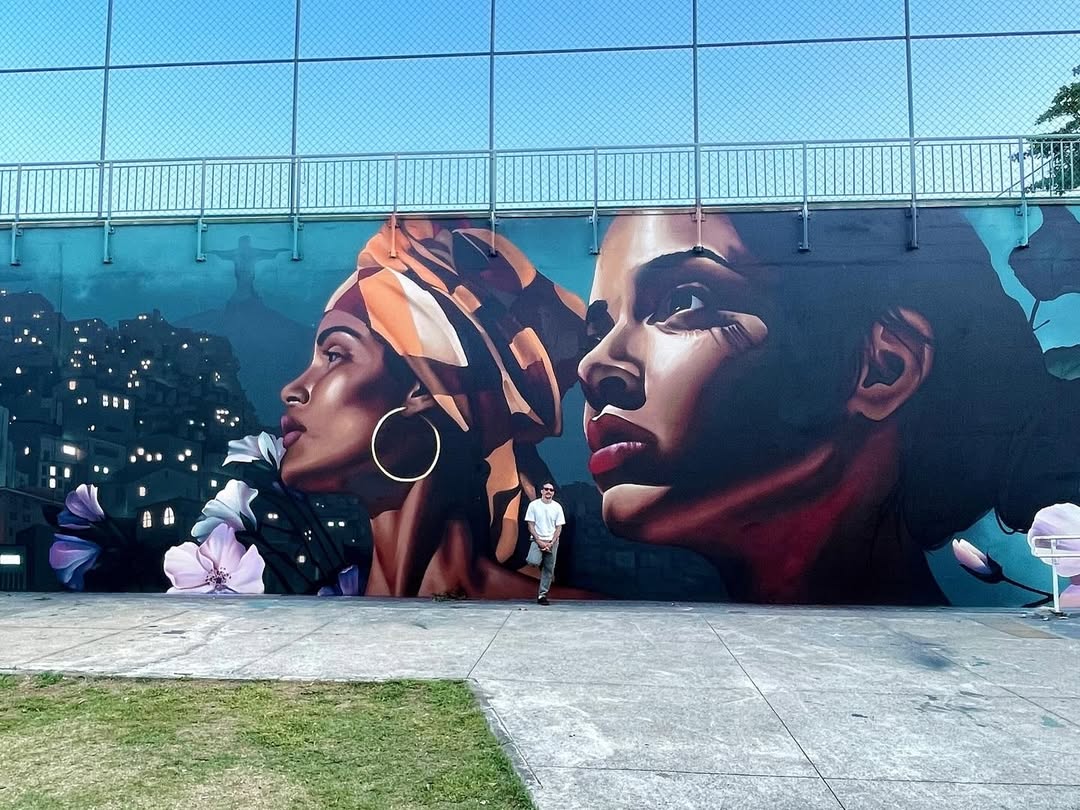
🌺 “Conexão” / “Connection” — By Yanoe in Rio de Janeiro, Brazil 🇧🇷
Yanoe treats the long wall like a wide scene. His own post names the mural “Conexão” and says it was painted in Rio de Janeiro for the G20 summit. Two faces look in different directions, flowers fill the foreground, and the dark city lights in the background give it a quiet sense of place.
💡 Nerd Fact: Rio was not just a backdrop for this mural: the official G20 Brazil documents place the 2024 Leaders’ Summit in Rio de Janeiro on November 18–19, under the motto “Building a fair world and a sustainable planet.”
More: New Street Art #1
🔗 Follow Yanoe on Instagram
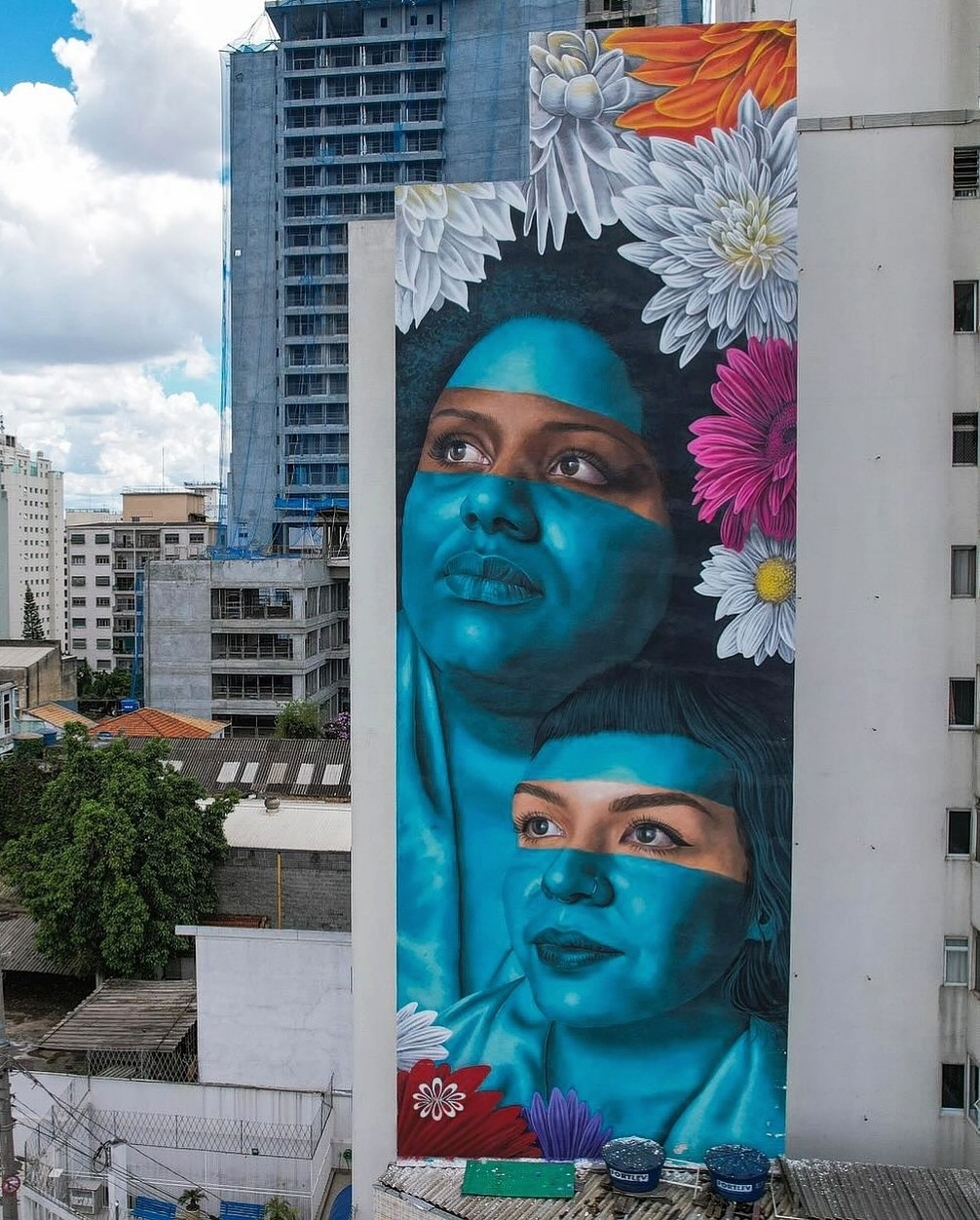
💙 Blue Bloom — By Clara Leff in São Paulo, Brazil 🇧🇷
Clara Leff makes a narrow high wall feel soft and large. The blue portraits are calm and watchful, and the flowers around them make a loose frame. Street Art Cities records this 2025 Clara Leff wall at Alameda Glete, 1051, Campos Elíseos, São Paulo.
💡 Nerd Fact: Campos Elíseos carries old urban-planning DNA: this history of the neighborhood describes it as São Paulo’s first planned neighborhood, created around the railway boom of the late 19th century.
More: New Street Art #1
🔗 Follow Clara Leff on Instagram
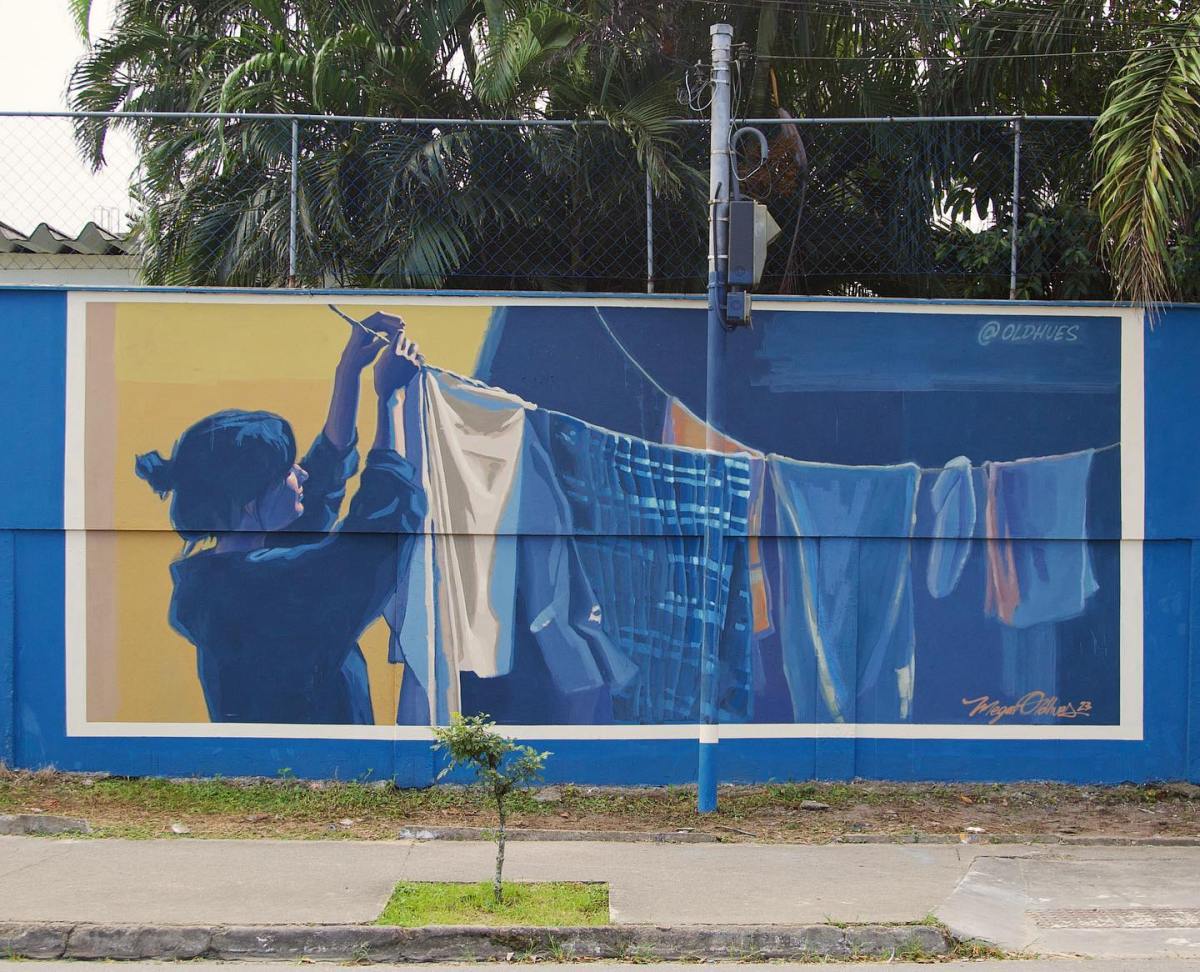
🧺 Women of the Favela — By Megan Oldhues in Mongaguá, Brazil 🇧🇷
Megan Oldhues paints a daily task with care. Her own post for “Women of the Favela” explains the community focus behind the scene and notes that the wall faces a bus stop used by working women. The clothesline stretches across the wall like a small neighborhood moment, and the blue tones keep it quiet and close.
💡 Nerd Fact: The word “favela” has a specific origin story: Britannica traces it to Morro da Favela in Rio, where Canudos War soldiers settled while waiting for government payment.
More: Women of the Favela by Megan Oldhues
🔗 Follow Megan Oldhues on Instagram
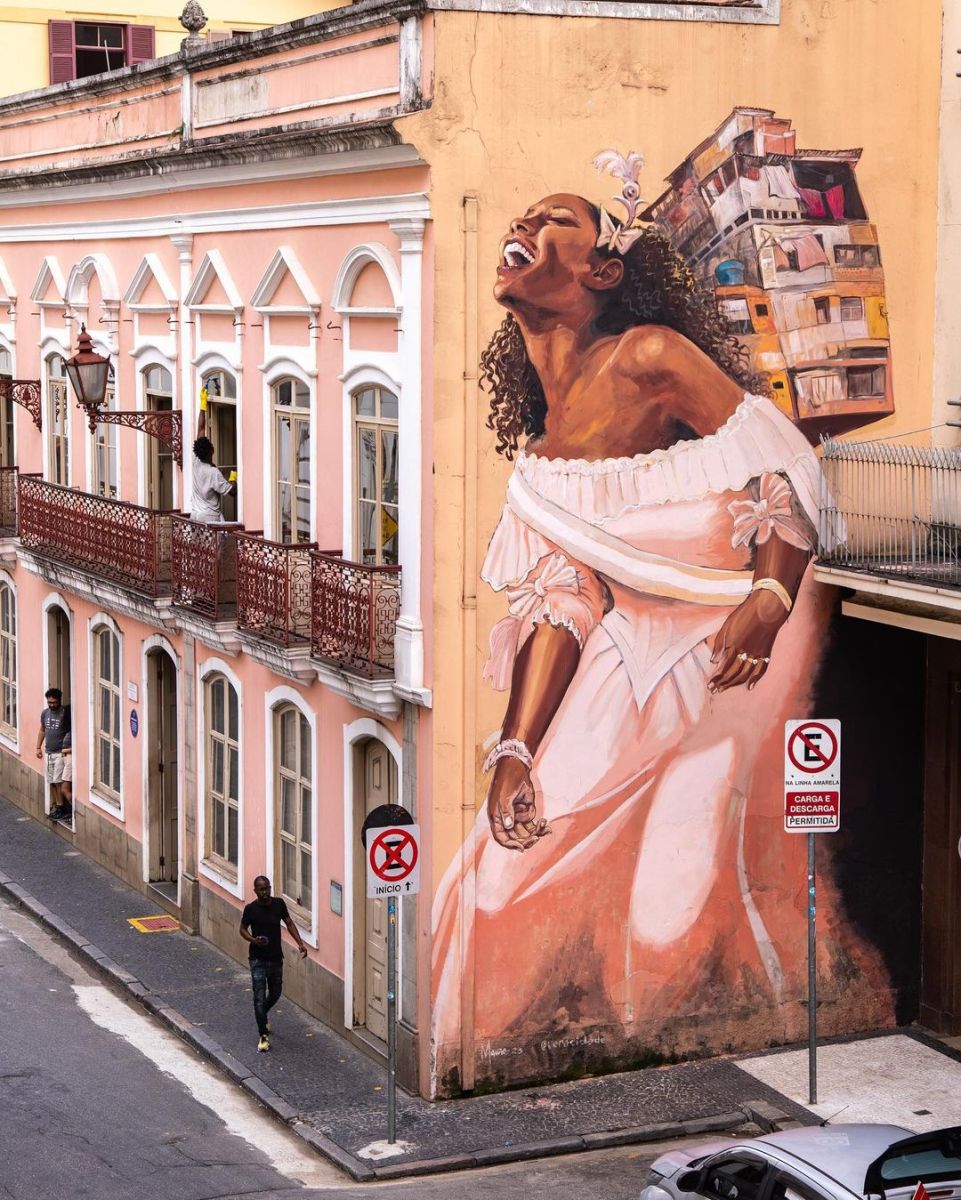
💃 “Preta Solar” — By Veracidade in São Paulo, Brazil 🇧🇷
Veracidade makes the whole corner join the mural. The artist identifies the work as “Preta Solar” at Solar da Marquesa de Santos, where it was part of Museu da Cidade de São Paulo’s “Intersecções” exhibition. The figure leans into laughter and movement, bringing the neighborhood into a historic downtown setting.
💡 Nerd Fact: Solar da Marquesa de Santos is not just a pretty location; Museu da Cidade de São Paulo says Domitila de Castro Canto e Melo, the Marquesa de Santos, owned the building from 1834 to 1867.
More: A Mural by Veracidade Celebrates Resilience and Joy
🔗 Follow Veracidade on Instagram
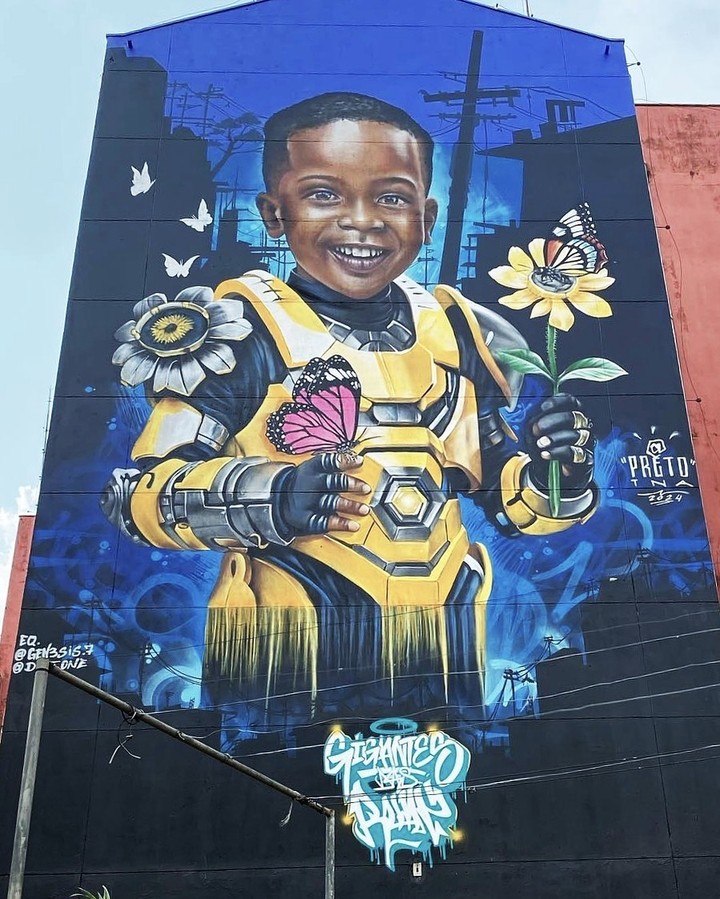
🦋 Future Hope — By PRETO in Perus, São Paulo, Brazil 🇧🇷
PRETO puts sci-fi armor beside flowers, butterflies, and a huge smile. The Gigantes das Ruaz project post places the work in Perus, on the northwest side of São Paulo. The contrast carries it: metal and nature, toughness and softness, all against a deep blue wall.
💡 Nerd Fact: Perus has a deep labor-history link: the Centro de Memória Queixadas preserves records of the long strike by workers at the Perus Portland cement factory, one of the neighborhood’s defining labor memories.
More: 9 New Street Art Highlights From Around the World
🔗 Follow PRETO on Instagram
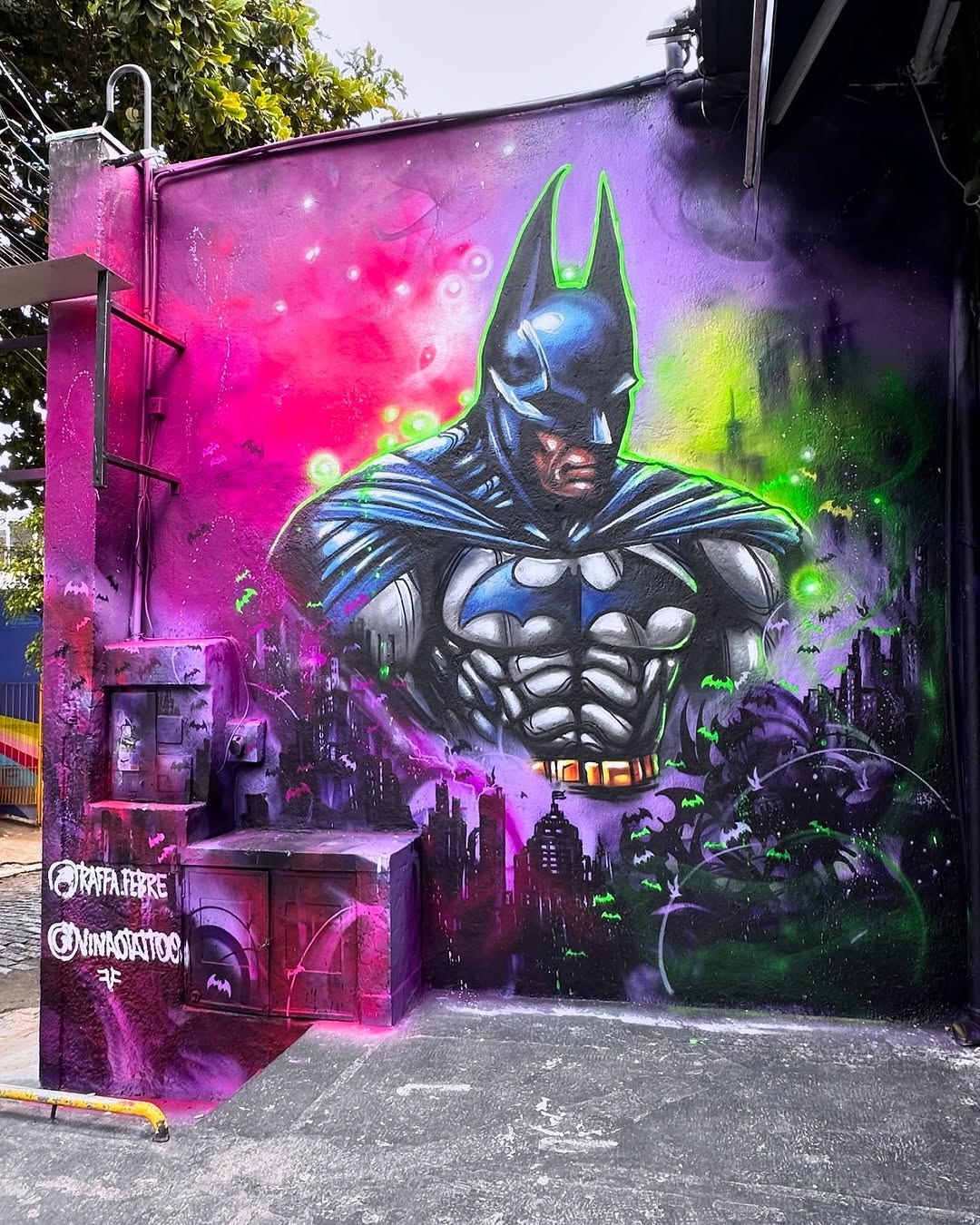
🦇 Batman — By Raffa.Febre and Vinao in São Paulo, Brazil 🇧🇷
This wall goes full comic-book mode without losing the spray-painted texture. Street Art Cities records the work as “Batman” by Raffa Febre and Vinao Tattoo, created in 2025 at R. Gonçalo Afonso, 86, Jardim das Bandeiras, São Paulo. The masked figure rises over a purple and green city, with bats, smoke, and glow around it.
💡 Nerd Fact: Batman’s mural life is global now, but the character began in print: DC’s official character page lists his first appearance as Detective Comics #27 in 1939.
More: 9 New Street Art Highlights From Around the World
🔗 Follow Raffa.Febre on Instagram
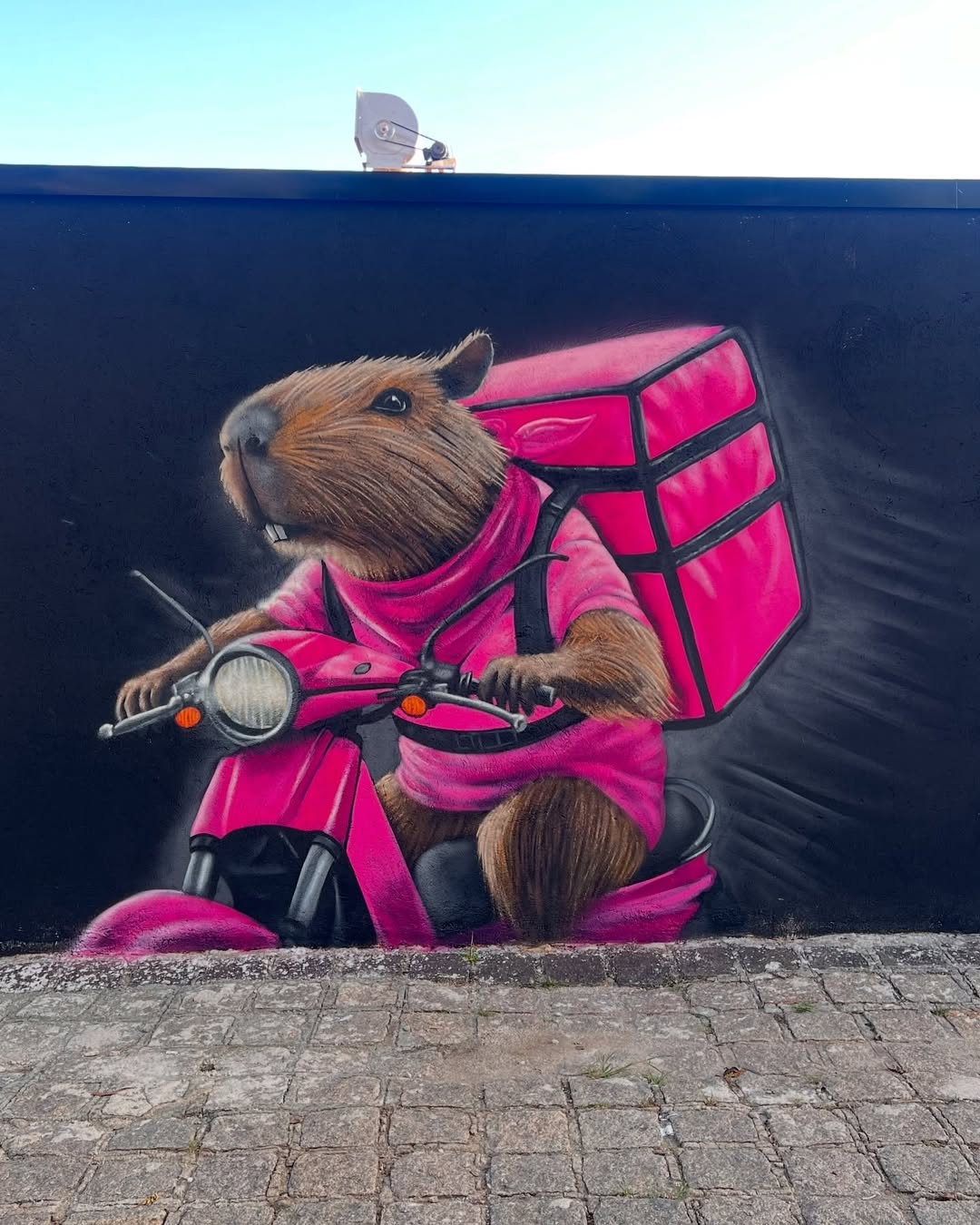
🛵 Capybara Delivery — By Bruno Dhoar in Curitiba, Brazil 🇧🇷
Bruno Dhoar gives the capybara a side job. The animal sits on a bright pink scooter like it has done this route for years.
💡 Nerd Fact: The delivery driver is a heavyweight: Britannica identifies the capybara as the largest living rodent in the world, growing to about 1.3 meters long.
More: New Street Art #4
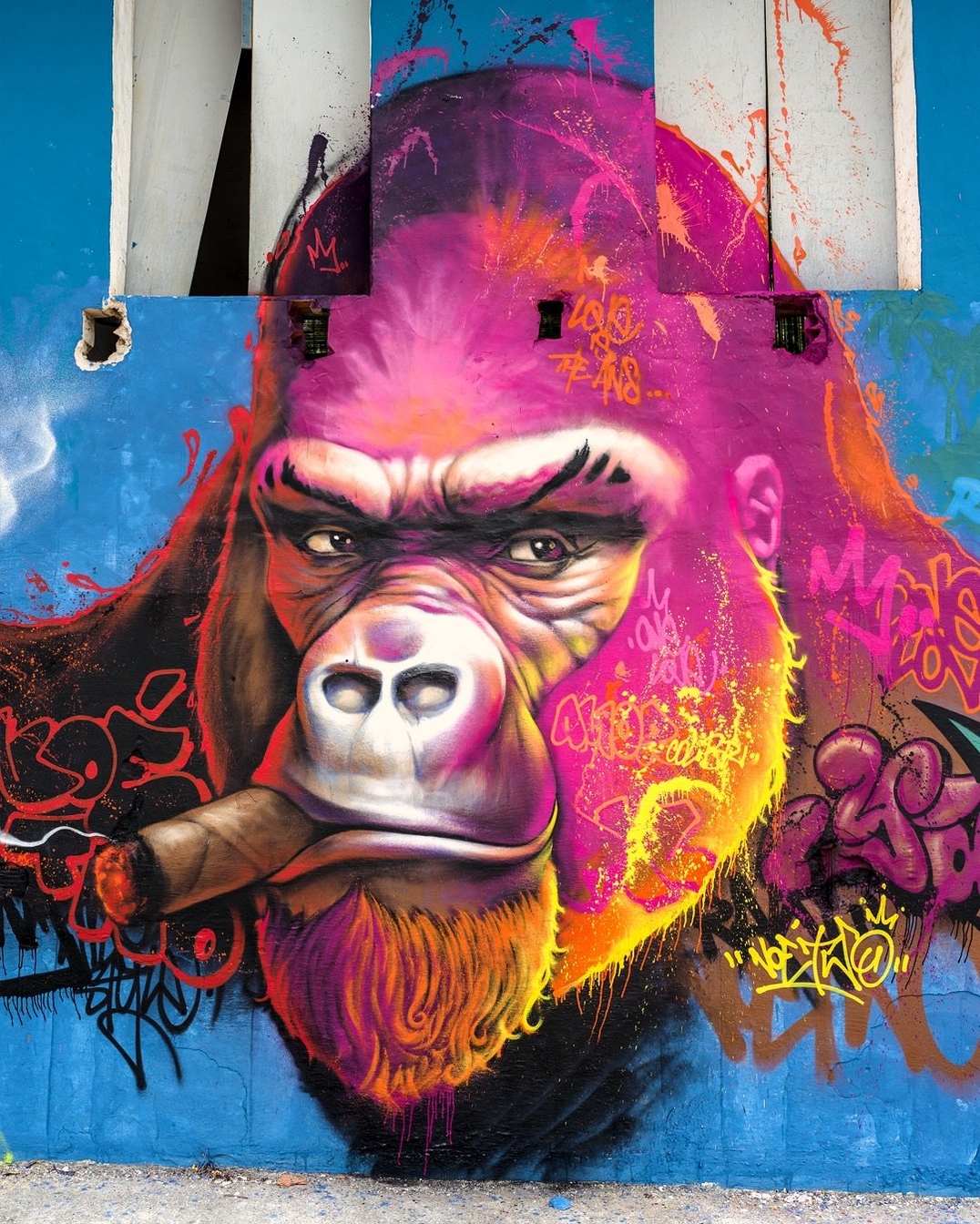
🦍 “YAOUNDÉ in Full Color” — By NOE TWO in Itaparica, Brazil 🇧🇷
NOE TWO’s own post names this Bahia de Todas as Cores mural “YAOUNDÉ in Full Color”, painted on Ilha de Itaparica. The gorilla has attitude and serious wall presence. The pinks, oranges, and purples push it into a loud graffiti world, closer to an album cover than a zoo sign.
💡 Nerd Fact: The title points far beyond Bahia: Yaoundé is Cameroon’s capital, and WWF notes that western lowland gorillas are found in Cameroon and several neighboring Central African countries.
More: 10 Stunning New Street Art Murals From Around the World
🔗 Follow NOE TWO on Instagram
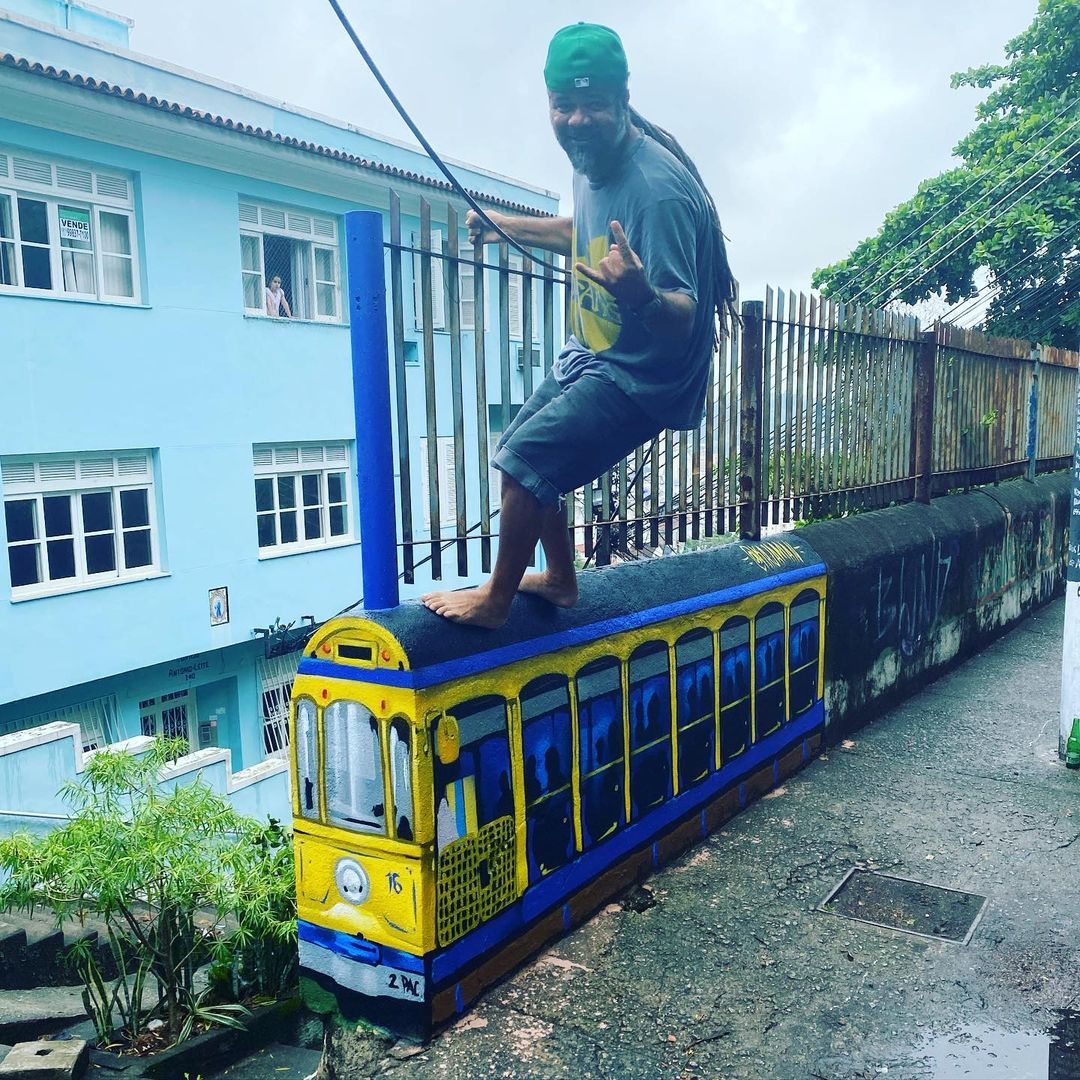
🚋 Santa Teresa Tram — By André Kajaman in Rio de Janeiro, Brazil 🇧🇷
André Kajaman makes good use of the sloped wall. The painted tram follows the angle like it is climbing the street, and the person standing on it finishes the illusion. The intervention plays with one of Santa Teresa’s icons near Rua André Cavalcanti in Santa Teresa.
💡 Nerd Fact: The Santa Teresa tram is protected heritage, not just a cute yellow ride: Riotur notes that the bondes were listed by Rio’s state heritage institute, Inepac, in 1988.
More: The Santa Teresa Tram by André Kajaman
🔗 Follow André Kajaman on Instagram
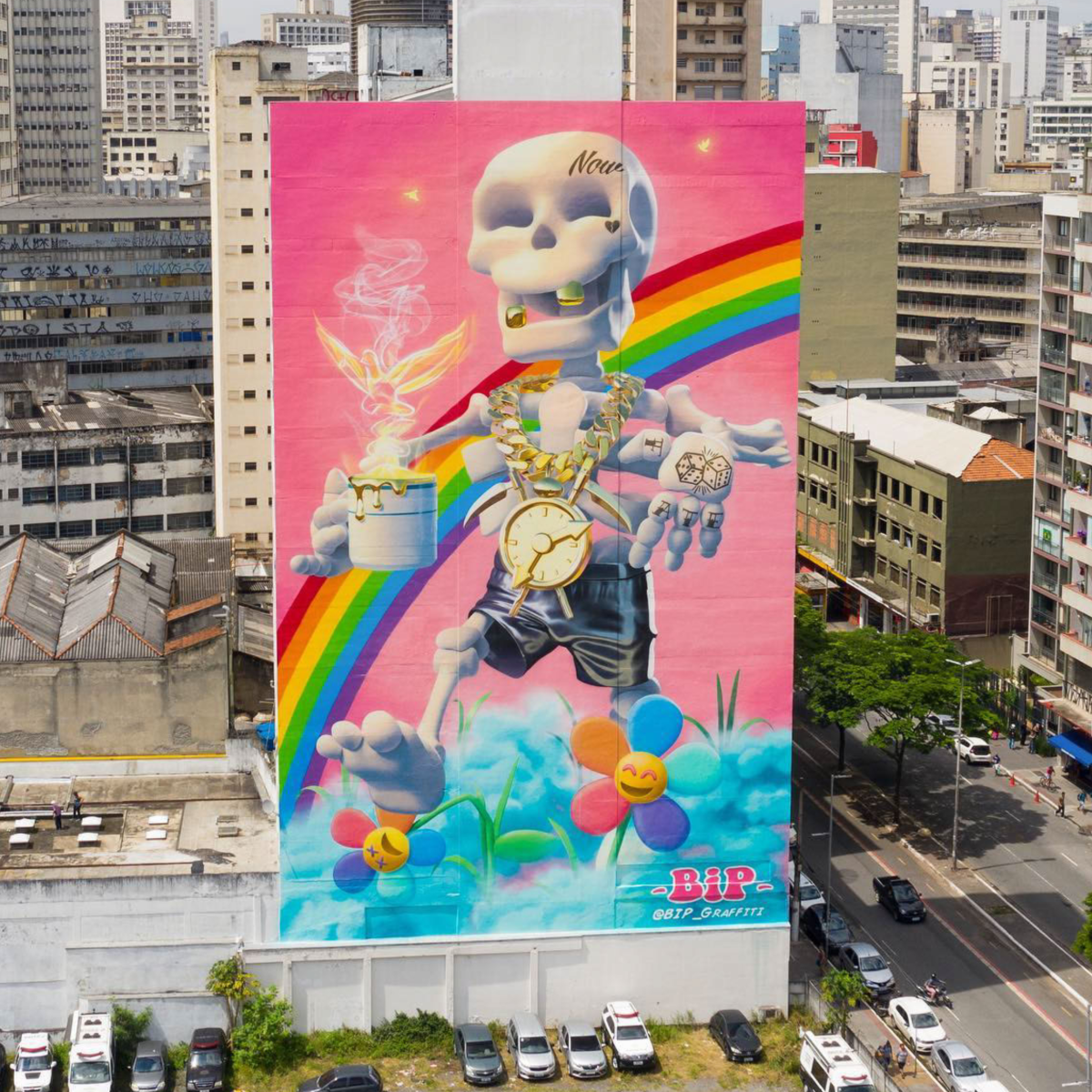
🌈 Employee of the Month — By Bip Apollo in São Paulo, Brazil 🇧🇷
Bip Apollo turns the wall into a candy-colored billboard from another planet. His own artwork archive lists “Employee of the Month – São Paulo”, while StreetArtNews documented it as a 16-story façade project. Skeleton character, rainbow, clouds, gold details, pink background — it all clashes in the right way.
💡 Nerd Fact: Big façades in São Paulo have a special urban backstory: after the Clean City Law removed thousands of advertising signs, blank building surfaces became even more visible as potential civic canvases.
More: Bip Apollo in São Paulo on Street Art Utopia
🔗 Visit Bip Apollo’s artwork page
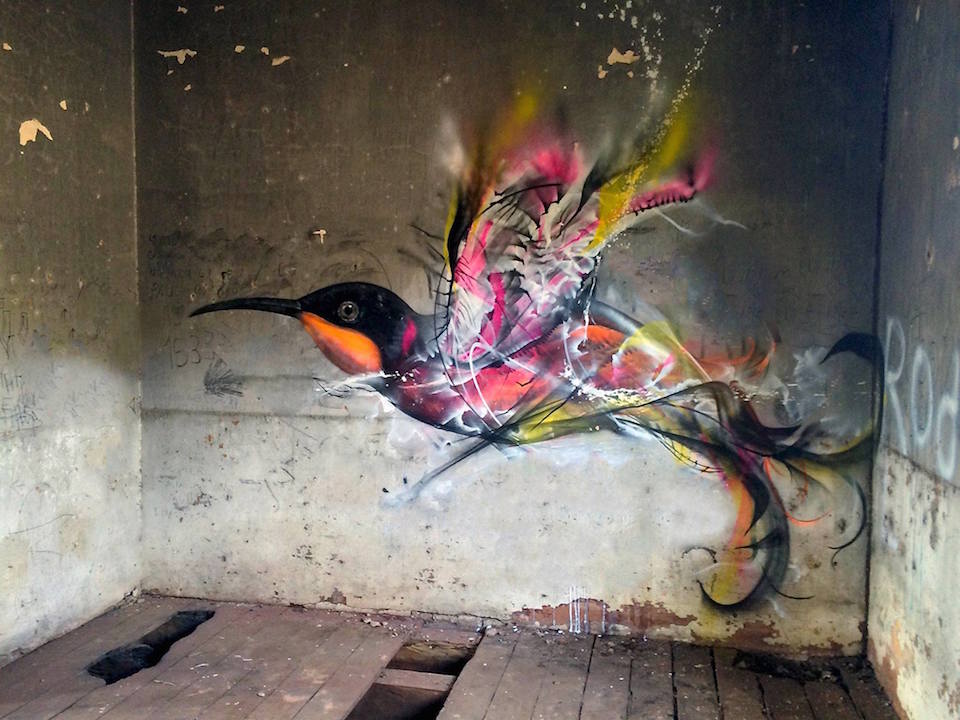
🐦 Abstract Flight — By L7m in Brazil 🇧🇷
L7m’s birds often sit somewhere between anatomy and pure motion. Hi-Fructose documented L7m’s abstract bird murals as a recurring language of avian forms fractured into color, movement, and sketch-like lines. Here, the bird breaks across the wall in bright flashes, smoky strokes, and sharp energy.
💡 Bird Nerd Fact: Brazil is a huge bird map: Avibase lists more than 1,900 bird species recorded in the country, which helps explain why avian imagery feels so at home in Brazilian mural culture.
More: Street Art in Brazil – By L7m
🔗 Follow L7m on Facebook
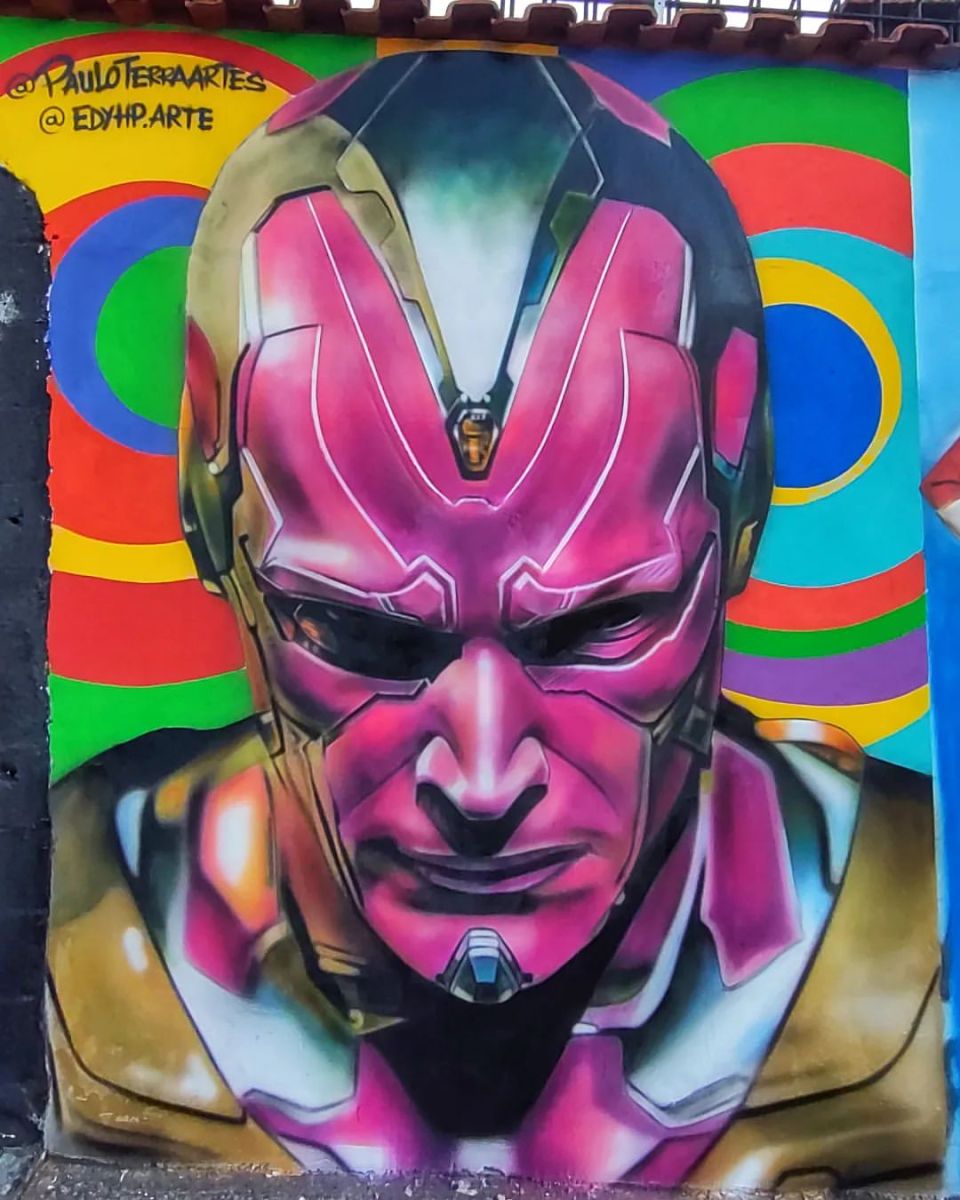
🦸 Vision — By Edy Hp and Paulo Terra in São Paulo, Brazil 🇧🇷
Edy Hp and Paulo Terra bring superhero gloss to the street with a clean, high-impact portrait of Vision. The metallic face, magenta tones, and bright circular background feel like a pop-art close-up made with spray cans.
💡 Nerd Fact: Vision’s comic-book origin is older than many people think: Marvel lists Avengers #57 from 1968 as the character’s first appearance.
More: Superhero Mural in São Paulo on Street Art Utopia
🔗 Follow Edy Hp on Instagram and Paulo Terra on Instagram
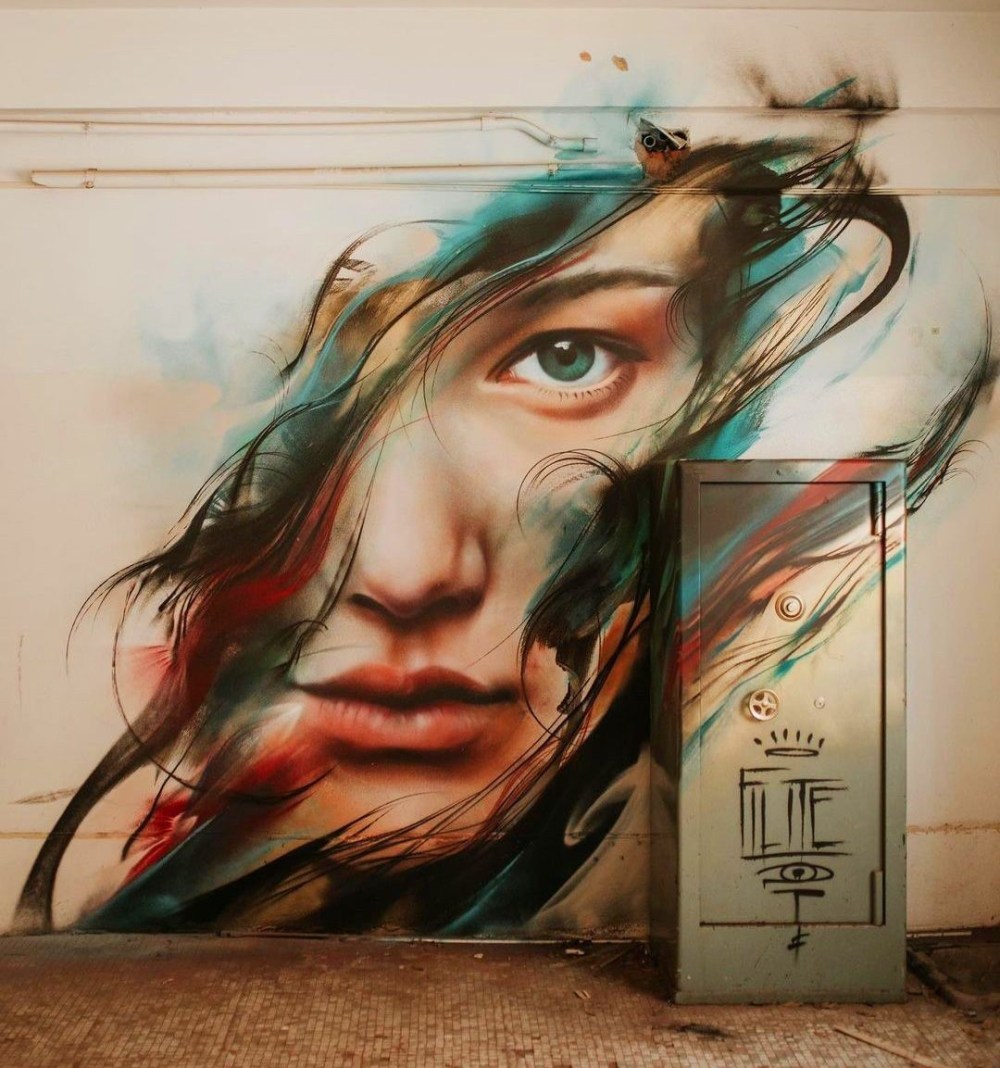
👁️ Urban Explorations: Secret — By Filite in Minas Gerais, Brazil 🇧🇷
Filite’s second piece here is quieter, but the eye still catches you. The original Instagram source places the work in Filite’s “Urban Explorations” series in Minas Gerais. The face appears through rushing lines and soft color, like a memory left on an abandoned interior wall.
💡 Nerd Fact: Even the state name is a history clue: Britannica explains that “Minas Gerais” means “General Mines,” pointing to the region’s mineral wealth and colonial mining past.
More: Urban Explorations Secret by Filite
🔗 Follow Filite on Instagram
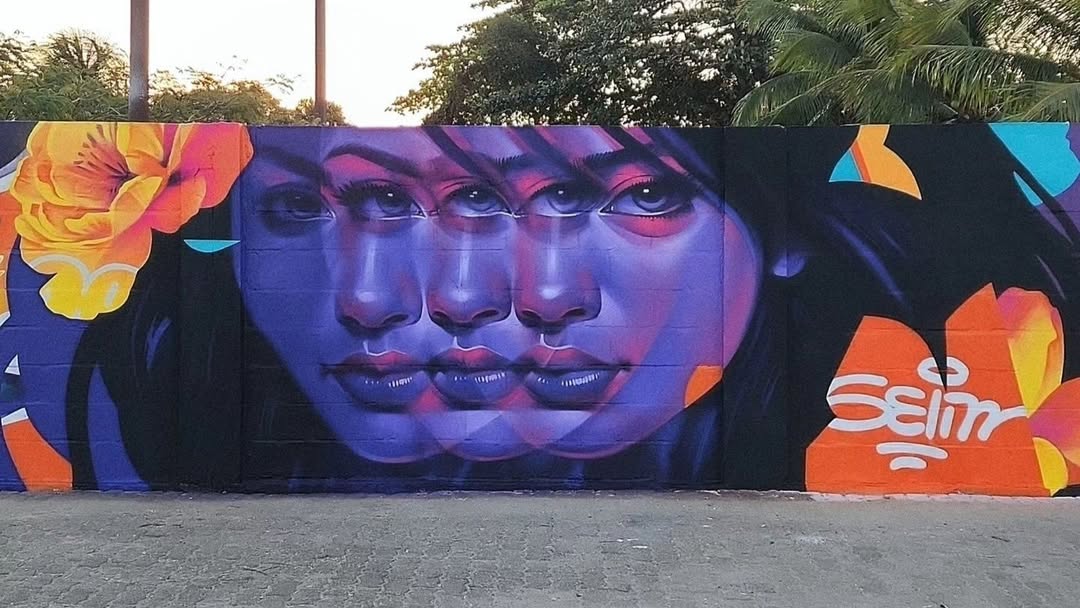
🟣 Triple Gaze — By GELIN in Macaé, Brazil 🇧🇷
GELIN layers the portrait like a time-lapse. Painted for Kolirius Internacional, the repeated face, deep purples, orange flowers, and black background give the piece a strong graphic pulse.
💡 Nerd Fact: Macaé is tied to Brazil’s offshore-energy story: the city’s own site says the Campos Basin once supplied most of Brazil’s oil production, helping give Macaé the nickname “National Oil Capital”.
More: 106 Of The Most Beloved Street Art Photos – Year 2024
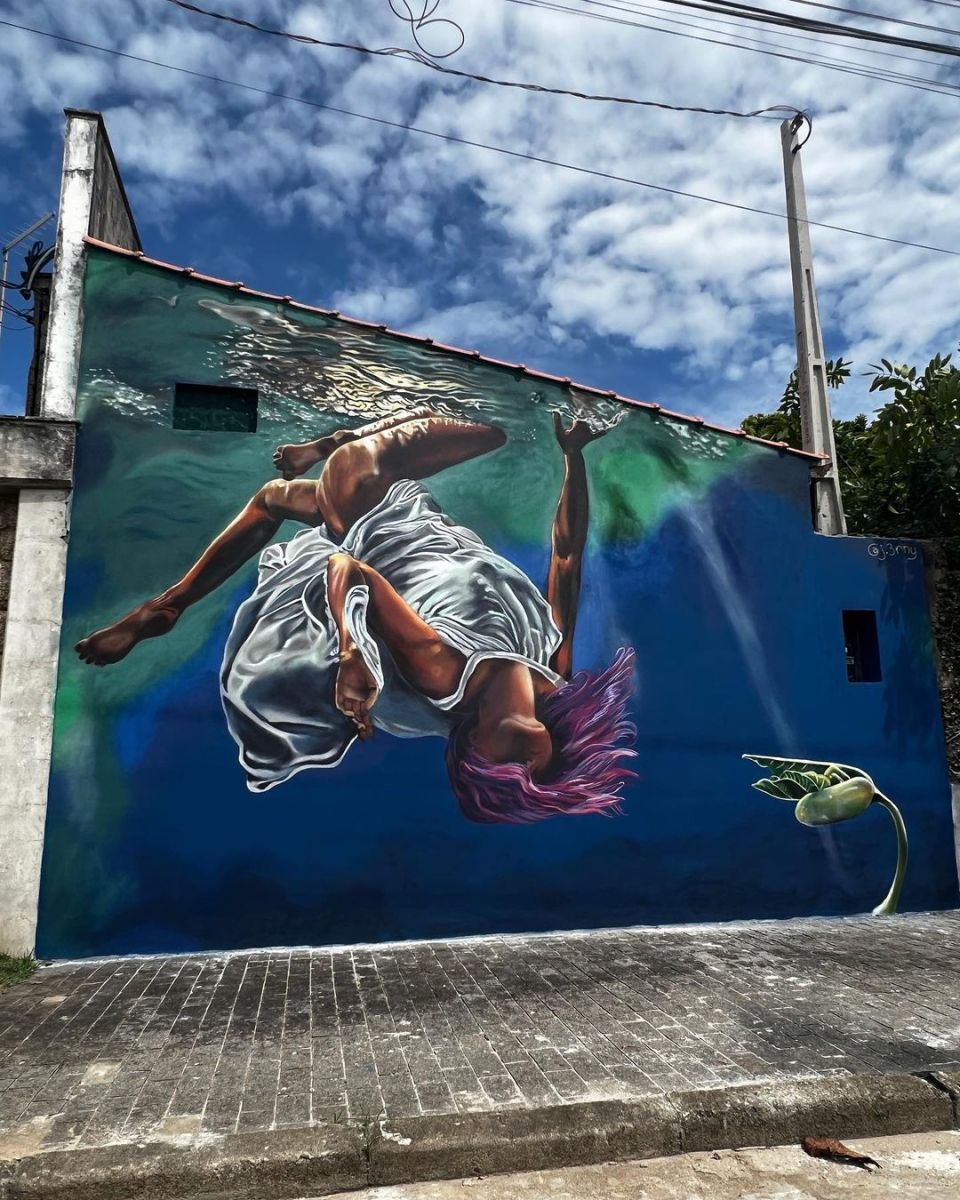
💧 Immersion — By Jennifer Erny in Peruíbe, São Paulo, Brazil 🇧🇷
Jennifer Erny turns the wall into deep water. Her Behance project identifies “Immersion” as created and executed for Espaço Salgado Art Residency in Peruíbe, and her Instagram post also places the mural at that residency. The floating body, rippled surface, and small plant keep the scene suspended between sinking and sleeping.
💡 Nerd Fact: Peruíbe sits near serious Atlantic Forest geography: São Paulo’s protected-areas guide describes Juréia-Itatins Ecological Station as 84,425 hectares and one of Brazil’s best-preserved Atlantic Forest stretches.
More: 6 New Discoveries: Street Art Gems
🔗 Follow Jennifer Erny on Instagram
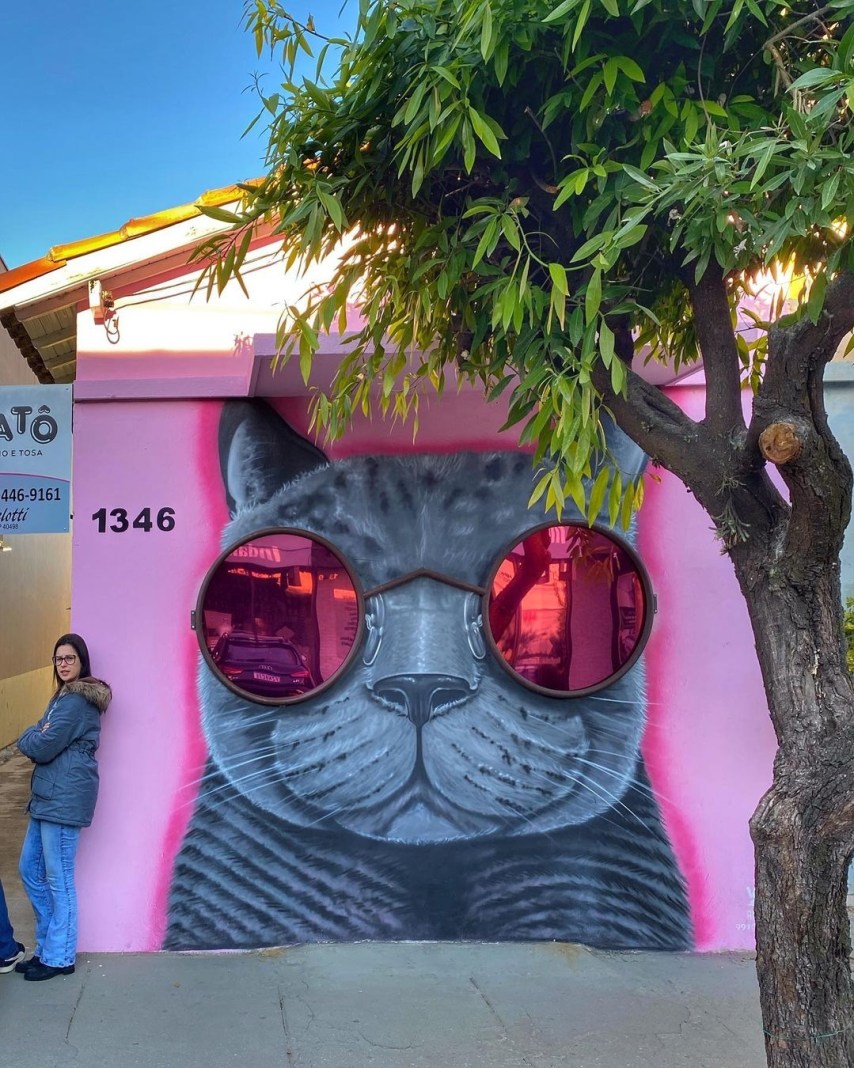
😎 Cool Cat — By Vrartes in Indaiatuba, Brazil 🇧🇷
Vrartes keeps it simple and funny. The cat’s giant sunglasses turn the windows into part of the face, while the pink wall and real tree make the corner feel like a neighborhood mascot.
More: Graffiti and Street Art News #3
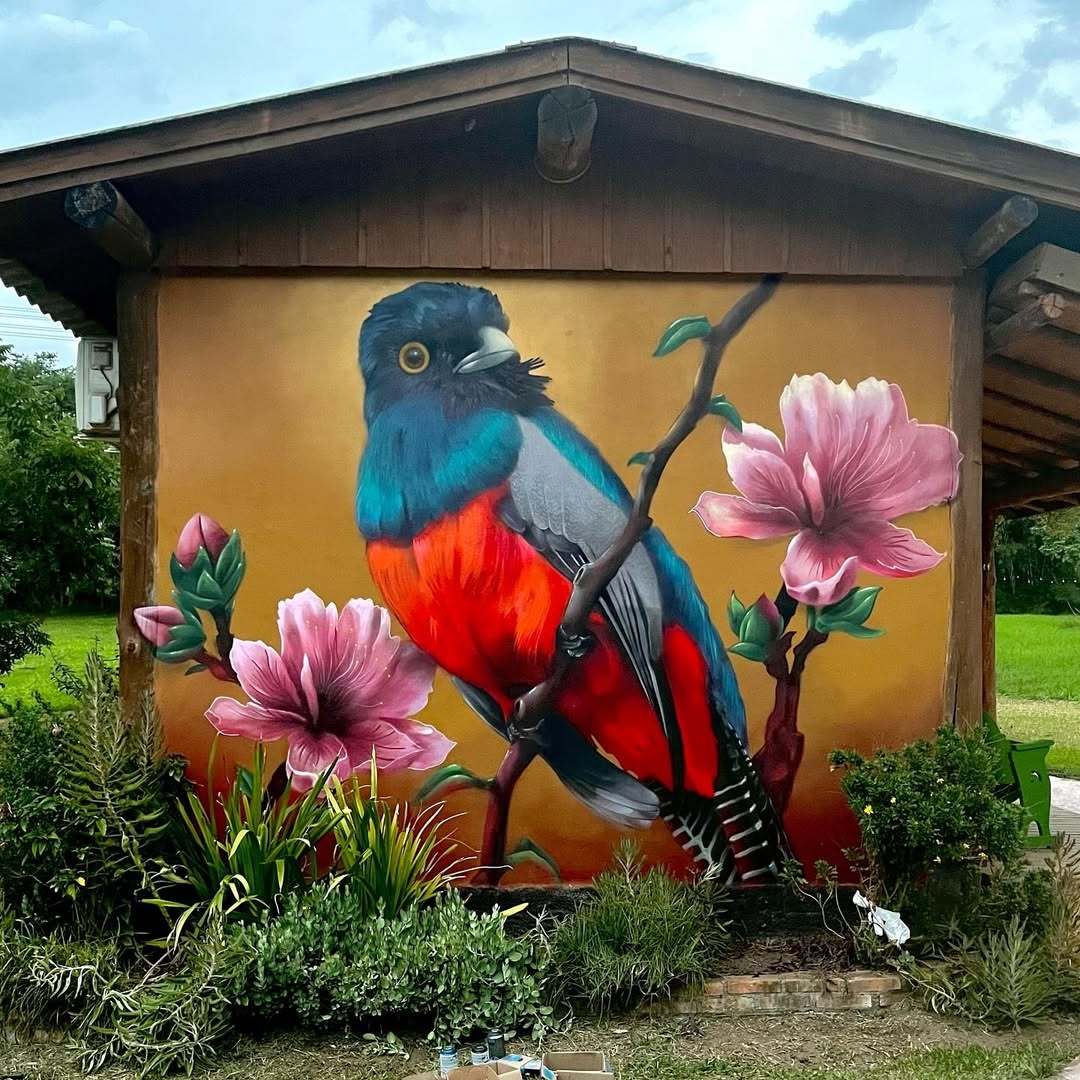
🌸 Garden Bird — By Subor Azteka in Novo Hamburgo, Brazil 🇧🇷
Subor Azteka makes the wall feel like a small garden stop. The blue and red bird stands out against the warm background, and the painted flowers meet the real plants below. The mural was painted for Sítio Pé na Terra in Novo Hamburgo.
💡 Nerd Fact: Novo Hamburgo has a very different kind of craft history: Britannica notes that the city was founded by Germans, named after Hamburg, and became known for shoes, hides, and leather.
More: New Street Art #1
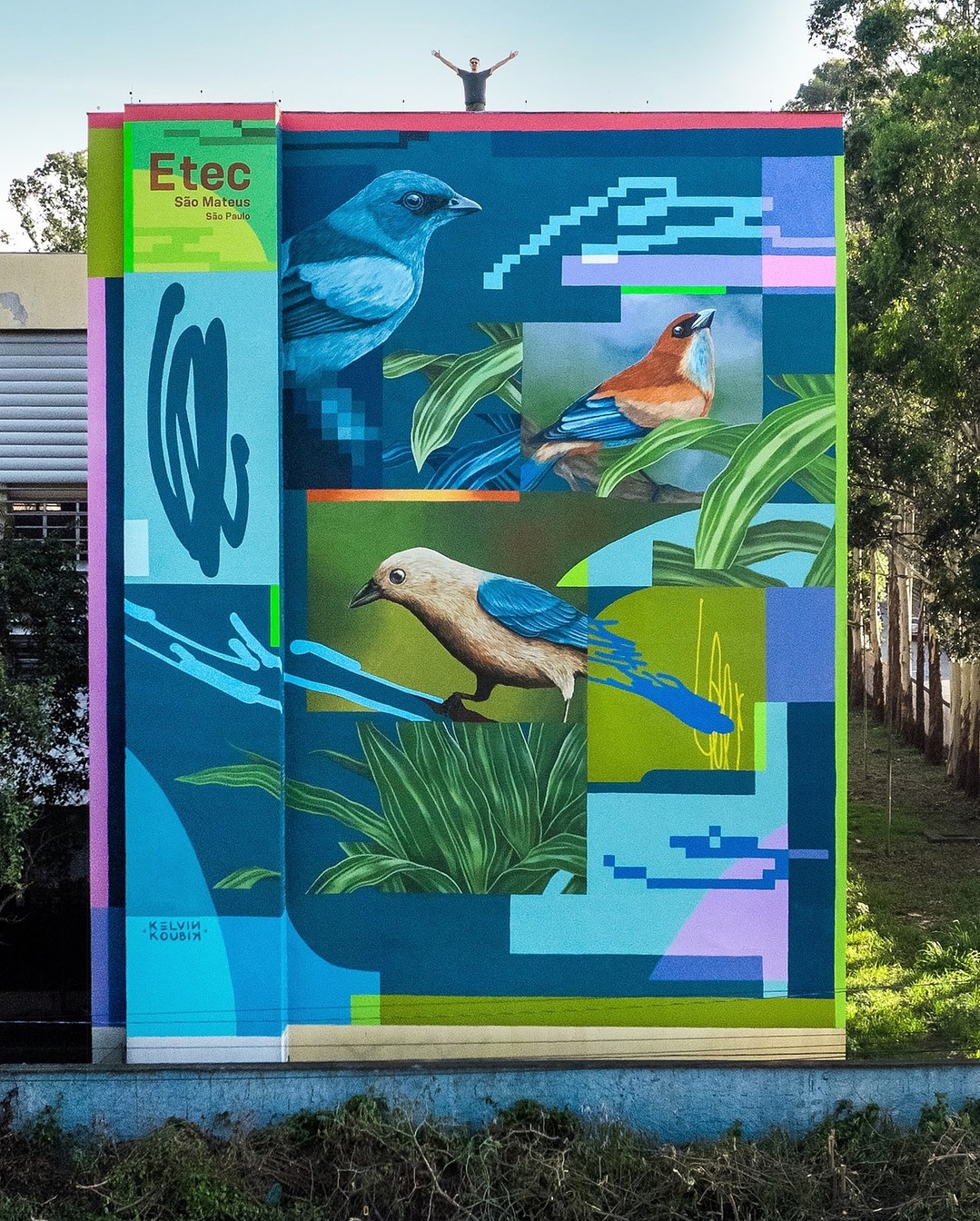
🐦 Pixel Birds — By Kelvin Koubik in São Paulo, Brazil 🇧🇷
Kelvin Koubik mixes birds and plants with a digital-looking graphic world. His post places the mural in Pinheiros, São Paulo, and describes a process built from multiple techniques and a planned layout. Pixels and bold color blocks cut through the nature shapes, giving the building a glitchy tropical feel.
More: New Street Art #5
🔗 Follow Kelvin Koubik on Instagram
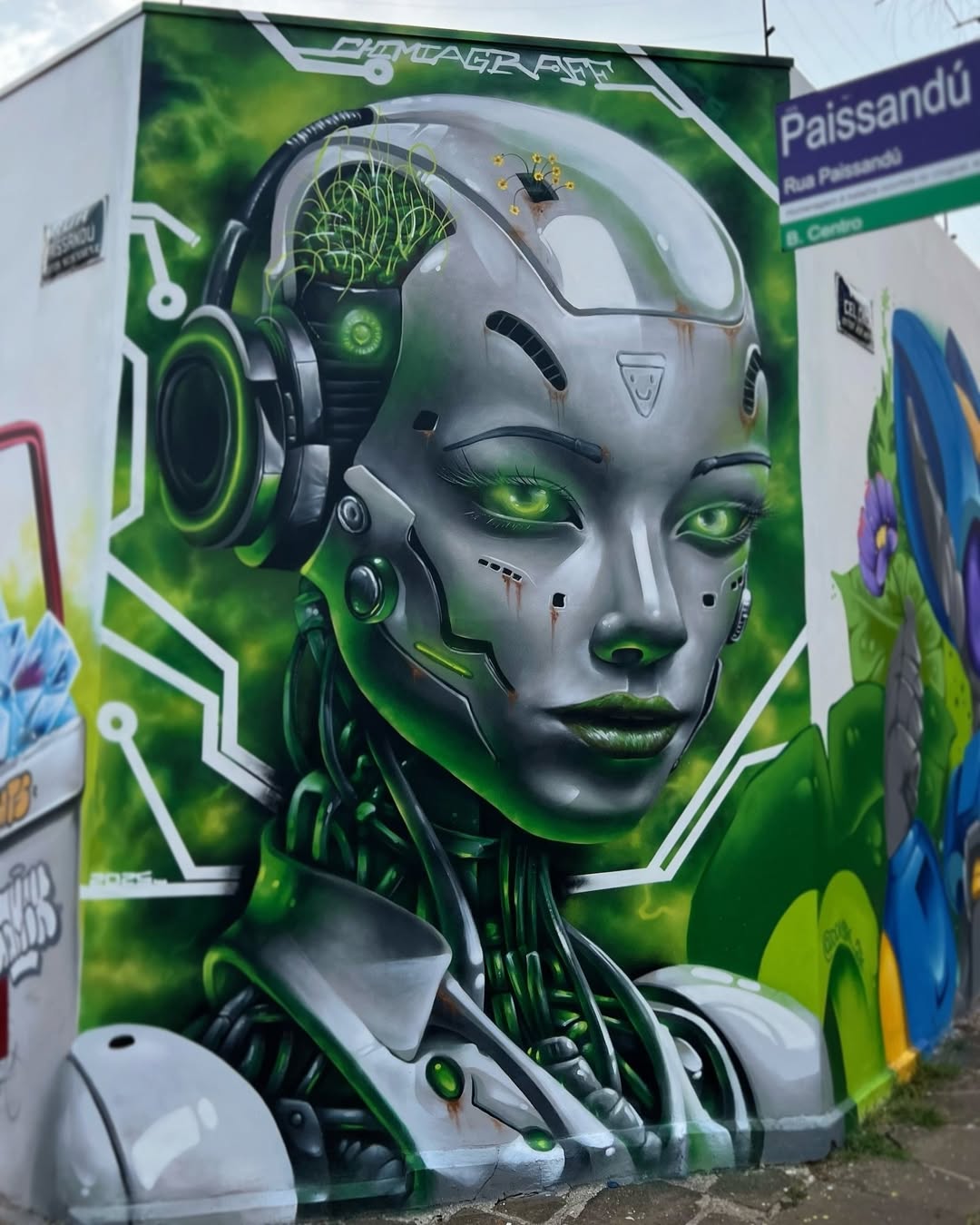
🤖 Cyber Punk Nature — By Pedro Benjamim in Passo Fundo, Brazil 🇧🇷
Pedro Benjamim imagines machinery with roots. His post for “Cyber Punk Nature” frames the mural around technology and nature for Frost Walls Festival in Passo Fundo. The glowing green eyes, metal face, circuit shapes, and plant-like forms inside the head make the sci-fi idea feel oddly organic.
💡 Nerd Fact: “Cyberpunk” is a literary word with 1980s roots: Britannica notes that the movement took off with William Gibson’s Neuromancer in 1984, long before the term became a common visual aesthetic.
More: New Street Art #5
🔗 Follow Pedro Benjamim / Chimia Graff on Instagram
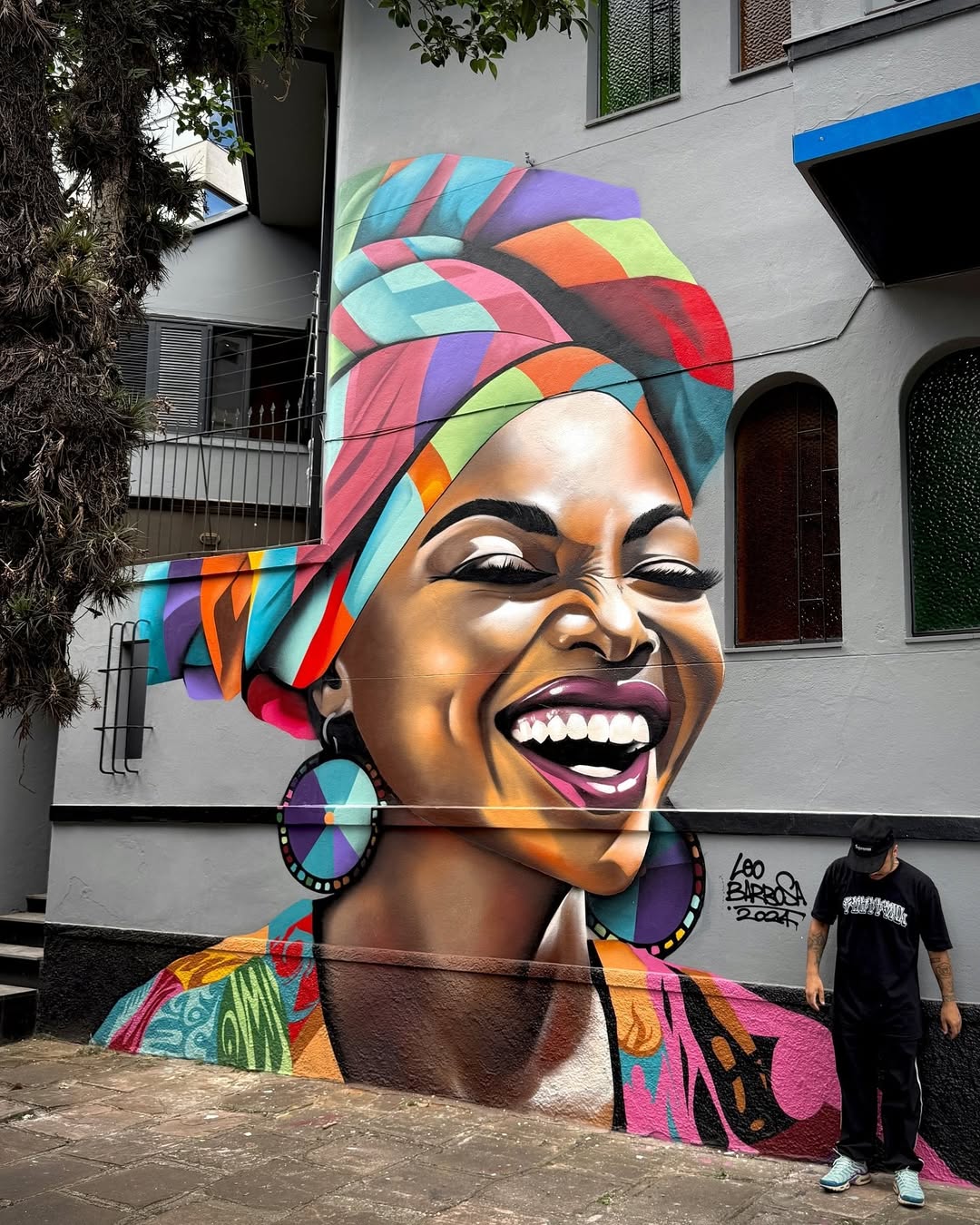
😁 Colorful Laugh — By Leo Barbosa in Porto Alegre, Brazil 🇧🇷
Leo Barbosa paints a laugh at full wall size. His post describes the mural as a 9-by-6-meter work in Cidade Baixa, Porto Alegre, made with Anita Encantado. The giant smile, bright headwrap, and warm shadows carry the energy, while the person standing nearby shows the scale.
More: New Street Art #5
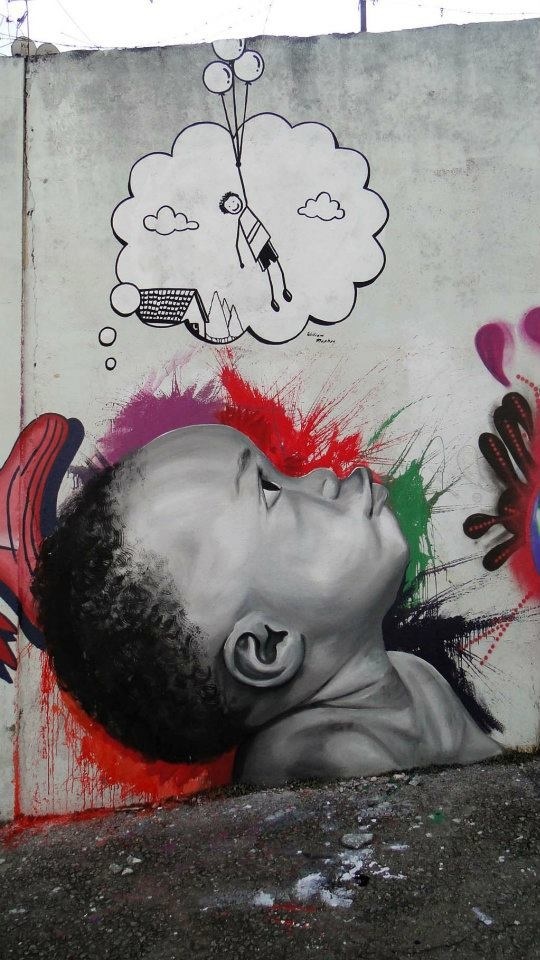
🎈 Dreaming Upward — By William Mophos / William Amaro Costa in São Paulo, Brazil 🇧🇷
William Mophos turns the wall into a small dream about escape. The child rests below a thought bubble where a tiny figure floats away with balloons. The result is simple, tender, and a little sad.
More: William Mophos / William Amaro Costa in São Paulo on Street Art Utopia
🔗 Follow William Mophos on Facebook
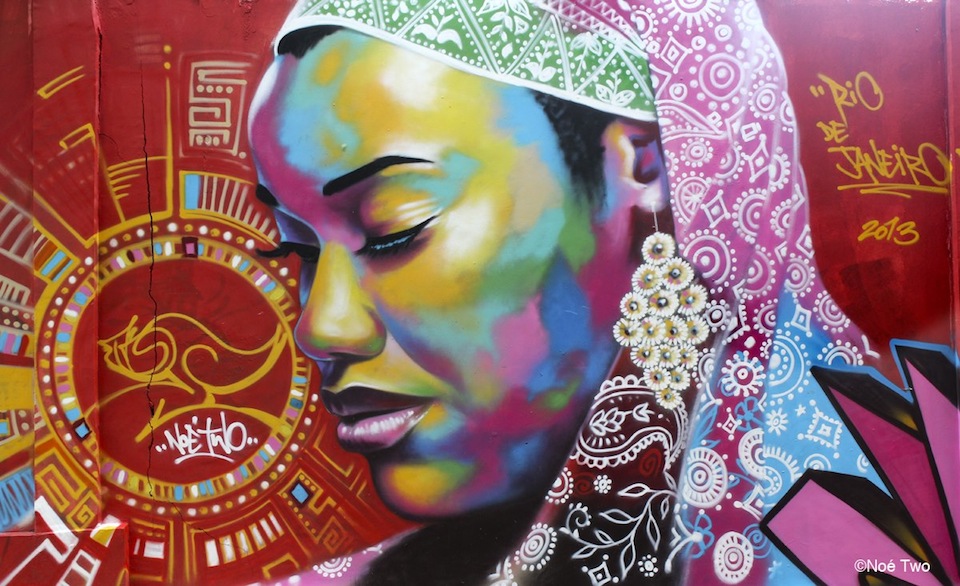
🔴 Vidigal Colors — By NOE TWO in Vidigal, Rio de Janeiro, Brazil 🇧🇷
This older NOE TWO piece still holds up. The profile, patterned fabric, warm red background, and layered colors give it both softness and graphic force — a strong closing wall from Rio de Janeiro.
💡 Nerd Fact: Vidigal is tied to one of Rio’s great viewpoints: Riotur says the Morro Dois Irmãos trail begins in the Vidigal community and ends at the top of the “older brother,” with wide views across Rio’s South Zone.
More: NOE TWO in Favela Vidigal on Street Art Utopia
🔗 Follow NOE TWO on Facebook
Which one is your favorite?
Photo and video of Mural by Eduardo Kobra in Belo Horizonte, Brazil
Muralist Eduardo Kobra
By Eduardo Kobra in Belo Horizonte, Brazil, for Sesc em Minas.Eduardo Kobra: It’s the first time I paint the side of a building here in Belo Horizonte, Brazil. And the honor is great, because this work of almost one thousand square meters (10,000 sq ft) is located at Sesc Minas, an institution that I respect and admire a lot. The faces I portrayed are common people, workers, citizens of Belo Horizonte. I want this mural to work as a recognition of the importance of everyone: because it is the simple people who truly build the city — and, in this case, it is people like the ones I portrayed that make the capital of the Minas Gerais state one of the most important cities in Brazil.
More by Eduardo Kobra on Street Art Utopia
View this post on Instagram
Comments:
Cyberpunk | Neo-noir, Sci-Fi, Dystopia
Cyberpunk, a science-fiction subgenre characterized by countercultural antiheroes trapped in a dehumanized, high-tech future. The word cyberpunk was coined by writer Bruce Bethke, who wrote a story with that title in 1982.Britannica Editors (Encyclopedia Britannica)