7 Photos of Street Art by Syria’s Banksy: Abu Malik al-Shami
Content warning: Abu Malik al-Shami, often hailed as "Syria's Banksy," used the crumbling walls of Darayya, a city devastated by the Syrian conflict, as his canvas to tell stories of resilience, loss, and the human cost of war. Through murals painted amidst the ruins, his
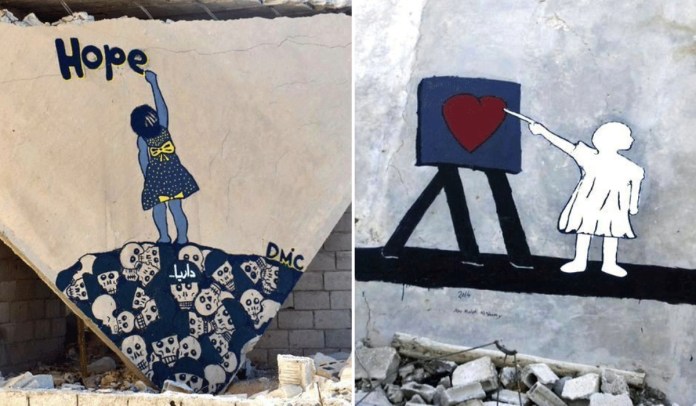
Abu Malik al-Shami, often hailed as “Syria’s Banksy,” used the crumbling walls of Darayya, a city devastated by the Syrian conflict, as his canvas to tell stories of resilience, loss, and the human cost of war.
Through murals painted amidst the ruins, his work captures the emotional and physical toll of years of violence while offering a powerful message of hope and humanity. As Syria transitions into a new chapter following the end of the Assad regime, these artworks stand as enduring symbols of a nation’s suffering and its unyielding spirit.
Dive into this collection of al-Shami’s most evocative pieces, each one a testament to the resilience of the Syrian people and a call for peace and healing in the aftermath of conflict.
In early 2013, still a teenager, he made his way to Darayya to join the Free Syrian Army.
Armed with little more than his sketchbooks and pencils, he quickly confronted the brutal realities of war. On his very first day in Darayya, he learned how to handle a gun. By the second day, he found himself on the front line.
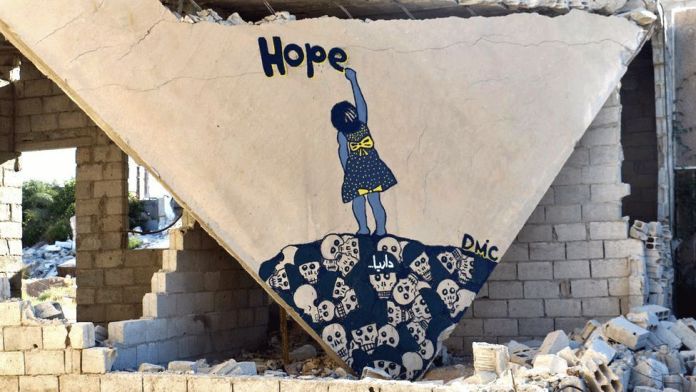
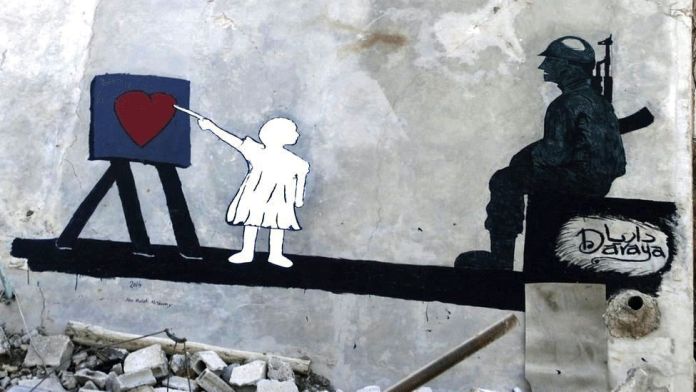
It wasn’t until 2014 that his journey took a transformative turn. He met an artist named Majd, known as the “Eye of Darayya,” who encouraged him to channel his talent into street art. His debut mural, painted on the ruins of a large house, depicted a girl pointing to a heart—teaching a soldier about love before he heads into battle. This marked the beginning of his poignant artistic journey amidst the devastation of war.

This mural was painted in a bombed-out school. The student is writing: ‘We used to joke and say, God please destroy the school … and he did.’

The ironic caption reads “Happy Mother’s Day” – in the Arab world, the holiday is celebrated on 21 March
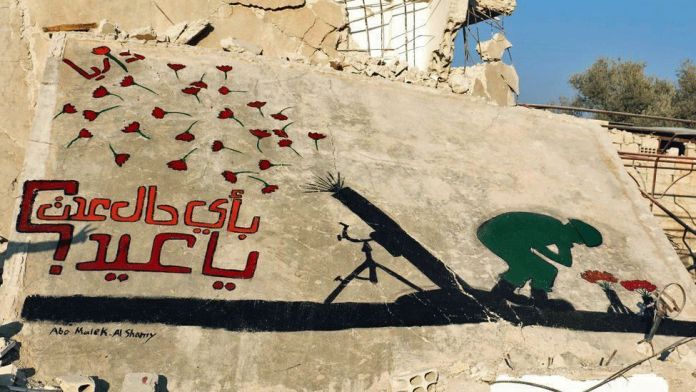
The Arabic writing reads: “How are we celebrating Eid this year?”
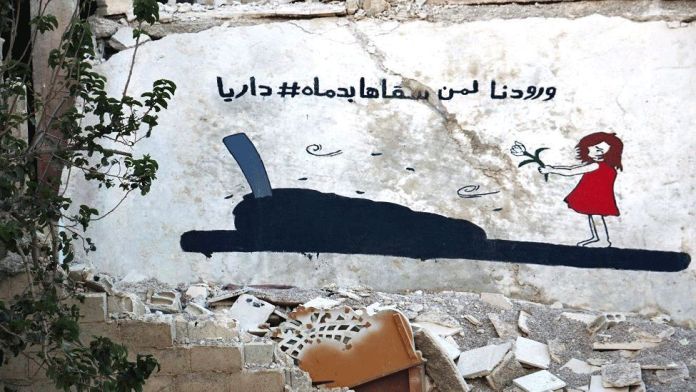
Translation: “Our roses are for those who watered them with their blood”
