The Resistance Table that became a World - How an old forgotten game coaxed simple, elegant procedural mechanics from a sub-system designed to model magical duels #ttrpg #callofcthulhu #nephilim #OSR #brp https://tasker.land/2025/12/04/the-resistance-table-that-became-a-world/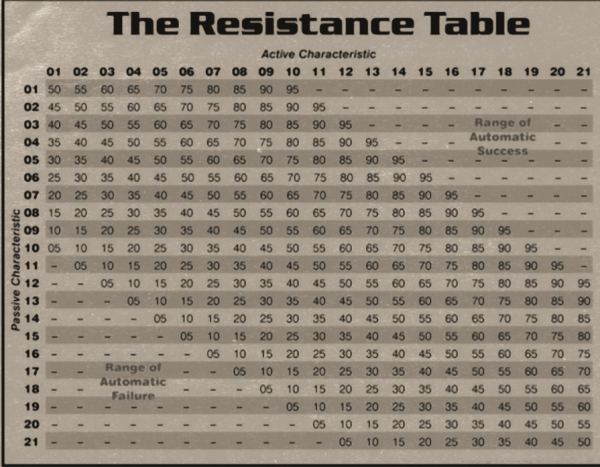
The Resistance Table that Became a World
When I returned to TTRPGs, I tried to approach running games with an open mind: I assumed that I knew nothing, I took in new ideas, and I ran systems that I would never have run back in the old day…Taskerland
Hypolite Petovan
•Moreau Vazh
•That is an excellent question and as someone who is comfortable improvising, I could just go '25% chance they've got the book' and leave it at that.
My feeling is that you could ask that of anything you prep and the answer is that setting this stuff up ahead of time adds depth and texture to the world because fixing the number ahead of time will inform other creative decisions.
You could just wing it, but the cognitive load this approach demands is tiny compared to the benefits.
Hypolite Petovan
•Moreau Vazh
•Hypolite Petovan
•Hypolite Petovan
•